
Showing 5 items matching "attackers capabilities"
-
 Moorabbin Air Museum
Book - South Pacific Air War, New Guinea 1942 - 1943 Halting the last Japanese Advance
... Attackers capabilities...South Pacific Air War Attackers capabilities Defenders capabilities Campaign objectives The campaign Analysis & conclusions Overview of Allied & Japanese airpower in WW2 battle of New Guinea, circa 2025 New Guinea 1942 - 1943 Halting the last Japanese Advance Book South Pacific Air War ...Overview of Allied & Japanese airpower in WW2 battle of New Guinea, circa 2025non-fictionOverview of Allied & Japanese airpower in WW2 battle of New Guinea, circa 2025attackers capabilities, defenders capabilities, campaign objectives, the campaign, analysis & conclusions -
 National Vietnam Veterans Museum (NVVM)
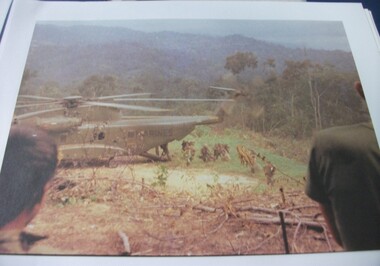
Photograph, Marines arrive at Ngok Tavak 04/05/1968
... capabilities in the area. However, with enemy activity increasing, on May 4th, 44 US Marines, 35 CIDG (Civilian Irregular Defence Group) and two 105mm Howitzer field guns arrived as reinforcement from the Special Forces base at Kham Duc. By May 9th, Captain White’s company numbered about 200 men. Although in a good defensive position, coming towards them was the Iron Brigade of the 2nd Division of the North Vietnamese Army (NVA). At 03:00 on May 10th, the attack...capabilities in the area. However, with enemy activity increasing, on May 4th, 44 US Marines, 35 CIDG (Civilian Irregular Defence Group) and two 105mm Howitzer field guns arrived as reinforcement from the Special Forces base at Kham Duc. By May 9th, Captain White’s company numbered about 200 men. Although in a good defensive position, coming towards them was the Iron Brigade of the 2nd Division of the North Vietnamese Army (NVA). At 03:00 on May 10th, the attack ...In May 1968, in the western jungle of Vietnam near Laos, led by Australian Captain J White, 11th Mobile Strike Force Company (MSF) occupied an old French fort on a hill named Ngok Tavak tasked with improving allied intelligence-gathering capabilities in the area. However, with enemy activity increasing, on May 4th, 44 US Marines, 35 CIDG (Civilian Irregular Defence Group) and two 105mm Howitzer field guns arrived as reinforcement from the Special Forces base at Kham Duc. By May 9th, Captain White’s company numbered about 200 men. Although in a good defensive position, coming towards them was the Iron Brigade of the 2nd Division of the North Vietnamese Army (NVA). At 03:00 on May 10th, the attack on Ngok Tavak began. The NVA, led by Major Dang Ngoc Mai, poured through the entrance at the eastern wall quickly occupying most of the fort. By midday the next day, Captain White had lost 40 Nung soldiers and 11 Marines with over 70 others badly wounded. Realising he could not withstand another attack, Captain White decided to abandon Ngok Tavak. Once the wounded were evacuated, Captain White ordered strike aircraft to blast a ‘corridor’ through the surrounding enemy cordon using napalm. By early afternoon, what remained of the defenders escaped through the ‘corridor’ and helicopters eventually flew them to Kham Duc. Colour image of U.S. soldiers disembarking from a helicopter in a clearing in the jungle. Foreground is rear of two soldiers watching. Background is mountains.united states - marine corps, battle of ngok tavak, john white, ngok tavak -
 National Vietnam Veterans Museum (NVVM)
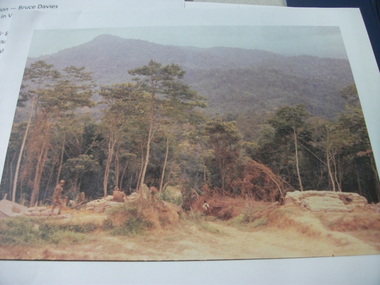
Photograph, Gateway to Ngok Tavak, 1/05/1968 12:00:00 AM
... capabilities in the area. However, with enemy activity increasing, on May 4th, 44 US Marines, 35 CIDG (Civilian Irregular Defence Group) and two 105mm Howitzer field guns arrived as reinforcement from the Special Forces base at Kham Duc. By May 9th, Captain White’s company numbered about 200 men. Although in a good defensive position, coming towards them was the Iron Brigade of the 2nd Division of the North Vietnamese Army (NVA). At 03:00 on May 10th, the attack...capabilities in the area. However, with enemy activity increasing, on May 4th, 44 US Marines, 35 CIDG (Civilian Irregular Defence Group) and two 105mm Howitzer field guns arrived as reinforcement from the Special Forces base at Kham Duc. By May 9th, Captain White’s company numbered about 200 men. Although in a good defensive position, coming towards them was the Iron Brigade of the 2nd Division of the North Vietnamese Army (NVA). At 03:00 on May 10th, the attack ...In May 1968, in the western jungle of Vietnam near Laos, led by Australian Captain J White, 11th Mobile Strike Force Company (MSF) occupied an old French fort on a hill named Ngok Tavak tasked with improving allied intelligence-gathering capabilities in the area. However, with enemy activity increasing, on May 4th, 44 US Marines, 35 CIDG (Civilian Irregular Defence Group) and two 105mm Howitzer field guns arrived as reinforcement from the Special Forces base at Kham Duc. By May 9th, Captain White’s company numbered about 200 men. Although in a good defensive position, coming towards them was the Iron Brigade of the 2nd Division of the North Vietnamese Army (NVA). At 03:00 on May 10th, the attack on Ngok Tavak began. The NVA, led by Major Dang Ngoc Mai, poured through the entrance at the eastern wall quickly occupying most of the fort. By midday the next day, Captain White had lost 40 Nung soldiers and 11 Marines with over 70 others badly wounded. Realising he could not withstand another attack, Captain White decided to abandon Ngok Tavak. Once the wounded were evacuated, Captain White ordered strike aircraft to blast a ‘corridor’ through the surrounding enemy cordon using napalm. By early afternoon, what remained of the defenders escaped through the ‘corridor’ and helicopters eventually flew them to Kham Duc. Colour image of edge of Ngok Tavak fort with soldiers sitting on & walking around sand-bagged foxholes. Jungle & mountains in background.battle of ngok tavak, john white -
Moorabbin Air Museum
Pamphlet - Apache YAH-64 attack helicopter, YAH-64 A Total System for Battle
... Apache weapon systems Promotional overview of Apache weapon system capabilities Part of collection in manila folder YAH-64 A Total System for Battle Pamphlet Apache YAH-64 attack helicopter ...Promotional overview of Apache weapon system capabilitiesPart of collection in manila foldernon-fictionPromotional overview of Apache weapon system capabilitiesapache weapon systems -
 Returned Nurses RSL Sub-branch
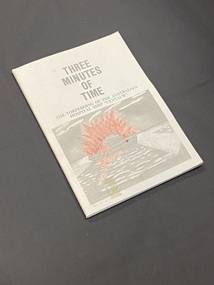
Book - Illustrated paperback book, Lower Tweed River Historical Society, Three minutes of time: the torpedoing of the Australian Hospital Ship "Centaur", 1991
... attacked and sunk by a Japanese submarine off the coast of Queensland, Australia, on 14 May 1943. Of the 332 medical personnel and civilian crew aboard, 268 were killed. The Scottish-built vessel was launched in 1924 as a combination passenger liner/freighter and operated a trade route between Western Australia and Singapore via Indonesia, carrying passengers, cargo, and livestock. Centaur served in both civilian and military capabilities ..."A compelling account of the sinking of the Australian Hospital Ship Centaur during World War II. Australian Hospital Ship (AHS) Centaur was a hospital ship which was attacked and sunk by a Japanese submarine off the coast of Queensland, Australia, on 14 May 1943. Of the 332 medical personnel and civilian crew aboard, 268 were killed. The Scottish-built vessel was launched in 1924 as a combination passenger liner/freighter and operated a trade route between Western Australia and Singapore via Indonesia, carrying passengers, cargo, and livestock. Centaur served in both civilian and military capabilities during her career, and she was involved in recovering German survivors of the engagement between Kormoran and HMAS Sydney. Following her early-1943 conversion to a hospital ship, Centaur served as a medical transport between New Guinea and Australia. Before dawn on 14 May 1943, while on her second voyage, Centaur was torpedoed and sunk by a Japanese submarine off North Stradbroke Island, Queensland. The majority of the 332 aboard died in the attack; the 64 survivors had to wait for 36 hours before they were rescued. The attack resulted in public outrage as it was considered to be a war crime. Protests were made by the Australian and British governments to Japan and efforts were made to discover the people responsible so they could be tried at a war crimes tribunal. Despite this, it was not until the 1970s that identity of the attacking submarine, I-177, became public. The reason for the attack is unknown, and the events surrounding the sinking of Centaur are controversial because it has been attested that she may have been in breach of the international conventions that should have protected her. Claims of discovery were made in 1995, but the wreck was later proven to be another ship. The wreck of Centaur was found on 20 December 2009. " (https://regimental-books.com.au/product/three-minutes-of-time-the-torpedoing-of-the-australian-hospital-ship-centaur/)Thin grey paperback book. Front cover has the title printed in dark grey text in the centre of the top half of the page, followed by the sub-title in smaller print. The lower half of the page has a square box with a light and dark grey illustration of a ship in the ocean. The ship has a stark red hospital cross on the front and is surrounded by red to sigify an explosion, which is also reflected in the water.non-fiction "A compelling account of the sinking of the Australian Hospital Ship Centaur during World War II. Australian Hospital Ship (AHS) Centaur was a hospital ship which was attacked and sunk by a Japanese submarine off the coast of Queensland, Australia, on 14 May 1943. Of the 332 medical personnel and civilian crew aboard, 268 were killed. The Scottish-built vessel was launched in 1924 as a combination passenger liner/freighter and operated a trade route between Western Australia and Singapore via Indonesia, carrying passengers, cargo, and livestock. Centaur served in both civilian and military capabilities during her career, and she was involved in recovering German survivors of the engagement between Kormoran and HMAS Sydney. Following her early-1943 conversion to a hospital ship, Centaur served as a medical transport between New Guinea and Australia. Before dawn on 14 May 1943, while on her second voyage, Centaur was torpedoed and sunk by a Japanese submarine off North Stradbroke Island, Queensland. The majority of the 332 aboard died in the attack; the 64 survivors had to wait for 36 hours before they were rescued. The attack resulted in public outrage as it was considered to be a war crime. Protests were made by the Australian and British governments to Japan and efforts were made to discover the people responsible so they could be tried at a war crimes tribunal. Despite this, it was not until the 1970s that identity of the attacking submarine, I-177, became public. The reason for the attack is unknown, and the events surrounding the sinking of Centaur are controversial because it has been attested that she may have been in breach of the international conventions that should have protected her. Claims of discovery were made in 1995, but the wreck was later proven to be another ship. The wreck of Centaur was found on 20 December 2009. " (https://regimental-books.com.au/product/three-minutes-of-time-the-torpedoing-of-the-australian-hospital-ship-centaur/) ahs centaur, australian hospital ship centaur, hospital ship
