
Showing 158 items matching "australia -- trials"
-
 RMIT GSBL Justice Smith Collection
Report, Hanlon, Fiona, Criminal conferencing: managing or re-imagining criminal proceedings?, 2010
... ...trials -- australia...criminal justice: administration of criminal justice: administration of -- australia trials trials -- australia evidence: criminal criminal procedure -- australia criminal procedure mediation judicial councils and conferences ISBN: 9781875527533 Criminal conferencing: managing or re-imagining criminal proceedings? ...ISBN: 9781875527533criminal justice: administration of, criminal justice: administration of -- australia, trials, trials -- australia, evidence: criminal, criminal procedure -- australia, criminal procedure, mediation, judicial councils and conferences -
RMIT GSBL Justice Smith Collection
Report, Corns, Chris, Anatomy of long criminal trials, 1997
... criminal justice: administration of -- australia...trials...criminal justice: administration of -- australia trials -- australia ISBN: 1875527206 Anatomy of long criminal trials Report Corns, Chris Australian Institute of Judicial Administration Incorporated ...ISBN: 1875527206criminal justice: administration of -- australia, trials -- australia -
 Victorian Aboriginal Corporation for Languages
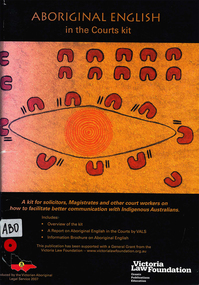
Kit, Victorian Aboriginal Legal Service et al, Aboriginal English in the courts kit : a report on Aboriginal English in the courts, 2007
... Australia -- Trials...Australia -- Trials litigation etc. English language -- Dialects -- Australia. ...The overall objective of this report is to collate information about Aboriginal English in order to inform future staff training and resources for people working in the courts, including solicitors and magistrates. Features Radio National transcript from Lingua Franca program, and content by Diane Eades.tables, sample legal letters, pamphlets, information cardaustralia -- trials, litigation, etc. english language -- dialects -- australia. aboriginal australians -- social life and customs. law -- australia -- language -- handbooks, manuals, etc. aboriginal australians -- criminal justice system. -
Koorie Heritage Trust
Book, Butt, Peter et al, Mabo : what the High Court said, 1993
... | Land tenure -- Law and legislation -- Australia. | Queensland -- Trials...State of Queensland. | Native title (Australia) | Torres Strait Islanders -- Land tenure. | Torres Strait Islanders -- Legal status laws etc. | Aboriginal Australians -- Land tenure. | Aboriginal Australians -- Legal status laws etc. | Land tenure -- Law and legislation -- Australia. | Queensland -- Trials litigation etc. This book sets out the High Court Mabo decision in plain English, giving everyone the chance to read the case for themselves. ...This book sets out the High Court Mabo decision in plain English, giving everyone the chance to read the case for themselves. It reduces the judgements to less than a third of their original length. It avoids repetition, translates legalese into English and gathers the judgement into chapters and themes. It looks at the specific issues raised by the High Court judges including terra nullius, Crown sovereignty, land ownership, naive title and protecting native title under the Racial Dicrimination Act.93 p. : ill., 1 port. ; 20 cm.This book sets out the High Court Mabo decision in plain English, giving everyone the chance to read the case for themselves. It reduces the judgements to less than a third of their original length. It avoids repetition, translates legalese into English and gathers the judgement into chapters and themes. It looks at the specific issues raised by the High Court judges including terra nullius, Crown sovereignty, land ownership, naive title and protecting native title under the Racial Dicrimination Act.australia. high court. mabo and others v. state of queensland. | australia. racial discrimination act 1975 | native title - cases - mabo | law - relation to anglo australian law | law - jurisprudence | native title - extinguishment | race relations - racial discrimination - anti discrimination - legislation. | mabo, edward, 1936-1992. mabo and others v. state of queensland. | mabo, edward, 1936-1992 -- trials, litigation, etc. | australia. high court. mabo and others v. state of queensland. | native title (australia) | torres strait islanders -- land tenure. | torres strait islanders -- legal status, laws, etc. | aboriginal australians -- land tenure. | aboriginal australians -- legal status, laws, etc. | land tenure -- law and legislation -- australia. | queensland -- trials, litigation, etc. -
RMIT GSBL Justice Smith Collection
Book, Fricke, Graham L, Tales from the courts, 1999
... judicial process -- australia -- victoria -- popular works...trials...trials -- victoria judges -- victoria judicial process -- victoria -- popular works judges -- australia -- victoria judicial process -- australia -- victoria -- popular works trials -- australia -- victoria ISBN: 0734400063 Tales from the courts Book Fricke, Graham L. ...ISBN: 0734400063trials -- victoria, judges -- victoria, judicial process -- victoria -- popular works, judges -- australia -- victoria, judicial process -- australia -- victoria -- popular works, trials -- australia -- victoria -
 Surrey Hills Historical Society Collection
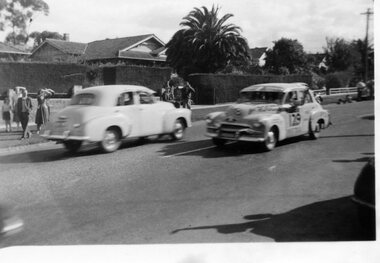
Digital photo, George L Coop, Redex trial on Whitehorse Road, Mont Albert, 1953, 1953
... During the 1950s, Holden dominated the Australian car market and by 1958 sales accounted for over 40 per cent of total car sales in Australia. The Redex Reliability Trial 1953 -The first Redex round-Australia reliability trial covered of 6,500 miles (10,500 km), and had a first prize of £1,000. ...During the 1950s, Holden dominated the Australian car market and by 1958 sales accounted for over 40 per cent of total car sales in Australia. The Redex Reliability Trial 1953 -The first Redex round-Australia reliability trial covered of 6,500 miles (10,500 km), and had a first prize of £1,000. ...The FJ Holden is iconic in Australian motoring history. It was made in Australia by Holden from 1953 to 1956. During the 1950s, Holden dominated the Australian car market and by 1958 sales accounted for over 40 per cent of total car sales in Australia. The Redex Reliability Trial 1953 -The first Redex round-Australia reliability trial covered of 6,500 miles (10,500 km), and had a first prize of £1,000. It attracted both amateur and professional drivers in a variety of cars. The route passed through Brisbane, Rockhampton, Townsville, Darwin, Alice Springs, Adelaide and Melbourne before returning to Sydney and attracted much public interest. At the time the idea of driving huge distances around the country in ordinary cars was novel and the logistics were challenging. In many parts of the country there simply wasn’t adequate accommodation or suitably located refuelling stops. The Shell Company facilitated the race by placing petrol dumps along the 5000 km route between Townsville and Adelaide. The race began at the Sydney Showground on 30 August when 192 cars left at three-minute intervals. Of the twenty top finalists, two thirds were sponsored. Ken Tubman and John Marshall won the trial in a Peugeot 203. A black & white photo taken from near 688 Whitehorse Road. It includes 2 FJ Holdens - one is probably a passing car; the other is covered with labels and can assume to be competing in the trial. On the far side of the road are onlookers of men, women and one child standing on a wide nature strip. One man is taking photos. The houses behind are obscured by high hedges, but appear to be Californian bungalows, one with a large palm tree in its front garden.redex reliability trial, 1953, fj holden, whitehorse road, mont albert -
 Surrey Hills Historical Society Collection
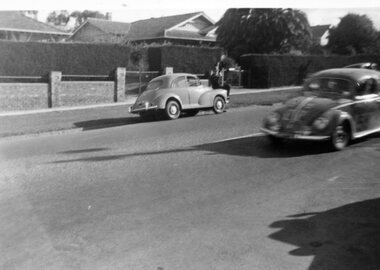
Digital photo, George L Coop, Redex trial on Whitehorse Road, Mont Albert, 1953, 1953
... The Redex Reliability Trial 1953 -The first Redex round-Australia reliability trial covered of 6,500 miles (10,500 km), and had a first prize of £1,000. ...The Redex Reliability Trial 1953 -The first Redex round-Australia reliability trial covered of 6,500 miles (10,500 km), and had a first prize of £1,000. ...The Redex Reliability Trial 1953 -The first Redex round-Australia reliability trial covered of 6,500 miles (10,500 km), and had a first prize of £1,000. It attracted both amateur and professional drivers in a variety of cars. The route passed through Brisbane, Rockhampton, Townsville, Darwin, Alice Springs, Adelaide and Melbourne before returning to Sydney and attracted much public interest. At the time the idea of driving huge distances around the country in ordinary cars was novel and the logistics were challenging. In many parts of the country there simply wasn’t adequate accommodation or suitably located refuelling stops. The Shell Company facilitated the race by placing petrol dumps along the 5000 km route between Townsville and Adelaide. The race began at the Sydney Showground on 30 August when 192 cars left at three-minute intervals. Of the twenty top finalists, two thirds were sponsored. Ken Tubman and John Marshall won the trial in a Peugeot 203. A black & white photo taken in Whitehorse Road, Mont Albert during the 1953 Redex Trial as a Volkswagen is passing 688 Whitehorse Road on the extreme left. The VW appears to have advertising on its panels indicating it was a competitor in the trial. On the far side of the road is a Morris Minor with a hatted man sitting on the bonnet. The houses in the background are partly obcsured by large hedges.george coop, mont albert, volkswagen, morris minor, redex trial, whitehorse road -
 Surrey Hills Historical Society Collection
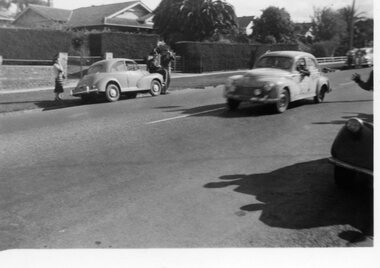
Digital photo, George L Coop, Redex trial on Whitehorse Road, Mont Albert, 1953, 1953
... The Redex Reliability Trial 1953 -The first Redex round-Australia reliability trial covered of 6,500 miles (10,500 km), and had a first prize of £1,000. ...The Redex Reliability Trial 1953 -The first Redex round-Australia reliability trial covered of 6,500 miles (10,500 km), and had a first prize of £1,000. ...The Redex Reliability Trial 1953 -The first Redex round-Australia reliability trial covered of 6,500 miles (10,500 km), and had a first prize of £1,000. It attracted both amateur and professional drivers in a variety of cars. The route passed through Brisbane, Rockhampton, Townsville, Darwin, Alice Springs, Adelaide and Melbourne before returning to Sydney and attracted much public interest. At the time the idea of driving huge distances around the country in ordinary cars was novel and the logistics were challenging. In many parts of the country there simply wasn’t adequate accommodation or suitably located refuelling stops. The Shell Company facilitated the race by placing petrol dumps along the 5000 km route between Townsville and Adelaide. The race began at the Sydney Showground on 30 August when 192 cars left at three-minute intervals. Of the twenty top finalists, two thirds were sponsored. Ken Tubman and John Marshall won the trial in a Peugeot 203. However the Peugeot in this photo does not appear to be their car, judging by official photos of them with their vehicle, taken at the end of the trial. The Peugeot 203 was a popular car at the time and its reputation was enhanced after winning the trial. A black & white photo taken in Whitehorse Road, Mont Albert during the 1953 Redex Trial as a Peugeot 203 is passing 688 Whitehorse Road on the extreme left. The Peugeot 203 appears to have advertising on its panels indicating it was a competitor in the trial. On the far side of the road is a Morris Minor with a hatted man sitting on the bonnet, a woman standing close by and another man taking a photo of the passing cars. The houses in the background are partly obcsured by large hedges.george coop, mont albert, morris minor, redex trail, whitehorse road, peugeot 203 -
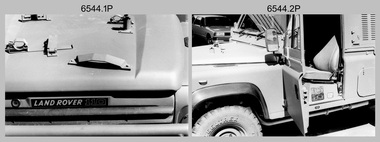 Bendigo Military Museum
Photograph - 4th Field Survey Squadron - Land Rover Perentie Light Vehicles, Keswick Barracks, Adelaide SA, 1987
... The Land Rover Perentie is a nickname for the Land Rover 110 produced by JRA Limited for the Australian Army, and part manufactured and assembled in Moorebank, New South Wales, during the 1980s and 1990s The name Perentie originates from Land Rover's successful tender to Project Perentie, which was the official Australian Army trial to select new 1 and 2-tonne light vehicles to replace the ageing fleet of Series 2A and 3 Land Rovers. ...The Land Rover Perentie is a nickname for the Land Rover 110 produced by JRA Limited for the Australian Army, and part manufactured and assembled in Moorebank, New South Wales, during the 1980s and 1990s The name Perentie originates from Land Rover's successful tender to Project Perentie, which was the official Australian Army trial to select new 1 and 2-tonne light vehicles to replace the ageing fleet of Series 2A and 3 Land Rovers. ...This is a set of 35 photographs featuring 4th Field Survey Squadron’s newly introduced Survey variant of the Land Rover Perentie light vehicle, at Keswick Barracks, Adelaide SA in 1987. The Land Rover Perentie is a nickname for the Land Rover 110 produced by JRA Limited for the Australian Army, and part manufactured and assembled in Moorebank, New South Wales, during the 1980s and 1990s The name Perentie originates from Land Rover's successful tender to Project Perentie, which was the official Australian Army trial to select new 1 and 2-tonne light vehicles to replace the ageing fleet of Series 2A and 3 Land Rovers. The major differences between the Land Rover Perentie and British Land Rovers were the relocation of the spare wheel to a position under the rear of the load area, a galvanised chassis and the Isuzu engine. The Land Rover Perenties were produced in 4x4 and 6x6 variants and powered by an Isuzu 3.9-litre four-cylinder 4BD1 diesel engine. The Truck, Panel, Lightweight, Survey, FFR, Winch, MC2 model was one of eight 4x4 variants built for the Australian Army. There were 35 vehicles built to satisfy the operational requirements of RA Svy’s units. Source – Wikipedia. See item 6545.9P for related photos of these vehicles.This is a set of 35 photographs featuring 4th Field Survey Squadron’s newly introduced Survey variant of the Land Rover Perentie light truck vehicle, at Keswick Barracks, Adelaide SA in 1987. The black & white photographs are on 35mm negative film and are part of the Army Survey Regiment’s Collection. The photographs were scanned at 96 dpi. .1) to .8) - Photo, black & white, 1987. Land Rover Perentie light truck vehicle features. .9) - Photo, colour, 1986. L to R: unidentified, RQMS - WO2 Peter Symmans, unidentified. .10) to .15) - Photo, black & white, 1987. Land Rover Perentie light truck vehicle features. .16) - Photo, black & white, 1987. Land Rover Perentie light truck vehicle. L to R: WO2 Russ Larsen, SSGT Barry Lutwyche, 2IC Terry Lord, SGT Mick Hogan, unidentified. .17) - Photo, black & white, 1987. Land Rover Perentie light truck vehicle features. .18) & .19) - Photo, black & white, 1987. Loading field trip stores into Land Rover Perentie light truck vehicle. .20) & .21) - Photo, black & white, 1987. L to R: SPR Steve Perks, SGT Mick Hogan loading field trip stores into Land Rover Perentie light truck vehicle. .22) to .25) - Photo, black & white, 1987. L to R: SPR Steve Perks loading field trip stores into Land Rover Perentie light truck vehicle. .26) - Photo, black & white, 1987. CAPT Danny Galbraith loading field trip stores into Land Rover Perentie light truck vehicle. .27) to .31) - Photo, black & white, 1987. Loading field trip stores into Land Rover Perentie light truck vehicle. .32) to .34) - Photo, black & white, 1987. Land Rover Perentie light truck vehicle – broken transfer case lever. .35) - Photo, black & white, 1987. Land Rover Perentie light truck vehicle’s Isuzu 3.9-litre four-cylinder 4BD1 diesel engine..1P to .35P – There are no personnel identified. ‘PERENTI MOTOR VEHICLES JUL 87’ annotated on negatives sleeve.royal australian survey corps, rasvy, 4 fd svy sqn -
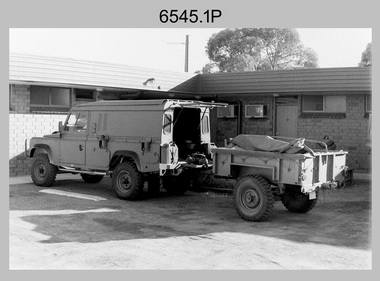 Bendigo Military Museum
Photograph - 4th Field Survey Squadron - Land Rover Perentie Light Vehicles in the Field, 1987
... The Land Rover Perentie is a nickname for the Land Rover 110 produced by JRA Limited for the Australian Army, and part manufactured and assembled in Moorebank, New South Wales, during the 1980s and 1990s The name Perentie originates from Land Rover's successful tender to Project Perentie, which was the official Australian Army trial to select new 1 and 2-tonne light vehicles to replace the ageing fleet of Series 2A and 3 Land Rovers. ...The Land Rover Perentie is a nickname for the Land Rover 110 produced by JRA Limited for the Australian Army, and part manufactured and assembled in Moorebank, New South Wales, during the 1980s and 1990s The name Perentie originates from Land Rover's successful tender to Project Perentie, which was the official Australian Army trial to select new 1 and 2-tonne light vehicles to replace the ageing fleet of Series 2A and 3 Land Rovers. ...This is a set of nine photographs featuring 4th Field Survey Squadron’s newly introduced Survey variant of the Land Rover Perentie light truck vehicle on a field trip in SA, in 1987. The Land Rover Perentie is a nickname for the Land Rover 110 produced by JRA Limited for the Australian Army, and part manufactured and assembled in Moorebank, New South Wales, during the 1980s and 1990s The name Perentie originates from Land Rover's successful tender to Project Perentie, which was the official Australian Army trial to select new 1 and 2-tonne light vehicles to replace the ageing fleet of Series 2A and 3 Land Rovers. The major differences between the Land Rover Perentie and British Land Rovers were the relocation of the spare wheel to a position under the rear of the load area, a galvanised chassis and the Isuzu engine. The Land Rover Perenties were produced in 4x4 and 6x6 variants and powered by an Isuzu 3.9-litre four-cylinder 4BD1 diesel engine. The Truck, Panel, Lightweight, Survey, FFR, Winch, MC2 model was one of eight 4x4 variants built for the Australian Army. There were 35 Vehicles built to satisfy the operational requirements of RA Svy’s units. Source – Wikipedia. See item 6544.35P for related photos of these vehicles.This is a set of 35 photographs featuring 4th Field Survey Squadron’s newly introduced Survey variant of the Land Rover Perentie light truck vehicle, at Keswick Barracks, Adelaide SA in 1987. The black & white photograThis is a set of nine photographs featuring 4th Field Survey Squadron’s newly introduced Survey variant of the Land Rover Perentie light truck vehicle on a field trip in SA, in 1987. The black & white photographs are on 35mm negative film and are part of the Army Survey Regiment’s Collection. The photographs were scanned at 96 dpi. .1) - Photo, black & white, 1987. Perentie Land Rover with trailer parked outside unknown motel in SA. .2) & .3) - Photo, black & white, 1987. Field trip featuring Perentie Land Rover. .4) - Photo, black & white, 1987. Field trip featuring Perentie Land Rover. Series 3 Land Rover parked behind. Unidentified personnel. .5) & .6) - Photo, black & white, 1987. Field trip featuring Perentie Land Rover. Unidentified personnel. .7) & .8) - Photo, black & white, 1987. Field trip featuring Perentie Land Rover. Typical sandy 4WD track on fence line. .9) - Photo, black & white, 1987. Field trip featuring Perentie Land Rover. Probable gas extraction facility..1P to .9P – There are no personnel identified. ‘PERENTI MOTOR VEHICLES JUL 87’ annotated on negatives sleeve.tified. royal australian survey corps, rasvy, 4 fd svy sqn -
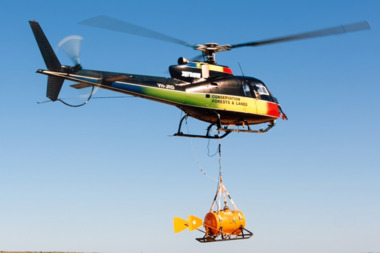 Department of Energy, Environment and Climate Action
Aerial Drip Torch (ADT) or "Dragon"
... Two Aerial Drip Torches (ADTs) were built in the 1990s by the Fire Equipment Development Centre at North Altona, They were developed in conjunction with the Department of Conservation and Land Management in Western Australia. The first was trialled during the 1991/92 autumn burning season. ...trialled in Victoria at Swifts Creek in 1991 and the Aerial Drip Torch (ADT) has now become standard practice. Forests Commission Victoria (FCV) Bushfire Bushfire Aviation Planned Burning Two Aerial Drip Torches (ADTs) were built in the 1990s by the Fire Equipment Development Centre at North Altona, They were developed in conjunction with the Department of Conservation and Land Management in Western Australia. ...The Aerial Drip Torch (ADT) was an idea conceived in Canada in the 1970s by John Muraro It was developed in 1982 by the New Zealand Forest Service to become the Ashley Aphid Helitorch. Forestry Tasmania acquired one of the machines and modified it in February 1987. Also known as a dragon helitorch it consisted of a large 135-litre tank containing jellied petrol, a displacement pump, propane ignition system, burner nozzle and fire extinguisher system. It was first trialled in Victoria at Swifts Creek in 1991 and the Aerial Drip Torch (ADT) has now become standard practice.Two Aerial Drip Torches (ADTs) were built in the 1990s by the Fire Equipment Development Centre at North Altona, They were developed in conjunction with the Department of Conservation and Land Management in Western Australia. The first was trialled during the 1991/92 autumn burning season. The machine proved to be successful and a second machine was introduced in 1998 to assist with burning operations across the State. The ADTs were commonly used for regeneration burning (controlled burning of logging slash). The first ADT introduced in 1992 had a dry weight of 160kg and a capacity of 130 litres, providing about an hour of operation. Following initial use, systematic modifications were adapted including improved ignition of gel at the drop tube, installation of an air bleed valve at the pump to assist pump priming and improved mounting brackets for the CO2 bottles and propane canister attached to the machine. The second, and lightweight ADT, introduced in 1998 had a dry weight of 68kg and a capacity of 200 litres due to a smaller lightweight frame and plastic (Polyfin) tank. In operation the ADT is suspended below a helicopter via four strops attached to the vessel and a cable to the helicopter cargo hook. Gelled fuel is dispensed via a drop tube which is attached to the pump outlet of the machine, and ignited via a gas torch. Safety features built into the first ADT were: a brass melting plug designed to be activated at 200 C bursting disc designed to burst at170 Kpa should the vessel over pressurise. a pressure relief valve set to 35 Kpa ( vessel operated between 16 &34 Kpa) a low pressure sensor designed to shut down the machine should the vessel pressure drop below 15Kpa. the vessel is filled with CO2 above the gelled fuel to eliminate ignition with in the vessel. CO2 is used to expel any residue of ignited gel from the drop tube to prevent ignition when flying outside the boundaries of the burning area. See FIRE EQUIPMENT NOTE - 46 [ https://drive.google.com/file/d/1CKtcH-3rUlrtbE9dkNP27PYT2-raVVhF/view ]forests commission victoria (fcv), bushfire, bushfire aviation, planned burning -
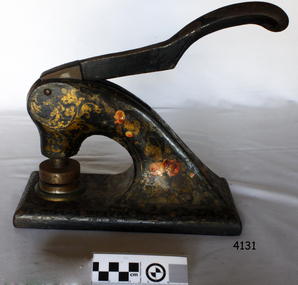 Flagstaff Hill Maritime Museum and Village
Functional object - Hand operated embossing document press, 1910
... Security and growth gave the company confidence to trial Australia’s first electric blanket in 1958 and to install Swiss Sulzer looms in 1965. ...Security and growth gave the company confidence to trial Australia’s first electric blanket in 1958 and to install Swiss Sulzer looms in 1965. ...The woollen mill was a vital part of Warrnambool for all but 22 years of the town’s history since it's the establishment in 1847 when the first land sales were held and white settlement began. In 1869 the Warrnambool Meat Preserving Company began operations on the mill site, in 1875, shareholders of the then defunct Warrnambool Meat Preserving Company happily sold the land and buildings on the Merri river to Warrnambool Woollen Mill Company Ltd for £5,000. The site was sold again in 1876 to grazer Robert Hood of Sherwood, who was chairman of directors of the failed company, which couldn’t raise sufficient capital to keep the works operating. The entrepreneurial Hood then used the existing plant to turn his own wool into tweed cloth. But just as the mill was starting to show a profit, a fire destroyed the building and plant on the night of 25 March 1882. So again, the mill was operational for six short years. Insurers only paid a fraction over 10% of the damage, Hood couldn't raise sufficient capital to rebuild on his own, and so the site lay unused until 1910. In 1908 Marcus Saltau and Peter John McGennan convinced the Warrnambool Chamber of Commerce to invest in a secondary industry with local capital. A public meeting in September 1908 agreed to raise £40,000, electing Saltau chairman of directors, a post he held for 34 years. A year later, using mostly local money, the Warrnambool Woollen Mill Company dispatched its first manager, John E. Bennett, to buy a plant and recruit 20 experienced staff from the Yorkshire woollen industry in December 1909. Another year more, the new mill was officially opened on 14 November 1910 by Marcus Saltau as company chairman and town mayor. Eighteen months on, in May 1912, the mill paid its first half-yearly dividend of 2 ½%. It was now working two shifts, with a year's orders to fill. In 1914 the mill ordered its own generator, providing the town with electricity and effectively doubling its plant size by October 1915, six months after Gallipoli. Thereafter, government orders for cloth and military supplies assured the mill’s success right through the First World War and on until 1923. A plant upgrade in 1922 for machinery to make worsted fabric drained profits, which, with a fall in demand, led to a loss in 1925. Profits were restored by the 1930s, despite the Depression, mostly due to tight management and robust marketing. Production boomed again during the Second World War, but soon foreign competition bit into profits, forcing the company to consolidate operations. The ‘50s and ‘60s were golden years for the mill. Security and growth gave the company confidence to trial Australia’s first electric blanket in 1958 and to install Swiss Sulzer looms in 1965. Over time, the building facades took on the modern look that the mill presented until it closed. The Dunlop company bought the mill in 1968, fending off a challenge from Onkaparinga in South Australia, and continued to expand by adding Wendouree Woollen Mill in the same year and Dream-spun Textiles a decade later, in 1979. Soon after that purchase, however, the mill began its slippery slide into decline. Dunlop sold to its former rival bidder Onkaparinga Woollen Co. Ltd in 1982, which in turn was taken over by Macquarie Worsted's only a year later, in 1983. Operations remained stable for a decade until 1994 when the Macquarie Group signaled that its newly rationalised operations left no room for the Warrnambool investment. The final operator of the mill was The Smith Family charity group, which ran the site by agreement with the Warrnambool City Council and a state government grant in that same year, 1994. The mill became more of a fabric recycler than a manufacturer. The site was sold to private operators in February 2003 and rezoned four months later to allow for the mixed housing development. The embossing press is significant for its association with the Warrnambool Woollen Mills 1910-1968, a major employer in the Warrnambool district. The press is also significant as an example of commercial office equipment used in the 19th and 20th century.Press, metal, for Company seal of Warrnambool Woollen Mill, stamping their brand as Western District Worsted Mills Pty Ltd. Metal is black with red and gold floral markings. Inscription of stamp reads "WESTERN DISTRICT WORSTED MILLS PROPRIETRY LIMITED" flagstaff hill, warrnambool, shipwrecked-coast, flagstaff-hill, flagstaff-hill-maritime-museum, maritime-museum, warrnambool woollen mills, western district worsted mills proprietry limited, worsted fabric, printing press, logo printing press, stamp printing press, shipwreck-coast, flagstaff-hill-maritime-village -
Bendigo Historical Society Inc.
Document - The Victorian Country Volleyball Council (VCVC) Correspondence and Country Championship Reports, 1980
... This item contains Correspondence of the Council in 1980 and reports on the Country Chamionships for that year; it include. the following documents: 11171.19a VAVA Special Executive Meeting Minutes Feb 1980 11171.19b VAVA Special Executive Meeting Minutes Feb 1980 11171.19c VAVA Executive Meeting Minutes Feb 1980 11171.19d VAVA Statement of Account Feb 1980 11171.19e VCVC Meeting Minutes April 1980 11171.19f VAVA Executive Meeting Minutes March 1980 11171.19g VAVA Planning Meeting April 1980 11171.19h VCVC AGM June 1980 11171.19i VAVA Executive Council Meeting May 1980 11171.19j VAVA Executive Council Planning Meeting May 1980 11171.19k VAVA Executive Council Meeting June 1980 11171.19l VAVA Executive Council Meeting May 1980 11171.19m VAVA Executive Council Meeting July 1980 11171.19n VAVA Committee Listings Aug 1980 11171.19o VAVA Financial Statement Oct 1980 11171.19p VCVC two day conference minutes Oct 1980 11171.19q VAVA Executive meeting minutes Nov 1980 11171.19r Colour Map of South Australia showing where Volleyball is played 11171.19s VCVC Meeting minutes Dec 1980 at Moe 11171.19t VAVA Meeting minutes Dec 1980 11171.19u VCVC Letter from Secretary re petty cash 11171.19v Victorian Olympic Council re applicants for Promotions Officer 11171.19w VCVC Letter to the Phillip Island District Amateur Volleyball Association 11171.19x VAVA Victorian U15 Boys Selection Trials 11171.19y VCVC Executive Listings 11171.19z VAVA Volleypak Insurance fundraising scheme 11171.19aa VAVA Victorian U15 girls selection trials 11171.19ab Australia Post Box details 11171.19ac Sports Federation of Victoria Newsletter Feb 1980 11171.19ad VAVA 1980 Calendar 11171.19ae Letter to VCVC President Malcolm Darby re meetings 11171.19af Victorian High Schools' Sports Association selection trials 11171.19ag Sports Federation of Victoria Newsletter for March 11171.19ah Thank you letter from World sports Expo 11171.19ai Rebound Marketing proposal 11171.19aj Kyneton Amateur Volleyball Association Rule Book Request 11171.19ak VAVA to President Malcolm Darby re U17 Country Championships 11171.19al Greater Melbourne Volleyball Council re Veteran Championship 1980 11171.19am Bendigo YMCA Volleyball association registration of team colours 11171.19an Seymour Amateur Volleyball Association re monies owed 11171.19ao VCVC Balance Sheet 1980 11171.19ap VCVC to Secretary from Treasurer re monies outstanding 11171.19aq VCVC Record Secretary's annual report June 1980 11171.19ar VAVA re Personal Accident Cover 11171.19as VAVA Constitution revision Sept 1979 11171.19at U20 Men's Match Report 11171.19au The Sports Adminiastrtion Newsletter April 1980 11171.19av The Sports Adminiastrtion Newsletter May 1980...In 2023, the Commission handed the organisation of the Championships back to VVI, who with paid staff, were better equipped to manage the event. victorian country volleyball council vcvc victorian amateur volleyball association volleyball victoria This item contains Correspondence of the Council in 1980 and reports on the Country Chamionships for that year; it include. the following documents: 11171.19a VAVA Special Executive Meeting Minutes Feb 1980 11171.19b VAVA Special Executive Meeting Minutes Feb 1980 11171.19c VAVA Executive Meeting Minutes Feb 1980 11171.19d VAVA Statement of Account Feb 1980 11171.19e VCVC Meeting Minutes April 1980 11171.19f VAVA Executive Meeting Minutes March 1980 11171.19g VAVA Planning Meeting April 1980 11171.19h VCVC AGM June 1980 11171.19i VAVA Executive Council Meeting May 1980 11171.19j VAVA Executive Council Planning Meeting May 1980 11171.19k VAVA Executive Council Meeting June 1980 11171.19l VAVA Executive Council Meeting May 1980 11171.19m VAVA Executive Council Meeting July 1980 11171.19n VAVA Committee Listings Aug 1980 11171.19o VAVA Financial Statement Oct 1980 11171.19p VCVC two day conference minutes Oct 1980 11171.19q VAVA Executive meeting minutes Nov 1980 11171.19r Colour Map of South Australia showing where Volleyball is played 11171.19s VCVC Meeting minutes Dec 1980 at Moe 11171.19t VAVA Meeting minutes Dec 1980 11171.19u VCVC Letter from Secretary re petty cash 11171.19v Victorian Olympic Council re applicants for Promotions Officer 11171.19w VCVC Letter to the Phillip Island District Amateur Volleyball Association 11171.19x VAVA Victorian U15 Boys Selection Trials 11171.19y VCVC Executive Listings 11171.19z VAVA Volleypak Insurance fundraising scheme 11171.19aa VAVA Victorian U15 girls selection trials 11171.19ab Australia Post Box details 11171.19ac Sports Federation of Victoria Newsletter Feb 1980 11171.19ad VAVA 1980 Calendar 11171.19ae Letter to VCVC President Malcolm Darby re meetings 11171.19af Victorian High Schools' Sports Association selection trials 11171.19ag Sports Federation of Victoria Newsletter for March 11171.19ah Thank you letter from World sports Expo 11171.19ai Rebound Marketing proposal 11171.19aj Kyneton Amateur Volleyball Association Rule Book Request 11171.19ak VAVA to President Malcolm Darby re U17 Country Championships 11171.19al Greater Melbourne Volleyball Council re Veteran Championship 1980 11171.19am Bendigo YMCA Volleyball association registration of team colours 11171.19an Seymour Amateur Volleyball Association re monies owed 11171.19ao VCVC Balance Sheet 1980 11171.19ap VCVC to Secretary from Treasurer re monies outstanding 11171.19aq VCVC Record Secretary's annual report June 1980 11171.19ar VAVA re Personal Accident Cover 11171.19as VAVA Constitution revision Sept 1979 11171.19at U20 Men's Match Report 11171.19au The Sports Adminiastrtion Newsletter April 1980 11171.19av The Sports Adminiastrtion Newsletter May 1980 Document The Victorian Country Volleyball Council (VCVC) Correspondence and Country Championship Reports. ...Volleyball has been played in regional Victoria since the early-1960’s. During those early days, most competitions, like the founders of our great sport, were run by, or in conjunction with, the YMCA. Competitions were running at the Ballarat School of Mines and the YMCA’s of Bendigo, Geelong and Warrnambool. In August 1966, an invitation was extended by the Victorian Amateur Volleyball Association to play in the first State-wide event at Monash University. Geelong and Bendigo accepted the invitation with Melbourne represented by Sisu. For Bendigo players at least, this was the first exposure to ‘international rules’, which prevented upward scoops with open hands, introduced an action called a ‘dig’ and seemed to penalise most overhead actions using the fingers as ‘double hits’! Over the next few years, the sport expanded through the YMCA movement with weekly competitions starting up in Ararat, Warrnambool and Latrobe Valley. The Victorian Regional Council of YMCA’s proposed the first Victorian YMCA Championship in Warrnambool on 30th March 1968 with an entry fee of $4.00 per team. The sport continued to grow with additional regional associations affiliating with the Victorian Amateur Volleyball Association (now VVI) who provided the coaching and refereeing assistance needed to raise the standard of play. In 1970, the YMCA Championships started to give way to the Victorian Country Championships with the first ever event held in Bendigo. In 1973, a re-organisation of the VAVA saw the proposal to create separate Victorian Country and Metropolitan Volleyball Councils. The VCVC was established in 1974 and took over the organisation of the Victorian Country Championships. For the next 10-12 years, the Country Championships grew in stature with the inclusion of two divisions for open men and women and junior divisions for boys and girls. Representative teams successfully contested Australian Country Championships between Victoria, South Australia and New South Wales on several occasions. In October 1985, the VCVC voluntarily wound up the Council and handed the responsibility for the Country Championships back to Volleyball Victoria, who by that time had full-time State Executive and Coaching Directors. Since that time, the Long Weekend in June has continued to be the date of the major annual volleyball event for most regional associations, even though in 1986 the Junior Country Championships were wound up in favour of state and national schools events. A number of regional associations have ceased to exist, as have a number of regional tournaments. Regional leagues were created in both the Gippsland and Central, North-West regions, with Gippsland the only one to survive. Some associations have successfully competed in the State League competitions at various times. Following the experience gained by a number of regional administrators working on the Sydney Olympic Games, a proposal to revamp the Victorian Country Championship was put to VVI in early 2002. Later that year, the Volleyball Victoria Country Championships Commission was formed to implement the recommendations of the review and take control of the event into the future. These championships now provide regional players and officials an opportunity to participate in a consistently well-managed event, using many international protocols and a high standard of presentation. Without doubt, this event now ranks as one of the best volleyball events in Australia. Source: 2022 Country Championship regulations The management of the Country Championships by the Victorian Country Championship Commission certainly achieved the objective of raising the standard of presentation, and delivering a consistently high quality event. However, the demands on Host Associations began to take their toll, with several Associations declining the opportunity to host the event due to the high workload. Similarly, the workload of the volunteer Commissioners also took its toll, with the Commission unable to fill casual vacancies. In 2023, the Commission handed the organisation of the Championships back to VVI, who with paid staff, were better equipped to manage the event.This item contains Correspondence of the Council in 1980 and reports on the Country Chamionships for that year; it include. the following documents: 11171.19a VAVA Special Executive Meeting Minutes Feb 1980 11171.19b VAVA Special Executive Meeting Minutes Feb 1980 11171.19c VAVA Executive Meeting Minutes Feb 1980 11171.19d VAVA Statement of Account Feb 1980 11171.19e VCVC Meeting Minutes April 1980 11171.19f VAVA Executive Meeting Minutes March 1980 11171.19g VAVA Planning Meeting April 1980 11171.19h VCVC AGM June 1980 11171.19i VAVA Executive Council Meeting May 1980 11171.19j VAVA Executive Council Planning Meeting May 1980 11171.19k VAVA Executive Council Meeting June 1980 11171.19l VAVA Executive Council Meeting May 1980 11171.19m VAVA Executive Council Meeting July 1980 11171.19n VAVA Committee Listings Aug 1980 11171.19o VAVA Financial Statement Oct 1980 11171.19p VCVC two day conference minutes Oct 1980 11171.19q VAVA Executive meeting minutes Nov 1980 11171.19r Colour Map of South Australia showing where Volleyball is played 11171.19s VCVC Meeting minutes Dec 1980 at Moe 11171.19t VAVA Meeting minutes Dec 1980 11171.19u VCVC Letter from Secretary re petty cash 11171.19v Victorian Olympic Council re applicants for Promotions Officer 11171.19w VCVC Letter to the Phillip Island District Amateur Volleyball Association 11171.19x VAVA Victorian U15 Boys Selection Trials 11171.19y VCVC Executive Listings 11171.19z VAVA Volleypak Insurance fundraising scheme 11171.19aa VAVA Victorian U15 girls selection trials 11171.19ab Australia Post Box details 11171.19ac Sports Federation of Victoria Newsletter Feb 1980 11171.19ad VAVA 1980 Calendar 11171.19ae Letter to VCVC President Malcolm Darby re meetings 11171.19af Victorian High Schools' Sports Association selection trials 11171.19ag Sports Federation of Victoria Newsletter for March 11171.19ah Thank you letter from World sports Expo 11171.19ai Rebound Marketing proposal 11171.19aj Kyneton Amateur Volleyball Association Rule Book Request 11171.19ak VAVA to President Malcolm Darby re U17 Country Championships 11171.19al Greater Melbourne Volleyball Council re Veteran Championship 1980 11171.19am Bendigo YMCA Volleyball association registration of team colours 11171.19an Seymour Amateur Volleyball Association re monies owed 11171.19ao VCVC Balance Sheet 1980 11171.19ap VCVC to Secretary from Treasurer re monies outstanding 11171.19aq VCVC Record Secretary's annual report June 1980 11171.19ar VAVA re Personal Accident Cover 11171.19as VAVA Constitution revision Sept 1979 11171.19at U20 Men's Match Report 11171.19au The Sports Adminiastrtion Newsletter April 1980 11171.19av The Sports Adminiastrtion Newsletter May 1980victorian country volleyball council, vcvc, victorian amateur volleyball association, volleyball victoria -
 City of Melbourne Libraries
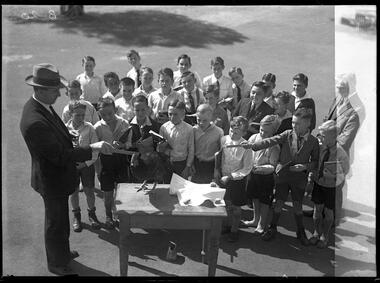
Photograph, Bull, Hugh Jones, 1897-1993, Poultry Club, Wales Street School, Northcote
... Australian Black Orpington (Austral-orp). It achieved world-wide popularity in the 1920s for its laying ability. In 1922-23 a team of six hens set a world record by laying 1857 eggs for an average of 309.5 eggs per hen during a 365 consecutive day trial. ...Australian Black Orpington (Austral-orp). It achieved world-wide popularity in the 1920s for its laying ability. In 1922-23 a team of six hens set a world record by laying 1857 eggs for an average of 309.5 eggs per hen during a 365 consecutive day trial. ...Wales Street State School poultry club lesson “Fresh eggs for breakfast will be available now in many Northcote homes. Mr Taylor of the Wales Street School, is explaining the points of a good hen to the members of the school poultry club.” Mr Taylor of Ballarat was founder of the largest Young Farmers’ Club in Western Victoria. He was also in charge of Grade 6 at Northcote’s Wales Street State School No. 3139 and president of their poultry club. The chook under inspection is the Australorp, an Australian breed developed from the UK Black Orpington and the US Rhode Island Red. It achieved world-wide popularity in the 1920s for its laying ability: in a 1922/23 world record, six hens laid an average of 309.5 eggs per hen during a 365 consecutive day trial. MCK 059 Published: The Age 16 March 1934 Featured in "Newsworthy: Melbourne in photographs 1933-1936" exhibition at East Melbourne Library, October to December 2023. Exhibition caption by project volunteer, Louise McKenzie. Photographer notations on slide: "B20" Published: 16 March 1934 The Age p3 Published title: SUBURBAN BOYS' POULTRY CLUB Published caption: Fresh eggs for breakfast will be available now in many Northcote homes. Mr. Taylor, of the Wales-street school, is explaining the points of a good hen to the members of the school poultry club. Trove article identifier: http://nla.gov.au/nla.news-article203841415 Description: The scene is outside in a school playground. 25 schoolboys and one teacher stand around a wooden table on which a large live chicken is standing. An instructor stands beside the chicken, holding a ruler, which rests lightly on the chicken’s neck. The boys wear shorts and shirts. Mostly they wear shoes or boots and socks, although one has bare feet. Some wear a jacket, some wear ties; one has braces. Their hair has been freshly brushed. One boy stands out from the group: he appears older than the others and wears a tie, shirt and blazer, with two badges on the lapel. The young teacher wears a slightly scruffy short suit with shirt and tie; the instructor wears a dark suit with tie and hat. The boys are carrying exercise books. They look to be around 10 years of age. Research by project volunteer, Louise McKenzie: From the text of the newspaper article we know this is the Wales Street Primary School, in Northcote. It opened in 1891 when it was known as the Prince of Wales Park State School. As a result of economic depression it closed in 1892, but reopened in 1900, and in 1920 reached its peak with 1232 pupils. The instructing teacher is Mr James Taylor, who was leader of the school’s Poultry Club. He wrote articles for the Age explaining that “since 1927 when the Young Farmers Clubs were first established in Victorian State schools, poultry keeping as a school project and a hobby has become extremely popular.” He encouraged girls and boys to become involved for profit and pleasure. White Leghorn and Australorp breeds were good egg producers, but most important were, “the 4 G’s of poultry farming:— grains, greens, grit and gumption — the latter being extremely important. One might be excused also for asking that the word "grit" be read with a double meaning. Brain sees through a thing, but grit sees it through. The successful person in poultry keeping is he or she who continues to work well with the birds long after the novelty has died off.” According to a visitor to the Poultry Club, expert farmer Mr Buscomb of NUPHA, the key features of a good bird were that it should be "as wide as possible across the saddle, have a clean face, close feathers, bayonet shaped legs, and fine textured combs and wattles." The Australorp is a chicken breed of Australian origin, developed out of Black Orpington (UK) and Rhode Island Red birds. White Leghorn, Langshan and Minorca elements were also added, resulting in a very utilitarian bird known as the Australian Black Orpington (Austral-orp). It achieved world-wide popularity in the 1920s for its laying ability. In 1922-23 a team of six hens set a world record by laying 1857 eggs for an average of 309.5 eggs per hen during a 365 consecutive day trial. In Australia the Australorp is recognised in black, white and blue colouring. The Weekly Times of Saturday 24 February 1934 reported that Mr James Taylor of Ballarat, founder of the largest Young Farmers’ club in Victoria (at Murtoa) was now in charge of Grade 6 at the Wales Street State School No. 3139 and was president of their poultry club. This feature followed in The Age of 16 March 1934, with another in 28 December 1934. The topic is again featured in the Weekly Times of April 1935 – Mr Taylor was making quite an impact! References: SUBURBAN BOYS' POULTRY CLUB--PREMIERSHIP CRICKET TEAM--AROUND THE SUN DIAL--"EYES LEFT !" (1934, March 16). The Age (Melbourne, Vic. : 1854 - 1954), p. 3. Retrieved September 19, 2023, from http://nla.gov.au/nla.news-article203841415 Poultry at Northcote (1935, April 27). Weekly Times (Melbourne, Vic. : 1869 - 1954), p. 47. Retrieved September 19, 2023, from http://nla.gov.au/nla.news-article223353807 POCKET MONEY FROM POULTRY. (1934, December 28). The Age (Melbourne, Vic. : 1854 - 1954), p. 14. Retrieved September 19, 2023, from http://nla.gov.au/nla.news-article205074190 A City Club (1934, February 24). Weekly Times (Melbourne, Vic. : 1869 - 1954), p. 49. Retrieved September 19, 2023, from http://nla.gov.au/nla.news-article223202561 Australorp, Wikipedia, https://en.wikipedia.org/wiki/AustralorpPhotographer notations on slide: "B20".schools, poultry, clubs, 1930-1939 -
 Federation University Historical Collection
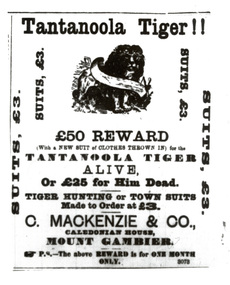
Newspaper - Newsclippings, Tantanoola Tiger Newsclippings
... trial Edmunson admitted to stealing over 4,000 sheep during the previous 20 years. He was gaoled for six years with hard-labour in January 1911. Edmunson had been selling the skins of the stolen sheep, leaving the carcusses to rot. He earned around five pounds per week during the 1990s and early 1900s, a time when the economy was depressed. It is not known had the animal known as the Tantanoola Tiger came to Australia...trial Edmunson admitted to stealing over 4,000 sheep during the previous 20 years. He was gaoled for six years with hard-labour in January 1911. Edmunson had been selling the skins of the stolen sheep, leaving the carcusses to rot. He earned around five pounds per week during the 1990s and early 1900s, a time when the economy was depressed. It is not known had the animal known as the Tantanoola Tiger came to Australia ...In the early 1880s a small circus travelled between Millicent and Mt Gambier, South Australia. After camping overnight they discovered their Bengal Tiger at escaped and disappeared into dense scrub. After searching for hours they continued to Mt Gambier and reported the loss of the tiger to police. Police and local volunteers continued the search for the escaped tiger, but no sighting were made. In the early 1890s sheep in the Tantanoola area started to disappear with the still unsighted tiger being blamed. In 1893 reports of an unusual animal in the Tantanoola area started, with many describing the animal as the missing tiger, or a large dog. One eye witness claimed to have seen the animal carrying a full grown sheep in its mouth. The reports grew in number and exaggeration with sightings from Robe to Bendigo. In the Tantanoola district children were escorted with shotgun guards to and from school, with many homes keeping guns at the ready in case the tiger suddenly appeared. In August 1895 Tom Donovan shot the "Tantanoola Tiger" on Mt Salt Station, around 20 kms south of Tantanoola. The corpse was taken to Marks, a Mount Gambier taxidermist, at which time the animal was identified as an Assyrian or Northern Russian Wolf. Donovan displayed the animal far and wide. Despite the animal's death sheep continued to disappear from properties in the district over many years. It was of particular concern between 1909 and 1910. At that time Herbert Allchurch, an Adelaide detective, was sent to solve the mystery. A few days after his arrival Allchruch went to the front bar of the Tiger Hotel and arrested local rabbit shooter and trapper, Charlie Edmunson, with sheep stealing. After his 1911 trial Edmunson admitted to stealing over 4,000 sheep during the previous 20 years. He was gaoled for six years with hard-labour in January 1911. Edmunson had been selling the skins of the stolen sheep, leaving the carcusses to rot. He earned around five pounds per week during the 1990s and early 1900s, a time when the economy was depressed. It is not known had the animal known as the Tantanoola Tiger came to Australia, but it is believed it survived one of three ships wrecked of the coast between 1890 and 1893, making it to shore along with some of the shipwrecked passengers. (From a card produced by the Tantanoola Tiger Hotel, where the 'tiger' is on display.)A collection of Newsclippings from 1892 - 1895 photocopied onto A4 white paper. The clippings relate to the Tantanoola Tiger. Clippings include: * Border Watch 1892 - Tantanoola Tiger Reward * Sydney Morning Herald, 04/07/1857 - Animals in Zoological Gardens, including a number of large cats. * Claims the Tantanoola Tiger was an escaped circus animal (ie The Advertiser [Adelaide], 31 October 1893) * Search parties for the Tantanoola Tiger (ie Barrier Miner 19/05/1893; Barrier Miner 03/1081893) * Thylacine claim (ie Morning Bulletin [Rockhampton] 11/03/1895 * Afghan and Indian Hunters (ie Barrier Miner 07/02/1895) * Sighting by John Bird of Scarsdale - Wanganui Herald 15/12/1900. " ... Mr Bird was travelling on foot along a lonely track through very dense scrub, when he was stricken with amazement to see a full-grown tiger standing in a small dam about 30ft away, and holding in its jaws the carcass of a newly-killed lamb. He remained long enough to thoroughly take in the animals appearance, and then beat a hasty retreat unmolested. His description of the animal is as follows: A tawny-coloured creature, with a dirty mottled skin; in general appearance like an immense cat; body 4ft long, and of a uniform thickness from shoulder to hindquarters; in bulk equal to a very large pig. The legs were hidden in the water. A similar animal is reported to gave been seen near Canico, some miles away. ..." * Victorian country sightings # Bullarto - Argus 06/05/1905 # Dean - Launceston Examiner 28/01/1895 # Bendigo - Hobart Mercury 15/03/1895 # Ballan - Launceston Examiner 03/08/1895 * South Australian register 17/06/1885 " There is a tiger or panther wandering at large in Victoria, according to a rumour. It has taken the place of the Bunyip, whom hundreds have seen but none captured. This tiger is supposed to have broken loose from a travelling menagerie in the North-eastern district. At the beginning we should like it roved that such an escape ever took place. Perhaps the showmen were afraid to report the fact to the police; at any rate they did not do so. The first story about the tiger being seen came from the neighborhood of Wangaratta, 60 miles from the place where it is said to have commenced business on its own account. He was followed, but vanished among trees. Next we hear of a strange animal, bigger than a St Bernard's dog, but shorter legged, having appeared at least 150 miles from Wangaratta. Between Lilydale and Wangaratta there is a dividing range 2,000 feet high in the lowest past, besides several large rivers. An finally, the tiger - changed from a panther - is reported as having been seen within the suburban circle, about 8 miles from the general Post Office. They show you footprints, and point to the carcasses of mangled cows and calves. Casts have been taken of the footprints for examination by scientific men, who pronounce them doglike, and yet not doglike, but panther-like, which gives a nervous turn, for the panther may take up killing children and grown-up people. One tiger will not account for so many apparitions. There must have been a general strike among the menageries, and a breaking-up companies. ... * Research article by Philip A. Clarke "Indigenous Spirit and Ghost Folklore of 'Settled' Australia. australian animal folklore collection, tantanoola tiger, tom donovan, herbert allchurch, charles edmunson, sheep, charlie edmunson, mythical, myth, folklore -
 Federation University Historical Collection
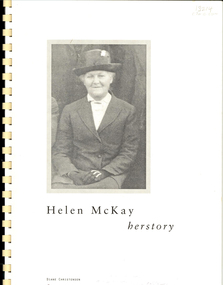
Booklet, Helen McKay Herstory, 1997
... Before emigrating to Australia they had lived in Kilcaldy, Fifeshire, Scotland. eureka eureka stockade eureka stockade progress association eureka memorial mckay helen mckay scotland scottish george main buninyong thomas hiscock trial mills di christensen 49 page A4 booklet with plastic cover and plastic binding with information relating to Helen McKay. ...Helen McKay was a foundation member of the Eureka Stockade Progress Association, and later a life member. The Eureka Stockade Memorial Park comprised a monument to those killed in the Battle of Eureka in 3 December 1854, gardens, swimming pool, waterlily pond, hall and memorial gates. The gateway, on Stawell Street Ballarat, is dedicated to Helen McKay. Helen Maria (Helen) Reddie was the first Australian born child of William Reddie and his wife Christiana. Before emigrating to Australia they had lived in Kilcaldy, Fifeshire, Scotland.49 page A4 booklet with plastic cover and plastic binding with information relating to Helen McKay. eureka, eureka stockade, eureka stockade progress association, eureka memorial, mckay, helen mckay, scotland, scottish, george main, buninyong, thomas hiscock, trial mills, di christensen -
 Federation University Historical Collection
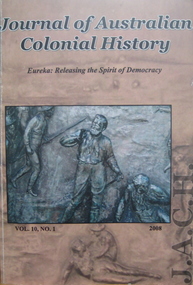
Book, David Andrew Roberts, Journal of australian Colonial History: Eureka: Releasing the Spirit of Democracy, 2008
... Chapters include and introduction (Geoffrey Blainey); Eureka: gathering the 'Oppresed of all Nations (Anne Beggs-Sunter); The 'Southern Cross': a radical legacy (Drew Cottle); Ballarat of Eureka (Keith McKenry); 'Men of Colour' John Joseph and the Eureka Treason trials (Jeffrey Atkinson); 'Blood, Sweat and Tears': Women of Eureka (Dorothy Wickham); 'Why should they pay money to the Queen?: Aboriginal Miners and Land Claim (Fred Cahir); Raffaello Carboni's Perception of Australia (Gaetano Rando); Democracy, Political Rhetoric and the Conservative Response to manhood Suffrage in Colonial New South Wales (Gregory Melleuish); 'Foreign to their feelings as freemen': Liberal politics in a goldfields community, Bendigo 1853-1883....australian democracy agitation Brown and Black soft covered book of 200 pages. Chapters include and introduction (Geoffrey Blainey); Eureka: gathering the 'Oppresed of all Nations (Anne Beggs-Sunter); The 'Southern Cross': a radical legacy (Drew Cottle); Ballarat of Eureka (Keith McKenry); 'Men of Colour' John Joseph and the Eureka Treason trials (Jeffrey Atkinson); 'Blood, Sweat and Tears': Women of Eureka (Dorothy Wickham); 'Why should they pay money to the Queen? ...A number of images for this journal were supplied by the University of Ballarat Historical Collection,Brown and Black soft covered book of 200 pages. Chapters include and introduction (Geoffrey Blainey); Eureka: gathering the 'Oppresed of all Nations (Anne Beggs-Sunter); The 'Southern Cross': a radical legacy (Drew Cottle); Ballarat of Eureka (Keith McKenry); 'Men of Colour' John Joseph and the Eureka Treason trials (Jeffrey Atkinson); 'Blood, Sweat and Tears': Women of Eureka (Dorothy Wickham); 'Why should they pay money to the Queen?: Aboriginal Miners and Land Claim (Fred Cahir); Raffaello Carboni's Perception of Australia (Gaetano Rando); Democracy, Political Rhetoric and the Conservative Response to manhood Suffrage in Colonial New South Wales (Gregory Melleuish); 'Foreign to their feelings as freemen': Liberal politics in a goldfields community, Bendigo 1853-1883.ballarat, bendigo, eureka, aborigines, southern cross, women, charles hotham, australian democracy, agitation -
 Federation University Historical Collection
Magazine - Booklets, Ballarat School of Mines Students' Magazine 1954, 1953-1955
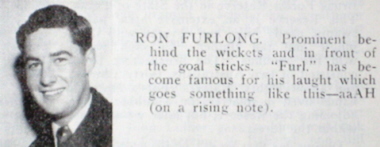
... Articles include: The Mining and Metallurgy Congress, Aboriginal research, Power from Water, Engineering Etiquette, Australian Art Images include: Queen Elizabeth 2, Ballarat Junior Technical School winning the Marching Competition, competitors in the Redex Trial. .2) 1954 - Articles include: Eureka Stockade; Working in East Africa and Canada, Greece, Images include; Craig's Hotel, Eureka Swimming Pool; Barry Jones, Harold Everett, "Tailspin" Taylor, Pastoral Skipton, Margaret McGregor, Nancy Rimmington, Janice Tonkin, First Roll Call in Girls' Junior Technical School .3) 1955. ...Articles include: The Mining and Metallurgy Congress, Aboriginal research, Power from Water, Engineering Etiquette, Australian Art Images include: Queen Elizabeth 2, Ballarat Junior Technical School winning the Marching Competition, competitors in the Redex Trial. .2) 1954 - Articles include: Eureka Stockade; Working in East Africa and Canada, Greece, Images include; Craig's Hotel, Eureka Swimming Pool; Barry Jones, Harold Everett, "Tailspin" Taylor, Pastoral Skipton, Margaret McGregor, Nancy Rimmington, Janice Tonkin, First Roll Call in Girls' Junior Technical School .3) 1955. ...Three soft covered Magazines - the Ballarat School of Mines Students' Magazine for 1953-5. .1) 1953 - The Coronation Number. Articles include: The Mining and Metallurgy Congress, Aboriginal research, Power from Water, Engineering Etiquette, Australian Art Images include: Queen Elizabeth 2, Ballarat Junior Technical School winning the Marching Competition, competitors in the Redex Trial. .2) 1954 - Articles include: Eureka Stockade; Working in East Africa and Canada, Greece, Images include; Craig's Hotel, Eureka Swimming Pool; Barry Jones, Harold Everett, "Tailspin" Taylor, Pastoral Skipton, Margaret McGregor, Nancy Rimmington, Janice Tonkin, First Roll Call in Girls' Junior Technical School .3) 1955. Articles include: Tales from Malaysia, Literary Society Images include; Craig's Hotel, Signatures: N.H. Andrews; J. Skuja: Alan E. Johnson, B.V. McDougall, L.J. Mathews, Daryl Schmidt, J, Collierballarat school of mines, tinney, faneco, jim john, dean, spiers, ngip, barrie smith, stewart rowe, elaine walton, stevens, max stevens, sawyer, ann mitchell, flavel, ingleton, bethune, blackburn, boag, brokenshire, carmichael, kirby, kinnane, alec kinnane, ludbrook, meagher, searl, sheppard, gillin, murray gillan, archer, beattie, bautovich, benjamin, buck, bunting, athol day, eddie, habel, heyes, maddox, phillips, schreenan, donald stevens, tinissen, whitcher, ian whitcher, mccallum, ryrie mccallum, marching competition, skuja, wilton, neil andrews, ellen freemantle, alan johnson, willey, graeme willey, mainwaring, diana mainwaring, mcdougall, little, margaret little, lance matthews, philp davis, eureka stockade, eureka swimming pool, pools, swimming pool, restarick, kempe, barry johns, harold everett, taylor, holmes, wendell holmes, skipton, john collier, collier, daryl schmidt, chris sanos, greece, andrews, doull, everett, seong, lockhead, pitzen, watts, technical school, junior technical school, girl's junior technical school, ballarat girl's junior technical school, baxendale, stan kisler, graham willey, murray, jim murray, grundell, cleland, furlog, ron furlong, judy johnson, russ whitcher, anita young, durant, malaysia, literary society, thurling, andrewartha, barnes, ditchfield, peter ditchfield, dunlop, kisler, mcneil, orgill, quinlan, saggers, bill saggers, seabrook, williams, paddle, graham, handmer, hetehrington, dow, pine, ballarat north junior technical school, william saggers -
 Flagstaff Hill Maritime Museum and Village
Photograph - Ship, Alma Doepel, 1931-1934
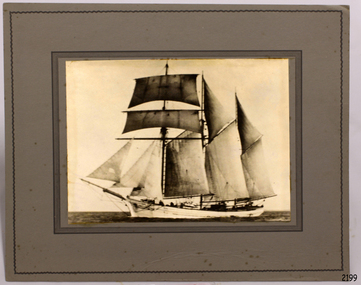
... trials headed off to Victoria Harbour, Docklands, in Melbourne, where she is currently being restored with the help of The Supporters. This phot graph is significant for its connection with the Bass Strait trade, being the last top-sail schooner to brade across the strait. The photograph is also significant in its representation of the the sailing ships that traded around Australia ...This photograph is of the square-rigged schooner "Alma Doepel". Details added to the back of the photograph incorrectly describe the vessel as "Amy Doepel / ketch / Amy Doepel". The rigging on the vessel dates the photograph to sometime between 1931-1933. The location is yet to be determined. Frederick Doepel was a shipping agent in Bellinger Valley, NSW. He employed an experienced shipwright to build Alma Doepel, which was made from local timber. He named the ship “Alma Doepel” after his baby daughter Alma. The ship was registered in Sydney and launched 19th October 1903, and her first sea voyage was in December. She traded in timber Port Macquarie/Bellinger River and New Zealand. “Alma Doepel” was purchased by Henry Jones & Co., Hobart jam makers, in partnership with Harry Heather, her new captain, in 1916. The ship was then registered in Hobart. She carried jam and timber to the mainland, particularly Melbourne, and brought back cargo for Tasmania. She even carried the piles for the building of Portland Harbour. When Harry Heather passed away in 1937 he was succeeded by Eric Droscoll. Before the square-rigged "Alma Doepel" left for Tasmania on March 8th 1937 she was fitted with a new set of sails, becoming a fore-and-aft rigged schooner. She had been the last 'top sail' schooner in Bass Strait trade! "Alma Doepel" continued her coastal trading until 1942, when she was requisitioned by the Army. In January 1943 she was left in Melbourne by her crew and the Army took her over, taking her to Sydney in February, 1943. She was relaunched by the Army in 1944 minus two of her masts and her small 1936 engine, and was fitted with three large bus engines. In March 1945 she headed for the war zone, delivering cargo up and down the coast of New Guinea, at one time carrying over 400 troops. In 1946 she returned to Hobart where the Army re-converted her back for Bass Strait trading and returned her. In January 1947 Eric Driscoll took “Alma Doepel” to the eastern Tasmanian coastal port of St. Helens, trading cargo of local mountain ash timber to Melbourne on the mainland until 1959. She was then stripped down to her hull with only a single mast and two engines, and fitted with wooden bins on rails in her hold. From 1961 to 1975 she carried limestone to a factory to make carbide. Michael Wood and David Boykett, two of the governors of "Sail and Adventure", then bought her for the price of her two Gardiner engines and in 1976 they brought her to Melbourne. An Alma Doepel Supporters Club was formed to support the ship’s major restoration to a topsail schooner. In 1987 she was overhauled in Adelaide, with the support of Elders IXL and she returned to Sydney to lead the Parade of Sail on Bicentenary Day, 25th January 1988. She returned to Melbourne in February and began sail training voyages in Port Phillip Bay, operating from an office on Station Pier. The Alma Doepel Voyagers Club was started. Trainees joined the crew in sailing the ship over nine or ten days of instruction in sailing and seamanship. These trips plus chartered trips and fund raisers continued until early 1999, when she was no longer in a condition to operate; she needed a lot of attention. She lay idle in Victoria Dock for quite some time. In April 2001 “Alma Doepel” was taken to Port Macquarie’s Lady Nelson Wharf where she became a museum ship maintained by volunteers. In 2008 she had time in dry-dock and after sea-trials headed off to Victoria Harbour, Docklands, in Melbourne, where she is currently being restored with the help of The Supporters.This phot graph is significant for its connection with the Bass Strait trade, being the last top-sail schooner to brade across the strait. The photograph is also significant in its representation of the the sailing ships that traded around Australia in the 1930s.Photograph of "Alma Doepel " a wooden, 3 masted, square rigged sailing schooner built in Sydney, launched in 10/10/1903. Photograph is sepia coloured, mounted on card, inscription on the back. Information also provided with photograph. Photograph (marked incorrectly on back) "Amy Doepel / ketch / Amy Doepel". Sticker with "91" in pencil. Information provided (dated incorrectly) "1943, Sydney, New South Wales"flagstaff hill, warrnambool, shipwreck coast, maritime museum, maritime village, photograph, alma doepel, frederick doepel, henry jones and co, harry heather, eric droscoll, alma doepel supporters club, elders ixl, parade of sail, bicentenary day, alma doepel voyagers club, last top sail schooner in bass strait trade, square-rigged, fore-and-aft rigged -
 The Beechworth Burke Museum
Audio - Oral History, Jennifer Williams, Mr. Vincent Makaravicius, July 2000
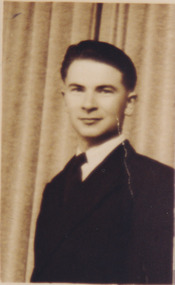
... Vincent Makaravicius' story is historically and socially significant as it provides a unique insight into the trials, tribulations, hopes, and dreams of Australian immigrants during the mid 20th century. ...Vincent Makaravicius was born on the 23rd of January, 1922 in a small Lithuanian village. He was the youngest of six children and after completing his primary education he went on to study horticulture at Kaunas and Vilnius. During WWII, under the threat of Soviet occupation and conscription, Vincent travelled to Germany, before coming to Australia as a refugee after his wife in 1949 on the ship 'Victory.' Vincent eventually settled in Beechworth, working at the local tannery and the Beechworth Asylum, as well as taking on boarders in the tannery boarding house in which his wife and he lived for a number of years. This oral history recording was part of a project conducted by Jennifer Williams in the year 2000 to capture the everyday life and struggles in Beechworth during the twentieth century. This project involved recording seventy oral histories on cassette tapes of local Beechworth residents which were then published in a book titled: Listen to what they say: voices of twentieth-century Beechworth. These cassette tapes were digitised in July 2021 with funds made available by the Friends of the Burke.Vincent Makaravicius' story is historically and socially significant as it provides a unique insight into the trials, tribulations, hopes, and dreams of Australian immigrants during the mid 20th century. Mr Makaravicius references the turbulent political situation and lack of food in Europe as being the reason for the mass exodus from Europe that saw an influx of refugees and migrants to Australia. His personal account highlights the spirit of survival and perseverance that is quintessential of Australian settler history. His contributions to the township of Beechworth gave him a detailed understanding of the social and historical significance of the township and the people, institutions, and local businesses on which it was built, namely the Beechworth Asylum, the local tannery, and relations between migrants and the established community. This oral history account is socially and historically significant as it is a part of a broader collection of interviews conducted by Jennifer Williams which were published in the book 'Listen to what they say: voices of twentieth-century Beechworth.' While the township of Beechworth is known for its history as a gold rush town, these accounts provide a unique insight into the day-to-day life of the town's residents during the 20th century, many of which will have now been lost if they had not been preserved.This is a digital copy of a recording that was originally captured on a cassette tape. The cassette tape is black with a horizontal white strip and is currently stored in a clear flat plastic rectangular container. It holds up 40 minutes of recordings on each side.Mr. Vincent Makaravicius /listen to what they say, beechworth, oral history, burke museum, vincent makaravicius, wwii, lithuania, kaunas, vilnius, soviet, germany, australia, victory, tannery, beechworth asylum, refugee, jennifer williams -
 Mission to Seafarers Victoria
Journal (item) - Periodicals-Annual, Shiplovers' Society of Victoria, The Annual Dog Watch, 1943
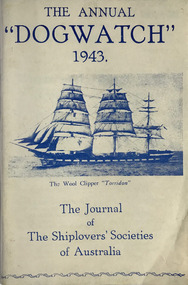
... Australia? - From the notes of H. O’May - 40 Our Cover Plate. - H. R. Watson - 42 Sea Shanties. - Arthur C. Morgan - 43 Where the Glamour Ends. - - 45 The “Nelson” Gold Robbery. - George R. Leggett - 48 Viking Ships. - S. A. E. Strom - 52 A Trial...Australia? - From the notes of H. O’May - 40 Our Cover Plate. - H. R. Watson - 42 Sea Shanties. - Arthur C. Morgan - 43 Where the Glamour Ends. - - 45 The “Nelson” Gold Robbery. - George R. Leggett - 48 Viking Ships. - S. A. E. Strom - 52 A Trial ...This journal provides the reader with glimpses of the adventures and hardships of a seaman's life. Many of the stories are of sailing ships.First issue of the magazine published during the war Contributes to our knowledge of the importance of shipping and places on record those stories of the sea which would otherwise be lost.sailing ships, steamships, shipping, seafaring life, shiplovers' society of victoria, dog watch, ww2, hms jervis bay -
 Federation University Historical Collection
Book - Book - Course Text, VIOSH: Accident Analysis and Risk Control, Derek Viner, 1991
... Australia and industry. Students are taught active research and enquiry; rather than textbook learning and a one-size fits all approach. VIOSH accepts people into the Graduate Diploma of Occupational Hazard Management who have no undergraduate degree - on the basis of extensive work experience and knowledge. This book is an engineer's viewpoint of safety and health. The selection of concepts presented is based on the trial...Australia and industry. Students are taught active research and enquiry; rather than textbook learning and a one-size fits all approach. VIOSH accepts people into the Graduate Diploma of Occupational Hazard Management who have no undergraduate degree - on the basis of extensive work experience and knowledge. This book is an engineer's viewpoint of safety and health. The selection of concepts presented is based on the trial ...Paperback book - 152 pages. Includes seven chapters, references and an index. Blue cover.non-fictionviosh, victorian institute of occupational safety and health, derek viner, accident analysis, risk control -
Federation University Historical Collection
Article - Cycling Jersey, FedUni AusCycling National Championships Jersey, 2022
... Australia usually holds their annual event during summer. In road racing, winning riders of national championships are crowned as: * Men's Elite Road Race Champion * Men's Elite Time Trial Champion * Women's Road Race Champion * Women's Time Trial Champion * Men's Under-23 Road Race Champion * Men's Under-23 Time Trial Champion The Australian Champion Jersey is awarded to the winner, or the highest placed Australian in all events at the Federation University AusCycling National Championships. ...Australia usually holds their annual event during summer. In road racing, winning riders of national championships are crowned as: * Men's Elite Road Race Champion * Men's Elite Time Trial Champion * Women's Road Race Champion * Women's Time Trial Champion * Men's Under-23 Road Race Champion * Men's Under-23 Time Trial Champion The Australian Champion Jersey is awarded to the winner, or the highest placed Australian in all events at the Federation University AusCycling National Championships. ...National road cycling championships are held annually by host nations in each cycle racing discipline. The annual events can take place at any time of the year. Australia usually holds their annual event during summer. In road racing, winning riders of national championships are crowned as: * Men's Elite Road Race Champion * Men's Elite Time Trial Champion * Women's Road Race Champion * Women's Time Trial Champion * Men's Under-23 Road Race Champion * Men's Under-23 Time Trial Champion The Australian Champion Jersey is awarded to the winner, or the highest placed Australian in all events at the Federation University AusCycling National Championships. Winners may wear their Australian Champion Jersey in all events in the discipline speciality and category in which they won their title and no other event up until the day before the championship event of the following year. Category Winners in 2022 were Lucas Plapp, Rohan Dennis, Cameron Ivory, Ruby Roseman-Gannon, Nicole Frain, Grace BrownFramed Federation University AusCycling National Champianships Winners Jersey, signed by the winner of each catergory.federation university auscyling national championships, jersey, costume, lucas plapp, nicole frain, grace brown, herbert werner frederick de nully, ruby roseman-gannon, rohan dennis, cameron ivory -
 Federation University Historical Collection
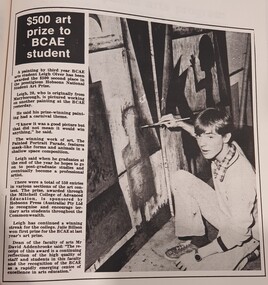
Newspaper - Newsclippings, Ballarat College of Advanced Education Faculty of Visual and Performing Arts Press Clippings, 1986, 1986
... Ballarat College of Advanced Education was a predecessor institutionof Federation University Australia. ballarat college of advanced education visual arts performing arts david addenbrooke geoff bonney doug wright bruce widdop lloyd crump peter blizzard selkirk sculpture iain reid monkey trial jason finger melbourne brass ensemble annie clifton neil mcswain adrian thomas leigh olver chris white uncle murals as you like it garry kinnane geoff nott stephen benwell robert allan peter pilven encore ballarat symphony orchestra kim hodder Green covered A4 compilation of newsclips relating to Visual and Performing Arts at Ballarat College of Advanced Education Ballarat College of Advanced Education Faculty of Visual and Performing Arts Press Clippings, 1986 Newspaper Newsclippings ...Ballarat College of Advanced Education was a predecessor institutionof Federation University Australia.Green covered A4 compilation of newsclips relating to Visual and Performing Arts at Ballarat College of Advanced Educationballarat college of advanced education, visual arts, performing arts, david addenbrooke, geoff bonney, doug wright, bruce widdop, lloyd crump, peter blizzard, selkirk sculpture, iain reid, monkey trial, jason finger, melbourne brass ensemble, annie clifton, neil mcswain, adrian thomas, leigh olver, chris white, uncle, murals, as you like it, garry kinnane, geoff nott, stephen benwell, robert allan, peter pilven, encore, ballarat symphony orchestra, kim hodder -
Marysville & District Historical Society
THE TRIANGLE NEWS-VOL 41 NO 24-JUNE 27 2014
... australia...only vice presidents changed at lions club...what's on when in june/july...2014 seasonal influenza vaccine available...the committee of management of the gallipoli park precinct...marysville community market...creative triangle...buxton history group questionnaire...triangle community dinner...el kanah village...church notices...marysville golf report...mayor's chair by cr margaret rae...councillor comment by cr john walsh koriella ward...advertisements...public comment draft rural roadside management plan...residential & rural real estate...marysville triangle real estate...gallipoli park marysville...new committee members needed...working together on rural roadside...marysville midweek netball...trial...marysville victoria australia only vice presidents changed at lions club what's on when in june/july 2014 seasonal influenza vaccine available the committee of management of the gallipoli park precinct marysville community market creative triangle buxton history group questionnaire triangle community dinner el kanah village church notices marysville golf report mayor's chair by cr margaret rae councillor comment by cr john walsh koriella ward advertisements public comment draft rural roadside management plan residential & rural real estate marysville triangle real estate gallipoli park marysville new committee members needed working together on rural roadside marysville midweek netball trial arrangements for community bus service el kanah eat in eat out menu marysville preschool centre long day care & kindergarten statistical data for murrindindi shire now a click away murrindindi shire council marysville & district lions club presents the magic flute opera marysville primary school parent's club movie night opening of new marysville community golf & bowls clubrooms bendigo bank relocation pool life guard positions on the couch marysville at the community centre marysville library service welcome dr asghar bhatti to marysville buxton hotel roast night lake mountain ski patrol draft waste and resource recovery strategy THE TRIANGLE NEWS-VOL 41 NO 24-JUNE 27 2014 ...marysville, victoria, australia, only vice presidents changed at lions club, what's on when in june/july, 2014 seasonal influenza vaccine available, the committee of management of the gallipoli park precinct, marysville community market, creative triangle, buxton history group questionnaire, triangle community dinner, el kanah village, church notices, marysville golf report, mayor's chair by cr margaret rae, councillor comment by cr john walsh koriella ward, advertisements, public comment draft rural roadside management plan, residential & rural real estate, marysville triangle real estate, gallipoli park marysville, new committee members needed, working together on rural roadside, marysville midweek netball, trial arrangements for community bus service, el kanah eat in eat out menu, marysville preschool centre, long day care & kindergarten, statistical data for murrindindi shire now a click away, murrindindi shire council, marysville & district lions club presents the magic flute opera, marysville primary school, parent's club movie night, opening of new marysville community golf & bowls clubrooms, bendigo bank relocation, pool life guard positions, on the couch marysville at the community centre, marysville library service, welcome dr asghar bhatti to marysville, buxton hotel roast night, lake mountain ski patrol, draft waste and resource recovery strategy -
Marysville & District Historical Society
THE TRIANGLE NEWS-VOL 41 NO 50-DECEMBER 19 2014
... australia day celebrations...the upper goulburn landcare network...ugln...council to trial...marysville victoria australia council's fire preparation works underway what's on when in december triangle news christmas break the committee of management of the gallipoli park precinct creative triangle ugfm radio christmas show temporary closure of alexandra swimming pool buxton post office trading hours marysville golf report church notices mayor's chair by councillor margaret rae christmas holiday closures marysville & triangle community men's shed advertisements marysville sub branch rsl marysville patisserie looking for casual employees real estate marysville cultural community sessions 2015 emotions anonymous international jer's tradies golf day 2014 planning & environmental act 1987 murrindindi planning scheme campfire safety a top priority in hume region intrepid triangle bushwalkers marysville triangle real estate nye at the bunker marysville community golf & bowls club sponsor a post trevor harrow oval racv energy breakthrough challenge australia day street stall buxton bootcamp australia day celebrations the upper goulburn landcare network ugln council to trial reuse of disposed materials council looking forward to working with new cabinet media release festive video wraps up victoria's climate outlook 2014 notice of application for planning permit murrindindi shire council THE TRIANGLE NEWS-VOL 41 NO 50-DECEMBER 19 2014 ...marysville, victoria, australia, council's fire preparation works underway, what's on when in december, triangle news christmas break, the committee of management of the gallipoli park precinct, creative triangle, ugfm radio christmas show, temporary closure of alexandra swimming pool, buxton post office trading hours, marysville golf report, church notices, mayor's chair by councillor margaret rae, christmas holiday closures, marysville & triangle community men's shed, advertisements, marysville sub branch rsl, marysville patisserie looking for casual employees, real estate, marysville cultural community sessions 2015, emotions anonymous international, jer's tradies golf day 2014, planning & environmental act 1987, murrindindi planning scheme, campfire safety a top priority in hume region, intrepid triangle bushwalkers, marysville triangle real estate, nye at the bunker, marysville community golf & bowls club, sponsor a post trevor harrow oval, racv energy breakthrough challenge, australia day street stall, buxton bootcamp, australia day celebrations, the upper goulburn landcare network, ugln, council to trial reuse of disposed materials, council looking forward to working with new cabinet, media release, festive video wraps up victoria's climate outlook 2014, notice of application for planning permit, murrindindi shire council -
Federation University Historical Collection
Book - Book - Scrapbook, Ballarat School of MInes: Scrapbook of Newspaper Cuttings, Book 66, November 1994 to December 1994
... The papers concerned are The Courier, Ballarat, The Australian, The Age over the period of 29 November 1994 to 29 December 1994. teaching positions advertised pre-employment courses courses available enrolment for smb courses memorandum creates force elder young chefs on trial nicole cobain aaron taylor francine briody ararat courses increased installation of geoffrey blainey university of ballarat liftout richard mcgarvie installs new chancellor chancellor launches rich history anne beggs sunter smb training of water board staff alice discovers computers at 80 smb presentation of volunteer tutors peg johns joan goldsmith bob carmichael david linder heather bush connie sadler sue rattray george burk john vellenoweth edleen tinker lois morritt completes vce neville love ararat college plan approved grants to build networks mark judd colin tonkin award for excellence ruth kealy wins walker ceramics award koori artists show works fine art gallery rubina burgoyne bill blackall kylie bird ray muir abraham baksh anne beggs sunter uni origins Book with yellow cover, front, spiral bound. ...Collection of newspaper articles related to Ballarat School Of Mines.They cover activities and advertisements for staff. The papers concerned are The Courier, Ballarat, The Australian, The Age over the period of 29 November 1994 to 29 December 1994.Book with yellow cover, front, spiral bound. teaching positions advertised, pre-employment courses, courses available, enrolment for smb courses, memorandum creates force, elder, young chefs on trial, nicole cobain, aaron taylor, francine briody, ararat courses increased, installation of geoffrey blainey, university of ballarat liftout, richard mcgarvie installs new chancellor, chancellor launches rich history, anne beggs sunter, smb training of water board staff, alice discovers computers at 80, smb presentation of volunteer tutors, peg johns, joan goldsmith, bob carmichael, david linder, heather bush, connie sadler, sue rattray, george burk, john vellenoweth, edleen tinker, lois morritt completes vce, neville love, ararat college plan approved, grants to build networks, mark judd, colin tonkin award for excellence, ruth kealy wins walker ceramics award, koori artists show works, fine art gallery, rubina burgoyne, bill blackall, kylie bird, ray muir, abraham baksh, anne beggs sunter uni origins -
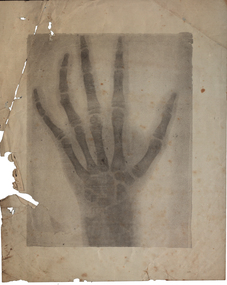 Federation University Historical Collection
Photograph - Black and White Photograph, Early Xrays, c1896
... The Ballarat School of Mines were involved with some of the earliest xrays in Australia. xray x-ray pioneering xray ballarat school of mines xray demonstration hand bones Xrays from the pioneering trials held at the Ballarat School of Mines. .1 Hand with a ring glued onto card. 2. and .3 Hand on paper. ...The Ballarat School of Mines were involved with some of the earliest xrays in Australia.Xrays from the pioneering trials held at the Ballarat School of Mines. .1 Hand with a ring glued onto card. 2. and .3 Hand on paper.xray, x-ray, pioneering xray, ballarat school of mines, xray demonstration, hand, bones -
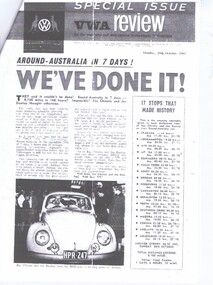 Greensborough Historical Society
Article, VWA Review, Around - Australia in 7 days! We've done it!, 29/10/1962
... Australia publicity drive. Drivers: Ray Christie and Joe Dunlop (Greensborough policeman). Copies from from VWA Review, 29th October 1962 Greensborough policeman, Joe Dunlop was co-driver of the Volkswagen beetle that completed 8,100 miles in seven days in 1962 motor reliability trials joe dunlop car trials 5 pages, 2 photocopied pages of an article, with 3 page typed transcription Around - Australia in 7 days! ...Story of a Volkswagen and Shell Oil Company round Australia publicity drive. Drivers: Ray Christie and Joe Dunlop (Greensborough policeman). Copies from from VWA Review, 29th October 1962Greensborough policeman, Joe Dunlop was co-driver of the Volkswagen beetle that completed 8,100 miles in seven days in 19625 pages, 2 photocopied pages of an article, with 3 page typed transcriptionmotor reliability trials, joe dunlop, car trials -
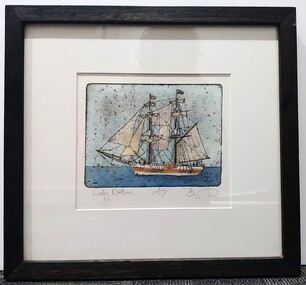 Glenelg Shire Council Cultural Collection
Artwork, other, BRIGIT THOMAS, Lady Nelson, c. 2015
... Australian Coast and fulfilled a variety of roles including exploration, surveying, forming settlements, shifting goods and people around the colonies and capturing pirates. She played pivotal roles in the European settlement of Hobart, Northern Tasmania, Melbourne, Newcastle, Port Macquarie and Northern Territory. Those onboard charted much of Bass Strait, Port Philip, Newcastle, Port Macquarie and (with the Investigator) the coasts of northern New South Wales and southern Queensland. She also has links to other locations around the East Coast such as Trial...Australian Coast and fulfilled a variety of roles including exploration, surveying, forming settlements, shifting goods and people around the colonies and capturing pirates. She played pivotal roles in the European settlement of Hobart, Northern Tasmania, Melbourne, Newcastle, Port Macquarie and Northern Territory. Those onboard charted much of Bass Strait, Port Philip, Newcastle, Port Macquarie and (with the Investigator) the coasts of northern New South Wales and southern Queensland. She also has links to other locations around the East Coast such as Trial ...From - theladynelson.org.au T The original Lady Nelson was built at Deptford, in England, in 1799, for service to the Transport Office on the River Thames. She was designed with sliding keels (centre boards), a device invented by Captain John Schank of the Royal Navy to allow surveying in rivers and shallow water ways. On completion she was selected for exploration services in the Colony of New South Wales and sailed for Port Jackson on 18 March 1800 under the command of Lieutenant James Grant. A brig of 60 tons, she carried a crew comprising the commander, two mates and twelve seaman. As she left the River Thames sailors on nearby ships ridiculed her because of her size and shape, calling her, as she sailed past, 'His Majesty's Tinderbox'. At Portsmouth on the 9th February 1800 she was fitted with four brass carriage guns, three to four pounders, in addition to the two guns already on board. Because of the heavy load she was carrying she was very low in the water, having only two feet nine inches freeboard amidships. The ship finally left Portsmouth on 17th March 1800 as part of an East Indian Convoy. From 1800 to 1825 the Lady Nelson operated around the Australian Coast and fulfilled a variety of roles including exploration, surveying, forming settlements, shifting goods and people around the colonies and capturing pirates. She played pivotal roles in the European settlement of Hobart, Northern Tasmania, Melbourne, Newcastle, Port Macquarie and Northern Territory. Those onboard charted much of Bass Strait, Port Philip, Newcastle, Port Macquarie and (with the Investigator) the coasts of northern New South Wales and southern Queensland. She also has links to other locations around the East Coast such as Trial Bay in NSW and the Mt Gambier area of SA. After 25 years of service while trading on the island of Baba the Lady Nelson was overrun by the islanders, the crew was killed and the ship stripped and later burnt and sunk. A replica of the Lady Nelson was built in the 1980s.Image of a tall ship in sail. The ship is flying both the Aboriginal flag and the Australian Flag. It sails on a calm sea. There are figures on the deck - four in total. The image is mounted on cream board and framed in dark timber. Etching, hand coloured,.Front: 'Lady Nelson A/P BT' - hand written, pencil in between etching and mount Back: Artist's business card glued to back of etching, lower left hand corner:ady nelson, femal artists, female artist, women
