
Showing 94 items matching "australian home journal"
-
 Whitehorse Historical Society Inc.
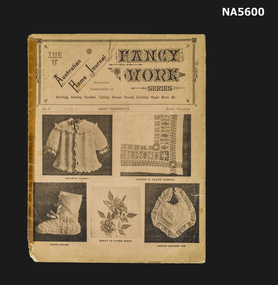
Print - Australian Home Journal Fancy Work Series, The Australian Home Journal, C 1900
... Australian Home Journal Fancy Work Series...Australian Home Journal...Australian Home Journal including knitting, netting, crochet, tatting, drawn thread, crinkled paper works etc...Fancy work series Australian Home Journal...The Australian Home Journal...Australian Home Journal knitting crochet Drawn thread work Paper roses Knitted lace Tatting Fancy work series Australian Home Journal Australian Home Journal including knitting, netting, crochet, tatting, drawn thread, crinkled paper works etc Print Australian Home Journal Fancy Work Series The Australian Home Journal ...Australian Home Journal including knitting, netting, crochet, tatting, drawn thread, crinkled paper works etcFancy work series Australian Home Journalaustralian home journal, knitting, crochet, drawn thread work, paper roses, knitted lace, tatting -
 Whitehorse Historical Society Inc.
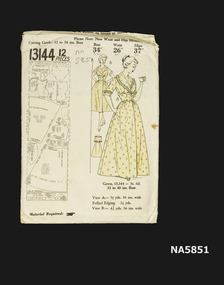
Domestic object - Australian Home Journal Pattern No. 13144, Australian Home Journal, C 1960's
... Australian Home Journal Pattern No. 13144...Ladies short dress and long house gown Australian Home Journal Pattern No. 13144 Short sleeved dress with collar Frilled sleeves and collar on gown...Australian Home Journal Pattern No. 13144 Lady's dress and long house gown Bust 34" Waist 26" Hips 37" Dress - short sleeves, calf length Gown - short sleeves, full length, frilled sleeves and collar...13144 - 12 pieces - Australian Home Journal...Australian Home Journal...Ladies short dress and long house gown Australian Home Journal Pattern No. 13144 Short sleeved dress with collar Frilled sleeves and collar on gown Domestic dressmaking 13144 - 12 pieces - Australian Home Journal Australian Home Journal Pattern No. 13144 Lady's dress and long house gown Bust 34" Waist 26" Hips 37" Dress - short sleeves, calf length Gown - short sleeves, full length, frilled sleeves and collar Domestic object Australian Home Journal Pattern No. 13144 Australian Home Journal ...Ladies short dress and long house gown Australian Home Journal Pattern No. 13144 Short sleeved dress with collar Frilled sleeves and collar on gownAustralian Home Journal Pattern No. 13144 Lady's dress and long house gown Bust 34" Waist 26" Hips 37" Dress - short sleeves, calf length Gown - short sleeves, full length, frilled sleeves and collar13144 - 12 pieces - Australian Home Journaldomestic dressmaking -
 Whitehorse Historical Society Inc.
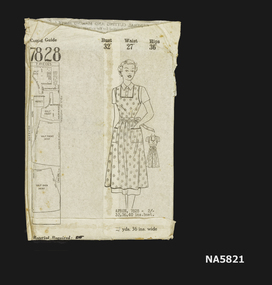
Domestic object - Australian Home Journal Sewing Pattern No. 7828, Australian Home Journal Co. Pty. Ltd, C 1950's
... Australian Home Journal Sewing Pattern No. 7828...C 1950's - Australian Home Journal Sewing Pattern No. 7828 - Ladies apron with waist tie & back buttoning - 2 pockets...Australian Home Journal Co. Pty. Ltd...Example of C1950's domestic clothing Dressmaking Women's clothing Various, some instructions, fabric requirements on reverse C 1950's - Australian Home Journal Sewing Pattern No. 7828 - Ladies apron with waist tie & back buttoning - 2 pockets Domestic object Australian Home Journal Sewing Pattern No. 7828 Australian Home Journal Co. ...Example of C1950's domestic clothingC 1950's - Australian Home Journal Sewing Pattern No. 7828 - Ladies apron with waist tie & back buttoning - 2 pocketsVarious, some instructions, fabric requirements on reversedressmaking, women's clothing -
 Whitehorse Historical Society Inc.
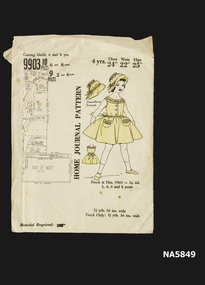
Domestic object - Australian Home Journal Paper Pattern No. 9903, Australian Home Journal, C 1950's
... Australian Home Journal Paper Pattern No. 9903...C 1950's Australian Home Journal Paper Pattern No. 9903 - Child's frock and hat, size 4 years - Gathered skirt, with pockets & waist tie - Shaped yoke - Drawstring bonnet...Australian Home Journal...- Example of C 1950's child's fashion - Example of domestically produced clothing Dressmaking Child's clothing C 1950's Various, some instructions, fabric requirements on reverse C 1950's Australian Home Journal Paper Pattern No. 9903 - Child's frock and hat, size 4 years - Gathered skirt, with pockets & waist tie - Shaped yoke - Drawstring bonnet Domestic object Australian Home Journal Paper Pattern No. 9903 Australian Home Journal ...- Example of C 1950's child's fashion - Example of domestically produced clothingC 1950's Australian Home Journal Paper Pattern No. 9903 - Child's frock and hat, size 4 years - Gathered skirt, with pockets & waist tie - Shaped yoke - Drawstring bonnetVarious, some instructions, fabric requirements on reversedressmaking, child's clothing, c 1950's -
 Whitehorse Historical Society Inc.
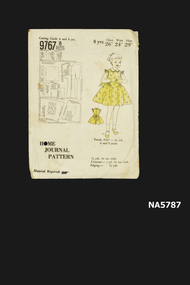
Domestic object - Australian Home Journal Pattern No. 9767 - for 8-years-old, Australian Home Journal
... Australian Home Journal Pattern No. 9767 - for 8-years-old...C 1950's Australian Home Journal Pattern No. 9767 - for 6-8 years-old Girl's frock - small collar & bows on shoulders, large bow at back. ...Australian Home Journal...Domestic object Australian Home Journal Pattern No. 9767 - for 8-years-old Australian Home Journal ...Domestic dressmaking girls' dressC 1950's Australian Home Journal Pattern No. 9767 - for 6-8 years-old Girl's frock - small collar & bows on shoulders, large bow at back. Pattern has 8 pieces.Home Journal Pattern 6-8 years: 9767 dressmaking -
 Whitehorse Historical Society Inc.
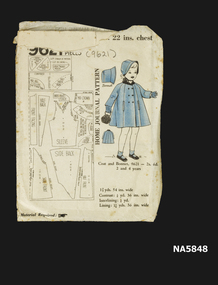
Domestic object - Australian Home Journal Pattern No 9621, Australian Home Journal Co. Pty. Ltd, C 1950's
... Australian Home Journal Pattern No 9621...Australian Home Journal Pattern No 9621 Pattern in an off-white paper sleeve with picture of young girl in blue coat with banner. ...Australian Home Journal Co. Pty. Ltd....Pattern pieces are shown as well. 22 inches Chest, 2s 6d. 2 and 4 years Domestic object Australian Home Journal Pattern No 9621 Australian Home Journal Co. ...Domestic dressmaking for childrenAustralian Home Journal Pattern No 9621 Pattern in an off-white paper sleeve with picture of young girl in blue coat with banner. Pattern pieces are shown as well. 22 inches Chest, 2s 6d. 2 and 4 yearsAs abovedressmaking, children's clothing, c 1950's -
 Clunes Museum
Booklet - BOOK, AUSTRALIAN HOME JOURNAL, AUSTRALIAN HOME JOURNAL NO. 2 BABY BOOK
... AUSTRALIAN HOME JOURNAL NO. 2 BABY BOOK...AUSTRALIAN HOME JOURNAL...BOOK WAS USED TO KNIT OR CROCHET CLOTHES FOR BABIES LOCAL HISTORY BOOK REFERENCE PATTERNS FOR KNITTING AND CROCHET FOR BABIES SOFT COVER BOOK OF KNITTING AND CROCHET PATTERNS FOR BABIES AUSTRALIAN HOME JOURNAL NO. 2 BABY BOOK Booklet BOOK AUSTRALIAN HOME JOURNAL JOHN SANDS LTD. ...PATTERNS FOR KNITTING AND CROCHET FOR BABIESSOFT COVER BOOK OF KNITTING AND CROCHET PATTERNS FOR BABIESnon-fictionPATTERNS FOR KNITTING AND CROCHET FOR BABIESlocal history, book, reference -
Clunes Museum
Booklet - BOOK, AUSTRALIAN HOME JOURNAL, AUSTRALIAN HOME JOURNAL BABY BOOK
... AUSTRALIAN HOME JOURNAL BABY BOOK...AUSTRALIAN HOME JOURNAL...LOCAL HISTORY BOOK REFERENCE BOOK OF KNITTING AND CROCHET WEAR FOR BABIES BOOK OF KNITTING AND CROCHET WEAR FOR BABIES AUSTRALIAN HOME JOURNAL BABY BOOK Booklet BOOK AUSTRALIAN HOME JOURNAL JOHN SANDS LTD. ...BOOK OF KNITTING AND CROCHET WEAR FOR BABIESBOOK OF KNITTING AND CROCHET WEAR FOR BABIESnon-fictionBOOK OF KNITTING AND CROCHET WEAR FOR BABIESlocal history, book, reference, -
 Orbost & District Historical Society
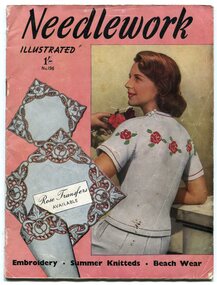
magazines, Needlework Illustrated; Australian Home Journal, September 1949; May 1963
... Needlework Illustrated; Australian Home Journal...magazine- needlework-illustrated magazine-australian-home-journal...Needlework Illustrated is issue 196 and cost 1/-. it was published quarterly. Australian Home Journal is the May 1963 issue. Women’s magazines just after WWII played a “reflecting role,” including topics of readers’ interests as well as containing news items. ...Needlework Illustrated; Australian Home Journal magazines Australasian Home Journal Australasian Home Journal ...Needlework Illustrated is issue 196 and cost 1/-. it was published quarterly. Australian Home Journal is the May 1963 issue. Women’s magazines just after WWII played a “reflecting role,” including topics of readers’ interests as well as containing news items. Women’s employment rate had grown during WWII. However, even though the number of women working outside the home grew rapidly most of them were still engaged entirely in homemaking. Therefore women’s magazines centered mostly home crafts. Articles as well as advertisements presented information on keeping the family healthy with guidelines for thrifty shopping and advice on how to look good through it all. Patterns and instructions were provided for women to create home articles and clothing. The main sources for kntting and needlework designs available to women were in journals, magazines and pattern books. Embroidery was an affordable way to personalise and add aesthetic value to domestic linen and examples of embroidered and crocheted pieces could be found in most Australian homes. These are examples of women's magazines. They give practical advice on needlework / knitting and evidences the widespread interest in contemporary fashion. In doing so it shows what were the fashionable, but broadly affordable, women's and children's clothing styles of their day. These magazines also reflect women's interests --------------------------------------------------------------------------------------------------------------------------------------------------------- Two magazines. 3097.1 contains patterns, instructions, advertisements and photographs. It has a coloured cover - a pink background, black print an drawings of a woman wearing a top embroidered with roses and examples of needlework. 3097.2 contains patterns, advertisements, correspondence, and stories. It has a coloured cover with a photograph of a woman wearing a knitted jumper and three sewing patterns.magazine- needlework-illustrated magazine-australian-home-journal -
 Bendigo Historical Society Inc.
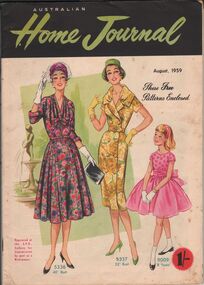
Magazine - AILEEN AND JOHN ELLISON COLLECTION: AUSTRALIAN HOME JOURNAL 1959
... AILEEN AND JOHN ELLISON COLLECTION: AUSTRALIAN HOME JOURNAL 1959...Australian home Journal from August, 1959. On the cover these free patterns enclosed. ...BOOKS Magazines Women's magazine Australian home Journal from August, 1959. On the cover these free patterns enclosed. ...Australian home Journal from August, 1959. On the cover these free patterns enclosed. No. 5336 40" bust lady in flowers dress. No. 5337 32" bust lady in yellow flowers dress. No. 9009 8 years young girl in pink dress. The magazine has 52 pages. Price 1 shilling.books, magazines, women's magazine -
 Mont De Lancey
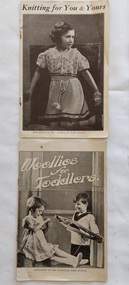
Booklet - Knitting Patterns, Australian Home Journal, 1. Knitting for You and Yours 2. Woollies for Toddlers, c.1940's and 1950's
... Two small Supplements to the 'Australian Home Journal' knitting pattern booklets, c.1940's. 1. ...Australian Home Journal...These booklets were a supplement to the Home Journal magazines of the time. Two small Supplements to the 'Australian Home Journal' knitting pattern booklets, c.1940's. 1. ...Two free knitting pattern booklets for home knitters, c.1940's or 50's. These booklets were a supplement to the Home Journal magazines of the time.Two small Supplements to the 'Australian Home Journal' knitting pattern booklets, c.1940's. 1. The front cover of 'Knitting for You and Yours' depicts a young girl sitting on a chair wearing a knitted dress. 2. 'Woollies for Toddlers' shows two young children winding wool into balls. Inside are various patterns for clothing for children and a mother. non-fictionTwo free knitting pattern booklets for home knitters, c.1940's or 50's. These booklets were a supplement to the Home Journal magazines of the time.knitting, knitting patterns, knitting equipment -
Mont De Lancey
Booklet - Knitting Patterns, Australian Home Journal, 1. Knitting for You and Yours 2. Woolies for Toddlers, c.1940's and 1950's
... Two small Supplements to the 'Australian Home Journal' knitting pattern booklets, c.1940's. 1. ...Australian Home Journal...Woolies for Toddlers Booklet Knitting Patterns Australian Home Journal John Sands Pty. Ltd. ...Two free knitting pattern booklets for home knitters, c.1940's or 50's. These booklets were a supplement to the Home Journal magazines of the time.Two small Supplements to the 'Australian Home Journal' knitting pattern booklets, c.1940's. 1. The front cover of 'Knitting for You and Yours' depicts a young girl sitting on a chair wearing a knitted dress. 2. 'Woollies for Toddlers' shows two young children winding wool into balls. Inside are various patterns for clothing for children and a mother. non-fictionTwo free knitting pattern booklets for home knitters, c.1940's or 50's. These booklets were a supplement to the Home Journal magazines of the time.knitting, knitting patterns, knitting equipment -
 Bendigo Historical Society Inc.
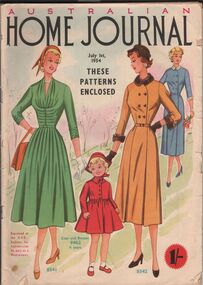
Magazine - AILEEN AND JOHN ELLISON COLLECTION: AUSTRALIAN HOME JOURNAL 1954
... AILEEN AND JOHN ELLISON COLLECTION: AUSTRALIAN HOME JOURNAL 1954...Australian Home Journal from July 1st, 1954. On the cover: these patterns enclosed no. 8341 lady in green dress, No. 8342 lady in brown dress, No. 9462 coat and bonnet 4 years young girl in red dress, another lady in blue dress on the cover. ...Magazine AILEEN AND JOHN ELLISON COLLECTION: AUSTRALIAN HOME JOURNAL 1954 ...Australian Home Journal from July 1st, 1954. On the cover: these patterns enclosed no. 8341 lady in green dress, No. 8342 lady in brown dress, No. 9462 coat and bonnet 4 years young girl in red dress, another lady in blue dress on the cover. The magazine has 52 pages. Price 1 shilling.books, magazines, women's magazine -
 Bendigo Historical Society Inc.
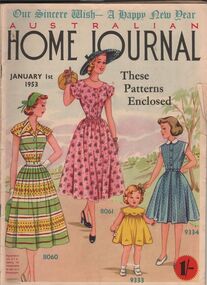
Magazine - AILEEN AND JOHN ELLISON COLLECTION: AUSTRALIAN HOME JOURNAL 1953
... AILEEN AND JOHN ELLISON COLLECTION: AUSTRALIAN HOME JOURNAL 1953...Australian Home Journal magazine from January 1st, 1953. ...BOOKS Magazines Women's magazine Australian Home Journal magazine from January 1st, 1953. ...Australian Home Journal magazine from January 1st, 1953. On the cover: these patterns enclosed No.8060 lady in green, yellow white and red dress, no.8061 lady n wide brim hat and pink dress, no. 9333 toddler in yellow dress, No. 9334 young girl in blue dress. The magazine has 52 pages. Price 1 shilling.books, magazines, women's magazine -
 Bendigo Historical Society Inc.
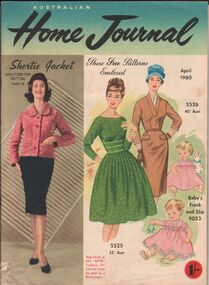
Magazine - AILEEN AND JOHN ELLISON COLLECTION; AUSTRALIAN HOME JOURNAL 1960
... AILEEN AND JOHN ELLISON COLLECTION; AUSTRALIAN HOME JOURNAL 1960...Australian Home Journal from April, 1960. On the front cover: shortie jacket directions for knitting page 29. ...Magazine AILEEN AND JOHN ELLISON COLLECTION; AUSTRALIAN HOME JOURNAL 1960 ...Australian Home Journal from April, 1960. On the front cover: shortie jacket directions for knitting page 29. These free patterns enclosed No. 5525 32" bust lady in green dress. No. 5526 40" bust lady in brown dress and blue hat. No. 9053 baby's frock and slip. The magazine has 52 pages. Price 1 shilling.books, magazines, women's magazine -
 Bendigo Historical Society Inc.
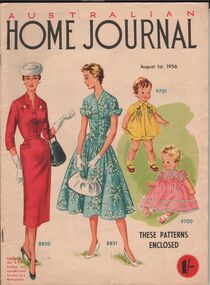
Magazine - AILEEN AND JOHN ELLISON COLLECTION: AUSTRALIAN HOME JOURNAL 1956
... AILEEN AND JOHN ELLISON COLLECTION: AUSTRALIAN HOME JOURNAL 1956...Australian Home Journal from August 1st, 1956. On the cover these patterns enclosed: No.8850 lady in red dress, white hat and white gloves carrying a black bag. ...Magazine AILEEN AND JOHN ELLISON COLLECTION: AUSTRALIAN HOME JOURNAL 1956 ...Australian Home Journal from August 1st, 1956. On the cover these patterns enclosed: No.8850 lady in red dress, white hat and white gloves carrying a black bag. No. 8851 lady in blue dress with flowers pattern and white handbag. no. 9701 toddler in yellow tunic and no. 9700 toddler in pink dress. the magazine has 52 pages. Price 1 shilling.books, magazines, women's magazine -
 Robin Boyd Foundation
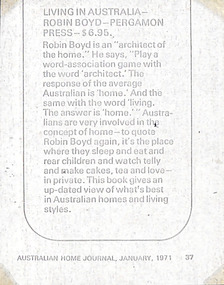
Magazine - Clipping, Australian Home Journal, Living in Australia, Jan-71
... Australian Home Journal...Walsh St library Photocopy Living in Australia Magazine Clipping Australian Home Journal ...This is a very short review of Robin Boyd's book 'Living in Australia'.Photocopywalsh st library -
 Whitehorse Historical Society Inc.
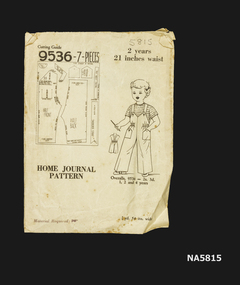
Domestic object - Boys' Overalls - Pattern no. 9536, Australian Home Journal Co. Pty Ltd
... Australian Home Journal Co. Pty Ltd...Dressmaking Pattern 9536 Boy's overall - 2 years - 21 inch waist Cutting guide - 7 pieces Home dressmaking Boy's overall Home Journal Pattern No. 9536 Home Journal Pattern No. 9536 2-year-old boy's Overall - one piece 21-inch waist -7 pieces Shoulder straps Tucked at waist Suitable for ages 1-4 years Domestic object Boys' Overalls - Pattern no. 9536 Australian Home Journal Co. ...Dressmaking Pattern 9536 Boy's overall - 2 years - 21 inch waist Cutting guide - 7 piecesHome Journal Pattern No. 9536 2-year-old boy's Overall - one piece 21-inch waist -7 pieces Shoulder straps Tucked at waist Suitable for ages 1-4 yearsHome Journal Pattern No. 9536 home dressmaking, boy's overall -
 Whitehorse Historical Society Inc.
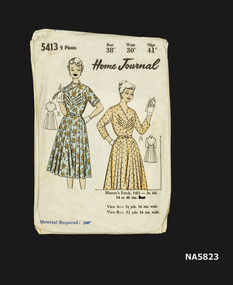
Domestic object - Home Journal Sewing Pattern No. 5413, Australian Home Journal Co. Pty Ltd, 1960's
... Australian Home Journal Co. Pty Ltd...Matron's frock Short or 3/4 sleeves, V-neckline Pleating on bodice and skirt Belted waist Home dressmaking 1960's Home Journal Home Journal Sewing Pattern No. 5413 Matron's frock - 34 to 48 ins Bust Short or 3/4 sleeves V-neckline Pleating on Bodice and skirt Belted waist Domestic object Home Journal Sewing Pattern No. 5413 Australian Home Journal Co. ...Matron's frock Short or 3/4 sleeves, V-neckline Pleating on bodice and skirt Belted waistHome Journal Sewing Pattern No. 5413 Matron's frock - 34 to 48 ins Bust Short or 3/4 sleeves V-neckline Pleating on Bodice and skirt Belted waistHome Journalhome dressmaking, 1960's -
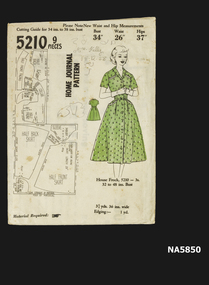 Whitehorse Historical Society Inc.
Domestic object - Home Journal Pattern N0. 5210, Australian Home Journal Co. Pty. Ltd, C 1960's
... Australian Home Journal Co. Pty. Ltd....Home Journal Pattern No. 5210 - 9 pieces Ladies house frock - full skirt, pockets, short sleeves, V-neck collar New measurements 34" Bust, 26" waist, 37" hips Home dressmaking Home Journal Pattern 5210 Home Journal Pattern N0. 5210 Ladies house frock - Bust 34" Waist 26" Hips 37" 9 pieces - short sleeves - pockets on skirt - V-neck collar - Full collar Domestic object Home Journal Pattern N0. 5210 Australian Home Journal Co. ...Home Journal Pattern No. 5210 - 9 pieces Ladies house frock - full skirt, pockets, short sleeves, V-neck collar New measurements 34" Bust, 26" waist, 37" hipsHome Journal Pattern N0. 5210 Ladies house frock - Bust 34" Waist 26" Hips 37" 9 pieces - short sleeves - pockets on skirt - V-neck collar - Full collarHome Journal Pattern 5210home dressmaking -
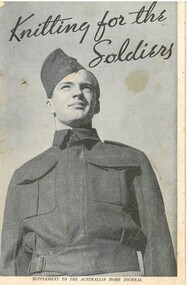 Bendigo Historical Society Inc.
Document - Knitting Patterns
... ...Australian Home Journal...Fifteen page booklet, supplement to the Australian Home Journal; contains knitting patterns for soldiers WW2. ...Lydia Chancellor Collection history Knitting WW2 Australian Home Journal Knitting for Soldiers Knitting Patterns. ...Women at home were encouraged to knit "comforts" for servicemen. In WW2 this was not as successful as during WW1 because a) women had a wider range of wartime jobs that limited their time for knitting and b.) Knitting wool was rationed. The Comforts Fund produced its own pattern book that included patters for various socks, stockings, pullovers, scarves, balaclavas suitable for all branches of the armed services.Knitting for Soldiers Knitting Patterns. Fifteen page booklet, supplement to the Australian Home Journal; contains knitting patterns for soldiers WW2. Black and white illustrations. Incudes patterns for socks, gloves, mittens, pullover and head wear.lydia chancellor collection, history, knitting, ww2, australian home journal -
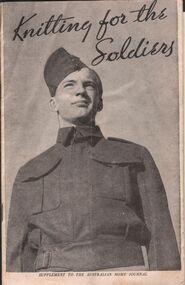 Bendigo Historical Society Inc.
Magazine - AILEEN AND JOHN ELLISON COLLECTION: KNITTING FOR THE SOLDIERS
... A small magazine knitting for the soldiers, a supplement to the Australian Home journal. On the front cover a young soldier in uniform, on the back three designs for a soldier's jacket, a soldier's shirt and a soldier's pyjamas. ...BOOKS Magazines Knitting A small magazine knitting for the soldiers, a supplement to the Australian Home journal. On the front cover a young soldier in uniform, on the back three designs for a soldier's jacket, a soldier's shirt and a soldier's pyjamas. ...A small magazine knitting for the soldiers, a supplement to the Australian Home journal. On the front cover a young soldier in uniform, on the back three designs for a soldier's jacket, a soldier's shirt and a soldier's pyjamas. The magazine has 16 pages.books, magazines, knitting -
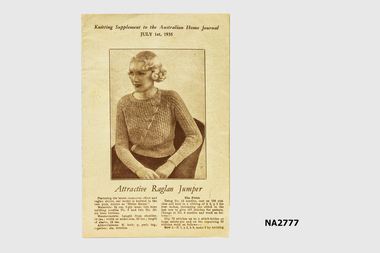 Whitehorse Historical Society Inc.
Book - Knitting Pattern, 1/07/1935 12:00:00 AM
... A5 size 16 page illustrated pamphlet, a ' Knitting Supplement to the Australian Home Journal; July 1935. Features patterns for a raglan jumper; Toby Wing jumper; Baby's Outfit; Girl' dress - Mavis design; Blue bell dressing Jacket; Man's sock. ...handcrafts knitting documents pamphlets A5 size 16 page illustrated pamphlet, a ' Knitting Supplement to the Australian Home Journal; July 1935. Features patterns for a raglan jumper; Toby Wing jumper; Baby's Outfit; Girl' dress - Mavis design; Blue bell dressing Jacket; Man's sock. ...A5 size 16 page illustrated pamphlet, a ' Knitting Supplement to the Australian Home Journal; July 1935. Features patterns for a raglan jumper; Toby Wing jumper; Baby's Outfit; Girl' dress - Mavis design; Blue bell dressing Jacket; Man's sock. Sepia printed. Stapled.handcrafts, knitting, documents, pamphlets -
 Bendigo Historical Society Inc.
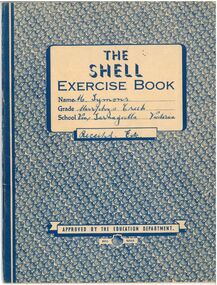
Document - M. Symons' Murpheys Creek Exercise Book
... Attached within are various subscription receipts in the front and back, including the "Australian Home Journal," "Singer Sewing Machine Company," and an "Annual Audit of Depositors' Pass-books by the State Savings Bank of Australia. ...Attached within are various subscription receipts in the front and back, including the "Australian Home Journal," "Singer Sewing Machine Company," and an "Annual Audit of Depositors' Pass-books by the State Savings Bank of Australia. ...Land was first selected at Murphy's Flat in 1865. The first Wesleyan church was built in 1866 and from 1869 this was used as State School 149. A purpose built school, No. 1311 opened mid 1876. The areas name was changed to Murphy's Creek in 1915.A blue and white exercise book. Attached within are various subscription receipts in the front and back, including the "Australian Home Journal," "Singer Sewing Machine Company," and an "Annual Audit of Depositors' Pass-books by the State Savings Bank of Australia. Also included in approximately half the book are handwritten record of correspondence notes in blue ink, many regarding sewing from 1949-1956.The Shell Exercise Book. Name: M. Symons (Handwritten Blue Ink). Grade: Murphys Creek. School: Via, Tarnagulla, Victoria (Handwritten Blue Ink). Receipts, Etc.(Handwritten Blue Ink), Approved by the Education Department. Shell Series. On the back is printed Arithmetic Tables and a Multiplication Tableexercise book, receipts, tarnagulla -
![Photograph, Bull, Hugh Jones, 1897-1993, View looking along St Kilda Road [completed Centenary pylons on Princes Bridge]](/media/collectors/68524623ad73480cc6fce59f/items/68f089892b74709eaf6d30e8/item-media/68f089af2b74709eaf6d372a/item-fit-380x285.jpg?cb=6) City of Melbourne Libraries
City of Melbourne LibrariesPhotograph, Bull, Hugh Jones, 1897-1993, View looking along St Kilda Road [completed Centenary pylons on Princes Bridge]
... Retrieved September 21, 2023, from http://nla.gov.au/nla.news-article205880269 'Dressing Melbourne for the Duke', The Australian home beautiful: a journal for the home builder. ...Retrieved September 21, 2023, from http://nla.gov.au/nla.news-article205880269 'Dressing Melbourne for the Duke', The Australian home beautiful: a journal for the home builder. ...Princes Bridge Centenary pylons complete Even though this is a street scene, it feels very intimate; we are instantly immersed in the activity of a Melbourne afternoon, looking down St Kilda Road from a viewpoint near today’s Federation Square. The focus is on the Centenary Pylons, erected on Princes Bridge to mark Melbourne’s Centenary in 1934. The sixteen plastered pylons were designed by Roy Prentice, the second person to qualify as an architect at the University of Melbourne in 1933, and aged just 27. The State Electricity Commission sponsored the work and The Argus reported that the pylons were “illuminated from within to give the effect of soft radiance”. Australia Home Beautiful reported that the taller pylons were 48 feet high. Timber-framed and faced with fibrous plaster and galvanised sheet iron, each structure was bolted to a concrete foundation three feet in depth. Panels of glass were indirectly lit by forty 100 watt lamps, and the upper bank of lamps were dyed so as to flood them with a deep red light. The shields and flagpoles were illuminated by three 200 watt concealed projectors, part of an electric night light decoration scheme involving 28 miles of wire to supply more than 20,000 lights. Melbourne was converted into “a coloured fairyland by night”. Featured in "Newsworthy: Melbourne in photographs 1933-1936" exhibition at East Melbourne Library, October to December 2023. Exhibition caption by project volunteer, Louise McKenzie Photographer notations on slide: "View looking along St Kilda Road C57" Published: (1934, September 5). The Age (Melbourne, Vic. : 1854 - 1954), p. 11. Published title: DECORATIONS -- THEN AND NOW. Published caption: "The second picture shows one of the Princes-bridge pylons completed..." Trove article identifier: http://nla.gov.au/nla.news-article205880269 Research by project volunteer, Louise McKenzie: Even though this is a street scene, it feels very intimate; we are instantly immersed in the activity of a Melbourne afternoon, looking down St Kilda Road from a viewpoint near today’s Federation Square. The focus is on the Centenary Pylons, erected on Princes Bridge to mark Melbourne’s Centenary in 1934. The sixteen plastered pylons were designed by Roy Prentice, the second person to qualify as an architect at the University of Melbourne in 1933, and aged just 27. The State Electricity Commission sponsored the work and The Argus reported that the pylons were “illuminated from within to give the effect of soft radiance”. Australia Home Beautiful reported that the taller pylons were 48 feet high. Timber-framed and faced with fibrous plaster and galvanised sheet iron, each structure was bolted to a concrete foundation three feet in depth. Panels of glass were indirectly lit by forty 100 watt lamps, and the upper bank of lamps were dyed so as to flood them with a deep red light. The shields and flagpoles were illuminated by three 200 watt concealed projectors, part of an electric night light decoration scheme involving 28 miles of wire to supply more than 20,000 lights. Melbourne was converted into “a coloured fairyland by night”. References: DECORATIONS -- THEN AND NOW. (1934, September 5). The Age (Melbourne, Vic. : 1854 - 1954), p. 11. Retrieved September 21, 2023, from http://nla.gov.au/nla.news-article205880269 'Dressing Melbourne for the Duke', The Australian home beautiful: a journal for the home builder. Vol 12 No. 10 (1 October 1934), page 21, 58. Retrieved September 14, 2023, from http://nla.gov.au/nla.obj-2950922209 28 Miles of Wire (1934, October 18). The Argus (Melbourne, Vic. : 1848 - 1957), p. 1 (The Junior Argus). Retrieved September 21, 2023, from http://nla.gov.au/nla.news-article10977836Photographer notations on slide: "View looking along St Kilda Road C57".centenaries, 1930-1939, bridges -
 City of Melbourne Libraries
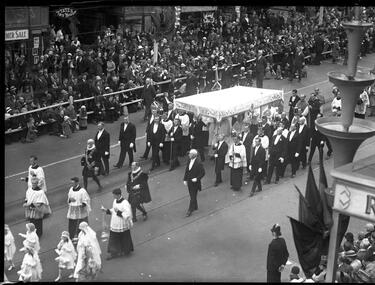
Photograph, Bull, Hugh Jones, 1897-1993, Eucharistic Congress Procession, Collins Street, Melbourne
... The Australian home beautiful : a journal for the home builder, p. 21, 58. ...The Australian home beautiful : a journal for the home builder, p. 21, 58. ...Published: The Age 10 December 1934 Published title: RELIGIOUS PAGEANTRY AND FERVOR MARKED CLOSE OF EUCHARISTIC CONGRESS. Published caption: Thousands of men and women marched in the Eucharistic procession yesterday which brought the Congress to a close. The picture above shows the procession headed by the Children of Mary in Bourke-street and turning into Spring-street, in front of Parlia ment House. Right (top) — The procession leaving the starting point at St. Patrick's Cathedral and below, the Papal Legate carrying the Host under a canopy borne by a guard of laymen and preceded by white-clad girls scattering rose leaves, incense bearers and the Papal Chamberlains in their Spanish uniforms. The end of the procession in front of Mount St. Evin’s Hospital from which the final benediction was given by Cardi nal MacRory from an altar on the bal cony. The Papal Legate carrying the Host is passing through the assemblage of surpliced priests. On the left is an aerial picture taken just as the Children of Mary at the head of the procession are taking up their places for the final assembling. In the left top corner of the picture is St Patrick's Cathedral, from which the procession started, and in the right lower corner is Mount St. Evin’s Hospital. The space immediately in front of the hospital was reserved for the processionists while on either side is the crowd that assembled to take part in the final service. Trove article identifier: http://nla.gov.au/nla.news-article205067634 Religious pageantry and fervour The National Eucharistic Congress took place from Sunday 2 to Sunday 9 December 1934. An initiative of the Roman Catholic Church, it was their contribution to Melbourne’s Centenary Celebrations. 200,000 Catholics resided in Melbourne at this time – one quarter of the city’s population. While the Congress was aimed at Catholics, and acted as an opportunity to reinforce their living faith and homage, it contained a variety of events of splendour, solemnity and significance designed to appeal to Melbournians, and would additionally provide incentive for people to travel to Victoria, thereby creating an economic benefit to the state. The Procession of the Blessed Sacrament concluded the week-long Congress. Commencing at St Patrick’s Cathedral, it covered a two-mile route via Gisborne, Collins, Elizabeth and Bourke streets, then to Victoria Parade, where a final benediction was pronounced by Cardinal MacRory from the balcony of Mount St. Evin’s Hospital (today the site of St Vincent’s Private Hospital). An estimated 100,000 took part. Onlookers line Swanston Street, some standing at the entrance to Tate’s Tea House – a well-known Melbourne landmark located in the basement of the Manchester Unity Building. The white-veiled Children of Mary Sodalists strew rose petals in the path of the canopy, covering the jewelled Monstrance containing the Blessed Sacrament of consecrated Host (bread) and carried by the Cardinal. Church hierarchy in scarlet robes walk alongside, followed by incense bearers, the Papal Chamberlains in their Spanish uniforms, and a guard of honour of laymen of the city and country parishes. In the foreground is a tiered pole. This is one of 800 “Venetian Lights” specifically installed for the Centenary along all principal thoroughfares. “The poles are painted white, the superstructure resembling three trumpet lilies are made of durable fibro-cement, and their colour scheme deepens from clear yellow on the top cone to orange on the lowest, with slender rims of vermilion and white. Each cone is flooded with light externally from three lamps concealed in the one below it. There is also a painted coat of arms from which spring a trophy of flags.” – Australian Home Beautiful Featured in "Newsworthy: Melbourne in photographs 1933-1936" exhibition at East Melbourne Library, October to December 2023. Exhibition caption by project volunteer, Louise McKenzie. Research by project volunteer, Louise McKenzie: This photo was taken on Sunday 9 December 1934, looking from the Melbourne Town Hall (corner of Swanston and Collins streets) across the road to the Manchester Unity Building. This is the afternoon procession concluding the Catholic Church’s National Eucharistic Congress in Melbourne - a procession of the Blessed Eucharist through the Melbourne city. It commenced at St Patrick’s Cathedral, and covered a two mile route via Gisborne, Collins, Elizabeth and Bourke streets, then to Victoria Parade where a final benediction was pronounced by the Cardinal from the balcony of Mount St. Evin’s Hospital (present day St Vincent’s Private Hospital). An estimated 100,000 took part in the march. The people lining the streets a men in suits and hats, women in coats and hats, and children in their “Sunday best”, kneeling beside the road, many with their hands clasped in front of them. The small girls ahead of the canopy covering the Host are pale-blue clad, white veiled Children of Mary Sodalists, who strew rose petals to pave the way of the Cardinal carrying the jewelled Monstrance (Blessed Sacrament of consecrated Host (bread)), together with church heirarchy wearing scarlet robes. Behind came incense bearers and the Papal Chamberlains in their Spanish uniforms, followed by a guard of honour of laymen of the city and country parishes. The Children of Mary Sodalities was a religious body which aimed at fostering in its members an ardent devotion, reverence, and filial love towards the Blessed Virgin Mary, initially embracing the pupils and orphans of the schools and institutions of the Sisters of Charity of St Vincent de Paul. In 1847, Blessed Pius IX affiliated them to the Jesuit Roman Sodality. They were distinguished by a medal suspended from a blue ribbon, and once a fully-fledged a Child of Mary wore a distinctive blue cape. On the extreme right foreground of the photo can be seen an intriguing piece of artistic design – a tiered pole. This is one of the 800 “Venetian Lights” specifically installed for Melbourne’s Centenary along all principal thoroughfares. “The poles are painted white, the superstructure resembling three trumpet lilies are made of durable fibro-cement, and their colour scheme deepens from clear yellow on the top cone to orange on the lowest, with slender rims of vermilion and white. Each cone is flooded with light externally from three lamps concealed in the one below it. There is also a painted coat of arms from which spring a trophy of flags.” Note the sign for Tates Tea House - a well-known Melbourne landmark, located in the basement of the Manchester Unity Building. References: RELIGIOUS PAGEANTRY AND FERVOR MARKED CLOSE OF EUCHARISTIC CONGRESS. (1934, December 10). The Age (Melbourne, Vic. : 1854 - 1954), p. 11. Retrieved September 14, 2023, from http://nla.gov.au/nla.news-article205067634 Eucharistic Congress (1934, December 1). The Argus (Melbourne, Vic. : 1848 - 1957), p. 11. Retrieved January 23, 2024, from http://nla.gov.au/nla.news-article10997817 National Eucharistic Congress, Melbourne. (1934, December 6). The Catholic Press (Sydney, NSW : 1895 - 1942), p. 28. Retrieved January 23, 2024, from http://nla.gov.au/nla.news-article104371824 'The year of the Melbourne Eucharistic Congress: 1934.' The Campion Society, https://campion.australiancardijninstitute.org/ch-7-the-year-of-the-melbourne-eucharistic-congress-1934/ 'Melbourne Eucharistic Congress 1934.' Panoramic photograph, https://emhs.org.au/catalogue/emdf0123 The National Eucharistic Congress, Melbourne, Australia December 2nd-9th, 1934. Edited by Rev. J.M. Murphy and Rev. F. Moynihan, The Advocate Press, Melbourne. 'Children of Mary Sodalists', Wikipedia, https://en.wikipedia.org/wiki/Sodality_of_Our_Lady 'Dressing Melbourne for the Duke' (1934, October 1). The Australian home beautiful : a journal for the home builder, p. 21, 58. Retrieved September 14, 2023, from http://nla.gov.au/nla.obj-2950922209 Photographer notations on slide: "Eucharistic Congress Procession on Swanston St B61" [sic - actually Collins Street].events, religion, parades, catholic church -
 City of Melbourne Libraries
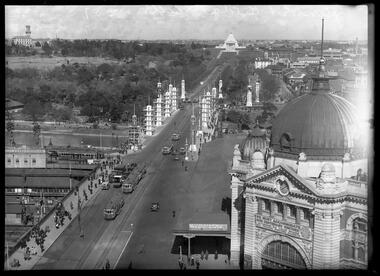
Photograph, Bull, Hugh Jones, 1897-1993, Princes Bridge Centenary pylons under construction
... Retrieved September 21, 2023, from http://nla.gov.au/nla.news-article243172436 'Dressing Melbourne for the Duke', The Australian home beautiful: a journal for the home builder. ...Retrieved September 21, 2023, from http://nla.gov.au/nla.news-article243172436 'Dressing Melbourne for the Duke', The Australian home beautiful: a journal for the home builder. ...Princes Bridge Centenary pylons under construction Possibly taken from Young and Jacksons Hotel (formerly Princes Bridge Hotel) on the corner of Flinders and Swanston streets, Flinders Street Station’s clocks and main entrance dominate, along with its distinctive copper dome and decorative façade. The time on the main clock is 1.40pm, and the sign underneath, reflecting Melbourne’s upcoming Centenary reads, “We must accommodate our Centenary visitors! Citizens! Do your share by taking paying guests.” At left is the original Princes Bridge Station, today the site of Federation Square. The riverside tram terminus advertises a Café/Tobacconist/Refreshment Room selling cigars & cigarettes, fountain drinks & confectionery, and in smaller text: “Leave your boot repairs here”. Nearly everyone is dressed in dark suits, coats and hats. The footpaths are wide and there are no traffic lights. The roadway stretches towards the Shrine of Remembrance, not yet dedicated but very dominant on the skyline. Government House is clearly visible across the wide parkland that would come to be known as Kings Domain and that is an area of deep importance to the people of the Eastern Kulin. Originally, Birrarung was part of a network of swamps and lagoons linked to the course of the river. From 1896, Public Works Department engineer Carlo Catani, oversaw a new channel to straighten the river and the swamps and lagoons were filled with spoil from the channel works. From the same vantage point today, only the top of the tower of Government House would be visible. The photo captures the pylons along Princes Bridge, mid-construction and being installed to mark Melbourne’s Centenary. The pylons were not without controversy. Both The Argus and The Age bemoaned them for being “made almost entirely of imported softwood timber”, denying work to native hardwood timber workers and sawmillers, and leading visitors to think Australia did not have its own exceptional native hardwoods. The pylons were also variously described in their incomplete state, as unimaginative and resembling an oilfield. Published: The Age 5 September 1934 Featured in "Newsworthy: Melbourne in photographs 1933-1936" exhibition at East Melbourne Library, October to December 2023. Exhibition caption by project volunteer, Louise McKenzie Photographer notations on slide: "Pylons + St Kilda Rd C57" Published: Age (Melbourne, Vic. : 1854 - 1954), Wednesday 5 September 1934, page 11 Published title: DECORATIONS -- THEN AND NOW. Published caption: "Although not completed yet, some impression of the effect of the decorations on Princes-bridge may be obtained from the first picture which shows the majestic sweep of St Kilda road with the Shrine of Remembrance and Government House dominating the horizon. The area to the left of St. Kilda-road and in front of Government House is portion of the area which it is proposed to call the King's Domain, which extends to Domain-road and Anderson-street..." Description: East-facing, elevated view of Flinders Street Station and Princes Bridge, featuring partially completed pylons erected for Melbourne's Centenary celebrations. The Shrine of Remembrance and Government House can be seen in the distance. In the foreground are trams, cars and trucks, pedestrians, Batman Avenue tram terminus and refreshment rooms. Signage on Flinders Street Station encourages citizens to accommodate Centenary visitors. The Melbourne Centenary was held 1934-35 in celebration John Batman's proclamation that Melbourne "the place for a village". Centenary events included a visit by Prince Henry, Duke of Gloucester. A Centenary Cake measuring 50 feet in height and ten tons in weight was cut into 250,000 pieces and sold at 1 shilling per piece for charity. Spectacular floodlighting of city landmarks, the creation of the Pioneer Women's Memorial Garden, and the MacRobertson Air Race from London, were other notable activities. Research by project volunteer, Louise McKenzie: The photo in The Age collage of 5 September 1934 has a slightly cropped foreground. The original photo has been taken from an elevated vantage point, most probably the roof of the Nicholas Building on the corner of Flinders and Swanston streets. The right foreground is dominated by the main “clocks” entrance to Flinders Street Station, showing its distinctive copper dome and decorative façade. The time on the main clock is 1.40 pm. The main sign on the front of the Station reads, "We Must Accommodate our Centenary Visitors! Citizens! Do your share by taking paying guests. Write to The Official Centenary Accommodation Bureau, 436 Collins St. City. Tel M 4671”. Another sign at eye level at the main entrance says: “Cheap Trips on Sundays”. The sign on the end of the roof along the eastern side of the station reads, “The Babies Need Your Help! Support Broadmeadows Foundling Hospital Appeal. July and August”. Run by the Sisters of St Joseph of the Sacred Heart, St Joseph’s Foundling Hospital was a purpose built infants’ home for up to 300 babies, plus accommodation for expectant mothers, mainly single women. In the early 1930s, the department (Victorian Children’s Welfare Department) contracted St Joseph’s Foundling Hospital to care for an additional 60 infant state wards, and up to 175 non wards at any given time. In 1931 it also operated a mothercraft training school. The centre foreground shows the commencement of Princes Bridge. Beneath the left side of the bridge was the site of the original Princes Bridge Station, by this time incorporated into Flinders Street Station, and today the area is the site of Federation Square. It was linked to Flinders Street station by the railway tracks that ran underneath the northern approach to the bridge. This photo shows a tram terminus which has a Café/Tobacconist/Refreshment Room, selling cigars & cigarettes, fountain drinks & confectionary, and a sign: Leave your boot repairs here. In the foreground is a wide roadway running south/north, comprising two vehicle lanes each heading north/south, and a central section containing two sets of tram tracks. There are cars, buses and delivery vans on the roadway. The trams visible are Glen Iris (Route No. 6; tram no. 448), Toorak (Route No. 8, tram no. 333), ? (No. 7), ? (No. 1), and ? (No. 2A). The footpaths are extremely wide. There is a square newspaper/magazine stand on the eastern side footpath. And also a “Ferry” sign. There are no traffic lights, but a policeman is visible on the roadway. There are pedestrians – men, women, children, a porter with trolley, women with prams. Clothing comprises dark suits, coats and hats for nearly everyone. There are double headed “Collins Street” lights along the side of the roadway, and along the northern riverbank. The roadway in the foreground is an extension of Swanston Street, which becomes Princes Bridge, then St Kilda Road, stretching towards the Shrine of Remembrance, and diverting past it. The Shrine had not yet been officially dedicated, and looks very white and dominant on the skyline. On the LHS of St Kilda Road, Government House is clearly visible across the wide parkland to be known as Kings Domain. The Kings Domain area is important to the people of the Eastern Kulin nation, and also has historical importance for its association with the early settlement of Melbourne and the foundation of British colonial administration in Victoria. On the southern side of the Yarra River (Birrarung) an historic rowing boathouse is visible, located adjacent to the Alexandra Gardens. Originally Birrarung was part of a network of swamps and lagoons linked to the course of the river. From 1896, under the guidance of engineer Carlo Catani* a new channel to straighten the river was created and the swamps and lagoons were filled with spoil from the channel works. The gardens were then created and completed in time for a Royal visit by the Duke of York in May 1901. The gardens are named after Alexandra of Denmark, the wife of King Edward VII. Both these areas, plus the Royal Botanic Gardens Victoria, Shrine of Remembrance Reserve, Sidney Myer Music Bowl, Government House, and the Queen Victoria Gardens together form the Domain Parklands. The extent of the subsequent plantings is evident today, where from the same vantage point only the top of the tower of Government House would be visible. *Catani was born in Florence in 1852, but after arriving in Melbourne worked as a civil engineer for the Victorian Government. His last major project was the reclamation of the foreshore of St Kilda, envisaged in the style of a European resort, complete with a split level esplanade, bathing pavilions, dance halls, amusements and a French-Italian style of landscape complete with palms. The gardens at the end of Fitzroy Street, St Kilda, now bear his name. The historic boathouse visible across the Yarra is another glimpse into Melbourne’s past. “Boathouse Row” comprises 7 amateur rowing clubs, the first established in 1859 (Melbourne University Boat Club). Other Clubs were Richmond, Melbourne, Banks, Melbourne Grammar School, Yarra Yarra and Mercantile. South of the river and west of the bridge is an area today developed into the Melbourne arts precinct of Hamer Hall and the Arts Centre. But at this time it was the home of Wirths Olympia Circus, which comprised Wirths Pleasure Park (an amusement park), a 5,000 seat auditorium – Hippodrome, a roller skating rink, a glaciarium, a cinema, and the Green Mill Dance Hall. Dog shows were also held at Olympia. The Green Mill Dance Hall closed in 1950, and the remainder of the Wirth buildings on site were destroyed by fire in December 1953. The feature of the photo is the pylons erected along Princes Bridge to mark Melbourne’s Centenary in 1934. The sixteen plastered pylons were designed by Roy Prentice, the second person to qualify as an architect at The University of Melbourne’s Bachelor of Architecture degree, in 1933, aged 27. Simon Reeves in his article marking the 100th birthday of Roy Prentice on 20 June 2006 reports that the State Electricity Commission sponsored this work, and the Argus reported that “… the pylons were “illuminated from within to give the effect of soft radiance”. Australia Home Beautiful 1 Oct 1934 reports in a very detailed and comprehensive article: The 10 taller pylons, including flagpole, were 48 ft, with a base of 8 ft. Timber-framed and faced with fibrous plaster and galvanised sheet iron, each structure was securely bolted to a concrete foundation three feet in depth. Panels of glass let into the shaft of each pylon were indirectly lit by 40, 100 watt lamps, and the upper bank of internal lamps were dyed so as to flood the panels with a deep red light. The decorative painted shields and flagpoles/pennants were illuminated by three 200 watt projectors concealed in the roof of each pylon, and were part of an electric night light decoration scheme involving 28 miles of wire to supply more than 20,000 lights. An article in the Argus on 18 October 1934 provided minute detail of the lighting erected in Melbourne for the Centenary, converting it “… into a coloured fairyland by night.” The estimated cost of 10 pounds per hour the lights were on. The display included 800 standard light poles 30 feet high which were tiered with electric bulbs concealed in inverted cones, 138 specially designed “Venetian poles” draped in flags trophies and streamers. The streets included in the electric night light decoration scheme were Bourke Street from Spring to William, the entire length of Collins Street, Flinders Street from Elizabeth to Spring, Lonsdale Street from Elizabeth to Swanston, Swanston and Elizabeth Streets from Flinders to Lonsdale, and parts of Springs and Spencer Streets. Together with the Princes Bridge pylons, approximately 28 miles of wire was required to supply power to the more than 20,000 lights. And that is just in the city of Melbourne. It was estimated the same amount of lighting was duplicated among other local councils. The pylons were not without controversy. The Argus on 28 August 1934 in an article headed “Imported Timber in Pylons” reported that the Princes Bridge pylons are “made almost entirely of imported softwood timber”, and have therefore denied work to native hardwood timber workers and sawmillers. The same day the Melbourne Age ran a similar story, bemoaning the fact that foreign oregon had been used which may lead tourists to think Australia did not have its own exceptional native hardwoods. A Camberwell City Councillor described the pylons as unimaginative, and the Herald reported that skeletons of pylons for the Centenary decorations in their present form led the area to resemble an oilfield! The Yarra River and Princes Bridge have long been a focal point of Melbourne life. In the early days of European settlement in Melbourne a rope-hauled punt carried people across the Yarra River. A surge in population and increased shipping traffic created a need for a bridge. There was difficulty in agreeing on a suitable site for the bridge (options were crossing at Elizabeth, Swanston, Queen or Market Streets), but the NSW Government favoured Swanston Street and the Melbourne Town Council decided on a temporary bridge across the Yarra spanning from the foot of Swanston Street. This first bridge was a single span timber toll bridge designed by Scottish born bridge designer David Lennox, and completed in 1845. It was 120 feet long, had a roadway of 17 feet wide, and a footpath on one side of 4 feet. It was leased to the Melbourne Bridge Company in the name of Robert A Balbirnie. The tollhouse was on the north side of the river and the toll keeper, Patrick Doherty, was credited with saving nine lives during the four years he was in charge of the toll station. The second bridge was stone (completed 1850), and named Prince’s Bridge after the HRH Prince of Wales, later Edward VII. It was designed with an elliptical single arc and an exceedingly small rise in proportion to the span. However, this design created an obstacle for flood waters, and together with Melbourne’s increasing population it was quickly apparent that a new bridge was required. At its opening on 15 November 1850 coincided with the imminent declaration of Victoria as a separate colony, it provided a moment of great celebration for Melbournians and “The opening ceremony was described as the grandest processional display witnessed in the colony.” (ToMelbourne.com.au) Princes Bridge in its present form, as depicted in this photograph, was designed by Jenkins, D’Ebro and Grainger, and constructed in 1886-88 by David Munro. John Grainger (father of Australian composer Percy Grainger) did the majority of the design work for the bridge. The structure was to have three arches each 96 feet wide measured across the river, and the banks on both sides were raised to allow more space for floodwater to flow. St Kilda Road was originally many feet below the current level. The bridge is of architectural significance for its substantial size, giant half columns, extensive use of wrought and cast iron, decorative elements (cast-iron lamps) and the skilled stonemasonry in the construction of the abutments and piers. Its main design features are similar to those of Blackfriars Bridge in London (1870). The bluestones were quarried from Footscray, the Malmsbury stones were from quarries at Kyneton, and the granite from Harcourt. The cost was met by the State of Victoria, City of Melbourne, and six out of seven of its municipalities, and their coats of arms feature on the bridge. The building of the bridge reflected the boom period of Melbourne, including the Victorian gold rush 1851- late 1860s, and its contractor, David Munro, was also responsible for the construction of Queens Bridge and Sandridge Railway Bridge. The Centenary pylons are no longer in place, but today this intersection still plays a major part in Melbourne’s daily life: people still meet “under the clocks” at Flinders Street station, and the route in and out of the city along St Kilda Road is often a feature of parades such as Moomba, the Grand Final Parade, and of course the Anzac Day Parade which commences at the Princes Bridge intersection and finishes at the Shrine of Remembrance. There are many tram routes, which cross the Bridge, and it directs pedestrians towards the Arts Precinct, the various components of Domain Park, plus the Southbank restaurant and rowing precincts. Even though this is a street scene, it feels very intimate; the viewer is instantly immersed in the activity of a Melbourne afternoon, looking down St Kilda Road from a viewpoint near today’s Federation Square. References: DECORATIONS -- THEN AND NOW. (1934, September 5). The Age (Melbourne, Vic. : 1854 - 1954), p. 11. Retrieved September 21, 2023, from http://nla.gov.au/nla.news-article205880269 'Flinders Street railway station', Wikipedia, https://en.wikipedia.org/wiki/Flinders_Street_railway_station 'St Joseph’s Foundling Hospital (1901-75)', Finding Records, Department of Health and Human Services, State of Victoria, https://www.findingrecords.dhhs.vic.gov.au/collectionresultspage/St-JosephsFoundling-Hospital-Babies-Home#departmental-administration 'Alexandra Gardens', City of Melbourne, https://www.melbourne.vic.gov.au/community/parks-open-spaces/major-parks-gardens/Pages/alexandra-gardens.aspx 'Wirths Circus', Wikipedia, https://en.wikipedia.org/wiki/Wirth's_Circus 'Roy Prentice: Centenary Architect', Built Heritage Pty Ltd, Simon Reeves, https://www.builtheritage.com.au/downloads/prentice.pdf 'Princes Bridge', Heritage Council Victoria, https://vhd.heritagecouncil.vic.gov.au/places/817 PORT PHILLIP. (1846, April 1). The Sydney Morning Herald (NSW : 1842 - 1954), p. 3. Retrieved September 21, 2023, from http://nla.gov.au/nla.news-article12886251 'Edward VII', Wikipedia, https://en.wikipedia.org/wiki/Edward_VII 'Princes Bridge', ToMelbourne.com, https://tomelbourne.com.au/princes-bridge/ 'Princes Bridge', eMelbourne, https://www.emelbourne.net.au/biogs/EM01189b.htm 'Princes Bridge', Australia for everyone, http://australiaforeveryone.com.au/files/melbourne/princes-bridge.html 'Victorian gold rush', Wikipedia, https://en.wikipedia.org/wiki/Victorian_gold_rush IMPORTED TIMBER IN PYLONS (1934, August 28). The Argus (Melbourne, Vic. : 1848 - 1957), p. 9. Retrieved September 21, 2023, from http://nla.gov.au/nla.news-article10952507 Princes-Bridge Pylons. (1934, August 28). The Age (Melbourne, Vic. : 1854 - 1954), p. 7. Retrieved September 21, 2023, from http://nla.gov.au/nla.news-article205532235 Pylons Appear Near Princes Bridge (1934, August 18). The Herald (Melbourne, Vic. : 1861 - 1954), p. 1. Retrieved September 21, 2023, from http://nla.gov.au/nla.news-article243104375 PRINCES-BRIDGE PYLONS. (1934, September 20). The Age (Melbourne, Vic. : 1854 - 1954), p. 10. Retrieved September 21, 2023, from http://nla.gov.au/nla.news-article205873535 28 Miles of Wire (1934, October 18). The Argus (Melbourne, Vic. : 1848 - 1957), p. 1 (The Junior Argus). Retrieved September 21, 2023, from http://nla.gov.au/nla.news-article10977836 'Historical references for Boathouse Row, Melbourne', http://boathouserowmelbourne.com.au/history/ 'ITALIAN DELEGATION TO HONOUR CARLO CATANI, DESIGNER OF THE ST KILDA FORESHORE, St Kilda Historical Society, 2001, https://web.archive.org/web/20070928061938/http://www.skhs.org.au/~SKHSarticles/articles/Carlo_Catani.html# HISTORY IN LIGHTS (1934, July 12). The Herald (Melbourne, Vic. : 1861 - 1954), p. 16. Retrieved September 21, 2023, from http://nla.gov.au/nla.news-article243172436 'Dressing Melbourne for the Duke', The Australian home beautiful: a journal for the home builder. Vol 12 No. 10 (1 October 1934), page 21, 58. Retrieved September 14, 2023, from http://nla.gov.au/nla.obj-2950922209Photographer notations on slide: "Pylons + St Kilda Rd C57".centenaries, bridges, lighting, flinders street railway station -
 Mission to Seafarers Victoria
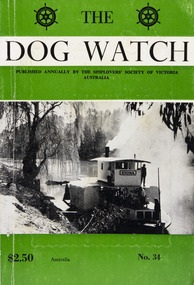
Journal (item) - Periodicals-Annual, Shiplovers' Society of Victoria, The Annual Dog Watch
... Australia" and "Carl" - J. M. MacKenzie - 93 Rescue from "Clarissa", 1957 - Captain Leif Asklund - 97 Journey Home - Captain W. E. Eastoe - 100 Disaster At Blanket Bay - J. K. Loney - 104 The End Of The "Antiope" - Captain Bruce Bell - 106 The "Great Britain" - C. E. Bonwick - 108 Search The Coast To Shark Bay - Rear-Admiral Charles Adair U.S.N. - 110 The "Polly Woodside" Family - Rev. H. W. Coffey - 121 Book Reviews - 123 The Annual Dog Watch Journal ...This journal provides the reader with glimpses of the adventures and hardships of a seaman's life. Many of the stories are of sailing ships. PS Etona was built in 1898 at Milang, South Australia as a missionary church steamer for the Church of England. The Etona's run was from Mannum, South Australia, where she was based up to Renmark. As churches were built in river tower she was no longer required and in 1912 she was sold to Captain Arch Conner who used her as a fishing steamer at Boundary Bend for many years. She was brought out of retirement during the 1956 floods to do trips up the Murrumbidgee River. She was eventually bought by interest in Echuca and restoration was commenced in 1962. The Etona, now fully restored with her original steam engine can now be seen moored along side the historic wharf at Echuca.Contributes to our knowledge of the importance of shipping and places on record those stories of the sea which would otherwise be lost.Contents Foreword - G. F. Tilley - 5 The "Etona" - H. Vaughan Evans - 6 Editorial - Russell Hemingway - 11 The Old Lady Of The River - Captain J. Gaby - 19 "Takapuna" Interlude On A Moonless Night - E. Harper - 31 Maritime Museum of Tasmania - J. Miller - 34 The Confederate Raiders "Florida" and "Alabama" - A. R. Osmond - 36 "Ease After War . . . Doth Greatly Please" - Captain W. J. Cowling - 44 Mutiny At Sea - P. R. Wilkins - 49 War Service In The Indian Ocean - H. Mossman - 51 Cape Horn - Captain Eino Koivistoinen - 57 "Tragedy of Loss" - Jonathan john - 61 The End of The "Queen Elizabeth" - Bradley J. Newell - 62 London Could Cope With Him - Dr. Stanislaw Bernatt - 68 Three Ships Canals - N. S. Smith - 69 The Loss Of The "Eyoshi Maru" - Captain M. B. Glasier - 77 A Small Consignment But Valuable - J. B. Hodgson - 85 Lowden and The "Candida" - D. R. Rickard - 87 "Lauriston" Sails On - F. W. Rudd - 89 Confusion of Identities, "Young Australian", "Young Australia" and "Carl" - J. M. MacKenzie - 93 Rescue from "Clarissa", 1957 - Captain Leif Asklund - 97 Journey Home - Captain W. E. Eastoe - 100 Disaster At Blanket Bay - J. K. Loney - 104 The End Of The "Antiope" - Captain Bruce Bell - 106 The "Great Britain" - C. E. Bonwick - 108 Search The Coast To Shark Bay - Rear-Admiral Charles Adair U.S.N. - 110 The "Polly Woodside" Family - Rev. H. W. Coffey - 121 Book Reviews - 123sailing ships, steamships, shipping, seafaring life, shiplovers' society of victoria, dog watch, murray river, paddlesteamers, echuca, etona, ps etona -
 Greensborough Historical Society
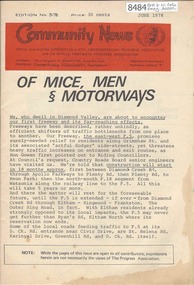
Newsletter, Greenhills and North Greensborough Progress Association, Community News: official journal of the Greenhills and Nth. Greensborough Progress Association and the Apollo Parkways Progress Association. June 1978. Edition No. 5/78, 06/1978
... home? You or T.V.?, Real adventure playgrounds, The Montessori method, Septic tanks **!!***!!!, Depression, Kinder news, Nillumbik Historical Society, Karingal Tennis Club, Nursing Mothers Association, Parent Australia, From the Council Chamber, Montmorency & District Horticultural Society, This and that. Greenhills and North Greensborough Progress Association greenhills Apollo Parkways Progress Association apollo parkways Newsletter, 23 p., illus. and text Community News: official journal ...Of mice, men & motorways, Diamond Valley Railway, Who runs your home? You or T.V.?, Real adventure playgrounds, The Montessori method, Septic tanks **!!***!!!, Depression, Kinder news, Nillumbik Historical Society, Karingal Tennis Club, Nursing Mothers Association, Parent Australia, From the Council Chamber, Montmorency & District Horticultural Society, This and that.Newsletter, 23 p., illus. and textgreenhills and north greensborough progress association, greenhills, apollo parkways progress association, apollo parkways -
 Greensborough Historical Society
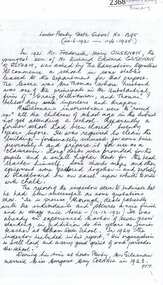
Article, Journal, Australian Home Beautiful, Lower Plenty State School LP1295, 20/06/1921o
... Historical significance about the premises of both the Lower Plenty State School and the Heidelberg Golf Club. lower plenty primary school gilsenan, frederick henry heidelberg golf club 4 p. photocopied article from Australian Home Beautiful 1 June 1929, with 2p.handwritten history of the school 20/06/1921-11/04/1925 (2 copies) and page of photographs of building and people. Lower Plenty State School LP1295 Article, Journal ...The Australian Home Beautiful article on the Heidelberg and Eastern Golf Club indicates that its clubhouse comprised two buildings, "Bryn Teg" built by Mrs Thomas, one approximately 1849, the other 40 years later. The club moved into these buildings about 1928. The stables were converted for use in 1921 by Frederick Henry Gilsenan as the Lower Plenty State School No. 1295 which was open from 20/06/1921 to 11/04/1925. Mr. Gilsenan married Margaret Mar Cornall in 1923. They lived in Heidelberg, had a daughter, Verna in 1924. Mr Gilsenan was transferred to Mt Moriac SS No. 1608 in 1925. The handwritten account is written by Verna.Historical significance about the premises of both the Lower Plenty State School and the Heidelberg Golf Club.4 p. photocopied article from Australian Home Beautiful 1 June 1929, with 2p.handwritten history of the school 20/06/1921-11/04/1925 (2 copies) and page of photographs of building and people.lower plenty primary school, gilsenan, frederick henry, heidelberg golf club
