
Showing 21 items matching "australian imperial force insignia"
-
 Returned Nurses RSL Sub-branch
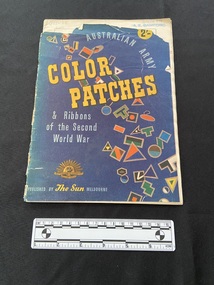
Book - Booklet, Lawrence Kay for Pictorial Newspapers, Herald and Weekly Times], Australian Army color patches and ribbons of the Second World war, 1945
... Australian Imperial Force insignia...Australian Imperial Force insignia Australian Armed Forces - insignia Badges and insignia WW2 WWII World War 1939-1945 Published by "The Sun Melbourne", this volume provides a history of the Australian Army's color patches and ribbons from WWII. ...Published by "The Sun Melbourne", this volume provides a history of the Australian Army's color patches and ribbons from WWII.Staple bound blue booklet with torn cover. Cover has the title printed in yellow and blue across a background of coloured shapes.non-fictionPublished by "The Sun Melbourne", this volume provides a history of the Australian Army's color patches and ribbons from WWII.australian imperial force insignia, australian armed forces - insignia, badges and insignia, ww2, wwii, world war 1939-1945 -
 Returned Nurses RSL Sub-branch
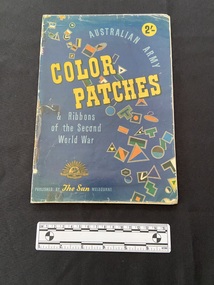
Book - Booklet, Lawrence Kay for Pictorial Newspapers, Herald and Weekly Times], Australian Army color patches and ribbons of the Second World war, 1945
... Australian Imperial Force insignia...Australian Imperial Force insignia Australian Armed Forces - insignia Badges and insignia WW2 WWII World War 1939-1945 Published by "The Sun Melbourne", this volume provides a history of the Australian Army's color patches and ribbons from WWII. ...Published by "The Sun Melbourne", this volume provides a history of the Australian Army's color patches and ribbons from WWII.Staple bound blue booklet with torn cover. Cover has the title printed in yellow and blue across a background of coloured shapes.non-fictionPublished by "The Sun Melbourne", this volume provides a history of the Australian Army's color patches and ribbons from WWII.australian imperial force insignia, australian armed forces - insignia, badges and insignia, ww2, wwii, world war 1939-1945 -
 The Beechworth Burke Museum
Photograph
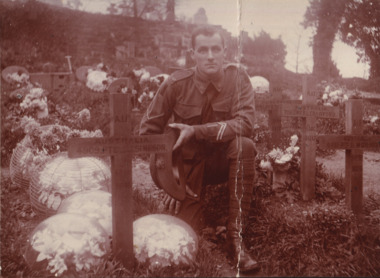
... Australian Imperial Force (AIF) during World War I. It is believed that the soldier who is kneeling was also part of the Australian Imperial Force. This can be inferred by the chevron rank insignia...Australian Imperial Force (AIF) during World War I. It is believed that the soldier who is kneeling was also part of the Australian Imperial Force. This can be inferred by the chevron rank insignia ...Taken on an unknown date, depicted is a portrait of a young, unidentified male soldier kneeling beside a grave in a cemetery. He is dressed in an Australian military uniform. The cemetery pictured is the Arnos Vale Cemetery in Bristol, United Kingdom. There are multiple crosses marking graves in this photograph, all marked in memory of different soldiers who fought with the Australian Imperial Force (AIF) during World War I. It is believed that the soldier who is kneeling was also part of the Australian Imperial Force. This can be inferred by the chevron rank insignia visible on the uniform. The placement of this insignia on the sleeve of the right arm suggests that this soldier was either a Warrant Officer or a Non-Commissioned Officer (NCO). Another signifier of the Australian Imperial Force uniform are the three inverted chevron stripes positioned on the lower part of the left sleeve, near the wrist. These are called Good Conduct Stripes and were worn by Warrant Officers and NCOs. This patch consisted of a single chevron stripe for each year of military service meeting certain requirements of good conduct. Additionally, the man in this photograph is also wearing a 'Rising Sun' collar badge on his coat. Australia, unlike most other Commonwealth countries, did not adopt metal regimental badges during the First World War. All units were issued with the Australian Army General Service Badge, better known as the 'Rising Sun’ badge. This insignia is almost always identified with the Australian Imperial Force. Furthermore, the grave that this unidentified soldier is kneeling next to is the resting place of Private John James (J. J.) Simpson. He was born in Stanley, Victoria in 1883. He enlisted in the Australian Imperial Force in Melbourne, Victoria on 12 July, 1915, with the service number 4909. John James Simpson was then posted to the 60th Company Depot at Seymour for military recruit training. John James Simpson was reported wounded in action in France on 19 July, 1916. He was admitted to 13th General Hospital, France with gunshot wounds to his legs. From Boulogne, France, he traveled to the United Kingdom aboard the Hospital Ship 'St. Denis' for medical care. Upon arrival, he was admitted to 2nd Southern General Hospital, Bristol, England on 27 July, 1916. John James Simpson passed away from his wounds on 1 August, 1916. He was 33 years old.The record is historically significant due to its connection to World War I. This conflict is integral to Australian culture as it was the single greatest loss of life and the greatest repatriation of casualties in the country's history. Australia’s involvement in the First World War began when the Australian government established the Australian Imperial Force (AIF) in August 1914. Immediately, men were recruited to serve the British Empire in the Middle East and on the Western Front. The first significant Australian action of the war was the Australian Naval and Military Expeditionary Force’s (ANMEF) landing on Rabaul on 11 September 1914. The ANMEF took possession of German New Guinea at Toma on 17 September 1914 and of the neighbouring islands of the Bismarck Archipelago in October 1914. On 25 April 1915, members of the AIF landed on Gallipoli in Turkey with troops from New Zealand, Britain, and France. This specific event holds very strong significance within Australian history. The record has strong research potential. This is due to the ongoing public and scholarly interest in war, history, and especially the ANZAC legend, which is commemorated annually on 25 April, known as ANZAC Day.Sepia rectangular photograph printed on matte photographic paper mounted on card.Obverse: A.I.F. / AUSTRALIA / 441, PTE.T. / T (?) / 26B (?) / 6.1.17 / (?) / LANGTON RD. / ST. ANNES PK. / BRISTOL / A.I.F. / AUSTRALIA. / 708, GNR B.L.CRAWFORD. / FR / 5 D.A.C. / 13.2.17 / A.I.F. / AUSTRALIA. / 4481, P (?) D.MORRIS. / (?) / 31.12.(?) / A.I.F. / AUSTRALIA. / 4909, PTE J.J.SIMPSON. / 608(?) / 1.8.16 / Winchester / LANGTON RD. / ST. ANNES PK / BRISTOL / Reverse: 2641 /military album, military, war, world war i, wwi, australian imperial force, aif, j. j. simpson, uniform, cemetery -
 Bendigo Military Museum
Financial record - PAY BOOK ARMY WW1, Mc & Co. Ltd London, 1914 - 1918
... AUSTRALIAN IMPERIAL FORCE SOLDIERS PAY BOOK. Small book, cotton cloth cover in brown colour with black print on cover. Rising Sun Insignia ...Pay book of CPL L. P. WARREN, Reg'n No. 615 Enlisted 18.8.1914 60th Battalion - AAVC 17.5.1917Small book, cotton cloth cover in brown colour with black print on cover. Rising Sun Insignia in centre. 19 pages.Paybook No. 146893. Surname WARREN Christian Names L.P. Reg'n No. 615 Unit AUSTRALIAN IMPERIAL FORCE SOLDIERS PAY BOOK.passchendaele barracks trust, ww1, aif, paybook -
 National Vietnam Veterans Museum (NVVM)
Plaque - RAAF Shield
... Australian Air Force is composed of the imperial crown mounted on a circle featuring the words Royal Australian Air Force. Beneath this is a scroll with the Latin motto 'Per Ardua Ad Astra' meaning "Through adversity to the stars", which is also used by Britain's Royal Air Force. Across the middle of the crest is a wedge-tailed eagle. Royal Australian Airforce plaque eagle shield emblem motto RAAF badge crest Royal Australian Airforce. PER ASTRA ARDUA-AD Wooden plaque with a plastic insignia ...The badge of the Royal Australian Air Force is composed of the imperial crown mounted on a circle featuring the words Royal Australian Air Force. Beneath this is a scroll with the Latin motto 'Per Ardua Ad Astra' meaning "Through adversity to the stars", which is also used by Britain's Royal Air Force. Across the middle of the crest is a wedge-tailed eagle. Wooden plaque with a plastic insignia on it. Insignia reads Royal Australian Airforce. At the bottom reads PER ASTRA ARDUA-AD in black on a yellow background. In the middle of the insignia is an eagle.Royal Australian Airforce. PER ASTRA ARDUA-ADroyal australian airforce, plaque, eagle, shield, emblem, motto, raaf, badge, crest -
 Coal Creek Community Park & Museum
Honour Roll, Kilcunda Road School Honor Roll
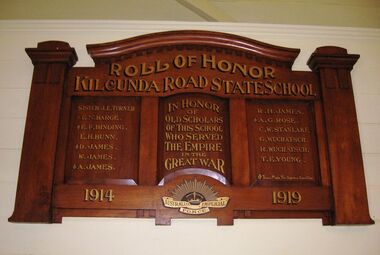
... Australian Imperial Force. (X) These made the supreme sacrifice. Sister J.E. Turner , E.N. Barge, E.F. Binding (X), E.H. Bunn, D. James (X), W.James, A. James (X), R. H. James, A.G. Rose (X), C.W. Stanlake, G. Wuchatsch, R. Wuchatsch, T.E. Young Honour roll of varnished wood, with three panels, an undulating shaped pediment, plain columns at sides, painted gold text and the Australian Imperial Forces insignia on base. ...This WWI Honor Roll was originally displayed in the Kilcunda Road State School (no.3337), which was located at the north east corner of the intersection of the Bena - Kongwak and Buchanans' Roads, Bena, Victoria, 3946. The school was located amongst the cypress trees at 645 Bena-Kongwak Road. The school was relocated in 2008 to the Coal Creek Community Park and Museum, 12 Silkstone Road, Korumburra, 3950 to become the Masonic Lodge building in the park display. On the west side of the intersection of the Bena - Kongwak and Buchanans' Roads is a brass plaque on a granite boulder with the following inscription TO COMMEMORATE THE DISTRICT OF KILCUNDA ROAD First Surveyed 1879. This is the site of the KILCUNDA ROAD UNITING CHURCH 1911 to 1966. Diagonally opposite at 645 Bena-Kongwak Road was the site of the KILCUNDA ROAD PRIMARY SCHOOL No: 3337, 1902 to 1975. Erected by The School Mother’s Club continuing as The Kilcunda Road Social Club 2008. One of the few remaining historic items from Kilcunda Road settlement.Honour roll of varnished wood, with three panels, an undulating shaped pediment, plain columns at sides, painted gold text and the Australian Imperial Forces insignia on base.Roll of Honor, Kilcunda Road State School. In Honor of Old Scholars of this school who served the Empire in the Great War, 1914-1919, Australian Imperial Force. (X) These made the supreme sacrifice. Sister J.E. Turner , E.N. Barge, E.F. Binding (X), E.H. Bunn, D. James (X), W.James, A. James (X), R. H. James, A.G. Rose (X), C.W. Stanlake, G. Wuchatsch, R. Wuchatsch, T.E. Young kilcunda road, honour roll, state school no.3337., wwi -
 Wangaratta RSL Sub Branch
Memorabilia - Display Box, The Australian Army
... Australian Imperial Force in both World Wars, the 'Rising Sun' badge has become an integral part of the digger tradition. The distinctive shape of the badge, worn on the upturned side of a slouch hat, is commonly identified with the spirit of Anzac. There are seven patterns of the Rising Sun. The Rising Sun has evolved over time and today Australian Army soldiers wear the seventh pattern Rising Sun. The Rising Sun badge, also known as the General Service Badge or the Australian Army Badge, is the official insignia ...Proudly worn by soldiers of the 1st and 2nd Australian Imperial Force in both World Wars, the 'Rising Sun' badge has become an integral part of the digger tradition. The distinctive shape of the badge, worn on the upturned side of a slouch hat, is commonly identified with the spirit of Anzac. There are seven patterns of the Rising Sun. The Rising Sun has evolved over time and today Australian Army soldiers wear the seventh pattern Rising Sun.The Rising Sun badge, also known as the General Service Badge or the Australian Army Badge, is the official insignia of the Australian Army and is mostly worn on the brim of a slouch hat or, less frequently, on the front of a peaked cap for Army personnel filling certain ceremonial appointments.Timber look laminate box with gold colour metal "rising sun" badge on front. The box opens out flat and contains seven metal " rising sun " badges mounted on black felt on the right side. The left side below an image of the rising sun contains a written history of all seven badges from 1902 to the present.The Australian Armyrising sun, badge, australian army, anzac -
 Wodonga & District Historical Society Inc
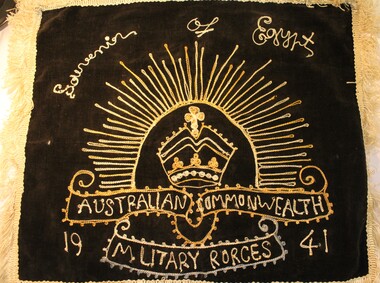
Memorabilia - Souvenir Cushion Cover Egypt 1941
... Australian Imperial Force which served as part of the garrison during the Siege of Tobruk, then at El Alamein, New Guinea and Borneo. It has particular local significance as the battalion was know as "Albury's Own" because a large majority of the battalion's initial intake of volunteers came from the Albury–Wodonga region. World War 11 Rats of Tobruk Tobruk Egypt A cushion cover embroidered with the insignia ...This cushion cover was owned by Arthur Lock, a soldier in the 2/23rd Battalion. After initial training in Albury, N.S.W. and Bonegilla, Victoria, they left for overseas service. Embarking in November 1940 on the transport Strathmore at Port Melbourne, the 2/23rd arrived in Egypt in mid-December. From Egypt they were deployed to Tobruk.This item is part of a collection of items owned by Arthur Lock, a member of the 2/23rd Battalion, an all-volunteer Second Australian Imperial Force which served as part of the garrison during the Siege of Tobruk, then at El Alamein, New Guinea and Borneo. It has particular local significance as the battalion was know as "Albury's Own" because a large majority of the battalion's initial intake of volunteers came from the Albury–Wodonga region.A cushion cover embroidered with the insignia of the Australian Commonwealth Military Forces 1941world war 11, rats of tobruk, tobruk, egypt -
 Wodonga & District Historical Society Inc
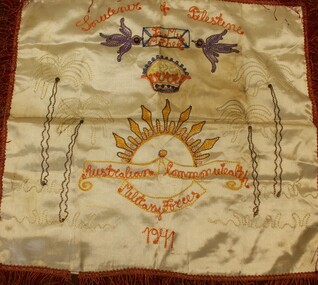
Memorabilia - Souvenir Cushion Cover Palestine 1941
... Australian Imperial Force which served as part of the garrison during the Siege of Tobruk, then at El Alamein, New Guinea and Borneo. It has particular local significance as the battalion was know as "Albury's Own" because a large majority of the battalion's initial intake of volunteers came from the Albury–Wodonga region. World War 11 Rats of Tobruk Palestine Top 'Souvenir of Palestine" Centre Insignia ...This cushion cover was owned by Arthur Lock, a soldier in the 2/23rd Battalion. After initial training in Albury, N.S.W. and Bonegilla, Victoria, they left for overseas service. Embarking in November 1940 on the transport Strathmore at Port Melbourne, the 2/23rd arrived in Egypt in mid-December. From Egypt they were deployed to Tobruk. The battalion helped defend Tobruk for eight months, manning a series of concrete pillboxes located in a semicircle around the town, called the Red Line. In October the majority of the 9th Division, except the 2/13th Infantry Battalion, was evacuated by sea. The 2/23rd left on 18 October and sailed to Alexandria. The division was transferred to Palestine and then Syria for rest and garrison duties.This item is part of a collection of items owned by Arthur Lock, a member of the 2/23rd Battalion, an all-volunteer Second Australian Imperial Force which served as part of the garrison during the Siege of Tobruk, then at El Alamein, New Guinea and Borneo. It has particular local significance as the battalion was know as "Albury's Own" because a large majority of the battalion's initial intake of volunteers came from the Albury–Wodonga region.A cushion cover embroidered with the insignia of the Australian Commonwealth Military Forces 1941. Top 'Souvenir of Palestine" Centre Insignia of the Australian Commonwealth Military Forces, Bottom "1941"world war 11, rats of tobruk, palestine -
 Wodonga & District Historical Society Inc
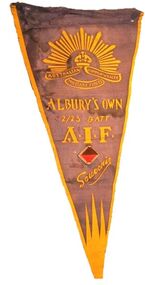
Banner - Souvenir Banner 2/23rd Battalion - Albury's Own
... Australian Imperial Force which served as part of the garrison during the Siege of Tobruk, then at El Alamein, New Guinea and Borneo. It has particular local significance as the battalion was know as "Albury's Own" because a large majority of the battalion's initial intake of volunteers came from the Albury–Wodonga region. World War 11 2/23rd Battalion Albury's Own Arthur Lock A souvenir banner representing the 2/23rd Battalion - Albury's Own. The banner incorporates the insignia ...Established at Victoria Barracks, in Melbourne, in June 1940, the 2/23rd Battalion was raised as part of the all-volunteer Second Australian Imperial Force and assigned to the 26th Brigade. Under the command of Lieutenant Colonel Bernard Evans, a small cadre of experienced personnel drawn from Victorian Militia units were concentrated at Victoria Barracks prior to the battalion headquarters being relocated to Albury, New South Wales, where a large number of volunteers were completing their recruit training at the 4th Recruit Training Battalion. Upon the conclusion of this course, the recruits were posted to the 2/23rd and the battalion – over 900 strong– moved to Bonegilla, Victoria, just across the border, where more complex collective training was completed prior to departure overseas. A large majority of the battalion's initial intake of volunteers came from the Albury–Wodonga region and as a result, the 2/23rd became known as "Albury's Own"This item is part of a collection of items owned by Arthur Lock, a member of the 2/23rd Battalion, an all-volunteer Second Australian Imperial Force which served as part of the garrison during the Siege of Tobruk, then at El Alamein, New Guinea and Borneo. It has particular local significance as the battalion was know as "Albury's Own" because a large majority of the battalion's initial intake of volunteers came from the Albury–Wodonga region.A souvenir banner representing the 2/23rd Battalion - Albury's Own. The banner incorporates the insignia of the Commonwealth of Australia Military Forces. It also includes the Unit colour patch which is a lozenge shape, divided into brown over red, with a grey trim. This patch was used from 1940 to 1942 when the patch representing service at Tobruk was introduced. world war 11, 2/23rd battalion, albury's own, arthur lock -
 Wodonga & District Historical Society Inc
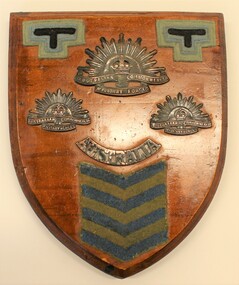
Plaque - Australian Commonwealth Military Forces Plaque
... Australian Imperial Force which served as part of the garrison during the Siege of Tobruk, then at El Alamein, New Guinea and Borneo. It has particular local significance as the battalion was know as "Albury's Own" because a large majority of the battalion's initial intake of volunteers came from the Albury–Wodonga region. World War 11 Tobruk Rats of Tobruk Australian Commonwealth Military Services Arthur Lock 3 Australian Commonwealth Military Forces badges and metal badge engraved "AUSTRALIA" A wooden plaque in the shape of a shield bearing insignia ...The Australian Commonwealth Military Forces (AMF) was the official name of the Australian Army from 1916 to 1980. The AMF included the full-time regular army and the part-time forces, which were also known as the Militia, the Citizen Military Forces (CMF), and the Australian Citizen Military Force (ACMF). The AMF was made up of conscripted and volunteer militiamen, as well as specialist permanent soldiers.This item is part of a collection of items owned by Arthur Lock, a member of the 2/23rd Battalion, an all-volunteer Second Australian Imperial Force which served as part of the garrison during the Siege of Tobruk, then at El Alamein, New Guinea and Borneo. It has particular local significance as the battalion was know as "Albury's Own" because a large majority of the battalion's initial intake of volunteers came from the Albury–Wodonga region. A wooden plaque in the shape of a shield bearing insignia of the Australian Commonwealth Military Forces and the Tobuk colour patch. 3 Australian Commonwealth Military Forces badges and metal badge engraved "AUSTRALIA"world war 11, tobruk, rats of tobruk, australian commonwealth military services, arthur lock -
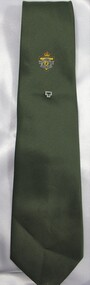 Wodonga & District Historical Society Inc
Clothing - Rats of Tobruk Association tie and 2/23rd Battalion tie pin, Tee Dee Tie Specialists, after 1945
... Australian Imperial Force which served as part of the garrison during the Siege of Tobruk, then at El Alamein, New Guinea and Borneo. It has particular local significance as the battalion was know as "Albury's Own" because a large majority of the battalion's initial intake of volunteers came from the Albury–Wodonga region. World War 11 Rats of Tobruk Tobruk A green tie featuring the insignia ...Arthur Lock was a Rat of Tobruk and served as President of the Albury Rats of Tobruk Association. 14,000 Australians were in Tobruk during the siege. On return to Australia the veterans looked to maintain the ties created amongst those who were in Tobruk during the siege and to ensure their needs were supported. In 1944, the Rats of Tobruk Association, NSW was established. This was followed by the establishment of the Victorian Branch on 2nd October 1945. Other branches and sub-branches were established across Australia and a Federal Council was established in 1946. With the passing of the survivors of Tobruk, most branches have been wound up with the exception of the Victorian branch. Since 2012 the Rats of Tobruk Association Inc. has opened up affiliate membership to descendants and relatives of the original "Rats" in order to preserve their legacy.This item is part of a collection of items owned by Arthur Lock, a member of the 2/23rd Battalion, an all-volunteer Second Australian Imperial Force which served as part of the garrison during the Siege of Tobruk, then at El Alamein, New Guinea and Borneo. It has particular local significance as the battalion was know as "Albury's Own" because a large majority of the battalion's initial intake of volunteers came from the Albury–Wodonga region. A green tie featuring the insignia of the Rats of Tobruk and a Tobruk "T" tie pin.world war 11, rats of tobruk, tobruk -
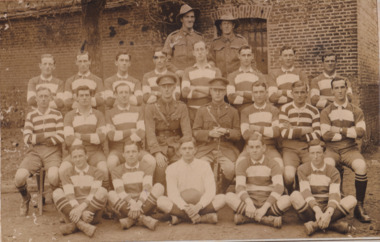 The Beechworth Burke Museum
Photograph
... It is believed that the soldiers in this photograph were part of the Australian Imperial Force. This can be inferred by the chevron rank insignia visible on their uniforms. ...It is believed that the soldiers in this photograph were part of the Australian Imperial Force. This can be inferred by the chevron rank insignia visible on their uniforms. ...Taken some time between 1914-18, depicted is a large group of unidentified males. Four of them are dressed in Australian military uniforms. The remaining 19 men are dressed in striped uniforms. The male in the centre of the front row is cradling a football, suggesting that the group was part of a football or rugby league team. It is believed that the soldiers in this photograph were part of the Australian Imperial Force. This can be inferred by the chevron rank insignia visible on their uniforms. The placement of this insignia on the sleeve of the right arm suggests that this soldier was either a Warrant Officer or a Non-Commissioned Officer (NCO). Additionally, they are also wearing 'Rising Sun' collar badges on their coats. Australia, unlike most other Commonwealth countries, did not adopt metal regimental badges during the First World War. All units were issued with the Australian Army General Service Badge, better known as the 'Rising Sun’ badge. This insignia is almost always identified with the Australian Imperial Force. Sport has always been entwined with war. Both sport and war demand peak physical fitness, camaraderie, strategy, and allegiance to a team collaboratively working towards a common goal: to win. The connection between sport and war is especially strong in Australia since these two concepts form the basis of our national identity. The Australian War Memorial has a number of World War I recruitment posters linking war and sport in its collection. One of the posters produced in 1915 by the State Parliamentary Recruiting Committee in Victoria attempted to shame young men into enlisting by juxtaposing the image of an Australian soldier standing guard over his deceased mate with a photograph of a Victorian Football League match. Another poster, produced in 1917, features vignettes of different sports including cricket, bowling, boxing, kayaking and golf. Its slogan reads, "Join Together - Train Together - Embark Together - Fight Together: Enlist in the Sportman's 1000".The record is historically significant due to its connection to World War I. This conflict is integral to Australian culture as it was the single greatest loss of life and the greatest repatriation of casualties in the country's history. Australia’s involvement in the First World War began when the Australian government established the Australian Imperial Force (AIF) in August 1914. Immediately, men were recruited to serve the British Empire in the Middle East and on the Western Front. The record has strong research potential. This is due to the ongoing public and scholarly interest in war, history, and especially the ANZAC legend, which is commemorated annually on 25 April, known as ANZAC Day. Additionally, the record presents a unique opportunity to further explore the relationship between the arts, sport and war. This statement of significance has already established that war is integral to Australia's national identity - and sport is of equal importance. Specifically, the record begs to question how the peak physical fitness and camaraderie valued in team sports were creatively translated into military recruitment campaigns during World War I. Evidently, this record and its historic context demonstrates that there is potential here, and if further research is completed on this topic, it may provide insight into Australian military recruitment tactics used in the past and present, and into the future.Sepia rectangular photograph printed on matte photographic paper mounted on card.Reverse: 6529 / hyossest (?) / (?)1/11/1 /military album, army, military, war, wwi, world war i, sport, football, rugby, aif, australian imperial force -
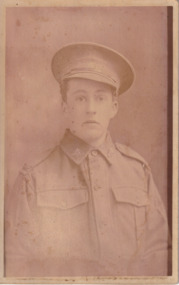 The Beechworth Burke Museum
Postcard
... Australian Imperial Force during World War I. This can be inferred by the 'Rising Sun' collar badge on his coat. Australia, unlike most other Commonwealth countries, did not adopt metal regimental badges during the First World War. All units were issued with the Australian Army General Service Badge, better known as the 'Rising Sun’ badge. This insignia...Australian Imperial Force during World War I. This can be inferred by the 'Rising Sun' collar badge on his coat. Australia, unlike most other Commonwealth countries, did not adopt metal regimental badges during the First World War. All units were issued with the Australian Army General Service Badge, better known as the 'Rising Sun’ badge. This insignia ...Taken on an unknown date, depicted is a portrait of a young, unidentified male soldier. He is dressed in an Australian military uniform. It is believed that this soldier was part of The Australian Imperial Force during World War I. This can be inferred by the 'Rising Sun' collar badge on his coat. Australia, unlike most other Commonwealth countries, did not adopt metal regimental badges during the First World War. All units were issued with the Australian Army General Service Badge, better known as the 'Rising Sun’ badge. This insignia is almost always identified with the Australian Imperial Force.The record is historically significant due to its connection to World War I. This conflict is integral to Australian culture as it was the single greatest loss of life and the greatest repatriation of casualties in the country's history. Australia’s involvement in the First World War began when the Australian government established the Australian Imperial Force (AIF) in August 1914. Immediately, men were recruited to serve the British Empire in the Middle East and on the Western Front. The first significant Australian action of the war was the Australian Naval and Military Expeditionary Force’s (ANMEF) landing on Rabaul on 11 September 1914. The ANMEF took possession of German New Guinea at Toma on 17 September 1914 and of the neighbouring islands of the Bismarck Archipelago in October 1914. On 25 April 1915, members of the AIF landed on Gallipoli in Turkey with troops from New Zealand, Britain, and France. This specific event holds very strong significance within Australian history. The record has strong research potential. This is due to the ongoing public and scholarly interest in war, history, and especially the ANZAC legend, which is commemorated annually on 25 April, known as ANZAC Day.Sepia rectangular postcard printed on card.Reverse: BMM2640.2 / POST CARD / Write here for Inland Postage only / The Address to be written heremilitary album, wwi, world war i, australian army, australian imperial force, aif, uniform, postcard, portrait -
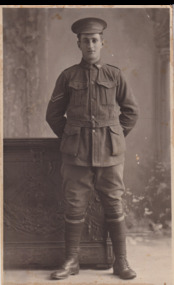 The Beechworth Burke Museum
Postcard
... It is believed that this soldier was part of The Australian Imperial Force during World War I. This can be inferred by the chevron rank insignia visible on the uniform. ...It is believed that this soldier was part of The Australian Imperial Force during World War I. This can be inferred by the chevron rank insignia visible on the uniform. ...Taken on an unknown date, depicted is a full-length portrait of a young, unidentified male soldier. He is dressed in an Australian military uniform. It is believed that this soldier was part of The Australian Imperial Force during World War I. This can be inferred by the chevron rank insignia visible on the uniform. The placement of this insignia on the sleeve of the right arm suggests that this soldier was either a Warrant Officer or a Non-Commissioned Officer (NCO). Specifically, the number of chevron stripes - here, there are two - are believed to signify a Corporal rank. The man in this photograph is also wearing a 'Rising Sun' collar badge on his coat. Australia, unlike most other Commonwealth countries, did not adopt metal regimental badges during the First World War. All units were issued with the Australian Army General Service Badge, better known as the 'Rising Sun’ badge. This insignia is almost always identified with the Australian Imperial Force.The record is historically significant due to its connection to World War I. This conflict is integral to Australian culture as it was the single greatest loss of life and the greatest repatriation of casualties in the country's history. Australia’s involvement in the First World War began when the Australian government established the Australian Imperial Force (AIF) in August 1914. Immediately, men were recruited to serve the British Empire in the Middle East and on the Western Front. The first significant Australian action of the war was the Australian Naval and Military Expeditionary Force’s (ANMEF) landing on Rabaul on 11 September 1914. The ANMEF took possession of German New Guinea at Toma on 17 September 1914 and of the neighbouring islands of the Bismarck Archipelago in October 1914. On 25 April 1915, members of the AIF landed on Gallipoli in Turkey with troops from New Zealand, Britain, and France. This specific event holds very strong significance within Australian history. The record has strong research potential. This is due to the ongoing public and scholarly interest in war, history, and especially the ANZAC legend, which is commemorated annually on 25 April, known as ANZAC Day.Black and white rectangular postcard printed on card.Reverse: Mendelssohn & Co., / Swanston St., Melbourne / POST CARD / KODAK / CORRESPONDENCE / ADDRESS ONLY / AUSTRAL / AUSTRAL / KODAK / BMM 2640.3 /military album, world war i, wwi, corporal, portrait, soldier, australian imperial force, aif, postcard, uniform -
 The Beechworth Burke Museum
Postcard
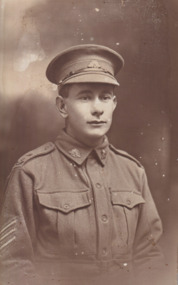
... It is believed that this soldier was part of The Australian Imperial Force during World War I. This can be inferred by the chevron rank insignia visible on the uniform. ...It is believed that this soldier was part of The Australian Imperial Force during World War I. This can be inferred by the chevron rank insignia visible on the uniform. ...Taken on an unknown date, depicted is a portrait of a young, unidentified male soldier. He is dressed in an Australian military uniform. It is believed that this soldier was part of The Australian Imperial Force during World War I. This can be inferred by the chevron rank insignia visible on the uniform. The placement of this insignia on the sleeve of the right arm suggests that this soldier was either a Warrant Officer or a Non-Commissioned Officer (NCO). Specifically, the number of chevron stripes - here, there are three - are believed to signify a Sergeant ranking. The man in this photograph is also wearing a 'Rising Sun' collar badge on his coat. Australia, unlike most other Commonwealth countries, did not adopt metal regimental badges during the First World War. All units were issued with the Australian Army General Service Badge, better known as the 'Rising Sun’ badge. This insignia is almost always identified with the Australian Imperial Force.The record is historically significant due to its connection to World War I. This conflict is integral to Australian culture as it was the single greatest loss of life and the greatest repatriation of casualties in the country's history. Australia’s involvement in the First World War began when the Australian government established the Australian Imperial Force (AIF) in August 1914. Immediately, men were recruited to serve the British Empire in the Middle East and on the Western Front. The first significant Australian action of the war was the Australian Naval and Military Expeditionary Force’s (ANMEF) landing on Rabaul on 11 September 1914. The ANMEF took possession of German New Guinea at Toma on 17 September 1914 and of the neighbouring islands of the Bismarck Archipelago in October 1914. On 25 April 1915, members of the AIF landed on Gallipoli in Turkey with troops from New Zealand, Britain, and France. This specific event holds very strong significance within Australian history. The record has strong research potential. This is due to the ongoing public and scholarly interest in war, history, and especially the ANZAC legend, which is commemorated annually on 25 April, known as ANZAC Day.Sepia rectangular postcard printed on card.Reverse: CARD / JAS.C.CRADDEN, / 182 PITT ST, SYDNEY. / Cecil Johnson / BMM2640.1 /military album, wwi, world war i, postcard, australian army, australian imperial force, aif, sergeant, warrant officer, non-commissioned officer, portrait -
 The Beechworth Burke Museum
Postcard
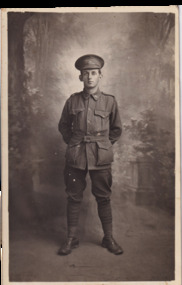
... Australian Imperial Force during World War I. This can be inferred by the 'Rising Sun' collar badge on his coat. Australia, unlike most other Commonwealth countries, did not adopt metal regimental badges during the First World War. All units were issued with the Australian Army General Service Badge, better known as the 'Rising Sun’ badge. This insignia...Australian Imperial Force during World War I. This can be inferred by the 'Rising Sun' collar badge on his coat. Australia, unlike most other Commonwealth countries, did not adopt metal regimental badges during the First World War. All units were issued with the Australian Army General Service Badge, better known as the 'Rising Sun’ badge. This insignia ...Taken on an unknown date, depicted is a full-length portrait of a young, unidentified male soldier. He is dressed in an Australian military uniform. It is believed that this soldier was part of The Australian Imperial Force during World War I. This can be inferred by the 'Rising Sun' collar badge on his coat. Australia, unlike most other Commonwealth countries, did not adopt metal regimental badges during the First World War. All units were issued with the Australian Army General Service Badge, better known as the 'Rising Sun’ badge. This insignia is almost always identified with the Australian Imperial Force.The record is historically significant due to its connection to World War I. This conflict is integral to Australian culture as it was the single greatest loss of life and the greatest repatriation of casualties in the country's history. Australia’s involvement in the First World War began when the Australian government established the Australian Imperial Force (AIF) in August 1914. Immediately, men were recruited to serve the British Empire in the Middle East and on the Western Front. The first significant Australian action of the war was the Australian Naval and Military Expeditionary Force’s (ANMEF) landing on Rabaul on 11 September 1914. The ANMEF took possession of German New Guinea at Toma on 17 September 1914 and of the neighbouring islands of the Bismarck Archipelago in October 1914. On 25 April 1915, members of the AIF landed on Gallipoli in Turkey with troops from New Zealand, Britain, and France. This specific event holds very strong significance within Australian history. The record has strong research potential. This is due to the ongoing public and scholarly interest in war, history, and especially the ANZAC legend, which is commemorated annually on 25 April, known as ANZAC Day.Black and white postcard printed on card.Reverse: BMM 2640 / POST CARD / KODAK / 5 CORRESPONDENCE / ADDRESS ONLY / AUSTRAL / AUSTRAL / KODAK / R. McGEEHAN, PHOTO, 57 ELM GROVE RIPPONLEA, / EXTRA COPIES & ENLARGEMENTS OBTAINABLE. /military album, military, war, world war i, wwi, australian imperial force, aif, rising sun, uniform, portrait -
 The Beechworth Burke Museum
Postcard
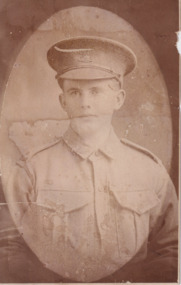
... It is believed that this soldier was part of The Australian Imperial Force during World War I. This can be inferred by the chevron rank insignia visible on the uniform. ...It is believed that this soldier was part of The Australian Imperial Force during World War I. This can be inferred by the chevron rank insignia visible on the uniform. ...Taken on an unknown date, depicted is a portrait of a young, unidentified male soldier. He is dressed in an Australian military uniform. It is believed that this soldier was part of The Australian Imperial Force during World War I. This can be inferred by the chevron rank insignia visible on the uniform. The placement of this insignia on the sleeve of the right arm suggests that this soldier was either a Warrant Officer or a Non-Commissioned Officer (NCO). Specifically, the number of chevron stripes - here, there are two - are believed to signify a Corporal rank. The man in this photograph is also wearing a 'Rising Sun' collar badge on his coat. Australia, unlike most other Commonwealth countries, did not adopt metal regimental badges during the First World War. All units were issued with the Australian Army General Service Badge, better known as the 'Rising Sun’ badge. This insignia is almost always identified with the Australian Imperial Force.The record is historically significant due to its connection to World War I. This conflict is integral to Australian culture as it was the single greatest loss of life and the greatest repatriation of casualties in the country's history. Australia’s involvement in the First World War began when the Australian government established the Australian Imperial Force (AIF) in August 1914. Immediately, men were recruited to serve the British Empire in the Middle East and on the Western Front. The first significant Australian action of the war was the Australian Naval and Military Expeditionary Force’s (ANMEF) landing on Rabaul on 11 September 1914. The ANMEF took possession of German New Guinea at Toma on 17 September 1914 and of the neighbouring islands of the Bismarck Archipelago in October 1914. On 25 April 1915, members of the AIF landed on Gallipoli in Turkey with troops from New Zealand, Britain, and France. This specific event holds very strong significance within Australian history. The record has strong research potential. This is due to the ongoing public and scholarly interest in war, history, and especially the ANZAC legend, which is commemorated annually on 25 April, known as ANZAC Day.Sepia rectangular postcard printed on card.Reverse: BMM 2640.4 / P RD / Write here for Inland Postage on /military album, aif, australian imperial force, corporal, war, wwi, world war i, rising sun, badge, uniform, military -
 The Beechworth Burke Museum
Postcard, 1918
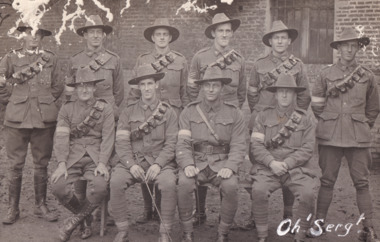
... It is believed that these soldiers were part of The Australian Imperial Force during World War I. This can be inferred by the chevron rank insignia visible on the uniforms of nine of ten men. ...It is believed that these soldiers were part of The Australian Imperial Force during World War I. This can be inferred by the chevron rank insignia visible on the uniforms of nine of ten men. ...It is believed that the photograph on the obverse side of the postcard was taken in 1918. Depicted are ten Australian male soldiers. Their names are transcribed in pencil on the reverse side of the postcard. Each soldier is dressed in a formal military uniform. It is believed that these soldiers were part of The Australian Imperial Force during World War I. This can be inferred by the chevron rank insignia visible on the uniforms of nine of ten men. The placement of this insignia on the sleeves of their right arms suggests that they were either Warrant Officers or Non-Commissioned Officers (NCO). Specifically, the number of chevron stripes - here, nine men have three - are believed to signify a Corporal rank. The men pictured on this postcard are also wearing 'Rising Sun' collar badges on their coats. Australia, unlike most other Commonwealth countries, did not adopt metal regimental badges during the First World War. All units were issued with the Australian Army General Service Badge, better known as the 'Rising Sun’ badge. This insignia is almost always identified with the Australian Imperial Force. Another characteristic of the Australian Imperial Force uniform are the rectangular colour patches worn by all men on this postcard. In March 1915, a new scheme of unit identification was devised to replace the wearing of unit titles. This consisted of cloth colour patches on the upper arms of a soldier’s tunic. The black and white nature of the record means that we cannot establish which battalion these soldiers were part of. However, one of the handwritten signatures on the reverse side of the postcard reads "W.A. Griggs". This was the signature of Sergeant William Archibald Griggs. Further research shows that Griggs was part of the 5th Australian Division Signals Company. Therefore, it is believed these soldiers were part of the ANZAC Signal Companies. The main role of the Signal Companies during World War I was the laying and maintenance of telephone cables and switchboards, used to connect various units in their area. Furthermore, the man standing in the back row, third from the left side, has an Overseas Service chevron patch on his coat. In January 1918, the Australian Imperial Force approved the wearing of the overseas service chevrons which had been adopted by the British Army. These were embroidered or woven inverted chevrons worn above the cuff on the right arm. Due to a shortage of supply, some men had chevrons privately made. For each year of war service, a blue chevron was awarded, and those men who had embarked in 1914 received a red chevron to indicate that year’s service; however, the black and white nature of the postcard makes it difficult to determine what colours are on this man's patch.The record is historically significant due to its connection to World War I. This conflict is integral to Australian culture as it was the single greatest loss of life and the greatest repatriation of casualties in the country's history. Australia’s involvement in the First World War began when the Australian government established the Australian Imperial Force (AIF) in August 1914. Immediately, men were recruited to serve the British Empire in the Middle East and on the Western Front. The first significant Australian action of the war was the Australian Naval and Military Expeditionary Force’s (ANMEF) landing on Rabaul on 11 September 1914. The ANMEF took possession of German New Guinea at Toma on 17 September 1914 and of the neighbouring islands of the Bismarck Archipelago in October 1914. On 25 April 1915, members of the AIF landed on Gallipoli in Turkey with troops from New Zealand, Britain, and France. This specific event holds very strong significance within Australian history. The record has strong research potential. This is due to the ongoing public and scholarly interest in war, history, and especially the ANZAC legend, which is commemorated annually on 25 April, known as ANZAC Day.Black and white rectangular postcard printed on paper.Obverse: Oh 'Serg!' / Reverse: CARTE POSTALE / 6537 / Correspondance / Adresse / w.a. Grigg / J. Fain / Ruckling / R.J Farrar / (?) / Clarke / L (?) / GFFisher / R. M. Forrest / With Compliments / Sgt's Mess / November 1918 /military album, army, aif, uniform, military, wwi, world war i, rising sun badge, william archibald griggs, anzac, signal companies, postcard, patches, chevron -
 The Beechworth Burke Museum
Postcard
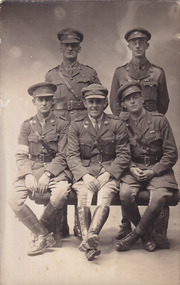
... Australian Imperial Force during World War I. This can be inferred by the 'Rising Sun' collar badges on their coats. Australia, unlike most other Commonwealth countries, did not adopt metal regimental badges during the First World War. All units were issued with the Australian Army General Service Badge, better known as the 'Rising Sun’ badge. This insignia...Australian Imperial Force during World War I. This can be inferred by the 'Rising Sun' collar badges on their coats. Australia, unlike most other Commonwealth countries, did not adopt metal regimental badges during the First World War. All units were issued with the Australian Army General Service Badge, better known as the 'Rising Sun’ badge. This insignia ...The photograph on the obverse side of the postcard was taken some time between 1914-1918. Depicted are five unidentified Australian soldiers. They are all dressed in military uniforms. It is believed that these soldiers were part of The Australian Imperial Force during World War I. This can be inferred by the 'Rising Sun' collar badges on their coats. Australia, unlike most other Commonwealth countries, did not adopt metal regimental badges during the First World War. All units were issued with the Australian Army General Service Badge, better known as the 'Rising Sun’ badge. This insignia is almost always identified with the Australian Imperial Force. Another characteristic of the Australian Imperial Force uniform are rectangular colour patches. One is visible on the soldier in the front row, first from the left on this postcard. In March 1915, a new scheme of unit identification was devised to replace the wearing of unit titles. This consisted of cloth colour patches on the right arms of a soldier’s tunic. The sepia nature of the record means that we cannot determine the colour, and therefore cannot establish which battalion this soldier was part of. Furthermore, the man seated in the middle of the front row has an Overseas Service chevron patch on his coat. In January 1918, the Australian Imperial Force approved the wearing of the overseas service chevrons which had been adopted by the British Army. These were embroidered or woven inverted chevrons worn above the cuff on the right arm. Due to a shortage of supply, some men had chevrons privately made. For each year of war service, a blue chevron was awarded, and those men who had embarked in 1914 received a red chevron to indicate that year’s service; however, the sepia nature of the postcard makes it difficult to determine what colours are on this man's patch.The record is historically significant due to its connection to World War I. This conflict is integral to Australian culture as it was the single greatest loss of life and the greatest repatriation of casualties in the country's history. Australia’s involvement in the First World War began when the Australian government established the Australian Imperial Force (AIF) in August 1914. Immediately, men were recruited to serve the British Empire in the Middle East and on the Western Front. The first significant Australian action of the war was the Australian Naval and Military Expeditionary Force’s (ANMEF) landing on Rabaul on 11 September 1914. The ANMEF took possession of German New Guinea at Toma on 17 September 1914 and of the neighbouring islands of the Bismarck Archipelago in October 1914. On 25 April 1915, members of the AIF landed on Gallipoli in Turkey with troops from New Zealand, Britain, and France. This specific event holds very strong significance within Australian history. The record has strong research potential. This is due to the ongoing public and scholarly interest in war, history, and especially the ANZAC legend, which is commemorated annually on 25 April, known as ANZAC Day.Sepia rectangular postcard printed on paper.Reverse: CARTE POSTALE / hyossest (?) / 6538 /military album, army, aif, australian imperial force, postcard, wwi, world war i, portrait, soldiers -
 Wangaratta RSL Sub Branch
Badge, AWAS, c1939-41
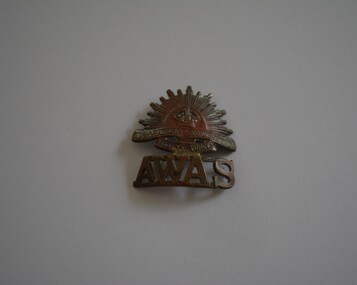
... The primary insignia worn by members of the Australian Women's Army Service (AWAS) during World War II was the 3rd Pattern "Rising Sun" Badge. Like their male counterparts in the Australian Imperial Force (AIF), AWAS personnel proudly wore this General Service badge on their uniform hats and collars. ...The primary insignia worn by members of the Australian Women's Army Service (AWAS) during World War II was the 3rd Pattern "Rising Sun" Badge. Like their male counterparts in the Australian Imperial Force (AIF), AWAS personnel proudly wore this General Service badge on their uniform hats and collars. ...The primary insignia worn by members of the Australian Women's Army Service (AWAS) during World War II was the 3rd Pattern "Rising Sun" Badge. Like their male counterparts in the Australian Imperial Force (AIF), AWAS personnel proudly wore this General Service badge on their uniform hats and collars. To distinguish their branch of service, personnel wore brass curved shoulder titles that read "A.W.A.S." on their epaulettes. These two items have been soldered together to form one piece. . The Australian Women's Army Service (AWAS) was established on 13 August 1941 to release male soldiers from home defence duties for service overseas during World War II. More than 24,000 women served in the AWAS between 1941 and 1947.While initially restricted to traditional roles, the scope of AWAS responsibilities expanded as the war progressed. In 1945, a small detachment of approximately 350 AWAS personnel was sent to serve in Lae, New GuineaMetal "Rising Sun" hat badge soldered to AWAS shoulder badgebadge, ww2, awas
