
Showing 95 items matching "australian infantry ww2"
-
 Bendigo Military Museum
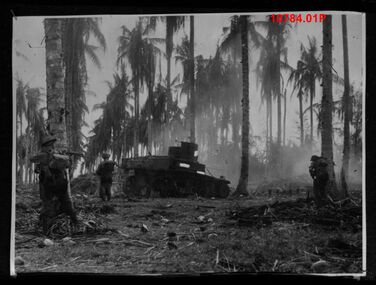
Slide - KODAK LANTERN SLIDES WW2 ERA, Set of slides of George Silk photographs of Australians at Battle of Buna
... ...Australian infantry WW2...New Guinea campaign Buna Australian infantry WW2 Glass plate slides in original box Set of slides of George Silk photographs of Australians at Battle of Buna Slide KODAK LANTERN SLIDES WW2 ERA ...A set of 14 glass plate slides of official photography from the Battle of Buna-Gona in 1943. The images were originally taken by famous photographer George Silk, and have featured heavily in histories of the campaign since the war. The slides themselves are 'photographs of photographs' evident by the pins holding down the corners of the images. The slides were likely taken for educational purposes, and would have been used during the war. This is evident by the obscured identification numbers on the Stuart tank in slide 01.Glass plate slides in original boxnew guinea campaign, buna, australian infantry ww2 -
 The 5th/6th Battalion Royal Victoria Regiment Historical Collection
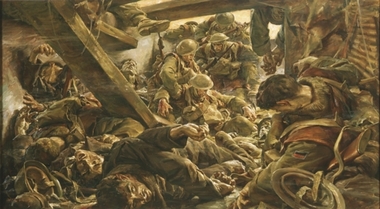
Print - Reproduction, framed, Bardia (action leading to the fall of Post 11)
... 2/6th australian infantry battalion...ww2...Australian Infantry again." The Battalion succeeded in its mission and went on to play a vital role in many of the most arduous battles of the war. This painting depicts the actions of one of the predecessor units to 5/6 RVR. bardia 2/6th australian infantry battalion ww2 Ivor Hele Wark VC Club A manufacturers label is located on the obverse " GRAPHIC IMPRESSIONS 239 Burwood Road Hawthorn Vic. 3122 Telephone 9819 5800 76 Harold Street Camberwell Vic 3123 Telephone Large framed print of painting by Ivor Hele shows 17 Platoon 2/6th Infantry Battalion in an Italian trench during the attack on Bardia. ...Ivor Hele was the Australian official war artist of World War II. This painting depicts the members of 17 platoon 2nd/6th Battalions in their first action of the war. their mission was to "attack and capture Post 11" in order to provide a faint or diversionary attack for the brigades main penetration. The attack was pressed home with the characteristic vigour of Australian soldiers Prior to the attack the commanding officer demanded that " No matter what happens to us, when we go forward we shall give the enemy such a thrashing that they will never willingly stand up to an assault by Australian Infantry again." The Battalion succeeded in its mission and went on to play a vital role in many of the most arduous battles of the war. This painting depicts the actions of one of the predecessor units to 5/6 RVR. Large framed print of painting by Ivor Hele shows 17 Platoon 2/6th Infantry Battalion in an Italian trench during the attack on Bardia. The painting depicts the scene after the capture of one of the Italian dugouts by Corporal Brian Latham's Section. The print is in a large mahogany coloured frame and has a matt finish to the picture. A smaller, separate frame sits below the print and contains the history of the painting. it is in a matching frame and has an olive card backing and the story is printed on an off white sheet. A manufacturers label is located on the obverse " GRAPHIC IMPRESSIONS 239 Burwood Road Hawthorn Vic. 3122 Telephone 9819 5800 76 Harold Street Camberwell Vic 3123 Telephone bardia, 2/6th australian infantry battalion, ww2, ivor hele, wark vc club -
 The 5th/6th Battalion Royal Victoria Regiment Historical Collection
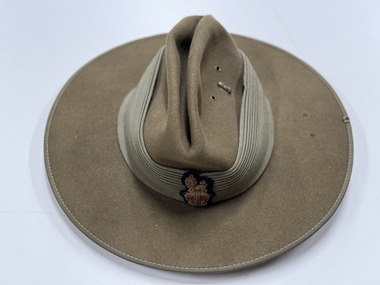
Uniform - Hat Khaki Fur Felt with bullion rank badge, Brigadier Lowen Slouch Hat
... Brig Lowen served in 2/5 Australian Infantry Battalion in WW2 ...Brig Lowen served in 2/5 Australian Infantry Battalion in WW2 Slouch had belonging to Brigadier Lowen. ...Slouch had belonging to Brigadier Lowen. Brig Lowen served in 2/5 Australian Infantry Battalion in WW2 Slouch had belonging to Brigadier Lowen. Brig Lowden served in 2/5 Australian Infantry Battalion in WW2 Hat, Khaki Fur Felt ( slouch hat) with brim down, soft bash and green ( 1RAR) pugaree with no colour patch. The pugaree had a staff officers bullion badge sewn to the front. Bullion badge has a gold lion atop of a gold and red crown on a black backing The hat has a brown leather chin strap and redish brown leather sweat band on the inside Made by "Fayrefield" Melbourne 7 1/8 19695/6rvr, bhq, brig lowen, 2/5th bn -
 The 5th/6th Battalion Royal Victoria Regiment Historical Collection
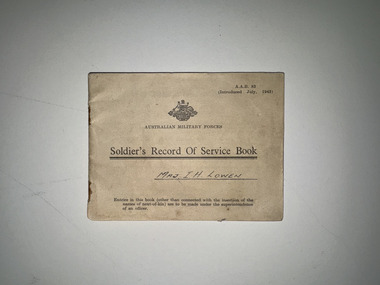
Document - Record of Service Book, Brigadier Lowen WWII Record of Service Book
... Brig Lowden served in 2/5 Australian Infantry Battalion in WW2...Brig Lowden served in 2/5 Australian Infantry Battalion in WW2 The record contains the member's services history in WWII 5/6 RVR BHQ BRIG LOWEN 2/5th BN Solder's Record of Service Book MAJ Lowen Australian Military Forces Solder's Record of Service Book, MAJ I.H.Lowen Soldier's Record of Service Book for MAJ I.H.Lowen, there are 20 pages in this book, all the entry in the book are written by hand Brigadier Lowen WWII Record of Service Book Document Record of Service Book ...Record of Service Book belonging to Brigadier Lowen (MAJ Lowen at the time). Brig Lowden served in 2/5 Australian Infantry Battalion in WW2The record contains the member's services history in WWIISoldier's Record of Service Book for MAJ I.H.Lowen, there are 20 pages in this book, all the entry in the book are written by handAustralian Military Forces Solder's Record of Service Book, MAJ I.H.Lowen5/6 rvr, bhq, brig lowen, 2/5th bn, solder's record of service book, maj lowen -
 Frankston RSL Sub Branch
Helmet, Steel
... helmet australian 1941 ww2 Stamped 1941 An example of the standard issue Australian steel battle helmet worn by infantry during WW11, complete with liner and chin strap. ...An example of the standard issue Australian steel battle helmet worn by infantry during WW11, complete with liner and chin strap. The helmet is painted in army green and is stamped with the manufacture date of 1941. The adjustable inner lining is made of leather and rubber. It has a khaki webbing adjustable chin strap.Stamped 1941helmet, australian, 1941, ww2 -
 Lara RSL Sub Branch
Photograph, Set 4 photographs. and others for Torquay Light Horse camp, 1940
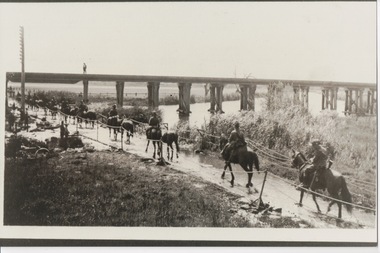
... Australian Light Horse units were mounted on wheels and tracks and the horses were retired. Six men enlisted at the Torquay camp and another 57 men and women enlisted at Torquay for service in WW2. Those who served in the Militia provided valuable Officers and NCOs and men for the armed services during the war. Each infantry...Australian Light Horse units were mounted on wheels and tracks and the horses were retired. Six men enlisted at the Torquay camp and another 57 men and women enlisted at Torquay for service in WW2. Those who served in the Militia provided valuable Officers and NCOs and men for the armed services during the war. Each infantry ...These images capture for all time Light Horsemen travelling through Geelong on their way to camp at Torquay for the last Group meeting in Australia . information following - details obtained from .........https://torquayhistory.com/light-horse-brigade/ On Australia Day, 1997, Sir John Young unveiled this plaque on Point Danger, Torquay. Torquay history, Light Horse Training Camp, WW2 Plaque at Pt. Danger Note----- (See images to view plaque) The plaque identifies a significant event in Torquay’s history and the sentiments of ‘change’ for the Light Horse Brigade – from horses to machines. In 1940 the four Light Horse Regiments (4th, 8th, 13th and 20th), some 5000 Light Horse and 2000 horses camped and trained at Torquay. Three other regiments, formerly mounted on horses, were also at Torquay ‘mounted’ on privately owned trucks and cars. Division troops included Artillery, Engineers, Signals, Field Ambulance and other branches of the Army necessary to enable a Division to function. It wasn’t just the sheer numbers of men coming to this little town that made the event significant, it was also the fact that the men of the Light Horse were dramatic, almost glamorous figures and it is easy to see their exploits as some splendid adventure. Horses have played a special role in the story of Australia. They were the only means of transport across this huge country, so it was necessary for everyone to have the ability to ride a horse. When war broke out in 1899 between Britain and the Boers of South Africa (“Boer” was Dutch for “farmer”) Australia sent troops to fight. At first Britain was wary of using untried, unprofessional colonial cavalrymen but soon saw that the slouch-hatted Australian “bushmen” were a match for the fast-moving and unconventional mounted commandos of the Boers. The Australians proved themselves to be expert rough-riding horsemen and good shots. Bush life had hardened them to go for long periods with little food and water. They also showed remarkable ability to find their way in a strange country and use its features for cover, in both attack and defence. By 1914, when Australia joined the war against Germany, there were 23 Light Horse regiments of militia volunteers. Many men from these units joined the Light Horse regiments of the Australian Imperial Force (AIF). Men were given remounts (if not using their own horses) – army horses bought by Commonwealth purchasing officers from graziers and breeders. These were called “walers” because they were a New South Wales stockhorse type – strong, great-hearted animals with the strains of the thoroughbred and semi-draught to give them speed, strength and stamina. On 1st November, 1914, Australia’s First Infantry Division and the first four Light Horse regiments sailed for England in a fleet of transport ships. The first of the Light Horse arrived at Gallipoli in May without their horses. Back with their horses after Gallipoli, they were formidable combatants across the Sinai and Palestine. Some British commanders observed that the light horseman moved with a “lazy, slouching gait, like that of a sleepy tiger” but described how the promise of battle “changes that careless gait, into a live athletic swing that takes him over the ground much quicker than other troops”. They had Light Horse, Torquay, training campdeveloped a reputation as formidable infantrymen. The Turks called them “the White Ghurkas” – a reference to their deadly skill with the bayonet. The Arabs called them “The Kings of the Feathers”. The plume had originally been a battle honour of the Queensland Mounted Infantry for their work in the shearer’s strike of 1891. During WW1 it was adopted by almost all the Light Horse Regiments. It was the proud badge of the light horseman. The most famous of their battles was the attack on Beersheba- the charge of the 4th Light Horse Brigade. Mounted infantrymen and their superb walers had carried out one of the most successful cavalry charges in history – against what seemed impossible odds. They surprised the Turks by charging cavalry-style, when they would normally have ridden close to an objective then dismounted to fight. The fall of Beersheba swung the battle tide against the Turks in Palestine; and changed the history of the Middle East. While 19 men from the Surf Coast Shire served with the 4th Light Horse over the course of WW1, only four were involved in the charge of Beersheba- John GAYLARD, Philip QUINN.(Winchelsea); Wallace FINDLAY (Anglesea); Harry TRIGG (Bambra). After the war, Light Horse units played a key role in the Australian Government’s compulsory military training programme. The Citizen Military Forces (C.M.F.) thrived on the glamour of the wartime Light Horse tradition, ignoring the possibility that motor vehicles would soon replace the horses. When training was no longer compulsory, the C.M.F. regiments declined and horses became more of a luxury during the 1930s depression years of poverty and unemployment. Some regiments were motorised. Then, in 1939, Australia joined Britain in another world war. Training was increased for the militia at both home bases and regional training camps. The camp at Torquay in 1940, commanded by Major General Rankin, was at Divisional strength. By the end of the camp some felt that the Division was ready for active service. Gradually, over the next four years, the Australian Light Horse units were mounted on wheels and tracks and the horses were retired. Six men enlisted at the Torquay camp and another 57 men and women enlisted at Torquay for service in WW2. Those who served in the Militia provided valuable Officers and NCOs and men for the armed services during the war. Each infantry division of the 2nd AIF had a Light Horse regiment attached to it. But the day of the Australian mounted soldier hadn’t quite passed. During World War II, Australia’s 6th Cavalry Regiment formed a mounted unit they called “The Kelly Gang” which did valuable scouting work. In New Guinea, a mounted Light Horse Troop did patrol duty and helped carry supplies. Some fully equipped walers were flown into Borneo for reconnaissance in rugged mountain country. But by the end of the war, in 1945, the horse had disappeared from the Australian Army. References: Australian Light Horse Association www.lighthorse.org.au National Australia Archives Australian War Memorial Surf Coast Shire WW1 memorials www.togethertheyserved.com The Light horse- a Cavalry under Canvas Light Horse, Training Camp, Torquay, WW2 Late in 1939 it was decided to set up a Lighthorse training camp in Torquay to train both men and horses for the battles of the Second World War. Horses, men and equipment came on special trains from all over Victoria and NSW, and as you would expect horseman came from areas such as Omeo and Sale, the Wimmera and the Western District. They arrived at the Geelong racecourse for watering in the Barwon River and then were ridden across the ford at the breakwater and began their 11 mile trek to Torquay. Light Horse, Training Camp, Torquay, WW2 Tent city By the end of January 1940 the camp at Torquay accommodated some 5000 men and 2500 horses of the Second Cavalry Division. The rows of horses, tents and huts near Blackgate Road were quite a sight. While the cavalrymen engaged in exercises on the land and on the beaches, many of the troops took over the Torquay School for special training of men and officers. Mr Bob Pettit local farmer and Councillor for the Barrabool Shire, wrote about the Light horse in the Surf Coast Community News in 1985 saying “They used to travel about the district riding four abreast in one long convoy. To my annoyance they went through my property and shut all the gates behind them. I had certain gates open to let stock in to the water holes and it would take me three -quarters of an hour to follow the horsemen up and put all the gates right again” he continued “the men from the Light Horse were here when the fire went through in March 1940. He recalled an incident when early one morning, as some one blew the bugle, a soldier putting a white sheet on the line frightened the horses. They panicked and ran off in all directions. Six went over the cliff near Bird Rock, five were never found, and the rest were gathered up after nearly a fortnight in the bush around Addiscott and Anglesea" Light Horse, Training Camp, Torquay, WW2, Geelong Parade Geelong parade The training camp culminated in a parade through the streets of Geelong on March 12th 1940. The salute was given at the Town Hall and the troops continued on a route to the You Yang’s for a training exercise. Note-----(see media section for photograph) The Camp was abandoned in mid 1940 as it was deemed unsuitable for training during winter and the cost of a permanent camp could not be justified if it could not be used all year. Historic.......Rare,,,Interpretive.Sepia photographs.set of four ....post card size ....Horses &LighthorsemenNo 1, Lighthorsemen Regiment Geelong 1940......No 2 Light Horse at Breakwater Geelong 1938 to 1940....No 3 Light Horse at Breakwater Geelong 1938 to 1940.....No 4 Light Horse crossing Breakwater camped at Geelong Showgrounds. These markings are on reverse of photographs.light horsemengeelong 1940., world war 2 -
 Lara RSL Sub Branch
Newspaper, 17th Australian Infantry Brigade, February 22nd 1940
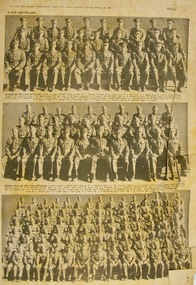
... The photographs are of national significance as they may reflect the only known photographs of individuals from WW2. aif army 17th brigade second aif 2/5th battalion australian army australian infantry brigade 2/2nd field aumbulance 2/2nd australian general hospital 6th divisional australian army medical corps 6th divisional engineers The Argus 17th Australian Infantry Brigade, Second AIF, Souvenir Supplement, Thursday, February 22, 1940 Page 1 2/5th Battalion - Picture 1 Officers of the 2/5th Battalion; Picture 2 Senior NCO's of the 2/5th Battalion; Picture 3 A Company 2/5th Battalion Page 2 B Company 2/5th Battalion; C Company 2/5th Battalion; D Company 2/5th Battalion Page 3 Headquarters 2/2nd Field Regiment 6th Divisional Artillery; 3rd Battery 2/2nd Field Regiment 6th Divisional Artillery Page 4 Officers, NCO's and men of 2/2nd Field Company, 6th Divisional Engineers; Officers NCO's and men 2/2nd Field Ambulance and 2/2nd Australian General Hospital 6th Divisional Australian Army Medical Corps 4 page newspaper pictures of 17th Brigade, Second AIF 17th Australian Infantry Brigade Newspaper ...The 17th Australian Infantry Brigade was an infantry brigade in the Australian Army. First formed in 1917 during World War I, it did not see any action. Reformed during World War II, before being disbanded in 1946. Today, its name is perpetuated by the 17th Combat Service Support Brigade, which was raised as a logistics formation in May 2006. The 17th Brigade was reformed on 13 October 1939, again as part of the 6th Division, recruited from Victoria. The 17th Brigade fought in the Western Desert Campaign in Libya, the Battle of Greece, the Battle of Wau, the Salamaua-Lae campaign in Papua, and in the Aitape-Wewak campaign in New Guinea. The photographs are of national significance as they may reflect the only known photographs of individuals from WW2.4 page newspaper pictures of 17th Brigade, Second AIFThe Argus 17th Australian Infantry Brigade, Second AIF, Souvenir Supplement, Thursday, February 22, 1940 Page 1 2/5th Battalion - Picture 1 Officers of the 2/5th Battalion; Picture 2 Senior NCO's of the 2/5th Battalion; Picture 3 A Company 2/5th Battalion Page 2 B Company 2/5th Battalion; C Company 2/5th Battalion; D Company 2/5th Battalion Page 3 Headquarters 2/2nd Field Regiment 6th Divisional Artillery; 3rd Battery 2/2nd Field Regiment 6th Divisional Artillery Page 4 Officers, NCO's and men of 2/2nd Field Company, 6th Divisional Engineers; Officers NCO's and men 2/2nd Field Ambulance and 2/2nd Australian General Hospital 6th Divisional Australian Army Medical Corpsaif, army, 17th brigade, second aif, 2/5th battalion, australian army, australian infantry brigade, 2/2nd field aumbulance, 2/2nd australian general hospital, 6th divisional australian army medical corps, 6th divisional engineers -
 Lara RSL Sub Branch
Service Gear, Army Dilly Bag, WW 2 World War 2
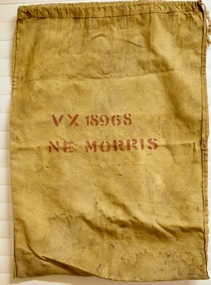
... He served in Tobruk and Milne Bay Bag used carry Personal belongings by World War 2 Australian infantry soldier dilly bag canvas khaki morris vx 18968 ww2 VX 18968 NE Morris Khaki coloured canvas bag complete with cotton draw string on one end. ...Used by Driver NE Morris to carry personal belongings. He served in Tobruk and Milne BayBag used carry Personal belongings by World War 2 Australian infantry soldier Khaki coloured canvas bag complete with cotton draw string on one end. Army number and name stenciled in red on one sideVX 18968 NE Morris dilly bag canvas khaki morris vx 18968 ww2 -
 Lara RSL Sub Branch
Photograph, Australian infantry in New Guinea 1939/45 war
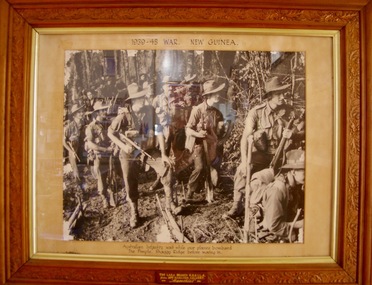
... In late December 1943, the Australian offensive to take Shaggy Ridge began, focused on an attack on The Pimple.[13] The Pimple was one of three rocky outcrops, held by the Japanese on the ridge line. ww2 papua new guinea world war 2 lara r.s.l. photographs australian infantry shaggy ridge Australian infantry waiting while our planes" bombard the Pimple,"Shaggy Ridge before moving in. ...The Battle of the Shaggy Ridge was part of the Markham and Ramu Valley – Finisterre Range campaign, consisting of a number of actions fought by Australian and Japanese troops in Papua New Guinea in World War II. Following the Allied capture of Lae and Nadzab, the Australian 9th Division had been committed to a quick follow up action on the Huon Peninsula in an effort to cut off the withdrawing Japanese. Once the situation on the Huon Peninsula stabilised in late 1943, the 7th Division had pushed into the Markham and Ramu Valleys towards the Finisterre Range with a view to pushing north towards the coast around Bogadjim, where they would meet up with Allied forces advancing around the coast from the Huon Peninsula, before advancing towards Madang.In late December 1943, the Australian offensive to take Shaggy Ridge began, focused on an attack on The Pimple.[13] The Pimple was one of three rocky outcrops, held by the Japanese on the ridge line.Framed Photograph of Australian infantry waiting while our planes" bombard the Pimple,"Shaggy Ridge before moving in. Australian infantry waiting while our planes" bombard the Pimple,"Shaggy Ridge before moving in. THE LARA BRANCH R.S.S.I.L.A. FROM MRS HAMILTON CALVERT =MEMORIES=ww2, papua new guinea, world war 2, lara r.s.l., photographs, australian infantry, shaggy ridge -
 Lara RSL Sub Branch
Booklet, Government Printer, An Outline of Repatriation
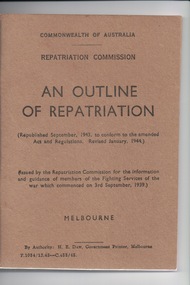
... australia...repatriation commission...world war 2...ww2...repatriation...aif...australian infantry...Printed for Australian Infantry personnel during World War 2 to help with repatriation on return to Australia Used by World War 2 service personnel to assist with repatriation on return from active service to Australia. commonwealth of australia repatriation commission world war 2 ww2 repatriation aif australian infantry forces melbourne government printer navy army air force On the front Cover from top to bottom: Commonwealth of Australia; Repatriation Commission; AN OUTLINE OF REPATRIATION; (Republished September, 1943, to conform to the amended Acts and Regulation, Revised January, 1941); (Issued by the Repatriation Commission for the information and guidance of members of the Fighting Services of the war which commenced on 3rd September, 1939); Melbourne; By Authority: H.E. ...Printed for Australian Infantry personnel during World War 2 to help with repatriation on return to AustraliaUsed by World War 2 service personnel to assist with repatriation on return from active service to Australia.A booklet coloured khaki with a cover made from light cardboard and 64 pages made from paper.On the front Cover from top to bottom: Commonwealth of Australia; Repatriation Commission; AN OUTLINE OF REPATRIATION; (Republished September, 1943, to conform to the amended Acts and Regulation, Revised January, 1941); (Issued by the Repatriation Commission for the information and guidance of members of the Fighting Services of the war which commenced on 3rd September, 1939); Melbourne; By Authority: H.E. Daw, Government Printer, Melbourne T.1034/12.43-C.454/45 See images for content on front and rear covers.commonwealth of australia, repatriation commission, world war 2, ww2, repatriation, aif, australian infantry forces, melbourne, government printer, navy, army, air force -
 Shepparton RSL Sub Branch
Uniform, Hat, 1943
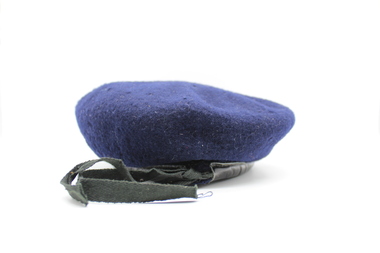
... WW2. Infantry second world war beret world war two world war ii wwii uniform Manufacturer’s label reads “N.316 A./F./1943/MADE IN/AUSTRALIA ...This beret was made in 1943 and presumably was used by during service in WW2. InfantryDark blue wool beret-style hat with black leather edging and black cotton tie at back. Two eyelets on right side, brass painted on exterior in black. Cotton-lined interior with reinforced sewn diamond in centre and manufacturer’s label, transcribed below.Manufacturer’s label reads “N.316 A./F./1943/MADE IN/AUSTRALIA/SIZE 7-1/8” wth faint purple stamp over top, illegible.second world war, beret, world war two, world war ii, wwii, uniform -
 City of Moorabbin Historical Society (Operating the Box Cottage Museum)
World War 2 Australian Army long woollen gaiters, 1943
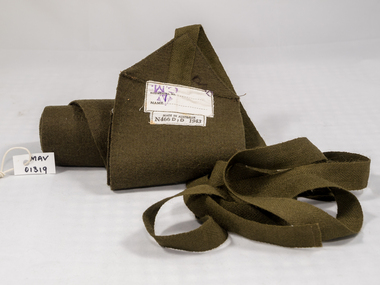
... These long woollen wrap around Gaiters were issued 1943 to a serving Australian Soldier in World War 2 1939-45 This pair of Australian Army Gaiters were issued in 1943 to one of the many young men from City of Moorabbin who volunteered to serve during WW2 1939-45 australian army, world war 2 1939-45; gaiters, puttees, woollen goods, protective gear, uniforms, australian infantry forces, moorabbin, bentleigh , cheltenham MADE IN AUSTRALIA / N466 D D / REGIMENTAL NO. ......./ NAME ... ...A Gaiter or Puttee covers the lower leg and boot lacing and are a type of protective clothing for the ankles and legs below the knee.. These long woollen wrap around Gaiters were issued 1943 to a serving Australian Soldier in World War 2 1939-45 This pair of Australian Army Gaiters were issued in 1943 to one of the many young men from City of Moorabbin who volunteered to serve during WW2 1939-45 WW2 extra long wool wraps /gaiters / puttees Australian Army issue 1943 MADE IN AUSTRALIA / N466 D D / REGIMENTAL NO. ......./ NAME ... C.M / 1943australian army, world war 2 1939-45; gaiters, puttees, woollen goods, protective gear, uniforms, australian infantry forces, moorabbin, bentleigh , cheltenham -
 Geelong RSL Sub Branch
Book - 40th Battalion, A souvenir of the 40th Battalion, Mid 20th Century
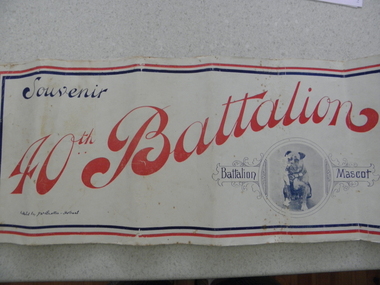
... Infantry Battalion of the Australian Army raised in 1916. The battalion was recruited completely from Tasmanis as part of the 10th Brigade, 3rd Division. The Batalion served during WW1 - along the Western Front, 1919 to 1921 was a CMF unit. During WW2 ...The 40th Battalion was an Infantry Battalion of the Australian Army raised in 1916. The battalion was recruited completely from Tasmanis as part of the 10th Brigade, 3rd Division.The Batalion served during WW1 - along the Western Front, 1919 to 1921 was a CMF unit. During WW2 the Battalion remained in Australia and was amalgamated with 12th Battalion. The Battalion was merged into 12th/40th Battalion Royal Tasmania Regiment in 1987.An oblong book, buff colour, paper pages, blue and red edging.On the front page Souvenir 40th Battalion, the Battalion Mascot, Published by J W Beatie - Hobart, back page wholly Engraved and Printed by 'The Examiner' and 'Weekly Courier' Offices, 73-75 Patterson Street, Launceston, Tasmania.ww1 ww2 40th battalion tasmania -
 Geelong RSL Sub Branch
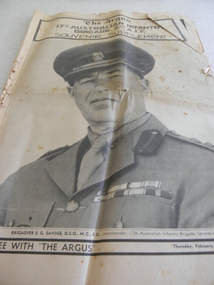
News Paper, The Argus, Souvenir Supplement, The Argus & Australian Limited, 22 February 1940
... The 17th Brigade (Australia) was an Infantry Brigade first formed in 1917 during WW1, but did not see action. The Brigade was reformed during WW2 and served in Libya, Greece and New Guinea. ...The 17th Brigade (Australia) was an Infantry Brigade first formed in 1917 during WW1, but did not see action. The Brigade was reformed during WW2 and served in Libya, Greece and New Guinea. ...The 17th Brigade (Australia) was an Infantry Brigade first formed in 1917 during WW1, but did not see action. The Brigade was reformed during WW2 and served in Libya, Greece and New Guinea. The Brigade was disbanded in 1946.This supplement is an original as printed and issued with The Argus News Paper on 22 February 1940.Oblong, buff colour news paper, souvenir supplement of The Argus,16 pages, 22 February 1940. The supplement is dedvoted to the 17th Australian Infantry Brigade 2nd A.I.F.The front cov er of the supplement has a photograph of Brigadier S.G. Savige, DSO, MC, ED, Commander. The following pages are photographs of Companies within the Brigade.ww1, ww2, 17th brigade, aif, -
 Bendigo Military Museum
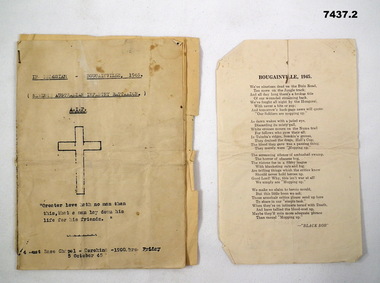
Programme - PROGRAMME, MEMORIAL SERVICE, IN MEMORIAM - BOUGAINVILLE 1945, c1945
... Base Chapel TOROKINA - 1900hrs FRIDAY 5th OCT 45 to COMMEMORATE THE FALLEN DURING WW2 Poem was description of last battles of war with a sentiment that critics at home called mopping up but people were still dying. 7th Australian Infantry Battalion Bougainville Torokina Headed- " IN MEMORIAM - BOUGAINVILLE 1945" "SEVENTH AUSTRALIAN INFANTRY REGIMENT" "A.I.F." 1. ...Programme for service held at 4th Aust. Base Chapel TOROKINA - 1900hrs FRIDAY 5th OCT 45 to COMMEMORATE THE FALLEN DURING WW2 Poem was description of last battles of war with a sentiment that critics at home called mopping up but people were still dying.1. Programme for Memorial Service in Bougainville Oct 45. 10 pages stapled together on cream white paper. Contents description of the Service. On front is a cross and a small poem. 2. Poem written in black on white paper heading Bougainville 1945. Poem was talking about the experience of the mopping up battles towards the end of the war.Headed- " IN MEMORIAM - BOUGAINVILLE 1945" "SEVENTH AUSTRALIAN INFANTRY REGIMENT" "A.I.F." 7th australian infantry battalion, bougainville, torokina -
 Bendigo Military Museum
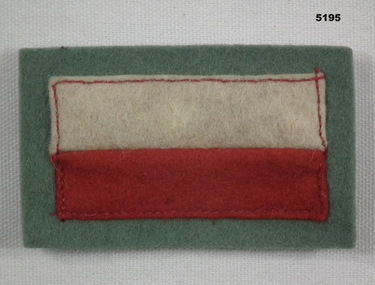
Uniform - COLOUR PATCH WW2, Australian Army, c1939-1945
... WW2 Infantry 2/8 Battalion This is a grey felt background. Rectangular shaped. On that grey felt is a combination of white and red bars. Uniform COLOUR PATCH WW2 Australian ...Badge is probably for 2/8 Battalion, WW2.This is a grey felt background. Rectangular shaped. On that grey felt is a combination of white and red bars.ww2, infantry, 2/8 battalion -
 Bendigo Military Museum
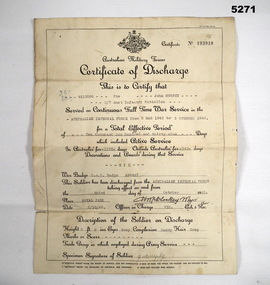
Administrative record - CERTIFICATE OF DISCHARGE, Australian Military Forces, 3 October 1945
... John Murphy VX15580 in 2/7 Australian Infantry Battalion, 5th March 1940 and was discharged on 3rd October 1945 at Royal Park. Refer Cat 512.2 for Service Details. Discharge Certificate WW2 ...John Murphy VX15580 in 2/7 Australian Infantry Battalion, 5th March 1940 and was discharged on 3rd October 1945 at Royal Park. Refer Cat 512.2 for Service Details.Certificate of Discharge No. 193910, Parchment Paper, light yellow colour with black print. Coat of Arms at top with form giving details of Name, No, Unit, Length o Service, Enlistment Date, Discharge Date, Description of Soldier, Location of Discharge & Signature of both Discharging Officer and Soldier Discharged.Some unrelated numbers written on back and front in pencil.discharge certificate, ww2 -
 Bendigo Military Museum
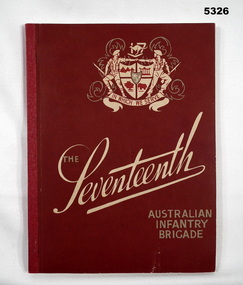
Book, The Seventeenth Brigade Magazine, 'THE SEVENTEENTH AUSTRALIAN INFANTRY BRIGADE
... Book - "Issued to mark the fourth Anniversary of the departure from Australia of the 17th Australia Infantry Brigade for Active Service". Books History WW2 1939-1944 Title page - handwritten, black ink " Estate/Mrs J. ...Book - "Issued to mark the fourth Anniversary of the departure from Australia of the 17th Australia Infantry Brigade for Active Service".Soft cover book. Soft cover, cardboard. Gold and cream print on front cover. Burgundy coloured background. Front cover illustration -0 military coat of arms with the words 'IN WHICH WE SERVE" . 144 pages, paper, cut, plain, off white. Illustrated black & white photographs, maps and illustrations. Book binding cloth tape on spine and stapled. Inscriptions - two on title page.Title page - handwritten, black ink " Estate/Mrs J. Crosbie" - Owner's stamp, black ink BENDIGO DISTRICT/ RSL SUB BRANCH INC/ PO BOX 449/ BENDIGO VIC 3552.books, history, ww2, 1939-1944 -
 Bendigo Military Museum
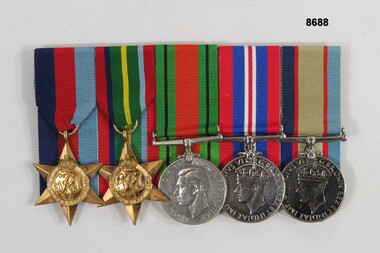
Award - MEDAL SET WW2, Post 1945
... Australian Infantry Battalion. Overseas service listed as New Guinea 18.1.1944 - 22.3.1945 & 24.4.1945 - 23.11.1945. Discharged from the Army on 18.12.1945. Pbt80 Medals KUM TOO R. English Collection Passchendaele Barracks Trust On the five medals "V500521 M.K. KUM TOO" Medals - set of five (5) court mounted. 1939-1945 Star Pacific Star Defence Medal War Medal 1939-1945 Australian Service Medal 1939-1945 Award MEDAL SET WW2 ...Maxwell Keith Kum Too. (Born Bendigo, enlisted Bendigo) Enlisted 12.8.1942 age 18 No V500521 in 35th Australian Infantry Battalion. Overseas service listed as New Guinea 18.1.1944 - 22.3.1945 & 24.4.1945 - 23.11.1945. Discharged from the Army on 18.12.1945.Medals - set of five (5) court mounted. 1939-1945 Star Pacific Star Defence Medal War Medal 1939-1945 Australian Service Medal 1939-1945On the five medals "V500521 M.K. KUM TOO"pbt80, medals, kum too, r. english collection, passchendaele barracks trust -
 Bendigo Military Museum
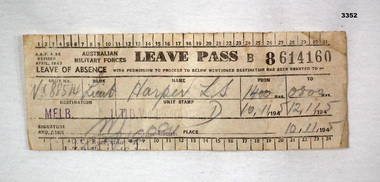
Administrative record - LEAVE PASS WW2, Government Printer, 1943
... Infantry Battalion. Administration leave pass Printed & hand written on front: “Australian Military Forces Leave Pass B8614160 VX88514, Lieu Lionel Sydney Harper, 1400 - 0800 Destination Melbourne, 10.11.45 - 12.11.45” Printed on back: “This Pass must be returned to orderly Room on expiration of leave” Cream coloured paper with black print. Administrative record LEAVE PASS WW2 ...Lionel Sydney HARPER VX88514, enlisted 22.7.1942 age 24 years, discharged 14.11.1945 with the rank of Lieutenant in 40th Aust Infantry Battalion.Cream coloured paper with black print.Printed & hand written on front: “Australian Military Forces Leave Pass B8614160 VX88514, Lieu Lionel Sydney Harper, 1400 - 0800 Destination Melbourne, 10.11.45 - 12.11.45” Printed on back: “This Pass must be returned to orderly Room on expiration of leave”administration, leave, pass -
 Bendigo Military Museum
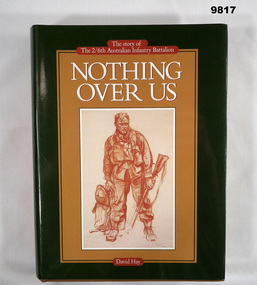
Book - BATTALION HISTORY, WW2 - ARMY, David Hay, "NOTHING OVER US", 1984
... Infantry Battalion William (Bill) Thomason Collection Hardcover book with dust cover. Cover - cardboard, mid brown colour buckram, gold colour print on spine. Dust cover - paper, white and dark green colour print on front and spine on dark green, mid brown and cream colour background. Front illustration - brown colour crayon drawing of an Australian soldier. Flaps - white colour printed information. 604 pages, cut, plain white colour paper. Illustrated black and white and colour photographs, maps and drawings. End papers - front and back - sepia toned photograph of troops on Parade, background streetscape of trees and tram. "NOTHING OVER US" Book BATTALION HISTORY, WW2 ...From the title page - "NOTHING OVER US/ The story of/ The 2/6th Australian Infantry Battalion" Part of the "William (Bill) THOMASON" Collection. Refer Cat. No. 4136P for more items.Hardcover book with dust cover. Cover - cardboard, mid brown colour buckram, gold colour print on spine. Dust cover - paper, white and dark green colour print on front and spine on dark green, mid brown and cream colour background. Front illustration - brown colour crayon drawing of an Australian soldier. Flaps - white colour printed information. 604 pages, cut, plain white colour paper. Illustrated black and white and colour photographs, maps and drawings. End papers - front and back - sepia toned photograph of troops on Parade, background streetscape of trees and tram. publications, books, history 2/6th infantry battalion, william (bill) thomason collection -
 Bendigo Military Museum
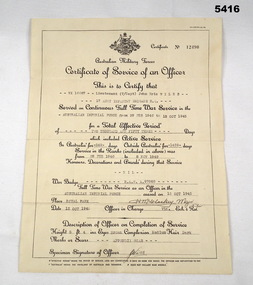
Administrative record - CERTIFICATE OF DISCHARGE WW2, Australian Military Forces, 12.10.1945
... John Eric Wiles VX16067, refer Cat No 5410P for his service details. certificates discharge wiles "VX16067 Lieutenant (T/Capt) John Eric Wiles 17th Aust Infantry Brigade HQ" Certificate of discharge No 124900, paper, print in black, entries typed in black, has details re name, rank, regt No, unit, enlistment/discharge dates, service in & out of Australia, physical appearance, rear has details re keeping the certificate safe. Administrative record CERTIFICATE OF DISCHARGE WW2 ...John Eric Wiles VX16067, refer Cat No 5410P for his service details.Certificate of discharge No 124900, paper, print in black, entries typed in black, has details re name, rank, regt No, unit, enlistment/discharge dates, service in & out of Australia, physical appearance, rear has details re keeping the certificate safe."VX16067 Lieutenant (T/Capt) John Eric Wiles 17th Aust Infantry Brigade HQ"certificates, discharge, wiles -
 Bendigo Military Museum
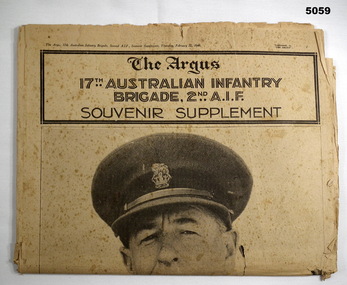
Newspaper - NEWSPAPER, The Argus, Argus Newspaper, 22 Feb 1940
... WW2 Magazine Souvenir 16 paged newspaper. Beige coloured with black writing with photo of Brigadier S.G. Savige on front page, 17th Australian Infantry Brigade, Second AIF. ...16 paged newspaper. Beige coloured with black writing with photo of Brigadier S.G. Savige on front page, 17th Australian Infantry Brigade, Second AIF. Souvenir supplement, Thursday, February 22, 1940. Photographs of Brigade staff and battalions.newspaper, ww2, magazine, souvenir -
 Bendigo Military Museum
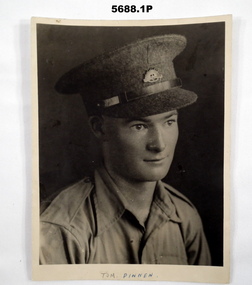
Photograph - WW2 INFANTRY SOLDIER, c1939- 1945
... Australian soldiers WW2. They are positioned in front of a simple weatherboard wall. A ladder is on the ground behind them. A cross in blue ink marks one soldier. Written on top of photo is - Tom Dinnen. 3. Postcard in form of a Palestinian Pound in black and white. It has three images in circles. A woman and two male soldiers. It has two written languages, Hebrew and Arabic. It is unposted. Photograph WW2 INFANTRY ...These refer to the service of "Dinnen, Thomas Michael" NX17247, Born Annandale, NSW. Enlisted 24 May 1940. Discharged 29 Oct 1945, Rank L/Sgt in 2/17 Aust Inf. Btn.1. portrait of an Australian Soldier with a peaked cap. He has a Rising Sun badge on his cap. The portrait is black and white. 2. Black and white photo - group of five Australian soldiers WW2. They are positioned in front of a simple weatherboard wall. A ladder is on the ground behind them. A cross in blue ink marks one soldier. Written on top of photo is - Tom Dinnen. 3. Postcard in form of a Palestinian Pound in black and white. It has three images in circles. A woman and two male soldiers. It has two written languages, Hebrew and Arabic. It is unposted.1. On the back is "To Thelma with Best Regards from Tom". On the front bottom is written Tom Dinnen. 2. Written on back is Tom Dinnen, 23 Dec 1940. 3. On the rear is written "Bell, Jim & Tom".ww2, photos, soldiers -
 Bendigo Military Museum
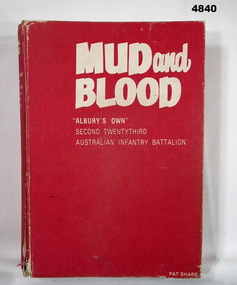
Book - BOOK, AUSTRALIAN INFANTRY BATTALION, SHARE Pat, "Mud and Blood" "Albury's Own". Second Twenty third Australian Infantry Battalion, 1978 First Edition
... WW2 Opposite Title page - newspaper cuttings from Bendigo Advertiser, Monday June 6, 1994 and Saturday July 2, 1994. Death notices or CARLETON Frederick Lloyd". Hard Cover book. Hardcover, cardboard with red coloured buckram, white print on front and spine. End papers - illustrated black and white photographs, front silhouette of barbed wire and soldiers. Back - soldiers on parade. "Mud and Blood" "Albury's Own". Second Twenty third Australian Infantry ...Original owner of book, Mr FREDERICK CARLETON. Please see Catalogue Number 142.7 for service history.Hard Cover book. Hardcover, cardboard with red coloured buckram, white print on front and spine. End papers - illustrated black and white photographs, front silhouette of barbed wire and soldiers. Back - soldiers on parade.Opposite Title page - newspaper cuttings from Bendigo Advertiser, Monday June 6, 1994 and Saturday July 2, 1994. Death notices or CARLETON Frederick Lloyd".book, battalions, ww2 -
 Bendigo Military Museum
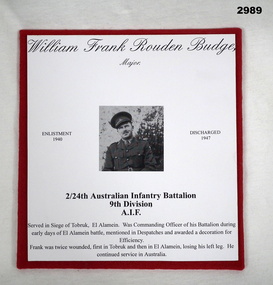
Memorabilia - PHOTOGRAPH & TEXT CARD WW2, Post WW2
... Document service Passchendaele Barracks Trust 2/24th tobruk Top: “William Frank Rouden Budge” Centre: “Major” Left: “Enlistment 1940, Centre: Photo of Major BUDGE, Right: Discharged 1947” Centre: “2/24th Australian Infantry Battalion 9th Division AIF” Black & white photo with basic details of the military service of Major William Frank Rouden BUDGE. White cardboard, black printing. Red velvet cardboard backing display board. Memorabilia PHOTOGRAPH & TEXT CARD WW2 ...W.F.R.Budge VX48105. Refer Cat No 2721 for his service details.Black & white photo with basic details of the military service of Major William Frank Rouden BUDGE. White cardboard, black printing. Red velvet cardboard backing display board.Top: “William Frank Rouden Budge” Centre: “Major” Left: “Enlistment 1940, Centre: Photo of Major BUDGE, Right: Discharged 1947” Centre: “2/24th Australian Infantry Battalion 9th Division AIF”document, service, passchendaele barracks trust, 2/24th, tobruk -
 Bendigo Military Museum
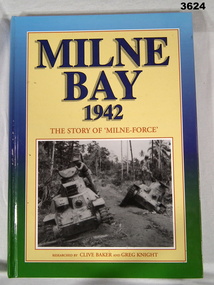
Book - BOOK, WW2, Ligare Pty Ltd, Milne Bay 1942, 2000
... Australian Infantry and RAAF Fighter Squadrons turned back a Japanese invasion force. Book Milne bay 1942 Hard cover, cardboard, glossy finish, colour background blue to green with yellow layer. Blue / orange print front, white print spine, black print back. Front cover has black / white photo of bogged Japanese tanks. 496 cut, plain, white, pages. Black & white illustrations, photos, maps. Milne Bay 1942 Book BOOK, WW2 ...Original owner: William John GARLAND, 5th Army Troop. Milne Bay 1942 - The Story of Milne - Force. From book cover: The 1942 battle for Milne Bay was a turning point in the Pacific War, when a garrison of predominantly Australian Infantry and RAAF Fighter Squadrons turned back a Japanese invasion force.Hard cover, cardboard, glossy finish, colour background blue to green with yellow layer. Blue / orange print front, white print spine, black print back. Front cover has black / white photo of bogged Japanese tanks. 496 cut, plain, white, pages. Black & white illustrations, photos, maps.book, milne bay, 1942 -
 Bendigo Military Museum
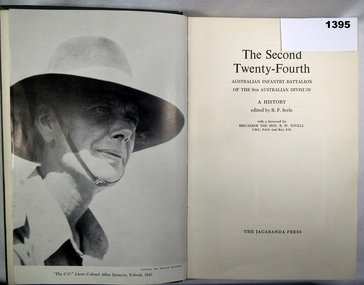
Book, R P Searle, The Second Twenty - Fourth Australian Infantry Battalion of the 9th Australian Division, 1963
... Frank Burdon 215692 Overleaf: Killed in action or died of wounds in WW2 (376) On end paper, front, stamped: A O Smith 156 Templeton St Wangaratta 3677 Handwritten: Donated by Laurie Schilling Dark green buckram hard cover with illustrated end papers in dark greens & white. 378 pages. Illustrated with black & white photos & some diagrams. Photo of Editor on fly leaf & coloured photo & article stuck onto following fly leafs. The Second Twenty - Fourth Australian Infantry ...Dark green buckram hard cover with illustrated end papers in dark greens & white. 378 pages. Illustrated with black & white photos & some diagrams. Photo of Editor on fly leaf & coloured photo & article stuck onto following fly leafs.Between pages 20 - 21 a slip of paper bearing legend 2nd 24th Bat. Frank Burdon 215692 Overleaf: Killed in action or died of wounds in WW2 (376) On end paper, front, stamped: A O Smith 156 Templeton St Wangaratta 3677 Handwritten: Donated by Laurie Schillingbooks- history, military -
 Bendigo Military Museum
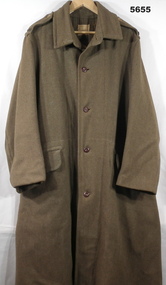
Uniform - GREAT COAT, ARMY WW2, 1942
... AUSTRALIAN INFANTRY BATTALLION. Refer Cat No 2891.4 Uniform WW11 On Maker's label, black pvoutow cotton fabric. " REGIMENTAL No...../ NAME/V458/MADE IN/ AUSTRALIA/ 1942/ SIZE." Great Coat - Khaki colour woolen fabric with attached half belt. Inside pockets and lining to sleeves - beige colour cotton fabric. Buttons - Bakelite, brown, single breasted. Australia shoulder epaulette badges. Makers label inside back below collar Uniform GREAT COAT, ARMY WW2 ...HEWSTON, RAYMOND ERNEST, VX64672 Date of Enlistment, 19 October 1941, Age 31 Years, Date of Discharge 27 March 1946, Rank of PRIVATE, 8 AUSTRALIAN INFANTRY BATTALLION. Refer Cat No 2891.4Great Coat - Khaki colour woolen fabric with attached half belt. Inside pockets and lining to sleeves - beige colour cotton fabric. Buttons - Bakelite, brown, single breasted. Australia shoulder epaulette badges. Makers label inside back below collarOn Maker's label, black pvoutow cotton fabric. " REGIMENTAL No...../ NAME/V458/MADE IN/ AUSTRALIA/ 1942/ SIZE."uniform, ww11 -
 Bendigo Military Museum
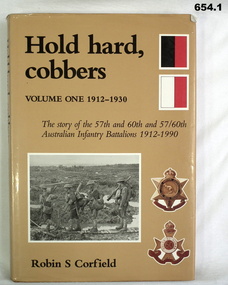
Literary work - BOOK, 1) Hold Hard, Cobbers Vol. 1 1912 - 1930 .2) Hold Hard, Cobbers Vol 2 1930 -1990, 1992
... Australian Infantry Battalions from 1912 to 1990. Donated by Frederick Ernest Addlem VX142253 57/60th Batt Refer Cat No 432.2 for his service history and 937P. Books military WW2 ...Two volumes detailing the story of the 57th, 60th and 57/60th Australian Infantry Battalions from 1912 to 1990. Donated by Frederick Ernest Addlem VX142253 57/60th Batt Refer Cat No 432.2 for his service history and 937P.Both volumes of Hold Hard, Cobbers. Both are hardcover with illustrations and illustrated dust jackets. .1 288 page, cut edged. Brown buckram and brown dust jacket. .2 352 page, cut edged. Green buckram with green dust jacket.Both items, on front end paper "Presented from the 57/60 Battalion (AIF) Association to the Bendigo RSL by Fred Addlem 1996"books, military, ww2
