
Showing 148 items matching "australian internee camps"
-
 Tatura Irrigation & Wartime Camps Museum
Folder - autobiography, Bruno Simon, Remember life in Camp 13, 1991
... ...australian internee camps...Camp 13". Possibly an association with Mooroopna philatelist may have been the contact between Mr Pohlig and Lurline Knee gustav polig pow mail internee correspondence australian internee camps Gustav Pohlig Collection of POW mail. ...a 40 page photocopy collection of addressed envelopes as indicate by the large inscription as indicated below with a six page autobiography "Remember life in Camp 13". Possibly an association with Mooroopna philatelist may have been the contact between Mr Pohlig and Lurline KneeBlack plastic cover containing 40 pages of photocopy collection of address envelopes.Gustav Pohlig Collection of POW mail.gustav polig, pow mail, internee correspondence, australian internee camps -
 Tatura Irrigation & Wartime Camps Museum
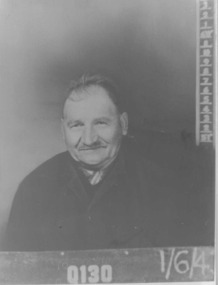
Photograph, Carl Max Assman
... Carl Max Assman was a German resident in Australia and an internee at Camp 1 Tatura....Carl Max Assman was a German resident in Australia and an internee at Camp 1 Tatura. camp 1 carl max assman photograph people Black and white photograph of an internee, with his internment number etc. ...Carl Max Assman was a German resident in Australia and an internee at Camp 1 Tatura.Black and white photograph of an internee, with his internment number etc. camp 1, carl max assman, photograph, people -
 Orbost & District Historical Society
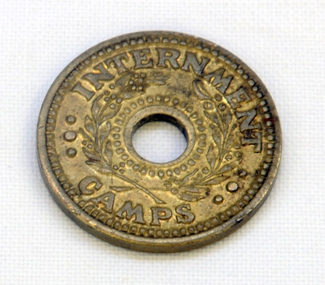
coin, Arendsen & Sons, WW11
... Australian WW11 Internment Camps. They were introduced in 19433 to replace the paper canteen coupons. This token was used at the internment camp at Bete Bolong just outside Orbost during WW11. This camp was established in 1943 and was there until 1946. The internees...Australian WW11 Internment Camps. They were introduced in 19433 to replace the paper canteen coupons. This token was used at the internment camp at Bete Bolong just outside Orbost during WW11. This camp was established in 1943 and was there until 1946. The internees ...For security reasons, tokens were used in Australian WW11 Internment Camps. They were introduced in 19433 to replace the paper canteen coupons. This token was used at the internment camp at Bete Bolong just outside Orbost during WW11. This camp was established in 1943 and was there until 1946. The internees had been transferred from the camp at Murchison East to provide farm labour. The coin was given to Lindsay Thomson when he was a student.This token was used at the Bete Bolong POW camp from 1943-1945. This camp housed Italian POWs, some of whom remained/returned after the war to settle in Orbost.An internment camp coin. This is a one penny coin token with a hole in the centre. It is made of brass.ONE PENNY INTERNMENT CAMPStoken ww11 bete-bolong internment-camp -
 Orbost & District Historical Society
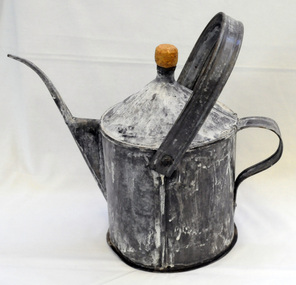
poison pot, Smith, R. & E, 1940's
... Australia the internees would have no chance of escape. Eager to show solidarity with Britain's cause, Australia readily agreed and decided to place the prisoners in a number of different camps scattered around the country and guard them with reservists and soldiers too unfit to serve overseas. ...This item was used on P.C. Toby Nixon and Grace Nixon's farm, "Rolling Downs" at Bete Bolong. During WW11 the farm grew carrots, red beet, cabbages, beans and maize. Because of labour shortages the government built a Prisoner of War Camp on Russell's Hill. The manager, Dick Northrope, used three Italian prisoners to frill ring small trees and shrubs between crop harvesting. The introduction of ‘frill ringing’ and poisoning with arsenical tree killers in the 1940's and 1950's helped reduce the amount of labour required and trees on more country were treated. This enabled the hill country at Bete Bolong to become more productive. The dead trees and shrubs were later cleared by Erle Broome's D7 caterpillar bulldozer. This was the first big area of 230 acres to be cleared in the Orbost district. Soon after entering World War 11 Australia was asked by Britain to accept and guard large numbers of 'enemy aliens' and prisoners of war. The British government felt that it could not afford to feed large numbers of prisoners and it was believed that once in Australia the internees would have no chance of escape. Eager to show solidarity with Britain's cause, Australia readily agreed and decided to place the prisoners in a number of different camps scattered around the country and guard them with reservists and soldiers too unfit to serve overseas. There was an internment camp at Bete Bolong, Orbost. This item is an example of an item used by the Italian P.O.W.'s residing there. It is also an example of an agricultural tool not commonly used today.A galvanized iron watering can which has been used to hold poison for ring barking trees (possibly arsenic). It has a narrow spout. There is a handle at the back and a folding handle on the top. The top is conical with an opening for a cork. agriculture prisoner-of-war-camp tree-removal land-clearing -
 Bendigo Historical Society Inc.
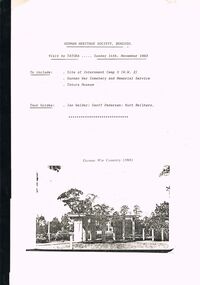
Document - GERMAN HERITAGE SOCIETY COLLECTION: TATURA DISTRICT 1939-1947, Sunday 14th November 1993
... Contains a map, with Internment Camps, of the Shire of Rodney, Prisoners of War in Australia During World War 2, Special Requirements for Internees : Accommodation. ...Contains a map, with Internment Camps, of the Shire of Rodney, Prisoners of War in Australia During World War 2, Special Requirements for Internees : Accommodation. ...Compiled reference articles on the Tatura District, 1939-1947. Information from War Museum Archives, Canberra. File 780/1 (2 pages). Tatura and the Shire of Rodney, by W H Bossence. Walls of Wire, Tatura Rushworth Murchison by Joyce Hammond. The Story of the Beilharz Family by Dr. Paul Sauer. Contains a map, with Internment Camps, of the Shire of Rodney, Prisoners of War in Australia During World War 2, Special Requirements for Internees : Accommodation. Chap. 1, Prisoner of War and Internment Camps at Tatura, Vic., Plan of the Camp. Has a pale yellow front cover and a pale blue back cover.document, memo, german heritage society, german heritage society collection - visit to tatura, german heritage society bendigo, german war cemetry, war museum archives canberra, tatura and the shire of rodney, walls of wire tatura rushworth murchison, the story of the beilharz family, ian walder, geoff pedersen, kurt beilharz -
 Monbulk RSL Sub Branch
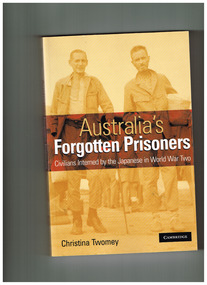
Book, Cambridge, Australia's forgotten prisoners: Civilians interred by the Japanese in World War Two, 2007
... Australian civilians during World War II. They spent the war interned in harsh, prison-like camps throughout the Asia-Pacific region. Civilian internees ...The Japanese captured 1500 Australian civilians during World War II. They spent the war interned in harsh, prison-like camps throughout the Asia-Pacific region. Civilian internees - though not members of the armed forces - endured hardship, privation and even death at the hands of the enemy." "This book tells the stories of Australian civilians interned by the Japanese in World War II. By re-creating the daily lives and dramas within internment camps, it explores how captivity posed different dilemmas for the men, women and children held there.Ill, bib, index, notes, p.207.non-fictionThe Japanese captured 1500 Australian civilians during World War II. They spent the war interned in harsh, prison-like camps throughout the Asia-Pacific region. Civilian internees - though not members of the armed forces - endured hardship, privation and even death at the hands of the enemy." "This book tells the stories of Australian civilians interned by the Japanese in World War II. By re-creating the daily lives and dramas within internment camps, it explores how captivity posed different dilemmas for the men, women and children held there.japan - prisons and prisoners of war, world war 1939-1945 - prisoners of war - japan -
 Narre Warren and District Family History Group
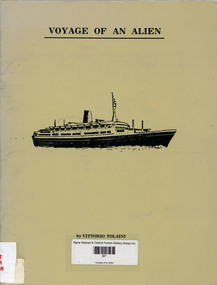
Book, Vittorio Tolaini, Voyage of an alien
... internees "Arandora Star" This is a true story of Italians interned in England during the war years of 1940-1945. Following the disaster of the sinking of the "Arandora Star" on July 2nd 1940, the survivors were transported to Australia on the "Dunera" and kept in internment camps until the end of the war. ...This is a true story of Italians interned in England during the war years of 1940-1945. Following the disaster of the sinking of the "Arandora Star" on July 2nd 1940, the survivors were transported to Australia on the "Dunera" and kept in internment camps until the end of the war. Vittorio Tolaininon-fictionThis is a true story of Italians interned in England during the war years of 1940-1945. Following the disaster of the sinking of the "Arandora Star" on July 2nd 1940, the survivors were transported to Australia on the "Dunera" and kept in internment camps until the end of the war. Vittorio Tolaini"dunera", world war 1939-1945, internees, italian internees, "arandora star" -
 Tatura Irrigation & Wartime Camps Museum
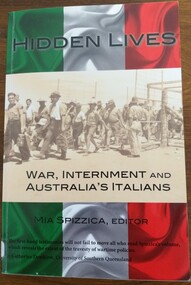
Book, Hidden Lives: war, internment and Australia's Italians, 2018
... camps such as Loveday S.A hundreds of miles away leaving their wives and families to cope alone during W.W.2 world war two italian internees For our surrogate mother, Lurline Knee. Thank you for bringing the Tatura story to us. beast wishes from Claudia (Marsella) Barker may 2018. Cover has colours of the Italian flag, green, white and red. Across the centre of the flag is a photo of Italian internees arriving at a camp. Hidden Lives: war, internment and Australia's ...Tells the stories of those immigrants who experienced detention during World War 2 as enemy aliens in these allied nations. Some Italian families whose husbands were arrested as "security risks" were sent to internment camps such as Loveday S.A hundreds of miles away leaving their wives and families to cope alone during W.W.2Cover has colours of the Italian flag, green, white and red. Across the centre of the flag is a photo of Italian internees arriving at a camp.For our surrogate mother, Lurline Knee. Thank you for bringing the Tatura story to us. beast wishes from Claudia (Marsella) Barker may 2018.world war two, italian internees -
Tatura Irrigation & Wartime Camps Museum
Booklet, As I Remember The Loveday Internment Camps, 2011
... internees to Camp 9, Loveday. As I Remember The Loveday Internment Camps Max Scholz J C Irving and Co Internment camps of Australia South Australian Internment camps Yellow soft covered booklet with green printing- 43 pages. ...Collected at the Book Launch at the 70th Anniversary of the arrival of the first internees to Camp 9, Loveday.Yellow soft covered booklet with green printing- 43 pages. Description of the Loveday Internment Camps in WW2, their layouts and operations within the camps.as i remember the loveday internment camps, max scholz, j c irving and co, internment camps of australia, south australian internment camps -
 Tatura Irrigation & Wartime Camps Museum
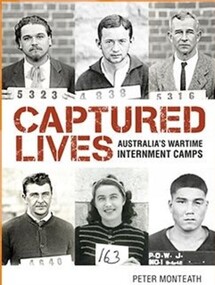
Book, Captured Lives, 2018
... Story of the internees and pow's behind the barbed wire veil that was drawn around people deemed threats to Australia's security. australian internment camps australian pow's Peter Monteath Loveday Internment Camp Captured Lives Australia's Wartime Internment Camps Soft covered book. ...Story of the internees and pow's behind the barbed wire veil that was drawn around people deemed threats to Australia's security. Soft covered book. Front cover has 6 photos of internees with their id numbers. In middle is title. Authors name at bottom. Spine is brown coloured with title, author and photo of internee. Back cover has two photos, Group of adults and children and a soldier with gun and five men with hands in air. 266 pagesCaptured Lives Australia's Wartime Internment Campsaustralian internment camps, australian pow's, peter monteath, loveday internment camp -
Tatura Irrigation & Wartime Camps Museum
Craft - Warship model, Japanese warship
... Given to Corporal Taylor, a guard at camp 4 in appreciation of his treatment japanese internees japanese warship As in the physical description, with inscriptions on stand. Handmade wooden model on a stand. Japanese inscription in front of warship as well as "Tatura Australia ...Given to Corporal Taylor, a guard at camp 4 in appreciation of his treatmentHandmade wooden model on a stand. Japanese inscription in front of warship as well as "Tatura Australia" below Japanese inscription both standing on this stand beside the warship. As in the physical description, with inscriptions on stand.japanese internees, japanese warship -
Tatura Irrigation & Wartime Camps Museum
Instrument - Cornet, Brass Cornet
... With the deportation in August 1941 by the British Mandate of most Templers from Palestine to Australia, one of the young bachelors, Gustav Reichert, obtained permission to bring these instruments to Tatura. This he did and, in Camp 3, a band was reformed to entertain members of both internees and often, Camp Authorities. ...With the deportation in August 1941 by the British Mandate of most Templers from Palestine to Australia, one of the young bachelors, Gustav Reichert, obtained permission to bring these instruments to Tatura. This he did and, in Camp 3, a band was reformed to entertain members of both internees and often, Camp Authorities. ...After WW1 the Wilhelma Templer village bought ex WW1 German Armed Forces Brass instruments for their own Brass Band. The Treaty of Versailles forbade Germany from having more than a 10,000 man army thus creating a flood of unwanted instruments with no one having cash to buy them. With the deportation in August 1941 by the British Mandate of most Templers from Palestine to Australia, one of the young bachelors, Gustav Reichert, obtained permission to bring these instruments to Tatura. This he did and, in Camp 3, a band was reformed to entertain members of both internees and often, Camp Authorities. Gustav enjoyed playing the double brass with the Melbourne Templer Brass Band in the 1960-1970's. The above instruments have semi-rotary valves, as traditionally French Horns do, unlike most Anglosaxon bands, where piston valves are used almost exclusively. Yet in German the name Piston is commonly used for cornet. Though battered, these instruments are all still serviceable for their intended use, some more so than others. Their canvas carry bags offered little protection. The group comprised 1 double bass, 1 Euphonium, 1 valve bass trombone, all in C, 3 baritones in Bb (German tenor horns), 3 cornets in Bb, 1 soprano cornet in Eb, in all 11 instruments. Some of the got "lost".Brass cornet with a canvas carry bag.brass instruments, wilhelma templer village, camp 3 band, gustav reichert -
Tatura Irrigation & Wartime Camps Museum
Book, Research School of Physical Sciences and Engineering Annual Report 1997
... Australian National University. Professor Erich Weigold is the director. Erich was an internee in the Tatura Camp 3....Australian National University. Professor Erich Weigold is the director. Erich was an internee in the Tatura Camp 3. erich weigold research school of physical sciences and engineering institute of advanced studies australian national university tatura camp internees 184 page book. ...Annual Report 1997 of the Research School of Physical Sciences and Engineering. Institute of Advanced Studies at the Australian National University. Professor Erich Weigold is the director. Erich was an internee in the Tatura Camp 3.184 page book. Brown cover and back page with brown binding. Picture of physics emblems on front and title in white print.erich weigold, research school of physical sciences and engineering, institute of advanced studies, australian national university, tatura camp internees -
Tatura Irrigation & Wartime Camps Museum
Book, Cowra on the Lachlan
... Cowra Japanese prison break out Japanese internees WW2 internees Australian Internment camps Presented to Tatura H S by Cowra H S 7/5/1994 Hard cover book, green with gold writing on spine (title and authors name). ...Tells the story of Cowra from early settlers to when book written. Includes the 1944 prison break out and the resulting Cowra War Cemetery, Japanese Garden and Cultural Centre. Hard cover book, green with gold writing on spine (title and authors name). Dust cover, yellow, with picture of The Cowra Bicentennial tapestry on front cover. Back cover has picture of Cowra. Inside front of dust cover has what the book about and inside back of dust cover tells about the author, Joan Marriott.Presented to Tatura H S by Cowra H S 7/5/1994cowra, japanese prison break out, japanese internees, ww2 internees, australian internment camps -
Tatura Irrigation & Wartime Camps Museum
Book, Erinnerungen. Lebensgeschichten von Opfern des Nationalsozialismus (Lives Remembered. Life Stories f Vicctims of National Socialism)
... Australia. National Fund of the Republic of Austria for Victims of National Socialism Internment camps in Australia Internees in Australia 3 books contained in a cardboard box. ...Volume 5 of a series of books written by the National Fund of the Republic of Austria for Victims of National Socialism. This volume tells the stories of victims exiled in Australia.3 books contained in a cardboard box. Box has black and white picture of Sydney Harbour Bridge and a ship on front with title (Erinnerungen) in red print and rest of title in black print. Bottom right corner has Band 5: exil in Australien in white print. Title on side in red and black. Back has map of Australia and Asia with countries in blue and ocean in white. Book 1 has same picture on it. Book 2 has a picture of man in army uniform. Book 3 has a picture of a woman and a billy can. Book is written in German and English.national fund of the republic of austria for victims of national socialism, internment camps in australia, internees in australia -
Tatura Irrigation & Wartime Camps Museum
Book, Captured Lives, 2018
... Story of the internees and pow's behind the barbed wire veil that was drawn around people deemed threats to Australia's security. australian internment camps australian pow's Peter Monteath Loveday Internment Camp Captured Lives Australia's Wartime Internment Camps Soft covered book. ...Story of the internees and pow's behind the barbed wire veil that was drawn around people deemed threats to Australia's security. Soft covered book. Front cover has 6 photos of internees with their id numbers. In middle is title. Authors name at bottom. Spine is brown coloured with title, author and photo of internee. Back cover has two photos, Group of adults and children and a soldier with gun and five men with hands in air. 266 pagesCaptured Lives Australia's Wartime Internment Campsaustralian internment camps, australian pow's, peter monteath, loveday internment camp -
 Tatura Irrigation & Wartime Camps Museum
Domestic object - Sewing Machine, Jones Sewing Machine
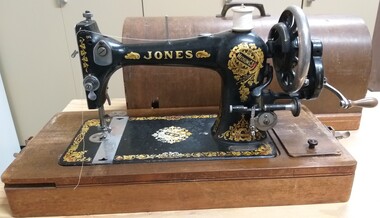
... Australia where they were interned at Tatura. The machine was owned by Nelly Wied (nee Glenk). See notes in Item receipt form. Jones sewing machine Palestine Germans German Templers Palestine internees Templer internees Nelly Wied Nelly Glenk Helmut Glenk Tatura Internment Camps JONES Lid is plywood constructed with domed top. ...This Jones sewing machine was one of the few sewing machines that accompanied the Germans who were deported from Palestine in 1941 to Australia where they were interned at Tatura. The machine was owned by Nelly Wied (nee Glenk). See notes in Item receipt form.Lid is plywood constructed with domed top. Brown handle on top and a clip each end to fasten to machine base. Machine is on a wooden base with clips on each end to fasten to lid. Right hand side of machine has a rectangular hole with wooden lid and brown wooden knob. To keep accessories in. Machine is made from metal, painted black and has fancy gold patterns on front right, "Jones" in gold and gold design around the metal base. It has a silver turning wheelJONESjones sewing machine, palestine germans, german templers, palestine internees, templer internees, nelly wied, nelly glenk, helmut glenk, tatura internment camps -
 Tatura Irrigation & Wartime Camps Museum
Work on paper - Painting - Watercolour, Camp 2 Tatura
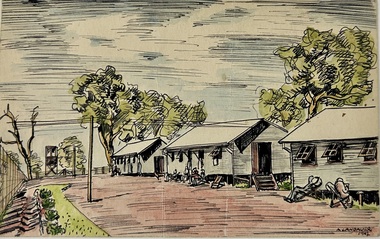
... Australia on board the "Dunera". Camp 2 Dunera Landauer Watercolor 1942 A. Landauer 1942 Pen & Ink and watercolor of three camp huts. Large trees at the rear of the huts. Several internees ...Alfred Landauer was Born in Vienna 13/06/1910. He was a commerical artist who arrived in Australia on board the "Dunera".Pen & Ink and watercolor of three camp huts. Large trees at the rear of the huts. Several internees are reclining in chairs outside each hut. A guard tower is in the distance . A fence runs along the side of the painting and a garden and green grass follow the length of the fence. A. Landauer 1942camp 2, dunera, landauer, watercolor, 1942 -
 Tatura Irrigation & Wartime Camps Museum
Painting - Painting - Watercolour, Mitte December, Tatura, Victoria, December 1940
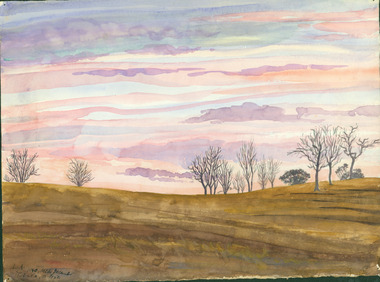
... Dr Leonhard Adam was a Dunera internee in Camp 2 Original painting depicting the camps, colours and changing conditions of the Australian landscape during the artist's time in internment at Tatura. ...Dr Leonhard Adam was a Dunera internee in Camp 2RomanticismL.A 1940 Mitte December, Tatura, Victoria -
 Tatura Irrigation & Wartime Camps Museum
Painting - Painting - Watercolour, Waranga (Victoria, Australia) 25.i.42, Staurmus SW
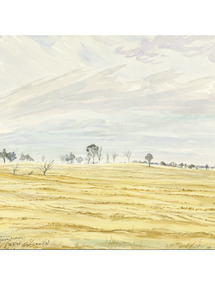
... Leonhard Adam was a Dunera Internee in Camp 2 Original painting depicting the camps, colours and changing conditions of the Australian landscape during the artist's time in internment at Tatura. ...Dr. Leonhard Adam was a Dunera Internee in Camp 2RomanticismVictoria, Australia 25.I.42 Staurmus SW -
 Tatura Irrigation & Wartime Camps Museum
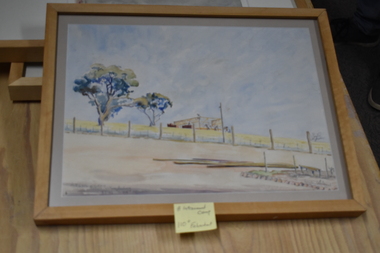
Painting - Painting - Watercolour, 110 deg Fahrenheit
... internee at Tatura. Original Painting depicting the camps, colours and changing conditions of the Australian landscape during the artists time in internment at Tatura. ...Done by Leonhard Adam, internee at Tatura.Original Painting depicting the camps, colours and changing conditions of the Australian landscape during the artists time in internment at Tatura.leonhard adam, internee tatura -
 Tatura Irrigation & Wartime Camps Museum
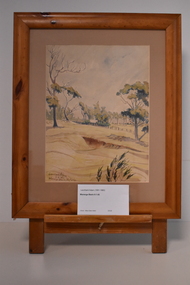
Painting - Painting - Watercolour, Waranga Basin 6.1.42
... internee in Tatura. Original Painting depicting the camps, colours and changing conditions of the Australian landscape during the artists time in internment at Tatura. ...Painted by Leonhard Adam, an internee in Tatura.Original Painting depicting the camps, colours and changing conditions of the Australian landscape during the artists time in internment at Tatura.leonhard adam, waranga basin -
 Tatura Irrigation & Wartime Camps Museum
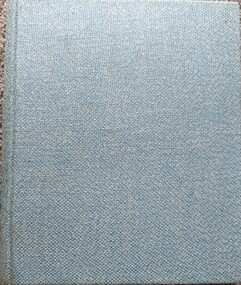
Programme - Theatre Programmes, Kleine Scala
... Book of theatre programmes made an internee in an Australian camp during WW2. Sent to the Museum by Andreas Benzing along with 2 spare copies of 2 programmes and a postcard from Italy. ...Book of theatre programmes made an internee in an Australian camp during WW2. Sent to the Museum by Andreas Benzing along with 2 spare copies of 2 programmes and a postcard from Italy. ...Book of theatre programmes made an internee in an Australian camp during WW2. Sent to the Museum by Andreas Benzing along with 2 spare copies of 2 programmes and a postcard from Italy. The book was found in Dublin Ireland and belonged to a German who had lived in Dublin Ireland.Blue speckled material hard covered book with brown paper lining inside containing pages of theatre programmes.Spine: Lager Tatura/Austr Inside page 1: From Frank Phelan (ingen). no 35 appartment Finsbury House Ballsbridge 689823ww2 camp theatre, ww2 camp theatre programmes, internee theatre programmes -
Tatura Irrigation & Wartime Camps Museum
Article - Newspaper Article x 2, Australia's Unknown Prisoner and Finns released in Australia
... Camp, Viktor Aaltonen, Olle Hellsten and Walter Soderholm (Söderholm). Details their time chopping down eucalyptus trees to keep Melbourne supplied with firewood, while hunting rabbits in their spare time. Second Article is a list of names from the Finnish Red Cross of Finnish Internees released from Australian...Camp, Viktor Aaltonen, Olle Hellsten and Walter Soderholm (Söderholm). Details their time chopping down eucalyptus trees to keep Melbourne supplied with firewood, while hunting rabbits in their spare time. Second Article is a list of names from the Finnish Red Cross of Finnish Internees released from Australian ...First article written in Swedish about 3 Finnish prisoners of war interned at Graytown Camp, Viktor Aaltonen, Olle Hellsten and Walter Soderholm (Söderholm). Details their time chopping down eucalyptus trees to keep Melbourne supplied with firewood, while hunting rabbits in their spare time. Second Article is a list of names from the Finnish Red Cross of Finnish Internees released from Australian Camps.Photocopy of 2 newspaper articles Australiens okända fångar (Australia's Unknown Prisoners) and Australiassa vapautettuja suomalaisia (Finns released in Australia)finland, aaltonen, olle hellsten, walter soderholm, graytown internment camp, finnish red cross, finnish internees ww2 -
 Tatura Irrigation & Wartime Camps Museum
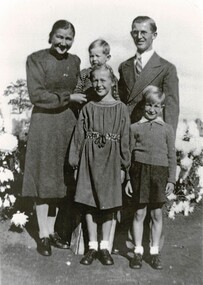
Photograph, Baer Family
... Baer family were German Lutheran Mission internees in Camp 3 during WW2 in Australia. Michael and Mrs Baer holding baby Theo. ...Baer family were German Lutheran Mission internees in Camp 3 during WW2 in Australia. Michael and Mrs Baer holding baby Theo. ...Baer family were German Lutheran Mission internees in Camp 3 during WW2 in Australia. Michael and Mrs Baer holding baby Theo. Gerda and Reinhardt in front.Black and white photograph with two adults and child in between and two children in front. Flowers behind them.baer family, michael baer, theo baer, gerda baer, reinhardt baer, german lutheran missionaries -
 Tatura Irrigation & Wartime Camps Museum
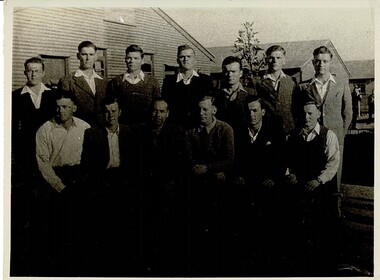
Photograph, Men from Loveday Camp
... Group of men in Camp 10 at Loveday South Australia during WW2. Loveday Internment camp Camp 10 internment camp Loveday internees Black and white photograph of a group of men, some standing and others sitting, in front of huts. ...Group of men in Camp 10 at Loveday South Australia during WW2.Black and white photograph of a group of men, some standing and others sitting, in front of huts.loveday internment camp, camp 10 internment camp, loveday internees -
 Tatura Irrigation & Wartime Camps Museum
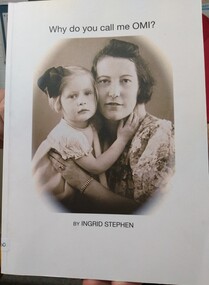
Book, Why do you call me OMI?
... internee in camp 1 during WW2. She wrote the story for her children as part of their knowledge and heritage, the history of how and why she arrived in Australia and her life in this wonderful country which has been so good to her and her family. ...internee in camp 1 during WW2. She wrote the story for her children as part of their knowledge and heritage, the history of how and why she arrived in Australia and her life in this wonderful country which has been so good to her and her family. ...The story is written by Ingrid Stephen, daughter of Hans Barth who was an internee in camp 1 during WW2. She wrote the story for her children as part of their knowledge and heritage, the history of how and why she arrived in Australia and her life in this wonderful country which has been so good to her and her family. Tells what her father went through from capture to release.A white book with a sepia colour photograph, in centre, of a lady and child. Title at top and author below, in black writing. Family photograph on back in colour.ingrid barth, ingrid stephen, hans barth, john stephen, camp 1 internees -
 Tatura Irrigation & Wartime Camps Museum
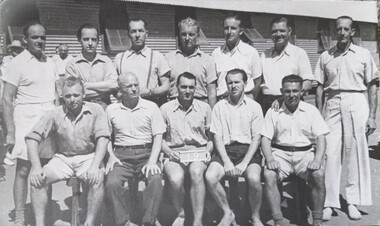
Photograph - Photograph - copy, German Internees at Loveday
... Picture depicts a group of German internees apprehended in Australia and interned at No 14 camp, Loveday SA. ...Picture depicts a group of German internees apprehended in Australia and interned at No 14 camp, Loveday SA. ...Picture depicts a group of German internees apprehended in Australia and interned at No 14 camp, Loveday SA. Back row: (left to right) K Barthel, Dr Julius Namors, Theophile Verellen, Friedrich Hermann, Kurt Butschek, Werner, Leopold Brandtner. Front row: N Basener, Rudolf Oertel, Ebe, Pufe and J Hermann. Copied from AWM accession number 030191/19.Black and white copy of photograph depicting 7 men standing and 5 men sitting. Two men (not included in photograph) back right. A sign with 19 is being held by the middle man sitting down. Backdrop is a hut. Photograph on corfu.loveday sa, camp 14, k barthel, dr julius namors, theophile verellen, friedrich hermann, kurt butschek, werner, leopold brandtner, n basener, rudolf oertel, ebe, pufe, j harmann, awm, 030191/19 -
 Tatura Irrigation & Wartime Camps Museum
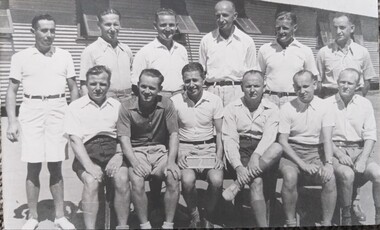
Photograph - Photograph - copy, Germans in Loveday Internment Camp
... Camp South Australia. Back (left to right): Erich Regin, Hermann Koch, Herbert Totzilovski, Hermann Muncheberg, Walter Reimann and Willi Koch. Front: Alfred Bogisch, Pepi Vogel, Fritz Seiler, Max Kruger, Albert Meinke and Hans Lange. Photograph from AWM accession number 030191/02. Erich Regin Hermann Koch Herbert Totzilovski Hermann Muncheberg Walter Reimann Willi Koch Alfred Bogisch Pepi Vogel Fritz Seiler Max Kruger Albert Meinke Hans Lange Loveday Camp German Internees ...Picture of a group of German men interned in Loveday Camp South Australia. Back (left to right): Erich Regin, Hermann Koch, Herbert Totzilovski, Hermann Muncheberg, Walter Reimann and Willi Koch. Front: Alfred Bogisch, Pepi Vogel, Fritz Seiler, Max Kruger, Albert Meinke and Hans Lange. Photograph from AWM accession number 030191/02.Black and white copy of a photograph of 12 men (6 standing, 6 sitting) in front of a hut. Man, 3rd from left holding a sign with 2 on it. Men in shorts and shirts. Photograph is on corfu.erich regin, hermann koch, herbert totzilovski, hermann muncheberg, walter reimann, willi koch, alfred bogisch, pepi vogel, fritz seiler, max kruger, albert meinke, hans lange, loveday camp, german internees, awm, accession number 030191/02 -
Tatura Irrigation & Wartime Camps Museum
Decorative object - Brooch, Metal, 1943-1945
... internee in Camp 3A from 1940-1945. The penny-brooch is an example of the ingenuity of the internees in making use of anything at hand & repurposing it for much more than originally intended. Else's daughter, Else-Lore Hukins donated the item. Says Else-Lore of the brooch: "Jewellery was made out of available metals. Pennies made a bright brooch and especially interesting if it featured the current year it was given". tatura ww2 camp 3 internment internee camps numismatics coins costume accessory jewellery Brooch fashioned from Australian ...Else Oertel was a German internee in Camp 3A from 1940-1945. The penny-brooch is an example of the ingenuity of the internees in making use of anything at hand & repurposing it for much more than originally intended. Else's daughter, Else-Lore Hukins donated the item. Says Else-Lore of the brooch: "Jewellery was made out of available metals. Pennies made a bright brooch and especially interesting if it featured the current year it was given".Brooch fashioned from Australian 1943 penny. Penny has a safety pin soldered to the reverse, for use as a brooch.tatura, ww2, camp 3, internment, internee camps, numismatics, coins, costume, accessory, jewellery
