
Showing 122 items matching "australian naval ships"
-
 Lara RSL Sub Branch
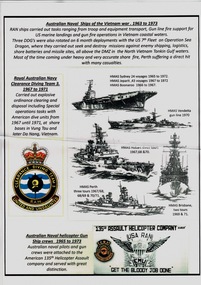
Australian Navy Vietnam, Australian Naval Ships Vietnam
... Australian Naval Ships Vietnam...Description of Australian Naval Ships used during Vietnam war 1963 - 1973. ...Australian Naval Ships of Vietnam war...Description of Australian Naval Ships used during Vietnam war 1963 - 1973. ...Description of Australian Naval Ships used during Vietnam war 1963 - 1973. Royal Australian Navy Clearance Team 3 1967 - 1971. Australian Naval Helicopter Ship Crews 1965 to 1973Description of Australian Naval Ships used during Vietnam war 1963 - 1973. Royal Australian Navy Clearance Team 3 1967 - 1971. Australian Naval Helicopter Ship Crews 1965 to 1973A3 Laminated PosterAustralian Naval Ships of Vietnam waraustralian navy vietnam clearance diving helicopter gun ships hmas sydney jeparit boonaroo vendetta hobart perth brisbane helicpter gun ships -
 Lara RSL Sub Branch
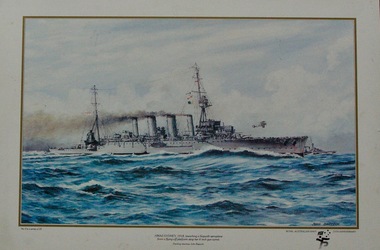
Coloured Print of HMAS SYDNEY 1918
... ww1, hmas sydney,lara r.s.l. australian naval ships, light cruisers....During late 1917, Sydney became the first Australian warship to launch an aircraft, and the first warship to do so from a rotatable platform. ww1, hmas sydney,lara r.s.l. australian naval ships, light cruisers. HMAS SYDNEY 1918,launching a Sopwith aeroplane from a flying-off platform atop her 6 inch gun turret. ...HMAS Sydney was a Chatham-class light cruiser of the Royal Australian Navy. Laid down in 1911 and launched in 1912, the cruiser was commissioned into the RAN in 1913. During the early stages of World War I, Sydney was involved in supporting the Australian Naval and Military Expeditionary Force, and escorting the first ANZAC convoy. On 9 November 1914, the cruiser defeated the German cruiser SMS Emden at the Battle of Cocos. During 1915 and 1916, Sydney operated on the North America and West Indies Station, before joining the 2nd Light Cruiser Squadron at Greenock, Scotland in November 1916. On 4 May 1917, the cruiser was involved in an inconclusive action against the German zeppelin L43; neither was damaged. During late 1917, Sydney became the first Australian warship to launch an aircraft, and the first warship to do so from a rotatable platform.Rectangular shaped mounted Print of HMAS SYDNEY 1918HMAS SYDNEY 1918,launching a Sopwith aeroplane from a flying-off platform atop her 6 inch gun turret. ROYAL AUSTRALIAN NAVY 75TH ANNIVERSARYww1, hmas sydney,lara r.s.l. australian naval ships, light cruisers. -
 Port Fairy Historical Society Museum and Archives
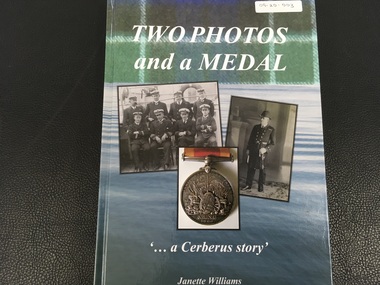
Book - Two Photos and a Medal, Janette Williams, Two Photos and a medal / ‘... a Cerberus story’
... ...australian naval ships...australian navy history australian naval ships hmas cerberus Biography William George Monteith navy victoria William George Monteith and his involvement with the Victorian and Australian Navy. ...William George Monteith and his involvement with the Victorian and Australian Navy.357 p., illustrationsnon-fictionWilliam George Monteith and his involvement with the Victorian and Australian Navy. australian navy history, australian naval ships, hmas cerberus, biography, william george monteith, navy, victoria -
 Lakes Entrance Historical Society
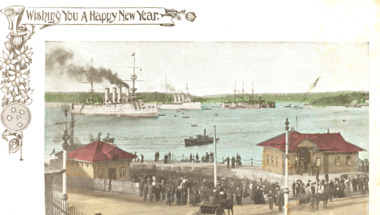
Postcard, CBA, Co LTD Graphics, Man-o-War Stairs Sydney Harbour, 1911
... Tinted colour postcard showing a crowd of people at Man-o-War stairs, Sydney Harbour watching three Australian Naval Ships ...To Eva from cousin George - details in second pic Australian Navy Correspondence Waterways New year Greetings Tinted colour postcard showing a crowd of people at Man-o-War stairs, Sydney Harbour watching three Australian Naval Ships Man-o-War Stairs Sydney Harbour Postcard CBA, Co LTD Graphics ...Postmarked Jan. 1911. To Eva from cousin George - details in second picTinted colour postcard showing a crowd of people at Man-o-War stairs, Sydney Harbour watching three Australian Naval Ships New year Greetings australian navy, correspondence, waterways -
 Returned Nurses RSL Sub-branch
Photograph - 5.5x4 coloured photograph, 1996
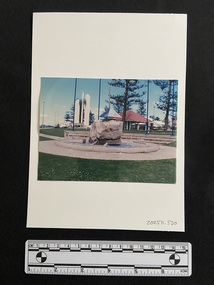
... Australian Hospital Ship. The Walk of Remembrance is dedicated to the memorial of the men and women who lost their lives in the forty-one Allied and Australian Naval and Merchant ships sunk along Australia's coastline during World War Two. ...Australian Hospital Ship. The Walk of Remembrance is dedicated to the memorial of the men and women who lost their lives in the forty-one Allied and Australian Naval and Merchant ships sunk along Australia's coastline during World War Two. ...Centaur Memorial in Tweed Heads In Queensland. 'Memorial information: Description- A steel pyramid supported by a 15 tonne pink granite stone from Turallin near Millmerran on the Darling Downs. The bolder symbolises the ecology, the pyramid represents the spirit of those who died in the Centaur sinking and the whole effect is of flotation. The tip of the pyramid can be removed to expose an oil fuelled lamp which burns on the night of the anniversary of the sinking. Scrolls containing the names of those on board are also contained in the pyramid. A Walk of Remembrance leads from the memorial to the cliff top. The Centaur Memorial along with theUnited States Destroyer, USS Mugford Memorial were unveiled on 14 May 1993, the 50th anniversary of the sinking of the Australian Hospital Ship. The Walk of Remembrance is dedicated to the memorial of the men and women who lost their lives in the forty-one Allied and Australian Naval and Merchant ships sunk along Australia's coastline during World War Two. It is planned to place a marker in the ground adjacent to the pyramid; this marker and the point of the pyramid will align with the site of the sinking. [Taken from ANZAC Square record] Coloured photograph of a stone memorial set in a pond with a concrete edge and surrounded by small stones. The pond is on flat grassy land and behind it are stone steps for seating. In the background are trees and a pavillion.'Centaur / Memorial. / Danger Pond / Tweed Heads' [Handwritten in blue ink on the back of the photograph] 'SEP 96 05633 M8NAA' [Printed on the back of the photograph]ahs centaur memorial, centaur, war memorials, tweed heads, queensland war memorials -
 Flagstaff Hill Maritime Museum and Village
Craft - Ship Model, Mr Edward Howard Grainger (ship model maker), Skylark, circa 1980s
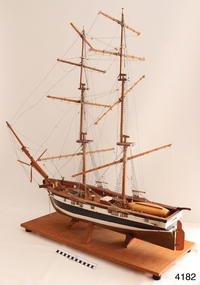
... Our collection has many ship models, some of which were built by professional model makers, others by naval enthusiasts. The model is also an example of British warships that predate the colonisation of Australia. ...This handmade ship model was built and donated by mr E H Grainger in the late 20th century. The warship represents the British Sloop, Seagull Class, HMS Skylark 1806-1812. The brig-rigged, two-masted HMS Skylark was built at William Rowes' Yard on the River Tyne for the Royal Navy of the United Kingdom in 1806. The ship was armed with 14 British 24-pound Carronades and 2 British 6-pounders. It could carry a crew of 95. This model is an example of the craft of ship model making, which has been a popular hobby for hundreds of years. Our collection has many ship models, some of which were built by professional model makers, others by naval enthusiasts. The model is also an example of British warships that predate the colonisation of Australia.Ship model, Skylark. 2-masted sailing ship, hull painted, with a white strip on white. Separate wooden lifeboat. "Skylark" on each side of the bow and across the stern. The rudder pivots. Mounted on a timber stand. Model built by Mr E.H. Grainger."SKYLARK" on both sides of the bow. "SKYLARK HULL" across bowflagstaff hill, flagstaff hill maritime museum and village, warrnambool, maritime museum, maritime village, great ocean road, shipwreck coast, ship model, skylark, two-masted ship, sailing ship, hobby, war ship, hms skylark, british sloop, british brig, carronade, brig of war, 1806 -
 Flagstaff Hill Maritime Museum and Village
Craft - Ship Model, S.S. Orotava, ca. 1930-1974
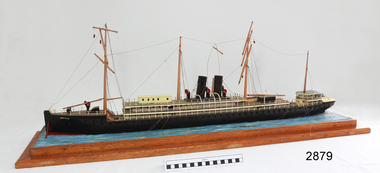
... Naval Construction and Armaments Company (NC & A Co.) in 1889. The gross tonnage was 5552.10 tons, length 430 feet, breadth 49.3 feet and depth 34.2 feet. It was built for the Pacific Steam Navigation Company (of 31, James Street, Liverpool) and used as a passenger liner. The vessel was launched in 1889 and made two voyages for the Pacific Steam Navigation Company during 1889. Then, under the new management of the Orient Line, its first sailing was 6th June 1890 from Liverpool to Australia via Suez. During the Boer War (1889 – 1903), Orotava served as a troop ship...Naval Construction and Armaments Company (NC & A Co.) in 1889. The gross tonnage was 5552.10 tons, length 430 feet, breadth 49.3 feet and depth 34.2 feet. It was built for the Pacific Steam Navigation Company (of 31, James Street, Liverpool) and used as a passenger liner. The vessel was launched in 1889 and made two voyages for the Pacific Steam Navigation Company during 1889. Then, under the new management of the Orient Line, its first sailing was 6th June 1890 from Liverpool to Australia via Suez. During the Boer War (1889 – 1903), Orotava served as a troop ship ...This is a ship model of the SS Orotava, a British Screw Steamship built at Barrow-in-Furness, county of Lancashire, by the Naval Construction and Armaments Company (NC & A Co.) in 1889. The gross tonnage was 5552.10 tons, length 430 feet, breadth 49.3 feet and depth 34.2 feet. It was built for the Pacific Steam Navigation Company (of 31, James Street, Liverpool) and used as a passenger liner. The vessel was launched in 1889 and made two voyages for the Pacific Steam Navigation Company during 1889. Then, under the new management of the Orient Line, its first sailing was 6th June 1890 from Liverpool to Australia via Suez. During the Boer War (1889 – 1903), Orotava served as a troop ship, but apart from this, it remained in the Orient Line’s Australia service until 1906. On 14th December 1896, the Orotava sank at Tilbury Docks after being serviced on her return from Australia, becoming unstable and taking in water. Five men lost their lives. The ship was then raised to dry dock and repaired for service again, and an investigation was launched into the cause of the sinking. Between 1901 – 1906, the name Orient-Pacific Steam Line was used due to the close ties between the Pacific and the Orient lines. In 1906, the Pacific Steam Line Australian service was taken over by the Royal Mail Steam Packet Co., and the alliance between them and the Orient Line was dissolved in 1909. Orotava then served the West Indies service of the Royal Mail Line. In World War 1 (Dec 1914 – June 1916), the vessel served as HMS OROTAVA, an armed merchant cruiser. It was broken up in 1919.The model shows a visual description of the SS Orotava, which was used for commercial and government purposes from 1889 to 1919. The model is also an example of ship model-making, a skilled craft enjoyed for hundreds of years, demonstrating the evolution of ocean vessels. Ship model: SS Orotava. The model, without a case, has four masts and two funnels, and is mounted on a small timber base. The SS Orotave was a British passenger liner, launched in 1889. Inscriptions are painted on the hull. "OROTAVA" painted in white on each side of the bow. 'OROTAVA / LONDON" painted in white on the stern.flagstaff hill, warrnambool, shipwrecked-coast, flagstaff-hill, flagstaff-hill-maritime-museum, maritime-museum, shipwreck-coast, flagstaff-hill-maritime-village, ship model, ss orotava, naval construction and armaments co., n c & a co., pacific steam navigaiton company, passenger liner, orient line, orient-pacific steam line, royal mail line, hms orotava -
 Flagstaff Hill Maritime Museum and Village
Equipment - Lifebuoy, Loch Ness, 1869-1909
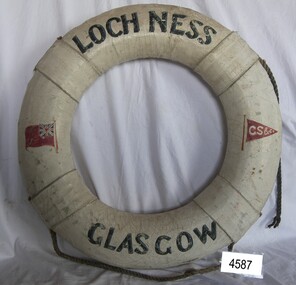
... ship built in 1869 for the Loch Line owned by the Glasgow Shipping Company. The line transported cargo and passengers from Glasgow, Scotland, to Australian ports. The Loch Ness was sold in 1908 to Stevedore & Shipping Co, Sydney for use as a coal hulk. In 1914 the Australian Government took over the ship for naval...ship built in 1869 for the Loch Line owned by the Glasgow Shipping Company. The line transported cargo and passengers from Glasgow, Scotland, to Australian ports. The Loch Ness was sold in 1908 to Stevedore & Shipping Co, Sydney for use as a coal hulk. In 1914 the Australian Government took over the ship for naval ...This lifebuoy bears the name of the ship, its origin, the shipping company and the red ensign. These details mean that the lifebuoy was part of the lifesaving equipment on the sailing ship the Loch Ness, part of the Glasgow Shipping Company’s Loch Line (G.S.C. on the red pennant) and a British-registered ship (the red flag with the Union Jack on it). Lifebuoys were part of the emergency lifesaving equipment carried on vessels in the late 19th and early 20th century. The ring was made of strips of cork wood joined together to make the ring shape then covered in canvas and sealed usually with white paint. Four evenly spaced canvas reinforcing bands would be added for strength and for a place to thread a rope or line. A lifebuoy, or life-preserver, is used as a buoyancy device often thrown to an endangered or distressed person in the water to keep them afloat while they receive help. It is usually connected by a rope to a person in a safe area such a nearby vessel or on shore. Lifebuoys is a made from a buoyant materials such as cork or foam and ae usually covered with canvas for protection and to make it easy to grip. The first use of life saving devices in recent centuries was by the Nordic people, who used light weight wood or cork blocks to keep afloat. Cork lifebuoys were used from the late 19th to early 20th century. Kapok fibre was then used as a filling for buoys but wasn’t entirely successful. Light weight balsa wood was used as a filler after WW1. In 1928 Peter Markus invented and patented the first inflatable life-preserver. By WW2 foam was combined with Kapok. Laws were passed over time that has required aeroplanes and water going-vessels to carry life-preservers on board. The ship LOCH NESS 1869-1922 … The ship Loch Ness, of Glasgow, was the same ship what William Carmichael sailed on to Australia when he laid the commemoration stone on behalf of his sister Eva and himself, dedicated to their parents, brothers and sisters. The family members lost their lives on June 1, 1878, when their ship, the Loch Ard, was wrecked at Mutton Bird Island in south west Victoria. Eva Carmichael was one of the two survivors from that shipwreck, the other 52 tragically lost their lives. The ship Loch Ness was a three-masted sailing ship built in 1869 for the Loch Line owned by the Glasgow Shipping Company. The line transported cargo and passengers from Glasgow, Scotland, to Australian ports. The Loch Ness was sold in 1908 to Stevedore & Shipping Co, Sydney for use as a coal hulk. In 1914 the Australian Government took over the ship for naval defence purposeless. In 1926 the ship was sunk during gunfire practice by the 1922 built, light cruiser HMAS Melbourne, near Fremantle, Western Australia. The lifebuoy is an example of equipment carried on vessels in the late 19th and early 20th century to help preserve life. There were many lives lost in Australia’s colonial period, particularly along the coast of South West Victoria. The lifebuoy is significant for its connection to the ship Loch Ness on which William Carmichael, brother of Eva Carmichael, travelled to lay a memorial to their parents and all of their other siblings who lost their lives in the Loch Ard disaster of 1878 near Peterborough, Victoria. Lifebuoy, round, cork filling inside canvas cover, painted white, with rope attached. Lifebuoy has printed name of vessel Loch Ness, Glasgow. Symbols of red flag with white initials G S Co. There is also a red ensign."LOCH NESS", "GLASGOW" "G S Co"flagstaff hill, warrnambool, shipwrecked-coast, flagstaff-hill, flagstaff-hill-maritime-museum, maritime-museum, shipwreck-coast, flagstaff-hill-maritime-village, loch ness, loch ard, william carmichael, eva carmichael, lifebuoy, glasgow sailing ship, loch ness of glasgow, life rings, safety ring, life-saving buoy, ring buoy, life preserver, personal floating device, floatation device, safety equipment, g s c, glasgow shipping company, hmas melbourne, cruiser melbourne -
 Flagstaff Hill Maritime Museum and Village
Plant specimen - Wood Sample, Herbst, 1759-1765
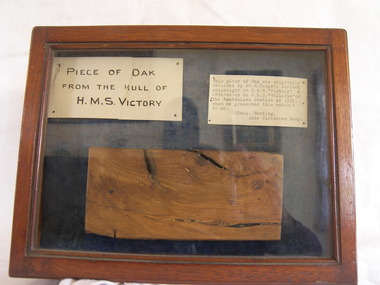
... ship, due to the vessel's significant naval history. It was during that early restoration period that Cooper obtained the piece of Oak from HMS Victory, believed to be from the ship's hull. Cooper was in Australia...ship, due to the vessel's significant naval history. It was during that early restoration period that Cooper obtained the piece of Oak from HMS Victory, believed to be from the ship's hull. Cooper was in Australia ...The piece of oak wood sample inside the case was obtained from Mr H. Cooper during the time he served as a shipwright for the British Royal Navy on Nelson’s flagship, HMS Victory, in 1891. By that time, the H.M.S. Victory was around 100 years old, having been built in 1765 and was currently in dry dock undergoing restoration. Cooper’s skills as a shipwright would have been well employed during this period. HMS Victory was, and still is, undergoing continuous restoration to preserve her for display as a museum ship, due to the vessel's significant naval history. It was during that early restoration period that Cooper obtained the piece of Oak from HMS Victory, believed to be from the ship's hull. Cooper was in Australia in September 1891 serving on the HMS Wallaroo, a British Auxiliary Squadron commissioned as part of the British Royal Navy contingent, to serve and operate in Australian waters. The photograph included with the donation of the wood sample is a portrait of Mr H Cooper taken in 1895 in Sydney. The inscription on the photograph describes him as a skilled shipwright from H.M.S. Wallaroo, depicting Cooper as a young man in Royal Navy uniform, with the emblem of a petty officer third class. While Cooper was stationed on the H.M.S. Wallaroo in Sydney, he presented the display case, containing the wood sample from H.M.S. Victory, as well as the exhibit labels, to Charles Harding ("Chas"), late of the Royal Australian Navy. Harding had been based at the H M Naval Torpedo Depot at Williamstown, Victoria. Although not mentioned, it is believed the two men met whilst serving together in Australia in their respective assignments. It could have been a retirement gift from Cooper to Harding, with the photograph of Cooper likely included with the case, and gifted to Harding in 1895, as the date on the photograph indicates. One of the exhibit's labels indicates that Harding had the item on display whilst serving at the Naval Torpedo Depot in Williamstown. The label indicates: "This piece of Oak is part of the hull of H.M.S. 'Victory', Lord Nelson’s renowned flagship, which took such a prominent part in the Battle of Trafalgar. 21st October 1805. Exhibited by Charles Harding, H.M.V. Naval Torpedo Depot, Williamstown.” After Charles Harding died in 1931, the case containing the sample of oak from H.M.S. Victory was donated by his son, Reg Harding, to Mr Murphy in 1962. The display case has since become a treasured item at Flagstaff Hill. A newspaper article dated 1905 included with the donation mentions that the city of Hamilton in Victoria was shortly expecting a mounted piece of the H.M.S. Victory to be included in the city’s commemoration of the centenary of the "Battle of Trafalgar". Battle of Trafalgar: On October 21, 1805, twenty-seven British ships of the line led by Admiral Lord Nelson aboard HMS Victory defeated thirty-three French and Spanish ships of the line under French Admiral Villeneuve. The battle took place in the Atlantic Ocean off the southwest coast of Spain, just west of Cape Trafalgar, near the town of Los Caños de Meca. The victory confirmed the naval supremacy Britain had established during the course of the eighteenth century, and it was achieved in part through Nelson's departure from the prevailing naval tactical orthodoxy of the day. Conventional practice at the time was for opposing fleets to engage each other in single parallel lines, to facilitate signalling and disengagement, and to maximise fields of fire and target areas. Nelson instead arranged his ships into two columns to sail perpendicularly into the enemy fleet's line. During the battle, Nelson was shot by a French musketeer, and he died shortly before the battle ended. Villeneuve was captured, along with his ship Bucentaure. He later attended Nelson's funeral while a captive on parole in Britain. Admiral Federico Gravina, the senior Spanish flag officer, escaped with the remnant of the fleet. He died five months later from wounds sustained during the battle. It was before this battle that Nelson had issued his now-famous final orders to his ships in 12 separate flag-hoists: “England expects that every man will do his duty”. This wood sample is historically significant for its association with Admiral Lord Nelson and the Battle of Trafalgar. Through Nelson’s leadership and unorthodox battle tactics, he secured not only a victory against the French and Spanish but also reaffirmed Britain's naval supremacy, opening the way for Britain to continue the policy of colonisation of many countries, including Australia.Wood sample adhered to the base of a hinged wood and glass display case. Wood is a sample of oak taken from the hull of Vice-Admiral Lord Nelson's flagship, the HMS Victory, built in 1765. The case also contain two exhibit labels pinned above the wood sample. Other items donated with the display case, and relating to the wood sample: an 1895 photograph, a 1905 newspaper clipping, a 1962 donor's letter (two pages), and a handwritten exhibit label with a border of red lines. Photograph Front: printed- "Herbst" "28 Oxford Street, Hyde Park, Sydney", handwritten - "Mr Cooper", "see back". Back: handwritten - "Mr H Cooper, skilled shipwright, H.M.S. Wallaroo 1895" Exhibit labels still in the case: Left: handwritten- “PIECE OF OAK FROM THE HULL OF H.M.S. VICTORY”, Right: typewritten- “This piece of Oak was originally obtained by Mr. H. Cooper, skilled shipwright on H.M.S. “Victory” & afterwards on H.M.S. “Wallaroo” on the Australian Station in 1895, when he presented this exhibit to me. Chas. Harding, Late Victorian Navy.”flagstaff hill, warrnambool, shipwrecked-coast, flagstaff-hill, flagstaff-hill-maritime-museum, maritime-museum, shipwreck-coast, flagstaff-hill-maritime-village, oak, hms victory, vice-admiral lord nelson, horatio nelson, lord nelson, oak piece, piece of oaknelson, battle of trafalgar, maritime technology, ship relics, 18th century warship, british royal navy, h cooper shipwright, hms wallaroo, herbst hyde park sydney, charles harding, hmv naval orpedo depot williamstown, sir home popham’s telegraphic code, admiralty official day signal book -
 Flagstaff Hill Maritime Museum and Village
Uniform - Sailor's Collar, Early to mid-20th century
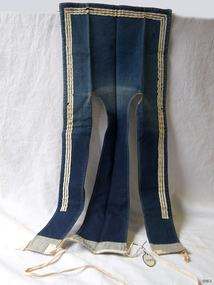
... naval uniform. It once belonged to R S Wallace, who served in the RAN (Royal Australian Navy) and on the HMAS Warrnambool for three years. After the war he made several ship...naval uniform. It once belonged to R S Wallace, who served in the RAN (Royal Australian Navy) and on the HMAS Warrnambool for three years. After the war he made several ship ...This sailor's collar is part of a naval uniform. It once belonged to R S Wallace, who served in the RAN (Royal Australian Navy) and on the HMAS Warrnambool for three years. After the war he made several ship models including the sailing ship Cutty Sark. From January 1857 the Australian Navy uniform was formally established. The uniform, referred to as a 'sailor's suit', includes a blue flap collar such as this one. Sailors in the Royal Australian Navy wore collars of this design from the early 20th century. The rating personnel of the Royal Canadian Navy were issued with a very similar collar from 1910 to the 1950s. The blue denim collars were buttoned or died inside their tops with the back and the striped portion of the front flaps showing.The square sailor's collar represents the uniform of a rating sailor in the Royal Australian Navy in the early to mid-20th century, connecting it to the maritime history of Australia and the evolution of the uniform of the navy. The collar is the only one in this museum's collection and is connected to a sailor who service in the RAN on the HMAS Warrnambool for three years.Sailor's collar. A square collar of blue cotton fabric with three flaps or strips. Three white stripes make a border on the outside edges and two flaps; the centre flap that has no stripes. There is an inscription. The underside is lined with white cotton fabric that has thin blue stripes. Tapes are attached for fastening the collar. The Royal Australian Navy collar once belonged to R S Wallace."R.S. Wallace"flagstaff hill, flagstaff hill maritime museum and village, warrnambool, maritime museum, maritime village, great ocean road, shipwreck coast, sailor’s collar, sailor’s uniform, uniform, military, navy, ran, royal australian navy, r s wallace, seamen's collar, australian defence forces, naval force, sailor's rig, flap collar, naval collar, robert s wallace, collar, sailor's uniform, world war, hmas warrnambool, sailor's suit -
 Mission to Seafarers Victoria
Journal (item) - Periodicals-Annual, Shiplovers' Society of Victoria, The Annual Dog Watch
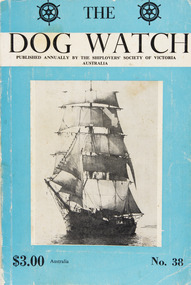
... Ship Mystery - J. M. Mackenzie - 68 Things Drake Never Did - E. Harper - 74 "Desdemona" - Captain D. Cowling - 76 A Naval Ploy - Revd. G. H. P. Karney - 90 Echoes of the Travelling Past - S. A. E. Strom - 91 Sail Training For Australia...Ship Mystery - J. M. Mackenzie - 68 Things Drake Never Did - E. Harper - 74 "Desdemona" - Captain D. Cowling - 76 A Naval Ploy - Revd. G. H. P. Karney - 90 Echoes of the Travelling Past - S. A. E. Strom - 91 Sail Training For Australia ...This journal provides the reader with glimpses of the adventures and hardships of a seaman's life. Many of the stories are of sailing ships.Contributes to our knowledge of the importance of shipping and places on record those stories of the sea which would otherwise be lost.Contents Foreword - D. Baillieu - 5 Editorial - S. A. E. Strom - 7 Figureheads - Captain G. Heyen - 13 The Polly Woodside - C. E. Bonwick - 15 The Sinking of A.U.S.N. Steamer "Macumba" - Captain J. D. V. Young - 16 The Real Hero of Quebec The Last Voyage of "Unicorn" Under the American Flag - D. Hannaford - 23 My Mother and Eva Carmichael - A. A. McArthur-Campbell - 30 The "Lauristan" -- Taltal to the Horn - R. W. Rudd - 34 A Sea-Water Mystery - Captain Leif Asklund - 38 Walking Backwards - T. Devaney - 40 Encounter With a Rum-Runner - Captain G. Chapman - 46 The Bosun - R. N. Thiele - 50 Crossing the Equator in a Ship's Boat - Captain Yuri Shemansky - 56 "Going Down the Bay" K. Bull - 59 Voyage in the Clipper "Yorkshire" in 1968 - R. Duruz - 62 A Dream Come True - W. P. Shemmeld - 64 The Mahogany Ship Mystery - J. M. Mackenzie - 68 Things Drake Never Did - E. Harper - 74 "Desdemona" - Captain D. Cowling - 76 A Naval Ploy - Revd. G. H. P. Karney - 90 Echoes of the Travelling Past - S. A. E. Strom - 91 Sail Training For Australia -- Now A Reality - R. Carter - 94 Northern Adventure -- The "Japan" - Captain H. O'May - 98 The Sea - Sire Robert Garran - 100 Voyage of the "Tillicum" - Captain H. W. Watson - 101 Sheepwash - Captain W. Eglen - 103 The Wreck of the "City of York" - E. M. Christie - 104 Wreck of the Barque "Eleanor Lancaster" - C. Dickson Gregory - 109 The Legend of Campbell Island - Captain H. O'May - 110 Book Reviews - 112sailing ships, steamships, shipping, seafaring life, shiplovers' society of victoria, dog watch -
 Mission to Seafarers Victoria
Photograph, Cameracraft, Chindwara 1951 Melbourne, 1951
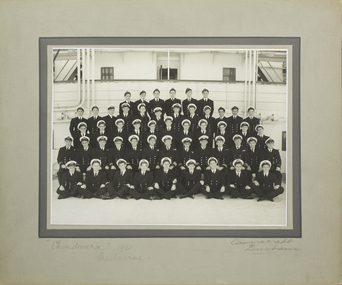
... ship. It sailed several times to Australia. The cadets visited the Mission in 1956; one officer send a letter published in the Annual Report for 1956. chindwara officers 1951 cadets training ship brisbane cameracraft Medium size mounted black and white photograph of a group of naval cadets and officers. ...The Chindwara was a British training ship. It sailed several times to Australia. The cadets visited the Mission in 1956; one officer send a letter published in the Annual Report for 1956.Medium size mounted black and white photograph of a group of naval cadets and officers.chindwara, officers, 1951, cadets, training ship, brisbane, cameracraft -
 Mission to Seafarers Victoria
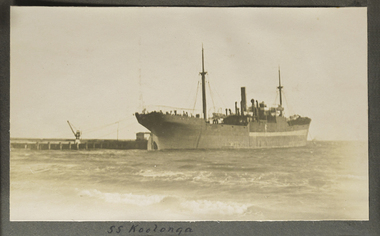
Photograph - Photograph, Sepia, SS Koolonga
... HMAS Koolonga was a cargo ship built by Sunderland Shipbuilding Company, England, in 1914 and bought by McIlwraith, McEacharn Line Pty Ltd, Melbourne and named SS Koolonga. She was requisitioned by the Royal Australian Navy on 6 August 1914, as a collier and supply ship and commissioned as HMAS Koolonga. She participated during the Australian Naval...HMAS Koolonga was a cargo ship built by Sunderland Shipbuilding Company, England, in 1914 and bought by McIlwraith, McEacharn Line Pty Ltd, Melbourne and named SS Koolonga. She was requisitioned by the Royal Australian Navy on 6 August 1914, as a collier and supply ship and commissioned as HMAS Koolonga. She participated during the Australian Naval ...HMAS Koolonga was a cargo ship built by Sunderland Shipbuilding Company, England, in 1914 and bought by McIlwraith, McEacharn Line Pty Ltd, Melbourne and named SS Koolonga. She was requisitioned by the Royal Australian Navy on 6 August 1914, as a collier and supply ship and commissioned as HMAS Koolonga. She participated during the Australian Naval and Military Expeditionary Force occupation of German New Guinea until May 1915 when she was later returned to her owners. After being returned, she was employed on cargo trades from Whyalla, South Australia to Newcastle, New South Wales. She was sold in October 1917 through Scott Fell & Company, Newcastle to BHP Shipping and renamed Iron Monarch, before being sold again in 1920 to Interstate Steamships Ltd. This ship linked to record VC 0747. The ship played a role in WW1 small black and white photograph of steamship.steam ships, world war 1, hmas koolonga, fan album, ss koolonga -
 Mission to Seafarers Victoria
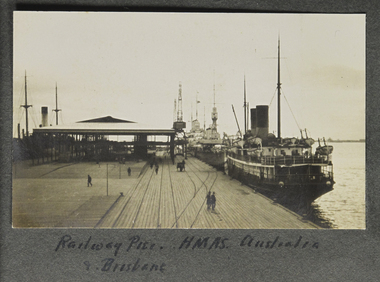
Photograph - Photograph, Sepia, Railway Pier HMAS Australia and Brisbane, Early 20th Century
... Australia has been a significant link and factor in the history of the Mission. Padre Frank Oliver Chaplain from 1930-60 served on the ship in WW2. Cadets and officers also regularly visited the Mission. The pier also played a significant role in the development and life of Melbourne. HMAS Australia HMAS Brisbane Port Melbourne Pier Station Pier fan album handwritten inscription on the page below the photograph. Small landscape b & w photograph depicting view along a pier with railway lines and three ships ( 2 appear to be naval ...The HMAS Australia and Brisbane are documented as visiting Port Melbourne circa WW1 and WW2.HMAS Australia has been a significant link and factor in the history of the Mission. Padre Frank Oliver Chaplain from 1930-60 served on the ship in WW2. Cadets and officers also regularly visited the Mission. The pier also played a significant role in the development and life of Melbourne. Small landscape b & w photograph depicting view along a pier with railway lines and three ships ( 2 appear to be naval vessels) moored on the right hand side of the frame. A horse and cart can be seen on the pier in the middle distance. handwritten inscription on the page below the photograph.hmas australia, hmas brisbane, port melbourne pier, station pier, fan album -
 Royal Melbourne Yacht Squadron
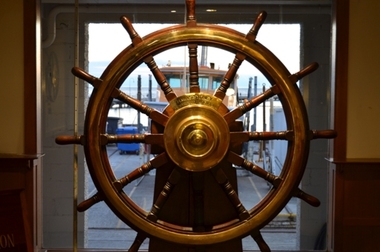
Memorabilia - Wheel of HMAS Sydney, Early 20th Century
... THE WHEEL OF HMAS SYDNEY COMMEMORATING AUSTRALIA’S FIRST NAVAL ENGAGEMENT The historic wheel of HMAS Sydney commemorates the Royal Australian Navy’s first ship- to- ship naval engagement. ...THE WHEEL OF HMAS SYDNEY COMMEMORATING AUSTRALIA’S FIRST NAVAL ENGAGEMENT The historic wheel of HMAS Sydney commemorates the Royal Australian Navy’s first ship- to- ship naval engagement. ...THE WHEEL OF HMAS SYDNEY COMMEMORATING AUSTRALIA’S FIRST NAVAL ENGAGEMENT The historic wheel of HMAS Sydney commemorates the Royal Australian Navy’s first ship- to- ship naval engagement. It was purchased early in 1930 and later presented to the Royal St Kilda Yacht Club (now Royal Melbourne Yacht Squadron) by then Commodore Joe White, following HMAS Sydney being broken up at Cockatoo Dock, Sydney. On 1 November 1914, led by the flagship SS Orvieto, a large convoy of 28 Australian and 10 New Zealand transports escorted by the Light Cruisers HMAS Melbourne, HMAS Sydney, HMS Minotaur and the Japanese ship Ibuki, departed King George Sound, Albany Western Australia with a large contingent of Australian and New Zealand troops bound for Egypt, to become the original Anzac’s. As the convoy steamed northwest across the Indian Ocean, leaving Cocos-Keeling Islands well to the westward, Captain Karl von Muller in the German Light Cruiser Emden of 3,600 tons, after having wrought much havoc to allied shipping in the Indian Ocean, ignorant of the convoys presence, had in mind to destroy the Cocos Island Cable Station on Direction Island. In the early hours of the morning of Monday the 9 November, he anchored “Emden” off Direction Island to send a landing party ashore, In the meantime the Cable Station had sent out a Morse Code message ‘Strange ship approaching’, this was followed soon after by a ‘S.O.S.’ These messages were picked up by ships in the convoy and at 7.00 a.m., Captain J.C. Glossop of the 5,400 ton HMAS Sydney was directed to leave the convoy and proceed at full speed for Cocos Islands. Two hours later Cocos Island was on the horizon. Captain von Muller, with the boarding party ashore to destroy the Cable station, steamed out to intercept the intruder. Captain Glossop decided to close in to 9,500 yards ( 8686.8m) before delivering his first salvo. Emden on the other hand, opened fire at 10,500 yards (9601m), its ten, 4.1 inch (104mm) guns firing 38 pound (17.24 kg ) shells, some of which scored near misses. Emden was hit repeatedly by HMAS Sydney’s eight, 6 inch (152.4mm) guns firing 100 pound (45.36kg ) shells. Within two hours Captain von Muller had decided to run the badly damaged Emden aground on North Keeling Island. Captain Glossop then broke off the engagement to speed off to intercept Emden’s collier, “Buresk”, seen lurking in the distance, soon to overtake her. A boarding party from HMAS Sydney was too late to prevent Buresk from being scuttled but able to rescue her crew. Returning to finish off Emden, HMAS Sydney was again met by heavy gunfire. Sydney scored a number of direct hits to Emden and only after having suffered 134 killed and 65 wounded, did Captain von Muller finally decide to lower his Naval Ensign. He was among those captured and was allowed to retain his Naval sword. In the engagements HMAS Sydney only suffered four direct hits, 4 killed and 12 wounded. J.H.(Bert) Ferris Extremely significant as part of Australia's Naval and Military history.Ships wheel, timber, mounted on a timber plinth, wheel of ship first HMAS Sydney.Plaque notifying that wheel donated by Commodore Joe White 1930ww1, sydney, german, hmas, raider, emden, cocos keeling, islands, hmas sydney, wheel -
 Lara RSL Sub Branch
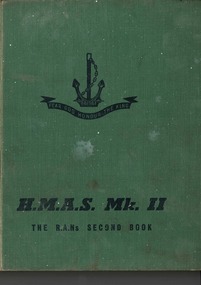
Book, HMAS Mk11 The RANS second book, 1951
... Australian Navy. These threads are coloured by experience and tradition of the centuries of the Naval history. Personal recounts from NAVY service personnel by way of stories, poems, cartoons, illustrations and portraits hmas mk11 naval history HMAS - Printed 1951. Inside front and back hardcover is a green background and illustrations of ships ...HMAS Mk11 endeavours to give something of a picture of this world wide fabric of sea power and the threads therein woven by the Royal Australian Navy. These threads are coloured by experience and tradition of the centuries of the Naval history.Personal recounts from NAVY service personnel by way of stories, poems, cartoons, illustrations and portraitsHMAS - Printed 1951. Inside front and back hardcover is a green background and illustrations of ships and words of places of Navy service. Photographs, illustrations, cartoons, portraits.hmas mk11, naval history -
 Lara RSL Sub Branch
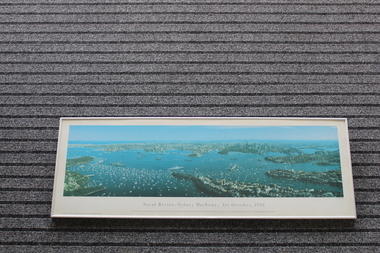
Framed Print of Naval Review,Sydney Harbour, 1st October,1988, Naval Review,Sydney Harbour, 1st October,1988, 12/01/1990
... Australia was celebrated in 1988. It marked 200 years since the arrival of the First Fleet of British convict ships at Sydney in 1788. This aerial photo shows naval...Australia was celebrated in 1988. It marked 200 years since the arrival of the First Fleet of British convict ships at Sydney in 1788. This aerial photo shows naval ...The bicentenary of Australia was celebrated in 1988. It marked 200 years since the arrival of the First Fleet of British convict ships at Sydney in 1788. This aerial photo shows naval and pleasure craft in Sydney Harbour for the bicentennial celebrations.The bicentennial year marked Captain Arthur Phillip's arrival with the 11 ships of the First Fleet in Sydney Harbour in 1788, and the founding of the city of Sydney and the colony of New South Wales. 1988 is considered the official bicentenary year of the founding of Australia. Rectangular shaped glass covered picture frame showing photo of Naval Review, Sydney Harbour, 1st October,1988Naval Review, Sydney Harbour, 1st October,1988 This 140 degree panoramic photograph was taken from a helicopter by Phil Gray. It shows the visiting warships in the harbour including the USS New Jersey, FNS Colbert and HMS Ark Royal in the foreground.This print is the fourth in the Sydney Harbour Panorama series by Phil Gray who uses Kodak film.Printed in Australia.prints, naval photos, hms ships, sydney harbour, lara r.s.l. -
 Lara RSL Sub Branch
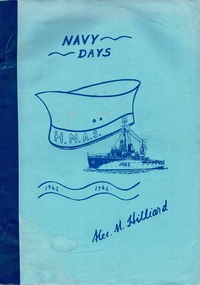
Navy Days Booklet
... Australian navy during World War ll, and written primarily for my family, to whom, along with my ship mates, it is dedicated. These memoirs have three major sources. First: My home letters, which my mother kept. These provide the skeleton for the contents, hopefully preserving the personal and informal aspects of my story. Second: Covering my sea-time, the " Monthly Reports of Proceedings " from H.M.A.S. " Junee " to the Naval ...Navy Days makes no claim to be a great story. It is simply my story (Alec. M .Hilliard) recording nearly four years in the Australian navy during World War ll, and written primarily for my family, to whom, along with my ship mates, it is dedicated.These memoirs have three major sources. First: My home letters, which my mother kept. These provide the skeleton for the contents, hopefully preserving the personal and informal aspects of my story. Second: Covering my sea-time, the " Monthly Reports of Proceedings " from H.M.A.S. " Junee " to the Naval Board, as subsequently released. These contain the details of " where " , " when " and "" why", naturally absent from my correspondence for security reasons. Third: My memory, such as it is nearly sixty years after the events, offering other inclusions, I would wish to share.Rectangular shaped booklet, light blue in colour with a navy blue spine.NAVY DAYS Alec. M. Hilliardbooklet, ww2, navy days 1942-1946,alec.m.hilliard. -
 Lara RSL Sub Branch
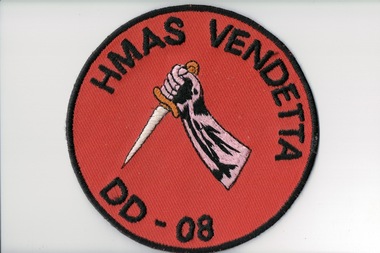
Cloth Badge, HMAS Vendetta
... Australian Navy (RAN). The destroyer was built by Williamstown Naval Dockyard and entered service in 1958. During her early career, Vendetta was deployed to the Far East Strategic Reserve on multiple occasions. In 1965 and 1966, the destroyer undertook deterrence patrols during the Indonesia-Malaysia Confrontation. Along with several runs escorting the troop transport HMAS Sydney to Vietnam, from late 1969 to early 1970 Vendetta was assigned to combat operations, and became the only Australian-built warship to serve in a shore bombardment role during the Vietnam War. The ship...Australian Navy (RAN). The destroyer was built by Williamstown Naval Dockyard and entered service in 1958. During her early career, Vendetta was deployed to the Far East Strategic Reserve on multiple occasions. In 1965 and 1966, the destroyer undertook deterrence patrols during the Indonesia-Malaysia Confrontation. Along with several runs escorting the troop transport HMAS Sydney to Vietnam, from late 1969 to early 1970 Vendetta was assigned to combat operations, and became the only Australian-built warship to serve in a shore bombardment role during the Vietnam War. The ship ...Cloth badge for HMAS Vendetta DD-08. HMAS Vendetta was one of three Daring class destroyers built for and operated by the Royal Australian Navy (RAN). The destroyer was built by Williamstown Naval Dockyard and entered service in 1958. During her early career, Vendetta was deployed to the Far East Strategic Reserve on multiple occasions. In 1965 and 1966, the destroyer undertook deterrence patrols during the Indonesia-Malaysia Confrontation. Along with several runs escorting the troop transport HMAS Sydney to Vietnam, from late 1969 to early 1970 Vendetta was assigned to combat operations, and became the only Australian-built warship to serve in a shore bombardment role during the Vietnam War. The ship underwent a two-year modernisation from 1971 to 1973, and in December 1974 was one of thirteen RAN warships involved in Operation Navy Help Darwin after Cyclone Tracy devastated Darwin. Several more deployments were made to the Far East, up until 1978. In October 1979, the destroyer was decommissioned, and served as a parts hulk for sister ship HMAS Vampire. Vendetta was sold for ship breaking in January 1987.Cloth Badge for HMAS Vendetta DD-08Circular cloth badgeHMAS Vendetta DD-08 with hand holding dagger in centre of badgehmas vendetta, royal australian navy, ran, cloth badge, hand holding dagger, dd-08 -
 Lara RSL Sub Branch
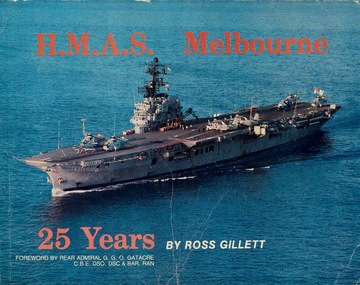
Book, Nautical Press, HMAS Melbourne 25 Years
... Australian Navy (RAN). Operating from 1955 until 1982, she was the third and final conventional aircraft carrier to serve in the RAN. Melbourne was the only British Commonwealth naval vessel to sink two friendly warships in peacetime collisions. The ship...Australian Navy (RAN). Operating from 1955 until 1982, she was the third and final conventional aircraft carrier to serve in the RAN. Melbourne was the only British Commonwealth naval vessel to sink two friendly warships in peacetime collisions. The ship ...HMAS Melbourne (R21) was a Majestic-class light aircraft carrier of the Royal Australian Navy (RAN). Operating from 1955 until 1982, she was the third and final conventional aircraft carrier to serve in the RAN. Melbourne was the only British Commonwealth naval vessel to sink two friendly warships in peacetime collisions. The ship was laid down for the British Royal Navy as the lead ship of the Majestic class in April 1943, and was launched as HMS Majestic (R77) in February 1945. At the end of World War II, work on the ship was suspended until she was purchased by the RAN in 1947. At the time of purchase, it was decided to incorporate new aircraft carrier technologies into the design, making Melbourne the third ship to be constructed with an angled flight deck. Delays in construction and integrating the enhancements meant that the carrier was not commissioned until 1955. Melbourne never fired a shot in anger during her career, having only peripheral, non-combat roles in relation to the Indonesia-Malaysia confrontation and the Vietnam War. However, she was involved in two major collisions with allied vessels. On the evening of 10 February 1964, Melbourne collided with and sank HMAS Voyager when the Daring class destroyer altered course across her bow. Eighty-two of Voyager's crew were killed, and two Royal Commissions were held to investigate the incident. The second collision occurred in the early morning of 3 June 1969, when Melbourne collided with and sank the Allen M. Sumner class destroyer USS Frank E. Evans in similar circumstances. Seventy-four United States Navy (USN) personnel died, and a joint USN–RAN Board of Inquiry was held. These incidents, along with several minor collisions, shipboard accidents, and aircraft losses, led to the reputation that Melbourne was jinxed. Melbourne was paid off from RAN service in 1982. A proposal to convert her for use as a floating casino failed, and a 1984 sale was cancelled, before she was sold in 1985 and towed to China for breaking. The scrapping was delayed so Melbourne could be studied by the People's Liberation Army Navy (PLAN) as part of a secret project to develop a Chinese aircraft carrier and used to train PLAN aviators in carrier flight operations. HMAS Melbourne was decommissioned on 30 June 1982, having spent 62,036 hours underway and having steamed 868,893 nautical miles. A proposal to convert her for use as a floating casino failed, and a 1984 sale was cancelled, before she was sold for scrap in 1985 and towed to China for breaking. The scrapping was delayed so Melbourne could be studied by the People's Liberation Army Navy (PLAN) as part of a secret project to develop a Chinese aircraft carrier and used to train PLAN aviators in carrier flight operations.The pictorial history of HMAS Melbourne with rare photos. Now a scarce title and highly desirable title that is now long out of print. Has provenance history of all ships movements from 1955 till decommissioned.HMAS Melbourne 25 YearsOn the front page is a picture of HMAS Melbourne with the words at top "H.M.A.S. Melbourne. At bottom are the words in orange, '25 Years'. In white, are the words 'by Ross Gillett' then 'Forward by Rear Admiral G.G.O. Gatacre C.B.E. DSO. DSC & Bar, RAN'. On the rear page is a list of all the Captains that served on the HMAS Melbourne between 1955-1980.hmas melbourne, aircraft carrier, royal australian navy, australian navy, westland whirlwind, sea venom, fairy gannet, bristol sycamore, westland wessex, douglas skyhawk, grumman tracker, westland sea king, fleet air arm, hmas albatross, nowra -
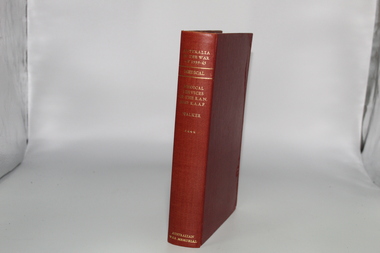 Lara RSL Sub Branch
Book, Australia in the War of 1939-1945 MEDICAL SERVICES of the RAN and RAAF Author Allan.S. Walker MD. Ch.M F.R.A.C.P, First published in 1961
... Women in the Medical Services ran raaf medical building the naval medical service medical stores and eqipment living conditions in ships prisoners of war burns infectious diseases diseases of the skin affections of the ear, nose and throat dental branch medical units in base areas and in the field milne bay to noemfoor morotai to philippines and borneo aviation medical medical aspects of survival raaf nursing service physiotherapists occupational therapists the australian army medical women's service Australian War Memorial Australia in the War of 1939-1945 - Medical Services of the RAN and RAAF Australia in the War of 1939-1945 MEDICAL SERVICES of the RAN and RAAF Author Allan.S. ...Part One - Medical services of the RAN Part 2 - Medical Services of the RAAF. Part 3 - Women in the Army Medical Services.Women in the Medical ServicesAustralia in the War of 1939-1945 - Medical Services of the RAN and RAAFAustralian War Memorialran raaf medical, building the naval medical service, medical stores and eqipment, living conditions in ships, prisoners of war, burns, infectious diseases, diseases of the skin, affections of the ear, nose and throat, dental branch, medical units in base areas and in the field, milne bay to noemfoor, morotai to philippines and borneo, aviation medical, medical aspects of survival, raaf nursing service, physiotherapists, occupational therapists, the australian army medical women's service -
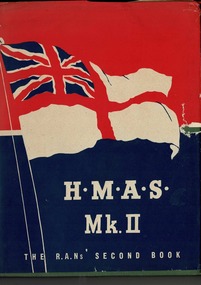 Lara RSL Sub Branch
Book, HMAS Mk11 The RANS second book, 1943
... Australian Navy. These threads are coloured by experience and tradition of the centuries of the Naval history. Personal recounts from NAVY service personnel by way of stories, poems, cartoons, illustrations and portraits hmas mk11 naval history HMAS - Printed 1943 has a paper dust jacket with the white ensign. Inside front and back hardcover is a green background and illustrations of ships ...HMAS Mk11 endeavours to give something of a picture of this world wide fabric of sea power and the threads therein woven by the Royal Australian Navy. These threads are coloured by experience and tradition of the centuries of the Naval history.Personal recounts from NAVY service personnel by way of stories, poems, cartoons, illustrations and portraitsHMAS - Printed 1943 has a paper dust jacket with the white ensign. Inside front and back hardcover is a green background and illustrations of ships and words of places of Navy service. Photographs, illustrations, cartoons, portraits.hmas mk11, naval history -
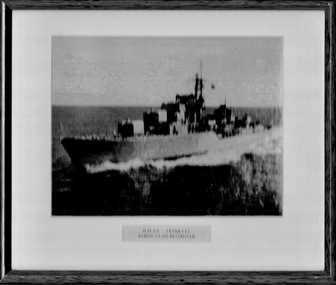 Lara RSL Sub Branch
Framed Photo of H.M.A.S. VENDETTA Daring Class Destroyer
... Australian Navy. The destroyer was built by Williamstown Naval Dockyard and entered service in 1958. During her early career, Vendetta was deployed to the Far East Strategic Reserve on multiple occasions. In 1965 and 1966, the destroyer undertook deterrence patrols during the Indonesia-Malaysia Confrontation. Along with several runs escorting the troop transport HMAS Sydney to South Vietnam, from late 1969 to early 1970 Vendetta was assigned to combat operations and became the only Australian-built warship to serve in a shore bombardment role during the Vietnam War. he ship underwent a two-year modernisation from 1971 to 1973, and in December 1974 was one of thirteen RAN warships involved in Operation Navy Help Darwin after Cyclone Tracy devastated Darwin. ...HMAS Vendetta was one of three Daring-class destroyers built for and operated by the Royal Australian Navy. The destroyer was built by Williamstown Naval Dockyard and entered service in 1958. During her early career, Vendetta was deployed to the Far East Strategic Reserve on multiple occasions. In 1965 and 1966, the destroyer undertook deterrence patrols during the Indonesia-Malaysia Confrontation. Along with several runs escorting the troop transport HMAS Sydney to South Vietnam, from late 1969 to early 1970 Vendetta was assigned to combat operations and became the only Australian-built warship to serve in a shore bombardment role during the Vietnam War. he ship underwent a two-year modernisation from 1971 to 1973, and in December 1974 was one of thirteen RAN warships involved in Operation Navy Help Darwin after Cyclone Tracy devastated Darwin. Several more deployments were made to the Far East, up until 1978. In October 1979, the destroyer was decommissioned, and served as a parts hulk for sister ship HMAS Vampire. Vendetta was sold for ship breaking in January 1987. 1002 Rectangular Shaped Glass Covered Photo Frame, 1002.1 H.M.A.S, VENDETTA FIRST COMMISSION MAP. H.M.A.S. VENDETTA Daring Class Destroyer. -
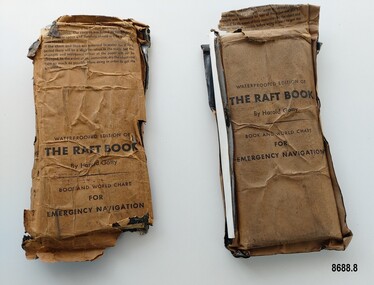 Flagstaff Hill Maritime Museum and Village
Booklet - Book and World Chart for Emergency Navigation, George Grady Press, The Raft Book, 1943
... He began his career learning navigation at the age of 14 as a midshipman at the Royal Australian Naval College but withdrew after three years and became an apprenticed ship's officer with the Patrick Steamship Company of Sydney. ...He began his career learning navigation at the age of 14 as a midshipman at the Royal Australian Naval College but withdrew after three years and became an apprenticed ship's officer with the Patrick Steamship Company of Sydney. ...Harold Gatty was born on January 5th, 1903 in Campbell Town, Tasmania. He was a navigator and aviation pioneer. He began his career learning navigation at the age of 14 as a midshipman at the Royal Australian Naval College but withdrew after three years and became an apprenticed ship's officer with the Patrick Steamship Company of Sydney. After W. W. 1 he joined the Australian Merchant Navy where he learned the constellations while standing night watch and became an expert in celestial navigation while serving on many ships sailing between Australia and California. In 1927 he moved to California and opened a navigation school and also a laboratory repairing navigational equipment. At this time he became very interested in air navigation and was aware of the limitations of existing methods and instruments for aerial navigation. He began researching ways of improving aerial navigation. Two early inventions of his were his air sextant and a ground speed and drift indicator which formed the basis of the automatic pilot which later came to be standard equipment on most aircraft. He worked with several record breaking pilots including Ann Morrow Lindbergh (who went on to serve as a navigator for her husband Charles Lindbergh), helped Wiley Post break the world record circumnavigating the Earth, invented a new method of "dead reckoning" that revolutionised the ability to fly safely through cloudy conditions without drifting off course and famously navigated a small plane (whilst trying to cross the Pacific) over 1900 km through fog (with no radio) and using only his dead reckoning techniques, back to their starting point in Japan after they developed fuel problems. In 1932 Gatty received the Distinguished Flying Cross from President Hoover. In 1934 Gatty formed the South Seas Commercial Company with Donald Douglas with the aim to deliver air services to the islands of the South Pacific. The Company was sold to Pan Am but he continued to work for them. In 1935 he went on a sailing expedition investigating several small islands in the South Pacific and was briefly marooned on Baker Island. He was able to use his extensive knowledge of seabird habits to save the crew. He was also very interested in the ability of the Polynesians to navigate using the stars. During the Second World War Gatty was given the honorary rank of Group Captain in the Royal Australian Air Force (RAAF) and worked for the U. S. Army Air Forces (USAAF) in the South Pacific. In 1943 he moved to Washington where he developed a survival book (The Raft Book) specifically for boat crews or air crews flying over the Pacific to help them survive and navigate their life rafts in remote areas of the ocean. The original book was 152 pages long however a condensed version was made which consisted of a 64 page booklet, combined map and star chart and calendar strip enclosed in a waterproof slipcase, to be placed in life rafts for emergency use. The booklet included navigational advice and ideas such as ocean currents, estimation of distance, using a compass, measurement of angles, recognising and steering by the stars, land indications from sea birds, migration of sea birds and insects, sounds from the land, the scent of the land and ocean currents and the colour of the sea etc. After W.W.2 Gatty moved to Fiji and formed Fiji Airways (which later became Air Pacific). Harold Gatty died in August 1957.The two copies of "The Raft Book" are significant as they are a written summary of the many methods of sea navigation (both modern and historical) that existed in the 1940's. They are also a record of Harold Gatty, who played a significant role in the development of modern day aerial navigation using his understanding of different sea navigational techniques.Two rectangular brown packets with waterproof coverings (oiled paper) titled "The Raft Book" by Harold Gatty. Each packet contains a folded 64 page paper booklet with detailed instructions for navigating a small craft in open seas, a folded chart (with a map of the world and oceans, well known constellations, latitude and longitude charts, Greenwich time and a scale for string lengths and Harp scale) and a long folded paper calendar strip.Front of package - "WATERPROOFED EDITION OF/ THE RAFT BOOK / By Harold Gatty / BOOK AND WORLD CHART / FOR / EMERGENCY NAVIGATION / To open envelope tear along above line. If the envelope is used again fold the flap to keep contents dry. 1. This envelope contains a book, chart and tape for emergency navigation. The contents are folded to take up the least possible space and therefore should not be removed until needed. 2. if the chart and tape are immersed in water for a long period, there will be a slight variation in the scale but the strength and resistence to tear of the paper will not be changed. In the event of long immersion, dry the chart and tape as much as possible before using in order to in order to get the greatest accuracy in scale. Front of booklet - THE RAFT BOOK / LORE OF THE SEA AND SKY /By Harold Gatty IMPORTANT FOR YOUR SECURITY/Upon abandoning ship you may have to be your own navigator. Take the following pre/cautions for your own safety:/ Carry a good type of pocket watch / keep it wound and have it running on Greenwich (England) / Time, which you can get from the navigating officer. / Keep track of the date at Greenwich; and on a 24-hour basis, / know whether the time is, say, 6 hours (6 A.M.) showing on / your watch, or 18 hours (6P.M.) Greenwich. / PROECT YOUR WATCH. GET A RUBBER SACK FOR IT (OBTAIN FROM PHARMACIST) AND KEEP IT DRY / KEEP A PENCIL IN YOUR POCKET/ POSITION OF SHIP WHEN ABANDONED PRINTED IN UNITED STATES OF AMERICA GEORGE GRADY PRESS, NEW YORK/COPYRIGHT, 1943, BY HAROLD AND FENNA GATTYflagstaff hill maritime museum and village, shipwreck coast, warrnambool, the raft book, harold gatty, book and world chart for emergency navigation, ww 2, ww ii, navigation, air navigation, aerial navigation, lindbergh, wiley post, dead reckoning, south seas commercial company, u.s. army airforce, usaaf, survival book, life rafts, sea navigation, emergency navigation, fiji airways, harp scale -
 Flagstaff Hill Maritime Museum and Village
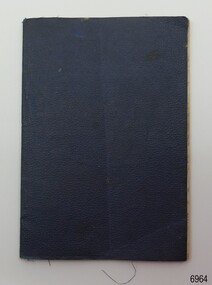
Book - Trade Union Rules, Shipwrights' Provident Union of the Port of London, Rules of the Shipwrights' Provident Union of the Port of London, 28-09-1895
... Ship constructors...Naval Architects...Ships’ Draughtsmen and Boat Builders’ Association of Australia...Ship Constructors’ and Shipwrights’ Association, Belfast (B) Branch 20. His Registration Number was 38748. He completed his apprenticeship on December 16th, 1946, aged 21 years, his address was 26 Connsbrook Drive, Sydenham, N. Belfast. In October 1949 Norman received Clearance from his Union as a financial member to move to another branch. He completed his Apprenticeship on December 16th 1946. Two months later he migrated to Australia, and he arrived in Victoria, and he became a Financial Member of the Victorian branch of the Federated Shipwrights, Ship constructors, Naval...Ship Constructors’ and Shipwrights’ Association, Belfast (B) Branch 20. His Registration Number was 38748. He completed his apprenticeship on December 16th, 1946, aged 21 years, his address was 26 Connsbrook Drive, Sydenham, N. Belfast. In October 1949 Norman received Clearance from his Union as a financial member to move to another branch. He completed his Apprenticeship on December 16th 1946. Two months later he migrated to Australia, and he arrived in Victoria, and he became a Financial Member of the Victorian branch of the Federated Shipwrights, Ship constructors, Naval ...A number of items once belonging to shipwright Norman McKenzie were donated to Flagstaff Hill Maritime Museum and Village. They are related to Norman’s apprenticeship and certification as a Shipwright in Belfast, his Union membership and his employment as a shipwright in Melbourne. One of the items, a union Rules Book inscribed with the name H.B. Thomas and dated 1902, had within its pages Norman’s Indenture of Apprenticeship, dated 1941, Norman Desmond McKenzie was born in Belfast in 1925 and lived at 10 Pansy Street Belfast, Northern Ireland. At the age of 16 years, he began a 5-year Shipwright’s apprenticeship with Harland & Wolff Limited, Shipbuilding & Engineering Works, Belfast. He became a member of the Ship Constructors’ and Shipwrights’ Association, Belfast (B) Branch 20. His Registration Number was 38748. He completed his apprenticeship on December 16th, 1946, aged 21 years, his address was 26 Connsbrook Drive, Sydenham, N. Belfast. In October 1949 Norman received Clearance from his Union as a financial member to move to another branch. He completed his Apprenticeship on December 16th 1946. Two months later he migrated to Australia, and he arrived in Victoria, and he became a Financial Member of the Victorian branch of the Federated Shipwrights, Ship constructors, Naval Architects, Ships’ Draughtsmen and Boat Builders’ Association of Australia, Victoria branch. One of Norman’s donated books is the Rules of the Shipwrights' Provident Union of the Port of London. It is inscribed on several pages with the name H.B. Thomas and includes the year 1902 and the address of 29 Brickwood Street, Gardenvale. This is a location in Victoria, Australia. The Victoria Government Gazette, February 1959, in the section “Removal from Registration on The Architects Registration Board of Victoria, during the year ended 31st December 1956” lists “Deceased – Thomas, H.B., 29 Brickwood Street, Gardenvale”. The Architects Union includes Naval Architects and Shipwrights and other related trades came under the same union. It seems likely that when he was in Melbourne, Norman worked as a Shipwright for H.B. Thomas and was given the Rules book by Thomas, perhaps as a reference book or maybe as a gift. Around that same time, December 1949, Norman met his wife-to-be, Daphne, in Melbourne. Daphne had migrated from London with her family and her father found work with the Melbourne Harbour Trust. They married in Melbourne in 1953 and went on to have a family of five children. In 2003 Norman and Daphne moved to Warrnambool and then years later they celebrated their 60th wedding anniversary. Norman passed away on July 28th 2015 at Warrnambool’s South West Healthcare hospital. SUBJECTS Flagstaff Hill, Warrnambool, Maritime Village, Maritime Museum, Shipwreck coast, Great Ocean Road, Norman McKenzie, Norman Desmond McKenzie, Belfast shipwright, Shipwright's apprenticeship, Harland & Wolff Limited, Shipbuilding & Engineering Works, the Ship Constructors’ and Shipwrights’ Association, Registered Shipwright, Victorian branch of the Federated Shipwrights, Ship constructors, Naval Architects, Ships’ Draughtsmen and Boat Builders’ Association of Australia, Victoria branch, Shipwrights' Provident Union, H.B. Thomas, Architects Registration Board of Victoria, Naval Architect, Daphne, Norman and Daphne McKenzie, Indenture of Apprenticeship SIGNIFICANCE Norman McKenzie's Rules Book, Union Cards, Indenture of Apprenticeship, and other documents tell the story of a young Irish lad's work and qualifications to become a shipwright and his migration to Australia. The young man found a job and a wife who had also migrated, and they raised a family in Melbourne. He and his wife then retired to Warrnambool to enjoy their later years. The collection of documents relating to Norman McKenzie is significant for its connection with the shipping industry of the early 1900s, the migration of qualified tradesmen to Victoria, and their contribution to the development of Victoria. The collection also shows the role of the Union in the shipping industry. The documents link shipwright Norman McKenzie to the Shipwright's Union in London and in Australia, and to shipbuilder H B Thomas in Melbourne, most likely his employer.Norman McKenzie's Rules Book, Union Cards, Indenture of Apprenticeship, and other documents tell the story of a young Irish lad's work and qualifications to become a shipwright and his migration to Australia. The young man found a job and a wife who had also migrated, and they raised a family in Melbourne. He and his wife then retired to Warrnambool to enjoy their later years. The collection of documents relating to Norman McKenzie is significant for its connection with the shipping industry of the early 1900s, the migration of qualified tradesmen to Victoria, and their contribution to the development of Victoria. The collection also shows the role of the Union in the shipping industry. The documents link shipwright Norman McKenzie to the Shipwright's Union in London and in Australia, and to shipbuilder H B Thomas in Melbourne, most likely his employer. Book, small handbook. Rules of the Shipwrights' Provident Union of the Port of London. Rules were Registered with the Shipwrights' Provident Union of the Port of London, Register No. 527, September 28th 1895. A small book with dark blue textured fabric covers. Pages, 56, are bound with staples. The book has handwritten inscriptions dated 1902.Handwritten in black pen: Inside cover, "H.B. Thomas, 1902" Page 45 "H B Thomas, 29 Brickwood Street, Gardenvale" Page 49, handwritten in blue ink "H B Thomas, 1902"flagstaff hill, warrnambool, maritime village, maritime museum, shipwreck coast, great ocean road, norman mckenzie, norman desmond mckenzie, belfast shipwright, shipwright's apprenticeship, harland & wolff limited, shipbuilding & engineering works, the ship constructors’ and shipwrights’ association, registered shipwright, victorian branch of the federated shipwrights, ship constructors, naval architects, ships’ draughtsmen and boat builders’ association of australia, victoria branch, shipwrights' provident union, h.b. thomas, architects registration board of victoria, naval architect, daphne, norman and daphne mckenzie -
 Flagstaff Hill Maritime Museum and Village
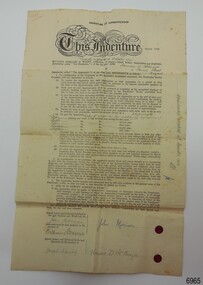
Document - Certificate, Harland & Wolff Limited, Shipbuilding & Engineering Works, Indenture of Apprenticeship, 28th October 1941
... Ship constructors...Naval Architects...Ships’ Draughtsmen and Boat Builders’ Association of Australia...Ship Constructors’ and Shipwrights’ Association, Belfast (B) Branch 20. His Registration Number was 38748. He completed his apprenticeship on December 16th, 1946, aged 21 years, his address was 26 Connsbrook Drive, Sydenham, N. Belfast. In October 1949 Norman received Clearance from his Union as a financial member to move to another branch. He completed his Apprenticeship on December 16th 1946. Two months later he migrated to Australia, and he arrived in Victoria, and he became a Financial Member of the Victorian branch of the Federated Shipwrights, Ship constructors, Naval...Ship Constructors’ and Shipwrights’ Association, Belfast (B) Branch 20. His Registration Number was 38748. He completed his apprenticeship on December 16th, 1946, aged 21 years, his address was 26 Connsbrook Drive, Sydenham, N. Belfast. In October 1949 Norman received Clearance from his Union as a financial member to move to another branch. He completed his Apprenticeship on December 16th 1946. Two months later he migrated to Australia, and he arrived in Victoria, and he became a Financial Member of the Victorian branch of the Federated Shipwrights, Ship constructors, Naval ...A number of items once belonging to shipwright Norman McKenzie were donated to Flagstaff Hill Maritime Museum and Village. They are related to Norman’s apprenticeship and certification as a Shipwright in Belfast, his Union membership and his employment as a shipwright in Melbourne. One of the items, a union Rules Book inscribed with the name H.B. Thomas and dated 1902, had within its pages Norman’s Indenture of Apprenticeship, dated 1941, Norman Desmond McKenzie was born in Belfast in 1925 and lived at 10 Pansy Street Belfast, Northern Ireland. At the age of 16 years, he began a 5-year Shipwright’s apprenticeship with Harland & Wolff Limited, Shipbuilding & Engineering Works, Belfast. He became a member of the Ship Constructors’ and Shipwrights’ Association, Belfast (B) Branch 20. His Registration Number was 38748. He completed his apprenticeship on December 16th, 1946, aged 21 years, his address was 26 Connsbrook Drive, Sydenham, N. Belfast. In October 1949 Norman received Clearance from his Union as a financial member to move to another branch. He completed his Apprenticeship on December 16th 1946. Two months later he migrated to Australia, and he arrived in Victoria, and he became a Financial Member of the Victorian branch of the Federated Shipwrights, Ship constructors, Naval Architects, Ships’ Draughtsmen and Boat Builders’ Association of Australia, Victoria branch. One of Norman’s donated books is the Rules of the Shipwrights' Provident Union of the Port of London. It is inscribed on several pages with the name H.B. Thomas and includes the year 1902 and the address of 29 Brickwood Street, Gardenvale. This is a location in Victoria, Australia. The Victoria Government Gazette, February 1959, in the section “Removal from Registration on The Architects Registration Board of Victoria, during the year ended 31st December 1956” lists “Deceased – Thomas, H.B., 29 Brickwood Street, Gardenvale”. The Architects Union includes Naval Architects and Shipwrights and other related trades came under the same union. It seems likely that when he was in Melbourne, Norman worked as a Shipwright for H.B. Thomas and was given the Rules book by Thomas, perhaps as a reference book or maybe as a gift. Around that same time, December 1949, Norman met his wife-to-be, Daphne, in Melbourne. Daphne had migrated from London with her family and her father found work with the Melbourne Harbour Trust. They married in Melbourne in 1953 and went on to have a family of five children. In 2003 Norman and Daphne moved to Warrnambool and then years later they celebrated their 60th wedding anniversary. Norman passed away on July 28th 2015 at Warrnambool’s South West Healthcare hospital.Norman McKenzie's Rules Book, Union Cards, Indenture of Apprenticeship, and other documents tell the story of a young Irish lad's work and qualifications to become a shipwright and his migration to Australia. The young man found a job and a wife who had also migrated, and they raised a family in Melbourne. He and his wife then retired to Warrnambool to enjoy their later years. The collection of documents relating to Norman McKenzie is significant for its connection with the shipping industry of the early 1900s, the migration of qualified tradesmen to Victoria, and their contribution to the development of Victoria. The collection also shows the role of the Union in the shipping industry. The documents link shipwright Norman McKenzie to the Shipwright's Union in London and in Australia, and to shipbuilder H B Thomas in Melbourne, most likely his employer.Certificate printed on cream paper; Indenture of Apprenticeship, between Norman McKenzie of Belfast, and Harland & Wolff Ltd. of Queen's Island, Belfast on 28th October 1941. The Certificate was donated within the pages of a book, Rules of the Shipwrights' Provident Union of the Port of London published in 1895 and inscribed in 1905 with the name H. B. Thomas. Inscriptions are on the front and reverse of the certificate. There are two red wax seals beside the signatures of John Morrison and Norman D. McKenzie. Handwritten and underlined in red pen, top right of Certificate's front "1499" Printed on the Certificate, employer "HARLAND & WOLFF Limited, of Queen's Island, Belfast, Shipbuilders and Engineers" Handwritten in black pen "Twenty-eighth (day of ) October 1941" "Norman D. McKenzie, 10 Pansy Street, Belfast" "Shipwright Rates of wages as per National agreement" SIGNED: "John Morrison" "William Donald" "Joseph Kenney" "Norman D. McKenzie" Along the right margin "Apprenticeship completed 16th December 1946" In pencil on the reverse "N McKenzie, 26 Connsbrook Drive, Sydenham, N. Belfast" flagstaff hill, warrnambool, maritime village, maritime museum, shipwreck coast, great ocean road, norman mckenzie, norman desmond mckenzie, belfast shipwright, shipwright's apprenticeship, harland & wolff limited, shipbuilding & engineering works, the ship constructors’ and shipwrights’ association, registered shipwright, victorian branch of the federated shipwrights, ship constructors, naval architects, ships’ draughtsmen and boat builders’ association of australia, victoria branch, shipwrights' provident union, h.b. thomas, architects registration board of victoria, naval architect, daphne, norman and daphne mckenzie, indenture of apprenticeship -
 Flagstaff Hill Maritime Museum and Village
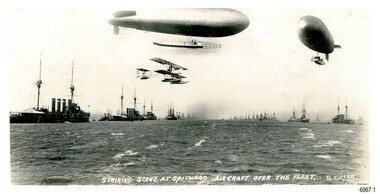
Postcard - Ships Collection, Stephen Cribb, circa 1914-1945
... Australia” 6967.30 Imprinted Stamp “ ---O WEDDE ----- VORSETZEN 35/37” (a location in Germany). Handwritten, six lines of text in another language, possibly German. 6967.38 Handwritten on the back is “NESTOR?“ Collection of thirty-eight postcards from various photographers. They depict shipping, harbours and naval vessels from the Great War to the Second War War. Most of the cards have a title, generally handwritten, on the front of the postcard. A few of the postcards have inscriptions. Postcard Ships ...The postcards and photograph in this Ships Collection were found by the donor. Two of the cards are addressed to a local person "Master Jack de Little, Caramut House, Caramut, Victoria, Australia". Another has a message written in a different language. The remainder have no personal messages on them. The details of the postcards are- Published by Stephen Cribb, Southsea: 6967.1 Striking scene at Spithead; Aircraft over the fleet, including airships 6967.2 The King’s Ships; Fleet of ships. Aircraft overhead. 6967.3 HMS HIBERNIA; King Edward Class ship 6967.4 For Docking; Super Dreadnaughts, largest floating dock in the world, in Portsmouth Harbour 6967.5 HMS COLLINGWOOD; Dreadnaught, on which His Majesty’s son is serving. 6967.6 HMS BRITANNICA; Pre-Dreadnaught, 16,350 tons. Inscription “b1” or “61” written on the sea on the front of the postcard. 6967.7 HMS IRON DUKE; Fleet Flagship 6967.8 HMS Submarine D8. Ship numbered “78” 6967.9 HMS IRON DUKE, Fleet Flagship 6967.10 HMS SOUTHAMPTON 6967.11 SHAMROCK IV (Ketch rigged), leaving for America July 18, 14 (1914’) to fetch home the American to Gosport 6967.12 HMS CONQUEROR, June 1913 6967.13 Portsmouth Harbour, The Entrance (from Gosport Hard) 6967.14 Seaplane rising; 20th Century Marvel. Naval air defence. Types of airships, Seaplanes, Monoplanes in The Solent review 6967.15 HMS AUDACIOUS 6967.16 HMS DREADNAUGHT, pioneer of the all-big-gun warship ”Marcus Ward Series, McCaw Stevenson & Oms Ltd” 6967.17 HMS TERRIBLE, textured paper on front with aqua lower border, remnants of blue paper on the back. Published by Stephen Cribb, Southsea 6967.18 “In time of peace, prepare for war” Hoisting guns and torpedo heads on board a warship 6967.19 HMS LORD NELSON 6967.20 HMS HINDUSTAN 6967.21 Spitbank Fort, Spithead, on Solvent Sea 6967.22 HMS GARLAND of Netley Photographer Edgar Ward. “A halfpenny stamp for inland, one penny for foreign” 6967.23 Entrance to the Cambor, from Portsmouth Harbour. “312, copyright Edgar Ward” 6967.24 Royal yacht alongside Portsmouth Dockyard, “305” J. Welch & Sons, English Photography 6967.25 The Royal Yacht, Victoria & Albert “50” 6967.26 The VICTORY, firing a Royal Salute “21” Published by E.A. Schwerdtfeger & Co. London E.C. Printed at their works in Berline. Trade Mark E.A.S. 6967.27 The Hard and Viaduct, Portsea, Portsmouth 6967.28 SS MACEDONIA, P&O, 15212 tons, 1500 h.p., Coloured drawing. On reverse “Master Jack de Little, Caramut House, Caramut, Victoria, Australia” Published by Union Postale Universelle, Gibralta. 6967.29 HMS KING EDWARD VII leaving Dock N.3 GIBRALTAR – 11/3/05 (1905). Printer V.B. Cumbo, Gibraltar. Drawing. Handwritten “Oroton 28/5/06”. “Master Jack De Little Caramut, Victoria, Australia” 6967.30 7274 BARBARA, Hamburg. Imprinted “ ---O WEDDE ----- VORSETZEN 35/37” inscription, six lines of handwritten text in another language on the back. Published by the Valentine & Sons Co. Publishing Ltd., Melbourne, Sydney and Brisbane. Branches Sydney. London, Dundee, Cape Town, Montreal, Toronto. 6967.31 SS MOLDAVIA, the first dining saloon, Valentine Series M.4059. Valentines Real Photo Series Postcard. Postcard made in U.S.A. Agfa ANSCO 6967.32 Port McNicoll, Ont. DSR.. 6967.33 Orient Line SS ORONSAY, 20,000 tons. On board the Orient Line. Tuck’s Post Card, Carte Postale. ‘Our Navy’ Series II, Raphael Tuck & Sons. “Photogravure” Postcard Nu. 4305. Art publishers to their Majesties the King and Queen. 6967.34 HMS QUEEN MARY, HMS Queen Mary, Battle Cruiser, launched 1912, completed 1913, 27,000 tons, 75,000 S.H.P., 28 knots per hour, 8 13.5-inch guns, 16 4-inch guns, 2 torpedoes. Commissioned September 1913. Printed in England. 6967.35 HMS SUPERB 6967.36 HMS TEMERAIRE 6967.37 HMS MONARCH Small photograph, not a postcard, H 6 x W 9 cm 6967.38 PHOTOGRAPH NESTOR? Small sepia photograph, ship at dock. Stamped “Kodak print” “549”. Handwritten on back is “NESTOR?“ The Ships Collection of postcards and a small photograph depict maritime vessels connected to our Australian alliance with Britain, particularly during World War I. Two of the postcards are specifically addressed to a ‘Master Jack de Little’ at Caramut House, in the local township of Caramut which was a Pioneer Settlement and a Soldier Settlement area after World War I. Collection of thirty-eight postcards from various photographers. They depict shipping, harbours and naval vessels from the Great War to the Second War War. Most of the cards have a title, generally handwritten, on the front of the postcard. A few of the postcards have inscriptions.6967.6 Handwritten on the sea in the photograph “b1” or “61” 6967.28 Handwritten on reverse “Master Jack de Little, Caramut House, Caramut, Victoria, Australia” 6967.29 Handwritten “Oroton 28/5/06”. “Master Jack De Little Caramut, Victoria, Australia” 6967.30 Imprinted Stamp “ ---O WEDDE ----- VORSETZEN 35/37” (a location in Germany). Handwritten, six lines of text in another language, possibly German. 6967.38 Handwritten on the back is “NESTOR?“flagstaff hill, maritime village, maritime museum, postcard, world war ii, ww2, royal navy, british merchant navy, portsmouth, the great war, ship, world war i, wwi, british, 1914-1918, jack de little, caramut, caramut house, vorsetzen, spithead, sea fort, fort, spithead fort, aircraft, fleet, airship, the king’s ships, hms hibernia, king edward class ship, super dreadnaught, floating dock, portsmouth harbour, hms collingwood, dreadnaught, hms britannica, hms iron duke, fleet flagship, hms submarine d8, hms southampton, shamrock iv, hms conqueror, the entrance, gosport head, seaplane, naval air defence, monoplane, the solvent, hms audacious, hms dreadnaught, warship, marcus ward series, mccaw stevenson & oms ltd, s cribb, southsea, hms terrible, hms hindustan, hms garland, edgar ward, cambor, portsmouth dockyard, j. welch & sons, the royal yacht, victoria & albert “50”, victory, royal salute “21”, e.a. schwerdtfeger & co, e.a.s., the hard and viaduct, ss macedonia, p&o, master jack de little, hms king edward vii, dock n.3 gibraltar, v.b. cumbo, gibraltar, union postale universelle, 7274 barbara, ss moldavia, valentine series, valentine & sons co, port mcnicoll, agfa ansco, ss oronsay, orient line, raphael tuck & sons, hms queen mary, hms superb, hms temeraire, hms monarch, nestor, stephen cribb, stephen cribb photography, hms lord nelson -
 Geelong RSL Sub Branch
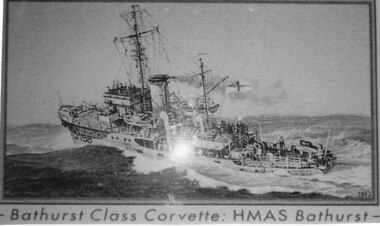
Photograph HMAS Bathurst
... Australian waters in 1944 and was deployed to New Guinea i n 1945. Bathurst was paid off in 1946 and sold for scrap in 1948. There were 60 Bathurst class corvettes constructed during WW2 the photograph in this collection is HMAS Bathurst the lead ship of 60. In this collection there are photograph albums, diaries and documents relating to W2156 Noel G Hernan, Stoker, including Sailor's Pay Book, Balmoral Naval ...HMAS Bathurst (J158) named after the City of Bathurst NSW is the lead ship of 60 Bathurst class corvettes that were constructed during WW2. The Bathurst was constructed in 1940 her early career was spent operating with the British Eastern Fleet. Bathurst returned to Australian waters in 1944 and was deployed to New Guinea i n 1945. Bathurst was paid off in 1946 and sold for scrap in 1948.There were 60 Bathurst class corvettes constructed during WW2 the photograph in this collection is HMAS Bathurst the lead ship of 60. In this collection there are photograph albums, diaries and documents relating to W2156 Noel G Hernan, Stoker, including Sailor's Pay Book, Balmoral Naval Depot Identity Card, Entitlement to War Gratuity, Clothing Ration Card 1945-46 Issue, letters, newspaper cuttings, train tickets, a booklet 'V for Victory, Notes for Guidance in the Wearing of Campaign Stars and War Medals on Civilian Clothes. All of these items are the originals of W2156 Noel G Hernan and the photograph albums and diaries are those collected and amassed by W2156 Noel G Herman. Photograph of HMAS Bathburst., An oblong photograph, colour, kodac paper, a colour photograph of HMAS Bathurst a Bathurst Class Corvette.There is an enlarged print of this colour photograph, framed. The large framed version is hanging in the Geelong RSL 1st Floor. -
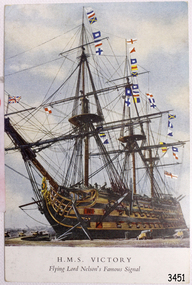 Flagstaff Hill Maritime Museum and Village
Postcard - Vessel, Sailing Ship, after October 1805
... ships in 12 separate flag-hoists “England expects that every man will do his duty”. This wood sample is historically significant for its association with Admiral Lord Nelson the Battle of Trafalgar. Through Nelson’s leadership and unorthodox battle tactics, he secured not only a victory against the French and Spanish but reaffirmed Britain's naval supremacy opening the way for Britain to continuing the policy of colonisation of many countries including Australia. flagstaff hill warrnambool shipwrecked-coast flagstaff-hill flagstaff-hill-maritime-museum maritime-museum shipwreck-coast flagstaff-hill-maritime-village post card postcard sailing ship vice-admiral lord nelson horatio nelson lord nelson oak piece piece of oak nelson battle of trafalgar maritime technology ship relics 18th century warship british royal navy sir home popham’s telegraphic code admiralty official day signal book october 21, 1805 admiral lord nelson french and spanish navies nelson's famous signal england expects that every man will do his duty hms victory nelson collection at lloyd's lloyd’s of london lloyd’s patriotic fund napoleonic battles british naval history 18th century warship 18th century battleship Printed on the front "H.M.S. ...The British Royal Navy’s warship HMS Victory was once Lord Nelson’s flagship. The HMS Victory was built in 1765 and after serving active duty is now, in 2019, still a ship of the Royal Navy, in dry dock undergoing continuous restoration to preserve her for display as a museum ship, due to the vessel’s significant naval history. Battle of Trafalgar: On October 21, 1805, twenty-seven British ships of the line, led by Admiral Lord Nelson aboard HMS Victory, defeated thirty-three French and Spanish ships of the line under French Admiral Villeneuve. The battle took place in the Atlantic Ocean off the southwest coast of Spain, just west of Cape Trafalgar, near the town of Los Caños de Meca. The victory confirmed the naval supremacy Britain had established during the course of the eighteenth century and it was achieved in part through Nelson's departure from the prevailing naval tactical orthodoxy of the day. Conventional practice at the time was for opposing fleets to engage each other in single parallel lines, in order to facilitate signalling and disengagement and to maximise fields of fire and target areas. Nelson instead arranged his ships into two columns to sail perpendicularly into the enemy fleet's line. During the battle, Nelson was shot by a French musketeer and he died shortly before the battle ended. Villeneuve was captured, along with his ship Bucentaure. He later attended Nelson's funeral while a captive on parole in Britain. Admiral Federico Gravina, the senior Spanish flag officer, escaped with the remnant of the fleet. He died five months later from wounds sustained during the battle. It was prior to this battle that Nelson had issued his now-famous final orders to his ships in 12 separate flag-hoists “England expects that every man will do his duty”. This wood sample is historically significant for its association with Admiral Lord Nelson the Battle of Trafalgar. Through Nelson’s leadership and unorthodox battle tactics, he secured not only a victory against the French and Spanish but reaffirmed Britain's naval supremacy opening the way for Britain to continuing the policy of colonisation of many countries including Australia.A coloured postcard of a sailing ship, warship or battleship, deck cannons on the ship and in the foreground, many signal flags flying from the masts. Printed on the front "H.M.S. Victory Flying Lord Nelson Famous Signal". The signal was given by Lord Nelson in 1805.Printed on the front "H.M.S. Victory / Flying Lord Nelson Famous Signal"flagstaff hill, warrnambool, shipwrecked-coast, flagstaff-hill, flagstaff-hill-maritime-museum, maritime-museum, shipwreck-coast, flagstaff-hill-maritime-village, post card, postcard, sailing ship, vice-admiral lord nelson, horatio nelson, lord nelson, oak piece, piece of oak, nelson, battle of trafalgar, maritime technology, ship relics, 18th century warship, british royal navy, sir home popham’s telegraphic code, admiralty official day signal book, october 21, 1805, admiral lord nelson, french and spanish navies, nelson's famous signal, england expects that every man will do his duty, hms victory, nelson collection at lloyd's, lloyd’s of london, lloyd’s patriotic fund, napoleonic battles, british naval history, 18th century warship, 18th century battleship -
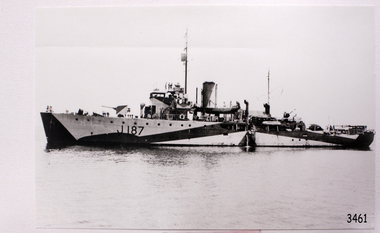 Flagstaff Hill Maritime Museum and Village
Photograph - Vessel, Steam Ship, H.M.A.S. Bendigo J187, post WWII
... Australian Navy's ship HMAS Bendigo (J187), one of 30 sips commissioned by the RAN for defence purposes in World War II. The ship was named after the City of Bendigo in Victoria. The corvette ship was a Bathurst class minesweeper, built by Cockatoo Docks and Engineering Company, at Cockatoo Island, Sydney. The ship was launched in March 1941, commissioned May 1941, decommissioned September 1946, and sold to a Chinese company as a civilian vessel. This photograph is significant for its association with the Royal Australian Navy and Australia's maritime and naval ...This photograph depicts the Royal Australian Navy's ship HMAS Bendigo (J187), one of 30 sips commissioned by the RAN for defence purposes in World War II. The ship was named after the City of Bendigo in Victoria. The corvette ship was a Bathurst class minesweeper, built by Cockatoo Docks and Engineering Company, at Cockatoo Island, Sydney. The ship was launched in March 1941, commissioned May 1941, decommissioned September 1946, and sold to a Chinese company as a civilian vessel.This photograph is significant for its association with the Royal Australian Navy and Australia's maritime and naval history. Black and white photograph of steamship H.M.A.S. Bendigo,, Bathurst class minesweeper J187.flagstaff hill, maritime village, maritime museum, warrnambool, shipwreck coast, cockatoo docks and engineering company, h.m.a.s. bendigo, hmas bendigo, hmas bendigo i, j187, world war ii, bathurst class corvette, royal australian navy, sydney built ship, sea mine patrol, mine sweeper, mine clearance, photograph, maritime photograph, minesweeper
