
Showing 30 items matching "australian women writers"
-
 Warrnambool and District Historical Society Inc.
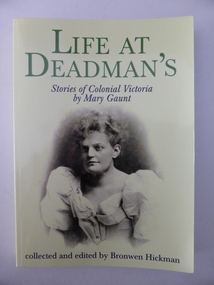
Book, Bronwen Hickman, Life at Deadman's - Stories of Colonial Victoria by Mary Gaunt, 2001
... ...Australian Women Writers...Mary Gaunt Dr H.L.Miller Whiskey Stills in the Warrnambool district (19th century) History of Warrnambool Australian Women Writers A collection of short stories by Mary Gaunt, edited and published by Bronwen Hickman. ...A collection of short stories by Mary Gaunt, edited and published by Bronwen Hickman.This is a soft cover book of 178 pages. The cover is yellow with an image in sepia tones of Mary Gaunt. The lettering on the front cover and on the spine is green and black. The back cover contains critical comments on Mary Gaunt’s work and information on the editor. The book has a map, an introduction, a list of the sources of the stories, twelve short stories, a list of works by Mary Gaunt and a note on the author by the editor. fictionA collection of short stories by Mary Gaunt, edited and published by Bronwen Hickman.mary gaunt, dr h.l.miller, whiskey stills in the warrnambool district (19th century), history of warrnambool, australian women writers -
 Lara RSL Sub Branch
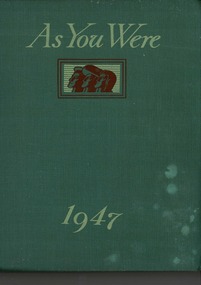
Book, As You Were 1947, 1947
... women and the views expressed are those of the writers. Contributions that are a mosaic of service men and women. A compilation of person war experiences and yarns. royal australian navy royal australian air force royal australian army yarns short stories wwi wwii To the memory of fallen comrades. " They gave their l Ives. ...Continued from 'As you were 1946' this book presents the views of service men and women and the views expressed are those of the writers. Contributions that are a mosaic of service men and women.A compilation of person war experiences and yarns.Compilation of person recounts, stories and articles. Photos, illustrations and letters Green covered entitled 'As you were', with a relief of tri-servicemen with the date '1947' lower on the cover. Inside cover front and back is illustrated with the insignia of each Australian services in addition to relief of the tri services. There are two copies held by the Lara RSL Sub BranchTo the memory of fallen comrades. " They gave their l Ives. For that public gift they received a praise which never ages and a tomb most glorious - not so. Much the tomb in which they lie, but that in which their fame survives, to be remembered forever when occasion comes for word or deed...'royal australian navy, royal australian air force, royal australian army, yarns, short stories, wwi, wwii -
 Orbost & District Historical Society
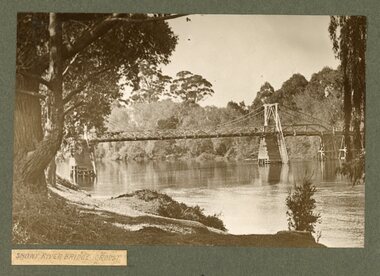
Album - Florence M Taylor album, Florence M Taylor, c. 1910-1920s
... women in Australia to be an architect, structural and civil engineer, town planner, and publisher. Florence was born in 1879 and died in 1969. Wikipedia: Florence Mary Taylor CBE (née Parsons; 29 December 1879 – 13 February 1969) was the first qualified female architect in Australia.[1] She was also the first woman in Australia to fly in a heavier-than-air craft in 1909[2] and the first female member of the UK's Institution of Structural Engineers in 1926.[3] However, she is best known for her role as publisher, editor and writer for the influential building industry trade journals established in 1907 with her husband George, which she ran and expanded after his death in 1928 until her retirement in 1961.[4] All photographs in this Album are attributed to J H Harvey (b1855, d1938), who was a well-known photographer, land surveyor and engineer. ...women in Australia to be an architect, structural and civil engineer, town planner, and publisher. Florence was born in 1879 and died in 1969. Wikipedia: Florence Mary Taylor CBE (née Parsons; 29 December 1879 – 13 February 1969) was the first qualified female architect in Australia.[1] She was also the first woman in Australia to fly in a heavier-than-air craft in 1909[2] and the first female member of the UK's Institution of Structural Engineers in 1926.[3] However, she is best known for her role as publisher, editor and writer for the influential building industry trade journals established in 1907 with her husband George, which she ran and expanded after his death in 1928 until her retirement in 1961.[4] All photographs in this Album are attributed to J H Harvey (b1855, d1938), who was a well-known photographer, land surveyor and engineer. ...This album was compiled by Florence M. Taylor who was the first women in Australia to be an architect, structural and civil engineer, town planner, and publisher. Florence was born in 1879 and died in 1969. Wikipedia: Florence Mary Taylor CBE (née Parsons; 29 December 1879 – 13 February 1969) was the first qualified female architect in Australia.[1] She was also the first woman in Australia to fly in a heavier-than-air craft in 1909[2] and the first female member of the UK's Institution of Structural Engineers in 1926.[3] However, she is best known for her role as publisher, editor and writer for the influential building industry trade journals established in 1907 with her husband George, which she ran and expanded after his death in 1928 until her retirement in 1961.[4] All photographs in this Album are attributed to J H Harvey (b1855, d1938), who was a well-known photographer, land surveyor and engineer. This album is significant because it contains photographs of East Gippsland, from Orbost to the NSW border. All photos were taken by J H Harvey in the early 20th century, and collected into this Album by Florence M Taylor who was Australia's first woman to be qualified as an architect and engineer. A grey covered album with gold lettering on the front and tied with cord along the spine. 8 pages with b/w photos. Some photos have been cut from the Album. All photos are labelled.on front cover: Through the county of Croagingolong, Victoria. Mrs F. M. Taylor.east gippsland, orbost, genoa, cann river, bellbird hotel, aboriginal camp, mallacoota, florence m taylor, snowy river bridge -
 Ringwood and District Historical Society
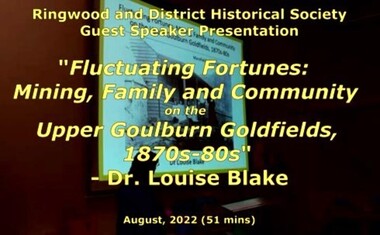
Mixed media - Video, RDHS Guest Speaker Presentation - "Fluctuating Fortunes on the Upper Goulburn Goldfields 1870s-1880s" - Dr. Louise Blake
... Presenter: Louise Blake is a writer and historian with an interest in the stories of women, families, and communities on the nineteenth-century goldfields in Australia and New Zealand. ...Presenter: Louise Blake is a writer and historian with an interest in the stories of women, families, and communities on the nineteenth-century goldfields in Australia and New Zealand. ...Digitised video (2.66GB) Duration: 51 minutes. Recorded August, 2022 (Video is available for viewing at Ringwood & District Historical Society Archives by appointment)Presenter: Louise Blake is a writer and historian with an interest in the stories of women, families, and communities on the nineteenth-century goldfields in Australia and New Zealand. Inspired by her family connection to the gold mining settlement of Woods Point, Louise completed a PhD on Women and Community on the Upper Goulburn Goldfields in north-east Victoria in 2019. In this talk Louise will share her research on Lawrence and Esther Chubb, who lived and worked at Gaffneys Creek on the Upper Goulburn Goldfields in the 1870s and 80s. In a series of letters Lawrence wrote to his family in England, and now held by the State Library of Victoria, Lawrence shared his early struggles as an independent miner on the central Victorian goldfields, his protracted courtship with Esther, the ordinary intimacies of their life at Gaffneys Creek, the work that Esther did to support the family in this remote mining region, as well as the material and emotional support provided by and to family, friends and neighbours. A rare and revealing source, these letters help to expand our understanding of the lived experience of mining families, particularly the work that women did to sustain families and communities, in this period of waged labour and tribute mining in Victoria. -
 Eltham District Historical Society Inc
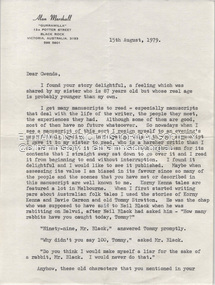
Document - Folder, Alan Marshall (1902-1984), Correspondence from Alan Marshall to Gwenda Sanderson, 1979-1983
... Black Shaw women Miss Laura Squatter Duke of Edinburgh Royal Family 'Texas' Green Member for Kalgoorlie Duke of Gloucestor The girl in pink Prince of Wales May Creedie (story) Mrs Scott of Mortlake Smouldering Fires (book) Lindsay Russell Mary Murray of our Valley (book) The Fellowship of Australian Writers Jim Hamilton Journey to Aboriginal Victoria (book) Mary Gilmore Peter Mcallum Institute May Creedie (book) Gwen Hardisty heart attack Bulletin (magazine) Stephenson Gloria Swanson Jennifer Marshall Daniel (grandson) Cathy (daughter) Sandringham Hospithal East Brighton nursing home Alan Marshall Writes Alone (review) Folio of correspondence of 21 letters, total of 40 typed pages PDF copy of letters Correspondence from Alan Marshall to Gwenda Sanderson Document Folder Alan Marshall (1902-1984) ...Alan Marshall AM, (2 May 1902 – 21 January 1984) was an Australian writer, story teller, humanist and social documenter. Personal correspondence between Gwenda Sanderson and Alan Marshall, dated between 1979 and 1983. There are 21 letters in all, the last 3 of which were dictated from the Hurlingham Nursing Home in Brighton. Background information for the letters (daugher Merrilyn Sanderson 10 October 2025): My mother, Gwenda Sanderson ( nee White ) grew up in the western district and knew Alan Marshall's sister. Gwenda was an aspiring author, and reached out to Alan for support and advice regarding her writing. Alan proved to be a generous and inspiring mentor and as you will see, they established a rapport. In 1966 Gwenda moved from Mortlake to Montmorency (quite a culture shock!) and around 1983 she and her husband, Stan moved to Diamond Creek. Letters: 1. Alan Marshall to Gwenda Sanderson, 15 August 1979 2. Alan Marshall to Gwenda Sanderson, 22 August 1979 3. Alan Marshall to Gwenda Sanderson, 28 August 1979 4. Alan Marshall to Gwenda Sanderson, 7 September 1979 5. Alan Marshall to Gwenda Sanderson, 19 September 1979 6. Alan Marshall to Gwenda Sanderson, 11 October 1979 7. Alan Marshall to Gwenda Sanderson, 18 October 1979 8. Alan Marshall to Gwenda Sanderson, 1 November 1979 9. Alan Marshall to Gwenda Sanderson, 10 January 1980 10. Alan Marshall to Gwenda Sanderson, 24 January 1980 11. Alan Marshall to Gwenda Sanderson, 15 February 1980 12. Gwen Hardisty on behalf of Alan Marshall to Gwenda Sanderson, 27 May 1980 13. Alan Marshall to Gwenda Sanderson, 17 June 1980 14. Alan Marshall to Gwenda Sanderson, 29 July 1980 15. Alan Marshall to Gwenda Sanderson, 4 August 1980 16. Alan Marshall to Gwenda Sanderson, 22 August 1980 17. Alan Marshall to Gwenda Sanderson, 5 February 1981 18. Alan Marshall to Gwenda Sanderson, 5 August 1981 19. Gwen Hardisty on behalf of Alan Marshall to Gwenda Sanderson, 11 May 1982 20. Alan Marshall to Gwenda Sanderson, 27 Octopber 1982 21. Alan Marshall to Gwenda Sanderson, 21 February 1983 alan marshall, gwenda sanderson, gurrawilla, elsie louise mcconnell, black rock (vic.), korny kenna, folk tales, australian folk tales, davie carson, tommy stratton, neil black, black emily, noorat, purnim encampment, pompey austin, aboriginal characters, john manifold, john hooker, collins publishers, eltham history, alan marshall (pioneers and painters), james bonwick, mount shadwell, mount noorat, john smith, blacksmith, mary turner-shaw, on mount emu creek (book), wooiwyrite, western district victoria, merrilyn sanderson, mortlake, the land (poem), collected verse (book), austin family, hammers over the anvil (book), eeyeuk, dennis family, peg dennis, noorat church, jim smith, miss dennis, mrs polly, mrs angus gillies, mental health, frank smith, country life (english paper), field (english paper), peter mcleod, bill beechey, angus gillies, mag dennis, east driscoll, camperdown, bill white, alec irvine, jack irvine, staughton's stable, cumming family, jallalabad, miss baird, private catholic school, jack peoples, shaw's, weatherley, miss ann gordon, ballangeich, writer, author, sun (newspaper), william collins (aust.) ltd, chatsworth homestead, russia, i can jump puddles (book), nat gould, race horses, ethell dell, gertrude page, geoffrey farnell, east driscoll (story), shamrock smith, the catholic ball (story), lance skuthorpe, the blood of johnny meagher (story), winter-irving, sarah midgeley, richard skilbeck, miss edith (story), sun competition, mandeville hall, hampden council, alan marshall commemorative plaque noorat, russian theatrical troupe, noorat show, eliza sturgess, sam johnson the baker, elsie johnson, crupper, martingale, a.j. black, shaw women, miss laura, squatter, duke of edinburgh, royal family, 'texas' green, member for kalgoorlie, duke of gloucestor, the girl in pink, prince of wales, may creedie (story), mrs scott of mortlake, smouldering fires (book), lindsay russell, mary murray of our valley (book), the fellowship of australian writers, jim hamilton, journey to aboriginal victoria (book), mary gilmore, peter mcallum institute, may creedie (book), gwen hardisty, heart attack, bulletin (magazine), stephenson, gloria swanson, jennifer marshall, daniel (grandson), cathy (daughter), sandringham hospithal, east brighton nursing home, alan marshall writes alone (review) -
 Emerald Museum & Nobelius Heritage Park
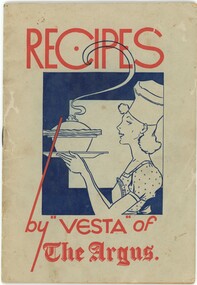
Booklet - The Argus Recipe Book, Stella Allan, Recipes by Vesta of the Argus, Circa 1939
... She was a prominent figure in Melbourne life as President of the Victorian Women’s Writers’ Club, the Lyceum Club, and a foundation member of the Australian Journalists’ Association. ...She was a prominent figure in Melbourne life as President of the Victorian Women’s Writers’ Club, the Lyceum Club, and a foundation member of the Australian Journalists’ Association. ...This is a recipe book, with sections for recipes for "Soups", "Meat Dishes", "Breakfast, Luncheon and Supper Dishes", "Egg Dishes and Pastry Recipes", "Sweets Course", and "For Afternoon Tea". The pages alternate between a page on the left containing recipes, and a page on the right instructing readers to paste recipes cut out from the Argus there. "Vesta," also known as Stella Allan, began her journalistic career as an active feminist and socialist in New Zealand who, after qualifying to practice law, overcame gendered exclusion from the all-male press gallery to work a prestigious position as a parliamentary correspondent. After moving to Melbourne in 1903, she was swiftly employed by the Argus newspaper and became the lead writer for the women's sections in 1908, continuing to work in the role until she retired in 1939. During this time she extensively covered domestic and community welfare topics, alongside advice columns replying to a vast quantity of letters; her writing contributed to creating a space in newspaper journalism to address the interests of women at the time. During her time at the Argus she moved away from the radical activism of her youth, becoming an establishment figure over the course of her long career. She was a prominent figure in Melbourne life as President of the Victorian Women’s Writers’ Club, the Lyceum Club, and a foundation member of the Australian Journalists’ Association. Even after her retirement from the Argus, her journalism continued to have an influence; during the Second World War, Stella reported from England on the wartime experiences of women and children. This recipe book was one of several written by "Vesta" - most likely, this is the 1939 edition - and aimed to provide a collection of nutritious recipes to aid women in choosing meals to cook for their households. The introduction to the book stresses the importance of nutrition, referring to a League of Nations survey that revealed that "in spite of our abundant and varied food supply, nutritional and dental diseases are much too prevalent in Australia." It calls on the women of Australia to fulfil the "great responsibility," of choosing and cooking nutritious meals.The cardstock front cover of this 32-page booklet features text denoting the title and author in red, and an illustration in blue of a woman wearing a chef's hat holding a pie in front of her, with steam rising from it. The rear features publication information and an advertisement. The booklet is bound with a single staple through the spine, and constructed from eight individual pieces of paper each with two pages of text printed on each side.non-fictionThis is a recipe book, with sections for recipes for "Soups", "Meat Dishes", "Breakfast, Luncheon and Supper Dishes", "Egg Dishes and Pastry Recipes", "Sweets Course", and "For Afternoon Tea". The pages alternate between a page on the left containing recipes, and a page on the right instructing readers to paste recipes cut out from the Argus there. "Vesta," also known as Stella Allan, began her journalistic career as an active feminist and socialist in New Zealand who, after qualifying to practice law, overcame gendered exclusion from the all-male press gallery to work a prestigious position as a parliamentary correspondent. After moving to Melbourne in 1903, she was swiftly employed by the Argus newspaper and became the lead writer for the women's sections in 1908, continuing to work in the role until she retired in 1939. During this time she extensively covered domestic and community welfare topics, alongside advice columns replying to a vast quantity of letters; her writing contributed to creating a space in newspaper journalism to address the interests of women at the time. During her time at the Argus she moved away from the radical activism of her youth, becoming an establishment figure over the course of her long career. She was a prominent figure in Melbourne life as President of the Victorian Women’s Writers’ Club, the Lyceum Club, and a foundation member of the Australian Journalists’ Association. Even after her retirement from the Argus, her journalism continued to have an influence; during the Second World War, Stella reported from England on the wartime experiences of women and children. This recipe book was one of several written by "Vesta" - most likely, this is the 1939 edition - and aimed to provide a collection of nutritious recipes to aid women in choosing meals to cook for their households. The introduction to the book stresses the importance of nutrition, referring to a League of Nations survey that revealed that "in spite of our abundant and varied food supply, nutritional and dental diseases are much too prevalent in Australia." It calls on the women of Australia to fulfil the "great responsibility," of choosing and cooking nutritious meals.books, domestic life, 1930s, cooking, the argus -
 Women's Art Register
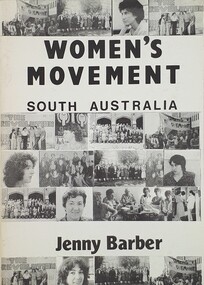
Book - Anthology, Jenny Barber, Women's Movement South Australia, N/A
... Ranges from The Christian Women's Temperance Union established in the 1886 to The Working Women's Centre in 1979 Documentation, history and source material. suffrage voting rights violence communism activism pascifism Overview of funded and non-funded organisations focused on women's rights, and the diversity of the South Australian Women's Liberation Movement through interviews and social history. Essays written by artists, writers and women working in women's services. "4/-" Black and white text on cover and throughout Women's Movement South Australia Book Anthology Jenny Barber ...Overview of funded and non-funded organisations focused on women's rights, and the diversity of the South Australian Women's Liberation Movement through interviews and social history. Essays written by artists, writers and women working in women's services.Black and white text on cover and throughout non-fictionOverview of funded and non-funded organisations focused on women's rights, and the diversity of the South Australian Women's Liberation Movement through interviews and social history. Essays written by artists, writers and women working in women's services.suffrage, voting rights, violence, communism, activism, pascifism -
 Women's Art Register
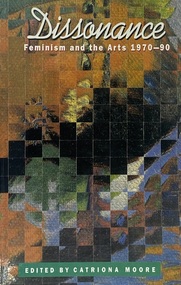
Book, Catriona Moore, Dissonance. Feminism and the Arts 1970-90, 1994
... Complements other books in the Women's Art Register Includes articles covering artists, exhibitions and projects important in the development of the Australian women's art movement feminism feminist arts practice Australian artists community arts The Women's Art Register An anthology of essays by significant writers, critics and artists, edited by Catriona Moore, examining contemporary women's art in Australia. ...An anthology of essays by significant writers, critics and artists, edited by Catriona Moore, examining contemporary women's art in Australia. Includes definitions of women's and feminist art, reviews and critiques of exhibitions and individual artists. The first section includes articles reprinted from publications including Lip and Refactory Girl.Projects include 'The D'oyley Show', "Mothers, Memories and Others' Memories", and Lucy Lippard's visit in 1975.Booknon-fictionAn anthology of essays by significant writers, critics and artists, edited by Catriona Moore, examining contemporary women's art in Australia. Includes definitions of women's and feminist art, reviews and critiques of exhibitions and individual artists. The first section includes articles reprinted from publications including Lip and Refactory Girl.Projects include 'The D'oyley Show', "Mothers, Memories and Others' Memories", and Lucy Lippard's visit in 1975.feminism, feminist arts practice, australian artists, community arts, the women's art register -
 Women's Art Register
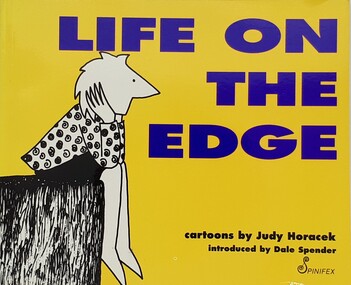
Book, Judy Horacek, Life on the Edge. Cartoons by Judy Horacek, 1992
... Australian political life. Coimplements other material held in the Women's Art Register political art community art Indigenous rights racism discrimination Collected cartoons by Melbourne cartoonist and writer Judy Horacek, who believes "humour is a fantastic way of changing the world." ( from biographical noes). ...Collected cartoons by Melbourne cartoonist and writer Judy Horacek, who believes "humour is a fantastic way of changing the world." ( from biographical noes). The introduction was written by Dale Spender.booknon-fictionCollected cartoons by Melbourne cartoonist and writer Judy Horacek, who believes "humour is a fantastic way of changing the world." ( from biographical noes). The introduction was written by Dale Spender.political art, community art, indigenous rights, racism, discrimination -
 Women's Art Register
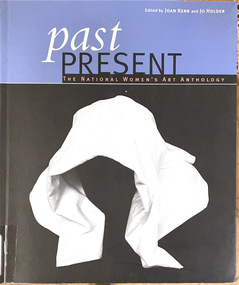
Book - Anthology, Joan Kerr and Jo Holder, Past Present. The National Women's Art Anthology, N/A
... Complements material held in The Women's Art register Indigenous art political art gender represenation museology photography installation graphic design collaborative practices Essays on feminist art, art history, criticism and museum practices in 1990s Australia by writers, academics, artists. "709.9.94/KER" Inside Front Cover. ...Essays on feminist art, art history, criticism and museum practices in 1990s Australia by writers, academics, artists.non-fictionEssays on feminist art, art history, criticism and museum practices in 1990s Australia by writers, academics, artists.indigenous art, political art, gender, represenation, museology, photography, installation, graphic design, collaborative practices -
 Victoria Police Museum
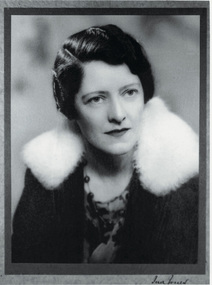
Photograph (Jessie Clarey)
... Writer under the Evidence Act. In 1938 she won first prize for the 'empire-wide' King's Police Gold Medal Essay Competition - the set topic for that year was 'Juvenile Crime - Its Causes and Treatment'. The essay was subsequently published in two parts in The Australian Quarterly. Jessie suffered ill health in later life and died after a stroke on 3 June 1952. She had worked mainly at the Russell Street and the Fitzroy P.C.B. and C.I.B. police women ...Born 9 May 1901 in Prahran. Her Record of Conduct and Service describes her as being 5' 2½" and 8 stones 3 lbs, with hazel eyes, dark brown hair, a fresh complexion and of good appearance. She belonged to the Church of Christ. She commenced training at the Police Training Depot in 1929. In December of that year she passed the examination for a licence as a Shorthand Writer under the Evidence Act. In 1938 she won first prize for the 'empire-wide' King's Police Gold Medal Essay Competition - the set topic for that year was 'Juvenile Crime - Its Causes and Treatment'. The essay was subsequently published in two parts in The Australian Quarterly. Jessie suffered ill health in later life and died after a stroke on 3 June 1952. She had worked mainly at the Russell Street and the Fitzroy P.C.B. and C.I.B.Jessie Clarey 8507 taken in the early 1930spolice women, clarey, jessie jemima 8507, king's police gold medal, police woman, policewomen, policewoman -
 Bendigo Historical Society Inc.
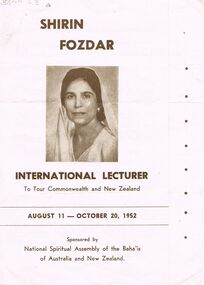
Ephemera - LYDIA CHANCELLOR COLLECTION; SHIRIN FOZDAR - INTERNATIONAL SPEAKER
... women Two items related to the visit to Bendigo of international lecturer Shirin Fozdar. (i) A cream leaflet out lining the itinerary of Shirin Fozdar - 'Shirin Fozdar International Lecturer To Tour Commonwealth and New Zealand August 11 - October 20, 1952. Sponsored by National Spiritual Assembly of the Baha'is of Australia and New Zealand.' Lecture - Religion of the Future. Sunday. 3pm. 31st August Committee Rooms, Town Hall, Bendigo. (ii) A letter written by V. Hoehnke from the Base Hospital Ballarat dated 17/7/52 to the Mayor, Bendigo Mr. Pethard. In this letter the writer ...Two items related to the visit to Bendigo of international lecturer Shirin Fozdar. (i) A cream leaflet out lining the itinerary of Shirin Fozdar - 'Shirin Fozdar International Lecturer To Tour Commonwealth and New Zealand August 11 - October 20, 1952. Sponsored by National Spiritual Assembly of the Baha'is of Australia and New Zealand.' Lecture - Religion of the Future. Sunday. 3pm. 31st August Committee Rooms, Town Hall, Bendigo. (ii) A letter written by V. Hoehnke from the Base Hospital Ballarat dated 17/7/52 to the Mayor, Bendigo Mr. Pethard. In this letter the writer gives the Mayor a brief history of Shirin Fozdar and an outline of her achievements.person, individual, lecturers, lydia chancellor, collection, religion, women, programme, program, women -
 Bendigo Historical Society Inc.
Document - BROADCASTING STATION 3CV, MARYBOROUGH, 2 March, 1956
... Women's Radio Club with branches in country centres adds strength to station's charitable efforts. Opening 3CV's new premises will widen the scope of the station's charitable efforts, and stronger link with Australian Commercial Broadcasting stations. Writer...Women's Radio Club Opening 3CV's new premises Australian Commercial Broadcasting stations. Writer ...Broadcasting Station 3CV, Maryborough. A souvenir of the opening of the New Studios and Offices of Central Victoria Broadcasters Pty Ltd. March 2nd, 1956. Established 1956, offices in Burke Street, opening coincides with the stations 21st birthday, March 2 for the former celebration, October 26 for the latter. Coverage included Bendigo, Ballarat, Daylesford, Castlemaine and Maryborough. 3CV plays active part in assisting charities and hospitals at Maryborough, Daylesford, Maldon and Dunolly. Active Women's Radio Club with branches in country centres adds strength to station's charitable efforts. Opening 3CV's new premises will widen the scope of the station's charitable efforts, and stronger link with Australian Commercial Broadcasting stations. Writer Harold V Nunn writes history of district of Mayborough. Manager Ken J Parker, Central Victoria Broadcasters Pty. Ltd. The Souvenir brochure also covers topics such as: deep lead mining. WWI. Houses being pulled down. New settlements of Mildura. Secondary Industries. Bowenvale, Alma, Majorca, Craigie, Amherst, Adelaide Lead, Havelock, Bet Bet, Bently. Primary production and a railway staff of approximately 150. Maryborough a little town without a future. Coal fields at Wonthaggi. 1917 a public meeting was convened in an effort to stem the tide of adversity. Mayor George Frost, M.L.A., decision to form a Progress Association, a policy of secondary industry was decided upon and committees were appointed, James L Drew much credit is due. Maryborough's move for rejuvenation was revolutionary, because apart from Ballarat, Bendigo and Geelong, it was regarded as so much presumption that industry could be expected to function with success in a country town. Governments were unsympathetic. Maryborough & district people showed determination to succeed and their faith in their town. Employment and economic security provided by the industries outweighed the debt. Maryborough's general position is that it is no longer dependent upon one particular phase of activity. The first of the industries to be formed in 1918 was the Butter Factory. The nearer dairy companies did not take kindly to the prospect of another opposition company taking supplies from their districts, and in the first few years of establishment completion made the going hard for the management. But adopting a conservative policy and placing all profits to reserve I the first six years of operation headway was gradually made. Thus it was a red letter day for the company in 1925 when the first dividend of 5 percent was paid.1955 dividend of 10 per cent. Operating it's own trucks the dairy serviced local dairymen up to 40 miles. Maryborough Knitting mills est. 1923, having transferred from Clunes. Out bid Ballarat and Bendigo to the industry. The mill has what is probably the largest circular underwear plant in the Commonwealth, which is conservatively valued at 198,913 pounds. It produces between four and five million garments each year, worth over one million pounds. The company has established subsidiary mills at Dunolly, Talbot and Avoca. The company also assisted in the establishment of the Interknit Hosiery Co. Ltd., Clunes. The Maryborough Flour Mills is the second oldest of Mayborough's industries. It was built by Mr Cadwallader over 70 years ago. It was later sold to Mr. A Land and then to Jas. Minifie & Co. It had a somewhat 'in-and -out' existence until purchased in 1923 by Messrs. Willersdorf and Forbes, of Eddington. In 1939 the firm began to build silos for the storage of bulk wheat and the present storage capacity is 100,000 bushels. 1944 power was changed from steam to electricity. The mill has an out put of 20 sacks an hour. 1938 a chaff mill was built, and now is regarded as one of the best in Victoria. Its output in one year of approximately 6,800 tons is a State record for a single cutter. During this 30 year period Patience and Nicholson Limited has grown with Maryborough and is now one of the major key industries of Australia. The P&N brand covers precision tools - taps, dies and twist drills - indispensable to the country's economy, and quality is acknowledged equally by an air craft factory in Canada, a dockyard in Thailand, a railway workshop in New Zealand, no less than by our own Australian industries. Maryborough can be proud of the part played by P&N in war when, geared to the needs of the times, it poured countless millions of tools into defence factories and to the armed forces of the Allies, and now in peace when it is providing, hydro-electric undertakings and the manufacture of cars and tractors. From 1858, W Phelan & Sons Pty Ltd has made phenomenal and spectacular growth, becoming incorporated as a private company in 1929. It is without doubt the greatest private development in the history of Maryborough. 1940 joinery manufacture was commenced. The company entered the Ready Built Housing field in `950 - and in 1951 established a factory at Cairns, Northern Queensland to overcome the manufacturing difficulties being experienced due to the shortage of plywood in Victoria. Present activities include: Ready Built Housing Factory, on-site building, a modern joinery, timber yard, drying kilns, etc., and plumbing & electrical & engineering services, a door and panel factory at Cairns, retail hardware store, Melbourne Sales Depot. Hedges & Bell Pty Ltd were est 1945, with a staff of 40 employees are the largest printing firm outside the metropolitan area. The branch of Premier Wireworks is a contribution made by the decentralisation policy of the State.event, official, celebration, broadcasting station 3cv, maryborough. a souvenir of the opening of the new studios and offices of central victoria broadcasters pty ltd. march 2nd, 1956. established 1956, offices in burke street, 21st birthday. coverage bendigo, ballarat, daylesford, castlemaine maryborough. assisting charities and hospitals maldon and dunolly. women's radio club opening 3cv's new premises australian commercial broadcasting stations. writer harold v nunn writes history of district of mayborough. manager ken j parker, central victoria broadcasters pty. ltd. souvenir brochure: deep lead mining. wwi. houses pulled down. new settlements. primary production railway staff. coal fields wonthaggi. 1917 a public meeting was convened in an effort to stem the tide of adversity. mayor george frost, m.l.a., form a progress association, policy of secondary industry, james l drew rejuvenation was revolutionary, employment and economic security. the first of the industries to be formed in 1918 was the butter factory. thus it was a red letter day for the company in 1925 when the first dividend of 5 percent was paid.1955 dividend of 10 per cent. operating it's own trucks serviced local dairymen. maryborough knitting mills est. 1923 largest circular underwear plant in the commonwealth. established subsidiary mills at dunolly, talbot, avoca. interknit hosiery co. ltd., clunes. the maryborough flour mills it was built by mr cadwallader. mr. a land jas. minifie & co. messrs. willersdorf and forbes, build silos for wheat storage capacity is 100, 000 bushels. 1944 power was changed from steam to electricity. 20 sacks an hour. 1938 a chaff mill was built, best in victoria. patience and nicholson limited the p&n precision tools - taps, dies and twist drills. war, geared to the needs of the times, countless millions of tools into defence factories the armed forces of the allies, hydro-electric undertakings and the manufacture of cars and tractors. from 1858, w phelan & sons pty ltd, incorporated 1929. 1940 joinery manufacture. ready built housing field in 1950 - 1951 established a factory at cairns, northern queensland to overcome the manufacturing difficulties being experienced due to the shortage of plywood in victoria. present activities: ready built housing factory, on-site building, a modern joinery, timber yard, drying kilns, etc., and plumbing & electrical & engineering services, a door and panel factory at cairns, retail hardware store, melbourne sales depot. hedges & bell pty ltd were est. 1945, with a staff of 40 employees are the largest printing firm outside the metropolitan area. the branch of premier wireworks is a contribution made by the decentralisation policy of the state. -
 Alfred Hospital Nurses League - Nursing History Collection
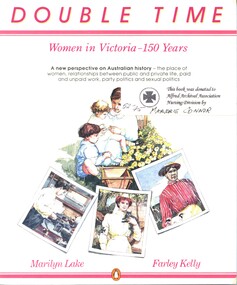
Book - Illustrated book, Marilyn Lake 1949, Double time, women in Victoria,150 years, 1985
... It features more than fifty women, from convicts to nuns, actresses to soldiers, settlers to writers, and housewives to political activists, showcasing their social and personal diversity. The book emphasizes the home's importance, alongside the marketplace, and examines the significance of both reproduction and production. It provides a new perspective on Australian ...This book explores the experiences of women in Victoria over 150 years, highlighting their diverse roles in public and private life. It features more than fifty women, from convicts to nuns, actresses to soldiers, settlers to writers, and housewives to political activists, showcasing their social and personal diversity. The book emphasizes the home's importance, alongside the marketplace, and examines the significance of both reproduction and production. It provides a new perspective on Australian history, focusing on women's place, relationships between public and private life, paid and unpaid work, and the intersection of politics and gender.Illustrated book with white front cover that has four coloured illustrations of women in various activities. Title and authors' names are printed in red ink, along with a book description in black ink on the front cover along with publisher's logo and four red lines. Abbreviated title, underlined, in white ink, and authors names in black ink are printed on an orange background on the spine along with the publisher's logo. The back cover has a summary of the book printed in orange, along with another three illustrations of women, publisher's logo and 'Victoria 150 ' logo on a yellow background.non-fictionThis book explores the experiences of women in Victoria over 150 years, highlighting their diverse roles in public and private life. It features more than fifty women, from convicts to nuns, actresses to soldiers, settlers to writers, and housewives to political activists, showcasing their social and personal diversity. The book emphasizes the home's importance, alongside the marketplace, and examines the significance of both reproduction and production. It provides a new perspective on Australian history, focusing on women's place, relationships between public and private life, paid and unpaid work, and the intersection of politics and gender. women-victoria-history-19th century, women-victoria-history=20th century, women-victoria-social conditions -
 Warrnambool and District Historical Society Inc.
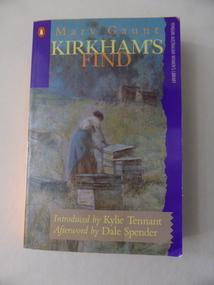
Book, Penguin Books, Kirkham's Find Mary Gaunt, 1988
... Australia. Although it is only a reprint this novel is of some interest as it was written by Mary Gaunt, an Australian writer of considerable importance. As a one-time resident of Warrnambool and a writer using local places and situations in her stories, she has a place in Warrnambool’s history. Mary Gaunt History of Warrnambool Women ...A novel outlining the difficulties faced by 19th century women wishing to pursue a career.This is a soft cover book of 340 pages. It has a purple cover with a reproduction of a 19th century painting on the front cover and material about the contents of the book on the back cover. The spine is an orange colour with black and white printing. The book has an introduction by Kylie Tennant, an afterword by Dale Spender and 29 chapters of a novel. fictionA novel outlining the difficulties faced by 19th century women wishing to pursue a career.mary gaunt, history of warrnambool, women in literature -
 Uniting Church Archives - Synod of Victoria
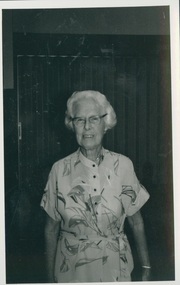
Photograph, Undated c.1970s
... Women in the Church" column of the Australian Presbyterian Life newspaper 1960 - 1975. Member of the Presbyterian Church Freedom from Hunger Victorian committee. President of the Presbyterian Women's Association (P.W.A.) 1966 - 1969. Representative to the East Asian Christian Conference. Presbyterian Church Elder; field officer World Christian Action 1974. Mrs Jean Yule, Presbyterian, Presbyterian Life, Freedom from Hunger, P.W.A., writer ...Mrs Jean Yule O.A.M. was editor of the "Women in the Church" column of the Australian Presbyterian Life newspaper 1960 - 1975. Member of the Presbyterian Church Freedom from Hunger Victorian committee. President of the Presbyterian Women's Association (P.W.A.) 1966 - 1969. Representative to the East Asian Christian Conference. Presbyterian Church Elder; field officer World Christian Action 1974.B & W gloss, waist length photograph of Mrs Jean Yule.mrs jean yule, presbyterian, presbyterian life, freedom from hunger, p.w.a., writer -
 RMIT Design Archives
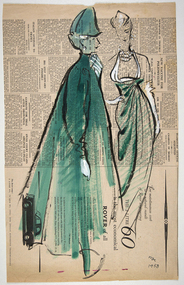
Drawings, 1958
... Australian writers were published. His 1962 portrait of the author Patrick White won the Archibald Prize, bringing him national recognition. He also designed sets and costumes for the Elizabeth Theatre Trust (Opera Australia) and the Melbourne Theatre Company. In 1993 his contribution to Australian cultural life was recognised when he was made an Officer in the Order of Australia (AO). He died in Melbourne, at the age of 97 in 2002. Ann Carew 2018 fashion illustration fashion design Signed lower right in ink, 'nac 1958'. Fashion illustration on newsprint. Drawing depicts two women ...Louis Kahan (1905-2002) is best known in Australia for his skill as an artist. As Independent Fashion Curator, Laura Jocic has observed, ‘It is less known though that Kahan had a career in theatre and fashion in Vienna and Paris during the 1920s and 1930s that continued when he came to Australia in 1947. He signed his fashion illustration with the initials 'nac', a phonetic interpretation of his surname spelled backwards. In this illustration on newspaper we can see Kahan playing with the graphic effects of line and text, while communicating the cut and drape of late-1950s fashions.’ Kahn was born in Vienna in 1905 and first travelled to Australia in 1947. He moved to Melbourne in 1950 where he became friends with artist George Bell, writer Alan McCulloch who introduced him to Clem Christensen, editor of the literary journal Meanjin, where many of his portraits of Australian writers were published. His 1962 portrait of the author Patrick White won the Archibald Prize, bringing him national recognition. He also designed sets and costumes for the Elizabeth Theatre Trust (Opera Australia) and the Melbourne Theatre Company. In 1993 his contribution to Australian cultural life was recognised when he was made an Officer in the Order of Australia (AO). He died in Melbourne, at the age of 97 in 2002. Ann Carew 2018Fashion illustration on newsprint. Drawing depicts two women. Women in foreground is wearing a long green coat and hat.Woman at rear is wearing a green and white evening dress with white gloves.Signed lower right in ink, 'nac 1958'.fashion illustration, fashion design -
 Nhill and District Historical Society Inc.
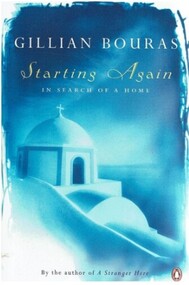
Book - Starting Again, In Search of a Home by Gillian Bouras, 1999
... Local Author - Gillian Bouras is an expatriate Australian writer who has written several books, short stories and articles, many of these dealing with her experiences as an Australian woman in Greece. Bouras Gillian - 1945 - Diaries Australian - Diaries Women ...For some, home is not simply a matter of place. Gillian Bouras comes and goes between London, where she spends long periods, and the village in the Peloponnese to which she migrated nearly twenty years ago. Unable to settle in either England or Greece, her life is one of perpetual journey, of constant goodbyes and starting again. Even in Australia, where she was born and raised, she feels like an outsider. This journal deals with the complexity of finding your place in the world. Insightful and always engaging, Bouras explores the divide that exists between cultures, between the past and the present, between those who shut the world out and those who too readily let it in.non-fictionFor some, home is not simply a matter of place. Gillian Bouras comes and goes between London, where she spends long periods, and the village in the Peloponnese to which she migrated nearly twenty years ago. Unable to settle in either England or Greece, her life is one of perpetual journey, of constant goodbyes and starting again. Even in Australia, where she was born and raised, she feels like an outsider. This journal deals with the complexity of finding your place in the world. Insightful and always engaging, Bouras explores the divide that exists between cultures, between the past and the present, between those who shut the world out and those who too readily let it in.bouras gillian - 1945 - diaries, australian - diaries, women immigrants, social life and customs, cultural assimilation, greek australians, biography & autobiography, psychology, social science, customs & traditions, emigration & immigration, personal memoirs -
Koorie Heritage Trust
Journal - Serials, Aboriginal History Inc, Aboriginal History - Volume 23. 1999, 1999
... Australia -- Periodicals | Language Aboriginal-Upper Murray Vic. - Pallangamiddang. Unaipon David-Interview. White Isabel (Sally) - Anthropologist | Demography - Population mobility | Settlement and contacts - Resettlement and removals | Defence - Missile and weapons testing - Nuclear weapons | Language - Linguistics - Language elicitation | Language - Vocabulary - Word lists | Language - Linguistics - Phonology and phonetics | History - Biographies - Indigenous | Colonisation | Race relations - Racial discrimination - Women | Music - Vocal - Group - Children | Music - Education | Music - Analysis - Vocal A series of articles by leading writers on Aboriginal History. iiv-xii; 151 P.; refs.; footnotes; plates; 25 cm. ...A series of articles by leading writers on Aboriginal History.iiv-xii; 151 P.; refs.; footnotes; plates; 25 cm.A series of articles by leading writers on Aboriginal History.aboriginal australians -- periodicals. | ethnology -- australia -- periodicals | language, aboriginal-upper murray vic. - pallangamiddang., unaipon, david-interview., white, isabel (sally) - anthropologist | demography - population mobility | settlement and contacts - resettlement and removals | defence - missile and weapons testing - nuclear weapons | language - linguistics - language elicitation | language - vocabulary - word lists | language - linguistics - phonology and phonetics | history - biographies - indigenous | colonisation | race relations - racial discrimination - women | music - vocal - group - children | music - education | music - analysis - vocal -
 Embroiderers Guild, Victoria
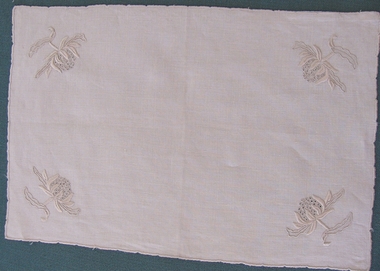
Textile - Thelma Crawford Waratah Mat, c. 1940
... writer and illustrator of children's books) she was employed as a designer by Miss Hilda King of International Needlework. In 1939 Miss Crawford established a small shop on the 3rd floor of Block Arcade - well frequented through to 1960's by the women of Melbourne. In 1950 she ran a week long exhibition of her work at the Hotel South Australia...writer and illustrator of children's books) she was employed as a designer by Miss Hilda King of International Needlework. In 1939 Miss Crawford established a small shop on the 3rd floor of Block Arcade - well frequented through to 1960's by the women of Melbourne. In 1950 she ran a week long exhibition of her work at the Hotel South Australia ...Thelma Kinleside Crawford is remembered for her wild flower designs for embroidery. After finishing 3 years studying art at Swinburne Technical College (her aim was to become a writer and illustrator of children's books) she was employed as a designer by Miss Hilda King of International Needlework. In 1939 Miss Crawford established a small shop on the 3rd floor of Block Arcade - well frequented through to 1960's by the women of Melbourne. In 1950 she ran a week long exhibition of her work at the Hotel South Australia in Adelaide. in 1954 a pale pink linen cloth embroidered by Miss Crawford was presented to the Queen by the YWCA now known as the 'Queen's Cloth". In October 1954 Woman's Day ran a feature of Miss Crawford's designs. In 1959 and 1960 displays were mounted at the Tasmanian Tourist Bureau. In 1960 she closed her Block Arcade shop and moved to the "Little Shop" in Croydon near her home. In 1968 she retired to the Brotherhood of St. Laurence homes in Lara. She died in 1985 and bequeathed all her designs to the Geelong Branch of the EGV. She was a foundation member of the EGV.Natural coloured linen luncheon mat worked with self coloured linen threads. Simple decoration of waratah flower head embroidered in each corner using surface stitchery and eyelet holes. The edge is buttonholed.embroidery, 1940-60, australia, surface stitchery, mats -
 Vision Australia
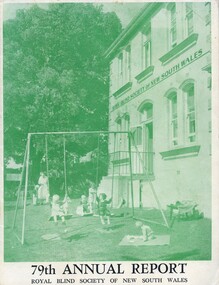
Administrative record - Text, 79th Annual Report Royal Blind Society of N.S.W. (1959), 1959
... Royal Blind Society of New South Wales Annual Report Victor Maxwell Kindergarten Justice Maxwell Helen Keller Hostel Library Braille Writers Association of New South Wales 2UW Goodie Reeve Black and White Committee Cricket NSW Blind Cricket NSW Blind Bowling Club William Street Blind Women's Bowling Club Polly Thompson Margaret Green Ken Bunn Australian National Council of and for the Blind Light House Home Alexis Albert Hostel Gordon Lavers Balmain Blind Bowling Combination W. ...Articles in the annual report include: the RNIB approving the use of Clarke and Smith talking book players, appointment of Margaret Green as a social worker at Victor Maxwell House, the passing of Polly Thompson who visited the Society in 1949 with Helen Keller, the election of Justice Maxwell as the Chairman and re-appointment of Ken Bunn as Secretary to the Australian National Council for the Blind, the demolishing of 'Heathfield' due to disrepair and possible use as a Youth Hostel or Adjustment Centre for people who are newly blind, the opening of the Light House as a home for Aged Blind Women by NSW Governor Sir Eric Woodward, appointment of Freida Goon as manager of the Light House, update on Alexis Albert House, continued impact on decreased sales of workshop products, high demand for musicians trained or supported by the Society, music and singing lessons with Gordon Lavers, success of monthly concerts given at the Hall by various musicians, introduction of judo lessons, the cricket team led by Barry Ward played matches against the Queensland Blind Cricket Team at Wylie Park, indoor bowling clubs enjoyed both social and competitive matches with many members also joining the Balmain Blind Bowling Combination, the prized addition of a Braille duplicator to the library, listing of Transcribers, Pupil Subscribers (Transcribers), Voluntary Braille Instructors, Voluntary Car Drivers and Library Workers, Newcastle and Hunter River chairman W.M. Cannington joining the Committee, a list of Prize Winners for the 1959 Royal Agricultural Show in the Handicrafts Section, the work undertaken by the fundraising auxiliaries including the Black and White Committee, the 2UW Blind Appeal and the 21st Birthday of the 'Glow Worm' radio show on 2GB.1 volume of text and imagesroyal blind society of new south wales, annual report, victor maxwell kindergarten, justice maxwell, helen keller hostel, library, braille writers association of new south wales, 2uw, goodie reeve, black and white committee, cricket, nsw blind cricket, nsw blind bowling club, william street blind women's bowling club, polly thompson, margaret green, ken bunn, australian national council of and for the blind, light house home, alexis albert hostel, gordon lavers, balmain blind bowling combination, w. cannington, 2gb, major general paul cullen, herbert thompson, h.f. benning, c d darvall, e t herford, phyllis burke, k. g hunter-kerr, freida goon, barry ward, sir eric woodward, hrh princess alexandra of kent, roy kippax, b button, w dunn, c j delaney, n allen, matron scott, marno parsons, charles jobson, billie sinclair, c green, john o'connor, donald debus, george herrmann, joyce herrmann, bert hussey, neville smart, john irvine, jacky myers, percy warner, frank lindburg, sir james bissett, c.r. rae, hal hennessey, w.a. davis, d ferrier, reginald camp, l maurer, joyce grenfell, googie withers, alexis albert, l hynes, phyllis shillito, bruce macleay, n kinnaird, billy matthews -
 Vision Australia
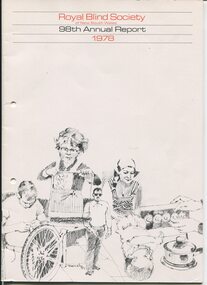
Administrative record - Text, 98th Annual Report Royal Blind Society of N.S.W. (1978), 1978
... Cannington Films Lee Smith Matt Ponsonby Ray Hunter Joan Ledermann Mitchell Street Theatre Max Nisbett Vivian Hargrove Australian National Council of and for the Blind Braille Writers Association of New South Wales Blind Sporting Association William Street Blind Women's Bowling Club Balmain Blind Bowling Combination 1 volume of text and images 98th Annual Report Royal Blind Society of N.S.W. (1978) Administrative record Text ...An overview of activities and achievements during the past financial year. Articles in annual report include: the handing over from former President Sir Alexis Albert to Paul Cullen, the implementation of Project 5000 (increasing C77 Talking Book Machines to that number as well as book titles), new fitness groups and CB clubs supported by John Simon and Norman Healey, new course that teaches Braille at home via cassette developed by Louise Long, continued success in supporting children to attend integrated kindergartens rather than an segregated one, introduction of music therapy and Father's Groups, loss of beloved reader John Dease, 3rd RBS Arts Festival at the Grace Gallery, Chatswood, sales increase for workshop products particularly bicycles, the success of the Black and White Ball (held since 1936), and the production of two films sponsored by OPSM and depicting the impact of RBS "I see, I see" and "Future Sight". It also updates on the Braille Writers Association, the RBS Literary Contest (inaugurated 6 years ago by Max Nisbett) and the successful production of some works by the Mitchell Street Theatre group, name change of William Street Blind Women's Bowling Club to Blind Society Women's Bowling Club, Enfield and Blind Sporting Association formed just over a year ago and competed in the Leeton Rowathon.1 volume of text and imagesroyal blind society of new south wales, corporation records, alexis albert, paul cullen, sir robert drew, laurel brennan, john simon, norman healey, carol lausch, margaret smallwood, louise long, sylvia manuel, loreen rosser, diana palmer, anne palfrey, john dease, mitchell manufacturing, ken martin, sueann wilson, duncan archbold, cath littlefair, gai wibberley, jack chamberlain, des lean-fore, michael simpson, ron black, john mountford, marno parsons, black and white committee, graham laurence, w. cannington, films, lee smith, matt ponsonby, ray hunter, joan ledermann, mitchell street theatre, max nisbett, vivian hargrove, australian national council of and for the blind, braille writers association of new south wales, blind sporting association, william street blind women's bowling club, balmain blind bowling combination -
 Vision Australia
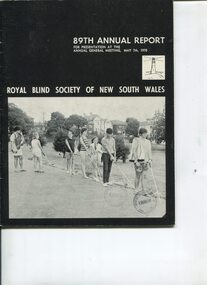
Administrative record - Text, 89th Annual Report Royal Blind Society of N.S.W. (1970), 1970
... Royal Blind Society of New South Wales Alexis Albert Lady Albert Sandy Robertson Kindergarten Australian National Council of and for the Blind Balmain Blind Bowling Combination William Street Blind Women's Bowling Club Helen Keller Hostel Braille Writers Association H.F. ...Articles in the annual report include: the awarding of an O.B.E. to Vice President H.F. Benning, presentation of a silver cigarette box to Roy Kippax for his 50th year of service, aim to move out of old William Street building by the second half of 1971, Mark IV Talking Book machine began to be circulated, first library advisory committee on book selection was convened, images of the Alexis Albert, Helen Keller and Lighthouse hostels, formation of Nepean, Lighthouse Younger Set, Ryde and Hornsby auxiliaries, the use of a swear jar by the 'Blind Club' of the Queensland Hotel (cnr Erskine & Kent St) to top up the RBS donation box, the various blind bowling and cricket clubs, the use of the Main Hall by the Boomerang Singers, and various volunteers who assist departments with their work.1 volume of text and imagesroyal blind society of new south wales, alexis albert, lady albert, sandy robertson kindergarten, australian national council of and for the blind, balmain blind bowling combination, william street blind women's bowling club, helen keller hostel, braille writers association, h.f. benning, r.w. alkin, roy kippax, victor maxwell kindergarten, w.a. davis, k. bruce, lighthouse hostel, alexis albert hostel, r wellsmore, h.c. standen, ray watson, paul cullen, ian burnet, nola dekyvere, alan wotherspoon, ron frazer, annual report, cricket -
 Vision Australia
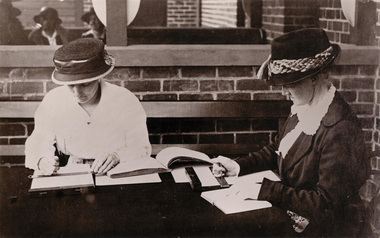
Photograph - Image, Transcribing Braille with frame and stylus
... women sit in an outside porch at the Braille Library in South Yarra, transcribing the books in front of them into Braille, using a stylus and frame. This image shows sighted volunteer Braille transcribers. At this time all Braille was manually transcribed using a hand frame and metal stylus. These volunteers worked at Australia's first Braille Library created by the Victorian Association of Braille Writers...women sit in an outside porch at the Braille Library in South Yarra, transcribing the books in front of them into Braille, using a stylus and frame. This image shows sighted volunteer Braille transcribers. At this time all Braille was manually transcribed using a hand frame and metal stylus. These volunteers worked at Australia's first Braille Library created by the Victorian Association of Braille Writers ...Two sighted women sit in an outside porch at the Braille Library in South Yarra, transcribing the books in front of them into Braille, using a stylus and frame. This image shows sighted volunteer Braille transcribers. At this time all Braille was manually transcribed using a hand frame and metal stylus. These volunteers worked at Australia's first Braille Library created by the Victorian Association of Braille Writers.Black and white image of two Braille writersbraille equipment, victorian association of braille writers -
 Vision Australia
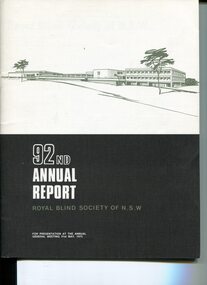
Administrative record - Text, 92nd Annual Report Royal Blind Society of N.S.W. (1972)
... O'Brien Lady Cutler Kerrie Donovan Joan Ledermann Mary Lidbury Victor Maxwell Kindergarten Sandy Robertson Kindergarten Sue Dixon Richard Lyle Lady Austin Walter Rice Margaret Clark Australian National Council of and for the Blind Australian Council for Rehabilitation of Disabled Balmain Blind Bowling Combination William Street Blind Women's Bowling Club Helen Keller Hostel Long Bay Gaol Barbara Giblin Braille Writers Association Parramatta Gaol Annual Report 1 volume of text and images 92nd Annual Report Royal Blind Society of N.S.W. (1972) Administrative record Text ...Articles in the annual report include: the opening of the new building at Burwood (Enfield) and the facilities it provides, including a bowling green, swimming pool and rooms for specialist areas such as orientation and mobility and music braille; the need for the new building, the support of Long Bay Gaol in the fabrication of mat frames and use of shearing machine and the binding of Braille volumes through the support of Parramatta Gaol, publication of a booklet 'The Pre-School Child who is blind', the development of rehabilitation services for those who are unable to visit the new site and the introduction of Mark IV talking book machines.1 volume of text and imagesroyal blind society of new south wales, sir roden cutler, alexis albert, lady albert, john w.a. o'brien, lady cutler, kerrie donovan, joan ledermann, mary lidbury, victor maxwell kindergarten, sandy robertson kindergarten, sue dixon, richard lyle, lady austin, walter rice, margaret clark, australian national council of and for the blind, australian council for rehabilitation of disabled, balmain blind bowling combination, william street blind women's bowling club, helen keller hostel, long bay gaol, barbara giblin, braille writers association, parramatta gaol, annual report -
 Musculoskeletal Health Australia (now held by the Glen Eira Historical Society)
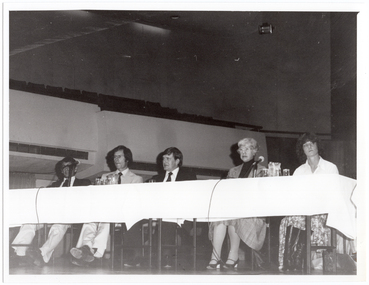
Photograph - Group photo, 01/06/1979
... On the panel were Olympic distance runner, Ron Clarke (1937-2015); Davis Cup tennis player and Channel 7 tennis commentator, Allan Stone (1945-); Australian cricketer, Captain of the Carlton Cricket Club and sports writer, Keith Stackpole Jr (1940-); captain of the All Australia carnival netball team (1946-47) and President of the Women's Netball Association, Eunice Gill (1918-1987); Olympic sprinter and Little Athletics coach, Denise Boyd (1952-); sports medicine physician, Dr K Threlfall; physiotherapist, Barry Richardson; orthopaedic surgeon, Mr Jonathan Hooper; rheumatologist and RAAV Executive member, Dr Murray Ingpen (1940-2015); Secretary of the Sports Medicine Federation, Dr Hugo MacKay; and President of RAAV, Dr Les Koadlow (1920-2006). ...On the panel were Olympic distance runner, Ron Clarke (1937-2015); Davis Cup tennis player and Channel 7 tennis commentator, Allan Stone (1945-); Australian cricketer, Captain of the Carlton Cricket Club and sports writer, Keith Stackpole Jr (1940-); captain of the All Australia carnival netball team (1946-47) and President of the Women's Netball Association, Eunice Gill (1918-1987); Olympic sprinter and Little Athletics coach, Denise Boyd (1952-); sports medicine physician, Dr K Threlfall; physiotherapist, Barry Richardson; orthopaedic surgeon, Mr Jonathan Hooper; rheumatologist and RAAV Executive member, Dr Murray Ingpen (1940-2015); Secretary of the Sports Medicine Federation, Dr Hugo MacKay; and President of RAAV, Dr Les Koadlow (1920-2006). ...On the 1st of June, 1979, a panel event was held to address the topic of Arthritis and Sport. On the panel were Olympic distance runner, Ron Clarke (1937-2015); Davis Cup tennis player and Channel 7 tennis commentator, Allan Stone (1945-); Australian cricketer, Captain of the Carlton Cricket Club and sports writer, Keith Stackpole Jr (1940-); captain of the All Australia carnival netball team (1946-47) and President of the Women's Netball Association, Eunice Gill (1918-1987); Olympic sprinter and Little Athletics coach, Denise Boyd (1952-); sports medicine physician, Dr K Threlfall; physiotherapist, Barry Richardson; orthopaedic surgeon, Mr Jonathan Hooper; rheumatologist and RAAV Executive member, Dr Murray Ingpen (1940-2015); Secretary of the Sports Medicine Federation, Dr Hugo MacKay; and President of RAAV, Dr Les Koadlow (1920-2006). Around 550 people attended the event, which was held at Dallas Brooks Hall. This photo depicts panellists Ron Clarke, Allan Stone, Keith Stackpole, Eunice Gill, and Denise Boyd. A similar photo appears on page 1 (cover page) of the Vol 13, June 1979 edition of RAAV's News Review, in which all the panelists are depicted.Black and white photo of five people sitting at a long table on a stage. On the table, there are two microphones on stands, two glass jugs of water, and some glasses.[Handwritten in pencil] Sporting Panel L-R Ron Clarke, Alan [sic] Stone, Keith Stackpole, Eunice Gill, & Denise Boyd (Ron Barassi was marooned in Sydney - he arrived after the meeting concluded.)rheumatism and arthritis association of victoria, raav, sports panel, arthritis and sport, ron clarke, olympic distance runner, allan stone, tennis player, davis cup, tennis commentator, channel 7, keith stackpole jr, australian cricketer, carlton cricket club, captain, sports writer, eunice gill, all australia carnival netball team, captain, women’s netball association, president, denise boyd, olympic sprinter, little athletics, coach, dallas brooks hall, 1979 -
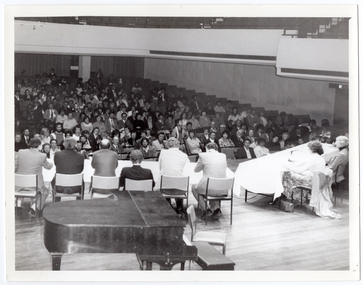 Musculoskeletal Health Australia (now held by the Glen Eira Historical Society)
Photograph - Group photo, 01/06/1979
... On the panel were Olympic distance runner, Ron Clarke (1937-2015); Davis Cup tennis player and Channel 7 tennis commentator, Allan Stone (1945-); Australian cricketer, Captain of the Carlton Cricket Club and sports writer, Keith Stackpole Jr (1940-); captain of the 'all Australia carnival netball team' (1946-47) and President of the Women's Netball Association, Eunice Gill (1918-1987); Olympic sprinter and Little Athletics coach, Denise Boyd (1952-); sports medicine physician, Dr K Threlfall; physiotherapist, Barry Richardson; orthopaedic surgeon, Mr Jonathan Hooper; rheumatologist and RAAV Executive member, Dr Murray Ingpen (1940-2015); Secretary of the Sports Medicine Federation, Dr Hugo MacKay; and President of RAAV, Dr Les Koadlow (1920-2006). ...On the panel were Olympic distance runner, Ron Clarke (1937-2015); Davis Cup tennis player and Channel 7 tennis commentator, Allan Stone (1945-); Australian cricketer, Captain of the Carlton Cricket Club and sports writer, Keith Stackpole Jr (1940-); captain of the 'all Australia carnival netball team' (1946-47) and President of the Women's Netball Association, Eunice Gill (1918-1987); Olympic sprinter and Little Athletics coach, Denise Boyd (1952-); sports medicine physician, Dr K Threlfall; physiotherapist, Barry Richardson; orthopaedic surgeon, Mr Jonathan Hooper; rheumatologist and RAAV Executive member, Dr Murray Ingpen (1940-2015); Secretary of the Sports Medicine Federation, Dr Hugo MacKay; and President of RAAV, Dr Les Koadlow (1920-2006). ...On the 1st of June, 1979, a panel event was held to address the topic of Arthritis and Sport. On the panel were Olympic distance runner, Ron Clarke (1937-2015); Davis Cup tennis player and Channel 7 tennis commentator, Allan Stone (1945-); Australian cricketer, Captain of the Carlton Cricket Club and sports writer, Keith Stackpole Jr (1940-); captain of the 'all Australia carnival netball team' (1946-47) and President of the Women's Netball Association, Eunice Gill (1918-1987); Olympic sprinter and Little Athletics coach, Denise Boyd (1952-); sports medicine physician, Dr K Threlfall; physiotherapist, Barry Richardson; orthopaedic surgeon, Mr Jonathan Hooper; rheumatologist and RAAV Executive member, Dr Murray Ingpen (1940-2015); Secretary of the Sports Medicine Federation, Dr Hugo MacKay; and President of RAAV, Dr Les Koadlow (1920-2006). Around 550 people attended the event, which was held at Dallas Brooks Hall. This photo depicts many of the panelists from behind, facing the large audience before them.Black and white photo of eight people sitting at two long tables on a stage. There are six people on one table and two people evident sitting on the second table (which is partially obscured). There is a large piano in the foreground, behind one of the tables. In the background, a large audience, who are seated on rows of seats, fills the auditorium.rheumatism and arthritis association of victoria, raav, sports panel, arthritis and sport, dr k threlfall, sports medicine physician, barry richardson, physiotherapist, mr jonathan hooper, orthopaedic surgeon, dr murray ingpen, rheumatologist, raav executive member, dr hugo mackay, sports medicine federation, secretary, dr les koadlow, raav, president, eunice gill, all australia carnival netball team, captain, women’s netball association, president, denise boyd, olympic sprinter, little athletics, coach, dallas brooks hall, 1979 -
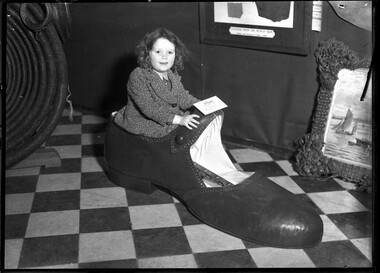 City of Melbourne Libraries
Photograph, Bull, Hugh Jones, 1897-1993, Leather Exhibition, Melbourne Town Hall
... women to practise as barristers or solicitors. However, on gaining her LL.B. in November 1897 she did not apply for admission to the Bar. Instead, she became the Wellington-based correspondent and leader-writer for the Lyttelton Times. Her appointment, the first for a woman, was not welcomed by the all-male Press Gallery, and special permission had to be obtained from a subcommittee of the House before her presence was accepted. In 1900 she married Edwin Allen, a senior leader-writer for the Wellington Evening Post, and they moved to Australia...women to practise as barristers or solicitors. However, on gaining her LL.B. in November 1897 she did not apply for admission to the Bar. Instead, she became the Wellington-based correspondent and leader-writer for the Lyttelton Times. Her appointment, the first for a woman, was not welcomed by the all-male Press Gallery, and special permission had to be obtained from a subcommittee of the House before her presence was accepted. In 1900 she married Edwin Allen, a senior leader-writer for the Wellington Evening Post, and they moved to Australia ...Photographer notations on slide: At the Leather Exhib. at T. Hall Melb 1933 Age Published: Age (Melbourne, Vic.: 1854- ), 1933 THE EXHIBITS. (1933, September 20). The Age (Melbourne, Vic. : 1854 - 1954), p. 16. Retrieved January 25, 2026, from http://nla.gov.au/nla.news-article205109730 Published title: THE EXHIBITS. A COMPREHENSIVE RANGE. Curios, Novelties, Working Displays Published Caption: ONE OF THE NOVELTIES – AN OUTSIZE IN SHOES Research by Project Volunteer, Louise McKenzie: Our photo is dated 20 September 1933, and shows a happy, chubby-faced young girl sitting in a very over-sized girl’s shoe. It is labelled – “Shoe, An Out Size, loaned by Messrs Blackman & Rose”. (1) It is an effective way to capture the attention of the readership and alert them to the Melbourne Leather Show 1933. This show was designed to be a drawcard of extraordinary proportion, and there is no doubt that this leather exhibition was a really big deal for Melbourne. It completely took over the Melbourne Town Hall, and was open from 10.30 am until 10.30 pm. It seemed to contain something for everyone – the military, the man about town, the home handyman, the housewife, the child, the sporting types, the domestic workers, the outdoor enthusiasts, the horseracing fans, car enthusiasts, those wishing to show off the latest fashion – both men and women - and those just intrigued by a lot of fascinating and wide ranging exhibits. One of the most comprehensive descriptions of the Exhibition accompanies the photograph, and is worth quoting in full: “PROMINENT among exhibits which first attract attention in the foyer of the Town Hall is a comprehensive display of leather articles used by the defence forces. A conspicuous legend states that leather plays an important part in national defence, being used for saddlery, tool containers, holdalls, range-finding, surveying and signalling equipment, explosives factories, harness accoutrement, bandsmen's equipment and clothing. Three models of horses and several figures of soldiers wearing leather equipment illustrate the lesson, and a great range of leather goods used in military training and work variegate the display. Nearby are Texas cowboy, buckjumping and breaking-in saddles; whips, a walking stick, made of leather and numerous other curios. The general exhibition occupies the whole floor space of the main Town Hall, and is subdivided by partitions running most of the length of the hall. A bewildering variety, of leather goods presses for close and leisured inspection. Here and there operatives in charge of working machinery give practical demonstrations of factory processes in the production of footwear. Polishing materials are well represented. One attractive exhibit includes two bush huts constructed of leather, with wattle bark for roofing. Opossums, rosellas and a kookaburra add touches of bush realism. Adjacent exhibits include bags, fishing boots, leggings, leather covers in all colours. Factory Processes. One exhibitor has installed an automatic cinema apparatus and screen, which projects various factory processes in making a shoe, the operator being shown at work. Elsewhere an interesting exhibit depicts the five stages in the manufacture of sole leather, and the tanning materials employed. "Very handsome effects are achieved in the interior appointments of motor cars, which are attended by figures of smart chauffeurs in leather coats. Motor-trimming leather is said to be more durable and hygienic than fabric materials, and cheaper. The neat finish of the material, its excellent appearance, certainly make a very favourable impression. It takes the hides of three beasts to cover the cushions, squabs and door panels of a full-sized sedan, while to finish the entire interior, including quarter-panels and head linings would take four or even five. Special Exhibits. Amongst the special sections the display arranged by the handicrafts and home industries- committee of the Country Women's Association of Victoria is a notable one. In all there are about 130 entries which are in four classifications, viz., hand-tooled or embossed leathers, suede, hand-made gloves and undecorated leather. The glove section attracted the most numerous entries, a number being the work of members and craft subscribers of the Country Women's Association. In the leathercraft competition, organised by the Country Women's Association, the judges yesterday awarded the first prize for bookbinding (the only prize given in this division) to Miss M. Alston, of South Yarra. There is also a creditable display of exhibits submitted by boys of the orthopaedic section of the Children's Hospital at Frankston. Amongst the novelties on view in other portions of the exhibition were the following: — Leather coats worn by Sir C. Kingsford Smith on his Atlantic flight. Model Wellington boot, Phar Lap's saddle. Melbourne Cup winner's saddle. Longest whip in world, 108 feet long. (33 metres) [See our photo, to left of Girl in Shoe] Diminutive shoes. Pair of shoes 65 years old. Pair of men's working boots 75 years old. Larwood's, Tate’s and Pataudi’s cricket boots. [Three internationally revered cricketers of the day] (2) Picture frame made of leather bought 63 years ago. [See our photo, to right of Girl in Shoe] Leather frame, powder bowl, &c. Saddle used by world's champion buckjumper in U.S.A. Mexican cowboy outfit. Miniature saddle and bridle. A fireman's helmet made of sole leather. (3) Sample of the leather hat worn by porters at the Billingsgate Fish Market, London. (4) From South Australia there have been obtained sets of harness for donkeys, goats and camels, the equipment being displayed to good advantage on stuffed representations of the animals mentioned. Close to the platform is a glass case containing snow shoes and coats which have been used in Antarctic exploration work. Trade Display. Amongst the trade exhibits may be seen in operation a slipper turn shoe sewing machine, with heeling and channelling facilities, and the various stages in the production of ladies' sandals are shown. There is a wide contrast between sole leather of varying degrees of thickness on view in one stall and the choice samples of ladies' footwear in another — footwear, by the way, which could almost be used as ornaments, so dainty in colour and production are they. Again, there are displays of upholstering leathers of such soft texture that they could he readily mistaken for some of the finest cloth. Those who may be particularly interested in the production of chamois leather may gain an insight into the materials and chemicals used in the "working up” of this variety of leather. Supplies of glace kid (5) are tastefully arranged, and there may also be seen bags of all shapes and sizes, including satchels, suit cases and "sporting" cases, and bags for tennis players and golfers. Further variety is given to the exhibition by the display of antique hides, brightly coloured, with punching balls, boxing gloves and batsman's pads. There are crocodile skins and snake skins so cleverly "Worked up" that one could be almost pardoned for betraying an affection for such unpopular creatures.” “ Another wonderful article on this Exhibition, published the same day in one of the opposition daily newspapers, The Argus, is in the weekly article “Women to Women”, entitled “A Great Victorian Industry: Many Uses for Leather”. This weekly column was penned by Vesta, and she writes, with much purpose: “Yesterday afternoon I paid a hurried visit to the Leather Exhibition now being held in the Melbourne Town Hall and I was disappointed to find that the early visitors to the main exhibition were almost all men. Women, I think, should make a point of seeing every exhibition of our great industries, for women are the buyers of household requisites and goods for their own use and their tastes, and opinion influence also, to a large extent, the purchases of men. So, the welfare of industries is more or less in their hands and it becomes a duty for them to inform themselves fully of the extent and the quality of the manufacturing that is done here. The value of the output of the Australian boot and shoe factories alone was in 1930-31, the latest year for which the figures are given, Stg 3,750,000. Fully two thirds of that amount must have been spent by women on boots and shoes for themselves and their children. In a host of other directions, in the purchase of handbags, travelling bags, belts and straps, cushions, furniture coverings, purses, notebooks, spectacle cases, their annual expenditure must be very high. Their interest, therefore, in this industry is practical, and their support of it should be governed by knowledge of comparable values and qualities of the goods they buy. From the point of view of women, however, the exhibition itself is rather disappointing. There is an amazing collection of good stuff on show, but most of it is not displayed in a fashion that attracts attention. I was surprised, for example, at the range and quality of the leathers displayed, the suppleness of the finer qualities, and the varied range of colours and designs. But they are shown in such a fashion that if one set out deliberately to look for them it would be quite easy to miss most of them.” …It was surprising, too, that no one seemed to have taken advantage of the present fashion of wearing coloured gloves, or the cult of glove making, which the Country Women’s Association has fostered so successfully. Outside the collection of chamois leathers I saw no skins which were suitable to glove making. (6) However, it is perhaps a little unfair to be highly critical of the exhibition, inasmuch as it is the first of its kind. The material is there, undoubtedly, for a splendid show of every phase of this enterprising industry, and I am confident that experience will prove to those concerned that it will be worth while next time to devote a great deal of attention of the method of display.” With further research, it transpires that “Vera” is in fact NZ born Stella May Allen (nee Henderson) (1871-1962), a journalist, the first woman in NZ to begin a law course, in 1890-91). She later worked at a law firm while she completed her degree. Study of the law had always been open to women in NZ, but its practice was still barred to them. Her case “…led to amending legislation in 1896 allowing women to practise as barristers or solicitors. However, on gaining her LL.B. in November 1897 she did not apply for admission to the Bar. Instead, she became the Wellington-based correspondent and leader-writer for the Lyttelton Times. Her appointment, the first for a woman, was not welcomed by the all-male Press Gallery, and special permission had to be obtained from a subcommittee of the House before her presence was accepted. In 1900 she married Edwin Allen, a senior leader-writer for the Wellington Evening Post, and they moved to Australia in 1903 when Edwin Allen took up the post of foreign affairs leader-writer and parliamentary man for the Melbourne Argus. As Patricia Keep notes in her excellent entry of Stella Allan in the Australian Dictionary of Biography: “In 1907 The Argus commissioned her to write a series of articles on the first Australian Women's Work Exhibition held in October. They aroused much interest and next year The Argus invited her to join its full-time staff and begin a weekly section on the particular interests of women. She adopted the nom de plume 'Vesta' and called the column 'Women to Women'. Her work was unique in an Australian daily paper at that time. Her pages extended to cover every aspect of women's affairs, children's interests and community welfare, and 'Vesta' became a household word for authoritative information and advice on such matters. An excellent needlewoman and first-rate cook herself, she thoroughly tutored her staff in the work and needs of women in both country and city, as well as providing the usual training for cadet journalists. She conducted interviews and also visited the country to see at first hand the results of bushfires, mouse plagues, droughts and floods. In 1910 she was one of three women foundation members of the Australian Journalists' Association. “…she found time to become deeply involved in community affairs. She was an original committee-member of the Victorian Association of Crèches and of the Free Kindergarten Union of Victoria, and had much to do with the early days of the Victorian Bush Nursing Association, the Baby Health Centres Association and the Queen Victoria Hospital. She was a member of the National Council of Women, first in New Zealand and then in Melbourne, and of the Country Women's Association from its inception. … in 1924 she was appointed substitute delegate for Australia to the fifth assembly of the League of Nations at Geneva and was a delegate to the second Pan Pacific Women's Conference in Hawaii in 1930. A meeting held in the Melbourne Town Hall in 1938 by representatives of all the main Victorian women's organizations paid special tribute to her work and influence. She retired next year to England where she continued to write for the Argus, contributing articles on the experiences of women and children in wartime.” It is little wonder that “Vesta” was unafraid to take to task both the women of Victoria, and those who created the exhibition! One item which appears to have gone unnoticed, or at least unreported, is a framed article in the background of the photo of the chubby girl in the shoe. The display frame is labelled “Leather from the Human Skin, Tanned and Dressed by French artists.” The exhibition was certainly a cabinet of curiosities! A charming article in The Argus is a nice note on which to end. It gives a quick history and overview of the Australian leather industry and its unprecedented, and possibly unexpected, development and success, and states with pride: “Though Victoria is the largest leather producer in the Commonwealth all tanners in the Commonwealth can look back with pride on the long march of progress.” Footnotes: (1) “Blackman and Rose”. Messrs Blackman and Rose were shoe manufacturers, from 1927 located at 200 Noone Street, Clifton Hill. The Melbourne Circle describes their building as a “fine-looking building in the Federation ‘blood and bandage’ style.” It was built around 1912 for Puttifoot and Bloom, boot manufacturers, and today the building is apartments. (2) These cricketers were household names in the day: Tate: Maurice Tate, “English cricketer of the 1920s and 1930s, and leader of England’s Test bowling attack for a long time during this period. The founder of modern seam bowling. “ Larwood: Harold Larwood, “English right-arm fast bowler and the main exponent of the bowling style known as “bodyline”. Used to considerable effect in the 1932-33 Test series in Australia. Pataudi: Iftikhar A K Pataudi, “an Indian prince who in the 1930s played Test cricket for England, and in the 1940s played Test cricket for India (as Captain) – the only test cricketer to have played for both India and England. (3) “sole” leather “… is the thickest and most resistant material existing in the tanning industry … made from vegetable tanned leathers, usually bovine butts, processed in a special way to make them the hardest type of leather in existence.” (4) The hats worn by porters at Billingsgate Fish Market were also known as a “Bobbin” and look quite squat and rather unsophisticated. They were made of wood and tarred leather, with a “flat, hardened top designed to support large rectangular boxes of fish. The upturned brim protected the porter’s head against fish juice draining from the boxes of fish which would be carried on top of the hat. Some hats featured a small drain hole at the rear to allow this collected juice to drain down the back of the carrier. The hats were made using the ‘cuir bouilli’ technique. The leather was immersed in water which was heated until the leather began to shrink. It was then removed and put on a wooden former. The leather was stitched together to make the hat while still wet, and then held in place until dry.” (See article and photo on the London Museum website) (5) Glace kid – described on the Boston Museum of Fine Arts’ Cameo database as “A smooth glossy leather originally prepared from goat or sheepskin. Early glace kid had a shiny surface that was originally prepared by tawing the skin in a mixture of alum, table salt, flour, and egg yolk. Today, glace kid is prepared from many types of vegetable or chrome tanned leathers. The smooth polished surface is obtained mechanically by shaving, glazing, ironing, and/or rolling the dry leather.” (6) In the 1930s, Melbourne’s glovemaking industry was characterised by local manufacturing, with key producers like Simpson’s Gloves Pty Ltd in Richmond and the Stagg Glove Company in Clifton Hill leading the market. These factories produced high-quality leather gloves, handbags, and specialty gear, often employing a clear gendered division of labour and training young, local women. Museum Victoria holds the Simpson’s Gloves Collection, comprising over 1200 items, and the University of Melbourne Archives holds the company’s business records. References: THE EXHIBITS. (1933, September 20). The Age (Melbourne, Vic. : 1854 - 1954), p. 16. Retrieved January 25, 2026, from http://nla.gov.au/nla.news-article205109730 EXPORT LEATHER. (1929, September 17). The Argus (Melbourne, Vic. : 1848 - 1957), p. 17. Retrieved January 19, 2026, from http://nla.gov.au/nla.news-article4037647 LEATHER EXHIBITION (1933, September 18). The Argus (Melbourne, Vic. : 1848 - 1957), p. 10. Retrieved January 19, 2026, from http://nla.gov.au/nla.news-article11693362 (1933, September 23). The Argus (Melbourne, Vic. : 1848 - 1957), p. 21. Retrieved January 19, 2026, from http://nla.gov.au/nla.news-page522766 WOMEN TO WOMEN (1933, September 20). The Argus (Melbourne, Vic. : 1848 - 1957), p. 13. Retrieved January 19, 2026, from http://nla.gov.au/nla.news-article11694034 Australian Dictionary of Biography, Stella May Allan (1871–1962) https://adb.anu.edu.au/biography/allan-stella-may-4998 WOMEN TO WOMEN (1930, January 22). The Argus (Melbourne, Vic. : 1848 - 1957), p. 13. Retrieved January 19, 2026, from http://nla.gov.au/nla.news-article4063888 Museums Victoria, Simpson’s Gloves, 486-496 Victoria Street, North Richmond, VIC, Australia https://collections.museumsvictoria.com.au/articles/2702 The Argus. (1927, October 31). The Argus (Melbourne, Vic. : 1848 - 1957), p. 20. Retrieved February 7, 2026, from http://nla.gov.au/nla.news-article3888451 Melbourne Circle: stories from the suburbs: “Boots and all in Clifton Hill” https://melbournecircle.net/2015/11/20/bootmakers-of-clifton-hill/ Wikipedia, Maurice Tate, https://en.wikipedia.org/wiki/Maurice_Tate Wikipedia, Harold Larwood, https://en.wikipedia.org/wiki/Harold_Larwood Wikipedia, Iftikhar Ali Khan Pataudi, https://en.wikipedia.org/wiki/Iftikhar_Ali_Khan_Pataudi Buy Leather Online Italy, Sole leather: https://buyleatheronline.com/en/blog/outsole-and-insole-leather-n7 London Museum, Porters hats, https://www.londonmuseum.org.uk/collections/v/object-731122/hat-porters-hat/ Cameo Database, Museum of Fine Arts, Boston, Glace Kid, https://cameo.mfa.org/wiki/Glac%C3%A9_kid VICTORIAN LEATHER HAS WON RENOWN (1937, September 22). The Argus (Melbourne, Vic. : 1848 - 1957), p. 31 (March of Progress Supplement). Retrieved February 7, 2026, from http://nla.gov.au/nla.news-article1108704 Photographer notations on slide: "At the Leather Exhib. at T. Hall Melb 1933 Age B5".displays, melbourne town hall, leather, children, shoes, 1930-1939, industry, hats, gloves -
 Flagstaff Hill Maritime Museum and Village
Book - Fictional Story, Isabel Maude Peacocke et al, Quicksilver, 1922-1925
... Australian and New Zealand writers seeking publication across the Empire. While Quicksilver is not a major classic in global literature, it is a significant piece of Australasian and New Zealand children's literary history. Peacocke was among a key generation of early 20th-century New Zealand women ...Quicksilver (1922) is a children's novel written by New Zealand author Isabel Maude Peacocke and illustrated by the noted English artist Harold Copping. The story revolves around a young boy named Ronnie, who is being pampered and coddled by the women in his family. His uncle, Uncle Jimmy, decides that Ronnie needs to be toughened up and arranges for him to have a companion, a spirited, lively young girl nicknamed 'Quicksilver' (or Quixy). Typical of Peacocke's post-World War I writing, the novel blends juvenile adventure with subtle social commentary on class differences, gender expectations, and child rearing in the early 20th century.Hard cover book. Quicksilver Author: Isabel Maude Peacocke Illustrator. Harold Copping Publisher: Ward, Lock & Co Date: 1922-1925 Further Information: Light blue Cloth hardcover with lettering and patterning to spine in black. The spine has a Library label with an inscription.fictionQuicksilver (1922) is a children's novel written by New Zealand author Isabel Maude Peacocke and illustrated by the noted English artist Harold Copping. The story revolves around a young boy named Ronnie, who is being pampered and coddled by the women in his family. His uncle, Uncle Jimmy, decides that Ronnie needs to be toughened up and arranges for him to have a companion, a spirited, lively young girl nicknamed 'Quicksilver' (or Quixy). Typical of Peacocke's post-World War I writing, the novel blends juvenile adventure with subtle social commentary on class differences, gender expectations, and child rearing in the early 20th century.warrnambool, shipwrecked-coast, flagstaff-hill, flagstaff-hill-maritime-museum, maritime-museum, shipwreck-coast, flagstaff-hill-maritime-village, shipwrecked-artefact, book, quicksilver, isabel maude peacocke, warrnambool mechanics’ institute, pattison collection, warrnambool library, ralph eric pattison, corangamite regional library service, warrnambool city librarian, mechanics’ institute library, victorian library board, warrnambool books and records, warrnambool children’s library -
 Flagstaff Hill Maritime Museum and Village
Book - A Fictional Story, Henry Handel Richardson (Pen Name), The Way Home, 1925
... Australia, in 1912. She adopted a male pen name, common practice for women writers of the era seeking to be taken seriously. ...Australia, in 1912. She adopted a male pen name, common practice for women writers of the era seeking to be taken seriously. ...The Way Home (1925) is the second volume of Henry Handel Richardson's trilogy The Fortunes of Richard Mahony, published by William Heinemann Ltd, following Australia Felix (1917) and preceding Ultima Thule (1929). The three were later collected into a single volume in 1930 under the trilogy's overall title. The novel continues the story of Richard Mahony, an Irish-born doctor who made and lost a fortune on the Victorian goldfields. After years of struggle in the Australian outback, Richard Mahony returns to his native England to live out his years in comfort and quiet. Although his dreams have been realised, he soon discovers the prejudice with which the wealthy view men who went across the world to make their fortunes. Unable to gain a foothold in the land of his birth, he makes the difficult decision to return to Australia. It's a heavily autobiographical work, as Richardson built the character of Mahony from her own father, a doctor whose life followed a very similar arc, including a descent into mental illness.Hard cover book. The Way Home Author: Henry Handel Richardson Publisher: William Heinemann Ltd Date: 1925 Further Information: Black Cloth embossed hardcover with lettering and patterning to spine in Gilt The spine has a Library label with an inscription.fictionThe Way Home (1925) is the second volume of Henry Handel Richardson's trilogy The Fortunes of Richard Mahony, published by William Heinemann Ltd, following Australia Felix (1917) and preceding Ultima Thule (1929). The three were later collected into a single volume in 1930 under the trilogy's overall title. The novel continues the story of Richard Mahony, an Irish-born doctor who made and lost a fortune on the Victorian goldfields. After years of struggle in the Australian outback, Richard Mahony returns to his native England to live out his years in comfort and quiet. Although his dreams have been realised, he soon discovers the prejudice with which the wealthy view men who went across the world to make their fortunes. Unable to gain a foothold in the land of his birth, he makes the difficult decision to return to Australia. It's a heavily autobiographical work, as Richardson built the character of Mahony from her own father, a doctor whose life followed a very similar arc, including a descent into mental illness.warrnambool, shipwrecked-coast, flagstaff-hill, flagstaff-hill-maritime-museum, maritime-museum, shipwreck-coast, flagstaff-hill-maritime-village, shipwrecked-artefact, book, the way home, henry handel richardson
