
Showing 25 items matching "autonomy"
-
 Federation University Historical Collection
Book, James Cutt, Public Purse, Public Purpose: Autonomy and Accountability in the Groves of Academe
... Public Purse, Public Purpose: Autonomy and Accountability in the Groves of Academe...Public Purse, Public Purpose: Autonomy and Accountability in the Groves of Academe Book Robert H.T. ...Robert H.T. Smith was Chancellor of University of Ballarat (later Federation University Australia)Soft blue, red and white coloured book.robert h.t. smith, geography, university, academr -
 Federation University Historical Collection
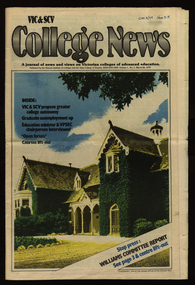
Journal, VIC & SCV College News, 26/03/1979
... Williams Committee report VIC & SCV propose greater autonomy Graduate employment up Education Minister & VPSEC chairperson interviewed Course liftout...Victoria Institute of Colleges newspaper victorian colelges of advanced education state College of Victoria 3rrr Williams Committee report VIC & SCV propose greater autonomy Graduate employment up Education Minister & VPSEC chairperson interviewed Course liftout Volume 1, Number 2, 1978 Volume 1, Number 1 - 28 pages, March 1979 Volume 1, Number 2, May 1979 VIC & SCV College News Journal ...Volume 1, Number 2, 1978 Volume 1, Number 1 - 28 pages, March 1979 Volume 1, Number 2, May 1979 Williams Committee report VIC & SCV propose greater autonomy Graduate employment up Education Minister & VPSEC chairperson interviewed Course liftoutvictoria institute of colleges, newspaper, victorian colelges of advanced education, state college of victoria, 3rrr -
 Bendigo Historical Society Inc.
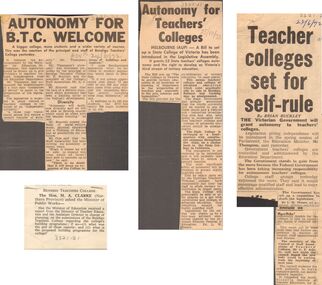
Document - LA TROBE UNIVERSITY BENDIGO COLLECTION: AUTONOMY FOR B.T.C. WELCOME
... A collection of Bendigo Advertiser articles relating to the autonomy legislation and expansion of Bendigo Teachers College 22/6/1972 and 24/6/1972. ...Document LA TROBE UNIVERSITY BENDIGO COLLECTION: AUTONOMY FOR B.T.C. WELCOME ...A collection of Bendigo Advertiser articles relating to the autonomy legislation and expansion of Bendigo Teachers College 22/6/1972 and 24/6/1972. There is also a page from Victorian Government Council with questions relating to the College's building plan. 2/5/1972.bendigo, education, bendigo teachers' college, la trobe university bendigo collection, collection, bendigo education, bendigo teachers' college, bendigo teachers' college autonomy, victorian education department, mr. k. c. scarrott, mr. k. c. cole, mr. lindsay thompson, the hon. m.a. clarke, hon. murray byrne, education department victoria, state college of victoria, tertiary education, teacher training -
 Kew Historical Society Inc
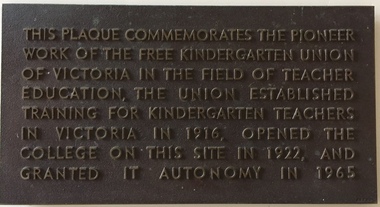
Plaque - Commemorative Plaque, Free Kindergarten Union of Victoria, Commemoration of the Free Kindergarten Union of Victoria, circa 1965, c.1965
... "This plaque commemorates the pioneer work of the Free Kindergarten Union of Victoria in the field of teacher education, the Union established training for kindergarten teachers in Victoria in 1916, opened the college on this site in 1922, and granted it autonomy on 1965."...Plaque recognising the site of an important educational institution for teacher training. institute of early childhood development - kew (vic) free kindergarten union of victoria early childhood education - kew - victoria "This plaque commemorates the pioneer work of the Free Kindergarten Union of Victoria in the field of teacher education, the Union established training for kindergarten teachers in Victoria in 1916, opened the college on this site in 1922, and granted it autonomy on 1965." Bronze plaque with raised lettering commemorating the role of the Free Kindergarten Union of Victoria which had opened in 1916 Commemoration of the Free Kindergarten Union of Victoria, circa 1965 Plaque Commemorative Plaque Free Kindergarten Union of Victoria ...The Free Kindergarten Union of Victoria commenced teacher training in 1909. A two year course was run in cooperation with the Education Department in 1910-14, but from 1917 the Union trained its students independently. In 1922 the Kindergarten Training College was established in Mooroolbeek, Kew. In 1965, the institution, as the Melbourne Kindergarten Teachers' College, became an entity separate from the Union, and in 1973 joined the State College of Victoria as the Institute of Early Childhood Development. It subsequently amalgamated with the University of Melbourne to become the Department of Early Childhood Studies and moved from Madden Grove, Kew, to 234 Queensberry St, Carlton, early in July 1997.Plaque recognising the site of an important educational institution for teacher training.Bronze plaque with raised lettering commemorating the role of the Free Kindergarten Union of Victoria which had opened in 1916"This plaque commemorates the pioneer work of the Free Kindergarten Union of Victoria in the field of teacher education, the Union established training for kindergarten teachers in Victoria in 1916, opened the college on this site in 1922, and granted it autonomy on 1965."institute of early childhood development - kew (vic), free kindergarten union of victoria, early childhood education - kew - victoria -
 Ringwood and District Historical Society
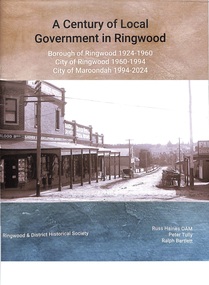
Book, Russ Haines OAM, Peter Tully, Ralph Bartlett et al, A Century of Local Government in Ringwood, 2024
... Chapters include Early Ringwood, Buildup to Autonomy, Formation of the Borough, Ringwood Councillors, and Ringwood Symbols and Flags (vexillology and semiotics)....Chapters include Early Ringwood, Buildup to Autonomy, Formation of the Borough, Ringwood Councillors, and Ringwood Symbols and Flags (vexillology and semiotics). ...Soft-covered A4 size book by Ringwood & District Historical Society subtitled Borough of Ringwood 1924-1960, City of Ringwood 1960-1994, City of Maroondah 1994-2024. Chapters include Early Ringwood, Buildup to Autonomy, Formation of the Borough, Ringwood Councillors, and Ringwood Symbols and Flags (vexillology and semiotics).RDHS kindly acknowledges the encouragement and donation by member Thomas Guest for this booklet. All images are from the Ringwood Community Archives, except flags and crests on pages 56 & 58 (Ralph Bartlett and Maroondah City Council). -
 Melbourne Tram Museum
Document - Report, "The Survival of Melbourne's Trams", c1990
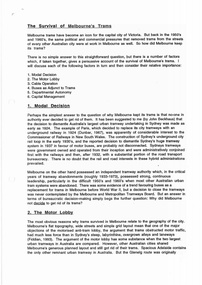
... Article looks at the factors behind the survival - modal decision, the motor lobby, cable operation, buses and trams (compares extensively to that of Sydney), departmental autonomy and capital management. Looks at the history of Melbourne trams up the retirement of Robert Risson. ...Article looks at the factors behind the survival - modal decision, the motor lobby, cable operation, buses and trams (compares extensively to that of Sydney), departmental autonomy and capital management. Looks at the history of Melbourne trams up the retirement of Robert Risson. ...Digital image of a report - 12 pages - titled "The Survival of Melbourne's Trams". Article looks at the factors behind the survival - modal decision, the motor lobby, cable operation, buses and trams (compares extensively to that of Sydney), departmental autonomy and capital management. Looks at the history of Melbourne trams up the retirement of Robert Risson. Has a list of notes and sources. Author not given.trams, tramways, history, significance, mmtb, melbourne, tramways, transport, buses, sydney, closure -
 Lara RSL Sub Branch
Card, UN Disarmament, Apprehension and Detention Card
... The United Nations Transitional Administration in East Timor (UNTAET) provided an interim civil administration and a peacekeeping mission in the territory of East Timor, from its establishment on 25 October 1999,[1] until its independence on 20 May 2002, following the outcome of the East Timor Special Autonomy Referendum. This card instructs personnel the correct procedure for the disarmament, apprehension and detention....The United Nations Transitional Administration in East Timor (UNTAET) provided an interim civil administration and a peacekeeping mission in the territory of East Timor, from its establishment on 25 October 1999,[1] until its independence on 20 May 2002, following the outcome of the East Timor Special Autonomy Referendum. This card instructs personnel the correct procedure for the disarmament, apprehension and detention. military army timor east timor united nations un card laminated untaet untaet pkf pkf green card disarmament apprehension detention A green UN Disarmament, Apprehension and Detention Card that has writing on both sides. ...The United Nations Transitional Administration in East Timor (UNTAET) provided an interim civil administration and a peacekeeping mission in the territory of East Timor, from its establishment on 25 October 1999,[1] until its independence on 20 May 2002, following the outcome of the East Timor Special Autonomy Referendum. This card instructs personnel the correct procedure for the disarmament, apprehension and detention.A green UN Disarmament, Apprehension and Detention Card that has writing on both sides. Used by United Nation Forces in East Timor.military, army, timor, east timor, united nations, un, card, laminated, untaet, untaet pkf, pkf, green card, disarmament, apprehension, detention -
 Hymettus Cottage & Garden Ballarat
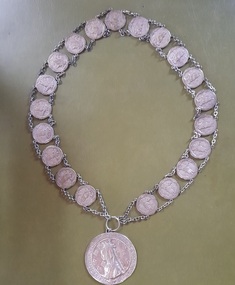
Decorative object - souvenir chain medallion necklace, Ann de Breton Medallion
... She devoted her life to safeguarding the autonomy of Brittany within the kingdom of France. ...She devoted her life to safeguarding the autonomy of Brittany within the kingdom of France. ...Anne de Breton was the duchess of Brittany and twice queen consort of France. She devoted her life to safeguarding the autonomy of Brittany within the kingdom of France. The main medallion has her likeness against the fleur-de-lis of France and the Breton ermine, heraldic symbol of Brittany symbolising the union she bought about. The background as to where the medallion chain originally came from is still being researched.A souvenir medallion symbol representing a Celtic peoples that connects with this Australian home originally of a Celtic Irish settler family and maintained by the family over four generations for the past 127 years. The large medallion is a pewter copy of that issued upon the marriage of Anne de Breton and Louis XII of France. A chain with ten small medallions carrying an image symbolic of Brittany linked to a large medallion with the popular image of Ann de Breton copied from that issued upon her marriage to the King of France.france, brittany, medallion, souvenir, pewter -
 Embroiderers Guild, Victoria
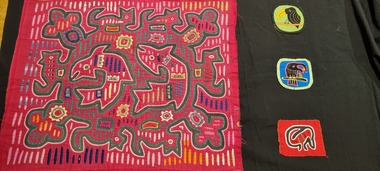
Accessory - San Blas Mola Panel
... Following 1925 Guna Revolution, securing their autonomy, making and wearing Molas became a symbol of cultural identity and independence....Following 1925 Guna Revolution, securing their autonomy, making and wearing Molas became a symbol of cultural identity and independence. ...traditional hand sewn crafted by indigenous Guna (Kuna) people of the San Blas Islands, panama and Colombia. Usually made in pairs to decorate the front and back of a Guna woman's blouse. Artists fill nearly all the spaces, traditionally believed to leave no room for evil spirits to settle. Evolving from ancestral geometric body painting. Following 1925 Guna Revolution, securing their autonomy, making and wearing Molas became a symbol of cultural identity and independence.Black panel with rectangle of reverse applique in very bright colours - orange, blue, pink, black, with red fabric predominant. Depicting two dolphins/sharks. Three separate motifs depict birds. Part of Mola - traditional garment.embroidery, mola, reverse applique -
 City of Stonnington
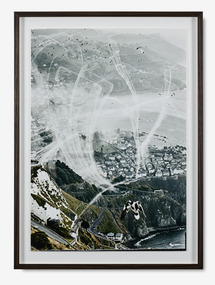
Trent Crawford, Velocities I (Gerardo Dottori), 2024
... ...Autonomy...Stonnington contemporary art collection Trent Crawford Print Inkjet Futurist Aeropainting Machine Technology Drone Autonomy Velocities I (Gerardo Dottori) Trent Crawford ...Melbourne-based artist Trent Crawford explores how emerging technologies and autonomous systems alter human perception. Velocities I (Gerardo Dottori), traces its lineage back to Italian Futurist painter Gerardo Dottori’s 1942 masterpiece, Aerial Battle over the Gulf of Naples. Dottori’s generation pioneered ‘aeropainting’, using the novel thrill of airplane cockpits to depict dynamic speed and a radical spatial orientation. Crawford contrasts this historic, highly embodied human experience of flight with the cold reality of today's autonomous machine vision. Using the debossed, archival inkjet print process, Crawford strips away the human ‘lens’ and replaces it with that of a computer or machine. The resulting composition points to a modern state of our aero landscape viewed through the automated ‘eyes’ of satellites and drones. Through this haunting visual reorientation, Crawford prompts us to consider the dizzying ideological shifts triggered by our own rapid technological acceleration. Italian Futuristsstonnington contemporary art collection, trent crawford, print, inkjet, futurist, aeropainting, machine, technology, drone, autonomy -
 Northern District School of Nursing. Managed by Bendigo Historical Society Inc.
Poster - Sympathetic & Para-Sympathetic Nervous System, 1947
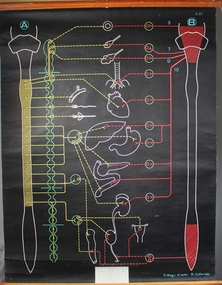
... It was the first independent school of nursing in Victoria and continued until it closed in 1989 The sympathetic and parasympathetic nervous systems are the two main divisions of the autonomic nervous system, and they generally act in opposition to each other to maintain homeostasis. ...It was the first independent school of nursing in Victoria and continued until it closed in 1989 The sympathetic and parasympathetic nervous systems are the two main divisions of the autonomic nervous system, and they generally act in opposition to each other to maintain homeostasis. ...Educational teaching chart used at the Northern District School of Nursing, Rowan Street, Bendigo. The Northern District School of Nursing opened in 1950 in to address the issues around nurse recruitment, training and education that had previously been hospital based. The residential school was to provide theoretical and in-house education and practical training over three years. The students would also receive practical hands-on training in the wards of associated hospitals. The Northern District School of Nursing operated from Lister House, Rowan Street, Bendigo. It was the first independent school of nursing in Victoria and continued until it closed in 1989 The sympathetic and parasympathetic nervous systems are the two main divisions of the autonomic nervous system, and they generally act in opposition to each other to maintain homeostasis. The sympathetic nervous system (SNS) is responsible for the "fight-or-flight" response, preparing the body for action, while the parasympathetic nervous system (PSNS) is responsible for the "rest-and-digest" response, promoting relaxation and recovery. See French artist Paul Sougy. https://www.themarginalian.org/2019/11/29/paul-sougy/ Coloured educational Schematic chart of the Sympathetic and Para-Sympathetic Nervous systems. Black paper with coloured lines and wooden header and footer. Written on lower Right - P. d'apre R. Collin.1947. Written on a white label in the lower middle - Supplied by Adam, Rouilly & Co LTD. Human Osteology Anatomy, Shropshire House, 179 Tottenham Court Road, London, W.1. Telephone Museum 2703. Written on the rear - PRINTED IN FRANCEeducation chart, nurse training, lister house, northern district school of nursing, the sympathetic nervous system, paul sougy -
 Bendigo Historical Society Inc.
Booklet - Michele Matthews Collection - 2004 Sir John Quick Bendigo Lecture - "Integration, Quick Smart: Disability and Community", 04/02/2025
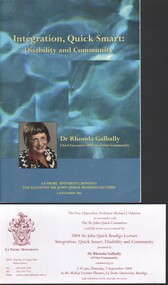
... Our approach to disablement must be founded on the principles that: * everyone is equal * everyone is entitled to respect and personal autonomy * everyone is entitled to have his or her basic needs met. ...Our approach to disablement must be founded on the principles that: * everyone is equal * everyone is entitled to respect and personal autonomy * everyone is entitled to have his or her basic needs met. ...La Trobe University, Sir John Quick annual lectureMichele Matthews Collection - 2004 Sir John Quick Bendigo Lecture - "Integration, Quick Smart: Disability and Community". presented by Dr Rhonda Galbally at 5:45 PM on Thursday 2 September 2004 in the McKay Lecture Theatre, La Trobe University, Bendigo. Invitation, agenda and lecture notes provided. All our social systems tend to work on the basis of a "medical model" of disablement, where problems are an individual matter based on the consequences of disease or trauma. The "social model", in contrast, sees disablement not as an attribute of the individual but a collection of conditions, many of them created by the social environment. A social justice model provides the opportunity to bring people with disabilities back from the margins and to integrate their needs on an equal footing. Our approach to disablement must be founded on the principles that: * everyone is equal * everyone is entitled to respect and personal autonomy * everyone is entitled to have his or her basic needs met. sir john quick annual lecture, disability, rhonda galbally -
Broadmeadows Historical Society & Museum
Book - Community History, Elaine V Brogan OAM, Fifty years 1969-2019: History of the Western Metropolitan group of Historical Societies, 2019
... The WMG provided a platform for cooperation while respecting the autonomy and unique focus of each member society. ...The WMG provided a platform for cooperation while respecting the autonomy and unique focus of each member society. ...Fifty Years of the WMGHS, from 196948-page white book with stapled card coversnon-fictionFifty Years of the WMGHS, from 1969western metropolitan group of historical societies, 1969, 2019, elaine v. brogan oam -
 Federation University Historical Collection
Book, Ballarat College of Advanced Education Annual Report, 1980
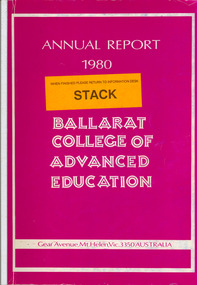
... Such efforts by the two central authorities have markedly assisted in bringing the College to the present point where its accumulated experiences and traditions provide a sound basis on which it can confidently and responsibly exercise the greater autonomy gradually passing it. ...Such efforts by the two central authorities have markedly assisted in bringing the College to the present point where its accumulated experiences and traditions provide a sound basis on which it can confidently and responsibly exercise the greater autonomy gradually passing it. ballarat college of advanced education bcae mt helen mount helen sandow-quirk widdop leeuwenburg rungkat myers burrow vermeend mccarthy calder fulcher taylor victoria street Purple soft covered book of 47 pages. ...In 1980 M.B.John was Council President. In 1980 the School of Arts moved into their new building, 1870 Founders Hall was financed - at a cost of $800,000 - from the proceeds of the SMB Centenary Appeal, and was completed late in 1980. Extensive work was carried out on the Student Residences and the former Education Department Hostel in Victorian Street. The amphitheatre adjacent to the eastern side of the Education Buildings was constructed, together with the nearby disabled ramp. Negotiations with the Shire of Buninyong were continued for access to the campus from the Green Hill Road. Following the creation by Act of Parliament in 1978 of the Victorian Post-Secondary Education Commission (VPSEC) amendments to the same Act early in 1980 made provision for the repeal of the VIC and SCV Acts. From mid-December 1980 these latter two bodies ceased to exist when the provisions for repeal of their Acts were proclaimed. The Victorian Institute of Colleges had been set up in 1965 to aid in the co-ordination and development of a number of non-university tertiary institutions that affiliated with it from 1965 on to become Colleges of Advanced Education. In taking up this role which had been spelt out in 1964 by the martin Committee, the VIC broke new ground in a whole range of operations. It became responsible for the physical development of new building programmes and new campuses from many of its colleges, for the procurement of operating funds from the Commonwealth, for the accreditation of new courses of study, for the first non-university degrees to be awarded in Australia and so on. The Former Ballarat Institute of Advanced Education (the tertiary division of the School of Mines) was affiliated with the VIC from the outset and its progress towards a new status, rapid growth and vastly improved physical resources was closely linked to and dependent upon the efforts of the VIC. The similar co-ordinating authority - The State College of Victoria - was established in 1973 to similarly foster the autonomous development of the former teachers colleges. its early work was highly influential in the transition of the Ballarat Teachers' College into the State College of Victoria at Ballarat. On the merging of the BIAE and the SCVB in 1976, the new college continued under the co-ordination of the Victorian Institute of Colleges. The major contribution made to the progress and stature of became the Ballarat College of advanced Education by both the VIC and SCV, and their Councils and officers, over the formative years of rapid change and evolution is acknowledged and recorded with appreciation. Such efforts by the two central authorities have markedly assisted in bringing the College to the present point where its accumulated experiences and traditions provide a sound basis on which it can confidently and responsibly exercise the greater autonomy gradually passing it. Purple soft covered book of 47 pages. Contents include: development of a Nurse education course, College organisational Structure, Role of Head of School, resignation of Norman Baggaley, appointment of R. Macgowan, opening of Business Resource Centre, Librarianship, resignation of M.J. Sandow-Quirk, E.A. Widdop, J. Leeuwenburg, Thelma Rungkat, Erica Myers, former Acting Head of School John Mildren elected to the Federal seat of Ballarat, Ray Watson, Resignation of A.C. Burrow, return of W.J. Vermeend, P.L. McCarthy, P.R. Calder, J.A. Fulcher, L.E. Taylor, L.J. McGrath, Teaching Resource Centreballarat college of advanced education, bcae, mt helen, mount helen, sandow-quirk, widdop, leeuwenburg, rungkat, myers, burrow, vermeend, mccarthy, calder, fulcher, taylor, victoria street -
 Sunshine and District Historical Society Incorporated
Administrative record - City of Sunshine - Commissioner Mr Alexander Alex George Gillon Collection 1976 - 1982 - Notice of ordinary meeting of the council of the City of Sunshine to be held on 21st September 1977, City of Sunshine, 14th September 1977
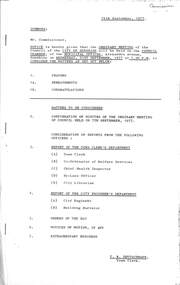
... Oval Deer Park Main Transmission Line Easement Keilor Terminal Station to Truganina Terminal Station Easement Street Construction Agreement Printing of Historical Society Book "Sunshine & District to 1901) and Secretarial Assistance Proposal for Re-Zoning of Zone 7 (Derrimut) Community School Agreements Acquisition of Lots 43 & 44 Northumberland Road Arbitration for Compensation Officers Co-Ordinating Committee Autonomy of Departments Brochure on Council Services Community Notice Boards Report of the Co-Ordinator of Welfare Services The 21st Victorian Geriatrics Conference Family and Community Services Programmes Employment and Industry Problem in the Western Region Diamond Reserve Committee of Management Diamond Reserve Kindergarten Report of the By-Laws Officer Removal of Fire Hazards Dog Act Fixing of Registration Fees Report of the City Engineer Land Use Permit Application Car Park to Serve Existing Display Home Centre lot 1171 Main Road West Land Use Permit Application Extension to Existing Shop and Storage Purposes 229 Hampshire Road Land Use Permit Application Radio Mast 552 Geelong Road Land Use Permit Application Show Room Extension to Existing Caravan and Car Sales Yard Lot 1 Geelong Road Melbourne Metropolitan Planning Scheme Amendments Land Use Permit Application Social Club Furlong Road Land Use Permit Application Extension to Existing Shop and Dwelling 82 Glengala Road Land Use Permit Application Extension to Existing Shop 67 McIntyre Road Land Use Permit Application Car Sales Yard Lots 8, 9, 10, 11, 13 & Part 12 Rosamond Road Land Use Permit Application Illuminated Sky Sign 242 Hampshire Road Land Use Permit Application Access to Main Road Geelong Road Land Use Permit Application Squash Court Centre Lots 8, 9, 10, 11, 13 & Part 12 Rosamond Road Land Use Permit Application Advertising Lots 5 & 6 Ballarat Road Land Use Permit Application Extension to Existing Shop and Addition of Caretakers Dwelling 87 Glengala Road Land Use Permit Application Bon Thomas Reserve Pre-School Centre Industrial Offensive Zoned Land Laverton North Shire of Werribee Plan of Subdivision Geelong Road & Francis Street Strata Subdivision 14 Forrest Street Outer Ring Road Study Acquisition of Road Reserve Somerville Road from Market Road to Kororoit Creek (For Future Bridge & Road Connection) Summer School of Park Management Application for Funds for 1978/79 Country Roads Board Report of Building Surveyor Flood Plain Management in Victoria Purchase of Land Adjacent Lot 63 Roussac Court Sunshine North Fencing Lot 343 Anley Place Ex G.U.D. ...Oval Deer Park Main Transmission Line Easement Keilor Terminal Station to Truganina Terminal Station Easement Street Construction Agreement Printing of Historical Society Book "Sunshine & District to 1901) and Secretarial Assistance Proposal for Re-Zoning of Zone 7 (Derrimut) Community School Agreements Acquisition of Lots 43 & 44 Northumberland Road Arbitration for Compensation Officers Co-Ordinating Committee Autonomy of Departments Brochure on Council Services Community Notice Boards Report of the Co-Ordinator of Welfare Services The 21st Victorian Geriatrics Conference Family and Community Services Programmes Employment and Industry Problem in the Western Region Diamond Reserve Committee of Management Diamond Reserve Kindergarten Report of the By-Laws Officer Removal of Fire Hazards Dog Act Fixing of Registration Fees Report of the City Engineer Land Use Permit Application Car Park to Serve Existing Display Home Centre lot 1171 Main Road West Land Use Permit Application Extension to Existing Shop and Storage Purposes 229 Hampshire Road Land Use Permit Application Radio Mast 552 Geelong Road Land Use Permit Application Show Room Extension to Existing Caravan and Car Sales Yard Lot 1 Geelong Road Melbourne Metropolitan Planning Scheme Amendments Land Use Permit Application Social Club Furlong Road Land Use Permit Application Extension to Existing Shop and Dwelling 82 Glengala Road Land Use Permit Application Extension to Existing Shop 67 McIntyre Road Land Use Permit Application Car Sales Yard Lots 8, 9, 10, 11, 13 & Part 12 Rosamond Road Land Use Permit Application Illuminated Sky Sign 242 Hampshire Road Land Use Permit Application Access to Main Road Geelong Road Land Use Permit Application Squash Court Centre Lots 8, 9, 10, 11, 13 & Part 12 Rosamond Road Land Use Permit Application Advertising Lots 5 & 6 Ballarat Road Land Use Permit Application Extension to Existing Shop and Addition of Caretakers Dwelling 87 Glengala Road Land Use Permit Application Bon Thomas Reserve Pre-School Centre Industrial Offensive Zoned Land Laverton North Shire of Werribee Plan of Subdivision Geelong Road & Francis Street Strata Subdivision 14 Forrest Street Outer Ring Road Study Acquisition of Road Reserve Somerville Road from Market Road to Kororoit Creek (For Future Bridge & Road Connection) Summer School of Park Management Application for Funds for 1978/79 Country Roads Board Report of Building Surveyor Flood Plain Management in Victoria Purchase of Land Adjacent Lot 63 Roussac Court Sunshine North Fencing Lot 343 Anley Place Ex G.U.D. ...Notice of Ordinary Meeting of the Council of the City of Sunshine to be held on 21st September 1977 Report of the Town Clerk's Department Report of the Town Clerk Estimates Schedules Proposed Agreements with Councils in Relation to New Garbage Tip Sunshine Tip City of Brunswick, City of Essendon, City of Melbourne, City of South Melbourne, City of Fitzroy, City of Richmond & City of Keilor Chaplin Reserve Proposed New Lease Additional Rent Sunshine City Soccer Club Names of Proposed Railway Station Deer Park "Crick" or "Pollard" Proposed Purchase Tip Site from Boral Resources Pty Ltd Sunshine Tip Purchase of I.C.I. Oval Deer Park Main Transmission Line Easement Keilor Terminal Station to Truganina Terminal Station Easement Street Construction Agreement Printing of Historical Society Book "Sunshine & District to 1901) and Secretarial Assistance Proposal for Re-Zoning of Zone 7 (Derrimut) Community School Agreements Acquisition of Lots 43 & 44 Northumberland Road Arbitration for Compensation Officers Co-Ordinating Committee Autonomy of Departments Brochure on Council Services Community Notice Boards Report of the Co-Ordinator of Welfare Services The 21st Victorian Geriatrics Conference Family and Community Services Programmes Employment and Industry Problem in the Western Region Diamond Reserve Committee of Management Diamond Reserve Kindergarten Report of the By-Laws Officer Removal of Fire Hazards Dog Act Fixing of Registration Fees Report of the City Engineer Land Use Permit Application Car Park to Serve Existing Display Home Centre lot 1171 Main Road West Land Use Permit Application Extension to Existing Shop and Storage Purposes 229 Hampshire Road Land Use Permit Application Radio Mast 552 Geelong Road Land Use Permit Application Show Room Extension to Existing Caravan and Car Sales Yard Lot 1 Geelong Road Melbourne Metropolitan Planning Scheme Amendments Land Use Permit Application Social Club Furlong Road Land Use Permit Application Extension to Existing Shop and Dwelling 82 Glengala Road Land Use Permit Application Extension to Existing Shop 67 McIntyre Road Land Use Permit Application Car Sales Yard Lots 8, 9, 10, 11, 13 & Part 12 Rosamond Road Land Use Permit Application Illuminated Sky Sign 242 Hampshire Road Land Use Permit Application Access to Main Road Geelong Road Land Use Permit Application Squash Court Centre Lots 8, 9, 10, 11, 13 & Part 12 Rosamond Road Land Use Permit Application Advertising Lots 5 & 6 Ballarat Road Land Use Permit Application Extension to Existing Shop and Addition of Caretakers Dwelling 87 Glengala Road Land Use Permit Application Bon Thomas Reserve Pre-School Centre Industrial Offensive Zoned Land Laverton North Shire of Werribee Plan of Subdivision Geelong Road & Francis Street Strata Subdivision 14 Forrest Street Outer Ring Road Study Acquisition of Road Reserve Somerville Road from Market Road to Kororoit Creek (For Future Bridge & Road Connection) Summer School of Park Management Application for Funds for 1978/79 Country Roads Board Report of Building Surveyor Flood Plain Management in Victoria Purchase of Land Adjacent Lot 63 Roussac Court Sunshine North Fencing Lot 343 Anley Place Ex G.U.D. Premises Burton Crescent Maribyrnong Ainsworth Reserve Child Care Centre / Pavilion Extraordinary Business Use of Sassella Park Removal of Fence Around Proposed Swimming Pool, Layout of Athletics Track & Hockey Pitch Orders of the Day Confirmation of Loan with the Australian Mutual Provident Society city of sunshine, alexander "alex" george gillon, sunshine tip, chaplin reserve, anderson road, sunshine, sunshine city soccer club, i.c.i. oval, ballarat road, deer park, keilor terminal station, truganina terminal station, northumberland road, sunshine north, diamond reserve committee of management, diamond reserve kindergarten, main road west, st. albans, hampshire road, geelong road, brooklyn, furlong road, glengala road, sunshine west, mcintyre road, rosamond road, maribyrnong, bon thomas reserve pre-school centre, bon thomas reserve, quinn street, francis street, forrest street, albion, somerville road, market road, roussac court, anley place, burton crescent, g.u.d., sassella park, station road -
 Sunshine and District Historical Society Incorporated
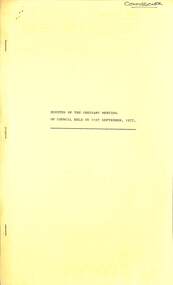
Administrative record - City of Sunshine - Commissioner Mr Alexander Alex George Gillon Collection 1976 - 1982 - Minutes of the ordinary meeting of council held on 21st September 1977, City of Sunshine, 21st September 1977
... Oval Deer Park Main Transmission Line Easement Keilor Terminal Station to Truganina Terminal Station Easement Street Construction Agreement Printing of Historical Society Book "Sunshine & District to 1901) and Secretarial Assistance Proposal for Re-Zoning of Zone 7 (Derrimut) Community School Agreements Acquisition of Lots 43 & 44 Northumberland Road Arbitration for Compensation Officers Co-Ordinating Committee Autonomy of Departments Brochure on Council Services Community Notice Boards Report of the Co-Ordinator of Welfare Services The 21st Victorian Geriatrics Conference Family and Community Services Programmes Employment and Industry Problem in the Western Region Diamond Reserve Committee of Management Diamond Reserve Kindergarten Report of the By-Laws Officer Removal of Fire Hazards Dog Act Fixing of Registration Fees Report of the City Engineer Land Use Permit Application Car Park to Serve Existing Display Home Centre lot 1171 Main Road West Land Use Permit Application Extension to Existing Shop and Storage Purposes 229 Hampshire Road Land Use Permit Application Radio Mast 552 Geelong Road Land Use Permit Application Show Room Extension to Existing Caravan and Car Sales Yard Lot 1 Geelong Road Melbourne Metropolitan Planning Scheme Amendments Land Use Permit Application Social Club Furlong Road Land Use Permit Application Extension to Existing Shop and Dwelling 82 Glengala Road Land Use Permit Application Extension to Existing Shop 67 McIntyre Road Land Use Permit Application Car Sales Yard Lots 8, 9, 10, 11, 13 & Part 12 Rosamond Road Land Use Permit Application Illuminated Sky Sign 242 Hampshire Road Land Use Permit Application Access to Main Road Geelong Road Land Use Permit Application Squash Court Centre Lots 8, 9, 10, 11, 13 & Part 12 Rosamond Road Land Use Permit Application Advertising Lots 5 & 6 Ballarat Road Land Use Permit Application Extension to Existing Shop and Addition of Caretakers Dwelling 87 Glengala Road Land Use Permit Application Bon Thomas Reserve Pre-School Centre Industrial Offensive Zoned Land Laverton North Shire of Werribee Plan of Subdivision Geelong Road & Francis Street Strata Subdivision 14 Forrest Street Outer Ring Road Study Acquisition of Road Reserve Somerville Road from Market Road to Kororoit Creek (For Future Bridge & Road Connection) Summer School of Park Management Application for Funds for 1978/79 Country Roads Board Report of Building Surveyor Flood Plain Management in Victoria Purchase of Land Adjacent Lot 63 Roussac Court Sunshine North Fencing Lot 343 Anley Place Ex G.U.D. ...Oval Deer Park Main Transmission Line Easement Keilor Terminal Station to Truganina Terminal Station Easement Street Construction Agreement Printing of Historical Society Book "Sunshine & District to 1901) and Secretarial Assistance Proposal for Re-Zoning of Zone 7 (Derrimut) Community School Agreements Acquisition of Lots 43 & 44 Northumberland Road Arbitration for Compensation Officers Co-Ordinating Committee Autonomy of Departments Brochure on Council Services Community Notice Boards Report of the Co-Ordinator of Welfare Services The 21st Victorian Geriatrics Conference Family and Community Services Programmes Employment and Industry Problem in the Western Region Diamond Reserve Committee of Management Diamond Reserve Kindergarten Report of the By-Laws Officer Removal of Fire Hazards Dog Act Fixing of Registration Fees Report of the City Engineer Land Use Permit Application Car Park to Serve Existing Display Home Centre lot 1171 Main Road West Land Use Permit Application Extension to Existing Shop and Storage Purposes 229 Hampshire Road Land Use Permit Application Radio Mast 552 Geelong Road Land Use Permit Application Show Room Extension to Existing Caravan and Car Sales Yard Lot 1 Geelong Road Melbourne Metropolitan Planning Scheme Amendments Land Use Permit Application Social Club Furlong Road Land Use Permit Application Extension to Existing Shop and Dwelling 82 Glengala Road Land Use Permit Application Extension to Existing Shop 67 McIntyre Road Land Use Permit Application Car Sales Yard Lots 8, 9, 10, 11, 13 & Part 12 Rosamond Road Land Use Permit Application Illuminated Sky Sign 242 Hampshire Road Land Use Permit Application Access to Main Road Geelong Road Land Use Permit Application Squash Court Centre Lots 8, 9, 10, 11, 13 & Part 12 Rosamond Road Land Use Permit Application Advertising Lots 5 & 6 Ballarat Road Land Use Permit Application Extension to Existing Shop and Addition of Caretakers Dwelling 87 Glengala Road Land Use Permit Application Bon Thomas Reserve Pre-School Centre Industrial Offensive Zoned Land Laverton North Shire of Werribee Plan of Subdivision Geelong Road & Francis Street Strata Subdivision 14 Forrest Street Outer Ring Road Study Acquisition of Road Reserve Somerville Road from Market Road to Kororoit Creek (For Future Bridge & Road Connection) Summer School of Park Management Application for Funds for 1978/79 Country Roads Board Report of Building Surveyor Flood Plain Management in Victoria Purchase of Land Adjacent Lot 63 Roussac Court Sunshine North Fencing Lot 343 Anley Place Ex G.U.D. ...Minutes of the Ordinary Meeting of Council held on 21st September 1977 Report of the Town Clerk's Department Report of the Town Clerk Estimates Schedules Proposed Agreements with Councils in Relation to New Garbage Tip Sunshine Tip City of Brunswick, City of Essendon, City of Melbourne, City of South Melbourne, City of Fitzroy, City of Richmond & City of Keilor Chaplin Reserve Proposed New Lease Additional Rent Sunshine City Soccer Club Names of Proposed Railway Station Deer Park "Crick" or "Pollard" Proposed Purchase Tip Site from Boral Resources Pty Ltd Sunshine Tip Purchase of I.C.I. Oval Deer Park Main Transmission Line Easement Keilor Terminal Station to Truganina Terminal Station Easement Street Construction Agreement Printing of Historical Society Book "Sunshine & District to 1901) and Secretarial Assistance Proposal for Re-Zoning of Zone 7 (Derrimut) Community School Agreements Acquisition of Lots 43 & 44 Northumberland Road Arbitration for Compensation Officers Co-Ordinating Committee Autonomy of Departments Brochure on Council Services Community Notice Boards Report of the Co-Ordinator of Welfare Services The 21st Victorian Geriatrics Conference Family and Community Services Programmes Employment and Industry Problem in the Western Region Diamond Reserve Committee of Management Diamond Reserve Kindergarten Report of the By-Laws Officer Removal of Fire Hazards Dog Act Fixing of Registration Fees Report of the City Engineer Land Use Permit Application Car Park to Serve Existing Display Home Centre lot 1171 Main Road West Land Use Permit Application Extension to Existing Shop and Storage Purposes 229 Hampshire Road Land Use Permit Application Radio Mast 552 Geelong Road Land Use Permit Application Show Room Extension to Existing Caravan and Car Sales Yard Lot 1 Geelong Road Melbourne Metropolitan Planning Scheme Amendments Land Use Permit Application Social Club Furlong Road Land Use Permit Application Extension to Existing Shop and Dwelling 82 Glengala Road Land Use Permit Application Extension to Existing Shop 67 McIntyre Road Land Use Permit Application Car Sales Yard Lots 8, 9, 10, 11, 13 & Part 12 Rosamond Road Land Use Permit Application Illuminated Sky Sign 242 Hampshire Road Land Use Permit Application Access to Main Road Geelong Road Land Use Permit Application Squash Court Centre Lots 8, 9, 10, 11, 13 & Part 12 Rosamond Road Land Use Permit Application Advertising Lots 5 & 6 Ballarat Road Land Use Permit Application Extension to Existing Shop and Addition of Caretakers Dwelling 87 Glengala Road Land Use Permit Application Bon Thomas Reserve Pre-School Centre Industrial Offensive Zoned Land Laverton North Shire of Werribee Plan of Subdivision Geelong Road & Francis Street Strata Subdivision 14 Forrest Street Outer Ring Road Study Acquisition of Road Reserve Somerville Road from Market Road to Kororoit Creek (For Future Bridge & Road Connection) Summer School of Park Management Application for Funds for 1978/79 Country Roads Board Report of Building Surveyor Flood Plain Management in Victoria Purchase of Land Adjacent Lot 63 Roussac Court Sunshine North Fencing Lot 343 Anley Place Ex G.U.D. Premises Burton Crescent Maribyrnong Ainsworth Reserve Child Care Centre / Pavilion Extraordinary Business Use of Sassella Park Removal of Fence Around Proposed Swimming Pool, Layout of Athletics Track & Hockey Pitch Orders of the Day Confirmation of Loan with the Australian Mutual Provident Society city of sunshine, alexander "alex" george gillon, sunshine tip, albion, chaplin reserve, anderson road, sunshine, sunshine city soccer club, boral resources, i.c.i. oval, ballarat road, deer park, keilor terminal station, truganina terminal station, northumberland road, sunshine north, diamond reserve committee of management, diamond reserve kindergarten, main road west, st. albans, hampshire road, geelong road, brooklyn, furlong road, glengala road, sunshine west, mcintyre road, rosamond road, maribyrnong, bon thomas reserve pre-school centre, bon thomas reserve, quinn street, francis street, forrest street, somerville road, market road, roussac court, g.u.d., burton crescent, ainsworth reserve child care centre, ainsworth reserve, vernon street, sassella park, station road -
 Uniting Church Archives - Synod of Victoria
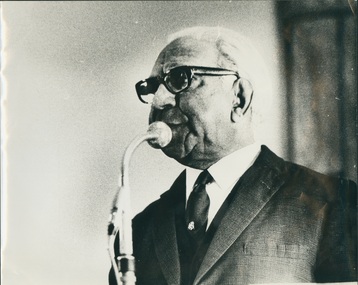
B&W photo of another photo or newspaper photograph of Pastor Sir Douglas Nicholls, Undated
... Doug grew up at Cummeragunja, on the Murray River near Barmah, in its golden years of Aboriginal autonomy. Thomas Shadrach James gave him and other Yorta Yorta children a sound primary education, reinforcing the pride and self-assurance gained from their parents. ...Doug grew up at Cummeragunja, on the Murray River near Barmah, in its golden years of Aboriginal autonomy. Thomas Shadrach James gave him and other Yorta Yorta children a sound primary education, reinforcing the pride and self-assurance gained from their parents. ...Sir Douglas Ralph Nicholls (1906-1988), footballer, pastor, activist and governor, was born on 9 December 1906 at Cummeragunja Aboriginal mission, New South Wales, fifth child of Herbert Nicholls, seasonal worker, and his wife Florence, née Atkinson. Doug grew up at Cummeragunja, on the Murray River near Barmah, in its golden years of Aboriginal autonomy. Thomas Shadrach James gave him and other Yorta Yorta children a sound primary education, reinforcing the pride and self-assurance gained from their parents. As Doug grew, so too did the powers of the State’s Aboriginal Protection Board. Doug’s elder sister Hilda was removed about 1915. When Doug reached 14, he was moved off under the Aborigines Protection Act (1909) to find work. He took a job with dredging teams constructing levees on the Murray. Like other youths in the region Nicholls played Australian rules football, emulating kinsmen who had won local premierships since the 1890s. Doug and his brother Herbert (‘Dowie’) played with Tongala in the mid-1920s. Melbourne football beckoned, Doug trying out unsuccessfully for Carlton in 1927. He signed with the Northcote Victorian Football Association team, despite his nervousness about his Aboriginality, and was given a job with Northcote City Council. ‘Dowie’ joined him for a season. Doug was short at 5 ft 2 ins (158 cm), but muscular and lightning fast. He competed regularly during a boom in professional running, winning many heat and place prizes. In 1929 he won the Nyah and Warracknabeal gifts, earning a sash and £100 in each, together with a case of cutlery in the latter. Using his speed on the wing for Northcote, he produced great spring and agility from his compact body. The Sporting Globe reported in 1929 that ‘he flashes through packs of big men, whisks around small men . . . and attempts marks at the back of any six-footer’. In front-on clashes he was flattened only to rise again. The sole Aborigine in the VFA, he was known affectionately as the ‘flying Abo’ but called worse by his opponents’ barrackers. He competed for five seasons, being named ‘best and fairest’ twice, appearing in three association grand finals and winning in 1929. Keen to earn more than a seasonal wage, in 1931 Nicholls accepted a three-year contract with Jimmy Sharman’s travelling boxing show. The bouts matched opposites, local against tent boxer, white against black, and sometimes men of different sizes. He faced stiff competition from those who wanted to best the noted Melbourne black footballer, the crowd adding racial abuse. A far better footballer than boxer, he copped some punishment. Fighting in the Melbourne Stadium in December 1931, he was described by Truth as ‘slow and awkward’, but packing a ‘good wallop’. In 1932 Sharman, who treated his boxers fairly, released Nicholls to join the Fitzroy Victorian Football League team, which agreed to employ him as its groundsman. He played fifty-four games for Fitzroy over six seasons until knee trouble forced him out in 1937. Winning cups in 1934 and 1935, he played alongside Haydn Bunton and Wilfred (‘Chicken’) Smallhorn. Grand finals eluded him but he represented Victoria twice. Following his mother’s death, Nicholls revisited the Church of Christ chapel in Northcote, where they had worshipped together. On 17 July 1932 he experienced a conversion. He was soon baptised and witnessed openly, leading his fellow footballers to occasional church parades. Nicholls exhibited leadership qualities. William Cooper, founder of the Australian Aborigines’ League and Nicholls’ Yorta Yorta kinsman and fellow Christian, encouraged the young footballer. In February 1935 Cooper, Nicholls and others lobbied Thomas Paterson, the Commonwealth minister for the interior, over the need for Federal control of Aboriginal affairs. Nicholls attended the Day of Mourning protest for Aborigines held in Sydney on 26 January 1938, declaring: ‘after 150 years our people are still influenced and bossed by white people. I know we can proudly hold our own with others if given the chance’. When Cooper retired in November 1940 Nicholls became secretary of the AAL. On 2 June 1941 Nicholls enlisted in the Citizen Military Forces. He trained at Seymour and Bonegilla before being posted to the 29th Battalion. As Major Frank Corr’s batman, he was popular with other soldiers who tolerated his preaching and Bible reading. His army service was brief, however, and he was discharged in Melbourne on compassionate grounds on 22 January 1942. His biographer claimed that the Fitzroy police requested his return to mediate in the racial tensions developing between servicemen and the mostly respectable Aboriginal families living in crowded and dilapidated Fitzroy housing; Aboriginal people maintain that they requested his release. Nicholls began welfare work and religious services from an Aboriginal home in Gertrude Street, Fitzroy. In April 1942, ‘Dowie’ died of road accident trauma, leaving his wife, Gladys, née Bux, and three children. On 26 December 1942 at Moama Methodist Church, New South Wales, Nicholls married her, a caring gesture which developed into a loving partnership. In January 1943 he initiated ‘Aboriginal Sunday’, featuring a gum leaf orchestra and choir. By 1955 this service had moved to July and later evolved into National Aborigines and Islanders Day Observance Committee (NAIDOC) week. Ordained a Churches of Christ pastor in 1945, Nicholls conducted a vigorous ministry from a chapel in Gore Street, Fitzroy. His work survived on donations, a small honorarium, and his employment as team coach (1947) and curator at the Northcote Football Ground. In the 1950s Gladys established grocery and opportunity shops to earn income and provide services. Their house soon overflowed with people in need or visitors to Melbourne. Nicholls also hosted inspiring African American visitors such as the pianist Winifred Attwell and the singer Harry Belafonte. His ministry extended to Aboriginal country communities. Gladys taught Sunday school, undertook endless fund-raising and welfare work beside her husband, and became his greatest supporter and financial manager. They formed an Aboriginal Girls’ Hostel in 1956, for which they acted as house parents, and bought holiday units for Aborigines at Queenscliff. Persistently advocating Aboriginal rights, Nicholls protested about the impact of the Woomera rocket range on the people of the Warburton Ranges, co-ordinated the production of a concert, Out of the Dark, scripted by Jean Campbell, to rectify the omission of Aborigines from Victoria’s Commonwealth jubilee celebrations, and criticised the Victorian Aboriginal Protection Board. In 1957 when the board was transformed into the Aborigines’ Welfare Board, he and Harold Blair were appointed as Aboriginal representatives. Maintaining the stance of a political moderate, he did not bear grudges and sought to build bridges between black and white. He co-operated with any group that aided the cause, including the Council of Aboriginal Rights, whose executive were members of the Communist Party of Australia. This association attracted the attention of the Australian Security Intelligence Organization, which in 1957 began to keep a file on Nicholls. In May 1957 Nicholls formed the Victorian Aborigines Advancement League with Doris Blackburn and Gordon Bryant, a Federal parliamentarian. As its paid field officer and spokesman, Nicholls contested assimilation policies and used film to raise awareness of issues. When the Welfare Board attempted to close Lake Tyers reserve, Gippsland, he resigned in disgust and led a protest march on parliament in May 1963. The AAL also petitioned the United Nations on land rights in June, perhaps the first indigenous body to do so. He argued for new premises at 58 Cunningham Street, Northcote, opened in 1966 as the ‘Doug Nicholls Centre’. In 1958 Nicholls was a foundation member of the Federal Council for Aboriginal Advancement (Federal Council for the Advancement of Aboriginal and Torres Strait Islanders after 1964), which he served as national field officer (1961) and Victorian secretary (1962-63). While an innovator in tactics, he was alarmed by the influence of confrontational ‘black power’ politics in the AAL and resigned as a director amid turmoil on this issue in 1969, claiming the concept was a ‘bitter word’, not needed in Australia. Similar tensions in FCAATSI led him to join with Kath Walker (Oodgeroo Noonuccal) in establishing the short-lived National Tribal Council as an alternative forum. As the AAL leadership moderated their stance, he returned as president (1969-74) of the new all-Aboriginal organisation. He was also a keen patron of the National Aboriginal Sports Foundation, founded in 1969. Many honours were conferred on Nicholls: he was appointed MBE (1957) and OBE (1968) and knighted (1972). In 1962 he was named Victorian ‘Father of the Year’ and the State’s second Aboriginal justice of the peace. Crowned Melbourne’s 1973 King of Moomba, he was declared Bapu Mamus (a Torres Strait term for ‘headman’) by the NTC. On 1 December 1976 Sir Douglas was appointed Governor of South Australia, but his health deteriorated within weeks, making it difficult for him to perform his official duties. In March 1977 he hosted Queen Elizabeth during her royal tour and was appointed KCVO. He relinquished his governorship on 30 April 1977 following a stroke. Ill health continued to dog him during retirement, but he played his Nelson Eddy records, enjoyed his expanding family, and when able, ministered to the Aboriginal Church at the League’s premises. Sir Douglas Nicholls died on 4 June 1988 at Mooroopna, predeceased (1981) by his wife and survived by his five children. He was given a state funeral and buried in tribal ground at Cummeragunja cemetery. Among the many tributes to him are an oval at Northcote, handed to the AAL in 1982, a Canberra suburb gazetted in 1991, and a fellowship for Indigenous leadership established in 2003, all in his name, and a statue of Sir Doug and Lady Nicholls by Louis Laumen, unveiled in 2007 in Parliament Gardens, Melbourne. Sir Douglas Nicholls is shown speaking at a microphone; head and shoulders; dressed in a suit.Pastor Douglas Nicholls -
 Victorian Aboriginal Corporation for Languages
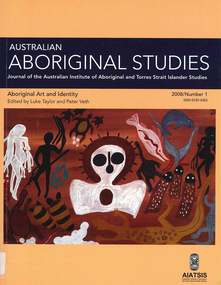
Periodical, Australian Institute of Aboriginal and Torres Strait Islander Studies, Australian Aboriginal studies : journal of the Australian Institute of Aboriginal and Torres Strait Islander Studies, 2008
... At a stylistic level the art now creates a greater sense of family autonomy and yet the subjects link the artists back in to much broader social networks. 5. ...At a stylistic level the art now creates a greater sense of family autonomy and yet the subjects link the artists back in to much broader social networks. 5. ...1. Rock-art of the Western Desert and Pilbara: Pigment dates provide new perspectives on the role of art in the Australian arid zone Jo McDonald (Australian National University) and Peter Veth (Australian National University) Systematic analysis of engraved and painted art from the Western Desert and Pilbara has allowed us to develop a spatial model for discernable style provinces. Clear chains of stylistic connection can be demonstrated from the Pilbara coast to the desert interior with distinct and stylistically unique rock-art bodies. Graphic systems appear to link people over short, as well as vast, distances, and some of these style networks appear to have operated for very long periods of time. What are the social dynamics that could produce unique style provinces, as well as shared graphic vocabularies, over 1000 kilometres? Here we consider language boundaries within and between style provinces, and report on the first dates for pigment rock-art from the Australian arid zone and reflect on how these dates from the recent past help address questions of stylistic variability through space and time. 2. Painting and repainting in the west Kimberley Sue O?Connor, Anthony Barham (Australian National University) and Donny Woolagoodja (Mowanjum Community, Derby) We take a fresh look at the practice of repainting, or retouching, rockart, with particular reference to the Kimberley region of Western Australia. We discuss the practice of repainting in the context of the debate arising from the 1987 Ngarinyin Cultural Continuity Project, which involved the repainting of rock-shelters in the Gibb River region of the western Kimberley. The ?repainting debate? is reviewed here in the context of contemporary art production in west Kimberley Indigenous communities, such as Mowanjum. At Mowanjum the past two decades have witnessed an artistic explosion in the form of paintings on canvas and board that incorporate Wandjina and other images inspired by those traditionally depicted on panels in rock-shelters. Wandjina also represents the key motif around which community desires to return to Country are articulated, around which Country is curated and maintained, and through which the younger generations now engage with their traditional lands and reach out to wider international communities. We suggest that painting in the new media represents a continuation or transference of traditional practice. Stories about the travels, battles and engagements of Wandjina and other Dreaming events are now retold and experienced in the communities with reference to the paintings, an activity that is central to maintaining and reinvigorating connection between identity and place. The transposition of painting activity from sites within Country to the new ?out-of-Country? settlements represents a social counterbalance to the social dislocation that arose from separation from traditional places and forced geographic moves out-of-Country to government and mission settlements in the twentieth century. 3. Port Keats painting: Revolution and continuity Graeme K Ward (AIATSIS) and Mark Crocombe (Thamarrurr Regional Council) The role of the poet and collector of ?mythologies?, Roland Robinson, in prompting the production of commercial bark-painting at Port Keats (Wadeye), appears to have been accepted uncritically - though not usually acknowledged - by collectors and curators. Here we attempt to trace the history of painting in the Daly?Fitzmaurice region to contextualise Robinson?s contribution, and to evaluate it from both the perspective of available literature and of accounts of contemporary painters and Traditional Owners in the Port Keats area. It is possible that the intervention that Robinson might have considered revolutionary was more likely a continuation of previously well established cultural practice, the commercial development of which was both an Indigenous ?adjustment? to changing socio-cultural circumstances, and a quiet statement of maintenance of identity by strong individuals adapting and attempting to continue their cultural traditions. 4. Negotiating form in Kuninjku bark-paintings Luke Taylor (AIATSIS) Here I examine social processes involved in the manipulation of painted forms of bark-paintings among Kuninjku artists living near Maningrida in Arnhem Land. Young artists are taught to paint through apprenticeships that involve exchange of skills in producing form within extended family groups. Through apprenticeship processes we can also see how personal innovations are shared among family and become more regionally located. Lately there have been moves by senior artists to establish separate out-stations and to train their wives and daughters to paint. At a stylistic level the art now creates a greater sense of family autonomy and yet the subjects link the artists back in to much broader social networks. 5. Making art and making culture in far western New South Wales Lorraine Gibson This contribution is based on my ethnographic fieldwork. It concerns the intertwining aspects of the two concepts of art and culture and shows how Aboriginal people in Wilcannia in far western New South Wales draw on these concepts to assert and create a distinctive cultural identity for themselves. Focusing largely on the work of one particular artist, I demonstrate the ways in which culture (as this is considered) is affectively experienced and articulated as something that one ?comes into contact with? through the practice of art-making. I discuss the social and cultural role that art-making, and art talk play in considering, mediating and resolving issues to do with cultural subjectivity, authority and identity. I propose that in thinking about the content of the art and in making the art, past and present matters of interest, of difficulty and of pleasure are remembered, considered, resolved and mediated. Culture (as this is considered by Wilcannia Aboriginal people) is also made anew; it comes about through the practice of artmaking and in displaying and talking about the art work. Culture as an objectified, tangible entity is moreover writ large and made visible through art in ways that are valued by artists and other community members. The intersections between Aboriginal peoples, anthropologists, museum collections and published literature, and the network of relations between, are also shown to have interesting synergies that play themselves out in the production of art and culture. 6. Black on White: Or varying shades of grey? Indigenous Australian photo-media artists and the ?making of? Aboriginality Marianne Riphagen (Radboud University, The Netherlands) In 2005 the Centre for Contemporary Photography in Melbourne presented the Indigenous photo-media exhibition Black on White. Promising to explore Indigenous perspectives on non-Aboriginality, its catalogue set forth two questions: how do Aboriginal artists see the people and culture that surrounds them? Do they see non-Aboriginal Australians as other? However, art works produced for this exhibition rejected curatorial constructions of Black and White, instead presenting viewers with more complex and ambivalent notions of Aboriginality and non-Aboriginality. This paper revisits the Black on White exhibition as an intercultural event and argues that Indigenous art practitioners, because of their participation in a process to signify what it means to be Aboriginal, have developed new forms of Aboriginality. 7. Culture production Rembarrnga way: Innovation and tradition in Lena Yarinkura?s and Bob Burruwal?s metal sculptures Christiane Keller (University of Westerna Australia) Contemporary Indigenous artists are challenged to produce art for sale and at the same time to protect their cultural heritage. Here I investigate how Rembarrnga sculptors extend already established sculptural practices and the role innovation plays within these developments, and I analyse how Rembarrnga artists imprint their cultural and social values on sculptures made in an essentially Western medium, that of metal-casting. The metal sculptures made by Lena Yarinkura and her husband Bob Burruwal, two prolific Rembarrnga artists from north-central Arnhem Land, can be seen as an extension of their earlier sculptural work. In the development of metal sculptures, the artists shifted their artistic practice in two ways: they transformed sculptural forms from an earlier ceremonial context and from earlier functional fibre objects. Using Fred Myers?s concept of culture production, I investigate Rembarrnga ways of culture-making. 8. 'How did we do anything without it?': Indigenous art and craft micro-enterprise use and perception of new media technology.maps, colour photographs, b&w photographswest kimberley, rock art, kuninjku, photo media, lena yarinkura, bob burruwal, new media technology -
Federation University Historical Collection
Book - Book - Scrapbook, Ballarat School of MInes: Scrapbook of Newspaper Cuttings, June 1968 - December 1968
... The papers concerned are The Courier, Ballarat, The Australian, The Age over the period from 01/06/1968 to 02/12/1968. staffing advertisements master builders' scholarship jeff white robert kerr smb progress at mt clear peter dudley rio tinto scholarship smb computer centre art in the sunshine stock exchange award to min j loo commonwealth inquiry re salaries analogue computer apex projects business studies group from mildura ben burrow to united states defence standards laboratory melbourne gas company scholarships john grant ian day visitors from maryborough secondary teachers art and craft course new exam report vandals at smb building site look first decide later on careers visitors' day at smb diplomas for 51 students smb staff visit 20 schools high priority for smb residences at mt helen brewing course autonomy for colleges completion of woolclassing building mr g mainwarring to paint picture for australian war museum canberra demolition of old gaol wall smb titles for main sections $130 000 computer for smb error over water supply connection at mt helen basketball premiers ugandan minister on visit to school teachers' college wins annual sports smb won annual trades fours ballarat rowing association visit to ambulance station david pell top student in accountancy bendigo visit by smb michael young sculptor prize winner united states and australia communications re tertiary education josephine brelaz trust fund Book with deep red and white cover back and front, spiral bound. ...Collection of newspaper articles related to Ballarat School Of Mines.They cover activities and advertisements for staff. The papers concerned are The Courier, Ballarat, The Australian, The Age over the period from 01/06/1968 to 02/12/1968.Book with deep red and white cover back and front, spiral bound. staffing advertisements, master builders' scholarship, jeff white, robert kerr, smb progress at mt clear, peter dudley, rio tinto scholarship, smb computer centre, art in the sunshine, stock exchange award to min j loo, commonwealth inquiry re salaries, analogue computer, apex projects, business studies group from mildura, ben burrow to united states, defence standards laboratory melbourne, gas company scholarships, john grant, ian day, visitors from maryborough, secondary teachers art and craft course, new exam report, vandals at smb building site, look first decide later on careers, visitors' day at smb, diplomas for 51 students, smb staff visit 20 schools, high priority for smb residences at mt helen, brewing course, autonomy for colleges, completion of woolclassing building, mr g mainwarring to paint picture for australian war museum canberra, demolition of old gaol wall, smb titles for main sections, $130, 000 computer for smb, error over water supply connection at mt helen, basketball premiers, ugandan minister on visit to school, teachers' college wins annual sports, smb won annual trades fours, ballarat rowing association, visit to ambulance station, david pell top student in accountancy, bendigo visit by smb, michael young sculptor prize winner, united states and australia communications re tertiary education, josephine brelaz trust fund -
 Monbulk RSL Sub Branch
Book, David Kilcullen, The accidental guerrillan : Fighting small wars in the midst of a big one, 2009
... He explains that today's conflicts are a complex hybrid of contrasting trends: local social networks and worldwide movements; traditional and postmodern culture; local insurgencies seeking autonomy and a broader terrorist campaign. He warns that the United States has tended to conflate these trends, blurring the distinction between local and global struggles and thereby enormously complicating our challenges. ...n The Accidental Guerrilla, Kilcullen takes us on the ground to uncover the face of modern warfare, illuminating both the global challenge (the "War on Terrorism") and small wars across the world: Afghanistan, Iraq, Indonesia, Thailand, East Timor, and Pakistan. He explains that today's conflicts are a complex hybrid of contrasting trends: local social networks and worldwide movements; traditional and postmodern culture; local insurgencies seeking autonomy and a broader terrorist campaign. He warns that the United States has tended to conflate these trends, blurring the distinction between local and global struggles and thereby enormously complicating our challenges. The West has continually misidentified insurgents with limited aims and legitimate grievances - "accidental guerrillas" - as members of a unified worldwide terror network. We must learn how to disentangle these strands, develop strategies that deal with global threats, avoid local conflicts where possible, and win them where necessary.Index, ill, p.346.non-fictionn The Accidental Guerrilla, Kilcullen takes us on the ground to uncover the face of modern warfare, illuminating both the global challenge (the "War on Terrorism") and small wars across the world: Afghanistan, Iraq, Indonesia, Thailand, East Timor, and Pakistan. He explains that today's conflicts are a complex hybrid of contrasting trends: local social networks and worldwide movements; traditional and postmodern culture; local insurgencies seeking autonomy and a broader terrorist campaign. He warns that the United States has tended to conflate these trends, blurring the distinction between local and global struggles and thereby enormously complicating our challenges. The West has continually misidentified insurgents with limited aims and legitimate grievances - "accidental guerrillas" - as members of a unified worldwide terror network. We must learn how to disentangle these strands, develop strategies that deal with global threats, avoid local conflicts where possible, and win them where necessary.guerrilla warfare, insurgencies -
 Alfred Hospital Nurses League - Nursing History Collection
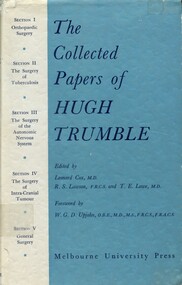
Book - Illustrated book, Hugh Trumble 1894-1962, The collected papers of Hugh Trumble, 1957
... Medical Procedures Surgery Hugh Trumble 1894-1962 Neurosurgery A collection of papers by Hugh Trumble covering orthopaedic surgery, surgery of tuberculosis, surgery of the autonomic nervous system, surgery of intra-cranial tumour and general surgery. ...A collection of papers by Hugh Trumble covering orthopaedic surgery, surgery of tuberculosis, surgery of the autonomic nervous system, surgery of intra-cranial tumour and general surgery.Illustrated book with dust jacket. Book has a dark green cover with title and the word 'Melbourne' embossed in gilt on the spine. Dust jacket has a white background, with blue oblong rectangle on front. On this blue rectangle, title, editors names, foreword writers name and publishers name are printed in black ink. At the left side (on white panel) are list of contents. On the spine title and publisher's mark are printed. non-fictionA collection of papers by Hugh Trumble covering orthopaedic surgery, surgery of tuberculosis, surgery of the autonomic nervous system, surgery of intra-cranial tumour and general surgery.medical procedures, surgery, hugh trumble 1894-1962, neurosurgery -
 Alfred Hospital Nurses League - Nursing History Collection
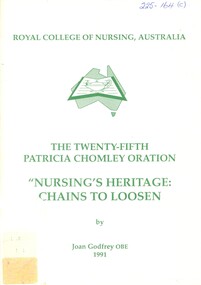
Journal - Oration, College of Nursing, Australia, The twenty-fifth Patricia Chomley oration: 'Nursing's heritage: the chains to loosen', 1991
... Patricia Chomley graduted from the Alfred Hospital in 1934 Of significance to the AHNL as it discusses the changes in nursing as a profession College of Nursing Australia nursing Patricia Chomley Oration This oration "nursing's heritage: chains to loosen" is a metaphor for how the nursing profession is evolving beyond its traditional, restrictive past to embrace more autonomy and control over its practice and future. ...This oration "nursing's heritage: chains to loosen" is a metaphor for how the nursing profession is evolving beyond its traditional, restrictive past to embrace more autonomy and control over its practice and future. It refers to moving away from old constraints like rigid, top-down hierarchies and outdated medical models, and toward a future of independent professional practice, specialized roles, and increased responsibility for patient outcomes and policy-making. The booklet also include a list of past speakers and titles of orationsStapled booklet, white cover with green print. Above the title and author's name are the words 'Royal College of Nursing Australia' and the logo of the college.Below the author's name '1991 is printednon-fictionThis oration "nursing's heritage: chains to loosen" is a metaphor for how the nursing profession is evolving beyond its traditional, restrictive past to embrace more autonomy and control over its practice and future. It refers to moving away from old constraints like rigid, top-down hierarchies and outdated medical models, and toward a future of independent professional practice, specialized roles, and increased responsibility for patient outcomes and policy-making. The booklet also include a list of past speakers and titles of orationscollege of nursing australia, nursing, patricia chomley oration -
Koorie Heritage Trust
Book, Broome, Richard, Aboriginal Victorians : a history since 1800, 2005
... History of interaction between Aboriginal people in Victoria and Europeans from first settlement until present day, based on consultation with Aboriginal people as well as range of historical research; settlement and its effects on Aboriginals and their way of life and culture; race relations; conflict; treatment of Aboriginal people by police, law and settlers; adapting to European life in post-frontier times; reserves; government policy including protectionism and assimilation and legislation controlling Aboriginal people; Lake Tyers; Framlingham; camps; removal of children; Aboriginal activism; Aboriginal autonomy; Aboriginality; argues Aboriginal people have established own place in Victoria, living as Aboriginal people within an altered world and that they are reclaiming their culture. // The fascinating and sometimes horrifying story of Aboriginals in Victoria since white settlement. ...History of interaction between Aboriginal people in Victoria and Europeans from first settlement until present day, based on consultation with Aboriginal people as well as range of historical research; settlement and its effects on Aboriginals and their way of life and culture; race relations; conflict; treatment of Aboriginal people by police, law and settlers; adapting to European life in post-frontier times; reserves; government policy including protectionism and assimilation and legislation controlling Aboriginal people; Lake Tyers; Framlingham; camps; removal of children; Aboriginal activism; Aboriginal autonomy; Aboriginality; argues Aboriginal people have established own place in Victoria, living as Aboriginal people within an altered world and that they are reclaiming their culture. // The fascinating and sometimes horrifying story of Aboriginals in Victoria since white settlement. With painful stories of personal loss as well as many successes, outlines how they survived near decimation to become a vibrant community today.xi-xxv; 467 P.; index; endnotes; reading list; PoRTS.; map; facsimiles; 23 cm.History of interaction between Aboriginal people in Victoria and Europeans from first settlement until present day, based on consultation with Aboriginal people as well as range of historical research; settlement and its effects on Aboriginals and their way of life and culture; race relations; conflict; treatment of Aboriginal people by police, law and settlers; adapting to European life in post-frontier times; reserves; government policy including protectionism and assimilation and legislation controlling Aboriginal people; Lake Tyers; Framlingham; camps; removal of children; Aboriginal activism; Aboriginal autonomy; Aboriginality; argues Aboriginal people have established own place in Victoria, living as Aboriginal people within an altered world and that they are reclaiming their culture. // The fascinating and sometimes horrifying story of Aboriginals in Victoria since white settlement. With painful stories of personal loss as well as many successes, outlines how they survived near decimation to become a vibrant community today.aboriginal australians -- victoria -- history. | colonisation. | government policy - assimilation. | government policy - state and territory - victoria. | settlement and contacts - government settlements, reserves. | habitation - camps - fringe and town. | social identity - aboriginality. | politics and government - political action - activism. | government policy - initial period and protectionism. | race relations. | child welfare - child / parent separation - stolen generations. -
 Lilydale RSL Sub Branch
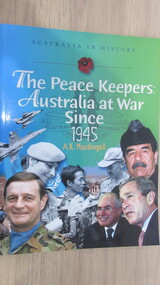
Book, Samone Bos, The Peacekeepers: Australia at War since 1945, 2009 reprint
... (1) Vietnamese conflict 1961-1975, (2) Iraq War 2003, (3) Persian Gulf War 1991, (4) Peacekeeping forces, (5) East Timor - History, Autonomy and Independence movements. Book The Peacekeepers: Australia at War since 1945 Book Samone Bos The Five Mile Press Pty Ltd ...(1) Vietnamese conflict 1961-1975, (2) Iraq War 2003, (3) Persian Gulf War 1991, (4) Peacekeeping forces, (5) East Timor - History, Autonomy and Independence movements.Booknon-fiction(1) Vietnamese conflict 1961-1975, (2) Iraq War 2003, (3) Persian Gulf War 1991, (4) Peacekeeping forces, (5) East Timor - History, Autonomy and Independence movements. -
 Flagstaff Hill Maritime Museum and Village
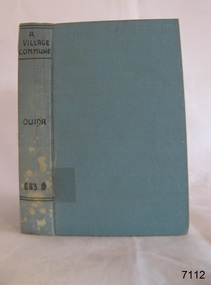
Book - Fictional Novel, Ouida/Marie Louise de la Ramée, A Village Commune, 1881–1882
... Like all Italian communes, it is supposed to enjoy independence guaranteed by legislative autonomy. In practice, a chain of councils and a syndicate controlled by the local mayor hands power down to a secretary and two assistants, who use bureaucratic zeal to harass the villagers. ...The story is set in the fictional Italian commune of Vezzaja and Ghiralda, centred on the village of Santa Rosalia. Like all Italian communes, it is supposed to enjoy independence guaranteed by legislative autonomy. In practice, a chain of councils and a syndicate controlled by the local mayor hands power down to a secretary and two assistants, who use bureaucratic zeal to harass the villagers. The human story follows poor villagers, including old Pippo and his granddaughter Viola, and the miller and his family. In the novel, petty municipal rules turn ugly. Dogs are poisoned, and Carmelo is put on trial before carabinieri while his family looks on in fear. Ouida's target is the petty corruption and cruelty of local officialdom in the new, unified Italy. One reader's summary describes the corruption and cronyism of government officials and the cruelty they meted out to hapless villagers.Hard cover book. A Village Commune Author: Ouida/Marie Louise de la Ramée Publisher: George Robertson Date: 1881-1882 Further Information: Light blue Cloth hardcover with lettering and patterning to spine in black. The spine has a Library inscription written in black texter.fictionThe story is set in the fictional Italian commune of Vezzaja and Ghiralda, centred on the village of Santa Rosalia. Like all Italian communes, it is supposed to enjoy independence guaranteed by legislative autonomy. In practice, a chain of councils and a syndicate controlled by the local mayor hands power down to a secretary and two assistants, who use bureaucratic zeal to harass the villagers. The human story follows poor villagers, including old Pippo and his granddaughter Viola, and the miller and his family. In the novel, petty municipal rules turn ugly. Dogs are poisoned, and Carmelo is put on trial before carabinieri while his family looks on in fear. Ouida's target is the petty corruption and cruelty of local officialdom in the new, unified Italy. One reader's summary describes the corruption and cronyism of government officials and the cruelty they meted out to hapless villagers.book, cecil castlemaines gage, ouida, maria louise ramé, marie louise de la ramée), shipwrecked-coast, flagstaff-hill, flagstaff-hill-maritime-museum, warrnambool, maritime-museum, shipwreck-coast, flagstaff-hill-maritime-village, shipwrecked-artefact, pattison collection, warrnambool library, warrnambool mechanics’ institute, ralph eric pattison, corangamite regional library service, warrnambool city librarian, mechanics’ institute library, victorian library board, warrnambool books and records, warrnambool children’s library, great ocean road
