
Showing 30 items matching "ballantyne street"
-
 Whitehorse Historical Society Inc.
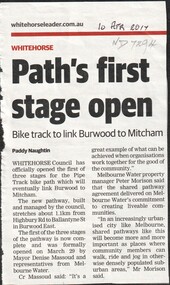
Article, Path's first stage open, 2017
... ...ballantyne street...bicycle paths highbury road burwood east ballantyne street melbourne water city of whitehorse Whitehorse Council has opened the first of three stages of the Pipe Track bike path which will eventually link Burwood to Mitcham. ...Whitehorse Council has opened the first of three stages of the Pipe Track bike path which will eventually link Burwood to Mitcham.bicycle paths, highbury road, burwood east, ballantyne street, melbourne water, city of whitehorse -
 Glen Eira Historical Society
Letter - Newing, Thomas R
... Ballantyne R... Neville Street...Newing Thomas Robert Redan Road Caulfield ‘Ellington’ House names Brighton Cemetery Bowles Elizabeth Shire President Cook C Horseriders Councillors Lamb Patricia M Ballantyne R Neville Street Newington Street Letter Newing, Thomas R ...Eight items about Thomas Robert Newing: 1/Four letters between Mr. Ballantyne and Patricia M. Lamb, requesting information on her great great grandfather. 2/Two handwritten articles about Thomas Robert Newing, one taken from Sand Swamp and Health, the other unknown and undated, but both appear to respond to first two letters. 3/Handwritten details about inscriptions on gravestones at Brighton Cemetery of Alexander MacGeorge, and other information obtained from Cemetery curator, date unknown, author unknown, but appear to respond to third letter. 4/Handwritten research notes by Claire Barton dated 30/04/2013 concerning the Newing family and other owners of ‘Ellington’ and adjacent properties.newing thomas robert, redan road, caulfield, ‘ellington’, house names, brighton cemetery, bowles elizabeth, shire president, cook c, horseriders, councillors, lamb patricia m, ballantyne r, neville street, newington street -
Ringwood and District Historical Society
Legal record - Real Estate & Stock Institute of Victoria Contract of Sale of Property (C.E.Carter of Ringwood - Agent), Vendor: Francis H. PATTERSON. Purchaser: Ralph Lorraine MARTIN - December, 1945
... Patterson of Collins Street, Melbourne (Vendor) and Ralph Lorraine Martin of Ballantyne Street, Thornbury (Purchaser). The property comprises Lots 21, 22 and 23 on Plan of Subdivision 9473, forming part of Crown Allotment 18, Parish of Ringwood, County of Mornington, and described in Certificate of Title Volume 6739 Folio 1347670. ...Patterson of Collins Street, Melbourne (Vendor) and Ralph Lorraine Martin of Ballantyne Street, Thornbury (Purchaser). The property comprises Lots 21, 22 and 23 on Plan of Subdivision 9473, forming part of Crown Allotment 18, Parish of Ringwood, County of Mornington, and described in Certificate of Title Volume 6739 Folio 1347670. ...Copy of contract and covering typewritten summary. Property: Lots 21, 22 and 23 on Plan of Subdivision 9473, Part of Crown Allotment 18, Parish of Ringwood, Certificate of Title Volume 6739 Folio 1347670.18688 Patterson - Martin AI Summary: The documentation records a Contract of Sale dated 15 December 1945 between Francis H. Patterson of Collins Street, Melbourne (Vendor) and Ralph Lorraine Martin of Ballantyne Street, Thornbury (Purchaser). The property comprises Lots 21, 22 and 23 on Plan of Subdivision 9473, forming part of Crown Allotment 18, Parish of Ringwood, County of Mornington, and described in Certificate of Title Volume 6739 Folio 1347670. The land is part of the Electric Railway Estate, a subdivision lodged with the Office of Titles. C.E. Carter of Ringwood acts as agent for the vendor. The purchase price is £135, with a £10 deposit—£4 payable on signing and £6 within seven days—and the balance due within 14 days of receiving Commonwealth Treasurer consent, as required under wartime National Security (Economic Organisation) Regulations. The contract incorporates the 1936 Copyright Conditions of Sale, including provisions relating to title, possession, land tax, and statutory compliance. Standard special conditions apply, including execution of an acknowledgment under the Farmers’ Debts Adjustment Act 1935 and compliance with wartime land transfer regulations. The contract is fully executed and confirmed by the vendor. -
 Greensborough Historical Society
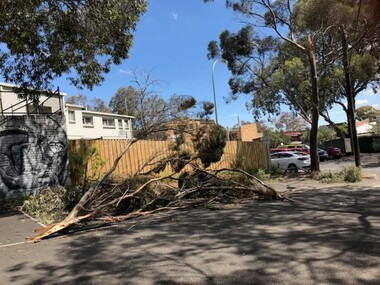
Photograph - Photograph - Digital Image, Sue Ballantyne, Storm damage,Montmorency 2021, 01/11/2021
... Storm damage incurred on night of 27-28/10/2021 at carpark off Wellington Street Montmorency. storm damage wellington street montmorency Colour digital photograph of storm damage Storm damage,Montmorency 2021 Photograph Photograph - Digital Image Sue Ballantyne ...Storm damage incurred on night of 27-28/10/2021 at carpark off Wellington Street Montmorency.Colour digital photograph of storm damagestorm damage, wellington street montmorency -
 Greensborough Historical Society
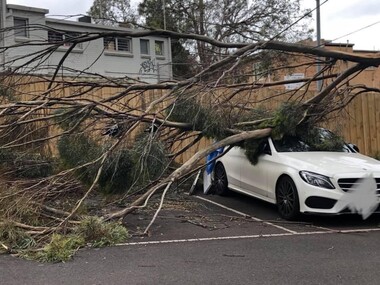
Photograph - Photograph - Digital Image, Sue Ballantyne, Storm damage, Montmorency 2021, 01/11/2021
... Storm damage incurred on night of 27-28/10/2021 at carpark off Wellington Street Montmorency. storm damage wellington street montmorency Colour digital photograph of storm damage Storm damage, Montmorency 2021 Photograph Photograph - Digital Image Sue Ballantyne ...Storm damage incurred on night of 27-28/10/2021 at carpark off Wellington Street Montmorency.Colour digital photograph of storm damagestorm damage, wellington street montmorency -
Greensborough Historical Society
Article, R. A. Marsh: Church Street Greensborough, by Faye Fort and June Hall, 1919_
... Street Greensborough. This story by Faye Fort and June Hall was updated in 2016 by Marilyn Smith and Sue Ballantyne from material generously supplied by Mrs Madge Marsh, widow of Richard's son Gordon....Street Greensborough. This story by Faye Fort and June Hall was updated in 2016 by Marilyn Smith and Sue Ballantyne from material generously supplied by Mrs Madge Marsh, widow of Richard's son Gordon. ...A brief history of Richard Marsh and family and his house on the corner of Hailes and Church Street Greensborough. This story by Faye Fort and June Hall was updated in 2016 by Marilyn Smith and Sue Ballantyne from material generously supplied by Mrs Madge Marsh, widow of Richard's son Gordon.Story of a pioneer family and a significant house in Greensborough.One page of text.richard arthur marsh, teresa bautista, hailes street, marsh family -
![Photograph - Digital image, 24 River Street [Briar Hill], 02/05/2013](/media/collectors/4f729f5697f83e03086015b8/items/572868fc2162f115acc626a5/item-media/572869462162f115acc630d2/item-fit-380x285.jpg?cb=6) Greensborough Historical Society
Greensborough Historical SocietyPhotograph - Digital image, 24 River Street [Briar Hill], 02/05/2013
... This photograph of 24 River Street was taken in 2013 to show changes over 40 years, based on Ron Reynold’s sketches in the 1973 publication “Greensborough and Greenhills” published by Cypress Books. greensborough and greenhills river street briar hill ron reynolds Digital copy of colour photograph. 24 River Street [Briar Hill] Photograph - Digital image Sue Ballantyne ...This photograph of 24 River Street was taken in 2013 to show changes over 40 years, based on Ron Reynold’s sketches in the 1973 publication “Greensborough and Greenhills” published by Cypress Books.Digital copy of colour photograph.greensborough and greenhills, river street briar hill, ron reynolds -
 Greensborough Historical Society
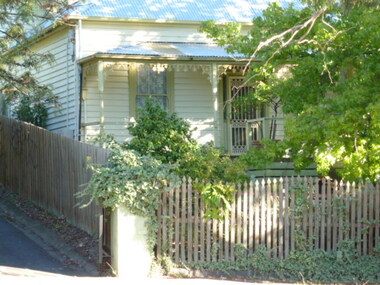
Photograph - Digital image, 49 Grimshaw Steet, 02/05/2013
... These photographs of 49 Grimshaw Street Greensborough were taken in 2013 to show changes over 40 years, based on Ron Reynold’s sketches in the 1973 publication “Greensborough and Greenhills” published by Cypress Books. greensborough and greenhills grimshaw street greensborough ron reynolds Digital copy of 2 colour photographs. 49 Grimshaw Steet Photograph - Digital image Sue Ballantyne ...These photographs of 49 Grimshaw Street Greensborough were taken in 2013 to show changes over 40 years, based on Ron Reynold’s sketches in the 1973 publication “Greensborough and Greenhills” published by Cypress Books.Digital copy of 2 colour photographs.greensborough and greenhills, grimshaw street greensborough, ron reynolds -
![Photograph - Digital image, 105 Main Street [Greensborough], 02/05/2013](/media/collectors/4f729f5697f83e03086015b8/items/57286b082162f115acc66e93/item-media/57286b2f2162f115acc670dd/item-fit-380x285.jpg?cb=6) Greensborough Historical Society
Greensborough Historical SocietyPhotograph - Digital image, 105 Main Street [Greensborough], 02/05/2013
... This photograph of 105 Main Street (now the Greensborough RSL building) was taken in 2013 to show changes over 40 years, based on Ron Reynold’s sketches in the 1973 publication “Greensborough and Greenhills” published by Cypress Books. greensborough and greenhills main street greensborough greensborough rsl ron reynolds Digital copy of colour photograph. 105 Main Street [Greensborough] Photograph - Digital image Sue Ballantyne ...This photograph of 105 Main Street (now the Greensborough RSL building) was taken in 2013 to show changes over 40 years, based on Ron Reynold’s sketches in the 1973 publication “Greensborough and Greenhills” published by Cypress Books.Digital copy of colour photograph.greensborough and greenhills, main street greensborough, greensborough rsl, ron reynolds -
 Greensborough Historical Society
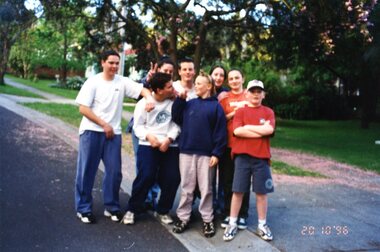
Photograph - Photographs, Sue Ballantyne, Willis Street kids 1996, 20/10/1996
... Photographs of 8 local children hanging out in Willis Street Greensborough in 1996 during a game of football on the street in the Greenhills estate. willis street greensborough football greenhills First names of people in photos are written on back of each photograph Set of 5 colour photographs of teenagers in the street Willis Street kids 1996 Photograph Photographs Greensborough Sue Ballantyne ...Photographs of 8 local children hanging out in Willis Street Greensborough in 1996 during a game of football on the street in the Greenhills estate.Set of 5 colour photographs of teenagers in the streetFirst names of people in photos are written on back of each photographwillis street greensborough, football, greenhills -
 Greensborough Historical Society
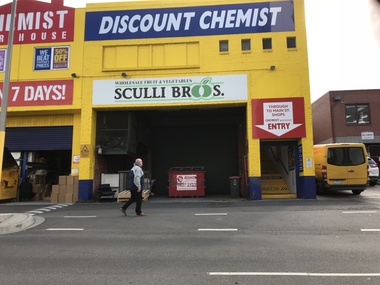
Photograph - Digital Image, Sue Ballantyne, Sculli sign, rear Main Street 2018, 31/07/2018
... This building was formerly Sculli Bros fruit and vegetable shop. main street greensborough sculli family sculli Digital copy of colour photograph Sculli sign, rear Main Street 2018 Photograph - Digital Image Sue Ballantyne Marilyn Smith ...This photograph shows the Sculli Bros sign at the rear of Chemist Warehouse in Main Street Greensborough. This building was formerly Sculli Bros fruit and vegetable shop.Digital copy of colour photographmain street greensborough, sculli family, sculli -
Glen Eira Historical Society
Letter - St Aloysius Church, Caulfield
... Street... Tonkin Ray... St Aloysius Church... Grey Karen... Fraser John Rev. Fr.... Catholic Church... Wills Cathie... Davies Stephen... Balaclava Road... Ballantyne...Caulfield Catherine Street Tonkin Ray St Aloysius Church Grey Karen Fraser John Rev. Fr. Catholic Church Wills Cathie Davies Stephen Balaclava Road Ballantyne R Mr Ward Andrew City of Caulfield Head Stephen Moriarty Bartholemew De Carle Henry Mannix Archbishop Caulfield Historical Society Caulfield Conservation Study Foundation Stones Town Halls Local officials and employees Registers Committees and inquiries Gothie (Revival) architecture Architectural features. ...A series of correspondence dated between 21/08/1985 to 10/11/1988 regarding the Historic Buildings Council adding St Aloysius Church on Balaclava Road, Caulfield to the Historic Buildings Register. Four of the letters are between the Historic Buildings Council, the Caulfield Historical Society and the City of Caulfield. Copies of the replies by the Historical society (as indicated by handwritten notes in the letters) are not included in the file. A fifth letter dated 14/09/1989, addressed to Reverend Father John Fraser, Parish Priest at St Aloysius, advises him of the inclusion of St Aloysius on the National Trust Register due to its historic significance. Also included is a photocopy of the Caulfield Conservation study of St Aloysius, dated February 1994, by Andrew Ward. This study details the architectural features and historic significance of the church, recommending planning scheme control. It includes a front view photograph, which is not clear, and references.caulfield, catherine street, tonkin ray, st aloysius church, grey karen, fraser john rev. fr., catholic church, wills cathie, davies stephen, balaclava road, ballantyne r mr, ward andrew, city of caulfield, head stephen, moriarty bartholemew, de carle henry, mannix archbishop, caulfield historical society, caulfield conservation study, foundation stones, town halls, local officials and employees, registers, committees and inquiries, gothie (revival) architecture, architectural features. -
Glen Eira Historical Society
Article - Glenfern
... Ballantyne of the Caulfield Historical Society, requesting information on the property Glenfern. One page newspaper article entitled INSPIRING THE ARTS from THE AGE, dated 04/05/2002, regarding Glenfern and the Boyd family by Mary Ryllis Clark. Includes photographs of two paintings and one photograph of the home. Niall Brenda M. Clark Mary Ryllis Boyd family Glenfern St Kilda East Boyd Thomas Boyd John Theodore Boyd William Boyd Lucy Boyd Emma Minnie Inkerman Road Inkerman Street ...Two hand written one page letters from Brenda M. Niall, dated 11/05/1983 and 03/06/1983 respectively, to R. Ballantyne of the Caulfield Historical Society, requesting information on the property Glenfern. One page newspaper article entitled INSPIRING THE ARTS from THE AGE, dated 04/05/2002, regarding Glenfern and the Boyd family by Mary Ryllis Clark. Includes photographs of two paintings and one photograph of the home.niall brenda m., clark mary ryllis, boyd family, glenfern, st kilda east, boyd thomas, boyd john theodore, boyd william, boyd lucy, boyd emma minnie, inkerman road, inkerman street, boyd arthur merric, boyd lily, laing charles, terry leonard, architects, watson thomas, wesley college, colleges, à beckett emma, ostberg john, ostberg amy, cooke max, heathcote richard, ned kelly, ledger heath, griffiths rachel, films, labassa, rippon lea, boyd ethel, caulfield historical society, gothic style, architectural features, martin lucy, boyd merric, hotham street, boyd max -
Glen Eira Historical Society
Document - Hopetoun, Hopetoun Street, 2, Elsternwick
... Street... Caulfield... Architectural features... Towers... Verandahs... Denton John... Marshall Barrie... Private hospitals... Elsternwick... Hopetoun Private Hospital... Hopetoun Avenue... Ballantyne...3 items related to this property: 1/One page of typed notes, undated and unattributed, from the Caulfield Rate Books 1891 suggesting that Charles Webb is likely to be the architect of Hopetoun. 2/One page of handwritten notes, undated and unattributed, detailing the architectural features of the Hopetoun Private Hospital. 3/One page of handwritten notes, undated, signed by R E Ballantyne providing a reference to a thesis 'Charles Webb Early Melbourne Architect' for the University of Melbourne's School of Architecture 1967, by John Denton and Barrie Marshall. Reference is for Photo 65 contained there which includes a may be a photograph of Hopetoun. Hopetoun Webb Charles Architects Hopetoun Street ...3 items related to this property: 1/One page of typed notes, undated and unattributed, from the Caulfield Rate Books 1891 suggesting that Charles Webb is likely to be the architect of Hopetoun. 2/One page of handwritten notes, undated and unattributed, detailing the architectural features of the Hopetoun Private Hospital. 3/One page of handwritten notes, undated, signed by R E Ballantyne providing a reference to a thesis 'Charles Webb Early Melbourne Architect' for the University of Melbourne's School of Architecture 1967, by John Denton and Barrie Marshall. Reference is for Photo 65 contained there which includes a may be a photograph of Hopetoun.hopetoun, webb charles, architects, hopetoun street, caulfield, architectural features, towers, verandahs, denton john, marshall barrie, private hospitals, elsternwick, hopetoun private hospital, hopetoun avenue, ballantyne r e, 'charles webb early melbourne architect', denton john, marshall barrie, school of architecture university of melbourne -
Glen Eira Historical Society
Letter - ELSTERNWICK POST OFFICE
... Street... Glenhuntly... Marten Veronika... Ballantyne...Neville Street Glenhuntly Marten Veronika Ballantyne Richard Royal Historical Society of Victoria Dunstan Don Alfada Street South Hardy Joan Baird Rob Snowball Betty Ward Andrew Hoddle Robert Foot Henry Ebden Charles Hodson Elster Oldham Mary Kate English ‘Queen Anne’ Revival style Rifle Club Coulson Herbert H. ...This file contains seven items about the significance of this building and how this was established : 1/ Photocopies of a handwritten application (in duplicate) by Walter Kay of Elsternwick dated 13/10/1985 and Rodney H Bush’s dated 16/10/1985 to the Historic Buildings Council to register the former Elsternwick Post Office building, and an original typewritten letter dated 17/10/1985 from the Historic Buildings Council to Caulfield and Historic Society advising them of an application and inviting them to submit relevant information about the building with a copy of application attached. 2/ Six pieces of correspondence between various interested parties (Caulfield Council , Caulfield Historical Society, National Trust, of Australia and Ministry for Planning and Environment on behalf of Historic Buildings Council, Victoria) about the significance of the former Elsternwick Post Office building and the progress of efforts to include it on the Register of Historic buildings. Dated between November 1985 and May 1986. 3/ Two pieces of correspondence between the Caulfield Progress Association and the Caulfield Historical Society dated April and May 1986, regarding the efforts of the Historical Society to save the former Elsternwick Post Office building. 4/ Two pieces of ephemera by the Caulfield Progress Association, one original undated and one photocopy undated in 1986. Both appealing to the public for support to help the former Elsternwick Post Office building and to protest a proposal to demolish it, by Caulfield Council. 5/Original newspaper article dated 07/06/1989 from the Malvern-Caulfield Progress newspaper written by Robert Carmody. The article talks about the approval by the Historic Buildings Council of Caulfield Council’s restoration program of the former Elsternwick Post Office building worth approximately $850,000. The refurbishment would consist of a shop and office space which would then be rented out. Mayor Emil Braun outlines the progress to implement the plans. 6/ Caulfield Conservation Study by Andrew Ward dated September 1994 of former Elsternwick Post Office Building. The building plans for the Elizabethan Style building were approved in 1891. The original timber verandahs were replaced by the present brickworks in circa 1918 rear extensions in 1941-42. Similar Post Offices were built at Kew, Queenscliff and Portarlington. 7/ Computer printout dated 19/03/2010 of Statement of Significance held by the Victorian Heritage database of the former Elsternwick Post Office Building. It was built in 1891 in the ‘Queen Anne’ style. The substantial two story red brick building was set on a bluestone plinth with an ornate façade incorporating cement dressings. There is a brief summary of the settlement and development of the Elsternwick area with mention of how important the building is to the Elsternwick Community. Original date and author is unknown.elsternwick post office, glenhuntly road, elsternwick, riddell parade, office buildings, postal services, caulfield city council, kay walter, regent street, caulfield, bush rodney h, gisborne street, city of caulfield, braun emil councillor, mayors, aylen doug, aylen douglas r, historic buildings council, caulfield historical society, ministry for planning and environment, head stephen, historic buildings act 1981, anderson p, national trust of australia (victoria), public works department, architectural styles, calder g.k. councillor, wills cathie, lyall kerry, marsden john hudson, town clerk, hill douglas, caulfield progress association, caulfield south, glen eira road, hawthorn road, mac neil j.r., neville street, glenhuntly, marten veronika, ballantyne richard, royal historical society of victoria, dunstan don, alfada street south, hardy joan, baird rob, snowball betty, ward andrew, hoddle robert, foot henry, ebden charles hodson, elster, oldham mary kate, english ‘queen anne’ revival style, rifle club, coulson herbert h., fick p.g., railway, city manager, austin g.b. h., architects, builders, architectural features, australia post, register of historical buildings, grey karen, planning appeal board, heritage overlay no h029, victorian government gazette no. 60 dated 16/07/1986, historic building no640, certificate of title volume 5817, kennan james harley, nelson ivor, blake alison, neale anne, telegraph offices, wardell, ward andrew -
Glen Eira Historical Society
Article - SHELFORD GIRLS’ SCHOOL AND KINDERGARTEN
... Street... Bentleigh East... Kendall Debbie... Webb Jean... Deller Lynne... Franzoni Lynne... Brown Nola... Jenkinson Nola... Nelms Jenny... Bond Jenny... Waite Janine... Brown Helen... clubs and associations... meetings... events and activities... sport... Gleadell Linda... Koch Linda... barbecues... Dawson Sally... Richards Sally... Richards Bronwyn... Barnacle Bronwyn... Crocker Susan... Waxman Susan... Hosford Margaret... Hoult Margaret... Francis Dyanne ... Franzoni Dyanne... Baxter Dorothy... Scott Maureen... Ahearne Robyn... Summer Louise... Ballantyne...Archbishop choirs orchestras musical events and activities dances and balls Stevenson Nan Henderson Margot pianos Old Grammarians Association Shelford Old Grammarians ‘Grammarians of Shelford Social Interest Paper’ ‘GOSSIP’ Anderson Jean Mrs Olinda Street Caulfield South Thompson Debbie Mrs Rome Lorraine Wilson Lorraine St Georges Road Elsternwick Guala Lynne Parke Lynne Halstead Simone Barrington Street Bentleigh East Kendall Debbie Webb Jean Deller Lynne Franzoni Lynne Brown Nola Jenkinson Nola Nelms Jenny Bond Jenny Waite Janine Brown Helen clubs and associations meetings events and activities sport Gleadell Linda Koch Linda barbecues Dawson Sally Richards Sally Richards Bronwyn Barnacle Bronwyn Crocker Susan Waxman Susan Hosford Margaret Hoult Margaret Francis Dyanne Franzoni Dyanne Baxter Dorothy Scott Maureen Ahearne Robyn Summer Louise Ballantyne Robyn Hill Robyn Painsh Elizabeth Mayne Lyn Eshelby Shirlene Looker Margaret Hunter Dale Martin Colleen Evans Julie Froomes Vicki Plaisted Leonie Leah Leonie Pull Lisa Patxy Godby Currer Liz Crawshaw Pam Shaw Debbie Milner Cheryl Hopkings Wendy Tietgens Jenny Gill Janet Edwards Leigh Hannon Lisa Folley Melinda sport Bray Jennifer Birch Jennifer Graham Sally Smith Sally Bosquet Rue Masters Anne Dalton Anne Murray Michele Brown Michele Sutton Kaye Griffiths Kaye Faragher Sue Butterfield Anne Thompson Anne Cassidy Julie Lynes Yvonne van Buuren Vanessa Vanselow Elizabeth Hall Elizabeth Riley Vicki Rowed Elizabeth Strugnell Peter Caulfield Grammar School Graham Andrew Murray Peter Hoad Ian Amos Emma Carr Vanessa Mallaby Kirstienne Valentine Karen Calderwood Jan Perkins Jan Perkins Jan Humphries Karen Asher Kim Hannon Lisa Mardardy Mischel Sanford Belinda Sherlock Natalie Barklamb Kate Levy Sally Mathew Jennifer Stahmer Sally Gray Mrs Australia Day Howell Marilyn Harley Robyn Elms Liz Johnston Liz McIlveen Bronwyn Calderwood Simone Zacharin Pat Williamson Pat Waite Pamela Wilson Pamela Perkins Jan Woodburn Bettina Bromley Bettina Stuchbury Leanne Dalton Sue Dalton Leigh Myers Jean Sligo Pam Gibson Pam Collins Sue Baddams Miss Limb Lois Rice Lois Bishop Myra Planner Betty Planner Pam Smart Arlie Lambert Dorothy Goode Sandra Harris Margaret Chamberlain Margaret Elms Elizabeth Johnston Elizabeth Rome Lynne Waxman Dawn Clements Dawn weddings halls Article SHELFORD GIRLS’ SCHOOL AND KINDERGARTEN ...This file contains 2 items relating to school magazines and publications: 1/1 photocopy of a page from the school magazine ‘Quaerite’, 1968, with a photograph of many students in front of the assembly hall and an article about the opening of the assembly hall on 05/06/1968 author unknown. 2/1 copy of the Shelford Old Grammarians publication ‘GOSSIP’ (Grammarians of Shelford Social Interest Paper) issue no. 85, dated 1st quarter of 1988. The publication includes details about the running of and events held by the Shelford Old Grammarians as well as details about the lives of former Grammarians. Written by David Waxman.shelford girls’ school and kindergarten, schools, openings (events), delacombe rohan sir, woods dr. archbishop, choirs, orchestras, musical events and activities, dances and balls, stevenson nan, henderson margot, pianos, old grammarians association, shelford old grammarians, ‘grammarians of shelford social interest paper’, ‘gossip’, anderson jean mrs, olinda street, caulfield south, thompson debbie mrs, rome lorraine, wilson lorraine, st georges road, elsternwick, guala lynne, parke lynne, halstead simone, barrington street, bentleigh east, kendall debbie, webb jean, deller lynne, franzoni lynne, brown nola, jenkinson nola, nelms jenny, bond jenny, waite janine, brown helen, clubs and associations, meetings, events and activities, sport, gleadell linda, koch linda, barbecues, dawson sally, richards sally, richards bronwyn, barnacle bronwyn, crocker susan, waxman susan, hosford margaret, hoult margaret, francis dyanne , franzoni dyanne, baxter dorothy, scott maureen, ahearne robyn, summer louise, ballantyne robyn, hill robyn, painsh elizabeth, mayne lyn, eshelby shirlene, looker margaret, hunter dale, martin colleen, evans julie, froomes vicki, plaisted leonie, leah leonie, pull lisa, patxy godby, currer liz, crawshaw pam, shaw debbie, milner cheryl, hopkings wendy, tietgens jenny, gill janet, edwards leigh, hannon lisa, folley melinda, sport, bray jennifer, birch jennifer, graham sally, smith sally, bosquet rue, masters anne, dalton anne, murray michele, brown michele, sutton kaye, griffiths kaye, faragher sue, butterfield anne, thompson anne, cassidy julie, lynes yvonne, van buuren vanessa, vanselow elizabeth, hall elizabeth, riley vicki, rowed elizabeth, strugnell peter, caulfield grammar school, graham andrew, murray peter, hoad ian, amos emma, carr vanessa, mallaby kirstienne, valentine karen, calderwood jan, perkins jan, perkins jan, humphries karen, asher kim, hannon lisa, mardardy mischel, sanford belinda, sherlock natalie, barklamb kate, levy sally, mathew jennifer, stahmer sally, gray mrs, australia day, howell marilyn, harley robyn, elms liz, johnston liz, mcilveen bronwyn, calderwood simone, zacharin pat, williamson pat, waite pamela, wilson pamela, perkins jan, woodburn bettina, bromley bettina, stuchbury leanne, dalton sue, dalton leigh, myers jean, sligo pam, gibson pam, collins sue, baddams miss, limb lois, rice lois, bishop myra, planner betty, planner pam, smart arlie, lambert dorothy, goode sandra, harris margaret, chamberlain margaret, elms elizabeth, johnston elizabeth, rome lynne, waxman dawn, clements dawn, weddings, halls -
 Glen Eira Historical Society
Letter - Rosstown Railway
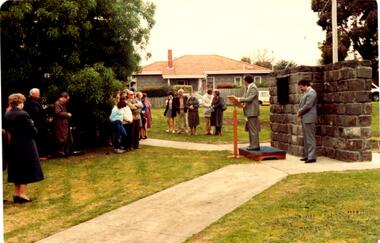
... Ballantyne R.... Office Workers... CAULFIELD CONTACT... Norman Peter... Groups... Glen Huntly... Koornang Road... Mills... Sugar Mills... Caulfield Historical Society... Caulfield City Council... Caulfield Town Hall... Official Buildings... Glen Huntly Neville Street...Ballantyne R. Office Workers CAULFIELD CONTACT Norman Peter Groups Glen Huntly Koornang Road Mills Sugar Mills Caulfield Historical Society Caulfield City Council Caulfield Town Hall Official Buildings Glen Huntly Neville Street Fourteen Parliamentary Representatives Rosstown Rosstown Railway Rosstown Railway Centenary Festivals and Celebrations Centenaries Historical Markers Plaques Monuments and Memorials Ross Murray Railways Land Transport Curraweena Road Parts of Buildings or Structures Bluestone Structures Construction Materials Caulfield Community Liaison Officer Harry Carol Currency Finances Onley Peter Elsternwick Oakleigh Council Meetings Caulfield Council Chambers Caulfield Municipal Chambers Caulfield Municipal Offices Craig A. ...This file contains two items: 1/A group of eight letters, predominantly between Hon. Secretary of Caulfield Historical Society R. Ballantyne and members of the Caulfield City Council written between 1981 and 1983, regarding the installation of a plaque in commemoration of the centenary of the Rosstown Railway. The first two letters are handwritten from R. Ballantyne to G. Calder and Carol Camy, dated 01/06/1981 and 22/02/1982. The letter to G. Calder supports a suggestion in the May edition of the CAULFIELD CONTACT for the installation of a plaque in celebration of the centenary of the Rosstown Railway, suggesting a potential site for another plaque on Curraweena Road. The letter to Carol Harry discusses the costing of the plague and a possible contribution towards this cost from the Caulfield Historical Society. The letter appears to be incomplete, having no sign off from the author. Attached to the letter is what appears to be a suggestion for the inscription of the plaque. The letters addressed to R. Ballantyne are typed and dated 12/06/1981, 24/06/1981, 14/07/19891, 17/12/1981 and 08/09/1983, from A. Craig and D.B. Hogan on behalf of City Manager G.K. Calder and City Liason Officer Carol Harry. All letters concern the commemorative plaque, with these from Carol Harry including handwritten notes which appear to be in R. Ballantyne’s handwriting. The final letter is from Mayoral Secretary Norma Polglase to Miss B. Snowball, dated 23/08/1983, inviting her to attend the unveiling of the plaque. Also included in the item are Council Committee Meeting minutes, dated 16/05/1981, broaching the subject of installing the plaque in Koornang Road. 2/Four colour photographs and two black and white copies of one of the photographs, all dated 18/09/1983 and showing the opening of the commemorative plaque in Marrara Gardens. Two photographs picture Mayor Brian Rudski and City Manager Graham Calder with a crowd of unidentified people present. One photograph and both copies are of the inscription on the plaque, with the wording identical to that of the handwritten note by R. Ballantyne, in item one.caulfield, caulfield south, calder g.k., calder g., hawthorn road, glen eira road, ballantyne r., office workers, caulfield contact, norman peter, groups, glen huntly, koornang road, mills, sugar mills, caulfield historical society, caulfield city council, caulfield town hall, official buildings, glen huntly neville street fourteen, parliamentary representatives, rosstown, rosstown railway, rosstown railway centenary, festivals and celebrations, centenaries, historical markers, plaques, monuments and memorials, ross murray, railways, land transport, curraweena road, parts of buildings or structures, bluestone structures, construction materials, caulfield community liaison officer, harry carol, currency, finances, onley peter, elsternwick, oakleigh, council meetings, caulfield council chambers, caulfield municipal chambers, caulfield municipal offices, craig a., caulfield city manager, city of caulfield, caulfield physical environment committee, public meetings, meetings, ross james, hogan o.b., arrow engraving, campbell f., snowball miss., elsternwick gladstone parade nineteen, walters w.r., marara road gardens, marara road, marara gardens, narrawong road, ceremonies, caulfield mayors, polglase norma, mayoral secretaries, railways routes, documents, correspondence, rudski brian, calder graham, events and activities, official buildings, insignia, local government, local officials and employees, parks and reserves, buildings structures and establishments, official events, festivals and celebrations, occupations, political processes, local history, history, financial economics, local government finance -
 Glen Eira Historical Society
Letter - Glen Huntly Festivals
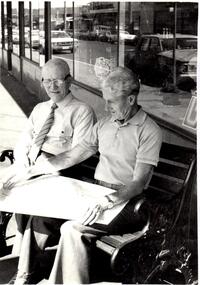
... Ballantyne R. Mr.... Truscott V. Mrs.... Neville Street...Ballantyne R. Mr. Truscott V. Mrs. Neville Street Carnegie Georgiades Kaye Ford P. ...This file contains five items: 1/An official programme for the Glenhuntly Traders Association’s Annual Christmas Festivals on 22/11/1986. 2/A handwritten letter from Vice President Kaye Georgiades of the Glenhuntly Traders Association to Mr. Balentine thanking him for photos lent. The letter is undated. 3/A typed letter from the Glenhuntly Traders Association to Mr. R. Ballantyne of the Caulfield Historical Society thanking him for helping and supporting the Festival and Payment Art Competition. Dated 30/10/1986. 4/Two typed letters from the Glenhuntly Traders Association to Mr. Ballantyne of the Caulfield Historical Society regarding planned activities for the 1986 and 1987 Christmas Festivals. 5/A black-and-white photograph of members of the Glenhuntly Traders Association, including Gus Theobold pictured on the left. The photo is undated and was published in the Caulfield Contact newspaper.glenhuntly traders, glenhuntly traders associations, caulfield festival, glenhuntly road, booran road, grange road, caulfield, watsons grove, glenhuntly newsagency, royal avenue, campbell j., farey j. mr., manchester grover, mayors, ryall m., caulfield historical society, glenhuntly bowling club, caulfield grammar band, caulfield baton twirlers, glenhuntly christmas festival, glenhuntly festival, truscott v., balentine mr., ballantyne r. mr., truscott v. mrs., neville street, carnegie, georgiades kaye, ford p., glenhuntly, glen huntly, glenhuntly pavement art festival, truscott vanessa, georgiades k., caulfield contact, theobold gus, glenhuntly shopping centre, local government, local officials and employees, associations, historical societies, bowling clubs, festivals and celebrations, festivities, musical ensembles, educational and research establishments, schools, business people, competitions, art competitions, commercial events and activities, officer workers, shows and exhibitions -
Glen Eira Historical Society
Letter - MONUMENTS AND NATIONAL REGISTER
... Ballantyne R. Mr.... Caulfield Historical Society... Statues... Webb Isabelle... Webb Isabella... Calder G... Pollet J... City of Caulfield... Caulfield City Council... City Hall... Hawthorn Road... Glen Eira Road... Neville Street...Ballantyne R. Mr. Caulfield Historical Society Statues Webb Isabelle Webb Isabella Calder G Pollet J City of Caulfield Caulfield City Council City Hall Hawthorn Road Glen Eira Road Neville Street Glenhuntly Thompson P. ...This file contains five items pertaining to plaques, memorials and monuments located in Glen Eira: 1/Three letters (1 page each) pertaining to a statue of Isabelle Webb adorning the Caulfield City Hall. The first letter, typewritten, dated 14/07/80, is addressed from J. Pollet, Honorary Secretary of the Caulfield Historical Society, to Mr. G. Calder, City Manager of Caulfield, and announces that the Society has identified the previously unidentified statue and wishes to provide a plaque for it. The second letter, handwritten, dated 20/09/1980, is addressed from Mr. R. Ballantyne of the Caulfield Historical Society to Calder, and laments that the Caulfield City Council has not responded to the first letter. The third letter, typewritten, dated 24/10/1980, is addressed from G. J. Walker, Deputy Manager-Administrator of the City of Caulfield, to Ballantyne, and notifies the latter of the Council’s acceptance of the Society’s offer to provide a plaque. Also included are the invoice and delivery docket for the plaque. 2/A typewritten letter (1 page), dated 26/06/1985, from Norma Polglase, secretary to mayor Brian Rudzki, inviting Mr. and Mrs. R. Ballantyne to an unveiling ceremony at Hopetoun Gardens. 3/A typewritten letter (1 page), dated 05/10/1986, from John Adams, Convenor of the Memorials Committee of the Royal Historical Society of Victoria, to Miss H. Bullock, thanking the latter for her contributions to the Society’s Memorials Project (which presumably consists of the recording of the location of all memorials located in Victoria), and confirming the acknowledgement of four memorials located in Caulfield. 4/A one page typewritten letter, with handwritten note, dated 07/05/1987, from Chilla Bulbeck, project coordinator of the National Register of the Australian Bicentennial Authority, to Mr. R. Ballantyne, thanking the latter for agreeing to act as a recorder for the Project. Attached are 12 pages extrapolating on the Project and a list (2 copies) of monuments thus far acknowledged, although none of this contains anything of relevance specifically to Glen Eira. 5/A typewritten letter, dated 29/11/1996, from Bob Ross, Senior Surveyor of the Geodetic Survey of the Office of the Surveyor General, to the Caulfield Historical Society, requesting the latter’s assistance in identifying any historic survey marks located within Glen Eira, as part of a greater project to identify all such survey marks located within Victoria. Also included is a leaflet extrapolating on the project and featuring a form for documenting survey marks, although this contains nothing of relevance specifically to Glen Eira.glen eira, caulfield, plaques, monuments and memorials, walker g. j., ballantyne r. mr., caulfield historical society, statues, webb isabelle, webb isabella, calder g, pollet j, city of caulfield, caulfield city council, city hall, hawthorn road, glen eira road, neville street, glenhuntly, thompson p. mr., arrow engraving & foundry co., rudzki brian j. p. cr., ballantyne mrs., cannons, festivals and celebrations, invitations, hopetoun gardens, mayors, glenhuntly road, glen huntly road, caulfield city hall, polglase norma, adams john, bullock h. miss, royal historical society of victoria, memorials committee, memorials project, ‘kadimah’, caulfield grammar school, rosstown railway, bambra park, elsternwick, begonia street, gardenvale, bulbeck chilla, australian bicentennial authority, national register of unusual monuments project, jowett memorial drinking fountain, ross bob, office of surveyor general, geodetic survey office of surveyor general -
Glen Eira Historical Society
Document - TOURS
... Street... Langdon Montague... Langdon Harry Joseph... ‘Tarqua’... ‘Labassa’... Manor Grove... Koch John... Robertson A. W.... Wagner John... ‘Ontario’... Trinity Congregational Church... Grange Road... Glen Huntly... Churches... Greek Orthodox Church... ‘Fairfield Hall’... North Road... Younger James... Glenhuntly Post Office... Smith Alfred... Smith Anne... Methodist Church... ‘Lambros the Cobbler’... Railways... Ballantyne...Street Langdon Montague Langdon Harry Joseph ‘Tarqua’ ‘Labassa’ Manor Grove Koch John Robertson A. W. Wagner John ‘Ontario’ Trinity Congregational Church Grange Road Glen Huntly Churches Greek Orthodox Church ‘Fairfield Hall’ North Road Younger James Glenhuntly Post Office Smith Alfred Smith Anne Methodist Church ‘Lambros the Cobbler’ Railways Ballantyne R. ...There are two copies of the Discover Caulfield guide produced by the Caulfield Historical Society. One from 1982 which contains twelve pages, seven of which are typed and the last five a continuation of the guide added later, hand-written. The other is a modern typed version of the same document, including information at the end that "Notes prepared by R. Ballantyne, 25th July, 1982, updated by Betty Snowball, 1992 and Gladys Vallati 4th August, 1995". They both detail a pictorial tours of the mansions and gardens in the City of Caulfield, similar but not identical.caulfield, mansions, gardens, homes, ‘lirrewa’, lirrewa grove, caulfield city hall, smith sydney, ‘halstead’, bambra road, halstead road, caulfield historical society, messrs. upton and smith, civic establishments, dickson james dr., houses, national trust, st. stephen’s church, balaclava road, gothic (revival) architecture, messrs. haddon and henderson, st. aloysius, archbishop of melbourne mannix dr., caulfield park, hawthorn road, inkerman road, kambrook road, paddy’s swamp, cannizzo philip, caulfield city council, trams, orrong road, grimwade house, ‘harleston’, grimwade frederick sheppard, primary schools, caulfield art centre, ‘stanmark’, art galleries, ‘craigellachie’, person william, pearson eliza, francis newton mr., greenmeadows gardens, milburn grove, greenmeadows house, lempriere john, mayors, ‘glenfern’, boyd john captain, boyd martin, ‘myoora’, alma road, ‘bagatelle’, christian thomas, henderson anketell, flats, building construction, ‘burreel’, kooyong road, burreel avenue, francis john, stephen sidney, allan george l., ‘royston’, renwick s. mrs., sargood frederick sir., ‘glen eira’, ricketson henry, caulfield hospital, royal southern memorial hospital, caulfield general medical centre, ‘ripponlea’, reed and barnes, architects, towers, rippon emma, rippon thomas, guilfoyle william, employees, ‘the village houses’, regent street, st. george’s road, cottages, bent thomas sir., jones louisa mrs., nathan benjamin, ‘anselm’, glenferrie street, queen anne style, haddon robert, historical buildings, princes’ park, ‘glenmore’, watts thomas, more hugh, glenhuntly road, gates, villas, ‘hopetoun’, hopetoun street, webb charles, hopetoun hospital, harleston park, allison street, langdon montague, langdon harry joseph, ‘tarqua’, ‘labassa’, manor grove, koch john, robertson a. w., wagner john, ‘ontario’, trinity congregational church, grange road, glen huntly, churches, greek orthodox church, ‘fairfield hall’, north road, younger james, glenhuntly post office, smith alfred, smith anne, methodist church, ‘lambros the cobbler’, railways, ballantyne r., snowball betty, kahlyn private hospital, ‘kynaston’, st. mary’s jubilee school, festivals and celebrations, st. mary’s anglican church, church of england, bishop moorhouse, joynt donoman, elsternwick post office, elsternwick, elsternwick bowling club, elsternwick rsl, caulfield grammar school, davis henry rev., selwyn street, elsternwick railway station, glen eira road, barnett r. j. rev., tudor court, world war 1914-1918, ‘fairhaven’, hope george, caulfield library, plaques, cannons, ‘janvec joinery’, parkside street, ‘parkside court’, clarence street, ‘streetscene’, grange road, greenhouses, vallati gladys -
Glen Eira Historical Society
Letter - Langdon Homes of Caulfield
... Street... Glen Huntly... The Langdon Homes of Caulfield... Anderson Irene V.... Caulfield South... Ballantyne...Caulfield Historical Society Neville Street Glen Huntly The Langdon Homes of Caulfield Anderson Irene V. Caulfield South Ballantyne R. ...This file contains 4 items about purchases of this book: 1/Photocopy of a typed letter dated 07/05/1986 from the National Library of Australia to Caulfield Historical Society acknowledging receipt of a copy of 'The Langdon Homes of Caulfield'. Also included in the typed receipt dated 06/05/1986 from the National Library acknowledging delivery of the copy of the book. 2/A a typed letter dated 30/04/1986 from the Royal Historical Society of Victoria to Caulfield Historical Society thanking the society for sending a copy of the book to them. 3/Typed order dated 16/10/1987 from James Bennett Library Services to Caulfield Historical Society for a copy of the book. Handwritten unattributed annotation dated 30/10/1987 noting that as out of print reply was sent. 4/A typed purchase order request from the State Library of New South Wales, dated 22/10/198,7 to Caulfield Historical Society for the book. An unattributed handwritten annotation notes that an out of print reply was sent dated 06/11/1987. Also, a typed purchase order dated 19/10/1987 accompanying the requesting letter is included.caulfield historical society, neville street, glen huntly, the langdon homes of caulfield, anderson irene v., caulfield south, ballantyne r., glenhuntly, caulfield -
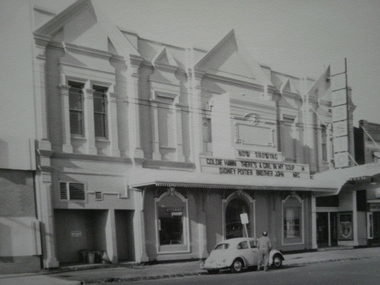 Glen Eira Historical Society
Article - ELSTERNWICK CLASSIC CINEMA
... Street... Victorian Permanent Building Society... Community Centres... Films... shows and exhibitions... film projectors... Amalgamate Picture Company Ltd.... Richardson Frank G.... architecture... stairs... Associated Theatres Limited... Ballantyne...Elsternwick Classic Cinema Gordon Street Elsternwick Dorchester Dance Hall National Trust of Australia National Trust Register Elsternwick Theatre Pausacker Ian Classic Cinema entertainment cinemas theatres Victorian style Elsternwick Public Hall Skating Rink Company Limited Selwyn Street Victorian Permanent Building Society Community Centres Films shows and exhibitions film projectors Amalgamate Picture Company Ltd. Richardson Frank G. architecture stairs Associated Theatres Limited Ballantyne and Hared balconies architectural features entrances Depression 1929-1939 Astor dancehalls Esquire Theatre Prentice George Plottel Joseph architects Cowper Murphy and Associates Sharon Cinema Tamir Eddie Readings Free Classical Style plans business people Njoo Alex Tamir family Article ELSTERNWICK CLASSIC CINEMA ...This file contains 4 items relating to the Elsternwick Classic Cinema: 1/1 original black and white photograph of the Elsternwick Classic Cinema, 9 Gordon Street Elsternwick. Date and photographer unknown. 2/ 2 photocopied photos of the Elsternwick Classic Theatre in its various stages of operation. One photo is of it as the Dorchester Dance Hall between 1938 and 1946 and the other is of the Classic Cinema in 1994. Photographers unknown. 3/National Trust of Australia (Victoria) Classification Report on Elsternwick Theatre with attached cover letter addressed to the Manager of the Planning Section, City of Glen Eira Council, from Ian Pausacker from the National Trust dated 04/10/2000. The report includes a statement of significance, history, description, context and floor plans of the theatre. 4/1 newspaper article written by Alex Njoo from the Caulfield/Port Philip Leader, 31/01/2012, congratulating the Tamir family on their conservation of the Elsternwick Classic Cinema. Includes a colour photo of the Tamirs, photographer unknown.elsternwick classic cinema, gordon street, elsternwick, dorchester dance hall, national trust of australia, national trust register, elsternwick theatre, pausacker ian, classic cinema, entertainment, cinemas, theatres, victorian style, elsternwick public hall, skating rink company limited, selwyn street, victorian permanent building society, community centres, films, shows and exhibitions, film projectors, amalgamate picture company ltd., richardson frank g., architecture, stairs, associated theatres limited, ballantyne and hared, balconies, architectural features, entrances, depression 1929-1939, astor, dancehalls, esquire theatre, prentice george, plottel joseph, architects, cowper murphy and associates, sharon cinema, tamir eddie, readings, free classical style, plans, business people, njoo alex, tamir family -
Glen Eira Historical Society
Article - Webb Family
... Street... Glen Tana... Glentana... Bambra Road... Currall Road... Ballantyne...Hopetoun Street Korang Street Glen Tana Glentana Bambra Road Currall Road Ballantyne K. Architetcts Architectural Features Architectural Styles Architecture Churches Mansion Houses Sculpture Statues Article Webb Family ...There are six items in this file. A photocopy from 500 Victorians 1934 edition of Percy Barrett Webb, engineer, manufacturer, of Webb Brothers, City Road South Melbourne. Includes carton illustration and personal details. Handwritten biographical information about Charles Webb, architect. Includes list of properties designed and two pages of references. Handwritten lists of two properties associated with George Octavius Webb, 1871 and 1887. Handwritten list of one property associated with Walter E. Webb, 1891. Two original photographs and one photocopy of statue of Isabella Webb, daughter of Justice Webb d.1891 located in Glen Eira City Hall as of 2000. One photograph taken in 1981 includes Mrs. Marie Langton, left, and Mrs. Margaret Moscham. Verso is handwritten description of photographs and photocopy. These were donated by Mrs. Langton March 2000. Two pages torn from Melbourne Weekly Bayside, April 14, 2010 entitled A Manor of Magnificence from Windsor Hotel to Winston Manor Charles Webb’s legacy remains unmatched by Kay Keighery on buildings designed by Charles Webb. The record page comprises description of 2 Manor Street, Brighton, designed by Webb, for sale at five million dollars.webb percy barrett, webb charles, webb george octavius, webb isabella, webb justice, langton mrs. marie, moscham margaret, glen eira city hall, orrong road, caulfield, st. mary’s caulfield, glenhuntly road, glenhuntly, duffy f.g., hopetoun street, korang street, glen tana, glentana, bambra road, currall road, ballantyne k., architetcts, architectural features, architectural styles, architecture, churches, mansion houses, sculpture, statues -
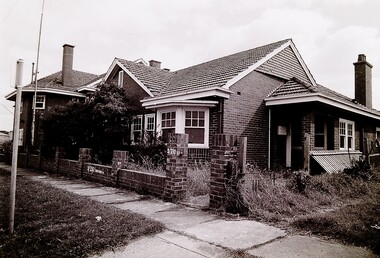 Sunshine and District Historical Society Incorporated
Photograph - Sunshine Fire Station Hampshire Road 1991 Photographs, Sharon Cavanagh, 27th March 1991
... The Sunshine Metropolitan Fire Station, built in 1927 at the corner of Hampshire Road and Hertford Street, served as Sunshine’s main fire station for decades. Designed by noted architect Cedric Ballantyne, it is one of the suburb’s most ornate public buildings and a key symbol of Sunshine’s rapid expansion during the inter‑war period. ...The Sunshine Metropolitan Fire Station, built in 1927 at the corner of Hampshire Road and Hertford Street, served as Sunshine’s main fire station for decades. Designed by noted architect Cedric Ballantyne, it is one of the suburb’s most ornate public buildings and a key symbol of Sunshine’s rapid expansion during the inter‑war period. ...The Sunshine Metropolitan Fire Station, built in 1927 at the corner of Hampshire Road and Hertford Street, served as Sunshine’s main fire station for decades. Designed by noted architect Cedric Ballantyne, it is one of the suburb’s most ornate public buildings and a key symbol of Sunshine’s rapid expansion during the inter‑war period. It closed around 1990 and was later restored and repurposed as the Tobin Brothers “Legacy of Life” Chapel.”The Sunshine Fire Station on Hampshire Road is one of Sunshine’s most historically significant civic buildings, a landmark of the suburb’s inter‑war growth, its industrial identity, and its long relationship with the Metropolitan Fire Brigade. These photographs were taken after the fire station closed and relocated to McIntyre Road in Sunshine North, but before the building was restored and repurposed for use by Tobin Brothers. The residential part of the fire station, the adjoining house in Berkshire Road has been demolished.State Of Fire Station Hampshire Rd Sunshinesunshine fire station, hampshire road, berkshire road, sunshine -
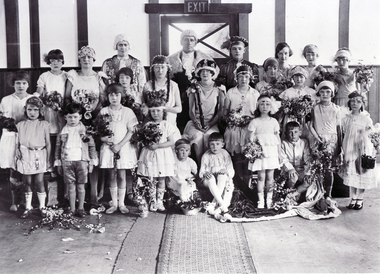 Whitehorse Historical Society Inc.
Photograph, Line up - Queen Carnival in Mitcham Memorial Hall, 1928
... A photocopy was donated by Myra Fort of Peel Street Mitcham with a list of the people taking part in the Queen Carnival. Back Row - Jean Lee, Betty McDonald, Lin Ballantyne, Charles Wallace, Orm White, ????...mitcham memorial hall festivals and celebrations queen carnival 1928 lee jean mcdonnell betty ballantyne lin wallace charles white orm whelan pratt thelma ancona lily edwards les hall lorna crawford ray ireland myra eva markham mary voutier may watson dorothy elvie roma mcniff mckay isabel cook arthur fort Black and white photo of Line up of People taking part in Queen Carnival in Mitcham Memorial Hall in 1928. A photocopy was donated by Myra Fort of Peel Street ...Black and white photo of Line up of People taking part in Queen Carnival in Mitcham Memorial Hall in 1928. A photocopy was donated by Myra Fort of Peel Street Mitcham with a list of the people taking part in the Queen Carnival. Back Row - Jean Lee, Betty McDonald, Lin Ballantyne, Charles Wallace, Orm White, ????, Betty Whelan, Thelma Pratt Centre - Myra Ireland, ????? Eva Ancona, ?????, Mary Markam, May Voutier, Dorothy Watson. Elvie Pratt, Roma Whelan. Bottom/ Front - Lily Ancona, Les Edwards, Dorothy Edwards, Betty McDuff, Isabel McKay, Arthur Cook. Lorna Hill, Ray Crawford (?).mitcham memorial hall, festivals and celebrations, queen carnival 1928, lee, jean, mcdonnell, betty, ballantyne, lin, wallace, charles, white, orm, whelan, pratt, thelma, ancona, lily, edwards, les, hall, lorna, crawford, ray, ireland, myra, eva, markham, mary, voutier, may, watson, dorothy, elvie, roma, mcniff, mckay, isabel, cook, arthur, fort -
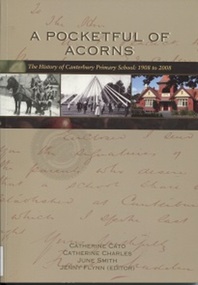 Surrey Hills Historical Society Collection
Book, A Pocketful of Acorns - This History of Canterbury Primary School : 1908-2008, c 2008
... ballantyne...(miss) - riseborough...(ms) (dr) kim dray...(miss) dorothy ambrose...(mrs) - lethbridge...(mrs) - le couteur...(mrs) margaret senior...(miss) margaret macgibbon...(mrs) - briggs...(mr) (major) - moloney...(mr) - poulton...(mr) adrian penniston-bird...prospect hill road...surrey hills...canterbury...canterbury road...molesworth street...A history of Canterbury Primary School written to celebrate the school's 100 year anniversary - 1908-2008 canterbury primary school primary schools (ms) judy stewart (mr) ian phillips (miss) gabriela aloisio (mrs) marjorie pitt (miss) joan eltham (mr) - shannon (mr) - besant (mrs) anne bialecki (ms) diane western (ms) margaret mason (miss) hilary barr (mrs) hilary praetz (ms) vicki eddison (miss) margaret kidd (mr) don kerr (miss) sarah pitman (miss) linda summers (mr) jack tanner (miss) kate dale (mr) strapper tanner (ms) neva rossi (miss) margot harris (miss) lauren eddison (mr) eric alway (miss) jean alway (miss) betty alway (mr) thomas rule (miss) diane fuller (ms) barbara chapman (ms) judy bridges (ms) julie vango (ms) judy pitman (ms) joan le grand (ms) anne lamborn (mr) warren walsh (ms) margaret lee (ms) barbara gunn (ms) christine hallman (mr) murray haby chris roth (ms) sue de araugo (ms) leslie brewer (ms) judy jordan sam paterson (ms) debbie-jane andrews (mrs) hazel young (ms) ilse murrihy (ms) linda summers (mrs) georgia karatzas (mrs) sylvia clarke (mr) eddie clarke (mrs) - willoughby (mr) - hopkins (mrs) - hopkins (mr) graham salter (ms) andrea thompson (miss) - stent (miss) - mcdonald (mr) neville daynes (mr) bruce margetts (miss) doris thomas (miss) hazel macdonald (miss) annette mccoy (mrs) - feldt (miss) arwen summers (miss) grace cameron-muller manon merakis terry poulton (mr) david tolstrup (ms) sue broadbent (miss) florence rayment (miss) yvonne wray (miss) hazel jarvis (mr) graham scott (miss) june smith (mrs) margaret anderson (miss) margaret ginn (miss) kelly jane (mrs) patricia wion (miss) patricia lewis (miss) - edgoose (mr) john merton (ms) pauline flynn (ms) lynne timms (ms) marilyn taylor (mrs) anne tonkin (mrs) flo wilkinson (miss) flo davies (mr) jack hardy (mr) john a bayford (miss) marion greenwood-smith (miss) - mcevitt (miss) - ballantyne (miss) - riseborough (ms) (dr) kim dray (miss) dorothy ambrose (mrs) - lethbridge (mrs) - le couteur (mrs) margaret senior (miss) margaret macgibbon (mrs) - briggs (mr) (major) - moloney (mr) - poulton (mr) adrian penniston-bird prospect hill road surrey hills canterbury canterbury road molesworth street highfield road leeds street salisbury street (Mr) Patrick Moloney (Mr) Thomas Rule (Mr) Richard Armitage (Mr) Frank L Oswell (Mr) Walter G W Webb (Mr) Edward Bright (Mr) George A Allison (Mr) Albert R Coppin (Mr) William A Lucas (Mr) Alan G Legg (Mr) Ralph Holden (Mr) Dorothy Ambrose (Mr) Robert Storey (Mr) Tom Neal-Williams (Mr) Effie Miniati (Mr) Geoffrey Swift (Mr) - Baddeley (Mrs) Helen McMillan (Miss) Helen McGibbon (Mr) Don Walker (Mr) Howard Hallo (Miss) Jean Cowen (Miss) Felicity Coleman (Miss) Amanda Colahan (Miss) Caitlin Sum (Miss) Brooke Webster (Miss) Bridget Hall (Miss) Alison Thompson (Mr) Andrew Lovitt (Mrs) Barbara Mihan (Miss) Barbara Prest (Mr) John Webster (Mrs) Lorna Whalley (Mr) Stuart Margetts (Miss) Elaine Robinson (Mrs) Nonie Holman (Miss) Nonie Lovitt (Mr) Brian Webster (Mrs) Alison Cutter (Miss) Alison Horwell (Mrs) Jaqueline Lublin (Miss) Jacqueline Levy (Mrs) Gilliam Bell (Miss) Gillian Craig Pinus Radiata The Secret Garden Lych Gate (Mr) Geoff Swan Talbet Oaks Bedford Oaks Significant trees Burgundy Ash Allepo Pine Golden Ash Southey oaks Poulton oaks (Mr) (Sgt) Keith McDowell Wattle Park (Ms) Caroline Habgood (Mr) Henry Rotherham J B Cohen (Mr) (Major) Patrick Moloney (Miss) Dorothy Ambrose architects Wurundjeri william territory (Mr) - Sachse D Kinnaird builders danks foundation (Dr) Desmond Gibbs 1908 Sue Slonek Catherine Cato Catherine Charles June Smith Jenny Flynn A history of Canterbury Primary School written to celebrate the school's 100 year anniversary - 1908-2008 A Pocketful of Acorns - This History of Canterbury Primary School : 1908-2008 Book Book Canterbury Primary School, Danks Foundation Cathy Cato Catherine Charles June Smith Jenny Flynn ...Purchased in memory of Sue Slonek, Secretary of Surrey Hills Historical Society, volunteer with the Surrey Hills Neighborhood Centre Heritage Collection (Surrey Hills historical Society Collection). A history of Canterbury Primary School written to celebrate the school's 100 year anniversary - 1908-2008A history of Canterbury Primary School written to celebrate the school's 100 year anniversary - 1908-2008canterbury primary school, primary schools, (ms) judy stewart, (mr) ian phillips, (miss) gabriela aloisio, (mrs) marjorie pitt, (miss) joan eltham, (mr) - shannon, (mr) - besant, (mrs) anne bialecki, (ms) diane western, (ms) margaret mason, (miss) hilary barr, (mrs) hilary praetz, (ms) vicki eddison, (miss) margaret kidd, (mr) don kerr, (miss) sarah pitman, (miss) linda summers, (mr) jack tanner, (miss) kate dale, (mr) strapper tanner, (ms) neva rossi, (miss) margot harris, (miss) lauren eddison, (mr) eric alway, (miss) jean alway, (miss) betty alway, (mr) thomas rule, (miss) diane fuller, (ms) barbara chapman, (ms) judy bridges, (ms) julie vango, (ms) judy pitman, (ms) joan le grand, (ms) anne lamborn, (mr) warren walsh, (ms) margaret lee, (ms) barbara gunn, (ms) christine hallman, (mr) murray haby, chris roth, (ms) sue de araugo, (ms) leslie brewer, (ms) judy jordan, sam paterson, (ms) debbie-jane andrews, (mrs) hazel young, (ms) ilse murrihy, (ms) linda summers, (mrs) georgia karatzas, (mrs) sylvia clarke, (mr) eddie clarke, (mrs) - willoughby, (mr) - hopkins, (mrs) - hopkins, (mr) graham salter, (ms) andrea thompson, (miss) - stent, (miss) - mcdonald, (mr) neville daynes, (mr) bruce margetts, (miss) doris thomas, (miss) hazel macdonald, (miss) annette mccoy, (mrs) - feldt, (miss) arwen summers, (miss) grace cameron-muller, manon merakis, terry poulton, (mr) david tolstrup, (ms) sue broadbent, (miss) florence rayment, (miss) yvonne wray, (miss) hazel jarvis, (mr) graham scott, (miss) june smith, (mrs) margaret anderson, (miss) margaret ginn, (miss) kelly jane, (mrs) patricia wion, (miss) patricia lewis, (miss) - edgoose, (mr) john merton, (ms) pauline flynn, (ms) lynne timms, (ms) marilyn taylor, (mrs) anne tonkin, (mrs) flo wilkinson, (miss) flo davies, (mr) jack hardy, (mr) john a bayford, (miss) marion greenwood-smith, (miss) - mcevitt, (miss) - ballantyne, (miss) - riseborough, (ms) (dr) kim dray, (miss) dorothy ambrose, (mrs) - lethbridge, (mrs) - le couteur, (mrs) margaret senior, (miss) margaret macgibbon, (mrs) - briggs, (mr) (major) - moloney, (mr) - poulton, (mr) adrian penniston-bird, prospect hill road, surrey hills, canterbury, canterbury road, molesworth street, highfield road, leeds street, salisbury street, (mr) patrick moloney, (mr) thomas rule, (mr) richard armitage, (mr) frank l oswell, (mr) walter g w webb, (mr) edward bright, (mr) george a allison, (mr) albert r coppin, (mr) william a lucas, (mr) alan g legg, (mr) ralph holden, (mr) dorothy ambrose, (mr) robert storey, (mr) tom neal-williams, (mr) effie miniati, (mr) geoffrey swift, (mr) - baddeley, (mrs) helen mcmillan, (miss) helen mcgibbon, (mr) don walker, (mr) howard hallo, (miss) jean cowen, (miss) felicity coleman, (miss) amanda colahan, (miss) caitlin sum, (miss) brooke webster, (miss) bridget hall, (miss) alison thompson, (mr) andrew lovitt, (mrs) barbara mihan, (miss) barbara prest, (mr) john webster, (mrs) lorna whalley, (mr) stuart margetts, (miss) elaine robinson, (mrs) nonie holman, (miss) nonie lovitt, (mr) brian webster, (mrs) alison cutter, (miss) alison horwell, (mrs) jaqueline lublin, (miss) jacqueline levy, (mrs) gilliam bell, (miss) gillian craig, pinus radiata, the secret garden, lych gate, (mr) geoff swan, talbet oaks, bedford oaks, significant trees, burgundy ash, allepo pine, golden ash, southey oaks, poulton oaks, (mr) (sgt) keith mcdowell, wattle park, (ms) caroline habgood, (mr) henry rotherham, j b cohen, (mr) (major) patrick moloney, (miss) dorothy ambrose, architects, wurundjeri william territory, (mr) - sachse, d kinnaird, builders, danks foundation, (dr) desmond gibbs, 1908, sue slonek, catherine cato, catherine charles, june smith, jenny flynn -
 The Beechworth Burke Museum Research Collection
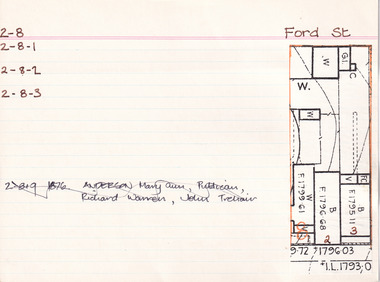
Card (Series) - Index Card, George Tibbits, 39 Ford Street, Beechworth, 1976
... Warren, land only £10 2-8 - 1906 - Ballantyne, Robert, plumber, same shop + land £30 2-8 - 1906 - Caulfield, David, painter, same shop & land £30 Architectural Index Card - Brian Pump and Tony Dugan - Photographers Beechworth George Tibbits 39 Ford Street, Beechworth Card Index Card George Tibbits Brian Pump and Tony Dugan from the Block Camera Store Bruce Trethowen Philip Harmer Elizabeth Vines ...George Tibbits, University of Melbourne. Faculty of Architecture, Building and Town & Regional PlanningIndex system that support the research for Beechworth : historical reconstruction / [by] George Tibbits ... [et al]Arranged by street names of BeechworthEach index card includes: street name and number of property, image of property, allotment and section number, property owners and dates of ownership, description of the property according to rate records, property floor plan with dimensions.beechworth, george tibbitsbeechworth, george tibbits -
 City of Melbourne Libraries
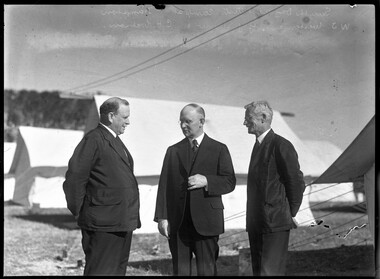
Photograph, Bull, Hugh Jones, 1897-1993, Seventh Day Adventists Camp at Hampton: W.J. Westerman, G.G. Stewart & C.H. Watson
... The first miniature golf course to open in Melbourne was on 4 October 1930 in the basement of recently built art deco style Wentworth House at 203 Collins Street, designed by architect Cedric Heise Ballantyne, (also designed Regent Theatre, Plaza Ballroom, Athenaeum Club, National Theatre, St Kilda, built in 1930, demolished in 1974 for the City Square) It was managed by J. ...The first miniature golf course to open in Melbourne was on 4 October 1930 in the basement of recently built art deco style Wentworth House at 203 Collins Street, designed by architect Cedric Heise Ballantyne, (also designed Regent Theatre, Plaza Ballroom, Athenaeum Club, National Theatre, St Kilda, built in 1930, demolished in 1974 for the City Square) It was managed by J. ...Photographer notations on slide: Seventh Day Adventists Camp at Hampton W.J. Westerman, G.G. Stewart & C.H. Watson Published: 28 December 1933 Published title: SEVENTH DAY ADVENTISTS. Published caption: “I. — The Annual Camp of the Seventh Day Adventists in Highett-road, Hampton, comprising more than 250 tents and accommodating over a thousand persons. II. —W. J. Westerman (vice-president of Australasian) and Pastor G. G. Stewart (president of Victoria), conversing with Pastor C. H. Watson (world president of the Seventh Day Adventists).- III.— Evangelist E. R. Gane and family.” SEVENTH DAY ADVENTISTS. (1933, December 28). The Age (Melbourne, Vic. : 1854 - 1954), p. 9. Retrieved August 1, 2025, from http://nla.gov.au/nla.news-article203356427 Research by project volunteer, Fiona Collyer: In December 1933, the annual Seventh Day Adventists Conference of Victoria was held, with over a 1000 participants camping for ten days at Highett Road Hampton. Pastor Charles H. Watson, world president of the Seventh Day Adventists, Walter J. Westerman, vice-president of Australasian and Pastor George G. Stewart, president of Victoria attended. Interestingly, The Age newspaper modified the original photo in their publication, placing the three men close to each other. Description: Three middle aged men dressed in suits converse in front of tents. In December 1933, delegates from all over Victoria and beyond travelled to Melbourne for the annual Seventh Day Adventists Conference of Victoria, held over ten days on a vacant allotment at Highett Road Hampton. A canvas town of 250 tents for over 1000 campers was created along with large marquees for lectures, devotional services and kitchens. Many daily visitors also attended the lectures and services. The principal speaker was Victorian born world president of the Seventh Day Adventists, Pastor Charles H. Watson (1877-1962), who travelled from Washington DC for the event. The Highett Street campers attended a busy schedule of bible readings, devotional services and health lectures during the ten days of the camp. Lecture subjects included- “Among the Head Hunters of the Solomon Islands”, “ Looking Through the Prophetic Telescope into 1934”, “Soul Surgery”, “Viewing the Celestial Land Through the Prophetic Telescope”and “The Four Horsemen of the Apocalypse”. The Seventh Day Adventist religion was established in the USA in 1863. One of its co-founders was American Ellen G. White whose writings are regarded as divinely inspired and are still adhered to today. Ellen preached on the “Eight Laws of Health”- Nutrition, exercise, water, sunshine, temperance, air, rest and trust in God. Adventists regard their bodies as holy temples and avoid food deemed by the Bible as unclean. They eat a mainly plant based diet with no caffeinated beverages and abstain from alcohol and tobacco. They believe in the observance of Saturday, the seventh day of the week in the Christian (Gregorian) and Hebrew calendars as the sabbath and the literal and imminent second coming of Jesus Christ. New converts are baptised by immersion in water. The Adventists opened the Warburton Sanitarium in 1910 as a health retreat, integrating their holistic health philosophy of physical, mental and spiritual well being. It was a resort in the hills “among picturesque mountain scenery…surrounded by tall forests and deep fern gullies…” where highly strung Melburians could alleviate their digestive maladies, stress and jaded nerves as “…worn down nervous systems mend quickly in this peaceful environment…invigorating air and an abundance of home-grown fruit, vegetables, fresh eggs, milk, and cream help to build healthy bodies”. The resort also offered hydrotherapy, massage and electrical treatments. An advertisement in The Argus- 1 December 1947 assured readers- “EVERYTHING SUNNY AGAIN." “That's how you'll feel when you say farewell to Warburton Sanitarium and Hospital after spending a holiday here. Victoria's Hydro is famous far and wide for wonders worked with sufferers from nervous and digestive disorders. Wholesome food, perfectly cooked; splendid air, regulated exercise, sweet natural sleep; these quickly correct faulty digestion, restore vitality, bring back that sunny optimism natural to healthy people. Massage and curative baths under medical supervision…” Later, after further building work, it became the Warburton Hospital with medical, casualty and obstetrics wards as well as offering strategies to stop smoking, lose weight and for stress management. The hospital ceased operation in 2001. Ellen G. White wrote “God sent me to Australia” and in 1891, accompanied by her son William C. White she arrived in Australia to start a Bible school, spread her health philosophy and for missionary work. At first health food products were imported from America, but it soon became apparent that due to the expense and the food becoming stale over the long journey, that local manufacturing was necessary. In 1898 William secured the services of American Adventist baker Edward C. Halsey, who had worked at Dr Kellogg’s Battle Creek (“Cereal City”), Sanitarium, Michigan, USA. They rented the St George’s bakery in Northcote, Melbourne, producing the first ready to eat breakfast cereal Granola, Caramel Cereal, and peanut butter. The fledgling company relocated to larger premises in Cooranbong, NSW soon after. The Sanitarium Health Food Company opened a factory in Warburton in 1925, manufacturing Granose Biscuits, Cerix Puffed Wheat, San-Bran, Bixies malted wheat flakes, Betta peanut butter, Marmite, “Kwic-Bru - A delicious health “coffee” made from choicest cereals and free from drugs that affect the heart and nerves” In 1928, Sanitarium bought out Grain Products Limited who were manufacturing a sweet cereal biscuit called Weet-Bix which soon became Australia’s favourite breakfast cereal. The Warburton factory closed in 1997, with manufacturing shifting interstate. Sanitarium breakfast cereal boxes offered free collectable cards inside and children could buy albums from grocers for sixpence and mount the cards. Subjects of the albums included- “Aboriginal Tribes, Legends, Customs”, “Australia- Yesterday and Today”, “Marvels of the Great Barrier Reef”, “Advance Australia- a Pageant of the Years”. In 1902 the Adventist’s opened the “Pure Food Vegetarian Cafe” in Sydney (In 1907 the name was changed to “Sanitarium Health Food Cafe”), Eating vegetarian food was definitely a curiosity. “Cristina” reviewed the cafe for The Australasian-27 October 1906. Topics For The Block. “Feeling somewhat like a criminal, and hoping to escape detection, I stealthily made my way into a vegetarian restaurant the other day... If my friends happened to catch me walking in there, I should henceforth be considered a crank, a faddist, and little short of a lunatic! Whom did I find within, seated with the air of habitués at the small tables, but heaps of my friends. They had all this while been pursuing their vegetarian way, layin' low and sayin' nuffin'. Flesh-eaters, now that the Sydney summer has set in apparently in good earnest, are beginning to wonder if the vegetarians are not wiser in their day and generation. Roast beef, hot cornea beef, ragouts, and meat curries, the very thought of them makes one feel hot. Frosted lemon pudding, stewed fruits, wheatmeal rolls, and tomatoes sound nice when you look at their names on the vegetarian menu. Such weird messes are served, square, unintelligible blocks of some brown substance, a few bites of which form a full and satisfying meal. Cold nut foods, granose, nuttose, and jam protose, bromose, with jelly and various "ose" sandwiches, impossible for the unbeliever to diagnose, are put before you. You drink malted nut broth, you eat gluten sticks, stewed beans, lentil patties, with vegetable sauce, any or all of which are distinctly nourishing and filling at the price. A mock (decidedly mock) veal cutlet or a red lentil roast is sufficient lunch, it appears, for anyone. Thus, "you obtain the best working results from your machinery with the least possible expenditure..." In December 1906 the Adventists branched out to Melbourne, opening the Sanitarium Health Food Cafe at 289 Collins Street next to the Royal Bank building. (corner Collins and Elizabeth Streets, demolished in 1939). Their motto was “Quality and Purity”. “Cynthia” of The Leader “Social Circle” column reviewed the cafe in 9 March 1907- “Hundreds of people have a feeling of positive affection for a diet that will be satisfying, appetising and nourishing, without having meat for its backbone. It will come as news that we have in Melbourne a cafe where you can really enjoy yourself without eating anything in the way of meat. Cream, custard, cheese and the like are not cold shouldered out of the menu, and the housewife in search of new dishes will find here ever so much in the way of suggestions. Nuts figure conspicuously in the menu, and lentil and walnut cutlets may be instanced among the delicacies. Beans are cooked in quite alluring fashion, while creamed parsnips are excellent. For sandwiches you could hardly desire anything more appetising than granosi biscuits, and nut cheese. The combination is suggestive of school lunches, and nut meat might well be employed as a variant. A visit to the cafe itself — it is next the Royal Bank in Collins-street — will surprise anyone used to the average vegetarian restaurant. Every thing is fresh, fragrant, and thoroughly modern… It is run, in connection with that curious people the Seventh Day Adventists.” However, “Adele” writing for the Evelyn Observer and Bourke East Record -13 December 1907 had a different experience- CITY RESTAURANTS. “There is no glamour from the outside. We enter the dining room at six and secure a seat at a small table, for this night we are going to dine on vegetables. Some people pride themselves on being vegetarians, and devote a great deal of their spare cash and energy to disseminating vegetarian principles. I shall not in a hurry forget the dinner we tried to get through at this vegetarian restaurant. There was put before us plate after plate of vegetables not soaked, but sodden with water, not an atom of flavouring or dressing; no attempt was made to give the slightest piquancy to potato, cabbage, turnip or carrot. I beg pardon, I am unjust, there were two caterpillars in the cabbage. It is astonishing how persistently ordinary cooks spoil vegetables in the process of cooking and how little they understand the value of vegetables on a menu.” From the extensive menu of 1924, you could order cream of green pea soup, followed by nut meat with Yorkshire pudding, egg timbales, stewed brown lentils, savoury rissoles with piquant sauce. Among the dessert offerings were creamed sago, steamed figs and walnut drops. Washed down with fermented wine and to finish, “Frucerea”, a coffee substitute essence made from fruit and cereal. A four course meal of soup, entree, vegetables and sweets cost 1/6 in 1924. Proving that plant-based food was not just a novelty, 67,000 meals were served at the cafe in 1918, rising to 73,000 in 1921. Later the Sanitarium Cafe moved to 293 Little Collins Street, (opposite Royal Arcade) sharing the building with The Lilliput Golf Course, a miniature golf course of 18 holes. The course was a replica of the fashionable Lido Course in France and was open daily from 10am to midnight with a green fee of one shilling. It featured goldfish, waterfalls and dance music. Lilliput boasted that they were “Melbourne’s coolest indoor course” Miniature golf (mini, minnie, midget, miget, Tom Thumb, Wee golf, putt-putt, pigmy, peewee, crazy golf, obstacle golf) swept the globe in the 1930s, starting in the USA, then Europe. The courses provided affordable recreation during uncertainty at the start of the Great Depression. The craze arrived in Sydney September 1930 with the first mini golf course opening in the basement of the State Theatre. It featured a replica Sydney Harbour Bridge and attracted over 1000 players a day at one shilling per game. The miniature golf bug hit Melbourne hard in 1930-31 with nearly 200 courses springing up in the CBD and suburbs within a few months. The first miniature golf course to open in Melbourne was on 4 October 1930 in the basement of recently built art deco style Wentworth House at 203 Collins Street, designed by architect Cedric Heise Ballantyne, (also designed Regent Theatre, Plaza Ballroom, Athenaeum Club, National Theatre, St Kilda, built in 1930, demolished in 1974 for the City Square) It was managed by J. C. Williamson who advertised for a “Girl Spruiker” who “Must be Young, Attractive Personality, and Able to Talk to the Public” to work at the course. The Age 26 September 1930 reported - “The Wentworth House management have spared no expense in preparing the links. Water hazards, sand bunkers, running streams, ancestral castles, moats and a cunning drawbridge have each been devised to test the skill of players, while the walls and ceiling have been "atmospherically" treated to convey an exterior effect”. Even Melbourne City Council jumped on the bandwagon, leasing the lower hall of Melbourne Town Hall to colourful car dealer and racehorse owner Mr A. G. Barlow for £43 per week for the “Kit Kat Tiny Golf Course”, opening on 11 December 1930. (Turf identity, Mr Alexander George Barlow, (1880-1937) who raced under the nom de course “A. G. Vauxhall”, owned filly Frances Tressady, who in 1923 won the Victoria Derby and Oaks Stakes double and came fifth in the Melbourne Cup. The “Frances Tressady Stakes” is held each March at Flemington Racecourse in honour of the horse, the last filly to win the Derby. Barlow was the proprietor of Barlow Brothers Pty Ltd car dealership at 442 Elizabeth Street, Melbourne. He played 14 games for Carlton Football Club (VFL) on the half-forward line from 1901-1903). Patrons could vie for The Herald Miniature Golf Championship Cup, a gold cup worth £7/7, in an eight week long competition. Sports newspaper The Sporting Globe also offered a Cup and prize money. Many courses offered prizes of theatre tickets, cash and cigarettes. Myer’s department store, hoping to cash in on the fad, advertised in Melbourne’s newspapers that their Sports Department could design and equip complete miniature golf courses using “Fairway” imitation turf at 4/6 a yard. Newspaper cartoonists loved to lampoon the fad. Both Percy Leason, cartoonist for society magazine Table Talk and Syd Miller of Smith’s Weekly depicted “real” golfers causing havoc on a mini golf course, showing that being a “real” golf player was no advantage to playing miniature golf. But bust often follows boom. With such rapid market saturation, expensive novel hazards, waning interest, long opening hours, often to midnight, and price cutting of game fees from one shilling to sixpence and then to threepence amongst some courses, the bubble was bound to burst. The Sporting Globe columnist J.M.Dillon on 20 May 1931 lamented- £100,000 LOST Failure of ‘Minnie’ Golf. “Miniature golf might have provided fun and jokes for thousands of people in Australia, but there were many for whom it panned out a tragedy. It is likely that the dead losses of those who attempted to make money out of the game in Australia were in the vicinity of £100,000. …For a while there was hardly a spare block of land, or a possible “site” in the shape of a hall, or a showroom, in Sydney and Melbourne, that some one was not after to set upon it a “minnie links.” Big amusement firms and private individuals anxious to make money began to run courses. Practically every individual who touched the game had his finger’s financially burnt. …From the approximately £60,000 invested in Melbourne alone, there must have been £25,000 lost. …There are now dozens of courses going to ruin, and many more that the owners would be happy to give away if the takers would remove from them obligations of leases, &c…” The lease on the “Kit Kat Tiny Golf Club” at the Melbourne Town Hall expired on 30 April 1931, with Mr Barlow losing £798 on the venture. The hazards and fittings, which cost £400 and included a large replica of the Town Hall, now worthless. Due to declining patronage, the Little Collins Street cafe closed in 1938, although the adjacent shop continued to sell Sanitarium products. In New Zealand, the first Sanitarium factory opened in Christchurch in 1900, with the company later opening factories in Palmerston North and Auckland. The Adventists opened vegetarian cafes, firstly at 37 Taranaki Street Wellington in 1906, followed by cafes in Auckland, Christchurch and Dunedin. Weet-Bix is also New Zealand’s favourite cereal- there the jingle is “Kiwi kids are Weet-Bix kids.” In 1955, the Australian Women’s Weekly ran an illustrated, full colour advertisement featuring New Zealand born Edmund Hillary (later Sir) 1919-2008, who, along with Sherpa Tenzing Norgay, was the first climber to reach the summit of Mount Everest on 29 March 1953. The Australian Women’s Weekly, 30 March, 1955- “WEET-BIX carried by Hillary on Himalayan adventure! c/- N.Z. Alpine Club Inc., Dunedin, New Zealand. The Manager, Sanitarium Health Food Company, Christchurch, N.Z. Dear Sir. …Weet-Bix was chosen at my special request as I had always felt that some easily prepared form of breakfast was essential to the primitive conditions of high camps. Weet-Bix fulfilled its task very well indeed. We usually had them with hot milk (powdered) and sugar, and even when we were unable to eat anything else, we usually managed to have a little Weet-Bix . . . I regard them as a great success and expect they will be more widely used in the Himalayas in future. Yours faithfully, (Signed) E.P. Hillary. Sanitarium Marmite - motto- “Too much spoils the flavour”- is as beloved with Kiwis as Vegemite is with Australians. In 1966, a fire gutted the Christchurch Marmite factory causing a nation wide shortage. Once the factory was rebuilt, Sanitarium relaunched the yeasty extract in reusable glass tumblers with printed designs such as yachts, New Zealand birds and vintage cars. These popular collectibles can still be found in the kitchen cupboards of many New Zealand baches (holiday homes). After the devastating 2011 earthquake in Christchurch damaged the Marmite factory causing shortages and panic buying, a “Marmageddon” was declared with jars of the “black gold” advertised online for up to NZ$800. Consumers were advised to spread their Marmite sparingly until production resumed. (The Christchurch plant reportedly produces around 640,000kg of Marmite per year). Sanitarium Health and Wellbeing Company is exempt from paying company income tax on their profits due to their ownership by a religious organisation. Although not a compulsory rule for salvation, Adventists are encouraged to pay a tithe of 10% of their income to the church to support the ministry in God’s work. Nowadays, there are over 25 million members of the Seventh Day Adventists Church in 200 countries. ITEMS OF INTEREST (1933, December 22). The Argus (Melbourne, Vic. : 1848 - 1957), p. 8. Retrieved July 21, 2025, from http://nla.gov.au/nla.news-article11723188 SEVENTH DAY ADVENTISTS. (1933, December 28). The Age (Melbourne, Vic. : 1854 - 1954), p. 9. Retrieved July 1, 2025, from http://nla.gov.au/nla.news-article203356427 EVANGELISTS' CAMP (1933, December 20). The Herald (Melbourne, Vic. : 1861 - 1954), p. 30. Retrieved July 1, 2025, from http://nla.gov.au/nla.news-article243213209 Master Butchers Have A Time Pilots FOR School Air Race Charity Golf At Riversdale (1931, May 1). The Sun News-Pictorial (Melbourne, Vic. : 1922 - 1954; 1956), p. 14-15. Retrieved September 4, 2025, from http://nla.gov.au/nla.news-article276159136 2000 ADVENTISTS UNDER CANVAS (1933, December 27). The Herald (Melbourne, Vic. : 1861 - 1954), p. 17. Retrieved July 1, 2025, from http://nla.gov.au/nla.news-article243223698 TOPICS FOR THE BLOCK. (1906, October 27). The Australasian (Melbourne, Vic. : 1864 - 1946), p. 45. Retrieved August 30, 2025, from http://nla.gov.au/nla.news-article139178204 https://en.wikipedia.org/wiki/Seventh-day_Adventist_Church https://www.sanitarium.com/au/about/sanitarium-story/profits-for- ENTERTAINMENT AT MENZIES'. (1906, December 6). Punch (Melbourne, Vic. : 1900 - 1918; 1925), p. 26. Retrieved August 3, 2025, from http://nla.gov.au/nla.news-article175380296 https://encyclopedia.adventist.org/article?id=9HN0&highlight=Conference SOCIAL CIRCLE (1907, March 9). Leader (Melbourne, Vic. : 1862 - 1918, 1935), p. 41. Retrieved August 3, 2025, from http://nla.gov.au/nla.news-article196649677 CITY RESTAURANTS. (1907, December 13). Evelyn Observer and Bourke East Record (Vic. : 1902 - 1917), p. 1 (MORNING.). Retrieved August 3, 2025, from http://nla.gov.au/nla.news-article61133109 Advertising (1924, May 6). The Sun News-Pictorial (Melbourne, Vic. : 1922 - 1954; 1956), p. 9. Retrieved August 3, 2025, from http://nla.gov.au/nla.news-article274271406 1930, December 5). The Herald (Melbourne, Vic. : 1861 - 1954), p. 14. Retrieved August 5, 2025, from http://nla.gov.au/nla.news-page26374135 Thousands Are Still Playing Miniature Golf (1931, January 2). The Herald (Melbourne, Vic. : 1861 - 1954), p. 11. Retrieved August 8, 2025, from http://nla.gov.au/nla.news-article242880087 MINIATURE GOLF. (1930, October 16). The Argus (Melbourne, Vic. : 1848 - 1957), p. 10. Retrieved August 8, 2025, from http://nla.gov.au/nla.news-article4209280 THE REAL GOLFER WHO FORGOT HIMSELF ON THE MINIATURE GOLF COURSE (1930, November 13). Table Talk (Melbourne, Vic. : 1885 - 1939), p. 13. Retrieved August 8, 2025, from http://nla.gov.au/nla.news-article146706596 Advertising (1930, December 5). The Herald (Melbourne, Vic. : 1861 - 1954), p. 14. Retrieved August 8, 2025, from http://nla.gov.au/nla.news-article242761991 Advertising (1931, January 9). The Herald (Melbourne, Vic. : 1861 - 1954), p. 12. Retrieved August 8, 2025, from http://nla.gov.au/nla.news-article242887972 1955, March 30). The Australian Women's Weekly (1933 - 1982), p. 38. Retrieved August 9, 2025, from http://nla.gov.au/nla.news-page4812489 £100,000 LOST (1931, May 20). Sporting Globe (Melbourne, Vic. : 1922 - 1954), p. 1 (Edition1). Retrieved August 14, 2025, from http://nla.gov.au/nla.news-article183023946 1930, December 5). The Herald (Melbourne, Vic. : 1861 - 1954), p. 14. Retrieved August 15, 2025, from http://nla.gov.au/nla.news-page26374135 Advertising (1931, January 23). The Herald (Melbourne, Vic. : 1861 - 1954), p. 14. Retrieved August 15, 2025, from http://nla.gov.au/nla.news-article242887795 MINIATURE GOLF. (1931, February 5). The Dandenong Journal (Vic. : 1927 - 1954), p. 6. Retrieved August 16, 2025, from http://nla.gov.au/nla.news-article201082526 Still Time To Enter Midge (1931, January 16). The Herald (Melbourne, Vic. : 1861 - 1954), p. 12. Retrieved August 16, 2025, from http://nla.gov.au/nla.news-article242888830 WIT OF THE WEEK (1930, October 23). Table Talk (Melbourne, Vic. : 1885 - 1939), p. 23. Retrieved August 29, 2025, from http://nla.gov.au/nla.news-article146455050 Advertising (1930, October 2). Table Talk (Melbourne, Vic. : 1885 - 1939), p. 16. Retrieved August 18, 2025, from http://nla.gov.au/nla.news-article146454620 MIDGET GOLF LINKS. (1930, September 26). The Age (Melbourne, Vic. : 1854 - 1954), p. 6. Retrieved August 18, 2025, from http://nla.gov.au/nla.news-article202235074 https://www.smh.com.au/national/fairfax-archive-mini-golf-20131125-2y608.html TURF NOTES (1923, November 6). The Ballarat Star (Vic. : 1865 - 1924), p. 6. Retrieved September 3, 2025, from http://nla.gov.au/nla.news-article213855201 Advertising (1930, October 4). The Herald (Melbourne, Vic. : 1861 - 1954), p. 10. Retrieved October 14, 2025, from http://nla.gov.au/nla.news-article242937272 LAUGHTER AND TEARS. (1930, November 15). Smith's Weekly (Sydney, NSW : 1919 - 1950), p. 21. Retrieved September 9, 2025, from http://nla.gov.au/nla.news-article234426874 Advertising (1947, December 1). The Argus (Melbourne, Vic. : 1848 - 1957), p. 5. Retrieved September 15, 2025, from http://nla.gov.au/nla.news-article22523355Photographer notations on slide: "Seventh Day Adventists Camp at Hampton W.J. Westerman, G.G. Stewart & C.H. Watson".religion, health food, mini golf, 1930-1939, tents, churches, camps -
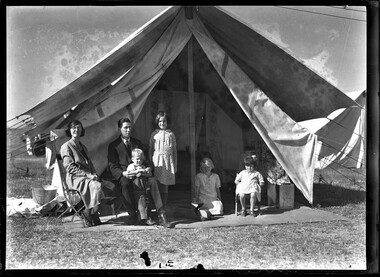 City of Melbourne Libraries
Photograph, Bull, Hugh Jones, 1897-1993, Seventh Day Adventists Camp at Hampton: E. Gane + family
... The first miniature golf course to open in Melbourne was on 4 October 1930 in the basement of recently built art deco style Wentworth House at 203 Collins Street, designed by architect Cedric Heise Ballantyne, (also designed Regent Theatre, Plaza Ballroom, Athenaeum Club, National Theatre, St Kilda, built in 1930, demolished in 1974 for the City Square) It was managed by J. ...The first miniature golf course to open in Melbourne was on 4 October 1930 in the basement of recently built art deco style Wentworth House at 203 Collins Street, designed by architect Cedric Heise Ballantyne, (also designed Regent Theatre, Plaza Ballroom, Athenaeum Club, National Theatre, St Kilda, built in 1930, demolished in 1974 for the City Square) It was managed by J. ...Photographer notations on slide: Seventh Day Adventists Camp. E Gane + family Published: 28 December 1933 Published title: SEVENTH DAY ADVENTISTS. Published caption: “I. — The Annual Camp of the Seventh Day Adventists in Highett-road, Hampton, comprising more than 250 tents and accommodating over a thousand persons. II. —W. J. Westerman (vice-president of Australasian) and Pastor G. G. Stewart (president of Victoria), conversing with Pastor C. H. Watson (world president of the Seventh Day Adventists).- III.— Evangelist E. R. Gane and family.” SEVENTH DAY ADVENTISTS. (1933, December 28). The Age (Melbourne, Vic. : 1854 - 1954), p. 9. Retrieved August 1, 2025, from http://nla.gov.au/nla.news-article203356427 Research by project volunteer, Fiona Collyer: In December 1933, evangelist Mr E.R. Gane and his family gather outside their tent during the ten day Seventh Day Adventist Conference held in Highett Road, Hampton. Description: A woman, man and four small children sit and stand in front of a tent. One child plays with a toy train. In December 1933, delegates from all over Victoria and beyond travelled to Melbourne for the annual Seventh Day Adventists Conference of Victoria, held over ten days on a vacant allotment at Highett Road Hampton. A canvas town of 250 tents for over 1000 campers was created along with large marquees for lectures, devotional services and kitchens. Many daily visitors also attended the lectures and services. The principal speaker was Victorian born world president of the Seventh Day Adventists, Pastor Charles H. Watson (1877-1962), who travelled from Washington DC for the event. The Highett Street campers attended a busy schedule of bible readings, devotional services and health lectures during the ten days of the camp. Lecture subjects included- “Among the Head Hunters of the Solomon Islands”, “ Looking Through the Prophetic Telescope into 1934”, “Soul Surgery”, “Viewing the Celestial Land Through the Prophetic Telescope”and “The Four Horsemen of the Apocalypse”. The Seventh Day Adventist religion was established in the USA in 1863. One of its co-founders was American Ellen G. White whose writings are regarded as divinely inspired and are still adhered to today. Ellen preached on the “Eight Laws of Health”- Nutrition, exercise, water, sunshine, temperance, air, rest and trust in God. Adventists regard their bodies as holy temples and avoid food deemed by the Bible as unclean. They eat a mainly plant based diet with no caffeinated beverages and abstain from alcohol and tobacco. They believe in the observance of Saturday, the seventh day of the week in the Christian (Gregorian) and Hebrew calendars as the sabbath and the literal and imminent second coming of Jesus Christ. New converts are baptised by immersion in water. The Adventists opened the Warburton Sanitarium in 1910 as a health retreat, integrating their holistic health philosophy of physical, mental and spiritual well being. It was a resort in the hills “among picturesque mountain scenery…surrounded by tall forests and deep fern gullies…” where highly strung Melburians could alleviate their digestive maladies, stress and jaded nerves as “…worn down nervous systems mend quickly in this peaceful environment…invigorating air and an abundance of home-grown fruit, vegetables, fresh eggs, milk, and cream help to build healthy bodies”. The resort also offered hydrotherapy, massage and electrical treatments. An advertisement in The Argus- 1 December 1947 assured readers- “EVERYTHING SUNNY AGAIN." “That's how you'll feel when you say farewell to Warburton Sanitarium and Hospital after spending a holiday here. Victoria's Hydro is famous far and wide for wonders worked with sufferers from nervous and digestive disorders. Wholesome food, perfectly cooked; splendid air, regulated exercise, sweet natural sleep; these quickly correct faulty digestion, restore vitality, bring back that sunny optimism natural to healthy people. Massage and curative baths under medical supervision…” Later, after further building work, it became the Warburton Hospital with medical, casualty and obstetrics wards as well as offering strategies to stop smoking, lose weight and for stress management. The hospital ceased operation in 2001. Ellen G. White wrote “God sent me to Australia” and in 1891, accompanied by her son William C. White she arrived in Australia to start a Bible school, spread her health philosophy and for missionary work. At first health food products were imported from America, but it soon became apparent that due to the expense and the food becoming stale over the long journey, that local manufacturing was necessary. In 1898 William secured the services of American Adventist baker Edward C. Halsey, who had worked at Dr Kellogg’s Battle Creek (“Cereal City”), Sanitarium, Michigan, USA. They rented the St George’s bakery in Northcote, Melbourne, producing the first ready to eat breakfast cereal Granola, Caramel Cereal, and peanut butter. The fledgling company relocated to larger premises in Cooranbong, NSW soon after. The Sanitarium Health Food Company opened a factory in Warburton in 1925, manufacturing Granose Biscuits, Cerix Puffed Wheat, San-Bran, Bixies malted wheat flakes, Betta peanut butter, Marmite, “Kwic-Bru - A delicious health “coffee” made from choicest cereals and free from drugs that affect the heart and nerves” In 1928, Sanitarium bought out Grain Products Limited who were manufacturing a sweet cereal biscuit called Weet-Bix which soon became Australia’s favourite breakfast cereal. The Warburton factory closed in 1997, with manufacturing shifting interstate. Sanitarium breakfast cereal boxes offered free collectable cards inside and children could buy albums from grocers for sixpence and mount the cards. Subjects of the albums included- “Aboriginal Tribes, Legends, Customs”, “Australia- Yesterday and Today”, “Marvels of the Great Barrier Reef”, “Advance Australia- a Pageant of the Years”. In 1902 the Adventist’s opened the “Pure Food Vegetarian Cafe” in Sydney (In 1907 the name was changed to “Sanitarium Health Food Cafe”), Eating vegetarian food was definitely a curiosity. “Cristina” reviewed the cafe for The Australasian-27 October 1906. Topics For The Block. “Feeling somewhat like a criminal, and hoping to escape detection, I stealthily made my way into a vegetarian restaurant the other day... If my friends happened to catch me walking in there, I should henceforth be considered a crank, a faddist, and little short of a lunatic! Whom did I find within, seated with the air of habitués at the small tables, but heaps of my friends. They had all this while been pursuing their vegetarian way, layin' low and sayin' nuffin'. Flesh-eaters, now that the Sydney summer has set in apparently in good earnest, are beginning to wonder if the vegetarians are not wiser in their day and generation. Roast beef, hot cornea beef, ragouts, and meat curries, the very thought of them makes one feel hot. Frosted lemon pudding, stewed fruits, wheatmeal rolls, and tomatoes sound nice when you look at their names on the vegetarian menu. Such weird messes are served, square, unintelligible blocks of some brown substance, a few bites of which form a full and satisfying meal. Cold nut foods, granose, nuttose, and jam protose, bromose, with jelly and various "ose" sandwiches, impossible for the unbeliever to diagnose, are put before you. You drink malted nut broth, you eat gluten sticks, stewed beans, lentil patties, with vegetable sauce, any or all of which are distinctly nourishing and filling at the price. A mock (decidedly mock) veal cutlet or a red lentil roast is sufficient lunch, it appears, for anyone. Thus, "you obtain the best working results from your machinery with the least possible expenditure..." In December 1906 the Adventists branched out to Melbourne, opening the Sanitarium Health Food Cafe at 289 Collins Street next to the Royal Bank building. (corner Collins and Elizabeth Streets, demolished in 1939). Their motto was “Quality and Purity”. “Cynthia” of The Leader “Social Circle” column reviewed the cafe in 9 March 1907- “Hundreds of people have a feeling of positive affection for a diet that will be satisfying, appetising and nourishing, without having meat for its backbone. It will come as news that we have in Melbourne a cafe where you can really enjoy yourself without eating anything in the way of meat. Cream, custard, cheese and the like are not cold shouldered out of the menu, and the housewife in search of new dishes will find here ever so much in the way of suggestions. Nuts figure conspicuously in the menu, and lentil and walnut cutlets may be instanced among the delicacies. Beans are cooked in quite alluring fashion, while creamed parsnips are excellent. For sandwiches you could hardly desire anything more appetising than granosi biscuits, and nut cheese. The combination is suggestive of school lunches, and nut meat might well be employed as a variant. A visit to the cafe itself — it is next the Royal Bank in Collins-street — will surprise anyone used to the average vegetarian restaurant. Every thing is fresh, fragrant, and thoroughly modern… It is run, in connection with that curious people the Seventh Day Adventists.” However, “Adele” writing for the Evelyn Observer and Bourke East Record -13 December 1907 had a different experience- CITY RESTAURANTS. “There is no glamour from the outside. We enter the dining room at six and secure a seat at a small table, for this night we are going to dine on vegetables. Some people pride themselves on being vegetarians, and devote a great deal of their spare cash and energy to disseminating vegetarian principles. I shall not in a hurry forget the dinner we tried to get through at this vegetarian restaurant. There was put before us plate after plate of vegetables not soaked, but sodden with water, not an atom of flavouring or dressing; no attempt was made to give the slightest piquancy to potato, cabbage, turnip or carrot. I beg pardon, I am unjust, there were two caterpillars in the cabbage. It is astonishing how persistently ordinary cooks spoil vegetables in the process of cooking and how little they understand the value of vegetables on a menu.” From the extensive menu of 1924, you could order cream of green pea soup, followed by nut meat with Yorkshire pudding, egg timbales, stewed brown lentils, savoury rissoles with piquant sauce. Among the dessert offerings were creamed sago, steamed figs and walnut drops. Washed down with fermented wine and to finish, “Frucerea”, a coffee substitute essence made from fruit and cereal. A four course meal of soup, entree, vegetables and sweets cost 1/6 in 1924. Proving that plant-based food was not just a novelty, 67,000 meals were served at the cafe in 1918, rising to 73,000 in 1921. Later the Sanitarium Cafe moved to 293 Little Collins Street, (opposite Royal Arcade) sharing the building with The Lilliput Golf Course, a miniature golf course of 18 holes. The course was a replica of the fashionable Lido Course in France and was open daily from 10am to midnight with a green fee of one shilling. It featured goldfish, waterfalls and dance music. Lilliput boasted that they were “Melbourne’s coolest indoor course” Miniature golf (mini, minnie, midget, miget, Tom Thumb, Wee golf, putt-putt, pigmy, peewee, crazy golf, obstacle golf) swept the globe in the 1930s, starting in the USA, then Europe. The courses provided affordable recreation during uncertainty at the start of the Great Depression. The craze arrived in Sydney September 1930 with the first mini golf course opening in the basement of the State Theatre. It featured a replica Sydney Harbour Bridge and attracted over 1000 players a day at one shilling per game. The miniature golf bug hit Melbourne hard in 1930-31 with nearly 200 courses springing up in the CBD and suburbs within a few months. The first miniature golf course to open in Melbourne was on 4 October 1930 in the basement of recently built art deco style Wentworth House at 203 Collins Street, designed by architect Cedric Heise Ballantyne, (also designed Regent Theatre, Plaza Ballroom, Athenaeum Club, National Theatre, St Kilda, built in 1930, demolished in 1974 for the City Square) It was managed by J. C. Williamson who advertised for a “Girl Spruiker” who “Must be Young, Attractive Personality, and Able to Talk to the Public” to work at the course. The Age 26 September 1930 reported - “The Wentworth House management have spared no expense in preparing the links. Water hazards, sand bunkers, running streams, ancestral castles, moats and a cunning drawbridge have each been devised to test the skill of players, while the walls and ceiling have been "atmospherically" treated to convey an exterior effect”. Even Melbourne City Council jumped on the bandwagon, leasing the lower hall of Melbourne Town Hall to colourful car dealer and racehorse owner Mr A. G. Barlow for £43 per week for the “Kit Kat Tiny Golf Course”, opening on 11 December 1930. (Turf identity, Mr Alexander George Barlow, (1880-1937) who raced under the nom de course “A. G. Vauxhall”, owned filly Frances Tressady, who in 1923 won the Victoria Derby and Oaks Stakes double and came fifth in the Melbourne Cup. The “Frances Tressady Stakes” is held each March at Flemington Racecourse in honour of the horse, the last filly to win the Derby. Barlow was the proprietor of Barlow Brothers Pty Ltd car dealership at 442 Elizabeth Street, Melbourne. He played 14 games for Carlton Football Club (VFL) on the half-forward line from 1901-1903). Patrons could vie for The Herald Miniature Golf Championship Cup, a gold cup worth £7/7, in an eight week long competition. Sports newspaper The Sporting Globe also offered a Cup and prize money. Many courses offered prizes of theatre tickets, cash and cigarettes. Myer’s department store, hoping to cash in on the fad, advertised in Melbourne’s newspapers that their Sports Department could design and equip complete miniature golf courses using “Fairway” imitation turf at 4/6 a yard. Newspaper cartoonists loved to lampoon the fad. Both Percy Leason, cartoonist for society magazine Table Talk and Syd Miller of Smith’s Weekly depicted “real” golfers causing havoc on a mini golf course, showing that being a “real” golf player was no advantage to playing miniature golf. But bust often follows boom. With such rapid market saturation, expensive novel hazards, waning interest, long opening hours, often to midnight, and price cutting of game fees from one shilling to sixpence and then to threepence amongst some courses, the bubble was bound to burst. The Sporting Globe columnist J.M.Dillon on 20 May 1931 lamented- £100,000 LOST Failure of ‘Minnie’ Golf. “Miniature golf might have provided fun and jokes for thousands of people in Australia, but there were many for whom it panned out a tragedy. It is likely that the dead losses of those who attempted to make money out of the game in Australia were in the vicinity of £100,000. …For a while there was hardly a spare block of land, or a possible “site” in the shape of a hall, or a showroom, in Sydney and Melbourne, that some one was not after to set upon it a “minnie links.” Big amusement firms and private individuals anxious to make money began to run courses. Practically every individual who touched the game had his finger’s financially burnt. …From the approximately £60,000 invested in Melbourne alone, there must have been £25,000 lost. …There are now dozens of courses going to ruin, and many more that the owners would be happy to give away if the takers would remove from them obligations of leases, &c…” The lease on the “Kit Kat Tiny Golf Club” at the Melbourne Town Hall expired on 30 April 1931, with Mr Barlow losing £798 on the venture. The hazards and fittings, which cost £400 and included a large replica of the Town Hall, now worthless. Due to declining patronage, the Little Collins Street cafe closed in 1938, although the adjacent shop continued to sell Sanitarium products. In New Zealand, the first Sanitarium factory opened in Christchurch in 1900, with the company later opening factories in Palmerston North and Auckland. The Adventists opened vegetarian cafes, firstly at 37 Taranaki Street Wellington in 1906, followed by cafes in Auckland, Christchurch and Dunedin. Weet-Bix is also New Zealand’s favourite cereal- there the jingle is “Kiwi kids are Weet-Bix kids.” In 1955, the Australian Women’s Weekly ran an illustrated, full colour advertisement featuring New Zealand born Edmund Hillary (later Sir) 1919-2008, who, along with Sherpa Tenzing Norgay, was the first climber to reach the summit of Mount Everest on 29 March 1953. The Australian Women’s Weekly, 30 March, 1955- “WEET-BIX carried by Hillary on Himalayan adventure! c/- N.Z. Alpine Club Inc., Dunedin, New Zealand. The Manager, Sanitarium Health Food Company, Christchurch, N.Z. Dear Sir. …Weet-Bix was chosen at my special request as I had always felt that some easily prepared form of breakfast was essential to the primitive conditions of high camps. Weet-Bix fulfilled its task very well indeed. We usually had them with hot milk (powdered) and sugar, and even when we were unable to eat anything else, we usually managed to have a little Weet-Bix . . . I regard them as a great success and expect they will be more widely used in the Himalayas in future. Yours faithfully, (Signed) E.P. Hillary. Sanitarium Marmite - motto- “Too much spoils the flavour”- is as beloved with Kiwis as Vegemite is with Australians. In 1966, a fire gutted the Christchurch Marmite factory causing a nation wide shortage. Once the factory was rebuilt, Sanitarium relaunched the yeasty extract in reusable glass tumblers with printed designs such as yachts, New Zealand birds and vintage cars. These popular collectibles can still be found in the kitchen cupboards of many New Zealand baches (holiday homes). After the devastating 2011 earthquake in Christchurch damaged the Marmite factory causing shortages and panic buying, a “Marmageddon” was declared with jars of the “black gold” advertised online for up to NZ$800. Consumers were advised to spread their Marmite sparingly until production resumed. (The Christchurch plant reportedly produces around 640,000kg of Marmite per year). Sanitarium Health and Wellbeing Company is exempt from paying company income tax on their profits due to their ownership by a religious organisation. Although not a compulsory rule for salvation, Adventists are encouraged to pay a tithe of 10% of their income to the church to support the ministry in God’s work. Nowadays, there are over 25 million members of the Seventh Day Adventists Church in 200 countries. ITEMS OF INTEREST (1933, December 22). The Argus (Melbourne, Vic. : 1848 - 1957), p. 8. Retrieved July 21, 2025, from http://nla.gov.au/nla.news-article11723188 SEVENTH DAY ADVENTISTS. (1933, December 28). The Age (Melbourne, Vic. : 1854 - 1954), p. 9. Retrieved July 1, 2025, from http://nla.gov.au/nla.news-article203356427 EVANGELISTS' CAMP (1933, December 20). The Herald (Melbourne, Vic. : 1861 - 1954), p. 30. Retrieved July 1, 2025, from http://nla.gov.au/nla.news-article243213209 Master Butchers Have A Time Pilots FOR School Air Race Charity Golf At Riversdale (1931, May 1). The Sun News-Pictorial (Melbourne, Vic. : 1922 - 1954; 1956), p. 14-15. Retrieved September 4, 2025, from http://nla.gov.au/nla.news-article276159136 2000 ADVENTISTS UNDER CANVAS (1933, December 27). The Herald (Melbourne, Vic. : 1861 - 1954), p. 17. Retrieved July 1, 2025, from http://nla.gov.au/nla.news-article243223698 TOPICS FOR THE BLOCK. (1906, October 27). The Australasian (Melbourne, Vic. : 1864 - 1946), p. 45. Retrieved August 30, 2025, from http://nla.gov.au/nla.news-article139178204 https://en.wikipedia.org/wiki/Seventh-day_Adventist_Church https://www.sanitarium.com/au/about/sanitarium-story/profits-for- ENTERTAINMENT AT MENZIES'. (1906, December 6). Punch (Melbourne, Vic. : 1900 - 1918; 1925), p. 26. Retrieved August 3, 2025, from http://nla.gov.au/nla.news-article175380296 https://encyclopedia.adventist.org/article?id=9HN0&highlight=Conference SOCIAL CIRCLE (1907, March 9). Leader (Melbourne, Vic. : 1862 - 1918, 1935), p. 41. Retrieved August 3, 2025, from http://nla.gov.au/nla.news-article196649677 CITY RESTAURANTS. (1907, December 13). Evelyn Observer and Bourke East Record (Vic. : 1902 - 1917), p. 1 (MORNING.). Retrieved August 3, 2025, from http://nla.gov.au/nla.news-article61133109 Advertising (1924, May 6). The Sun News-Pictorial (Melbourne, Vic. : 1922 - 1954; 1956), p. 9. Retrieved August 3, 2025, from http://nla.gov.au/nla.news-article274271406 1930, December 5). The Herald (Melbourne, Vic. : 1861 - 1954), p. 14. Retrieved August 5, 2025, from http://nla.gov.au/nla.news-page26374135 Thousands Are Still Playing Miniature Golf (1931, January 2). The Herald (Melbourne, Vic. : 1861 - 1954), p. 11. Retrieved August 8, 2025, from http://nla.gov.au/nla.news-article242880087 MINIATURE GOLF. (1930, October 16). The Argus (Melbourne, Vic. : 1848 - 1957), p. 10. Retrieved August 8, 2025, from http://nla.gov.au/nla.news-article4209280 THE REAL GOLFER WHO FORGOT HIMSELF ON THE MINIATURE GOLF COURSE (1930, November 13). Table Talk (Melbourne, Vic. : 1885 - 1939), p. 13. Retrieved August 8, 2025, from http://nla.gov.au/nla.news-article146706596 Advertising (1930, December 5). The Herald (Melbourne, Vic. : 1861 - 1954), p. 14. Retrieved August 8, 2025, from http://nla.gov.au/nla.news-article242761991 Advertising (1931, January 9). The Herald (Melbourne, Vic. : 1861 - 1954), p. 12. Retrieved August 8, 2025, from http://nla.gov.au/nla.news-article242887972 1955, March 30). The Australian Women's Weekly (1933 - 1982), p. 38. Retrieved August 9, 2025, from http://nla.gov.au/nla.news-page4812489 £100,000 LOST (1931, May 20). Sporting Globe (Melbourne, Vic. : 1922 - 1954), p. 1 (Edition1). Retrieved August 14, 2025, from http://nla.gov.au/nla.news-article183023946 1930, December 5). The Herald (Melbourne, Vic. : 1861 - 1954), p. 14. Retrieved August 15, 2025, from http://nla.gov.au/nla.news-page26374135 Advertising (1931, January 23). The Herald (Melbourne, Vic. : 1861 - 1954), p. 14. Retrieved August 15, 2025, from http://nla.gov.au/nla.news-article242887795 MINIATURE GOLF. (1931, February 5). The Dandenong Journal (Vic. : 1927 - 1954), p. 6. Retrieved August 16, 2025, from http://nla.gov.au/nla.news-article201082526 Still Time To Enter Midge (1931, January 16). The Herald (Melbourne, Vic. : 1861 - 1954), p. 12. Retrieved August 16, 2025, from http://nla.gov.au/nla.news-article242888830 WIT OF THE WEEK (1930, October 23). Table Talk (Melbourne, Vic. : 1885 - 1939), p. 23. Retrieved August 29, 2025, from http://nla.gov.au/nla.news-article146455050 Advertising (1930, October 2). Table Talk (Melbourne, Vic. : 1885 - 1939), p. 16. Retrieved August 18, 2025, from http://nla.gov.au/nla.news-article146454620 MIDGET GOLF LINKS. (1930, September 26). The Age (Melbourne, Vic. : 1854 - 1954), p. 6. Retrieved August 18, 2025, from http://nla.gov.au/nla.news-article202235074 https://www.smh.com.au/national/fairfax-archive-mini-golf-20131125-2y608.html TURF NOTES (1923, November 6). The Ballarat Star (Vic. : 1865 - 1924), p. 6. Retrieved September 3, 2025, from http://nla.gov.au/nla.news-article213855201 Advertising (1930, October 4). The Herald (Melbourne, Vic. : 1861 - 1954), p. 10. Retrieved October 14, 2025, from http://nla.gov.au/nla.news-article242937272 LAUGHTER AND TEARS. (1930, November 15). Smith's Weekly (Sydney, NSW : 1919 - 1950), p. 21. Retrieved September 9, 2025, from http://nla.gov.au/nla.news-article234426874 Advertising (1947, December 1). The Argus (Melbourne, Vic. : 1848 - 1957), p. 5. Retrieved September 15, 2025, from http://nla.gov.au/nla.news-article22523355Photographer notations on slide: "Seventh Day Adventists Camp. E Gane + family".religion, health food, mini golf, 1930-1939, tents, churches, camps -
Linton Mechanics Institute and Free Library Collection
Book - Novel, Caine, Hall et al, The white prophet ; in two volumes. Vol II, 1909
... . ; frontispiece opposite title page featuring men riding camels in crowded street ; crimson cover with author and title empossed in gold on fromt cover and spine ; sticker from Mullen's Library on front cover The white prophet ; in two volumes. Vol II Book Novel Caine, Hall Woodville, R Caton William Heinemann Ballantyne ...The White Prophet is a novel written by Hall Caine, which tells the story of a man named David Rossi, who is known as the White Prophet. David is a charismatic and enigmatic figure who travels around the world, preaching a message of love and peace. He gains a large following of devoted disciples who believe he is a messenger of God.However, David's teachings and his own personal life are not without controversy. He is pursued by the authorities and the media, who are suspicious of his motives and his past. He also faces opposition from religious leaders who see him as a threat to their power.As David's influence grows, he becomes embroiled in a web of political intrigue and personal drama. He must navigate these challenges while staying true to his message and his own beliefs.383p. ; ill. ; frontispiece opposite title page featuring men riding camels in crowded street ; crimson cover with author and title empossed in gold on fromt cover and spine ; sticker from Mullen's Library on front coverfictionThe White Prophet is a novel written by Hall Caine, which tells the story of a man named David Rossi, who is known as the White Prophet. David is a charismatic and enigmatic figure who travels around the world, preaching a message of love and peace. He gains a large following of devoted disciples who believe he is a messenger of God.However, David's teachings and his own personal life are not without controversy. He is pursued by the authorities and the media, who are suspicious of his motives and his past. He also faces opposition from religious leaders who see him as a threat to their power.As David's influence grows, he becomes embroiled in a web of political intrigue and personal drama. He must navigate these challenges while staying true to his message and his own beliefs.fiction, hall caine, r. caton woodville
