
Showing 11 items matching "banka island massacre memorial"
-
 Returned Nurses RSL Sub-branch
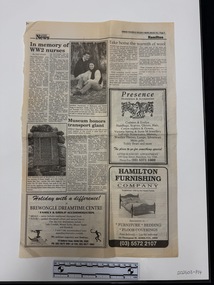
Newspaper - Newspaper clipping, Pat Giles, In memory of WW2 nurses, 061997
... ...Banka Island massacre memorial...Small article on the memorial 44km east of Hamilton Victoria, to the nurses who were lost when the Vyner Brooke was sunk and the subsequent massacre of survivors on Banka Island during WWII. ...Agnes Betty Jeffrey Vivian Statham (nee Bullwinkel) Vyner Brooke Memorial Banka Island massacre memorial Nurses memorial Full half newspaper spread with multiple stories in black text, three advertisements and two black and white photographs. ...Small article on the memorial 44km east of Hamilton Victoria, to the nurses who were lost when the Vyner Brooke was sunk and the subsequent massacre of survivors on Banka Island during WWII. A new and previous memorials were dedicated by Vivian Statham (neé Bullwinkel) and Betty Jeffrey, both of who served in WWII, Vivian Statham being the only survivor of the Banka Island Massacre. Both Statham & Jeffrey were Japanese POWs together. There is a photo of the most recent memorial cairn below the article.Full half newspaper spread with multiple stories in black text, three advertisements and two black and white photographs.agnes betty jeffrey, vivian statham (nee bullwinkel), vyner brooke memorial, banka island massacre memorial, nurses memorial -
 Ballarat Base Hospital Trained Nurses League
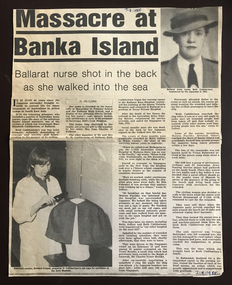
Newspaper Articles - WW11 - Cuthbertson
... banka, bangka, island, singleton, pow, newspaper...1997, dedication, australian service nurses national memorial, canberra...2000, vivian, statham, bullwinkel, survivor, banka island, massacre...ww11, cuthbertson, banka, bangka, island, singleton, pow, newspaper 1997, dedication, australian service nurses national memorial, canberra 2000, vivian, statham, bullwinkel, survivor, banka island, massacre doig, retirement, book, our war nurses, history, royal australian army nursing corps, 1902-1988, goodman,1988 Hard Copies Newspaper Articles - WW11 - Cuthbertson ...Hard Copiesww11, cuthbertson, banka, bangka, island, singleton, pow, newspaper, 1997, dedication, australian service nurses national memorial, canberra, 2000, vivian, statham, bullwinkel, survivor, banka island, massacre, doig, retirement, book, our war nurses, history, royal australian army nursing corps, 1902-1988, goodman,1988 -
 Ballarat Heritage Services
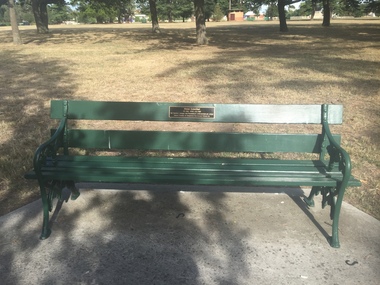
Photograph, Clare Gervasoni, Vivian Bullwinkel Memorial Seat in the Ballarat Gardens, 11/03/2017
... Banka Island massacre. She began her nursing career in Hamilton, Victoria, before moving to the Jessie McPherson Hospital in Melbourne in 1940. She joined the Australian Army Nursing Service in September 1941 Vivian Bullwinkel memorial seat Ballarat Vivian Bullwinkel, AO, MBE, ARRC, ED, FNM Her heroism, courage and humanitarian achievements are unique. ...Vivian Bullwinkel, sole survivor of the 1942 Banka Island massacre. She began her nursing career in Hamilton, Victoria, before moving to the Jessie McPherson Hospital in Melbourne in 1940. She joined the Australian Army Nursing Service in September 1941 Seat in proximity to the Ballarat Prisoner of War MemorialVivian Bullwinkel, AO, MBE, ARRC, ED, FNM Her heroism, courage and humanitarian achievements are unique. Valued member of Soroptimist International Victoria Incvivian bullwinkel, memorial seat ballarat -
 Returned Nurses RSL Sub-branch
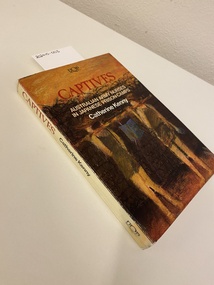
Book, Catherine Kenny et al, Captives : Australian army nurses in Japanese prison camps
... massacre on Banka Island where twenty-three women were ordered into the sea and shot. It records the degradation of the daily 'tenko', the starvation and appalling lack of hygiene, but also tells how the women were at times able to rise above these miseries through their concerts and the soaring harmonies of the voice choir. Catherine Kenny interviewd many of the nurses and collected photographs, diaries and letters from the Australian War Memorial ..."Hunger and humiliation were just some of the privations endured by those members of the Australian Army Nursing Service who were captives of the Japanese during World War II. Of the thirty-two held in Sumatra and on Banka Island, twenty-four survived the severe physical conditions in the prison camps. Another group captured in Rabaul were held in Japan, where the cold was as bitter as their hunger. This is the dramatic account of those Australian nurses, of their struggles and their support for each other through the long years of war and captivity. In includes the horrifying story of Vivian Bullwinkel, the sole survivor of the callous massacre on Banka Island where twenty-three women were ordered into the sea and shot. It records the degradation of the daily 'tenko', the starvation and appalling lack of hygiene, but also tells how the women were at times able to rise above these miseries through their concerts and the soaring harmonies of the voice choir. Catherine Kenny interviewd many of the nurses and collected photographs, diaries and letters from the Australian War Memorial as well as from the women themselves." Blurb on back cover of book.Colour front cover, drawn image of people carrying a pole with a rectangular bucket suspended on the pole, the people wear hats and the sky is an orangey colour. Back cover has some quotes from nurses featured in the book as well as a blurb describing the book. Book is covered in clear contact.non-fiction"Hunger and humiliation were just some of the privations endured by those members of the Australian Army Nursing Service who were captives of the Japanese during World War II. Of the thirty-two held in Sumatra and on Banka Island, twenty-four survived the severe physical conditions in the prison camps. Another group captured in Rabaul were held in Japan, where the cold was as bitter as their hunger. This is the dramatic account of those Australian nurses, of their struggles and their support for each other through the long years of war and captivity. In includes the horrifying story of Vivian Bullwinkel, the sole survivor of the callous massacre on Banka Island where twenty-three women were ordered into the sea and shot. It records the degradation of the daily 'tenko', the starvation and appalling lack of hygiene, but also tells how the women were at times able to rise above these miseries through their concerts and the soaring harmonies of the voice choir. Catherine Kenny interviewd many of the nurses and collected photographs, diaries and letters from the Australian War Memorial as well as from the women themselves." Blurb on back cover of book.wwii, world war 2, world war two, japan, pow, pows, prisoners of war, prisoner of war, australian army nursing service, mitliary nursing, australian army -
 Returned Nurses RSL Sub-branch
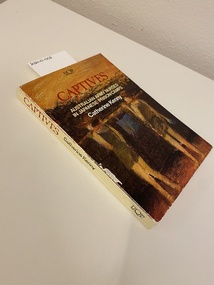
Book, Catherine Kenny et al, Captives : Australian army nurses in Japanese prison camps
... massacre on Banka Island where twenty-three women were ordered into the sea and shot. It records the degradation of the daily 'tenko', the starvation and appalling lack of hygiene, but also tells how the women were at times able to rise above these miseries through their concerts and the soaring harmonies of the voice choir. Catherine Kenny interviewd many of the nurses and collected photographs, diaries and letters from the Australian War Memorial ..."Hunger and humiliation were just some of the privations endured by those members of the Australian Army Nursing Service who were captives of the Japanese during World War II. Of the thirty-two held in Sumatra and on Banka Island, twenty-four survived the severe physical conditions in the prison camps. Another group captured in Rabaul were held in Japan, where the cold was as bitter as their hunger. This is the dramatic account of those Australian nurses, of their struggles and their support for each other through the long years of war and captivity. In includes the horrifying story of Vivian Bullwinkel, the sole survivor of the callous massacre on Banka Island where twenty-three women were ordered into the sea and shot. It records the degradation of the daily 'tenko', the starvation and appalling lack of hygiene, but also tells how the women were at times able to rise above these miseries through their concerts and the soaring harmonies of the voice choir. Catherine Kenny interviewd many of the nurses and collected photographs, diaries and letters from the Australian War Memorial as well as from the women themselves." Blurb on back cover of book.Colour front cover, drawn image of people carrying a pole with a rectangular bucket suspended on the pole, the people wear hats and the sky is an orangey colour. Back cover has some quotes from nurses featured in the book as well as a blurb describing the book. non-fiction"Hunger and humiliation were just some of the privations endured by those members of the Australian Army Nursing Service who were captives of the Japanese during World War II. Of the thirty-two held in Sumatra and on Banka Island, twenty-four survived the severe physical conditions in the prison camps. Another group captured in Rabaul were held in Japan, where the cold was as bitter as their hunger. This is the dramatic account of those Australian nurses, of their struggles and their support for each other through the long years of war and captivity. In includes the horrifying story of Vivian Bullwinkel, the sole survivor of the callous massacre on Banka Island where twenty-three women were ordered into the sea and shot. It records the degradation of the daily 'tenko', the starvation and appalling lack of hygiene, but also tells how the women were at times able to rise above these miseries through their concerts and the soaring harmonies of the voice choir. Catherine Kenny interviewd many of the nurses and collected photographs, diaries and letters from the Australian War Memorial as well as from the women themselves." Blurb on back cover of book.wwii, world war 2, world war two, japan, pow, pows, prisoners of war, prisoner of war, australian army nursing service, mitliary nursing, australian army -
 Returned Nurses RSL Sub-branch
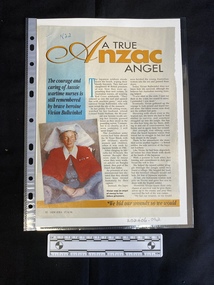
Newspaper - Newspaper clipping, New Idea, A true anzac angel, 27/4/96
... massacre, a British man. They then had to make the decision that giving themselves up to the Japanese was their best chance of survival. After threes years as a POW Vivian had lost alot of weight and seen many die, but she had continued to care for those that were her patients. More than 50 years later Vivian is to return to Banka Island as and honoured guest of Indonesia, to chose the site of of a memorial...massacre, a British man. They then had to make the decision that giving themselves up to the Japanese was their best chance of survival. After threes years as a POW Vivian had lost alot of weight and seen many die, but she had continued to care for those that were her patients. More than 50 years later Vivian is to return to Banka Island as and honoured guest of Indonesia, to chose the site of of a memorial ...The article details the war time recollections of Vivian Bullwinkel, sole survivor of the Japanese massacre of Australian nurses in 1942. The Australian Army nurses, with 200 civilians, were aboard the SS Vyner Brook when the Japanese bombed and sank the ship. After ten hours, twenty four nurses survived to make it ashore on Banka Island. The Japanese took them prisoner and then proceeded to shoot them all, after first bayoneting forty Bristish prisoners. Vivian was shot in the side and pretended she was dead. Vivian credits her initial survival to the duty she felt to a fellow survivor of the massacre, a British man. They then had to make the decision that giving themselves up to the Japanese was their best chance of survival. After threes years as a POW Vivian had lost alot of weight and seen many die, but she had continued to care for those that were her patients. More than 50 years later Vivian is to return to Banka Island as and honoured guest of Indonesia, to chose the site of of a memorial to her dead comrades. Vivian avoids talking in detail about her POW experiences but she does have strong views on selling Australian land to Japanese investors. The Japanese government had recently apologised for the atrocities they committed, but Vivian believes the apology was not specific enough. The first page of a magazine article including two columns of text and a colour reproduction of a painting of a woman in nurse's uniform, page one of two'N22' [blue ink, top right]ww2, wwii, red cross, frank statham, dutch east indies, anzac day -
 Returned Nurses RSL Sub-branch
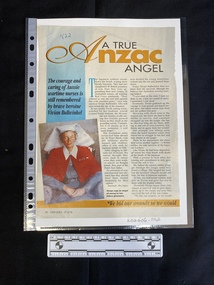
Magazine - Magazine clipping in two parts, New Idea, A true anzac angel, 27/4/96
... massacre, a British man. They then had to make the decision that giving themselves up to the Japanese was their best chance of survival. After threes years as a POW Vivian had lost alot of weight and seen many die, but she had continued to care for those that were her patients. More than 50 years later Vivian is to return to Banka Island as and honoured guest of Indonesia, to chose the site of of a memorial...massacre, a British man. They then had to make the decision that giving themselves up to the Japanese was their best chance of survival. After threes years as a POW Vivian had lost alot of weight and seen many die, but she had continued to care for those that were her patients. More than 50 years later Vivian is to return to Banka Island as and honoured guest of Indonesia, to chose the site of of a memorial ...The article details the war time recollections of Vivian Bullwinkel, sole survivor of the Japanese massacre of Australian nurses in 1942. The Australian Army nurses, with 200 civilians, were aboard the SS Vyner Brook when the Japanese bombed and sank the ship. After ten hours, twenty four nurses survived to make it ashore on Banka Island. The Japanese took them prisoner and then proceeded to shoot them all, after first bayoneting forty Bristish prisoners. Vivian was shot in the side and pretended she was dead. Vivian credits her initial survival to the duty she felt to a fellow survivor of the massacre, a British man. They then had to make the decision that giving themselves up to the Japanese was their best chance of survival. After threes years as a POW Vivian had lost alot of weight and seen many die, but she had continued to care for those that were her patients. More than 50 years later Vivian is to return to Banka Island as and honoured guest of Indonesia, to chose the site of of a memorial to her dead comrades. Vivian avoids talking in detail about her POW experiences but she does have strong views on selling Australian land to Japanese investors. The Japanese government had recently apologised for the atrocities they committed, but Vivian believes the apology was not specific enough. First page of a magazine clipping consisting of a large title with two columns of text next to a colour reproduction of a painting of a nurse Second page of a magazine clipping consisting of three columns of text under a large colour photo of an older man and woman leaning into each other'N22' [blue ink, top left, first page]ww2, wwii, red cross, frank statham, dutch east indies, anzac day -
 Returned Nurses RSL Sub-branch
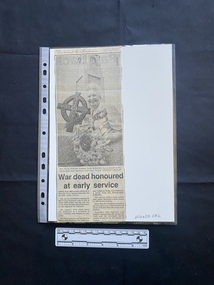
Newspaper - Newspaper clipping, [The West Australian], War dead honoured at early service, [18/4/88]
... memorial to local residents who fought for Australia. The service included a requiem by Mrs Vivian Statham, the sole survivor of the Banka Island massacre....memorial to local residents who fought for Australia. The service included a requiem by Mrs Vivian Statham, the sole survivor of the Banka Island massacre. ...Melville Civic Square saw an early Anzac service on [17 April 1988], as the square's civic clock tower was dedicated as a memorial to local residents who fought for Australia. The service included a requiem by Mrs Vivian Statham, the sole survivor of the Banka Island massacre.A newspaper clipping of a large black and white photo of an older woman smiling and holding a memorial wreath in front of a clock tower, above two small columns of text.' "The West Australian ' 18/4/88 ' [blue ink, along top]vivian bullwinkel, japanese, sumatra, jack howson, bicentennial authority, don ingersole -
 Returned Nurses RSL Sub-branch
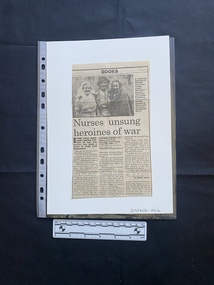
Newspaper - Newspaper clipping, Judith White, Nurses unsung heroines of war, [1988]
... Banka Island massacre. Twenty three nurses were ordered to march into the sea and were shot dead. Only one survived, Sister Vivian Bullwinkel, after feigning death, she returned to shore tended to a wounded solider, then was captured and became a POW. WWII WW2 World War Two Our War Nurses - The History of the Royal Australian Army Nursing Corps 1902-1988 George Medal Banker Island Edith Cavell World War 1 World War One WW1 WWI War Memorial Canberra A newspaper clipping of three columns of text with a black and white photo above of three women, two obviously in nurse's uniform Nurses unsung heroines of war Newspaper Newspaper clipping Judith White ...Our war heroines have always received less attention than their male counterparts, but Dr Rupert Goodman is helping to set the record straight, with the first book to give a comprehensive history of Australia's war nurses. Among those commemorated in the book are the nurses killed or died in action in World War II. Dr Goodman says one of the most outstanding episodes was the sinking of the hospital ship, the Centaur, off Brisbane by a Japanese sub. Of 11 sisters, one survived, Sister Savage and she kept up the morale of the survivors in shark-infested waters for 24 hours. Another was Sister Anderson, who was tending wounded on deck aboard the Empire Star and threw herself over a Digger to protect him from strafing as they were escaping from the fall of Singapore. Or the Banka Island massacre. Twenty three nurses were ordered to march into the sea and were shot dead. Only one survived, Sister Vivian Bullwinkel, after feigning death, she returned to shore tended to a wounded solider, then was captured and became a POW.A newspaper clipping of three columns of text with a black and white photo above of three women, two obviously in nurse's uniformwwii, ww2, world war two, our war nurses - the history of the royal australian army nursing corps 1902-1988, george medal, banker island, edith cavell, world war 1, world war one, ww1, wwi, war memorial, canberra -
 Returned Nurses RSL Sub-branch
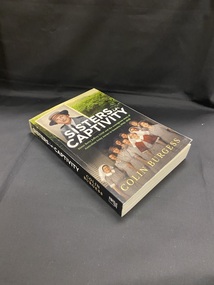
Book - Paperback book, Colin Burgess, Sisters in captivity: Sister Betty Jeffrey OAM and the courageous story of Australian Army nurses in Sumatra, 1942-1945, 2023
... A tireless advocate for returned nurses, she co-founded the Australian Nurses Memorial Centre with sole survivor of the Banka Island Massacre, fellow POW, and her longtime friend Vivian Bullwinkel. ...The incredible account of Sister Betty Jeffrey OAM and the Australian war nurses who survived the bombing of evacuation ship SS Vyner Brooke in February 1942, and subsequently spent three years in Japanese prison camps in Sumatra. During those perilous years surviving in squalid conditions, Sister Jeffrey kept a secret diary of day-to-day events which, after the war, was turned into a hugely successful book and radio serial: White Coolies. She would often write of the powerful sisterhood that evolved as the prisoners of war took strength from each other, even forming a vocal orchestra. White Coolies was a major inspiration for the 1997 film Paradise Road. Sisters in Captivity builds on those diaries to not only re-live the years the nurses spent as POWs but also recounts the early life and influences that encouraged Betty Jeffrey into the field of nursing as a lifelong endeavour. A tireless advocate for returned nurses, she co-founded the Australian Nurses Memorial Centre with sole survivor of the Banka Island Massacre, fellow POW, and her longtime friend Vivian Bullwinkel. Featuring 32 pages of photos including personal mementos of Betty Jeffrey, courtesy of her family, and her drawings from the prison camps, this is a powerful account of women's resilience amidst the devastating brutality of war.--Back cover.Title is printed across the middle of the cover in large white text, followed by the sub title in smaller green print below. There is a photo of Sister Betty Jeffrey in the top left corner and the bottom half of the page shows an image of a group of ten nurses posing for a photo. The background of the cover is dense green jungle.non-fictionThe incredible account of Sister Betty Jeffrey OAM and the Australian war nurses who survived the bombing of evacuation ship SS Vyner Brooke in February 1942, and subsequently spent three years in Japanese prison camps in Sumatra. During those perilous years surviving in squalid conditions, Sister Jeffrey kept a secret diary of day-to-day events which, after the war, was turned into a hugely successful book and radio serial: White Coolies. She would often write of the powerful sisterhood that evolved as the prisoners of war took strength from each other, even forming a vocal orchestra. White Coolies was a major inspiration for the 1997 film Paradise Road. Sisters in Captivity builds on those diaries to not only re-live the years the nurses spent as POWs but also recounts the early life and influences that encouraged Betty Jeffrey into the field of nursing as a lifelong endeavour. A tireless advocate for returned nurses, she co-founded the Australian Nurses Memorial Centre with sole survivor of the Banka Island Massacre, fellow POW, and her longtime friend Vivian Bullwinkel. Featuring 32 pages of photos including personal mementos of Betty Jeffrey, courtesy of her family, and her drawings from the prison camps, this is a powerful account of women's resilience amidst the devastating brutality of war.--Back cover. military nursing, military history, betty jeffrey, royal australian army nursing corps -
 Returned Nurses RSL Sub-branch
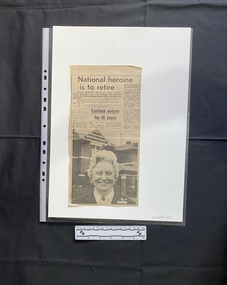
Newspaper - Newspaper clipping, National heroine is to retire, [1977]
... Very brief biological article listing decorations and positions of distinction held by Vivian Statham (neé Bullwinkel) prior to her upcoming (at time of printing) retirement as Matron of the Fairfield Hospital: - Born Kapunda, South Australia - Nurse training at Broken Hill District Hospital (1934-39) - Served with 13th Australian General Hospital (AGH) in WWII - Went down on Vyner Brooke - Only survivor of Banka [sic] Island massacre and was Japanese Prisoner of War - Post WWII was Matron of Heidelberg General Hospital (1956-60) - Trustee of the National War Memorial, Canberra 1963 - Deputy Principal Commandant of the Australian Red Cross 1964 - Achieved a Diploma of Nursing Administration - Awarded the Florence Nightingale Medal...Very brief biological article listing decorations and positions of distinction held by Vivian Statham (neé Bullwinkel) prior to her upcoming (at time of printing) retirement as Matron of the Fairfield Hospital: - Born Kapunda, South Australia - Nurse training at Broken Hill District Hospital (1934-39) - Served with 13th Australian General Hospital (AGH) in WWII - Went down on Vyner Brooke - Only survivor of Banka [sic] Island massacre and was Japanese Prisoner of War - Post WWII was Matron of Heidelberg General Hospital (1956-60) - Trustee of the National War Memorial, Canberra 1963 - Deputy Principal Commandant of the Australian Red Cross 1964 - Achieved a Diploma of Nursing Administration - Awarded the Florence Nightingale Medal WW2 WWII World War Two Vivian Statham (nee Bullwinkel) Retirement A newspaper clipping consisting of titles, four columns of text and a black and white photo of a middle aged woman outside a building. ...Very brief biological article listing decorations and positions of distinction held by Vivian Statham (neé Bullwinkel) prior to her upcoming (at time of printing) retirement as Matron of the Fairfield Hospital: - Born Kapunda, South Australia - Nurse training at Broken Hill District Hospital (1934-39) - Served with 13th Australian General Hospital (AGH) in WWII - Went down on Vyner Brooke - Only survivor of Banka [sic] Island massacre and was Japanese Prisoner of War - Post WWII was Matron of Heidelberg General Hospital (1956-60) - Trustee of the National War Memorial, Canberra 1963 - Deputy Principal Commandant of the Australian Red Cross 1964 - Achieved a Diploma of Nursing Administration - Awarded the Florence Nightingale MedalA newspaper clipping consisting of titles, four columns of text and a black and white photo of a middle aged woman outside a building.ww2, wwii, world war two, vivian statham (nee bullwinkel), retirement
