
Showing 62 items matching "bombing raid"
-
 Moorabbin Air Museum
Painting (Item) - Artists impression of raid, Hamburg Bremen bombing raid
... Hamburg Bremen bombing raid...Hamburg Bremen bombing raid Painting Artists impression of raid ... -
 Bendigo Military Museum
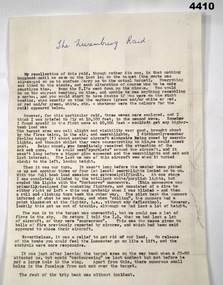
Document - ACCOUNT OF A WW2 BOMBING RAID, F.G. Davey, c. 1972
... ACCOUNT OF A WW2 BOMBING RAID...Document ACCOUNT OF A WW2 BOMBING RAID F.G. Davey ...The document details F.G. Davey's eyewitness account of a raid on Nuremburg, Germany during WW2. On return from the raid the Lancaster Davey was piloting was damaged in an attack by a JU-88. See catalogue no. 4411P which shows the damage to the aircraft. Part of the F.G. Davey Collection. See 3536P for his service record.Single page document in black type on cream coloured foolscap sized paper. The text consists of seven paragraphs. The paper bears two watermarks each stating 'BURNIE BANK. MADE IN AUSTRALIA'.Heading handwritten in blue ink: 'The Nuremburg Raid'.bombing raids, f.g. davey, personal stories, raid on nuremburg -
 Bendigo Military Museum
Photograph - PHOTOGRAPH, AERIAL BOMBING, 1944.-1950
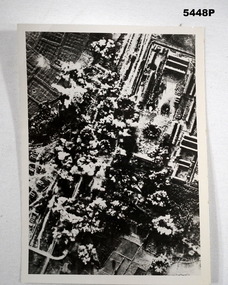
... Black and white photograph taken during the bombing raid. In the phot can be seen rice paddies,train lines, roads and a camp of some sort, trenches ....Rear Written” Nong Pladlik P.O.W camp 2nd bombing raid on camp Dec 3rd 1944 . 7 Killed Ist bombing on camp sept 7th 1944 93 Killed Stamp Imperial War Museum, Lambeth Road Wader S E 1 overwritten on stamp are some letters and 43976 ...Refer to Cat 5445.2 WW2 P.O.W Thailand Rear Written” Nong Pladlik P.O.W camp 2nd bombing raid on camp Dec 3rd 1944 . 7 Killed Ist bombing on camp sept 7th 1944 93 Killed Stamp Imperial War Museum, Lambeth Road Wader S E 1 overwritten on stamp are some letters and 43976 Black and white photograph taken during the bombing raid. ...Refer to Cat 5445.2Black and white photograph taken during the bombing raid. In the phot can be seen rice paddies,train lines, roads and a camp of some sort, trenches .Rear Written” Nong Pladlik P.O.W camp 2nd bombing raid on camp Dec 3rd 1944 . 7 Killed Ist bombing on camp sept 7th 1944 93 Killed Stamp Imperial War Museum, Lambeth Road Wader S E 1 overwritten on stamp are some letters and 43976 ww2, p.o.w, thailand -
National Vietnam Veterans Museum (NVVM)
Audio - Audio, CD, NAM bus, sound tracks: Vietnam sound tracks
... Recording of American and Australian pilots on bombing raids...Vietnam War 1961-1975 - Aerial operations Recording of American and Australian pilots on bombing raids NAM bus, sound tracks: Vietnam sound tracks Audio Audio, CD ...Recording of American and Australian pilots on bombing raidsvietnam war, 1961-1975 - aerial operations -
 Bendigo Military Museum
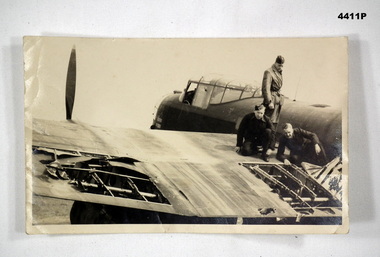
Photograph - PHOTOGRAPH OF A DAMAGED AEROPLANE, c. WW2
... ...Bombing raid...Lancaster bomber War damage Bombing raid F.G. Davey Raid on Nuremburg Black and white photograph with white border. ...The photograph depicts the damage to F.G. Davey's Lancaster bomber as detailed in his account titled 'The Nuremburg raid' which can be read from Cat No 4410. Part of F.G. Davey Collection. See Cat No 3536P for his service record.Black and white photograph with white border. Photograph features a group of three air force personnel examining damage to the wing of an aircraft.lancaster bomber, war damage, bombing raid, f.g. davey, raid on nuremburg -
Running Rabbits Military Museum operated by the Upwey Belgrave RSL Sub Branch
PRINGLE J. W. J
... Pringle - Various documents relating to bombing raids by 578 squadron in Halifax 111...Pringle - Various documents relating to bombing raids by 578 squadron in Halifax 111 PRINGLE J. ...J. W. J. Pringle - Various documents relating to bombing raids by 578 squadron in Halifax 111documents, 1944, raf -
 National Vietnam Veterans Museum (NVVM)
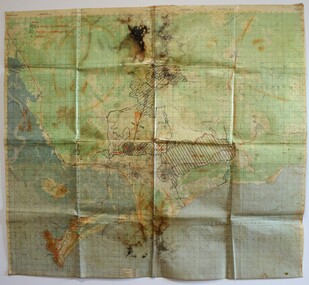
Map - Map, topographical, Vietnam 1:50,000, Sheet 6430
... A laminated map used by pilots giving information on terrain and specifics for bombing raids. Hand-made markings in red ink...Edition/-AMS:XUAT-BANLAN THUI- AMS-XA BINH BA/ SHEET 6430.TNAM Series L7014 A laminated map used by pilots giving information on terrain and specifics for bombing raids. Hand-made markings in red ink Vietnam 1:50,000, Sheet 6430 Map Map, topographical ...Standard issue map used by pilots during the war in Vietnam, dated 1966-1970A laminated map used by pilots giving information on terrain and specifics for bombing raids. Hand-made markings in red inkVietnam 1:50,000. Edition/-AMS:XUAT-BANLAN THUI- AMS-XA BINH BA/ SHEET 6430.TNAM Series L7014pilot, map, topographical, vietnam, bombing -
 National Vietnam Veterans Museum (NVVM)
Photograph, Gibbons, Denis, USS Enterprise 2
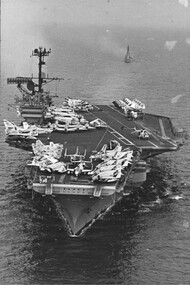
... Aircraft from the carrier maintained round the clock bombing raids on North Vietnam....Aircraft from the carrier maintained round the clock bombing raids on North Vietnam. USS Enterprise 2 Photograph Gibbons, Denis ...Denis Gibbons (1937 – 2011) Trained with the Australian Army, before travelling to Vietnam in January 1966, Denis stayed with the 1st Australian Task Force in Nui Dat working as a photographer. For almost five years Gibbons toured with nine Australian infantry battalions, posting compelling war images from within many combat zones before being flown out in late November 1970 after sustaining injuries. The images held within the National Vietnam Veterans Museum make up the Gibbons Collection.A black and white photograph of the American aircraft carrier USS Enterprise, on station with the U.S. 7th Fleet in the Tonkin Gulf, North Vietnam. Aircraft from the carrier maintained round the clock bombing raids on North Vietnam.photograph, uss enterprise, tonkin gulf, aircraft carrier, gibbons collection catalogue, denis gibbons, photographer, vietnam war, u.s. 7th fleet, bombing raids, north vietnam -
 Tramways/East Melbourne RSL Sub Branch - RSL Victoria Listing id: 27511
Memorabilia - Sepia Photo, Band of the 5th R.A. Inf.Bde. Passing through Bapaume 19 March 1917
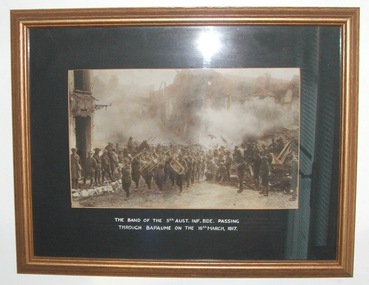
... Soldiers shown are wearing many different service uniforms, Background of image shows urban area in ruins after presumed bombing raids. ...Soldiers shown are wearing many different service uniforms, Background of image shows urban area in ruins after presumed bombing raids. Band of the 5th R.A. Inf.Bde. Passing through Bapaume 19 March 1917 Memorabilia Sepia Photo ...Framed print of a hand coloured sepia photograph. Image shows a Brass Band playing instruments passing active soldiers in WW1. Soldiers shown are wearing many different service uniforms, Background of image shows urban area in ruins after presumed bombing raids. Colarts Sydney is inscribed on the image in left corner. "THE BAND OF THE 5TH AUST. INF. BDE. PASSING THROUGH BAPAUME ON THE 19TH MARCH, 1917" inscribed in white ink on the mat board. bapaume, brass band, ww1, 5th australian infantry brigade -
 Bendigo Military Museum
Document - DOCUMENTS, DARWIN BOMBING, post WW2
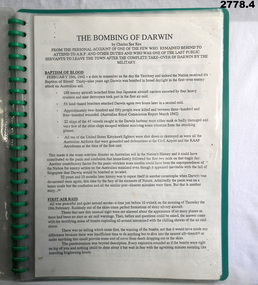
... Documents detail the first bombing raid on Darwin on 19 February 1942. Information related to subsequent raids also included....Documents detail the first bombing raid on Darwin on 19 February 1942. Information related to subsequent raids also included. documents - military history Passchendaele barracks trust Darwin .1) - .4) Collection of photocopied A4 documents related to the bombing of Darwin. 4 double sided pages in green plastic display folder. ...Documents detail the first bombing raid on Darwin on 19 February 1942. Information related to subsequent raids also included..1) - .4) Collection of photocopied A4 documents related to the bombing of Darwin. 4 double sided pages in green plastic display folder. Black & white map & photos.documents - military history, passchendaele barracks trust, darwin -
 National Vietnam Veterans Museum (NVVM)
Photograph, Gibbons, Denis, Returning Fighter Bomber
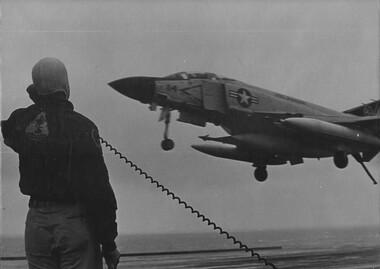
... A black and white photograph of a United States Navy fighter bomber returning from a bombing raid in North Vietnam, lands on the deck of the United States Aircraft Carrier USS Kitty Hawk with the 7th Fleet, Tonkin Gulf, North Vietnam, carriers in the Gulf conducted around the clock missions....Photograph USS Kitty Hawk Tonkin Gulf 7th Fleet Gibbons Collection Catalogue United States Fighter Bomber Bombing Raids United States Aircraft Carrier North Vietnam Denis Gibbons A black and white photograph of a United States Navy fighter bomber returning from a bombing raid in North Vietnam, lands on the deck of the United States Aircraft Carrier USS Kitty Hawk with the 7th Fleet, Tonkin Gulf, North Vietnam, carriers in the Gulf conducted around the clock missions. ...Denis Gibbons (1937 – 2011) Trained with the Australian Army, before travelling to Vietnam in January 1966, Denis stayed with the 1st Australian Task Force in Nui Dat working as a photographer. For almost five years Gibbons toured with nine Australian infantry battalions, posting compelling war images from within many combat zones before being flown out in late November 1970 after sustaining injuries. The images held within the National Vietnam Veterans Museum make up the Gibbons Collection.A black and white photograph of a United States Navy fighter bomber returning from a bombing raid in North Vietnam, lands on the deck of the United States Aircraft Carrier USS Kitty Hawk with the 7th Fleet, Tonkin Gulf, North Vietnam, carriers in the Gulf conducted around the clock missions.photograph, uss kitty hawk, tonkin gulf, 7th fleet, gibbons collection catalogue, united states fighter bomber, bombing raids, united states aircraft carrier, north vietnam, denis gibbons -
 Bendigo Military Museum
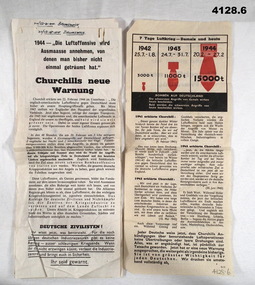
Flyer - PROPAGANDA LEAFLETS, 1944
... Collection of 6 propaganda leaflets written in German and destined for release in Germany advising citizens of Winston Churchills new warning regarding forthcoming bombing raids. Part of the Frederick Gardner Davey DFC No 410533 RAAF collection. ...Collection of 6 propaganda leaflets written in German and destined for release in Germany advising citizens of Winston Churchills new warning regarding forthcoming bombing raids. Part of the Frederick Gardner Davey DFC No 410533 RAAF collection. ...Collection of 6 propaganda leaflets written in German and destined for release in Germany advising citizens of Winston Churchills new warning regarding forthcoming bombing raids. Part of the Frederick Gardner Davey DFC No 410533 RAAF collection. Refer Cat No 3536P for his service details..1) - .6) double sided propaganda leaflets, one side printing all black and reverse black and red..1) .2) & .3) Handwritten in black ink on top of front page, “22/23 - 4 - 44 BRUNSWICK”bombing germany, propaganda -
 Bendigo Military Museum
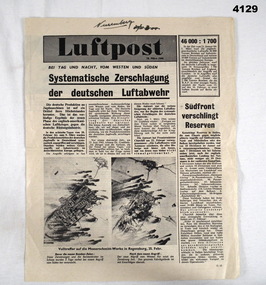
Newspaper - PROPAGANDA NEWSPAPER, LUFTPOST, 10th March 1944
... Newspaper written in German detailing Allied bombing raids on German factories and victories in other theatres including North Africa. ...Newspaper written in German detailing Allied bombing raids on German factories and victories in other theatres including North Africa. ...Newspaper written in German detailing Allied bombing raids on German factories and victories in other theatres including North Africa. The paper is Allied propaganda aimed at Germany. Part of the Frederick Gardner Davey DFC No 410533 RAAF collection. Refer Cat No 3536P for his service details.Four page newspaper with black type with black and white photographs and diagrams, information is written in GermanTop of page, “Nuremberg 30/31 - 3 - 44”propaganda, allied bombing raids, german -
 Queenscliffe Maritime Museum
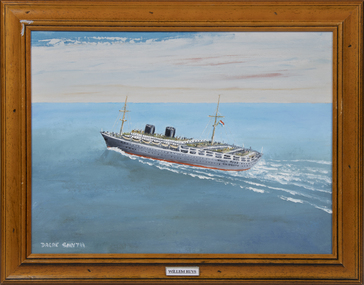
Painting - Willem Ruys, Dacre Smyth
... Interrupted by World War II and two bombing raids, the ship was finally launched in July 1946, as Willem Ruys. ...Interrupted by World War II and two bombing raids, the ship was finally launched in July 1946, as Willem Ruys. ...Ordered in 1938 to replace the aging ships on the Dutch East Indies route, her keel was laid in 1939 at De Schelde shipyard in Vlissingen, Netherlands, for Rotterdamsche Lloyd (now Nedlloyd). Interrupted by World War II and two bombing raids, the ship was finally launched in July 1946, as Willem Ruys. The ship was named after the grandson of the founder of the Rotterdamsche Lloyd who was taken hostage and shot during the war.B SmythA framed oil painting of the Dutch vessel Willem Ruys which was later refitted to become the Lloyd Triestino 'Achille Lauro'.Willen Ruysmv willem ruys, ms achille lauro, migrant ships -
Tatura Irrigation & Wartime Camps Museum
Book, Darwin Drama
... Describes Darwin before and after the air raids and bombings. Many photographs....Darwin Bombing Wartime Activity Red hard cover, ex library book. Describes Darwin before and after the air raids and bombings. ...Red hard cover, ex library book. Describes Darwin before and after the air raids and bombings. Many photographs.Darwin Bombing Wartime Activity -
 Queenscliffe Maritime Museum
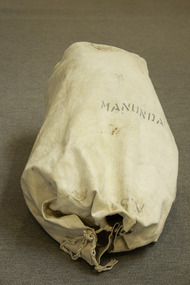
Equipment - Sea Bag [kit bag]
... On February 19, 1942 during a Japanese bombing raid whilst the ship was at anchor in Darwin harbour, a bomb hit right through the music room skylight, which exploded down on C deck tragically killing 12 and injuring 157 others. ...On February 19, 1942 during a Japanese bombing raid whilst the ship was at anchor in Darwin harbour, a bomb hit right through the music room skylight, which exploded down on C deck tragically killing 12 and injuring 157 others. ...The TSMV Manunda was requisitioned in September 1939 and she was converted into a fulltime hospital ship. HMAS Manunda was officially commissioned on May 25 1940 after which she operated four voyages to the Middle East to bring back wounded troops to Australia. On February 19, 1942 during a Japanese bombing raid whilst the ship was at anchor in Darwin harbour, a bomb hit right through the music room skylight, which exploded down on C deck tragically killing 12 and injuring 157 others. The next day she sailed for Fremantle with 266 patients. Whilst in Fremantle she was repaired and made ready for her next chapter in the war effort.This sea bag belonged to an unknown sailor who served on the hospital ship HMAS Manunda during WWIIA sailor's canvas sea or kit bag used on the TSMN Manunda in WWIIManundatsmv manunda, hmas manunda, hospital ship, wwii, kit bag, sea bag -
 Melbourne Legacy
Document, Leigh F Johns 60th birthday, 1983
... He had a distinguished war record in the RAF during WWII and survived 32 bombing raids over France and Germany. He was an enthusiastic contributor of poetry to the Melbourne Legacy Bulletin which explains why this document is in the form of a poem. ...He had a distinguished war record in the RAF during WWII and survived 32 bombing raids over France and Germany. He was an enthusiastic contributor of poetry to the Melbourne Legacy Bulletin which explains why this document is in the form of a poem. ...This document was written to celebrate the 60th birthday of Legatee Leigh Johns in 1983. It is a collection of poems written about L/ Johns by different authors as a tribute to him reaching 60 years of age. Leigh Johns was born in 1923, the date of the founding of Melbourne Legacy, and became a Legatee in 1956, serving on 15 ML Boards and as an executive member of the Legacy Co-ordinating Council . He had a distinguished war record in the RAF during WWII and survived 32 bombing raids over France and Germany. He was an enthusiastic contributor of poetry to the Melbourne Legacy Bulletin which explains why this document is in the form of a poem. He was granted Reserve status in 2001 and died in 2008.The tone of the document reveals the affection with which Leigh Johns was regarded amongst his peers, and illustrates the collegiality which existed in the organisation during his membership.White A4 photocopy paper with black type x 13 pages.'Box 16' on title page. Typed title 'Leigh F Johns / 60th Birthday / 10 February 1983'.legatee, birthday -
 Federation University Historical Collection
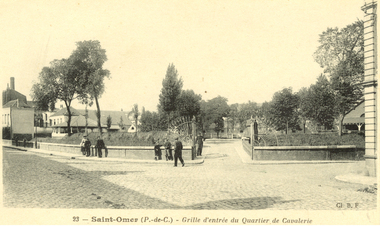
Postcards - black and white, Saint-Omex, France, c1916
... He had lost an artificial leg when bailing out, and the RAF dropped him another one during a bombing raid.(http://en.wikipedia.org/wiki/Saint-Omer, accessed 14/07/2014)...He had lost an artificial leg when bailing out, and the RAF dropped him another one during a bombing raid.(http://en.wikipedia.org/wiki/Saint-Omer, accessed 14/07/2014) Chatham-Holmes Family Collection Saint Omer france WW1 postcard Four postcards of Saint Omer in France Saint-Omex, France Postcards - black and white ...During the First World War on 8 October 1914, the British Royal Flying Corps (RFC) arrived in Saint-Omer and a headquarters was established at the aerodrome next to the local race course. For the following four years, Saint-Omer was a focal point for all RFC operations in the field. Although most squadrons only used Saint-Omer as a transit camp before moving on to other locations, the base grew in importance as it increased its logistic support to the RFC. Many Royal Air Force squadrons can trace their roots to formation at Saint-Omer during this period. Among which are No. IX Squadron RAF which was formed at Saint-Omer, 14 December 1914 and No. 16 Squadron RAF which was formed on 10 February 1915. (http://en.wikipedia.org/wiki/Saint-Omer, accessed 14/07/2014) During World War II, the Luftwaffe used the airfield. When the RAF's legless Battle of Britain ace, Douglas Bader, parachuted from his Spitfire during an aerial battle over France, he was initially treated at a Luftwaffe hospital at Saint Omer. He had lost an artificial leg when bailing out, and the RAF dropped him another one during a bombing raid.(http://en.wikipedia.org/wiki/Saint-Omer, accessed 14/07/2014)Four postcards of Saint Omer in Francechatham-holmes family collection, saint omer, france, ww1, postcard -
 City of Melbourne Libraries
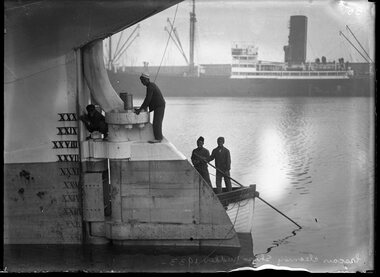
Photograph, Bull, Hugh Jones, 1897-1993, Lascars cleaning ship's rudder
... In 1942 MV Neptuna was being utilised for the war effort, and carrying depth charges and other armaments for Australia, when on 19 February it was sunk in a bombing raid on Darwin, and where part of her hull still lies. ...In 1942 MV Neptuna was being utilised for the war effort, and carrying depth charges and other armaments for Australia, when on 19 February it was sunk in a bombing raid on Darwin, and where part of her hull still lies. ...Published: unknown, however, on 26 June 1935 a similar, but not the exact photo in the McKenzie Collection, was published in The Age: Published title: Shipping Victorian Flour to the East Published Caption: Flour and wheat figure prominently in all cargoes carried by ships trading to Chinese, Japanese and Eastern ports. Victorian millers are eager to extend lids outlet for their produce, and every opportunity is grasped. The pictures show Australian labourers unloading from railway trucks some of the 2300 tons of flour which will go into the hold of the Burns, Philp motor ship Neptuna for shipment to Hong Kong, while Chinese seamen are busy cleaning and painting the rudder post of the ship. Hard by the Neptuna, other ships are taking on flour for the East. Research by Project Volunteer, Louise McKenzie: The image was described by Hugh Bull on the rear of the glass plate as – “Lascars cleaning ships rudder 1933”. Basically, a “lascar” is a seaman. Image No. 032 in the McKenzie Collection shows two lascars perched on the rudder of a ship, with two others standing in a rowboat along side. They are dressed in baggy trousers and jackets and wearing caps. Across a very calm dock area is a single funnel ship with on-deck derricks. The rudder of the ship being cleaned is white, with large black roman numbering denoting the depth at which the ship is sitting, depending on whether it is loaded or empty. Whilst the exact photo in the McKenzie Collection has yet to be located in The Age in 1933, the date when it was taken, there is a photo published in The Age on 25 June 1935 which appears to be one of a series of photos taken on the same day, featuring lascars cleaning a ship’s rudder. It bears a striking resemblance to MCK 032, but it is taken from a slightly different angle. The 1935 published photo is a close up of a ship’s rudder being cleaned, with same style of roman numerals in black on the white of the rudder. One lascar is standing on the rudder, one is standing in a small clinker style rowboat, with its characteristic wooden overlapping hull planks, holding a broom; two more lascars are sitting in the bow and stern of the rowboat. The ship being cleaned is in a dock, as a wharf and warehouses can be seen in the background, the water is very calm, and there are two other ships moored nearby – one across the other side of the dock with a black and white hull and derricks on its deck, and one adjacent, with its mooring lines clearly visible. The lascars are wearing caps, baggy trousers and jackets. Compelling similarities therefore exist between the two images. Whilst it is difficult to positively identify the cultural background of these particular lascars in either photo, the newspaper article dated June 1935 advises they are “Chinese”. This is possibly because the ship they are associated with, the Neptuna, is reported to have sailed from Melbourne on this date, bound for Hong Kong. However, the men are probably from South East Asia. Wikipedia describes the term “Southeast Asia” as covering ” … the people of Southeast Asia from prehistory to the present in two distinct sub-regions: Mainland Southeast Asia (or Indochina) and Maritime Southeast Asia (or Insular Southeast Asia). Mainland Southeast Asia comprises Cambodia, Laos, Myanmar (or Burma), Peninsular Malaysia, Thailand and Vietnam whereas Maritime Southeast Asia comprises Brunei, Cocos (Keeling) Islands, Christmas Island, East Malaysia, East Timor, Indonesia, Philippines and Singapore. Additionally, Wikipedia “Lascars” states that “Lascars were sailors from the Indian subcontinent, South East Asia, the Arab world, British Somaliland and lands east of the Cape of Good Hope, who were employed to work on colonial merchant ships. The practice ran from the 16th century to the mid 20th century”. Indian seamen were used as early as the 16th century by Portuguese explorer Vasgo da Gama in his successful voyage to India, and subsequently by Portuguese ships in the 16th and 17th centuries. “Through the Portuguese and Spanish maritime world empires, some Indian lascars found their way onto English merchant ships, and were among the sailors on the first English East India Company (EIC) ships to sail to India.” In the 17th Century “When the English adopted the term "lascar", they initially used it for all Asian sailors on English-flagged ships, but after 1661 and the Portuguese ceded Bombay to England, the term was used mainly to describe Indian sailors specifically. The term "topaze" was used to describe Indo-Portuguese personnel, especially those from Bombay, Thana, Diu, Dammam and Cochin. The term "sepoy" was used to describe Indian soldiers in European service. The number of lascars employed on EIC East Indiamen was so great that the Parliament of England restricted their employment via the Navigation Acts (in force from 1660 onwards) which required that 75% of the crew onboard English-flagged ships importing goods from Asia be English subjects. The restriction arose due to the high rates of illnesses and death among European sailors on East Indiamen, and their frequent desertions in Asia, which left such ships short of crew for the return voyage. Another reason was the frequent impressment of European sailors from EIC East Indiamen by the Royal Navy in times of war“. The term “impressment” colloquially refers to “the “press gang” …”a type of conscription of people into a military force, especially a naval force, via intimidation and physical coercion, conducted by an organized group (hence “gang”). .. The large size of the British Royal Navy in the Age of Sail meant impressment was most commonly associated with Great Britain.”. (Wikipedia – Impressment). By the 20th century these sailors served on British ships under "lascar agreements", which allowed shipowners more control than was the case in ordinary articles of agreement. The sailors could be transferred from one ship to another and retained in service for up to three years at one time. “Lascars served all over the world in the period leading up to the First World War. Lascars were barred from landing at some ports, such as in British Columbia. At the beginning of World War I, there were 51,616 lascars working on British merchant ships in and around the British Empire. In World War II thousands of lascars served in the war and died on vessels throughout the world, especially those of the British India Steam Navigation Company, P&O and other British shipping companies. The lack of Canadian naval manpower led to the employment of a total of 121 Catholic Goans and 530 Muslim British Indians on the Empress vessels of the Canadian Pacific Railway, such as the Empress of Asia and Empress of Japan. These ships served in the Indian Ocean both as ANZAC convoy ships and in actions at Aden. The ships were placed under the British Admiralty as part of Canada's contribution to the war effort and all of the Indian men were awarded medals by the Admiralty, though none of them were delivered. In the 1950s the use of the term "lascar" declined with the ending of the British Empire. The Indian “Lascar Act” of 1832 was finally repealed in 1963. However, "traditional" Indian deck and Pakistani engine crews continued to be used in Australia until 1986 when the last crew was discharged from the P&O and replaced by a general-purpose crew of Pakistanis. The term lascar has been widely used to engender an element of exoticism in literature eg “Sir Arthur Conan Doyle created a Lascar foil to Sherlock Holmes in "The Man with the Twisted Lip" in 1891. Lascars aboard the ship Patna figure prominently in the early chapters of Joseph Conrad's novel Lord Jim. Frances Hodgson Burnett's novel A Little Princess features a lascar named Ram Dass. Also, Caleb Carr portrays two lascars as bodyguards for a Spanish diplomat near the end of The Angel of Darkness. In Wuthering Heights, it is speculated that Heathcliff, the main character, may be of lascar origin." (Wikipedia – Lascar) And what has become of these “forgotten heroes of the World Wars”? The South Asian Heritage Trust, which seeks to commemorate, mark and celebrate South Asian cultures, stories, and communities, published an article in July 2025 entitled – The Lascars: Seafaring Roots of Modern Britain. It particularly honours the role of the 80,000 lascars who served Britain in WWI, and the over 100,000 who served in the British Merchant Navy in WWII, and concludes: “The hardships faced by Lascars were profound. They were often assigned the most dangerous tasks, lived in substandard conditions aboard ships and, even after their immense contributions to the war efforts, many veterans found it difficult to secure the recognition, pensions and rights afforded to other veterans. Many were employed under ‘Asiatic Articles’, which offered less protection and lower pay than their European counterparts. Yet, their legacy endures. The multicultural fabric of areas like East London owes much to these early seafarers and settlers. The East London Mosque, established in 1910, became an important spiritual and community hub. Today, efforts to bring their stories out of the shadows are growing. The Museum of London Docklands features exhibits on their history. Memorials, such as the P&O headstone in Dover for the 22 Lascar crew members of the SS Maloja sunk in 1916 and the careful restoration of the Lascar War Memorial in Kolkata, serve as important reminders of the sacrifices. The journey of the Lascars – from their homelands, along dangerous wartime shipping routes, to the docklands of Britain – is a story of personal courage and of a rich contribution to Britain’s history and identity.” The ship MV Neptuna, mentioned in the 1935 article, had that year been purchased from a German company by Australian-owned Burns Philp, with Australian Government assistance, and it was instrumental in ensuring the shipment of rice from Vietnam to Papua New Guinea. Rice is still a household staple in PNG. Despite it being introduced into PNG more than 100 years ago, the crop has not been sufficiently integrated into the country’s traditional agricultural production system, and today PNG imports still account for nearly 98% of rice. (Spotlight Magazine Sept. 2016) The 1935 newspaper article states that the Neptuna is involved in moving flour for the East. Australian wheat exports began in 1845, but were not regular until the 1870s. New land clearing methods in Australia allowed large tracts of land to be cleared more efficiently – this included the invention of the iconic ‘stump jump’ plough. With the success of the wheat harvests, flour mills began to spring up around the country. By the 1870s, many large country towns had their own mills, with around 500 mills producing flour across the country. Flour exports were an important part of the wheat industry until around the 1930s. After the Second World War, many of Australia’s export partners (which were mainly in the developing nations of Asia) began setting up their own flour industries and the Australian product was no longer in demand. In 1942 MV Neptuna was being utilised for the war effort, and carrying depth charges and other armaments for Australia, when on 19 February it was sunk in a bombing raid on Darwin, and where part of her hull still lies. References: SHIPPING VICTORIAN FLOUR TO THE EAST. (1935, June 25). The Age (Melbourne, Vic. : 1854 - 1954), p. 11. Retrieved July 23, 2025, from http://nla.gov.au/nla.news-article204357218 Age (Melbourne, Vic. : 1854 - 1954), Tuesday 25 June 1935, page 11 Wikipedia, Clinker (boat building), https://en.wikipedia.org/wiki/Clinker_(boat_building) Wikipedia, Lascar, https://en.wikipedia.org/wiki/Lascar Wikipedia, History of Southeast Asia, https://en.wikipedia.org/wiki/History_of_Southeast_Asia Wikipedia, Impressment, https://en.wikipedia.org/wiki/Impressment NEPTUNA LEAVES FOR CHINA WITH TOURISTS (1935, June 25). The Herald (Melbourne, Vic. : 1861 - 1954), p. 5. Retrieved July 23, 2025, from http://nla.gov.au/nla.news-article244841163 National Research Institute SPOTLIGHT paper Vol 9, Issue 7, https://pngnri.org/images/Publications/Spotlight_No_9_Vol_7_-_201609_-_Sofe__Odhuno_-_Rice_Import_Quota1.pdf South Asian Heritage Trust, The Lascars: Seafaring Roots of Modern Britain, July 11,2025 : Royal British Legion. https://southasianheritage.org.uk/royal-british-legion/the-lascars-seafaring-roots-of-modern-britain/ Photographer notations on slide: "Lascars cleaning ships rudder 1933".lascars, ships, 1930-1939, employment, ethnic communities -
 Lara RSL Sub Branch
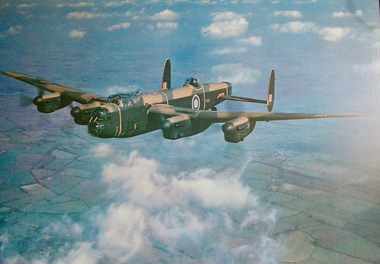
Framed Picture Print of a Lancaster Bomber
... bomb, weighing 10,000 kg. During World War II, Lancasters flew over 156,000 sorties, or raids. ...One of the most famous bombing raids was a 1942 raid on Cologne, Germany. ...The Lancaster Bomber was one of the most famous aircraft of World War II. It first saw service in 1941 and became the RAF’s main bomber during the war. The first prototype Lancaster flew in January, 1941. A total of 7,377 Lancasters were made, after the first one rolled off the production line in October, 1941. It carried a crew of 7 and could fly at about 454 kmh. The plane was just over 21 metres long, had a wingspan of 31 metres and a flying range of 4,000 km. The Lancaster was normally armed with 8 Browning machine guns, as well as bombs. Some planes were modified so they could carry the so called Grand Slam bomb, weighing 10,000 kg. During World War II, Lancasters flew over 156,000 sorties, or raids. They dropped over 50 million incendiary bombs and over 608,000 tons of explosive bombs.One of the most famous bombing raids was a 1942 raid on Cologne, Germany. Over 1,000 bombers dropped bombs on the industrial city, destroying over 600 acres. Many Lancaster crew members were given medals for heroic actions while flying. Guy Gibson had flown 170 missions by the age of 24 and was awarded the Victoria Cross. Towards the end of World War II, Lancaster Bombers dropped food into the occupied Netherlands.Rectangular shaped glass covered picture frame with photo print of a Lancaster Bomber.lancaster bomber, ww2, avro, lara r.s.l. british aircraft. -
 Lara RSL Sub Branch
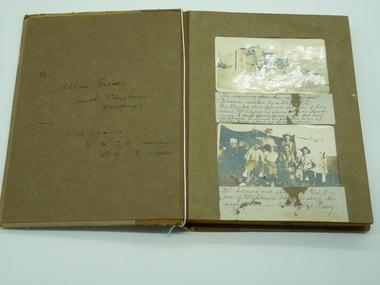
Photograph Album, To Allan Groves, 1917
... In general the photos are of Will Adams experience in Egypt The Rafa Raid Prisoners of war, Beni Selah women waiting for water. Women making bricks, 53rd Casualty Clearing Station destroyed by a bomb, Royal Scots Fusilier Pipe Band after church parade, The Sultan Hasser Mosque ...In general the photos are of Will Adams experience in Egypt The Rafa Raid Prisoners of war, Beni Selah women waiting for water. Women making bricks, 53rd Casualty Clearing Station destroyed by a bomb, Royal Scots Fusilier Pipe Band after church parade, The Sultan Hasser Mosque Cardboard Album Khaki coloured 8 leaves with photos and written descriptions To Allan Groves Photograph Album ...Cardboard Album Khaki coloured 8 leaves with photos and written descriptionsFront sleeve To Allan Groves With Christmas greetings from Will Adams YMCA Secretary with A.L.H. Brigade There are explanations under each couple of photos too much to write in this space. In general the photos are of Will Adams experience in Egypt The Rafa Raid Prisoners of war, Beni Selah women waiting for water. Women making bricks, 53rd Casualty Clearing Station destroyed by a bomb, Royal Scots Fusilier Pipe Band after church parade, The Sultan Hasser Mosque photograph, album, egyp, ww1, allan groves, will adams, rafa raid, 53rd casualty clearing station -
 Lara RSL Sub Branch
Book, Australia in the War of 1939-1945 - Air War Against Germany and Italy 1939-1943. AIR Author John Herington, First published 1954
... Historical record of the AIR effort 1939-1943 germany italy the battle of britain syria western desert fighter squadrons in 1941 bomber command 1941 radar bombing air war tunisia pathfinder raids invasion of sicily night fighters Australian War Memorial Australia in the War of 1939-1945 - Air War Against Germany and Italy 1939-1943 Illustrations, Maps, Diagrams and Graphs, Maps Australia in the War of 1939-1945 - Air War Against Germany and Italy 1939-1943. ...Australian contribution to air fighting against Germany and Italy with Australia being a small force against the larger, stronger air forces. The smaller Australian Airmen were merged into the Royal Air Force.Historical record of the AIR effort 1939-1943Australia in the War of 1939-1945 - Air War Against Germany and Italy 1939-1943 Illustrations, Maps, Diagrams and Graphs, MapsAustralian War Memorialgermany, italy, the battle of britain, syria, western desert, fighter squadrons in 1941, bomber command 1941, radar bombing, air war, tunisia, pathfinder raids, invasion of sicily, night fighters -
 Lara RSL Sub Branch
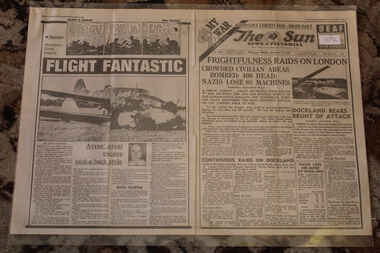
Newspaper - Te Sun Newspaer Special Dated 9/9/1940 - My War Part 10 - Frightfulness Raids On London, The Sun Newspaper - Special - Crowded Civilian Areas Bombed - 400 Dead Nazis Lose 88 Machines
... Local Newspaper reporting World War 2 - Special - My War Part10 Local Newspaper reporting on World War 2 - Special London Bombed - The Blitz world war 2 1940 air raids on london the sun newspaper 9/9/1940 The Blitz World War 2 Local Newspaper Reporting Local Newspaper Dated 9/9/1040 Reporting a=on World War 2 - Special - My War Part 10 The Sun Newspaper - Special - Crowded Civilian Areas Bombed - 400 Dead Nazis Lose 88 Machines. ...Local Newspaper reporting World War 2 - Special - My War Part10Local Newspaper reporting on World War 2 - Special London Bombed - The BlitzLocal Newspaper Dated 9/9/1040 Reporting a=on World War 2 - Special - My War Part 10World War 2 Local Newspaper Reportingworld war 2 1940, air raids on london, the sun newspaper 9/9/1940, the blitz -
 Lara RSL Sub Branch
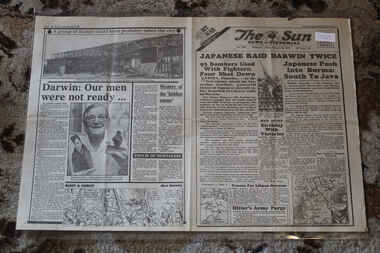
Newspaper - The Sun Newspaper dated 20/2/1942 - Special - My War Part 23 - Japanese Raid Dawin Twice, Local Newspaper Reporting on World War 2 Events - My War Part 23 - Japanese Raid Dawin Twice
... Local newspaper dated 20/2/1942 - Special - My War - Japanese Raid Darwin Twice - Bombs Rock Darwin... Japanese Raid Darwin Twice - Bombs Rock Darwin...World War 2, Local Newspaper dated 20/2/1942 World War Two - Darwin Bombed Twice, Bombs Rock Darwin local newspaper reporting on world war 2 events - my war part 23 Japanese Raid Darwin Twice - Bombs Rock Darwin Local newspaper dated 20/2/1942 - Special - My War - Japanese Raid Darwin Twice - Bombs Rock Darwin Local Newspaper Reporting on World War 2 Events - My War Part 23 - Japanese Raid Dawin Twice Newspaper The Sun Newspaper dated 20/2/1942 - Special - My War Part 23 - Japanese Raid Dawin Twice ...World War 2, Local Newspaper dated 20/2/1942World War Two - Darwin Bombed Twice, Bombs Rock Darwin Local newspaper dated 20/2/1942 - Special - My War - Japanese Raid Darwin Twice - Bombs Rock Darwin Japanese Raid Darwin Twice - Bombs Rock Darwinlocal newspaper reporting on world war 2 events - my war part 23 -
 Orbost & District Historical Society
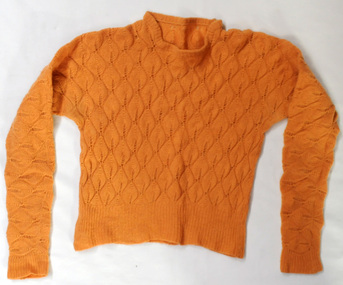
knitted jumper, 1938-1940
... She used to knit while in an air raid shelter escaping the bombing with her young daughter. ...She used to knit while in an air raid shelter escaping the bombing with her young daughter. ...This was knitted by Marjorie Burton during WW11 in England. She used to knit while in an air raid shelter escaping the bombing with her young daughter. Air raid shelters were built specifically to serve as protection against enemy air raids. However, pre-existing structures such as underground stations (tube or subway stations), tunnels, cellars in houses or basements in larger establishments, and railway arches, above ground, were suitable for safeguarding people during air raids. This item is an example of a handcrafted item and reflects the handcraft skills of women necessary during WW11 when clothing became scarce. Clothes rationing began on June 1, 1941, two years after food rationing started. Clothes rationing ended on 15 March 1949.A hand-knitted orange/tan woolen jumper. It is a lady's long-sleeved jumper.handcraft knitting ww11 -
 Orbost & District Historical Society
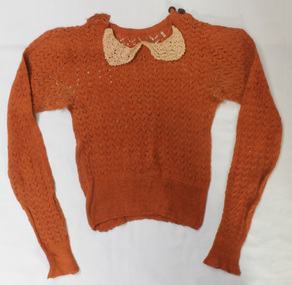
knitted jumper, Burton, Marjorie, 1938 - 1940
... She used to knit while in an air raid shelter escaping the bombing with her young daughter. ...She used to knit while in an air raid shelter escaping the bombing with her young daughter. ...This was knitted by Marjorie Burton during WW11 in England. She used to knit while in an air raid shelter escaping the bombing with her young daughter. Marjorie Burton ( nee Whiteman), born 12 June, in Birmingham, England came to Orbost in 1995. In England she did office work – typing, shorthand and secretarial work - in accountants’ offices and also trained as a comptometrist with Burroughs in London. She came from middle-class working church-going family. Her mother was a milliner who mad all of Marjorie’s clothes, hats and outfits. Marjorie married in 1938 to a salesman who later became a mechanic in the R.A.F. during WW11. Her father served in Civil Defence during the war. Marjorie was in Birmingham during the war and remembered sheltering with her young daughter, Anne (Quaadgras) in the air raid shelter during bombing. This was knitted by Marjorie Burton during WW11 in England. She used to knit while in an air raid shelter escaping the bombing with her young daughter. This item is an example of a handcrafted item and reflects the handcraft skills of women necessary during WW11 when clothing became scarce. Clothes rationing began on June 1, 1941, two years after food rationing started. Clothes rationing ended on 15 March 1949.A brown cotton hand-knitted lacy jumper. it is a long-sleeved lady'e jumper with a tea-coloured crocheted collar sewn on. On each shoulder are two brown buttons.knitting jumper handcraft ww11 burton-marjorie -
 Orbost & District Historical Society
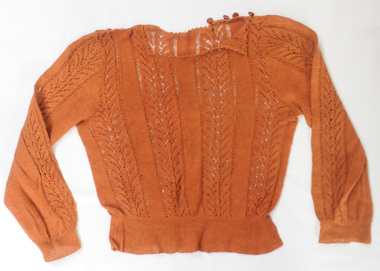
knitted jumper, Burton, Marjorie, 1938-1940
... Marjorie was in Birmingham during the war and remembered sheltering with her young daughter, Anne (Quaadgras) in the air raid shelter during bombing. This was knitted by Marjorie Burton during WW11 in England. ...Marjorie was in Birmingham during the war and remembered sheltering with her young daughter, Anne (Quaadgras) in the air raid shelter during bombing. This was knitted by Marjorie Burton during WW11 in England. ...Marjorie Burton ( nee Whiteman), born 12 June, in Birmingham, England came to Orbost in 1995. In England she did office work – typing, shorthand and secretarial work - in accountants’ offices and also trained as a comptometrist with Burroughs in London. She came from middle-class working church-going family. Her mother was a milliner who mad all of Marjorie’s clothes, hats and outfits. Marjorie married in 1938 to a salesman who later became a mechanic in the R.A.F. during WW11. Her father served in Civil Defence during the war. Marjorie was in Birmingham during the war and remembered sheltering with her young daughter, Anne (Quaadgras) in the air raid shelter during bombing. This was knitted by Marjorie Burton during WW11 in England. She used to knit while in an air raid shelter escaping the bombing with her young daughter. This item is an example of a handcrafted item and reflects the handcraft skills of women necessary during WW11 when clothing became scarce. Clothes rationing began on June 1, 1941, two years after food rationing started. Clothes rationing ended on 15 March 1949. This item is an example of a handcrafted item and reflects the handcraft skills of women necessary during WW11 when clothing became scarce. Clothes rationing began on June 1, 1941, two years after food rationing started. Clothes rationing ended on 15 March 1949.A brown hand-knitted lacy cotton jumper. It is a long-sleeved lady's jumper and has 4 brown buttons on each shoulder opening.knitting jumper handcraft burton-marjorie ww11 -
 Orbost & District Historical Society
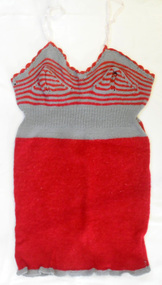
knitted vests/singlets, Burton, Marjorie, WW11
... She used to knit while in an air raid shelter escaping the bombing with her young daughter. ...She used to knit while in an air raid shelter escaping the bombing with her young daughter. ...This was knitted by Marjorie Burton during WW11 in England. She used to knit while in an air raid shelter escaping the bombing with her young daughter. Marjorie Burton ( nee Whiteman), born 12 June, in Birmingham, England came to Orbost in 1995. In England she did office work – typing, shorthand and secretarial work - in accountants’ offices and also trained as a comptometrist with Burroughs in London. She came from middle-class working church-going family. Her mother was a milliner who made most of Marjorie’s clothes, hats and outfits. Marjorie married in 1938 to a salesman who later became a mechanic in the R.A.F. during WW11. Her father served in Civil Defence during the war. Marjorie was in Birmingham during the war and remembered sheltering with her young daughter, Anne (Quaadgras) in the air raid shelter during bombing. This item is an example of a handcrafted item and reflects the handcraft skills of women necessary during WW11 when clothing became scarce. Clothes rationing began on June 1, 1941, two years after food rationing started. Clothes rationing ended on 15 March 1949.Two hand-knitted lady's vests(singlets). Both have been knitted from left over wools. Both have crocheted necklines and ribbon straps and are fitted styles. 2483.12 is red and grey with a V neck. 2483.13 is pink, grey and blue with a V neck.ww11 knitwear handcraft nightgown sleepwear burton-marjorie -
 Orbost & District Historical Society
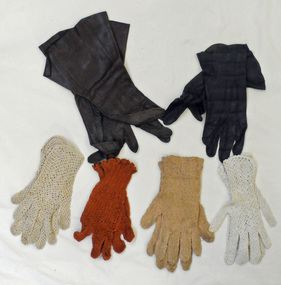
six pairs of gloves, Burton, Marjorie, 1940's -1950's
... Marjorie was in Birmingham during the war and remembered sheltering with her young daughter, Anne (Quaadgras) in the air raid shelter during bombing. ...Marjorie was in Birmingham during the war and remembered sheltering with her young daughter, Anne (Quaadgras) in the air raid shelter during bombing. These items are examples of handcrafted items and reflect the handcraft skills of women necessary during WW11 when clothing became scarce. ...Marjorie Burton ( nee Whiteman), born 12 June, in Birmingham, England came to Orbost in 1995. In England she did office work – typing, shorthand and secretarial work - in accountants’ offices and also trained as a comptometrist with Burroughs in London. She came from middle-class working church-going family. Her mother was a milliner who made all of Marjorie’s clothes, hats and outfits. Marjorie married in 1938 to a salesman who later became a mechanic in the R.A.F. during WW11. Her father served in Civil Defence during the war. Marjorie was in Birmingham during the war and remembered sheltering with her young daughter, Anne (Quaadgras) in the air raid shelter during bombing. These items are examples of handcrafted items and reflect the handcraft skills of women necessary during WW11 when clothing became scarce. Clothes rationing began on June 1, 1941, two years after food rationing started. Clothes rationing ended on 15 March 1949.Six pairs of ladies' gloves. 2483.16 is a white crocheted cotton pair. 2483.17 is a light tan knitted woolen pair. 2483.18 is a brown crocheted cotton pair. 2483.19 is an ecru crocheted cotton pair. 2483.20 is a black leather pair and 2483.21 is a brown leather pair. women's-accessories gloves crochet knitting burton-marjorie -
 Orbost & District Historical Society
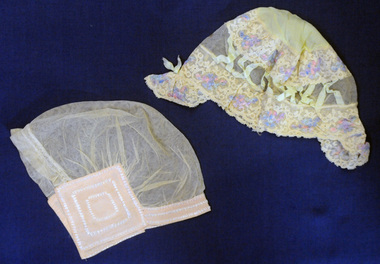
night caps, Early 19th century
... Marjorie was in Birmingham during the war and remembered sheltering with her young daughter, Anne (Quaadgras) in the air raid shelter during bombing. ...Marjorie was in Birmingham during the war and remembered sheltering with her young daughter, Anne (Quaadgras) in the air raid shelter during bombing. These items are examples of handcrafted items and reflect the handcraft skills of women during the early 20th century. hand-made nightcap sleepwear clothing Two hand-made nightcaps. 2483.22 is a fine ecru coloured net with a pink trim. 2483.23 is made of lace and ribbon and edged with a crochet band. ...Marjorie Burton ( nee Whiteman), born 12 June, in Birmingham, England came to Orbost in 1995. In England she did office work – typing, shorthand and secretarial work - in accountants’ offices and also trained as a comptometrist with Burroughs in London. She came from middle-class working church-going family. Her mother was a milliner who made all of Marjorie’s clothes, hats and outfits. Marjorie married in 1938 to a salesman who later became a mechanic in the R.A.F. during WW11. Her father served in Civil Defence during the war. Marjorie was in Birmingham during the war and remembered sheltering with her young daughter, Anne (Quaadgras) in the air raid shelter during bombing. These items are examples of handcrafted items and reflect the handcraft skills of women during the early 20th century.Two hand-made nightcaps. 2483.22 is a fine ecru coloured net with a pink trim. 2483.23 is made of lace and ribbon and edged with a crochet band. It is blue and pink with a pale green ribbon.hand-made nightcap sleepwear clothing
