
Showing 14 items matching "bonegilla migrant camp"
-
 Sunshine and District Historical Society Incorporated
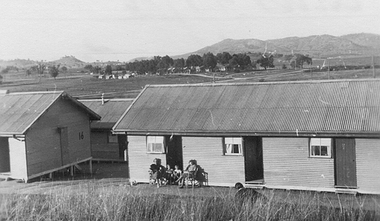
Photograph - Bonegilla Migrant Camp
... Bonegilla Migrant Camp...Bonegilla Migrant Camp...Bonegilla was the biggest and longest‑running migrant reception centre in post‑WWII Australia. It operated from 1947 to 1971 and received over 300,000 migrants from more than 50 countries. Bonegilla was the distribution hub for labour in Victoria. From this camp...A collection of digital photographs of the Bonegilla Migrant Camp in the 1950s....5475. 01 - Bonegilla Migrant Camp Photograph.jpg 5475. 02 - Bonegilla Migrant Camp Photograph.jpg 5475. 03 - Bonegilla Migrant Camp Photograph.jpg 5475. 04 - Bonegilla Migrant Camp Photograph.jpg 5475. 05 - Bonegilla Migrant Camp Photograph.jpg 5475. 06 - Bonegilla Migrant Camp Photograph.jpg 5475. 07 - Bonegilla Migrant Camp Photograph.jpg ..., people were sent to work in: - Factories (e.g., Sunshine Harvester Works, Kinnears Ropeworks, Olympic Tyres) - Railway workshops - Housing Commission estates - Construction projects - Hospitals and domestic service A huge proportion of these migrants then later settled in: - Sunshine - St Albans - Keilor - Braybrook - Albion - Footscray Bonegilla Migrant Camp Bonegilla 5475. 01 - Bonegilla Migrant Camp Photograph.jpg 5475. 02 - Bonegilla Migrant Camp Photograph.jpg 5475. 03 - Bonegilla Migrant Camp Photograph.jpg 5475. 04 - Bonegilla Migrant Camp Photograph.jpg 5475. 05 - Bonegilla Migrant Camp Photograph.jpg 5475. 06 - Bonegilla Migrant Camp Photograph.jpg 5475. 07 - Bonegilla Migrant Camp Photograph.jpg A collection of digital photographs of the Bonegilla Migrant Camp in the 1950s. ...Bonegilla was the biggest and longest‑running migrant reception centre in post‑WWII Australia. It operated from 1947 to 1971 and received over 300,000 migrants from more than 50 countries. Bonegilla was the distribution hub for labour in Victoria. From this camp, people were sent to work in: - Factories (e.g., Sunshine Harvester Works, Kinnears Ropeworks, Olympic Tyres) - Railway workshops - Housing Commission estates - Construction projects - Hospitals and domestic service A huge proportion of these migrants then later settled in: - Sunshine - St Albans - Keilor - Braybrook - Albion - Footscray 5475. 01 - Bonegilla Migrant Camp Photograph.jpg 5475. 02 - Bonegilla Migrant Camp Photograph.jpg 5475. 03 - Bonegilla Migrant Camp Photograph.jpg 5475. 04 - Bonegilla Migrant Camp Photograph.jpg 5475. 05 - Bonegilla Migrant Camp Photograph.jpg 5475. 06 - Bonegilla Migrant Camp Photograph.jpg 5475. 07 - Bonegilla Migrant Camp Photograph.jpg bonegilla migrant camp, bonegilla -
 The Beechworth Burke Museum
Audio - Oral History, Jennifer Williams, Mrs Sheila Parkinson, 3 January 2000
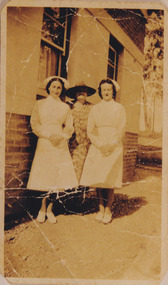
... ...Bonegilla Migrant Camp...As well as providing limited employment opportunities to young women like Shiela, post-war European migrants from Bonegilla Migrant camp found at Mayday Hills, encouraging European migrant settlement in the district. ...As well as providing limited employment opportunities to young women like Shiela, post-war European migrants from Bonegilla Migrant camp found at Mayday Hills, encouraging European migrant settlement in the district. ...Mrs Sheila Parkinson was born in Wagga in 1916 and came to Beechworth as a young woman around 1938. Sheila trained as a psychiatric nurse at Mayday Hills hospital prior to the second World War. At that time, unmarried women were accommodated and received nursing training on-site. Shiela was obliged to cease professional training and employment when she married in 1941, which disrupted completion of her final nursing examinations. Following post-war changes to the law that allowed married women to work, Sheila returned to Mayday Hills. Sheila's husband, Don, returned to Beechworth after four years abroad as a serviceman in the Australian Air Force. Beechworth's institutions were a major source of local employment throughout the twentieth century. As well as providing limited employment opportunities to young women like Shiela, post-war European migrants from Bonegilla Migrant camp found at Mayday Hills, encouraging European migrant settlement in the district. Mayday Hills was renamed several times since its establishment in 1867. At the peak of operations, it comprised sixty-seven buildings housing over twelve hundred patients patients and five hundred staff. The hospital officially closed in 1998. Today, the decommissioned two-storey Italianate style main building stands on eleven hectares of botanical gardens under National Trust protection. The site remains a popular cultural heritage destination for visitors. This oral history recording was part of a project conducted by Jennifer Williams in the year 2000 to capture the everyday life and struggles in Beechworth during the twentieth century. This project involved recording seventy oral histories on cassette tapes of local Beechworth residents which were then published in a book titled: Listen to what they say: voices of twentieth century Beechworth. The cassette tapes were digitised in July 2021 with funds made available by the Friends of the Burke.Employed as a psychiatric nurse at one of Beechworth's large welfare institutions, Mayday Hills, Mrs Sheila Parkinson recalls the conditions faced by staff and patients at the hospital, which cared for chronically ill people from the Ovens region and patients from the Yarra Bend Asylum, Melbourne, which closed in 1925. When Sheila first began her nurse training, Mayday Hills suffered from a lack of resources and rudimentary facilities and patients frequently suffered from the cold due to poor heating and inadequate clothing and bedding. However, as the twentieth century progressed, Sheila recalls how conditions and treatments improved as a result of increased government funding of services and advances in psychiatry and pharmaceutical medicine. Mrs Sheila Parkinson's oral history recording is historically and socially significant for its witness to life in Beechworth in the pre- and post-WWII period. Sheila's story enriches our understanding of processes of modernisation with regard to psychiatric and welfare services, while the course of Sheila's professional training and employment brings attention to systemic and socio-economic barriers faced by women, as well as the valuable contribution women and migrants make in the delivery of care and ancillary services. This oral history account is socially and historically significant as it is a part of a broader collection of interviews conducted by Jennifer Williams which were published in the book 'Listen to what they say: voices of twentieth-century Beechworth.' While the township of Beechworth is known for its history as a gold rush town, these accounts provide a unique insight into the day-to-day life of the town's residents during the twentieth century, many of which would have been lost if they had not been preserved.This is a digital copy of a recording that was originally captured on a cassette tape. The cassette tape is black with a horizontal white strip and is currently stored in a clear flat plastic rectangular container. It holds up 40 minutes of recordings on each side.Mrs Sheila Parkinson /twentieth century beechworth, mayday hills, psychiatric care, benevolent asylums, nursing, wwii, psychiatric treatment, country women, psychiatric hostpital, beechworth's institutions, local employment, government institutions, listen to what they say, oral history, burke museum, sheila parkinson, beechworth lunatic asylum, beechworth mental hospital, beechworth hospital for the insane, the kerferd clinic, bonegilla migrant camp, working women, white australia policy -
 The Beechworth Burke Museum
Audio - Oral History, Jennifer Williams, Mr Allan Parkinson, 22nd June 2000
... ...Bonegilla Migrant Camp...Allan Parkinson Oral History Beechworth Forestry Forestry Industry beechworth tannery Jennifer Williams Rabbit Trapping New Australians Australian Depression Rabbiting Bonegilla Bonegilla Migrant Camp 20th Century Beechworth Wheelbarrow Push Beechworth to Mt Buffalo Barrowthon Wheelbarrow Push 1935 Listen to what they say Listen to what they say: voices of twentieth century Beechworth World War Two Wartime Wartime Solidarity Burke Museum Mr Allan Parkinson / This is a digital copy of a recording that was originally captured on a cassette tape. ...Allan Parkinson was born in Beechworth in 1924. The eldest of eight children, his mother provided laundry services to the people of Beechworth whilst his father worked for the local tannery, trapping rabbits. Allan fondly remembers times spent during his childhood catching rabbits with his father. As his younger years were set amidst the experiences of World War Two and the Great Depression, Allan recalls a feeling of solidarity amongst the residents of Beechworth that was present during this time(for instance, sharing food with neighbours in wartime), as well as the disassociation he felt as a returning soldier after the war. Allan talks of the great number of 'New Australians' who arrived in Beechworth in the post-war years, many of them coming from war-torn countries in Europe. Before being integrated into Australian society, these 'New Australians' would often first spend time at the Migrant Reception and Training Centre in Bonegilla, Northern Victoria. They were taught English and learnt about Australian life before being billeted out across the country to fill labor shortages. Following time spent up in Queensland, Allan worked in the forestry industry, clearing thousands of acres across Victoria which were needed to plant pines. The interview ends with discussions of the famous Wheelbarrow Push from Beechworth to Mt Buffalo in 1935, of which Allan's Uncle Tom was a central participant; this is an event which has since become an annual fundraising tradition in Beechworth. This oral history recording was part of a project conducted by Jennifer Williams in the year 2000 to capture the everyday life and struggles in Beechworth during the twentieth century. This project involved recording seventy oral histories on cassette tapes of local Beechworth residents which were then published in a book titled: Listen to what they say: Voices of twentieth century Beechworth. These cassette tapes were digitised in July 2021 with funds made available by the Friends of the Burke. Mr Allan Parkinson's account of his life in Beechworth and the local area during the twentieth century is historically and socially significant to the cultural heritage of the region. He details important historical events and hardships that had lasting local, regional and national impacts, including Australia during wartime, post-war migration and economic struggles. This oral history account is historically and socially significant as it is part of a broader collection of interviews conducted by Jennifer Williams which were published in the book 'Listen to what they say: voices of twentieth century Beechworth'. While the township of Beechworth is known for its history as a gold rush town, these accounts provide a unique insight into the day-to-day life of the town's residents during the twentieth century, many of which would have been lost if they had not been preserved. This is a digital copy of a recording that was originally captured on a cassette tape. The cassette tape is black with a horizontal white stripe and is currently stored in a clear flat plastic rectangular container. It holds up to forty minutes of recordings on each side. Mr Allan Parkinson / allan parkinson, oral history, beechworth forestry, forestry industry, beechworth tannery, jennifer williams, rabbit trapping, new australians, australian depression, rabbiting, bonegilla, bonegilla migrant camp, 20th century beechworth, wheelbarrow push beechworth to mt buffalo, barrowthon, wheelbarrow push 1935, listen to what they say, listen to what they say: voices of twentieth century beechworth, world war two, wartime, wartime solidarity, burke museum -
 Sunshine and District Historical Society Incorporated
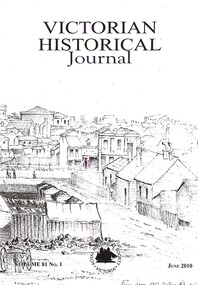
Journal - Victorian Historical Journal Volume 81 Number 1 June 2010, Royal Historical Society of Victoria, June 2010
... ...Bonegilla Migrant Camp...The articles and book reviews include but are not limited to: Article Page 113: Selling Immigration: Bonegilla Reception and Training Centre 1947 - 1971 by Bruce Pennay This article examines the part played by the Bonegilla Reception and Training Centre in keeping the nation favorably disposed toward the immigration of large numbers of non-British people in the postwar years. Many of Sunshine and District post-World War II migrants passed through this camp...Bonegilla Bonegilla Migrant Camp Wodonga Immigration Migration The Victorian Historical Journal, first published as the Victorian Historical Magazine in 1911, is the official journal of record and scholarly publication of the Royal Historical Society of Victoria. ...The Victorian Historical Journal, first published as the Victorian Historical Magazine in 1911, is the official journal of record and scholarly publication of the Royal Historical Society of Victoria. It is the second oldest history journal in Australia. It has become a vast collaborative history of Victoria with hundreds of individual contributors and topics and has itself become a primary source for researchers The journal features research articles, historical studies and book reviews.Paperback book with glossy front covernon-fiction The Victorian Historical Journal, first published as the Victorian Historical Magazine in 1911, is the official journal of record and scholarly publication of the Royal Historical Society of Victoria. It is the second oldest history journal in Australia. It has become a vast collaborative history of Victoria with hundreds of individual contributors and topics and has itself become a primary source for researchers The journal features research articles, historical studies and book reviews. bonegilla, bonegilla migrant camp, wodonga, immigration, migration -
 Sunshine and District Historical Society Incorporated
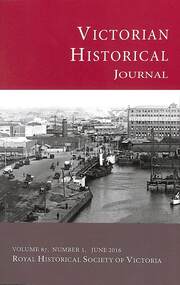
Journal - Victorian Historical Journal Volume 87 Number 1 June 2016, Royal Historical Society of Victoria, June 2016
... Bonegilla Migrant Camp...Bonegilla Reception Centre. Many of Sunshine and District post-World War II migrants passed through this camp....Bonegilla Migrant Camp Bonegilla Wodonga Bruce Pennay Immigration The Victorian Historical Journal, first published as the Victorian Historical Magazine in 1911, is the official journal of record and scholarly publication of the Royal Historical Society of Victoria. ...The Victorian Historical Journal, first published as the Victorian Historical Magazine in 1911, is the official journal of record and scholarly publication of the Royal Historical Society of Victoria. It is the second oldest history journal in Australia. It has become a vast collaborative history of Victoria with hundreds of individual contributors and topics and has itself become a primary source for researchers. The journal features research articles, historical studies and book reviews.Paperback book with glossy front covernon-fictionThe Victorian Historical Journal, first published as the Victorian Historical Magazine in 1911, is the official journal of record and scholarly publication of the Royal Historical Society of Victoria. It is the second oldest history journal in Australia. It has become a vast collaborative history of Victoria with hundreds of individual contributors and topics and has itself become a primary source for researchers. The journal features research articles, historical studies and book reviews. bonegilla migrant camp, bonegilla, wodonga, bruce pennay, immigration -
 Falls Creek Historical Society
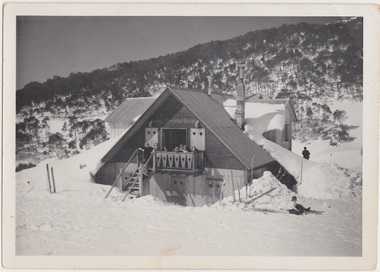
Photograph - Snow Crystal Inn, 1964
... Milan, born in Hungary, had the early days of his life in Victoria at the Bonegilla Migrant Camp in Wodonga. He became a ski instructor and one of his earliest students was Skippy St. ...Milan, born in Hungary, had the early days of his life in Victoria at the Bonegilla Migrant Camp in Wodonga. He became a ski instructor and one of his earliest students was Skippy St. ...Snow Crystal Inn was built by Milan Kovacic in the early 1950s. Milan, born in Hungary, had the early days of his life in Victoria at the Bonegilla Migrant Camp in Wodonga. He became a ski instructor and one of his earliest students was Skippy St. Elmo. The Inn was later demolished and replaced with Snow Crystal Apartments.This image is significant because it captures one of the early lodges established at Falls Creek.A black and white image of Snow Crystal Lodge surrounded by heavy snow. Visitors can be seen seated on the balcony.Above balcony: Snow Crystal Innsnow crystal inn, milan kovacic, skippy st. elmo -
 Wodonga & District Historical Society Inc
Domestic object - Vintage cane basket
... Franz and Anneliese Graf arrived in Australia about 1960 and spent time at the Bonegilla Migrant Camp where one of their sons Arnold was born. ...Franz and Anneliese Graf arrived in Australia about 1960 and spent time at the Bonegilla Migrant Camp where one of their sons Arnold was born. ...This handmade basket is typical of baskets used for domestic purposes for many years in the early to mid 20th century. It was produced in Australia by Graf's. Wicker baskets were popular at this time as they were light but durable. They were made in a wide range of shapes and sizes, including laundry baskets, storage items in the home, in shops and by travelling hawkers. Wicker was also a common material used for furniture. Vintage baskets by Graf's are still in demand by collectors. Franz and Anneliese Graf arrived in Australia about 1960 and spent time at the Bonegilla Migrant Camp where one of their sons Arnold was born. They moved to Melbourne and began Graf’s basket making business soon after. The basket in our Collection brings the Graf story full circle back to its Australian roots.This item is significant as it is representative of basketry items popular throughout Australia in the 1960s. This basket was hand-made in Australia and used by a resident of the Wodonga District.A woven cane shopping basket with a wooden base and single bamboo handle. The basket is made from mixed weaving of cane and light-blue strips. Underneath basket: Original GRAF'S Basket Hand made in AUSTRALIA On metal attached to handle: GRAF’S HANDLE BINDING, PAT.PEND vintage cane wear, vintage basket, graf baskets, basketware australia -
The Beechworth Burke Museum
Audio - Oral History, Jennifer Williams, Mr John Clemens, 2000
... He delivered drinks and wood to the Old Hospital after its relocation in 1940, to Bonegilla Migrants Camp and got to know most of the townspeople. ...He delivered drinks and wood to the Old Hospital after its relocation in 1940, to Bonegilla Migrants Camp and got to know most of the townspeople. ...Mr John Clemens was born in 1913 to Australian parents. His father worked in building roads which led to the family's move from Sunnyside Gen Willis to Beechworth. His father was part of the road making team on the Buffalo River Road between Myrtleford and Beechworth. John worked as a motor mechanic in his early years, having left school in sixth grade. He later worked carting wood (independently) and drinks for Murray Breweries/Billson's Breweries. He delivered drinks and wood to the Old Hospital after its relocation in 1940, to Bonegilla Migrants Camp and got to know most of the townspeople. He recounts his interactions with various members of the community, highlighting the importance of the Zwar Tannery, which John recounts as employing approximately 200 people (dating this recollection to approximately 1938). This oral history recording was part of a project conducted by Jennifer Williams in the year 2000 to capture the everyday life and struggles in Beechworth during the twentieth century. This project involved recording seventy oral histories on cassette tapes of local Beechworth residents which were then published in a book titled: Listen to what they say: voices of twentieth century Beechworth. These cassette tapes were digitised in July 2021 with funds made available by the Friends of the Burke.John's interview demonstrates the dynamics of the Beechworth township in the 1920s-1940s, showing the important industries and connections of the town which he was involved in. His mention of the Model T Ford, produced 1908-1927, shows his experience with early cars in the town, which were owned by the richer people. He talks about the dominance of the Zwar Bros. Tannery over the town, by employing hundreds of people (dating John's recollection to approximately 1938). John's interview shows the changed that the town has gone through through his experiences as a driver for wood and drinks. It can be interpreted as historically significant to the Beechworth local area but also to a wider audience; Zwar Tannery supplies leather to General Motors Holden, the brewery was one of the largest in the country, and the Bonegilla Migrants Camp was the largest and longest running migrant camp in Australia. John's everyday interactions with all of these places and people within makes his story significant. The project is significant for its recording of stories from members of the local Beechworth community before they are lost. It tells of the everyday stories of the people and their memories of the town. The recordings were done in 2000, with interviewees such as John being in their 80s when interviewed. The interviews were recorded to cassette, before being digitised in 2021. This is a digital copy of a recording that was originally captured on a cassette tape. The cassette tape is black with a horizontal white strip and is currently stored in a clear flat plastic rectangular container. It holds up 40 minutes of recordings on each side. john clemens, burke museum, beechworth, bonegilla migrants camp, beechworth hospital, murray breweries, billson's breweries, zwar bros. tannery -
 Slovenian Association Melbourne
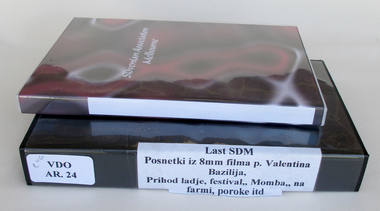
Video and DVD, Footage of Slovenian migrants in 1956 in Australia, 1956
... Migrants boarding the train to Bonegilla camp and resettling in Victoria...120 minute video cassette in colour depicting migrant ships arriving to Port Melbourne in 1956 and short clips of the Melbourne Olympic Games. Also includes footage of train journey to Bonegilla camp and camp housing facility....Migrants boarding the train to Bonegilla camp and resettling in Victoria ...- Migrant ships arriving into Port Melbourne in 1956. Migrants boarding the train to Bonegilla camp and resettling in Victoria. - Section on Olympic Games in Melbourne was filmed by Father Basil Valentin OFM who was the Chaplain of the American Olympic team. -Also showed extracts of Moomba festival in 1957. - Slovenian settling on Australian farms and weddings of members of the Slovenian community This video shows the magnitude of migrants who arrived in Australia in 1956 by ships mainly from Italian ports from Genoa, Trieste and Naples. It shows the settling of migrants into camps and depicts their everyday life including education and recreation and assimilation into Australia. 120 minute video cassette in colour depicting migrant ships arriving to Port Melbourne in 1956 and short clips of the Melbourne Olympic Games. Also includes footage of train journey to Bonegilla camp and camp housing facility.0002migration, resettlement, bonegilla, slovenians, ships, olympics 1956 -
 Wodonga & District Historical Society Inc
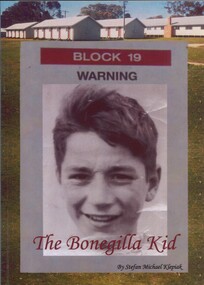
Book - The Bonegilla Kid, Stefan Michael Klepiak, 2007
... This book is significant because it relates the experience of a child migrant at Bonegilla, Victoria Immigrant Children Biography bonegilla migrant reception centre Migrant life Australia This biography documents the story of Stefan Michael Klepiak who, as a boy, between the ages of nine and 15 years lived at the Migrant Reception Centre at Bonegilla, Victoria. This was from 1957 to 1962 when Australia's post-World War II immigration program was at its peak. In his own words, young Stefan terrorised the migrants at the Bonegilla migrant camp ...This biography documents the story of Stefan Michael Klepiak who, as a boy, between the ages of nine and 15 years lived at the Migrant Reception Centre at Bonegilla, Victoria. This was from 1957 to 1962 when Australia's post-World War II immigration program was at its peak. In his own words, young Stefan terrorised the migrants at the Bonegilla migrant camp day and night. The book describes the antics he and other boys at Bonegilla engaged in as they adapted to their new life after fleeing war-torn Europe. Stefan was often unsupervised, played truant from school and crossed the path of the local Wodonga Police. He was a regular guest at the Wodonga jailhouse and became known by the police and magistrates after several court appearances as "The Bonegilla Kid". In the Epilogue Stefan acknowledges key people in his life, including two Bonegilla policemen and the Bonegilla Camp Director, who gave "The Bonegilla Kid" the guidance he needed and put him on a positive pathway for the future.A volume of 57 pages plus an epilogue relating the author's experience at Bonegilla, Victoria.non-fictionThis biography documents the story of Stefan Michael Klepiak who, as a boy, between the ages of nine and 15 years lived at the Migrant Reception Centre at Bonegilla, Victoria. This was from 1957 to 1962 when Australia's post-World War II immigration program was at its peak. In his own words, young Stefan terrorised the migrants at the Bonegilla migrant camp day and night. The book describes the antics he and other boys at Bonegilla engaged in as they adapted to their new life after fleeing war-torn Europe. Stefan was often unsupervised, played truant from school and crossed the path of the local Wodonga Police. He was a regular guest at the Wodonga jailhouse and became known by the police and magistrates after several court appearances as "The Bonegilla Kid". In the Epilogue Stefan acknowledges key people in his life, including two Bonegilla policemen and the Bonegilla Camp Director, who gave "The Bonegilla Kid" the guidance he needed and put him on a positive pathway for the future.immigrant children biography, bonegilla migrant reception centre, migrant life australia -
 Wodonga & District Historical Society Inc
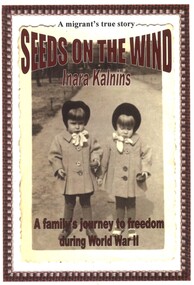
Book - Seeds on the Wind, Inara Kalnins, 2003
... Bonegilla Migrant Reception Centre. Post World War 11 Migration Refugees - Australia Inara Kalnins This book tells the story of the struggle of the author's family for survival after their way of life was cruelly destroyed by a brutal communist take-over of their homeland. In 1944 they were forced to flee Latvia with no idea of the trauma and tragedy which lay ahead. After spending some time in a refugee camp ...This book tells the story of the struggle of the author's family for survival after their way of life was cruelly destroyed by a brutal communist take-over of their homeland. In 1944 they were forced to flee Latvia with no idea of the trauma and tragedy which lay ahead. After spending some time in a refugee camp in Italy, the family arrived in Australia in May 1949 with their first temporary "home" being at Bonegilla Migrant Reception Centre near Wodonga, Victoria. The book documents their early struggles in Australia and their journey to their new life, as well as what happened to the family they had to leave behind.A publication of 225 pages including black and white images and a detailed index.non-fictionThis book tells the story of the struggle of the author's family for survival after their way of life was cruelly destroyed by a brutal communist take-over of their homeland. In 1944 they were forced to flee Latvia with no idea of the trauma and tragedy which lay ahead. After spending some time in a refugee camp in Italy, the family arrived in Australia in May 1949 with their first temporary "home" being at Bonegilla Migrant Reception Centre near Wodonga, Victoria. The book documents their early struggles in Australia and their journey to their new life, as well as what happened to the family they had to leave behind.post world war 11 migration, refugees - australia, inara kalnins -
 Wodonga & District Historical Society Inc
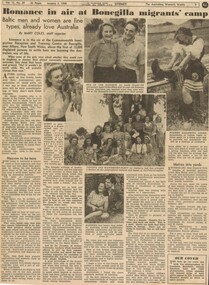
Article - Romance in air at Bonegilla Migrants' camp, The Australian Women's Weekly, 1948
... Article Romance in air at Bonegilla Migrants' camp The Australian Women's Weekly ...This item is significant because it describes an aspect of life at Bonegilla Migrant Centre and how these new migrants were portrayed by the media.A page taken from the Women's Weekly of 3rd January 1948 focusing on the experiences of newly arrived migrants at Bonegilla Migrant Reception Centre.bonegilla migrant reception centre, post world war 11 migration, immigration -
 Wodonga & District Historical Society Inc
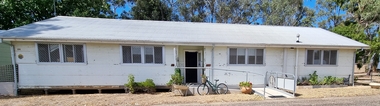
Photograph - Hut 97 Bonegilla Migrant Experience
... Bonegilla Army Base and Migrant Reception Centre began when funds were allocated to build Bonegilla Army Camp in June 1940. ...Bonegilla Army Base and Migrant Reception Centre began when funds were allocated to build Bonegilla Army Camp in June 1940. ...Bonegilla Army Base and Migrant Reception Centre began when funds were allocated to build Bonegilla Army Camp in June 1940. Builders began to erect about 600 huts prior to the Army moving in during September of that year. Between 1942 - 1943 it was enlarged to 848 buildings. In 1947 Bonegilla Reception and Training Centre began operating with the Army providing transport, security and catering services. From 1949 until 1965 the Bonegilla Reception and Training Centre operated without a military presence. Bonegilla Migrant Reception and Training Centre was made up of 24 blocks. It had its own churches, banks, sporting fields, cinema, hospital, police station and railway platform. It became the largest and longest operating reception centre in the post-war era. More than 300,000 migrants passed through its doors between 1947 and 1971, with most of those originating from non-English speaking European countries. From1965 with the increased Australian commitment to the Vietnam War and the need to find accommodation to train National Servicemen for Vietnam, the Army negotiated with the Department of Immigration to take over several blocks at Bonegilla. In 1971 the Reception Centre closed and the site reverted to the Army. After 1971 the Army undertook a major site redevelopment with the construction of Latchford Barracks as the Army Apprentice School. Later Latchford Barracks was redeveloped into part of the Army Logistic Training Centre. Between 1978 and 1982, nearly all of the centre was demolished in a major redevelopment. The new replacement buildings were formally opened as Latchford Barracks in 1983. Demolition of the buildings prompted calls for recognition of the site and the role it had played in Australia’s post-World War II Immigration program. After much discussion between the Department of Army and Heritage and local groups about the significance of the site, the Australian Heritage Commission proceeded with its listing on the Register of the National Estate. A Conservation Management Plan was prepared for Block 19 in 1996. The Army transferred Block 19 to the Victorian Government. In 2002 Heritage Victoria listed Block 19 on the State Heritage Register, giving attention to both the migrant and army connections with the site. Hut 97 at Bonegilla Migrant Experience is the home of the Wodonga & District Historical Society Inc.This image is significant because it records a building which is part of the Bonegilla Migrant Reception Centre which played a critical role as the largest and longest operating Migrant Reception Centre in Australia.A colour photo of Hut 97 at Block 19, Bonegilla Migrant Experience, now the home of Wodonga & District Historical Society Inc.hut 97 bonegilla migrant experience, wodonga & district historical society, immigration australia -
 Wodonga & District Historical Society Inc
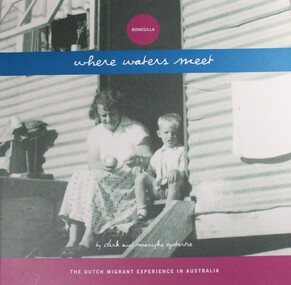
Book - Bonegilla Where Waters Meet: The Dutch Migrant Experience in Australia, Dirk Eysbertse and Marijke Eysbertse, 1997
... Bonegilla was Australia’s first and largest migrant reception centre in the post WW2 era. The camp...Bonegilla was Australia’s first and largest migrant reception centre in the post WW2 era. The camp ...An illustrated account of the experiences of people who migrated to Australia from Holland in the 1950s and 60s and passed through the Bonegilla Reception Centre before settling in their new land. Presents reminiscences from the people involved about their journey to Australia, conditions in Bonegilla and their impressions of life in Australia. Published as an accompanying volume to the exhibition 'Where Waters Meet'non-fictionAn illustrated account of the experiences of people who migrated to Australia from Holland in the 1950s and 60s and passed through the Bonegilla Reception Centre before settling in their new land. Presents reminiscences from the people involved about their journey to Australia, conditions in Bonegilla and their impressions of life in Australia. Published as an accompanying volume to the exhibition 'Where Waters Meet'bonegilla, dutch migration, bonegilla reception centre
