
Showing 255 items matching "british imperial"
-
 Flagstaff Hill Maritime Museum and Village
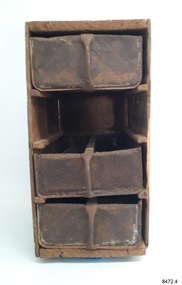
Domestic object - Chest of Drawers, British Imperial Oil Company Ltd, 1905-1927
... ...British Imperial Oil Company Ltd....The case was made in South Australia between 1905 and 1927 by the British Imperial Oil Company Ltd, which was the first business to import bulk petroleum products into Australia. ...Top and base of frame; "THE BRITISH IMPERIAL OIL CO. LTD." "OIL ENGINE KEROSENE" "CASE ANDTINS AUSTRALIAN MADE" On tin; "POWIRIN" "BIOCO LTD" Logo [cross} with inscription on horizontal bar "CROSS" Impressed in timber drawer dividers (indecipherable text) Side of drawer, painted in orange on black; "TY -, REG U S - TIDE - "...British Imperial Oil Company Ltd....Domestic object Chest of Drawers British Imperial Oil Company Ltd. ...This early 20th-century chest of drawers is unique. It was made from recycled timber kerosene boxes and metal tins. The case was made in South Australia between 1905 and 1927 by the British Imperial Oil Company Ltd, which was the first business to import bulk petroleum products into Australia. Before this, ships carried crates of kerosene as cargo. Items salvaged from the 1880 wreck of the vessel Eric the Red included kerosene boxes. Kerosene replaced plant and animal-based fuel, such as whale oil, for lighting in homes and for the lamps in lighthouses and on marine vessels. It was also used for cooking and heating and as engine fuel. The last kerosene-fueled lighthouse lamp was transferred to solar power in 1985. The chest of drawers is one-of-a-kind. The original uses for the components of the chest of drawers, the wooden box and metal tins were for containing and transporting kerosene. Kerosene was used from the late 19th century for fuel in lamps, heating, and cooling. Previously whale oil was used for the lamps in lighthouses. The company providing the kerosene was the first to import it into Australia in bulk quantities. The set of drawers is one of the many ways that inventive Australians were able to repurpose materials.Chest of drawers; wooden frame and rails, metal drawers with vertical metal handles. The frame has been constructed from the wooden panels of a vintage oil and kerosene box. The three drawers have been created from empty kerosene cans that were cut in half from top to bottom, some with the round opening closed over. Inscriptions from the original box and cams are stencilled on the top and base of the frame and impressed or painted on the metal cans. The frame has provision for a further drawer. The wooden case and metal tins were made in Australia.Top and base of frame; "THE BRITISH IMPERIAL OIL CO. LTD." "OIL ENGINE KEROSENE" "CASE ANDTINS AUSTRALIAN MADE" On tin; "POWIRIN" "BIOCO LTD" Logo [cross} with inscription on horizontal bar "CROSS" Impressed in timber drawer dividers (indecipherable text) Side of drawer, painted in orange on black; "TY -, REG U S - TIDE - "flagstaff hill, warrnambool, maritime village, maritime museum, shipwreck coast, great ocean road, antique, domestic equipment, chest of drawers, tool box, furniture, storage, recycled tin, recycled box, kerosene, fossil fuel, lighthouse lamp fuel, british imperial oil company ltd. -
 Bendigo Military Museum
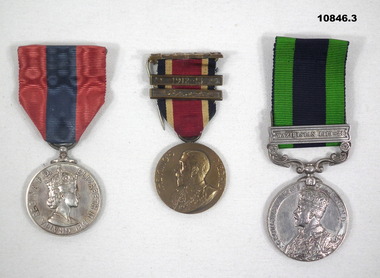
Award - MEDALS, IMPERIAL BRITISH, Unknown
... MEDALS, IMPERIAL BRITISH......British Imperial...QEII Imperial Service Medal Instituted Aug 1902 by EDWARD VII to reward Long & Faithful Service by Junior grades within the Civil Service 2. The Kings Medal is a bronze Council medal awarded for Student Attendance & Conduct, 3. Medal had to be awarded with clasp. The WAZIRISTAN CLASP awarded t punitive by British...QEII Imperial Service Medal with ribbon and pin at back. 2. The Kings Medal with bar 1912-13 and extra bar. 3. British...Award MEDALS, IMPERIAL BRITISH ...1. QEII Imperial Service Medal Instituted Aug 1902 by EDWARD VII to reward Long & Faithful Service by Junior grades within the Civil Service 2. The Kings Medal is a bronze Council medal awarded for Student Attendance & Conduct, 3. Medal had to be awarded with clasp. The WAZIRISTAN CLASP awarded t punitive by British & Indian Units against the TOCHI & WAWA WAZIRS & MAHSUDS between May 1919 and Jan 1921Three medals with ribbons, unmounted. 1. QEII Imperial Service Medal with ribbon and pin at back. 2. The Kings Medal with bar 1912-13 and extra bar. 3. British India Central Service Medal WAZIRISTAN 1919-21 with clasp.1. No inscription. 2. Named to "B. SONSTER" and inscribed "AWARD BY THE COVENTRY COUNCIL FOR CONDUCT & INDUSTRY DURING THE YEAR. 3. Named "29427 PR FOWLER P.A.S. HRS"ron mills collection, medals, british imperial -
 Flagstaff Hill Maritime Museum and Village
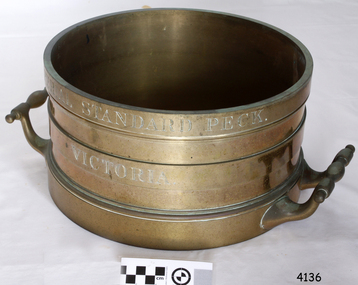
Functional object - Standard Measure, James McEwan & Co, 1860s-1900s
... ...British Imperial Standards...An Imperial Peck equals a quarter of a Bushel, or 9.09 litres Standards for weights and measures began in Victoria when the Melbourne Observatory received primary sets of Imperial Standard Weights and Measures from Britain. These were tested against the then British Imperial Standards to measure length, weight and currency. ...An Imperial Peck equals a quarter of a Bushel, or 9.09 litres Standards for weights and measures began in Victoria when the Melbourne Observatory received primary sets of Imperial Standard Weights and Measures from Britain. These were tested against the then British Imperial Standards to measure length, weight and currency. ...This container is a pre-Decimal, Imperial Standard Peck, part of a three-piece set of Standard measures used in Victoria from around 1900 to 1940. The measures were made in Melbourne by J. McEwan & Co. These three measures were likely used by the local Melbourne authority that monitored weights and measures in the mid to late 19th century. . An Imperial Bushel was equal to 8 gallons, or 36.36872 litres . An Imperial Peck equals a quarter of a Bushel, or 9.09 litres Standards for weights and measures began in Victoria when the Melbourne Observatory received primary sets of Imperial Standard Weights and Measures from Britain. These were tested against the then British Imperial Standards to measure length, weight and currency. Administrative bodies in the Colony of Australia could then compare their weights and measures against these British Primary Standards and adjust their Measures accordingly, to maintain the Standards. The Weights and Measures Act of 1862 was passed in Victoria, and local inspectors were established throughout the colony. By the 1870s, local councils and shires in Victoria held a set of Standards used to test scales, weights, and measures used by manufacturers, wholesalers, and retailers. Every ten years, the councils’ Standards needed to be rechecked against the Victorian Standards. In the 19th Century, the Victorian Customs Department inspected and maintained the Standards. In 1901, the Customs Department was transferred to the Federal Government, but the Weights and Measures authority remained with the Victorian Government and relocated to the Melbourne Observatory. In 1904, the Standard weights and measures, and testing equipment, were installed in the room of a new building erected at the south end of the Great Melbourne Telescope House. The room became known as the Whirling Room, due to its large whirling apparatus that tested air meters. When the Melbourne Observatory closed in 1944, the Weights and Measures Branch was formed to continue maintaining the Standards. On February 14th, 1966, Australia began its conversion to metric measures and currency, and a new set of Standard Measures was introduced; the conversion took place in stages. The Weights and Measures Branch remained at the Observatory site until 1995. James McEwan & Co.: - The maker of this set of Standard Measures was James McEwan. His Melbourne business was established in 1852 and sold retail furniture and wholesale ironmongery. The firm’s warehouses were situated at the intersection of 81-83 Elizabeth and Little Collins Streets. Shortly afterwards, the firm partnered with William Kerr Thomson and Samuel Renwick. When McEwan died in 1868, his partners carried on and expanded the business under his name, J McEwan. The business was expanded to provide a retail shop, counting-house and private offices. Wholesale warehouses adjoined these premises at 4, 6 and 10 Little Collins Street, West. This company provided and sold a large and varied amount of imported goods into the colony; agricultural equipment, building materials, mining items, steam engines, tools of all types and marble fireplaces. The company grew to employ over 150 people in Melbourne and opened offices at 27 Lombard St, London, as well as in New Zealand and Fiji. It also serviced the Mauritius islands and the Pacific area with its steamship, the Suva, and a brig, the Shannon. The set of Imperial Standard Measures is an example of a bronze measure container made specifically for J. McEwan & Co. Today, it helps us to understand how imperial weights and measures were used, and how a standard of measurement for merchants was developed in the Australian colonies based on the Imperial British measurement system. The container has social significance as an item retailed by J McEwan, and used by Victoria’s authorities legally responsible for ensuring that dry goods sold in Victoria by wholesalers and retailers are correct. Imperial Standard Measure: a container to measure the volume of a Peck. It is part of a set of three precision measures - a Peck, a Half Bushel and a Bushel – used by government authorities in Victoria. The cast brass cylinder has straight sides and a flat base, and two handles are attached near the base by two posts on each handle. The wall inside is straight, and outside has grooves and horizontal bands. Inscriptions are engraved on the outside. The Measures were made for the retailer, J. McEwan & Co., London and Melbourne. Engraved on side: "IMPERIAL STANDARD PECK. / VICTORIA."flagstaff hill, flagstaff hill maritime museum and village, warrnambool, maritime museum, maritime village, great ocean road, shipwreck coast, weights and measurements, science, james mcewan & co., precision instrument, technology, melbourne observatory, british imperial standards, standard weights & measures, volume measure, dry measure, customs, commerce, victorian standard measure, pre-decimal measure, imperial standard, imperial bushel, imperial half bushel, imperial peck, peck measure, bronze container, brass container, cast container -
 Flagstaff Hill Maritime Museum and Village
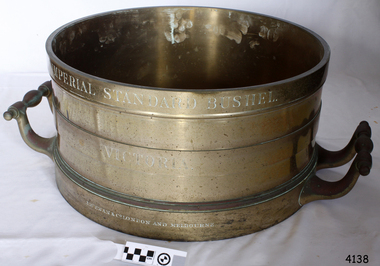
Functional object - Standard Measure, James McEwan & Co, 1860s-1900s
... ...British Imperial Standards...An Imperial Peck equals a quarter of a Bushel, or 9.09 litres Standards for weights and measures began in Victoria when the Melbourne Observatory received primary sets of Imperial Standard Weights and Measures from Britain. These were tested against the then British Imperial Standards to measure length, weight and currency. ...An Imperial Peck equals a quarter of a Bushel, or 9.09 litres Standards for weights and measures began in Victoria when the Melbourne Observatory received primary sets of Imperial Standard Weights and Measures from Britain. These were tested against the then British Imperial Standards to measure length, weight and currency. ...This container is a pre-Decimal, Imperial Standard Bushel, part of a three-piece set of Standard measures used in Victoria from around 1900 to 1940. The measures were made in Melbourne by J. McEwan & Co. These three measures were likely used by the local Melbourne authority that monitored weights and measures in the mid to late 19th century. . An Imperial Bushel was equal to 8 gallons, or 36.36872 litres . An Imperial Peck equals a quarter of a Bushel, or 9.09 litres Standards for weights and measures began in Victoria when the Melbourne Observatory received primary sets of Imperial Standard Weights and Measures from Britain. These were tested against the then British Imperial Standards to measure length, weight and currency. Administrative bodies in the Colony of Australia could then compare their weights and measures against these British Primary Standards and adjust their Measures accordingly, to maintain the Standards. The Weights and Measures Act of 1862 was passed in Victoria, and local inspectors were established throughout the colony. By the 1870s, local councils and shires in Victoria held a set of Standards used to test scales, weights, and measures used by manufacturers, wholesalers, and retailers. Every ten years, the councils’ Standards needed to be rechecked against the Victorian Standards. In the 19th Century, the Victorian Customs Department inspected and maintained the Standards. In 1901, the Customs Department was transferred to the Federal Government, but the Weights and Measures authority remained with the Victorian Government and relocated to the Melbourne Observatory. In 1904, the Standard weights and measures, and testing equipment, were installed in the room of a new building erected at the south end of the Great Melbourne Telescope House. The room became known as the Whirling Room, due to its large whirling apparatus that tested air meters. When the Melbourne Observatory closed in 1944, the Weights and Measures Branch was formed to continue maintaining the Standards. On February 14th, 1966, Australia began its conversion to metric measures and currency, and a new set of Standard Measures was introduced; the conversion took place in stages. The Weights and Measures Branch remained at the Observatory site until 1995. James McEwan & Co.: - The maker of this set of Standard Measures was James McEwan. His Melbourne business was established in 1852 and sold retail furniture and wholesale ironmongery. The firm’s warehouses were situated at the intersection of 81-83 Elizabeth and Little Collins Streets. Shortly afterwards, the firm partnered with William Kerr Thomson and Samuel Renwick. When McEwan died in 1868, his partners carried on and expanded the business under his name, J McEwan. The business was expanded to provide a retail shop, counting-house and private offices. Wholesale warehouses adjoined these premises at 4, 6 and 10 Little Collins Street, West. This company provided and sold a large and varied amount of imported goods into the colony; agricultural equipment, building materials, mining items, steam engines, tools of all types and marble fireplaces. The company grew to employ over 150 people in Melbourne and opened offices at 27 Lombard St, London, as well as in New Zealand and Fiji. It also serviced the Mauritius islands and the Pacific area with its steamship, the Suva, and a brig, the ShannonThe set of Imperial Standard Measures is an example of a bronze measure container made specifically for J. McEwan & Co. Today, it helps us to understand how imperial weights and measures were used, and how a standard of measurement for merchants was developed in the Australian colonies based on the Imperial British measurement system. The container has social significance as an item retailed by J McEwan, and used by Victoria’s authorities legally responsible for ensuring that dry goods sold in Victoria by wholesalers and retailers are correct.Imperial Standard Measure: a container to measure the volume of a Busel. It is part of a set of three precision measures - a Peck, a Half Bushel and a Bushel – used by government authorities in Victoria. The cast brass cylinder has straight sides and a flat base, and two handles are attached near the base by two posts on each handle. The wall inside is straight, and outside has grooves and horizontal bands. Inscriptions are engraved on the outside. The Measures were made for the retailer, J. McEwan & Co., London and Melbourne.Engraved on side: "IMPERIAL STANDARD BUSHEL. / VICTORIA ./ J. MCEWAN & CO. LONDON AND MELBOURNE."flagstaff hill, flagstaff hill maritime museum and village, warrnambool, maritime museum, maritime village, great ocean road, shipwreck coast, weights and measurements, science, james mcewan & co., precision instrument, technology, melbourne observatory, british imperial standards, standard weights & measures, volume measure, dry measure, customs, commerce, victorian standard measure, pre-decimal measure, imperial standard, imperial bushel, peck measure, bronze container, brass container, cast container -
 Flagstaff Hill Maritime Museum and Village
Equipment - Standard Measure, James McEwan & Co, 1860s-1900s
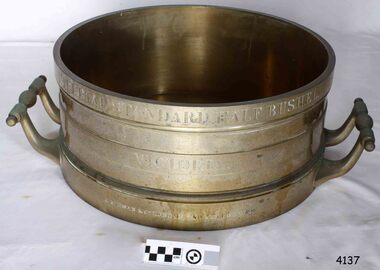
... ...British Imperial Standards...An Imperial Peck equals a quarter of a Bushel, or 9.09 litres Standards for weights and measures began in Victoria when the Melbourne Observatory received primary sets of Imperial Standard Weights and Measures from Britain. These were tested against the then British Imperial Standards to measure length, weight and currency. ...An Imperial Peck equals a quarter of a Bushel, or 9.09 litres Standards for weights and measures began in Victoria when the Melbourne Observatory received primary sets of Imperial Standard Weights and Measures from Britain. These were tested against the then British Imperial Standards to measure length, weight and currency. ...This container is a pre-Decimal, Imperial Standard Half Bushel, part of a three-piece set of Standard measures used in Victoria from around 1900 to 1940. The measures were made in Melbourne by J. McEwan & Co. These three measures were likely used by the local Melbourne authority that monitored weights and measures in the mid to late 19th century. . An Imperial Bushel was equal to 8 gallons, or 36.36872 litres . An Imperial Peck equals a quarter of a Bushel, or 9.09 litres Standards for weights and measures began in Victoria when the Melbourne Observatory received primary sets of Imperial Standard Weights and Measures from Britain. These were tested against the then British Imperial Standards to measure length, weight and currency. Administrative bodies in the Colony of Australia could then compare their weights and measures against these British Primary Standards and adjust their Measures accordingly, to maintain the Standards. The Weights and Measures Act of 1862 was passed in Victoria, and local inspectors were established throughout the colony. By the 1870s, local councils and shires in Victoria held a set of Standards used to test scales, weights, and measures used by manufacturers, wholesalers, and retailers. Every ten years, the councils’ Standards needed to be rechecked against the Victorian Standards. In the 19th Century, the Victorian Customs Department inspected and maintained the Standards. In 1901, the Customs Department was transferred to the Federal Government, but the Weights and Measures authority remained with the Victorian Government and relocated to the Melbourne Observatory. In 1904, the Standard weights and measures, and testing equipment, were installed in the room of a new building erected at the south end of the Great Melbourne Telescope House. The room became known as the Whirling Room, due to its large whirling apparatus that tested air meters. When the Melbourne Observatory closed in 1944, the Weights and Measures Branch was formed to continue maintaining the Standards. On February 14th, 1966, Australia began its conversion to metric measures and currency, and a new set of Standard Measures was introduced; the conversion took place in stages. The Weights and Measures Branch remained at the Observatory site until 1995. James McEwan & Co.: - The maker of this set of Standard Measures was James McEwan. His Melbourne business was established in 1852 and sold retail furniture and wholesale ironmongery. The firm’s warehouses were situated at the intersection of 81-83 Elizabeth and Little Collins Streets. Shortly afterwards, the firm partnered with William Kerr Thomson and Samuel Renwick. When McEwan died in 1868, his partners carried on and expanded the business under his name, J McEwan. The business was expanded to provide a retail shop, counting-house and private offices. Wholesale warehouses adjoined these premises at 4, 6 and 10 Little Collins Street, West. This company provided and sold a large and varied amount of imported goods into the colony; agricultural equipment, building materials, mining items, steam engines, tools of all types and marble fireplaces. The company grew to employ over 150 people in Melbourne and opened offices at 27 Lombard St, London, as well as in New Zealand and Fiji. It also serviced the Mauritius islands and the Pacific area with its steamship, the Suva, and a brig, the Shannon.The set of Imperial Standard Measures is an example of a bronze measure container made specifically for J. McEwan & Co. Today, it helps us to understand how imperial weights and measures were used, and how a standard of measurement for merchants was developed in the Australian colonies based on the Imperial British measurement system. The container has social significance as an item retailed by J McEwan, and used by Victoria’s authorities legally responsible for ensuring that dry goods sold in Victoria by wholesalers and retailers are correct.Imperial Standard Measure: a container to measure the volume of a Half Bushel. It is part of a set of three precision measures - a Peck, a Half Bushel and a Bushel – used by government authorities in Victoria. The cast brass cylinder has straight sides and a flat base, and two handles are attached near the base by two posts on each handle. The wall inside is straight, and outside has grooves and horizontal bands. Inscriptions are engraved on the outside. The Measures were made for the retailer, J. McEwan & Co., London and Melbourne. Engraved test: "IMPERIAL STANDARD HALF BUSHEL. / VICTORIA / J. MCEWAN & O. LONDON AND MELBOURNE."flagstaff hill, flagstaff hill maritime museum and village, warrnambool, maritime museum, maritime village, great ocean road, shipwreck coast, weights and measurements, science, james mcewan & co., precision instrument, technology, melbourne observatory, british imperial standards, standard weights & measures, volume measure, dry measure, customs, commerce, victorian standard measure, pre-decimal measure, imperial standard, imperial half bushel, bronze container, brass container, cast container -
 Merbein District Historical Society
Document, Fishers Stores Documents, 1916-1926
... ... British Imperial Oil Company...Fishers Stores British Imperial Oil Company Petrol - Motor Spirit G.T. ...fishers stores, british imperial oil company, petrol - motor spirit, g.t. kain - letter, crown land sale notice, transfer statement of post office (from fishers), transfer statement of post office equipment (from fishers), residents signatures -
 Lara RSL Sub Branch
British Commonwealth of Nations flag circ world war 1, British Commonwealth of Nations flag world war 1
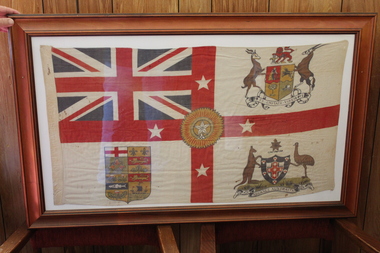
... British Imperial Forces involved in World War 1...British Imperial Forces involved in World War 1 Rear representation, british expeditionary forces flag union jack white ensign coat of arms of south africa coat of arms canada coat of arms advance australia rosette of india The flag on the left border is marked with "Groves" Flag White Ensign is made up from Commonwealth Countries and displayed as a flag- Top left-hand corner British flag, right-hand top corner Coat of arms of South Africa, bottom-left Coat of Arms for Canada, Bottom right corner Advance Australia Coat of Arms, flag center is for India is a yellow and red rosette and New Zealand is represented by four white 5 pointed stars centralized as representation of the Southern Cross. ...British Imperial Forces involved in World War 1Rear representation, Flag White Ensign is made up from Commonwealth Countries and displayed as a flag- Top left-hand corner British flag, right-hand top corner Coat of arms of South Africa, bottom-left Coat of Arms for Canada, Bottom right corner Advance Australia Coat of Arms, flag center is for India is a yellow and red rosette and New Zealand is represented by four white 5 pointed stars centralized as representation of the Southern Cross.The flag on the left border is marked with "Groves"british expeditionary forces flag, union jack, white ensign, coat of arms of south africa, coat of arms canada, coat of arms advance australia, rosette of india -
 Alfred Hospital Nurses League - Nursing History Collection
Book - Illustrated book, Robert Austin, Grey and scarlet: letters from war areas by army sisters on active service, 1944
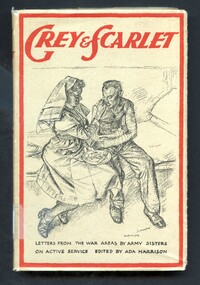
... British...Queen Alexandra's Imperial Military Nursing Service...Of significance to the AHNL as some Alfred graduates served with the Q.A's World War 1939-peronal narratives-British Queen Alexandra's Imperial Military Nursing Service Nurses A collection of letters from members of the Queen Alexandra's Imperial Military Nursing Service on the front line during World War 2, including Tobruk, Greece and Singapore At the bottom right of the front end-page is a printed black and white donation sticker: black Maltese cross in circle, "This book was donated to Alfred Archival Association Nursing Division by" Marjorie Connor (handwritten in black ink) Also previous catalogue number handwritten in black ink on this sticker Illustrated book with dust jacket. ...A collection of letters from members of the Queen Alexandra's Imperial Military Nursing Service on the front line during World War 2, including Tobruk, Greece and SingaporeIllustrated book with dust jacket. Book has a grey cover with title editors name and printer's mark printed in red on spine. Dust jacket has a grey background on the front and spine. The front has a drawing in lead pencil by Robert Austin of a nurse feeding a soldier with bandaged arms, they are seated beside each other on a bed. The main title is printed in red above this drawing, remainder of title and editor's name is printed in black below the drawing. The front also has a thick red border. Title and publisher's name also printed on the spine. Information about the book is printed in black on a white background on the backnon-fictionA collection of letters from members of the Queen Alexandra's Imperial Military Nursing Service on the front line during World War 2, including Tobruk, Greece and Singaporeworld war 1939-peronal narratives-british, queen alexandra's imperial military nursing service, nurses -
Dandenong/Cranbourne RSL Sub Branch
WW1 War Medals and Rising Sun badges, 2 x British War Medal 1914 - 1918. 1 x Victory Medal 1914 - 1919
... British War Medal - campaign medal of United Kingdom for British and Imperial Forces. Victory Medal - Campaign Medal for British and Imperial Forces....British War Medal - campaign medal of United Kingdom for British and Imperial Forces. Victory Medal - Campaign Medal for British and Imperial Forces. ...British War Medal - campaign medal of United Kingdom for British and Imperial Forces. Victory Medal - Campaign Medal for British and Imperial Forces.British War Medals bronze ( 1 with ribbon gold silver and blue ). Victory Medal gold bronze with ribbon yellow red blue and gold.Victory Medal inscribed "The Great War For Civilisation 1914 - 1919. War Medals inscribed GEORGIVS V BRITT OMN REX ET IND IMP. British War Medal Insc. 1981 Pte. S R WARD 58 Btn. A.I.F. Victory Medal Insc. 1981 Pte. S R WARD 58 Btn. A.I.F. British War Medal with ribbon engraved 771959 Gnr. R>Sharp RA. -
 Bendigo Historical Society Inc.
Newspaper - ABBOTT COLLECTION: BARBED WIRE FOR FARMERS
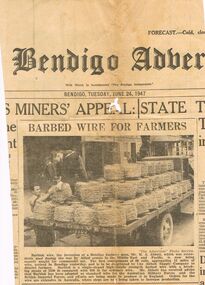
... Advice has also been received 'Barblock' has been adopted as standard wire for the Australian Military forces and the British Imperial Forces, and efforts are being made to produce it in England....Advice has also been received 'Barblock' has been adopted as standard wire for the Australian Military forces and the British Imperial Forces, and efforts are being made to produce it in England. ...Newspaper clipping, Bendigo Advertiser Tuesday June 24 1947. Photo shows a load of 'Barblock' wire being unloaded in Bendigo for distribution by the Abbott Supply Company. Advice has also been received 'Barblock' has been adopted as standard wire for the Australian Military forces and the British Imperial Forces, and efforts are being made to produce it in England.rural industry, fencing, barbed wire, h. a abbott -
 Orbost & District Historical Society
medal, from July 26 1919
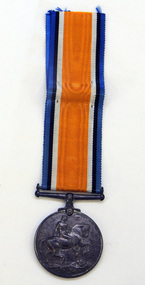
... This medal was approved in 1919 for issue to officers and men of British and Imperial forces who served between 5 August 1914 and 11 November 1918. ...This medal was approved in 1919 for issue to officers and men of British and Imperial forces who served between 5 August 1914 and 11 November 1918. ...This medal was approved in 1919 for issue to officers and men of British and Imperial forces who served between 5 August 1914 and 11 November 1918. This medal gives an insight into the human element of World War 1 ensuring that those who were part of the Orbost community and died while playing a vital role during this time are remembered.A circular silver medal with a bare-headed King George V facing left and GEORGIVS V BRITT:OMN:REX ET IND:IMP: on one side and on the other is a naked St George, on horseback armed with a short sword. It has the dates 1914 and 1918 on either side. The ribbon has a wide central watered stripe of orange and two narrow white stripes on either side, two black pin-stripes and two outer stripes of blue.medal ww1 military -
 8th/13th Victorian Mounted Rifles Regimental Collection
Weapon - Lee Metford bayonet
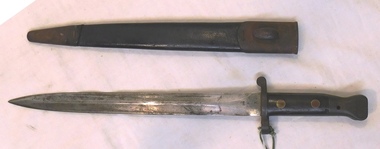
... This style bayonet was used by British and Imperial troops in the Boer War and concurrently with the 1907 pattern during World War 1 (1914-1918). ...This style bayonet was used by British and Imperial troops in the Boer War and concurrently with the 1907 pattern during World War 1 (1914-1918). ...This style bayonet was used by British and Imperial troops in the Boer War and concurrently with the 1907 pattern during World War 1 (1914-1918). Used by Victorian colonial troops.Rare example of nineteenth century British bayonet.British 1888 pattern bayonet for magazine Lee Metford and Magazine Lee Enfield rifles with scabbard" EFD " and " 88E " under crownbayonet, boer war, metford, vmr -
 Bendigo Historical Society Inc.
Furniture - HARRIS COLLECTION: SMALL WOODEN CHEST OF DRAWERS
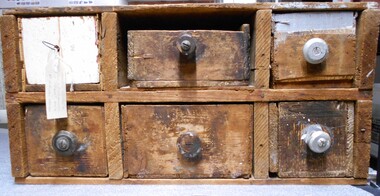
... On ends of box, printed in black 'Shell' and 'The British Imperial Oil Company Limited' ' 8 Imperial gallons, motor spirit' Small handcrafted drawers are set in the box. ...On ends of box, printed in black 'Shell' and 'The British Imperial Oil Company Limited' ' 8 Imperial gallons, motor spirit' Small handcrafted drawers are set in the box. ...Small wooden handcrafted set of drawers; drawers enclosed in a 'Shell oil' box. On ends of box, printed in black 'Shell' and 'The British Imperial Oil Company Limited' ' 8 Imperial gallons, motor spirit' Small handcrafted drawers are set in the box. Six small drawers, with four wooden knobs, one metal and one loop of wire acting as a drawer pull. Drawers are made from repurposed boxes. One drawer has label of box on side ' Leggo's of Bendigo, Self Raising Roller Flour', parts of label missing 'Good cheap cake' recipe partly visible. On top of drawers, white paint tin stain.harris collection, axedale -
 Bendigo Military Museum
Award - MEDALS, WW1, Unknown
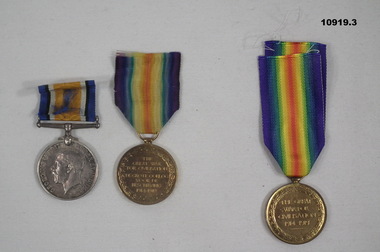
... British War Medal issued to all British and Imperial personnel who served in WW1....British War Medal issued to all British and Imperial personnel who served in WW1. Ron Mills Collection Medals WW1 1. ...1. British Victory Medal - issued to all personnel who served in WW1. 2. South African Victory Medal - For those who served in WW1. Was the only medal to have the inscription in both English and Africana. 3. British War Medal issued to all British and Imperial personnel who served in WW1.Three Medals with ribbons, unmounted. 1. The British War Medal. 2. British Victory Medal. 3. South African Victory Medal in two languages.1. Name engraved "T4-253768 PTE J.W. THATCHER A.S.C.". 2. Named "DVR R.C. FRANK S.A.S.O." - INSCRIBED MULTIPLE LANGUAGES. 3. Named "DVR. R.C. FRANK S.A.S.O.ron mills collection, medals, ww1 -
 Alfred Hospital Nurses League - Nursing History Collection
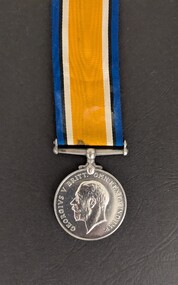
Medal - World War 1 medal, Royal Mint, British War Medal (Leah Rosenthal), 1919
... The British War Medal was awarded to British and Imperial forces for service during World War 1.Recipients also received the Military Star( where applicable) and the Victory Medal. ...The British War Medal was awarded to British and Imperial forces for service during World War 1.Recipients also received the Military Star( where applicable) and the Victory Medal. ...The British War Medal was awarded to British and Imperial forces for service during World War 1.Recipients also received the Military Star( where applicable) and the Victory Medal. Leah Rosenthal volunteered with Queen Alexandra's Imperial Nursing Service Reserve, serving in France, and also was awarded the Associate Royal Red CrossOf significance to the AHNL as Leah Rosental was an Alfred nursing graduateRound silver medal with a straight clasp suspender without swivel. The front of the medal depicts the bare head effigy of King George V facing left. Around the perimeter "GEORGIVS V BRITT: OMN: REX ET IND: IMP:" (George V, King of all the British Isles and Emperor of India). The reverse, designed by William McMillan, shows Saint George naked on horseback and armed with a short sword, an allegory of the physical and mental strength which achieved victory over Prussianism. The horse tramples on the Prussian eagle shield and the emblems of death, a skull and crossbones. In the background are ocean waves and just off-centre near the right upper rim is the risen sun of Victory. The years "1914" and "1918" appear on the perimeter in the left and right fields respectively. The attached ribbon consists of a central broad golden-yellow stripe flanked by white and black stipes with royal blue borders. The medal has been mounted on card along with the 1914-1915 Military Star and The Victory Medalworld war 1, world war 1914-1918, leah rosenthal, queen alexandra's imperial nursing service reserve, military medals, british war medal -
 Flagstaff Hill Maritime Museum and Village
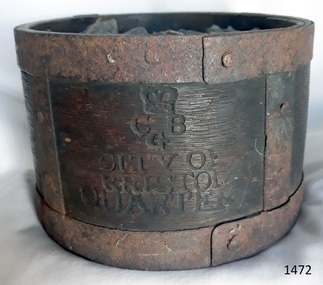
Functional object - Standard Measure, Late 18th to early 19th century (before the standardised measurement was introduced in England in 1824)
... Additional Information: The British Imperial System evolved from the thousands of Roman, Celtic, Anglo-Saxon, and customary local units employed in the middle Ages. ...Additional Information: The British Imperial System evolved from the thousands of Roman, Celtic, Anglo-Saxon, and customary local units employed in the middle Ages. ...The peck has been in use since the early 14th century when it was introduced as a measure for flour. The term referred to varying quantities until the modern units of measurement were defined in the 19th century. Cities in England used to have official standard weights and measures for that city or area. These containers were marked with the city's name and emblem, merchant’s weights and measures would then be checked against this to make sure they weren't trying to cheat their customers. The item in the collection is a standard measure approved by Bristol City and used by that City’s grocers to measure dry goods such as peas, beans, sugar, flour, meal etc., and its metal banding ensures that the measure cannot be reduced in size to cheat customers. Additional Information: The British Imperial System evolved from the thousands of Roman, Celtic, Anglo-Saxon, and customary local units employed in the middle Ages. Traditional names such as pound, foot, and gallon were widely used, but the values so designated varied with time, place, trade, product specifications, and dozens of other requirements. Early royal standards were established to enforce uniformity took the name Winchester, after the ancient tenth century capital of Britain. King Henry VII reaffirmed the customary Winchester standards for capacity and length and distributed royal standards throughout the realm. This process was repeated about a century later in the reign of Queen Elizabeth I. In the 16th century, the rod (5.5 yards, or 16.5 feet) was defined (once again as a learning device and not as a standard) defined by the length of the left feet of 16 men lined up heel to toe as they emerged from the church. By the 17th century usage and legal statute had established the acre, rod, and furlong at their present values together with other historic units such as the peck. Establishment of the System: The Weights and Measures Act of 1824 and the Act of 1878 established the British Imperial System based on precise definitions of selected existing units. The 1824 act sanctioned a single imperial gallon to replace the wine, ale, and corn (wheat) gallons that were in general use. The new gallon was defined as equal in volume to 10 pounds avoirdupois of distilled water weighed at 62°F with the barometer at 30 inches, or 277.274 cubic inches (later corrected to 277.421 cubic inches). The two new basic standard units were the imperial standard yard and the troy pound, which was later restricted to weighing drugs, precious metals, and jewels. In 1963 an act of parliament abolished archaic measures as the rod and chaldron and a metric system was adopted. An early example of a dry measuring container giving a snapshot of how imperial weights and measures developed in England to evolve the British measurement system into the metric arrangement that most countries have adopted today including Australia. It has social significance as an item that was in everyday use by grocers and other merchants to measure dry goods in the late 18th to early 19th centuries and used specifically in the Bristol region of England as an officially recognised measurement.Standard Measure; Half Peck dry measure. Wooden measurement container with iron banding and hand made rivets container is a Quarter Peck official measurement container. Inscriptions are impressed into the sides of the wooden body. The container has the official crown and emblem of the City of Bristol, indicating this item was the Bristol City standard quarter peck measurement.Impressed into the timber on the front, a crown emblem over "C B G / CITY OF BRISTOL / QUARTER", on one side "HALF" , another side "PECK". Handwritten in white chalk on the base is "1458"flagstaff hill, warrnambool, shipwrecked-coast, flagstaff-hill-maritime-museum, flagstaff-hill-maritime-village, weights and measures, quarter peck, measurement container, dry grocery measure, bristol city measurement standard, city of bristol, british weights and measures, 18th and 19th centure standard measures -
 Wangaratta High School
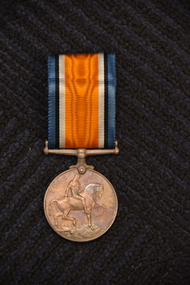
The British War Medal 1914-1918
... The medal was awarded to officers of the British and Imperial Forces who either entered a theatre of war or entered service overseas between 5th August 1914 and 11th November 1918. ...The medal was awarded to officers of the British and Imperial Forces who either entered a theatre of war or entered service overseas between 5th August 1914 and 11th November 1918. ...Established on 26th July 1919 this war medal was colloquially known as 'Squeak'. The medal was awarded to officers of the British and Imperial Forces who either entered a theatre of war or entered service overseas between 5th August 1914 and 11th November 1918. Approximately 6.5 million British War Medals were issued. Approximately 6.4 million of these were the silver versions of this medal. The front of the medal depicts the head of George V. The recipient's service number, rank, name and unit was usually impressed on the rim.Silver medallion with the front depicting the head of King George V and the back depicting a man on a horse on the top side. Has an orange, blue, black and white striped ribbon.Front: GEORIVS V BRITT. OMN REX ET IND. IMP. Back: 1914-1918 Rim: 3294 PTE C. F. WILLCOX. 8 BN. A.I.F. -
 Bendigo Historical Society Inc.
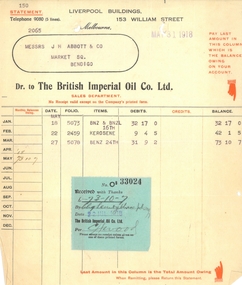
Administrative record - Abbott Collection: 32 invoices from Jan to Dec 1918, from a range of businesses; addressed to J.H. Abbott & Co
... Bendigo invoice The State Assurance Co Ltd (of Liverpool) - 2 renewal receipts The British imperial Oil Co. Ltd. - 2 invoices & receipts The Lion Rolling Mills - 4 invoices & receipts McPhersons Pty. ...Bendigo invoice The State Assurance Co Ltd (of Liverpool) - 2 renewal receipts The British imperial Oil Co. Ltd. - 2 invoices & receipts The Lion Rolling Mills - 4 invoices & receipts McPhersons Pty. ...32 invoices from Jan to Dec 1918, from a range of businesses; addressed to J.H. Abbott & Co. Abbott Collection: 32 invoices from Jan to Dec 1918, from a range of businesses; addressed to J.H. Abbott & Co. J.H. Abbott & Co. Bendigo invoice The State Assurance Co Ltd (of Liverpool) - 2 renewal receipts The British imperial Oil Co. Ltd. - 2 invoices & receipts The Lion Rolling Mills - 4 invoices & receipts McPhersons Pty. Ltd. - 2 invoices & receipts Miller & Co. Pty. Ltd. - 2 invoices & receipts George Russell, 454-460 Flinders Str Melbourne. - 3 invoices & receipts Ullathorne Hartridge Co. Ltd. invoice The Dunlop Rubber Co. of AUS. Ltd. - 3 invoices & receipts The Dalgety Company Limited - 2 receipted invoices Guthridge & Co. invoice The Royal Agricultural Society of Victoria correspondence Eliza Tinsley, steel merchants Melbourne - invoice The Australian Explosives and Chemical Company Limited invoice & receipt The Gair Manufacturing Co. - 2 invoices & receipt C. S. Green & Son, 368-370 Post Office Place, Melbourne, hardware merchants' invoice Barnet Glass Rubber Co. Ltd. - receipted invoice C. Harper, saddle & harness Manufacturer & Importer, Bath Corner, Charing Cross, Bendigo - invoiceabbott, invoices -
 Alfred Hospital Nurses League - Nursing History Collection
Medal - War War I medal, Royal Mint, 1914-1915 Star (Leah Rosenthal), ca.1918
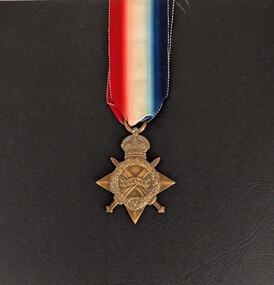
... The 1914–15 Star was instituted in December 1918 and was awarded to all who served in the British and Imperial forces against the Central European Powers in any theatre of the Great War between 5 August 1914 and 31 December 1915, provided they had not already received the 1914 Star. ...The 1914–15 Star was instituted in December 1918 and was awarded to all who served in the British and Imperial forces against the Central European Powers in any theatre of the Great War between 5 August 1914 and 31 December 1915, provided they had not already received the 1914 Star. ...The 1914–15 Star was instituted in December 1918 and was awarded to all who served in the British and Imperial forces against the Central European Powers in any theatre of the Great War between 5 August 1914 and 31 December 1915, provided they had not already received the 1914 Star. The period of eligibility was prior to the Military Service Act 1916, which introduced conscription in Britain. Recipients also received the British War Medal and the Victory Medal. Leah Rosenthal volunteered with Queen Alexandra's Imperial Nursing Service Reserve, serving in France, and also was awarded the Associate Royal Red CrossOf significance to the AHNL as the recipient was an Alfred Hospital GraduateThe medal, based on the design of the earlier 1914 Star, is a four-pointed star of bright bronze, ensigned with a crown. The medal and suspension assembly was struck in one piece. The obverse has two crossed gladii (swords) with their blades upwards, the points and grips of which form what might appear to be four additional points to the star. The swords are overlaid by a wreath of oak leaves, with the Royal Cypher of King George V at the base of the wreath and an overlaying central scroll inscribed "1914–15". The reverse is plain and is impressed with the recipient's details [LIEUT. /J. ROSENTHAL. RANC] The attached ribbon has the red, white and blue colours of the flag of the United Kingdom in shaded and watered bands. The medal has been mounted on card together with recipient's British War Medal and Victory Medalalfred hospital, world war 1914-1918, nurses, leah rosenthal, queen alexandra's imperial military nursing service reserve -
 Flagstaff Hill Maritime Museum and Village
Functional object - Jug, Between 1910 -1936
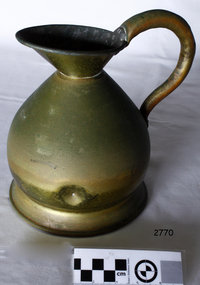
... The beginning of standardised weights and measures began In Victoria when the Melbourne Observatory received sets of standard weights and measures, which had been tested in Britain against the then British Imperial standards. These included the primary standard yard and pound for the Colony of Victoria. ...The beginning of standardised weights and measures began In Victoria when the Melbourne Observatory received sets of standard weights and measures, which had been tested in Britain against the then British Imperial standards. These included the primary standard yard and pound for the Colony of Victoria. ...The beginning of standardised weights and measures began In Victoria when the Melbourne Observatory received sets of standard weights and measures, which had been tested in Britain against the then British Imperial standards. These included the primary standard yard and pound for the Colony of Victoria. Other standards of weights and measure held by shires and the administrative body's within the colony could then be compared to these primary standards. A Weights and Measures Act was passed in Victoria in 1862, establishing local inspectors throughout the colony. By the 1870s each local council and shire in Victoria held a set of standards that were used to test scales, weights and dry measures used by wholesalers, factories and shops. Every ten years the councils’ standards would themselves need to be rechecked against the Victorian Standards. The checking was done by the Victorian Customs Department in the 19th century, but with the transfer of responsibility for customs to the Federal Government in 1901, weights and measures function was retained by the Victorian Government and was shifted to the Melbourne Observatory. In 1904, a new building was erected at the south end of the Great Melbourne Telescope House, where the standard weights and measures and testing equipment was installed. This room had a large whirling apparatus for testing air meters and became known as the Whirling Room. When the Melbourne Observatory closed in 1944, the Weights and Measures Branch was formed to continue and this branch remained at the Observatory site unit until 1995.An example of a brass measuring jug made specifically to maintain government standard liquid measurements that were sold to the public. The probability is that this artefact was made sometime between George V reign (1910-1936) and gives us today a snapshot of how imperial weights and measures were checked by Government departments prior to decimalisation and how a standard for the various types of measurement was developed in Australian based on the Imperial British measurement system. The container has social significance as an item used in Victoria as a legal standard measure to ensure that goods sold in Victoria were correct. Jug brass haystack form with a deep lip and pouring spout, small neck and broad base. It displays a curved pistol handle. Inscription at base of handle top of jug stamped 61 GVR SM. These marks signify that the measure complied with the Victorian Government capacity liquid standard measurement. Item made during the reign of George V (1910-1936 (GVR).Other marks indicate model number (61) & SM possible could be either small measure, the maker, or Standards Melbourne.flagstaff hill, warrnambool, shipwrecked-coast, flagstaff-hill, flagstaff-hill-maritime-museum, maritime-museum, shipwreck-coast, flagstaff-hill-maritime-village -
 Flagstaff Hill Maritime Museum and Village
Equipment - Galvanised Jug, 1930s
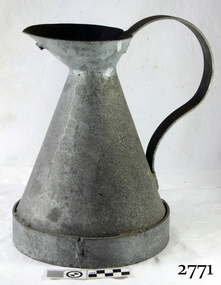
... The beginning of standardised weights and measures began In Victoria when the Melbourne Observatory received sets of standard weights and measures, which had been tested in Britain against the then British Imperial standards. These included the primary standard yard and pound for the Colony of Victoria. ...The beginning of standardised weights and measures began In Victoria when the Melbourne Observatory received sets of standard weights and measures, which had been tested in Britain against the then British Imperial standards. These included the primary standard yard and pound for the Colony of Victoria. ...The beginning of standardised weights and measures began In Victoria when the Melbourne Observatory received sets of standard weights and measures, which had been tested in Britain against the then British Imperial standards. These included the primary standard yard and pound for the Colony of Victoria. Other standards of weights and measure held by shires and the administrative body's within the colony could then be compared to these primary standards. A Weights and Measures Act was passed in Victoria in 1862, establishing local inspectors throughout the colony. By the 1870s each local council and shire in Victoria held a set of standards that were used to test scales, weights and dry measures used by wholesalers, factories and shops. Every ten years the councils’ standards would themselves need to be rechecked against the Victorian Standards. The checking was done by the Victorian Customs Department in the 19th century, but with the transfer of responsibility for customs to the Federal Government in 1901, weights and measures function was retained by the Victorian Government and was shifted to the Melbourne Observatory. In 1904, a new building was erected at the south end of the Great Melbourne Telescope House, where the standard weights and measures and testing equipment was installed. This room had a large whirling apparatus for testing air meters and became known as the Whirling Room. When the Melbourne Observatory closed in 1944, the Weights and Measures Branch was formed to continue and this branch remained at the Observatory site unit until 1995.An example of a galvanised measuring jug made specifically to maintain government standard liquid measurements that were sold to the public. The probability is that this artifact was made around the first quarter of the 20th century and gives us today a snapshot of how imperial weights and measures were used before decimalisation and how a standard of measurement for merchants was developed in Australian based on the Imperial British measurement system. The container has social significance as an item used in Victoria as a legal standard measure to ensure that goods sold in Victoria were correct given the item is galvanised it was probability used for kerosene or petrol etc not for liquids used for human consumption. Jug conical shaped with rounded top coming to a very slight point wide handle at back. VIB.L.66 1/2 Gall capacity unsure of the markings 66 could mean the model number capacity is 1/2 an imperial gallon VIB.L markings not known possibly a company or Victorian Department that the jug was made for and no longer active.flagstaff hill, warrnambool, shipwrecked-coast, flagstaff-hill, flagstaff-hill-maritime-museum, maritime-museum, shipwreck-coast, flagstaff-hill-maritime-village -
 Flagstaff Hill Maritime Museum and Village
Galvanised Jug
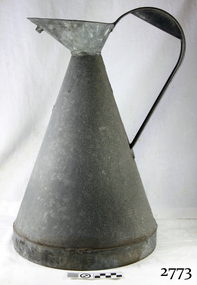
... The beginning of standardised weights and measures began In Victoria when the Melbourne Observatory received sets of standard weights and measures, which had been tested in Britain against the then British Imperial standards. These included the primary standard yard and pound for the Colony of Victoria. ...The beginning of standardised weights and measures began In Victoria when the Melbourne Observatory received sets of standard weights and measures, which had been tested in Britain against the then British Imperial standards. These included the primary standard yard and pound for the Colony of Victoria. ...The beginning of standardised weights and measures began In Victoria when the Melbourne Observatory received sets of standard weights and measures, which had been tested in Britain against the then British Imperial standards. These included the primary standard yard and pound for the Colony of Victoria. Other standards of weights and measure held by shires and the administrative body's within the colony could then be compared to these primary standards. A Weights and Measures Act was passed in Victoria in 1862, establishing local inspectors throughout the colony. By the 1870s each local council and shire in Victoria held a set of standards that were used to test scales, weights and dry measures used by wholesalers, factories and shops. Every ten years the councils’ standards would themselves need to be rechecked against the Victorian Standards. The checking was done by the Victorian Customs Department in the 19th century, but with the transfer of responsibility for customs to the Federal Government in 1901, weights and measures function was retained by the Victorian Government and was shifted to the Melbourne Observatory. In 1904, a new building was erected at the south end of the Great Melbourne Telescope House, where the standard weights and measures and testing equipment was installed. This room had a large whirling apparatus for testing air meters and became known as the Whirling Room. When the Melbourne Observatory closed in 1944, the Weights and Measures Branch was formed to continue and this branch remained at the Observatory site unit until 1995. An example of a galvanised measuring jug made specifically to maintain government standard liquid measurements that were sold to the public. The probability is that this artifact was made around the first quarter of the 20th century and gives us today a snapshot of how imperial weights and measures were used before decimalisation and how a standard of measurement for merchants was developed in Australian based on the Imperial British measurement system. The container has social significance as an item used in Victoria as a legal standard measure to ensure that goods sold in Victoria were correct given the item is galvanised it was probability used for kerosene or petrol etc not for liquids used for human consumption. Galvanised Iron jug with rounded top, Inscription on handle at back. 2 gallon GV.35flagstaff hill, warrnambool, shipwrecked-coast, flagstaff-hill, flagstaff-hill-maritime-museum, maritime-museum, shipwreck-coast, flagstaff-hill-maritime-village -
 Flagstaff Hill Maritime Museum and Village
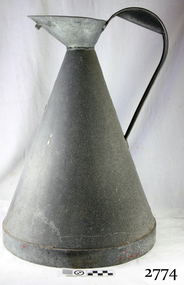
Functional object - Galvanised Jug
... The beginning of standardised weights and measures began In Victoria when the Melbourne Observatory received sets of standard weights and measures, which had been tested in Britain against the then British Imperial standards. These included the primary standard yard and pound for the Colony of Victoria. ...The beginning of standardised weights and measures began In Victoria when the Melbourne Observatory received sets of standard weights and measures, which had been tested in Britain against the then British Imperial standards. These included the primary standard yard and pound for the Colony of Victoria. ...The beginning of standardised weights and measures began In Victoria when the Melbourne Observatory received sets of standard weights and measures, which had been tested in Britain against the then British Imperial standards. These included the primary standard yard and pound for the Colony of Victoria. Other standards of weights and measure held by shires and the administrative body's within the colony could then be compared to these primary standards. A Weights and Measures Act was passed in Victoria in 1862, establishing local inspectors throughout the colony. By the 1870s each local council and shire in Victoria held a set of standards that were used to test scales, weights and dry measures used by wholesalers, factories and shops. Every ten years the councils’ standards would themselves need to be rechecked against the Victorian Standards. The checking was done by the Victorian Customs Department in the 19th century, but with the transfer of responsibility for customs to the Federal Government in 1901, weights and measures function was retained by the Victorian Government and was shifted to the Melbourne Observatory. In 1904, a new building was erected at the south end of the Great Melbourne Telescope House, where the standard weights and measures and testing equipment was installed. This room had a large whirling apparatus for testing air meters and became known as the Whirling Room. When the Melbourne Observatory closed in 1944, the Weights and Measures Branch was formed to continue and this branch remained at the Observatory site unit until 1995.An example of a galvanised measuring jug made specifically to maintain government standard liquid measurements that were sold to the public. The probability is that this artifact was made around the first quarter of the 20th century and gives us today a snapshot of how imperial weights and measures were used before decimalisation and how a standard of measurement for merchants was developed in Australian based on the Imperial British measurement system. The container has social significance as an item used in Victoria as a legal standard measure to ensure that goods sold in Victoria were correct given the item is galvanised it was probability used for kerosene or petrol etc not for liquids used for human consumption. Jug galvanised conical shaped with rounded top, handle at back. 3 gallon GV.27flagstaff hill, warrnambool, shipwrecked-coast, flagstaff-hill, flagstaff-hill-maritime-museum, maritime-museum, shipwreck-coast, flagstaff-hill-maritime-village -
 Flagstaff Hill Maritime Museum and Village
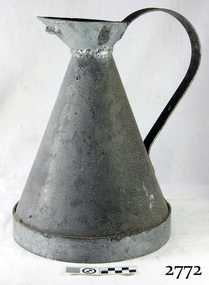
Equipment - Jug
... The beginning of standardised weights and measures began In Victoria when the Melbourne Observatory received sets of standard weights and measures, which had been tested in Britain against the then British Imperial standards. These included the primary standard yard and pound for the Colony of Victoria. ...The beginning of standardised weights and measures began In Victoria when the Melbourne Observatory received sets of standard weights and measures, which had been tested in Britain against the then British Imperial standards. These included the primary standard yard and pound for the Colony of Victoria. ...The beginning of standardised weights and measures began In Victoria when the Melbourne Observatory received sets of standard weights and measures, which had been tested in Britain against the then British Imperial standards. These included the primary standard yard and pound for the Colony of Victoria. Other standards of weights and measure held by shires and the administrative body's within the colony could then be compared to these primary standards. A Weights and Measures Act was passed in Victoria in 1862, establishing local inspectors throughout the colony. By the 1870s each local council and shire in Victoria held a set of standards that were used to test scales, weights and dry measures used by wholesalers, factories and shops. Every ten years the councils’ standards would themselves need to be rechecked against the Victorian Standards. The checking was done by the Victorian Customs Department in the 19th century, but with the transfer of responsibility for customs to the Federal Government in 1901, weights and measures function was retained by the Victorian Government and was shifted to the Melbourne Observatory. In 1904, a new building was erected at the south end of the Great Melbourne Telescope House, where the standard weights and measures and testing equipment was installed. This room had a large whirling apparatus for testing air meters and became known as the Whirling Room. When the Melbourne Observatory closed in 1944, the Weights and Measures Branch was formed to continue and this branch remained at the Observatory site unit until 1995.An example of a galvanised measuring jug made specifically to maintain government standard liquid measurements that were sold to the public. The probability is that this artifact was made around the first quarter of the 20th century and gives us today a snapshot of how imperial weights and measures were used before decimalisation and how a standard of measurement for merchants was developed in Australian based on the Imperial British measurement system. The container has social significance as an item used in Victoria as a legal standard measure to ensure that goods sold in Victoria were correct. Jug conical shaped with rounded top coming to a very slight point wide handle at back. VIB.L.66 1/2 Gall capacityflagstaff hill, warrnambool, shipwrecked-coast, flagstaff-hill, flagstaff-hill-maritime-museum, maritime-museum, shipwreck-coast, flagstaff-hill-maritime-village -
 8th/13th Victorian Mounted Rifles Regimental Collection
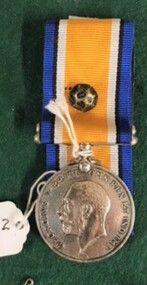
Medal - Whittaker BWM
... The silver or bronze medal was awarded to officers and men of the British and Imperial Forces who either entered a theatre of war or entered service overseas between 5th August 1914 and 11th November 1918 inclusive. ...The silver or bronze medal was awarded to officers and men of the British and Imperial Forces who either entered a theatre of war or entered service overseas between 5th August 1914 and 11th November 1918 inclusive. ...The silver or bronze medal was awarded to officers and men of the British and Imperial Forces who either entered a theatre of war or entered service overseas between 5th August 1914 and 11th November 1918 inclusive. This was later extended to services in Russia, Siberia and some other areas in 1919 and 1920. Approximately 6.5 million British War Medals were issued. Approximately 6.4 million of these were the silver versions of this medal. Around 110,000 of a bronze version were issued mainly to Chinese, Maltese and Indian Labour Corps. The front (obv or obverse) of the medal depicts the head of George V. The recipient’s service number, rank, name and unit was impressed on the rim.World War One British War Medal 1914-1918 awarded to 260268 Private J Whittaker. Medal is attached to board with thumb tack through ribbon.bwm, medal, world war one, wwi -
 Bendigo Military Museum
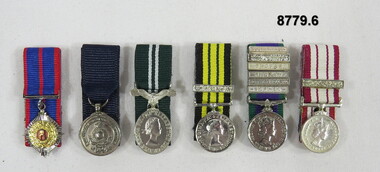
Award - MEDALS, MINIATURE, Unknown
... Brunie General Service Medal (1968). 2. Imperial British East Africa Company's Medal (1890). 3. ...Brunie General Service Medal (1968). 2. Imperial British East Africa Company's Medal (1890). 3. ...Miniature medals, all original, court mounted. 1. Brunie General Service Medal (1968). 2. Imperial British East Africa Company's Medal (1890). 3. Air Efficiency Award. 4. Africa General Service Medal with Kenya Clasp. 5. Colonial Volunteer Long Service Medal with 6 clasps. 6. Naval General Service Medal (QEII) 1909-1962 with Malay Clasp.passchendaele barracks trust, pbt435to440, bob english collection -
4th/19th Prince of Wales's Light Horse Regiment Unit History Room
Medal, British War Medal 1914-18, 1919
... The silver or bronze medal was awarded to officers and men of the British and Imperial Forces who either entered a theatre of war or entered service overseas between 5th August 1914 and 11th November 1918 inclusive. ...The silver or bronze medal was awarded to officers and men of the British and Imperial Forces who either entered a theatre of war or entered service overseas between 5th August 1914 and 11th November 1918 inclusive. ...Established on 26th July 1919. The silver or bronze medal was awarded to officers and men of the British and Imperial Forces who either entered a theatre of war or entered service overseas between 5th August 1914 and 11th November 1918 inclusive. This was later extended to services in Russia, Siberia and some other areas in 1919 and 1920. Approximately 6.5 million British War Medals were issued. Approximately 6.4 million of these were the silver versions of this medal. Around 110,000 of a bronze version were issued mainly to Chinese, Maltese and Indian Labour Corps. The front (obv or obverse) of the medal depicts the head of George V. The recipient's service number, rank, name and unit was impressed on the rim.The medal is silver and circular. A truncated bust of King George V is on the obverse, while there is a depiction of Saint George on the reverse. There is a straight clasp carrying a watered silk ribbon. This has a central band of golden yellow with three stripes of white, black and blue on both sides. The blue stripes come at the edges. 6,610,000 British War Medals were issued. The soldier's regiment and number are inscribed around the rim. Recipient: 908 DVR J E Whyte 3 LH FD AMBwar medal 1914-18 -
 Flagstaff Hill Maritime Museum and Village
Uniform - Tunic, 1899-1903
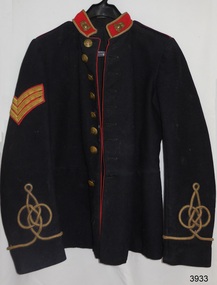
... Volunteer forces were established to strengthen the British Imperial troops posted here. A battery of artillery was raised in Victoria as well as in other Australian states. ...Volunteer forces were established to strengthen the British Imperial troops posted here. A battery of artillery was raised in Victoria as well as in other Australian states. ...This original tunic or jacket is part of the full dress uniform of the pre-Federation Victorian Permanent Artillery regiment. Its owner had the rank of Sergeant, as indicated by the three inverted chevrons. The Artillery design of the badges and buttons indicate the date of the tunic to be from 1893 to 1903. However the maker of the tunic, W. Moncton, began manufacture in Melbourne in 1899, so this the tunic can be dated between 1899 and 1903. The donor's grandfather was given this tunic but not the name of the original owner. It has since been suggested to the family that the tunic was worn by a local Western District Light Horse member. This could very well have been the case because mounted troops were officially referred to as the Light Horse in the late 19th to early 20th century. Several local men were involved in the Light Horse during the First World War. The donor's grandfather wore this tunic in the local district when riding a penny farthing bicycle. The donor's father also wore the tunic when dressed as a 'Captain' hosting a local disco dance. BRIEF MILITARY HISTORY- The Crimean War began In 1854 and many people in colonial Australia were afraid of a Russian attack. Volunteer forces were established to strengthen the British Imperial troops posted here. A battery of artillery was raised in Victoria as well as in other Australian states. In 1870 Australia became responsible for its own naval and military defence. The Volunteer Corps and Victorian Navy shared the responsibility of defending the existing forts, assisted by volunteer coastal and mobile field batteries. The Permanent Victorian Artillery force was established. It was disbanded in 1880 then re-formed in 1882 as the Victorian Garrison Artillery Corps. In 1895 the Geelong, Warrnambool, Port Fairy and Portland Batteries became part of the Western District Garrison Artillery. Many of the volunteers who served in the Artillery were from rural areas. They belonged to rifle clubs and were experience horsemen as well. Australia's defence at this time relied on these mounted troops, or Light Horse men. In 1899 the Victorian Garrison Artillery Corps amalgamated with the New South Wales and Queensland Permanent Artillery to become the Victorian Regiment of the Royal Australian Artillery (RAA). Then prior to Federation, the RAA and the Permanent Artillery of South Australia, Western Australia and Tasmania all combined, becoming the Royal Australian Artillery Regiment with two Batteries of Field Artillery; Battery A from Sydney and Battery B from Melbourne.This original uniform tunic of the pre-Federation Victorian Permanent Artillery is significant for its association with Australia's military defence and the fortifications of our district, state and country. The tunic is also significant, representing part of the history and evolution of uniforms in the Australian military forces. The tunic is also significant in its representation of Australia's independence in forming its own defences. The tunic has local significance in its connection with local social events.Tunic or jacket, part of the full dress uniform of the pre-Federation Victorian Permanent Artillery operating from 1893 to 1903. Original, single-breasted tunic of dark blue wool, red piping trim, black cotton lining in body. Sleeves lined with blue striped, white cotton. Front closure has eight brass buttons. Red band-style collar with hook-and-eye closure has gold bullion braid trim and a brass badge pinned each side at the front. Upper right sleeve has three inverted chevrons on red fabric with gold bullion braid trim (rank of Sergeant). Both sleeves have gold bullion braid 'Austrian knot' emblems stitched onto lower arm, with ends finishing on the inner sleeve. Shoulder epaulettes have red piping and smaller brass buttons. Closed back vent has vertical scalloped design with six brass buttons, in two columns of three, and red piping trim. Brass belt hook is attached to the left back waist, close to the seam (right side has a mark indicating a previous similar clip). Inside left breast is a concealed pocket. Tunic has both machine and hand stitching. All brass shank-style buttons have matching Artillery emblems with inscriptions on the back. The two brass collar badges have additional artillery emblems of exploding grenade and star as well as an inscription. Buttons were made for W. Moncton, of Melbourne and marked with his name. He traded from 1899, dating the tunic to between 1899 and 1903.Button front: Artillery emblem on front (field cannon facing left, in front of a muzzle-loading ram rod). Button back: engraved "W. MONCTON . MELBOURNE ." Collar badges: Artillery emblem (field cannon facing right | stars | exploding grenade | "AUSTRALIA")flagstaff hill, warrnambool, shipwrecked coast, flagstaff hill maritime museum, maritime museum, shipwreck coast, flagstaff hill maritime village, great ocean road, uniform jacket, uniform tunic, garrison volunteer uniform, fortifications in victoria, victorian permanent artillery, pre-federation military uniform, sergeant's uniform, jacket, militia, victoria, victorian volunteer forces, victorian regiment, royal australian artillery, raa, field gun, sergeant, w. moncton, garrison, dress uniform, tunic, scarlet collar, red collar, scarlet piping, red piping, gold bullion, artillery emblem, light horse, artillery, mounted troops, victorian garrison artillery corps -
 Running Rabbits Military Museum operated by the Upwey Belgrave RSL Sub Branch
Medals, Medals of L/Cpl George William Steele
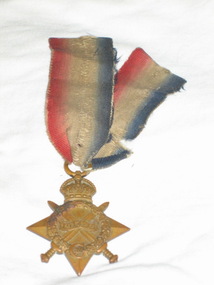
... The British War Medal, 1914-18 The silver or bronze medal was awarded to officers and men of the British and Imperial Forces who either entered a theatre of war or entered service overseas between 5th August 1914 and 11th November 1918 inclusive Approximately 6.5 million British War Medals were issued. ...The British War Medal, 1914-18 The silver or bronze medal was awarded to officers and men of the British and Imperial Forces who either entered a theatre of war or entered service overseas between 5th August 1914 and 11th November 1918 inclusive Approximately 6.5 million British War Medals were issued. ...Wounded7/5/1915 Gallipoli Died of Wounds at sea in transit to hospital The 1914 Star This bronze medal award was authorized by King George V in April 1917 for those who had served in France or Belgium between 5th August 1914 to midnight on 22nd November 1914 inclusive. The reverse is plain with the recipient's service number, rank, name and unit impressed on it. It should be remembered that recipients of this medal were responsible for assisting the French to hold back the German army while new recruits could be trained and equipped. Collectively, they fully deserve a great deal of honour for their part in the first sixteen weeks of the Great War. There were approximately 378,000 1914 Stars issued. The British War Medal, 1914-18 The silver or bronze medal was awarded to officers and men of the British and Imperial Forces who either entered a theatre of war or entered service overseas between 5th August 1914 and 11th November 1918 inclusive Approximately 6.5 million British War Medals were issued. Approximately 6.4 million of these were the silver versions of this medal. The recipient's service number, rank, name and unit was impressed on the rim. SN 1053 14Btn AIF -
 Melbourne Legacy
Memorabilia - Medal, British War medal, 1921
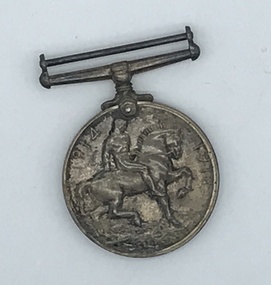
... The British War Medal is a campaign medal of the United Kingdom which was awarded to officers and men of British and Imperial forces for service in the First World War. ...The British War Medal is a campaign medal of the United Kingdom which was awarded to officers and men of British and Imperial forces for service in the First World War. ...A British War Medal from World War 1 awarded to Pte J B McLean for his war service in World War One. The British War Medal is a campaign medal of the United Kingdom which was awarded to officers and men of British and Imperial forces for service in the First World War. The ribbon that would have attached to the medal is missing (mostly orange with white, black and blue stripes either side) and the ribbon bar shows he would have also had a Victory medal. There is part of the ribbon for the Victory medal in the collection (rainbow colour). The ribbon for the miniatures is present but the two miniatures are missing. Included are stock photos to show what the medals and ribbons should look like. Was with other World War 1 memorabilia that has come from Private John Basil McLean, 2nd Reinforcements, 37th Battalion, A.I.F. J.B. McLean (Service No. 13824) was from near Maffra, Victoria and enlisted on 22 January 1916. He embarked on 16 December 1916 for Europe. He spent time with the Australian Field Artillery (Pack Section). At the end of the war he worked for a year at the A.I.F. Headquarters in London before returning to Australia on the 'Ceramic', arriving in Portsea in 1920. His full war record is available from the National Archives of Australia (B2455, MCLEAN JBM). In it is a record of this medal being given to him on 16 September 1921.This is an example of a World War 1 medal. The first Legatees were ex-servicemen from World War 1 so would have been familiar with this medal.Silver medal World War 1 medal engraved around the side with Service number and name of JB McLean. Also a cut ribbon and bar of ribbons. Silver medal with King George V facing left, with the legend "GEORGIVS V BRITT: OMN: REX ET IND: IMP:" The reverse, shows Saint George naked on horseback and armed with a short sword, an allegory of the physical and mental strength which achieved victory over Prussianism. The horse tramples on the Prussian eagle shield and the emblems of death, a skull and cross-bones. In the background are ocean waves and just off-centre near the right upper rim is the risen sun of Victory. The years "1914" and "1918" appear on the perimeter in the left and right fields respectively.Engraving '13824 P.T.E J.B.M. MCLEAN A.S.C. A.I.F.'medals, world war one
