
Showing 780 items matching "british museum"
-
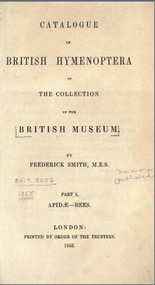 Beechworth Honey Archive
Publication, e-book, Catalogue of British Hymenoptera in the collection of the British Museum (Smith, F.), London, 1855, 1855
... Catalogue of British Hymenoptera in the collection of the British Museum (Smith, F.), London, 1855...London, British Museum...Catalogue of British Hymenoptera in the collection of the British Museum (Smith, F.), London, 1855 Publication, e-book ... -
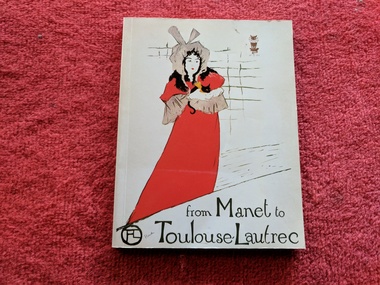 Robin Boyd Foundation
Book, Frances Carey and Antony Griffiths, From Manet to Toulouse-Lautrec: French lithographs 1860-1900, 1978
... Softcover, Catalogue of an exhibition at the Department of Prints and drawings in the British Museum 1978......British Museum Publications Limited...Walsh St library Softcover, Catalogue of an exhibition at the Department of Prints and drawings in the British Museum 1978 From Manet to Toulouse-Lautrec: French lithographs 1860-1900 Book Frances Carey and Antony Griffiths British Museum Publications Limited ...Softcover, Catalogue of an exhibition at the Department of Prints and drawings in the British Museum 1978walsh st library -
 Moorabbin Air Museum
Booklet (Item) - Museum - British Museums - Aircraft, listing 39 Museums & History of their Exhibits
... Museum - British Museums - Aircraft, listing 39 Museums & History of their Exhibits...Museum - British Museums - Aircraft, listing 39 Museums & History of their Exhibits...Museum - British Museums - Aircraft, listing 39 Museums & History of their Exhibits Booklet Museum - British Museums - Aircraft, listing 39 Museums & History of their Exhibits ... -
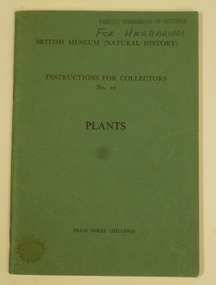 Creswick Campus Historical Collection - University of Melbourne
Booklet - Instructions for Collectors, No.10. Plants, British Museum Instructions for collectors No.10 Plants, 1965
... British Museum Instructions for collectors No.10 Plants....Booklet British Museum Instructions for collectors No.10 Plants. ...Booklet -
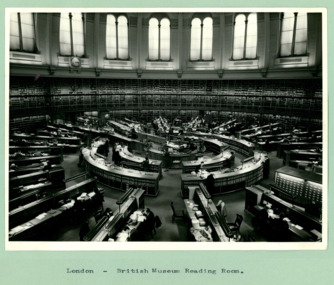 Department of Health and Human Services
British Museum Reading Room - Department of Health – National Fitness Office (Sports & Recreation) – Historical Press Release Photo Collection
... British Museum Reading Room - Department of Health – National Fitness Office (Sports & Recreation) – Historical Press Release Photo Collection ...Department of Health – National Fitness Office (Sports & Recreation) – Historical Press Release Photo - Empire Youth Day & Royals on Tour Collection Department of Health – National Fitness Office (Sports & Recreation) – Historical Press Release Photo - Empire Youth Day & Royals on Tour Collection British Museum Reading Room - Department of Health – National Fitness Office (Sports & Recreation) – Historical Press Release Photo Collection ...Department of Health – National Fitness Office (Sports & Recreation) – Historical Press Release Photo - Empire Youth Day & Royals on Tour CollectionDepartment of Health – National Fitness Office (Sports & Recreation) – Historical Press Release Photo - Empire Youth Day & Royals on Tour Collection -
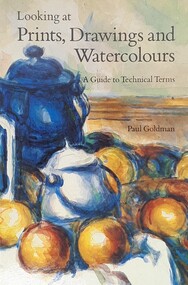 Women's Art Register
Book, British Museum Publications Ltd, Looking at Prints, Drawings and Watercolours. A Guide to Technical Terms, 1988
... British Museum Publications Ltd...A Guide to Technical Terms Book British Museum Publications Ltd Paul Goldman Cinamon and Kitzinger ...Collection in A-Z of technical terms used for artworks on paper.non-fictionCollection in A-Z of technical terms used for artworks on paper.watercolour, printmaking, drawing, mary delany, beatrix potter -
Tatura Irrigation & Wartime Camps Museum
Book, The Museum. Ancient Rome comes to Life
... ...British Museum Exhibition...Soft covered book with black front with "The Museum" and "Ancient Rome comes to Life in a major exhibition from the British Museum" in white writing. Red spine with barcode and edition. ...Ancient Rome Italian connections Roman empire British Museum Exhibition as above Soft covered book with black front with "The Museum" and "Ancient Rome comes to Life in a major exhibition from the British Museum" in white writing. ...Italian connections and collections.Soft covered book with black front with "The Museum" and "Ancient Rome comes to Life in a major exhibition from the British Museum" in white writing. Red spine with barcode and edition. Back page is red with a picture of a roman person and "ROME" in white. Black strip down bottom with information in it.as aboveancient rome, italian connections, roman empire, british museum exhibition -
Tatura Irrigation & Wartime Camps Museum
Book, The Museum. Ancient Rome comes to Life
... ...british museum exhibition...Soft covered book with black front with "The Museum" and "Ancient Rome comes to Life in a major exhibition from the British Museum" in white writing. Red spine with barcode and edition. ...Italian connections and collections. ancient rome italian connections roman empire british museum exhibition as above Soft covered book with black front with "The Museum" and "Ancient Rome comes to Life in a major exhibition from the British Museum" in white writing. ...Italian connections and collections.Soft covered book with black front with "The Museum" and "Ancient Rome comes to Life in a major exhibition from the British Museum" in white writing. Red spine with barcode and edition. Back page is red with a picture of a roman person and "ROME" in white. Black strip down bottom with information in it.as aboveancient rome, italian connections, roman empire, british museum exhibition -
Linton Mechanics Institute and Free Library Collection
Book - Essays, Disraeli, Isaac, Amenities of literature : consisting of sketches and characters of English Literature, [n.d.] [First published c.1840, this edition in a single volume c.1868]
... vi, 762 p., index : frontispiece illustration of King's Library in the British Museum...English Literature Authors Biography Essays Literary criticism Isaac Disraeli Benjamin Disraeli Seventy essays focusing on the history and development of English literature, from its origins in Celtic Britain until around the middle of the seventeenth century. vi, 762 p., index : frontispiece illustration of King's Library in the British Museum Amenities of literature : consisting of sketches and characters of English Literature Book Essays Disraeli, Isaac Disraeli, Benjamin Frederick Warne and Co. ...Seventy essays focusing on the history and development of English literature, from its origins in Celtic Britain until around the middle of the seventeenth century.vi, 762 p., index : frontispiece illustration of King's Library in the British MuseumfictionSeventy essays focusing on the history and development of English literature, from its origins in Celtic Britain until around the middle of the seventeenth century.english literature, authors, biography, essays, literary criticism, isaac disraeli, benjamin disraeli -
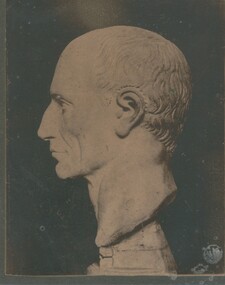 Bendigo Historical Society Inc.
Photograph - BUST OF JULIUS CAESAR
... Black and white photo of the marble head of Julius Caesar in the British Museum (found at Baice)...PHOTOGRAPH juluis caesar Juluis Caesar Black and white photo of the marble head of Julius Caesar in the British Museum (found at Baice) Photograph BUST OF JULIUS CAESAR ...Black and white photo of the marble head of Julius Caesar in the British Museum (found at Baice)photograph, juluis caesar, juluis caesar -
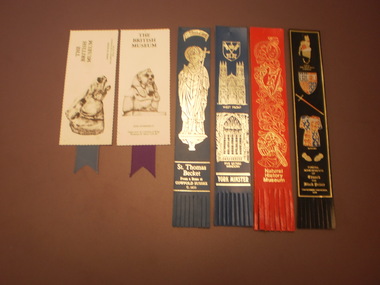 Wangaratta High School
British Bookmarks
... 2 carboard British museum bookmarks and 4 assorted leather bookmarks. ...2 carboard British museum bookmarks and 4 assorted leather bookmarks. ...2 carboard British museum bookmarks and 4 assorted leather bookmarks. This item is a part of ex-teacher Ian Marryatt's travel collection -
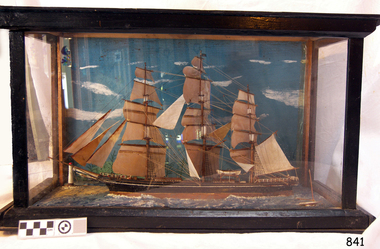 Flagstaff Hill Maritime Museum and Village
Craft - Ship Model, Cutty Sark
... ...British Museum...Today, people still recognise its importance because it has been carefully preserved and is on display at the British Maritime Museum in Greenwich. Its story has also made it a favorite subject for people who enjoy building ship models. ...THE CUTTY SARK: - The Cutty Sark was built in Britain in 1869 and was one of the last great sailing ships. At first, it carried tea from China. Later, it was used to transport wool from Australia. It became famous for its speed and held the record for the fastest voyage from Australia to Britain for ten years. Later, a Portuguese company bought the ship and renamed it Ferreira. After that, a retired sea captain purchased it to use as a training ship in Cornwall. When the captain died, the ship was given to a training college in Greenwich in 1938. In 1954, it was placed in dry dock at Greenwich, where it remains on display. The Cutty Sark is a special ship because it carried wool from Australia to other parts of the world. Models like this one help us imagine what sea travel was like before steam-powered ships were common, and they show us how trade, travel and migration changed over time. The Cutty Sark is also famous for being very fast. It set a record for the journey from Australia to Britain and kept that title for ten years. Today, people still recognise its importance because it has been carefully preserved and is on display at the British Maritime Museum in Greenwich. Its story has also made it a favorite subject for people who enjoy building ship models. Ship model: the clipper ship Cutty Sark in full ship rig with raised poop deck, deck house, three boats on deck (one has fallen). It has a two-toned black and tan hull and three jibs. The model is set in a diorama of a blue sea, a lighthouse and another small yacht. It is housed in a glass-sided case with a dark grey painted structure. The bow has an inscription."Cutty Sark"flagstaff hill, warrnambool, flagstaff hill maritime museum, shipwreck coast, flagstaff hill maritime village, maritime museum, great ocean road, cutty sark, historic sailing ship, tea clipper, sail training vessel, cadet training ship, commercial trading vessel, cargo sail vessel, ferreria, 1869, tea cargo, tea trade, china tea, wool export, australian export, australian wool export, cornwall, training ship, greenwich, british museum, ship model, craft, hobby, ship model cutty sark, model making -
 Flagstaff Hill Maritime Museum and Village
Postcard - Vessel, Sailing Ship, B Matthews (photo printer), Cutty Sark, 20t century
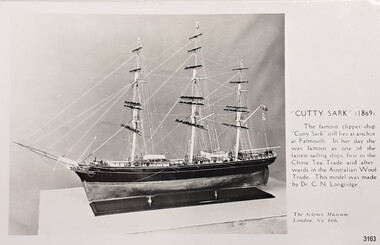
... ...British Museum...Its importance is still recognised today, as the ship has been carefully preserved and is now displayed at the British Maritime Museum in Greenwich. Its remarkable history has also made it a popular subject for model ship enthusiasts. ...The maker of the ship model on the postcard was Dr C Nelson Longridge (1876–1952), an English surgeon, maritime author, and builder of detailed ship models. Other models include the SS Marioness and the steam yacht Asia. He also wrote the books 'Cutty Sark' and 'The Anatomy of Nelson's Ships'. The postcard was printed by B Matthews, Bradford, England, incorporated in 1970 as B. Matthews (Photo Printers) Limited. Collections of B Matthews' photo prints of famous painted portraits are held at The National Portrait Gallery of London. Copies of B Matthews postcards are today sought after by collectors. THE CUTTY SARK: - The Cutty Sark was built in Britain in 1869 and was one of the last great sailing ships. At first, it carried tea from China. Later, it was used to transport wool from Australia. It became famous for its speed and held the record for the fastest voyage from Australia to Britain for ten years. Later, a Portuguese company bought the ship and renamed it Ferreira. After that, a retired sea captain purchased it to use as a training ship in Cornwall. When the captain died, the ship was given to a training college in Greenwich in 1938. In 1954, it was placed in dry dock at Greenwich, where it remains on display. This postcard features a photograph of a model of the sailing ship Cutty Sark, making it significant because of its connection to this well-known vessel. The famous tea clipper transported wool from Australia to markets around the world. Models such as this one help us understand what sea travel was like before steam-powered ships became widespread, while also illustrating how trade, travel and migration developed over time. Cutty Sark was also celebrated for its speed. It broke records on the voyage from Australia to Britain and held this distinction for ten years. Its importance is still recognised today, as the ship has been carefully preserved and is now displayed at the British Maritime Museum in Greenwich. Its remarkable history has also made it a popular subject for model ship enthusiasts. The postcard is also valuable because it shows a model of Cutty Sark built by the renowned C. N. Longridge, who was not only a respected surgeon but also a skilled model maker and author of detailed maritime works. A further connection is found in the printer, B Matthews, who photographed and printed collections featuring famous people, model ships and maritime scenes, adding another layer of historical interest to the postcard. Postcard, black and white, showing a model of the sailing ship Cutty Sark. Printed details are provided on both the front and back of the postcard. Inscriptions include a brief description of the Cutty Sark, the location and maker of the model, and the printer's contact information. The postcard was printed in Great Britain.FRONT: " "CUTTY SARK" (1869) The famous clipper ship "Cutty Sark" still lies at anchor at Falmouth. In her day, she was famous as one of the fastest sailing ships, first in the China Tea Trade, and afterwards in the Australian Wool Trade. This model was made by Dr C.N. Longridge." "The Science Museum, London. No. 166." REVERSE: "POSTCARD" "COMMUNICATION" "ADDRESS" "Printed by B Matthews, Bradford, England"flagstaff hill, warrnambool, flagstaff hill maritime museum, shipwreck coast, flagstaff hill maritime village, maritime museum, great ocean road, cutty sark, historic sailing ship, tea clipper, sail training vessel, cadet training ship, commercial trading vessel, cargo sail vessel, clipper races, scott and linton of dunbarton scottland, race record, ferreria, 1869, tea cargo, tea trade, china tea, wool export, australian export, australian wool export, china tea trade, cornwall, training ship, greenwich, british museum, ship model, craft, hobby, ship model cutty sark, model making, postcard, c nelson longridge, charles nelson longridge, b matthews, photo printer, b matthews bradford england, b matthews (photo printer ) ltd. -
 Flagstaff Hill Maritime Museum and Village
Postcard - Vessel, Sailing Ship, Jack Spurling (John Robert Charles Spurling), marine artist, circa 19th century
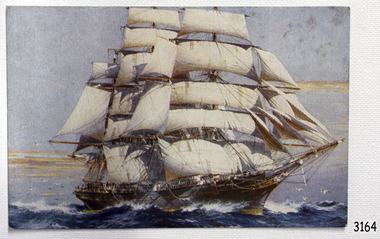
... ...British Museum...Today, people still recognise its importance because it has been carefully preserved and is on display at the British Maritime Museum in Greenwich. Its story has also made it a favourite subject for people who enjoy building ship models. ...The postcard is a copy of a painting by the renowned British maritime artist Jack Spurling (John (Jack) Robert Charles Spurling 1870-1933). Spurling's love for the sea was fulfilled as a teenager when he worked as an apprentice, eventually gaining a Second Mate certificate and going on to join the Blue Anchor Line as a junior officer. His love for the sea shows in his detailed paintings of ship portraits. THE CUTTY SARK: - The Cutty Sark was built in Britain in 1869 and was one of the last great sailing ships. At first, it carried tea from China. Later, it was used to transport wool from Australia. It became famous for its speed and held the record for the fastest voyage from Australia to Britain for ten years. Later, a Portuguese company bought the ship and renamed it Ferreira. After that, a retired sea captain purchased it to use as a training ship in Cornwall. When the captain died, the ship was given to a training college in Greenwich in 1938. In 1954, it was placed in dry dock at Greenwich, where it remains on display. The postcard depicts the clipper, Cutty Sark, which was a special ship because it carried wool from Australia to other parts of the world. Postcards like this one help us imagine what sea travel was like before steam-powered ships became common, and they show us how trade, travel, and migration evolved. The Cutty Sark is also famous for its speed. It set a record for the journey from Australia to Britain and kept that title for ten years. Today, people still recognise its importance because it has been carefully preserved and is on display at the British Maritime Museum in Greenwich. Its story has also made it a favourite subject for people who enjoy building ship models. The picture is a copy of a painting by renowned maritime artist Jack Spurling, who was famous for his ship portraits.Coloured postcard of the Cutty Sark. Photograph of a painting by J Spurling. flagstaff hill, warrnambool, flagstaff hill maritime museum, shipwreck coast, flagstaff hill maritime village, maritime museum, great ocean road, cutty sark, historic sailing ship, tea clipper, sail training vessel, cadet training ship, commercial trading vessel, cargo sail vessel, clipper races, scott and linton of dunbarton scottland, race record, ferreria, 1869, tea cargo, tea trade, china tea, wool export, australian export, australian wool export, china tea trade, cornwall, training ship, greenwich, british museum, postcard, coloured postcard, postcard of a painting, jack spurling, british maritime artist, ship portraits, john 'jack' robert charles spurling -
 Flagstaff Hill Maritime Museum and Village
Postcard - Vessel, Sailing Ship, Cutty Sark in Sydney Harbour, After August 1891
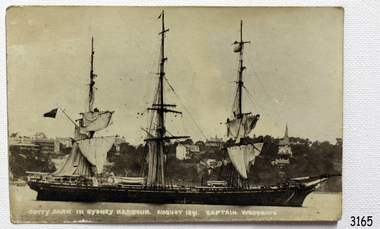
... ...British Museum...Today, people still recognise its importance because it has been carefully preserved and is on display at the British Maritime Museum in Greenwich. Its story has also made it a favourite subject for people who enjoy building ship models. ...Captain Richard Woodget (1845-1928) was renowned for his successful command of the Cutty Sark. He began his maritime career in 1861 as an apprentice seaman at almost 15 years old and received his Master Certificate in 1871. In 1881, aged 35, he took his first command on the vessel Coldstream. His sailing skill and careful financial management earned him the command of the Cutty Sark for ten of its voyages. For another year, he commanded the Coldingham, then retired from life as a mariner in 1896. The Cutty Sark was built in Britain in 1869 and was one of the last great sailing ships. At first, it carried tea from China. Later, it was used to transport wool from Australia. It became famous for its speed and held the record for the fastest voyage from Australia to Britain for ten years. Later, a Portuguese company bought the ship and renamed it Ferreira. After that, a retired sea captain purchased it to use as a training ship in Cornwall. When the captain died, the ship was given to a training college in Greenwich in 1938. In 1954, it was placed in dry dock at Greenwich, where it remains on display. The postcard is important for is connection with the vessel, Cutty Sark, a special ship because it carried wool from Australia to other parts of the world. Postcards like this one help us imagine what sea travel was like before steam-powered ships were common, and they show us how trade, travel and migration changed over time. The Cutty Sark is also famous for being very fast. It set a record for the journey from Australia to Britain and kept that title for ten years. Today, people still recognise its importance because it has been carefully preserved and is on display at the British Maritime Museum in Greenwich. Its story has also made it a favourite subject for people who enjoy building ship models. The postcard is important to Australian history, as it shows the Cutty Sark at Sydney on one of its voyages, in the command of Captain Richard Woodget, a respected mariner and master of sailing ships.Postcard: Black and white postcard of a photographed image of a 3-masted sailing ship, sails half-lowered. Behind the vessel is a hill with buildings on it. A white handwritten inscription is along the base of the postcard. The vessel is the Cutty Sark in Sydney Harbour in August 1891. Its master was Captain Woodget."CUTTY SARK IN SYDNEY HARBOUR. AUGUST 1891. CAPTAIN WOODGATE."flagstaff hill, warrnambool, flagstaff hill maritime museum, shipwreck coast, flagstaff hill maritime village, maritime museum, great ocean road, cutty sark, historic sailing ship, tea clipper, sail training vessel, cadet training ship, commercial trading vessel, cargo sail vessel, clipper races, scott and linton of dunbarton scottland, race record, transportation, ferreria, 1869, tea cargo, tea trade, china tea, wool export, australian export, australian wool export, china tea trade, cornwall, training ship, greenwich, british museum, captain richard woodget, captain woodget -
 Flagstaff Hill Maritime Museum and Village
Photograph - Vessel, Sailing Ship, Jack Spurling (John Robert Charles Spurling), marine artist, circa 19th century
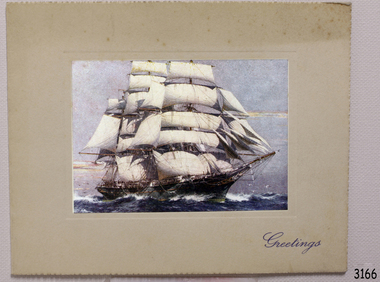
... ...British Museum...Today, people still recognise its importance because it has been carefully preserved and is on display at the British Maritime Museum in Greenwich. The picture is a copy of a painting by renowned maritime artist Jack Spurling, who was famous for his ship portraits. ...The card is a copy of a painting by the renowned British maritime artist Jack Spurling (John (Jack) Robert Charles Spurling 1870-1933). Spurling's love for the sea was fulfilled as a teenager when he worked as an apprentice, eventually gaining a Second Mate certificate and going on to join the Blue Anchor Line as a junior officer. His love for the sea shows in his detailed paintings of ship portraits. THE CUTTY SARK: - The Cutty Sark was built in Britain in 1869 and was one of the last great sailing ships. At first, it carried tea from China. Later, it was used to transport wool from Australia. It became famous for its speed and held the record for the fastest voyage from Australia to Britain for ten years. Later, a Portuguese company bought the ship and renamed it Ferreira. After that, a retired sea captain purchased it to use as a training ship in Cornwall. When the captain died, the ship was given to a training college in Greenwich in 1938. In 1954, it was placed in dry dock at Greenwich, where it remains on display.The card depicts the clipper, Cutty Sark, which was a special ship because it carried wool from Australia to other parts of the world. Cards like this one help us imagine what sea travel was like before steam-powered ships became common, and they show us how trade, travel, and migration evolved. The Cutty Sark is also famous for its speed. It set a record for the journey from Australia to Britain and kept that title for ten years. Today, people still recognise its importance because it has been carefully preserved and is on display at the British Maritime Museum in Greenwich. The picture is a copy of a painting by renowned maritime artist Jack Spurling, who was famous for his ship portraits.Photograph: coloured image of the sailing ship Cutty Sark by artist J Spurling. The image is mounted on a card used as a greeting card. It has a printed inscription. "Greetings"flagstaff hill, warrnambool, flagstaff hill maritime museum, shipwreck coast, flagstaff hill maritime village, maritime museum, great ocean road, cutty sark, historic sailing ship, tea clipper, sail training vessel, cadet training ship, commercial trading vessel, cargo sail vessel, clipper races, scott and linton of dunbarton scottland, race record, ferreria, 1869, tea cargo, tea trade, china tea, wool export, australian export, australian wool export, china tea trade, cornwall, training ship, greenwich, british museum, postcard, coloured postcard, postcard of a painting, jack spurling, british maritime artist, ship portraits, john 'jack' robert charles spurling -
Glen Eira Historical Society
Document - Bakewell Family
... ... British Museum...Miller Miller John Francis Compton Emmie Joan Mary Emily Clifton Hotel Welbeck Street Phoebe Alice Anne Edith British Museum Land values Settlements St. Kilda Elsternwick Inkerman Street St. ...There are 3 items about this family of early European settlers in Victoria: 1/A photocopy of an extract “Early Pioneer Families of Victoria and Riverina” – Henderson Page 441-442 The Bakewell Family of Burnewang and Tooradin”. It includes a photo of John Bakewell (1807-1888). It contains two pages and describes Bakewell’s property expansion. 2/An original copy of handwritten, unsigned undated research notes on John Bakewell property holdings taken from St Kilda Rate Book (1859-1873). It describes the land allotment. 3/A typed, unsigned, undated extract from 'The Howitts in Australia by Mary Howitt' - Mary Howitt, Vic Hist Mag 1913 Vol 3 No. 1. Reference – Memoirs of a Stockman, Harry Peck, 1853 Map, Foot Plot CCXLVI at Kooyong & Glen Eira Road. It provides a brief outline of the lives of brothers Robert and John Bakewell.the bakewell family, early pioneer families, henderson, bakewell john, port phillip, burnewang, bakewell robert, howitt godfrey dr, lord goderich, tooradin, phoebe, friends' school ackworth, yorkshire, nottingham, shaw john wyberg, plenty river, businesses, goldsbrough richard, goldsbrough mort and company ltd., glaziers, squatters, burnewang, mantons, tooradin, red bluff, torbinurruck, great swamp, brenanah, westernport, numerella, snowy river, orbost, green hills b, caramut, lyall william, mickle john, buckland john, notts, england, balderton, weddings, jane emily, howitt emanuel, farnsfield, lever mary, howitt thomas, heanor, derbyshire, howitt godfrey, scales john, exeter college oxford, downing college cambridge, guerard von, wayne john, south warnborough manor, harrison robert, lord john, jamaica, mary alice, dr. miller, miller john francis compton, emmie joan, mary emily, clifton hotel welbeck street, phoebe alice, anne edith, british museum, land values, settlements, st. kilda, elsternwick, inkerman street, st. kilda east, kew, memoirs of a stockman, harry peck -
 Federation University Historical Collection
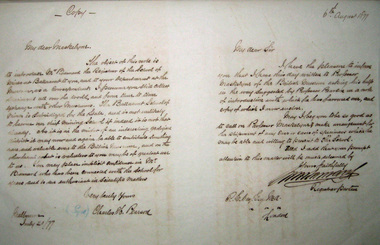
Letter Book, Ballarat School of Mines Outward Letter Book, 1874-8, 1874 - 1878
... As it is in the midst of an interesting geological district it may now and again be able to contribute something rare and valuable even to the British Museum, and on the other hand what is valueless to you may be of greatest use to us. ...London My dear Sir I have the pleasure to inform you that I have this day written to Professor Maskelyns of the British Museum asking his help in the way suggested by Professor Pearson in a not of introduction with which he has favoured me, and copy of which is now enclosed. ...As it is in the midst of an interesting geological district it may now and again be able to contribute something rare and valuable even to the British Museum, and on the other hand what is valueless to you may be of greatest use to us. ...The Ballarat School of Mines was Australia's first School of Mines, which was established in 1870.Large letter book with rough calf spine and corners, green fabric cover, green marbled end papers, and leather spine labels. Sample letters are shown below Melbourne July 20/77 My Dear Maskelyne, The object of this note is to introduce Mr Barnard the Registrar of the School of Mines at Ballarat to you, and to your Department at the museum as a Correspondent. I presume you still collect specimens all over the world, and from time to time exchange with other museums. The Ballarat School of Mines is subsidized by the State, and is not unlikely to become our chief mining school if indeed it is not that already. As it is in the midst of an interesting geological district it may now and again be able to contribute something rare and valuable even to the British Museum, and on the other hand what is valueless to you may be of greatest use to us. You may place implicit confidence in Mr Barnard who has been connected with the School for years, and is an enthusiast in Scientific matters. Very Truly Yours Charles H. Pearson. P.E. Day Esq M.A. London My dear Sir I have the pleasure to inform you that I have this day written to Professor Maskelyns of the British Museum asking his help in the way suggested by Professor Pearson in a not of introduction with which he has favoured me, and copy of which is now enclosed. May I beg you to be so good as to call on Professor Machelyne make arrangement for the shipment of any case or cases of specimens which the may be able and willing to present to the School. Need I add that your prompt attention to this matter will be much esteemed by Yours faithfully W.H. Barnard Registrar Pro tem ballarat school of mines, correspondence, w.h. barnard, barnard -
 Geelong Naval and Maritime Museum
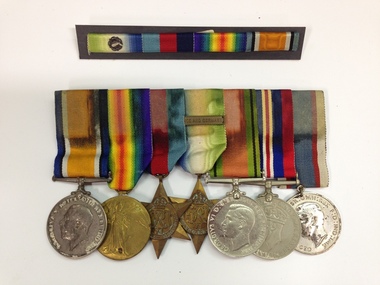
Medals, Set of Service Medals, Mid 20th Century
... museum...british war medal...Object is significant as a tangible link to Commonwealth war time service during WWI and WWI. atlantic star medal wwi wwii geelong naval and maritime museum british war medal wwii victory medal "Fraule & Germany" on one of the medals. ...Unknown.Object is significant as a tangible link to Commonwealth war time service during WWI and WWI.Set of 7 service medals attached to a brass plate including a WWI Brisitsh War medal, a WWI Victory medal and an Atlantic Star medal from WWII."Fraule & Germany" on one of the medals. "Collectors Corner P/L 93 Little Malop Street Geelong" on the back of the ribbon.atlantic star medal, wwi, wwii, geelong naval and maritime museum, british war medal, wwii victory medal -
 Federation University Art Collection
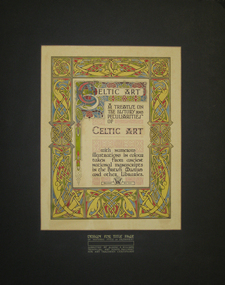
Painting, Williams, Albert E, 'Celtic Art Design' by Albert E. Williams, 1936
... A treatise on the history and peculiarities of Celtic Art with numerous illustrations in colour taken from ancient national manuscripts in the British Museum and other libraries." "Ballarat A.D. 1936". ...A treatise on the history and peculiarities of Celtic Art with numerous illustrations in colour taken from ancient national manuscripts in the British Museum and other libraries." "Ballarat A.D. 1936". ...Albert E. WILLIAMS (1899-1986) Born Victoria, Australia Albert Edward Williams was among the first to undertake the five-year, Technical Art Teacher’s Certificate (TATC) at the Ballarat Technical Art School in 1915, with work placement at the Ballarat Lithographic company. Williams taught for several years before he was selected to undertake further teacher training at the Working Men’s College, Melbourne, in 1926. He returned to teach at Ballarat in 1928, facilitating many student activities, while pursuing the arduous Art Teacher’s Certificate. From its inception in 1914, it was 30 years before the first candidate achieved the certificate’s exhaustive requirements. This item is part of the Federation University Art Collection. The Art Collection features over 2000 works and was listed as a 'Ballarat Treasure' in 2007.Mounted original illuminated artwork in Celtic style"Design for Title Page, in Historic Style of Ornament." "Submitted by Albert E. Williams, Technical Art School, Ballarat, for Art Teacher's Certificate" "Celtic Art. A treatise on the history and peculiarities of Celtic Art with numerous illustrations in colour taken from ancient national manuscripts in the British Museum and other libraries." "Ballarat A.D. 1936". Monogram of AW forms part of the artwork.art, artwork, albert e. williams, celtic art, ballarat technical art school, art teacher's certificate, illumination, title page, design -
 Tatura Irrigation & Wartime Camps Museum
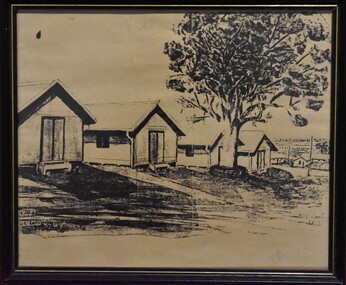
Sketch - Copy, Barracks at Camp 2
... Photocopy of a sketch held in British Museum Records of Internment WW2...Photocopy of a sketch held in British Museum Records of Internment WW2 sketch pen and ink camp 2 tatura ww2 camp 2 illustrations pen ink Indecipherable Black and white sketch of four huts in foreground with gum tree centre front of 2nd hut on right side. ...Nicola Cua lived with his Italian parents in London. Interned when Italy came into the war as Germany's ally. Transported on "Dunera" to Australia to Camp 2. Photocopy of a sketch held in British Museum Records of Internment WW2Black and white sketch of four huts in foreground with gum tree centre front of 2nd hut on right side. On extreme right more huts are visible. Black frame - gold stripIndecipherablesketch, pen and ink, camp 2, tatura, ww2 camp 2, illustrations, pen, ink -
 Embroiderers Guild, Victoria
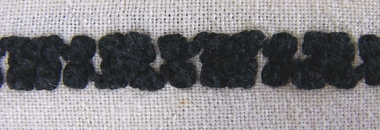
Accessory - Hungarian Man's Embroidered Sleeve, 1900-20
... Mrs Una Teague went to the Balkan States in order to acquire pieces for the British Museum. The countries were in such a turmoil it was felt that embroideries would be lost. ...Mrs Una Teague went to the Balkan States in order to acquire pieces for the British Museum. The countries were in such a turmoil it was felt that embroideries would be lost. ...Acquired in Hungary after the First World War. Mrs Una Teague went to the Balkan States in order to acquire pieces for the British Museum. The countries were in such a turmoil it was felt that embroideries would be lost. Several pieces were given to the Australian museums.Cream hand woven linen with a band of black embroidery. The cuff is edged - red over sewing.embroidery, hungary, surface stitchery, garments, 1920-40 -
 Bendigo Historical Society Inc.
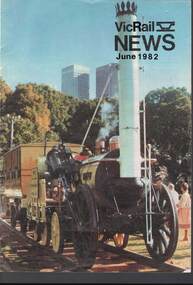
Magazine - RAILWAYS COLLECTION: VIC RAIL NEWS MAGAZINE JUNE 1982
... RAILWAYS COLLECTION -Vic Rail News Magazine June 1982 - front and back covers - COLOUR Photos of a working replica of George Stephenson's Rocket on loan from Britain's National Railway Museum in York. Page 8 has an article on the Bendigo Railway Workshops....MAGAZINE Government victorian railways RAILWAYS COLLECTION -Vic Rail News Magazine June 1982 - front and back covers - COLOUR Photos of a working replica of George Stephenson's Rocket on loan from Britain's National Railway Museum in York. Page 8 has an article on the Bendigo Railway Workshops. ...RAILWAYS COLLECTION -Vic Rail News Magazine June 1982 - front and back covers - COLOUR Photos of a working replica of George Stephenson's Rocket on loan from Britain's National Railway Museum in York. Page 8 has an article on the Bendigo Railway Workshops.magazine, government, victorian railways -
 Federation University Historical Collection
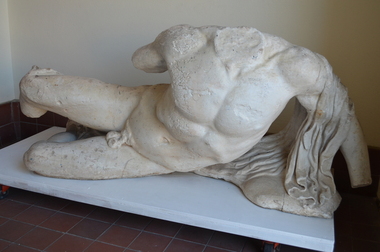
Sculpture - Plaster Replica (from original by Pheidias, 438 BCE-432 BCE), The river god Ilissos (possibly), c 1920 (from original 438 BCE-432 BCE)
... The items were sold to the British Museum in 1816 and have remained there ever since. ...The items were sold to the British Museum in 1816 and have remained there ever since. ...This ‘heroic size’ reclining figure is a copy made from one of The Parthenon Sculptures currently housed at The British Museum, and thought to represent the river-god Ilissos. This piece was part of the Ballarat Technical Art School's collection of reference for art studies, and became affectionately known as 'Hercules' by subsequent student cohorts. The cast was likely made by Brucciani and Co. London, and part of a consignment delivered to the School during the 1920s. This cast replicates one of a number of relics acquired by Thomas Bruce, seventh Earl of Elgin and ambassador to Turkey, (Lord Elgin) in Athens in the early 19th century. (Hence, these works were sometimes collectively referred to as the Elgin Marbles). Ownership of the artefacts, once part of the 2,500-year-old Parthenon temple, is disputed by Greece. It maintains that Elgin removed them illegally while the country was under Turkish occupation as part of the Ottoman Empire. The items were sold to the British Museum in 1816 and have remained there ever since. The original "Ilissos" was located on the west pediment of the Parthenon in Greece, and was created in c435 BC. It is unknown if the statue was in position or had already fallen when removed from the Parthenon by Elgin. The Royal Academy London also holds a copy of this plaster cast. The Ballarat Technical Art School boasted a well-stocked Antique Room replete with plaster copies of classical, Renaissance and Gothic sculptural examples, which were used as drawing props by students. The school inherited some casts from its predecessor institutions, and further consignments were purchased during the 1920s, including full length, bust and relief figures, as well as dozens of ornamental and architectural casts. Unfortunately, much of the collection was lost or destroyed in the late 1950s.Quality examples of heroic sized plaster replicas are now rare, as many plaster collections were destroyed or lost when the copy of antique examples fell out of favour with art schools.Plaster cast used during Drawing classes at the Ballarat Technical Arts School. It is likely a headless depiction of the river god Ilissos.hercules, ballarat technical art school, elgin marbles, plaster, plaster cast, figure of a river god, parthenon marbles, ilissos, copy, drawing the human figure from cast, drawing from the antique, visual arts -
 Federation University Historical Collection
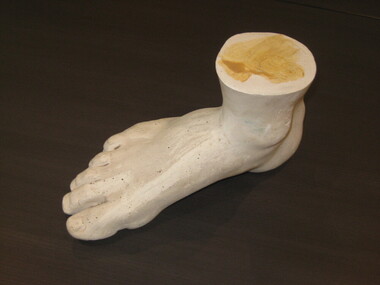
Sculpture - Plaster Drawing Prop, Cast of Foot, before 1918
... There are two possibilities where these sculptures may have originated, either Victorian and Albert Museum or the British Museum. There is a reference to the purchase of plaster casts from the Victoria and Albert Museum in the 1918 School of Mines Ballarat Minute Book. ...There are two possibilities where these sculptures may have originated, either Victorian and Albert Museum or the British Museum. There is a reference to the purchase of plaster casts from the Victoria and Albert Museum in the 1918 School of Mines Ballarat Minute Book. ...The Ballarat Technical Art School boasted a well-stocked Antique Room replete with plaster copies of classical, Renaissance and Gothic sculptural examples, which were used as drawing props by students. The school inherited some casts from its predecessor institutions, and further consignments were purchased during the 1920s, including full length, bust and relief figures, as well as dozens of ornamental and architectural casts. Unfortunately, much of the collection was lost or destroyed in the late 1950s. This is one of the few surviving pieces. The foot came into the school’s collection prior to 1920 as it appears in a photo in the SMB Annual Report. There are two possibilities where these sculptures may have originated, either Victorian and Albert Museum or the British Museum. There is a reference to the purchase of plaster casts from the Victoria and Albert Museum in the 1918 School of Mines Ballarat Minute Book. This plaster cast of a foot is of local significance as only one of a few remaining teaching pieces from the substantial collection of sculptures used in the art school. The foot also has significance as an interpretive tool complementing the complete art folio of Edith Alice Watson who was a student from 1930-1933.Plaster cast of right foot including ankle. Made from plaster of Paris. Mainly white in colour with grey patches around metatarsels, flecks of blue and green paint and pale brown paint (possibly shellac) and on top of ankle. Measurements suggest a size 11 man's right foot.plaster cast, foot, drawing aid, art school, smb, edith alice watson, 1931, 1931-33, 1918, 1920, plaster of paris, sculpture, ballarat technical art school number 10, drawing from the antique, drawing the human figure from cast -
 Buda Historic Home & Garden Castlemaine
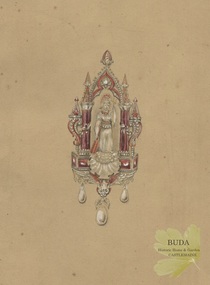
Drawing - Illustration - Design for Jewellery, Ernest Leviny - Britannia pendant jewellery design, c1851
... See Schofield, Anne & Fahy, Kevin (1991), 'Australian jewellery: 19th and early 20th century'; Woodbridge, Suffolk, Antique Collectors Club, p. 39; Gere, Charalotte & Rudoe, Judy (2010), 'Jewellery in the Age of Queen Victoria', Pub.The British Museum p.340....See Schofield, Anne & Fahy, Kevin (1991), 'Australian jewellery: 19th and early 20th century'; Woodbridge, Suffolk, Antique Collectors Club, p. 39; Gere, Charalotte & Rudoe, Judy (2010), 'Jewellery in the Age of Queen Victoria', Pub.The British Museum p.340. This original jewellery design for the 'Britannia' pendant by noted colonial silversmith and jewellery, Ernest Leviny, is significant due to its link with the 'Britannia Pendant' awarded a prize medal at Great Exhibition of 1851, held at the Crystal Palace in London. ernest leviny jewellery design illustration brittania 1851 great exhibition of 1851 Original jewellery design for a pendant featuring a standing woman (Britannia) holding a trident in her left hand and possible oar in her right hand, with Gothic style ornate pillars on each side and an archway overhead. ...Original jewellery design for 'Britannia' pendant by Ernest Leviny, designed when he was living in London c1851, before travelling to the Australian goldfields of Castlemaine in late 1852. Leviny and his partner, Frederick Boocke, supplied jewellery designs to Watherston and Brogden in London. This design was made into a pendant by another London company, S.H. & D. Gass and was awarded a prize medal at the Great Exhibition of 1851 at the Crystal Palace in London. Leviny brought many of his original jewellery designs with him when he came out to Australia from Britain. See Schofield, Anne & Fahy, Kevin (1991), 'Australian jewellery: 19th and early 20th century'; Woodbridge, Suffolk, Antique Collectors Club, p. 39; Gere, Charalotte & Rudoe, Judy (2010), 'Jewellery in the Age of Queen Victoria', Pub.The British Museum p.340.This original jewellery design for the 'Britannia' pendant by noted colonial silversmith and jewellery, Ernest Leviny, is significant due to its link with the 'Britannia Pendant' awarded a prize medal at Great Exhibition of 1851, held at the Crystal Palace in London.Original jewellery design for a pendant featuring a standing woman (Britannia) holding a trident in her left hand and possible oar in her right hand, with Gothic style ornate pillars on each side and an archway overhead. Beneath the figure are three pearl drops. Drawn in pencil on grey card with gold ink highlights and red watercolour tinting.ernest leviny, jewellery, design, illustration, brittania, 1851, great exhibition of 1851 -
 Queen's College
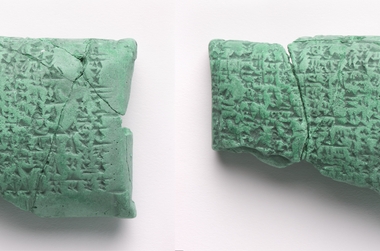
Cuneiform envelope, Date unknown
... He acquired the items from the collection of a Mr Cutter with the assistance of Theodore Pinches, Keeper of Oriental Antiquities at the British Museum, who went to view Mr Cutter's material at Aquila's request. ...He acquired the items from the collection of a Mr Cutter with the assistance of Theodore Pinches, Keeper of Oriental Antiquities at the British Museum, who went to view Mr Cutter's material at Aquila's request. ...The cuneiform envelope and accompanying letter were acquired by Aquila Dodgson in 1890. He acquired the items from the collection of a Mr Cutter with the assistance of Theodore Pinches, Keeper of Oriental Antiquities at the British Museum, who went to view Mr Cutter's material at Aquila's request. The envelope was addressed by Nadin-ahi to his brothers Bil-bullit-su and Marduk-balat-su-ikbi and the letter inside concerned land contracts. This item is part of the Dodgson Collection, which was bequeathed to Queen's College in 1892 by the Rev. James Dodgson. The collection was created by Aquila Dodgson, brother of James. Aquila Dodgson was a friend of the English Egyptologist Flinders Petrie, and it was through this friendship the Aquila was able to acquire ancient Egyptian artefacts. A detailed study of the collection was made by Christine Elias "Discovering Egypt: Egyptian Antiquities at the University of Melbourne", M.A. thesis 2010.Clay envelope with cuneiform inscription.cuneiform, envelope, james dodgson, aquila dodgson, flinders petrie, theodore pinches, mr cutter -
 Queen's College
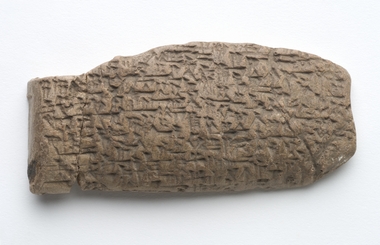
Cuneiform letter, Date unknown
... He acquired the items from the collection of a Mr Cutter with the assistance of Theodore Pinches, Keeper of Oriental Antiquities at the British Museum, who went to view Mr Cutter's material at Aquila's request. ...He acquired the items from the collection of a Mr Cutter with the assistance of Theodore Pinches, Keeper of Oriental Antiquities at the British Museum, who went to view Mr Cutter's material at Aquila's request. ...The cuneiform letter and accompanying envelope were acquired by Aquila Dodgson in 1890. He acquired the items from the collection of a Mr Cutter with the assistance of Theodore Pinches, Keeper of Oriental Antiquities at the British Museum, who went to view Mr Cutter's material at Aquila's request. The envelope was addressed by Nadin-ahi to his brothers Bil-bullit-su and Marduk-balat-su-ikbi and the letter inside concerned land contracts. This item is part of the Dodgson Collection, which was bequeathed to Queen's College in 1892 by the Rev. James Dodgson. The collection was created by Aquila Dodgson, brother of James. Aquila Dodgson was a friend of the English Egyptologist Flinders Petrie, and it was through this friendship the Aquila was able to acquire ancient Egyptian artefacts. A detailed study of the collection was made by Christine Elias "Discovering Egypt: Egyptian Antiquities at the University of Melbourne", M.A. thesis 2010.Clay letter with cuneiform inscription.cuneiform, envelope, letter, james dodgson, aquila dodgson, flinders petrie, theodore pinches, mr cutter -
 Clunes Museum
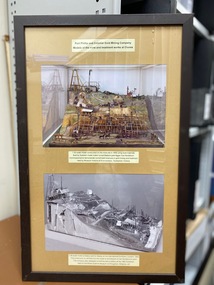
Photograph
... Museums Victoria collection (currently not on display). The 1:48 scale model was built for display at the International Exhibition in London in 1862. It is now part of the British...Museums Victoria collection (currently not on display). The 1:48 scale model was built for display at the International Exhibition in London in 1862. It is now part of the British ...The 1:32 scale model was built by Swedish model maker Carl Nordstrom and is now part of the Museums Victoria collection (currently not on display). The 1:48 scale model was built for display at the International Exhibition in London in 1862. It is now part of the British Science Museum, Wroughton, Wiltshire, United Kingdom. These models were part of a commission by Nordstrom who depicted a series of different gold mining extraction methods in Victoria from 1856 to 1859.Two photographs 1 x colour and 1 x Black and white in a dark wooden frame Showing models of Port Phillip Mine, Clunes, Victoria, Australia. Models are 1:32 scale constructed in 1858 using local materials and 1:48 build for possible display at the International Exhibition London 1862scale model, nordstrom -
Eltham District Historical Society Inc
Document - Folder, Thomson, Donald
... Bark paintings on loan from British Museum in dispute. Magazine article: "Keeping time with Rolf", Time, 20 March 2006. ...Bark paintings on loan from British Museum in dispute. Magazine article: "Keeping time with Rolf", Time, 20 March 2006. ...Anthropologist and Aboriginal activist Donald Thomson later lived in Eltham with wife Dorita. Contents Photocopy of photograph of Thomson family at "The Oaks", Kinglate 11 November 1891. Photocopy of old photograph of "Worlingworth", home of Donald Thomson. Booklet: "N.T.S.R.U. 1941-1943: text and photographs from the report of Sqn Leader Donald Thomson." Yirrkale Literature Production Centre, 1992. Photocopy of Australian Dictionary of Biography (Vol.16, pp385-386), entry for Thomson, Donald Finlay Fergusson. Newspaper article: "Drought close to city", no source, no date. Donald Thomson wants South Riding of Eltham declared a drought area, photograph of Elaine Thomson. Newspaper article: "Professor dies", The Post, 27 1970. Obituary of Donald Thomson. Photocopy of extracts from "Donald Thomson in Arnhem Land" 1983: Chapter "Donald Thomson: A biographical Sketch". pp1-15; Map; Notes on sources pp141-142. Newspaper article: "Memoirs of an advocate for Aboriginal rights", Diamond Valley News, 8 March 1983. Interview of Dorita Thomson, widow of Donald Thomson, about him and house "Worlingworth". Newspaper article: "Australia's secret Aboriginal 'army". Herald, 2 June 1983. Donald Thomson's life and work, and the book about it, "Donald Thomson of Arnhem Land". Invitation to exhibition of photographs by Donald Thomson, Brighton City Library, 22 July 1983. Publicity for film "Thomson of Arnhem Land" with note from Bruce Nixon, 8 June 2000. Newspaper article: "A crusader before his time", Diamond Valley News, 9 August 2000. Details of life and work of Donald Thomson. Newspaper article: "Outback part. of his life", Diamond Valley News, 9 August 2000. Interview of Dorita Thomson about Donald Thomson's life and work. Newspaper article: "Museum and Aboriginies to meet in stand-off over heritage items", The Age, 29 July 2004. Bark paintings on loan from British Museum in dispute. Magazine article: "Keeping time with Rolf", Time, 20 March 2006. Mentions of Donald Thomson. Newspaper advertisement: "The Thomson House" Templestowe, Emerson Oliver Estate Agent. The Weekly Review, no date (possibly 2017). Flier: "The Thomson House" Templestowe, Emerson Oliver Estate Agent. Newspaper article: "Once upon a time an anthropolgist watched men hunt in 10 canoes", The Age, 16 December 2006. Donald Thomson's work and a new film "Ten Canoes". Newspaper article: "A life's work offers forgotten link to the cultural wealth of nation's first people", The Age, 23 December 2024. The Donald Thomson Ethnohistory Collection. Newspaper clippings, A4 photocopies, etcdonald thomson, northern territory special reconnaissance unit, donald finlay fergusson thomson, "the oaks" kinglake, "worlingworth" eltham, elaine thomson, louise thomson, rosemary thomson, dorita thomson, st margaret's church of england eltham, australian institute of aboriginal studies, brandy creek gippsland, ."donald tomson in arnhem land"., "n.t.s.r.u. 1941-1943", "thomson of arnhem land", victorian aborigines welfare board, thomson collection museum victoria, mia mia aboriginal art gallery, louise thomson-officer, marcia langton, su baker, lake tyers victorian aboriginal reserve gippsland, robert macklin, yintjingga people, 29 edwin road templestowe, royal geographic society, nicholas peterson, mapoon mission, wongo aboriginal man, wuluwirr aboriiginal man, mattuwa aboriginal man, mauwunbol aboriginal man, munguyuma aboriginal man, dja dja wurrung people, gavin jennings, gary murray, film "ten canoes", galanbingu people, mandallpuy people, djinba people, rolf de heer, arnhem land, arafura swamp, ramingining, caledon bay, lindy allen, bunjilaka centre
