
Showing 43 items matching "canadian ship"
-
 Flagstaff Hill Maritime Museum and Village
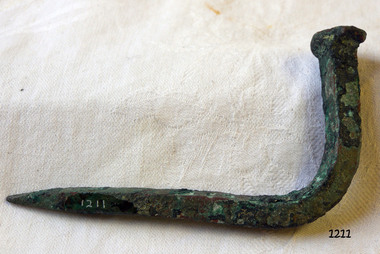
Functional object - Nail, circa 1840
... ...Canadian ship...THE CATARAQUI The Cataraqui, which was built in 1840 in Quebec, Canada, and wrecked in 1845 off King Island, Australia. The lives of 400 people on the emigrant ship were lost. ...ship building. The nail is also significant for its association with the 1840 Canadian built ship, Cataraqui, The Cataraqui is significant in maritime history as the largest civilian maritime disaster. flagstaff hill warrnambool shipwrecked-coast flagstaff-hill flagstaff-hill-maritime-museum maritime-museum shipwreck-coast flagstaff-hill-maritime-village nail copper nail ship nail cataraqui ship ship hardware Canadian ship 1840 ship migrant ship emigrant ship assisted passage king island midge Copper nail, four sided shank, flattened tip with rounded end, pitted and rough, concretion on the shank. ...This nail was recovered from the wreck of the Cataraqui in the 1970s. The nail is most likely to have been machine cut and the head hand formed by a blacksmith. THE CATARAQUI The Cataraqui, which was built in 1840 in Quebec, Canada, and wrecked in 1845 off King Island, Australia. The lives of 400 people on the emigrant ship were lost. Many of them were on government assisted passages from Britain and Ireland. Only nine people, one passenger and eight crew, survived the shipwreck. A man who lived on the island, sheltered them and five weeks later the group was rescued by the ship Midge, which took them to Melbourne. It was the largest civilian maritime disaster. The nail is significant as an example of the hardware used in the mid-19th century for ship building. The nail is also significant for its association with the 1840 Canadian built ship, Cataraqui, The Cataraqui is significant in maritime history as the largest civilian maritime disaster.Copper nail, four sided shank, flattened tip with rounded end, pitted and rough, concretion on the shank. The nail is bent. Recovered from the wreck of the 1840-1845 "Cataraqui". flagstaff hill, warrnambool, shipwrecked-coast, flagstaff-hill, flagstaff-hill-maritime-museum, maritime-museum, shipwreck-coast, flagstaff-hill-maritime-village, nail, copper nail, ship nail, cataraqui ship, ship hardware, canadian ship, 1840 ship, migrant ship, emigrant ship, assisted passage, king island, midge -
 Torquay and District Historical Society
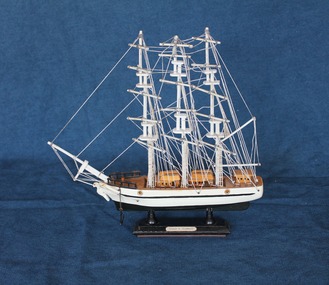
Model - Joseph H Scammell model ship
... Scale model of Joseph H Scammell, a Canadian sailing ship that was wrecked off Point Danger on 7 May 1891. ...Joseph H Scammell Point Danger Plaque on front of stand: Joseph H Scammell Scale model of Joseph H Scammell, a Canadian sailing ship that was wrecked off Point Danger on 7 May 1891. ...The Joseph H Scammell was wrecked off Point Danger while on a voyage from New York to Melbourne with a general cargo worth $120,000.Scale model of Joseph H Scammell, a Canadian sailing ship that was wrecked off Point Danger on 7 May 1891. Plaque on front of stand: Joseph H Scammelljoseph h scammell, point danger -
 Flagstaff Hill Maritime Museum and Village
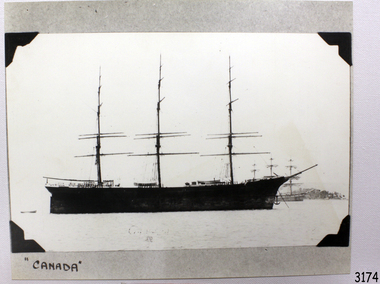
Photograph
... Black and White photograph of the sailing ship Canada. 253 mm X 123 mm. SH 070 Ships C - E....flagstaff hill warrnambool shipwrecked-coast flagstaff-hill flagstaff-hill-maritime-museum maritime-museum shipwreck-coast flagstaff-hill-maritime-village Canada Black and White photograph of the sailing ship Canada. 253 mm X 123 mm. ...Black and White photograph of the sailing ship Canada. 253 mm X 123 mm. SH 070 Ships C - E.flagstaff hill, warrnambool, shipwrecked-coast, flagstaff-hill, flagstaff-hill-maritime-museum, maritime-museum, shipwreck-coast, flagstaff-hill-maritime-village, canada -
 Torquay and District Historical Society
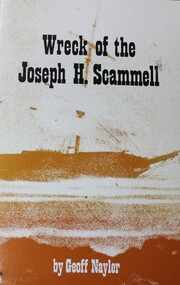
Book, Wreck of the Joseph H Scammell by Geoff Nayler
... The Joseph H Scammell was a Canadian sailing ship that was wrecked off Point Danger, adjacent to the township of Torquay, on the 7th May 1891 on a voyage from New York to Melbourne with a general cargo worth $120,000 No lives were lost. ...The Joseph H Scammell was a Canadian sailing ship that was wrecked off Point Danger, adjacent to the township of Torquay, on the 7th May 1891 on a voyage from New York to Melbourne with a general cargo worth $120,000 No lives were lost. ...This book by Geoff Nayler tells the story of the Scammell shipwreck, compiled from personal writings of PH Holden, the customs officer in charge of recovery.A5, 32 pagesnon-fictionThis book by Geoff Nayler tells the story of the Scammell shipwreck, compiled from personal writings of PH Holden, the customs officer in charge of recovery.shipwrecks great ocean road victoria, scammell collection -
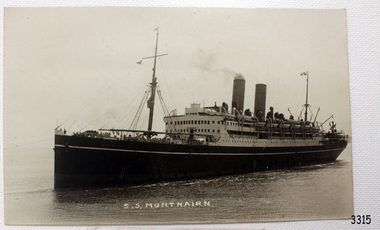 Flagstaff Hill Maritime Museum and Village
Postcard, late 1920's
... ship. Hand written on front of card is "R. M. S. Montnairn" "England To Canada 1927". ...ship. Hand written on front of card is "R. M. S. Montnairn" "England To Canada 1927". ...Black And White postcard of a steam ship. Hand written on front of card is "R. M. S. Montnairn" "England To Canada 1927". (Sh 191 Ships M - R}Hand written on front of card is "R. M. S. Montnairn", "England To Canada 1927". flagstaff hill, warrnambool, shipwrecked-coast, flagstaff-hill, flagstaff-hill-maritime-museum, maritime-museum, shipwreck-coast, flagstaff-hill-maritime-village, r. m. s. montnairn, post card, steam ship, postcard -
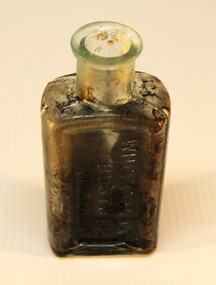 Torquay and District Historical Society
Container - Bottle, Shoe polish
... The Joseph H Scammell was a Canadian sailing ship that was wrecked off Point Danger, adjacent to the township of Torquay, on the 7th May 1891 on a voyage from New York to Melbourne with a general cargo worth $120,000 No lives were lost. ...The Joseph H Scammell was a Canadian sailing ship that was wrecked off Point Danger, adjacent to the township of Torquay, on the 7th May 1891 on a voyage from New York to Melbourne with a general cargo worth $120,000 No lives were lost. ...Probably from the wreck of the Joseph H Scammell as it was found in a rock pool at low tide at Point Danger, where the Scammell was shipwrecked. The Joseph H Scammell was a Canadian sailing ship that was wrecked off Point Danger, adjacent to the township of Torquay, on the 7th May 1891 on a voyage from New York to Melbourne with a general cargo worth $120,000 No lives were lost. Captain John albert Chapman was suspended as a ships master for 12 months. Whittemore Brothers Company was a large producer of shoe polish in Cambridge, Massachusetts, USA, between 1852 and the 1930s.Small bottle, aqua in colour, containing traces of shoe polish and embossed with the maker "Whittemore". A cork stopper has been added later.Whittemore/Boston/USAshipwrecks great ocean road victoria, scammell collection -
 Queenscliffe Maritime Museum
Leisure object - Model Blue Nose I, Clive Barnard, 1982
... Bluenose I was a fishing and racing gaff rig schooner built in 1921 in Nova Scotia, Canada. A celebrated racing ship and fishing vessel, Bluenose under the command of Angus Walters, became a provincial icon for Nova Scotia and an important Canadian symbol in the 1930s, serving as a working vessel until she was wrecked in 1946. ...Bluenose I was a fishing and racing gaff rig schooner built in 1921 in Nova Scotia, Canada. A celebrated racing ship and fishing vessel, Bluenose under the command of Angus Walters, became a provincial icon for Nova Scotia and an important Canadian symbol in the 1930s, serving as a working vessel until she was wrecked in 1946. ...Bluenose I was a fishing and racing gaff rig schooner built in 1921 in Nova Scotia, Canada. A celebrated racing ship and fishing vessel, Bluenose under the command of Angus Walters, became a provincial icon for Nova Scotia and an important Canadian symbol in the 1930s, serving as a working vessel until she was wrecked in 1946. Nicknamed the "Queen of the North Atlantic", she was later commemorated by a replica, Bluenose II, built in 1963. The name Bluenose originated as a nickname for Nova Scotians from as early as the late 18th century.Scale model of Bluenose Imodel, schooner, blue nose i, nova scotia, canada -
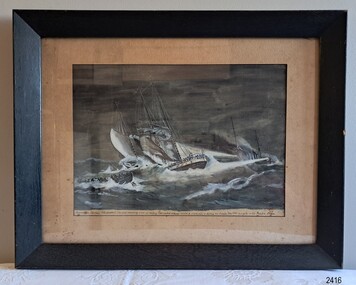 Flagstaff Hill Maritime Museum and Village
Print - Lithograph, sea rescue, R.N. Duffield, Australian cruiser “MELBOURNE” (Tons 5600) rescuing crew of sinking four-masted schooner “HELEN B. STERLING” of Halifax NS Canada, Tons 1343 in a gale in the Pacific Ocean, 19-11-1924
... Canada...schooner...windjammer...sailing ship...ships at sea", both painted in watercolour and gouache during the 1940s. Some of his other works, also painted in watercolour and gouache, have been advertised for sale on Internet sites. Some details differ between the original A.V. Gregory and this Lithograph Print: - -the words on the bow on the original watercolour are “Helen B. Sterling, Blain”, which is in Washington, USA, where the Sterling Shipping Company was registered from around 1919; the words on the print are “Helen B. Sterling, Halifax, N S”, for Nova Scotia, Canada...Painted on the ship’s bow: “HELEN B. STERLING / HALIFAX N S” [Nova Scotia, Canada] Handwritten below the print: “AUSTRALIAN CRUISER “MEMBOURNE” (Tons 5600) rescuing crew of sinking four-masted schooner “HELEN B. ...Sterling the Sterling American owned schooner Halifax Halifax N S Halifax Nova Scotia Nova Scotia Halifax N S Canada schooner windjammer sailing ship four-masted ship Captain George Harris George Harris Edith Harris Leslie Harris Sterling Shipping Line HMAS Melbourne HMAS Melbourne (1) cruiser HMAS Melbourne the Melbourne Australian Cruiser Captain Henry J Feakes Commander Wilfred Ward Hunt sinking ship shipwreck sea rescue gale cyclone 1922 rescue shipwreck rescue breeches buoy line rescue rescue line lifesaving cutter cutter Melbourne sea boat lifesaving crew 12-oar cutter shipwreck victim R.N. ...This framed lithograph print in watercolour and gouache was produced on November 19th, 1924, by 20th-century marine artist, Mr R.N. Duffield. It depicts the event of a sea rescue that took place two years earlier. The framer was A.L. Frith of Footscray, Melbourne, who actively advertised from 1933 to 1935. The now disbanded Shiplovers' Society of Victoria (1930-2018) donated the print, and it seems likely that this print was framed for that organisation. This graphic image shows the conditions in which the rescue from the wrecked Helen B. Sterling happened. Captain George Harris was master of the American-owned, four-masted windjammer. His wife Edith and their ten-year-old son Leslie were on board, along with a crew of fifteen seamen. The ship set off from Newcastle, NSW, on January 5th, 1922, loaded with a cargo of coal to deliver to the Society Islands and on to San Francisco. Young Leslie later wrote a lively school composition for his teacher about his experiences on board the Helen B Sterling. He tells of a fire that broke out the day after they departed and burned a hole in a beam. Then another troublesome time on the 9th, when a strong gale blew a sail off the ship. Finally, he tells of the highlight of his voyage when, on the 18th January, the ship was right in the path of a strong cyclone, which broke the mainmast. Huge waves crashed over both sides of the deck, meeting in the middle, and the ship began to sink. The rescue from the wreck was an exciting time for the young boy, and even more so when one of his cats survived after being carefully wrapped in a pillowcase and thrown down from the ship for the boy. Reporters later wrote about Leslie’s comments, “... what had grieved him most was the thought that he might never see his two little sisters again”. Captain Harris said in a published statement, “… the gale was the worst he had met in his 12 years’ experience at sea. All went well for the first week. We then encountered a strong blow from the south-east. We tried the gasoline pump, but the engine broke down, and we had to do the pumping by hand. We at once shortened sail, but the sea increased in fury to such an extent that men were washed from the pumps. I was below at 5:30 on Sunday morning [January 22nd, 1922] when the main mast went over the side, … I at once sent out SOS signals, and got word that HMAS Melbourne was coming to our assistance. I had made a mistake with regard to our position, but did not know it until 11:30 o’clock, when I sent out the correct location. This was picked up by the Melbourne and I received the following reply: “We will reach you about 2 am. Keep a good heart. The Melbourne will do all she can.” Our ship was practically awash when we were taken off.” (Ref: the ‘Helen B. Sterling Disaster’, Maitland Weekly Mercury, NSW, 4-2-1922.) Officers from the Royal Australian Navy, Captain Henry J Feakes (later Rear-Admiral) and Commander Wilfrid Ward Hunt, were on board the light cruiser, HMAS Melbourne (1913-1928), when it left Sydney for New Zealand. After the SOS was received, the ship sped at full steam towards the sinking Helen B. Sterling. They found the vessel at about midnight and shone bright search lights on the distressed ship to illuminate the desperate scene. The Melbourne was unable to move close to the schooner, so sixteen seamen, including Commander Hunt, volunteered to man the Melbourne’s lifesaving 12-oared cutter. They rowed the sea boat with great urgency towards the victims of the sinking ship, keen to save lives no matter what the conditions. When the cutter was close to the Sterling, a line was secured between the Sterling and the cutter. The weary, waterlogged and anxious men on board could be rescued, one at a time, in the breeches buoy equipment, which looked like canvas shorts with a lifesaving ring in the waistband. The victims were hauled along the line and pulled aboard by many willing hands. All eighteen crew and passengers were saved, including Captain Harris and his family. The seamen of the Melbourne received a heroes’ welcome when they arrived in New Zealand. The grateful survivors were taken to Auckland, where they received the care and comfort they needed. Melbourne’s Lord Mayor, Cr. Swanston, on behalf of the citizens of Melbourne, formally recognised the heroic rescue efforts of the seamen of the HMAS Melbourne on March 2nd, 1922, at a special presentation. Two large flags, a White Ensign and an Australian “Jack" Flag, were presented to the Captain of HMAS Melbourne, and souvenirs were awarded to the sea boat’s crew and its Commander, Wilfred Ward Hunt. Commander Hunt was also presented with an original watercolour depicting the heroic rescue from the wreck of the Helen B. Sterling, painted just after the event by renowned marine artist Arthur V Gregory (1867-1957), and he received a silver cigarette case bearing the City’s coat of arms and the inscription, "To Commander Ward Hunt from the Citizens of Melbourne as a memento of the rescue of the crew of Helen B. Stirling by H.M.A.S. Melbourne, on 23.1.22". Both the painting and the cigarette case are now treasured items inherited by his grandson; a reminder of “… a very fine naval gentleman who believed in leading by example." R.N. DUFFIELD: - The Lithograph print in our collection by 20th-century English artist R.N. Duffield is dated Nov. 19, 1924. It is very similar to, and possibly created from, the original A V Gregory watercolour presented to Commander Hunt and dated 1922. Mr R.N. Duffield has art works in the Yarmouth Museums, Norfolk Museums Collection; “Orient Liner Otranto …,” and "Convoy of six ships at sea", both painted in watercolour and gouache during the 1940s. Some of his other works, also painted in watercolour and gouache, have been advertised for sale on Internet sites. Some details differ between the original A.V. Gregory and this Lithograph Print: - -the words on the bow on the original watercolour are “Helen B. Sterling, Blain”, which is in Washington, USA, where the Sterling Shipping Company was registered from around 1919; the words on the print are “Helen B. Sterling, Halifax, N S”, for Nova Scotia, Canada, which is the hometown of Sterling Shipping Company founder’s wife, Helen B Sterling. -The watercolour is coloured and has fine details; the print is monochrome - The A V Gregory signed the watercolour in 1922, on the lower left; the print is signed with the Lithographer’s name on the lower right; “R N Duffield, Nov. 19. 1924” ARTHUR VICTOR GREGORY (1867-1957): - A.V. Gregory is a renowned marine artist who worked in watercolour and gouache. He painted actively between 1899 and 1932, creating over 3o0 works. South Melbourne, Victoria, was where he lived and worked. This Lithograph print is significant in that it depicts the rescuing of the passengers and crew of the schooner “Helen B Stirling”. At the time this was a significant event that made most Australian and New Zealand papers because of the involvement of the Australian cruiser “Melbourne”. The image demonstrates the perilous conditions experienced by seafarers. It includes an example of the line and breeches buoy method used to save lives at sea from the 1860s and into the 20th century. It reflects a time in our history when sail and steam ships cruised the world’s seas together, the former trading with a cargo of coal from Newcastle, the latter defending our country in World War I. The print is part of Flagstaff Hill Maritime Museum’s Collection of maritime artworks that depict famous events, vessels and locations, showing the evolution of sea craft, and aiding the interpretation of our maritime history. The Lithograph print is behind glass in a black painted timber frame and mounted under a cream matte. The vivid image depicts a sea rescue in progress. The night scene is illuminated by a light beaming from a steamship, the Cruiser HMAS Melbourne. It reveals figures on the deck of a sinking sailing ship, the schooner Helen B. Sterling, as foaming waves roll across it. The stricken ship has a broken main mast, and a sail has been detached. A small figure is floating in the choppy sea, secured in a breeches buoy that is attached to a rescue line between a lifesaving cutter and the sailing ship. The crewmen in the cutter are ready to haul the shipwrecked victim aboard, while the figures on the foundering ‘Sterling’ watch them. The print’s paper-covered wooden backboard is attached to the frame with small tacks. A metal hanging wire is secured to two dissimilar eyelet screws. Inscriptions include text on the bow of the sinking vessel, a handwritten title below the picture, and a handwritten name in the print’s lower right corner. On the reverse are two oval, black ink stamps and a round cream label with printed text. The hand-painted print was reproduced from a lithograph, signed in the lower right, by R.N. Duffield of England, on November 19th, 1924. A Frith of Footscray, Melbourne framed it. Painted on the ship’s bow: “HELEN B. STERLING / HALIFAX N S” [Nova Scotia, Canada] Handwritten below the print: “AUSTRALIAN CRUISER “MEMBOURNE” (Tons 5600) rescuing crew of sinking four-masted schooner “HELEN B. STERLING” of Halifax NS Canada, Tons 1343 in a gale in the Pacific Ocean.” Handwritten on lower right: “R.N. DUFFIELD / Nov. 19. 1924” (underlined) On paper label: “Phone: / Footscray 398 [some of the text has torn off] / “A. FRITH / PICTURE FRAMER / Manufacturer / 17 Paisley Street / Footscray.“ On both oval stamps: “SHIPLOVERS SOCIETY OF VICTORIA / LIBRARY” flagstaff hill, flagstaff hill maritime museum and village, warrnambool, maritime museum, maritime village, great ocean road, shipwreck coast, lithograph, lithograph print, reproduction print, helen b. sterling, the sterling, american owned schooner, halifax, halifax n s, halifax nova scotia, nova scotia, halifax n s canada, schooner, windjammer, sailing ship, four-masted ship, captain george harris, george harris, edith harris, leslie harris, sterling shipping line, hmas melbourne, hmas melbourne (1), cruiser hmas melbourne, the melbourne, australian cruiser, captain henry j feakes, commander wilfred ward hunt, sinking ship, shipwreck, sea rescue, gale, cyclone, 1922 rescue, shipwreck rescue, breeches buoy, line rescue, rescue line, lifesaving, cutter, cutter melbourne, sea boat, lifesaving crew, 12-oar cutter, shipwreck victim, r.n. duffield, marine artist, nov. 19. 1924, 20th century artist, a frith, footscray picture framer, shiplovers’ society of victoria, shiplovers’ society library, watercolour, a v gregory, arthur victor gregory, melbourne artist, newcastle coal, newcastle nsw, society islands, san fracisco, aukland new zealand, school composition, ship’s cat, sos signal, lord mayor cr. swanston, heroes, cigarette case -
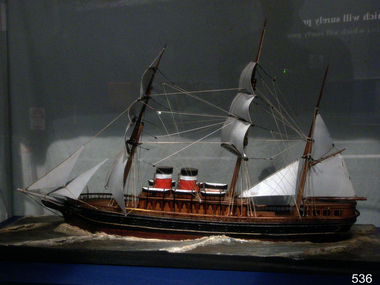 Flagstaff Hill Maritime Museum and Village
Craft - Ship Model, pre 1963
... In 1917, under Sir Montagu Allan, who represented the third generation of the Allan family, the company was purchased by Canadian Pacific Steamships, and by the following year, the Allan name had disappeared from commercial shipping. The Allan Line fleet had evolved for decades, changing as new ships were added, lost at sea, sold, or scrapped. ...Given the funnel colours and ship design, the model could be the SS Canadian or the Indian; both were the first ships for the company. ...The funnel colours on the model indicate the ship it represents was one of the early ships of the Allan shipping Line designated as a Royal Mail Carrier. Funnel colours are used to identify a ship's owners while at sea from a distance by other vessels. The Allan Shipping Line was started in 1819, by Captain Alexander Allan of Saltcoats, Ayrshire, trading and transporting between Scotland and Montreal Canada, a route which quickly became synonymous with the Allan Line. By the 1830s the company had offices in Glasgow, Liverpool and Montreal, with all of Captain Allan's five sons actively involved with the business. But his second son, Sir Hugh Allan, spearheaded the second generation. In 1854, Hugh launched the Montreal Ocean Steamship Company as part of the Allan Line, and two years later ousted Samuel Cunard to take control of the Royal Mail contract between Britain and North America. By the 1880s, the Allan Line was the world's largest privately owned shipping concern. In 1891, the company took over the State Line, founded in 1872, and was often referred to as the Allan & State Line. In 1897, Andrew Allan amalgamated the various branches of the Allan shipping empire under one company, Allan Line Steamship Company Ltd., of Glasgow. The company by then had added offices in Boston and London. In 1917, under Sir Montagu Allan, who represented the third generation of the Allan family, the company was purchased by Canadian Pacific Steamships, and by the following year, the Allan name had disappeared from commercial shipping. The Allan Line fleet had evolved for decades, changing as new ships were added, lost at sea, sold, or scrapped. The model in Flagstaff Hill's collection could be the SS Canadian or Indian; both were early Allan steam packets that had helped the Allan company secure the Royal Mail Atlantic contract in 1856.The model is of a Royal Mail steamship, with the probability the original ship was owned by the Allan Shipping Line in the mid-19th century and primarily used for the Atlantic mail run between England and Canada. Given the funnel colours and ship design, the model could be the SS Canadian or the Indian; both were the first ships for the company. The Allen line became the most successful shipping company of the time used for emigration and the transporting of mail.Ship model; steamship and sail vessel in use around the 1860s. Handcrafted model steamship with twin funnels painted black, white and red and three masts with square-rigged sails. The ship model is mounted on a gold-painted board. The ship was donated with a fitted wooden case.warrnambool, shipwreck coast, flagstaff hill, flagstaff hill maritime museum, flagstaff hill maritime village, ship model, steam and sail vessel, handcrafted ship model, steam vessel, model making, handmade, red with narrow white band below black top., red shite and black funnel, allan shipping line, steam and sail ship, two funnels, wooden sailing shipo, three-masted ship -
 Flagstaff Hill Maritime Museum and Village
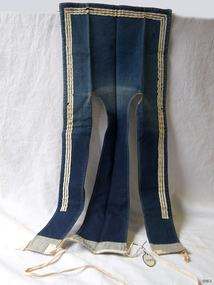
Uniform - Sailor's Collar, Early to mid-20th century
... ship Cutty Sark. From January 1857 the Australian Navy uniform was formally established. The uniform, referred to as a 'sailor's suit', includes a blue flap collar such as this one. Sailors in the Royal Australian Navy wore collars of this design from the early 20th century. The rating personnel of the Royal Canadian...ship Cutty Sark. From January 1857 the Australian Navy uniform was formally established. The uniform, referred to as a 'sailor's suit', includes a blue flap collar such as this one. Sailors in the Royal Australian Navy wore collars of this design from the early 20th century. The rating personnel of the Royal Canadian ...This sailor's collar is part of a naval uniform. It once belonged to R S Wallace, who served in the RAN (Royal Australian Navy) and on the HMAS Warrnambool for three years. After the war he made several ship models including the sailing ship Cutty Sark. From January 1857 the Australian Navy uniform was formally established. The uniform, referred to as a 'sailor's suit', includes a blue flap collar such as this one. Sailors in the Royal Australian Navy wore collars of this design from the early 20th century. The rating personnel of the Royal Canadian Navy were issued with a very similar collar from 1910 to the 1950s. The blue denim collars were buttoned or died inside their tops with the back and the striped portion of the front flaps showing.The square sailor's collar represents the uniform of a rating sailor in the Royal Australian Navy in the early to mid-20th century, connecting it to the maritime history of Australia and the evolution of the uniform of the navy. The collar is the only one in this museum's collection and is connected to a sailor who service in the RAN on the HMAS Warrnambool for three years.Sailor's collar. A square collar of blue cotton fabric with three flaps or strips. Three white stripes make a border on the outside edges and two flaps; the centre flap that has no stripes. There is an inscription. The underside is lined with white cotton fabric that has thin blue stripes. Tapes are attached for fastening the collar. The Royal Australian Navy collar once belonged to R S Wallace."R.S. Wallace"flagstaff hill, flagstaff hill maritime museum and village, warrnambool, maritime museum, maritime village, great ocean road, shipwreck coast, sailor’s collar, sailor’s uniform, uniform, military, navy, ran, royal australian navy, r s wallace, seamen's collar, australian defence forces, naval force, sailor's rig, flap collar, naval collar, robert s wallace, collar, sailor's uniform, world war, hmas warrnambool, sailor's suit -
 Mission to Seafarers Victoria
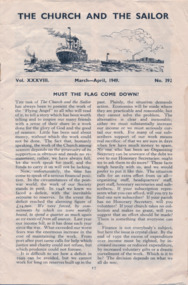
Flyer - Newsletter, Missions to Seamen, London, The Church and the Sailor March- April 1949, no 392, 1949
... This Newsletter is of particular interest as the leading article references the financial difficulties of Missions to Seamen around the world in the post world War 2 era. nora o'connor edward o'connor vancouver canada british columbia lightkeepers' auxiliary seamen's mission mission to seamen overseas missions 8 page A 5 size Newsletter (pp 17-31 Cumulative issue) - Vol XXXVIII commercially printed with graphic masthead featuring ships. ...This newsletter was received as one item of 5 linked to and formerly the property of a member of the Lightkeepers of the Mission to Seamen,Vancouver, Canada circa 1940 - 1950s. See Donor file for details. This Newsletter is of particular interest as the leading article references the financial difficulties of Missions to Seamen around the world in the post world War 2 era. 8 page A 5 size Newsletter (pp 17-31 Cumulative issue) - Vol XXXVIII commercially printed with graphic masthead featuring ships. Features brief articles on International Missions to Seamen. Back page titled 'Our Lightkeepers'Page' features The Senior Lightkeepers' Guild of Vancouver. Illustrated thoughout with photographs.nora o'connor, edward o'connor, vancouver, canada, british columbia, lightkeepers' auxiliary, seamen's mission, mission to seamen, overseas missions -
 Mission to Seafarers Victoria
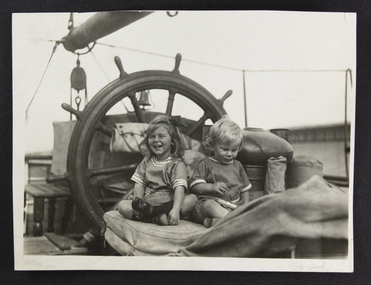
Photograph - Photograph, Black and white, 1918
... ships to enemy submarines and were now on their third". The family participated in "a happy Communion service in our chapel , in which the parents and grandparents joined this formed the keystone of their visit to Melbourne". Unfortunately the young Mrs Aviss contracted the Spanish influenza on their arrival in St John, New Brunswick, Canada...ships to enemy submarines and were now on their third". The family participated in "a happy Communion service in our chapel , in which the parents and grandparents joined this formed the keystone of their visit to Melbourne". Unfortunately the young Mrs Aviss contracted the Spanish influenza on their arrival in St John, New Brunswick, Canada ...The LHLG newsletter of 1918 features this image and notes that they accompanied their shipmaster father Captain Aviss, of the Barque Inverneill who with his wife Catherine Florence Aviss, travelling through dangerous European waters, brought the family of three children to visit Melbourne. The two children featured are Margaret and Ronald, born at sea in 1915. Their young sister, Ruth Neil, was also born at sea on the 27 August 1918. The family re-united with a first meeting for the children and grandparents, Captain and Mrs Frampton, who "had lost two ships to enemy submarines and were now on their third". The family participated in "a happy Communion service in our chapel , in which the parents and grandparents joined this formed the keystone of their visit to Melbourne". Unfortunately the young Mrs Aviss contracted the Spanish influenza on their arrival in St John, New Brunswick, Canada, she succumbed in November 1918 after spending a week in the Parks Hospital. Herbert Aviss was left with 2 toddlers and a 3 month old baby. He went back to England with his children in March 1919 on passenger ship, accompanied by a nurse. Martin Frampton and his wife were in New York at the time, but they probably learnt about Catherine's death in the local newspaper. A memorial plaque in her name unveiled in the chapel at the Mission in April 1919. The parents and grandparents left their names and signatures in the visitor book (0149) on the 28 April 1918.One of the rare stories of seafarer visits illustrated with a photograph of the children of a family accustomed to life aboard ship. The impact of influenza also affected this family and others are recorded amongst the supporters of the Mission and reflects the widespread impact that the epidemic of the post WW1 period had on people, Mission activities and restrictions affecting public events. Both Framptons and Aviss are noted in the annals of the Cape Horne society.Small monochrome photograph of two small children, a girl and a boy posed in front of the ship's wheel of a sailing vesselshipboard life, seafarer families, martin frampton, elizabeth frampton, herbert aviss, children, catherine florence aviss nee frampton, wwi, world war one, great war, first world war, german, submarine, u boat, torpedo, spanish influenza, flu, pandemic, st john, new brunswick, sea mites, wheel, boy, girl, margaret aviss, ronald aviss, ruth aviss, ruth neill aviss, ruth neill paterson nee aviss (1918-2017), ronald aviss (1915-1996) -
 Marysville & District Historical Society
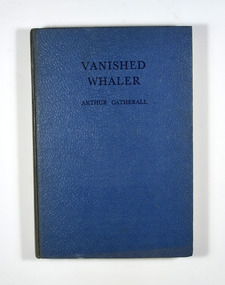
Book, Arthur Catherall, Vanished Whaler, 1953
... ship locked for three centuries in the ice. Bruce Thompson VANISHED/ WHALER/ by/ ARTHUR CATHERALL/ Illustrated by S. Drigin/ THOMAS NELSON AND SONS LTD/ LONDON EDINBURGH PARIS MELBOURNE/ TORONTO AND NEW YORK THOMAS NELSON AND SONS LTD/ Parkside Works Edinburgh 9/ 3 Henrietta Street London WC2/ 312 Flinders Street Melbourne C1/ 5 Parker's Buildings Burg Street Cape Town/ THOMAS NELSON AND SONS (CANADA) LTD/ 91-93 Wellington Street West Toronto 1/ THOMAS NELSON AND SONS/ 19 East 47th Street New York 17/ SOCIETE FRANCAISE D'EDITIONS NELSON/ 25 rue Henri Barbusse Paris Ve/ First published September 1939/ Reprinted 1953 (twice) Stamp of the Marysville & District/ Historicall Society Inc/ P.O. ...Jim and his friend Nugget are air pilot and observer employed as scouts by a Norwegian whaling expedition. Sent out to find the Oslo, a whale-chaser which seems to be out of wireless touch with the parent ship, they find her all right, but deserted! Deserted in that desert of snow and ice the Antartic Circle. This is only the beginning of a great adventure, of plots and counter plots centered around a Spanish treasure-ship locked for three centuries in the ice.No dust cover. Book is bound in blue with the title and author in black on the front cover and the spine.fictionJim and his friend Nugget are air pilot and observer employed as scouts by a Norwegian whaling expedition. Sent out to find the Oslo, a whale-chaser which seems to be out of wireless touch with the parent ship, they find her all right, but deserted! Deserted in that desert of snow and ice the Antartic Circle. This is only the beginning of a great adventure, of plots and counter plots centered around a Spanish treasure-ship locked for three centuries in the ice.whaling, whaling ship, adventure, arthur catherall, fiction -
 Lara RSL Sub Branch
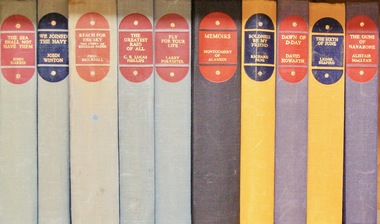
Book, Dawn of D Day, 1959
... ship to shore from a landing craft under fire. Historical recount of D-Day landings and subsequent battles wwii d day battle of normandy air drop american air drop canadian troops french civilians invasion fleet paratroopers juno beach invasion beaches dropping zones utah beach omaha beach Hardcover - dark blue Front Back and spine. ...This book was issued in 1960 and is an impression of the experience of the men who landed in the light of dawn on D Day. An impression of what it was like to be dropped from the sky at morning or ship to shore from a landing craft under fire.Historical recount of D-Day landings and subsequent battlesHardcover - dark blue Front Back and spine. The spine has the title printed. Inside front and back cover have illustrated maps by Charles Green. Photographs, maps and illustrations.wwii, d day, battle of normandy, air drop, american air drop, canadian troops, french civilians, invasion fleet, paratroopers, juno beach, invasion beaches, dropping zones, utah beach, omaha beach -
 Flagstaff Hill Maritime Museum and Village
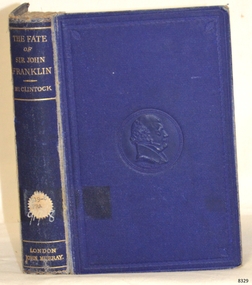
Book - Reference Travel Diary/History, Sir Francis Leopold M'Clintock, The Voyage of The 'Fox'. Fate of Sir John Franklin, 1881
... ships had become hopelessly trapped in ice, and the 105 survivors had abandoned them in 1848 to march south toward safety a march none survived. M'Clintock gathered heartbreaking artifacts from the abandoned camps, including silver spoons, clothing, and skeletal remains, thereby solving the greatest Victorian maritime mystery. Sir John Franklin (1786–1847) was a legendary British Royal Navy officer and seasoned Arctic explorer. He fought under Nelson at the Battle of Trafalgar (1805) and later led two major overland mapping expeditions across northern Canada...ships had become hopelessly trapped in ice, and the 105 survivors had abandoned them in 1848 to march south toward safety a march none survived. M'Clintock gathered heartbreaking artifacts from the abandoned camps, including silver spoons, clothing, and skeletal remains, thereby solving the greatest Victorian maritime mystery. Sir John Franklin (1786–1847) was a legendary British Royal Navy officer and seasoned Arctic explorer. He fought under Nelson at the Battle of Trafalgar (1805) and later led two major overland mapping expeditions across northern Canada ...This classic 1859 maritime narrative with the subject copy being the 1881 fifth edition details one of the most significant moments in Arctic exploration. It follows the definitive discovery of what happened to Sir John Franklin’s lost expedition. The Voyage of the 'Fox' is a first-hand travel diary and official report written by Captain Francis Leopold McClintock.The Voyage of The 'Fox'. The Fate of Sir John Franklin Author: Sir F Leopold M'Clintock Publisher: John Murray, Albemarle Street, London. Publisher to the Admiralty Date: 1881 Blue embossed hardcover with a blue spine and lettering in gold. The spine has a Library label with an inscription.non-fictionThis classic 1859 maritime narrative with the subject copy being the 1881 fifth edition details one of the most significant moments in Arctic exploration. It follows the definitive discovery of what happened to Sir John Franklin’s lost expedition. The Voyage of the 'Fox' is a first-hand travel diary and official report written by Captain Francis Leopold McClintock.flagstaff hill, warrnambool, shipwrecked coast, flagstaff hill maritime museum, maritime museum, shipwreck coast, flagstaff hill maritime village, great ocean road, book, pattison collection, warrnambool library, warrnambool mechanics’ institute, ralph eric pattison, corangamite regional library service, warrnambool city librarian, mechanics’ institute library, victorian library board, warrnambool books and records, warrnambool children’s library, the voyage of the 'fox'. the fate of sir john franklin, sir f leopold m'clintock, arctic exploration -
 Flagstaff Hill Maritime Museum and Village
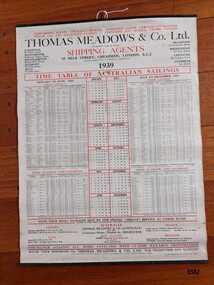
Poster - Shipping Timetable, Barclay and Fry Ltd. London, Time Table of Australian Sailings, circa 1939
... In the late 1840's only two or three overseas ships a month visited Melbourne but by late 1852 (after gold was discovered) more than a dozen ships arrived each week. By 1939, Thomas Meadows & Co. Ltd. had offices in Canada, U.S.A., New Zealand, France, Belgium and in Flinders Street Melbourne. ...It lists all their ships (plus dates and ports) sailing from the UK to Australia as well as the addresses of their offices in other cities in the U.K., Canada, U.S.A., Australia, New Zealand, France and Belgium. ...It lists all their ships (plus dates and ports) sailing from the UK to Australia as well as the addresses of their offices in other cities in the U.K., Canada, U.S.A., Australia, New Zealand, France and Belgium. ..."Freight forwarding" is the arranging of the shipping of goods from their point of origin to their final destination. Freight Forwarders worked as an intermediary between companies that needed to ship products and the shipping and transportation firms that could ensure delivery. A key element of "freight forwarding" was the advice and professional handling of documentation and customs requirements provided. Early "freight forwarders" tended to be innkeepers who forwarded on the luggage of their hotel guests. One of the first "freight forwarding" companies was established by Thomas Meadows in 1836 which made it one of the earliest freight companies in Europe. More reliable rail and steamships were beginning to be used to transport goods and this created a demand for the new "freight forwarding" industry. The combination of railroads and steamships became very important in the late 19th and early 20th century. International shipments became common and freight forwarding that could handle their complexity became an integral part of the manufacturing and shipping landscape. Thomas Meadows & Company Ltd moved to offices in Milk Street, London in 1854 (where they remained until 1969 when they moved out of the city to Leytonstone) and continued in the freight business until 1987 when the company was acquired by Rockwell International Freight. The growth of Thomas Meadows & Company Ltd coincided with the growth and development of the colony of Victoria with an increasing need for the transporting of large numbers of people as well as important goods required by the growing colony - furniture, spirits, food, clothing, agricultural implements, household items etc. In the late 1840's only two or three overseas ships a month visited Melbourne but by late 1852 (after gold was discovered) more than a dozen ships arrived each week. By 1939, Thomas Meadows & Co. Ltd. had offices in Canada, U.S.A., New Zealand, France, Belgium and in Flinders Street Melbourne. This poster was sold by "Smarts Authorised Newsagency" in 1988 in Warrnambool - a business that had been owned by Neil and Shirley Smart at 168 Timor Street, Warrnambool since 1976. Previously it had been "Reed's Newsagency and Book Shop" (a local business established by William Reed circa 1912 and known as "William Reed Bookseller and Stationer"). The original owners, Reed's Newsagency and Bookshop were operating the shop in 1939 which suggests the poster may have been on display (for the information of their customers) in their shop at that time. This poster is significant through its association with Thomas Meadows and Co. Ltd. who is considered to be the founder of the "freight forwarding" industry in the early 19th century. It is an example of advertising used by shipping agents in the mid-19th to early 20th centuries. Its information includes the addresses of the firm's different offices in the U.K. and abroad, ships, shipping lines and ports used and the timetable the vessels were likely to follow. It is also significant through its association with a well known and long standing local Warrnambool business.A 1939 Timetable of "Australian Sailings" produced by the shipping agents Thomas Meadows and Co Ltd. It lists all their ships (plus dates and ports) sailing from the UK to Australia as well as the addresses of their offices in other cities in the U.K., Canada, U.S.A., Australia, New Zealand, France and Belgium. It has three vertical columns depicting (from left to right) January to June sailings, a simple 1939 calendar and their July to December 1939 sailings. The poster is attached on the top and bottom to two thin black metal strips. The top strip has a metal ring with a hole. A stamped label on the back of the poster has the name, telephone number and address of Smarts newsagency plus the date.Front of poster - "FORWARDING AGENTS. INSURANCE BROKERS.PASSENGER AGENTS.CARTAGE CONTRACTORS / MOTOR CAR AND MACHINERY PACKERS.FURNITURE AND GENERALEXPORT PACKERS" "THOMAS MEADOWS & CO Ltd." "ESTABLISHED OVER 100 YEARS" "SHIPPING AGENTS / 35 MILK STREET, CHEAPSIDE, LONDON, E.C.2" "PACKING WAREHOUSES IN LONDON & MANCHESTER" "1939" "TIME TABLE OF AUSTRALIAN SAILINGS" "JANUARY TO JUNE, 1939/ FROM LONDON" "JULY TO DECEMBER, 1939 / FROM LONDON" "HAVE YOUR SMALL PACKAGES SENT BY OUR SPECIAL "SMALLS" SERVICE AT LOWER RATES/RATES TO PORT ONLY OR INCLUDING DELIVERY THROUGHOUT AUSTRALIA" "INSURANCE AGAINST ALL RISKS EFFECTED WITH CLAIMS PAYABLE DESTINATION" "ROUTE YOUR SHIPMENTS VIA THOMAS MEADOWS & CO LTD. FOR PROMPTNESS AND ECONOMY" Stamp on back of poster - "SMART'S AUTHORISED NEWSAGENCY' "168 Timor Street, Warrnambool 3280" "Telephone: (055) 62 2092" "12 DEC 1988" Sticker at bottom - "51"flagstaff hill maritime museum and village, great ocean road, shipping, shipping agents, freight forwarding, freight, shipping time table, thomas meadows & co. ltd., thomas meadows shipping agent, shipping and forwarding agent, smart's newsagency, warrnambool, warrnambool newsagency, chart, poster, smart's authorised newsagency, neil and shirley smart, william reed, reed's newsagency and bookshop -
 Flagstaff Hill Maritime Museum and Village
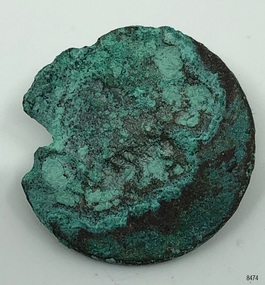
Clothing - Button, c. 1845
... THE CATARAQUI The Cataraqui was built in 1840 in Quebec, Canada, and wrecked on 4th August, 1845 off the west coast of King Island, Australia. The lives of 400 people on the emigrant ship were lost. ...ship Midge, which took them to Melbourne. It was the largest civilian maritime disaster. The button is significant as an example of a 19th century clothing accessory. The button is also significant for its association with the 1840 Canadian ...THE CATARAQUI The Cataraqui was built in 1840 in Quebec, Canada, and wrecked on 4th August, 1845 off the west coast of King Island, Australia. The lives of 400 people on the emigrant ship were lost. Many of them were on government assisted passages from Britain and Ireland. Only nine people, one passenger and eight crew, survived the shipwreck. A man who lived on the island, sheltered them and five weeks later the group was rescued by the ship Midge, which took them to Melbourne. It was the largest civilian maritime disaster.The button is significant as an example of a 19th century clothing accessory. The button is also significant for its association with the 1840 Canadian built ship, Cataraqui. The Cataraqui is significant in maritime history as Australia's largest civilian maritime disaster. The wreck also has a connection to the establishment of the Cape Otway lighthouse and to Warrnambool’s history as Superintendent Charles LaTrobe came to the Warrnambool district several times in an effort to find the best route to the Cape Otway area. While doing so he became familiar with the Warrnambool area and the need to establish a new settlement as Warrnambool.Metal button, vertical shank on back. Button experiencing corrosion and one edge has been eaten away. Inscription and two circular markings on shank side of button. Salvaged from the wreck of the Cataraqui.Unable to decipher.flagstaff hill maritime museum & village, shipwreck coast, great ocean road, button, king island, shipwreck, maritime disaster, cape otway, cataraqui -
 Flagstaff Hill Maritime Museum and Village
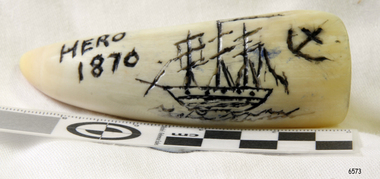
Craft - Scrimshaw, Hero 1870, Late 20th Century
... The then Prime Minister Lord Palmerston suggested that “Bertie” the prince of Wales could represent the Queen and on July 10th 1860, Bertie boarded HMS Hero for a tour of Canada and the USA. On July 23rd the ship arrived at Terranova. ...The then Prime Minister Lord Palmerston suggested that “Bertie” the prince of Wales could represent the Queen and on July 10th 1860, Bertie boarded HMS Hero for a tour of Canada and the USA. On July 23rd the ship arrived at Terranova. ...Scrimshaw is regarded as early folk art and is associated primarily with whaling that was opened up in the Pacific at the end of the eighteenth century by sailors mainly from American, English and French vessels. As a result, some of the best scrimshaw from Pacific whales can be found in collections in these countries. Even though sailors must have had plenty of spare time between periods of whaling scrimshaw on whale teeth seems a rarity before the 1830s. One reason may have been the high price paid for whale teeth ivory in this period making scrimshaw on teeth popular only after the market was saturated and the price dropped. The earliest identified engraver of whale teeth is the English whaling master Captain J. S. King who was active between 1817 and 1823. There have been six ships called the Hero in the Royal Navy and this ship was the fourth named Hero, it was a screw-propelled 91-gun and second-rate. In the rating system of the British Royal Navy, this term is used to categorise sailing warships, a second-rate was a ship of the line which by the start of the 18th century mounted 90 to 98 guns on three gun decks. Earlier 17th-century second rates had fewer guns and were originally two-deckers or had only partially armed third gun decks. The Hero was launched in 1858 and sold in 1971. On July 1860 the Prince of Wales embarked onboard HMS Hero, Albert Edward Prince of Wales, was the eldest son of Queen Victoria, and the future King Edward VII, at the time he was then nineteen years of age, and on route to Newfoundland, Canada and the United States on his first state tour. He was the first member of the British royal family to visit North America. In 1860 the Queen had intended to pay a visit to Canada however stress prevented her from travelling. The then Prime Minister Lord Palmerston suggested that “Bertie” the prince of Wales could represent the Queen and on July 10th 1860, Bertie boarded HMS Hero for a tour of Canada and the USA. On July 23rd the ship arrived at Terranova. By the second week of August, the HMS Hero had sailed up the St. Lawrence River and anchored at Quebec. The Prince was successful with Canadian society visiting Quebec and Montreal during his stay. He went on to visit the United States following an invitation by President James Buchanan. His American journey was regarded as a great success. President Buchanan wrote to Queen Victoria: "He “Bertie” has faced a very difficult task for a person his age and his behaviour in all this has been that of his age and position. He has shown himself honourable, Frank and affable and he won the respect of the sensible and wise people". The scrimshaw is believed to be a modern reproduction of a typical scrimshaw scene and engraved very crudely onto a synthetic substance. Scrimshaw art carved into non-natural material in the shape of a whale tooth. The line artwork images of a three-masted, fully rigged ship and an anchor are coloured black. Inscription is engraved into tooth.Engraved "Hero 1870"warrnambool, flagstaff-hill, flagstaff-hill-maritime-museum, maritime-museum, shipwreck-coast, flagstaff-hill-maritime-village, scrimshaw, plastic, resin, replica, prince of wales, british navy vessel, whaling, hms hero, reproduction, carving, engraving -
 Phillip Island and District Historical Society Inc.
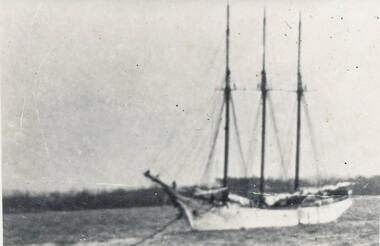
Photograph, 01/02/1919
... One of a collection of over 400 photographs in an album commenced in 1960 and presented to the Phillip Island & Westernport Historical Society by the Shire of Phillip Island local history photography photographs maritime technology boats schooner "louis theriault" black & white photograph sailing ships shipping schooner louis theriault tug james patterson john jenner bryant west Photograph of the Canadian Schooner "Louis Theriault" being towed past Cowes Jetty by the tug "James Patterson" 1/02/1919 Photograph Bryant West ...One of a collection of over 400 photographs in an album commenced in 1960 and presented to the Phillip Island & Westernport Historical Society by the Shire of Phillip IslandPhotograph of the Canadian Schooner "Louis Theriault" being towed past Cowes Jetty by the tug "James Patterson" 1/02/1919local history, photography, photographs, maritime technology, boats, schooner "louis theriault", black & white photograph, sailing ships, shipping, schooner louis theriault, tug james patterson, john jenner, bryant west -
 Seaworks Maritime Museum
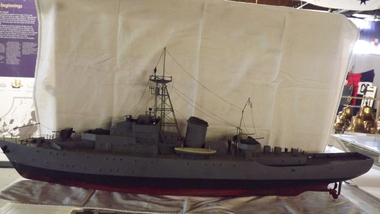
HMCS Weyburn (K173) model
... Grey and red coloured ship model identified as the Royal Canadian Navy Flower-class corvette WWII warship....k173 ship model K173 painted on hull Grey and red coloured ship model identified as the Royal Canadian Navy Flower-class corvette WWII warship. ...Grey and red coloured ship model identified as the Royal Canadian Navy Flower-class corvette WWII warship.K173 painted on hullk173 ship model -
 Mission to Seafarers Victoria
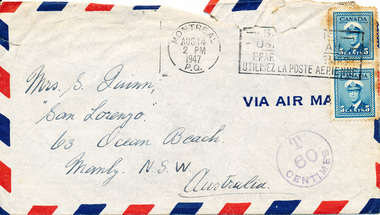
Letter - Correspondence, 10th October, 1947
... In this letter, Allan talks about travelling from South America to Canada, and the ship being fumigated. allan-quinn letter handwriting south-america canada On front of envelope: MRS S QUINN / SAN LORENZO / 63 OCEAN BEACH / MANLY NSW / AUSTRALIA handwritten in black ink. ...The letter was written by Allan Quinn to his mother. Allen started working as a seafarer when he was 16 years old, and frequently wrote to his mother during his travels. He also created an extensive photograph collection, which corresponds with the letters.The letter is part of an ongoing correspondence between Allan and his mother. In this letter, Allan talks about travelling from South America to Canada, and the ship being fumigated.Letter addressed to Mrs S. Quinn, "Sanlorenzo", 63 Ocean Beach, Manly, N.S.W, Australia, in four parts. Part 0157 Envelope Part 0157.1-3 Letter Pages. The letter pages are tissue-like air mail paper. The letter begins "My Dear Mum, This letter is very late..." and concludes with "Your ever loving son, Allan..." In the top right hand corner of the first page is "M/I Ariston, At Sea" and is dated 10/8/47.On front of envelope: MRS S QUINN / SAN LORENZO / 63 OCEAN BEACH / MANLY NSW / AUSTRALIA handwritten in black ink. VIA AIR MAIL is printed on the right hand side, and there are two Canadian stamps, both valued at 5 cents. There are three stamped postmarks, the first is round: MONTRAL / AUG 14 / 2 PM / 1947 / P.Q., the second is rectangle: -S / -OS / EPAR/ UTILISEZ LA POSTE AERIENNE, the third is also round: T / 60 / CENTIMES. On the back of the envelope: (indecipherable) / 7A6714 / OR 7AA6603 handwritten in pencil.allan-quinn, letter, handwriting, south-america, canada -
 Flagstaff Hill Maritime Museum and Village
Rangefinder, E R Watts & Sons, 1930-1945
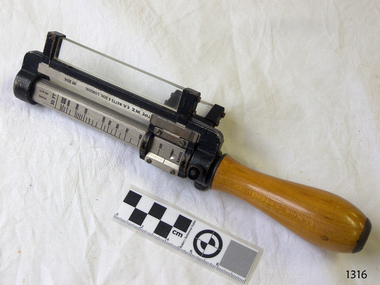
... ships. In May 1873 the business moved to larger premises a house with a garden. The workshop was also the home of Mr and Mrs Watts and their five sons and three daughters. By now there were fifteen to twenty men employed by the firm. The company were commissioned to supply the Theodolites and Levels for the construction to the Canadian...ships. In May 1873 the business moved to larger premises a house with a garden. The workshop was also the home of Mr and Mrs Watts and their five sons and three daughters. By now there were fifteen to twenty men employed by the firm. The company were commissioned to supply the Theodolites and Levels for the construction to the Canadian ...E. R. Watts and Son, makers of theodolites and other surveying instruments, of 123 Camberwell Road, London. The company was established in 1856 by Edwin Watts at twenty-three he had saved £100 from his earnings to start the business with his staff consisting of one boy and later Alexander Clarkson as an apprentice with the workshop a small room over a Bemondsey stable. Watts' first order was from Negretti and Zambra for a mining dial Alexander Clarkson In the early days the firm worked mainly on marine compasses. Edwin Watts would go down to the Docks to adjust the compasses once they had been installed on the ships. In May 1873 the business moved to larger premises a house with a garden. The workshop was also the home of Mr and Mrs Watts and their five sons and three daughters. By now there were fifteen to twenty men employed by the firm. The company were commissioned to supply the Theodolites and Levels for the construction to the Canadian Pacific Railway in 1881. Towards the end of the century, the firm began to make heliographs continuing to produce them for the government until just before the Second World War when by agreement assigned their manufacture to another firm. 1904 The first dividing engine was completed by George William Watts. It was so remarkable an instrument at the time and for years afterwards, In 1907 Arthur Ames went to Canada and started an organisation in Winnipeg in 1909 this became a separate company called E. R. Watts and Son Ltd. of Ottawa. This firm developed considerably and was eventually with the co-operation of three other instrument companies (Cambridge Instrument Co, Ross, and Negretti and Zambra), were reconstituted as ”Instruments Ltd” of Ottawa and Toronto. During the next ten years, the firm expanded greatly to include glass grinding, leather work, dividing and engraving, testing, adjusting and packing. This expansion was continued during the First World War when workshops were completed and the machinery installed and running within eleven weeks from the start of construction. During the war, a Sergeant Coles, among the rats, lice and mud of the trenches, fitted various bits of scrap into his cocoa tin and made the first Flash Spotter for plotting the positions of enemy guns. Coles was rushed home to the firm's factory where he and George William Watts designed a spotter not made out of a cocoa tin and as a result, the Watts Vertical Force Variometer was developed during WWI. Other Watts instruments made in the First World War included the Light Mountain Theodolites which were taken on Mt Everest expeditions. In 1919 ER Watts and Sons was incorporated as a limited company and in 1939 G. A. Whipple joined the Board of Directors. Shortly afterwards, Frank Charles Watts died having been Chairman of the firm for over 37 years and seen it through the First World War with all its expansions and difficulties. He was succeeded by his brother George William Watts with the vacant post of Managing Director being filled by G. A. Whipple. During the Second World War, the company expanded further and the number of employees rose to well over 1,300. In 1946 Watts acquired 78% of Adam Hilger and the microscope maker James Swift and Son Who were Manufacturers of Theodolites, Levels, Alidades, Meteorological Instruments, Variometers, and many other types of scientific instruments Then in 1948 the company amalgamated with Adam Hilger as Hilger and Watts which was then incorporated as a public company.Naval Rangefinder with a vertical wooden handle, and an arrangement of optical lenses. Three reversible brass inserts calibrated on both sides in yards, correspond to various base heights, (20 and 25 feet, 30 and 35 feet and 40 and 50 feet). They are fitted along the axis of the instrument. When the scale for the appropriate base height is selected and inserted, the carriage can be slid for coincidence and the distance read at the index mark on the sliding carriage.inscribed "Rangefinder Cotton Type Mk II" Calibrated scale up to 5000 yds (50 ft), 5000 yds (35 ft), 4000 yds (25 ft) made by E. R. Watts & Son.flagstaff hill, warrnambool, shipwrecked coast, flagstaff hill maritime museum, maritime museum, shipwreck coast, flagstaff hill maritime village, great ocean road, rangefinder, cotton type, e r watts & sons, naval range finder, marine equipment -
 Flagstaff Hill Maritime Museum and Village
Document - Certificate of Competency, Marine Department, Commonwealth Council for Trade, 1883-1894
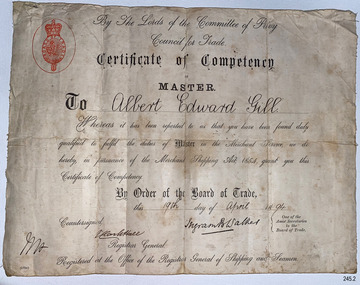
... Canada to Ireland. In 1859 the company expanded to import timber from Calcutta, and relocated its offices to London. In the 1880s the company had a fleet of 13 tall clipper ships and included ports in Australia and New Zealand in its destinations. ...Canada to Ireland. In 1859 the company expanded to import timber from Calcutta, and relocated its offices to London. In the 1880s the company had a fleet of 13 tall clipper ships and included ports in Australia and New Zealand in its destinations. ...Fifteen year old Albert Edward Gill was born in Poplar, Middlesex, in 1868. He volunteered in May 1883 as an Apprentice Ordinary Seaman with the Merchant Services under the London shipping company James P. Corry & Co., owner of the Star Line. The shipping company by this time had a fleet of both clipper and steam cargo ships that sailed as far away as Australia and New Zealand. Gill’s apprenticeship was a four year unpaid term, with only his food, drink, lodgings, washing and medical needs provided for him. The contract had many conditions but it was a wonderful opportunity for a young man. His father James Gill signed the papers as his guarantor. In December 1887 Gill completed his apprenticeship and qualified as an Able Seaman. He served for another seven years with James P. Corry & Co. and earned his Certificate of Competency as a Master in the Merchant Service in April 1894, having passed the Ordinary Examination. (The transcription of Gill's two certificates is provided further down this page.) JAMES P. CORRY & CO. - The Belfast Company was formed in 1826 by Robert Corry, and imported timber from Canada to Ireland. In 1859 the company expanded to import timber from Calcutta, and relocated its offices to London. In the 1880s the company had a fleet of 13 tall clipper ships and included ports in Australia and New Zealand in its destinations. It continued to expand trade even further and by 1908 the Star Line had seven cargo steamers trading with the East and Far East (the ships were named Star of Australia, Star of Japan, Star of England, Star of New Zealand, Star of Ireland, Star of Scotland and Star of Victoria). In 1912 the Star Line ships added an emigrant service to Australia. TRANSCRIPTION OF CERTIFICATES - = = = = = = = = = = = = “Ordinary Apprentice’s Indenture” Transcribed:- (Printed form with printed logo of the Marine Department, Commonwealth Council for Trade. Sanctioned by the Board of Trade, May 1855. ) Registered at the Port of London, Sixteenth of May, 1883, and signed for the Registrar General. Stamped in blue ink “REGISTERED IN LONDON, MAY 16 1883” “RECORD OF THE REGISTER GENERAL OF SEAMEN” “This Indenture, made the SIXTEENTH day of MAY 1883 between ALBERT EDWARD GILL aged FIFTEEN years, a native of POPLAR, in the county of MIDDLESEX of the first part JAMES P. CORRY & CO. OF 9 & 11 FENCHURCH AVENUE in the CITY of LONDON of the second part, and JAMES GILL, of POPLAR, in the county of MIDDLESEX, of the third part, WITNESSETH, That the said ALBERT EDWARD GILL hereby voluntarily binds himself Apprentice unto the said JAMES P. CORRY & CO., his Executers, Administrators and Assigns, for the term of FOUR years from the date hereof; And the said Apprentice hereby covenants that, during such time, the said Apprentice will faithfully serve his said Master, his Executors, Administrators and Assigns, and obey his and their lawful commands, and keep his and their secrets, and will, when required, give to him and them true accounts of his or their goods and money which may be committed to the charge, or come into the hands, of the said Apprentice; and will, in case the said Apprentice enters Her Majesty’s Service during the said term, duly account for and pay, or cause to be paid, to his said Master, his Executors, Administrators, or Assigns, all such Wages, Prize Money and other Monies as may become payable to the said Apprentice for such service; and that the said Apprentice will not, during the said term, do any damage to his said Master, his Executors, Administrators, or Assigns, nor will he consent to such damage being done by others, but will, if possible, prevent the same, and give warning thereof; and will not embezzle or waste the Goods of his Master, his Executors, Administrators, or Assigns, nor give or lend the same to others without his or their licence; nor absent himself from his or their service without leave; nor frequent Taverns or Alehouses, unless upon his or their business, nor play at Unlawful Games : IN CONSIDERATION WHEREOF, the said Master hereby covenants with the said Apprentice, that during the said term he the said Master, his Executors, Administrators, and Assigns, will and shall use all proper means to teach the said Apprentice or cause him to be taught the business of a Seaman, and provide the said Apprentice with sufficient Meat, Drink, Lodgings, Washing, Medicine, and Medical and Surgical Assistance, NO WAGES, the said Apprentice providing for himself all sea-bedding, wearing apparel, and necessaries (except such as are herein-before specially agreed to be provided by the said Master): AND IT IS HEREBY AGREED, that if, at any time during the said term, the said Master, his Executors, Administrators or Assigns, provide any necessary apparel, or sea-bedding for the said Apprentice, he and they may deduct any sums properly expended thereon by him or them from the sums so agreed to be paid to the said Apprentice as aforesaid: And for the performance of the Agreements herein contained, each of them, the said A.E.GILL and JAMES P CORRY & Co., doth hereby bind himself, his Heirs, Executors, and Administrators, unto the said JAMES P. CORRY & CO., his Executors and Administrators, unto the other of them, his Executors and Administrators, in the penal sum of THIRTY pounds; and for the performance of the covenants on the part of the said Apprentice herein contained, the said JAMES GILL as surety, doth hereby bind himself, his Heirs, Executors, and Administrators unto the said JAMES P. CORRY & Co., his Executors and Administrators, the penal sum of THIRTY pounds; Provided, that notwithstanding the penal stipulations herein contained any Justice or Justices of the Pease may exercise such jurisdiction in respect of the said Apprentice as he or they might have exercised if no such stipulations had been therein contained. In witness whereof, the said parties have hereunto set their hands and seals, the day and year above written. Signed, sealed, and delivered, in the presence of - - Weston, 9 & 11 Fenchurch Avenue Signed, James P. Corry (Master) Signed, Albert Edward Gill (Apprentice) James Gill (Surety) NOTE – This Indenture must be executed in duplicate, both copies must be taken to the Registrar General of Seamen; or if in the Outports to the Shipping Master; one copy will then be retained and recorded, and the other returned to the Master with the necessary endorsement. = = = = = = = = = = = = Reverse of the Indenture, Transcribed:- “This is to certify that the herein mentioned Alfred Edward Gill has served the full term of the Indenture in our employ during which time he has conducted himself satisfactorily. According to the Captain’s report he has been strictly sober during the last – years [? from his failure?] Signed: James P. Corry & Co., Owner, Star Line 9 Fenchurch Avenue St, 13 Dec. ‘87 = = = = = = = = = = = = Certificate of Competency, Transcribed:- (Board of Trade logo and printed text of the certificate, with hand written details filled in) By the Lords of the Committee of Privy, Council for Trade Certificate of Competency as MASTER to Albert Edward Gill Whereas it has been reported to us that you have been found duly qualified to fulfil the duties of MASTER in the Merchant Service, we do hereby, in performance of the Merchant Shipping Act, 1854, grant you this Certificat6e of Competency. By Order of the Board of Trade, this 19th day of APRIL, 1894 Signed INGRAM B WALKER (one of the Assistant Secretaries of the Board of Trade) Countersigned -, Regulator General. Registered at the Office of the Regulator General of Shipping and Seamen. = = = = = = = = = = = = Reverse of Certificate of Competency, Transcribed:- No. of Certificate - 020886 Address of Owner - SUNNY LAWN, WALLWOOD ROAD, LEYTONSTONE Date and Place of Birth – 1868, POPLAR Signature – A E GILL. This Certificate is given upon an Ordinary Examination passed at LONDON on the 17th day of APRIL 1894 Every person who makes, or procures to be made, or assists in making any false Representation for the Purpose of obtain for himself or for any other Person a Certificate either of Competence or Service, or who forges, assists in forgery, or procures to be forged, or fraudulently alters, assists in fraudulently altering, or procures to be fraudulently altered, any such Certificate or any Official Copy of any such Certificate, or who frequently makes use of any such Certificate, or copy of any such Certificate, which is forged, altered, cancelled, suspended, or to which he is not justly entitled or who fraudulently lends his Certificate to, or allows the same to be used by any other person, shall for each offence be deemed guilty of a Misdemeanour, and my be summarily punished by imprisonment with or without hard labour for a period not exceeding Six Months or by a penalty not exceeding 100 pounds, and any Master or Mate who fails to deliver up a Certificate which has been cancelled or suspended is liable to a penalty not exceeding 50 pounds. N.B. – Any person other than the Owner thereof becoming possessed of the Certificate is required to transmit it forthwith to the Register General of Shipping and Seamen, Custom House, London, E.C. Issued at the Port of LONDON on the 20th day of APRIL 1894. Signed J I-, - Supt. = = = = = = = = = = = = These certificates are significant as a record of the process required to qualify as a ship’s Master, which was required by the vast number of merchant ships that crossed the world to Australia with cargo and passengers, all contributing to the early settlement and development of Australia as a Colony and a Nation. The certificates are also significant for their association with James P. Corry & Col. owner of the Star Line shipping company that provided trade and passengers to Australia in the late 19th and early 20th centuries. Set of two documents from the Board of Trade, printed on cloth and wax paper, each relating to achieving the standard of Master Seaman, and belonging to Albert Edward Gill. They are dated 1883 to 1894. The forms have been stamped, signed, dated, details completed and sealed with three red wax seals. The certificate number has been stamped onto the document is such as was as to deter forgery. The forms relate to Albert Edward Gill and James P. Corry & Co, Star Line Merchant Services and show his registered number as a Master Seaman. 245.1 – Front: Ordinary Apprentice’s Indenture, printed certificate, with spaces completed and signed by hand, and sealed with three red wax seals. Signed and dated 16 May 1883 Reverse: Handwritten statement, signed and dated 13 Dec 1887. 245.2 – Front: Certificate of Competency, Master in the Merchant Service, printed and completed by hand, registered at the Office of the Regulator General of Shipping and Seamen, dated 19 April 1894. Reverse: Certificate, Ordinary Examination Passed, printed and completed by hand, dated 17 April 1894Signatures and other handwritten details. Stamped with security lines, Registration Number "020886"flagstaff hill, warrnambool, shipwrecked coast, flagstaff hill maritime museum, maritime museum, shipwreck coast, flagstaff hill maritime village, great ocean road, albert edward gill, certificate of compentency, apprentice's indenture, education, employment, 1880's, ordinery examination, able seaman, master seaman, james p. corry & co., star line, timber merchant, emigrant ships -
 Eltham District Historical Society Inc
Photograph, George Coop, Fire damaged Wilhelmsen Line ship Tomar at Victoria Dock, Melbourne, Jan. 1968
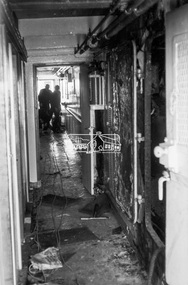
... When George Coop and wife Helen following several years teaching in Canada, they bought a passage aboard the Wilhelmsen line cargo ship, Tomar departing Oslo, Norway for Melbourne, Australia. ...When George Coop and wife Helen following several years teaching in Canada, they bought a passage aboard the Wilhelmsen line cargo ship, Tomar departing Oslo, Norway for Melbourne, Australia. ...When George Coop and wife Helen following several years teaching in Canada, they bought a passage aboard the Wilhelmsen line cargo ship, Tomar departing Oslo, Norway for Melbourne, Australia. Whilst crossing the Bass Strait near Robe, South Australia, a generator in the engine room caught fire threatening the ship's fuel oil tanks, forcing the Captain to order the 43 crew and 8 passengers to abandon ship. They spent many hours in a lifeboat before being rescued. This photo was taken when the ship was brought up to Victoria Docks (No. 26 South Wharf) where George and other passengers were allowed to retrieve their luggage. The ship was then taken to Kaohsiung, Taiwan for scrapping. See also https://www.shipsnostalgia.com/media/tomar.450919/ http://www.shipspotting.com/gallery/photo.php?lid=2726028 http://www.shipspotting.com/gallery/photo.php?lid=2961287 https://www.flickr.com/photos/wheelhouseno/8131145299Digital TIFF file Scan of 35mm Kodak Plus-X Pan black and white negative transparencygeorge coop collection, tomar (ship), victoria docks, wilhelmsen line -
 Eltham District Historical Society Inc
Photograph, George Coop, Fire damaged Wilhelmsen Line ship Tomar at Victoria Dock, Melbourne, Jan. 1968
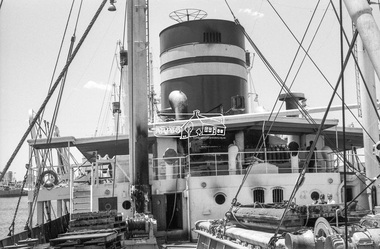
... When George Coop and wife Helen following several years teaching in Canada, they bought a passage aboard the Wilhelmsen line cargo ship, Tomar departing Oslo, Norway for Melbourne, Australia. ...When George Coop and wife Helen following several years teaching in Canada, they bought a passage aboard the Wilhelmsen line cargo ship, Tomar departing Oslo, Norway for Melbourne, Australia. ...When George Coop and wife Helen following several years teaching in Canada, they bought a passage aboard the Wilhelmsen line cargo ship, Tomar departing Oslo, Norway for Melbourne, Australia. Whilst crossing the Bass Strait near Robe, South Australia, a generator in the engine room caught fire threatening the ship's fuel oil tanks, forcing the Captain to order the 43 crew and 8 passengers to abandon ship. They spent many hours in a lifeboat before being rescued. This photo was taken when the ship was brought up to Victoria Docks (No. 26 South Wharf) where George and other passengers were allowed to retrieve their luggage. The ship was then taken to Kaohsiung, Taiwan for scrapping. See also https://www.shipsnostalgia.com/media/tomar.450919/ http://www.shipspotting.com/gallery/photo.php?lid=2726028 http://www.shipspotting.com/gallery/photo.php?lid=2961287 https://www.flickr.com/photos/wheelhouseno/8131145299Digital TIFF file Scan of 35mm Kodak Plus-X Pan black and white negative transparencygeorge coop collection, tomar (ship), victoria docks, wilhelmsen line -
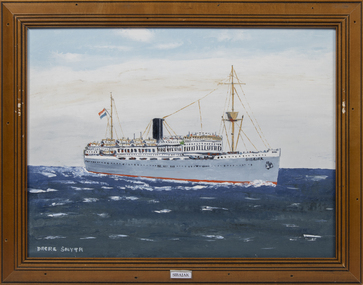 Queenscliffe Maritime Museum
Painting - MS Sibajak, Dacre Smyth
... ship plying the Atlantic, the Sibajak had as docking points Rotterdam, Quebec and New York. She rounded out her service back in Indonesia before being scrapped in Hong Kong. In 1950 the Sibajak was pressed into service to take immigrants to Sydney, Australia, and to pick up repatriates in Jakarta in 1951. In April 1952 she took the route to Quebec, Canada ...The M.S. Sibajak may well have the most varied service of all the post-WWII Dutch immigrant ships. She had ties with the Dutch East Indies before and after the declaration of independence; she served the Allies as a troop transport ship while under the management of the widely-known British shipping company P. & O. As an immigrant ship plying the Atlantic, the Sibajak had as docking points Rotterdam, Quebec and New York. She rounded out her service back in Indonesia before being scrapped in Hong Kong.Mrs B SmythA framed oil painting of the Dutch migrant ship MS SibajakSibajakms sibajak, emigration, dutch migrants -
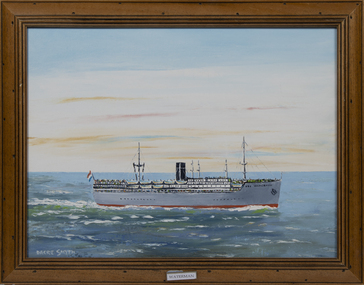 Queenscliffe Maritime Museum
Painting - MV Waterman, Dacre Smyth
... Their war time duties were short lived as they were soon sold to the Dutch Government for the use as troop transport ships and Migrant ship to the United States, Canada, Australia and New Zealand. ...Their war time duties were short lived as they were soon sold to the Dutch Government for the use as troop transport ships and Migrant ship to the United States, Canada, Australia and New Zealand. ...Three Victory Class ships, S.S. Cranston Victory, S.S. Costa Rica Victory and the S.S. La Grande Victory, were built for the “United War Shipping Administration” as troop and cargo ships. Their war time duties were short lived as they were soon sold to the Dutch Government for the use as troop transport ships and Migrant ship to the United States, Canada, Australia and New Zealand. These three ships were built toward the end of World War II, and were part of the new larger improved version of the famed “Liberty” ships. Each ship had strengthened hulls for them to go into the war zone, but by the time they were completed the war was coming to an end. There were ninety seven Victory troop transport ships built, each able to transport up to 1600 troops. Unlike the Liberty ships, all accommodation was fully ventilated and heated. There was the usual meagre style troop bunks, a hospital, galleys, washrooms and even a several public rooms. The first of the trio, S.S. Cranston Victory (Zuiderkruis) was built by the Oregon Shipbuilding Yard in Portland; Oregon was launched on May 5, 1944. The second of the series, S.S. Costa Rica Victory (Groote Beer) was built by Permanente Metals Co, Richmond California and launched on June 17, 1944. The last of the three was the S.S. La Grande Victory (Waterman), which like her sister S.S. Cranston Victory, was built by the Oregon Shipbuilding Yard in Portland, Oregon and launched on January 16, 1945.In November 1951, the third of the trio, La Grande Victory, renamed Waterman, was completed and at 9,176-tons, commenced her first voyage to Australia.A framed oil painting of the migrant ship MV WatermanWatermanmv waterman, liberty ships, migrant ships -
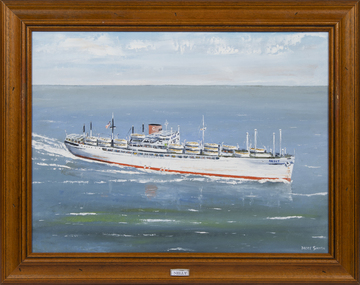 Queenscliffe Maritime Museum
Painting - MS Nelly, Dacre Smyth, Nelly
... She was eventually renamed ‘Seven Seas’ and would go on to have an impressive career sailing across the globe from Canada to New Zealand. The migrant ship MS Nelly carried the first German migrants under the bilateral assisted passage scheme signed on 29 August 1952. ...MS Nelly was a humble but reliable immigrant liner operating between Europe and Australia in the 1940s and 1950s. She was eventually renamed ‘Seven Seas’ and would go on to have an impressive career sailing across the globe from Canada to New Zealand.Mrs B SmythA framed oil painting of the migrant ship MS NellyNellyms nelly, migrant ships, german migrants, post war migration -
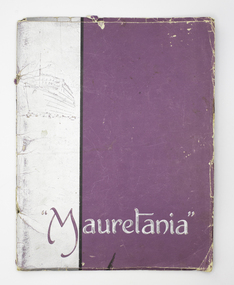 Queenscliffe Maritime Museum
Booklet - Illustrated History, The New Mauretania; Fulfilment of a Great Enterprise, 1938
... ship transported Australian troops to Suez, India and Singapore but later she mainly served in the North Atlantic. Like Aquitania, she amassed over 50,000 nautical miles (93,000 km) over the course of her war duties, first crossing of the Indian Ocean, then working the Atlantic with American and Canadian troops and finally serving in the Pacific. ...RMS Mauretania was launched on 28 July 1938 at the Cammell Laird yard in Birkenhead, England and was completed in May 1939. The second Mauretania was the first ship built for the newly formed Cunard White Star company following the merger in April 1934 of the Cunard and White Star lines. A booklet illustrating the history of construction through to the launch of the passenger liner Mauretania in 1938rms mauretania, troop transport, passenger liner, cunard, white star -
 Queenscliffe Maritime Museum
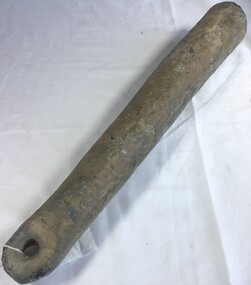
Functional object - Sounding Lead and bottle
... Recovered from the wreck of the William Salthouse William Salthouse was the first merchant vessel to sail with a cargo of merchandise from the British Dominion of Canada to British Colonies of Australia. The ship was lost on 28 November 1841 while attempting to enter Port Phillip Heads en-route to Melbourne Harbour. ...Collected by person in the 1960s before amnesty. Recovered from the wreck of the William SalthouseWilliam Salthouse was the first merchant vessel to sail with a cargo of merchandise from the British Dominion of Canada to British Colonies of Australia. The ship was lost on 28 November 1841 while attempting to enter Port Phillip Heads en-route to Melbourne Harbour. The wreck of William Salthouse has been the site of several maritime archaeological investigations as well as experimental in situ conservation efforts.Large sounding lead and handmade bottle recovered from the wreck of the William Salthouse [lost on 28 November 1841]'No.2' on bottleshipwrecks, salvaged items, william salthouse, sounding lead, hand made bottle
