
Showing 1021 items matching "cargo vessel"
-
 Glenelg Shire Council Cultural Collection
Photograph - Photograph - Early Shipping: Ocean/Railway Pier, n.d
... ... Cargo vessel...Black and white photo, showing starboard side of cargo vessel and a naval vessel, berthed at Ocean Pier....Port of Portland Authority Archives Port of Portland Archives Cargo vessel Naval Vessel Ocean Pier Black and white photo, showing starboard side of cargo vessel and a naval vessel, berthed at Ocean Pier. ...Port of Portland Authority Archivesport of portland archives, cargo vessel, naval vessel, ocean pier -
Glenelg Shire Council Cultural Collection
Photograph - Photograph - Portland Harbour, n.d
... Coloured photograph of silos, livestock vessel, tug, cargo vessel, bow of another cargo vessel right foreground....Port of Portland Authority Archives Port of Portland Archives Portland Harbour Coloured photograph of silos, livestock vessel, tug, cargo vessel, bow of another cargo vessel right foreground. ...Port of Portland Authority Archivesport of portland archives, portland harbour -
Glenelg Shire Council Cultural Collection
Photograph - Photograph - Portland Harbour, n.d
... Coloured photograph of silos, livestock vessel, tug, cargo vessel, bow of another cargo vessel right foreground....Port of Portland Authority Archives Port of Portland Archives Portland Harbour cargo livestock transportation Coloured photograph of silos, livestock vessel, tug, cargo vessel, bow of another cargo vessel right foreground. ...Port of Portland Authority Archivesport of portland archives, portland harbour, cargo, livestock, transportation -
Glenelg Shire Council Cultural Collection
Photograph - Photograph - Portland Harbour, n.d
... Coloured photograph of silos, livestock vessel, tug, cargo vessel, bow of another cargo vessel right foreground....Port of Portland Authority Archives Port of Portland Archives cargo livestock Coloured photograph of silos, livestock vessel, tug, cargo vessel, bow of another cargo vessel right foreground. ...Port of Portland Authority Archivesport of portland archives, cargo, livestock -
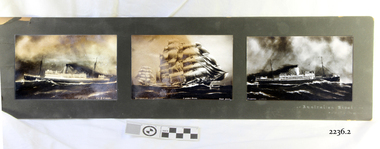 Flagstaff Hill Maritime Museum and Village
Photograph - Vessels, Sail and Steam Ships, A.V. Gregory, Australian Rivals - Past and Present, 1899-1932
... ...cargo vessel...Flagstaff Hill Flagstaff Hill Maritime Museum and Village Warrnambool Maritime Museum Maritime Village Great Ocean Road Shipwreck Coast ss katoomba thermopylae cutty sark tea race tea race china to london 1872 canberra tea clippers a v gregory commercial trading vessel cargo vessel sailing vessel steam vessel clipper races Australian export China tea trade Title: "Australian Rivals - Past and Present". ...These photographs are copies of original paintings by the Australian marine artist A V Gregory (1867-1957), also known as Arthur Victor Gregory. Gregory lived and worked in South Melbourne. He took over the Gregory Studio owned by his father, George Frederick Gregory, painting actively between 1899 and 1932. He usually signed his works as ‘A V Gregory’. Some of his original works have been sold for thousands of dollars. These mounted photographs, by A.V. Gregory, show both steam and sailing ships sailing in the Tea Race from China to London in 1872. The information included with the photographs has the following text: “Tea Clippers “ Well done Cutty Sark, by Bobbie Burns The CUTTY SARK and THERMOPYLAE. The start of the 1872 Tea Race from China to London. The “Cutty Sark” first away, followed closely by the “Thermopylae”, finally parting after several days’ company. On this race the “Cutty Sark” lost her rudder in the Indian Ocean, putting her hopelessly out of the race, and enabling the “Thermopylae” to pass her and reach London on 11th October, 115 days out, the “Cutty Sark” limping home seven days later. The credit of the race was given to the “Cutty Sark” by the shipping world. Copies of the pictures may be had from A.V. Gregory, 326 Albert Road, South Melbourne."The detailed images of the vessels depicted in this photographs shows some of the many sail and steam vessels painted by the renowned Victorian marine artist A V Gregory, whose original works are highly valued today by marine collectors. The pictures and document are significant for their association with the Tea Clippers, famous for racing across the world to arrive in Australia with the fastest time.Photographs of paintings of sail and steamships, three photographs mounted together side by side, titled "Australian Rivals - Past and Present". The centre shows the sailing ships Thermopylae and Cutty Sark. It is flanked on each side by a photograph of a steamship. The document with the photographs gives the history of the famous Tea Race from China to London in 1872.Title: "Australian Rivals - Past and Present". Handwritten on Left photograph "A.V. GREGORY - SS KATOOMBA" Handwritten on Centre photograph; "THERMOPLAE - A.V. GREGORY - CUTTY SARK - FIRST AWAY" Handwritten on Right photograph; "CANBERRA - A/V/ GREGORY" Handwritten on accompanying card is the story of the Tea Clippers.flagstaff hill, flagstaff hill maritime museum and village, warrnambool, maritime museum, maritime village, great ocean road, shipwreck coast, ss katoomba, thermopylae, cutty sark, tea race, tea race china to london 1872, canberra, tea clippers, a v gregory, commercial trading vessel, cargo vessel, sailing vessel, steam vessel, clipper races, australian export, china tea trade -
Glenelg Shire Council Cultural Collection
Photograph - Photograph - Early Shipping: Ocean/Railway Pier, n.d
... Black and white aerial photo. Showing cargo vessel berthed at ocean Pier, K.S Anderson under constuction....Port of Portland Authority Archives Port of Portland Archives Portland Harbour Ship Berthed Ocean Pier K S Anderson Black and white aerial photo. Showing cargo vessel berthed at ocean Pier, K.S Anderson under constuction. ...Port of Portland Authority Archivesport of portland archives, portland harbour, ship berthed, ocean pier, k s anderson -
Port Melbourne Historical & Preservation Society
Photograph - Various small craft and cargo vessels, South Wharf, Douglas Smallpage, 1970s
... (9) B&W photographs of various small craft and cargo vessels laying at the "Top end" of South Wharf...Piers and Wharves - Miscellaneous Piers and Wharves - South Wharf (9) B&W photographs of various small craft and cargo vessels laying at the "Top end" of South Wharf Photograph Various small craft and cargo vessels, South Wharf Douglas Smallpage ...(9) B&W photographs of various small craft and cargo vessels laying at the "Top end" of South Wharfpiers and wharves - miscellaneous, piers and wharves - south wharf -
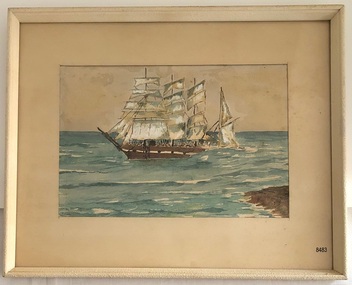 Flagstaff Hill Maritime Museum and Village
Painting - Watercolour painting, Early 20th century
... ...Cargo Vessel...cargo and maintain full sail in heavy gales. She was one of the last of the ‘windjammers’ that sailed the Trade Route and one of the first vessels to include fore and aft lifting bridges, which kept the crew safe and dry in as they moved around the decks in stormy conditions. ...Flagstaff Hill Warrnambool Flagstaff Hill Maritime Museum & Village Maritime Museum Maritime Village Shipwreck Coast 1908 Shipwreck Falls of Halladale Peterborough Peterborough shipwreck Great Ocean Road Captain Thomson 1880s sailing ship Cargo Vessel 1st mate F Pearson 2nd mate T Griffin Watercolour painting Inscription on the back: Pasted on typed text: Peterborough Handwriting: Falls of Halladale 2085 tons 4 masted iron barque wrecked Saturday November 14th 1908 Captain Thomson crew of 28 ! ...FALLS of HALLADALE - History The Falls of Halladale was a four-masted sailing ship built-in 1886 in Glasgow, Scotland, for the long-distance cargo trade and was mostly used for Pacific grain trade. She had a sturdy construction, built to carry maximum cargo and maintain full sail in heavy gales. She was one of the last of the ‘windjammers’ that sailed the Trade Route and one of the first vessels to include fore and aft lifting bridges, which kept the crew safe and dry in as they moved around the decks in stormy conditions. She was owned by Wright, Breakenridge & Co of Glasgow and was one of several Falls Line ships, all of which were named after waterfalls in Scotland. On 4th August 1908, with new sails, 29 crew, and 2800 tons of cargo, the Falls of Halladale left New York, bound for Melbourne and Sydney via the Cape of Good Hope. The cargo on board was valued at £35,000 and included 56,763 tiles of American slate roofing tiles, 5,673 coils of barbed wire, 600 stoves, 500 sewing machines, 6,500 gallons of oil, 14,400 gallons of benzene, plumbing iron, 117 cases of crockery and glassware and many other manufactured items. The Falls of Halladale had been at sail for 102 days when, at 3 am on the of 14th November 1908, under full sail in calm seas with a six knots breeze behind and misleading fog along the coast, the great vessel rose upon an ocean swell and settled on top of a submerged reef near Peterborough on south-west Victoria’s coast. The ship was jammed on the rocks and began filling with water. The crew launched the two lifeboats and all 29 crew landed safely on the beach over 4 miles away at the Bay of Islands. The postmistress at Peterborough, who kept a watch for vessels in distress, saw the stranding and sent out an alert to the local people. A rescue party went to the aid of the sailors and the Port Campbell rocket crew was dispatched, but the crew had all managed to reach shore safely by the time help arrived. The ship stayed in full sail on the rocky shelf for nearly two months, attracting hundreds of sightseers who watched her slowly disintegrate until the pounding seas and dynamiting by salvagers finally broke her back, and her remains disappeared back into deeper water. The valuable cargo was largely lost, despite two salvage attempts in 1908-09 and 1910. Further salvage operations were made from 1974-1986, during which time 22,000 slate tiles were recovered with the help of 14 oil drums to float them, plus personal artefacts, ship fittings, reams of paper and other items (a list of items held at Flagstaff Hill Maritime Village is included below). The Court of Marine Inquiry in Melbourne ruled that the foundering of the ship was entirely due to Captain David Wood Thomson’s navigational error, not to technical failure of the Clyde-built ship. The shipwreck is a popular site for divers, about 300m offshore and in 3 – 15m of water. Some of the original cargo can be seen at the site, including pieces of roof slate and coils of barbed wire.The Falls of Halladale shipwreck is listed on the Victorian Heritage Register (No. S255). She was one of the last ships to sail the Trade Routes. She is one of the first vessels to have fore and aft lifting bridges. She is an example of the remains of an International Cargo Ship and also represents aspects of Victoria’s shipping industry. The wreck is protected as a Historic Shipwreck under the Commonwealth Historic Shipwrecks Act (1976).Watercolour painting behind glass, framed in the Art Deco style - stippled cream painted wood. There are some age marks under the glass. The painting depicts the Falls of Halladale with its stern under water. The back of the painting contains facts about the shipwreck handwritten in a similar style to the artist’s signature. The artist’s signature is not clear enough to identify. Inscription on the back: Pasted on typed text: Peterborough Handwriting: Falls of Halladale 2085 tons 4 masted iron barque wrecked Saturday November 14th 1908 Captain Thomson crew of 28 !st mate F Pearson 2nd mate T Griffinflagstaff hill, warrnambool, flagstaff hill maritime museum & village, maritime museum, maritime village, shipwreck coast, 1908 shipwreck, falls of halladale, peterborough, peterborough shipwreck, great ocean road, captain thomson, 1880s sailing ship, cargo vessel, 1st mate f pearson, 2nd mate t griffin, watercolour painting -
Glenelg Shire Council Cultural Collection
Photograph - Photograph - Portland Harbour, n.d
... cargo... vessel...Portland Harbour steamship cargo vessel Black and white photo of a steamship berthed at Portland Harbour. ...Black and white photo of a steamship berthed at Portland Harbour.portland harbour, steamship, cargo, vessel -
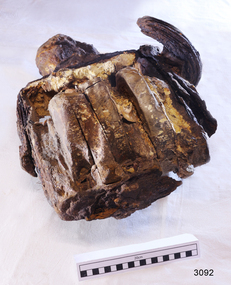 Flagstaff Hill Maritime Museum and Village
Equipment - Pulley Block, Russell & Co, ca. 1886
... ...cargo vessel...cargo was lost, despite two salvage attempts in 1908-09 and 1910. The Court of Marine Inquiry in Melbourne ruled that the foundering of the ship was entirely due to Captain David Wood Thomson's navigational error, not to any technical failure of the ship. The Falls of Halladale was built in1886 by Russell & Co., at Greenock shipyards on the River Clyde, Scotland for Wright, Breakenridge & Co of Glasgow. The vessel...Warrnambool Flagstaff Hill Flagstaff Hill Maritime Museum Maritime Museum Shipwreck Coast Flagstaff Hill Maritime Village Flagstaff Hill Maritime Museum and Village clipper ship windjammer cargo vessel Falls of Halladale wreck shipwreck 1908 wreck Breakenridge & Co Glasgow Russell & Co ship builders 1886 ship shipwreck artefact rigging ship rigging rigging equipment sailing equipment cargo equipment marine technology block ship’s block pulley block A pulley block; metal frame with three sheaves. ...A pulley block of this size would have many applications on a ship, including lifting loads such as cargo and sails. It was recovered from the wreck of the Halladale in the 1970s by divers Gary Hansen and Peter Ronald, former Director of Flagstaff Hill. The Falls of Halladale was an iron-hulled, four-masted barque built in Glasgow, Scotland. It was used as a bulk carrier of general cargo. When the ship left New York in August 1908 it was bound for Melbourne and Sydney it’s the cargo in its hold consisted of roofing tiles, barbed wire, stoves, oil, benzene and many other manufactured items. On the 15th of November, 1908, after three months at sea and close to its destination, a navigational error caused the Falls of Halladale to be wrecked on a reef off the Peterborough headland. The captain and 29 crew members survived but most of the cargo was lost, despite two salvage attempts in 1908-09 and 1910. The Court of Marine Inquiry in Melbourne ruled that the foundering of the ship was entirely due to Captain David Wood Thomson's navigational error, not to any technical failure of the ship. The Falls of Halladale was built in1886 by Russell & Co., at Greenock shipyards on the River Clyde, Scotland for Wright, Breakenridge & Co of Glasgow. The vessel was one of several designs of Falls Line of ships named after waterfalls in Scotland. The company had been founded between 1870- 1873 as a partnership between Joseph Russell, Anderson Rodger, and William Todd Lithgow. During the period between 1882-92 Russell & Co. standardised its ship designs, which sped up their building process so much that they were able to build 271 ships during that time. The Falls of Halladale had a sturdy construction built to carry maximum cargo and was able to maintain full sail in heavy gales. It was one of the last of the 'windjammers'. She and her sister ship, the Falls of Garry, were the first ships in the world to include fore and aft lifting bridges. Previous to this, heavily loaded vessels could have huge seas break along the full length of the deck, causing serious injury or even death to those on deck. The new, raised catwalk-type decking allowed the crew to move above the deck in stormy conditions.The Falls of Halladale shipwreck is listed on the Victorian Heritage (No. S255). The vessel was one of the last ships to sail the Trade Routes from Europe and the Americas. Also of significance is that the ship was one of the first ships to have fore and aft lifting bridges as a significant safety feature that is still in use on modern vessels today. The block and pulley is an example of ship rigging equipment used on sailing ships during the 19th and early 20th centuries that transported goods around the world. It represents aspects of Victoria’s shipping industry and maritime history.A pulley block; metal frame with three sheaves. The block is in a fragile condition. It is also large and heavy. It was recovered from the wreck of the Falls of Halladale in the 1970s. warrnambool, flagstaff hill, flagstaff hill maritime museum, maritime museum, shipwreck coast, flagstaff hill maritime village, flagstaff hill maritime museum and village, clipper ship, windjammer, cargo vessel, falls of halladale wreck, shipwreck, 1908 wreck, breakenridge & co glasgow, russell & co ship builders, 1886 ship, shipwreck artefact, rigging, ship rigging, rigging equipment, sailing equipment, cargo equipment, marine technology, block, ship’s block, pulley block -
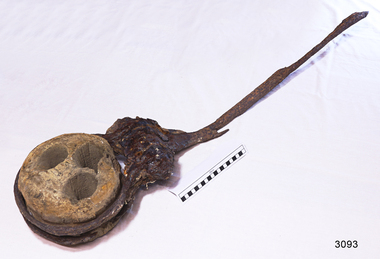 Flagstaff Hill Maritime Museum and Village
Functional object - Deadeye, Russell & Co, Circa 1886
... ...Cargo Vessel...The Falls of Halladale had a sturdy construction built to carry maximum cargo and was able to maintain full sail in heavy gales, one of the last of the 'windjammers' that sailed the Trade Route. She and her sister ship, the Falls of Garry, were the first ships in the world to include fore and aft lifting bridges. Previous to this, heavily loaded vessels...Warrnambool Flagstaff-Hill Flagstaff-Hill-Maritime-Museum Maritime-Museum Shipwreck-coast Flagstaff-Hill-Maritime-Village Shipwrecked-artefact Clipper ship rigging equipment sailing equipment deadeye Falls of Halladale Wreck Breakenridge & Co Glasgow Russell & Co Ship builders Cargo Vessel 1908 Wreck rigging ship rigging None Deadeye; wooden deadeye, three (3) holes, with metal surrounds and metal rigging cable attached. ...This deadeye was amongst artefacts recovered from the wreck of the Falls of Halladale. It would have been used on the ship to attach, hold and run ropes for the ship’s rigging. The Falls of Halladale was an iron-hulled, four-masted barque, used as a bulk carrier of general cargo. She left New York in August 1908 bound for Melbourne and Sydney. In her hold was general cargo consisting of roofing tiles, barb wire, stoves, oil, and benzene as well as many other manufactured items. After three months at sea and close to her destination, a navigational error caused the Falls of Halladale to be wrecked on a reef off the Peterborough headland on the 15th of November, 1908. The captain and 29 crew members survived, but her cargo was largely lost, despite two salvage attempts in 1908-09 and 1910. The Court of Marine Inquiry in Melbourne ruled that the foundering of the ship was entirely due to Captain David Wood Thomson's navigational error, not too technical failure of the Clyde-built ship. The Falls of Halladale was built in1886 by Russell & Co., at Greenock shipyards on the River Clyde, Scotland for Wright, Breakenridge & Co of Glasgow. She was one of several designs of Falls Line of ships named after waterfalls in Scotland. The company had been founded between 1870- 1873 as a partnership between Joseph Russell, Anderson Rodger, and William Todd Lithgow. During the period 1882-92 Russell & Co. standardised designs, which sped up their building process so much that they were able to build 271 ships during that time. The Falls of Halladale had a sturdy construction built to carry maximum cargo and was able to maintain full sail in heavy gales, one of the last of the 'windjammers' that sailed the Trade Route. She and her sister ship, the Falls of Garry, were the first ships in the world to include fore and aft lifting bridges. Previous to this, heavily loaded vessels could have heavy seas break along the full length of the deck, causing serious injury or even death to those on deck. The new, raised catwalk-type decking allowed the crew to move above the deck in stormy conditions. The Falls of Halladale shipwreck is listed on the Victorian Heritage (No. S255). She was one of the last ships to sail the Trade Routes from Europe and the Americas. Also of significance is that the vessel was one of the first ships to have fore and aft lifting bridges as a significant safety feature still in use on modern vessels today. The subject item is an example of ships rigging objects used on sailing ships during the 19th and early 20th centuries to transport goods around the world the item is representing aspects of Victoria’s shipping industry and maritime history. Deadeye; wooden deadeye, three (3) holes, with metal surrounds and metal rigging cable attached. Recovered from the Falls of Halladale.Nonewarrnambool, flagstaff-hill, flagstaff-hill-maritime-museum, maritime-museum, shipwreck-coast, flagstaff-hill-maritime-village, shipwrecked-artefact, clipper ship, rigging equipment, sailing equipment, deadeye, falls of halladale wreck, breakenridge & co glasgow, russell & co ship builders, cargo vessel, 1908 wreck, rigging, ship rigging -
 Port Melbourne Historical & Preservation Society
Photograph - Webb Dock, Port Melbourne, Glen Stuart, 24 May 2003
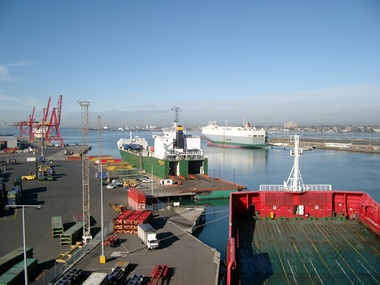
... Colour photo of Webb Dock, Port Melbourne, showing a roll-on/roll-off cargo vessel being loaded and a car transport in the background....piers and wharves - webb dock transport - shipping webb dock Colour photo of Webb Dock, Port Melbourne, showing a roll-on/roll-off cargo vessel being loaded and a car transport in the background. ...Colour photo of Webb Dock, Port Melbourne, showing a roll-on/roll-off cargo vessel being loaded and a car transport in the background.piers and wharves - webb dock, transport - shipping, webb dock -
 Flagstaff Hill Maritime Museum and Village
Craft - Ship Model, Cutty Sark
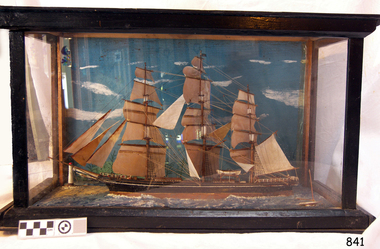
... commercial trading vessel...cargo...Flagstaff Hill Warrnambool Flagstaff Hill Maritime Museum Shipwreck Coast Flagstaff Hill Maritime Village Maritime Museum Great Ocean Road Cutty sark historic sailing ship tea clipper sail training vessel cadet training ship commercial trading vessel cargo sail vessel Ferreria 1869 tea cargo tea trade China tea wool export Australian export Australian wool export Cornwall training ship Greenwich British Museum ship model craft hobby ship model Cutty Sark model making "Cutty Sark" Ship model: the clipper ship Cutty Sark in full ship rig with raised poop deck, deck house, three boats on deck (one has fallen). ...THE CUTTY SARK: - The Cutty Sark was built in Britain in 1869 and was one of the last great sailing ships. At first, it carried tea from China. Later, it was used to transport wool from Australia. It became famous for its speed and held the record for the fastest voyage from Australia to Britain for ten years. Later, a Portuguese company bought the ship and renamed it Ferreira. After that, a retired sea captain purchased it to use as a training ship in Cornwall. When the captain died, the ship was given to a training college in Greenwich in 1938. In 1954, it was placed in dry dock at Greenwich, where it remains on display. The Cutty Sark is a special ship because it carried wool from Australia to other parts of the world. Models like this one help us imagine what sea travel was like before steam-powered ships were common, and they show us how trade, travel and migration changed over time. The Cutty Sark is also famous for being very fast. It set a record for the journey from Australia to Britain and kept that title for ten years. Today, people still recognise its importance because it has been carefully preserved and is on display at the British Maritime Museum in Greenwich. Its story has also made it a favorite subject for people who enjoy building ship models. Ship model: the clipper ship Cutty Sark in full ship rig with raised poop deck, deck house, three boats on deck (one has fallen). It has a two-toned black and tan hull and three jibs. The model is set in a diorama of a blue sea, a lighthouse and another small yacht. It is housed in a glass-sided case with a dark grey painted structure. The bow has an inscription."Cutty Sark"flagstaff hill, warrnambool, flagstaff hill maritime museum, shipwreck coast, flagstaff hill maritime village, maritime museum, great ocean road, cutty sark, historic sailing ship, tea clipper, sail training vessel, cadet training ship, commercial trading vessel, cargo sail vessel, ferreria, 1869, tea cargo, tea trade, china tea, wool export, australian export, australian wool export, cornwall, training ship, greenwich, british museum, ship model, craft, hobby, ship model cutty sark, model making -
 Flagstaff Hill Maritime Museum and Village
Postcard - Vessel, Sailing Ship, B Matthews (photo printer), Cutty Sark, 20t century
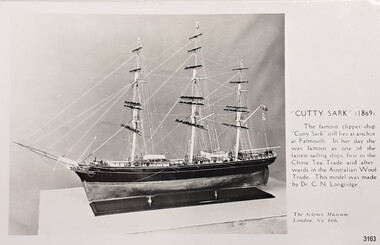
... commercial trading vessel...cargo...Flagstaff Hill Warrnambool Flagstaff Hill Maritime Museum Shipwreck Coast Flagstaff Hill Maritime Village Maritime Museum Great Ocean Road Cutty sark historic sailing ship tea clipper sail training vessel cadet training ship commercial trading vessel cargo sail vessel clipper races Scott and Linton of Dunbarton Scottland race record Ferreria 1869 tea cargo tea trade China tea wool export Australian export Australian wool export China tea trade Cornwall training ship Greenwich British Museum ship model craft hobby ship model Cutty Sark model making postcard C Nelson Longridge Charles Nelson Longridge B Matthews photo printer B Matthews Bradford England B Matthews (photo printer ) Ltd. ...The maker of the ship model on the postcard was Dr C Nelson Longridge (1876–1952), an English surgeon, maritime author, and builder of detailed ship models. Other models include the SS Marioness and the steam yacht Asia. He also wrote the books 'Cutty Sark' and 'The Anatomy of Nelson's Ships'. The postcard was printed by B Matthews, Bradford, England, incorporated in 1970 as B. Matthews (Photo Printers) Limited. Collections of B Matthews' photo prints of famous painted portraits are held at The National Portrait Gallery of London. Copies of B Matthews postcards are today sought after by collectors. THE CUTTY SARK: - The Cutty Sark was built in Britain in 1869 and was one of the last great sailing ships. At first, it carried tea from China. Later, it was used to transport wool from Australia. It became famous for its speed and held the record for the fastest voyage from Australia to Britain for ten years. Later, a Portuguese company bought the ship and renamed it Ferreira. After that, a retired sea captain purchased it to use as a training ship in Cornwall. When the captain died, the ship was given to a training college in Greenwich in 1938. In 1954, it was placed in dry dock at Greenwich, where it remains on display. This postcard features a photograph of a model of the sailing ship Cutty Sark, making it significant because of its connection to this well-known vessel. The famous tea clipper transported wool from Australia to markets around the world. Models such as this one help us understand what sea travel was like before steam-powered ships became widespread, while also illustrating how trade, travel and migration developed over time. Cutty Sark was also celebrated for its speed. It broke records on the voyage from Australia to Britain and held this distinction for ten years. Its importance is still recognised today, as the ship has been carefully preserved and is now displayed at the British Maritime Museum in Greenwich. Its remarkable history has also made it a popular subject for model ship enthusiasts. The postcard is also valuable because it shows a model of Cutty Sark built by the renowned C. N. Longridge, who was not only a respected surgeon but also a skilled model maker and author of detailed maritime works. A further connection is found in the printer, B Matthews, who photographed and printed collections featuring famous people, model ships and maritime scenes, adding another layer of historical interest to the postcard. Postcard, black and white, showing a model of the sailing ship Cutty Sark. Printed details are provided on both the front and back of the postcard. Inscriptions include a brief description of the Cutty Sark, the location and maker of the model, and the printer's contact information. The postcard was printed in Great Britain.FRONT: " "CUTTY SARK" (1869) The famous clipper ship "Cutty Sark" still lies at anchor at Falmouth. In her day, she was famous as one of the fastest sailing ships, first in the China Tea Trade, and afterwards in the Australian Wool Trade. This model was made by Dr C.N. Longridge." "The Science Museum, London. No. 166." REVERSE: "POSTCARD" "COMMUNICATION" "ADDRESS" "Printed by B Matthews, Bradford, England"flagstaff hill, warrnambool, flagstaff hill maritime museum, shipwreck coast, flagstaff hill maritime village, maritime museum, great ocean road, cutty sark, historic sailing ship, tea clipper, sail training vessel, cadet training ship, commercial trading vessel, cargo sail vessel, clipper races, scott and linton of dunbarton scottland, race record, ferreria, 1869, tea cargo, tea trade, china tea, wool export, australian export, australian wool export, china tea trade, cornwall, training ship, greenwich, british museum, ship model, craft, hobby, ship model cutty sark, model making, postcard, c nelson longridge, charles nelson longridge, b matthews, photo printer, b matthews bradford england, b matthews (photo printer ) ltd. -
 Flagstaff Hill Maritime Museum and Village
Postcard - Vessel, Sailing Ship, Jack Spurling (John Robert Charles Spurling), marine artist, circa 19th century
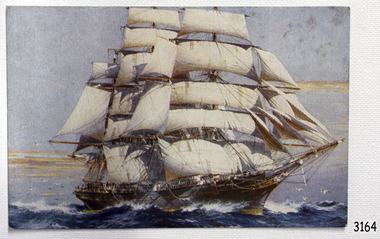
... commercial trading vessel...cargo...Flagstaff Hill Warrnambool Flagstaff Hill Maritime Museum Shipwreck Coast Flagstaff Hill Maritime Village Maritime Museum Great Ocean Road Cutty sark historic sailing ship tea clipper sail training vessel cadet training ship commercial trading vessel cargo sail vessel clipper races Scott and Linton of Dunbarton Scottland race record Ferreria 1869 tea cargo tea trade China tea wool export Australian export Australian wool export China tea trade Cornwall training ship Greenwich British Museum postcard coloured postcard postcard of a painting Jack Spurling British maritime artist ship portraits John 'Jack' Robert Charles Spurling Coloured postcard of the Cutty Sark. ...The postcard is a copy of a painting by the renowned British maritime artist Jack Spurling (John (Jack) Robert Charles Spurling 1870-1933). Spurling's love for the sea was fulfilled as a teenager when he worked as an apprentice, eventually gaining a Second Mate certificate and going on to join the Blue Anchor Line as a junior officer. His love for the sea shows in his detailed paintings of ship portraits. THE CUTTY SARK: - The Cutty Sark was built in Britain in 1869 and was one of the last great sailing ships. At first, it carried tea from China. Later, it was used to transport wool from Australia. It became famous for its speed and held the record for the fastest voyage from Australia to Britain for ten years. Later, a Portuguese company bought the ship and renamed it Ferreira. After that, a retired sea captain purchased it to use as a training ship in Cornwall. When the captain died, the ship was given to a training college in Greenwich in 1938. In 1954, it was placed in dry dock at Greenwich, where it remains on display. The postcard depicts the clipper, Cutty Sark, which was a special ship because it carried wool from Australia to other parts of the world. Postcards like this one help us imagine what sea travel was like before steam-powered ships became common, and they show us how trade, travel, and migration evolved. The Cutty Sark is also famous for its speed. It set a record for the journey from Australia to Britain and kept that title for ten years. Today, people still recognise its importance because it has been carefully preserved and is on display at the British Maritime Museum in Greenwich. Its story has also made it a favourite subject for people who enjoy building ship models. The picture is a copy of a painting by renowned maritime artist Jack Spurling, who was famous for his ship portraits.Coloured postcard of the Cutty Sark. Photograph of a painting by J Spurling. flagstaff hill, warrnambool, flagstaff hill maritime museum, shipwreck coast, flagstaff hill maritime village, maritime museum, great ocean road, cutty sark, historic sailing ship, tea clipper, sail training vessel, cadet training ship, commercial trading vessel, cargo sail vessel, clipper races, scott and linton of dunbarton scottland, race record, ferreria, 1869, tea cargo, tea trade, china tea, wool export, australian export, australian wool export, china tea trade, cornwall, training ship, greenwich, british museum, postcard, coloured postcard, postcard of a painting, jack spurling, british maritime artist, ship portraits, john 'jack' robert charles spurling -
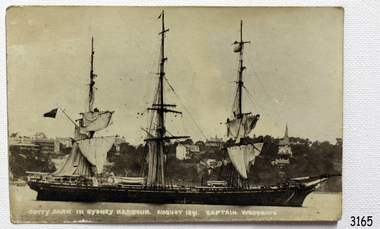 Flagstaff Hill Maritime Museum and Village
Postcard - Vessel, Sailing Ship, Cutty Sark in Sydney Harbour, After August 1891
... commercial trading vessel...cargo...Flagstaff Hill Warrnambool Flagstaff Hill Maritime Museum Shipwreck Coast Flagstaff Hill Maritime Village Maritime Museum Great Ocean Road Cutty sark historic sailing ship tea clipper sail training vessel cadet training ship commercial trading vessel cargo sail vessel clipper races Scott and Linton of Dunbarton Scottland race record transportation Ferreria 1869 tea cargo tea trade China tea wool export Australian export Australian wool export China tea trade Cornwall training ship Greenwich British Museum Captain Richard Woodget Captain Woodget "CUTTY SARK IN SYDNEY HARBOUR. ...Captain Richard Woodget (1845-1928) was renowned for his successful command of the Cutty Sark. He began his maritime career in 1861 as an apprentice seaman at almost 15 years old and received his Master Certificate in 1871. In 1881, aged 35, he took his first command on the vessel Coldstream. His sailing skill and careful financial management earned him the command of the Cutty Sark for ten of its voyages. For another year, he commanded the Coldingham, then retired from life as a mariner in 1896. The Cutty Sark was built in Britain in 1869 and was one of the last great sailing ships. At first, it carried tea from China. Later, it was used to transport wool from Australia. It became famous for its speed and held the record for the fastest voyage from Australia to Britain for ten years. Later, a Portuguese company bought the ship and renamed it Ferreira. After that, a retired sea captain purchased it to use as a training ship in Cornwall. When the captain died, the ship was given to a training college in Greenwich in 1938. In 1954, it was placed in dry dock at Greenwich, where it remains on display. The postcard is important for is connection with the vessel, Cutty Sark, a special ship because it carried wool from Australia to other parts of the world. Postcards like this one help us imagine what sea travel was like before steam-powered ships were common, and they show us how trade, travel and migration changed over time. The Cutty Sark is also famous for being very fast. It set a record for the journey from Australia to Britain and kept that title for ten years. Today, people still recognise its importance because it has been carefully preserved and is on display at the British Maritime Museum in Greenwich. Its story has also made it a favourite subject for people who enjoy building ship models. The postcard is important to Australian history, as it shows the Cutty Sark at Sydney on one of its voyages, in the command of Captain Richard Woodget, a respected mariner and master of sailing ships.Postcard: Black and white postcard of a photographed image of a 3-masted sailing ship, sails half-lowered. Behind the vessel is a hill with buildings on it. A white handwritten inscription is along the base of the postcard. The vessel is the Cutty Sark in Sydney Harbour in August 1891. Its master was Captain Woodget."CUTTY SARK IN SYDNEY HARBOUR. AUGUST 1891. CAPTAIN WOODGATE."flagstaff hill, warrnambool, flagstaff hill maritime museum, shipwreck coast, flagstaff hill maritime village, maritime museum, great ocean road, cutty sark, historic sailing ship, tea clipper, sail training vessel, cadet training ship, commercial trading vessel, cargo sail vessel, clipper races, scott and linton of dunbarton scottland, race record, transportation, ferreria, 1869, tea cargo, tea trade, china tea, wool export, australian export, australian wool export, china tea trade, cornwall, training ship, greenwich, british museum, captain richard woodget, captain woodget -
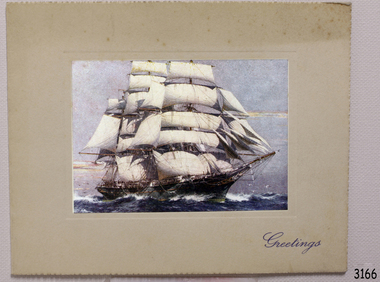 Flagstaff Hill Maritime Museum and Village
Photograph - Vessel, Sailing Ship, Jack Spurling (John Robert Charles Spurling), marine artist, circa 19th century
... commercial trading vessel...cargo...Flagstaff Hill Warrnambool Flagstaff Hill Maritime Museum Shipwreck Coast Flagstaff Hill Maritime Village Maritime Museum Great Ocean Road Cutty sark historic sailing ship tea clipper sail training vessel cadet training ship commercial trading vessel cargo sail vessel clipper races Scott and Linton of Dunbarton Scottland race record Ferreria 1869 tea cargo tea trade China tea wool export Australian export Australian wool export China tea trade Cornwall training ship Greenwich British Museum postcard coloured postcard postcard of a painting Jack Spurling British maritime artist ship portraits John 'Jack' Robert Charles Spurling "Greetings" Photograph: coloured image of the sailing ship Cutty Sark by artist J Spurling. ...The card is a copy of a painting by the renowned British maritime artist Jack Spurling (John (Jack) Robert Charles Spurling 1870-1933). Spurling's love for the sea was fulfilled as a teenager when he worked as an apprentice, eventually gaining a Second Mate certificate and going on to join the Blue Anchor Line as a junior officer. His love for the sea shows in his detailed paintings of ship portraits. THE CUTTY SARK: - The Cutty Sark was built in Britain in 1869 and was one of the last great sailing ships. At first, it carried tea from China. Later, it was used to transport wool from Australia. It became famous for its speed and held the record for the fastest voyage from Australia to Britain for ten years. Later, a Portuguese company bought the ship and renamed it Ferreira. After that, a retired sea captain purchased it to use as a training ship in Cornwall. When the captain died, the ship was given to a training college in Greenwich in 1938. In 1954, it was placed in dry dock at Greenwich, where it remains on display.The card depicts the clipper, Cutty Sark, which was a special ship because it carried wool from Australia to other parts of the world. Cards like this one help us imagine what sea travel was like before steam-powered ships became common, and they show us how trade, travel, and migration evolved. The Cutty Sark is also famous for its speed. It set a record for the journey from Australia to Britain and kept that title for ten years. Today, people still recognise its importance because it has been carefully preserved and is on display at the British Maritime Museum in Greenwich. The picture is a copy of a painting by renowned maritime artist Jack Spurling, who was famous for his ship portraits.Photograph: coloured image of the sailing ship Cutty Sark by artist J Spurling. The image is mounted on a card used as a greeting card. It has a printed inscription. "Greetings"flagstaff hill, warrnambool, flagstaff hill maritime museum, shipwreck coast, flagstaff hill maritime village, maritime museum, great ocean road, cutty sark, historic sailing ship, tea clipper, sail training vessel, cadet training ship, commercial trading vessel, cargo sail vessel, clipper races, scott and linton of dunbarton scottland, race record, ferreria, 1869, tea cargo, tea trade, china tea, wool export, australian export, australian wool export, china tea trade, cornwall, training ship, greenwich, british museum, postcard, coloured postcard, postcard of a painting, jack spurling, british maritime artist, ship portraits, john 'jack' robert charles spurling -
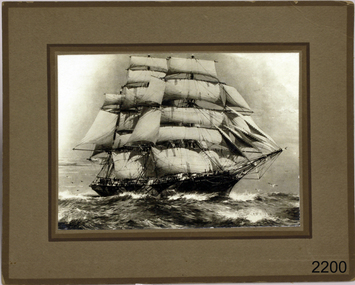 Flagstaff Hill Maritime Museum and Village
Photograph - Vessel, Sailing Ship, Cutty Sark, Between c.1869-1895
... commercial trading vessel...cargo...Flagstaff Hill Warrnambool Flagstaff Hill Maritime Museum Shipwreck Coast Flagstaff Hill Maritime Village Maritime Museum Great Ocean Road Cutty sark historic sailing ship tea clipper sail training vessel cadet training ship commercial trading vessel cargo sail vessel clipper races Scott and Linton of Dunbarton Scottland race record Ferreria 1869 tea cargo tea trade China tea wool export Australian export Australian wool export China tea trade Thermopylae Photograph framed black and white photograph behind glass, depicting the tall ship "Cutty Sark" in full rig. ...THE CUTTY SARK: The ship Cutty Sark was built expressly for the China Tea Trade and was involved in the famous tea clipper races between 1859 and 1872. It was designed and built by Scott and Linton of Dunbarton, Scotland. Cutty Sark holds the record with 363 knots done more than once. On one occasion, it managed speeds of 362 and 363 knots on two consecutive days. In 1872, it had the misfortune of losing its rudder while racing the "Thermopylae" but was able to continue the race after repairs.The photograph of the Cutty Sark is significant for showing a special ship which carried wool from Australia to other parts of the world. The photograph helps us imagine what sea travel was like before steam-powered ships were common, and they show us how trade, travel and migration changed over time. The Cutty Sark is famous for being very fast. It set a record for the journey from Australia to Britain and kept that title for ten years. Today, people still recognise its importance because it has been carefully preserved and is on display at the British Maritime Museum in Greenwich. Photograph framed black and white photograph behind glass, depicting the tall ship "Cutty Sark" in full rig. Figures are on deck. flagstaff hill, warrnambool, flagstaff hill maritime museum, shipwreck coast, flagstaff hill maritime village, maritime museum, great ocean road, cutty sark, historic sailing ship, tea clipper, sail training vessel, cadet training ship, commercial trading vessel, cargo sail vessel, clipper races, scott and linton of dunbarton scottland, race record, ferreria, 1869, tea cargo, tea trade, china tea, wool export, australian export, australian wool export, china tea trade, thermopylae -
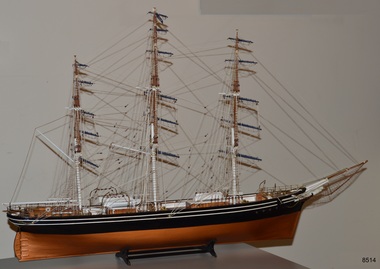 Flagstaff Hill Maritime Museum and Village
Craft - Ship Model, Billings Boats Denmark Aps, Cutty Sark, 1980s
... Commercial trading vessel...Cargo...Flagstaff Hill Warrnambool Shipwrecked coast Flagstaff Hill Maritime Museum Maritime Museum Shipwreck coast Flagstaff Hill Maritime Village Great Ocean Road CUnYSARK Historic sailing ship Tea clipper Sail training vessel Cadet training ship Commercial trading vessel Cargo sail vessel Ship model CUTTY SARK Ship model; clipper ship, the 'Cutty Sark', a three-masted clipper ship, bare rigging, netting below the bowspit, and fine chains hanging from the bowspit. ...This ship model of the Cutty Sark was hand-built in the 1980s from a model kit produced by Billings, Denmark. It was on display in the Olde Maritime Motor Inn in Warrnambool until it was refurbished around 2015. The Cutty Sark was a famous clipper ship, launched in 1869 for the tea trade from China to London. The ship was designed for speed, with the ambition to be the fastest ship. In the late 1800s, it competed in the tea clipper races. It was eventually sold to a Portuguese company, Ferreria, and took on the company's name. It was sold again and renamed Maria do Amparo. Finally, the ship's name was returned to the original 'Cutty Sark' when it was purchased by Captain Dowman for use as a cadet training ship. The ship continued trading and in 1922 it became the last operating clipper ship in the world. The ship is now a museum, preserved in a dry dock at Greenwich, England, as part of the British National Historic Fleet. About Barry Williams: - The maker, Barry Williams, worked for the Australian Shipping Line, Huddart Packard Ltd., until it closed down in 1960. Williams then worked for Shaw Savill & Albion Co. Ltd., a substantial British passenger and liner company. and subsequently Furness Withy Ltd. (SS&A's parent company). In the late 1970s Williams and two friends established their own ship chartering company in Melbourne, the Harwood Shipping Co. During the early 1970s Williams and his wife lived in London, near Greenwich, and often walked along the river where the Cutty Sark Maritime Museum is located. The fascination of the Cutty Sark led Williams to build model ships of the same era. At one stage Williams lost the rigging plan for the Cutty Sark but one of his partners, on a visit to London, photographed the Cutty Sark on the river, and Williams used these to complete the rigging on the model. Williams found the making of the model a very demanding but also pleasurable exercise.The model is significant for showing a visual representation of one of the most famous tea clippers, the vessel Cutty Sark. The three-masted ship was built for speed and traded tea between England and China. In 1922 the Cutty Sark became the last operating tea clipper in the world. The craft of ship model building has been popular for centuries, especially with people associated with the sea, such as this model builder, whose career was based around the shipping industry.Ship model; clipper ship, the 'Cutty Sark', a three-masted clipper ship, bare rigging, netting below the bowspit, and fine chains hanging from the bowspit. Black hull with two parallel horizontal stripes below the rail. Lifeboats on board. The white figurehead is below the bowsprit. The model comes with a cradle stand. The ship's name is not visible on the model.flagstaff hill, warrnambool, shipwrecked coast, flagstaff hill maritime museum, maritime museum, shipwreck coast, flagstaff hill maritime village, great ocean road, cunysark, historic sailing ship, tea clipper, sail training vessel, cadet training ship, commercial trading vessel, cargo sail vessel, ship model cutty sark -
 Flagstaff Hill Maritime Museum and Village
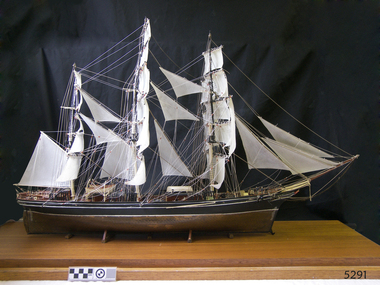
Craft - Ship model, Cutty Sark, 20th century
... Commercial trading vessel...Cargo...The vessel traded in tea from China for a few years, then began trading with Australia in the wool industry. It held the record sailing speed from Australia to Britain for ten years! Later, a Portuguese company bought her as a cargo...cargos of wool from the Australian wool industry. Flagstaff Hill Warrnambool Shipwrecked coast Flagstaff Hill Maritime Museum Maritime Museum Shipwreck coast Flagstaff Hill Maritime Village Great Ocean Road CUTTY SARK Historic sailing ship Tea clipper Sail training vessel Cadet training ship Commercial trading vessel Cargo sail vessel Ship model CUTTY SARK Australian wool export Model of the sailing ship, CUTTY SARK, in full rig, with a lifeboat on deck. ...ABOUT THE CUTTY SARK The CUTTY SARK, built in Britain in 1869, was one of the last historic sailing ships. The vessel traded in tea from China for a few years, then began trading with Australia in the wool industry. It held the record sailing speed from Australia to Britain for ten years! Later, a Portuguese company bought her as a cargo ship and then renamed it FERREIRA. Later, it was purchased by a returned sea captain for use as a training ship in Cornwall. After the captain’s death, the ship was transferred to a training college in Greenwich in 1938. In 1954, the sailing ship was placed permanently in dry dock at Greenwich for display.The sailing ship CUTTY SARK carried export cargos of wool from the Australian wool industry.Model of the sailing ship, CUTTY SARK, in full rig, with a lifeboat on deck. A black stripe with thin, white boarders is around the ship. The model is mounted on a timber plinth. flagstaff hill, warrnambool, shipwrecked coast, flagstaff hill maritime museum, maritime museum, shipwreck coast, flagstaff hill maritime village, great ocean road, cutty sark, historic sailing ship, tea clipper, sail training vessel, cadet training ship, commercial trading vessel, cargo sail vessel, ship model cutty sark, australian wool export -
Glenelg Shire Council Cultural Collection
Photograph - Photograph - Mac's Hotel, Portland, n.d
... ... vessel... cargo...Portland Harbour Macs Hotel vessel cargo celebration recreation Back: 'Bay & Piers, Portland' - handwritten, black pen '15' - pencil Black and white photo taken from Mac's Hotel, looking over the bay, Ocean Pier and Railway Pier, both with vessels berthed; Henty Beach with band rotunda; several people in period dress in foreground, near intersection of Bentinck and Cliff Streets Photograph Photograph - Mac's Hotel, Portland ...Black and white photo taken from Mac's Hotel, looking over the bay, Ocean Pier and Railway Pier, both with vessels berthed; Henty Beach with band rotunda; several people in period dress in foreground, near intersection of Bentinck and Cliff StreetsBack: 'Bay & Piers, Portland' - handwritten, black pen '15' - pencilportland harbour, macs hotel, vessel, cargo, celebration, recreation -
Glenelg Shire Council Cultural Collection
Photograph - Photograph - Portland Centenary Celebrations, 19/11/1934
... ... vessel... cargo...centenary Portland 1934 Henty Portland Harbour vessel cargo navy Black and white photo. Henty Beach, Portland, Centenary celebrations 19 November 1934. ...Black and white photo. Henty Beach, Portland, Centenary celebrations 19 November 1934. Part of crowd in foreground, piers, harbour, naval vessel, in backgroundcentenary portland, 1934, henty, portland harbour, vessel, cargo, navy -
Glenelg Shire Council Cultural Collection
Artwork, other - Wooden Carving, The Polly Woodside, 1974
... The Polly Woodside was built in Belfast in 1885, the three-masted cargo vessel carried coal and wheat between England and South America....The Polly Woodside was built in Belfast in 1885, the three-masted cargo vessel carried coal and wheat between England and South America. carving artwork Polly Woodside Back: 'The Polly Woodside carved by W.L. ...The Polly Woodside was built in Belfast in 1885, the three-masted cargo vessel carried coal and wheat between England and South America.Wooden wall plaque - a carving of the 'Polly Woodside. It is stained, gold with brown tones. In a frame which is painted gold, 3 strips of timber screwed to back of plaque, top bottom and centre. Two eyelets and string for hanging.Back: 'The Polly Woodside carved by W.L. Dusting 1974' - hand written, black birocarving, artwork, polly woodside -
![Black and white photograph of Gethla Forsyth by Antoine Kershaw [ca.1941]](/media/collectors/50187a8f023fd7201471f198/items/696590b4695e35e05ee5207e/item-media/6968824e244762afec8d902b/item-fit-380x285.jpg?cb=6) Alfred Hospital Nurses League - Nursing History Collection
Alfred Hospital Nurses League - Nursing History CollectionPhotograph - Black and white photograph, Gethla Forsyth
... On February 12 1942 she was one of the nurses evacuated by the cargo vessel Empire Star. This ship suffered bomb damage, but after emergency repairs in Batavia (Jakarta) arrived in Freemantle on February 23 1942. ...On February 12 1942 she was one of the nurses evacuated by the cargo vessel Empire Star. This ship suffered bomb damage, but after emergency repairs in Batavia (Jakarta) arrived in Freemantle on February 23 1942. ...Gethla Forsyth, Alfred trainee, served with the Australian Army Nursing Serviceduring World War II. After enlisting in July 1941, she was sent to Singapore as part of reinforcements for the 2/13th Australian General Hospital in January 1942. On February 12 1942 she was one of the nurses evacuated by the cargo vessel Empire Star. This ship suffered bomb damage, but after emergency repairs in Batavia (Jakarta) arrived in Freemantle on February 23 1942. Prior to discharge in 1946 she also woked at Duntroon Hospital Gethla also helped establish the Nurses Memorial Centre in St Kilda Rd MelbourneOf significance to the AHNL, as Gethla Forsyth was an Alfred Hospital Nursing graduate (1936)A4 piece of white paper on which is mounted a high quality copy of a black and white portrait photograph along with handwritten notesback of photograph is labeled. Previous catalogue number written at top rightgethla forsyth, world war 1939-1945, world war 1939-1945 nursing, australian army nursing service, alfred hospital, nurses memorial centre-history -
 Alfred Hospital Nurses League - Nursing History Collection
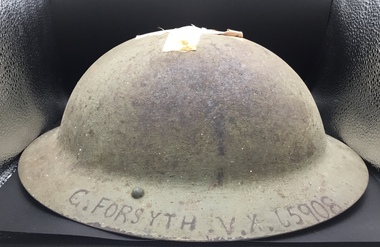
Uniform - Helmet, Gethla Forsyth Helmet
... On February 12 1942 she was one of the nurses evacuated by the cargo vessel Empire Star. This ship suffered bomb damage, but after emergency repairs in Batavia (Jakarta) arrived in Freemantle on February 23 1942. ...On February 12 1942 she was one of the nurses evacuated by the cargo vessel Empire Star. This ship suffered bomb damage, but after emergency repairs in Batavia (Jakarta) arrived in Freemantle on February 23 1942. ...Gethla Forsyth, Alfred trainee, served with the Australian Army Nursing Serviceduring World War II. After enlisting in July 1941, she was sent to Singapore as part of reinforcements for the 2/13th Australian General Hospital in January 1992. On February 12 1942 she was one of the nurses evacuated by the cargo vessel Empire Star. This ship suffered bomb damage, but after emergency repairs in Batavia (Jakarta) arrived in Freemantle on February 23 1942. Prior to discharge in 1946 she also woked at Duntroon Hospital Gethla also helped establish the Nurses Memorial Centre in St Kilda Rd MelbourneOf significance to the AHNL, as Gethla Forsyth was an Alfred Hospital Nursing graduate (1936)Domed metal helmet with brim. The top of the dome has a red cross [ made from tape]. The dome is lined with black leather attached by metal fastenigs. There is also a goup photograph including Gethla forsyth holding her helmet'VX65908' is written on the fabric chin strap .gethla forsyth, world war 1939-1945, world war 1939-1945 nursing, australian army nursing service, alfred hospital, nurses memorial centre-history -
![Gethla Forsyth in uniform of the Austaralian Army Nursing Service, [ca.1940's]](/media/collectors/50187a8f023fd7201471f198/items/696b0c702e2ab29d2bc8b1e9/item-media/696b0cd52e2ab29d2bc8b836/item-fit-380x285.jpg?cb=6) Alfred Hospital Nurses League - Nursing History Collection
Alfred Hospital Nurses League - Nursing History CollectionPhotograph - Black and white photograph, Gethla Forsyth
... On February 12 1942 she was one of the nurses evacuated by the cargo vessel Empire Star. This ship suffered bomb damage, but after emergency repairs in Batavia (Jakarta) arrived in Freemantle on February 23 1942. ...On February 12 1942 she was one of the nurses evacuated by the cargo vessel Empire Star. This ship suffered bomb damage, but after emergency repairs in Batavia (Jakarta) arrived in Freemantle on February 23 1942. ...Gethla Forsyth, Alfred trainee, served with the Australian Army Nursing Serviceduring World War II. After enlisting in July 1941, she was sent to Singapore as part of reinforcements for the 2/13th Australian General Hospital in January 1992. On February 12 1942 she was one of the nurses evacuated by the cargo vessel Empire Star. This ship suffered bomb damage, but after emergency repairs in Batavia (Jakarta) arrived in Freemantle on February 23 1942. Prior to discharge in 1946 she also woked at Duntroon Hospital Gethla also helped establish the Nurses Memorial Centre in St Kilda Rd MelbourneOf significance to the AHNL, as Gethla Forsyth was an Alfred Hospital Nursing graduate (1936)Black and white photocopy of a photograph of Gethla Forsyth in the uniform of the Austaralian Army Nursing Service. Gethla is wearing a coat, hat, tie and gloves and is standing in a brick archway. A4 piece of white paper has four other aricles copied onto it Previous catalogue number written at leftgethla forsyth, world war 1939-1945, world war 1939-1945 nursing, australian army nursing service, alfred hospital, nurses memorial centre-history -
 Alfred Hospital Nurses League - Nursing History Collection
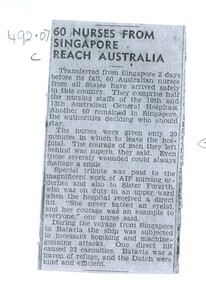
Newspaper - Newspaper clippings (Copy), '60 nurses from Singapore reach Australia'
... On February 12 1942 she was one of the nurses evacuated by the cargo vessel Empire Star. This ship suffered bomb damage, but after emergency repairs in Batavia (Jakarta) arrived in Freemantle on February 23 1942. ...On February 12 1942 she was one of the nurses evacuated by the cargo vessel Empire Star. This ship suffered bomb damage, but after emergency repairs in Batavia (Jakarta) arrived in Freemantle on February 23 1942. ...Gethla Forsyth, Alfred trainee, served with the Australian Army Nursing Serviceduring World War II. After enlisting in July 1941, she was sent to Singapore as part of reinforcements for the 2/13th Australian General Hospital in January 1992. On February 12 1942 she was one of the nurses evacuated by the cargo vessel Empire Star. This ship suffered bomb damage, but after emergency repairs in Batavia (Jakarta) arrived in Freemantle on February 23 1942. Prior to discharge in 1946 she also woked at Duntroon Hospital Gethla also helped establish the Nurses Memorial Centre in St Kilda Rd Melbourne. This article was written in 1942 after Gethla's return to AustraliaOf significance to the AHNL, as Gethla Forsyth was an Alfred Hospital Nursing graduateCopied on to A4 piece of white paper with four items Previous catalogue number written at left of itemsgethla forsyth, world war 1939-1945, world war 1939-1945 nursing, australian army nursing service, alfred hospital -
 Alfred Hospital Nurses League - Nursing History Collection
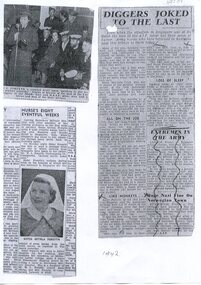
Newspaper - Newspaper clippings (Copy), Gethla Forsyth newspaper clippings
... On February 12 1942 she was one of the nurses evacuated by the cargo vessel Empire Star. This ship suffered bomb damage, but after emergency repairs in Batavia (Jakarta) arrived in Freemantle on February 23 1942. ...On February 12 1942 she was one of the nurses evacuated by the cargo vessel Empire Star. This ship suffered bomb damage, but after emergency repairs in Batavia (Jakarta) arrived in Freemantle on February 23 1942. ...Gethla Forsyth, Alfred trainee, served with the Australian Army Nursing Serviceduring World War II. After enlisting in July 1941, she was sent to Singapore as part of reinforcements for the 2/13th Australian General Hospital in January 1992. On February 12 1942 she was one of the nurses evacuated by the cargo vessel Empire Star. This ship suffered bomb damage, but after emergency repairs in Batavia (Jakarta) arrived in Freemantle on February 23 1942. Prior to discharge in 1946 she also woked at Duntroon Hospital Gethla also helped establish the Nurses Memorial Centre in St Kilda Rd Melbourne. These aricles were written in 1942 after Gethla's return to AustraliaOf significance to the AHNL, as Gethla Forsyth was an Alfred Hospital Nursing graduateA4 piece of white paper on which are copied three newspaper clippings Previous catalogue number written at top right, '1942' written at bootom of page [black ink]gethla forsyth, world war 1939-1945, world war 1939-1945 nursing, australian army nursing service, alfred hospital -
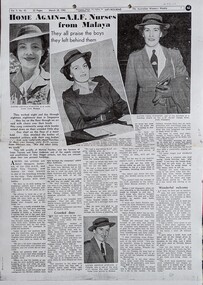 Alfred Hospital Nurses League - Nursing History Collection
Magazine - The Australian Women's Weekly, March 28 1943, page 44, 'Home again - A.I.F. nurses from Malaya'
... On February 12 1942 she was one of the nurses evacuated by the cargo vessel Empire Star. This ship suffered bomb damage, but after emergency repairs in Batavia (Jakarta) arrived in Freemantle on February 23 1942. ...On February 12 1942 she was one of the nurses evacuated by the cargo vessel Empire Star. This ship suffered bomb damage, but after emergency repairs in Batavia (Jakarta) arrived in Freemantle on February 23 1942. ...Gethla Forsyth, Alfred trainee, served with the Australian Army Nursing Serviceduring World War II. After enlisting in July 1941, she was sent to Singapore as part of reinforcements for the 2/13th Australian General Hospital in January 1992. On February 12 1942 she was one of the nurses evacuated by the cargo vessel Empire Star. This ship suffered bomb damage, but after emergency repairs in Batavia (Jakarta) arrived in Freemantle on February 23 1942. Prior to discharge in 1946 she also woked at Duntroon Hospital Gethla also helped establish the Nurses Memorial Centre in St Kilda Rd Melbourne. These aricles were written in 1942 after Gethla's return to AustraliaOf significance to the AHNL, as Gethla Forsyth was an Alfred Hospital Nursing graduateCopy of page from magazine, in addition to the written article there are photographs of four nurses Previous catalogue number written at top right, and centre right margin [black ink]gethla forsyth, world war 1939-1945, world war 1939-1945 nursing, australian army nursing service, alfred hospital -
![Copy of part of article 'Anzac reunions'that includes photograph of three women [ca.1950's] the Argus Weekender](/media/collectors/50187a8f023fd7201471f198/items/696b13772e2ab29d2bc9353e/item-media/696b15032e2ab29d2bc946fc/item-fit-380x285.jpg?cb=6) Alfred Hospital Nurses League - Nursing History Collection
Alfred Hospital Nurses League - Nursing History CollectionNewspaper - Newspaper clipping (copy), Anzac reunion
... On February 12 1942 she was one of the nurses evacuated by the cargo vessel Empire Star. This ship suffered bomb damage, but after emergency repairs in Batavia (Jakarta) arrived in Freemantle on February 23 1942. ...On February 12 1942 she was one of the nurses evacuated by the cargo vessel Empire Star. This ship suffered bomb damage, but after emergency repairs in Batavia (Jakarta) arrived in Freemantle on February 23 1942. ...Gethla Forsyth, Alfred trainee, served with the Australian Army Nursing Serviceduring World War II. After enlisting in July 1941, she was sent to Singapore as part of reinforcements for the 2/13th Australian General Hospital in January 1992. On February 12 1942 she was one of the nurses evacuated by the cargo vessel Empire Star. This ship suffered bomb damage, but after emergency repairs in Batavia (Jakarta) arrived in Freemantle on February 23 1942. Prior to discharge in 1946 she also woked at Duntroon Hospital Gethla also helped establish the Nurses Memorial Centre in St Kilda Rd Melbourne. This article appeared in the Argus Weekednder after an ANZAC reunion at the Nurses Memorial CentreOf significance to the AHNL, as Gethla Forsyth was an Alfred Hospital Nursing graduate (1936)Black and white photocopy of newpaper clipping with photograph of three women M Muldoon, Gethla Forsyth and V Bullwinkel take at an Anzac Reunion in a room at the War Nurses Memorial Centre St Kilda Rd Melbourne Previous catalogue number written at top leftgethla forsyth, world war 1939-1945, world war 1939-1945 nursing, australian army nursing service, alfred hospital, nurses memorial centre-history
