
Showing 34 items matching "censorship"
-
 Bendigo Historical Society Inc.
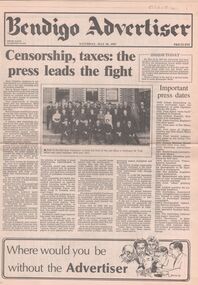
Newspaper - Trevor Lamb collection: Bendigo Advertiser Saturday, May 30, 1987
... The article on the front is titled: "Censorship, taxes: the press leads the fight....The article on the front is titled: "Censorship, taxes: the press leads the fight. ...BHS CollectionFour pages of the Bendigo Advertiser from Saturday, May 30,1987. The article on the front is titled: "Censorship, taxes: the press leads the fight.bendigo advertiser, 1987 -
 Bendigo Military Museum
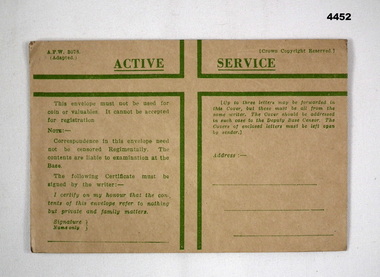
Container - SERVICE ENVELOPE, Commonwealth Government, C.1939 - 45
... Below the cross are instructions fro use. Notes about censorship. Unused...Below the cross are instructions fro use. Notes about censorship. Unused Container SERVICE ENVELOPE Commonwealth Government ...See also 3146, 4451P and 4453Brown paper envelope. Green ink. Double cross across centre. Words "Active Service" in large writing above the cross. Below the cross are instructions fro use. Notes about censorship. Unusedenvelopes, active service, ww2 -
 Bendigo Historical Society Inc.
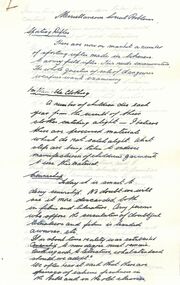
Document - Miscellaneous Social Problems
... Subheadings are: legalized abortion, sporting rifles, inflammable clothes, censorship, and hanging. Notes for discussion at Country Party meetings. ...Subheadings are: legalized abortion, sporting rifles, inflammable clothes, censorship, and hanging. Notes for discussion at Country Party meetings. ...Six pages handwritten notes on "Miscellaneous Social Problems" by John Ellison. Subheadings are: legalized abortion, sporting rifles, inflammable clothes, censorship, and hanging. Notes for discussion at Country Party meetings. Part of the Aileen and John Ellison collection.country party, social problems, legalized abortion, sporting rifles, hanging -
 Bendigo Military Museum
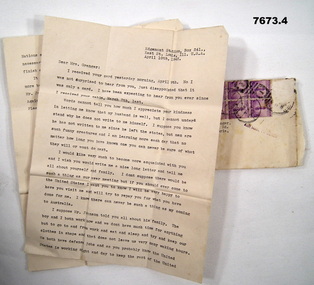
Letter - LETTER AND ENVELOPE, Edna Johnson, 10 April 1942
... ...Censorship...The US soldier was not permitted to communicate with family members as to their location. the Granger family circumvented that by sending a cable to his family and this letter was a reply to them. US Soldiers Censorship Letter .1) Address on top - Edgemont Station, Box 241, East St, Louis, Ill, USA, April 10th 1942. .2) Signed "Sincerely Edna Johnson. .1) Address on front, Mrs Enid Granger, 32 Mt Korong Rd, Bendigo, Victoria, Australia. .1) & .2) A4 page typed letter (2 pages) from Edna Johnson to Enid Granger. ...Letter was from a USA family member of a US soldier staying at a private residence in Bendigo. The US soldier was not permitted to communicate with family members as to their location. the Granger family circumvented that by sending a cable to his family and this letter was a reply to them..1) & .2) A4 page typed letter (2 pages) from Edna Johnson to Enid Granger. Black typed writing on cream coloured paper. Address on top and signed off on page 2. .3) Cream coloured envelope, address on front and six stamps. Various black stamps on front and air mail stamp address from written on back. .4) Small newspaper cut out photo of a young girl..1) Address on top - Edgemont Station, Box 241, East St, Louis, Ill, USA, April 10th 1942. .2) Signed "Sincerely Edna Johnson. .1) Address on front, Mrs Enid Granger, 32 Mt Korong Rd, Bendigo, Victoria, Australia.us soldiers, censorship, letter -
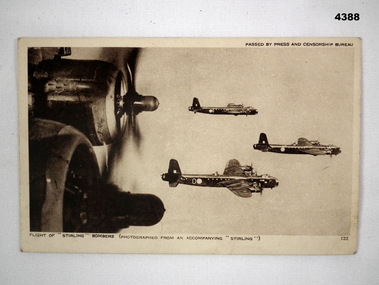 Bendigo Military Museum
Postcard - SOUVENIR POSTCARD, Photochrom Co Ltd
... The photo features a flight of four Stirling Bombers taken c WW2 and passed by the press and censorship Bureau in the U.K. Part of the Frederick Gardner Davey DFC RAAF collection. ...The photo features a flight of four Stirling Bombers taken c WW2 and passed by the press and censorship Bureau in the U.K. Part of the Frederick Gardner Davey DFC RAAF collection. ...The photo features a flight of four Stirling Bombers taken c WW2 and passed by the press and censorship Bureau in the U.K. Part of the Frederick Gardner Davey DFC RAAF collection. Refer Cat No 3536P for his service record.Postcard, rectangular shape featuring a sepia tone photograph of 4 Aeroplanes in flight, photo has a white border with captions top and bottom in black print, rear has details of the photograph printed in black type with space allocated for correspondence and a stamp.postcards, bombers, ww2, aircraft -
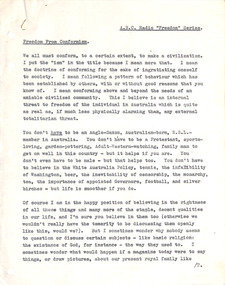 Robin Boyd Foundation
Document - Manuscript, Robin Boyd, Freedom From Conformism, 1962
... He also discusses the undermining of freedom, self-censorship and 'self-inflicted restriction of liberty' in Australian society....He also discusses the undermining of freedom, self-censorship and 'self-inflicted restriction of liberty' in Australian society. ...Boyd discusses, in a sardonic tone, how we have lost our ability to voice criticism of the establishment and think for ourselves. He also discusses the undermining of freedom, self-censorship and 'self-inflicted restriction of liberty' in Australian society.Original manuscript of a script for the ABC Radio ‘Freedom’Series, 16.07.1962.Typewritten (c copy), pencil edits, quarto, 7 pagescriticism, conformism, robin boyd, manuscript -
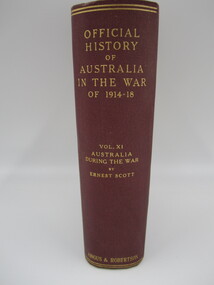 4th/19th Prince of Wales's Light Horse Regiment Unit History Room
Book, Ernest Scott, Official History of Australia in the War of 1914-18 Vol XI Australia During the War, 1936
... ...Censorship...WW1 Australia at War Censorship Political scene Ernest Scott Hard covered book of 922 pages Official History of Australia in the War of 1914-18 Vol XI Australia During the War Book Book Ernest Scott ...Hard covered book of 922 pagesErnest Scottww1, australia at war, censorship, political scene -
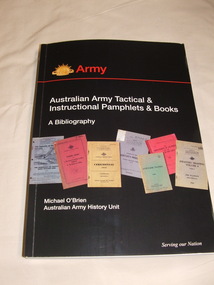 4th/19th Prince of Wales's Light Horse Regiment Unit History Room
Book, Army History Unit, Australian Army Tactical & Instructional Pamphlets & Books - A Bibliography, 2017
... The bibliography demonstrates the range of subject areas that Army has addressed over its history, including such esoteric issues as censorship, the evolution of Signals training, accreditation of war correspondents & the management of enemy POW and repatriation of Australians taken POW....The bibliography demonstrates the range of subject areas that Army has addressed over its history, including such esoteric issues as censorship, the evolution of Signals training, accreditation of war correspondents & the management of enemy POW and repatriation of Australians taken POW. ...This second edition charts the evolution of doctrine development in the Australian Army by detailing a list of instructional and tactical literature of the Army and its precursor pre-Federation Australian colonies. The bibliography demonstrates the range of subject areas that Army has addressed over its history, including such esoteric issues as censorship, the evolution of Signals training, accreditation of war correspondents & the management of enemy POW and repatriation of Australians taken POW.ISBN 978-0-9946046-8-2bibliography, tactical & instructional pamphlets & books, military education -
 Bendigo Military Museum
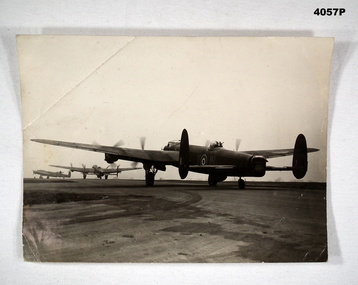
Photograph - PHOTOGRAPH, LANCASTER, Central Press Photos Ltd, c. WWII
... As passed by censor. Press and Censorship Bureau". 2 "Exclusive Central Press Photo. ...As passed by censor. Press and Censorship Bureau". 2 "Exclusive Central Press Photo. ...Three R.A.F Lancaster bombers preparing for take-off from an airfield during WWII. Part of Frederick Gardner Davey DFC No.460533 RAAF Collection. See Cat. No. 3536P for his service record.Photo, black & white, of three aircraft on a runway preparing to take-off.On back, hand written in blue ink: "Mrs I. Davey Pres. Strathdale CWA. Lancasters ready for take-off. On back, - two stamps in purple ink: 1 "Certified by Central Press Photos Ltd. As passed by censor. Press and Censorship Bureau". 2 "Exclusive Central Press Photo. Made in England".lancasters, bombers, raaf -
 Women's Art Register
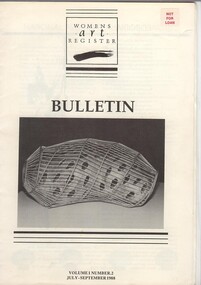
Women's Art Register Bulletin, Women's Art Register, Bulletin, 1988
... ...Censorship...Bronwyn Oliver 10th Mildura Sculpture Triennial Sue Ford Jill Peck Censorship Catherine Phillips Pippa Robinson Bulletin Women's Art Register Bulletin Women's Art Register ...bronwyn oliver, 10th mildura sculpture triennial, sue ford, jill peck, censorship, catherine phillips, pippa robinson -
 Bendigo Military Museum
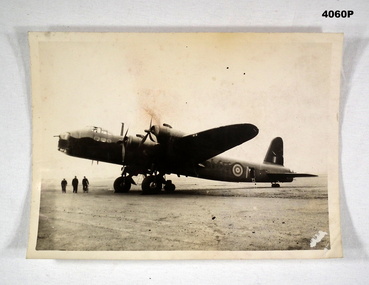
Photograph - PHOTOGRAPH, STIRLING BOMBER, Central Press Photos Ltd, 1942
... Incorporating Central News Illustrations Service, 119 Fleet St London E.C.4" 2 "Certified by Central Press Photos as passed by censor. Press and Censorship Bureau"...Incorporating Central News Illustrations Service, 119 Fleet St London E.C.4" 2 "Certified by Central Press Photos as passed by censor. Press and Censorship Bureau" Photo, black & white, white border, of an aircraft on the ground. ...Short Stirling bomber parked on the ground at home airfield. Part of Frederick Gardner Davey DFC No.410533 RAAF Collection. See Cat. No. 3536P for his service record.Photo, black & white, white border, of an aircraft on the ground. Three men walking and cycling past the front of the aircraft. On back, handwritten in blue link: "A Stirling Bomber 1942". On back, two stamps in purple ink. 1 "Supplied by Central Press Photos Ltd. Incorporating Central News Illustrations Service, 119 Fleet St London E.C.4" 2 "Certified by Central Press Photos as passed by censor. Press and Censorship Bureau"stirling bombers, ww2 -
 Bendigo Military Museum
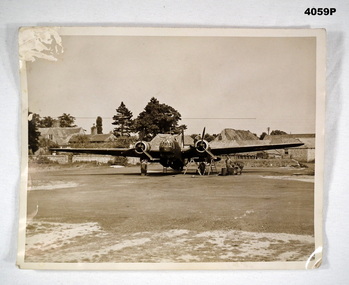
Photograph - PHOTOGRAPH, AIRCRAFT, Central Press Photos Ltd, c. WWII
... Incorporating Central News Illustrations Service, 119 Fleet Street London E.C.4" 2 "Certified by Central Press Photos Ltd as passed by censor. Pres and censorship bureau"...Incorporating Central News Illustrations Service, 119 Fleet Street London E.C.4" 2 "Certified by Central Press Photos Ltd as passed by censor. Pres and censorship bureau" Photo, black & white, white border, of an aircraft being serviced by two airmen. ...Card details a Lancaster bomber, but in all likelihood its a Wellington bomber being serviced at an airfield by ground crew. Part of Frederick Gardner Davey DFC No.410533 RAAF Collection. See Cat. No. 3536P for his service record. Photo, black & white, white border, of an aircraft being serviced by two airmen. Buildings and trees visible in the background.On back, hand written in pencil: "Lancaster by day". On back, two stamps in purple ink: 1 "Copyright photos issued by Central Press Photos Ltd. Incorporating Central News Illustrations Service, 119 Fleet Street London E.C.4" 2 "Certified by Central Press Photos Ltd as passed by censor. Pres and censorship bureau"bombers, ww2 -
 Bendigo Military Museum
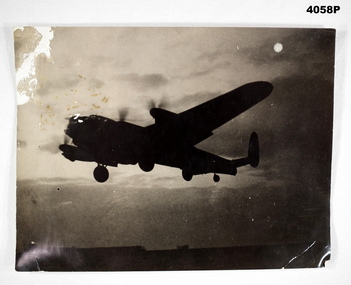
Photograph - PHOTOGRAPH, LANCASTER, Central Press Photos Ltd, c. WWII
... Incorporating Central News Illustrations Service, 119 Fleet Street London E.C.4" 2 "Certified by Central Press Photos Ltd as passed by censor. Press and Censorship Bureau"...Incorporating Central News Illustrations Service, 119 Fleet Street London E.C.4" 2 "Certified by Central Press Photos Ltd as passed by censor. Press and Censorship Bureau" Photo, black & white, of an aircraft silhouetted against a night sky. ...Photograph of a Lancaster bomber leaving on a night bombing mission. Part of Frederick Gardner Davey DFC No. 410533 RAAF Collection. See Cat. No. 3536P for his service record.Photo, black & white, of an aircraft silhouetted against a night sky.On back, hand written in pencil: "A bombers moon and Lancaster". On back, two stamps in purple ink. 1 "Copyright Photo issued by Central Press Photos Ltd. Incorporating Central News Illustrations Service, 119 Fleet Street London E.C.4" 2 "Certified by Central Press Photos Ltd as passed by censor. Press and Censorship Bureau"lancasters, raaf -
 Women's Art Register
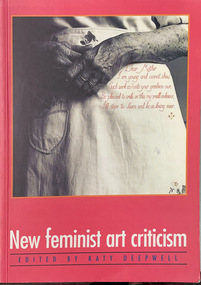
Book - Anthology, Katy Deepwell, New Feminist Art Criticism, 1995
... ...censorship...Complement material held in the Women's Art Register theory psychoanalytic theory modernism curatorship museology censorship hierarchy of media feminist pedagogy education performance art Essays addressing questions surrounding the effects of feminism on arts practice including responses to feminist exhibitions, the way arts degrees are taught d how feminism's engagment with psychoanalysis and postmodernism has deconstructed borders between the arts and crafts. ...Essays addressing questions surrounding the effects of feminism on arts practice including responses to feminist exhibitions, the way arts degrees are taught d how feminism's engagment with psychoanalysis and postmodernism has deconstructed borders between the arts and crafts.Booknon-fictionEssays addressing questions surrounding the effects of feminism on arts practice including responses to feminist exhibitions, the way arts degrees are taught d how feminism's engagment with psychoanalysis and postmodernism has deconstructed borders between the arts and crafts. theory, psychoanalytic theory, modernism, curatorship, museology, censorship, hierarchy of media, feminist pedagogy, education, performance art -
 Melbourne Tram Museum
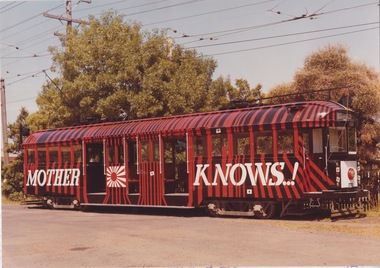
Photograph - W2 class 567 Transporting art tram - Peter Corrigan
... By report, Corrigan was less than impressed by this act of official censorship. Even in its adulterated form, No. 567 did not last, as it was overpainted in 1982". ...By report, Corrigan was less than impressed by this act of official censorship. Even in its adulterated form, No. 567 did not last, as it was overpainted in 1982". ...Photograph shows W2 class tram 567 in Art Tram livery possibly at the Simpson St sidings. Large wording on one side reads "Mother Knows" with a Japanese naval ensign or flag painted between the words, possibly cover a third word. The artist was Peter Corrigan, the work using the Japanese flag created controversy at the time. The second and third photos show the flag covered over. The tram was subsequently repainted during 1978. From the Museum's webpage on Transporting Art: "Peter Corrigan’s cheeky No. 567 created an international incident – the Japanese Embassy lodged a diplomatic protest over his use of their naval ensign with the enigmatic slogan ‘Mother Knows’. The tram was hurriedly withdrawn, and the offending flags were quickly overpainted before No. 567 re-entered traffic. By report, Corrigan was less than impressed by this act of official censorship. Even in its adulterated form, No. 567 did not last, as it was overpainted in 1982". See item 8685.Yields information about Art Tram W2 567.Colour print some with notes on the rear - set of 3.On the smaller prints in pencil "567, Peter Corrigan withdrawn"w2 class, tram 567, art tram, preston workshops, peter corrigan, transporting art -
 Returned Nurses RSL Sub-branch
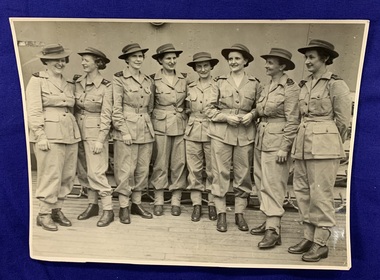
Photograph - Photograph on photo paper, Jacquinot Bay Area, New Britain, [Circa 1940s]
... PASSED BY PUBLICITY CENSORSHIP 8/3/45. " [Typed in blue/purple ink on paper which has been stuck on the back of the photo]...PASSED BY PUBLICITY CENSORSHIP 8/3/45. " [Typed in blue/purple ink on paper which has been stuck on the back of the photo] Unframed, printed black and white photograph on photo paper of 8 women in uniform standing in a row, from left to right Sisters Jean Gracey, Marjorie Smith, Kathleen Barnes, Gertrude Muller, Mary Wilson, Marie O'Laughlan, Dorothea Harrison and Gwen Dwyer. ...Event photography, first Australian Army Nurses to arrive in New Britain.Unframed, printed black and white photograph on photo paper of 8 women in uniform standing in a row, from left to right Sisters Jean Gracey, Marjorie Smith, Kathleen Barnes, Gertrude Muller, Mary Wilson, Marie O'Laughlan, Dorothea Harrison and Gwen Dwyer. "DEPT. OF INFORMATION" [Stamped in purple in on back] "Jacquinot Bay Area, New Britain... 253. The first Australian Army Nurses to arrive in New Britain. Leading from left to right: Sisters Jean Gracey (Nutgrove, Q'sland) Marjorie Smith (Roseville, Sydney) Kathleen Barnes (Nedlands, W.A.) Gertrude Muller (Harrisville, Q'sland) Mary Wilson (Caulfield, Vic.) Marie O'Laughlan (Wangaratta, Vic.) Dorothea Harrison (Beaudesert, Q'sland) and Gwen Dwyer (Kew, Vic.). AUSTRALIAN OFFICIAL PHOTO. PASSED BY PUBLICITY CENSORSHIP 8/3/45. " [Typed in blue/purple ink on paper which has been stuck on the back of the photo]pacific war, jean gracey, marjorie smith, kathleen barnes, gertrude muller, mary wilson, marie o'laughlan, dorothea harrison, gwen dwyer -
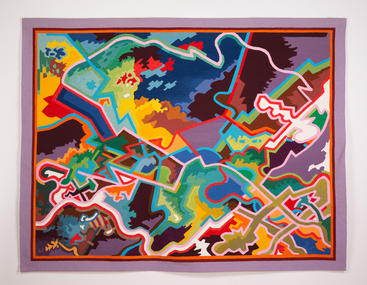 Ararat Gallery TAMA
Mike Brown, Untitled (tapestry), 1982
... An artistic anarchist and polemicist, during his 30-year career he waged an unwavering war on art world conventions and sensibilities, critiquing mass culture, consumerism, sex, advertising, censorship, and embracing counterculture, alternative lifestyles and socialism.’ ...An artistic anarchist and polemicist, during his 30-year career he waged an unwavering war on art world conventions and sensibilities, critiquing mass culture, consumerism, sex, advertising, censorship, and embracing counterculture, alternative lifestyles and socialism.’ ...Mike Brown is known for his bold use of colour and graffiti-like imagery. Charles Nodrum Gallery describe Brown as ‘a unique leader of alternative avant guard art in Australia, and a true bohemian eccentric. An artistic anarchist and polemicist, during his 30-year career he waged an unwavering war on art world conventions and sensibilities, critiquing mass culture, consumerism, sex, advertising, censorship, and embracing counterculture, alternative lifestyles and socialism.’ This tapestry was produced by the Victorian Tapestry Workshop Melbourne (now known as the Australian Tapestry Workshop) in South Melbourne, based on an original painting by Mike Brown. We have exhibited the weaving and painting together to provide a comparison of how artwork is translated into tapestry. The large area of dark blue at the centre top of the tapestry demonstrates how the weavers have used colour changes in the yarn to depict the painterly shading in the original painting. The Australian Tapestry Workshop (ATW) is an international leader in contemporary tapestry, collaborating with a diverse range of international and Australian artists to produce exceptional handwoven works of art. Established in 1976, ATW have created over 500 tapestries in creative collaborations for nearly 50 years, promoting innovation and excellence in tapestry weaving and textile art. -
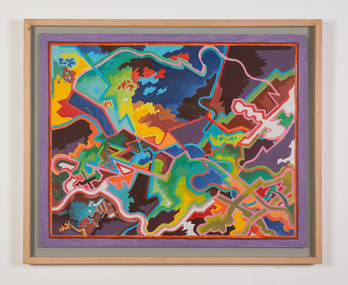 Ararat Gallery TAMA
Mike Brown, Untitled (Sketch for tapestry), 1982
... An artistic anarchist and polemicist, during his 30-year career he waged an unwavering war on art world conventions and sensibilities, critiquing mass culture, consumerism, sex, advertising, censorship, and embracing counterculture, alternative lifestyles and socialism.’ ...An artistic anarchist and polemicist, during his 30-year career he waged an unwavering war on art world conventions and sensibilities, critiquing mass culture, consumerism, sex, advertising, censorship, and embracing counterculture, alternative lifestyles and socialism.’ ...Mike Brown is known for his bold use of colour and graffiti-like imagery. Charles Nodrum Gallery describe Brown as ‘a unique leader of alternative avant guard art in Australia, and a true bohemian eccentric. An artistic anarchist and polemicist, during his 30-year career he waged an unwavering war on art world conventions and sensibilities, critiquing mass culture, consumerism, sex, advertising, censorship, and embracing counterculture, alternative lifestyles and socialism.’ This tapestry was produced by the Victorian Tapestry Workshop Melbourne (now known as the Australian Tapestry Workshop) in South Melbourne, based on an original painting by Mike Brown. We have exhibited the weaving and painting together to provide a comparison of how artwork is translated into tapestry. The large area of dark blue at the centre top of the tapestry demonstrates how the weavers have used colour changes in the yarn to depict the painterly shading in the original painting. The Australian Tapestry Workshop (ATW) is an international leader in contemporary tapestry, collaborating with a diverse range of international and Australian artists to produce exceptional handwoven works of art. Established in 1976, ATW have created over 500 tapestries in creative collaborations for nearly 50 years, promoting innovation and excellence in tapestry weaving and textile art. -
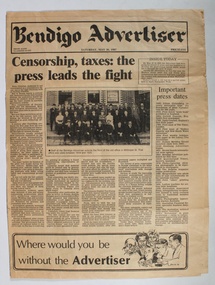 Bendigo Historical Society Inc.
Newspaper - Bendigo Advertiser Supplement May 30 1987, 30/05/1987
... The front page of tabloid size newspaper headline is Censorship, taxes: the press leads the fight. ...The front page of tabloid size newspaper headline is Censorship, taxes: the press leads the fight. ...One was presented on a sash to one lady debutante at the local debutante ball by Amy Huxtable the Bendigo Advertiser Social Editor. Ron Penna was born in Bendigo in 1935. He worked at the Bendigo Advertiser newspaper from 1952 as a printer and foreman from 1968. He retired in 1995.A single sheet four-page supplement in the Saturday May 30 1987 edition of the Bendigo Advertiser which was the last in a special series held to mark Newspaper Week. The front page of tabloid size newspaper headline is Censorship, taxes: the press leads the fight. The article describes the fight for freedom of the press through the 18th, 19th and 20th centauries. A column on the right side is headed Important press dates. It starts with 1445 Johan Gutenberg invents moveable type, the foundation for 500 years and finishes with the 1970's swing to computer-based typesetting. The back page has a half page article headed Foreman Ron remembers the 'Tiser fire disaster. The article has a photograph of Ron Penna with a history of his career to that date at the Bendigo Advertiser. The lower half of the page is headed Ruth keeps the wheels in motion. The article has a photograph of Ruth Claridge with a history of her career to that at the Bendigo Advertiser. The middle pages are a broad sheet size replica of a page of The Bendigo Advertiser Friday, May, 30 1862 Part of the Ron Penna Collection. scribble in black ink on the lower article on the back pageron penna, newspaper, the bendigo advertiser, ruth claridge, newsweek feature 1987 -
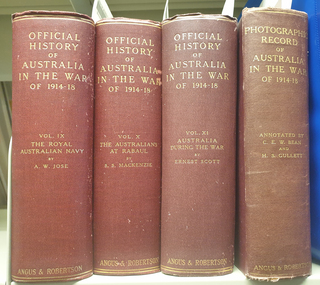 Federation University Historical Collection
Book, Ernest Scott, Official History of Australia in the War, Vol 11, Australia During the War of 1914 - 1918, 1936
... ...censorship...Ernest Scott was a Professor in History at the University of Melbourne. world war world war one aif anzac censorship germans internment spying war correspondents official photographers propaganda equipment munitions conscription conscription referendum recruiting horses patriotic funds red cross australian comforts fund junior red cross peace conference treaty repatriation soldier settlement andrew fisher legacy Red hard covered book of 922 pages with 67 illustrations Official History of Australia in the War, Vol 11, Australia During the War of 1914 - 1918 Book Book Ernest Scott ...Ernest Scott was a Professor in History at the University of Melbourne.Red hard covered book of 922 pages with 67 illustrationsworld war, world war one, aif, anzac, censorship, germans, internment, spying, war correspondents, official photographers, propaganda, equipment, munitions, conscription, conscription referendum, recruiting, horses, patriotic funds, red cross, australian comforts fund, junior red cross, peace conference, treaty, repatriation, soldier settlement, andrew fisher, legacy -
 Flagstaff Hill Maritime Museum and Village
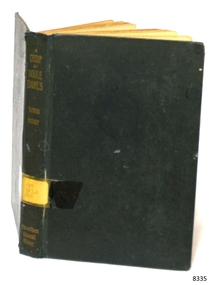
Book - Fictional Stories, Thomas Hardy, A Group of Noble Dames, 1894
... The publication history of these stories highlights the strictness of Victorian censorship. When originally written for periodicals like The Graphic in 1890, editors forced Hardy to aggressively sanitize them, demanding he remove story lines involving illegitimate children or secret marriages. ...The publication history of these stories highlights the strictness of Victorian censorship. When originally written for periodicals like The Graphic in 1890, editors forced Hardy to aggressively sanitize them, demanding he remove story lines involving illegitimate children or secret marriages. ...The subject novel A Group of Noble Dames is a collection of ten historical short stories bound together by a classic frame narrative. The premise is that to escape the boredom of a rainy day, ten male members of the "Wessex Field and Antiquarian Club" gather together. To pass the time, each member including a local historian, an old surgeon, a rural dean, and a churchwarden takes a turn telling a scandalous, tragic, or ironic tale about a high-born lady from the local aristocracy of the 17th and 18th centuries. Unlike Hardy's deeply somber major novels, he categorized these stories as "Romances and Fantasies." However, they still contain classic Hardyan cynicism.A Group of Noble Dames Author: Thomas Hardy Publisher: Macmillan And Co Date: 1894 Further Information: Olive hardcover and spine with spine lettering in gold. The spine has a Library label with inscription.non-fictionThe subject novel A Group of Noble Dames is a collection of ten historical short stories bound together by a classic frame narrative. The premise is that to escape the boredom of a rainy day, ten male members of the "Wessex Field and Antiquarian Club" gather together. To pass the time, each member including a local historian, an old surgeon, a rural dean, and a churchwarden takes a turn telling a scandalous, tragic, or ironic tale about a high-born lady from the local aristocracy of the 17th and 18th centuries. Unlike Hardy's deeply somber major novels, he categorized these stories as "Romances and Fantasies." However, they still contain classic Hardyan cynicism.flagstaff hill, warrnambool, shipwrecked coast, flagstaff hill maritime museum, maritime museum, shipwreck coast, flagstaff hill maritime village, great ocean road, book, pattison collection, warrnambool library, warrnambool mechanics’ institute, ralph eric pattison, corangamite regional library service, warrnambool city librarian, mechanics’ institute library, victorian library board, warrnambool books and records, warrnambool children’s library, a group of noble dames, thomas hardy -
 Vision Australia
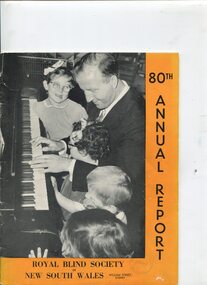
Administrative record - Text, 80th Annual Report Royal Blind Society of N.S.W. (1960), 1960
... Albert's appointment as Vice President, the unexpected demolition of 'Heathfield; in Woollahra due to it's condition and a rethinking of strategy given the demand for a kindergarten in the western suburbs, intention to rebuild the lower hall in William St to accommodate studios, offices, repair and storage facilities to satisfy the growing demand for tapes, outline of the Blind Book Society and how it became an auxiliary to the Society so that the assets and goodwill of the BBS were transferred to the RBS, support for this action by Frank Clune and other authors, transcription work done by the Braille Writers Association of NSW includes Leaving Certificate exams, knitting patterns, recipes and musical compositions, references to the change in talking book machines and teachers checking transcribers work to ensure mild censorship does not occur, two examples of how the support can change the life of a blind person, the assembling of a giant flower basket (10 x 15 feet) for the Town Hall Float in the Waratah Festival which was filled with 25,000 sweet peas and a bow of 6 foot wide satin - sadly the truck carrying this would not start and the float was not seen, dropping of sales due to plastic goods and imported products, 17 First Prizes and 12 Second Prizes in various handicrafts at the Royal Easter Show, the work of Margaret Green in providing services to blind children across the state, a visit by world-famous blind pianist George Shearing, pictures of the opening of the "Light House" home for Aged Blind Women and the Alexis Albert Hostel for Aged Blind Men, renovations have occurred at the Helen Keller Hostel and drama and singing classes are held as well as the local choir Waimea Singers directed by Nellie Sweeney, cricketer Ken Curtis took a hat trick - the first in Australian blind cricket history - in the third match between NSW and Victoria at Kooyong in December 1960, three musicians (Julian Lee, Percy Roberts and George Herrmann) were in contact with pianist Percy Shearing before his television appearance, drama classes provided by Irene Alexander have been well attended with some students giving dramatic presentations on radio stations, monthly musical concerts continue to be held in the Society's hall, the continued success of the Black and White Ball, the huge success of the 2UW Blind Appeal providing much needed funds, the addition of the Silver Lighthouse to the group of Auxiliaries, the passing of E K Gordon who was a Foundation Member of the Committee as well as roles with the Newcastle branch and Nursery for Blind Babies, the ACT Liaison Group obtained free passes for bus services within the Territory, the 'Glow Worm' sessions ended in its 21st year on 2GB with Goodie Reeve now reading news excerpts and Betty Hatherley's session on 2UW have been replaced by recorded announcements....Albert's appointment as Vice President, the unexpected demolition of 'Heathfield; in Woollahra due to it's condition and a rethinking of strategy given the demand for a kindergarten in the western suburbs, intention to rebuild the lower hall in William St to accommodate studios, offices, repair and storage facilities to satisfy the growing demand for tapes, outline of the Blind Book Society and how it became an auxiliary to the Society so that the assets and goodwill of the BBS were transferred to the RBS, support for this action by Frank Clune and other authors, transcription work done by the Braille Writers Association of NSW includes Leaving Certificate exams, knitting patterns, recipes and musical compositions, references to the change in talking book machines and teachers checking transcribers work to ensure mild censorship does not occur, two examples of how the support can change the life of a blind person, the assembling of a giant flower basket (10 x 15 feet) for the Town Hall Float in the Waratah Festival which was filled with 25,000 sweet peas and a bow of 6 foot wide satin - sadly the truck carrying this would not start and the float was not seen, dropping of sales due to plastic goods and imported products, 17 First Prizes and 12 Second Prizes in various handicrafts at the Royal Easter Show, the work of Margaret Green in providing services to blind children across the state, a visit by world-famous blind pianist George Shearing, pictures of the opening of the "Light House" home for Aged Blind Women and the Alexis Albert Hostel for Aged Blind Men, renovations have occurred at the Helen Keller Hostel and drama and singing classes are held as well as the local choir Waimea Singers directed by Nellie Sweeney, cricketer Ken Curtis took a hat trick - the first in Australian blind cricket history - in the third match between NSW and Victoria at Kooyong in December 1960, three musicians (Julian Lee, Percy Roberts and George Herrmann) were in contact with pianist Percy Shearing before his television appearance, drama classes provided by Irene Alexander have been well attended with some students giving dramatic presentations on radio stations, monthly musical concerts continue to be held in the Society's hall, the continued success of the Black and White Ball, the huge success of the 2UW Blind Appeal providing much needed funds, the addition of the Silver Lighthouse to the group of Auxiliaries, the passing of E K Gordon who was a Foundation Member of the Committee as well as roles with the Newcastle branch and Nursery for Blind Babies, the ACT Liaison Group obtained free passes for bus services within the Territory, the 'Glow Worm' sessions ended in its 21st year on 2GB with Goodie Reeve now reading news excerpts and Betty Hatherley's session on 2UW have been replaced by recorded announcements. ...Articles in the annual report include: a brief history of the organisation on it's 80th anniversary, resignation of Herbert Thompson who had provided over 50 years of voluntary service in the library, Braille teacher and Council member with a plaque commemorating him in the Library, the addition of Reverend Noel McCaw on the Council as Mr Thompson's replacement and A.F. Albert's appointment as Vice President, the unexpected demolition of 'Heathfield; in Woollahra due to it's condition and a rethinking of strategy given the demand for a kindergarten in the western suburbs, intention to rebuild the lower hall in William St to accommodate studios, offices, repair and storage facilities to satisfy the growing demand for tapes, outline of the Blind Book Society and how it became an auxiliary to the Society so that the assets and goodwill of the BBS were transferred to the RBS, support for this action by Frank Clune and other authors, transcription work done by the Braille Writers Association of NSW includes Leaving Certificate exams, knitting patterns, recipes and musical compositions, references to the change in talking book machines and teachers checking transcribers work to ensure mild censorship does not occur, two examples of how the support can change the life of a blind person, the assembling of a giant flower basket (10 x 15 feet) for the Town Hall Float in the Waratah Festival which was filled with 25,000 sweet peas and a bow of 6 foot wide satin - sadly the truck carrying this would not start and the float was not seen, dropping of sales due to plastic goods and imported products, 17 First Prizes and 12 Second Prizes in various handicrafts at the Royal Easter Show, the work of Margaret Green in providing services to blind children across the state, a visit by world-famous blind pianist George Shearing, pictures of the opening of the "Light House" home for Aged Blind Women and the Alexis Albert Hostel for Aged Blind Men, renovations have occurred at the Helen Keller Hostel and drama and singing classes are held as well as the local choir Waimea Singers directed by Nellie Sweeney, cricketer Ken Curtis took a hat trick - the first in Australian blind cricket history - in the third match between NSW and Victoria at Kooyong in December 1960, three musicians (Julian Lee, Percy Roberts and George Herrmann) were in contact with pianist Percy Shearing before his television appearance, drama classes provided by Irene Alexander have been well attended with some students giving dramatic presentations on radio stations, monthly musical concerts continue to be held in the Society's hall, the continued success of the Black and White Ball, the huge success of the 2UW Blind Appeal providing much needed funds, the addition of the Silver Lighthouse to the group of Auxiliaries, the passing of E K Gordon who was a Foundation Member of the Committee as well as roles with the Newcastle branch and Nursery for Blind Babies, the ACT Liaison Group obtained free passes for bus services within the Territory, the 'Glow Worm' sessions ended in its 21st year on 2GB with Goodie Reeve now reading news excerpts and Betty Hatherley's session on 2UW have been replaced by recorded announcements.1 volume of text and imagesroyal blind society of new south wales, annual report, justice maxwell, paul cullen, h.f. benning, herbert thompson, c d darvall, ken bunn, e t herford, roy kippax, k. g hunter-kerr, phyllis bourke, w.a. davis, alexis albert, noel mccaw, buildings, talking books, blind book library, kenneth bruce, frank clune, dame mary gilmore, roy young, braille writers association of new south wales, transcription, t brockhoff, zita ainsworth, l farrell, a faulks, percy cooper, m duncan, dorothy juleff, margaret green, victor maxwell kindergarten, light house home, alexis albert hostel, helen keller hostel, waimea singers, nellie sweeney, ken curtis, cricket, julian lee, percy roberts, george herrmann, irene alexander, maurice chevalier, nola dekyvere, betty hatherley, l c haynes, fundraising, l atkins, l a maurer, j lamond, j wishart, jill hamer, w. cannington, e k gordon, j blair, b macleay, lions club of mayfield, lions club of sydney, lions club of burwood, apex, lions club of bondi, n g wilson, j v brickwood, goodie reeve, 2uw, 2gb -
 Flagstaff Hill Maritime Museum and Village
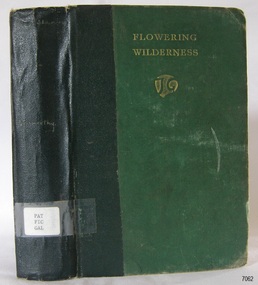
Book - A Fictional Story, John Galsworthy, Flowering Wilderness, 1932
... Galsworthy was known for a strong, quiet sense of social justice he campaigned against censorship, prison conditions, cruelty to animals, and the exploitation of workers, and he was a founding figure and first president of PEN International the writers' association from 1921 until his death. ...Galsworthy was known for a strong, quiet sense of social justice he campaigned against censorship, prison conditions, cruelty to animals, and the exploitation of workers, and he was a founding figure and first president of PEN International the writers' association from 1921 until his death. ...Flowering Wilderness (1932) is a novel by John Galsworthy, and it's the second book in his 'End of the Chapter' trilogy it's a sequel to 'Maid in Waiting', continuing the story of the Cherrell family. It centres on Dinny Cherrell (niece of the Forsyth-adjacent Cherrell clan) and her love affair with Wilfred Desert, a poet who under threat of death while a captive in the Middle East had renounced Christianity and converted to Islam. The novel explores the social scandal and moral judgement that follows him back to England, and Dinny's loyalty to him in the face of society's condemnation. It's part of Galsworthy's broader fictional universe that includes the famous Forsyte Saga, although this particular trilogy follows a different but related family branch.Hard cover book. Flowering Wilderness Author: John Galsworthy Publisher: William Heinemann Ltd Date: 1932 Further Information: Green cloth boards, gilt/black spine with gilt lettering. William Heinemann publisher's device on the title page, and rebound spine in black cloth. fictionFlowering Wilderness (1932) is a novel by John Galsworthy, and it's the second book in his 'End of the Chapter' trilogy it's a sequel to 'Maid in Waiting', continuing the story of the Cherrell family. It centres on Dinny Cherrell (niece of the Forsyth-adjacent Cherrell clan) and her love affair with Wilfred Desert, a poet who under threat of death while a captive in the Middle East had renounced Christianity and converted to Islam. The novel explores the social scandal and moral judgement that follows him back to England, and Dinny's loyalty to him in the face of society's condemnation. It's part of Galsworthy's broader fictional universe that includes the famous Forsyte Saga, although this particular trilogy follows a different but related family branch.shipwrecked-coast, flagstaff-hill, flagstaff-hill-maritime-museum, warrnambool, maritime-museum, shipwreck-coast, flagstaff-hill-maritime-village, shipwrecked-artefact, book, pattison collection, warrnambool library, warrnambool mechanics’ institute, ralph eric pattison, corangamite regional library service, warrnambool city librarian, mechanics’ institute library, victorian library board, warrnambool books and records, warrnambool children’s library, flowering wilderness, john galsworthy -
 Sunshine and District Historical Society Incorporated
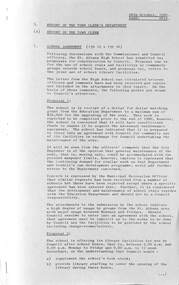
Administrative record - City of Sunshine - Commissioner Mr Alexander Alex George Gillon Collection 1976 - 1982 - Notice of the ordinary meeting of council held on 28th October 1980, City of Sunshine, 28th October 1980
... Albans Youth Centre Volunteer Weekend Training Conference Torquay Report Use of Former Albion Tennis Club House Selwyn Park by Albion Rovers Soccer & Athletic Club Study Tour North American Youth Organisation Council Sponsorship of Housing Commission Units Westerngate Kindergarten Aycliffe Drive Deer Park Ardeer High School Censorship "R" Rated Films Regularistation of Status Programme (ROSP) Braybrook Youth Project Report of the Chief Health Surveyor Removal of Dwelling Outside the Municipality 10 Gilbert Street Braybrook to Lodden Valley Highway Kerang Removal of Dwelling Outside the Municipality 21 Pritchard Avenue to Lot 3 Section 21 Township of Landsborough Pollution Control Relationship with the M.M.B.W. ...Albans Youth Centre Volunteer Weekend Training Conference Torquay Report Use of Former Albion Tennis Club House Selwyn Park by Albion Rovers Soccer & Athletic Club Study Tour North American Youth Organisation Council Sponsorship of Housing Commission Units Westerngate Kindergarten Aycliffe Drive Deer Park Ardeer High School Censorship "R" Rated Films Regularistation of Status Programme (ROSP) Braybrook Youth Project Report of the Chief Health Surveyor Removal of Dwelling Outside the Municipality 10 Gilbert Street Braybrook to Lodden Valley Highway Kerang Removal of Dwelling Outside the Municipality 21 Pritchard Avenue to Lot 3 Section 21 Township of Landsborough Pollution Control Relationship with the M.M.B.W. ...Notice of the Ordinary Meeting of Council held on 28th October 1980 Report of the Town Clerk's Department Report of the Town Clerk St. Albans High School Maintenance of Oval and Use of School Library by City of Sunshine Report Rainbow Workshop Pottery Student's Exhibition at Highpoint West Library Rainbow Workshop Claim for Balance of Proceeds Rates Recovery Sale Lot 88 Balfour Avenue Sunshine North Meals on Wheels Sunshine Swimming Pool kiosk Italo-Australian Social Club Proposal for Assignment of Lease Furlong Road St. Albans Proposed Land Transfer Part of Howard Street Maidstone Discontinued Proposed Acquisition of 22 Roberts Crescent Sunshine West Demise of Land Howard Kingham Lodge 69 Darnley Street Braybrook Pensioner Rates Assistance Scheme 1980/81 Sunshine Football Club Skinner Reserve Lease Skinner Reserve Churchill Avenue Braybrook Increase Rent by Victorian Railway for The Hub Sun Crescent Sunshine Report of the Co-Ordinator of Welfare Services September Teenage Holiday Programme Centres Sunshine High School, Sunshine West High School and St. Albans Youth Centre Volunteer Weekend Training Conference Torquay Report Use of Former Albion Tennis Club House Selwyn Park by Albion Rovers Soccer & Athletic Club Study Tour North American Youth Organisation Council Sponsorship of Housing Commission Units Westerngate Kindergarten Aycliffe Drive Deer Park Ardeer High School Censorship "R" Rated Films Regularistation of Status Programme (ROSP) Braybrook Youth Project Report of the Chief Health Surveyor Removal of Dwelling Outside the Municipality 10 Gilbert Street Braybrook to Lodden Valley Highway Kerang Removal of Dwelling Outside the Municipality 21 Pritchard Avenue to Lot 3 Section 21 Township of Landsborough Pollution Control Relationship with the M.M.B.W. Aycliffe Avenue Infant Welfare & Pre-School Centre Aycliffe Avenue Deer Park Litter Bottles European Economic Community Health Act Registrations Application for Transfer of Proprietorship of Premises Under the Health Act Report of the Superintendent Traffic & By-Laws Operational Costs 1980/81 Lost Dogs' Home Report of the City Librarian Christmas / New Year 1980/81 Library Opening Hours National Conference on Multiculturalism and Libraries 7th - 11th November 1980 Report of the City Engineer & Planner Maribyrnong River Valley Humes and Adjacent Properties Planning Permit Application Three Panel Signs 250 McIntyre Road Sunshine North Planning Permit Application Panel Sign 28 Berkshire Road Sunshine North Planning Permit Application Panel Sign Lot 5 McIntyre Road Sunshine North Planning Permit Application Amateur Radio Mast 866 Ballarat Road Deer Park Planning Permit Application Signs 267 Hampshire Road Sunshine Planning Permit Application Lot 27 Errol Street North West Corner Gilbert Street Braybrook Planning Permit Application Used Car Sales Yard Lot 101 Geelong Road South West Corner Millers Road Brooklyn Planning Permit Application Access to Lot 3 Geelong Road South West Corner Victorian Railways' Easement and Main Road Reservation Brooklyn Planning Permit Application Subdivision Lot 36 Reid Street Ardeer Planning Permit Application Signs Lot 2 Neale Road Deer Park Planning Permit Application Factory Lots 41, 42 & 43 Cromer Avenue Sunshine North Planning Permit Application Factory Lot 40 Cromer Avenue Sunshine North Planning Permit Application Illuminated Sky Lots 5, 6, 7, 8, 9, 10, 12 and 13 120 - 200 Sign Highpoint Shopping Centre Rosamond Road Maribyrnong Planning Permit Application Consulting Rooms 309 Main Road East St. Albans Planning Permit Stages 1 and 4 Only Lots 1 - 7 Warrs Road & Lots 18 - 22 Fabian Court Maribyrnong Planning Permit Consulting Rooms Devonshire Road South West Corner Gertrude Street Sunshine Planning Permit Application Extension to Existing Premises Lots 15 & 16 Hampshire Road Sunshine Amendment No 115 Part 2A to the Melbourne Metropolitan Planning Scheme Consolidation of Title McIntyre Road, Comley Street and Glenroy Avenue Sunshine Armstrong York Pty Ltd Consolidation of Title Rothray Avenue and Cromer Avenue Sunshine North Drain Construction Works Grant Street and Gladstone Street St. Albans Consolidation of Title Gee Street Sunsine North Consolidation of Title South Road and Lawton Street Braybrook Expungement of Part of Easement Derby Road and Stanford Street Sunshine Prohibited Parking McDonald Road Brooklyn Prohibited Parking Laurel Street St. Albans Near St. Albans Meadows Primary School Prohibited Parking and Proposed School Crossing Diamond Avenue and Dover Street Albanvale Near Albanvale Primary School Rosamond Road and River Street Maidstone Pedestrian Signals Restricted Parking Prohibited Parking Athol Street Braybrook Near Christ the King Primary School Proposed Traffic Signals Cornwall Road / Devonshire Road Intersection Sunshine Private Street Scheme Ayton Street and Steers Street Area Objections Proposed Child Care Centre Cherry Crescent Braybrook Tenders Report of the Building Surveyor Building Over Easement Lot 246 Furlong Road St. Albans Location of Building 16 Tyler Street Sunshine Statistical Information on Numbers of Building Permits Schedule for Authorising of Affixing the Common Seal of the Municipality to Documents Orders of the Day Accounts Submitted for Payment as at 13th October 1980 Proposal to Construct Ayton Street and Steers Street Area Under the Provisions of the Division 10 Part XXIX of the Local Government Act 1958st. albans high school, main road east, st. albans, balfour avenue, sunshine north, sunshisne swimming pool, kennedy street, italo-australian social club, furlong road, howard street, maidstone, howard kingham lodge, darnley street, sunshine football club, skinner reserve, churchill avenue, braybrook, highpoint west library, rosamond road, maribyrnong, roberts crescent, sunshine west, the hub, sun crescent, sunshine, sunshine high school, sunshine west high school, ballarat road, lachlan road, st. albans youth centre, albion tennis club, albion rovers soccer & athletic club, selwyn park, selwyn street, albion, aycliffe drive, deer park, ardeer high school, glengala road, gilbert street, pritchard avenue, aycliffe avenue infant welfare & pre-school centre, maribyrnong river valley, hume pipes, mcintyre road, berkshire road, hampshire road, errol street, geelong road, millers road, brooklyn, reid street, ardeer, neale road, cromer avenue, highpoint shopping centre, warrs road, fabian court, devonshire road, gertrude street, comley street, glenroy avenue, sunshine armstrong york, rothray avenue, grant street, gladstone street, gee street, south road, lawton street, derby road, stanford street, mcdonald road, laurel street, st. albans meadows primary school, diamond avenue, dover street, albanvale, albanvale primary school, river street, athol street, christ the king primary school, riley court, cornwall road, ayton street, steers street, cherry crescent child care centre, cherry crescent, tyler street -
 Sunshine and District Historical Society Incorporated
Administrative record - City of Sunshine - Commissioner Mr Alexander Alex George Gillon Collection 1976 - 1982 - Minutes of the ordinary meeting of council held on 28th October 1980, City of Sunshine, 28th October 1980
... Albans Youth Centre Volunteer Weekend Training Conference Torquay Report Use of Former Albion Tennis Club House Selwyn Park by Albion Rovers Soccer & Athletic Club Study Tour North American Youth Organisation Council Sponsorship of Housing Commission Units Westerngate Kindergarten Aycliffe Drive Deer Park Ardeer High School Censorship "R" Rated Films Regularistation of Status Programme (ROSP) Braybrook Youth Project Report of the Chief Health Surveyor Removal of Dwelling Outside the Municipality 10 Gilbert Street Braybrook to Lodden Valley Highway Kerang Removal of Dwelling Outside the Municipality 21 Pritchard Avenue to Lot 3 Section 21 Township of Landsborough Pollution Control Relationship with the M.M.B.W. ...Albans Youth Centre Volunteer Weekend Training Conference Torquay Report Use of Former Albion Tennis Club House Selwyn Park by Albion Rovers Soccer & Athletic Club Study Tour North American Youth Organisation Council Sponsorship of Housing Commission Units Westerngate Kindergarten Aycliffe Drive Deer Park Ardeer High School Censorship "R" Rated Films Regularistation of Status Programme (ROSP) Braybrook Youth Project Report of the Chief Health Surveyor Removal of Dwelling Outside the Municipality 10 Gilbert Street Braybrook to Lodden Valley Highway Kerang Removal of Dwelling Outside the Municipality 21 Pritchard Avenue to Lot 3 Section 21 Township of Landsborough Pollution Control Relationship with the M.M.B.W. ...Minutes of the Ordinary Meeting of Council held on 28th October 1980 Report of the Town Clerk's Department Report of the Town Clerk St. Albans High School Maintenance of Oval and Use of School Library by City of Sunshine Report Rainbow Workshop Pottery Student's Exhibition at Highpoint West Library Rainbow Workshop Claim for Balance of Proceeds Rates Recovery Sale Lot 88 Balfour Avenue Sunshine North Meals on Wheels Sunshine Swimming Pool kiosk Italo-Australian Social Club Proposal for Assignment of Lease Furlong Road St. Albans Proposed Land Transfer Part of Howard Street Maidstone Discontinued Proposed Acquisition of 22 Roberts Crescent Sunshine West Demise of Land Howard Kingham Lodge 69 Darnley Street Braybrook Pensioner Rates Assistance Scheme 1980/81 Sunshine Football Club Skinner Reserve Lease Skinner Reserve Churchill Avenue Braybrook Increase Rent by Victorian Railway for The Hub Sun Crescent Sunshine Report of the Co-Ordinator of Welfare Services September Teenage Holiday Programme Centres Sunshine High School, Sunshine West High School and St. Albans Youth Centre Volunteer Weekend Training Conference Torquay Report Use of Former Albion Tennis Club House Selwyn Park by Albion Rovers Soccer & Athletic Club Study Tour North American Youth Organisation Council Sponsorship of Housing Commission Units Westerngate Kindergarten Aycliffe Drive Deer Park Ardeer High School Censorship "R" Rated Films Regularistation of Status Programme (ROSP) Braybrook Youth Project Report of the Chief Health Surveyor Removal of Dwelling Outside the Municipality 10 Gilbert Street Braybrook to Lodden Valley Highway Kerang Removal of Dwelling Outside the Municipality 21 Pritchard Avenue to Lot 3 Section 21 Township of Landsborough Pollution Control Relationship with the M.M.B.W. Aycliffe Avenue Infant Welfare & Pre-School Centre Aycliffe Avenue Deer Park Litter Bottles European Economic Community Health Act Registrations Application for Transfer of Proprietorship of Premises Under the Health Act Report of the Superintendent Traffic & By-Laws Operational Costs 1980/81 Lost Dogs' Home Report of the City Librarian Christmas / New Year 1980/81 Library Opening Hours National Conference on Multiculturalism and Libraries 7th - 11th November 1980 Report of the City Engineer & Planner Maribyrnong River Valley Humes and Adjacent Properties Planning Permit Application Three Panel Signs 250 McIntyre Road Sunshine North Planning Permit Application Panel Sign 28 Berkshire Road Sunshine North Planning Permit Application Panel Sign Lot 5 McIntyre Road Sunshine North Planning Permit Application Amateur Radio Mast 866 Ballarat Road Deer Park Planning Permit Application Signs 267 Hampshire Road Sunshine Planning Permit Application Lot 27 Errol Street North West Corner Gilbert Street Braybrook Planning Permit Application Used Car Sales Yard Lot 101 Geelong Road South West Corner Millers Road Brooklyn Planning Permit Application Access to Lot 3 Geelong Road South West Corner Victorian Railways' Easement and Main Road Reservation Brooklyn Planning Permit Application Subdivision Lot 36 Reid Street Ardeer Planning Permit Application Signs Lot 2 Neale Road Deer Park Planning Permit Application Factory Lots 41, 42 & 43 Cromer Avenue Sunshine North Planning Permit Application Factory Lot 40 Cromer Avenue Sunshine North Planning Permit Application Illuminated Sky Lots 5, 6, 7, 8, 9, 10, 12 and 13 120 - 200 Sign Highpoint Shopping Centre Rosamond Road Maribyrnong Planning Permit Application Consulting Rooms 309 Main Road East St. Albans Planning Permit Stages 1 and 4 Only Lots 1 - 7 Warrs Road & Lots 18 - 22 Fabian Court Maribyrnong Planning Permit Consulting Rooms Devonshire Road South West Corner Gertrude Street Sunshine Planning Permit Application Extension to Existing Premises Lots 15 & 16 Hampshire Road Sunshine Amendment No 115 Part 2A to the Melbourne Metropolitan Planning Scheme Consolidation of Title McIntyre Road, Comley Street and Glenroy Avenue Sunshine Armstrong York Pty Ltd Consolidation of Title Rothray Avenue and Cromer Avenue Sunshine North Drain Construction Works Grant Street and Gladstone Street St. Albans Consolidation of Title Gee Street Sunsine North Consolidation of Title South Road and Lawton Street Braybrook Expungement of Part of Easement Derby Road and Stanford Street Sunshine Prohibited Parking McDonald Road Brooklyn Prohibited Parking Laurel Street St. Albans Near St. Albans Meadows Primary School Prohibited Parking and Proposed School Crossing Diamond Avenue and Dover Street Albanvale Near Albanvale Primary School Rosamond Road and River Street Maidstone Pedestrian Signals Restricted Parking Prohibited Parking Athol Street Braybrook Near Christ the King Primary School Proposed Traffic Signals Cornwall Road / Devonshire Road Intersection Sunshine Private Street Scheme Ayton Street and Steers Street Area Objections Proposed Child Care Centre Cherry Crescent Braybrook Tenders Report of the Building Surveyor Building Over Easement Lot 246 Furlong Road St. Albans Location of Building 16 Tyler Street Sunshine Statistical Information on Numbers of Building Permits Schedule for Authorising of Affixing the Common Seal of the Municipality to Documents Orders of the Day Accounts Submitted for Payment as at 13th October 1980 Proposal to Construct Ayton Street and Steers Street Area Under the Provisions of the Division 10 Part XXIX of the Local Government Act 1958 Extraordinary Business Report of the City Engineer & Planner Planning Permit Application Light Industry 14 Eames Avenue Brooklyn Planning Permit Application Extension to Existing School Mother of God Primary School Blanche Street Ardeer Planning Permit Application Light Industry Hot Bread Kitchen and Caretaker's Residence 9 Commercial Street Maidstone Planning Permit Application Transport Depot 552 Geelong Road Brooklyn Planning Permit Application Truck Wash Bay 552 Geelong Road Brooklyn Planning Permit Application Take Away Food Premises and Caretaker's Dwelling 288 Ballarat Road Braybrook Planning Permit Application Timber Yard Lot 9 Ballarat Road Sunshine Omar Street Maidstone Road Closure Report of the Building Surveyor Location of Buildings 9 Delamare Drive St. Albans Location of Buildings 29 Hampshire Road Sunshine Building Over Easement 42 Belford Street St. Albans Building Over Easement12 - 14 Drummartin Street Albionst. albans high school, main road east, st. albans, balfour avenue, sunshine north, sunshisne swimming pool, kennedy street, italo-australian social club, furlong road, howard street, maidstone, howard kingham lodge, darnley street, sunshine football club, skinner reserve, churchill avenue, braybrook, highpoint west library, rosamond road, maribyrnong, roberts crescent, sunshine west, the hub, sun crescent, sunshine, sunshine high school, sunshine west high school, ballarat road, lachlan road, st. albans youth centre, albion tennis club, albion rovers soccer & athletic club, selwyn park, selwyn street, albion, aycliffe drive, deer park, ardeer high school, glengala road, gilbert street, pritchard avenue, aycliffe avenue infant welfare & pre-school centre, maribyrnong river valley, hume pipes, mcintyre road, berkshire road, hampshire road, errol street, geelong road, millers road, brooklyn, reid street, ardeer, neale road, cromer avenue, highpoint shopping centre, warrs road, fabian court, devonshire road, gertrude street, comley street, glenroy avenue, sunshine armstrong york, rothray avenue, grant street, gladstone street, gee street, south road, lawton street, derby road, stanford street, mcdonald road, laurel street, st. albans meadows primary school, diamond avenue, dover street, albanvale, albanvale primary school, river street, athol street, christ the king primary school, riley court, cornwall road, ayton street, steers street, cherry crescent child care centre, cherry crescent, tyler street, eames avenue, mother of god primary school, blanche street, commercial street, delamare drive, belford street, drummartin street -
 Ballarat Heritage Services
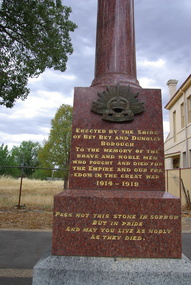
Photograph - War Memorial, Lisa Gervasoni, Dunolly War Memorial, 2025, 1921
... I am sorry that, owing to the censorship, I cannot give you any interesting news of our trip over to France and the places we have seen. ...I am sorry that, owing to the censorship, I cannot give you any interesting news of our trip over to France and the places we have seen. ...The Dunolly World War One Memorial Pillar, located in front of the Town Hall on Broadway Street, and was unveiled on November 18th 1921. The pillar is topped by an urn and rests on a square concrete plinth, which lists the names ninety-four locals who died serving during the First World War. On Friday afternoon the Premier, accompanied by Messrs. Pennington and Groves, M's.L.A., visited Dunolly, and unveiled a soldiers' memorial — a polished granite column on a square base, erected by the residents at a cost of £300. It bears the names of 94 district soldiers who were killed in action. The Premier, who is a native of Dunolly, referred to his early associations with the town and district. Speaking of the valiant service rendered by the Australian soldiers in the great war, he paid a tribute to those who enlisted from the country districts. He was not one of those who would withhold national memorials to the fallen because provision had not been made for all who had returned. It was right and proper to have these memorials as silent reminders of the great sacrifice made by the many as a lasting tribute to their memory. Messrs. Groves and Pennington and local clergymen also spoke. The school children sang O God, Our Help in Ages Past, and a bugler sounded the Last Post after the unveiling. The shire president entertained the visitors and committee at dinner. The Age (Melbourne), 19 November 1921. Colour photograph of the Dunolly War Memorial. Front Inscription "Erected by the Shire of Bet Bet and Dunolly Borough To the memory of the brave and noble men who fought and died for the Empire and our freedom in the Great War 1914 - 1918. Pass not this stone in sorrow but in pride, and may you live as nobly as they died." "Private L. Polinelli has written several letters to his mother at Dunolly, dated from from Tel el Kebir from January 13th till the 22nd. He had written every day or two, and this example, is a very fine one. He explains why there was an interval some weeks during which he sent no letters. This was just before the evacuation of Gallipoli, and no-one was permitted to send letters at such a critical time, as there were fears that carefully arranged plans might leak out in some way. Gallipoli had been evacuated on the 19th December, which happened to be Private Polinelli's 24th birthday, and he has cause, he says, to remember that birthday particularly, when this important movement, in which he participated, was so success-fully carried out. He was in the best of health. They had been on Lemnos Island for two weeks after leaving Galilipoli, and while there they got billeted and numerous gifts from Australia, which gave great delight. He (Private Polinelli) had got a big mail - 35 letters and a number of parcels. Both Norman Watson and himself were feeling well, although they had a pretty rough time at the front, but they were feeling better every day. Further letters speak of the arrival in Egypt and the Australian being encamped at Tel el Kebir, 40 miles from Cairo. He states that W. Lyndon had returned from England and was with them. He (W. Lyndon) looks splendid and had had a splendid time in England and Scotland. He saw Jack Lewis in England, and thinks he was to return to Australia. Reference is made to the Rev. Father Goidanich who was with their brigade, and who had been wounded at the front, but was all right again. Father Goidanich is well-known in this district. The letters were written in good spirits and many references were made to friends in Dunolly and district. A friend in Dunolly has received a letter from Private L. Polinelli, which is dated February 3rd, and written 'from the Arabian Desert.' This covers a vast extent of country, so that there is no use in speculating as to the locality, and portions of the letter which possibly would have given some indication have bean 'censored.' Private Polinelli wrote that Norman Watson and Himself were in the best of health and have stook the life well. They are right out of civilisation at time of writing. He referred to their Dtsojourns at Lemoos Island, where Christmas was spent, and where the billies and puddings assisted much in their enjoyment. But they were glad to leave Lemnos Island. After being in camp at Tel el E-bir for two weeks they were sent to where they were at the time of writing, all being in good xxxx and the open country suiting them well. He speaks with admiration of the desert work done by the camels so very largely used. The censoring was very strict so that he could not give much news. After alluding to the return to splendid health of W. Lyndon from England, he says he saw a lot of others from round Dunolly on returning to Egypt, including Tom Fishlock, R. Johnson, and J. Taylor, and some others from Betley, and all looked well. He had also seen Erie Williamson a few times, and he looked splendid. He concludes with remembrances to friends, and from himself and Norman Watson to the Loyal Prince Alfred Lodge." (Dunolly and Betbetshire Express and County of Gladstone Advertiser, Tue 14 Mar 1916) "SOLDIER'S LETTERS PRIVATE L. POLINELLI A friend in Dunolly has received another interesting letter from Private L Polinelli, son of Mrs J Davis, South Dunolly. It is from "Somewhere in France," and is dated July 23rd. He remarks with regret that a good deal of the soldiers' mail from Australia went down in the Arabia, and then goes on to say:- "Norman is back here with us again now and looking well. He had a splendid time over in England after he was able to get out of bed. It was two years on the 18th of this month (January) since Norman and I enlisted, and we celebrated the occasion by having a bit of an evening out. I am very pleased that he is back; we spend most of our time together. We are at present out of the line having a spell in a village, so we are not having a bad time just now but we will soon be going into the trenches again. I met Wally Bell a few days ago; they were going into the line to relieve our brigade. We did not have time to have a long talk. He looks rather thin, but he was always that way. He is feeling well, and wishes to be remembered to his friends in Dunolly. I also met C. Game the same day; he looked well but, as he was also going into the line, we could not have much of a talk J. Hughes and C. Atherton are also over here now; I often see them. W. Lyndon and T. Miles are well ; I was speaking to them yesterday. We are having very bad weather over here now ; it is either raining or snowing every day. The snow was about a fool deep a few days ago. When the rain comes after it, it makes things muddy, The mud is very bad over here; it takes us all our time to struggle through it in places. We will all be very glad when the winter is over. I was over in England on furlough last month, and had a splendid time. The people over there do all they can to give us a good time. I had several invitations to visit different people, and those that we did visit gave us a splendid time. At the place where I was staying they always had a guide waiting of a morning to show us any place of interest that we wanted to see. There was also always a supply of free tickets to the different theatres if we wanted them ; so you see that they go to some expense to give ns a good time. When they know yon are from France you are sure of a hearty welcome. was up in Scotland, and spent five days in Edinburgh. It is a very pretty place, especially when it is seen from Edinburgh Castle, which is on a high bill overlooking the place. We veil through the Castle; also Holyrood Palace. There are a lot of interesting things to be seen in the two places connected with the history of Scotland. It was snowing very heavily while v« were in Scotland, and we bad some fine snowballing with the Scotch people. I greatly enjoyed the trip to Scotland. It would take a very long time to see all round London. I saw a lot of the old historical places there, which were very interesting. The fogs are very bad in London. I had an experience of a London fog one day; it was the heaviest they experienced for a number of years. We could only see a few yards ahead of us. Nearly everyone carried torches; it looked very funny. . . . There are nearly always as many women drinking in the bars as men; it struck me as being very strange, a bit different to what we are used to in Australia, a trip through some parts of London is a real eye-opener to us. It is interesting to watch the traffic in some of the business parts of London it moves along in one big mass. It is a wonder that a lot more accidents do not happen. I saw Australia House, where the High Commissioner has his office, in the Strand. It is not yet finished. It looks a very fine place, and when completed will be 'some' place. Both Norman and I are well, and send remembrances to friends." (Since this letter was written we have had the sad news of the death from wounds of Privates Atherton and Hughes, and that Sergeant Miles and Corporal Norman Watson have been wounded.) (Dunolly and Betbetshire Express and County of Gladstone Advertiser , Friday 13 April 1917, page 2) "Private L Polinelli, from some of whose previous letters we have published interesting extracts, has written to a friend in Dunolly, the letter being from France, and dated April 28th. Private Polinelli says among other things, "I am pleased to say that, Norman (Watson), Les (Anderson) and myself are in the best of health. We now have been in France some time. It is a terrible place for rain ; It has been raining all the time we have been here. It has also been very cold, snowing at times, but it is starting to "fine up" now, and the last few days have been splendid. I hope it keeps like that for a while, as it makes things very miserable in the trenches when it is so wet. We get a few days spell out of the trenches every now and again; so things are not as bad here as they were at Gallipoli. It is not so lively here so far as it was over there either. I am sorry to say that Jack Sanderson, who had been Will Lyndon's mate since they joined the forces, got killed during a bombardment last night. He was terribly knocked about with a shell. I saw W. Lyndon to-day and he was telling me all about it. He seemed terribly cut up over it, and so am I, as I was with Jack a lot over at Gallipoli after Will got sent away sick. He was always bright and cheerful, always had a smile up whenever I met him. I feel very sad about it. We will do all we can to make the Germans pay for it. You will most likely know him, as be used to live in Dunolly before going to Bendigo. Will Lyndon had a narrow escape also, as he was not very far from where the shell burst. He escaped with a bit of a shock, otherwise he is in the best of health. We have a good time among the French people when we are out of the trenches. They do all they can to make us feel at home. I am getting quite expert at speaking French. They smile at us a treat trying to speak French, but we generally make ourselves understood and have a good time among them. It is very rarely we see a young Frenchman, they being all away fighting. The women do all the work on the farms themselves, and deserve every credit for it. . . . I was sorry to hear about the death of Nurse M'Mahon; she was a grand old nurse. I heard that her daughter Nelly was nurse in a hospital on Lemnos Island, and when we were there I went to two of the hospitals to try to see her, but she did not happen to be at either, and I had no time to visit any of the others, so I did not see her. I was also sorry to hear about Mrs Rokahr, as she has left so many little ones behind. (Reference is made to other happenings in Dunolly.) So far I am pleased to say Norman and I have had the luck not to have had a day's illness; I think we are very fortunate, as such a lot get sent to the hospital ill. We are also lucky to have escaped the bullets and shells so far. I hope that luck sticks to us. I am sorry that, owing to the censorship, I cannot give you any interesting news of our trip over to France and the places we have seen. I will have to keep that till I get back to Dunolly again. . . . I have just heard that the battalion that Teddy Game is in has arrived, so I am going to look him up first chance I get." (The letter concludes with remembrances to members of the Lodge and other friends.) (Dunolly and Betbetshire Express and County of Gladstone Advertiser, Tuesday 13 June 1916, page 3) "PRIVATE L POLINELLI Another very interesting letter has been received by a friend in Dunolly from Private L. Polinelli, from France dated May 4th, 1916- Private Polinelli says-" I was glad that you got the letter I wrote from the Arabian Desert. The Censor must have crossed a good deal of it out. They seem to cross out a lot more than is really necessary. We left out there all of a sudden, and in a very short while found ourselves over here. It does not take them very long to make a move. I was saying in the last letter that I was going to try and find " Teddy " Game. I met him a few days ago and had a good yarn with him; he looks real well. I also met S. Prew, and "Ted" Smyth and his son Ernie. They all looked splendid, and are in the same battalion. "Ted" Smyth sticks to it well, and looks better than he ever looked. They will be under fire for the first time in a few days. S. Prew was hit in the landing at Gallipoli, but be is quite well now. W. Smythe, who is in our brigade is well ; I see him very often. " Les " Peart is not with us now; he has joined a Pioneer battalion, and I have not seen him since he joined it. I gave all the Dunolly boys your best wishes and they all wish to be remembered to you— also the same remembrance from Dave Millar, who used to play football for Dunolly from Moliagul. He is in our battalion, having come over with reinforcements. I see him every day and he wished to be remembered to you. A brother of Mr A. J. Williamson, manager of the Bank of Victoria, Dunolly, is also in this battalion. He is a great friend of mine ; we often have a talk about Dunolly. He was not well a little while ago, having to go into a hospital, but is all right again and is back with me. Eric Williamson, son of Mr A. J. Williamson is over here ; Norman (Watson) saw him a few days ago and said he looked well. Norman has been a corporal for some time. I was also offered stripes lately, but preferred to remain a private. There is a lot of worry and running about when you are an N.C.O., so I think I will remain as I am. ... So football is about done this season. I don't think they should cut it right out. I suppose some of them have to stay at home, so they ought to have some amusement. I would very much like to have a game, but I think I would just about forget how to play now. It is very amusing for us to read some of the soldiers letters in the Australian papers. . . l told you in the last letter about xxx young "Jack "Sanderson ; I was terribly sorry about him." Private Polinelli mentions in a letter to his sister in Dunolly that he happened to be beach at Gallipoli where the late Lord Kitchener was xxxxx addressed the' soldiers and' xxxxxx to them the message from the King. Private Polinelli states that he was very proud to have been one of those addressed by the great man. He and Norman Watson have never been a day out of the lines since arriving first in Egypt. It is intended to grant special leave to all those who have been kept so close to their posts xxx three months, and they are looking forward to this relaxation with keen anticipation, hoping to visit England and Scotland. (Dunolly and Betbetshire Express and County of Gladstone Advertiser, Tue 27 Jun 1916) "SOLDIER'S LETTERS. CORPORAL L. POLINELLI. Two letters have been received by Mrs J. Davis, South Dunolly, from her son, Corporal L. Polinelli, both written subsequent to the time when he was wounded, as reported when word was received at the time. Corporal Polinelli writes from No. 12 General Hospital, Rouen, France, and his first letter is dated 7th May. He stated that he was in hospital, he having been wounded in the arm and shoulder on 3rd May. He continued— " It is not a bad wound, and will not take long to heal up, as it is a clean wound. I was very lucky to get out of the fight alive, as I was buried by a shell explosion about an hour before I was wounded. It was very rough, and the noise of all the shells was terrible. Four men were killed by the same shell that wounded me, so I was fortunate. I am feeling a bit " shook up," and my head is aching from the concussion of the shells, but after a few days' spell in bed here I will be feeling just the thing again. So you need not worry about me ; a week or two will see me quite right again. We are having very nice warm weather just now-pleasant change after all the bad weather we have had." The second letter is dated May 12, Corporal Polinelli saying— "I am getting along splendidly ; the wound is healing up fast, so it will not be very long before I am quite right. The doc-tor, the other day said it would be better not to take the piece of shell out of my shoulder yet, and that it would not interfere with me in any way ; so perhaps l will always carry it about with me. He feared lest taking it out at that time would interfere with an artery. Rouen, where the hospital is, is a very pretty city. They give us leave to visit all the places when we are well enough. It is a nice spell here, away from the firing line. We have nothing to trouble us at all, so I will soon be just the thing again. When I got buried by a shell it shook me up a good deal. I felt it far more than the wound I got after; but it has not done me any harm, as I feel hardly any effects now. My good luck sticks to me in getting out of it so lightly. I hope you are not worrying at all about me, as I am all right. We are having beautiful weather over here— sunny days just like the Australian spring. . . . The sisters in the hospital are very nice, and treat us well. They have a lot of work to do, as a good few men have been wounded lately. I would have liked to have been sent over to England, but they are not sending many over there now. They treat as many as they can in France on account of attacks on hospital ships. I would have been able to have a good time with Norman (Watson) had l got over. He was just about all right when I heard from him last." Corporal Polinelli sends kind remembrances to friends." (Dunolly and Betbetshire Express and County of Gladstone Advertiser, Friday 6 July 1917, page 2) "SOLDIERS' LETTERS. CORPORAL L. POLINELLI. The following letter, dated from London on December 27; has been received by a friend in Dunolly from Corporal L. Polinelli (son of Mrs J. Davis, South Donolly), who, at the time of writing, after long and hard service at the front, was on furlough in England. After an introduction he says:— I am having a very good time. I went over to Ireland for five days, spending the most of the time in Dublin. I like the place very much. War appearances are not so conspicuous in Ireland as in England. The hotels are open all day, and a good meal can be obtained anywhere, which is more than can be got in England. The war seems to be making things very bad in England. It is very hard to get a good meal in London ; everything is so restricted. The only way to get a good meal is to go into two places. The people have to line up outside the shops for hours to get sugar, tea, and butter, and then they sometimes fail to get any. So many of our boats getting sunk is the cause of it. If things continue to go on in this way I am afraid that there is a very hard time in store for the people in England. Several people that I have spoken to say that they are just beginning to feel the pinch now. I was in London while an air raid was on a few days ago; it caused a lot of excitement among the people. Ten were killed and 70 wounded in the raid. I was about half a mile from where the bombs fell, so I was pretty right. I thought I had left the war behind in France, but it seems to be on over here at times also. I spent Christmas day with a family at Grantham, a town between London and Newcastle; they were very nice people. I had a very enjoyable time with them. I went to a dance in the evening and enjoyed it very much. It was a bit strange for a start, as it is the first dance I have been to since Norman and I had the send off at Dunolly in January, 1915. They do the dances a bit different over here to what they are done in Australia, and that made it worse still. I went through Guinness's Brewery while I was in Dublin. It is a wonderful place, and covers 55 acres of ground. I got a great surprise when I was starting on my leave in France. We were taken to the station we had to start from in a motor lorry, and who should the driver of the lorry be but Syd. Richards (son of Mr W. Richards, South Dunolly), who used to work at the Post Office in Dunolly. I rode on the front with him, so we had a good yarn. I did not know that be had joined, so was surprised to see him. He has grown a lot since I saw him last, and is looking well. Norman and Bill Lyndon were both well when I left France. We had been having a good spell near Messines, in Flanders, but they will be in the trenches by now. We have been round about Ypres for this last four months, and had some pretty rough times there. dunolly, dunolly war memorial, l. polinelli, bet bet, world war one, world war two, j. deledio, b. battilana, c. fitzgerald, f.s. kendall, j.h. hogan, p. zampatti, louisa davis, louisa gervasoni, bill lyndon, norman lyndon, sydney lindsay -
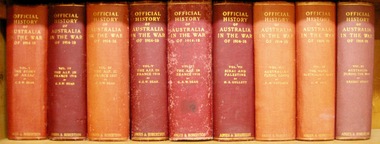 Lara RSL Sub Branch
Book, Official History of Australia in the War of 1914-18 - Volume XI - Australia During the War Author Ernest Scott Professor of History at Melbourne University, 1937
... It describes the background - political, social, industrial, economic-against which the war effort of Australia was projected. australia declaration of war commonwealth cabinet war pledges of political leadeers censorship of newspapers censorship of mail blind codes internment camps hughes stress of war military organisations of australia formation of armies equipment of armies matters of policy gallipoli conscription conscription movement military service referendum act the last months of the war economy aspects of the war commonwealth taxation patriotic funds peace conference Official History of Australia in the War of 1914-18 - Volume XI - Australia During the War. ...This book deals almost entirely with occurrences within Australia. It describes the background - political, social, industrial, economic-against which the war effort of Australia was projected.This book deals almost entirely with occurrences within Australia. It describes the background - political, social, industrial, economic-against which the war effort of Australia was projected.Official History of Australia in the War of 1914-18 - Volume XI - Australia During the War. Illustrations, Photographs,australia, declaration of war, commonwealth cabinet, war pledges of political leadeers, censorship of newspapers, censorship of mail, blind codes, internment camps, hughes, stress of war, military organisations of australia, formation of armies, equipment of armies, matters of policy, gallipoli, conscription, conscription movement, military service referendum act, the last months of the war, economy aspects of the war, commonwealth taxation, patriotic funds, peace conference -
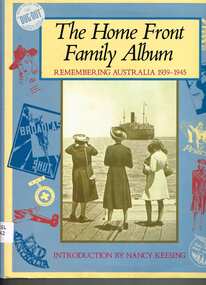 Monbulk RSL Sub Branch
Book, Weldon Publishing, The Home front family album : remembering Australia 1939-1945, 1991
... Australia 1939-1945 - Social conditions World war 1939-1945 - Social aspects Rationing - Red Cross - Women's role in wartime - Japanese midget submarines - Clothes rationing - Coalminers' strike - Censorship - Ration books. Index, ill, p.208. ...Rationing - Red Cross - Women's role in wartime - Japanese midget submarines - Clothes rationing - Coalminers' strike - Censorship - Ration books.Index, ill, p.208.non-fictionRationing - Red Cross - Women's role in wartime - Japanese midget submarines - Clothes rationing - Coalminers' strike - Censorship - Ration books.australia 1939-1945 - social conditions, world war 1939-1945 - social aspects -
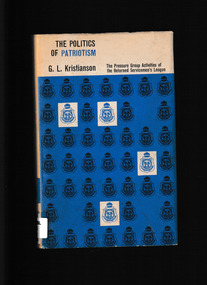 Monbulk RSL Sub Branch
Book, GL Kristtianson, The politics of patriotism : the pressure group activities of the Returned Servicemen's League, 1966
... s pressure group activities - while the League provided unrestricted access to its files and records, the organization's leaders exercised no censorship or control over the final results. ...s Australia's largest veterans' organization, the R.S.L. has been the subject of bitter controversy. The League has often been attacked, and as frequently defended, but it has never been examined in depth by an impartial observer. This book is the first detailed and dispassionate examination. It is not an 'official', or even an authorized account of the R.S.L.'s pressure group activities - while the League provided unrestricted access to its files and records, the organization's leaders exercised no censorship or control over the final results. The author examines the R.S.L.'s attempts to influence the Commonwealth government against a background of continual internal conflict over tactics. He describes the constant approaches to the government on pensions, medical benefits, war service homes, soldier settlement, employment preference, and gratuities, as well as on such controversial subjects as defence and anti-communism, all of which serve to mark the R.S.L. as one of Australia’s most active pressure groups. The book also points to the danger implicit in the R.S.L.'s attempt to monopolize the virtues which it claims are uniquely Australian. In its rigid enforcement of the exclusiveness of Anzac Day, it is argued, lie both the League's peculiar strength and its greatest problems.Index, ill, p.286.non-fictions Australia's largest veterans' organization, the R.S.L. has been the subject of bitter controversy. The League has often been attacked, and as frequently defended, but it has never been examined in depth by an impartial observer. This book is the first detailed and dispassionate examination. It is not an 'official', or even an authorized account of the R.S.L.'s pressure group activities - while the League provided unrestricted access to its files and records, the organization's leaders exercised no censorship or control over the final results. The author examines the R.S.L.'s attempts to influence the Commonwealth government against a background of continual internal conflict over tactics. He describes the constant approaches to the government on pensions, medical benefits, war service homes, soldier settlement, employment preference, and gratuities, as well as on such controversial subjects as defence and anti-communism, all of which serve to mark the R.S.L. as one of Australia’s most active pressure groups. The book also points to the danger implicit in the R.S.L.'s attempt to monopolize the virtues which it claims are uniquely Australian. In its rigid enforcement of the exclusiveness of Anzac Day, it is argued, lie both the League's peculiar strength and its greatest problems. australia - politics and government, pressure groups - australia -
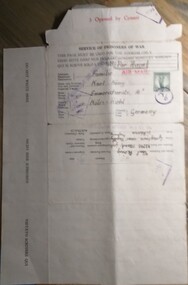 Tatura Irrigation & Wartime Camps Museum
Letter - Air Mail Letter, Paul König
... Overseas air mail letter form from Paul König to Karl König whilst an internee in Australia. letters Paul Konig Karl Konig air mail letters letter Censorship Koenig One sheet of paper which has folds on it and when folded makes up an envelope with part having the address of whom it is going to; another part showing who sent it. ...Overseas air mail letter form from Paul König to Karl König whilst an internee in Australia.One sheet of paper which has folds on it and when folded makes up an envelope with part having the address of whom it is going to; another part showing who sent it. The reverse side of the page is where a person writes a letter. This letter was sent to Karl Konig from Paul Konig and dates Mon 13 Sept 1943. At the top is a flap which seals the letter into an evelope.letters, paul konig, karl konig, air mail letters, letter censorship, koenig
