
Showing 20 items matching "central command"
-
 Bendigo Military Museum
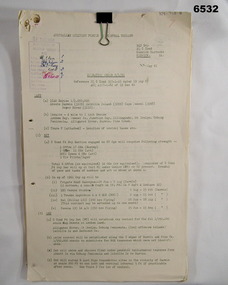
Administrative record - Royal Australian Survey Corps - Central Command Operation Order C/1/61 Northern Territory 1961, DAD Svy, HQ Central Command , Keswick Barracks, SA, 1961
... Royal Australian Survey Corps - Central Command Operation Order C/1/61 Northern Territory 1961...Royal Australian Survey Corps - Central Command Operation Order C/1/61 Northern Territory 1961...This is a Central Command Operation Order for the Royal Australian Survey Corps to conduct a Survey Operation in Northern Territory in 1961. ...DAD Svy, HQ Central Command , Keswick Barracks, SA...This is a Central Command Operation Order for the Royal Australian Survey Corps to conduct a Survey Operation in Northern Territory in 1961. ...This is a Central Command Operation Order for the Royal Australian Survey Corps to conduct a Survey Operation in Northern Territory in 1961. The task is to acquire Survey Control for the production of maps coving the following 1:250 000 map areas of Alligator River, Mt Evelyn, Coburg Peninsula, (including the offshore Islands, Melville Island and Bathurst Island. The Operation Order details the tasks for the 6 x Officers (or equivalent) and 34 x OR's (or equivalent) and the support that was allocated including Frigate HMAS Gasgoyne, LSM landing craft, Trucks amphibian (DUKW), Helicopter and Cessna aircraft.A 11 x page foolscap size paper report and 1 x foldout map Annex held together with a paper clip. Two hole punched.Hand written File Number in top RH Corner "101-310-4". Distribution stamp in top LH Corner. Hand written No7 in Top RH Corner.royal australian survey corps, rasvy, fortuna, army survey regiment, army svy regt -
 Bendigo Military Museum
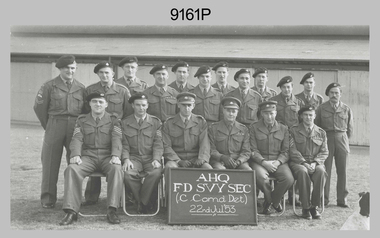
Photograph - Group photograph AHQ Field Survey Section, Hampstead Barracks, SA, 1953
... ...Central Command...This photograph was taken on 22 July 1953 at AHQ Field Survey Section, Central Command, Hampstead Barracks, Adelaide, SA of a group of Royal Australian Survey Corps soldiers in uniform. ....1) - This black & white photograph was taken on 22 July 1953 at AHQ Field Survey Section, Central Command, Hampstead Barracks, Adelaide, SA of a group of RASvy soldiers in uniform. ...This photograph was taken on 22 July 1953 at AHQ Field Survey Section, Central Command, Hampstead Barracks, Adelaide, SA of a group of Royal Australian Survey Corps soldiers in uniform. ...This photograph was taken on 22 July 1953 at AHQ Field Survey Section, Central Command, Hampstead Barracks, Adelaide, SA of a group of Royal Australian Survey Corps soldiers in uniform. The unit, with an establishment of three officers and twenty-two other ranks was formed in Adelaide at Largs Bay in February 1952 to take responsibility for mapping of Woomera and military mapping in all parts of the state. The occasion may have been to commemorate the Section’s relocation to Hampstead Barracks, possibly taken at the beginning of their short tenure (approx 1 year), after moving from Largs Bay, before subsequently relocating to Keswick Barracks in 1954. The soldiers are grouped in three rows with an information board at front, a corrugated iron building in the background and a dog in the lower right corner. Rear row is unidentified soldiers; centre row is unidentified soldiers and front row is an unidentified Staff Sergeant; unidentified Sergeant; Lt NRJ Hillier; Maj WB Relf (OC); unidentified WO2; unidentified Staff Sergeant. .1) - This black & white photograph was taken on 22 July 1953 at AHQ Field Survey Section, Central Command, Hampstead Barracks, Adelaide, SA of a group of RASvy soldiers in uniform. The soldiers are grouped in three rows with an information board at front, a corrugated iron building in background and a dog in the lower right corner. This photo was scanned at 300 dpi.royal australian survey corps, rasvy, central command, field survey section, adelaide, hampstead barracks -
 Bendigo Military Museum
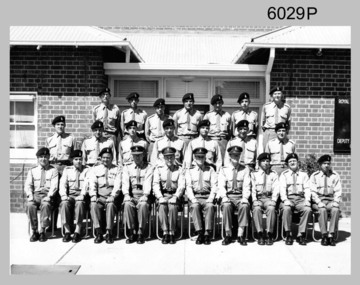
Photograph - Central Comd Fd Svy Unit at the Army Survey Regiment, 1966
... This photograph of the Central Command Field Survey Unit, Field Survey Detachment was taken in front of the Survey building at Keswick Barracks in Adelaide, South Australia c1966. ...This photograph of the Central Command Field Survey Unit, Field Survey Detachment was taken in front of the Survey building at Keswick Barracks in Adelaide, South Australia c1966. ...This photograph of the Central Command Field Survey Unit, Field Survey Detachment was taken in front of the Survey building at Keswick Barracks in Adelaide, South Australia c1966. DR Ridge (later LTCOL) front Centre, SPR RJ Hayden top Right.This is a photograph of the C Comd Fd Svy Unit at the Army Survey Regiment, Bendigo. The photograph was printed on photographic paper and is part of the Army Survey Regiment’s Collection. The photograph was scanned at 300 dpi. .1) Photo, black & white 1966. Front Row to L to R: 5th MAJ Don Ridge. All other personnel are unidentified..1 - “C Comd Fd Svy Unit 1966” annotated on backroyal australian survey corps, rasvy, army survey regiment, army svy regt, fortuna, asr -
 Bendigo Military Museum
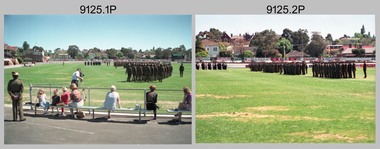
Photograph - Army Survey Regiment Freedom of Entry Parade, Bendigo CBD, 1990
... The event began with a ceremonial parade at the Queen Elizabeth II Oval. The RAAF Central Command Band provided the music at the parade. ...The RAAF Central Command Band performs during the parade. ...The RAAF Central Command Band performs during the parade. ...The Freedom of Entry to the City on the 26th of October 1990 was an honour first conferred by the Bendigo City Council to the Army Survey Regiment in 1970. This was the fifth time the unit exercised its freedom of marching into the city with swords drawn, bayonets fixed and drums beating. The honour is usually bestowed upon local regiments, in recognition of their dedicated service, and it is common for military units to periodically exercise their freedom by arranging a parade through the city. The event began with a ceremonial parade at the Queen Elizabeth II Oval. The RAAF Central Command Band provided the music at the parade. After formal inspections of the troops, the Army Survey Regiment saluted as it marched past the Reviewing Officer - Mayor of Bendigo Councillor James Douglass, military dignitaries and guests. Led by the Regiment’s CO – LTCOL Rene van den Tol, the unit marched down View St, along Pall Mall and to Gaol Rd. Regiment members were treated to a civic reception at the City Hall after the ceremony. The Regiment also exercised its Freedom of Entry with anniversary parades in 1977, 1980, 1985, 1992 and 1996. See items 9124.28P and 9126.24P for additional sets of photos taken at the event. The formal booklet covering the event is catalogued under item 9123.This set of 54 photographs of the Army Survey Regiment were taken at the Freedom of Entry parade, held at the City of Bendigo’s Queen Elizabeth Oval (QEO) on the 26th of October 1990. The colour photographs are on 35mm negative film and scanned at 2400 dpi. They are part of the Army Survey Regiment’s Collection. .1) - Photo, colour, 1990. Army Survey Regiment marches on to the QEO. .2) - Photo, colour, 1990. Army Survey Regiment formed up at the start of the parade. .3) & .4) - Photo, colour, 1990. Lithographic Squadron fixes bayonets. Centre rank: LCPL Damien Cole, remainder unidentified. Rear rank R to L: CPL Peter Swandale, SPR Andrew Arman, remainder unidentified. SSM WO1 Bill Jones at far right. .5) - Photo, colour, 1990. Army Survey Regiment await the order to take posts. .6) - Photo, colour, 1990. Army Survey Regiment standing at ease await the arrival of the Parade Host. .7) - Photo, colour, 1990. Arrival of the Parade Host - D-SVY COL Don Swiney MBE. L to R: CPL Mick McConnell, CPL Warren ‘Waldo’ Shirley, unidentified. .8) - Photo, colour, 1990. The Parade Host - D-SVY COL Don Swiney MBE and MAJ John South at his right returns the Regiment’s salute. .9) - Photo, colour, 1990. Arrival of dignitaries: L to R: CPL Mick McConnell, City of Bendigo Mayor - Councillor James Douglass, City of Bendigo Chief Executive Officer - Mr. R. J. Burton, CPL Warren ‘Waldo’ Shirley, unidentified. .10) - Photo, colour, 1990. Arrival of dignitaries: L to R: CPL Mick McConnell, Chief Superintendent F. Fox (presumed), unidentified, D-SVY COL Don Swiney MBE, CPL Warren ‘Waldo’ Shirley, unidentified. .11) - Photo, colour, 1990. Arrival of dignitaries: L to R: CPL Mick McConnell, Bishop of Sandhurst most Reverend N. Daly DD, unidentified padre, CPL Warren ‘Waldo’ Shirley, unidentified, D-SVY COL Don Swiney MBE. .12) - Photo, colour, 1990. L to R: City of Bendigo Mayor - Councillor James Douglass, City of Bendigo Chief Executive Officer - Mr. R. J. Burton view the parade from the dias. .13) - Photo, colour, 1990. CO of the Army Survey Regiment greets the parade dignitaries. L to R: CO LTCOL Rene van den Tol, D-SVY COL Don Swiney MBE, City of Bendigo Mayor - Councillor James Douglass, City of Bendigo Chief Executive Officer - Mr. R. J. Burton. .14) - Photo, colour, 1990. Headquarters Squadron inspection L to R: CO LTCOL Rene van den Tol, Chief Executive Officer - Mr. R. J. Burton, D-SVY COL Don Swiney MBE, Mayor - Councillor James Douglass, 2nd from right SGT Brendan McKinless, supernumerary WO2 Steve Hansen in background, remainder unidentified. .15) - Photo, colour, 1990. Unidentified squadron inspection L to R: D-SVY COL Don Swiney MBE, Chief Executive Officer - Mr. R. J. Burton, Mayor - Councillor James Douglass, CO LTCOL Rene van den Tol. .16) - Photo, colour, 1990. Air Survey Squadron inspection L to R: unidentified, SSGT Bob Garritty, CPL Craig Kellet, CPL Raelene (Munting) Brodie, unidentified, SPR Jodi Seath, remainder ranks unidentified, Mayor - Councillor James Douglass, Chief Executive Officer - Mr. R. J. Burton, CO LTCOL Rene van den Tol. .17) - Photo, colour, 1990. Lithographic Squadron inspection L to R: CO LTCOL Rene van den Tol, SGT Brian Paul, Mayor - Councillor James Douglass, SGT Steve Burke, D-SVY COL Don Swiney MBE. .18) - Photo, colour, 1990. The official party pass behind Headquarters Squadron and head towards the RAAF Central Command Band. L to R: Chief Executive Officer - Mr. R. J. Burton, Mayor - Councillor James Douglass, D-SVY COL Don Swiney MBE. .19) - Photo, colour, 1990. RAAF Central Command Band inspection L to R: Deputy Music Director Flying Officer S. Wright, Mayor - Councillor James Douglass, remainder unidentified. .20) - Photo, colour, 1990. RAAF Central Command Band inspection L to R: Chief Executive Officer - Mr. R. J. Burton, Deputy Music Director Flying Officer S. Wright, Mayor - Councillor James Douglass, remainder unidentified. .21) - Photo, colour, 1990. Cartographic Squadron commanded by OC MAJ Neil Taylor performs left form in slow time. .22) - Photo, colour, 1990. RAAF Central Command Band performs drill manoeuvre. .23) - Photo, colour, 1990. Air Survey Squadron commanded by OC MAJ Peter Clark performs left form. .24) - Photo, colour, 1990. Headquarters Squadron commanded by OC MAJ Ray Redman marches forward in slow time. .25) - Photo, colour, 1990. Army Survey Regiment in formation commanded by CO LTCOL Rene van den Tol advances in slow time. 2IC MAJ Duncan Burns at left. MAJ Bob Williams at right. .26) - Photo, colour, 1990. Air Survey 2IC MAJ Duncan Burns at left Squadron commanded by OC MAJ Peter Clark advances in quick time. WO1 Graham Ragless is closest to camera. .27) & .28) - Photo, colour, 1990. Lithographic Squadron commanded by OC MAJ Bob Coote advances before left form. LT Marty Lyons at left. LT Derek Bell at right. .29) - Photo, colour, 1990. Army Survey Regiment salutes as it marches past the Reviewing Officer Mayor - Councillor James Douglass, Chief Executive Officer - Mr. R. J. Burton and D-SVY COL Don Swiney MBE at the dias. .30) - Photo, colour, 1990. Parade official guests L to R: unidentified, MAJ John South, unidentified (x5), MAJ B.J. Donaldson – US Exchange, unidentified, unidentified padres (x2), Bishop of Sandhurst most Reverend N. Daly DD. .31) - Photo, colour, 1990. Army Survey Regiment salutes as it marches past the dias. .32) - Photo, colour, 1990. Lithographic Squadron commanded by OC MAJ Bob Coote performs left form. .33) - Photo, colour, 1990. Deputy Music Director Flying Officer S. Wright conducts the RAAF Central Command Band. .34) - Photo, colour, 1990. The RAAF Central Command Band performs during the parade. All musicians are unidentified. .35) - Photo, colour, 1990. Lithographic Squadron commanded by OC MAJ Bob Coote marches forward in quick time. .36) - Photo, colour, 1990. Cartographic Squadron commanded by OC MAJ Neil Taylor marches forward in quick time. .37) - Photo, colour, 1990. Lithographic Squadron commanded by OC MAJ Bob Coote marches forward in quick time. .38) - Photo, colour, 1990. Army Survey Regiment salutes as it marches past the dias. .39) - Photo, colour, 1990. L to R: Reviewing Officer Mayor - Councillor James Douglass, Chief Executive Officer - D-SVY COL Don Swiney MBE, Mr. R. J. Burton and at the dias. Parade official guests L to R: unidentified (x2), MAJ John South, unidentified (x5), MAJ B.J. Donaldson – US Exchange, unidentified, unidentified padres (x2), Bishop of Sandhurst most Reverend N. Daly DD. .40) - Photo, colour, 1990. Army Survey Regiment salutes as it marches past the Reviewing Officer Mayor - Councillor James Douglass, Chief Executive Officer - Mr. R. J. Burton and D-SVY COL Don Swiney MBE at the dias. MAJ P.G. Dinwiddie – UK Exchange is seen among the guests. .41) - Photo, colour, 1990. Air Survey Squadron commanded by OC MAJ Peter Clark stands at attention. .42) - Photo, colour, 1990. Headquarters Squadron commanded by OC MAJ Ray Redman stands at ease. 2IC MAJ Duncan Burns at far left. .43) - Photo, colour, 1990. Cartographic Squadron commanded by OC MAJ Neil Taylor stands at ease. CO LTCOL Rene van den Tol in foreground. .44) & .45) - Photo, colour, 1990. The Parade Host: D-SVY COL Don Swiney MBE addresses the Parade. .46) - Photo, colour, 1990. The Reviewing Officer: Mayor - Councillor James Douglass addresses the Parade. .47) - Photo, colour, 1990. L to R: City of Bendigo Chief Executive Officer - Mr. R. J. Burton, Reviewing Officer Bendigo Mayor - Councillor James Douglass. .48) - Photo, colour, 1990. Parade official guests Middle row L to R: MAJ P.G. Dinwiddie – UK Exchange, Chief Superintendent F. Fox, unidentified MAJ B.J. Donaldson – US Exchange, remainder unidentified. Front row L to R: unidentified (x2), MAJ John South, unidentified (x4). .49) - Photo, colour, 1990. Unidentified padre addresses the Parade. On his left: City of Bendigo Chief Executive Officer - Mr. R. J. Burton, Bishop of Sandhurst most Reverend N. Daly DD. .50) - Photo, colour, 1990. Unidentified padre addresses the Parade. On his right: Bishop of Sandhurst most Reverend N. Daly DD, City of Bendigo Chief Executive Officer - Mr. R. J. Burton, Reviewing Officer Bendigo Mayor - Councillor James Douglass. .51) - Photo, colour, 1990. Departure of Chief Superintendent F. Fox at conclusion of Parade. .52) - Photo, colour, 1990. Departure of unidentified padres (x2), Bishop of Sandhurst most Reverend N. Daly DD at conclusion of Parade. .53) & .54) - Photo, colour, 1990. Departure of Parade Host - D-SVY COL Don Swiney MBE at conclusion of Parade. No personnel or civilians are identified. ‘Freedom of Entry Parade ‘90’ is annotated on plastic negative sleeve.royal australian survey corps, rasvy, army survey regiment, army svy regt, fortuna -
 Bendigo Military Museum
Photograph - Army Survey Regiment Freedom of Entry Parade, Bendigo CBD, 1990
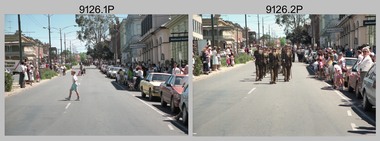
... The event began with a ceremonial parade at the Queen Elizabeth II Oval. The RAAF Central Command Band provided the music at the parade. ...L to R: 2IC MAJ Duncan Burns, CO LTCOL Rene van den Tol, MAJ Bob Williams, RSM WO1 Neville Stone. .4) - Photo, colour, 1990. The RAAF Central Command Band marches down View St towards Pall Mall led by L to R: Drum Major Warrant Officer E. ...The event began with a ceremonial parade at the Queen Elizabeth II Oval. The RAAF Central Command Band provided the music at the parade. ...The Freedom of Entry to the City on the 26th of October 1990 was an honour first conferred by the Bendigo City Council to the Army Survey Regiment in 1970. This was the fifth time the unit exercised its freedom of marching into the city with swords drawn, bayonets fixed and drums beating. The honour is usually bestowed upon local regiments, in recognition of their dedicated service, and it is common for military units to periodically exercise their freedom by arranging a parade through the city. The event began with a ceremonial parade at the Queen Elizabeth II Oval. The RAAF Central Command Band provided the music at the parade. After formal inspections of the troops, the Army Survey Regiment saluted as it marched past the Reviewing Officer - Mayor of Bendigo Councillor James Douglass, military dignitaries and guests. Led by the Regiment’s CO – LTCOL Rene van den Tol, the unit marched down View St, along Pall Mall and to Gaol Rd. Regiment members were treated to a civic reception at the City Hall after the ceremony. The Regiment also exercised its Freedom of Entry with anniversary parades in 1977, 1980, 1985, 1992 and 1996. See items 9124.28P and 9125.54P for additional sets of photos taken at the event. The formal booklet covering the event is catalogued under item 9123.This set of 24 photographs of the Army Survey Regiment were taken at the Freedom of Entry parade, held at the City of Bendigo’s Queen Elizabeth Oval (QEO) on the 26th of October 1990. The colour photographs are on 35mm negative film and scanned at 2400 dpi. They are part of the Army Survey Regiment’s Collection. .1) - Photo, colour, 1990. The Army Survey Regiment marches down View St towards Pall Mall. .2) - Photo, colour, 1990. The Army Survey Regiment marches down View St towards Pall Mall. L to R: 2IC MAJ Duncan Burns, CO LTCOL Rene van den Tol, MAJ Bob Williams. .3) - Photo, colour, 1990. The Army Survey Regiment marches down View St towards Pall Mall. L to R: 2IC MAJ Duncan Burns, CO LTCOL Rene van den Tol, MAJ Bob Williams, RSM WO1 Neville Stone. .4) - Photo, colour, 1990. The RAAF Central Command Band marches down View St towards Pall Mall led by L to R: Drum Major Warrant Officer E. Hayward and Deputy Music Director Flying Officer S. Wright. WO1 Rowan Gillies at fat left. .5) - Photo, colour, 1990. City Marshall – Superintendent D.R. Mansell standing at the ready in Charing Cross, to challenge the entry of the Army Survey Regiment at the bottom of View St. .6) - Photo, colour, 1990. The Army Survey Regiment at the halt in View St ready to exercise its right to pass through the City of Bendigo. L to R: 2IC MAJ Duncan Burns, CO LTCOL Rene van den Tol, ADJT CAPT Peter Parkes. .7) - Photo, colour, 1990. The Army Survey Regiment salutes parade dignitaries as it marches down Pall Mall past the dias. L to R: CO LTCOL Rene van den Tol, 2IC MAJ Duncan Burns, MAJ Bob Williams. At the dias L to R: City of Bendigo Chief Executive Officer - Mr. R. J. Burton, Reviewing Officer: City of Bendigo Mayor - Councillor James Douglass, Parade Host -D-SVY COL Don Swiney MBE. .8) - Photo, colour, 1990. The RAAF Central Command Band salutes parade dignitaries as it marches down Pall Mall past the dias. L to R: Drum Major Warrant Officer E. Hayward and Deputy Music Director Flying Officer S. Wright. .9) - Photo, colour, 1990. Air Survey Squadron salutes parade dignitaries as it marches down Pall Mall past the dias. L to R: LT Craig Hersant, OC MAJ Peter Clark, LT Simon Buckpitt, WO1 Allan Hancox, SGT Max Watson, remainder unidentified. .10) - Photo, colour, 1990. Cartographic Squadron salutes parade dignitaries as it marches down Pall Mall past the dias. L to R: LT Garret Addison, OC MAJ Neil Taylor, CAPT Dave McLachlan, LT Steve Hledik, WO1 Graham Ragless, SSGT Graham Johnston, SSGT Dennis Learmoth, SPR Cam Bramich, remainder unidentified. .11) - Photo, colour, 1990. Lithographic Squadron salutes parade dignitaries as it marches down Pall Mall past the dias. L to R: LT Marty Lyons, OC MAJ Bob Coote, SGT Steve Burke, SGT Brian Paul, LT Derek Bell, WO2 Rob Bogumil, SPR Doug Whiteside, remainder unidentified. .12) - Photo, colour, 1990. Air Survey Squadron marches down Pall Mall towards Gaol Rd. L to R: LT Craig Hersant, OC MAJ Peter Clark, LT Simon Buckpitt, WO1 Allan Hancox, SGT Max Watson, remainder unidentified. .13) to .15) - Photo, colour, 1990. The RAAF Central Command Band marches down Gaol Rd. L to R: Drum Major Warrant Officer E. Hayward and Deputy Music Director Flying Officer S. Wright. .16) - Photo, colour, 1990. Air Survey Squadron marches down Gaol Rd. L to R: LT Craig Hersant, OC MAJ Peter Clark, SPR Ian Baldwin, LT Simon Buckpitt, WO1 Allan Hancox, SGT Max Watson, remainder unidentified. .17) - Photo, colour, 1990. Cartographic Squadron marches down Gaol Rd. L to R: LT Garret Addison, OC MAJ Neil Taylor, CAPT Dave McLachlan, CPL Guenther Ebenwaldner, SGT Doug Carswell, LT Steve Hledik, WO1 Graham Ragless, SSGT Graham Johnston, SSGT Dennis Learmoth, SPR Cam Bramich, remainder unidentified. .18) - Photo, colour, 1990. Lithographic Squadron marches down Gaol Rd. L to R: OC MAJ Bob Coote, LT Marty Lyons, SGT Steve Burke, SGT Brian Paul, SSGT Peter Imeson, SPR Shane Campbell, LT Derek Bell, WO2 Rob Bogumil, SPR Doug Whiteside, SPR Scott Cameron, remainder unidentified. .19) - Photo, colour, 1990. Headquarters Squadron in Gaol Rd stands at ease. Right marker SGT Chris Edwards 6th from left, OC MAJ Ray Redman at far right, remainder unidentified. .20) - Photo, colour, 1990. Army Survey Regiment in transit. L to R: unidentified, CAPT Noel ‘Nesty’ Coulthard, unidentified, LT Simon Buckpitt. .21) - Photo, colour, 1990. Civic reception at the City Hall after the ceremony. .22) - Photo, colour, 1990. Civic reception at the City Hall after the ceremony. L to R: unidentified (x2), WO2 Mick Flynn, WO2 Steve Hansen, MAJ Neil Taylor, remainder unidentified. .23) - Photo, colour, 1990. Civic reception at the City Hall after the ceremony. L to R: WO2 Steve Hansen, WO2 Rhys De Laine, unidentified (x4), WO2 Alan Virtue. .24) - Photo, colour, 1990. Civic reception at the City Hall after the ceremony. L to R: unidentified, CO LTCOL Rene van den Tol, Chief Superintendent F. Fox.No personnel or civilians are identified. ‘Freedom of Entry Parade ‘90’ is annotated on plastic negative sleeve.royal australian survey corps, rasvy, army survey regiment, army svy regt, fortuna -
 Bendigo Military Museum
Photograph - 4 Fd Svy Sqn Closure Ceremony 25 Nov 1995, 4 Fd Svy Sqn, Keswick Barracks, Adelaide, 25.11.1995
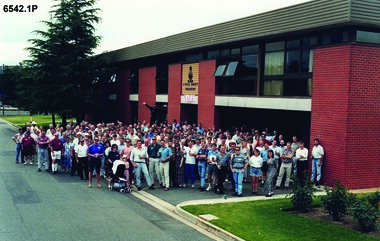
... In February 1952, Army HQ Field Survey Section (Central Command Detachment) was established in Adelaide in a drill hall at Largs Bay. ...In February 1952, Army HQ Field Survey Section (Central Command Detachment) was established in Adelaide in a drill hall at Largs Bay. ...Between 1915 and 1951, military topographical mapping in SA was conducted by Royal Australian Survey Corps (RASvy) units based outside the state. In February 1952, Army HQ Field Survey Section (Central Command Detachment) was established in Adelaide in a drill hall at Largs Bay. It was tasked with providing map coverage in the Woomera and Southern areas of the state. The section was subsequently reorganised as Central Command Field Survey Section moving firstly to Hampstead Barracks, Hampstead in 1953 and then into accommodation at Keswick Barracks in 1954. In 1957 the Section commenced mapping operations in the NT. The Unit was relocated to the old cavalry stables in 1961 and was redesignated Central Command Survey Unit and remained there till 1973. In 1970 the Unit was redesignated 4 Fd Svy Sqn and engaged in operations conducted in PNG from 1972 to 1974 inclusive. In 1973 the Squadron moved into a brand new two-storey specially designed and purpose built building adjacent to the old building. The old building then became the Squadron Q and Map store with an interconnecting lobby to the new building. Since 1975 the Unit was involved in the 1:50,000 Mapping Programme in WA, NT, QLD, SA and conducted many other operations within Australia and overseas. Post disbandment of the Corps the old Squadron building (cavalry stables) now houses the Army Museum of South Australia (AMOSA). The Royal Australian Survey Corps was amalgimated into the Royal Australian Engineer Corps in July 1996. In the lead up to this amalgamation, 4 Field Survey Squadron Keswick Barracks, Adelaide, South Australia was disbanded in 1995. A closing Ceremony was held on 25 November 1995 at 4 Fd Svy Sqn Keswick Barracks attended by about 208 former members of the Unit. A photo was taken of attendees at that event on the day and a list was prepared of attendees. All attendees were sent a copy of the photograph and the list of names as a momento of the Unit and the ceremony..1P A4 Print of an original photo of attendees at the 4 Fd Survey Sqn Closure Ceremony at Keswick Barracks 25 Nov 1995. .2P A4 Print of the names of the attendees at the 4 Fd Survey Sqn Closure Ceremony at Keswick Barracks 25 Nov 1995. Approx 208 attendees.royal australian survey corps, rasvy, fortuna, army survey regiment, army svy regt, asr, 4 fd svy sqn -
 National Vietnam Veterans Museum (NVVM)
Slide - Sims Image Collection
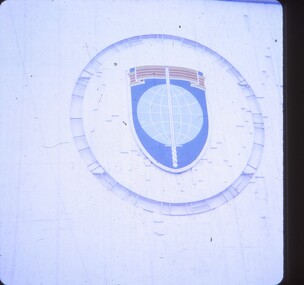
... The "Free World Headquarters" in Saigon during the Vietnam War refers to the Free World Military Assistance Forces (FWMAF) Headquarters, which served as the central command for the allied forces assisting South Vietnam. ...The "Free World Headquarters" in Saigon during the Vietnam War refers to the Free World Military Assistance Forces (FWMAF) Headquarters, which served as the central command for the allied forces assisting South Vietnam. ...The "Free World Headquarters" in Saigon during the Vietnam War refers to the Free World Military Assistance Forces (FWMAF) Headquarters, which served as the central command for the allied forces assisting South Vietnam. It was located on Tran Quoc Toan Street in the Cholon district of Saigon and housed representatives from various nations contributing troops to the war effort. From a collection of 253 images on slides taken while on deployment in Vietnam by Corporal Peter Stanley Sims (No: 44304). He served in the Royal Australian Army Medical Corps, 1969 - 1970.Badge of the Free World Forces at the Free world headquarters in Saigon, Vietnam 1969/70.peter stanley sims, 44304, slides, royal australian army medical corps, vietnam war, sims, australian force vietnam, saigon, free world forces -
 Bendigo Military Museum
Photograph - Army Survey Regiment Freedom of Entry Parade, Bendigo CBD, 1990
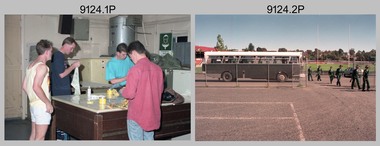
... The event began with a ceremonial parade at the Queen Elizabeth II Oval. The RAAF Central Command Band provided the music at the parade. ...Front to back: Headquarters Squadron’s SGT Chris Edwards, Air Survey Squadron’s SGT Max Watson, Cartographic Squadron’s SSGT Graham Johnston and Lithographic Squadron’s SPR Doug Whiteside. .15) to .19) - Photo, colour, 1990. The RAAF Central Command Band marches through the car park to the QEO’s entrance led by Drum Major Warrant Officer E. ...The event began with a ceremonial parade at the Queen Elizabeth II Oval. The RAAF Central Command Band provided the music at the parade. ...The Freedom of Entry to the City on the 26th of October 1990 was an honour first conferred by the Bendigo City Council to the Army Survey Regiment in 1970. This was the fifth time the unit exercised its freedom of marching into the city with swords drawn, bayonets fixed and drums beating. The honour is usually bestowed upon local regiments, in recognition of their dedicated service, and it is common for military units to periodically exercise their freedom by arranging a parade through the city. The event began with a ceremonial parade at the Queen Elizabeth II Oval. The RAAF Central Command Band provided the music at the parade. After formal inspections of the troops, the Army Survey Regiment saluted as it marched past the Reviewing Officer - Mayor of Bendigo Councillor James Douglass, military dignitaries and guests. Led by the Regiment’s CO – LTCOL Rene van den Tol, the unit marched down View St, along Pall Mall and to Gaol Rd. Regiment members were treated to a civic reception at the City Hall after the ceremony. The Regiment also exercised its Freedom of Entry with anniversary parades in 1977, 1980, 1985, 1992 and 1996. See items 9125.54P and 9126.24P for additional sets of photos taken at the event. The formal booklet covering the event is catalogued under item 9123.This set of 28 photographs of the Army Survey Regiment were taken at the beginning of the Freedom of Entry parade, held at the City of Bendigo’s Queen Elizabeth Oval (QEO) on the 26th of October 1990. The colour photographs are on 35mm negative film and scanned at 2400 dpi. They are part of the Army Survey Regiment’s Collection. .1) - Photo, colour, 1990. Lithographic Squadron personnel at Fortuna Villa prepare for the parade. L to R: CPL Daryl South, SGT Steve Burke, SPR Tony Hilbig, unidentified. .2) - Photo, colour, 1990. Female personnel arrive at the QEO. .3) - Photo, colour, 1990, Personnel prepare for the parade at the QEO. L to R: SGT John Phillips, SPR Steve Linane, CPL Mark Lander 4th from right, remainder unidentified. .4) - Photo, colour, 1990, Personnel prepare for the parade at the QEO. In foreground L to R: WO1 Colin Cuskelly, SSGT Paul Leskovec CSM, unidentified, SGT Brendon McKinless, SSGT Paul Cheater, CPL Damian Killeen, SGT Greg Else, SGT Chris Edwards, SGT Wolfgang Thun, WO2 Mick Flynn, WO1 Ken ‘Sluggo’ Slater, unidentified, WO2 Steve Hansen. .5) & .6) - Photo, colour, 1990. Support personnel at the QEO. L to R: unidentified (x2), SPR Steve Wright, LCPL Ross Anza. .7) - Photo, colour, 1990. Officers prepare for the parade at the QEO L to R: LT Derek Bell, CAPT Dave McLachlan. .8) - Photo, colour, 1990. Officers prepare for the parade at the QEO L to R: CO LTCOL Rene van den Tol, CAPT Dave McLachlan, MAJ Peter Clark, MAJ Neil Taylor. .9) - Photo, colour, 1990. Officers prepare for the parade at the QEO L to R: Unidentified partners, LT Craig Hersant, LT Steve Hledik, LT Marty Lyons. .10) - Photo, colour, 1990. View of the QEO’s grandstand prior to the parade. .11) - Photo, colour, 1990. Spectators arriving at QEO are directed by Army Survey Regiment marshalls. L to R: CPL Graeme Priestley, unidentified (x2). .12) - Photo, colour, 1990. Personnel from the four squadrons await orders to form up. .13) & .14) - Photo, colour, 1990. Right markers for the four squadrons await orders to take posts. Front to back: Headquarters Squadron’s SGT Chris Edwards, Air Survey Squadron’s SGT Max Watson, Cartographic Squadron’s SSGT Graham Johnston and Lithographic Squadron’s SPR Doug Whiteside. .15) to .19) - Photo, colour, 1990. The RAAF Central Command Band marches through the car park to the QEO’s entrance led by Drum Major Warrant Officer E. Hayward (in front) and Deputy Music Director Flying Officer S. Wright. .20) - Photo, colour, 1990. Headquarters Squadron commanded by SSM WO1 Colin Cuskelly marches through the QEO’s car park. L to R: SGT Wolfgang Thun, unidentified, CPL John ‘Flash’ Anderson, SGT Rick Gerhardt, unidentified. .21) - Photo, colour, 1990. Headquarters Squadron commanded by SSM WO1 Colin Cuskelly (with sword) marches through the QEO’s car park. .22) & .23) - Photo, colour, 1990. Air Survey Squadron commanded by SSM WO1 Russell ‘Rusty’ Williams (with sword) march through the QEO’s car park. .24) - Photo, colour, 1990. Air Survey Squadron commanded by SSM WO1 Russell ‘Rusty’ Williams (with sword) march through the QEO’s car park. L to R: unidentified, SPR Allan Blake, SPR Bob Bousfield, unidentified, SPR Harris Lee, SPR Andy Love. .25) - Photo, colour, 1990. Cartographic Squadron commanded by SSM WO1 Gary Warnest (with sword) march through the QEO’s car park. L to R: SGT Doug Carswell, CPL Geunther Ebenwaldner, SPR Leigh Palfrey, SGT Bob Garritty, unidentified, SSGT Dennis Learmonth. .26) - Photo, colour, 1990. Cartographic Squadron commanded by SSM WO1 Gary Warnest (with sword) march through the QEO’s car park. L to R: SGT Doug Carswell, CPL Geunther Ebenwaldner, SGT Bob Garritty, SPR Leigh Palfrey, SSGT Dennis Learmonth, unidentified. .27) - Photo, colour, 1990. Lithographic Squadron commanded by SSM WO1 Bill Jones (with sword) march through the QEO’s car park. .28) - Photo, colour, 1990. Lithographic Squadron commanded by SSM WO1 Bill Jones (with sword) march through the QEO’s car park. L to R: SSGT Peter Imeson, SGT Brian Paul, SGT Steve Burke, SPR Scott Cameron, SPR Shane Campbell. No personnel or civilians are identified. ‘Freedom of Entry Parade ‘90’ is annotated on plastic negative sleeve.royal australian survey corps, rasvy, army survey regiment, army svy regt, fortuna -
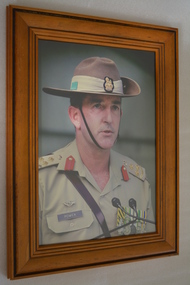 Wangaratta RSL Sub Branch
Photograph - Framed Photograph
... From June 2004 to July 2005 he was appointed as Director, Combined Planning Group, US Central Command, Tampa. He deployed as the Deputy Chief of Staff, Strategic Partnering Headquarters International Security Assistance Force, Kabul, Afghanistan in 2010-11. ...From June 2004 to July 2005 he was appointed as Director, Combined Planning Group, US Central Command, Tampa. He deployed as the Deputy Chief of Staff, Strategic Partnering Headquarters International Security Assistance Force, Kabul, Afghanistan in 2010-11. ...Colour photograph of Lt General Brian Ashley "Ash" Power AO, CSC . Ash Power was born on the 20th of January 1957 in Wangaratta, Victoria. After completing his secondary education at Wangaratta High School, he entered the Royal Military College in 1975, graduating in 1978 into the Royal Regiment of Australian Artillery. His initial appointment was as a Section Commander in 4th Field Regiment. He further served in 4th Field Regiment as a Gun Position Officer, Assistant Adjutant, Adjutant, Operations Officer (BatteryCommander Headquarters Battery) and Commanding Officer.Ash has commanded the 1st Brigade, 1st Division and Training Command – Army. He has served on exchange at the Royal Military Academy Sandhurst, Camberley, United Kingdom and has had other training appointments at the School of Artillery, and the Royal Military College Duntroon. He also served as the Defence Attaché in Thailand. On operations Ash deployed to Bougainville on Operation BELISI as Chief of Staff in 1998 and in 1999, after a short period as Chief of Staff Deployable Joint Force Headquarters, was deployed as the Colonel Operations for INTERFET in East Timor. From June 2004 to July 2005 he was appointed as Director, Combined Planning Group, US Central Command, Tampa. He deployed as the Deputy Chief of Staff, Strategic Partnering Headquarters International Security Assistance Force, Kabul, Afghanistan in 2010-11. Lieutenant General Power retired from the Army on 19 July 2014, his final posting being the Chief of Joint OperationsBrown timber frame containing photograph of uniformed Army Officer ash power, australian army -
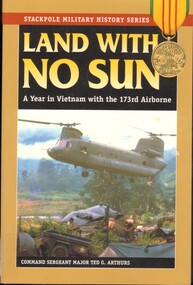 National Vietnam Veterans Museum (NVVM)
Book, Arthurs, Ted G. (Command Sergeant Major), Land With No Sun: A Year in Vietnam with the 173rd Airborne
... Central Highlands of South Vietnam. Land With No Sun: A Year in Vietnam with the 173rd Airborne Book Book Arthurs, Ted G. (Command ...You know it's going to be hot when your brigade is referred to as a fireball unit. From May 1967 through May 1968, the Sky Soldiers of the 173rd Airborne were in the thick of it, humping eighty-pound rucksacks through triple-canopy jungle and chasing down the Viet Cong and North Vietnamese in the Central Highlands of South Vietnam.You know it's going to be hot when your brigade is referred to as a fireball unit. From May 1967 through May 1968, the Sky Soldiers of the 173rd Airborne were in the thick of it, humping eighty-pound rucksacks through triple-canopy jungle and chasing down the Viet Cong and North Vietnamese in the Central Highlands of South Vietnam.united states. army. airborne brigade, 173rd -- history, vietnam war, 1961-1975 -- regimental histories -- united states -
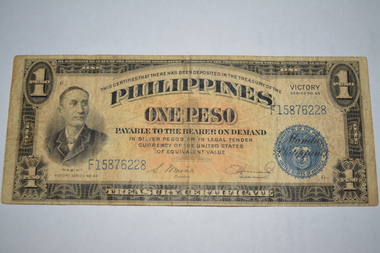 Wangaratta RSL Sub Branch
Currency - Philippines Banknote
... commanded by General MacArthur when they landed on Leyte Island on 20 October 1944. Philippines Banknote Victory Series #66 Victory series 66 No F15876228 Philippines One peso denomination lithograph banknote. The face has a blue seal in the lower right side and on the left side is an image of a male. The reverse side has a pattern featuring the value in orange overlaid centrally ...When the Philippine currency, or pesos, were reprinted in 1944, it was called the Victory series #66. The reason they named the series “66” was because that was the age late President Quezon passed away just after the liberation of Philippines. Philippine Victory notes (series 66) were printed by the US Bureau of Engraving and Printing. They were carried by US forces commanded by General MacArthur when they landed on Leyte Island on 20 October 1944. Philippines One peso denomination lithograph banknote. The face has a blue seal in the lower right side and on the left side is an image of a male. The reverse side has a pattern featuring the value in orange overlaid centrally in black with 'Victory' Victory series 66 No F15876228philippines, banknote, victory series #66 -
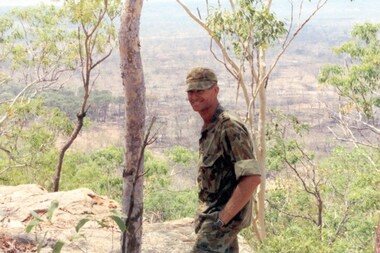 8th/13th Victorian Mounted Rifles Regimental Collection
Born digital image, September 1993
... commanded by Captain Kelvin Robertson deployed to NT. The training began with airfield defence at Tindal followed by a 1000km recon into Arnhem Land in four Landrovers. The troop reported on the conditions of the roads, airfields, bridges (mainly causeways) resources such as fuel supplies in the towns and infrastructure. Each troop taking different route. 3 Troop had the Northern route through Kakadu National park across the East Alligator River to Oenpelli then to Maningrida and Ramangining and south to the Central...commanded by Captain Kelvin Robertson deployed to NT. The training began with airfield defence at Tindal followed by a 1000km recon into Arnhem Land in four Landrovers. The troop reported on the conditions of the roads, airfields, bridges (mainly causeways) resources such as fuel supplies in the towns and infrastructure. Each troop taking different route. 3 Troop had the Northern route through Kakadu National park across the East Alligator River to Oenpelli then to Maningrida and Ramangining and south to the Central ...The Dibb Report into mainland defence of Australia,1986, among other things identified the requirement for protection of key assets in Northern Australia and the possibility of involving Army Reserve (Ares) units in this thus releasing regular forces for offensive operations. Dibb also pointed out that this defined role would result in a huge lift in Ares morale. In June 1988, the 3rd Division (3Div) conducted a Tactical Exercise without Troops (TEWT), Exercise ‘Distant Trumpet’ in the Katherine- Darwin area to study problems associated with defence against low level incursions against Tindal RAAF Base. Exercise ‘Northern Explorer’ followed in October of that year when units of the 3Div including A Squadron 8/13 Victorian Mounted Rifles sent patrol groups to get a first taste of environment and conditions. Post-Exercise reports had to include recommendations re: health, equipment and adaptation of Standing Operating Procedures (SOPs) in preparation for the new role deploying to Northern Australia. The first deployment by 8/13 Vistorian Mounted Rifles was in 1988. Deployments continued i following years. In September 1993, 3 Troop (Wangaratta) VMR Squadron 4/19 PWLH commanded by Captain Kelvin Robertson deployed to NT. The training began with airfield defence at Tindal followed by a 1000km recon into Arnhem Land in four Landrovers. The troop reported on the conditions of the roads, airfields, bridges (mainly causeways) resources such as fuel supplies in the towns and infrastructure. Each troop taking different route. 3 Troop had the Northern route through Kakadu National park across the East Alligator River to Oenpelli then to Maningrida and Ramangining and south to the Central Arnhem Road and back to Tindal Air force Base. Kelvin Robertson enlisted on 6 April 1981 at Cobram where Lieutenant Dan Wyborn was the troop leader at 2 Troop A Squadron 8th/13th Victorian Mounted Rifles (2TP A SQN 8/13 VMR). He completed the Initial Employment Training Course (IET) and then an M113A1 driver’s course in March 1982. Course Senior Instructor (SI) was Captain (CAPT) John McLean and wing instructor Warrant Officer Class 2 (WO2) Mick Baxter (ex-Driving & Servicing Wing instructor at the School of Armour). He served with 2TP at Cobram as a trooper Driver/Signaller until June 1982 when he was selected for officer training. He served two years as an Officer Cadet in Course 21 at Officer Cadet Training Unit (OCTU) graduating in June 1984. He returned to 8/13 VMR and completed the 1/85 Army Reserve (ARES) Regimental Officers Basic Course (ROBC Reconnaissance), then was posted immediately as 1 TP LDR for the Hay Booligal Annual Field Exercise (AFX). In 1985 he took command of 2TP at Cobram until Nov 1987 when he transferred to C Squadron First Armoured Regiment (CSQN 1AR). This began six months full time duty in which Lieutenant (LT) Robertson completed the regular army 1/88 (ROBC Tank), and then served as CSQN's first and only ARES Leopard Tank TP LDR until the next ARES LT was trained up as 2TP LDR. He later served as the CSQN Liaison Officer (LO) on the First Brigade (1 Bde) exercise ‘Predators Advance’ and as a staff officer on a Second Division (2Div) exercise. In Jan 1991 he studied at the Reserve Command and Staff College (RCSC). Upon completion of Grade 3 he was promoted to CAPT and transferred back to a reconnaissance troop, 3TP VMR SQN 4th/19th Prince of Wales’s Light Horse (4/19PWLH) at Wangaratta. CAPT Robertson transferred to the Inactive List in 1994, but in 2011 returned to the Active List serving as Operations Captain (OPS CAPT) at Regimental Headquarters (RHQ) 12th/16th Hunter River Lancers (12/16 HRL)and later Second-In-Command (2IC) Tamworth-based Operations Support Squadron (OPSPT SQN), and at 9 day exercises at Singleton range and an exercise at Townville High Range in Protective Mobility Vehicle (PMV) Bushmasters. In 2013 after completing the ARES Grade 3 Staff Officers course in Brisbane he returned home to Jerilderie and served as 2IC A SQN 4/19 PWLH based at Latchford Barracks Bonegilla. He was awarded the Defence Long Service Medal (DLSM) in 2014. Highlights of his career included being Parade Commander for the 75th anniversary Beersheba parade in Canberra on 31 October 1992. The guard, drawn from the VMR SQN 4/19 PWLH represented the 4th Light Horse Regiment, a participant of the Charge. Then twenty years later, 2012, he was invited to speak at the Quirindi Anzac Day ceremony. On this occasion he was serving with 12/16 HRL, so in two ceremonies, 20 years apart, he had represented both the 4th LHR and the 12th LHR, the two lead Regiments that charged Beersheba. CAPT Robertson was placed on the Inactive List again in 2015. Illustrates Reserve training in NT.Colour image of soldier with landscape in background being Captain Kelvin Robertson 3 Troop Leader (Wangaratta) VMR Squadron 4th/19th Prince of Wales’s Light Horse Regiment looking out over the Arafura swamp near the Maningrida to Ramingining road in Arnhem Land during exercise in the Northern Territory, September 1993.tindal, robertson -
 8th/13th Victorian Mounted Rifles Regimental Collection
Photograph
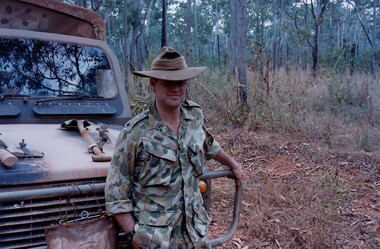
... commanded by Captain Kelvin Robertson deployed to NT. The training began with airfield defence at Tindal followed by a 1000km recon into Arnhem Land in four Landrovers. The troop reported on the conditions of the roads, airfields, bridges (mainly causeways) resources such as fuel supplies in the towns and infrastructure. Each troop taking different route. 3 Troop had the Northern route through Kakadu National park across the East Alligator River to Oenpelli then to Maningrida and Ramangining and south to the Central...commanded by Captain Kelvin Robertson deployed to NT. The training began with airfield defence at Tindal followed by a 1000km recon into Arnhem Land in four Landrovers. The troop reported on the conditions of the roads, airfields, bridges (mainly causeways) resources such as fuel supplies in the towns and infrastructure. Each troop taking different route. 3 Troop had the Northern route through Kakadu National park across the East Alligator River to Oenpelli then to Maningrida and Ramangining and south to the Central ...The Dibb Report into mainland defence of Australia,1986, among other things identified the requirement for protection of key assets in Northern Australia and the possibility of involving Army Reserve (Ares) units in this thus releasing regular forces for offensive operations. Dibb also pointed out that this defined role would result in a huge lift in Ares morale. In June 1988, the 3rd Division (3Div) conducted a Tactical Exercise without Troops (TEWT), Exercise ‘Distant Trumpet’ in the Katherine- Darwin area to study problems associated with defence against low level incursions against Tindal RAAF Base. Exercise ‘Northern Explorer’ followed in October of that year when units of the 3Div including A Squadron 8/13 Victorian Mounted Rifles sent patrol groups to get a first taste of environment and conditions. Post-Exercise reports had to include recommendations re: health, equipment and adaptation of Standing Operating Procedures (SOPs) in preparation for the new role deploying to Northern Australia. The first deployment by 8/13 Victorian Mounted Rifles was in 1988. Deployments continued in following years. In September 1993, 3 Troop (Wangaratta) VMR Squadron 4/19 PWLH commanded by Captain Kelvin Robertson deployed to NT. The training began with airfield defence at Tindal followed by a 1000km recon into Arnhem Land in four Landrovers. The troop reported on the conditions of the roads, airfields, bridges (mainly causeways) resources such as fuel supplies in the towns and infrastructure. Each troop taking different route. 3 Troop had the Northern route through Kakadu National park across the East Alligator River to Oenpelli then to Maningrida and Ramangining and south to the Central Arnhem Road and back to Tindal Air force Base Major Annett later commanded 4/19 Prince of Wales's Light Horse, and later again 4th Brigade 2nd Division.. Colour photograph of Major M. Annett, Officer Commanding VMR Squadron 4/19Prince of Wales's Light Horse during annual exercise Northern Territory 1994. -
 8th/13th Victorian Mounted Rifles Regimental Collection
Photograph
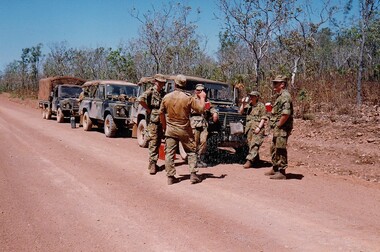
... commanded by Captain Kelvin Robertson deployed to NT. The training began with airfield defence at Tindal followed by a 1000km recon into Arnhem Land in four Landrovers. The troop reported on the conditions of the roads, airfields, bridges (mainly causeways) resources such as fuel supplies in the towns and infrastructure. Each troop taking different route. 3 Troop had the Northern route through Kakadu National park across the East Alligator River to Oenpelli then to Maningrida and Ramangining and south to the Central...commanded by Captain Kelvin Robertson deployed to NT. The training began with airfield defence at Tindal followed by a 1000km recon into Arnhem Land in four Landrovers. The troop reported on the conditions of the roads, airfields, bridges (mainly causeways) resources such as fuel supplies in the towns and infrastructure. Each troop taking different route. 3 Troop had the Northern route through Kakadu National park across the East Alligator River to Oenpelli then to Maningrida and Ramangining and south to the Central ...The Dibb Report into mainland defence of Australia,1986, among other things identified the requirement for protection of key assets in Northern Australia and the possibility of involving Army Reserve (Ares) units in this thus releasing regular forces for offensive operations. Dibb also pointed out that this defined role would result in a huge lift in Ares morale. In June 1988, the 3rd Division (3Div) conducted a Tactical Exercise without Troops (TEWT), Exercise ‘Distant Trumpet’ in the Katherine- Darwin area to study problems associated with defence against low level incursions against Tindal RAAF Base. Exercise ‘Northern Explorer’ followed in October of that year when units of the 3Div including A Squadron 8/13 Victorian Mounted Rifles sent patrol groups to get a first taste of environment and conditions. Post-Exercise reports had to include recommendations re: health, equipment and adaptation of Standing Operating Procedures (SOPs) in preparation for the new role deploying to Northern Australia. The first deployment by 8/13 Victorian Mounted Rifles was in 1988. Deployments continued in following years. In September 1993, 3 Troop (Wangaratta) VMR Squadron 4/19 PWLH commanded by Captain Kelvin Robertson deployed to NT. The training began with airfield defence at Tindal followed by a 1000km recon into Arnhem Land in four Landrovers. The troop reported on the conditions of the roads, airfields, bridges (mainly causeways) resources such as fuel supplies in the towns and infrastructure. Each troop taking different route. 3 Troop had the Northern route through Kakadu National park across the East Alligator River to Oenpelli then to Maningrida and Ramangining and south to the Central Arnhem Road and back to Tindal Air force Base. Colour photograph of five soldiers and three vehicles of VMR Squadron,4/19 Prince of Wales's Light Horse on roadside during annual exercise in Northern Territory 1994.military, vehicles, soldiers, northern territory, training, vmr -
 8th/13th Victorian Mounted Rifles Regimental Collection
Photograph
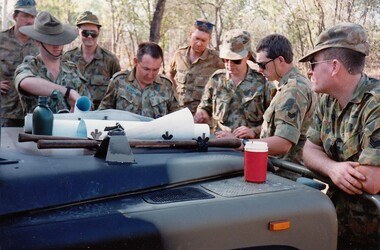
... commanded by Captain Kelvin Robertson deployed to NT. The training began with airfield defence at Tindal followed by a 1000km recon into Arnhem Land in four Landrovers. The troop reported on the conditions of the roads, airfields, bridges (mainly causeways) resources such as fuel supplies in the towns and infrastructure. Each troop taking different route. 3 Troop had the Northern route through Kakadu National park across the East Alligator River to Oenpelli then to Maningrida and Ramangining and south to the Central...commanded by Captain Kelvin Robertson deployed to NT. The training began with airfield defence at Tindal followed by a 1000km recon into Arnhem Land in four Landrovers. The troop reported on the conditions of the roads, airfields, bridges (mainly causeways) resources such as fuel supplies in the towns and infrastructure. Each troop taking different route. 3 Troop had the Northern route through Kakadu National park across the East Alligator River to Oenpelli then to Maningrida and Ramangining and south to the Central ...The Dibb Report into mainland defence of Australia,1986, among other things identified the requirement for protection of key assets in Northern Australia and the possibility of involving Army Reserve (Ares) units in this thus releasing regular forces for offensive operations. Dibb also pointed out that this defined role would result in a huge lift in Ares morale. In June 1988, the 3rd Division (3Div) conducted a Tactical Exercise without Troops (TEWT), Exercise ‘Distant Trumpet’ in the Katherine- Darwin area to study problems associated with defence against low level incursions against Tindal RAAF Base. Exercise ‘Northern Explorer’ followed in October of that year when units of the 3Div including A Squadron 8/13 Victorian Mounted Rifles sent patrol groups to get a first taste of environment and conditions. Post-Exercise reports had to include recommendations re: health, equipment and adaptation of Standing Operating Procedures (SOPs) in preparation for the new role deploying to Northern Australia. The first deployment by 8/13 Victorian Mounted Rifles was in 1988. Deployments continued in following years. In September 1993, 3 Troop (Wangaratta) VMR Squadron 4/19 PWLH commanded by Captain Kelvin Robertson deployed to NT. The training began with airfield defence at Tindal followed by a 1000km recon into Arnhem Land in four Landrovers. The troop reported on the conditions of the roads, airfields, bridges (mainly causeways) resources such as fuel supplies in the towns and infrastructure. Each troop taking different route. 3 Troop had the Northern route through Kakadu National park across the East Alligator River to Oenpelli then to Maningrida and Ramangining and south to the Central Arnhem Road and back to Tindal Air force Base. Colour photograph of group of soldiers of VMR Squadron 4/19Prince of Wales's Light Horse studying maps on bonnet of Land Rover during annual exercise in Northern Territory 1994.Major M. Annett wearing slouch hat, Sergeant Gary Wynn,without hat,,on his left. -
 8th/13th Victorian Mounted Rifles Regimental Collection
Photograph
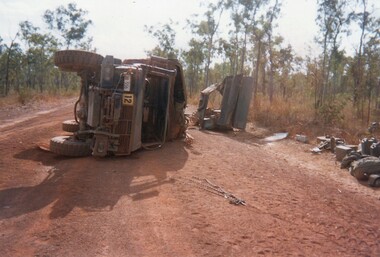
... commanded by Captain Kelvin Robertson deployed to NT. The training began with airfield defence at Tindal followed by a 1000km recon into Arnhem Land in four Landrovers. The troop reported on the conditions of the roads, airfields, bridges (mainly causeways) resources such as fuel supplies in the towns and infrastructure. Each troop taking different route. 3 Troop had the Northern route through Kakadu National park across the East Alligator River to Oenpelli then to Maningrida and Ramangining and south to the Central...commanded by Captain Kelvin Robertson deployed to NT. The training began with airfield defence at Tindal followed by a 1000km recon into Arnhem Land in four Landrovers. The troop reported on the conditions of the roads, airfields, bridges (mainly causeways) resources such as fuel supplies in the towns and infrastructure. Each troop taking different route. 3 Troop had the Northern route through Kakadu National park across the East Alligator River to Oenpelli then to Maningrida and Ramangining and south to the Central ...The Dibb Report into mainland defence of Australia,1986, among other things identified the requirement for protection of key assets in Northern Australia and the possibility of involving Army Reserve (Ares) units in this thus releasing regular forces for offensive operations. Dibb also pointed out that this defined role would result in a huge lift in Ares morale. In June 1988, the 3rd Division (3Div) conducted a Tactical Exercise without Troops (TEWT), Exercise ‘Distant Trumpet’ in the Katherine- Darwin area to study problems associated with defence against low level incursions against Tindal RAAF Base. Exercise ‘Northern Explorer’ followed in October of that year when units of the 3Div including A Squadron 8/13 Victorian Mounted Rifles sent patrol groups to get a first taste of environment and conditions. Post-Exercise reports had to include recommendations re: health, equipment and adaptation of Standing Operating Procedures (SOPs) in preparation for the new role deploying to Northern Australia. The first deployment by 8/13 Victorian Mounted Rifles was in 1988. Deployments continued in following years. In September 1993, 3 Troop (Wangaratta) VMR Squadron 4/19 PWLH commanded by Captain Kelvin Robertson deployed to NT. The training began with airfield defence at Tindal followed by a 1000km recon into Arnhem Land in four Landrovers. The troop reported on the conditions of the roads, airfields, bridges (mainly causeways) resources such as fuel supplies in the towns and infrastructure. Each troop taking different route. 3 Troop had the Northern route through Kakadu National park across the East Alligator River to Oenpelli then to Maningrida and Ramangining and south to the Central Arnhem Road and back to Tindal Air force Base. Two colour photographs of vehicle mishap during VMR Squadron 4/19Prince of Wales's Light Horse annual exercise in Northern Territory 1994.Second photo shows driver receiving medical attention. -
 8th/13th Victorian Mounted Rifles Regimental Collection
Photograph
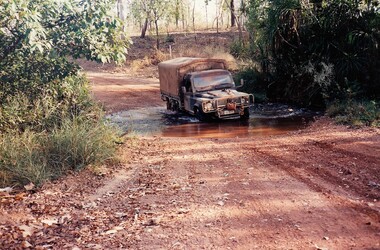
... commanded by Captain Kelvin Robertson deployed to NT. The training began with airfield defence at Tindal followed by a 1000km recon into Arnhem Land in four Landrovers. The troop reported on the conditions of the roads, airfields, bridges (mainly causeways) resources such as fuel supplies in the towns and infrastructure. Each troop taking different route. 3 Troop had the Northern route through Kakadu National park across the East Alligator River to Oenpelli then to Maningrida and Ramangining and south to the Central...commanded by Captain Kelvin Robertson deployed to NT. The training began with airfield defence at Tindal followed by a 1000km recon into Arnhem Land in four Landrovers. The troop reported on the conditions of the roads, airfields, bridges (mainly causeways) resources such as fuel supplies in the towns and infrastructure. Each troop taking different route. 3 Troop had the Northern route through Kakadu National park across the East Alligator River to Oenpelli then to Maningrida and Ramangining and south to the Central ...The Dibb Report into mainland defence of Australia,1986, among other things identified the requirement for protection of key assets in Northern Australia and the possibility of involving Army Reserve (Ares) units in this thus releasing regular forces for offensive operations. Dibb also pointed out that this defined role would result in a huge lift in Ares morale. In June 1988, the 3rd Division (3Div) conducted a Tactical Exercise without Troops (TEWT), Exercise ‘Distant Trumpet’ in the Katherine- Darwin area to study problems associated with defence against low level incursions against Tindal RAAF Base. Exercise ‘Northern Explorer’ followed in October of that year when units of the 3Div including A Squadron 8/13 Victorian Mounted Rifles sent patrol groups to get a first taste of environment and conditions. Post-Exercise reports had to include recommendations re: health, equipment and adaptation of Standing Operating Procedures (SOPs) in preparation for the new role deploying to Northern Australia. The first deployment by 8/13 Victorian Mounted Rifles was in 1988. Deployments continued in following years. In September 1993, 3 Troop (Wangaratta) VMR Squadron 4/19 PWLH commanded by Captain Kelvin Robertson deployed to NT. The training began with airfield defence at Tindal followed by a 1000km recon into Arnhem Land in four Landrovers. The troop reported on the conditions of the roads, airfields, bridges (mainly causeways) resources such as fuel supplies in the towns and infrastructure. Each troop taking different route. 3 Troop had the Northern route through Kakadu National park across the East Alligator River to Oenpelli then to Maningrida and Ramangining and south to the Central Arnhem Road and back to Tindal Air force Base. Two colour photographs of creek crossings, one more challenging than the other,during the annual exercise in Northern Territory, conducted by VMR Squadron 4/19 Prince of Wales's Light horse, 1994. -
 Dandenong/Cranbourne RSL Sub Branch
Medal - Assorted Service Medals x 6, Circa 1940s
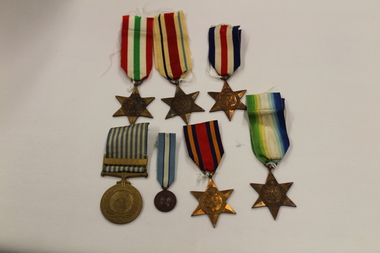
... Bronze " France and Germany Star" WWII Central and Northern European Theatre Service. United Nations Service Medal. Korea . Issued for service under U N Command in Korea . ...Bronze " France and Germany Star" WWII Central and Northern European Theatre Service. United Nations Service Medal. Korea . Issued for service under U N Command in Korea . ...Bronze "Italy Star" WWII Europe and Mediterranean Theatre Service. Bronze "Burma Star" WWII Burma Theatre Service Pacific. Bronze "Atlantic Star" WWII Battle of the Atlantic. Air Crew Europe France and Germany. Bronze " France and Germany Star" WWII Central and Northern European Theatre Service. United Nations Service Medal. Korea . Issued for service under U N Command in Korea . U N 1st International Award. United Nations Medal UNFICYP. Issued in 1964 to UN Servicemen in Cyprus. For the restoration of Law and Order. In the Service of Peace.As above. -
 Linton and District Historical Society Inc
Stereograph, The Rose Stereographs, Melbourne, Sydney, Wellington and London, 14,680 Laocoon and His Two Sons Killed by Serpents, Copyright 1912
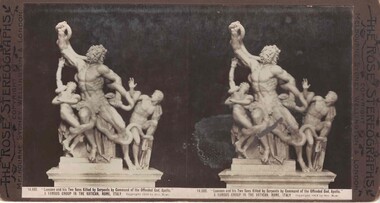
... Command of the Offended God, Apollo." / A FAMOUS GROUP IN THE VATICAN, ROME, ITALY. Stereograph of two black and white images. Images are of a sculpture of a central ...One of two sets of stereographs donated by the O'Beirne family along with a stereoscope for viewing (Stereoscope is Registration no. 2014-51).Stereograph of two black and white images. Images are of a sculpture of a central figure holding a snake aloft and two younger males on each side of him.14,680. "Laocoon and his Two Sons Killed by Serpents by Command of the Offended God, Apollo." / A FAMOUS GROUP IN THE VATICAN, ROME, ITALY.stereographs -
 Ringwood and District Historical Society
Document - Auction Flyer and Investment Report, Midway Arcade 145-147 Maroondah Highway, Ringwood, Victoria - 1997
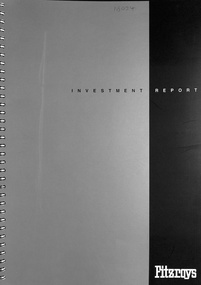
... commands a prominent location on Maroondah Highway opposite the Ringwood Railway Station and adjacent to the Eastland Shopping Centre and car park with surrounding tenants incorporating a variety of major financial institutions and recognised retailers. Building Description: The building comprises a two-storey mixed use development incorporating 14 shops within a retail arcade at ground floor with excellent frontage to both Maroondah Highway and Civic Place at the rear. Located at first floor are 13 office suites accessible via two internal staircases and which are located around a central...commands a prominent location on Maroondah Highway opposite the Ringwood Railway Station and adjacent to the Eastland Shopping Centre and car park with surrounding tenants incorporating a variety of major financial institutions and recognised retailers. Building Description: The building comprises a two-storey mixed use development incorporating 14 shops within a retail arcade at ground floor with excellent frontage to both Maroondah Highway and Civic Place at the rear. Located at first floor are 13 office suites accessible via two internal staircases and which are located around a central ...Wire-bound A4 size 25-page investment report and double-sided colour notice advertising on site auction of Midway Arcade at 1pm on Wednesday 10th December 1997. Selling Agents - Carter Real Estate, 128 Maroondah Highway Ringwood 3134, Tel: 9870-6211 and Fitzroys, 367 Collins Street Melbourne 3000 Tel: 9275-7777.Investment Report Executive Summary Extract: Property: Midway Arcade, 145-147 Maroondah Highway, Ringwood. Location: The property commands a prominent location on Maroondah Highway opposite the Ringwood Railway Station and adjacent to the Eastland Shopping Centre and car park with surrounding tenants incorporating a variety of major financial institutions and recognised retailers. Building Description: The building comprises a two-storey mixed use development incorporating 14 shops within a retail arcade at ground floor with excellent frontage to both Maroondah Highway and Civic Place at the rear. Located at first floor are 13 office suites accessible via two internal staircases and which are located around a central atrium. Building Area: 1,533.41 m2 approx. Site Area: 1,284 m2 (13,819 sq.ft.) approx. Lease Details: The property is being offered subject to the existing lease terms and conditions with a passing net annual rental of $171,940.65. Method of Sale: Public Auction - Wednesday, 10th December, 1997 at 1:00p.m. on site. Terms: 10% deposit, balance 60 days.
