
Showing 34 items matching "civic leadership"
-
 Broadmeadows Historical Society & Museum
Ephemera - Reception invitation, In Honour of the Birthday of Her Majesty the Queen, 1964
... ...Civic leadership...Queen’s Birthday celebrations Government House Melbourne Vice‑regal ceremonies Civic leadership Social history of Victoria City of Broadmeadows K. ...The invitation reflects official civic and vice‑regal ceremonial culture in Victoria during the mid‑20th century. Queen’s Birthday receptions at Government House were significant social and political events attended by local dignitaries and civic leaders.This item has historic and social significance as a tangible record of mid‑20th century vice‑regal ceremonial life in Victoria and reflects the formal conventions, design, and social networks of the period.Cream card invitation with black printed text and crown motif at top centre. Rectangular with rounded corners. Printed on one side (recto); verso blank except for later catalogue label.Recto (printed): “In Honour of the Birthday of Her Majesty the Queen / His Excellency The Governor and Lady Delacombe / request the pleasure of the company of / Councillor R. R. Evans & Miss K. Fletcher / at an Evening Reception / to be held on Friday, the 12th June, 1964, at 8.30 o’clock / Evening Dress or Uniform and Decorations / An answer is requested to the Aide‑de‑Camp in Waiting, Government House, Melbourne” Verso: “WI‑4292” (paper label, top right)queen’s birthday celebrations, government house, melbourne, vice‑regal ceremonies, civic leadership, social history of victoria, city of broadmeadows, k. fletcher -
 Broadmeadows Historical Society & Museum
Document - Letter, Edna M. Tripovich, Letter from Edna M. Tripovich to Kath Forsyth congratulating her on engagement, 20 May 1964
... This letter documents a personal social exchange connected with civic leadership in the City of Broadmeadows in 1964. ...This letter documents a personal social exchange connected with civic leadership in the City of Broadmeadows in 1964. ...This letter documents a personal social exchange connected with civic leadership in the City of Broadmeadows in 1964. It reflects interpersonal networks, political office holders, and community relationships, specifically referencing the engagement of Kath Forsyth to Cr. Evans, Mayor of Broadmeadows. The document illustrates mid 20th century communication practices, gendered social conventions, and civic identity in a rapidly developing suburban municipality.This handwritten letter is historically significant as evidence of social and civic networks in Broadmeadows during the mid 20th century, particularly in relation to the office of the Mayor. It demonstrates the intersection of personal relationships and public roles and contributes to understanding local governance culture and community life. Its provenance within a broader archival collection enhances its research and interpretive value.Single handwritten letter in ink on paper. The letter comprises one page and is written in cursive handwriting. Paper shows typical ageing consistent with mid 20th century correspondence. No envelope present.(Front page, handwritten in ink) “20 5 64 /Dear Kath, /It was lovely to see you again at/Brunswick last night. You certainly/gave me a pleasant surprise when you/told me the news that you will be getting married to Cr. Evans. It has/been a pleasure having the opportunity/to get to know you during your term/as Mayoress, and I still hope that it/continues in the future. Jack & I join/in wishing you both a very happy future together, and the best of luck to you both./Yours sincerely /Edna M. Tripovich / 1 Halifax Court / Ashburton, SE11” On the outside: Yellow catalogue label: “WI 4186”broadmeadows (vic.) — history, local government — victoria — broadmeadows, mayors — social life and customs, personal correspondence — 20th century, engagements (marriage announcements), women’s social networks -
 Warrnambool and District Historical Society Inc.
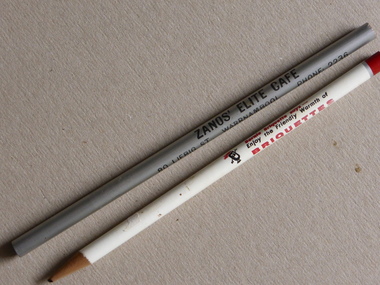
Pencil, Souvenir Pencil x 2, 1960s
... The Warrnambool Junior Chamber of Commerce (Jaycees) was established in the early 1950s to advance business and encourage civic leadership in its members. The Briquette Company was a sponsor of the 1965 Conference....The Warrnambool Junior Chamber of Commerce (Jaycees) was established in the early 1950s to advance business and encourage civic leadership in its members. The Briquette Company was a sponsor of the 1965 Conference. ...These two pencils have been marked with names to serve as advertising items and souvenirs. One is from Zanos’ Elite Café of 80 Liebig Street. This café operated in the 1950s and 60s. The other is from the Jaycee 20th Victorian Zone Conference of 1965 held in Warrnambool. The Warrnambool Junior Chamber of Commerce (Jaycees) was established in the early 1950s to advance business and encourage civic leadership in its members. The Briquette Company was a sponsor of the 1965 Conference.These pencils are of minor interest as examples of advertising techniques used in the second half of the 20th century. Today the souvenir item is more likely to be in the form of a biro or a computer accessoryThese are two circular lead pencils, one advertising Zanos’ Elite Café, which is unsharpened and silver in colour and one advertising the Jaycee 20th Victorian Zone Conference of 1965 and Briquettes which is of white and red colouring.1. ‘Zanos’ Elite Café, 80 Liebig Street, Warrnambool, Phone 2236’ 2. ‘ Jaycee 20th Victorian Zone Conference, Warrnambool, 1965, Bernie Briquette says- Enjoy the Friendly Warmth of Briquettes’ zanos’ elite café, warrnambool jaycees, warrnambool -
 Sunshine and District Historical Society Incorporated
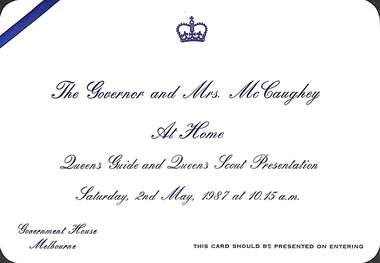
Ephemera - Queens Guide And Queen Scout Presentation Ticket, 2nd May 1987
... These presentations symbolised civic leadership, service, and the connection between youth organisations and the State. ...These presentations symbolised civic leadership, service, and the connection between youth organisations and the State. ...The Queen’s Guide (Girl Guides) and Governor’s Award / Queen’s Scout (Boy Scouts) were the highest youth honours in their respective movements. In Victoria, these awards were traditionally presented by the Victorian Governor at formal ceremonies held at Government House. These presentations symbolised civic leadership, service, and the connection between youth organisations and the State. The Governor at the time of this ceremony was Sir Brian Murray and the Lieutenant‑Governor was Sir James Gobbo. These ceremonies were often performed by either the Governor or the Lieutenant‑Governor, depending on scheduling. Mrs. McCaughey was the wife of the previous Governor Professor Davis McCaughey.The Governer and Mrs McCaughey At Home Queens guide And Queen Scout Presentation Saturday 2nd May 1987 at 10:15am Government House Melbourne This card should be presented on enteringscout, scouting -
Broadmeadows Historical Society & Museum
Furniture (collection) - Shire Chairs
... The chairs are believed to have been used in council chambers or other official settings, symbolising both the continuity of civic leadership and the legacy of pioneering families in the region. ...The chairs are believed to have been used in council chambers or other official settings, symbolising both the continuity of civic leadership and the legacy of pioneering families in the region. ...Collection of chairs donated to Shire of BroadmeadowsNo order or sequence.Furniture from the Shire of Broadmeadowsshire council, broadmeadows, furniture, alexander coupar gibbshire council, broadmeadows, furniture, alexander coupar gibb -
 Eltham District Historical Society Inc
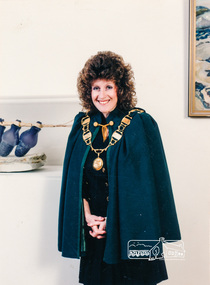
Photograph, Former Shire of Eltham President, Cr. Mary Grant with the Presidential Chain of Office
... leadership role of office. This chain is part of the Visual Art Collection held by Nillumbik Shire Council and is now on display in the Council Chamber area in the Civic Centre at Greensborough. ...leadership role of office. This chain is part of the Visual Art Collection held by Nillumbik Shire Council and is now on display in the Council Chamber area in the Civic Centre at Greensborough. ...Cr. Mary Grant of Hurstbridge served as the North Riding Councillor for the Shire of Eltham. First elected in 1990 and required to retire by 1995. She was the Shire President at least 1992-1993. Source: Shire of Eltham 1993 Handbook. It is believed that this photograph was taken after Cr. Grant's term as President. The Presidential Chain of Office is now a significant part of the Nillumbik Shire Council's art collection. EDHS Newsletter No. 216, May 2014, p4 Mayoral Chain of Office R.C. McLellan and family donated a Chain of Office to the Shire of Eltham to be worn by the Shire President on formal occasions. With the amalgamation of councils in 1994 this was transferred to the Shire of Nillumbik to be used during the mayoral year. Eltham had a Shire President whereas Nillumbik has a Mayor. Many municipalities have a collar or chain of office for ceremonial purposes. Traditionally these symbolise or denote the formal leadership role of office. This chain is part of the Visual Art Collection held by Nillumbik Shire Council and is now on display in the Council Chamber area in the Civic Centre at Greensborough. Matcham Skipper and Myra Skipper were commissioned by the McClellan family to create the gold-plated silver chain shown being worn by Eltham Shire President Peter Graham in 1990, with Bob McLellan and Matcham Skipper (centre). Nillumbik Shire Council has asked that the following credit information is used when the chain is displayed, or images reproduced. Matcham SKIPPER (1921-2011) and Myra SKIPPER (1920-1996) Mayoral (Presidential) Chains of Office 1976 Gold plated silver 60cm x 32cm x 1cm (variable) © The Estate of Matcham and Myra Skipper Donated by RC McLellan and Family Visual Art Collection: Nillumbik Shire Council [Picture: Nillumbik Mayoral Chain of Office] [Picture: Bob McLellan, Matcham Skipper and Eltham Shire President Peter Graham -1990]The Presidential Chain of Office is now a significant part of the Nillumbik Shire Council's art collection.Colour photograph Councillor Mary Grant in Shire President Regaliacouncillors, eltham shire council, shire presidents, mary grant, nillumbik shire art collection, presidential chain of office -
 Bendigo Historical Society Inc.
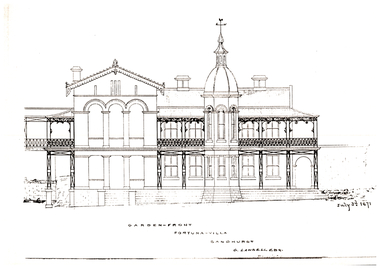
Plan - Fortuna Article - Plans of the Villa, July 3rd 1871
... leadership roles in the fire brigade, German Association, Bendigo Mutual Permanent Land and Building Society, and other local organizations. Active Freemason and published a book on freemasonry in Bendigo. Retired in 1900, briefly returned to the firm after his son’s death, and finally retired in 1912. Died in 1915 at age 87; his funeral was attended by many prominent citizens, and flags were flown at half-mast in his honor. William Vahland’s legacy is seen in Bendigo’s architectural heritage and his broad contributions to the city’s civic...leadership roles in the fire brigade, German Association, Bendigo Mutual Permanent Land and Building Society, and other local organizations. Active Freemason and published a book on freemasonry in Bendigo. Retired in 1900, briefly returned to the firm after his son’s death, and finally retired in 1912. Died in 1915 at age 87; his funeral was attended by many prominent citizens, and flags were flown at half-mast in his honor. William Vahland’s legacy is seen in Bendigo’s architectural heritage and his broad contributions to the city’s civic ...Architect of Fortuna Villa Carl William Vahland was born in 1828 in Nienburg an der Weser, Germany. He trained at the prestigious Polytechnic Baugewerkschule in Holzminden, excelling in building and architecture. Emigrated to Melbourne in 1854, motivated by political unrest in Germany and the lure of the goldfields. Quickly he moved to Bendigo, joining other German migrants who contributed significantly to the region. Early Initially worked as a carpenter, then established himself as an architect in Bendigo by 1856. He Formed partnerships with other German architects, notably Robert Getzschmann and later his son Henry.Major. He Designed many of Bendigo’s most prominent buildings, including the Town Hall, Shamrock Hotel, Bendigo Hospital, Benevolent Asylum, School of Mines, Mechanics Institute, Princess Theatre, Masonic Temple, Alexandra Fountain, and several banks and churches. His firm also worked in other Victorian towns and opened an office in Echuca. Favored French Renaissance and Hellenistic Greek styles, influenced by German architectural trends. He Married Jane Barrow in 1859; they had ten children, though three died young. Became a naturalized Australian and anglicized his name to William Vahland. He Owned and developed the Charterhouse estate and vineyard at Runnymede, exporting award-winning wine to Europe. Justice of the Peace for over 40 years, city councillor, and mayor of Bendigo. Held leadership roles in the fire brigade, German Association, Bendigo Mutual Permanent Land and Building Society, and other local organizations. Active Freemason and published a book on freemasonry in Bendigo. Retired in 1900, briefly returned to the firm after his son’s death, and finally retired in 1912. Died in 1915 at age 87; his funeral was attended by many prominent citizens, and flags were flown at half-mast in his honor. William Vahland’s legacy is seen in Bendigo’s architectural heritage and his broad contributions to the city’s civic, cultural, and economic life.Fortuna Article - Plans of the Villa 1871 This item contains the following documents: 11217.81a Plan Garden Front for G. Lansell Esq. - 1 A4 Sheet 11217.81b Plan Facade 2 - 1 A4 Sheet 11217.81c Plan Facade 6 - 1 A4 Sheet 11217.81d Plan Garden Elevation and plan of Ground Floor and Second Floor with Section on line xx - 1 A4 Sheet 11217.81e Plan Basement and ground floor- 1 A4 Sheet 11217.81f Plan Basement and ground floor - 1 A3 Sheet - stamped with William C Vahland Architect Sandhurstnon-fictionbendigo, fortuna, george lansell, william vahland -
 Charlton Golden Grains Museum Inc
Photograph - Rotunda, c.1990
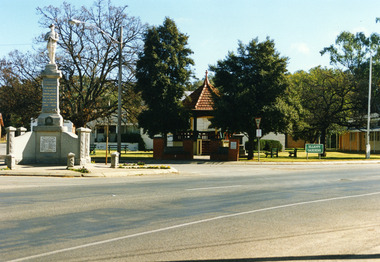
... During his 28 years in the community, he held leadership roles in many of the organizations that shaped the town’s infrastructure and social life. #### Professional and Civic Work Green was a key figure in establishing essential services for Charlton. ...During his 28 years in the community, he held leadership roles in many of the organizations that shaped the town’s infrastructure and social life. #### Professional and Civic Work Green was a key figure in establishing essential services for Charlton. ...Granite War monument to the left, Brick rotunda in the center within Elliot Garden, Sign reads Elliot Gardens. The War monument unveiled by Premier Sir William McPherson KCMG on June 23rd 1923. Elliot Gardens named to honor General Harold 'Pompey" Elliot, named in 1940. ### Benjamin Green and the Charlton Band Rotunda The **Ben Green Memorial Rotunda**, located in Elliott Gardens, stands as a tribute to one of Charlton’s most active citizens. **Benjamin Green** was a solicitor who practiced law in the town from 1895 until his death in 1923. During his 28 years in the community, he held leadership roles in many of the organizations that shaped the town’s infrastructure and social life. #### Professional and Civic Work Green was a key figure in establishing essential services for Charlton. He was one of the originators of the **Electric Light and Power Company** and served as the solicitor for the **Water Trust**. His commitment to education was shown through his work as a "prime mover" in the creation of the **Charlton Higher Elementary School**. His community involvement also included: * **Sport:** He introduced golf to Northern Victoria and founded the **Charlton Golf Club** in 1900, serving as its President until his death. He also founded the **Plumpton and Open Coursing Club**. * **Veterans:** He took a strong interest in the welfare of returned soldiers and donated **£100** toward the town's war memorial. * **Culture:** He was an active member of the **Mechanics Institute**. #### The Memorial Rotunda When Green passed away in 1923, a public fund was started to build a band rotunda for outdoor music recitals in his memory. The structure was designed and built by **Folliott Gilmore**, a local builder and timber merchant. It was officially dedicated by his friend **Frank Tate**, the Victorian Director of Education. #### Historical Celebrations The rotunda became a central point for major community events. During a "Back-to-School" celebration held during Show Week, the town was decorated with **12,000 handmade paper flowers** created by local women’s organisations. These flowers covered the rotunda, the bridge, and the town entrances. The event was a significant historical bridge for the town; it was attended by nine original students who had attended Charlton's first **"bark hut" school** in 1875, allowing them to see the modern developments Green had helped achieve. Colour photograph of the Granite War monument to the left, Brick rotunda in the center within Elliot Garden, Sign reads Elliot Gardens.war memorial, elliott gardens, charlton, halls, parks, reserves -
 Charlton Golden Grains Museum Inc
Photograph, c.1980
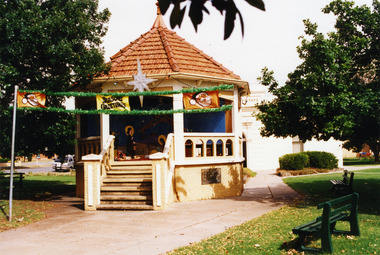
... During his 28 years in the community, he held leadership roles in many of the organizations that shaped the town’s infrastructure and social life. #### Professional and Civic Work Green was a key figure in establishing essential services for Charlton. ...During his 28 years in the community, he held leadership roles in many of the organizations that shaped the town’s infrastructure and social life. #### Professional and Civic Work Green was a key figure in establishing essential services for Charlton. ...Band Rotunda in gardens erected in 1926 in memory of Benjamin Green (Charlton benefactor and solicitor). Red tiled roof and brick base. Steps lead up to the base. ### Benjamin Green and the Charlton Band Rotunda The **Ben Green Memorial Rotunda**, located in Elliott Gardens, stands as a tribute to one of Charlton’s most active citizens. **Benjamin Green** was a solicitor who practiced law in the town from 1895 until his death in 1923. During his 28 years in the community, he held leadership roles in many of the organizations that shaped the town’s infrastructure and social life. #### Professional and Civic Work Green was a key figure in establishing essential services for Charlton. He was one of the originators of the **Electric Light and Power Company** and served as the solicitor for the **Water Trust**. His commitment to education was shown through his work as a "prime mover" in the creation of the **Charlton Higher Elementary School**. His community involvement also included: * **Sport:** He introduced golf to Northern Victoria and founded the **Charlton Golf Club** in 1900, serving as its President until his death. He also founded the **Plumpton and Open Coursing Club**. * **Veterans:** He took a strong interest in the welfare of returned soldiers and donated **£100** toward the town's war memorial. * **Culture:** He was an active member of the **Mechanics Institute**. #### The Memorial Rotunda When Green passed away in 1923, a public fund was started to build a band rotunda for outdoor music recitals in his memory. The structure was designed and built by **Folliott Gilmore**, a local builder and timber merchant. It was officially dedicated by his friend **Frank Tate**, the Victorian Director of Education. #### Historical Celebrations The rotunda became a central point for major community events. During a "Back-to-School" celebration held during Show Week, the town was decorated with **12,000 handmade paper flowers** created by local women’s organisations. These flowers covered the rotunda, the bridge, and the town entrances. The event was a significant historical bridge for the town; it was attended by nine original students who had attended Charlton's first **"bark hut" school** in 1875, allowing them to see the modern developments Green had helped achieve. Standard colour photo, not mounted.charlton, rotunda, elliott gardens, green b, mechanics institure -
 Charlton Golden Grains Museum Inc
Photograph, c.1987
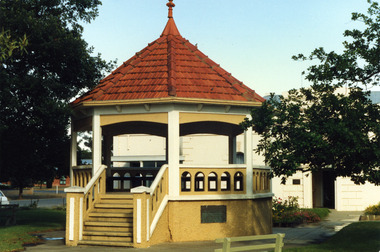
... During his 28 years in the community, he held leadership roles in many of the organizations that shaped the town’s infrastructure and social life. #### Professional and Civic Work Green was a key figure in establishing essential services for Charlton. ...During his 28 years in the community, he held leadership roles in many of the organizations that shaped the town’s infrastructure and social life. #### Professional and Civic Work Green was a key figure in establishing essential services for Charlton. ...Built in 1926 the Ben Green memorial Rotunda was named after a local citizen of Charlton. Ben Green was a solicitor and member who supported many school prizes for literature. Ben was also president of the Charlton Club and of the Charlton Coursing Club. Ben was a keen tennis player, winning Victorian Championships in 1892, 1893, and 1984. The garden in which the Rotunda stands also contains the Boer War, World war I and II memorial and a bust of Harold "Pompey" Elliott. ### Benjamin Green and the Charlton Band Rotunda The **Ben Green Memorial Rotunda**, located in Elliott Gardens, stands as a tribute to one of Charlton’s most active citizens. **Benjamin Green** was a solicitor who practiced law in the town from 1895 until his death in 1923. During his 28 years in the community, he held leadership roles in many of the organizations that shaped the town’s infrastructure and social life. #### Professional and Civic Work Green was a key figure in establishing essential services for Charlton. He was one of the originators of the **Electric Light and Power Company** and served as the solicitor for the **Water Trust**. His commitment to education was shown through his work as a "prime mover" in the creation of the **Charlton Higher Elementary School**. His community involvement also included: * **Sport:** He introduced golf to Northern Victoria and founded the **Charlton Golf Club** in 1900, serving as its President until his death. He also founded the **Plumpton and Open Coursing Club**. * **Veterans:** He took a strong interest in the welfare of returned soldiers and donated **£100** toward the town's war memorial. * **Culture:** He was an active member of the **Mechanics Institute**. #### The Memorial Rotunda When Green passed away in 1923, a public fund was started to build a band rotunda for outdoor music recitals in his memory. The structure was designed and built by **Folliott Gilmore**, a local builder and timber merchant. It was officially dedicated by his friend **Frank Tate**, the Victorian Director of Education. #### Historical Celebrations The rotunda became a central point for major community events. During a "Back-to-School" celebration held during Show Week, the town was decorated with **12,000 handmade paper flowers** created by local women’s organisations. These flowers covered the rotunda, the bridge, and the town entrances. The event was a significant historical bridge for the town; it was attended by nine original students who had attended Charlton's first **"bark hut" school** in 1875, allowing them to see the modern developments Green had helped achieve. Standard colour photograph.charlton, elliott gardens, rotunda, parks, green ben -
 Charlton Golden Grains Museum Inc
Photograph, c.1987
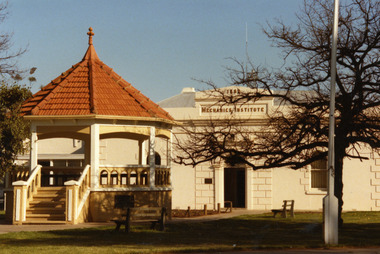
... During his 28 years in the community, he held leadership roles in many of the organizations that shaped the town’s infrastructure and social life. #### Professional and Civic Work Green was a key figure in establishing essential services for Charlton. ...During his 28 years in the community, he held leadership roles in many of the organizations that shaped the town’s infrastructure and social life. #### Professional and Civic Work Green was a key figure in establishing essential services for Charlton. ...Built in 1926 the Ben Green memorial Rotunda was named after a local citizen of Charlton. Ben Green was a solicitor and member who supported many school prizes for literature. Ben was also president of the Charlton Club and of the Charlton Coursing Club. Ben was a keen tennis player, winning Victorian Championships in 1892, 1893, and 1984. The garden in which the Rotunda stands also contains the Boer War, World war I and II memorial and a bust of Harold "Pompey" Elliott. ### Benjamin Green and the Charlton Band Rotunda The **Ben Green Memorial Rotunda**, located in Elliott Gardens, stands as a tribute to one of Charlton’s most active citizens. **Benjamin Green** was a solicitor who practiced law in the town from 1895 until his death in 1923. During his 28 years in the community, he held leadership roles in many of the organizations that shaped the town’s infrastructure and social life. #### Professional and Civic Work Green was a key figure in establishing essential services for Charlton. He was one of the originators of the **Electric Light and Power Company** and served as the solicitor for the **Water Trust**. His commitment to education was shown through his work as a "prime mover" in the creation of the **Charlton Higher Elementary School**. His community involvement also included: * **Sport:** He introduced golf to Northern Victoria and founded the **Charlton Golf Club** in 1900, serving as its President until his death. He also founded the **Plumpton and Open Coursing Club**. * **Veterans:** He took a strong interest in the welfare of returned soldiers and donated **£100** toward the town's war memorial. * **Culture:** He was an active member of the **Mechanics Institute**. #### The Memorial Rotunda When Green passed away in 1923, a public fund was started to build a band rotunda for outdoor music recitals in his memory. The structure was designed and built by **Folliott Gilmore**, a local builder and timber merchant. It was officially dedicated by his friend **Frank Tate**, the Victorian Director of Education. #### Historical Celebrations The rotunda became a central point for major community events. During a "Back-to-School" celebration held during Show Week, the town was decorated with **12,000 handmade paper flowers** created by local women’s organisations. These flowers covered the rotunda, the bridge, and the town entrances. The event was a significant historical bridge for the town; it was attended by nine original students who had attended Charlton's first **"bark hut" school** in 1875, allowing them to see the modern developments Green had helped achieve. Standard colour photographcharlton, elliott gardens, rotunda, parks, mechanics institure, golden grains museum, ben green -
 Charlton Golden Grains Museum Inc
Photograph, c.1990
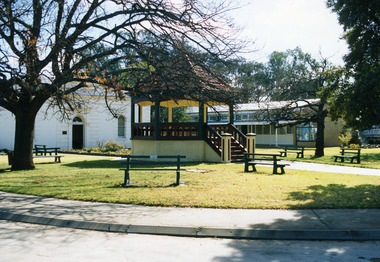
... During his 28 years in the community, he held leadership roles in many of the organizations that shaped the town’s infrastructure and social life. #### Professional and Civic Work Green was a key figure in establishing essential services for Charlton. ...During his 28 years in the community, he held leadership roles in many of the organizations that shaped the town’s infrastructure and social life. #### Professional and Civic Work Green was a key figure in establishing essential services for Charlton. ...### Benjamin Green and the Charlton Band Rotunda The **Ben Green Memorial Rotunda**, located in Elliott Gardens, stands as a tribute to one of Charlton’s most active citizens. **Benjamin Green** was a solicitor who practiced law in the town from 1895 until his death in 1923. During his 28 years in the community, he held leadership roles in many of the organizations that shaped the town’s infrastructure and social life. #### Professional and Civic Work Green was a key figure in establishing essential services for Charlton. He was one of the originators of the **Electric Light and Power Company** and served as the solicitor for the **Water Trust**. His commitment to education was shown through his work as a "prime mover" in the creation of the **Charlton Higher Elementary School**. His community involvement also included: * **Sport:** He introduced golf to Northern Victoria and founded the **Charlton Golf Club** in 1900, serving as its President until his death. He also founded the **Plumpton and Open Coursing Club**. * **Veterans:** He took a strong interest in the welfare of returned soldiers and donated **£100** toward the town's war memorial. * **Culture:** He was an active member of the **Mechanics Institute**. #### The Memorial Rotunda When Green passed away in 1923, a public fund was started to build a band rotunda for outdoor music recitals in his memory. The structure was designed and built by **Folliott Gilmore**, a local builder and timber merchant. It was officially dedicated by his friend **Frank Tate**, the Victorian Director of Education. #### Historical Celebrations The rotunda became a central point for major community events. During a "Back-to-School" celebration held during Show Week, the town was decorated with **12,000 handmade paper flowers** created by local women’s organisations. These flowers covered the rotunda, the bridge, and the town entrances. The event was a significant historical bridge for the town; it was attended by nine original students who had attended Charlton's first **"bark hut" school** in 1875, allowing them to see the modern developments Green had helped achieve. Standard colour photographcharlton, elliott gardens, rotunda, parks, mechanics institure, golden grains museum, green ben -
 Charlton Golden Grains Museum Inc
Photograph, c.1990
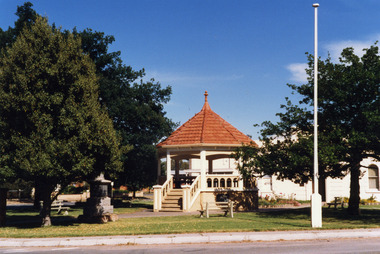
... During his 28 years in the community, he held leadership roles in many of the organizations that shaped the town’s infrastructure and social life. #### Professional and Civic Work Green was a key figure in establishing essential services for Charlton. ...During his 28 years in the community, he held leadership roles in many of the organizations that shaped the town’s infrastructure and social life. #### Professional and Civic Work Green was a key figure in establishing essential services for Charlton. ...Built in 1926 the Ben Green memorial Rotunda was named after a local citizen of Charlton. Ben Green was a solicitor and member who supported many school prizes for literature. Ben was also president of the Charlton Club and of the Charlton Coursing Club. Ben was a keen tennis player, winning Victorian Championships in 1892, 1893, and 1984. The garden in which the Rotunda stands also contains the Boer War, World war I and II memorial and a bust of Harold "Pompey" Elliott. ### Benjamin Green and the Charlton Band Rotunda The **Ben Green Memorial Rotunda**, located in Elliott Gardens, stands as a tribute to one of Charlton’s most active citizens. **Benjamin Green** was a solicitor who practiced law in the town from 1895 until his death in 1923. During his 28 years in the community, he held leadership roles in many of the organizations that shaped the town’s infrastructure and social life. #### Professional and Civic Work Green was a key figure in establishing essential services for Charlton. He was one of the originators of the **Electric Light and Power Company** and served as the solicitor for the **Water Trust**. His commitment to education was shown through his work as a "prime mover" in the creation of the **Charlton Higher Elementary School**. His community involvement also included: * **Sport:** He introduced golf to Northern Victoria and founded the **Charlton Golf Club** in 1900, serving as its President until his death. He also founded the **Plumpton and Open Coursing Club**. * **Veterans:** He took a strong interest in the welfare of returned soldiers and donated **£100** toward the town's war memorial. * **Culture:** He was an active member of the **Mechanics Institute**. #### The Memorial Rotunda When Green passed away in 1923, a public fund was started to build a band rotunda for outdoor music recitals in his memory. The structure was designed and built by **Folliott Gilmore**, a local builder and timber merchant. It was officially dedicated by his friend **Frank Tate**, the Victorian Director of Education. #### Historical Celebrations The rotunda became a central point for major community events. During a "Back-to-School" celebration held during Show Week, the town was decorated with **12,000 handmade paper flowers** created by local women’s organisations. These flowers covered the rotunda, the bridge, and the town entrances. The event was a significant historical bridge for the town; it was attended by nine original students who had attended Charlton's first **"bark hut" school** in 1875, allowing them to see the modern developments Green had helped achieve. Standard colour photograph.charlton, elliott gardens, rotunda, parks, green ben -
 Sunshine and District Historical Society Incorporated
Photograph - Lieutenant Governor Of Victoria Samuel McCaughey Visit To Sunshine 1990 Photographs, Adam Ellwood, 29th June 1990
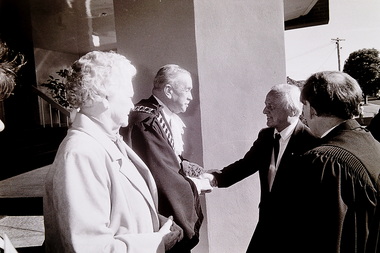
... Albans and Sunshine were important civic events because they connected local communities to the highest levels of Victoria’s constitutional and ceremonial leadership. ...Sir Samuel McCaughey was a state officeholder, specifically the Lieutenant‑Governor of Victoria. The Governor of Victoria is the Queen / King’s representative in the State of Victoria and is a state level constitutional and ceremonial role. Constitutional duties include giving Royal Assent to Victorian laws, appointing the Premier and Ministers, opening and dissolving Parliament, acting on the advice of the Victorian Government, and ensuring stable, lawful government in the state. Ceremonial duties include attending civic events, visiting suburbs, towns, schools, and community organisations, opening public buildings and infrastructure, presenting awards and honours, supporting charities and volunteer groups. These photographs taken by The Advocate in 1990, when Governor McCaughey and his wife made an official visit to Sunshine. They were welcomed to Sunshine by the Mayor Cr. Don McKay and mayoress Mrs. Isobel McKay. Also at the reception was scouts and guides from Sunshine and Deer Park. The Sunshine North Secondary College Band played in the foyer to welcome the Governor and his wife. After the reception, the party was then taken to The Hunt Club, where the Governor laid the foundation brick for new pottery kiln. They then moved to the Albion Explosive Factory where the new project plans were explained to them. They then moved to Cranwell Park to lay a memorial plaque before travelling to Marie Mill Community Hall and the Living Museum of the West.Governor and Lieutenant‑Governor visits to suburbs like Albion, Braybrook, Maribyrnong, St. Albans and Sunshine were important civic events because they connected local communities to the highest levels of Victoria’s constitutional and ceremonial leadership.Governor McCaughey at Sunshine 321.2samuel mccaughey, sunshine, don mckay, isobel mckay, the hunt club and community arts centre, albion explosive factory, ballarat road, deer park, cranwell park, cranwell street, braybrook, marie mill community centre, randall street, living museum of the west, maribyrnong -
 Sunshine and District Historical Society Incorporated
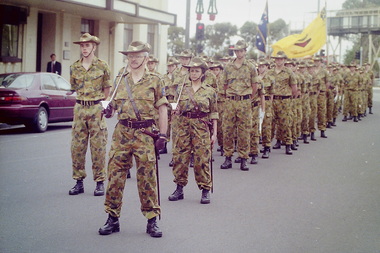
Photograph - 30th Regional Cadet Unit Of Australia Freedom Of The City Of Sunshine Parade 1998 Photographs, The Advocate, 5th December 1998
... civic honour granted by the municipality. The 30th Regional Cadet Unit of Australia (Sunshine) was a community‑based youth cadet organisation active in Melbourne’s western suburbs, particularly Sunshine, St Albans, and Deer Park. It operated independently of the Australian Defence Force cadet structure, though it adopted similar uniforms, drill practices, and leadership...civic honour granted by the municipality. The 30th Regional Cadet Unit of Australia (Sunshine) was a community‑based youth cadet organisation active in Melbourne’s western suburbs, particularly Sunshine, St Albans, and Deer Park. It operated independently of the Australian Defence Force cadet structure, though it adopted similar uniforms, drill practices, and leadership ...These photographs, taken by The Advocate in 1998, show the 30th Regional Cadet Unit of Australia taking part in the Freedom of the City of Sunshine parade. The images capture the unit marching in full ceremonial order as part of the civic honour granted by the municipality. The 30th Regional Cadet Unit of Australia (Sunshine) was a community‑based youth cadet organisation active in Melbourne’s western suburbs, particularly Sunshine, St Albans, and Deer Park. It operated independently of the Australian Defence Force cadet structure, though it adopted similar uniforms, drill practices, and leadership training.The Freedom Ceremony dates from the medieval times when cities and towns were fortified by walls. Visiting armies had to be granted freedom of entry before being allowed to pass. A trusted military unit would be allowed to march through the city in full ceremonial order, a public affirmation of honour, trust, and the bond between the regiment and the community.30th Regional Cadet Unit Of Australia Freedom Of The City Of Sunshine 555.2devonshire road, hampshire road, city of sunshine municipal offices, sunshine municipal offices, alexandra avenue, sunshine -
 Broadmeadows Historical Society & Museum
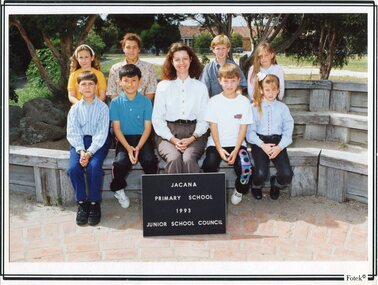
Photograph - Group Photograph, Fotek School Portraits, Jacana Primary School; Junior School Council, 1993, 1993
... The 1993 Junior School Council photograph captures a moment of student leadership and engagement, reflecting the school’s commitment to fostering responsibility, inclusion, and active participation from an early age. Junior School Council initiatives encouraged students to contribute to decision-making and community-building within the school, helping to develop confidence and civic awareness. ...The 1993 Junior School Council photograph captures a moment of student leadership and engagement, reflecting the school’s commitment to fostering responsibility, inclusion, and active participation from an early age. Junior School Council initiatives encouraged students to contribute to decision-making and community-building within the school, helping to develop confidence and civic awareness. ...Jacana Primary School, founded in 1959 and closed in 2009, was a cornerstone of public education in Melbourne’s northern suburbs for over five decades. During this time, the school evolved alongside the community it served, adapting to waves of suburban development and increasing cultural diversity. The 1993 Junior School Council photograph captures a moment of student leadership and engagement, reflecting the school’s commitment to fostering responsibility, inclusion, and active participation from an early age. Junior School Council initiatives encouraged students to contribute to decision-making and community-building within the school, helping to develop confidence and civic awareness. Set against the backdrop of significant urban and demographic change, this image also offers insight into the social dynamics and educational values of the early 1990s. It stands as a testament to Jacana Primary’s nurturing ethos and its role in shaping not only academic outcomes but also the personal growth and community identity of its students. The 1993 Junior School Council photograph from Jacana Primary School is a significant historical record that highlights the school’s emphasis on student voice, leadership, and community participation. Captured during a time of urban growth and increasing cultural diversity in Melbourne’s northern suburbs, the image reflects the inclusive and democratic values that shaped the school’s educational approach. This photograph not only documents the students who took on leadership roles but also symbolises the broader ethos of empowerment and engagement that Jacana Primary fostered among its young learners. As part of the visual legacy of a school that served its community for 50 years, the image preserves the memory of a place where children were encouraged to contribute, lead, and grow—making it a meaningful artefact for former students, staff, and the wider community.Colour Photograph on Satin Finish Paper, mounted on card backingBack; (Blue Label): PH-5396 (Front) (Bottom Right Corner): Fotek ©jacana primary school, education, photograph, group photograph, 1993, jacana, junior school council -
Broadmeadows Historical Society & Museum
Photograph - Group Photo, Classic Studios Victoria, Jacana Primary School - Students and Staff Photograph, 2006, 2006
... leadership initiatives such as the junior student council. The 2006 photograph captures a moment near the end of the school’s operation, showcasing the unity and shared purpose of its students and staff. It highlights the school’s role not only as a place of learning but also as a centre for community building, civic...leadership initiatives such as the junior student council. The 2006 photograph captures a moment near the end of the school’s operation, showcasing the unity and shared purpose of its students and staff. It highlights the school’s role not only as a place of learning but also as a centre for community building, civic ...Jacana Primary School was established in 1959 during a period of rapid suburban expansion in Melbourne’s northern corridor. Situated in the suburb of Jacana, the school was part of a broader post-war initiative aimed at delivering accessible public education to communities shaped by migration, industrial growth, and government housing programs. Over the decades, Jacana Primary evolved alongside its community, reflecting the changing social and cultural landscape of the area. By the 1990s and early 2000s, the school had become a vibrant and inclusive environment, welcoming students from a wide range of cultural and socio-economic backgrounds. This diversity was embraced through inclusive teaching practices, multicultural celebrations, and student leadership initiatives such as the junior student council. The 2006 photograph captures a moment near the end of the school’s operation, showcasing the unity and shared purpose of its students and staff. It highlights the school’s role not only as a place of learning but also as a centre for community building, civic engagement, and social support. Although Jacana Primary School closed in the early 2000s, its legacy endures through archival materials like this photograph. These records offer valuable insights into the role of public education in shaping community identity and fostering social cohesion during a transformative period in Melbourne’s suburban history. The 2006 Students and Staff photograph from Jacana Primary School is a historically significant visual record that captures the final chapter of a school deeply embedded in Melbourne’s northern suburban landscape. Established in 1959 during a wave of post-war development, Jacana Primary was part of a broader initiative to provide accessible public education to communities shaped by migration, industrial growth, and housing expansion. This photograph reflects the school’s enduring commitment to inclusion, diversity, and community engagement. By the early 2000s, Jacana Primary had become a vibrant educational environment, welcoming students and staff from a wide range of cultural and socio-economic backgrounds. The image documents the collaborative spirit and shared purpose that defined the school’s ethos, highlighting its role as both a learning institution and a centre of social cohesion. As one of the final visual records before the school’s closure, the photograph holds particular significance. It offers insight into the lived experiences of students and educators during a transformative period in Melbourne’s suburban history and stands as a testament to the lasting impact of public education in fostering community identity and resilience.A colour photograph mounted on matte Paper with a purple border(Blue Label) PH - 5383 Classic Studios VIC order: p337249 / Frame x Jacana whole school item 4 Kodak Professional / Endura Paper. papier. papel / Professional images are/ copyright protected / Dutch copyright Gerschütz jacana primary school, education, photograph, group photograph, 2006, students and staff, jacana -
Broadmeadows Historical Society & Museum
Document - Invitation, Invitation to the Official Opening of the Broadmeadows Town Hall, 1964, 1964
... It reflects mid‑twentieth‑century municipal ceremony, civic identity, and governance, and is associated with prominent local leadership and national political figure The Hon. ...Documents the official opening of the Broadmeadows Town Hall, a milestone in the civic development of the City of Broadmeadows during a period of rapid post‑war suburban growth. The involvement of The Hon. A. A. Calwell, M.P., highlights the event’s political and civic importance.The invitation is historically, socially, and associatively significant as documentary evidence of the official opening of the Broadmeadows Town Hall in 1964. It reflects mid‑twentieth‑century municipal ceremony, civic identity, and governance, and is associated with prominent local leadership and national political figure The Hon. A. A. Calwell, M.P.Rectangular printed invitation card on cream card stock with rounded corners. Black formal script with municipal seal printed at head.Recto: “The Mayor and Mayoress of Broadmeadows/(Cr. & Mrs H. Payne)/ request the pleasure of the company of/Cr. And Mrs. R.K. Evans/at the/Official Opening of the Broadmeadows Town Hall/by the/Leader of the Opposition, The Hon. A. A Calwell, M. P./ on Saturday, 21st November, 1964,/at 3 p.m./THE FAVOR OF A REPLY ADDRESSED TO THE TOWN CLERK, BROADMEADOWS, IS DESIRED/NOT LATER THAN 14th NOVEMBER, 1964.” Bottom right corner (in blue ink): 440501 Verso: Accession label “WI 4291” (upper left) • broadmeadows town hall, • local government, • civic ceremonies, • a. a. calwell, • city of broadmeadows, broadmeadows -
 Broadmeadows Historical Society & Museum
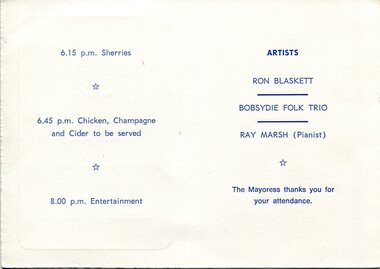
Document - Reception Card, Reception – The Mayoress of Broadmeadows, 1979
... civic identity and community engagement. The item’s provenance, intact design, and clear association with municipal leadership support its interpretive value for local government history. ...Documents municipal ceremonial and hospitality practices in Broadmeadows in the late 1970s, illustrating the role of the Mayoress in civic hosting and the use of Broadmeadows City Hall for official social functions.This reception card is a representative example of late twentieth‑century municipal ceremonial ephemera. It documents the civic and social functions of the City of Broadmeadows in 1979, highlighting hospitality practices, local performers, and the public role of the Mayoress in fostering civic identity and community engagement. The item’s provenance, intact design, and clear association with municipal leadership support its interpretive value for local government history.Folded reception card on cream‑textured card stock. Exterior bears the City of Broadmeadows municipal seal and event details; interior lists program timings and artists. Printed in blue ink.Outside (recto): “Reception / The Mayoress of Broadmeadows / Mrs. Kath Laherty / City Hall Broadmeadows / Friday 9th March 1979” with City of Broadmeadows seal. Inside: “6.15 p.m. Sherries / 6.45 p.m. Chicken, Champagne and Cider to be served / 8.00 p.m. Entertainment / Artists: Ron Blaskett; Bobsydie Folk Trio; Ray Marsh (Pianist) / The Mayoress thanks you for your attendance.” Verso: Accession label “WI‑4278”.city of broadmeadows, civic ceremonies, municipal government, social events, broadmeadows city hall -
 Broadmeadows Historical Society & Museum
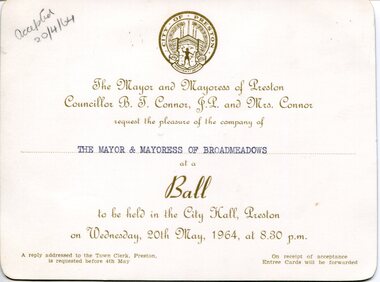
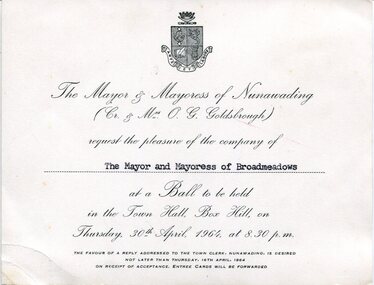
Ephemera - Invitation, Ball Invitation, City of Nunawading, 1963, 1964
... Reflects formal civic relationships between the municipalities of Nunawading and Broadmeadows during the mid twentieth century and illustrates the social role of municipal leadership in Victoria during the 1960s....Reflects formal civic relationships between the municipalities of Nunawading and Broadmeadows during the mid twentieth century and illustrates the social role of municipal leadership in Victoria during the 1960s. ...Reflects formal civic relationships between the municipalities of Nunawading and Broadmeadows during the mid twentieth century and illustrates the social role of municipal leadership in Victoria during the 1960s.This invitation provides documentary evidence of inter municipal civic culture and social practices in suburban Melbourne during the 1960s, highlighting the ceremonial functions of mayors and the importance of formal municipal events.Single square cornered printed invitation card with black ink on cream paper. Recto contains municipal coat of arms and formal script text. Verso is blank apart from an adhered later collection label.Recto, printed:“The Mayor & Mayoress of Nunawading/(Cr. & Mrs O. G. Goldsbrough)/request the pleasure of the company of/The Mayor and Mayoress of Broadmeadows/at a Ball to be held/in the Town Hall, Box Hill, on/Thursday, 30th April, 1964, at 8.30 p.m./The favour of a reply addressed to the Town Clerk, Nunawading, is desired/not later than Thursday, 16th April, 1964./On receipt of acceptance, entree cards will be forwarded.” Back (verso, adhesive label): “WI 4055” local government, municipal ceremonies, civic hospitality, city of nunawading (vic.), city of broadmeadows (vic.), box hill town hall -
 Broadmeadows Historical Society & Museum
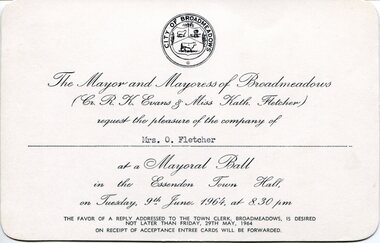
Ephemera - Invitation, City of Broadmeadows, Invitation to a Mayoral Ball (9 June 1964), 1964
... This invitation relates to formal civic social events conducted by local government authorities in Broadmeadows during the mid twentieth century, reflecting municipal protocol, social customs, and community leadership in 1960s Victoria....This invitation relates to formal civic social events conducted by local government authorities in Broadmeadows during the mid twentieth century, reflecting municipal protocol, social customs, and community leadership in 1960s Victoria. ...This invitation relates to formal civic social events conducted by local government authorities in Broadmeadows during the mid twentieth century, reflecting municipal protocol, social customs, and community leadership in 1960s Victoria.The object is significant as evidence of mid 20th century municipal ceremonial practices in Broadmeadows, illustrating the formality, social structure, and public culture of local government during this period.Cream‑coloured card with rounded corners, printed in black ink. Recto features decorative script, block lettering, and municipal crest. Verso is plain with a small adhesive collection label in the upper right corner.Recto: “The Mayor and Mayoress of Broadmeadows/(Cr. R. R. Evans & Miss Kath. Fletcher)/request the pleasure of the company of/Mrs. O. Fletcher/at a Mayoral Ball/in the Essendon Town Hall/on Tuesday, 9th June, 1964, at 8.30 pm/ The favor of a reply addressed to the Town Clerk, Broadmeadows, is/desired not later than Friday, 29th May, 1964/ On receipt of acceptance entree cards will be forwarded.” Verso: “WI 4051” (top right) local government, civic events, municipal history, social history, city of broadmeadows -
 Broadmeadows Historical Society & Museum
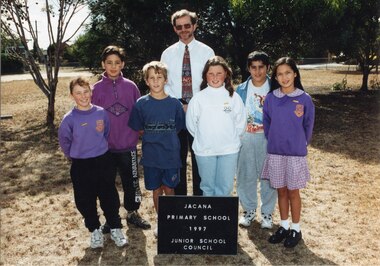
Photograph - Group Photograph, Fotek School Portraits, Jacana Primary School: Junior School Council, 1997, 1997
... leadership and participation, reflecting its commitment to fostering an inclusive, empowering, and supportive environment for young learners. It also subtly documents the increasing cultural diversity of Jacana in the late 20th century, as suburban growth brought together families from a wide range of backgrounds. As part of the school’s visual archive, this photograph contributes to a broader understanding of how public education shaped local identity, encouraged civic...leadership and participation, reflecting its commitment to fostering an inclusive, empowering, and supportive environment for young learners. It also subtly documents the increasing cultural diversity of Jacana in the late 20th century, as suburban growth brought together families from a wide range of backgrounds. As part of the school’s visual archive, this photograph contributes to a broader understanding of how public education shaped local identity, encouraged civic ...This 1997 photograph of students and a staff member from the junior student council at Jacana Primary School offers a compelling glimpse into suburban school life in Melbourne during a time of considerable social and urban change. Founded in 1959, Jacana Primary served as a vital educational and community institution until its closure in the early 2000s. More than a place of learning, the school was a foundation for building identity, connection, and shared experience among students and staff. The image highlights the school’s emphasis on student leadership and participation, reflecting its commitment to fostering an inclusive, empowering, and supportive environment for young learners. It also subtly documents the increasing cultural diversity of Jacana in the late 20th century, as suburban growth brought together families from a wide range of backgrounds. As part of the school’s visual archive, this photograph contributes to a broader understanding of how public education shaped local identity, encouraged civic engagement from an early age, and promoted social cohesion. It stands as a meaningful record of the school’s legacy and its lasting impact on the lives of children and their communities.The 1997 photograph of the junior student council at Jacana Primary School is a culturally and historically significant record that reflects the values and dynamics of suburban education in Melbourne during a period of notable social and urban transformation. Capturing a moment of student leadership and engagement, the image highlights the school’s commitment to fostering inclusive, participatory learning environments where young voices were encouraged and empowered. Jacana Primary School, established in 1959 and active until its closure in the early 2000s, served as a vital educational and community hub in Melbourne’s northern suburbs. This photograph not only documents the school’s emphasis on student representation but also subtly illustrates the increasing cultural diversity of the Jacana area in the late 20th century, shaped by migration and suburban development. As part of the school’s visual archive, the image contributes to a broader understanding of how public education helped shape community identity, promote social cohesion, and instill civic values in younger generations. It stands as a meaningful artifact of educational heritage and community memory.Colour Photograph mounted on white card, and laminatedBack: Top Left Corner: (Blue Label): PH-2187, (Front): (Bottom Left corner): Fotek Portraits © Photograph (Back): (Dispersed): Fujifilmjacana primary school, education, photograph, group photograph, 1997, junior school council -
 Broadmeadows Historical Society & Museum
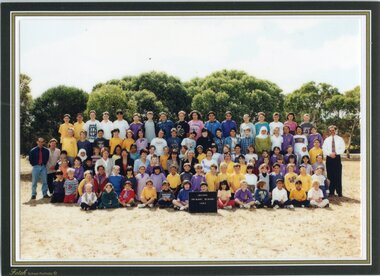
Photograph - Group Photo, Fotek School Portraits, Jacana Primary School 1997 Students and Staff Photograph, 1997
... leadership programs such as the junior student council. The 1997 photograph captures a moment in this dynamic environment, showcasing both staff and students engaged in a shared educational mission. It represents a time when schools were not only places of learning but also key sites of community building, civic...leadership programs such as the junior student council. The 1997 photograph captures a moment in this dynamic environment, showcasing both staff and students engaged in a shared educational mission. It represents a time when schools were not only places of learning but also key sites of community building, civic ...Jacana Primary School was established in 1959 during a period of rapid suburban expansion in Melbourne’s northern corridor. Located in the suburb of Jacana, the school was part of a broader post-war effort to provide accessible public education to growing communities shaped by migration, industrial development, and housing initiatives. Throughout its operation, Jacana Primary reflected the evolving social fabric of the area. By the 1990s, the school had become a microcosm of Melbourne’s increasing cultural diversity, welcoming students from a wide range of ethnic and socio-economic backgrounds. This diversity was not only embraced but actively celebrated through inclusive teaching practices, multicultural events, and student leadership programs such as the junior student council. The 1997 photograph captures a moment in this dynamic environment, showcasing both staff and students engaged in a shared educational mission. It represents a time when schools were not only places of learning but also key sites of community building, civic engagement, and social support. Jacana Primary closed in the early 2000s as part of broader changes in educational policy and demographic shifts. However, its legacy lives on through archival materials like this photograph, which offer valuable insights into the role of public schools in shaping community identity and fostering social cohesion during a transformative period in Melbourne’s suburban history. This 1997 photograph of staff and students at Jacana Primary School marks a poignant moment in the history of a community-centred educational institution that served Melbourne’s northern suburbs from 1959 until its closure in the early 2000s. More than a conventional group portrait, the image stands as a historical artifact that encapsulates the spirit and values of a school deeply embedded in its local community. Jacana Primary School was distinguished by its commitment to educational equity, inclusivity, and a strong sense of belonging—principles that were actively lived and practiced within its classrooms and broader school culture. The photograph offers insight into the educational ethos and staff dynamics of the time, while also reflecting the broader social and cultural shifts occurring in suburban Melbourne at the close of the 20th century. As part of the school’s visual archive, this image contributes to a richer understanding of how public education shaped community identity, supported diverse student populations, and left a lasting legacy in the lives of generations of children and families.A colour photograph mounted on white card with a black border, is laminated. Back: (Blue Label Top) (Right Corner): PH -2157, Front: (Bottom Left Corner): Fotek School Portraitsjacana primary school, education, photograph, group photograph, 1997 -
Broadmeadows Historical Society & Museum
Photograph - Press Photograph, Tony Gouch, Broady Club Proposed Sporting Facility, 14 February 1990
... leadership in Melbourne’s northern suburbs. Captured on land proposed for future sporting facilities, the image symbolises a transformative period in the Club’s history, reflecting its commitment to expanding recreational infrastructure for the benefit of local residents. Mr. Syranamural’s presence in the photograph represents the pivotal role of community leaders in advocating for inclusive and accessible sporting opportunities. The proposed development site would later become a cornerstone of the Club’s facilities, contributing to its legacy of fostering social cohesion, physical wellbeing, and civic ...This photograph captures Mr. Arie Syranamural, then Secretary-Manager of the Broadmeadows Club, standing on the site earmarked for future sporting facilities in 1990. The image represents a pivotal moment in the Club’s history, reflecting its commitment to expanding recreational opportunities for the Broadmeadows community.This photograph of Mr. Arie Syranamural, Secretary-Manager of the Broadmeadows Club, taken in 1990, holds historical and cultural significance as a visual record of community development and leadership in Melbourne’s northern suburbs. Captured on land proposed for future sporting facilities, the image symbolises a transformative period in the Club’s history, reflecting its commitment to expanding recreational infrastructure for the benefit of local residents. Mr. Syranamural’s presence in the photograph represents the pivotal role of community leaders in advocating for inclusive and accessible sporting opportunities. The proposed development site would later become a cornerstone of the Club’s facilities, contributing to its legacy of fostering social cohesion, physical wellbeing, and civic pride. The photograph is significant for its association with the Broadmeadows Sporting Club’s broader mission, which since its founding in the 1970s, has been instrumental in supporting local sports and community initiatives. It also serves as a testament to the Club’s enduring impact, having reinvested over $1.1 million into community programs since 1993. As an archival item, this image provides valuable insight into the planning and vision that shaped the recreational landscape of Broadmeadows and stands as a tribute to the individuals who championed community progress during a formative era.Black and white photograph of a man standing in a vacant piece of land with a white border.Back of Photograph (white sheet): Photographer's Caption Sheet/Date 14.2.90/Publication OBS/Operator's name Tony Gouch/Assignment Broady Club Proposed Sporting Facility/Names and Initials: PUB 28/2/90 OBS/(in block letters/from left to right) Arie Syranamural/(be brief and to the point, be certain of spelling names) Green Sheet: The Leader Newspaper Group/Northern Division/Paper BO/Catchline 610/Percentage 70/Date 28/2/Page 6broadmeadows club, development, jacana basin, broadmeadows, february 1990 -
 Mont De Lancey
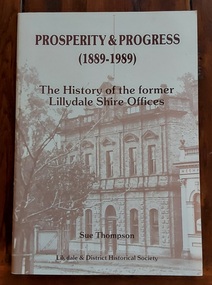
Book, Sue Thompson, Prosperity and Progress (1889-1989): The History of the former Lillydale Shire offices, 1989
... Published by the Lilydale & District Historical Society, the book covers a century of civic leadership, infrastructural growth, and local governance. ...This book refers to the historical publication by Sue Thompson detailing the legacy and evolution of the former Shire of Lillydale Offices in Victoria, Australia. Published by the Lilydale & District Historical Society, the book covers a century of civic leadership, infrastructural growth, and local governance.A white book with a large sepia coloured photograph on the front of The Lillydale Shire Offices opened on November 14,1889. The front cover lettering is brown. The title page has publishing details with further information on the back of it. There are Contents, Foreword and Introduction pages. The publication highlights the development of shire staff, selected historical issues through the years, and a complete listing of local councillors who steered the region’s growth. Pp. 48non-fictionThis book refers to the historical publication by Sue Thompson detailing the legacy and evolution of the former Shire of Lillydale Offices in Victoria, Australia. Published by the Lilydale & District Historical Society, the book covers a century of civic leadership, infrastructural growth, and local governance.lillydale - history, lillydale - shire offices, victoria - lillydale -
 Kew Historical Society Inc
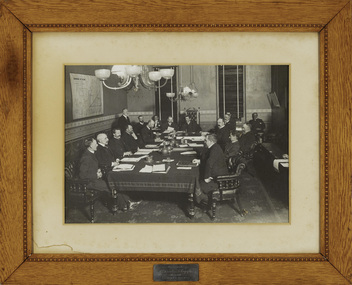
Photograph - Framed Photograph, Kew Town Council, circa 1903, c. 1904
... civic contribution to Kew. To ensure ‘pure [uncontaminated]’ milk for Kew, he co-foundered the Willsmere Certified Milk Company in 1898. His mayoralty of Kew, 1902-04, exhibited superior leadership. ...civic contribution to Kew. To ensure ‘pure [uncontaminated]’ milk for Kew, he co-foundered the Willsmere Certified Milk Company in 1898. His mayoralty of Kew, 1902-04, exhibited superior leadership. ...Medical practitioner Sir Stanley Seymour Argyle (1867-1940) was a man ‘much admired’ for his civic contribution to Kew. To ensure ‘pure [uncontaminated]’ milk for Kew, he co-foundered the Willsmere Certified Milk Company in 1898. His mayoralty of Kew, 1902-04, exhibited superior leadership. In association with local chartable institutions and churches he ensured the unemployed of Kew were not distressed. He also agitated for the removal of the Kew Lunatic Asylum. After a long stint as a doctor in the Army Medical Corps with the Australian Expeditionary Force, Kew formally welcomed him back home in 1918. However, in 1919 he left his two-storey red brick home, on the ‘corner of Gellibrand Street’ for Toorak. He went on to have an outstanding career in radiology at the Alfred Hospital and in Victorian politics. He was cremated following a State funeral. (SMcW)An important photograph of local and statewide historical significance showing Sir Stanley Argyle, Mayor of Kew. Argyle was later to be Premier of Victoria. This is a commemorative photograph, presented by Argyle to the Town of Kew.An early, important photograph of the Kew Councillors at a meeting in the Council Chamber of the Kew Town Hall in Walpole Street. The framed photograph was donated by Sir Stanley Seymour Argyle (1867-1940) who was Mayor of Kew in 1902-03 and 1903-04. Stanley Argyle, later to be Premier of Victoria, is in the mayoral chair wearing his robes of office. The photograph was once displayed in the Kew Town Hall. Brass Plaque: "Presented by / Cr Stanley S. Argyle / Mayor 1902-3 & 1903-4".sir stanley argyle (1867-1940), kew town council, council chamber (kew town hall) -
Broadmeadows Historical Society & Museum
Document - Council memorandum, Wayne Harvey, City Development Memo – Notes from Councillors’ Presentation, 12 December 1994
... civic administration...urban development...governance...councillor profiles...1990s Broadmeadows...municipal history...internal council records...community leadership...City of Broadmeadows local government municipal council councillors city development council memorandum civic administration urban development governance councillor profiles 1990s Broadmeadows municipal history internal council records community leadership Victorian local government “TO: CITY DEVELOPMENT MEMO / All Councillors / FROM: Director City Development / SUBJECT: Notes – Councillors’ Presentation – 5 December / DATE: 12 December, 1994” (front page) There are no handwritten notes throughout the document. ...Documents the functioning of the City of Broadmeadows council during the mid 1990s, providing insight into councillor profiles, local governance priorities, and urban development issues of the period.This document holds local historical significance as a firsthand record of municipal governance, councillor representation, and administrative practices in Broadmeadows during the 1990s.Multi page document comprising typed text, reproduced images, and photocopied pages; black text on white paper.“TO: CITY DEVELOPMENT MEMO / All Councillors / FROM: Director City Development / SUBJECT: Notes – Councillors’ Presentation – 5 December / DATE: 12 December, 1994” (front page) There are no handwritten notes throughout the document.city of broadmeadows, local government, municipal council, councillors, city development, council memorandum, civic administration, urban development, governance, councillor profiles, 1990s broadmeadows, municipal history, internal council records, community leadership, victorian local government -
 Sunshine and District Historical Society Incorporated
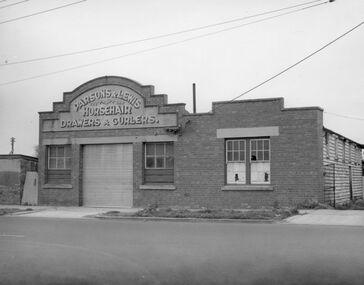
Photograph - Parsons and Lewis Horsehair Drawers and Curlers, 1980
... civically. Their reputation was built over three generations, combining industrial contribution, community service, and local leadership. ...Parsons & Lewis was the horse‑hair curling factory that operated on Graham Street (Now part of Anderson Rd), Sunshine (then Braybrook Junction). The Co-Founders of the company were Edmund “Ted” Parsons (1855–1918) & Richard Lewis (d1909). The business was founded in 1887 and shifted to the Graham Street site in 1901. Richard Lewis died of anthrax, a known occupational hazard in hair‑processing industries. The factory was deliberately placed on the banks of Kororoit Creek because large volumes of water were required for the horse‑hair curling process. Horsehair was washed, sorted, curled, dried, and baled, a labor-intensive process requiring skilled “drafters,” curlers, and spinners. The factory processed animal hair for use in brushes and upholstery. In 1988, the business was relocated to a site in Kensington.The Parsons & Lewis Horse Hair Curling Factory was one of the most important early industrial sites in Sunshine’s heritage landscape. The Parsons family became one of the most respected families in Sunshine, both socially and civically. Their reputation was built over three generations, combining industrial contribution, community service, and local leadership.Parsons & Lewis Horsehair Drawers and Curlersparsons & lewis, factory, parsons, graham street, anderson road, sunshine -
 Sunshine and District Historical Society Incorporated
Archive - Parsons and Lewis, Peter Parsons, 1988
... civically. Their reputation was built over three generations, combining industrial contribution, community service, and local leadership. ...Parsons & Lewis was the horse‑hair curling factory that operated on Graham Street (Now part of Anderson Rd), Sunshine (then Braybrook Junction). The Co-Founders of the company were Edmund “Ted” Parsons (1855–1918) & Richard Lewis (d1909). Richard Lewis died of anthrax, a known occupational hazard in hair‑processing industries. The factory was deliberately placed on the banks of Kororoit Creek because large volumes of water were required for the horse‑hair curling process. Horsehair was washed, sorted, curled, dried, and baled, a labor-intensive process requiring skilled “drafters,” curlers, and spinners. The factory processed animal hair for use in brushes and upholstery. The building was subsequently demolished in 1987.The Parsons & Lewis Horse Hair Curling Factory was one of the most important early industrial sites in Sunshine’s heritage landscape. The Parsons family became one of the most respected families in Sunshine, both socially and civically. Their reputation was built over three generations, combining industrial contribution, community service, and local leadership.Typed Notes Parsons Line|Typed Notes Parsons and Lewis Pty Ltd 1887 to 1988|Booklet The Drawers and Curlers Parsons and Lewis 1887 to 1988 by Peter Parsons|Newspaper Article The Advocate 6 October 1993 Brothers decide to retire from century old family business Buyer sought to keep up a proud tradition and History dates to boom days of 1880s|Original Business Names Act 1928 Certificate of Registrar General of Registration of an Individual Joseph Robert Parsons 8 June 1933 for Parson and Lewis|Newspaper Article The Weekly Times 25 September 1991 Brothers hang on by a tale|Newspaper Article The Age 17 October 1994 Hair today might go for a song tomorrow|Photograph of History panel Parson and Lewis|Photograph of vacant site where factory was located on corner Morris Street and Anderson Road|Photograph of facade of Parson and Lewis Horsehair Drawers and Curlers|Photograph of Parsons and Lewis and notes saying copy of the photograph of the fire that destroyed Parsons and Lewis factory on Kororoit Creek Sunshine|Newspaper Article Sunshine Advocate 29 January 1965 Australia Day program will appeal to all at JR Parsons Reserveparsons and lewis, joseph "joe" parsons -
 Sunshine and District Historical Society Incorporated
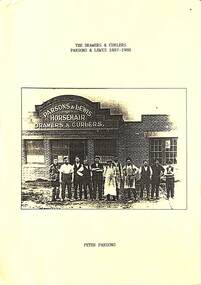
Document - The Drawers And Churlers Parsons and Lewis 1887 - 1988, Peter Parsons, 1988
... civically. Their reputation was built over three generations, combining industrial contribution, community service, and local leadership. ...Parsons & Lewis was the horse‑hair curling factory that operated on Graham Street (Now part of Anderson Rd), Sunshine (then Braybrook Junction). The Co-Founders of the company were Edmund “Ted” Parsons (1855–1918) & Richard Lewis (d1909). The business was founded in 1887 and shifted to the Graham Street site in 1901. Richard Lewis died of anthrax, a known occupational hazard in hair‑processing industries. The factory was deliberately placed on the banks of Kororoit Creek because large volumes of water were required for the horse‑hair curling process. Horsehair was washed, sorted, curled, dried, and baled, a labor-intensive process requiring skilled “drafters,” curlers, and spinners. The factory processed animal hair for use in brushes and upholstery. In 1988, the business was relocated to a site in Kensington. The building was subsequently demolished in 1987.The Parsons & Lewis Horse Hair Curling Factory was one of the most important early industrial sites in Sunshine’s heritage landscape. The Parsons family became one of the most respected families in Sunshine, both socially and civically. Their reputation was built over three generations, combining industrial contribution, community service, and local leadership.A photocopy of the cover of publication by Peter Parsons of the history of Parsons and Lewis 1887 to 1988 For names refer to no 138parsons & lewis, parsons, graham street, anderson road, sunshine, peter parsons
