
Showing 119 items matching "cleaning cloth"
-
 Stawell Historical Society Inc
Domestic object, Glasses Case and Cleaning Cloth from Optomitrist
... Glasses Case and Cleaning Cloth from Optomitrist...Son Edward Stephen Neyland. Cleaning Cloth Printed R.N. Wadsworth Certified Optician Member VIC.OPT.ASSN. ...Burgandy coloured glasses case and cleaning cloth printed with R.N. Wadsworth...Van Bede Refraction Optician 39 Byron Street Elwood Phone Burgandy coloured glasses case and cleaning cloth printed with R.N. Wadsworth Glasses Case and Cleaning Cloth from Optomitrist Domestic object ...Belonged to Ruby Neyland (ne Monument) born in Stawell. Married James Thomas Fenley Neyland in 1911. Both buried at Stawell Cemetery. Son Edward Stephen Neyland. Cleaning Cloth Printed R.N. Wadsworth Certified Optician Member VIC.OPT.ASSN. Stawell Phone Stawell 123Burgandy coloured glasses case and cleaning cloth printed with R.N. WadsworthC.E. Van Bede Refraction Optician 39 Byron Street Elwood Phone -
 Melbourne Tram Museum
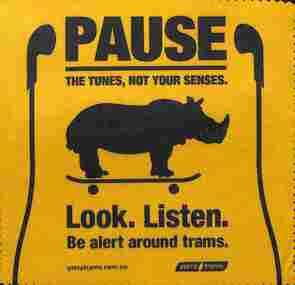
Ephemera - Glasses cleaning cloth - Rhino, Yarra Trams, c2010
... Glasses cleaning cloth - Rhino...Cloth for cleaning glasses printed with a Yarra Trams safety message featuring the Rhino on a skateboard. ...Printed Glasses cleaning cloth in a cellophane wrap....Demonstrates a Yarra Trams produced item using the Rhino to promote safety around tramways and tramcars. trams tramways Rhinos safety Yarra Trams Printed Glasses cleaning cloth in a cellophane wrap. Ephemera Glasses cleaning cloth - Rhino Yarra Trams ...Cloth for cleaning glasses printed with a Yarra Trams safety message featuring the Rhino on a skateboard. Has a set of headphones enclosing a message about being alert around trams - Look, Listen, Pause the Tunes, not your senses.Demonstrates a Yarra Trams produced item using the Rhino to promote safety around tramways and tramcars.Printed Glasses cleaning cloth in a cellophane wrap.trams, tramways, rhinos, safety, yarra trams -
 Trafalgar Holden Museum
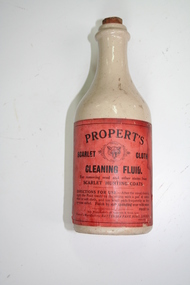
Container - Long neck ceramic bottle, Properts Scarlet cloth cleaning fluid
... Properts Scarlet cloth cleaning fluid...Cleaning fluid...scarlet cloth...Long neck ceramic bottle with red label stating that the bottle contains "Properts scarlet cloth cleaning fluid"...We believe that this product was Imported and sold by Holden and Frost Ca 1900 Imported and sold by Holden and frost Cleaning fluid scarlet cloth c1900 `Properts scarlet label cleaning fluid around the fox face trade mark Long neck ceramic bottle with red label stating that the bottle contains "Properts scarlet cloth cleaning fluid" Properts Scarlet cloth cleaning fluid Container Long neck ceramic bottle ...We believe that this product was Imported and sold by Holden and Frost Ca 1900Imported and sold by Holden and frostLong neck ceramic bottle with red label stating that the bottle contains "Properts scarlet cloth cleaning fluid"`Properts scarlet label cleaning fluid around the fox face trade markcleaning fluid, scarlet cloth, c1900 -
 Emerald Museum & Nobelius Heritage Park
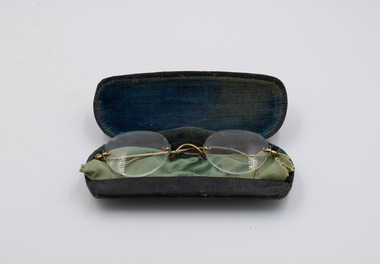
Accessory - Gold Coloured Frameless Bi-Focal Eye Glasses, H & G Stiles Optomertrist, c. 1900s
... ...cleaning cloth...A pair of frameless gold coloured bi-focal eye glasses in a dark coloured hard case and includes a green cleaning cloth...These eye glasses are an example of early 20th century bi-focal style eye wear eye glasses glasses case cleaning cloth Case is inscribed with "H.G. STILES", Opticians Bendigo A pair of frameless gold coloured bi-focal eye glasses in a dark coloured hard case and includes a green cleaning cloth Accessory Gold Coloured Frameless Bi-Focal Eye Glasses H & G Stiles Optomertrist ...These bi-focal glasses were made by H & G Stiles of Bendigo for either Ruby Wallace (nee Owen) (1891 - 1973) or Edward Owen (1853-1945) - the family was living in Inglewood in regional Victoria during this time. Stiles Opticians operated most likely between 1900 and 1939. The pair of glasses was donated by an Emerald resident who received them from Ruby.These eye glasses are an example of early 20th century bi-focal style eye wear A pair of frameless gold coloured bi-focal eye glasses in a dark coloured hard case and includes a green cleaning clothCase is inscribed with "H.G. STILES", Opticians Bendigoeye glasses, glasses case, cleaning cloth -
 City of Moorabbin Historical Society (Operating the Box Cottage Museum)
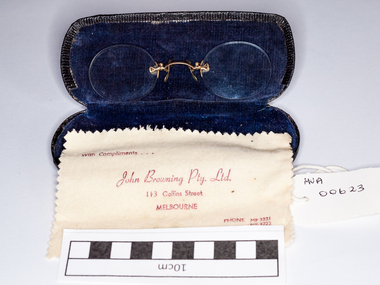
Optical Equipment, Spectacles, Pince - nez with case, 20thC
... A pair of Pince-nez eye glasses in a leather case, with a soft cleaning cloth....cleaning cloth - 'With Compliments / John Browning Pty. ...Ltd. / 113 Collins Street / MELBOURNE / PHONE MF 3221/ MF 3222 A pair of Pince-nez eye glasses in a leather case, with a soft cleaning cloth. Optical Equipment, Spectacles, Pince - nez with case John Browning Pty. ...Pince-nez spectacles are in a style popular in the 19th century, which are supported without earpieces, by pinching the bridge of the nose.A pair of Pince-nez eye glasses in a leather case, with a soft cleaning cloth.cleaning cloth - 'With Compliments / John Browning Pty. Ltd. / 113 Collins Street / MELBOURNE / PHONE MF 3221/ MF 3222optometrists, spectacles. eyeglasses, moorabbin, brighton, early settlers, pioneers, cheltenham -
 Bendigo Military Museum
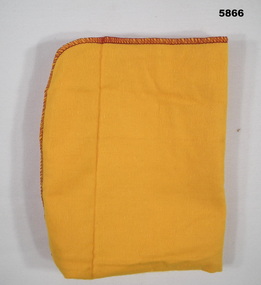
Accessory - CLOTH, CLEANING, Aust Army, c1966 - 1972
... CLOTH, CLEANING...Cleaning Kit Vietnam War This is a rectangular piece of soft cotton material - orange colour. It has red cotton stitching around the hem. Inside has signs of boot polish black. Accessory CLOTH ...Ref Cat 5825. Was used in cleaning items of Soldiers personal kit.This is a rectangular piece of soft cotton material - orange colour. It has red cotton stitching around the hem. Inside has signs of boot polish black.cleaning kit, vietnam war -
 Stawell Historical Society Inc
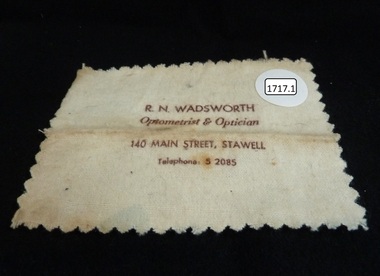
Memorabilia - Realia, 1940's
... Lens Cleaning Cloth (R.N. Wadsworth)...Stawell Lens Cleaning Cloth (R.N. Wadsworth) Memorabilia Realia ...Lens Cleaning Cloth (R.N. Wadsworth)stawell -
 Running Rabbits Military Museum operated by the Upwey Belgrave RSL Sub Branch
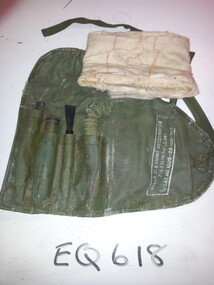
Cleaning Kit
... Cleaning Kit SLR 7.62mm. with cleaning cloth....Equipment Vietnam Army Cleaning Kit SLR 7.62mm. with cleaning cloth. Cleaning Kit ...Cleaning Kit SLR 7.62mm. with cleaning cloth.equipment, vietnam, army -
 Bendigo Military Museum
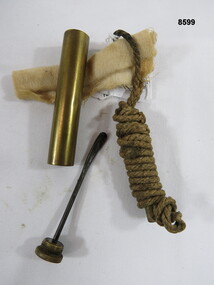
Equipment - 303 CLEANING KIT, Unknown
... cord/brass pull through with a piece of clean cloth, brass oil container, screw top lid....Passchendaele Barracks Trust .303 Cleaning kit. cord/brass pull through with a piece of clean cloth, brass oil container, screw top lid. ...cord/brass pull through with a piece of clean cloth, brass oil container, screw top lid.passchendaele barracks trust, .303 cleaning kit. -
 Coal Creek Community Park & Museum
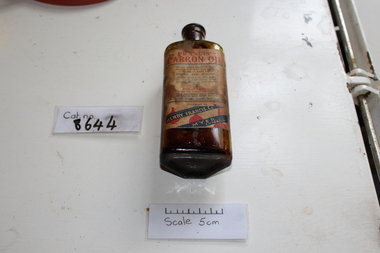
Glass Francis Carron Oil bottle
... - Francis Carron oil - Every home should always have a bottle of this for BURNS and SCALDS - Apply direct to the burn or scald and cover with cotton wool or soft clean cloth...- Francis Carron oil - Every home should always have a bottle of this for BURNS and SCALDS - Apply direct to the burn or scald and cover with cotton wool or soft clean cloth 8637.1 - Brown glass bottle with paper label Glass Francis Carron Oil bottle ...8637.1 - Brown glass bottle with paper label- Francis Carron oil - Every home should always have a bottle of this for BURNS and SCALDS - Apply direct to the burn or scald and cover with cotton wool or soft clean cloth -
Frankston RSL Sub Branch
Kit, Cleaning
... Consisting of a pull through, small wire brush, oil bottle and 4x2 cleaning cloth....Consisting of a pull through, small wire brush, oil bottle and 4x2 cleaning cloth. Kit, Cleaning ...Cleaning kit for the Lee Enfield SMLE 0.303 inch calibre rifle. Consisting of a pull through, small wire brush, oil bottle and 4x2 cleaning cloth. -
 Bendigo Historical Society Inc.
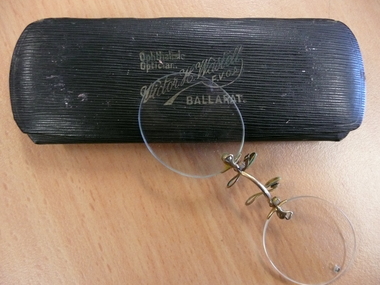
Accessory - PAIR PINCE-NEZ & CASE
... Pair of Pince Nez with gold bridge in a hard black case which also contains a cleaning cloth and paper instructions. Cloth printed with advertisement for Toric lenses and Victor.H.Wastell....PERSONAL EFFECTS Seeing aids spectacles Opthalmic Optician Victor H Wastell F.V.D.A Ballarat A Pat Feb809 Pair of Pince Nez with gold bridge in a hard black case which also contains a cleaning cloth and paper instructions. Cloth printed with advertisement for Toric lenses and Victor.H.Wastell. ...Pair of Pince Nez with gold bridge in a hard black case which also contains a cleaning cloth and paper instructions. Cloth printed with advertisement for Toric lenses and Victor.H.Wastell.Opthalmic Optician Victor H Wastell F.V.D.A Ballarat A Pat Feb809personal effects, seeing aids, spectacles -
 Port Fairy Historical Society Museum and Archives
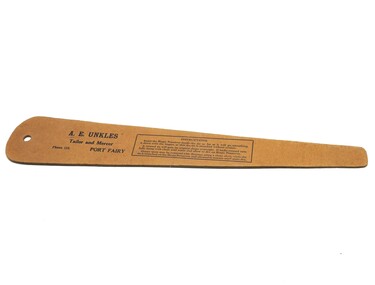
Functional object - Tie Press
... Grease spots may be removed with Benzine, using a clean cloth, while the tie is stretched on the Shape Preserver, and allowed to remain until quite dry....Grease spots may be removed with Benzine, using a clean cloth, while the tie is stretched on the Shape Preserver, and allowed to remain until quite dry. ...owned and used by Baden (Dick) Tieman Grocery Shop keeper and later Real Estate and Stock and Station managerA thick carboard shape preserver for pressing men's ties probably sold or given away as an advertismentA.E.Unkles, Tailor and Mercer, Phone 113 Port Fairy. Instructions. Insert the Shape Preserver inside the tie as far as it will go, smoothing it down with the fingers, so that the tie is stretched without creases. A creased tie will gain its original shape overnight. If badly creased carefully damp with clean cold water and allow to dry on shape Preserver. Grease spots may be removed with Benzine, using a clean cloth, while the tie is stretched on the Shape Preserver, and allowed to remain until quite dry.local history, domestic items, laundering, tieman -
 Flagstaff Hill Maritime Museum and Village
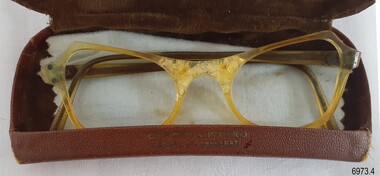
Functional object - Spectacles and Case, Carter & Foord, 1902-1930s
... Also in the case is a pale blue cleaning cloth and a cardboard price tag with handwritten text. ...Also in the case is a pale blue cleaning cloth and a cardboard price tag with handwritten text. ...The spectacles and case are an example of eyewear from the early 20th century. The case was made by Carter & Foord of Ballarat. According to the tag inside, the spectacles frame cost three pounds, three shillings and sixpence (£3.3.6). Carter & Foord was established in 1902. The firm advertised as opticians, oculists, watchmakers and jewellers. The staff repaired scientific instruments and were sole agents for the gramophone, demonstrating its advantages whenever there was an opportunity. In 1902 the business was located at 46 Lydiard Street, Ballarat. The staff in the ophthalmic department, under the care of Harold Foord, specialised in sight testing using up-to-date equipment and this service was free of charge. Customers were promised that they would be fitted with glasses guaranteed to correct the most complex sight. Mr F M Clacius performed the grinding of specific lenses. Julia Carter, Harold Foord and Clacius were all formerly from the business Carter & Warner, which had been sold to Frederick Clark around 1903 after Mr Carder passed away. Carter & Foord operated a few doors away from the former business. In 1912 advertisements in the Geelong Advertiser invited the community to visit Harold Foord, of Carter & Foord, to have their eyes examined at no charge. These spectacles are similar to others in the W.R. Angus collection, donated by the family of Dr W R Angus, surgeon and oculist. The W.R. Angus Collection spans the years 1885 to the mid-1900s and includes historical medical and surgical equipment and instruments from the doctors Edward and Thomas Ryan of Nhill, Victoria, with whom Dr Angus worked for several years. Dr Tom and his brother had worked as surgeons including in eye surgery. Dr Tom Ryan performed many of his operations in the Mira private hospital on his premises. When Dr Angus bought into the Nelson Street premises in Nhill he was also appointed as the Nhill Hospital’s Honorary House Surgeon 1933-1938. Dr Angus married Gladys in 1927 at Ballarat, the nearest big city to Nhill where he began as a Medical Assistant and had been Acting House surgeon at the Nhill hospital where their two daughters were born. Dr Angus and his family moved to Warrnambool in 1939, where Dr Angus operated his own medical practice. He later took on the part-time role of Port Medical Officer and was the last person appointed to that position. After convalescing from injury resulting from his service during WWII, Dr Angus studied ophthalmology at the Royal Melbourne Eye and Ear Hospital. He created cosmetically superior artificial eyes by pioneering the use of intrascleral cartilage. Angus received accolades from the Ophthalmological Society of Australasia for this work. He returned to Warrnambool to commence practice as an ophthalmologist, pioneering artificial eye improvements. He had been an Honorary Consultant Ophthalmologist at Warrnambool Base Hospital for 31 years. He made monthly visits to Portland as a visiting surgeon, to perform eye surgery. Both Dr Angus and his wife were very involved in the local community, including the planning stages of the new Flagstaff Hill and the layout of the gardens there. Dr Angus passed away in March 1970.The Carter &O Foord spectacles are significant as an example of early 20th-century eyewear and fashion. They are connected to the history of regional Victoria, being made in Ballarat and purchased for local use. The spectacles are significant for being connected to the W.R. Angus Collection, which is important for still being located at the site connected to Doctor Angus, Warrnambool’s last Port Medical Officer. Dr Angus and his wife brought their young family to Warrnambool in 1938 and he remained a resident until his death in 1970. Early in his profession in the town of Nhill, Dr Angus assisted Dr Tom Ryan in his pioneering use of X-rays and in ocular surgery, and Dr Angus later inherited these items. The W.R. Angus Collection includes these medical instruments and other related equipment and is culturally and historically significant as an example of the medical practice of the late 19th to the mid-20th century. Other items in the collection relate to Dr Angus’ service in the Flying Doctor Service and the Army.Spectacles in a hard brown textured case with rounded corners and a hinged lid. The case is lined with brown velvet. The opaque yellow oval frames, raised at the outer top corners, are decorated with sparkling jewell decorations on the bridge. The arms are reinforced with metal inside. Also in the case is a pale blue cleaning cloth and a cardboard price tag with handwritten text. An inscription in gold lettering is stamped inside the case. The case was made by Carter & Foord of Ballarat. The design of the frames is called ‘ewell These spectacles are part of the W.R. Angus Collection.Stamped: “CARTER & FOORD / STURT ST BALLARAT” Handwritten label: “JEWELL / £3.3.6”flagstaff hill, warrnambool, maritime village, maritime museum, shipwreck coast, great ocean road, dr w r angus, dr roy angus, dr ryan, warrnambool oculist, port medical officer, nhill base hospital, mira hospital nhill, oculist, spectacles, eyewear, glasses, carter & foord, ballarat oculist, w.r. angus collection, ophthalmology, royal melbourne eye and ear hospital., artificial eyes, intrascleral cartilage, eye surgery -
 Bendigo Military Museum
Equipment - RIFLE CLEANING KIT, 1962 - 1973
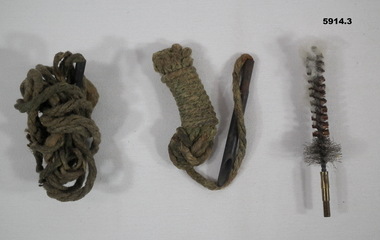
... One cord has a metal tube, the other end has a loop. 35cm from the loop end is another loop (it still retains a bit of oily cleaning cloth when last used.) One of the three cords has snapped. 2. ...One cord has a metal tube, the other end has a loop. 35cm from the loop end is another loop (it still retains a bit of oily cleaning cloth when last used.) One of the three cords has snapped. 2. ...1. String pull through - it is made of a 3 part cord. One cord has a metal tube, the other end has a loop. 35cm from the loop end is another loop (it still retains a bit of oily cleaning cloth when last used.) One of the three cords has snapped. 2. Same sort of pull through as above. - still rolled up tightly. 3. Wire bristle brush for barrel cleaning. It has a brass end for screwing to a rod. The bristles are two diameters. A lot of fluff is caught up in the small bristles.rifle cleaning equipment, vietnam war -
 Villa Alba Museum
Wallpaper sample - 'Sanitary' border design, 1890s
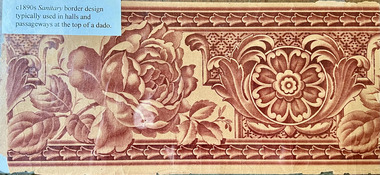
... In the late 19th century, 'sanitary' referred to wallpapers printed with oil-base colours or water resistant inks, making them the first mass-produced wall coverings that could be wiped clean with a damp cloth This sample was probably printed using engraved copper rollers, which allowed for intricate shading and tonal variations. 1890s designs frequently featured large, trailing floral motifs or patterns imitating more expensive materials like tiles or wood panelling....In the late 19th century, 'sanitary' referred to wallpapers printed with oil-base colours or water resistant inks, making them the first mass-produced wall coverings that could be wiped clean with a damp cloth This sample was probably printed using engraved copper rollers, which allowed for intricate shading and tonal variations. 1890s designs frequently featured large, trailing floral motifs or patterns imitating more expensive materials like tiles or wood panelling. ...Part of a collection of historic wallpapers collected by Phyllis Murphy, most of whose wallpapers were donated to the collection of Historic Houses Sydney. This wallpaper sample, annotated and encased in mylar was used by Phyllis for educational purposes, and donated by her son to Villa Alba Museum's collection in 2025.An 1890s 'Sanitary' border design wallpaper, typically used in halls and passageways at the top of a dado. In the late 19th century, 'sanitary' referred to wallpapers printed with oil-base colours or water resistant inks, making them the first mass-produced wall coverings that could be wiped clean with a damp cloth This sample was probably printed using engraved copper rollers, which allowed for intricate shading and tonal variations. 1890s designs frequently featured large, trailing floral motifs or patterns imitating more expensive materials like tiles or wood panelling."P-B11 (f)heritage interiors, wallpapers, 19th century design, borders, 1890s, sanitary wallpapers -
 Flagstaff Hill Maritime Museum and Village
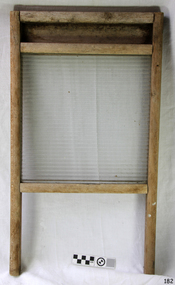
Domestic object - Washboard, 1900
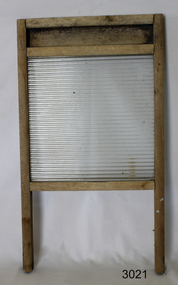
... The fabric is squeezed and rubbed against the ridged surface of the washboard to force the cleaning fluid through the cloth to carry away dirt. With the invention of mechanised cleaning, which became more common with washing machines by the end of the 20th century, the washboard became redundant. ...The fabric is squeezed and rubbed against the ridged surface of the washboard to force the cleaning fluid through the cloth to carry away dirt. With the invention of mechanised cleaning, which became more common with washing machines by the end of the 20th century, the washboard became redundant. ...A washboard is designed for hand washing clothing soaked in hot, soapy water in a wash tub or sink. The fabric is squeezed and rubbed against the ridged surface of the washboard to force the cleaning fluid through the cloth to carry away dirt. With the invention of mechanised cleaning, which became more common with washing machines by the end of the 20th century, the washboard became redundant. The traditional washboard is constructed with a rectangular wooden frame around a series of ridges or corrugations; for 19th-century washboards, the ridges were often of wood, sometimes glass, and by the 20th century, ridges of metal became common. In 1833, Stephen Rust obtained a United States patent for the first "fluted" metal washboard. Zinc washboards were predominantly manufactured in the United States from the middle of the 19th century.The washboard is a significant item used for cleaning clothes. It is the forerunner of labour-saving mechanical and electrical laundry equipment. It is still in use today in many countries and helps to understand the domestic life in the 19th and early 20th centuries. It is also locally significant for being manufactured in WarrnamboolWashboard with wooden frame, ribbed glass centre and two legs.flagstaff hill, flagstaff hill maritime museum and village, warrnambool, maritime museum, maritime village, great ocean road, shipwreck coast, washboard, laundry, clothes washing, clothes cleaning, washing, household item, washing equipment, laundering equipment, laundering, domestic laundry, scrub board, 19th century washing appliance, glass ripples, glass washboard -
 Flagstaff Hill Maritime Museum and Village
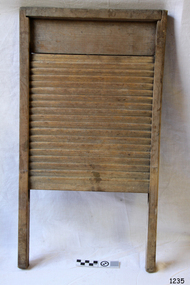
Domestic object - Washboard, 1900s-1930s
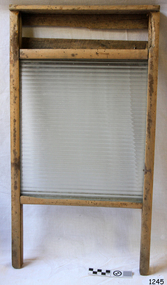
... The fabric is squeezed and rubbed against the ridged surface of the washboard to force the cleaning fluid through the cloth to carry away dirt. With the invention of mechanised cleaning, which became more common with washing machines by the end of the 20th century, the washboard became redundant. ...The fabric is squeezed and rubbed against the ridged surface of the washboard to force the cleaning fluid through the cloth to carry away dirt. With the invention of mechanised cleaning, which became more common with washing machines by the end of the 20th century, the washboard became redundant. ...A washboard is designed for hand washing clothing soaked in hot, soapy water in a wash tub or sink. The fabric is squeezed and rubbed against the ridged surface of the washboard to force the cleaning fluid through the cloth to carry away dirt. With the invention of mechanised cleaning, which became more common with washing machines by the end of the 20th century, the washboard became redundant. The traditional washboard is constructed with a rectangular wooden frame around a series of ridges or corrugations; for 19th-century washboards, the ridges were often of wood, sometimes glass, and by the 20th century, ridges of metal became common. In 1833, Stephen Rust obtained a United States patent for the first "fluted" metal washboard. Zinc washboards were predominantly manufactured in the United States from the middle of the 19th century.The washboard is a significant item used for cleaning clothes. It is the forerunner of labour-saving mechanical and electrical laundry equipment. It is still in use today in many countries and helps to understand the domestic life in the 19th and early 20th centuries.Washboard: wooden rectangular frame with two legs and ribbed glass grid.flagstaff hill, flagstaff hill maritime museum and village, warrnambool, maritime museum, maritime village, great ocean road, shipwreck coast, washboard, laundry, clothes washing, clothes cleaning, washing, household item, washing equipment, laundering equipment, laundering, domestic laundry, scrub board, 19th century washing appliance, glass ripples, glass washboard -
 Flagstaff Hill Maritime Museum and Village
Domestic object - Washboard, 1900-1930
... The fabric is squeezed and rubbed against the ridged surface of the washboard to force the cleaning fluid through the cloth to carry away dirt. With the invention of mechanised cleaning, which became more common with washing machines by the end of the 20th century, the washboard became redundant. ...The fabric is squeezed and rubbed against the ridged surface of the washboard to force the cleaning fluid through the cloth to carry away dirt. With the invention of mechanised cleaning, which became more common with washing machines by the end of the 20th century, the washboard became redundant. ...A washboard is designed for hand washing clothing soaked in hot, soapy water in a wash tub or sink. The fabric is squeezed and rubbed against the ridged surface of the washboard to force the cleaning fluid through the cloth to carry away dirt. With the invention of mechanised cleaning, which became more common with washing machines by the end of the 20th century, the washboard became redundant. The traditional washboard is constructed with a rectangular wooden frame around a series of ridges or corrugations; for 19th-century washboards, the ridges were often of wood, sometimes glass, and by the 20th century, ridges of metal became common. In 1833, Stephen Rust obtained a United States patent for the first "fluted" metal washboard. Zinc washboards were predominantly manufactured in the United States from the middle of the 19th century.The washboard is a significant item used for cleaning clothes. It is the forerunner of labour-saving mechanical and electrical laundry equipment. It is still in use today in many countries and helps to understand the domestic life in the 19th and early 20th centuries.Washboard: a wooden frame, with two legs, around a ribbed clear glass panel. Metal nails join the frame.flagstaff hill, flagstaff hill maritime museum and village, warrnambool, maritime museum, maritime village, great ocean road, shipwreck coast, washboard, glass washboard, laundry, clothes washing, glass ripples, clothes cleaning, washing, household item, washing equipment, laundering equipment, laundering -
 Flagstaff Hill Maritime Museum and Village
Domestic object - Washboard, Late 19th to early 20th century
... The fabric is squeezed and rubbed against the ridged surface of the washboard to force the cleaning fluid through the cloth to carry away dirt. With the invention of mechanised cleaning, which became more common with washing machines by the end of the 20th century, the washboard became redundant. ...The fabric is squeezed and rubbed against the ridged surface of the washboard to force the cleaning fluid through the cloth to carry away dirt. With the invention of mechanised cleaning, which became more common with washing machines by the end of the 20th century, the washboard became redundant. ...A washboard is designed for hand washing clothing soaked in hot, soapy water in a wash tub or sink. The fabric is squeezed and rubbed against the ridged surface of the washboard to force the cleaning fluid through the cloth to carry away dirt. With the invention of mechanised cleaning, which became more common with washing machines by the end of the 20th century, the washboard became redundant. The traditional washboard is constructed with a rectangular wooden frame around a series of ridges or corrugations; for 19th-century washboards, the ridges were often of wood, sometimes glass, and by the 20th century, ridges of metal became common. In 1833, Stephen Rust obtained a United States patent for the first "fluted" metal washboard. Zinc washboards were predominantly manufactured in the United States from the middle of the 19th century.The washboard is a significant item used for cleaning clothes. It is the forerunner of labour-saving mechanical and electrical laundry equipment. It is still in use today in many countries and helps to understand the domestic life in the 19th and early 20th centuries.Washboard: wooden rectangular frame with two legs and central wooden grid. flagstaff hill, flagstaff hill maritime museum and village, warrnambool, maritime museum, maritime village, great ocean road, shipwreck coast, washboard, laundry, clothes washing, clothes cleaning, washing, household item, washing equipment, laundering equipment, laundering, domestic laundry, scrub board, 19th century washing appliance -
 Flagstaff Hill Maritime Museum and Village
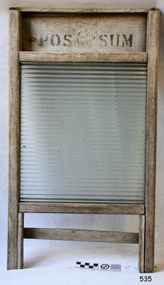
Domestic object - Washboard, 1900-1930
... The fabric is squeezed and rubbed against the ridged surface of the washboard to force the cleaning fluid through the cloth to carry away dirt. With the invention of mechanised cleaning, which became more common with washing machines by the end of the 20th century, the washboard became redundant. ...The fabric is squeezed and rubbed against the ridged surface of the washboard to force the cleaning fluid through the cloth to carry away dirt. With the invention of mechanised cleaning, which became more common with washing machines by the end of the 20th century, the washboard became redundant. ...A washboard is designed for hand washing clothing soaked in hot, soapy water in a wash tub or sink. The fabric is squeezed and rubbed against the ridged surface of the washboard to force the cleaning fluid through the cloth to carry away dirt. With the invention of mechanised cleaning, which became more common with washing machines by the end of the 20th century, the washboard became redundant. The traditional washboard is constructed with a rectangular wooden frame around a series of ridges or corrugations; for 19th-century washboards, the ridges were often of wood, sometimes glass, and by the 20th century, ridges of metal became common. In 1833, Stephen Rust obtained a United States patent for the first "fluted" metal washboard. Zinc washboards were predominantly manufactured in the United States from the middle of the 19th century.The washboard is a significant item used for cleaning clothes. It is the forerunner of labour-saving mechanical and electrical laundry equipment. It is still in use today in many countries and helps to understand the domestic life in the 19th and early 20th centuries.Washboard: a wooden frame with two legs, around a ribbed clear glass panel. Metal nails join the frame. Screen-printed inscription above the glass. Possum brand."POSSUM"flagstaff hill, flagstaff hill maritime museum and village, warrnambool, maritime museum, maritime village, great ocean road, shipwreck coast, washboard, glass washboard, laundry, clothes washing, glass ripples, clothes cleaning, washing, household item, washing equipment, laundering equipment, laundering, possum, possum brand -
 City of Moorabbin Historical Society (Operating the Box Cottage Museum)
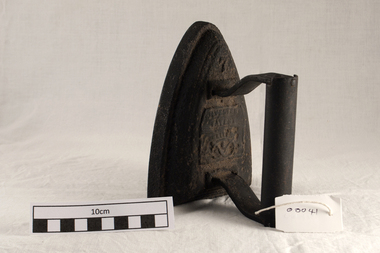
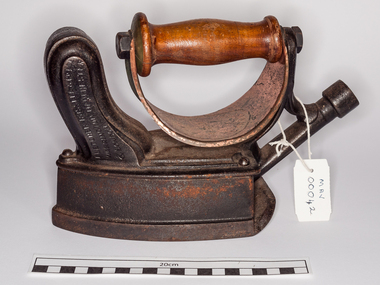
Domestic object - Kitchen equipment, sad iron, c1880
... clean of ash.. The women used 2 irons - one heating while the other was used. Thick cloth or gloves protected their hands from the hot irons. ...clean of ash.. The women used 2 irons - one heating while the other was used. Thick cloth or gloves protected their hands from the hot irons. ...Sad-irons or "solid" irons were made by blacksmiths and used to smooth out material by pressing the hot iron over it. A piece of sheet -iron was placed over the kitchen fire and the irons placed on it could be heated whilst remaining clean of ash.. The women used 2 irons - one heating while the other was used. Thick cloth or gloves protected their hands from the hot irons. The handle was removed from the cool iron and re- attached to remove the hot iron from the fire. The cool iron was replaced on the fire or stove to heat again. These irons were cleaned with steel wool to prevent them marking the material. If the iron was too hot the material would scorch. Most homes set aside one day for ironing and some large households had an ironing room with a special stove designed to heat irons. However, most women had to work with a heavy, hot iron close to the fireplace even in summer.These sad irons remind us of the difficult circumstances experienced in their daily routines by the pioneers and early settlers of Moorabbin Shire. The family of Miss M Curtis were early settlers in Moorabbin Shire. Sad-iron, domestic, flat, cast iron, Silvester's Patent, No 6, Salter, England, c. 1890-1900s A sad iron made from cast iron was heated over a fire or on a stove and used for pressing clothing and table wareSILVESTER'S/ PATENT/ SALTERS / No 6 with the pretzel & a arrow going through the centresad iron, kitchen equipment, pioneers, early settlers, market gardeners, sewing, craftwork, clothing, moorabbin, brighton, bentleigh, fireplaces, stoves -
 City of Moorabbin Historical Society (Operating the Box Cottage Museum)
Domestic object - Kitchen equipment, gas-fuelled flat iron, c1900 - 30
... clean of ash.. The women used 2 irons - one heating while the other was used. Thick cloth or gloves protected their hands from the hot irons. ...clean of ash.. The women used 2 irons - one heating while the other was used. Thick cloth or gloves protected their hands from the hot irons. ...Sad-irons or "solid" irons were made by blacksmiths and used to smooth out material by pressing the hot iron over it. A piece of sheet -iron was placed over the kitchen fire and the irons placed on it could be heated whilst remaining clean of ash.. The women used 2 irons - one heating while the other was used. Thick cloth or gloves protected their hands from the hot irons. The handle was removed from the cool iron and re- attached to remove the hot iron from the fire. The cool iron was replaced on the fire or stove to heat again. These irons were cleaned with steel wool to prevent them marking the material. If the iron was too hot the material would scorch. Most homes set aside one day for ironing and some large households had an ironing room with a special stove designed to heat irons. However, most women had to work with a heavy, hot iron close to the fireplace even in summer. Thomas Fletcher (1840-1903). By 1880s he had a gas appliance manufactory in Thynne Street, Warrington. By 1895 the company had become Fletcher Russell and Co Gas Engineers, his firm having merged with Alexander and William Russell of Pendleton Iron Works. Circa 1950, the firm merged into Radiation Ltd which was later acquired by 'TI New World'; 1902: Fletcher, Russell & Co. Ltd., Palatine Works, Warrington In 1880 gas -fuelled irons were connected by rubber tubing to the gas light-fittings of the house or to gas canisters. However , not many houses had access to a gas supply until much later and this iron was popular in 1920’sThese sad irons remind us of the difficult circumstances experienced in their daily routines by the pioneers and early settlers of Moorabbin Shire The family of Miss M Curtis were early settlers in Moorabbin Shire.A gas-fuelled flat iron, made in USA , It would have been attached to a gas hose fitting that was also used at night for light in the house. There is a small chimney to allow for air and to try to control the amount of heat in the iron. A 'shield' is under the leather covered handle to protect the user's hand from the heat, however it is made of copper metal - a heat conductor.FLETCHER RUSSELL CO. / LIM/ PATENT/ WARRINGTON on right side of handle 'Registered' on left side of handle ' Fletcher Russell Co L / Warrington, Manchester / & London.sad iron, kitchen equipment, fletcher russell co. ltd., england, warrington, manchester, pioneers, early settlers, market gardeners, sewing, craftwork, clothing, moorabbin, brighton, bentleigh, fireplaces, stoves, domestic gas supply, gas-light, gas cannisters -
 City of Moorabbin Historical Society (Operating the Box Cottage Museum)
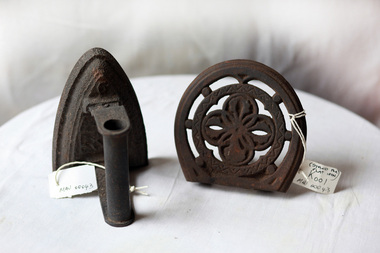
Domestic object - Kitchen Equipment, flat iron with trivet stand, c1880
... clean of ash.. The women used 2 irons - one heating while the other was used. Thick cloth or gloves protected their hands from the hot irons. ...clean of ash.. The women used 2 irons - one heating while the other was used. Thick cloth or gloves protected their hands from the hot irons. ...Sad-irons or "solid" irons were made by blacksmiths and used to smooth out material by pressing the hot iron over it. A piece of sheet -iron was placed over the kitchen fire and the irons placed on it could be heated whilst remaining clean of ash.. The women used 2 irons - one heating while the other was used. Thick cloth or gloves protected their hands from the hot irons. The handle was removed from the cool iron and re- attached to remove the hot iron from the fire. The cool iron was replaced on the fire or stove to heat again. These irons were cleaned with steel wool to prevent them marking the material. If the iron was too hot the material would scorch. Most homes set aside one day for ironing and some large households had an ironing room with a special stove designed to heat irons. However, most women had to work with a heavy, hot iron close to the fireplace even in summer. These sad irons remind us of the difficult circumstances experienced in their daily routines by the pioneers and early settlers of Moorabbin Shire The family of Miss M Curtis were early settlers in Moorabbin Shire. A) A heavy cast iron, flat iron with B) horseshoe shaped trivet stand c1880 The trivet can be attached to a table by an adjustable clamp.A) 5 on tip of ironsad iron, kitchen equipment, pioneers, early settlers, market gardeners, sewing, craftwork, clothing, moorabbin, brighton, bentleigh, fireplaces, stoves -
 City of Moorabbin Historical Society (Operating the Box Cottage Museum)
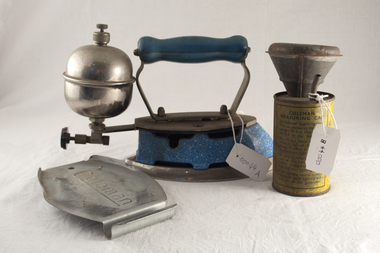
Domestic object - Kitchen equipment, spirit-fuelled sad iron, c1920
... clean of ash.. The women used 2 irons - one heating while the other was used. Thick cloth or gloves protected their hands from the hot irons. ...clean of ash.. The women used 2 irons - one heating while the other was used. Thick cloth or gloves protected their hands from the hot irons. ...Sad-irons or "solid" irons were made by blacksmiths and used to smooth out material by pressing the hot iron over it. A piece of sheet -iron was placed over the kitchen fire and the irons placed on it could be heated whilst remaining clean of ash.. The women used 2 irons - one heating while the other was used. Thick cloth or gloves protected their hands from the hot irons. The handle was removed from the cool iron and re- attached to remove the hot iron from the fire. The cool iron was replaced on the fire or stove to heat again. These irons were cleaned with steel wool to prevent them marking the material. If the iron was too hot the material would scorch. Most homes set aside one day for ironing and some large households had an ironing room with a special stove designed to heat irons. However, most women had to work with a heavy, hot iron close to the fireplace even in summer. Late in the 19thC designers experimented with heat retaining fillings for these irons. William Coleman began selling Kerosene lanterns in 1900 in Kingfisher, Oklahoma, USA. He moved to Wichita, Kansas in 1902 and the company became world wide. The company also produced a range of cooking stoves and domestic irons. This spirit- fuelled flat iron was very popular in 1920s - 30s These sad irons remind us of the difficult circumstances experienced in their daily routines by the pioneers and early settlers of Moorabbin Shire The family of Miss M Curtis were early settlers in Moorabbin ShireA) spirit- fuelled, sad iron with chrome plated sole c1920, and metal trivet The iron is blue enamel with a white speckled body, with a hemispherical tank for the Coleman 'Lighting Petrol' that provided the heat for smoothing the material B) Coleman Fuel measuring can and funnellMetal Trivet/stand " COLEMAN" ; Petrol can " COLEMAN" / MEASURING CAN / for INSTANT LIGHTING IRON/ with printed instructionssad iron, kitchen equipment, coleman william, kansas, oklahoma, pioneers, early settlers, market gardeners, sewing, craftwork, clothing, moorabbin, brighton, bentleigh, fireplaces, stoves, petrol fuelled irons, spirit flat irons, coleman lamp stove co. ltd. -
 City of Moorabbin Historical Society (Operating the Box Cottage Museum)
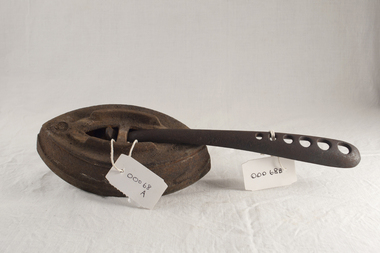
Domestic object - Kitchen Equipment, sad iron with lifter, c1900
... clean of ash.. The women used 2 irons - one heating while the other was used. Thick cloth or gloves protected their hands from the hot irons. ...clean of ash.. The women used 2 irons - one heating while the other was used. Thick cloth or gloves protected their hands from the hot irons. ...Sad-irons or "solid" irons were made by blacksmiths and used to smooth out material by pressing the hot iron over it. A piece of sheet -iron was placed over the kitchen fire and the irons placed on it could be heated whilst remaining clean of ash.. The women used 2 irons - one heating while the other was used. Thick cloth or gloves protected their hands from the hot irons. The handle was removed from the cool iron and using the lifter the cool iron was replaced on the fire or stove to heat again. These irons were cleaned with steel wool to prevent them marking the material. If the iron was too hot the material would scorch. Most homes set aside one day for ironing and some large households had an ironing room with a special stove designed to heat irons. However, most women had to work with a heavy, hot iron close to the fireplace even in summer.These sad irons remind us of the difficult circumstances experienced in their daily routines by the pioneers and early settlers of Moorabbin Shire. The Curtis family were early settlers in Moorabbin ShireA) This heavy sad iron, made from cast iron, was heated over a fire or on a stove and used for pressing clothing and haberdashery. B) The separate tapered handle was used to lift the hot iron from the fire and when a "Potts" Handle was attached the ironing commenced. sad iron, kitchen equipment, fireplaces, stoves, pioneers, early settlers, market gardeners, sewing, craftwork, clothing, moorabbin, brighton, bentleigh -
 City of Moorabbin Historical Society (Operating the Box Cottage Museum)
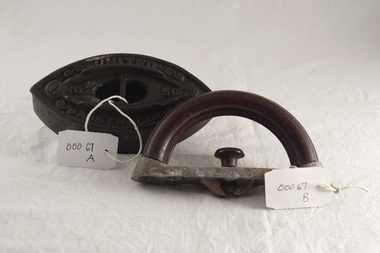
Domestic object - Kitchen Equipment, sad iron with Mrs Potts handle, c1900
... clean of ash.. The women used 2 irons - one heating while the other was used. Thick cloth or gloves protected their hands from the hot irons. ...clean of ash.. The women used 2 irons - one heating while the other was used. Thick cloth or gloves protected their hands from the hot irons. ...Sad-irons or "solid" irons were made by blacksmiths and used to smooth out material by pressing the hot iron over it. A piece of sheet -iron was placed over the kitchen fire and the irons placed on it could be heated whilst remaining clean of ash.. The women used 2 irons - one heating while the other was used. Thick cloth or gloves protected their hands from the hot irons. The handle was removed from the cool iron and re- attached to remove the hot iron from the fire. The cool iron was replaced on the fire or stove to heat again. Mrs Florence Potts invented in 1871 a detachable handle made from walnut wood with a metal latch to release the handle. These wooden handles prevented burned hands and were sold to grateful women all over the world. These irons were cleaned with steel wool to prevent them marking the material. If the iron was too hot the material would scorch. Most homes set aside one day for ironing and some large households had an ironing room with a special stove designed to heat irons. However, most women had to work with a heavy, hot iron close to the fireplace even in summer.Mrs Florence Potts invented this type of detachable walnut wood handle with a meta release latch for sad irons in 1871 and it sold widely throughout the world to grateful women including those in Moorabbin Shire. The family of Ms May Curtis were early settlers in Moorabbin ShireA) A sad iron, made of cast iron , has a special handle invented in 1871 by Mrs Florence Potts of Iowa, USA. B) The detachable handle made of walnut wood to prevent burned hands, was attached to the iron by a metal latch.A) UNITED/ N0 / 50 / AUSTRALIApotts florence, iowa usa, melbourne, moorabbin, sad irons, kitchen equipmentn fireplaces, walnut wood, sewing, laundry, table ware, linen, pioneers, early settlers, washing days, craftwork -
 City of Moorabbin Historical Society (Operating the Box Cottage Museum)
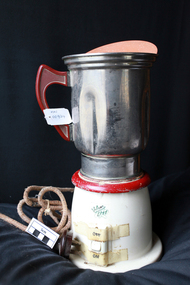
Kitchen Equipment, 'Vulcan' vitamizer, c1940
... The jug is easily removed from the base to pour the mixed ingredients where needed and the rotors are safely and easily cleaned by rinsing under water. vitamizer food preparation cooking vulcan pty ltd australia moorabbin bentleigh cheltenham ormond housekeeping Front: : Vulcan / LM1 Base ; VULCAN / TYPE LM1 / Patent Pending Design / Volts 220 Amps 8 c1940, an electric, 'Vulcan' Vitamizer, with the original cloth covered flex and bake-lite lever switch at front of the cream bake-lite base . ...A machine fitted with sharp blades, for mashing, crushing or liquefying food ingredients. i.e vitamizing. The jug, made of glass, steel, aluminium or plastic, contains rotor blades that engage with a bit protruding from the base containing an electric motor. When activated by the switch on the base the sharp rotor blades chop, mix , mince, pulverize the ingredients in the jug . The degree of mince depends on the time the motor is running. The jug is easily removed from the base to pour the mixed ingredients where needed and the rotors are safely and easily cleaned by rinsing under water.c1940, an electric, 'Vulcan' Vitamizer, with the original cloth covered flex and bake-lite lever switch at front of the cream bake-lite base . The jug- shaped chrome blender has a red, thick, rubber lid. Front: : Vulcan / LM1 Base ; VULCAN / TYPE LM1 / Patent Pending Design / Volts 220 Amps 8vitamizer, food preparation, cooking, vulcan pty ltd australia, moorabbin, bentleigh, cheltenham, ormond, housekeeping -
City of Moorabbin Historical Society (Operating the Box Cottage Museum)
Education kit - School Writing Slate early 20thC, 20thC
... clean and used again and again. Until the mid 20thC paper was expensive . After the pupil wrote on the Slate, the work was checked by the teacher and then erased for a new task Children had to bring a dampened cloth or sponge to school so that they could clean the slate and start again. ...clean and used again and again. Until the mid 20thC paper was expensive . After the pupil wrote on the Slate, the work was checked by the teacher and then erased for a new task Children had to bring a dampened cloth or sponge to school so that they could clean the slate and start again. ...School children learned to write using a slate From 1880’s to mid 1950’s in most schools, very young children first learned to write their letters in sand trays using their fingers or a stick. When about 6, they progressed onto writing on slates . The board was made from a piece of quarry slate set in a wooden frame. A slate pencil (not chalk) was used to form the letters. This slate pencil was often sharpened on the school wall. The advantage of slates over paper was that they could be wiped clean and used again and again. Until the mid 20thC paper was expensive . After the pupil wrote on the Slate, the work was checked by the teacher and then erased for a new task Children had to bring a dampened cloth or sponge to school so that they could clean the slate and start again. The pioneer settlers in the Moorabbin Shire area valued education and established schools for their children in Cheltenham and East Brighton c1860's This writing slate is typical of the type used up to the mid 20th Century in preparatory classes.A writing slate in a wood frame used by school children from c1880s to c1950sschools, education, writing equipment, slate writing boards, victoria melbourne, market gardeners, pioneer, settlers, cheltenham state school no. 84., bentleigh east state school no. 2083, st stephens c of e school tucker road east brighton -
 City of Moorabbin Historical Society (Operating the Box Cottage Museum)
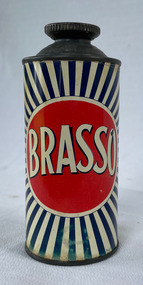
Equipment - BRASSO, Reckitt and Colman Ltd, Metal Polish, 20thC
... Brasso was used by most Housewives for cleaning and polishing Kitchen Equipment in the City of Moorabbin during 20thC brasso metal polish FRONT: 'BRASSO' Back: Picture of the Royal Coat of Arms - By appointment to Her Majesty Queen ElizabethII. Suppliers of Metal Polish Reckitt & Colman Ltd. BRASSO Metal Polish for polishing Brass, Copper, Zinc, Steel, Pewter etc. SHAKE WELL Apply with a soft cloth ...Reckitt & Sons' opened a branch in Sydney in1886. Brasso was developed by Reckitt & Sons in 1905. In 1938 Reckitt and Sons merged with J. and J. Colman to become Reckitt and Colman Ltd.Brasso was used by most Housewives for cleaning and polishing Kitchen Equipment in the City of Moorabbin during 20thC Metal container with blue sun burst effect, with a red circle with 'BRASSO' printed, in white and blue, inside. The instructions are printed on the back. FRONT: 'BRASSO' Back: Picture of the Royal Coat of Arms - By appointment to Her Majesty Queen ElizabethII. Suppliers of Metal Polish Reckitt & Colman Ltd. BRASSO Metal Polish for polishing Brass, Copper, Zinc, Steel, Pewter etc. SHAKE WELL Apply with a soft cloth. Polish off with a dry, soft cloth preferably before the polish has completely dried. DO NOT PLACE THIS TIN CLOSE TO THE FIRE Made in Australia by Reckitt & Colman (Australia) Ltd. No. 6 - Contents 6½ Fl oz when packed. brasso, metal polish
