
Showing 9 items matching "codes and standards of practice"
-
 Federation University Historical Collection
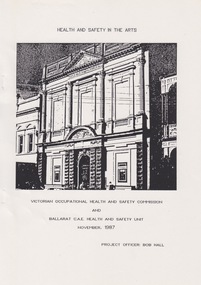
Document - Document - Booklet, VIOSH: VIOSH Commission and Ballarat College of Advanced Education Health and Safety Unit: Health and Safety in the Arts, Bob Hall, 1987
... ...codes and standards of practice...The need for flexibility and spontaneity is a vital and intuitive part of the artistic environment. Consequently codes and standards of practice that would restrict this environment ethic are unlikely to be viewed favourably by artists. ...The need for flexibility and spontaneity is a vital and intuitive part of the artistic environment. Consequently codes and standards of practice that would restrict this environment ethic are unlikely to be viewed favourably by artists. ...Victorian Institute of Occupational Safety and Health (VIOSH) Australia is the Asia-Pacific centre for teaching and research in occupational health and safety (OHS) and is known as one of Australia's leaders on the field. VIOSH has a global reputation for its innovative approach within the field of OHS management. VIOSH had its first intake of students in 1979. At that time the Institution was known as the Ballarat College of Advanced Education. In 1990 it became known as Ballarat University College, then in 1994 as University of Ballarat. It was 2014 that it became Federation University. VIOSH Australia students are safety managers, senior advisors and experienced OHS professionals. They come from all over Australia and industry. Students are taught active research and enquiry; rather than textbook learning and a one-size fits all approach. VIOSH accepts people into the Graduate Diploma of Occupational Hazard Management who have no undergraduate degree - on the basis of extensive work experience and knowledge. The stimulus for this project to investigate health and safety in art teaching and to suggest cost effective control measures, arose from concerns that had been expressed by some members of staff within the Arts Faculty at the Ballarat College of Advanced Education about aspects of health and safety at their workplace. As a non-artist it is hard to attempt to describe the artists' perspective of their working environment. Within the artistic community there is a great concern for individuality and this is expressed in the artists' work. The need for flexibility and spontaneity is a vital and intuitive part of the artistic environment. Consequently codes and standards of practice that would restrict this environment ethic are unlikely to be viewed favourably by artists. Comments made by Bob Hall; Project Officer BCAESixty pages stapled together. Type written with illustrations relevant to safety issues. Front has clear perspex sheetviosh, victorian institute of occupational safety and health, bob hall, project officer, commission, ballarat college of advanced eucation, health and safety in the arts, control measures, codes and standards of practice, chemical environment, protective equipment, management of environment, noise, machines, temperature control -
 Bendigo Historical Society Inc.
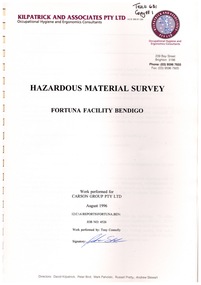
Administrative record - Ex-Fortuna Survey Association Collection: Hazardous Material Survey Fortuna Facility Bendigo, Aug 1996
... Any work involving these fibres should comply with the National Standard and Code of Practice for Safe Use of Synthetic Mineral Fibre (1990). ...Any work involving these fibres should comply with the National Standard and Code of Practice for Safe Use of Synthetic Mineral Fibre (1990). ...This document presents the findings of a hazardous material survey conducted at the Fortuna Facility in Bendigo in August 1996. The Survey Objective was to Assess the presence, location, type, and condition of hazardous materials—specifically asbestos-containing materials, synthetic mineral fibre products, and polychlorinated biphenyls (PCBs)—and provide recommendations to minimize health and safety risks. Buildings 8, 10, 16, 16A, 16B, and 18, including associated structures, were examined. Asbestos-Containing Materials: Located in cement sheet, moulded cement vents, vinyl floor tiles, fibrous board, and electrical switchboards. Generally present a negligible or low exposure risk if left undisturbed. Removal is only recommended if maintenance, refurbishment, or demolition will disturb these materials. Fibrous asbestos board in the south ceiling space of Building 16 should be removed as soon as practicable.S ynthetic Mineral Fibre Products: Found in pipe, duct, and ceiling insulation. Pose negligible exposure risk under normal occupancy. Any work involving these fibres should comply with the National Standard and Code of Practice for Safe Use of Synthetic Mineral Fibre (1990). Older fluorescent light fittings and electrical transformers may contain PCBs. PCBs are hazardous due to their chemical properties and potential health risks. Recommendations Asbestos: Remove only if disturbance is likely, except for the specific board in Building 16, which should be removed promptly. Follow national safety standards during any work that may disturb these materials. PCBs: Be aware of potential presence in older electrical equipment and manage accordingly. The survey was conducted in accordance with Victorian Occupational Health and Safety (Asbestos) Regulations 1992. The document also includes appendices with general information and analytical results related to asbestos and synthetic mineral fibres.Hazardous Material Survey Fortuna Facility Bendigo, work performed for Carson Group Pty Ltd by Kilpatrick and Associates Pty Ltd, Occupational Hygeine and Ergonomics Consultants, 239 Bay Street, Brighton, 3186 This Document Contains the following Items: 11231.3b This document presents the findings of a hazardous material survey conducted at the Fortuna Facility in Bendigo in August 1996. The first four pages are copied here. 11231.3a Front Cover The document is coloured, bound with "Spiralex" and type-written. It contains 25 pages. bendigo, fortuna villa, history, army survey regiment -
 Federation University Historical Collection
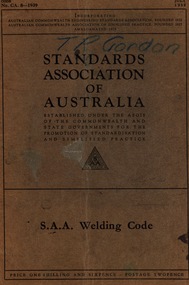
Booklet - Booklet - Standards Association, Standards Association of Australia: .1 Welding Code, .2 Structural Steel
... Two booklets produced by the Standards Association of Australia - established under the aegis of the Commonwealth and State Governments for the promotion of standardisation and simplified practice. .1 is on Welding Code. ...Two booklets produced by the Standards Association of Australia - established under the aegis of the Commonwealth and State Governments for the promotion of standardisation and simplified practice. .1 is on Welding Code. ...Two booklets produced by the Standards Association of Australia - established under the aegis of the Commonwealth and State Governments for the promotion of standardisation and simplified practice. .1 is on Welding Code. It was first issued on 1933 and revised in 1939. Cost One Shilling and Sixpence. .2 is the code for Structural Steel. It was first issued in 1928, amended in 1931 and revised in 1940. Cost Two Shillings and Sixpence. Both published by The Association, Science House, Gloucester and Essex Streets, Sydney..1 Folded green cover, 28 pages, stapled .2 Folded light brown cover, 30 pages, stapled.1 T R Gordon in blue pencil on cover .2 E J Barker in blue pen on cover.standards association of australia, commonwealth government, state governments, welding code, structural steel code, 1933, 1939, 1928, 1940, science house sydney -
 National Wool Museum
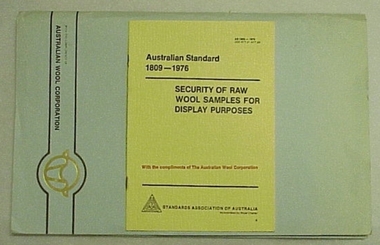
Booklet, Code of Practice for Security of Wool Samples for Display Purposes: AS1809-1976
... "Code of Practice for Security of Wool Samples for Display Purposes: AS1809-1976"- Standards Association of Australia. ..."Code of Practice for Security of Wool Samples for Display Purposes: AS1809-1976"- Standards Association of Australia. ..."Code of Practice for Security of Wool Samples for Display Purposes: AS1809-1976"- Standards Association of Australia. ..."Code of Practice for Security of Wool Samples for Display Purposes: AS1809-1976"- Standards Association of Australia. Amongst items collected in Australian Wool Corporation folder (W6052)."Code of Practice for Security of Wool Samples for Display Purposes: AS1809-1976"- Standards Association of Australia. Amongst items collected in Australian Wool Corporation folder (W6052).With the compliments of The Australian Wool Corporationtextile research wool marketing textile testing, australian wool corporation standards association of australia, wool clip preparation, textile research, wool marketing, textile testing -
 Lakes Entrance Historical Society
Book, Paul Kelly & Associates, East Gippsland Shire Code of Practice July 2003, 2003
... Code of practice detailing minimum acceptable standards of work on land managed , works includes construction works regular maintenance contractors and provision of services East Gippland Victoria...Vegetation Fire Brigade Code of practice detailing minimum acceptable standards of work on land managed , works includes construction works regular maintenance contractors and provision of services East Gippland Victoria East Gippsland Shire Code of Practice July 2003 Book Paul Kelly & Associates ...Code of practice detailing minimum acceptable standards of work on land managed , works includes construction works regular maintenance contractors and provision of services East Gippland Victoriavegetation, fire brigade -
Northern District School of Nursing. Managed by Bendigo Historical Society Inc.
Administrative record - Northern District School of Nursing List of Clerical, Domestic and Maintenance Staff, 1950s-1989
... Raise the standard of nursing education in the region. Maintain the highest principles of nursing practice. ...Managed by a committee including hospital administrators, medical professionals, and nursing leaders from several regional hospitals. Associated with major hospitals in the Northern District, including Bendigo Base, Mildura Base, Castlemaine, Echuca, Swan Hill, St. Arnaud, and Kyneton District Hospitals. Provide high-quality theoretical and practical nursing training. Raise the standard of nursing education in the region. Maintain the highest principles of nursing practice. Applicants must be at least 17 years old and hold a Proficiency Certificate or higher educational qualification. Application involves submitting forms, certificates, an interview, an aptitude test, and a medical examination. A three-month probationary period follows initial acceptance. Preliminary Training School: Four-week introductory course covering basic nursing, anatomy, hygiene, and practical skills. Practical experience in various hospital departments, guided by senior staff. Study Block Plan: Includes several blocks of theoretical and practical instruction throughout the three-year program. Regular school exams and two state exams (First Professional and Final State) are required for progression and graduation. Nurses work a 40-hour week with at least one or two days off per week and three weeks of annual leave. Accommodation is provided in comfortable hostels with good facilities. Uniforms are supplied free; nurses provide their own shoes and stockings. Salaries and allowances are regulated, with deductions for board and free medical care. Additional Information Post-Graduate Opportunities. Senior positions require further experience and additional certificates (e.g., Midwifery, Infant Welfare).Diploma courses available in administration, teaching, and specialized nursing fields. Bursaries are available for advanced study.Career Prospects: Graduates can pursue roles in administration, teaching, ward and departmental leadership, district and visiting nursing, industrial and school nursing, and more. Opportunities exist both within hospitals and in community or specialized settings.FAQs and Practical Details. Minimal training costs (mainly exam fees and personal items).Living out allowances and travel expenses are covered. Four training intakes per year; waiting periods are short if qualifications are met.Northern District School of Nursing List of Clerical Staff - two pages, and List of Domestic and Maintenance Staff, three pages This item contains the following documents: 3791.4a This document is a comprehensive listing of clerical staff and alumni associated with N.D.S.N. The document provides names, addresses, and sometimes additional notes for a large group of people, including both staff and possibly members or affiliates. Many entries include full addresses, indicating the document's use for contact or organizational purposes. Some individuals are identified with specific roles, such as clerical staff, or are listed as being 'C/-N.D.S.N.' There are references to both current and possibly former members (e.g., 'deceased' noted for one individual). Most addresses are located in Bendigo and surrounding areas in Victoria, Australia, indicating a regional focus. 3791.4b This document is a comprehensive roster of domestic and maintenance staff, including both current employees and recent retirees as of early 1989. Staff Listings:Contains names, addresses, and roles of staff members.Includes both domestic (D) and maintenance (M) staff, as well as specialized roles such as night porters (N.P.), residence supervisors (R.S.), cooks, chefs, gardeners, and carpenters. Some entries note if the staff member is retired or deceased. Employment status is indicated (e.g., current, retired, deceased).Some entries include years of service or employment periods.Roles are sometimes abbreviated (e.g., D for Domestic, M for Maintenance, N.P. for Night Porter, H.K. for Housekeeper, Gdnr for Gardener). Most staff entries include home addresses, often with town or suburb and postal codes. Locations are primarily in Bendigo and surrounding areas. Some entries include family relationships or additional notes (e.g., "Like father").Occasional mention of staff studying or having moved to other locations.nurse training, lister house, northern district school of nursing, domestic and maintenance staff, clerical staff -
Northern District School of Nursing. Managed by Bendigo Historical Society Inc.
Tool - Northern District School of Nursing Graduates Association - Combistik Urine Test strips, 1950s
... Raise the standard of nursing education in the region. Maintain the highest principles of nursing practice. ...The Northern District School of Nursing in Victoria, Australia Graduates Association: History of the School Managed by a committee including hospital administrators, medical professionals, and nursing leaders from several regional hospitals. Associated with major hospitals in the Northern District, including Bendigo Base, Mildura Base, Castlemaine, Echuca, Swan Hill, St. Arnaud, and Kyneton District Hospitals. Provide high-quality theoretical and practical nursing training. Raise the standard of nursing education in the region. Maintain the highest principles of nursing practice. Applicants must be at least 17 years old and hold a Proficiency Certificate or higher educational qualification. Application involves submitting forms, certificates, an interview, an aptitude test, and a medical examination. A three-month probationary period follows initial acceptance. Preliminary Training School: Four-week introductory course covering basic nursing, anatomy, hygiene, and practical skills. Practical experience in various hospital departments, guided by senior staff. Study Block Plan: Includes several blocks of theoretical and practical instruction throughout the three-year program. Regular school exams and two state exams (First Professional and Final State) are required for progression and graduation. Nurses work a 40-hour week with at least one or two days off per week and three weeks of annual leave. Accommodation is provided in comfortable hostels with good facilities. Uniforms are supplied free; nurses provide their own shoes and stockings. Salaries and allowances are regulated, with deductions for board and free medical care. Additional Information Post-Graduate Opportunities. Senior positions require further experience and additional certificates (e.g., Midwifery, Infant Welfare).Diploma courses available in administration, teaching, and specialized nursing fields. Bursaries are available for advanced study.Career Prospects: Graduates can pursue roles in administration, teaching, ward and departmental leadership, district and visiting nursing, industrial and school nursing, and more. Opportunities existed both within hospitals and in community or specialized settings.FAQs and Practical Details. Minimal training costs (mainly exam fees and personal items).Living out allowances and travel expenses are covered. Four training intakes per year; waiting periods are short if qualifications are met.Northern District School of Nursing Graduates Association - Combistik Urine Test strips - instruction booklet - 4 pages by the Ames Compant 65 Queens Road Melbourne This item contains the following document: 3792.11a Northern District School of Nursing Graduates Association - Combistik Urine Test strips - coloured instruction booklet Here are the key points from the document on Combistix urine test strips: Clinical Importance of UrinalysisUrinalysis is often underestimated but provides valuable diagnostic information.Simple to perform, yet highly informative for detecting urinary and metabolic conditions.Combistix is a combination test strip that rapidly screens for glucose, protein, and pH in urine. The test requires only one dip and 10 seconds to deliver three results, with no need for urine pre-treatment. Suitable for routine hospital urinalysis and large-scale screening, even by non-specialists due to its simplicity. Helps optimize laboratory workflow by allowing ancillary staff to perform basic tests, freeing technologists for more complex tasks. Useful for diagnosing and managing urinary tract infections, metabolic conditions, and monitoring therapy (e.g., sulphonamide therapy, chemotherapy for genito-urinary infections). Glucose: Essential for diabetes screening and management; Combistix is specific for glucose and does not react to lactose, making it reliable during pregnancy. Proteinuria is a key indicator of renal abnormalities, vascular disease, or pre-eclampsia. Its absence is reassuring. The test is sensitive and can be performed accurately by inexperienced users. The strip has three color-coded, reagent-impregnated areas separated by barriers for clear results.Simple procedure: dip, wait 10 seconds, and compare colors to a chart. Packaged in air-tight bottles of 100 strips, available through standard medical supply channels. Combistix offers a fast, reliable, and easy-to-use method for routine urine screening, supporting both clinical diagnosis and efficient laboratory operations.nurse training, lister house, ames company, combistix -
 Northern District School of Nursing. Managed by Bendigo Historical Society Inc.
Book - Northern District School of Nursing Graduates Association - Procedure Book for a Student Nurse, 1952 to 1956
... Raise the standard of nursing education in the region. Maintain the highest principles of nursing practice. ...The Northern District School of Nursing in Victoria, Australia Graduates Association: History of the School Managed by a committee including hospital administrators, medical professionals, and nursing leaders from several regional hospitals. Associated with major hospitals in the Northern District, including Bendigo Base, Mildura Base, Castlemaine, Echuca, Swan Hill, St. Arnaud, and Kyneton District Hospitals. Provide high-quality theoretical and practical nursing training. Raise the standard of nursing education in the region. Maintain the highest principles of nursing practice. Applicants must be at least 17 years old and hold a Proficiency Certificate or higher educational qualification. Application involves submitting forms, certificates, an interview, an aptitude test, and a medical examination. A three-month probationary period follows initial acceptance. Preliminary Training School: Four-week introductory course covering basic nursing, anatomy, hygiene, and practical skills. Practical experience in various hospital departments, guided by senior staff. Study Block Plan: Includes several blocks of theoretical and practical instruction throughout the three-year program. Regular school exams and two state exams (First Professional and Final State) are required for progression and graduation. Nurses work a 40-hour week with at least one or two days off per week and three weeks of annual leave. Accommodation is provided in comfortable hostels with good facilities. Uniforms are supplied free; nurses provide their own shoes and stockings. Salaries and allowances are regulated, with deductions for board and free medical care. Additional Information Post-Graduate Opportunities. Senior positions require further experience and additional certificates (e.g., Midwifery, Infant Welfare).Diploma courses available in administration, teaching, and specialized nursing fields. Bursaries are available for advanced study.Career Prospects: Graduates can pursue roles in administration, teaching, ward and departmental leadership, district and visiting nursing, industrial and school nursing, and more. Opportunities existed both within hospitals and in community or specialized settings.FAQs and Practical Details. Minimal training costs (mainly exam fees and personal items).Living out allowances and travel expenses are covered. Four training intakes per year; waiting periods are short if qualifications are met.Northern District School of Nursing Graduates Association - Procedure (Report) Book for a Student Nurse 1952 to 1956, that belonged to Ann Rosemary Haigh Archibald 14 pages, also Joan Stot and Jeanette Mary Jobe This item contains the following documents: 3793.2a Procedure Book for a Student Nurse 1952 to 1956, that belonged to Ann Rosemary Haigh Archibald 3793.2b Procedure Book for a Student Nurse 1952 to 1956, that belonged to Joan Stot Front Cover 3793.2c Procedure Book for a Student Nurse 1952 to 1956, that belonged to Jeanette Mary Jobe Front Cover This document is a procedural guide for student nurses, outlining the requirements for recording clinical procedures, charting, and examination preparation. The Procedure Book is filled out by the Sister Tutor in the Training School and by Sisters in wards or departments. Entries in the ward columns are initialed by the supervising Sister.Comments on performance can be added in the Remarks column, which must be initialed and dated. Each student nurse is responsible for carrying their Procedure Book when moving between wards or hospitals. Procedure Books are subject to inspection by Matron, Nursing Supervisor, or Sister Tutor and must be brought to lectures and demonstrations. Marking Code for Procedures D: DemonstratedP: Practised in ClassroomS: Practised under supervision in the wards(Blank): Procedure Books must be presented during the Practical and Oral Sections of the First Professional and State Final Examinations if requested by Examiners. The document contains detailed tables listing required nursing procedures, including: Admission and discharge of patients Preparation and administration of anaesthetics. Artificial feeding methods Bandaging, bathing, and bedmaking Care of bedlinen, patient clothing, and valuables Catheterization and care of catheters Charting vital signs and fluid balanceCleaning and sterilizing equipment Counter irritants, enemata, feeding, hygiene, infant care Inhalations, injections, specimen collection, sterilization Special procedures, tray preparation, urine testing, and more Emphasizes the importance of accurate record-keeping, report writing, and communication between staff. The document includes an index for quick reference to procedures and topics.This guide ensures that student nurses are systematically trained, supervised, and assessed on a wide range of essential clinical skills, with clear documentation and accountability throughout their training.nurse training, lister house, procedure report book, ann archibald, joan stot, jeanette jobe -
Unions Ballarat
Railways of Australia. Codes of practice for dangerous goods, n.d
... Codes of practice - dangerous goods & railway workers. ...Codes of practice - dangerous goods & railway workers. ...Codes of practice - dangerous goods & railway workers. See also, Occupational Health and Safety Legislation and The Rail Industry Safety and Standards Board (https://www.rissb.com.au/).Relevant to the history of workplace practices and occupational health and safety.Paperbtlc, ballarat trades hall, ballarat trades and labour council, railways, codes of practice, dangerous goods, locomotives, occupational health and safety, workplace rights
