
Showing 10 items matching "colac hospital"
-
 Flagstaff Hill Maritime Museum and Village
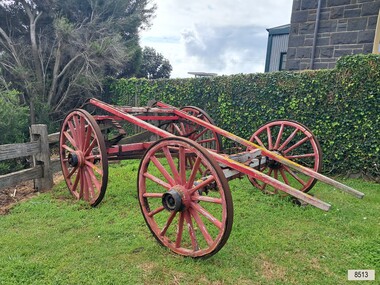
Vehicle - Wagon, Circa 1909
... ...Colac Hospital...Applicants were encouraged to contribute to a collection for the Colac Hospital. Over time, Pooran Singh came to own his own wagon—a top-of-the-range light delivery vehicle—and a horse named Prince. ...Applicants were encouraged to contribute to a collection for the Colac Hospital. Over time, Pooran Singh came to own his own wagon—a top-of-the-range light delivery vehicle—and a horse named Prince. ...This wagon was used in towns across south-west Victoria during the first half of the twentieth century by Pooran Singh, an Indian-born immigrant. Singh arrived in Australia alone in 1899 at the age of 30. The following year, at the Colac Licensing Court in western Victoria, he was one of 78 hawkers granted a Hawker’s Licence. According to the Colac Herald, all but two of the applicants appeared to be Asian. While some hawkers registered horse-drawn carts, Singh was one of nineteen licensed to trade on foot, selling door to door. Applicants were encouraged to contribute to a collection for the Colac Hospital. Over time, Pooran Singh came to own his own wagon—a top-of-the-range light delivery vehicle—and a horse named Prince. His work often took him along rough country roads, and for a period, he worked in the Corryong district of north-eastern Victoria, an area popular with hawkers. In September 1909, near Thowgla, he was thrown from his wagon while attempting to navigate a deep rut and was run over by one of its wheels. Although he suffered bruising to his chest, his injuries were not serious. The following year, he was granted a Hawker’s Licence in Corryong. By 1916, Singh was living and working at Garvoc in western Victoria, where that year, he lost his paper licence on Cooramook Road, and he placed a notice in The Standard. In 1918, at the Warrnambool Petty Sessions Court, he was one of four applicants granted renewal of their hawkers’ licences, and each donated ten shillings to Warrnambool Hospital. Throughout these years, Singh became well known to farmers and their families as he travelled across Victoria’s Western District, living and working from his covered wagon. In his later years, Pooran Singh formed a close friendship with John Jandes Moore and his wife, Vera, of Russells Creek, Warrnambool. They offered him the use of their property as a base for his travels and cared for him during his final illness. John Moore was later appointed one of the two executors of Singh’s will. Pooran Singh died in Warrnambool on 8 June 1947, aged 77. His final wish was to be cremated and for his ashes to be returned to India for immersion in the Ganges. The cremation was arranged by Guyett’s Funerals in Warrnambool. Having never married, Singh left his estate to his four nephews, enabling them to buy land and build homes; one later installed a memorial plaque in his honour. In the late 1980s, Guyett’s Funerals placed his ashes in the niche wall at Warrnambool Cemetery as a memorial, while continuing to hope that family instructions might eventually arrive. Nearly 63 years after his death, renewed enquiries brought public attention to the long and respectful care given to his ashes. As a result, the renowned Indian cricketer Kapil Dev travelled to Warrnambool to collect them and escort them to India, helping to fulfil Singh’s final wish. He was joined by one of Singh’s grand-nephews, Harmel Uppal, who had travelled from England. At a formal ceremony on 25 July 2010 commemorating Singh’s life, the ashes were handed to Dev and Uppal, and local resident Avis Quarrell, who had known Singh as a child, read a poem she had written in his memory. She still owned a shell necklace that Singh had made for her mother. Some Warrnambool locals who had been closely involved also travelled to India, where they joined Uppal’s family from the village of Uppal Bhopa, near Jalandhar. On 31 July 2010, Pooran Singh’s ashes were immersed in the Ganges, fulfilling the wish he had expressed more than six decades earlier. After Pooran Singh’s death, his horse and wagon remained on John Moore’s property. When Prince died, he was buried on the beach at Warrnambool. The wagon remained with the Moore family and was occasionally used as a cubby house. In about 1997, John Moore, the son of John Jandes Moore, donated it to Flagstaff Hill. After restoration, the wagon became an attraction in the village, where volunteer Pat and his Clydesdale horse, Duke, offered visitors rides around Flagstaff Hill’s lake. This wagon is significant for its association with an Indian emigrant who used it to earn an income in Australia. It also reflects the vital role of hawkers, who travelled through rural and regional communities in the late nineteenth and early twentieth centuries, supplying food, goods and news. The wagon is also historically significant as a former Flagstaff Hill attraction, offering visitors the experience of horse-drawn rides around the lake.Wagon: a light delivery vehicle once used as a hawker's wagon. It is a four-wheel, horse-drawn vehicle with iron tyres, brakes, spoked wheels painted red with decorative yellow strips on the hubs, a timber shaft, and springs on the undercarriage. It was once a covered wagon, fitted with green, wooden sideboards, a front seat with leather-padded backrest and mounting steps. The late-19th to early-20th-century wagon was once owned by Pooran Singh, a local Indian hawker. flagstaff hill, warrnambool, maritime village, maritime museum, flagstaff hill maritime museum and village, shipwreck coast, great ocean road, southwest victoria, northwest victoria, western district, colac, colac hospital, colac licensing court, thowgla, corryong, garvoc, cooramook road, warrnambool petty sessions court, warrnambool hospital, russells creek road, ganges, warrnambool cemetery, uppal bhopa, jalandhar, hawker’s licence, covered wagon, wagon, hawker's wagon, horse-drawn cart, hawker's cart, light delivery vehicle, hawker, travelling salesman, travelling hawker, door-to-door sales, rural salesman, rural commerce, prince, duke, clydesdale horse, 1997, pooran singh, indian immigrant, pat, john james moore, vera moore, john and vera moore, john moore, guyatt’s funerals, kapil dev, harmel uppal, avis quarrell -
![Brown wooden frame containing a hand-coloured photograph portrait of nurse Matron [Jean Matilda?] Stanbury, wearing a white wimple and red woolen cape.](/media/collectors/64a5077bc83bd7b7b94f4211/items/67c6431b00769cfc6ba18a98/item-media/67c6563700769cfc6ba6f4d4/item-fit-380x285.jpg?cb=6) Returned Nurses RSL Sub-branch
Returned Nurses RSL Sub-branchPhotograph - Framed photograph, [unknown], [Circa WWI]
... Portraiture from WW1, Nursing "Coloured photograph of Matron Stanbury, Jean in oval brown frame. Trained Colac Hospital, Matron Bundoora, Died August 1954, Photo donated by Jean Wilks (Marendaz) Geelong. ...Portraiture from WW1, Nursing "Coloured photograph of Matron Stanbury, Jean in oval brown frame. Trained Colac Hospital, Matron Bundoora, Died August 1954, Photo donated by Jean Wilks (Marendaz) Geelong. ...Portraiture from WW1, Nursing "Coloured photograph of Matron Stanbury, Jean in oval brown frame. Trained Colac Hospital, Matron Bundoora, Died August 1954, Photo donated by Jean Wilks (Marendaz) Geelong. AANS WWI, Matrons, Stanbury, Jean. Photograph on heater shelf in Nurses Rooms. Anzac House." [Former catalogued description, entry P45]Hand-coloured photography, Portraiture, Photography, PrintFramed, printed photograph of portrait painting, subject is Matron [Jean Matilda?] Stanbury, Australian Army Nursing Service (AANS), World War 1 [Former identification number and information on the back, glass marked with tape on front, some wear & tear on frame, hinge is missing from the back, backing nailed to frame, one nail head missing]aans, ww1, world war one, world war i, world war 1, jean stanbury -
 Bendigo Military Museum
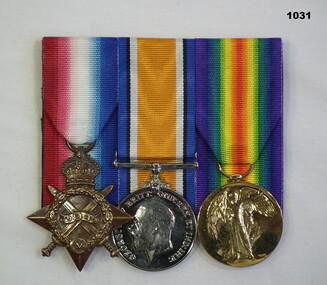
Award - MEDAL SET WW1, Post post 1919
... George Henry Edwards (Born Melbourne, enlisted Colac) No 1288 enlisted on 15.10.1914 aged 23 years in the 14th Batt AIF. He embarked for Eygpt on 22.12.1914, embarked for Gallipoli 12.4.15. Hospital...George Henry Edwards (Born Melbourne, enlisted Colac) No 1288 enlisted on 15.10.1914 aged 23 years in the 14th Batt AIF. He embarked for Eygpt on 22.12.1914, embarked for Gallipoli 12.4.15. Hospital ...George Henry Edwards (Born Melbourne, enlisted Colac) No 1288 enlisted on 15.10.1914 aged 23 years in the 14th Batt AIF. He embarked for Eygpt on 22.12.1914, embarked for Gallipoli 12.4.15. Hospital 27.8.15 with Diarrehoea, promoted Corporal 10.9.15, hospital 26.9.15 with Pluerisy, hospital 1.12.15 with chest injury, sprained back 12.12.15, embarked for Australia 13.12.15 for discharge. Discharged from the AIF medically unfit 25.7.16.Medal set, court mounted, set of (3) re G.H Edwards. 1. 1914-15 Star. 2. War medal 1914-18. Replica not engraved. 3. Victory medal 1914 — 1919. Replica not engraved."1288. PTE G.H.EDWARDS. 14/BN A.I.F. "medals, military, history -
 Bendigo Military Museum
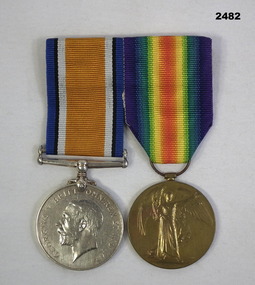
Award - MEDAL SET WW1, Post 1919
... Stephen Spokes (born Colac, enlisted Melbourne) No 3870 enlisted on 16.6.16 in 9th reinforcements 29th Batt aged 43years 9 months. Embarked for England 19.9.16, embark for France 16.1.17, hospital 30.3.17 with Chronic Rhuematism, returned to Australia 22.7.17 classed with Rhuematism and Flat feet for home service. ...Stephen Spokes (born Colac, enlisted Melbourne) No 3870 enlisted on 16.6.16 in 9th reinforcements 29th Batt aged 43years 9 months. Embarked for England 19.9.16, embark for France 16.1.17, hospital 30.3.17 with Chronic Rhuematism, returned to Australia 22.7.17 classed with Rhuematism and Flat feet for home service. ...Stephen Spokes (born Colac, enlisted Melbourne) No 3870 enlisted on 16.6.16 in 9th reinforcements 29th Batt aged 43years 9 months. Embarked for England 19.9.16, embark for France 16.1.17, hospital 30.3.17 with Chronic Rhuematism, returned to Australia 22.7.17 classed with Rhuematism and Flat feet for home service. Discharged from the AIF on 2.11.17.Medals, brass plate mounted, set (2) re S Spokes. 1. War Medal 1914.18 2. Victory Medal 1914. - 1919"3870 Pte S Spokes 29 BN A.I.F"medals, military, history -
 Colac RSL Sub Branch
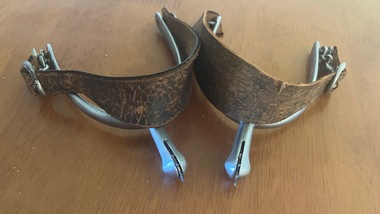
Memorabilia (item), THOMAS YATES
... THOMAS YATES SERVICE NO 253 DATE OF BIRTH 4/7/1874 PLACE OF BIRTH COLAC VICTORIA DATE OF ENLISTEMENT PLACE OF ENLISTMENT WARRION VICTORIA NEXT OF KIN WILLIAM YATES FARTHER MARCELLA YATES DATE DISCHARGED DIED BEFORE HE WAS DISCHARGED RANK PRIVATE WITH THE VICTORIAN IMPERIAL BUSHMEN REGIMENT DATE OF DEATH 17/7/1901 THOMAS AN THREE OF HIS MATES ALL JOINED THE VICTORIAN IMPERIAL BUSHMENS REGIMENT TO GO TO THE BOAR WAR 1899 THEY ALL WENT TO SOUTH AFRICA WHERE EDGAR QUARTUS ROBERTSON NOEL LEONARD CALVERT AN ARTHUR EDWARD MURPHY WHERE ALL KILLED IN ACTION THOMAS SURVICED THROUGH THE WAR THOMAS RETURNED TO MELBOURNE ON 12th JULY 1901 AN DIED IN A MELBOURNE HOSPITAL ON 17 JULY 1901 NILL A PAIR OF MENS HORSE RIDING SPURS THOMAS YATES Memorabilia ...THOMAS YATES SERVICE NO 253 DATE OF BIRTH 4/7/1874 PLACE OF BIRTH COLAC VICTORIA DATE OF ENLISTEMENT PLACE OF ENLISTMENT WARRION VICTORIA NEXT OF KIN WILLIAM YATES FARTHER MARCELLA YATES DATE DISCHARGED DIED BEFORE HE WAS DISCHARGED RANK PRIVATE WITH THE VICTORIAN IMPERIAL BUSHMEN REGIMENT DATE OF DEATH 17/7/1901 THOMAS AN THREE OF HIS MATES ALL JOINED THE VICTORIAN IMPERIAL BUSHMENS REGIMENT TO GO TO THE BOAR WAR 1899 THEY ALL WENT TO SOUTH AFRICA WHERE EDGAR QUARTUS ROBERTSON NOEL LEONARD CALVERT AN ARTHUR EDWARD MURPHY WHERE ALL KILLED IN ACTION THOMAS SURVICED THROUGH THE WAR THOMAS RETURNED TO MELBOURNE ON 12th JULY 1901 AN DIED IN A MELBOURNE HOSPITAL ON 17 JULY 1901 NILL -
 Uniting Church Archives - Synod of Victoria
Photograph, Undated c.1960
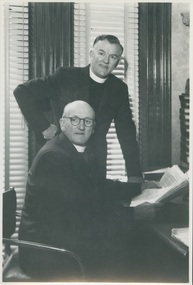
... Colac (Elliminyt). Ordained in 1958 and served 7 years as Secretary of the Home Missions Department (1957 - 1864), 6 years as Chaplain of the Royal Melbourne and Royal Children's Hospitals (1964 - 1970) and 7 years in the Footscray Yarraville Circuit (1970 - 1977. ...Colac (Elliminyt). Ordained in 1958 and served 7 years as Secretary of the Home Missions Department (1957 - 1864), 6 years as Chaplain of the Royal Melbourne and Royal Children's Hospitals (1964 - 1970) and 7 years in the Footscray Yarraville Circuit (1970 - 1977. ...Rev Alec Pederick (1902 - 1972). Trained at Queen's College. Commenced his ministry at Zeehan, Tasmania in 1927. In 1929 he went to Rabaul P.N.G. and to Piniqidu in 1931. Returning to Australia in 1933 was appointed to Beaufort Circuit and then to the Methodist Home Missions Department. Served as a Chaplain in the A.I.F 1942 - 1944. After discharge from the army Rev. Pederick resumed working with Home Missions, becoming General Superintendent and residing at “Otira”, the Home Mission Training College in Kew, at which he was also principal. President of Conference in 1955. Died 19 August 1972. Rev Andrew J. Pearce (1912 - 1986) Entered the Salvation Army Training College in 1934. Joined the United Aborigines Mission and served 2 years in Oolea and 10 years in Finnis Spring. Returned to Victoria in 1950 and was appointed by the Methodist Church as a Home Missionary at Lancefield. Accepted as a candidate for the ministry in 1952 and appointed Probationary Minister to Colac (Elliminyt). Ordained in 1958 and served 7 years as Secretary of the Home Missions Department (1957 - 1864), 6 years as Chaplain of the Royal Melbourne and Royal Children's Hospitals (1964 - 1970) and 7 years in the Footscray Yarraville Circuit (1970 - 1977. Retired in 1977. B & W photograph of the Revs. Alec W. Pederick (seated) and Andrew J. Pearce (standing) in the office of Otira Home Missionary Training College.alec pederick, methodist, minister, home missions, overseas missions, chaplain a.i.f., otira, president of conference, andrew pearce, salvation army, united aborigines mission, methodist, minister, home missionary, secretary home missions department, chaplain royal melbourne hospital, royal children's hospital -
 Uniting Church Archives - Synod of Victoria
Photograph, Undated c.1960
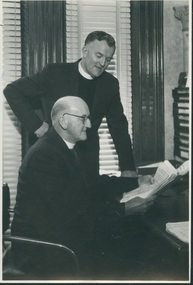
... Colac (Elliminyt). Ordained in 1958 and served 7 years as Secretary of the Home Missions Department (1957 - 1864), 6 years as Chaplain of the Royal Melbourne and Royal Children's Hospitals (1964 - 1970) and 7 years in the Footscray Yarraville Circuit (1970 - 1977. ...Colac (Elliminyt). Ordained in 1958 and served 7 years as Secretary of the Home Missions Department (1957 - 1864), 6 years as Chaplain of the Royal Melbourne and Royal Children's Hospitals (1964 - 1970) and 7 years in the Footscray Yarraville Circuit (1970 - 1977. ...Rev Alec Pederick (1902 - 1972). Trained at Queen's College. Commenced his ministry at Zeehan, Tasmania in 1927. In 1929 he went to Rabaul P.N.G. and to Piniqidu in 1931. Returning to Australia in 1933 was appointed to Beaufort Circuit and then to the Methodist Home Missions Department. Served as a Chaplain in the A.I.F 1942 - 1944. After discharge from the army Rev. Pederick resumed working with Home Missions, becoming General Superintendent and residing at “Otira”, the Home Mission Training College in Kew, at which he was also principal. President of Conference in 1955. Died 19 August 1972. Rev Andrew J. Pearce (1912 - 1986) Entered the Salvation Army Training College in 1934. Joined the United Aborigines Mission and served 2 years in Oolea and 10 years in Finnis Spring. Returned to Victoria in 1950 and was appointed by the Methodist Church as a Home Missionary at Lancefield. Accepted as a candidate for the ministry in 1952 and appointed Probationary Minister to Colac (Elliminyt). Ordained in 1958 and served 7 years as Secretary of the Home Missions Department (1957 - 1864), 6 years as Chaplain of the Royal Melbourne and Royal Children's Hospitals (1964 - 1970) and 7 years in the Footscray Yarraville Circuit (1970 - 1977. Retired in 1977. B & W photograph of the Revs. Alec W. Pederick (seated) and Andrew J. Pearce (standing) in the office of Otira Home Missionary Training College.alec pederick, methodist, minister, home missions, overseas missions, chaplain a.i.f., otira, president of conference, andrew pearce, salvation army, united aborigines mission, methodist, minister, home missionary, secretary home missions department, chaplain royal melbourne hospital, royal children's hospital -
 Department of Health and Human Services
Photograph, Martin Unit opened in 1978 as the Hospital
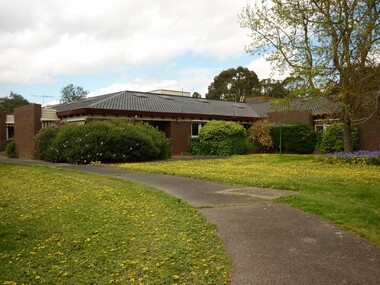
... The Colac, Victoria-based Colanda Centre was one of the last Victorian institutions and offered disability accommodation from 1976, when it was established, until 2019, with its closure. colanda colac disability services residential services disability digitised photograph Martin Unit was originally built as a hospital. ...The Colac, Victoria-based Colanda Centre was one of the last Victorian institutions and offered disability accommodation from 1976, when it was established, until 2019, with its closure.colanda, colac, disability services, residential services, disability, digitised photograph -
 Department of Health and Human Services
Photograph, Berry Street Kindergarten
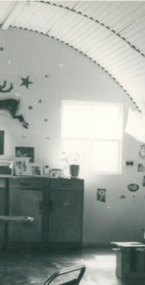
... hospital, and had started providing child and family care, including residential care. In 1977 Berry Street to established a family group home in Richmond to house children affected by the closure of St Cuthbert's Children's Home in Colac. ...hospital, and had started providing child and family care, including residential care. In 1977 Berry Street to established a family group home in Richmond to house children affected by the closure of St Cuthbert's Children's Home in Colac. ...In 1877 the Victorian Infant Asylum was founded in Kew. In 1881, the asylum relocated to Berry Street in East Melbourne. By 1908, it was called the Foundling Hospital and Infants Home. It was non-denominational and controlled by a committee of management. By 1956, Berry Street consisted of a Mothercraft Training Centre and two main residential units: Berry Street for infants aged zero to 18 months, and Vale Street for toddlers aged zero to two years old. In August 1956, Berry Street was declared an approved category 2 Children's Home. In 1960, Vale Street was converted to an adult nursing home. In 1964, the name was changed to Berry Street Babies Home and Hospital. Berry Street was also an approved adoption agency. By 1968, Berry Street comprised the Training School for Mothercraft Nurses, the adoption agency, an infant life-protection house, a long-stay home for children to three years of age (the toddlers’ wing) and a small house for unmarried mothers. The home's infant life-protection work was seen as a critical agency function, particularly where family illness was putting pressure on mothers and Berry Street was able to provide respite and support. By the late 1960s, 30–40 adoptions annually were being arranged from Berry Street. By 1974 the home's orientation had shifted. Four family group homes had been established (two in Burwood, one in Ashburton and one in St Kilda), the mothercraft training function had been phased out, the toddlers wing converted to day care, and the main building (containing the nursery, administration, kitchen, dining room and single mothers accommodation) was demolished in favour of four home units, which housed 24 children, supervised by cottage parents. Berry Street provided short term, emergency and residential care for 'protection of infant' cases and state wards. Two flats were also established for short-term family accommodation. The nurses’ home was converted to house the home’s administration function and a social work service. The social work service coordinated family aid and family counselling services, and a neighbourhood house. In 1975 Berry Street also provided short-term care for 42 Vietnamese children brought to Australia in the official government-sponsored airlift. In 1976 Berry Street made application to change its category 2 Children's Home classification to category 1, as it was now catering for a wider range of children. It had ceased to be a babies’ home and hospital, and had started providing child and family care, including residential care. In 1977 Berry Street to established a family group home in Richmond to house children affected by the closure of St Cuthbert's Children's Home in Colac. Berry Street changed its name to Berry Street Child and Family Care in 1977. In 1978, the range of services provided by Berry Street Child and Family Care consisted of a social work counselling service, a financial aide, a family aide program using volunteers, two temporary accommodation units each housing eight children, an information and referral service, a neighbourhood house in Richmond, a day care centre for 36 children, and four family group homes. In 1980–81 the family group homes in Burwood were sold and the resources moved to the Richmond area. In 1994, Sutherland Youth and Family Services Inc. amalgamated into Berry Street Inc. During the 1990s, Berry Street combined with the Sutherland Community Resource Centre in Watsonia in Melbourne’s northern region. The agency operates today as Berry Street Victoria and has service centres across metropolitan and country Victoria. https://www.findingrecords.dhhs.vic.gov.au/CollectionResultsPage/BerryStreet -
 Wodonga & District Historical Society Inc
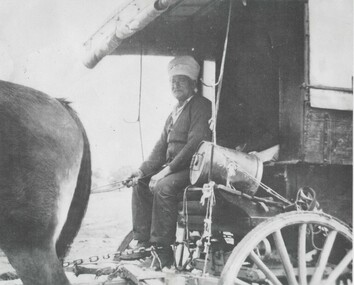
Photograph - Sikh Hawkers in Wodonga
... Colac reserve near Corryong and had on board his compatriot Isar Singh. He often acted as an intermediary between the individual hawkers and the authorities. Unfortunately, it was Pola’s habit to walk in front of his wagon at the start of each day. On the morning of 23 June 1923 his horses were restive and hard to control. They took flight and ran Pola down on the road near Cudgewa. He was rushed to the Corryong Hospital...Colac reserve near Corryong and had on board his compatriot Isar Singh. He often acted as an intermediary between the individual hawkers and the authorities. Unfortunately, it was Pola’s habit to walk in front of his wagon at the start of each day. On the morning of 23 June 1923 his horses were restive and hard to control. They took flight and ran Pola down on the road near Cudgewa. He was rushed to the Corryong Hospital ...Sikh hawkers were a regular sight throughout the Wodonga and Upper Murray district in the early 20th century. The regular visitors to the area included Pola Singh and Gambil (Gamble) Singh. Gamble Singh often camped on McKoy’s Moorefield property in West Wodonga and several other places around the district. Gamble was also a horse breeder and had several draught horses to pull his wagon. Like many of the hawkers he worked hard to send money back to support family in India. He apparently returned to India about 1950, but left some money in the Bank of NSW in Wodonga in case he returned. He allegedly died soon after and the money was eventually able to be claimed by his nephews in India. A small overlooked park in Wodonga is named the “Gamble Singh Park” in his memory. J. Flanagan who operated the Halfway Hotel commented on having as many as seven or eight bullock teams “yoked” overnight to the fence outside the hotel as well as 100 or more Indian hawkers – led by the fondly known Pola (Pollah) Singh. The hawkers returned to Wodonga annually to renew their hawkers’ license and camped on the flats, or also came to Wodonga to collect orders at the railway station to stock up their supplies. Pola Singh was often based at the Colac Colac reserve near Corryong and had on board his compatriot Isar Singh. He often acted as an intermediary between the individual hawkers and the authorities. Unfortunately, it was Pola’s habit to walk in front of his wagon at the start of each day. On the morning of 23 June 1923 his horses were restive and hard to control. They took flight and ran Pola down on the road near Cudgewa. He was rushed to the Corryong Hospital but died there a few days later, aged 65. Pola was cremated, with some of his ashes scattered in the Murray River and some returned to his homeland to be scattered in the Ganges River. His cremation was listed in the Obituary page of the Weekly Times, Melbourne on Saturday 14 July 1923. A small memorial to Pola Singh is located in the Corryong Cemetery.These images are significant because they help to document the history of the Sikh Hawkers who plied their services to Wodonga and throughout rural Australia in the late 19th and early 20th centuries.A collection of black and white images featuring Sikh Hawkers Gamble Singh and Pola Singh take in the Wodonga area.indian hawkers, sikh hawkers, gamble singh, pola singh
