
Showing 16 items matching "commercial heart"
-
 Kew Historical Society Inc
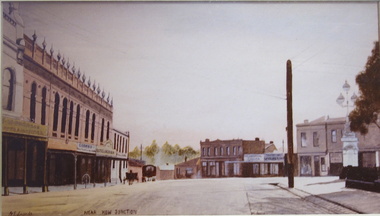
Painting, Jenny Edmonds, The Commercial Heart of Kew, 1982
... The Commercial Heart of Kew...Framed oil painting on board of the 'Commercial Heart of Kew', copied and painted from an early postcard published 1905....Labels on reverse: "THE COMMERCIAL HEART OF KEW / COPIED AND PAINTED FROM AN EARLY POST CARD PUBLISHED 1905 / RESEARCHED AND DONATED BY MR LAWRIE KOELMEYER APRIL 1982 TO KEW HISTORICAL SOCIETY." ...The Commercial Heart of Kew Painting Painting Jenny Edmonds ...Newspaper article glued to backing board: HERITAGE WEEK - HISTORICAL PHOTO COLLECTION The launch Heritage Week (April 8-15 [1984]), the Kew Historical Society has arranged the display of large colour photographs (the Koelmeyer-Edmonds Collection) of early suburban Melbourne Street scenes. This important collection may be viewed during Heritage Week at the City of Kew Library, Charles Street, Kew. Laurie Koelmeyer, a collector old and rare photographs, commissioned Jenny Edmonds, a noted local artist, to paint scenes such as Kew Junction, Auburn Village and the Hawthorn Railway Station in historical detail from old photographs. The paintings were then colour photographed for the heritage Week display. Kew residents will see twenty photos in all at the Kew Library. We should feel honoured that our suburb has been chosen for this display. The Koelmayer-Edmonds team was invited to launch the public exhibition in Kew at the instigation of the Historical Society and its President, Rae Brunette, who are to be congratulated for their efforts in arranging this special collection. The State Bank has indicated its support for the photographic display. Later it is proposed that the completed paintings will be exhibited at the Head Office of the Bank to coincide with Victoria’s 150th Anniversary celebrations. The display at the Kew Library is a significant honour for our City and is one which you should not miss. The Kew Historical Society can be contacted on ’80 3657.”Framed oil painting on board of the 'Commercial Heart of Kew', copied and painted from an early postcard published 1905.Labels on reverse: "THE COMMERCIAL HEART OF KEW / COPIED AND PAINTED FROM AN EARLY POST CARD PUBLISHED 1905 / RESEARCHED AND DONATED BY MR LAWRIE KOELMEYER APRIL 1982 TO KEW HISTORICAL SOCIETY." "SMALLER COPY OF THE KEW HISTORICAL PHOT0 DISPLAYED IN THE KEW LIBRARY."jenny edmonds, cotham road -- kew (vic.), lawrie koelmeyer -
 Melbourne Tram Museum
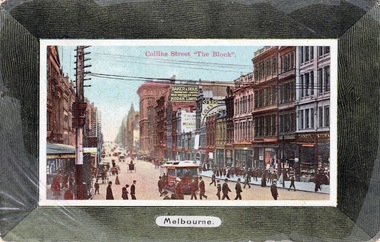
Postcard - Collins Street 'The Block', 'Ward, Lock & Co Ltd', 1910s
... ...commercial heart...From the early years, this was the commercial heart of Melbourne, where the well-off promenaded (walked) to see and be seen by other notable people and where before cable trams the network of horse omnibuses drove in a loop to collect passenger. ...From the early years, this was the commercial heart of Melbourne, where the well-off promenaded (walked) to see and be seen by other notable people and where before cable trams the network of horse omnibuses drove in a loop to collect passenger. ...Postcard shows cable trams and many pedestrians in Collins St. 'The Block' described the buildings and footpaths in the area bounded by Collins St, Elizabeth St, Bourke St and Swanston St. From the early years, this was the commercial heart of Melbourne, where the well-off promenaded (walked) to see and be seen by other notable people and where before cable trams the network of horse omnibuses drove in a loop to collect passenger. Before the telephone, postcards were often used to send brief personal or business messages to others in Melbourne or further afield. There were eleven postal deliveries each week (two on weekdays, one on Saturdays) and postcards were cheaper than telegrams.Yields information about Collins St, The Block and the use of postcards for short messages.Coloured postcard with title on front and detailed personal message, delivery address but no stamp on rear.On front 'Collins Street The Block' and 'Melbourne'. On rear is a long hand written personal message written in ink, postcard markings and 'Ward, Lock & Co Ltd'.cable trams, pedestrians, collins st, the block, commercial heart, promenade, horse omnibuses -
 Kew Historical Society Inc
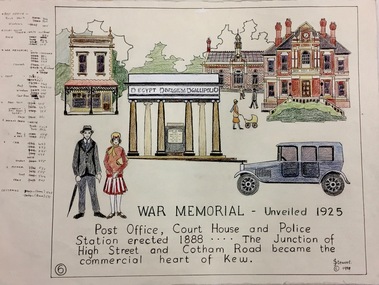
Work on paper, Joy Stewart, 6. War Memorial: Unveiled 1925, 1988
... The Junction of High Street and Cotham Road became the commercial heart of Kew." Signed by the artist "(c) JStewart, 1988"...The Junction of High Street and Cotham Road became the commercial heart of Kew." Signed by the artist "(c) JStewart, 1988" 6. ...Kew Tapestry The eight panels depict the history of Kew. This was a 1988 Australian Bi-Centennial Project carried out under the auspices of City of Kew Council and the Kew Historical Society Incorporated. Nearly 600 citizens including many children participated in the production by adding a few or more stitches. A book records their names and the panels upon which they worked. Artist: Joy Stewart Co-ordinator: Dorothy BenyeiSydney Joy (Joy) Stewart was born in Melbourne 1925. She studied at Swinburne Technical College Art School from 1941-1945, then the National Gallery Art School 1946-1948. Her career included employment positions as a display artist, designer/painter, gallery assistant, and art teacher. Joy relocated to Cairns in 1981. Solo exhibitions in Melbourne and Cairns, including 'Done By Me' at Cairns Regional Gallery in 1999. Group exhibitions at Cairns Regional Gallery, 'The Fish John West Regrets, 1993' and 'Facets of Life' 1994. Joy Stewart died in Cairns in 2018.6. War Memorial: Unveiled 1925. A Handcoloured cartoon created by the artist Joy Stewart as a template for the sixth of a series of embroidered panels depicting the history of Kew. Wool colour codes at left. Inscription: "WAR MEMORIAL: Unveiled 1925. Post Office, Court House and Police Station erected 1888. ... The Junction of High Street and Cotham Road became the commercial heart of Kew." Signed by the artist "(c) JStewart, 1988"bicentennial project (kew), joy stewart, wwi, kew war memorial -
 Sunshine and District Historical Society Incorporated
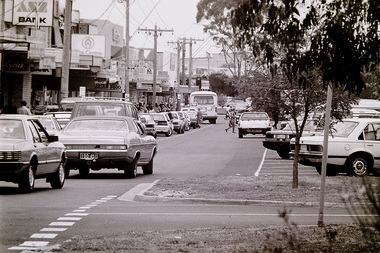
Photograph - Alfrieda Street St. Albans 1990 Photographs, Sharon Cavanagh, 23rd October 1990
... Alfrieda Street is the civic and commercial heart of St Albans, shaped by its unique 19th‑century street pattern, its role as the suburb’s main shopping strip, and its function as the key connector between the station, schools, and community facilities. ...Alfrieda Street is the civic and commercial heart of St Albans, shaped by its unique 19th‑century street pattern, its role as the suburb’s main shopping strip, and its function as the key connector between the station, schools, and community facilities. ...Alfrieda Street is the civic and commercial heart of St Albans, shaped by its unique 19th‑century street pattern, its role as the suburb’s main shopping strip, and its function as the key connector between the station, schools, and community facilities. These photographs, taken by The Advocate in 1990, were published in response to a campaign by St Albans traders who were concerned about growing traffic congestion in the centre of St Albans and the resulting loss of business to competing shopping centres such as Deer Park, Keilor Downs, and even Highpoint City.Alfrieda Street is widely recognised as one of Melbourne’s major Vietnamese precincts. Typical businesses include: Vietnamese restaurants (pho, bún bò Huế, cơm tấm, bún thịt nướng), Bakeries (bánh mì, pâtisserie‑style sweets), Bubble tea shops, Asian grocers specialising in Vietnamese ingredients, Butchers and seafood shops catering to Vietnamese cooking, Hair and beauty salons, and Vietnamese cafés and dessert shopsShop Owners St. Albans Alfrieda St 473.3alfrieda street, st. albans -
 Mission to Seafarers Victoria
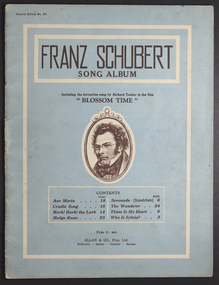
Booklet - Music Score, Franz Schubert Song Album, c. 1950
... Heart / Who is Sylvia ?/ Price 2/- / Allan and Co Prop. Ltd / Melbourne. Sydney. Adelaide. Bendigo. BACK COVER song and music excerpts advertise another Allan publication: AUSTRALIAN ABORIGINAL SONGS / Collected by Dr H. O. Lethbridge / accompaniements arranged by Arthur S. Loam / (introduction note) Commercially ...Commercially printed Song book with blue cover featuring small portrait of composer. Contains words and music scores for 8 songs by Franz Schubert.non-fictionmusic, sheet-music, entertainment, indigenous songs, songs, franz schubert, allan and co music -
 Marysville & District Historical Society
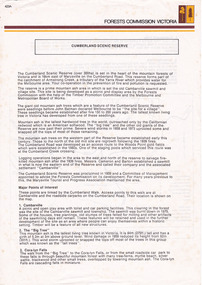
Flyer (item) - Information Flyer, Forests Commission, Victoria, Cumberland Scenic Reserve, 1918-1983
... The Commission was responsible for ″forest policy, prevention and suppression of bushfires, issuing leases and licences, planting and thinning of forests, the development of plantations, reforestation, nurseries, forestry education, the development of commercial timber harvesting and marketing of produce, building and maintaining forest roads, provision of recreation facilities, protection of water, soils and wildlife, forest research and making recommendations on the acquisition or alienation of land for forest purposes″. The Cumberland Scenic Reserve is set in the heart...The Commission was responsible for ″forest policy, prevention and suppression of bushfires, issuing leases and licences, planting and thinning of forests, the development of plantations, reforestation, nurseries, forestry education, the development of commercial timber harvesting and marketing of produce, building and maintaining forest roads, provision of recreation facilities, protection of water, soils and wildlife, forest research and making recommendations on the acquisition or alienation of land for forest purposes″. The Cumberland Scenic Reserve is set in the heart ...An information flyer that was produced as a guide to the Cumberland Scenic Reserve by the Forests Commission of Victoria. The Forests Commission Victoria (FCV) was the main government authority responsible for management and protection of State forests in Victoria, Australia between 1918 and 1983. The Commission was responsible for ″forest policy, prevention and suppression of bushfires, issuing leases and licences, planting and thinning of forests, the development of plantations, reforestation, nurseries, forestry education, the development of commercial timber harvesting and marketing of produce, building and maintaining forest roads, provision of recreation facilities, protection of water, soils and wildlife, forest research and making recommendations on the acquisition or alienation of land for forest purposes″. The Cumberland Scenic Reserve is set in the heart of the mountain forests of Victoria and is 16km east of Marysville on the Cumberland Road. This reserve forms part of the catchment of Armstrong Creek, a tributary of the Yarra River which provides water for the Melbourne area. The reserve is a prime mountain ash area in which is set the old Cambarville sawmill and village site.An information flyer that was produced as a guide to the Cumberland Scenic Reserve by the Forests Commission of Victoria. 423Aforests commission victoria, cumberland scenic reserve, marysville, victoria, cambarville, the big tree, cora-lyn falls, barton's lookout, cumberland falls, sovereign view, armstrong creek, yarra river, mountain ash -
 Flagstaff Hill Maritime Museum and Village
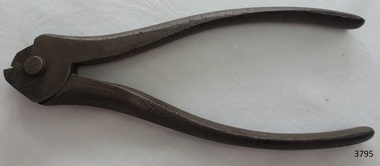
Tool - Pliers, Early 20th Century
... Commercial Street. In 1892 they were incorporated as a Limited Company and by 1914 were known as the manufacturers of hand tools for all trades, iron and steel stampers, die sinker, and in the process of press working in sheet and metal for various items. The company around this time employed 200 people and the directors of the company in 1914 were W. H. Wynn, H. S. Wynn, W. L. Wynn. In 1929 they were producing tools under the heart...Commercial Street. In 1892 they were incorporated as a Limited Company and by 1914 were known as the manufacturers of hand tools for all trades, iron and steel stampers, die sinker, and in the process of press working in sheet and metal for various items. The company around this time employed 200 people and the directors of the company in 1914 were W. H. Wynn, H. S. Wynn, W. L. Wynn. In 1929 they were producing tools under the heart ...In 1887 the long established steel toy business of Richard Timmins and Sons of Pershore Street Birmingham was sold to W C Wynn & sons, of Commercial Street Birmingham. They proceeded to extend their works and eventually concentrated on the amalgamation of both businesses under the name of Wynn and Timmins at the one address in Commercial Street. In 1892 they were incorporated as a Limited Company and by 1914 were known as the manufacturers of hand tools for all trades, iron and steel stampers, die sinker, and in the process of press working in sheet and metal for various items. The company around this time employed 200 people and the directors of the company in 1914 were W. H. Wynn, H. S. Wynn, W. L. Wynn. In 1929 they were producing tools under the heart brand until in 1969 the company was taken over by Balfour and Darwins of Sheffield, and the manufacturing facility in Birmingham was closed.An early manufacture of tradesman's tools, from 1900 into the late 1960s the company was a major suppler of tools to various industries and pioneered a number of improvements for individual hand tools for specific industries.Steel snub nosed pliers designed for a specific use unidentified at this time."WYNN & TIMMINS" stamped into the steel handle tools, pliers, metal pliers, wynn & timmins, birmingham manufacturer, tool manufacturer, richard timmins, sheet metal manufactures -
 Orbost & District Historical Society
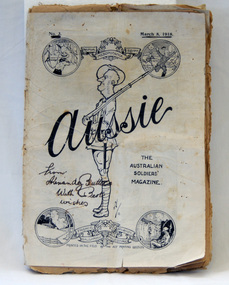
magazine, Aussie, March 18, 1918
... commercial magazine of opinion, review and entertainment. It was edited by Phillip Harris and published in France 1918 - 1919 on a small printing press that Harris brought with him to France. Initially the print run was only 10,000 copies, but soon it reached 60,000 and later 100,000. The magazine celebrated a distinctive 'Aussie' identity through language, humour and imagery. It distributed news, provided light-hearted...commercial magazine of opinion, review and entertainment. It was edited by Phillip Harris and published in France 1918 - 1919 on a small printing press that Harris brought with him to France. Initially the print run was only 10,000 copies, but soon it reached 60,000 and later 100,000. The magazine celebrated a distinctive 'Aussie' identity through language, humour and imagery. It distributed news, provided light-hearted ...Alexander Butters enlisted on 12 November 1914 as a gunner. He was awarded a Meritorious Service medal for his "determination and courage .....setting a splendid example to his men..." on the SOMME. 'Aussie' (1918- circa 1929) was a commercial magazine of opinion, review and entertainment. It was edited by Phillip Harris and published in France 1918 - 1919 on a small printing press that Harris brought with him to France. Initially the print run was only 10,000 copies, but soon it reached 60,000 and later 100,000. The magazine celebrated a distinctive 'Aussie' identity through language, humour and imagery. It distributed news, provided light-hearted ways of seeing the war experience and gave soldiers an outlet to express dissent or dissatisfaction. It also provided a voice for Australian authors such as Banjo Paterson, C.J. Dennis and Bernard O'Dowd. (Ref Museum Victoria)This magazine provides an Australian soldiers' view of the political and world climate during World War I, and also represents the bond between Australian soldiers. The magazine celebrated a distinctive ?Aussie? identity, through language, humour and their assertion of what it meant to be an Australian. It allowed news to be distributed, gave the soldiers an outlet to express any dissent or dissatisfaction, thus preventing any greater form of rebellion and promoted Australian authors like Banjo Paterson, C.J. Dennis and Bernard O'Dowd. (Ref. Museum Victoria)A thin black and white paper magazine called "Aussie". This is Volume 3. The magazine contains stories, illustrations, songs and poetry from the First World War. On the front cover the title is printed across the centre, with a drawing of a soldier in uniform standing sideways, and holding a gun. Four drawings within circles are positioned in each corner, joined by a wreath and ribbons bearing the names of the war fields. His head is in the shape of the map of Australia. On front cover - From Alexandy Butters with best wishesmagazine ww1 aussie military -
 Flagstaff Hill Maritime Museum and Village
Tool - Cooper’s Hollowing /Jigger Knife, William Greaves & Sons, 1823 -1850
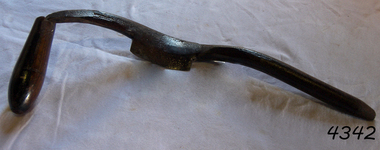
... commercially available. William Greaves's works were situated at the Sheaf Works in the heart of Sheffield, at Maltravers Street, opening in 1823 and was known to be the largest business in this area at this time. ...commercially available. William Greaves's works were situated at the Sheaf Works in the heart of Sheffield, at Maltravers Street, opening in 1823 and was known to be the largest business in this area at this time. ...William Greaves was once a prolific company that highly prospered in the 19th century during the boom of the tool and cutlery trades in Sheffield England as steel became more commercially available. William Greaves's works were situated at the Sheaf Works in the heart of Sheffield, at Maltravers Street, opening in 1823 and was known to be the largest business in this area at this time. The Sheaf Works made a range of tools and saws including cutlery, penknives and razors and also even made its steel in-house. The factory used its perfect position for water power being built on the edge of the Sheffield canal and also used the railway line nearby giving them the perfect opportunities for transporting its goods. The factory itself was also a revolution because it attempted to bring together as many cutlery manufacturing processes as possible together in one place, something that had not been attempted before. The money to build these huge works came from Greaves' trade with America, where they sent razors, table cutlery and sturdy Bowie knives. This allowed the Greaves’ to build the factory and expand their production, which made them even more money. This made William Greaves very rich indeed, and it was reported that when he died in 1830 he left each of his five surviving daughters £30,000 each, an astronomical sum at the time. In today’s money that is approximately £2.3 million. The firm finally dissolved in 1850, but Sheaf Works continued to be used by many cutlery manufacturers until the 1980s. With most of the buildings still standing today.A significant item made by a successful cutlery manufacturer in England during the first half of the 19th century. This company undertook many new processes to streamline cutlery production and introduced innervations regards working with steel that are still in use today. This item is now regarded as a collector's item given the company ceased trading in 1850. jigger/hollowing knife with internal bevel, Electro Boracic Steel. Stamped 3.1/2″ William Greaves, Sheaf Works, Sheffield flagstaff hill, warrnambool, shipwrecked coast, flagstaff hill maritime museum, maritime museum, shipwreck coast, flagstaff hill maritime village, great ocean road, cooper's jigger, howeling knife, wm greaves & sons -
 Bendigo Historical Society Inc.
Book - VISION SPLENDID BENDIGO, 1986
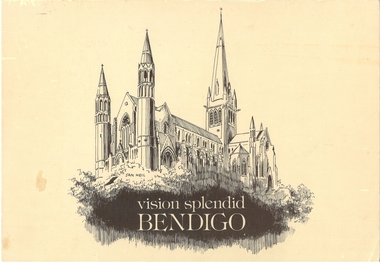
... Vision Splendid Introduction, Wesleyan Church Golden Square, Sacred Heart Cathedral, Central Deborah Mine, Marlborough House, Fuse factory, Goldmines Hotel, Fortuna Villa, Bon Accord, Heinz Butcher Shop, Long Gully State School, California Gully State School, Stone cottage Harvey Town, Eaglehawk Town Hall, Caradon, Eaglehawk State School, Victoria Hotel, Bendigo Pottery, Eucalyptus Distillery, St Luke’s, Lake Weeroona, Joss House, Benevolent Home, Lansellstowe, Kaithness, Malmo Valentine Street, Dudley House, Rifle Brigade Hotel, Fire Station, Masonic Hall, Temperance Hall, Old Post Office, Wesley Church, St. John’s Church, Alexandra Fountain, Commercial...Vision Splendid Introduction, Wesleyan Church Golden Square, Sacred Heart Cathedral, Central Deborah Mine, Marlborough House, Fuse factory, Goldmines Hotel, Fortuna Villa, Bon Accord, Heinz Butcher Shop, Long Gully State School, California Gully State School, Stone cottage Harvey Town, Eaglehawk Town Hall, Caradon, Eaglehawk State School, Victoria Hotel, Bendigo Pottery, Eucalyptus Distillery, St Luke’s, Lake Weeroona, Joss House, Benevolent Home, Lansellstowe, Kaithness, Malmo Valentine Street, Dudley House, Rifle Brigade Hotel, Fire Station, Masonic Hall, Temperance Hall, Old Post Office, Wesley Church, St. John’s Church, Alexandra Fountain, Commercial ...Vision Splendid Bendigo. Cream coloured paper 56 pages, with line drawings of landmark buildings of Bendigo. Drawings by Jan Neil. Vision Splendid Introduction, Wesleyan Church Golden Square, Sacred Heart Cathedral, Central Deborah Mine, Marlborough House, Fuse factory, Goldmines Hotel, Fortuna Villa, Bon Accord, Heinz Butcher Shop, Long Gully State School, California Gully State School, Stone cottage Harvey Town, Eaglehawk Town Hall, Caradon, Eaglehawk State School, Victoria Hotel, Bendigo Pottery, Eucalyptus Distillery, St Luke’s, Lake Weeroona, Joss House, Benevolent Home, Lansellstowe, Kaithness, Malmo Valentine Street, Dudley House, Rifle Brigade Hotel, Fire Station, Masonic Hall, Temperance Hall, Old Post Office, Wesley Church, St. John’s Church, Alexandra Fountain, Commercial Bank View Point, State Bank, St Paul’s Cathedral Railway Station, National Bank, Town Hall, Post Office, Shamrock Hotel, Camp Hill State School, Police Barracks, Law Courts, Specimen Cottage, Technical College, St. Kilian’s Church, Tram Depot, St. Aidan’s OrphanageJan Neilbendigo, buildings, heritage buildings, heritage, heritage buildings, bendigo. -
 Sunshine and District Historical Society Incorporated
Photograph - Sunshine Shopping Centre Hampshire Road Sunshine 1988 Photographs, C. McGee, 16th May 1988
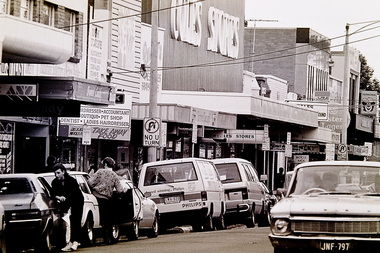
... commercial spine. Key features included: Cafés and milk bars Butchers and grocers Newsagents Timber yards Small specialty shops This period cemented Hampshire Road as Sunshine’s civic heart. 1960s – Renaming and redevelopment The section near the Town Hall (107–117 Hampshire Road) was renamed Sun Crescent in the 1960s, reflecting changes in road layout and civic planning Late 20th century – Modernisation Some older shop rows were demolished or redeveloped into service stations, townhouses, or new commercial buildings. ...commercial spine. Key features included: Cafés and milk bars Butchers and grocers Newsagents Timber yards Small specialty shops This period cemented Hampshire Road as Sunshine’s civic heart. 1960s – Renaming and redevelopment The section near the Town Hall (107–117 Hampshire Road) was renamed Sun Crescent in the 1960s, reflecting changes in road layout and civic planning Late 20th century – Modernisation Some older shop rows were demolished or redeveloped into service stations, townhouses, or new commercial buildings. ...Hampshire Road became Sunshine’s main shopping centre in the early 1900s, expanded rapidly through the 1920s–1930s, flourished as a social hub in the post‑war decades, and remains the suburb’s central commercial strip. Early 1900s – First commercial strip forms The section between 72–98 Hampshire Road began trading in the first part of the 1900s, with early businesses including hairdressers, fruiterers, grocers, confectioners, newsagents, fishmongers, and tobacconists. 1920s–1930s – Rapid expansion of shops Multiple shop rows were built during this period, including: 68–70 Hampshire Road (built 1925) 72–98 Hampshire Road (shops operating by 1926–1930) 107–117 Hampshire Road (shops built 1923–1925) Businesses included grocers, butchers, confectioners, wood yards, dairies, and general stores—typical of a growing working‑class industrial suburb. 1930s–1940s – Social and civic hub emerges The strip became a major meeting place, especially around Homewood’s Café at 107–109 Hampshire Road, famous for its jukebox and proximity to the Sunshine Theatre, Town Hall, and Masonic Hall. It was a magnet for teenagers, servicemen, and families. Post‑war era – Consolidation as Sunshine’s main centre After WWII, Hampshire Road remained the suburb’s busiest commercial spine. Key features included: Cafés and milk bars Butchers and grocers Newsagents Timber yards Small specialty shops This period cemented Hampshire Road as Sunshine’s civic heart. 1960s – Renaming and redevelopment The section near the Town Hall (107–117 Hampshire Road) was renamed Sun Crescent in the 1960s, reflecting changes in road layout and civic planning Late 20th century – Modernisation Some older shop rows were demolished or redeveloped into service stations, townhouses, or new commercial buildings. Examples include: Demolition of the shop at 72 Hampshire Road (formerly Ted Whitten’s Foodland) Redevelopment of timber yards into townhouse complexes 2000s–present – Contemporary Sunshine CBD Hampshire Road continues as the primary retail and civic axis of Sunshine, hosting: Restaurants and cafés Grocers and specialty stores Medical clinics Banks and services Civic buildings and public spaces It remains the anchor of Sunshine’s designated Major Activity Centre.Sunshine Shopping Centre Hampshire Road 497.2sunshine shopping centre, hampshire road, sunshine -
 Sunshine and District Historical Society Incorporated
Photograph - Sunshine Shopping Centre Hampshire Road Sunshine 1990 Photographs, Adam Ellwood, 14th November 1990
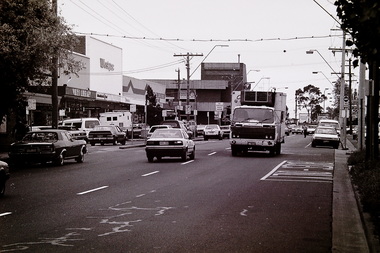
... commercial spine. Key features included: Cafés and milk bars Butchers and grocers Newsagents Timber yards Small specialty shops This period cemented Hampshire Road as Sunshine’s civic heart. 1960s – Renaming and redevelopment The section near the Town Hall (107–117 Hampshire Road) was renamed Sun Crescent in the 1960s, reflecting changes in road layout and civic planning Late 20th century – Modernisation Some older shop rows were demolished or redeveloped into service stations, townhouses, or new commercial buildings. ...commercial spine. Key features included: Cafés and milk bars Butchers and grocers Newsagents Timber yards Small specialty shops This period cemented Hampshire Road as Sunshine’s civic heart. 1960s – Renaming and redevelopment The section near the Town Hall (107–117 Hampshire Road) was renamed Sun Crescent in the 1960s, reflecting changes in road layout and civic planning Late 20th century – Modernisation Some older shop rows were demolished or redeveloped into service stations, townhouses, or new commercial buildings. ...Hampshire Road became Sunshine’s main shopping centre in the early 1900s, expanded rapidly through the 1920s–1930s, flourished as a social hub in the post‑war decades, and remains the suburb’s central commercial strip. Early 1900s – First commercial strip forms The section between 72–98 Hampshire Road began trading in the first part of the 1900s, with early businesses including hairdressers, fruiterers, grocers, confectioners, newsagents, fishmongers, and tobacconists. 1920s–1930s – Rapid expansion of shops Multiple shop rows were built during this period, including: 68–70 Hampshire Road (built 1925) 72–98 Hampshire Road (shops operating by 1926–1930) 107–117 Hampshire Road (shops built 1923–1925) Businesses included grocers, butchers, confectioners, wood yards, dairies, and general stores—typical of a growing working‑class industrial suburb. 1930s–1940s – Social and civic hub emerges The strip became a major meeting place, especially around Homewood’s Café at 107–109 Hampshire Road, famous for its jukebox and proximity to the Sunshine Theatre, Town Hall, and Masonic Hall. It was a magnet for teenagers, servicemen, and families. Post‑war era – Consolidation as Sunshine’s main centre After WWII, Hampshire Road remained the suburb’s busiest commercial spine. Key features included: Cafés and milk bars Butchers and grocers Newsagents Timber yards Small specialty shops This period cemented Hampshire Road as Sunshine’s civic heart. 1960s – Renaming and redevelopment The section near the Town Hall (107–117 Hampshire Road) was renamed Sun Crescent in the 1960s, reflecting changes in road layout and civic planning Late 20th century – Modernisation Some older shop rows were demolished or redeveloped into service stations, townhouses, or new commercial buildings. Examples include: Demolition of the shop at 72 Hampshire Road (formerly Ted Whitten’s Foodland) Redevelopment of timber yards into townhouse complexes 2000s–present – Contemporary Sunshine CBD Hampshire Road continues as the primary retail and civic axis of Sunshine, hosting: Restaurants and cafés Grocers and specialty stores Medical clinics Banks and services Civic buildings and public spaces It remains the anchor of Sunshine’s designated Major Activity Centre.These photographs show the section of Hampshire Road between Devonshire Road and Service Street.Sunshine Shopping Centres 492.3sunshine shopping centre, hampshire road, sunshine -
 Tatura Irrigation & Wartime Camps Museum
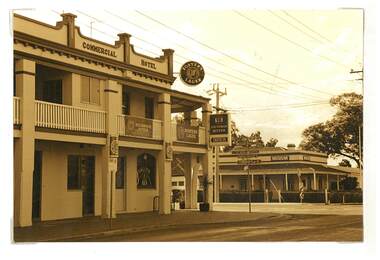
Photograph, Commercial Hotel Tatura
... Shows picture of the Sacred Heart Catholic Church, Hogan Street, Tatura. tatura victoria commercial hotel tatura tatura museum Colour photograph showing the Commercial Hotel on the corner of Ross and Hogan Streets, Tatura. ...Shows picture of the Sacred Heart Catholic Church, Hogan Street, Tatura. Colour photograph showing the Commercial Hotel on the corner of Ross and Hogan Streets, Tatura. Also shows Tatura Museum. Photograph stuck onto piece of white cardboard. tatura victoria, commercial hotel tatura, tatura museum -
 Wodonga & District Historical Society Inc
Decorative object - Sarah Coventry Open Heart Pin
... commercial development of regional centres such as Wodonga in NE Victoria, as well as national and international significance from the perspective of social and economic developments for women after World War II. The direct selling party-plan business model Sarah Coventry was based on is also considered the first of its kind for jewellery. Sarah Coventry Sarah Coventry Affinity Sarah Coventry Wodonga On box: SARAH COVENTRY®| AND AFFINITY ® INTERNATIONAL FASHION JEWELLERY On card: Open Heart ...Sarah Coventry Pty. Ltd. was a North American jewellery company that was established in 1949 by the Stuart family as part of Emmons Jewelry, Inc. It began operations in England and Australia in 1968, and in Australia it moved from Carlton in Melbourne to Wodonga in 1969. The premises were originally on High Street in Wodonga, but a new warehouse was built in Melbourne Road later in 1969. It was a direct selling jewellery business using a party-plan model similar to Tupperware and Avon. The sales reps or 'Hostesses' were provided with jewellery samples in demonstration kits, which they displayed at jewellery parties in their homes. The designs for jewellery such as brooches, necklaces, earrings, chokers and bracelets were purchased from freelance designers and jewellery manufacturers rather than in-house designers. In 1979 Sarah Coventry Pty. Ltd. in Wodonga was bought by three Australian businessmen, including Wodonga local Jim Sawyer, and continued to sell jewellery under the name "Sargem Pty. Ltd”, for several more years in the 1980s. This item was part of the Affinity Jewellery line released in 1982.As part of the Sarah Coventry collection, this item has local significance with the decentralised commercial development of regional centres such as Wodonga in NE Victoria, as well as national and international significance from the perspective of social and economic developments for women after World War II. The direct selling party-plan business model Sarah Coventry was based on is also considered the first of its kind for jewellery.A silver plated stick pin featuring a heart at each end. It is in its original Sarah Coventry box and includes instructions for caring for Sarah Coventry Affinity range items. It is attached to a silver card.On box: SARAH COVENTRY®| AND AFFINITY ® INTERNATIONAL FASHION JEWELLERY On card: Open Heart Imitation Jewellery Sarah Coventry & Affinity International Fashion Jewellery Distributed by Sargem Pty. Ltd. WODONGA VICTORIA Made in USA sarah coventry, sarah coventry affinity, sarah coventry wodonga -
 Wodonga & District Historical Society Inc
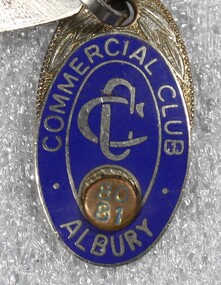
Badge - Membership Albury Commercial Club, Perfection Badges, 1980
... The Commercial Club, located on Dean Street is in the heart of Albury’s business and shopping district. ...The Commercial Club, located on Dean Street is in the heart of Albury’s business and shopping district. ...The Commercial Club, located on Dean Street is in the heart of Albury’s business and shopping district. It began on 7th May 1902, when 11 men met in the rooms of the Border City Club to form a new club. Auctioneer John Chenery chaired the meeting and in June was elected foundation president. Membership fees were set at one guinea ($2.10). The name Commercial Club was adopted, and the Club was founded as a professional and business gentlemen’s only club. A pub called the Salutation Inn and the blacksmith’s forge of Johnny McEachern once stood on the Club’s Dean Street frontage. The Club secured the site in 1935 and built the Wool Exchange on the frontage and the club behind.Peak business came during regular wool sales in the Wool Exchange, which remained part of the Club premises until 1978. The Club survived crises, including in 1916 when the whole committee was replaced. Commercial Club membership was not opened to anyone under 21 until 1997, though the voting age in Australia had been lowered to 18 in 1973. A special disco tavern for 18–21-year-olds operated briefly in 1986. By 1972 there were 800 male members. It now has almost 30,000 members both male and female and employs almost 300 staff.This badge is representative of the role played by licensed clubs in the local community.A blue and silver enamelled membership badge issued by the Commercial Club Albury, NSW for the year 1980-81Around the centre of the badge: "COMMERCIAL CLUB ALBURY" On small disc added to badge:"80/81"commercial club albury, licensed clubs albury -
 Flagstaff Hill Maritime Museum and Village
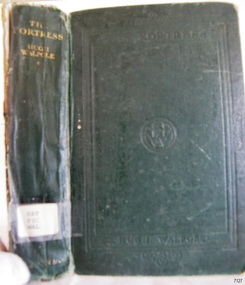
Book - Fictional Story, Hugh Walpole, The Fortress, 1934
... heart attack in June 1941, aged 57. He wrote thirty-six novels, five volumes of short stories, two original plays and three volumes of memoirs. He also worked on Hollywood scripts in the 1930s. The publisher Macmillan & Co, was founded by Daniel and Alexander Macmillan in 1843 initially as a bookshop in Cambridge, before the brothers began publishing books as well as selling them. The partnership divided naturally along the brothers' strengths: Daniel took charge of the business and commercial...heart attack in June 1941, aged 57. He wrote thirty-six novels, five volumes of short stories, two original plays and three volumes of memoirs. He also worked on Hollywood scripts in the 1930s. The publisher Macmillan & Co, was founded by Daniel and Alexander Macmillan in 1843 initially as a bookshop in Cambridge, before the brothers began publishing books as well as selling them. The partnership divided naturally along the brothers' strengths: Daniel took charge of the business and commercial ...The Fortress is the third novel in Walpole’s Herries Chronicles, which follow the branches of the Herries family in the 19th-century Lake District. The story centres on a bitter feud between the branch led by Judith Paris and the one led by Walter Herries. Walter wants to drive Judith and Jennifer Herries out, so he builds a great mansion, the Fortress, on a hill overlooking their house. Elizabeth, Walter’s kind daughter, is caught between family hostility and her love for Jennifer’s son John. John is then persecuted by his wife’s brother, which leads to a tragic confrontation. The saga covers about fifty years, from a summer fair at Keswick to Queen Victoria’s coronation.Hard cover book. The Fortress Author: Hugh Walpole Publisher: Macmillan and Co., Limited Date: 1934 Further Information: Dark green cloth, blind-stamped border and “W” monogram to binding. The spine has a Library label with an inscription.fictionThe Fortress is the third novel in Walpole’s Herries Chronicles, which follow the branches of the Herries family in the 19th-century Lake District. The story centres on a bitter feud between the branch led by Judith Paris and the one led by Walter Herries. Walter wants to drive Judith and Jennifer Herries out, so he builds a great mansion, the Fortress, on a hill overlooking their house. Elizabeth, Walter’s kind daughter, is caught between family hostility and her love for Jennifer’s son John. John is then persecuted by his wife’s brother, which leads to a tragic confrontation. The saga covers about fifty years, from a summer fair at Keswick to Queen Victoria’s coronation.book, the fortress, hugh walpole, shipwrecked-coast, flagstaff-hill, flagstaff-hill-maritime-museum, warrnambool, maritime-museum, shipwreck-coast, flagstaff-hill-maritime-village, shipwrecked-artefact, pattison collection, warrnambool library, warrnambool mechanics’ institute, ralph eric pattison, corangamite regional library service, warrnambool city librarian, mechanics’ institute library, victorian library board, warrnambool books and records, warrnambool children’s library, great ocean road
