
Showing 23 items matching "cordite factory"
-
 Melbourne Tram Museum
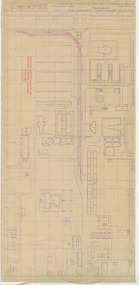
Drawing, Melbourne & Metropolitan Tramways Board (MMTB), "Explosive Factory Cordite Ave - Proposed Tramway Extension shown red", 1940's
... "Explosive Factory Cordite Ave - Proposed Tramway Extension shown red"...Marked in red ink is a "Explosive Factory Cordite Ave - Proposed Tramway Extension shown red". ...Marked in red ink is a "Explosive Factory Cordite Ave - Proposed Tramway Extension shown red". ...Drawing - red ink drawn on a print showing an extension to the single track, Maribyrnong tram line to run further into the Explosives Factory. Original print from the Commonwealth of Australia, Dept of Munitions, Factory Board drawing number W-1163 titled "Explosives - Munitions Supply Laboratories Proof at Rest - Maribyrnong" and dated April 1933. Marked in red ink is a "Explosive Factory Cordite Ave - Proposed Tramway Extension shown red". Not dated, possibly early 1940's. Also has pencil markings around the terminus showing an alternative loop.In blue pencil both edges on the rear "Cordite Ave" and in pencil on rear "Copy to Mr ?? to file"trams, tramways, footscray, maribyrnong, new tramway, explosives factory -
 Sunshine and District Historical Society Incorporated
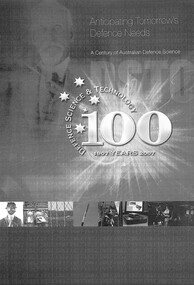
Document - Anticipating Tomorrows Defence Needs - Maribyrnong, The Defence Science & Technology Organisation, Anticipating Tomorrows Defence Needs A Century Of Australian Defence Science, 2007
... Cordite Factory...Cordite Factory Maribyrnong Maribyrnong Explosive Factory Foreward by Roger Lough Chief Defence Scientist This book celebrates 100 years of defence science in Australia, beginning with the role of Cecil Napier Hake in investigating the feasibility of establishing a cordite factory in this country. ...Foreward by Roger Lough Chief Defence Scientist This book celebrates 100 years of defence science in Australia, beginning with the role of Cecil Napier Hake in investigating the feasibility of establishing a cordite factory in this country. From those early days defence science has undergone many changes, reflecting that the nature of warfare itself has changed radically since Hake developed safety standards for handling cordite and went on to establish the first defence laboratory in Victoria.Digital PDF filenon-fictionForeward by Roger Lough Chief Defence Scientist This book celebrates 100 years of defence science in Australia, beginning with the role of Cecil Napier Hake in investigating the feasibility of establishing a cordite factory in this country. From those early days defence science has undergone many changes, reflecting that the nature of warfare itself has changed radically since Hake developed safety standards for handling cordite and went on to establish the first defence laboratory in Victoria.cordite factory, maribyrnong, maribyrnong explosive factory -
 Puffing Billy Railway
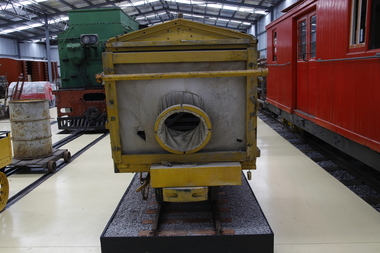
Maribyrnong Cordite Wagon
... ...maribyrnong cordite factory...factory. Both wagons also have water tanks to drip water on the wheels as an added precaution. Cordite...The acetone, being very volatile, was evaporated out of the cordite and recovered to be re-used in the manufacturing process. Historic - Industrial Narrow Gauge Railway - Commonwealth Explosives factory, Maribyrnong, Victoria, Australia puffing billy wooden wagon 18½-inch gauge explosives maribyrnong cordite factory maribyrnong explosives factory puffing billy museum industrial narrow gauge railway The number 77 is on the ends Cordite Wagon - Rectangular yellow wagon made of wood and brass with aluminium trays Maribyrnong Cordite Wagon ...Cordite Wagon - 18½-inch (460mm) gauge wagons came from the Commonwealth Explosives factory at Maribyrnong in Melbourne’s western suburbs. Both have gun-metal wheels, as avoiding sparks was understandably a priority in an explosives factory. Both wagons also have water tanks to drip water on the wheels as an added precaution. Cordite, an explosive used in artillery, was manufactured and pressed into thin sheets, which still contained a quantity of acetone solvent from the manufacturing process. The sheets of cordite were laid in racks of perforated trays in the cordite wagons, which were hand-pushed to the cordite drying-house where the trucks were coupled together in rakes and warm air was blown through them. The acetone, being very volatile, was evaporated out of the cordite and recovered to be re-used in the manufacturing process. Historic - Industrial Narrow Gauge Railway - Commonwealth Explosives factory, Maribyrnong, Victoria, AustraliaCordite Wagon - Rectangular yellow wagon made of wood and brass with aluminium traysThe number 77 is on the endspuffing billy, wooden wagon, 18½-inch gauge, explosives, maribyrnong cordite factory, maribyrnong explosives factory, puffing billy museum, industrial narrow gauge railway -
 Sunshine and District Historical Society Incorporated
Document - Australian Defence Industries QR Codes, Andrew "Andy" Calvert, 17th September 2026
... Maribyrnong Explosive Factory...Cordite...Albion Explosive Factory Ballarat Road Deer Park Maribyrnong Ordnance Factory Wests Road Maribyrnong Maribyrnong Explosive Factory Cordite Avenue Footscray Ammunition Factory Gordon Street Footcray 7263.01 - Australian Defence Industries QR Codes - U Tube Videos Of Pre 1990 Defence Industries In Australia With Emphasise On Victoria.jpg 7263.02 - Australian Defence Industries QR Codes - FLICKR Pictures Pre 1990 Defence Industries In Australia With Emphasise On Victoria.jpg 7263.03 - Australian Defence Industries QR Codes - Linda Calvert FLICKR Pictures Of EFM, Part Ordnance And Jacks Magazine.jpg 7263.04 - Australian Defence Industries QR Codes - U Tube And FLICKR Pictures Jacks Tours Website For Jacks Magazine Tours Tickets.jpg 7263.05 - Australian Defence Industries QR Codes - U Tube And FLICKR Pictures Working Heritage Website.jpg 7263.06 - Australian Defence Industries QR Codes - U Tube And FLICKR Pictures Living Museum Of The West Website.jpg 7263.07 - Australian Defence Industries QR Codes - U Tube And FLICKR Pictures Living Museum Of The West Website Logic of logistics Panels.jpg 7263.08 - Australian Defence Industries QR Codes - U Tube And FLICKR Pictures Logic of logistics Panels Public Displays.jpg Scans of a collection of QR Codes Sheets Document Australian Defence Industries QR Codes Andrew "Andy" Calvert ...These QR Codes are links to U Tube, FLICKR Pictures and Websites that relate to Australian Defence Industry Sites with the Emphasise on Victoria. This information was put together by Andrew "Andy" and Linda Calvert. Andrew "Andy" Calvert, was a former munition defence worker. Andrew did his apprenticeship at the Footscray Ammunition Factory and spent a considerable time at various defence sites throughout Victoria and Mulwala, New South Wales.7263.01 - Australian Defence Industries QR Codes - U Tube Videos Of Pre 1990 Defence Industries In Australia With Emphasise On Victoria.jpg 7263.02 - Australian Defence Industries QR Codes - FLICKR Pictures Pre 1990 Defence Industries In Australia With Emphasise On Victoria.jpg 7263.03 - Australian Defence Industries QR Codes - Linda Calvert FLICKR Pictures Of EFM, Part Ordnance And Jacks Magazine.jpg 7263.04 - Australian Defence Industries QR Codes - U Tube And FLICKR Pictures Jacks Tours Website For Jacks Magazine Tours Tickets.jpg 7263.05 - Australian Defence Industries QR Codes - U Tube And FLICKR Pictures Working Heritage Website.jpg 7263.06 - Australian Defence Industries QR Codes - U Tube And FLICKR Pictures Living Museum Of The West Website.jpg 7263.07 - Australian Defence Industries QR Codes - U Tube And FLICKR Pictures Living Museum Of The West Website Logic of logistics Panels.jpg 7263.08 - Australian Defence Industries QR Codes - U Tube And FLICKR Pictures Logic of logistics Panels Public Displays.jpgalbion explosive factory, ballarat road, deer park, maribyrnong ordnance factory, wests road, maribyrnong, maribyrnong explosive factory, cordite avenue, footscray ammunition factory, gordon street, footcray -
 Sunshine and District Historical Society Incorporated
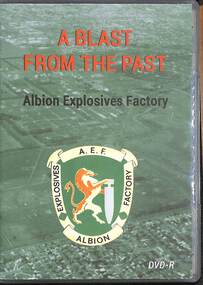
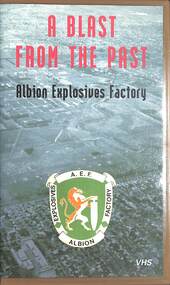
Film - A Blast From The Past Albion Explosive Factory DVD
... . - Initially known as Munitions Annexe No. 5, it became the Albion Explosives Factory, producing cordite, TNT, nitroglycerine, nitric acid, and other propellants for small arms and artillery. - By 1942–45, it was one of Australia’s three primary military explosives factories, employing thousands and contributing significantly to the war effort. .... - Initially known as Munitions Annexe No. 5, it became the Albion Explosives Factory, producing cordite, TNT, nitroglycerine, nitric acid, and other propellants for small arms and artillery. - By 1942–45, it was one of Australia’s three primary military explosives factories, employing thousands and contributing significantly to the war effort. ...The Albion Explosives Factory was a major WWII-era munitions site in Sunshine, Victoria, operating from 1939 to 1986. Its legacy includes the Black Powder Mill, now a heritage landmark. War Time History - Established in 1939–40 in response to the looming threat of war in Europe. - Located in North Albion, opposite the ICIANZ chemical plant, which also helped design and operate the facility. - Initially known as Munitions Annexe No. 5, it became the Albion Explosives Factory, producing cordite, TNT, nitroglycerine, nitric acid, and other propellants for small arms and artillery. - By 1942–45, it was one of Australia’s three primary military explosives factories, employing thousands and contributing significantly to the war effort. Post War Time History - Continued production of explosives and fertilizers for commercial use after WWII. - Expanded in 1947–49 with the addition of the RDX plant north of Furlong Road. - Introduced new technologies like synthetic ammonia, DNT, and continuous TNT production through the 1950s–60s. Closure and Environmental Remediation - Closed in 1986, followed by extensive decontamination and cleanup. - The site was heavily contaminated with TNT, DNT, nitrates, ammonia, and metals, requiring years of environmental audits and remediation. - Eventually redeveloped into a housing estate and shopping complex, transforming the industrial site into a suburban community. A Blast from the Past Albion Explosive Factoryalbion explosive factory, deer park, cairnlea -
 Sunshine and District Historical Society Incorporated
Film - A Blast From The Past Albion Explosive Factory Video
... . - Initially known as Munitions Annexe No. 5, it became the Albion Explosives Factory, producing cordite, TNT, nitroglycerine, nitric acid, and other propellants for small arms and artillery. - By 1942–45, it was one of Australia’s three primary military explosives factories, employing thousands and contributing significantly to the war effort. .... - Initially known as Munitions Annexe No. 5, it became the Albion Explosives Factory, producing cordite, TNT, nitroglycerine, nitric acid, and other propellants for small arms and artillery. - By 1942–45, it was one of Australia’s three primary military explosives factories, employing thousands and contributing significantly to the war effort. ...The Albion Explosives Factory was a major WWII-era munitions site in Sunshine, Victoria, operating from 1939 to 1986. Its legacy includes the Black Powder Mill, now a heritage landmark. War Time History - Established in 1939–40 in response to the looming threat of war in Europe. - Located in North Albion, opposite the ICIANZ chemical plant, which also helped design and operate the facility. - Initially known as Munitions Annexe No. 5, it became the Albion Explosives Factory, producing cordite, TNT, nitroglycerine, nitric acid, and other propellants for small arms and artillery. - By 1942–45, it was one of Australia’s three primary military explosives factories, employing thousands and contributing significantly to the war effort. Post War Time History - Continued production of explosives and fertilizers for commercial use after WWII. - Expanded in 1947–49 with the addition of the RDX plant north of Furlong Road. - Introduced new technologies like synthetic ammonia, DNT, and continuous TNT production through the 1950s–60s. Closure and Environmental Remediation - Closed in 1986, followed by extensive decontamination and cleanup. - The site was heavily contaminated with TNT, DNT, nitrates, ammonia, and metals, requiring years of environmental audits and remediation. - Eventually redeveloped into a housing estate and shopping complex, transforming the industrial site into a suburban community. A Blast from the Past Albion Explosive Factoryalbion explosive factory, deer park, cairnlea -
 Sunshine and District Historical Society Incorporated
Film - A Blast From The Past Albion Explosive Factory USB Stick
... . - Initially known as Munitions Annexe No. 5, it became the Albion Explosives Factory, producing cordite, TNT, nitroglycerine, nitric acid, and other propellants for small arms and artillery. - By 1942–45, it was one of Australia’s three primary military explosives factories, employing thousands and contributing significantly to the war effort. .... - Initially known as Munitions Annexe No. 5, it became the Albion Explosives Factory, producing cordite, TNT, nitroglycerine, nitric acid, and other propellants for small arms and artillery. - By 1942–45, it was one of Australia’s three primary military explosives factories, employing thousands and contributing significantly to the war effort. ...The Albion Explosives Factory was a major WWII-era munitions site in Sunshine, Victoria, operating from 1939 to 1986. Its legacy includes the Black Powder Mill, now a heritage landmark. War Time History - Established in 1939–40 in response to the looming threat of war in Europe. - Located in North Albion, opposite the ICIANZ chemical plant, which also helped design and operate the facility. - Initially known as Munitions Annexe No. 5, it became the Albion Explosives Factory, producing cordite, TNT, nitroglycerine, nitric acid, and other propellants for small arms and artillery. - By 1942–45, it was one of Australia’s three primary military explosives factories, employing thousands and contributing significantly to the war effort. Post War Time History - Continued production of explosives and fertilizers for commercial use after WWII. - Expanded in 1947–49 with the addition of the RDX plant north of Furlong Road. - Introduced new technologies like synthetic ammonia, DNT, and continuous TNT production through the 1950s–60s. Closure and Environmental Remediation - Closed in 1986, followed by extensive decontamination and cleanup. - The site was heavily contaminated with TNT, DNT, nitrates, ammonia, and metals, requiring years of environmental audits and remediation. - Eventually redeveloped into a housing estate and shopping complex, transforming the industrial site into a suburban community. A Blast from the Past Albion Explosive Factoryalbion explosive factory, deer park, cairnlea -
 Sunshine and District Historical Society Incorporated
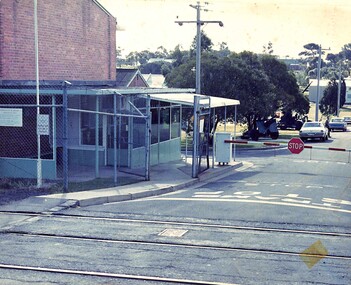
Photograph - Australian Defence Force Victorian Sites
... 3866.01 - Australian Defense Industries - Maribyrnong Explosive Factory Cordite Avenue Entrance Opposite Wests Road Maribyrnong 3866.02 - Australian Defense Industries - Maribyrnong Explosive Factory Main Entrance Cordite Avenue Maribyrnong 3866.03 - Australian Defense Industries - Ammunition Factory Gordon Street Footscray 3866.04 - Australian Defense Industries - Maribyrnong Immigration Detention Centre Williamsons Road Maribyrnong 3866.05 - Australian Defense Industries - Victoria Barracks North Gate St. ...The damaged area of the sheets have been trimmed off Australian Defense Industries ADI Maribyrnong Explosive Factory Footscray Ammunition Factory Maribyrnong Immigration Detention 3866.01 - Australian Defense Industries - Maribyrnong Explosive Factory Cordite Avenue Entrance Opposite Wests Road Maribyrnong 3866.02 - Australian Defense Industries - Maribyrnong Explosive Factory Main Entrance Cordite Avenue Maribyrnong 3866.03 - Australian Defense Industries - Ammunition Factory Gordon Street Footscray 3866.04 - Australian Defense Industries - Maribyrnong Immigration Detention Centre Williamsons Road Maribyrnong 3866.05 - Australian Defense Industries - Victoria Barracks North Gate St. ...These photographs appear to come from an exhibition as they were mounted on a larger card. The photographs appeared to have been torned off a larger sheet. The damaged area of the sheets have been trimmed off3866.01 - Australian Defense Industries - Maribyrnong Explosive Factory Cordite Avenue Entrance Opposite Wests Road Maribyrnong 3866.02 - Australian Defense Industries - Maribyrnong Explosive Factory Main Entrance Cordite Avenue Maribyrnong 3866.03 - Australian Defense Industries - Ammunition Factory Gordon Street Footscray 3866.04 - Australian Defense Industries - Maribyrnong Immigration Detention Centre Williamsons Road Maribyrnong 3866.05 - Australian Defense Industries - Victoria Barracks North Gate St. Kilda Road Melbourne 3866.06 - Australian Defense Industries - Victoria Barracks South Gate St. Kilda Road Melbourne 3866.07 - Australian Defense Industries - Victoria Barracks Wells Street Entrance 3866.08 - Australian Defense Industries - Victoria Barracks Defence Signals St. Kilda Road Melbourne 3866.09 - Australian Defense Industries - Government Aircraft Factory Lorimer Street Fishermans Bend 3866.10 - Australian Defense Industries - Aeronautical Research Labs Lorimer Street Fishermens Bend 3866.11 - Australian Defense Industries - Defence Centre 350 St. Kilda Road Melbourneaustralian defense industries, adi, maribyrnong explosive factory, footscray ammunition factory, maribyrnong immigration detention -
 Flagstaff Hill Maritime Museum and Village
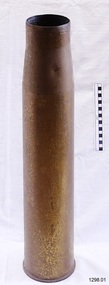
Weapon - Shell Case, Australian Army, 1940 -1941
... explosives factory maribyrnong...cordite...Shell Case 1298.01: The headstamp code on the label "MEC" means that it was made by the Explosives Factory Maribyrnong - Cordite Annexe, Maribyrnong, Melbourne, which made cordite propellant for cartridges and shells. ...Explosives Factory Maribyrnong - Cordite Annexe...Weapon Shell Case Australian Army Small Arms Ammunition Factory Explosives Factory Maribyrnong - Cordite Annexe ...These shell cases were donated along with other items from the St Nicholas' Mission to Seamen's Church at 139 Nelson Place, Williamstown, Victoria. The Church was operated by the Mission to Seamen organisation. The symbol of the broad arrow on the base of the shell case signifies that it was owned by the Australian Army. The dates of the shell cases - 1940 and 1941 - link the shell cases with World War II. Both cases' headstamps have "N", which could indicate that they were made for use by the Navy. Shell Case 1298.01: The headstamp code on the label "MEC" means that it was made by the Explosives Factory Maribyrnong - Cordite Annexe, Maribyrnong, Melbourne, which made cordite propellant for cartridges and shells. Shell Case 1298.02: The headstamp "MF" indicates it was made by the Small Arms Manufacturing Factory in Footscray, Melbourne, and the stamped year was 1941. THE MISSIONS TO SEAMEN (Brief History): - The Missions to Seamen was an Anglican charity that has served seafarers of the world since 1856 in Great Britain. Its symbol is a Flying Angel, inspired by a Bible verse. Today, there are centres in over 200 ports worldwide where seamen of all backgrounds are offered a warm welcome and provided with a wide range of facilities. In Victoria, the organisation began in Williamstown in 1857 as a Sailors’ Church, also known as ‘Bethel’ or the ‘Floating Church’ in an old hulk floating in Hobson’s Bay, Port of Melbourne. It soon became part of the Missions to Seamen, Victoria. In the year 2000, the organisation, now named Mission to Seafarers, still operated locally in Melbourne, Portland, Geelong and Hastings. The Ladies’ Harbour Lights Guild was formed in 1906 to support the Missions to Seamen in Melbourne and other centres, such as Williamstown. Two of the most significant ladies of the Guild were founder Ethel Augusta Godfrey and foundation member Alice Sibthorpe Tracy (who established a branch of the Guild in Warrnambool in 1920). The Guild continued its work until the 1960s. In 1943, a former Williamstown bank was purchased for the Missions to Seaman Club. The chapel was named St Nicholas’ Seamen’s Church and was supported by the Ladies’ Harbour Lights Guild, the Williamstown Lightkeepers’ Auxiliary and the League of Soldiers’ and Sailors’ Friends. It ceased operation in 1966. A Missions to Seamen Chapel and Recreation Room was a significant feature of ports during the late 1800s and into the 1900s. It seemed appropriate for Flagstaff Hill to include such a representation within the new Maritime Village, so the Melbourne Board of Management of Missions to Seamen Victoria gave its permission on 21st May 1979 for the entire furnishings of the Williamstown chapel to be transferred to Flagstaff Hill. The St Nicholas Seamen’s Church was officially opened on October 11, 1981, and closely resembles the Williamstown chapel. These shell cases are significant for their relationship with the Australian Army in general and in particular with the defence of Australia during World War II. The may have also been made for the Navy. Their significance is increased by their association with the Williamstown Missions To Seamen, which donated them to Flagstaff Hill in 1979, an organisation that has supported seafarers for many years.Shell case: two brass 4" rimmed shell cases with headstamps (inscriptions) on the base plate around the firing pin three holes evenly spaced around the centre of the base. A label is attached to one shell. The shell cases are part of the St. Nicholas Seamen's Church Collection. Shell Case 1298.01 - Printed stamp “P.2BT” “M.E.C.111” “I.E. 10/43”. Stamped into base “N”, “1940” “W [within lozenge]”, “S” symbol [Australian Government Arrow] “360“ . Around firing pin “MF I 422” “ME” “II” “4 I N” “5-“ ”MF [within rectangle]” “f” “B – [within circle]”, Shell Case 1298.02 - headstamp “N 1941 MF / F symbol [square box] LOT 679”, [in oval] 101 / 4 / S /U2) M GUNS 7 “, symbol [Australian Government Arrow], Stencil [in red circle] “B J”, symbol [Diamond with line top to bottom] Stamped in red ink “R5G 11 1 2B7”flagstaff hill, warrnambool, shipwrecked-coast, flagstaff-hill, flagstaff-hill-maritime-museum, maritime-museum, shipwreck-coast, flagstaff-hill-maritime-village, munitions, shell case, ammunition 1940, ammunition 1941, firearms, cannon, australian government, borad arrow, australian army, wwii, world war 2, australian defence, australian ordinance, small arms manufacturing factory, explosives factory maribyrnong, cordite, world war ii, ww2, 1940, 1941, defence, n headstamp, footscray -
 Federation University Historical Collection
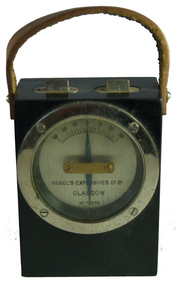
Equipment - Scientific Instrument, Nobel Explosives Co. Ltd, Nobel's Explosives Co Galvanometer, Between 1877 and 1926
... factory. Between 1877 amd 1926 it was known as Nobel’s Explosives Company Limited. The business later diversified into the production of blasting gelatine, gelignite, ballistite, guncotton, and cordite. ...factory. Between 1877 amd 1926 it was known as Nobel’s Explosives Company Limited. The business later diversified into the production of blasting gelatine, gelignite, ballistite, guncotton, and cordite. ...Nobel Industries Limited was founded in 1870 by Swedish chemist and industrialist Alfred Nobel for the production of the new explosive dynamite in the United Kingdom. Ardeer, on the coast at Ayrshire, was chosen for the company's first factory. Between 1877 amd 1926 it was known as Nobel’s Explosives Company Limited. The business later diversified into the production of blasting gelatine, gelignite, ballistite, guncotton, and cordite. At its peak, the factory employed nearly 13,000 men and women. In 1926, the firm merged with Brunner, Mond & Company, the United Alkali Company, and the British Dyestuffs Corporation, creating a new group, Imperial Chemical Industries, then one of Britain's largest firms. Nobel Industries continued as the ICI Nobel division of the company. Small black timber box with small screw holding back on, and leather handle on top. A pivoted needle remains vertical as box angle changes. Graded scale behing top end of needle. Two adjusting points at top.No 10070nobel, ballarat school of mines, scientific instruments, galvanometer -
 Sunshine and District Historical Society Incorporated
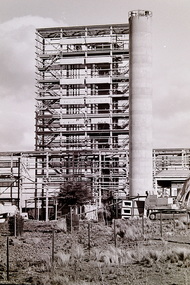
Photograph - Albion Explosive Factory Northern RDX Acid Plant Chimney Demolition 1990 Photographs, Sharon Cavanagh, 26th July 1990
... The Albion Explosives Factory began as Commonwealth Defence Explosives Annexe No. 5, constructed rapidly in 1939–1940 as part of Australia’s WWII munitions expansion. It was built adjacent to the long‑established Nobel / ICI explosives works at Deer Park and produced TNT, nitroglycerine, cordite, RDX, DNT, and related explosive compounds. ...The Albion Explosives Factory began as Commonwealth Defence Explosives Annexe No. 5, constructed rapidly in 1939–1940 as part of Australia’s WWII munitions expansion. It was built adjacent to the long‑established Nobel / ICI explosives works at Deer Park and produced TNT, nitroglycerine, cordite, RDX, DNT, and related explosive compounds. ...The Albion Explosives Factory began as Commonwealth Defence Explosives Annexe No. 5, constructed rapidly in 1939–1940 as part of Australia’s WWII munitions expansion. It was built adjacent to the long‑established Nobel / ICI explosives works at Deer Park and produced TNT, nitroglycerine, cordite, RDX, DNT, and related explosive compounds. This plant manufactured Research Department Explosive (RDX), a nitrogen‑rich high explosive used in military munitions, which is far more powerful than TNT, yet relatively stable to store and transport. It is not a consumer or industrial product and sits firmly in the defence materials category.This series of time elapsed photographs records the demolition of the Northern RDX Acid Plant chimney by controlled demolition by explosive which safely brought the chimney down by making it to fall to one side. The history of the Albion Explosive Factory is tightly connected to the evolution of the Deer Park explosives precinct and the wider ICI industrial township.Chimney Blown Up Explosive Factory Deer Park 341.1albion explosive factory, ballarat road, deer park, ici -
 Melbourne Tram Museum
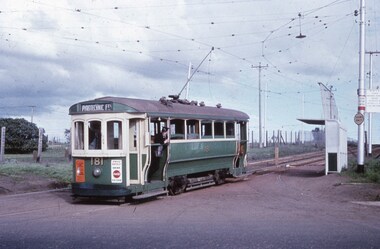
Photograph - Digital Image, T class 181 in Wests Road Maribyrnong, 1950's
... Digital image of T class 181 in Wests Road Maribyrnong at the junction with Raleigh Road and Cordite Ave. The destination sign set at Pyrotechnic Factory with is behind the tram at the Williamston Road terminus. ...Trams tramways West Maribyrnong World War 2 T Class Explosives Factory T Class Pyrotechnic Factory tram 181 Digital image of T class 181 in Wests Road Maribyrnong at the junction with Raleigh Road and Cordite Ave. ...Digital image of T class 181 in Wests Road Maribyrnong at the junction with Raleigh Road and Cordite Ave. The destination sign set at Pyrotechnic Factory with is behind the tram at the Williamston Road terminus. It shows a former connection that allowed trams from Williamson Road to turn to go the Explosives Factory. The Essendon Drive In theatre screen is behind the tram. Photo used in a detailed article on the Wartime tramways that appeared in the June 2018 issue of Bellcord. Photo provided Ron Scholten from his slide collection.trams, tramways, west maribyrnong, world war 2, t class, explosives factory, t class, pyrotechnic factory, tram 181 -
 Melbourne Tram Museum
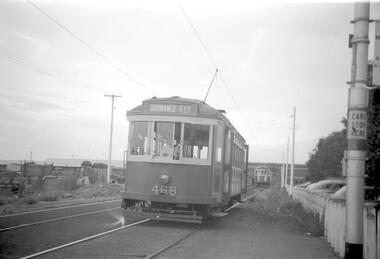
Negative - Set of 8 photos of X1 468 on Footscray services, Travis Jeffrey, Jun. 1960
... Factory. The Maribyrnong Secondary College is in the left of the photo. 6. B&W negative of tram X1 468 in Cordite Avenue West Maribyrnong. ...Factory. The Maribyrnong Secondary College is in the left of the photo. 6. B&W negative of tram X1 468 in Cordite Avenue West Maribyrnong. ...Set of 8 negatives of X1 class tram on services on the Footscray operated routes. 1. B&W negative of tram X1 468 in Ballarat Road Footscray. Tram has destination Explosives Factory. Driver stepping down from cab and passenger walking from tram to kerb. 2. B&W negative of tram X1 468 in Ballarat Road at Gordon Street Footscray. Tram has destination Railway Station. Tram shelter shown in front of Powell Hotel. 3. B&W negative of tram X1 468 in Gordon Street Footscray. Tram has destination Railway Station. Tram is shown at corner of River Street on wrong side of road, so appears to be ready for shunting. 4. B&W negative of tram X1 468 at Ordnance Factory West Maribyrnong. Tram has destination Ordnance Factory. W2 454 is in background. 5. B&W negative of tram X1 468 in River Street Maidstone. Tram has destination Explosives Factory. The Maribyrnong Secondary College is in the left of the photo. 6. B&W negative of tram X1 468 in Cordite Avenue West Maribyrnong. Tram has destination Explosives Factory. Tram is shunting. 7. B&W negative of tram X1 468 in Somerville Road, Footscray. Tram has destination Russell St. Tram is shown with driver and female conductor posing for photographer. Note this one-man tram is being crewed by both a driver and conductor. 8. B&W negative of tram X1 468 at Ordnance Factory West Maribyrnong. Tram has destination Explosives Factory. 2nd unidentified Tram is shown in background. Female conductor walking the trolley pole around. NOTE: - dates are not as marked on some photo envelopes recorded below as the Footscray closed March 1961.Yields information about Footscray tram services operated by X1 468 during 1960.Set of 8 negatives in paper folders.1. Paper folder that contained the negative had "NR30A" written in red ink, "F9" written in pencil, "20A" written in blue ink, and date stamped 11 Jun 1960. On rear, dates stamped 26 Sep 1962 (twice). 2. Paper folder that contained the negative had "NR36A" written in red ink, "F8" in pencil, "26A" in blue ink, and date stamped 11 Jun 1960. On rear, dates stamped 26 Sep 1962 and 6 Oct 1962. 3. Paper folder that contained the negative had "NR47A" written in red ink, "F10" in pencil, "37A" in blue ink, and date stamped 23 Sep 1961. 4. Paper folder that contained the negative had "NR32A" written in red ink, "F14" in pencil, "22A" in blue ink, and date stamped 11 Jun 1960. On rear, dates stamped 26 Sep 1962 and 6 Oct 1962. 5. Paper folder that contained the negative had "NR54A" written in red ink, "F15" written in pencil, "44A" written in blue ink, and date stamped 28 Sep 1961. On rear, dates stamped 26 Sep 1962 and 6 Oct 1962. 6. Paper folder that contained the negative had "NR56A" written in red ink, "F13" in pencil, "46A" in blue ink, and date stamped 28 Sep 1961.2. 7. Paper folder that contained the negative had "NR64A" and "NR105A" written in red ink, "F11" in pencil, "64A" in green ink, and date stamped 1 Jan 1963. On rear, date stamped 26 Sep 1962. 8. Paper folder that contained the negative had "NR62A" written in red ink, "F12" in pencil, "52A" in blue ink, "damaged" in purple ink, and date stamped 11 Jun 1960.trams, tramways, x1 class, footscray, gordon st, ordnance factory, trolley poles, crews, drivers, conductors, tram 468, tram 454, conductresses, m&mtb uniform, ballarat road, somerville road, w2 class -
 Sunshine and District Historical Society Incorporated
Administrative record - City of Sunshine - Commissioner Mr Alexander Alex George Gillon Collection 1976 - 1982 - Notice of ordinary meeting of the council 17th July 1979, City of Sunshine, 11th July 1979
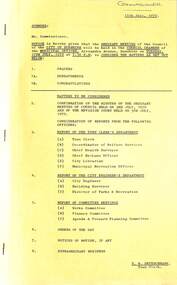
... Cordite Avenue...Maribyrnong Explosive Factory...Petrol Fueling Station Plan of Subdivision 10 Chicago Street Princess Highway West Street Lighting Costs Footpath South Side of Cordite Avenue West Road to The Main Gate Maribyrnong Explosive Factory Sewerage Reticulation Area No 4046 St. ...Albans Road Geelong Road Burgess Road Chicago Street Princess Highway Cordite Avenue Maribyrnong Explosive Factory East Esplanade Main Road West Main Road East Billingham Road Robinsons Road Sydney Street King Edward Avenue Sydney Street Child Care Centre Warrs Road Anderson Road McIntyre Road Skinner Reserve Churchill Avenue Hume Street Sunshine Swimming Pool United Social Cricket Club D.J. ...Notice of Ordinary Meeting of the Council 17th July 1979 Report of the Town Clerk's Department Report of the Town Clerk Tax Sharing increase in Local Government Proportion Deer Park Drainage Scheme Decision by Tribunal Proposed Variations to M.O.A. Award Travelling Allowances The Sir Robert Menzies Memorial Trust Request for Financial Assistance Land Transfer to the Council Dickson Street Melbourne & Metropolitan Board of Works Representative Melbourne & Metropolitan Board of Works Proposed Increase in Rates Loan Borrowings Supplementary Valuations Report of the Co-Ordinator of Welfare Services Seminar Local Government and Welfare for Migrants Report of the Chief Health Surveyor Application for Transfer of Proprietorship of Premises Under the Health Act Health Act Registrations for 1979 Roberts Crescent Infant Welfare Centre 22 Roberts Crescent Sunshine West Offensive Trades Asbestos Protean Holdings Corner Boundary Road and Fitzgerald Road Regulations Relating to Offensive Trades M.M.B.W. Sewerage Discharge Maribyrnong River Braybrook Report of the Medical Officer of Health Report of the Chief By-Laws Officer Animal Care Seminar R.S.P.C.A. (Vic) Council Reserves By-Law Report of the City Librarian Highpoint West Library Report of the Municipal Recreation Officer Municipal Recreation Officers' Conference 31st July 1979 2nd August 1979 Use of House at Selwyn Park by Outreach Worker Sunshine North Tennis Club & Albion Tennis Club School Revue Sunshine North Technical School Report of the City Engineer Planning Permit Application Private Tip Part Lot 35 Reid Street Albion Planning Permit Application Four Service Premises Additions to Existing Cluster Housing Development 104 Station Road Deer Park Planning Permit Application Buildings or Works Within 30 Metres of the Kororoit Creek Mernda Street Sunshine West Planning Permit Application Amusement Machines Lot 460 Fitzgerald Road Sunshine West Planning Permit Application Six Factories Lot 1 Berkshire Road Sunshine North Planning Permit Application Cafe Lot 4 Glengala Road Sunshine West Planning Permit Application Fitness Centre Hook Street and Vule Street St. Albans Planning Permit Application Factory Lots 52 & 53 Judge Street Sunshine Planning Permit Application Display Homes and Associated Commercial Vehicle Park Lot 29 Station Road Deer Park Planning Permit Application Sky sign Lot 1 Sunshine Road Planning Permit Store Lot 24 Cromer Avenue Sunshine North Planning Permit Application Retail Plant Nursery Railway Lot 81 Sunshine Road Planning Permit Application Subdivision and Detached Houses Neale Road Planning Permit Application Flats 20 Forrest Street Albion Amendment No 70 Part 4B to the Melbourne Metropolitan Planning Scheme Planning Permit Application Alterations to Existing Abattoirs Armbrook Siding Off Somerville Road Tottenham Planning Permit Application Proposed Pole Sign Corner Berkshire Road Steers Street Sunshine North Planning Permit Application Consulting Room (Doctors Surgery) 88 Ashley Street Maidstone Planning Permit Application Transport Depot and Warehouse Berkshire Road Sunshine North Planning Permit Application Extension of Existing Shop Hot Bread Kitchen Ballarat Road Deer Park Planning Permit Application Place of Assembly Scovell Reserve Scovell Crescent Planning Permit Application Apex Quarries Aggregate Distribution Depot Jones Road & Bunting Road Brooklyn Planning Permit Application Eight Flats Lots 1 & 2 Fraser Street Sunshine Plans of Transfer & Consolidation Somerville Road Smorgans Consolidated Industries, Mahemoff Nominees Pty Ltd & Lysaght Durham Chemical Company Subdivision Tentative Plan of Subdivision South East Corner Furlong Road & St. Albans Road Plan of Creation of Easement 463 & 465 Ballarat Road Subdivision Sunshine Consolidation of Title Geelong Road and Burgess Road for B.P. Petrol Fueling Station Plan of Subdivision 10 Chicago Street Princess Highway West Street Lighting Costs Footpath South Side of Cordite Avenue West Road to The Main Gate Maribyrnong Explosive Factory Sewerage Reticulation Area No 4046 St. Albans Mobil Oil Altona to Somerton Pipeline Statcon Works Programme Intersection Treatment East Esplanade / Main Road West / Main Road East St. Albans Statcon Programme Additions to Network Relocation of Public Telephones Ballarat Road Corner Station Road to Outside 809 & 811 Ballarat Road Deer Park Traffic Engineering & Associated Works Billingham Road / Kororoit Creek / Robinsons Road Deer Park Street Light Replacement With Plastic Signs Traffic Engineering & Associated Works Sydney Street Corner King Edward Avenue Child Care Centre New Guardrail Traffic Engineering & Associated Works Warrs Road Maribyrnong New Guardrails Traffic Engineering & Associated Works Anderson Road at Ballarat Road Line marking Alterations Traffic Engineering & Associated Works Glengala Road / Anderson Road Intersection Line Marking Alterations Sewerage Facilities Deer Park R.S.L. Land Dickson Street Proposed Development Sunshine View Estate Stage 2 Underground Drainage Stancon / Metcon Maintenance Police 1979/80 Financial Year R.O.S.T.A. Bulletin 1979 Installation of Traffic Signals Under Statcon Programme Ballarat Road / McIntyre Road / Anderson Road Remodelling of Existing Signals Footbridge Programme Further Report Alteration to Grandstand Skinner Reserve Proposed Toilet Block Hume Street Deer Park Sunshine Swimming Pool Proposed Extension to United Social Cricket Club Scovell Reserve Removal of Nissan Huts Rear of D.J. Evans Hall Ravenhall Street Report of the Building Surveyor Building Over Easement Lot 188 Neale Road Deer Park Building on Flood Prone Land 16 The Esplanade Maribyrnong Siting of Building 2 Laurel Street St. Albans Scaffolding Permit Fees Orders of the Day Accounts Submitted for Payment as at 30th June 1979 Proposal to Construct Easement Drainage in the Area Bounded by Robinsons Road, Ballarat Road, Orama Street, Doherty Street and Quinn Street Under the Provisions of Section 651 and 578 of the Local Government Act 1958 Confirmation of Load with the Local Authorities Superannuation Boardrsl, dickson street, sunshine, r.s.l., roberts crescent, sunshine west, protean holdings, boundary road, fitzgerald road, laverton north, maribyrnong river, braybrook, highpoint west library, rosamond road, maribyrnong, sunshine north tennis club, albion tennis club, selwyn park, selwyn street, albion, sunshine north technical school, reid street, station road, deer park, kororoit creek, mernda street, berkshire road, sunshine north, glengala road, hook street, vule street, st. albans, judge street, cromer avenue, sunshine road, tottenham, neale road, forrest street, armbrook siding, steers street, ashley street, maidstone, ballarat road, scovell reserve, scovell crescent, jones road, bunting road, fraser street, smorgans consolidated industries, mahemoff nominees, lysaght durham chemical company, furlong road, st. albans road, geelong road, burgess road, chicago street, princess highway, cordite avenue, maribyrnong explosive factory, east esplanade, main road west, main road east, billingham road, robinsons road, sydney street, king edward avenue, sydney street child care centre, warrs road, anderson road, mcintyre road, skinner reserve, churchill avenue, hume street, sunshine swimming pool, united social cricket club, d.j. evans hall, ravenhall street, the esplanade, laurel street, orama street, doherty street, quinn street, roberts crescent infant welfare centre -
 Sunshine and District Historical Society Incorporated
Administrative record - City of Sunshine - Commissioner Mr Alexander Alex George Gillon Collection 1976 - 1982 - Minutes of the ordinary meeting of council held on 17th July 1979, City of Sunshine, 17th July 1979
... Cordite Avenue...Maribyrnong Explosive Factory...Petrol Fueling Station Plan of Subdivision 10 Chicago Street Princess Highway West Street Lighting Costs Footpath South Side of Cordite Avenue West Road to The Main Gate Maribyrnong Explosive Factory Sewerage Reticulation Area No 4046 St. ...Albans Road Geelong Road Burgess Road Chicago Street Princess Highway Cordite Avenue Maribyrnong Explosive Factory East Esplanade Main Road West Main Road East Billingham Road Robinsons Road King Edward Avenue Syndey Street Sydney Street Child Care Centre Warrs Road Anderson Road McIntyre Road Skinner Reserve Hume Street Sunshine Swimming Pool United Social Cricket Club D.J. ...Minutes of the Ordinary Meeting of Council held on 17th July 1979 Report of the Town Clerk's Department Report of the Town Clerk Tax Sharing increase in Local Government Proportion Deer Park Drainage Scheme Decision by Tribunal Proposed Variations to M.O.A. Award Travelling Allowances The Sir Robert Menzies Memorial Trust Request for Financial Assistance Land Transfer to the Council Dickson Street Melbourne & Metropolitan Board of Works Representative Melbourne & Metropolitan Board of Works Proposed Increase in Rates Loan Borrowings Supplementary Valuations Report of the Co-Ordinator of Welfare Services Seminar Local Government and Welfare for Migrants Report of the Chief Health Surveyor Application for Transfer of Proprietorship of Premises Under the Health Act Health Act Registrations for 1979 Roberts Crescent Infant Welfare Centre 22 Roberts Crescent Sunshine West Offensive Trades Asbestos Protean Holdings Corner Boundary Road and Fitzgerald Road Regulations Relating to Offensive Trades M.M.B.W. Sewerage Discharge Maribyrnong River Braybrook Report of the Medical Officer of Health Report of the Chief By-Laws Officer Animal Care Seminar R.S.P.C.A. (Vic) Council Reserves By-Law Report of the City Librarian Highpoint West Library Report of the Municipal Recreation Officer Municipal Recreation Officers' Conference 31st July 1979 2nd August 1979 Use of House at Selwyn Park by Outreach Worker Sunshine North Tennis Club & Albion Tennis Club School Revue Sunshine North Technical School Report of the City Engineer Planning Permit Application Private Tip Part Lot 35 Reid Street Albion Planning Permit Application Four Service Premises Additions to Existing Cluster Housing Development 104 Station Road Deer Park Planning Permit Application Buildings or Works Within 30 Metres of the Kororoit Creek Mernda Street Sunshine West Planning Permit Application Amusement Machines Lot 460 Fitzgerald Road Sunshine West Planning Permit Application Six Factories Lot 1 Berkshire Road Sunshine North Planning Permit Application Cafe Lot 4 Glengala Road Sunshine West Planning Permit Application Fitness Centre Hook Street and Vule Street St. Albans Planning Permit Application Factory Lots 52 & 53 Judge Street Sunshine Planning Permit Application Display Homes and Associated Commercial Vehicle Park Lot 29 Station Road Deer Park Planning Permit Application Sky sign Lot 1 Sunshine Road Planning Permit Store Lot 24 Cromer Avenue Sunshine North Planning Permit Application Retail Plant Nursery Railway Lot 81 Sunshine Road Planning Permit Application Subdivision and Detached Houses Neale Road Planning Permit Application Flats 20 Forrest Street Albion Amendment No 70 Part 4B to the Melbourne Metropolitan Planning Scheme Planning Permit Application Alterations to Existing Abattoirs Armbrook Siding Off Somerville Road Tottenham Planning Permit Application Proposed Pole Sign Corner Berkshire Road Steers Street Sunshine North Planning Permit Application Consulting Room (Doctors Surgery) 88 Ashley Street Maidstone Planning Permit Application Transport Depot and Warehouse Berkshire Road Sunshine North Planning Permit Application Extension of Existing Shop Hot Bread Kitchen Ballarat Road Deer Park Planning Permit Application Place of Assembly Scovell Reserve Scovell Crescent Planning Permit Application Apex Quarries Aggregate Distribution Depot Jones Road & Bunting Road Brooklyn Planning Permit Application Eight Flats Lots 1 & 2 Fraser Street Sunshine Plans of Transfer & Consolidation Somerville Road Smorgans Consolidated Industries, Mahemoff Nominees Pty Ltd & Lysaght Durham Chemical Company Subdivision Tentative Plan of Subdivision South East Corner Furlong Road & St. Albans Road Plan of Creation of Easement 463 & 465 Ballarat Road Subdivision Sunshine Consolidation of Title Geelong Road and Burgess Road for B.P. Petrol Fueling Station Plan of Subdivision 10 Chicago Street Princess Highway West Street Lighting Costs Footpath South Side of Cordite Avenue West Road to The Main Gate Maribyrnong Explosive Factory Sewerage Reticulation Area No 4046 St. Albans Mobil Oil Altona to Somerton Pipeline Statcon Works Programme Intersection Treatment East Esplanade / Main Road West / Main Road East St. Albans Statcon Programme Additions to Network Relocation of Public Telephones Ballarat Road Corner Station Road to Outside 809 & 811 Ballarat Road Deer Park Traffic Engineering & Associated Works Billingham Road / Kororoit Creek / Robinsons Road Deer Park Street Light Replacement With Plastic Signs Traffic Engineering & Associated Works Sydney Street Corner King Edward Avenue Child Care Centre New Guardrail Traffic Engineering & Associated Works Warrs Road Maribyrnong New Guardrails Traffic Engineering & Associated Works Anderson Road at Ballarat Road Line marking Alterations Traffic Engineering & Associated Works Glengala Road / Anderson Road Intersection Line Marking Alterations Sewerage Facilities Deer Park R.S.L. Land Dickson Street Proposed Development Sunshine View Estate Stage 2 Underground Drainage Stancon / Metcon Maintenance Police 1979/80 Financial Year R.O.S.T.A. Bulletin 1979 Installation of Traffic Signals Under Statcon Programme Ballarat Road / McIntyre Road / Anderson Road Remodelling of Existing Signals Footbridge Programme Further Report Alteration to Grandstand Skinner Reserve Proposed Toilet Block Hume Street Deer Park Sunshine Swimming Pool Proposed Extension to United Social Cricket Club Scovell Reserve Removal of Nissan Huts Rear of D.J. Evans Hall Ravenhall Street Report of the Building Surveyor Building Over Easement Lot 188 Neale Road Deer Park Building on Flood Prone Land 16 The Esplanade Maribyrnong Siting of Building 2 Laurel Street St. Albans Scaffolding Permit Fees Orders of the Day Accounts Submitted for Payment as at 30th June 1979 Proposal to Construct Easement Drainage in the Area Bounded by Robinsons Road, Ballarat Road, Orama Street, Doherty Street and Quinn Street Under the Provisions of Section 651 and 578 of the Local Government Act 1958 Confirmation of Load with the Local Authorities Superannuation Boardrsl, dickson street, sunshine, r.s.l., roberts crescent infant welfare centre, roberts crescent, sunshine west, boundary road, fitzgerald road, protean holdings, laverton north, maribyrnong river, braybrook, highpoint west library, rosamond road, maribyrnong, sunshine north tennis club, albion tennis club, selwyn park, selwyn street, albion, reid street, sunshine north technical school, station road, deer park, kororoit creek, mernda street, berkshire road, sunshine north, glengala road, hook street, vule street, st. albans, judge street, sunshine road, tottenham, cromer avenue, neale road, forrest street, armbrook siding, steers street, ashley street, maidstone, ballarat road, scovell reserve, scovell crescent, jones road, bunting road, brooklyn, fraser street, smorgans consolidated industries, mahemoff nominees, lysaght durham chemical company, furlong road, st. albans road, geelong road, burgess road, chicago street, princess highway, cordite avenue, maribyrnong explosive factory, east esplanade, main road west, main road east, billingham road, robinsons road, king edward avenue, syndey street, sydney street child care centre, warrs road, anderson road, mcintyre road, skinner reserve, hume street, sunshine swimming pool, united social cricket club, d.j. evans hall, ravenhall street, laurel street, orama street, doherty street, quinn street, churchill avenue -
 Sunshine and District Historical Society Incorporated
Photograph - Albion Explosive Factory Mr E.E. Backhouse 1964 - 1966 Site Manager Portrait Photograph, 1966
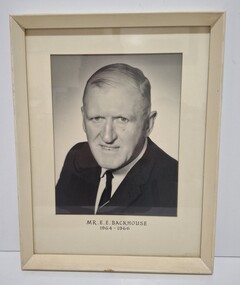
... Factory Maribyrnong from 1943 to 1953. He studied production of rocket motors, filling of bombs and the manufacture of cordite in the United Kingdom from 1948 to 1949. ...Factory Maribyrnong from 1943 to 1953. He studied production of rocket motors, filling of bombs and the manufacture of cordite in the United Kingdom from 1948 to 1949. ...Mr E.E. Backhouse (F.R.A.C.I.) joined the Colonial Ammunition Company as a laboratory assistant in 1920. He worked as a chemist at the Munitions Supply Laboratories from 1923 to 1928, at the Ammunition Factory Footscray from 1923 to 1936 and at the Explosive Factory Maribyrnong from 1936. He became the assistant manager at the Explosive Factory Maribyrnong from 1943 to 1953. He studied production of rocket motors, filling of bombs and the manufacture of cordite in the United Kingdom from 1948 to 1949. He was the manager of the Explosive Factory Mulwala from 1953 to 1955, manager at the Explosive Factory Maribyrnong 1956 to 1964 and manager at the Explosive Factory Albion from 1964 until his retirement in 1966. This item came from the Friends of the Black Powder Mill.Mr E.E. Backhouse 1964 - 1966albion explosive factory, explosive factory, ballarat road, deer park -
 Sunshine and District Historical Society Incorporated
Book - Basic Skills Manual No 4 Limit Systems Tolerances And Fits, Australian Government Publishing Service, No 4 Limit Systems Tolerances And Fits, 1972
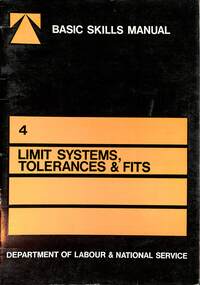
... Explosive Factory Maribyrnong...Cordite...Explosive Factory Maribyrnong Cordite Avenue Maribyrnong This book is one of a series of manuals produced as an initiative of the Australian Apprenticeship Advisory Committee which comprised representatives of the Commonwealth and State Apprenticeship and Technical Education Authorities and Labour Departments. ...This book is one of a series of manuals produced as an initiative of the Australian Apprenticeship Advisory Committee which comprised representatives of the Commonwealth and State Apprenticeship and Technical Education Authorities and Labour Departments. Books published in this series include No 1 Introduction to Metal Working No 2 Hand Tools No 3 Measuring Testing and Marking Out No 4 Limit Systems Tolerances and Fits No 5 Filing No 6 Scraping No 7 Drilling No 8 Off Hand Grinding No 9 Hand Tapping and Thread Cutting No 10 Basic Fitting Projects These books were used extensively by apprentices as part of their apprenticeship training course. This series of books replaced the training manuals produced for use under the Commonwealth Technical School Training Scheme.Black and orange soft covered book non-fictionThis book is one of a series of manuals produced as an initiative of the Australian Apprenticeship Advisory Committee which comprised representatives of the Commonwealth and State Apprenticeship and Technical Education Authorities and Labour Departments. Books published in this series include No 1 Introduction to Metal Working No 2 Hand Tools No 3 Measuring Testing and Marking Out No 4 Limit Systems Tolerances and Fits No 5 Filing No 6 Scraping No 7 Drilling No 8 Off Hand Grinding No 9 Hand Tapping and Thread Cutting No 10 Basic Fitting Projects These books were used extensively by apprentices as part of their apprenticeship training course. This series of books replaced the training manuals produced for use under the Commonwealth Technical School Training Scheme.explosive factory maribyrnong, cordite avenue, maribyrnong -
 Sunshine and District Historical Society Incorporated
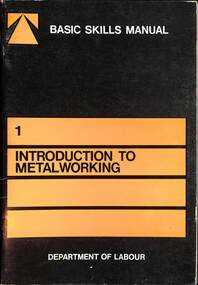
Book - Basic Skills Manual No 1 Introduction To Metal Working, Australian Government Publishing Service, No 1 Introduction To Metal Working, 1972
... Explosive Factory Maribyrnong...Cordite...Explosive Factory Maribyrnong Cordite Avenue Maribyrnong This book is one of a series of manuals produced as an initiative of the Australian Apprenticeship Advisory Committee which comprised representatives of the Commonwealth and State Apprenticeship and Technical Education Authorities and Labour Departments. ...This book is one of a series of manuals produced as an initiative of the Australian Apprenticeship Advisory Committee which comprised representatives of the Commonwealth and State Apprenticeship and Technical Education Authorities and Labour Departments. Books published in this series include No 1 Introduction to Metal Working No 2 Hand Tools No 3 Measuring Testing and Marking Out No 4 Limit Systems Tolerances and Fits No 5 Filing No 6 Scraping No 7 Drilling No 8 Off Hand Grinding No 9 Hand Tapping and Thread Cutting No 10 Basic Fitting Projects These books were used extensively by apprentices as part of their apprenticeship training course. This series of books replaced the training manuals produced for use under the Commonwealth Technical School Training Scheme.Black and orange soft covered book non-fictionThis book is one of a series of manuals produced as an initiative of the Australian Apprenticeship Advisory Committee which comprised representatives of the Commonwealth and State Apprenticeship and Technical Education Authorities and Labour Departments. Books published in this series include No 1 Introduction to Metal Working No 2 Hand Tools No 3 Measuring Testing and Marking Out No 4 Limit Systems Tolerances and Fits No 5 Filing No 6 Scraping No 7 Drilling No 8 Off Hand Grinding No 9 Hand Tapping and Thread Cutting No 10 Basic Fitting Projects These books were used extensively by apprentices as part of their apprenticeship training course. This series of books replaced the training manuals produced for use under the Commonwealth Technical School Training Scheme.explosive factory maribyrnong, cordite avenue, maribyrnong -
 Sunshine and District Historical Society Incorporated
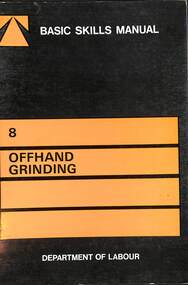
Book - Basic Skills Manual No 8 Off Hand Grinding, Australian Government Publishing Service, No 8 Off Hand Grinding, 1973
... Explosive Factory Maribyrnong...Cordite...Explosive Factory Maribyrnong Cordite Avenue Maribyrnong This book is one of a series of manuals produced as an initiative of the Australian Apprenticeship Advisory Committee which comprised representatives of the Commonwealth and State Apprenticeship and Technical Education Authorities and Labour Departments. ...This book is one of a series of manuals produced as an initiative of the Australian Apprenticeship Advisory Committee which comprised representatives of the Commonwealth and State Apprenticeship and Technical Education Authorities and Labour Departments. Books published in this series include No 1 Introduction to Metal Working No 2 Hand Tools No 3 Measuring Testing and Marking Out No 4 Limit Systems Tolerances and Fits No 5 Filing No 6 Scraping No 7 Drilling No 8 Off Hand Grinding No 9 Hand Tapping and Thread Cutting No 10 Basic Fitting Projects These books were used extensively by apprentices as part of their apprenticeship training course. This series of books replaced the training manuals produced for use under the Commonwealth Technical School Training Scheme.Black and orange soft covered book non-fictionThis book is one of a series of manuals produced as an initiative of the Australian Apprenticeship Advisory Committee which comprised representatives of the Commonwealth and State Apprenticeship and Technical Education Authorities and Labour Departments. Books published in this series include No 1 Introduction to Metal Working No 2 Hand Tools No 3 Measuring Testing and Marking Out No 4 Limit Systems Tolerances and Fits No 5 Filing No 6 Scraping No 7 Drilling No 8 Off Hand Grinding No 9 Hand Tapping and Thread Cutting No 10 Basic Fitting Projects These books were used extensively by apprentices as part of their apprenticeship training course. This series of books replaced the training manuals produced for use under the Commonwealth Technical School Training Scheme.explosive factory maribyrnong, cordite avenue, maribyrnong -
 Sunshine and District Historical Society Incorporated
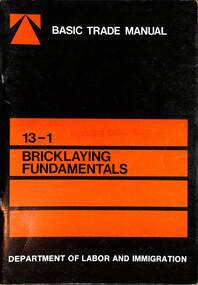
Book - Basic Trade Manual No 13-1 Bricklaying Fundamentals, Australian Government Publishing Service, 13-1 Bricklaying Fundamentals, 1975
... Explosive Factory Maribyrnong...Cordite...Explosive Factory Maribyrnong Cordite Avenue Maribyrnong This book is one of a series of manuals produced as an initiative of the Australian Apprenticeship Advisory Committee which comprised representatives of the Commonwealth and State Apprenticeship and Technical Education Authorities and Labour Departments. ...This book is one of a series of manuals produced as an initiative of the Australian Apprenticeship Advisory Committee which comprised representatives of the Commonwealth and State Apprenticeship and Technical Education Authorities and Labour Departments. Books published in this series include No 13-1 Bricklaying Fundamentals No 13-2 Bricklaying Operations These books were used extensively by apprentices as part of their apprenticeship training course. This series of books replaced the training manuals produced for use under the Commonwealth Technical School Training Scheme.Black and red soft covered book non-fictionThis book is one of a series of manuals produced as an initiative of the Australian Apprenticeship Advisory Committee which comprised representatives of the Commonwealth and State Apprenticeship and Technical Education Authorities and Labour Departments. Books published in this series include No 13-1 Bricklaying Fundamentals No 13-2 Bricklaying Operations These books were used extensively by apprentices as part of their apprenticeship training course. This series of books replaced the training manuals produced for use under the Commonwealth Technical School Training Scheme.explosive factory maribyrnong, cordite avenue, maribyrnong -
 Sunshine and District Historical Society Incorporated
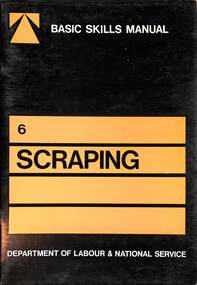
Book - Basic Skills Manual No 6 Scraping, Australian Government Publishing Service, No 6 Scraping, 1972
... Explosive Factory Maribyrnong...Cordite...Explosive Factory Maribyrnong Cordite Avenue Maribyrnong This book is one of a series of manuals produced as an initiative of the Australian Apprenticeship Advisory Committee which comprised representatives of the Commonwealth and State Apprenticeship and Technical Education Authorities and Labour Departments. ...This book is one of a series of manuals produced as an initiative of the Australian Apprenticeship Advisory Committee which comprised representatives of the Commonwealth and State Apprenticeship and Technical Education Authorities and Labour Departments. Books published in this series include No 1 Introduction to Metal Working No 2 Hand Tools No 3 Measuring Testing and Marking Out No 4 Limit Systems Tolerances and Fits No 5 Filing No 6 Scraping No 7 Drilling No 8 Off Hand Grinding No 9 Hand Tapping and Thread Cutting No 10 Basic Fitting Projects These books were used extensively by apprentices as part of their apprenticeship training course. This series of books replaced the training manuals produced for use under the Commonwealth Technical School Training Scheme.Black and orange soft covered book non-fictionThis book is one of a series of manuals produced as an initiative of the Australian Apprenticeship Advisory Committee which comprised representatives of the Commonwealth and State Apprenticeship and Technical Education Authorities and Labour Departments. Books published in this series include No 1 Introduction to Metal Working No 2 Hand Tools No 3 Measuring Testing and Marking Out No 4 Limit Systems Tolerances and Fits No 5 Filing No 6 Scraping No 7 Drilling No 8 Off Hand Grinding No 9 Hand Tapping and Thread Cutting No 10 Basic Fitting Projects These books were used extensively by apprentices as part of their apprenticeship training course. This series of books replaced the training manuals produced for use under the Commonwealth Technical School Training Scheme.explosive factory maribyrnong, cordite avenue, maribyrnong -
 Sunshine and District Historical Society Incorporated
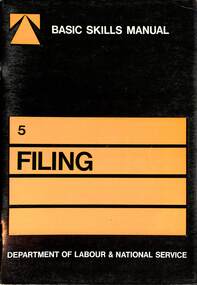
Book - Basic Skills Manual No 5 Filing, Australian Government Publishing Service, No 5 Filing, 1972
... Explosive Factory Maribyrnong...Cordite...Explosive Factory Maribyrnong Cordite Avenue Maribyrnong This book is one of a series of manuals produced as an initiative of the Australian Apprenticeship Advisory Committee which comprised representatives of the Commonwealth and State Apprenticeship and Technical Education Authorities and Labour Departments. ...This book is one of a series of manuals produced as an initiative of the Australian Apprenticeship Advisory Committee which comprised representatives of the Commonwealth and State Apprenticeship and Technical Education Authorities and Labour Departments. Books published in this series include No 1 Introduction to Metal Working No 2 Hand Tools No 3 Measuring Testing and Marking Out No 4 Limit Systems Tolerances and Fits No 5 Filing No 6 Scraping No 7 Drilling No 8 Off Hand Grinding No 9 Hand Tapping and Thread Cutting No 10 Basic Fitting Projects These books were used extensively by apprentices as part of their apprenticeship training course. This series of books replaced the training manuals produced for use under the Commonwealth Technical School Training Scheme.Black and orange soft covered book non-fictionThis book is one of a series of manuals produced as an initiative of the Australian Apprenticeship Advisory Committee which comprised representatives of the Commonwealth and State Apprenticeship and Technical Education Authorities and Labour Departments. Books published in this series include No 1 Introduction to Metal Working No 2 Hand Tools No 3 Measuring Testing and Marking Out No 4 Limit Systems Tolerances and Fits No 5 Filing No 6 Scraping No 7 Drilling No 8 Off Hand Grinding No 9 Hand Tapping and Thread Cutting No 10 Basic Fitting Projects These books were used extensively by apprentices as part of their apprenticeship training course. This series of books replaced the training manuals produced for use under the Commonwealth Technical School Training Scheme.explosive factory maribyrnong, cordite avenue, maribyrnong -
 Sunshine and District Historical Society Incorporated
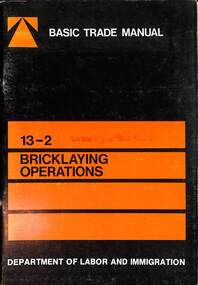
Book - Basic Trade Manual No 13-2 Bricklaying Operations, Australian Government Publishing Service, 13-2 Bricklaying Operations, 1975
... Explosive Factory Maribyrnong...Cordite...Explosive Factory Maribyrnong Cordite Avenue Maribyrnong This book is one of a series of manuals produced as an initiative of the Australian Apprenticeship Advisory Committee which comprised representatives of the Commonwealth and State Apprenticeship and Technical Education Authorities and Labour Departments. ...This book is one of a series of manuals produced as an initiative of the Australian Apprenticeship Advisory Committee which comprised representatives of the Commonwealth and State Apprenticeship and Technical Education Authorities and Labour Departments. Books published in this series include No 13-1 Bricklaying Fundamentals No 13-2 Bricklaying Operations These books were used extensively by apprentices as part of their apprenticeship training course. This series of books replaced the training manuals produced for use under the Commonwealth Technical School Training Scheme.Black and red soft covered book non-fictionThis book is one of a series of manuals produced as an initiative of the Australian Apprenticeship Advisory Committee which comprised representatives of the Commonwealth and State Apprenticeship and Technical Education Authorities and Labour Departments. Books published in this series include No 13-1 Bricklaying Fundamentals No 13-2 Bricklaying Operations These books were used extensively by apprentices as part of their apprenticeship training course. This series of books replaced the training manuals produced for use under the Commonwealth Technical School Training Scheme.explosive factory maribyrnong, cordite avenue, maribyrnong
