
Showing 20 items matching "crank box"
-
 Emerald Museum & Nobelius Heritage Park
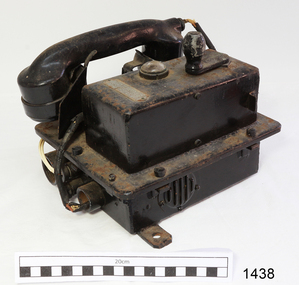
Machine - Kellogg Masterphone 1000, Kellogg, 1947-1953
... ...crank box...A non-dial phone connected to a crank box. Manufactured by Kellogg in the period 1947-1953 - the first phone made by Kellogg to have interchangeable parts for dial and non-dial models. ...Kellogg Masterphone 1000 Kellogg crank box telephone operator USA A non-dial phone connected to a crank box. ...This phone and crank box is a reminder of a time when there was no automatic connection when making a telephone call. Connection had to be mediated by an operator.A non-dial phone connected to a crank box. Manufactured by Kellogg in the period 1947-1953 - the first phone made by Kellogg to have interchangeable parts for dial and non-dial models. For this model, the user had to first turn the crank which generated a signal that was transmitted to the operator. The operator would then connect the call to the intended recipient by manually plugging the appropriate cables into the correct socket. The recipient could then hear the caller's voice through the speaker. Note , handset incorrectly nnumbeed VEMU1591kellogg masterphone 1000, kellogg, crank box, telephone operator, usa -
 Flagstaff Hill Maritime Museum and Village
Telephone
... Telephone for wall, metal, black in colour with metal box, crank handle and plastic handpiece. Made by the "Telephone Manufacturing Co, London." ...flagstaff hill warrnambool shipwrecked-coast flagstaff-hill flagstaff-hill-maritime-museum maritime-museum shipwreck-coast flagstaff-hill-maritime-village telephone telephone manufacturing co, london communications Telephone for wall, metal, black in colour with metal box, crank handle and plastic handpiece. Made by the "Telephone Manufacturing Co, London." ...Telephone for wall, metal, black in colour with metal box, crank handle and plastic handpiece. Made by the "Telephone Manufacturing Co, London." Wiring cover between handpiece and phone is perishing. flagstaff hill, warrnambool, shipwrecked-coast, flagstaff-hill, flagstaff-hill-maritime-museum, maritime-museum, shipwreck-coast, flagstaff-hill-maritime-village, telephone, telephone manufacturing co, london, communications -
 Flagstaff Hill Maritime Museum and Village
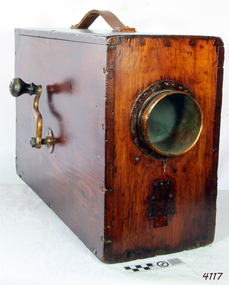
Instrument - Foghorn, Late 19th century
... English Rotary Norwegian Pattern nautical foghorn within a boxed pine varnished case with exposed corner dovetailing, original leather carrying strap, brass side crank, and original copper trumped horn. ...Therefore the item has a historical connection with sailing and maritime pursuits from our past. flagstaff hill warrnambool shipwrecked coast flagstaff hill maritime museum maritime museum shipwreck coast flagstaff hill maritime village great ocean road foghorn maritime technology maritime communication marine warning signal portable foghorn bellows foghorn crank handle Robert Hope-Jones John Northey None English Rotary Norwegian Pattern nautical foghorn within a boxed pine varnished case with exposed corner dovetailing, original leather carrying strap, brass side crank, and original copper trumped horn. ...A foghorn is a device that uses sound to warn of navigational hazards like rocky coastlines, or boats of the presence of other vessels, in foggy conditions. The term is most often used with marine transport. When visual navigation aids such as lighthouses are obscured, foghorns provide an audible warning of rocky outcrops, shoals, headlands, or other dangers to shipping. An early form of fog signal was to use a bell, gong, explosive signal or firing a cannon to alert shipping. From the early 20th century an improved device called the diaphone was used in place of these other devices, The diaphone horn was based directly on the organ stop of the same name invented by Robert Hope-Jones, creator of the Wurlitzer organ. Hope-Jones' design was based on a piston that was closed only at its bottom end and had slots, perpendicular to its axis, cut through its sides, the slotted piston moved within a similarly slotted cylinder. Outside of the cylinder was a reservoir of high-pressure air. Initially, this air would be admitted behind the piston, pushing it forward. When the slots of the piston aligned with those of the cylinder, air passed into the piston, making a sound and pushing the piston back to its starting position, whence the cycle would be repeated. This method of producing a low audible sound was further developed as a fog signal by John Northey of Toronto and these diaphones were powered by compressed air produced by an electric motor or other mechanical means that admitted extremely powerful low-frequency notes. The example in the Flagstaff collection is an early cased and portable diaphone used on pleasure or sailing craft. By manually turning the crank handle air is produced and fed into valves that direct air across vibrating metal reeds to produce the required sound. in foggy weather, fog horns are used to pinpoint a vessels position and to indicate how the vessel is sailing in foggy conditions. One blast, when sailing on starboard tack and two blasts, when sailing on a port tack and three dots, when with wind is behind the vessel. Since the automation of lighthouses became common in the 1960s and 1970s, most older foghorn marine installations have been removed to avoid the need to run the complex machinery associated with them, and have been replaced with an electrically powered diaphragm or compressed air horns. The example in the collection is significant as it was used in the early 19th century for sailing vessels was important but these portable crank fog horns have also been superseded by modern electric varieties. Therefore the item has a historical connection with sailing and maritime pursuits from our past.English Rotary Norwegian Pattern nautical foghorn within a boxed pine varnished case with exposed corner dovetailing, original leather carrying strap, brass side crank, and original copper trumped horn. Card accessory with Directions for Use in both English and French.Noneflagstaff hill, warrnambool, shipwrecked coast, flagstaff hill maritime museum, maritime museum, shipwreck coast, flagstaff hill maritime village, great ocean road, foghorn, maritime technology, maritime communication, marine warning signal, portable foghorn, bellows foghorn, crank handle, robert hope-jones, john northey -
 Flagstaff Hill Maritime Museum and Village
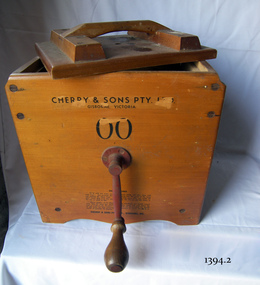
Domestic object - Butter Churn, Cherry and Sons, 1890-1920
... Rectangular manual butter churn, footed wooden box containing an X-shaped wooden interior rack, which is joined to an exterior metal hand crank with turned wood handle, through a hole in the box. ...A significant giving an snapshot into how early industrial manufacturing became established in Australia. flagstaff hill warrnambool shipwrecked-coast flagstaff-hill flagstaff-hill-maritime-museum maritime-museum shipwreck-coast flagstaff-hill-maritime-village butter churn cherry and sons wooden butter churn Label in block transfer Manufactured by Cherry & Sons Pty Ltd Gisborne, Victoria Size "00" Rectangular manual butter churn, footed wooden box containing an X-shaped wooden interior rack, which is joined to an exterior metal hand crank with turned wood handle, through a hole in the box. ...The subject item is a good example of a large, hand-operated Bentwood box butter churn used to make up to 14 pounds of butter. It was made in Gisborne, Victoria, by the famous manufacturer, E. Cherry, and is known as an Improved Patent No.2 model probably dating from the late 1800s. The Cherry works specialised in making all types of butter churns and equipment for both domestic use on farms and small butter factories during the late nineteenth and early to mid. twentieth centuries. Milk was "separated" to retrieve the cream which was then beaten to make butter. E Cherry began making various models of Cherry butter churns in 1858, Edward Cherry migrated from Herefordshire England to Australia in 1855 with his wife Ann Appleby, nee Davis, and established a joinery workshop at Gisborne, Victoria. He began by making butter churns in his spare time and his product soon became popular allowing him to establish a viable business. A factory was established in 1875 and he started to make churns of all sizes including up to industrial scale. He exported his products to many countries around the world, Edward Cherry died in 1909 and the business was then run by his son George until he died in 1917. E Cherry's other son Thomas (1861-1945) was also involved in the firm maintaining an interest for several years. He had been born in Gisborne and became a senior house medical surgeon at the Melbourne Hospital in 1890. He continued his studies at Kings College London, eventually becoming a renowned bacteriologist and agricultural scientist. A significant giving an snapshot into how early industrial manufacturing became established in Australia.Rectangular manual butter churn, footed wooden box containing an X-shaped wooden interior rack, which is joined to an exterior metal hand crank with turned wood handle, through a hole in the box. Beneath the hand crank is a hole from the interior lined with metal. The lid has a carry handle affixed to the lid on two cross pieces attached to the lid by brass screws.Label in block transfer Manufactured by Cherry & Sons Pty Ltd Gisborne, Victoria Size "00"flagstaff hill, warrnambool, shipwrecked-coast, flagstaff-hill, flagstaff-hill-maritime-museum, maritime-museum, shipwreck-coast, flagstaff-hill-maritime-village, butter churn, cherry and sons, wooden butter churn -
 Flagstaff Hill Maritime Museum and Village
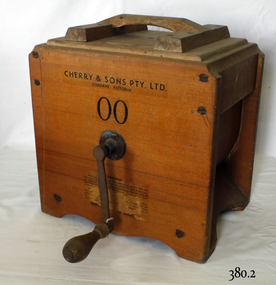
Domestic object - Butter Churn, Cherry and Sons, Circa 1890-1920
... Rectangular butter churn, a footed wooden box containing an X-shaped wooden interior rack, which is joined to an exterior metal hand crank with turned wood handle, through a hole in the box. ...Model 00 Rectangular butter churn, a footed wooden box containing an X-shaped wooden interior rack, which is joined to an exterior metal hand crank with turned wood handle, through a hole in the box. ...The subject item is a good example of a large, hand-operated Bentwood box butter churn used to make up to 14 pounds of butter. It was made in Gisborne, Victoria, by the famous manufacturer, E. Cherry, and is known as an Improved Patent No.2 model probably dating from the late 1800s. The Cherry works specialised in making all types of butter churns and equipment for both domestic use on farms and small butter factories during the late nineteenth and early to mid. twentieth centuries. Milk was "separated" to retrieve the cream which was then beaten to make butter. E Cherry began making various models of Cherry butter churns in 1858, Edward Cherry migrated from Herefordshire England to Australia in 1855 with his wife Ann Appleby, nee Davis, and established a joinery workshop at Gisborne, Victoria. He began by making butter churns in his spare time and his product soon became popular allowing him to establish a viable business. A factory was established in 1875 and he started to make churns of all sizes including up to industrial scale. He exported his products to many countries around the world, Edward Cherry died in 1909 and the business was then run by his son George until he died in 1917. E Cherry's other son Thomas (1861-1945) was also involved in the firm maintaining an interest for several years. He had been born in Gisborne and became a senior house medical surgeon at the Melbourne Hospital in 1890. He continued his studies at Kings College London, eventually becoming a renowned bacteriologist and agricultural scientist. A significant giving an snapshot into how early rural and industrial manufacturing became established in Australia.Rectangular butter churn, a footed wooden box containing an X-shaped wooden interior rack, which is joined to an exterior metal hand crank with turned wood handle, through a hole in the box. Beneath the hand crank is a hole from the interior lined with metal. The lid has a carry handle affixed to the lid on two cross pieces attached to the lid by brass screws.Lettering in black on a transfer "CHERRY & SONS PTY LTD. GISBORNE VICTORIA". Model 00warrnambool, shipwrecked-coast, flagstaff-hill, flagstaff-hill-maritime-museum, flagstaff-hill-maritime-village, butter churn, gisborne, edward cherry, george cherry, thomas cherry, ann appleby, dairy equipment -
 Flagstaff Hill Maritime Museum and Village
Magneto Electric Machine
... Box wooden containing a magneto electric machine cranked by metal handle which assists nervous and other diseases including rheumatism....flagstaff hill warrnambool shipwrecked-coast flagstaff-hill flagstaff-hill-maritime-museum maritime-museum shipwreck-coast flagstaff-hill-maritime-village magneto electric machine Box wooden containing a magneto electric machine cranked by metal handle which assists nervous and other diseases including rheumatism. ...Box wooden containing a magneto electric machine cranked by metal handle which assists nervous and other diseases including rheumatism.flagstaff hill, warrnambool, shipwrecked-coast, flagstaff-hill, flagstaff-hill-maritime-museum, maritime-museum, shipwreck-coast, flagstaff-hill-maritime-village, magneto electric machine -
 Nhill Aviation Heritage Centre
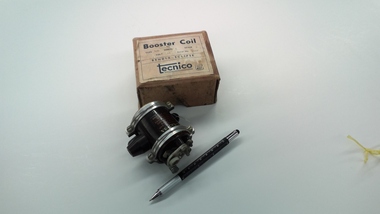
Memorabilia - Ignition coil / shower of sparks, 26/2/45
... crank starting the Cheetah aero engine. The type of ignition coil fitted to the Cheetah engine fitted to an Avro Anson, Parts stock unused. ignition coil, shower of sparks, ignition garth rohdes D-5271BA Adjust to 2.5 volts with standard secondary load for use on 12 volt system. On Box ...commonly known as 'shower of sparks' this buzzer type ignition coil is connected via the distributor and spark plug leads to generate a continuous spark while crank starting the Cheetah aero engine. The type of ignition coil fitted to the Cheetah engine fitted to an Avro Anson, Parts stock unused.electronic ignition coil with high tension outlet and set of adjustable breaker points and connectors. New in original box.D-5271BA Adjust to 2.5 volts with standard secondary load for use on 12 volt system. On Box 'Booster Coil Type 512 Model 1 Style E' serial number 1552 ignition coil, shower of sparks, ignition, garth rohdes -
Federation University Historical Collection
Instrument, Hand Cranked four Bar Telephone Magneto, c1900-1920
... The hinged box opening reveals 4 sections and a cog attached to the handle Hand Cranked four Bar Telephone Magneto Instrument ...Used in Electrical Engineering Department at the Ballarat School of Mines (personal communications of A. Senior). Black coloured generator timber box with turning handle. The hinged box opening reveals 4 sections and a cog attached to the handleelectrical engineering, a. senior, generator, magneto, telephone -
 Flagstaff Hill Maritime Museum and Village
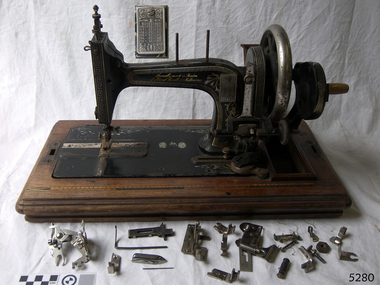
Domestic object - Sewing Machine, 1911-1920s
... The black-painted metal machine is hand-operated and the crank handle is wooden. The machine is on a wooden base and has a box included that contains many machine accessories. ...The black-painted metal machine is hand-operated and the crank handle is wooden. The machine is on a wooden base and has a box included that contains many machine accessories. ...This machine was made in Baden, Germany, for the Ward Brothers of Melbourne, who imported machines from various manufacturers and had them branded with their Ward Brothers decals. This machine is most likely dated after 1911, when the Ward Brothers became two separate businesses, as there are only remnants of two portrait decals on the machine bed. There is a fitted embedded ruler in the wood of the base. Many sewing machine manufacturers in Germany produced their machines specifically for export. A company could mass-produce its machines and give the same product several different brand names, according to their overseas buyers. There was a huge market for domestic machines as it enabled tailored clothing to be made in households at a fraction of the retail prices. Ward Brothers began in Australia in the late 1890s and early sewing machines sold by them had the three brothers on their decals. In 1911 the brothers divided into two separate firms, one operating on his own, the other two remaining together, and all still operating in Melbourne and at first still using the name Ward Brothers.This sewing machine is one of two hand-operated Ward Brothers machines in our collection that were made in Baden, Germany, and the only one that has the two Ward Brothers on its decal and that has side to side slide plates. This machine represents the early domestic market for sewing machines, making it possible for the everyday homemaker to produce fashionable garments and linen ware that was affordable. The owner of this machine could work at more than one location as it was portable and did not require a large space to set up. The machine is associated with the well-known Ward Brothers of Melbourne, who sold imported sewing machines that were branded with their own name.Sewing machine with case. The black-painted metal machine is hand-operated and the crank handle is wooden. The machine is on a wooden base and has a box included that contains many machine accessories. Made in Baden, Gemnamy, for Ward Brothers of Melbourne. There is an attached metal plate on the front with rows of groups of numbers on it. The wooden bed has an embedded ruler. The machine had decals with geometric designs and the maker's name.Printed in script: "Specially made in Baden / by Ward Broth Melbourne"flagstaff hill, warrnambool, maritime museum, maritime village, great ocean road, shipwreck coast, sewing machine, hand operated, domestic sewing, homemade clothing, fashion, ward brothers, made in germany, baden, front and rear slide plates, post wwi, post 1911 -
 Queenscliffe Maritime Museum
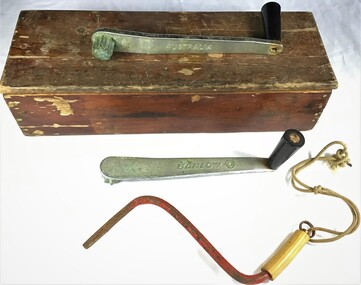
Tool - Cranks for Barlow winch
... Australian made yachting winch equipment made in the 1960s Yachting Barlow Winches Winches Barlow, Australia A wooden box containing 3 winches Tool Cranks for Barlow winch ...Started way back in the mid sixties, Malcolm Barlow first started to build BARLOW winches in a small garage in Sydney. Even though, or maybe because of the uncanny resemblance of those early winches to the American manufactured BARIENT winches, they have stood the test of time.Australian made yachting winch equipment made in the 1960sA wooden box containing 3 winchesBarlow, Australia yachting, barlow winches, winches -
 Geoffrey Kaye Museum of Anaesthetic History
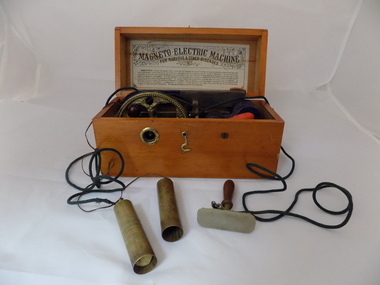
Equipment - Magneto Electric Machine
... Consists of a wooden box containing a hand driven generator, with terminals for the attachment of electrodes that may be held by the patient or placed against the patient's skin. The directions for use include information about wetting the sponges and the patient's hands before cranking the machine to produce a small electric shock. ...Consists of a wooden box containing a hand driven generator, with terminals for the attachment of electrodes that may be held by the patient or placed against the patient's skin. The directions for use include information about wetting the sponges and the patient's hands before cranking the machine to produce a small electric shock. ...Experimentation with electricity for medical purposes has its origins in the late 18th Century. Throughout the 19th Century it became more common, including as a proposed treatment for 'nervous' disorders. This device is a small, portable, 'at-home' device.Device for administering electric stimulation to patients. Consists of a wooden box containing a hand driven generator, with terminals for the attachment of electrodes that may be held by the patient or placed against the patient's skin. The directions for use include information about wetting the sponges and the patient's hands before cranking the machine to produce a small electric shock. electricity, medicine -
 Kiewa Valley Historical Society
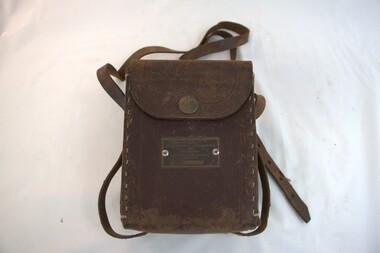
Electric Megger (Insulation Tester) and its case
... box in dark brown bakerlite casing. It has an agent's plaque fixed to the left of the face and on the right is the marker's recessed stamp. In the middle in a transparent window so the level of ohms can be read. The front also has two recessed fixing knobs in black. On one side is a crank...box in dark brown bakerlite casing. It has an agent's plaque fixed to the left of the face and on the right is the marker's recessed stamp. In the middle in a transparent window so the level of ohms can be read. The front also has two recessed fixing knobs in black. On one side is a crank ...Megger as the device was called, is in fact its brand name. It is a device that supplies a DC (direct current as per car batteries) voltage to enable testing of electrical apparatus. This particular device produces 250volts DC when the handle is turned vigorously. If an electrical device, such as a kettle or toaster, blew a fuse or tripped a circuit breaker, when switched on, then it must be checked electrically before any more use. Following the repair of the faulty item a megger would be used to check if either of the AC 240volt plugs leads were touching the metal case (earth). The output leads of the megger would be connected with one to the earth (metal case) and the other to each of the power connections in turn. A good megger reading of 50,000 ohms (resistance) would enable the device to be returned to service. A reading of zero ohms resistance would mean that it would again blow a fuse, and was therefore unsafe to use. In the electrical industry e.g. the former State Electricity Commission, a megger would be used to test lots of similar item in sequence. Because of the vigorous job of winding the handle, two persons were often used to save time. One would crank madly whilst the other shifted the leads. This particular megger is of a small voltage, but other meggers are bigger and have a few ranges of DC voltages able to be selected. The optimal megger for large Generating machines was motor driven megger. This was applied to the device being tested for a duration of approximately 30 minutes with reading of the resistance taken at regular intervals.All equipment belonging to the State Electricity Commission of Victoria was labelled with a metal plaque attached to it. The SECV constructed the Kiewa Hydro Electric Scheme in the Upper Kiewa Valley and on the Bogong High Plains. The scheme began in 1938 and finished in 1961 when this megger was used and also possibly later as the SECV remained to maintain and operate the Scheme. This megger is of significance in relation to the advancement of technology.A rectangular box in dark brown bakerlite casing. It has an agent's plaque fixed to the left of the face and on the right is the marker's recessed stamp. In the middle in a transparent window so the level of ohms can be read. The front also has two recessed fixing knobs in black. On one side is a crank handle with a knob that lifts up and is turned vigorously to create the voltage. The back has four recessed screws and four small leather pads. There is a hole on each side to insert wires. There are two copper insulated wires. The SECV Plaque states: State/Electricity Commission/of/Victoria/ Electrical Engineer's Section/ No.1747 The Agent's Plaque states: H. Rowe & Co. Pty Ltd/Melbourne & Sydney/Sole Agents/in Australia for/Evershed & Vignoles Ltd Maker's states: 500 volts/Megger/Regd Trade Mark/Made in England/Patent No/400728electrical meters, electrical equipment, fuses, safety, state electricity commission of victoria, mt beauty, bogong village -
 Anglesea and District Historical Society
Butter Churn, E. Cherry & Sons, Pre 1900-1930
... box churn. Outside is an x shaped wooden rack which is joined to an exterior metal hand crank through a hole in the box....box churn. Outside is an x shaped wooden rack which is joined to an exterior metal hand crank through a hole in the box. ...Butter churn, wooden, hand operated with wood and metal turning handle. It has a detatchable wooden lid. Called the bentwood box churn. Outside is an x shaped wooden rack which is joined to an exterior metal hand crank through a hole in the box.Side: E. Cherry & Sons, Gisbornebubb family, evans family, butter churn, bentwood box churn -
 Williamstown Historical Society Inc
Functional object - Magneto Electric Shock Machine, William Skidmore, c.1900s
... Directions: Connect two metallic cord and wires with the sockets in the end of the box and apply the handle connected with the other ends of the metallic cords to any part of the person through which it is desirable to pass the current of electricity. Then turn the crank...Directions: Connect two metallic cord and wires with the sockets in the end of the box and apply the handle connected with the other ends of the metallic cords to any part of the person through which it is desirable to pass the current of electricity. Then turn the crank ...Electric shock machines were used in the late 1800s and early 1900s by doctors who believed that electrical currents could treat various medical conditions. The efficacy of this treatment was doubtful. An 1890s magneto shock machine enclosed in a cedar box with instructions on the under-side of the lid. It is actuated by turning the exterior handle which is attached to two gear wheels, one of which has a cord belt that rotates a dual coil. Metallic wires are attached to two brass handles which when held in each hand conduct the current through the body.instuctions for use: "Newly invented improved Magneto-Electric Machine. Manufactured by Wiliam Skidmore Surgical Instrument Maker. Cemetery Road, Sheffield. Directions: Connect two metallic cord and wires with the sockets in the end of the box and apply the handle connected with the other ends of the metallic cords to any part of the person through which it is desirable to pass the current of electricity. Then turn the crank ... In applying it for the tooth ache, tic-doloreux or neuralgia ..." -
Tatura Irrigation & Wartime Camps Museum
Copy Machine
... Box 462.|Metal plaque reads: "Business Aids Mechanised", Block & Anderson Ltd, London & Darlington, Made in England. (Serial No.): 60685. Copy machine, metal, manual crank ...Possibly used at Hill Top Golf ClubCopy machine, metal, manual crank-handle type (with rollers). "BANDA" brand. With fabric (canvas?) cover.(Sticker) label reads: For Sale and Service, Max Hurle Swan Hill, Phone 2-1397, P.O. Box 462.|Metal plaque reads: "Business Aids Mechanised", Block & Anderson Ltd, London & Darlington, Made in England. (Serial No.): 60685.tatura, commerce, office, equipment, stationery -
 Parks Victoria - Cape Nelson Lightstation
Functional object - Telephones
... The five phones each have two bells at the top of the box and a crank handle at the side. Three phones have brass bells, two have black metal bells. ...The five phones each have two bells at the top of the box and a crank handle at the side. Three phones have brass bells, two have black metal bells. ...Each of the five telephones is attached to a timber, wall‐mounted box. They are original to the precinct buildings and date from the early twentieth century. Located in the lighthouse lantern room, the former head keeper’s quarters, the former assistants’ quarters, and the buildings known today as the generator shed and the café, they formed an intercom system that facilitated communication between the lightstation buildings.Wall‐mounted Bakelite telephones with crank handles can be found at all six light stations, however Gabo Island has the only other example of a timber‐mounted phone. Its design is slightly different for incorporating an inclined surface for jotting down notes. As fixtures, the telephones are considered to be part of the building fabric and included in the Victorian Heritage Register listing for the Cape Nelson Lightstation (H1773; 18 February 1999). They are historically significant for their historical and technical values as part of the early communications system used at the lightstation.Five similar intercom system telephones. All are wall mounted timber boxes with Bakelite black hand sets and black cords. The five phones each have two bells at the top of the box and a crank handle at the side. Three phones have brass bells, two have black metal bells. All phones have instructions on the front either in a frame or glued to the timber."C of A" and "PMG" Written instructions on how to use the phones are printed on paper fixed to the front of the telephones. "TO CALL ....../ TO ANSWER...../ WHEN FINISHED....." -
 Parks Victoria - Point Hicks Lightstation
Telephones
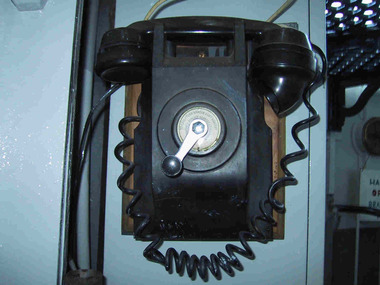
... The lighthouse retains ablack Bakelite telephone attached to the lantern room wall on timber box mount. It has a crank handle with instructions for its use on the crank dial, and a coiled handset cord, which probably dates the phone to just after 1949 when coiled examples like these began to replace fabric covered smooth cords. ...The lighthouse retains ablack Bakelite telephone attached to the lantern room wall on timber box mount. It has a crank handle with instructions for its use on the crank dial, and a coiled handset cord, which probably dates the phone to just after 1949 when coiled examples like these began to replace fabric covered smooth cords. ...The lightstation was connected by telephone to Cann River in 1928. The lighthouse retains ablack Bakelite telephone attached to the lantern room wall on timber box mount. It has a crank handle with instructions for its use on the crank dial, and a coiled handset cord, which probably dates the phone to just after 1949 when coiled examples like these began to replace fabric covered smooth cords. An image in 1991 shows the phone in the lower level of the lantern room It is one of four telephones at the lightstsation; with two others attached to walls in the assistant keepers’ quarters, and one in the head keeper’s quarters. The four phones formed an intercom system that facilitated communication between the lightstation buildings. Three telephones of the same wall-mounted, crank dial type remain at Gabo Island Lightstation; four remain at Cape Otway and five older examples remain at Cape Nelson Lightstation As fixtures attached to the wall, the four telephones are considered to be part of the building fabric and therefore included in the existing Victorian Heritage Register listing for the lightstation (VHR 1983).As fixtures attached to the wall, the four telephones are considered to be part of the building fabric and therefore included in the existing VHR listing for the lightstation (VHR 1983).Four telephones with a crank handle mounted on a wooden base, one is fixed to the wall of the lantern room and is black bakelite. Yes -
 Parks Victoria - Gabo Island Lightstation
Telephone
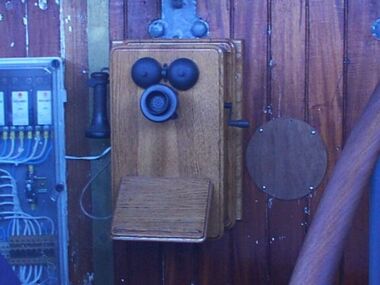
... Dating from the early twentieth century, it is the earliest of four telephones at the lightstation and the sole box-mounted model, and is also the only telephone in the lighthouse. It has a crank handle, a separate black hand piece and an inclined horizontal shelf for jotting down notes. ...Dating from the early twentieth century, it is the earliest of four telephones at the lightstation and the sole box-mounted model, and is also the only telephone in the lighthouse. It has a crank handle, a separate black hand piece and an inclined horizontal shelf for jotting down notes. ...It has been restored by lightstation staff in 2002. The phone has a fixed mouth piece and is attached to the lantern room wall on a timber box mount. Dating from the early twentieth century, it is the earliest of four telephones at the lightstation and the sole box-mounted model, and is also the only telephone in the lighthouse. It has a crank handle, a separate black hand piece and an inclined horizontal shelf for jotting down notes. The four telephones provided an intercom system that facilitated communication between the lightstation buildings. Four other wall-mounted phones remain at the Cape Nelson Lightstation but unlike the Gabo Island example they do not provide a rest for jotting down notes. As a fixture, the telephone is part of the building fabric and is included in the existing Victorian Heritage Register extent of registration for the Gabo Island Lightstation (H1773). As a fixture, the telephone is part of the building fabric and is included in the existing Victorian Heritage Register extent of registration for the Gabo Island Lightstation (H1773). It is significant for its historic value and provenance, and relative uniqueness in a Victorian lighthouse.Telephone, wall-mounted in a wooden surround. Black crank handle on right-hand side. Separate black hand piece on left-hand side attached to main body by a fabric covered cord. The mouthpiece is fixed to the front of the telephone. There is a wooden rest attached to the lower front of phone on an angle. There are two half circular bells attached to the phone above the mouthpiece. -
 Mont De Lancey
Knife Cleaner, Circa 1929
... Cast iron and wood encased, hand-cranked, static type knife cleaner. Wooden box shape with cast iron and wood handle and 'buffer' enclosed within....knife cleaners Cast iron and wood encased, hand-cranked, static type knife cleaner. Wooden box shape with cast iron and wood handle and 'buffer' enclosed within. ...Cast iron and wood encased, hand-cranked, static type knife cleaner. Wooden box shape with cast iron and wood handle and 'buffer' enclosed within.knife cleaners -
Emerald Museum & Nobelius Heritage Park
Equipment - Butter Churn, Unknown maker
... Wooden, cube-shaped box with a metal crank affixed to one side and a removable wooden lid on top. ...These insights facilitate a better understanding of the agricultural history of the Emerald region, as well as the social history of food production in a domestic setting. dairy industry dairy farm and equipment Farm machinery Farming farm domestic Butter churn Crank: 47797 / Wooden, cube-shaped box with a metal crank affixed to one side and a removable wooden lid on top. ...A butter churn is used to convert cream into butter. This particular type of churn uses a crank to turn a series of paddles to create the required movement to churn the cream into butter. Butter churns such as this were used in domestic houses as well as farms until around the early to mid-20th century. The paddle butter churn was used in farms and domestic settings until the early to mid twentieth century. After a cow was milked, the milk would be left in a cool setting for up to a week until the cream rose to the top. The cream would then be put into the churn to separate the fat of the cream from the buttermilk. The crank-operated paddles would create the necessary movement required to separate the fat. Salt was then added and the butter was kneaded and cleaned. Patting the butter with butter pats into one pound or half pound blocks would complete the process.This object is of historic significance as it offers an insight into how butter was produced in households and dairy farms before the process became mechanized. These insights facilitate a better understanding of the agricultural history of the Emerald region, as well as the social history of food production in a domestic setting.Wooden, cube-shaped box with a metal crank affixed to one side and a removable wooden lid on top. Interior of the box contains wooden paddles which are connected to the metal crank.Crank: 47797 /dairy industry, dairy, farm and equipment, farm machinery, farming, farm, domestic, butter churn
