
Showing 165 items matching "cycling australia"
-
 Federation University Historical Collection
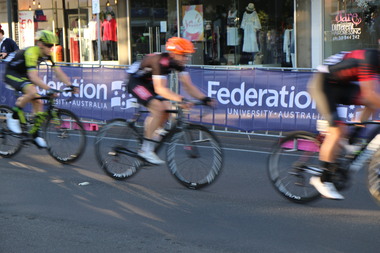
Photograph, Matthew Freeman, Federation University Cycling RoadNats Championships, 01/2018
... ...cycling australia...The event attracts riders from around the world. roadnats cycling federation university cycling australia ballarat sturt street ballarat bicycle Colour photographs of cyclists participating in RoadNats in Sturt Street Ballarat riding in front of a Federation University banner. ...The Federation University RoadNats Championships held in Ballarat from 03-07 January 2018. The event attracts riders from around the world. Colour photographs of cyclists participating in RoadNats in Sturt Street Ballarat riding in front of a Federation University banner. roadnats, cycling, federation university, cycling australia, ballarat, sturt street ballarat, bicycle -
 Trafalgar Holden Museum
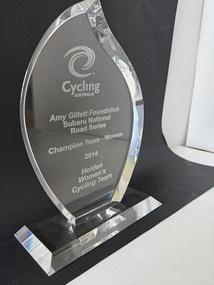
Award
... cycling australia, amy gillett foundation subaru national road series, champion team- women, 2014, holden womens cycling team...Award Trophy cycling australia, amy gillett foundation subaru national road series, champion team- women, 2014, holden womens cycling team acrylic trophy on acrylic mounting Award ...acrylic trophy on acrylic mountingcycling australia, amy gillett foundation subaru national road series, champion team- women, 2014, holden womens cycling teamaward, trophy -
 Geelong Cycling Club
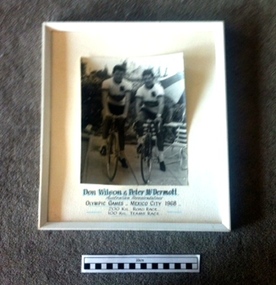
Framed Photograph, 1968
... It shows two olympic cyclists with their cycles and in their Australian cycling uniforms....It shows two olympic cyclists with their cycles and in their Australian cycling uniforms. Framed Photograph ...Olympic Games representatives for the 1968 games in Mexico City. Don Wilson and Peter McDermott were members of the Geelong West Cycling Club. The names printed under the photograph should be reversed as Don Wilson is the rider on the right of the photograph.Very significant. These two cyclists follow Russell Mockridge, Barry Coster and John Hines all of whom were very successful international cyclists.Black and white photograph in a white wooden frame. It shows two olympic cyclists with their cycles and in their Australian cycling uniforms."Don Wilson & Peter McDermott/Australian Representatives Olympic Games/Mexico City 1968/200km Road Race/100km Teams Race."don wilson; peter mcdermott; olympic games; mexico city; 1968; 200km road race; 100km teams race; -
 Whitehorse Historical Society Inc.
Article, Looking back to a rural past, Tally Ho corner, 1986
... Also on Alan ('Pete') Angus, Australian Road cycling champion, deceased soldier of World War II....Article on the Parsons Family of Tally Ho in the 1920s, and on Alan ('Pete') Angus, Australian Road cycling champion, deceased soldier of World War II....Also on Alan ('Pete') Angus, Australian Road cycling champion, deceased soldier of World War II. ...Article on the Parsons Family of Tally Ho in the 1920s.Article on the Parsons Family of Tally Ho in the 1920s, and on Alan ('Pete') Angus, Australian Road cycling champion, deceased soldier of World War II.Article on the Parsons Family of Tally Ho in the 1920s.tally ho, blacksmiths, cycling, angus, alan, parsons, william -
 Federation University Historical Collection
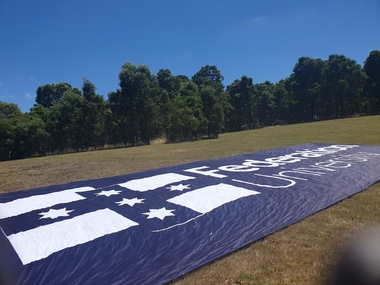
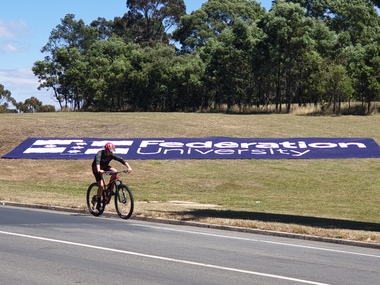
Photograph, Federation University Banner during the 2021 Australian Cycling Road Nationals, 03/02/2021
... federation university australia...cycling...federation university australia cycling road national competition banner A large banner along Chancellor drive, Mount Helen Campus Federation University Banner during the 2021 Australian Cycling Road Nationals Photograph ...A large banner along Chancellor drive, Mount Helen Campusfederation university australia, cycling road national competition, banner -
 Federation University Historical Collection
Photograph, Clare Gervasoni, Federation University Banner during the 2021 Australian Road Cycling Championships, 03/02/2021
... federation university australia...cycling...federation university australia cycling road national competition banner australian road cyclng championships bicycle A large banner along Chancellor drive, Mount Helen Campus Federation University Banner during the 2021 Australian Road Cycling Championships Photograph Clare Gervasoni ...A large banner along Chancellor drive, Mount Helen Campusfederation university australia, cycling road national competition, banner, australian road cyclng championships, bicycle -
 Bendigo Military Museum
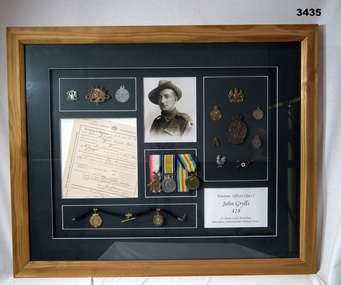
Memorabilia - MONTAGE WW1, FRAMED, Post WW1
... Bottom RHS of Montage: “Warrant Officer Class I John Grylls - 418 1st ANZAC Cycle Battalion Australian Commonwealth Military Forces” ...Australia 10.1.1919, discharged from the AIF 30.3.1919. Montage framed 418 Bottom RHS of Montage: “Warrant Officer Class I John Grylls - 418 1st ANZAC Cycle Battalion Australian Commonwealth Military Forces” Fawn wooden frame with white cardboard backing, glass front & rear white hanging cord. ...Original owners: John GRYLLS Reg No 418, Unit: 4th Light Horse, WWI John Frederic GRYLLS Reg No 51033, Unit: RAAF, WWII John Grylls No 418 enlisted on 19.8.1914 in the 4th LH Regt AIF age 28 years 8 months. He enlisted with the rank of Sergeant having had 3 years prior service in the LH. Embarked for Egypt 19.10.1914, embark for Gallipoli 20.5.1915, to hospital 12.12.1915 with Mumps, rejoin unit 22.12.1915, embark for France 25.3.1916, transfer to 1st Anzac Cyclist Batt 12.5.1916, promoted to CSM 13.5.1916, promoted to RSM 7.4.1917, hospital 9.7.1917 with Scabies, rejoin unit 31.7.1917, embark for Australia 24.9.1918, disembark Colombo with Lobar Pnuemonia, embark for Australia 10.1.1919, discharged from the AIF 30.3.1919.Fawn wooden frame with white cardboard backing, glass front & rear white hanging cord. Sepia photo of WO Class 2 John GRYLLS with his medals, badges & Certificate of Discharge. All mounted on dark green background & border.Bottom RHS of Montage: “Warrant Officer Class I John Grylls - 418 1st ANZAC Cycle Battalion Australian Commonwealth Military Forces” montage, framed, 418 -
 Geelong Cycling Club
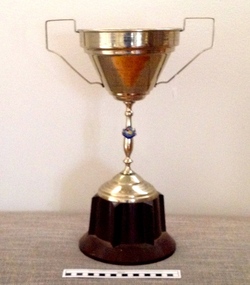
Trophy, 1938
... The winner of the race - Jack Baker was a cycling commentator In the 1920s, in the 1930s he cycled around Australia. In 1937 he rode in Europe and England representing Bruce Small for Malvern Star. ...The winner of the race - Jack Baker was a cycling commentator In the 1920s, in the 1930s he cycled around Australia. In 1937 he rode in Europe and England representing Bruce Small for Malvern Star. ...The winner of the race - Jack Baker was a cycling commentator In the 1920s, in the 1930s he cycled around Australia. In 1937 he rode in Europe and England representing Bruce Small for Malvern Star. Jack was well known for his commentary at races at the Geelong velodrome track after the war. The presentation of this trophy is another indicator of the popularity and importance placed on cycling races in regional areas during the early to mid 20th century.Silver plated cup on bakelite stand with engravings on the cup. The cup has two handles and a city of Geelong badge adhered to the stem."GWCC/1938/33 Mile Road Race/Pres By/F.W. Walker/Won By/J.J. Baker/Hcap Scratch Time 1hr27min12sec"geelong, cycling, club, gwcc, 1938, 33 mile road race, f.w. walker, j.j. baker -
 Wangaratta RSL Sub Branch
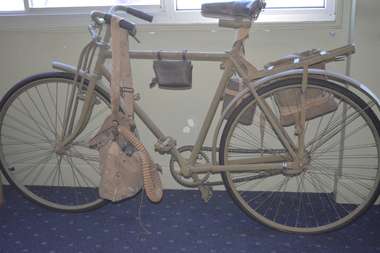
Vehicle - Bicycle
... The Australian Cycling Corps was formed in Egypt in 1916 as part of the Australian Imperial Force (AIF), and fought on the Western Front in France and Belgium during World War I. ...The Australian Cycling Corps was formed in Egypt in 1916 as part of the Australian Imperial Force (AIF), and fought on the Western Front in France and Belgium during World War I. ...The Australian Cycling Corps was formed in Egypt in 1916 as part of the Australian Imperial Force (AIF), and fought on the Western Front in France and Belgium during World War I. They were used mainly as despatch riders, while also conducting reconnaissance and patrolling. It was disbanded in 1919.When the Australian Imperial Force (AIF) was reorganised and expanded in Egypt in 1916 following its evacuation from Gallipoli, each of its five infantry divisions was allocated a company of cyclists Green coloured bicycle complete with mud guards over front and rear wheels with carrier attached.dispatch riders bicycle, ww1, australian cycling corps -
 Warrnambool and District Historical Society Inc.
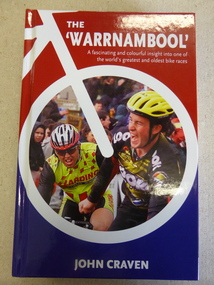
Book, John Gerard Craven, The 'Warrnambool' A fascinating and colourful insight into one of the world's greatest and oldest bike races, 2015
... Founded in 1895 the Melbourne to Warrnambool Cycling Classic is an Australian sports institution. It is the world’s second-oldest bike race and the Southern Hemisphere’s longest one-day cycle event. ...Founded in 1895 the Melbourne to Warrnambool Cycling Classic is an Australian sports institution. It is the world’s second-oldest bike race and the Southern Hemisphere’s longest one-day cycle event. ...History of the Melbourne to Warrnambool Cycling ClassicThis is a hard cover book of 406 pages. The cover has a blue and red background with two colour photographs of cyclists, some printed material and a marketing code with the ISBN number. The printed material includes a Contents page, an Honour Roll of winners of the Melbourne to Warrnambool/Warrnambool to Melbourne Cycle Race and photographs, both in black and white and colour and illustrations.non-fictionHistory of the Melbourne to Warrnambool Cycling Classiccycling, melbourne to warrnambool -
 Melbourne Legacy
Photograph - Photo, 1996
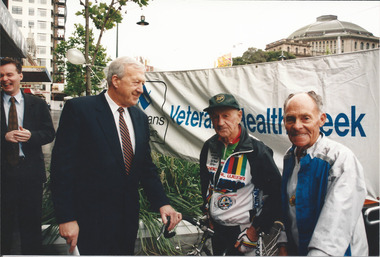
... The cyclists were Jack Griffin (72) and Eric Doherty (76), who had recently completed their round Australia cycling expedition. The article says: "Reception at Legacy House for Veteran Cyclists There was a big media roll up at Legacy House Melbourne recently to cover the finish of a marathon bike ride around Australia by two very fit veterans. ...The cyclists were Jack Griffin (72) and Eric Doherty (76), who had recently completed their round Australia cycling expedition. The article says: "Reception at Legacy House for Veteran Cyclists There was a big media roll up at Legacy House Melbourne recently to cover the finish of a marathon bike ride around Australia by two very fit veterans. ...From an article in The Answer newsletter December 1996 these veteran cyclists were part of Veterans' Health week which is an awareness campaign from the Department of Veterans' Affairs. The cyclists were Jack Griffin (72) and Eric Doherty (76), who had recently completed their round Australia cycling expedition. The article says: "Reception at Legacy House for Veteran Cyclists There was a big media roll up at Legacy House Melbourne recently to cover the finish of a marathon bike ride around Australia by two very fit veterans. Legatee President Ray Ward and Veterans' Affairs Deputy Commissioner Brian Flynn were on hand to congratulate them." Photos from the Department of Veterans' Affairs.A record of a special event for Veteran health Week in 1996.Colour photo of veteran cyclists in Veterans' Health WeekHandwritten on the back '3' in red pen.legacy promotion, answer -
 Bendigo Historical Society Inc.
Photograph - HORATIO ST VINCENT BUSST
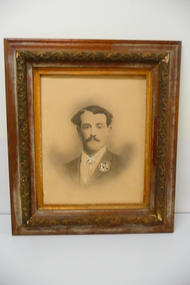
... Brother T.W.Busst Junior was an Australian Amateur Cycling Champion. Framed in a very ornate timber frame with raised carved decorative border....Brother T.W.Busst Junior was an Australian Amateur Cycling Champion. Framed in a very ornate timber frame with raised carved decorative border. ...Sepia portrait of Horatio St Vincent Busst, born Bendigo 1866, died Kew 8/6/1940, educated at St Killians and Bendigo High School, in 1883 was appointed Mining Warden of Sandhurst and in 1889 was appointed Mining Registrar for the district of Sandhurst. Father Thomas Walter Busst native of Staffordshire England arrived in Bendigo 1856. Brother T.W.Busst Junior was an Australian Amateur Cycling Champion. Framed in a very ornate timber frame with raised carved decorative border.photograph, person, busst, bendigo & vicinty page 248 bendigo advertiser newspapers cuttings local identities page 34 -
 Melton City Libraries
Photograph, Edna Barrie and Hubert Opperman, 1994
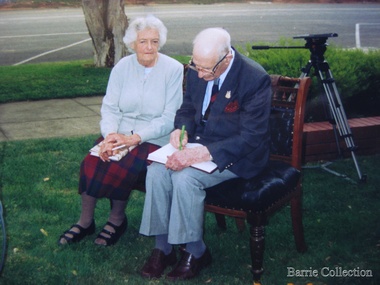
... cycling. Throughout the 1920’s and 1930’s “Oppy” was the dominant figure in Australian cycling. ...cycling. Throughout the 1920’s and 1930’s “Oppy” was the dominant figure in Australian cycling. ...The plaque of Oppy reads: Hubert Opperman was born in Rochester, his early job as a Telegraph Boy encouraged his love of cycling. Throughout the 1920’s and 1930’s “Oppy” was the dominant figure in Australian cycling. He first won the Australian Road Cycling Championship in 1924. He won it again in 1926, 1927 and 1929. At the same time he was becoming and international star. This statue is modelled on his on his stunning victory at the Bol D’Or in Paris in the same year that he was highly placed in the prestigious Tour de France. His first place in the 1265 kms Paris - Brest- Paris road race was the highlight of his sporting career. That year he was voted Sportsman of the Year by a French newspaper. In 1991 Sir Hubert attended the Centenary Celebrations of the race and was honoured with Gold Medal of the City of Paris “Oppy” retired from cycling in 1940. Typically he celebrated his retirement with a 24 hour marathon at the Sydney Velodrome breaking one hundred and one records in the process. After war service with the RAAF he entered Federal politics holding the Victoria seat of Corio for the Liberal Party from 1949 until 1967. During this period he served as Minister for Shipping and Transport and Minister for Immigration. In 1967 he was appointed Australian High Commissioner for Malta, receiving the OBE in 1952 and was knighted in 1968. This Statue was officially unveiled by SIR HUBERT OPPERMAN On his 90th birthday, 29th May 1994Oppy signing Edna Barrie's leatherbound copy of 'Melton-Plains of Promise'. . The Inscription reads - To Edna with my Melton remembrances as the place I first rode a bicycle Hubert Opperman ‘Oppy’ [ 29/5/1904 – April 1996]. Edna Barrie contacted and organised for Hubert Opperman to launch the book. (She was also present at his last bike ride at Rochester in 1995.)local identities, local significant events -
 Warrnambool and District Historical Society Inc.
Medal - Four medals - Melbourne to Warrnambool Cycle Race
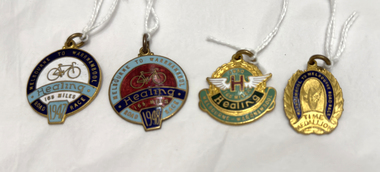
... It is the second oldest one-day cycling race in the world and the longest one-day cycling race in Australia. Four of these medals were awarded to Ron Vernon from the Footscray Club. ...It is the second oldest one-day cycling race in the world and the longest one-day cycling race in Australia. Four of these medals were awarded to Ron Vernon from the Footscray Club. ...These four medals relate to the Melbourne to Warrnambool Cycle Race. This race was first held in 1895 and continues to the presenr day. It was originally a handicap race from Warrnambool to Melbourne but after 1938 it became a Melbourne to Warrnambool race After 1995 it became a scratch race and today the distance is shorter with the race starting from Avalon. It is the second oldest one-day cycling race in the world and the longest one-day cycling race in Australia. Four of these medals were awarded to Ron Vernon from the Footscray Club. All riders who complete the race in a given time are awarded a Time Medallion. In 1947 Ron Vernon, riding the latest Healing Championship Cycle came in 26th. In 1948, riding off the 47 minute handicap, he took 7th place. IHe also won the Colac Sprint in that race. In 1950 he took 9th place. The fourth medal is a Time Medallion awarded to a cyclist in 1960. These medals are of considerable interest as mementoes of the Melbourne to Warrnambool Cycle Race, an important sporting event associated with Warrnambool and one that is known Australia-wide and internationally..1 A round metal medal with a dark blue band around the edge, a light blue strip across the middle and a light blue tab at the bottom of the medal. The medal has gold-coloured printing and a gold image of a bicycle. A metal ring is attached at the top. .2 a round metal medal similar in design to .1 above with light blue, dark blue and red colouring. A metal ring is attached at the top .3 a green and gold round metal medal with a green curved strip attached to the bottom of the medal and white wings placed in the middle of the medal. The labelling is red and gold. A metal ring is attached at the top. .4 A gold and dark blue oval-shaped metal medal. A metal ring is attached at the top. .1 Melbourne to Warrnambool Road Race 165 miles Healing 1947 .2 Melbourne to Warrnambool Road Race 165 miles Healing 1948 .3 Melbourne-Warrnambool 165 miles Healing 1950 .4 Warrnambool to Melbourne Road Race Time Medallion 1960melbourne to warrnambool cycle race, ron vernon cyclist, warrnambool sport -
 Warrnambool and District Historical Society Inc.
Medal - Cycling Medals W. S. Toyne
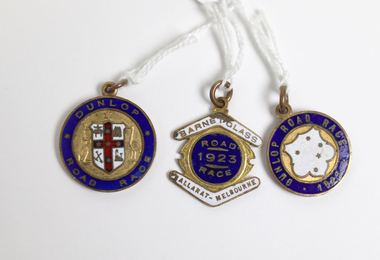
... It is the second oldest one-day cycling race in the world and the longest one-day cycling race in Australia. All riders who complete the race in a given time are awarded a Time Medallion. ...It is the second oldest one-day cycling race in the world and the longest one-day cycling race in Australia. All riders who complete the race in a given time are awarded a Time Medallion. ...These cycling medals were awarded to W. S. Toyne. Two of these medals are time medallions relating to the Warrnambool to Melbourne Cycle Race. This race was first held in 1895 and continues to the present day. It was originally a handicap race from Warrnambool to Melbourne but after 1938 it became a Melbourne to Warrnambool race. After 1995 it became a scratch race and today the distance is shorter with the race starting from Avalon. It is the second oldest one-day cycling race in the world and the longest one-day cycling race in Australia. All riders who complete the race in a given time are awarded a Time Medallion. The race was sponsored by the Dunlop company from 1901 to 1927. In 1923, 123 of the 196 riders, who started at 5:30am completed the 165 mile road race and were awarded the time medallion. W. S. Toyne was listed among the some of the first cyclists to go through Camperdown at 8:16am. It was reported that over 50,000 spectators witnessed the progress of the race. These cycling medals belonged to a cyclist, W. S. Toyne, who completed in a significant sporting event in Warrnambool in 1923 and 1924. [.1] Round metal and enamel medal with blue enamel edge and an unidentified white coat of arms with a red cross containing five stars on the obverse side. The shield is held by an embossed kangaroo on the left and an emu on the right. The reverse is inscribed with name and time in an inner circle and the year and race on the outer edge. [.2] Round metal and enamel medal with blue enamel edge and a white enamel shield containing five stars in the centre of the obverse side. The reverse is inscribed with the name and time in the inner circle and the race name on the outer edge. [.3] metal and enamel medal with a blue enamel circle with white enamel boomerangs sitting above and below.[.1] Obverse: Dunlop Road Race; Reverse: Warrnambool-Melbourne Time Medallion 1924 Won by W. S. Toyne 5 Hrs. 47 Mns. 42 Sds. [.2] Obverse: Dunlop Road Race 1923; Reverse: Warrnambool-Melbourne Time Medallion; Won by W. S. TOYNE 10 Hrs. 30 Mns. Sds. [.3] Obverse: Barnet Glass Ballarat-Melbourne Road Race 1923; Reverse W. S. Toynew. s. toyne, dunlop road race, barnet glass road race, ballarat to melbourne cycle race, time medallions, warrnambool to melbourne cycle race -
 Orbost & District Historical Society
book, Broadbent's Melbourne - Sydney Guide Book, 1936
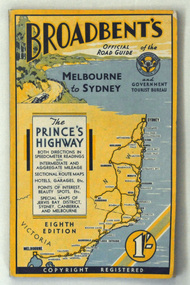
... At various times Broadbent held most Victorian and Australian road cycling records. Broadbent became an active vice-president of the Good Roads Association of Victoria in November 1912 and was consulted regularly during the preparation of the country roads bill. ...At various times Broadbent held most Victorian and Australian road cycling records. Broadbent became an active vice-president of the Good Roads Association of Victoria in November 1912 and was consulted regularly during the preparation of the country roads bill. ...Broadbent's Official Road Guides Company took over George R. Broadbent's business in 1935. In 1963, it changed its name to Broadbent's Road Maps Pty. Ltd. George Robert Broadbent (1863-1947), cyclist and map publisher, was born on 3 November 1863 at Ashby near Geelong, Victoria. At various times Broadbent held most Victorian and Australian road cycling records. Broadbent became an active vice-president of the Good Roads Association of Victoria in November 1912 and was consulted regularly during the preparation of the country roads bill. That year he took over the Argus motoring column, wrote tirelessly on road improvements and maintenance, and became manager of the Automobile Club's new touring department in 1914.A 160 pp road guide book titled Broadbent's Official Road Guide Melbourne - Sydney. The front cover has a yellow background with a map of the coastline from Sydney to Melbourne, the Prince's Highway route marked. This is inset in a drawing of a car driving along the coastal road.The book contains speedometer readings, route maps, advertisements and photos of points of interest. In the top right is the logo of the Royal Automobile Club of Victoria and at the bottom right is the price 1/-.traavel road-guides broadbent-george car-touring -
 Bendigo Historical Society Inc.
Document - BENDIGO EASTER FAIR FESTIVAL PROGRAM 1997, 26 March 1997
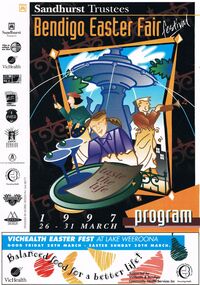
... Volkswagen Car Show, a part of the 28th National Bug-In. Repco Cycles, Australian Veteran Cycling Council Inc. Championships. ...Volkswagen Car Show National Bug-In. Repco Cycles Australian Veteran Cycling Council Inc. Championships. ...Bendigo Easter Fair Festival Program, 26-31 March, 1997. Festival Features, Evening of Art & Classical Music, Rotary Club of Bendigo. VicHealth Easter Fest, Victorian Health Promotion Foundation & Bendigo Community Health Services. Fine Food Fest. Free Stage. Free Evening Concert & Fireworks, Zaire. Torchlight Procession, sponsored by Prime TV & Coca Cola, Bendigo Market Place. Fireworks Spectacular, Sponsored by Bendigo Market Place & Prime TV. Street Fiesta, sponsored by Arts Victoria. Street Extravaganza, Coca Cola Carnival, Sponsored by Coca Cola. Star for a Day, Power Audio Visual & Prime Television. Handcraft Bazaar, Rotary Club of Bendigo Sandhurst Art & Craft Market. Cosmopolitan Street Café, Arts Victoria. Awakening of the Dragon, Bendigo Chinese Association. Gala Parade, Prime Television & Coca Cola. Firewalking by the Australian Skeptics, Discovery Science & Technology Centre. Up In Flames, Discovery Science & Technology Centre. Barry Kenny's Country Roundup, Nadort Promotions. School's Day. Teddy Bear's Picnic, Dragon City Marshals. Fire Brigades Children's Carnival. Family Event, Bendigo Minister's Fellowship. Bendigo Easter Antique Fair. Historic Photographic Exhibition, Burt Sargent Circa 1900. Open Garden at Nanga Gnulle (''nanga nully''). A parade of Quilts, Strathdale Bendigo Quilters Inc. Tasting the Life, Gail Tavener Studio. Snakes Alive Dangerous Australians, BRIT. Y's Men's Club of Bendigo Book Fair, YMCA. Bendigo Camera Club, BRIT. Bendigo Woodcraft Exhibition, Woodturners Bendigo Inc. Autumn Bonsai, Bendigo Bonsai Club. Convocation, National Trust Bendigo. Arms & Collectables, Golden City Collectors Assoc. In. Rotary Art Show. Rotary Pottery Exhibition. Women's Vision For The Church, Provincial Council of Mothers Union. Historic Toorak House, Lioness Club of Golden City Bendigo. White Hills Cemetery. Bendigo Cemetery. Festival of Flowers, Craft & Garden, Bendigo Jockey Club. Shannons Corporation Motorfest, City Drive Through, Static Display, Motorkhana, Time Trial. Bendigo Bank Dragon Mile. Volkswagen Car Show, a part of the 28th National Bug-In. Repco Cycles, Australian Veteran Cycling Council Inc. Championships. Under 17 Australian Badminton Championships. Palm Sunday, Bendigo Symphony Orchestra. Way of the Cross, Bendigo's Combined Churches. The Easter Story, Kangfluca Music. Sunrise Church Service, Bendigo Ministers' Fellowship. Map of CBD Advertisements: Bendigo Easter Antique Fair. Austar. Bendigo Art Gallery. Bendigo Visitor Information Centre. Prime. Golden Dragon Museum Inc. Bendigo Heritage Tours. Discovery Science & Technology Centre Bendigo. Sponsors: Sandhurst Trustees, Prime, Vic Health, ABC Radio, Arts Victoria, Coca Cola, Events Bendigo, City Of Greater Bendigo, Bendigo Community Health Services, Shannons., Morris Design PH 5448 8777Morris Designevent, easter fair, bendigo easter fair, bendigo easter fair festival program, 26-31 march, 1997. festival features, evening of art & classical music, easter fest, . fine food fest. free stage. free evening concert & fireworks. torchlight procession. fireworks spectacular, street fiesta, street extravaganza, coca cola carnival, star for a day, handcraft bazaar, art & craft market. cosmopolitan street café, awakening of the dragon. gala parade, firewalking australian skeptics, discovery science & technology centre. up in flames, barry kenny's country roundup, nadort promotions. school's day. teddy bear's picnic, fire brigades children's carnival. family event, bendigo minister's fellowship. antique fair. photographic exhibition, burt sargent circa 1900. open garden nanga gnulle a parade of quilts, strathdale bendigo quilters inc. tasting the life, gail tavener studio. snakes alive dangerous australians, brit. book fair, ymca. bendigo camera club, brit. bendigo woodcraft exhibition, woodturners bendigo inc. autumn bonsai, bendigo bonsai club. convocation, national trust bendigo. arms & collectables, golden city collectors assoc. art show. pottery exhibition. women's vision for the church, provincial council of mothers union. historic toorak house, lioness club. white hills cemetery. bendigo cemetery. festival of flowers, craft & garden, bendigo jockey club. motorfest, drive through, static display, motorkhana, time trial. dragon mile. volkswagen car show, national bug-in. repco cycles, australian veteran cycling council inc. championships. under 17 australian badminton championships. palm sunday, bendigo symphony orchestra. way of the cross, bendigo's combined churches. the easter story, kangfluca music. sunrise church service, bendigo ministers' fellowship. map of cbd advertisements: antique fair. golden dragon museum inc. bendigo heritage tours. discovery science & technology centre bendigo. sponsors: sandhurst trustees, vic health, abc radio, arts victoria, coca cola, events bendigo, city of greater bendigo, bendigo community health services, shannons., morris design. prime tv. austar. bendigo art gallery. bendigo visitor information centre. prime, victorian health promotion foundation, zaire, sponsored by bendigo market place & prime tv, sponsored by arts victoria, sponsored coca cola, power audio visual, rotary club of bendigo sandhurst, bendigo chinese association, y's men's club of bendigo -
 Federation University Historical Collection
Booklet, Ballarat School of Mines Students' Magazine, Term 4, 1905, 1905
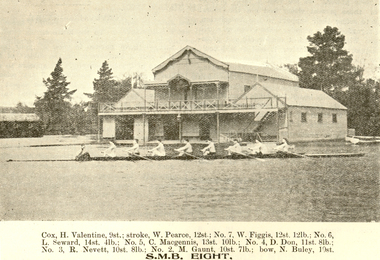
... The Ballarat School of Mines Students' Magazine in 1905 was an unofficial journal edited by the students. ballarat school of mines south australia; adelaide valentine pearce figgis seward mcgennis don nevett gaunt buley adelaide school of mines kerr grant arizona jack adam adam j.a. reid reid jager rowing H. Valentine W. Pearce W. Figgis L. Seward C. McGennis D. Don R. Nevett M. Gaunt N. Buley cycling ...The Ballarat School of Mines Students' Magazine in 1905 was an unofficial journal edited by the students.Twenty-eight page booklet known as the Ballarat School of Mines Student's Magazine. Contents include: A jaunt to South Australia; Tests for the Assay Lab; Huntingdon-Heberlein Process; Slag Calculation; Electrical Laboratory; Hydrochoric Acod-Phenolph-thalein; Ballarat scientific Society; James W. Hawthorne; Maryborough Excursion; Prof Alexander Purdie; School Dirge; Compound Engines; Sister Institutions; Trafalgar, Acrobates Pymgaeus, Pigmy Flying Phalangerobituary for Alexander Purdie, Electric traction, Estimation of Fat in Milk by the Babcock Machine, first Ballarat School of Mines Annual Dinner; Crytallography Images include; Electrical Laboratory; Professor Dawbarn; James W. Hawthorne; Ballarat Rowing Eight on Lake Wendouree (H. Valentine, W. Pearce, W. Figgis, L. Seward, C. McGennis, D. Don, R. Nevett, M. Gaunt, N. Buley). Advertisements: Craig, Williamson Pty Ltd; Ballarat Baths (B. McCausland); W. Gribble & Co., H.B. Silberberg & Co; F. Jago - Ballarat Boot Palace; John Slater & Co., Kiels Motor & Cycle Stores; Alex Miller & Sons; Thomas McPherson & Son; W. Cornell; Brush Electrical Engineering Co; Ballarat School of Mines; Harry Davies & Co; Stansfield & Smith; Craig's Royal Hotel.ballarat school of mines, south australia; adelaide, valentine, pearce, figgis, seward, mcgennis, don, nevett, gaunt, buley, adelaide school of mines, kerr grant, arizona, jack adam, adam, j.a. reid, reid, jager, rowing, h. valentine, w. pearce, w. figgis, l. seward, c. mcgennis, d. don, r. nevett, m. gaunt, n. buley, cycling -
 The Beechworth Burke Museum
Geological specimen - Greenstone / Gabbro, Unknown
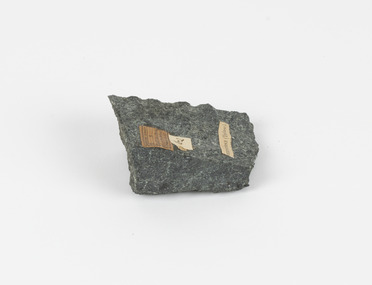
... Many of these specimens were sent to research and collecting organisations across Australia, including the Burke Museum, to educate and encourage further study. Greenstone metamorphosed igneous rock Gabbro chlorite actinolite epidote metamorphsis rock cycle various types of rocks sedimentary high heat high pressure mineral-rich fluid metamorphosis foliated metamorphic non-foliated metamorphic convergent plate boundary greenish colour minerals Greenstone/Gabbro/from Ceres west/of Geelong. ...This specimen was recovered from Ceres West of Geelong, Victoria. Greenstone is the name for any metamorphosed basic igneous rock (in the case of this specimen, Gabbro) that gains its greenish colour to the presence of the minerals chlorite, actinolite, or epidote, hence the term 'green' and 'stone'. Greenstone is often formed through metamorphsis along a convergent plate boundary. In the rock cycle (the series of processes that creates the various types of rocks) there are identified three different types of rocks, which are the sedimentary, the igneous and the metamorphic. Metamorphic rocks started out as sedimentary, igneous or earlier metamorphic rocks but changed from their original condition under the effect of high heat, high pressure or hot, mineral-rich fluid. However, if pressure or heat is too high, then the rock will melt, resulting in the formation of an igneous rock. The name used to describe these types of rocks reflects this specific inherent trait of change, since the word “metamorphic” derives from the Greek word “metamorphosis”, meaning “change of form or structure”. Metamorphic rocks form in the Earth`s crust but can be also found on the surface, due to elevation of the Earth`s surface. They are divided into two categories: the foliated metamorphic and the non-foliated metamorphic rocks. Gabbro is a highly useful mineral that is often polished to create cemetery markers and kitchen benches. It is notable for its qualities of durability, being able to withstand extreme elements and wear. Whilst not rare, Gabbro is of great utility and has been highly desirable for its qualities. This specimen is part of a larger collection of geological and mineral specimens collected from around Australia (and some parts of the world) and donated to the Burke Museum between 1868-1880. A large percentage of these specimens were collected in Victoria as part of the Geological Survey of Victoria that begun in 1852 (in response to the Gold Rush) to study and map the geology of Victoria. Collecting geological specimens was an important part of mapping and understanding the scientific makeup of the earth. Many of these specimens were sent to research and collecting organisations across Australia, including the Burke Museum, to educate and encourage further study.Greenstone is a solid hand-sized metamorphic mineral of a green colour. Greenstone is the name for any metamorphosed basic igneous rock (in the case of this specimen, Gabbro) that gains its greenish colour to the presence of the minerals chlorite, actinolite, or epidote, hence the term 'green' and 'stone'. Gabbro is a medium to coarse grained rocks that consist primarily of plagioclase feldspar and pyroxene. Greenstone is often formed through metamorphsis along a convergent plate boundary. Gabbro forms due to cooling and crystallization of magma underneath Earth's surface. Greenstone/Gabbro/from Ceres west/of Geelong. Has old Geological Survey label/and probably collected by/Richard Daintree in 1861/C.Willam 15/4/21/ Other label: 62 /greenstone, metamorphosed, igneous rock, gabbro, chlorite, actinolite, epidote, metamorphsis, rock cycle, various types of rocks, sedimentary, high heat, high pressure, mineral-rich fluid, metamorphosis, foliated metamorphic, non-foliated metamorphic, convergent plate boundary, greenish colour, minerals -
 Federation University Historical Collection
Album - Album - Sample Stickers, ZILLES COLLECTION: Album, Sample Stickers produced by Jeff Zilles
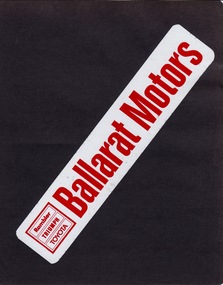
... The average age of attendees was 18-25. zilles printers stickers bumper stickers self-adhesive label santo avery sir rowland hill car dealers motor cycles farm equipment ballarat bendigo geelong wonthaggi ballarat motors rambler triumph toyota brown murphy geelong leyland australia berko datsun geelong mental ballarat sound conditioned bendigo col hawkins frank faulkner car sales patron products ballarat mil haven tractor cab ballarat john basin ballarat swinger b & g myers pty ltd ballarat arthur shultz don mullin motors wonthaggi Sticker on each page Dark green vinyl cover, three bolts holding it together. ...Zilles Printers was begun by Lewis Zilles in the early 1930s. It was in McKenzie Street Ballarat. His son Jeffrey also became a printer - letterpress, offset and screen printer. The business became Zilles Printers/Graphics and was in Armstrong Street and later Bell Street Ballarat. A form of sticker began in 1839 when Sir Rowland Hill invented adhesive paper. The first self-adhesive label was invented in 1935 by Stanton Avery - Avery Labels. In the 1940s "bumper strips"were created. Now referred to as bumper stickers. The stickers shown are for car dealerships, motor bike, tractor and agricultural equipment and entertainment. They are for places in Ballarat, Bendigo, Geelong and Wonthaggi, indicating that Zilles were well known for the quality of their products. These stickers were possibly produced in the 1960s, 1970s and early 1980s. The Swinger was a local dance that ran at the Ballarat Civic Hall between 1972-1975. Dress was neat casual and men were required to wear a tie. The average age of attendees was 18-25.Dark green vinyl cover, three bolts holding it together. Thirteen pages - black cover paperSticker on each pagezilles printers, stickers, bumper stickers, self-adhesive label, santo avery, sir rowland hill, car dealers, motor cycles, farm equipment, ballarat, bendigo, geelong, wonthaggi, ballarat motors, rambler, triumph, toyota, brown murphy geelong, leyland australia, berko datsun geelong, mental ballarat, sound conditioned bendigo, col hawkins, frank faulkner car sales, patron products ballarat, mil haven tractor cab ballarat, john basin ballarat, swinger, b & g myers pty ltd ballarat, arthur shultz, don mullin motors wonthaggi -
Federation University Historical Collection
Magazine, Various car magazines
... .1 Green covered The Australian Cyclist and tourist traveller July 1899 .2 Tan covered Austral Wheel cycling magazine May 1898 .3 Early Australian Motor Cars - Restored Cars Jan/Feb 1974 .4 Ballarat Swap 1990 - Restored Cars .5 Bicycles to Motorcars The Australian Way - Restored Cars Jan-Feb 1976 .6 The Veteran Car Club Gazette...Sutton motorcycle early australian motor cars restored cars sutton eco Ballarat swap 1990 the inventive genius of henry sutton max gregory sutton tandem motor-bicycle suttons cycle agency bicycles to motorcars the australian way Various car magazines with articles relating to the Sutton Car. .1 Green covered The Australian Cyclist and tourist traveller July 1899 .2 Tan covered Austral Wheel cycling magazine May 1898 .3 Early Australian Motor Cars - Restored Cars Jan/Feb 1974 .4 Ballarat Swap 1990 - Restored Cars .5 Bicycles to Motorcars The Australian Way - Restored Cars Jan-Feb 1976 .6 The Veteran Car Club Gazette Various car magazines Magazine ...Various car magazines with articles relating to the Sutton Car..1 Green covered The Australian Cyclist and tourist traveller July 1899 .2 Tan covered Austral Wheel cycling magazine May 1898 .3 Early Australian Motor Cars - Restored Cars Jan/Feb 1974 .4 Ballarat Swap 1990 - Restored Cars .5 Bicycles to Motorcars The Australian Way - Restored Cars Jan-Feb 1976 .6 The Veteran Car Club Gazettenon-fictionVarious car magazines with articles relating to the Sutton Car.australian cyclist, electra, mr h. sutton and his work, austral wheel, messrs. sutton motorcycle, early australian motor cars, restored cars, sutton eco, ballarat swap 1990, the inventive genius of henry sutton, max gregory, sutton tandem motor-bicycle, suttons cycle agency, bicycles to motorcars, the australian way -
 Federation University Historical Collection
Photograph - Photograph - Black and White, Ballarat Technical School - Sports winners
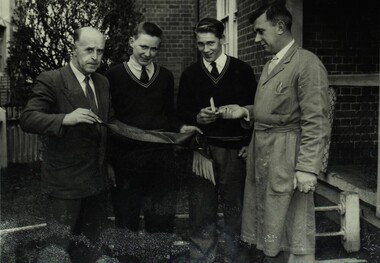
... Born 2 November 1945, Ray began cycling aged 10. In 1963 he was Australian Junior Road Champion. ...Born 2 November 1945, Ray began cycling aged 10. In 1963 he was Australian Junior Road Champion. ...Organised sport and clubs began in 1919 with the formation of the Junior Technical School Students' Association. Clubs included the Rifle Club, Wireless Club, Senior Cadet team, Photography Club and Bugle Band. Sport was the Associations main concern. The House system was developed and boys competed within this structure. In 1926 the North Central Junior Technical School Sports Association was formed. Students from the district competed against each other in football, cricket and tennis. The number of schools increased and more sports were introduced. Ballarat Junior Technical School was a strong competitor. Many ex-students made a mark in sport out of the Ballarat area. The photograph shows Ray Bilney - second from the left. Born 2 November 1945, Ray began cycling aged 10. In 1963 he was Australian Junior Road Champion. From 1964 to 1966 he was Australian Senior Road Champion. He was in the Australian team at the 1964 Tokyo Olympics and came 4th in the race, aged 18 years. In 1966 he went to the Commonwealth Games in Jamaica and won a Silver Medal at the Commonwealth Games in Edinburgh in 1970. Ray was Ballarat Sportsman's Club Sportsman-of-the-Year 1965/66 and inducted into their Hall of Fame. In 1965 Ray was Cyclist-of-the-Year and won the coveted Sir Hubert Opperman Trophy. In May 2013, Ray was inducted into the Victorian Cycling Hall-of-Fame. During his time at the Junior Technical School, he sporting abilities were evident and in 1961 he was Top Sportsman of the school. The same year he was one of eight boys chosen to be Prefects of the school. He is an Alumni of Federation University. Black and white photograph of two students and two teachers looking at a sash and medal won by the students. Second from the left is Ray Bilney.sport, clubs, rifle club, photography club, cadet team, bugle band, athletics carnival, victorian technical schools sports union, house system, wireless club, alumni, ray bilney, australian junior road champion, australian senior road champion, silver medal, olympic games, commonwealth games, cyclist-of-the-year, sir hubert opperman, trophy, sportsman-of-the-year, victorian cycling hall-of-fame, ballarat junior technical school student's association -
Federation University Historical Collection
Article - Cycling Jersey, FedUni AusCycling National Championships Jersey, 2022
... cycle racing discipline. The annual events can take place at any time of the year. Australia usually holds their annual event during summer. ...cycle racing discipline. The annual events can take place at any time of the year. Australia usually holds their annual event during summer. ...National road cycling championships are held annually by host nations in each cycle racing discipline. The annual events can take place at any time of the year. Australia usually holds their annual event during summer. In road racing, winning riders of national championships are crowned as: * Men's Elite Road Race Champion * Men's Elite Time Trial Champion * Women's Road Race Champion * Women's Time Trial Champion * Men's Under-23 Road Race Champion * Men's Under-23 Time Trial Champion The Australian Champion Jersey is awarded to the winner, or the highest placed Australian in all events at the Federation University AusCycling National Championships. Winners may wear their Australian Champion Jersey in all events in the discipline speciality and category in which they won their title and no other event up until the day before the championship event of the following year. Category Winners in 2022 were Lucas Plapp, Rohan Dennis, Cameron Ivory, Ruby Roseman-Gannon, Nicole Frain, Grace BrownFramed Federation University AusCycling National Champianships Winners Jersey, signed by the winner of each catergory.federation university auscyling national championships, jersey, costume, lucas plapp, nicole frain, grace brown, herbert werner frederick de nully, ruby roseman-gannon, rohan dennis, cameron ivory -
Federation University Historical Collection
Article - Cycling Jersey, FedUni AusCycling National Championships Jersey, 2021
... Australian Champion Jersey in all events in the discipline speciality and category in which they won their title and no other event up until the day before the championship event of the following year. Category Winners in 2021 were Sarah Roy, Sarah Gigante, Annette Edmondson, Cameron Meyer, Lucas Plapp, Lucas Plapp Federation University Auscyling national championships jersey costume Sarah Roy Sarah Gigante Annette Edmondson Cameron Meyer Lucas Plapp Framed Federation University AusCycling National Champianships Winners Jersey, signed by the winner of each catergory. FedUni AusCycling National Championships Jersey Article Cycling ...The Australian Champion Jersey isbe awarded to the winner, or the highest placed Australian in all events at the Federation University AusCycling National Championships. Winners may wear their Australian Champion Jersey in all events in the discipline speciality and category in which they won their title and no other event up until the day before the championship event of the following year. Category Winners in 2021 were Sarah Roy, Sarah Gigante, Annette Edmondson, Cameron Meyer, Lucas Plapp, Lucas PlappFramed Federation University AusCycling National Champianships Winners Jersey, signed by the winner of each catergory.federation university auscyling national championships, jersey, costume, sarah roy, sarah gigante, annette edmondson, cameron meyer, lucas plapp -
Federation University Historical Collection
Book - Book - Scrapbook, Ballarat Institute of Advanced Education: Scrapbook of newspaper cutting, Book 3, July 1970 to December 1970
... cycle club visit factory...mount helen campus of the future...visit from mt isa officer...centenary celebrations...peter hensley outstanding academic record 1969...rosslynne guymer...hill climb...repco gives $5000 to smb fund...ray woolard artist...mineral discoveries in australia...Australian, The Herald. The cuttings cover the period from 7 July 1970 to 12 December 1970. ballarat institute of advanced education biae employment advertisements early school records found council records from 1870 - 1893 john lynch wins stock exchange award b r hames to deliver lecture at smb death of a w steane biae motor cycle club visit factory mount helen campus of the future visit from mt isa officer centenary celebrations peter hensley outstanding academic record 1969 rosslynne guymer hill climb repco gives $5000 to smb fund ray woolard artist mineral discoveries in australia centenary prediction centenary medallion betty archdale to deliver fourth lecture looking back on school history e j tippett threshold of the second century e j barker stanley white awarded csiro doctoral scholarship tertiary colleges should be community centre post-diploma course in malting and brewing young geologists from broken hill technical conference for ballarat banks' gift exhibition by students rare rocks for biae teachers' college at mt helen? ...Newspaper cuttings relating to Ballarat Institute of Advanced Education. These are from various newspapers and include The Age, Ballarat Courier, The Australian, The Herald. The cuttings cover the period from 7 July 1970 to 12 December 1970. Book with yellow cover, front. Spiral bound.ballarat institute of advanced education, biae, employment advertisements, early school records found, council records from 1870 - 1893, john lynch wins stock exchange award, b r hames to deliver lecture at smb, death of a w steane, biae motor cycle club visit factory, mount helen campus of the future, visit from mt isa officer, centenary celebrations, peter hensley outstanding academic record 1969, rosslynne guymer, hill climb, repco gives $5000 to smb fund, ray woolard artist, mineral discoveries in australia, centenary prediction, centenary medallion, betty archdale to deliver fourth lecture, looking back on school history, e j tippett, threshold of the second century, e j barker, stanley white awarded csiro doctoral scholarship, tertiary colleges should be community centre, post-diploma course in malting and brewing, young geologists from broken hill, technical conference for ballarat, banks' gift, exhibition by students, rare rocks for biae, teachers' college at mt helen?, technical principals' association, miss n findley of emily mcpherson college, visiting heads admire facilities at biae, advisory council sets guidelines, smb plaque unveiled, $25000 to centenary appeal, national service exemption granted, technical schools disrupted by teachers' strike, bid for fourth university, librarian course advocated, smb appeal at $221000, centenary of technical education in australia, mt helen campus opening, centenary of great achievement, governments give $100000 to institute, student from last century, mrs o ratray, biae asked to train librarians, buninyong seek talks, problems of "background" in education, exhibition by jon crawley - potter, mr thompson's comment, art sake at school, 90 engineers at biae, ray woollard -
Federation University Historical Collection
Book - Book - Scrapbook, Ballarat College of Advanced Education: Scrapbook of newspaper cutting, Book 1; August 1975 to January 1976
... Australian, The Herald. The cuttings cover the period from 20 August 1975 to 19 January 1976. ballarat institute of advanced education biae employment advertisements application for enrolment outline of courses apprenticeship ball u.s. fellowship for former smb student gregory mcrae mount clear school facilities when travelodge comes shops to go introduction to metallurgy practical benefits of legacy john reitze discrimination claim peter den brinker student representatives library on wheels teacher union doubts on new school at mt clear plans in store for mine plans outlined for new school college standards rising no pollution no noise electric cycle biae chemists in pollution hunt council to aid school growth buninyong council school to open in february move for cycle track to biae campus graham beanland appointed depty principal drastic cuts in tertiary courses tempory school goes up portable buildings school of coastal engineering 177 receive diploma of teaching $2500 scholarship to noel janetski fraser island environmental inquiry engineering school takes to the air ballarat students for democracy steve bracks praise for technical school tradition iran appointment for geologist Book with Blue cover, front. ...Newspaper cuttings relating to Ballarat College of Advanced Education. These are from various newspapers and include The Age, Ballarat Courier, The Australian, The Herald. The cuttings cover the period from 20 August 1975 to 19 January 1976. Book with Blue cover, front. Spiral bound.ballarat institute of advanced education, biae, employment advertisements, application for enrolment, outline of courses, apprenticeship ball, u.s. fellowship for former smb student, gregory mcrae, mount clear school facilities, when travelodge comes shops to go, introduction to metallurgy, practical benefits of legacy, john reitze, discrimination claim, peter den brinker, student representatives, library on wheels, teacher union doubts on new school at mt clear, plans in store for mine, plans outlined for new school, college standards rising, no pollution no noise, electric cycle, biae chemists in pollution hunt, council to aid school growth, buninyong council, school to open in february, move for cycle track to biae campus, graham beanland appointed depty principal, drastic cuts in tertiary courses, tempory school goes up, portable buildings, school of coastal engineering, 177 receive diploma of teaching, $2500 scholarship to noel janetski, fraser island environmental inquiry, engineering school takes to the air, ballarat students for democracy, steve bracks, praise for technical school tradition, iran appointment for geologist -
Marysville & District Historical Society
THE TRIANGLE NEWS-VOLUME 40 NO 4-FEBRUARY 8 2013
... marysville victoria australia changes at ceaco what's on when in february buxton recreation reserve committee meeting inviting public the committee of management of the gallipoli park precinct marysville brownie guides marysville community market creative triangle mystic mountains tourism general members meeting lions library tool library temporary road closure darwin street marysville lake mountain cycling challenge advertisements church notices world day of prayer lakeside fellowship eildon funded governance training available for community groups marysville community golf & bowls club happy hour triangle shared trails project final taggerty community project meeting murrindindi shire council notice of special meeting of council mayor's chair intrepid triangle bushwalkers works to improve rail trail experience marysville lolly shop councillor comment marysville golf report marysville triangle men's shed working bee volunteers needed community bbq gallipoli park marysville & triangle community foundation ltd marysville world's longest lunch final decision needed for taggerty community project mops sale payment of rates and charges buxton recreation reserve development works update el kanah 2 shows in 1 night sarah jones-ventriloquist dennis coard-comedian marysville cultural community real estate THE TRIANGLE NEWS-VOLUME 40 NO 4-FEBRUARY 8 2013 ...marysville, victoria, australia, changes at ceaco, what's on when in february, buxton recreation reserve, committee meeting inviting public, the committee of management of the gallipoli park precinct, marysville brownie guides, marysville community market, creative triangle, mystic mountains tourism general members meeting, lions library tool library, temporary road closure darwin street, marysville lake mountain cycling challenge, advertisements, church notices, world day of prayer, lakeside fellowship eildon, funded governance training available for community groups, marysville community golf & bowls club, happy hour, triangle shared trails project, final taggerty community project meeting, murrindindi shire council, notice of special meeting of council, mayor's chair, intrepid triangle bushwalkers, works to improve rail trail experience, marysville lolly shop, councillor comment, marysville golf report, marysville triangle men's shed, working bee volunteers needed, community bbq gallipoli park, marysville & triangle community foundation ltd, marysville world's longest lunch, final decision needed for taggerty community project, mops sale, payment of rates and charges, buxton recreation reserve development works update, el kanah 2 shows in 1 night, sarah jones-ventriloquist, dennis coard-comedian, marysville cultural community, real estate -
Marysville & District Historical Society
THE TRIANGLE NEWS-VOL 40 NO 40-OCTOBER 18 2013
... australia day award nominations...racv marysville marathon festival runs again...church notices...marysville police news...mayor's chair...murrindindi cycle...marysville victoria australia lions convention a resounding success what's on when in october marysville & kindergarten assocn preschool centre open & enrolment day marysville district football & netball club agm mystic mountains tourism notice of special meeting marysville community market creative triangle murrindindi shire council australia day award nominations racv marysville marathon festival runs again church notices marysville police news mayor's chair murrindindi cycle club agm family fun day marysville & triangle community foundation executive officer p/t position position vacant-y water centre advertisements ceaca courses dalton fiske foundation grants awards buxton hotel taste of italy pasta night marysville primary school parents club real estate marysville art show senior's week celebrations lions triangle tool library triangle community dancers black spur inn open mic fire ready victoria meeting marysville community golf and bowls club free tre workshops in yarra valley marysville 150th year celebrations bmx and basketball to add to skatepark attractions creative triangle pink lunch heart foundation walkers wanted australian centre for grief and bereavement cricket is back golf clinics at marysville golf club expressions of interest marysville golf report intrepid triangle bushwalkers australian sparkling wine show spring country show black spur inn pizza and beer night community light the night leukaemia foundation gallipoli park council fire restrictions period starts marysville beer & platter garden open gardens featured in narbethong and buxton narbethong history group narbethong hall THE TRIANGLE NEWS-VOL 40 NO 40-OCTOBER 18 2013 ...marysville, victoria, australia, lions convention a resounding success, what's on when in october, marysville & kindergarten assocn, preschool centre open & enrolment day, marysville district football & netball club agm, mystic mountains tourism notice of special meeting, marysville community market, creative triangle, murrindindi shire council, australia day award nominations, racv marysville marathon festival runs again, church notices, marysville police news, mayor's chair, murrindindi cycle club agm, family fun day, marysville & triangle community foundation executive officer p/t position, position vacant-y water centre, advertisements, ceaca courses, dalton fiske foundation grants awards, buxton hotel taste of italy pasta night, marysville primary school parents club, real estate, marysville art show, senior's week celebrations, lions triangle tool library, triangle community dancers, black spur inn open mic, fire ready victoria meeting, marysville community golf and bowls club, free tre workshops in yarra valley, marysville 150th year celebrations, bmx and basketball to add to skatepark attractions, creative triangle pink lunch, heart foundation walkers wanted, australian centre for grief and bereavement, cricket is back, golf clinics at marysville golf club expressions of interest, marysville golf report, intrepid triangle bushwalkers, australian sparkling wine show, spring country show, black spur inn pizza and beer night, community light the night, leukaemia foundation, gallipoli park, council fire restrictions period starts, marysville beer & platter garden, open gardens featured in narbethong and buxton, narbethong history group, narbethong hall -
Marysville & District Historical Society
THE TRIANGLE NEWS-VOL 41 NO 12-APRIL 4 2014
... australia...perfect spot for mountain bike enthusiasts...department of environment & primary industries...depi...murrindindi cycle...marysville victoria australia perfect spot for mountain bike enthusiasts department of environment & primary industries depi murrindindi cycle club new contact details for triangle news what's on when in march taggerty 4 seasons autumn market the committee of management of the gallipoli park precinct marysville community market village walk marysville shop to lease triangle community dinner el kanah village 2014 seasonal influenza vaccine available church notices mystic mountains tourism marysville & district chamber of commerce special general members meeting dog & cat registrations due mayor's chair buxton park first bootcamp tupperware sale advertisements councillor comments marysville cultural community tenders jer's tradies-golf day final update vale dr neil mckern residential and rural real estate marysville triangle real estate marysville & triangle community foundation new logo required buxton hotel parma night sport & recreational grants to improve facilities for sale portable building expressions of interests marysville district football & netball club season opener lunch marysville villains operation trident targets illegal commercial firewood sales marysville preschool centre long day care & kindergarten marysville beer & platter garden notice of proposal to make a local law come dine with the doc dr galen comstock zoning changes open opportunities across shire lake mountain alpine resort casual employment position vacant library & customer service marsyville golfers play well at the murrindindi masters easter monday with marysville preschool burns planned near marysville black spur inn trivia night holly eradication program at narbethong an open letter to triangle communities buxton hall kicks up its heels the big egg hunt THE TRIANGLE NEWS-VOL 41 NO 12-APRIL 4 2014 ...marysville, victoria, australia, perfect spot for mountain bike enthusiasts, department of environment & primary industries, depi, murrindindi cycle club, new contact details for triangle news, what's on when in march, taggerty 4 seasons autumn market, the committee of management of the gallipoli park precinct, marysville community market, village walk marysville shop to lease, triangle community dinner, el kanah village, 2014 seasonal influenza vaccine available, church notices, mystic mountains tourism, marysville & district chamber of commerce, special general members meeting, dog & cat registrations due, mayor's chair, buxton park first bootcamp, tupperware sale, advertisements, councillor comments, marysville cultural community, tenders, jer's tradies-golf day final update, vale dr neil mckern, residential and rural real estate, marysville triangle real estate, marysville & triangle community foundation new logo required, buxton hotel parma night, sport & recreational grants to improve facilities, for sale portable building, expressions of interests, marysville district football & netball club season opener lunch, marysville villains, operation trident targets illegal commercial firewood sales, marysville preschool centre, long day care & kindergarten, marysville beer & platter garden, notice of proposal to make a local law, come dine with the doc, dr galen comstock, zoning changes open opportunities across shire, lake mountain alpine resort casual employment, position vacant, library & customer service, marsyville golfers play well at the murrindindi masters, easter monday with marysville preschool, burns planned near marysville, black spur inn trivia night, holly eradication program at narbethong, an open letter to triangle communities, buxton hall kicks up its heels, the big egg hunt -
Marysville & District Historical Society
THE TRIANGLE NEWS-VOL 1 NO 4-AUGUST 13 1976
... australia...ken mckenzie...rainfall...golf...marysville and buxton district angling club...carpet bowls...shire of healesville tree planting scheme...narbethong picnic caberet...church...alexandra high school...community care centre...motor cycle...marysville victoria australia ken mckenzie rainfall golf marysville and buxton district angling club carpet bowls shire of healesville tree planting scheme narbethong picnic caberet church alexandra high school community care centre motor cycle scramble football THE TRIANGLE NEWS-VOL 1 NO 4-AUGUST 13 1976 ...marysville, victoria, australia, ken mckenzie, rainfall, golf, marysville and buxton district angling club, carpet bowls, shire of healesville tree planting scheme, narbethong picnic caberet, church, alexandra high school, community care centre, motor cycle scramble, football
