
Showing 1911 items matching "cylinders "
-
 Federation University Art Collection
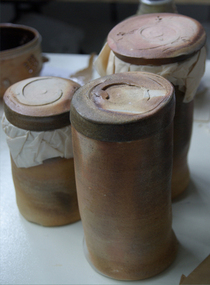
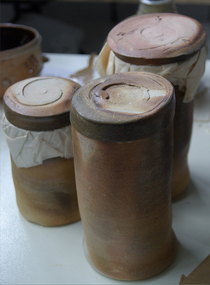
Ceramic, Tony Nankervis, Three Lidded Woodfired Cylinders by Tony Nankervis, 1986
... Three Lidded Woodfired Cylinders by Tony Nankervis...Three Lidded Woodfired Cylinders ...(https://www.scu.edu.au/engage/news/latest-news/2004/leading-australian-potter-who-paints-with-fire-retires-from-lecturing-at-scu-after-19-years.php, accessed 09 July 2019) ceramics jan feder memorial ceramics collection tony nankervis tony nankervic Three Lidded Woodfired Cylinders Three Lidded Woodfired Cylinders by Tony Nankervis Ceramic Tony Nankervis ...Nankervis prefers the pre-Industrial Revolution method of firing pottery, involving heating the kiln by burning wood for five days, to the modern, quicker methods using gas or electricity. The distinctive surfacing in wood-fired ceramics is generated by the ash and volatile salts from the burning wood. "Because the wood ash and salts blush the ceramic pieces in the kiln, the finished work tends to take on the nature of the firing process," he said. "One colleague has described the process as painting with fire."(https://www.strathnairn.com.au/studios/artist-in-residence/montessa-maack-ursula-burgoyne-jen-lyall-and-vicki-grima-5ndd6, accessed 09 July 2021)Tony NANKERVIS Tony Nankervis taught ceramics from 1984 when the university was the Northern Rivers College of Advanced Education from 1984. before moving to Southern Cross University (SCU) in 1994. He retired from full time teaching in 2004. Nankervis was a pioneer of the long wood-fired ceramics technique in Australia: a technique he has been practising since the late 1970s Nankervis prefers the pre-Industrial Revolution method of firing pottery, involving heating the kiln by burning wood for five days, to the modern, quicker methods using gas or electricity. The distinctive surfacing in wood-fired ceramics is generated by the ash and volatile salts from the burning wood. "Because the wood ash and salts blush the ceramic pieces in the kiln, the finished work tends to take on the nature of the firing process," he said. "One colleague has described the process as painting with fire. There are particular qualities that only come from firing in that way, he said. "If you see some of these older ceramics, particularly from Asia, the surface qualities are discernible from the surfaces generated by post-Industrial fuels." (https://www.scu.edu.au/engage/news/latest-news/2004/leading-australian-potter-who-paints-with-fire-retires-from-lecturing-at-scu-after-19-years.php, accessed 09 July 2019)Three Lidded Woodfired Cylinders ceramics, jan feder memorial ceramics collection, tony nankervis, tony nankervic -
 University of Melbourne, Burnley Campus Archives
Document, Gas cylinders, 1982-1983
... Gas cylinders...Description of gas cylinders at BHC...bhc burnley horticultural college gas cylinders Description of gas cylinders at BHC Gas cylinders Document ...Description of gas cylinders at BHCbhc, burnley horticultural college, gas cylinders -
 University of Melbourne, School of Chemistry
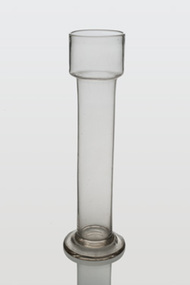
Cylinders
... Cylinders...Two cylinders used in Lecture Demonstration (G&F No 184 with foot & neck....Cylinders ...Two cylinders used in Lecture Demonstration (G&F No 184 with foot & neck. -
 University of Melbourne, School of Chemistry
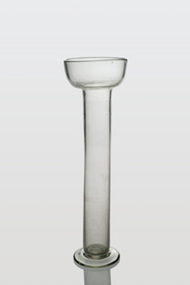
Cylinders
... Cylinders...Glassware. Two cylinders used in Lecture Demonstration (G&F No 184 with foot & neck....Cylinders ...Glassware. Two cylinders used in Lecture Demonstration (G&F No 184 with foot & neck. -
 Stawell Historical Society Inc
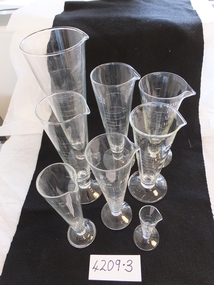
Archive, Glass Measuring cylinders Funnels Pipettes Spatula syringes and clips used by pharmacist - Pleasant Creek Training Centre
... Glass Measuring cylinders Funnels Pipettes Spatula syringes and clips used by pharmacist - Pleasant Creek Training Centre...Stawell Glass Measuring cylinders Funnels Pipettes Spatula syringes and clips used by pharmacist - Pleasant Creek Training Centre Archive ...stawell -
Stawell Historical Society Inc
Memorabilia - Realia, Brass Measuring Cylinders with Glass Cover. Half Bushell. Shire of Stawell Weights & Measures, 1870
... Brass Measuring Cylinders with Glass Cover. Half Bushell. ...Stawell Standards Imperial Standard Half Bushel Victoria Large Round Brass Container with a handle on each side with glass lids Brass Measuring Cylinders with Glass Cover. Half Bushell. Shire of Stawell Weights & Measures Memorabilia Realia ...Large Round Brass Container with a handle on each side with glass lidsImperial Standard Half Bushel Victoriastawell, standards -
Moorabbin Air Museum
Drawing (Item) - Boston Drawing , Connection Diagram For Boston III Oxygen Cylinders Drawing No. G-3720
... Boston Drawing , Connection Diagram For Boston III Oxygen Cylinders Drawing No. G-3720...Boston Drawing , Connection Diagram For Boston III Oxygen Cylinders Drawing No. G-3720 Drawing Boston Drawing , Connection Diagram For Boston III Oxygen Cylinders Drawing No. ... -
 Federation University Art Collection
Ceramic, Peter Corser, Group of Woodfired Stoneware Cylinders by Peter Corser, 1982
... Group of Woodfired Stoneware Cylinders by Peter Corser...Group of Woodfired Stoneware Cylinders by Peter Corser Ceramic Peter Corser ...Peter CORSER Peter Corser was a Diploma Student at Gippsland Campus.Stoneware bottles, wood fired with glaze from burning plyash.ceramics, gippsland campus, peter corser, jan feder memorial ceramics collection, alumni, woodfire -
 National Wool Museum
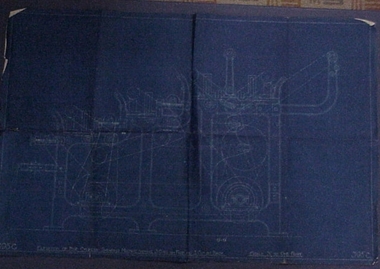
Blueprint, "Elevation of Four Cylinder Shearing Machine Shewing3 Cuts on Face and 1 Cut on Back"
... "Elevation of Four Cylinder Shearing Machine Shewing3 Cuts on Face and 1 Cut on Back"...Blueprint, printed white on blue paper, of the mechanical engineering drawings of "Elevation of Four Cylinder Shearing Machine Shewing3 Cuts on Face and 1 Cut on Back" -395C..."Elevation of Four Cylinder Shearing Machine Shewing3 Cuts on Face and 1 Cut on Back" -395C....ELEVATIOB OF FOUR CYLINDER SHEARING MACHINE SHEWING 3 CUTS ON FACE AND 1 CUT ON BACK -395C..."Elevation of Four Cylinder Shearing Machine Shewing3 Cuts on Face and 1 Cut on Back" Blueprint ...Blueprint, printed white on blue paper, of the mechanical engineering drawings of "Elevation of Four Cylinder Shearing Machine Shewing3 Cuts on Face and 1 Cut on Back" -395C"Elevation of Four Cylinder Shearing Machine Shewing3 Cuts on Face and 1 Cut on Back" -395C.ELEVATIOB OF FOUR CYLINDER SHEARING MACHINE SHEWING 3 CUTS ON FACE AND 1 CUT ON BACK -395Cshearing machinery shearing sheds shearing, shearing machinery, shearing sheds, shearing -
 Geoffrey Kaye Museum of Anaesthetic History
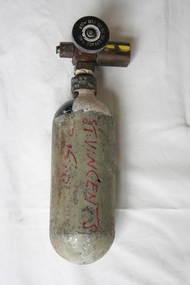
Equipment - Cylinder, Medical Compressed Air
... ...Cylinder...Early cylinders were coloured as their maker saw fit, usually black, perhaps with a white top for oxygen. ...Empty small pale green painted cylinder with rounded base and attached outflow valve with circular 'On-Off' knob....Handwritten in red paint across the main body of the cylinder: ST. VINCENTS 32510 Printed on manufacturer's label: 'KEEP CYLINDER COOL / CIG [logo] / MADE IN AUSTRALIA / MEDICAL AIR COMPRESSED / DO NOT ALLOW OIL OR GREASE ON VALVE / OPEN VALVE SLOWLY CLOSE AFTER USE...Equipment Cylinder, Medical Compressed Air ...Early cylinders were coloured as their maker saw fit, usually black, perhaps with a white top for oxygen. The Americans first achieved standardisation, but other countries do not follow American Standards. Australia follows the colour-scheme of the British Oxygen Corporation. The body is coloured individually for each gas, viz: compressed air, grey; carbon dioxide, brown; oxygen, black; nitrous oxygen, blue’ cyclopropane, primrose-yellow’ ethylene, mauve. Panels of other colours may appear on the body, but indicate technical points of cylinder-design and do not concern the anaesthetist. (Penn catalogue entry)Empty small pale green painted cylinder with rounded base and attached outflow valve with circular 'On-Off' knob.Handwritten in red paint across the main body of the cylinder: ST. VINCENTS 32510 Printed on manufacturer's label: 'KEEP CYLINDER COOL / CIG [logo] / MADE IN AUSTRALIA / MEDICAL AIR COMPRESSED / DO NOT ALLOW OIL OR GREASE ON VALVE / OPEN VALVE SLOWLY CLOSE AFTER USEcompressed air, cylinder, colour standardisation -
 Flagstaff Hill Maritime Museum and Village
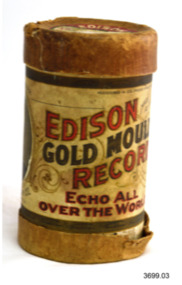
Audio - Gramophone Cylinder, B & H Jack, 1907
... The recorded wax cylinders, later replaced by Blue Amberol cylinders, and vertical-cut Diamond Discs, were manufactured by Edison's National Phonograph Company from 1896 on, reorganized as Thomas A. ...The Catalogue Number and Title are either printed or hand written on the cylinder’s lid. This cylinder contained Record no. 49, “B & H Jack” and was made at the Edison Laboratory USA. ...On lid “Edison Record No. 49”, written in pencil “B & H Jack” (it looks like this) On cylinder “EDISON GOLD MOULDED RECORDS ECHO ALL OVER THE WORLD” Patents listed for 1904 & 1905...The recorded wax cylinders, later replaced by Blue Amberol cylinders, and vertical-cut Diamond Discs, were manufactured by Edison's National Phonograph Company from 1896 on, reorganized as Thomas A. ...Edison Records was one of the early record labels that pioneered sound recording and reproduction, and was an important player in the early recording industry. The first phonograph cylinders were manufactured in 1888, followed by Edison's foundation of the Edison Phonograph Company in the same year. The recorded wax cylinders, later replaced by Blue Amberol cylinders, and vertical-cut Diamond Discs, were manufactured by Edison's National Phonograph Company from 1896 on, reorganized as Thomas A. Edison, Inc. in 1911. Until 1910 the recordings did not carry the names of the artists. The company began to lag behind its rivals in the 1920s, both technically and in the popularity of its artists, and halted production of recordings in 1929. Thomas A. Edison invented the phonograph, the first device for recording and playing back sound, in 1877. After patenting the invention and benefiting from the publicity and acclaim it received, Edison and his laboratory turned their attention to the commercial development of electric lighting, playing no further role in the development of the phonograph for nearly a decade. Start of the Recording Industry: In 1887, Edison turned his attention back to improving the phonograph and the phonograph cylinder. The following year, the Edison company introduced the ”Perfected Phonograph”. Edison introduced wax cylinders approximately 4+1⁄4 inches (11 cm) long and 2+1⁄4 inches (5.7 cm) in external diameter, which became the industry standard. They had a maximum playing time of about 3 minutes at 120 RPM, but around the turn of the century the standard speed was increased to (first 144) and then 160 RPM to improve clarity and volume, reducing the maximum to about 2 minutes and 15 seconds. Several experimental wax cylinder recordings of music and speech made in 1888 still exist. The wax entertainment cylinder made its commercial debut in 1889 at first, the only customers were entrepreneurs who installed nickel-in-the-slot phonographs in amusement arcades, saloons and other public places. At that time, a phonograph cost the equivalent of several months' wages for the average worker and was driven by an electric motor powered by hazardous, high-maintenance wet cell batteries. After more affordable spring-motor-driven phonographs designed for home use were introduced in 1895, the industry of producing recorded entertainment cylinders for sale to the general public began in earnest. Blank records were an important part of the business early on. Most phonographs had or could be fitted with attachments for the users to make their own recordings. One important early use, in line with the original term for a phonograph as a "talking machine", was in business for recording dictation. Attachments were added to facilitate starting, stopping, and skipping back the recording for dictation and playback by stenographers. The business phonograph eventually evolved into a separate device from the home entertainment phonograph. Edison's brand of business phonograph was called the Ediphone. The collection of three phonograph cylinders are an example of early recorded music use for domestic entertainment. They are significant as they represent the beginnings of the modern recording industry.Cardboard tube-shaped gramophone cylinder box with lid. The printed label on the outside of the box advertises the maker and patent details. The Catalogue Number and Title are either printed or hand written on the cylinder’s lid. This cylinder contained Record no. 49, “B & H Jack” and was made at the Edison Laboratory USA. C. 1905On lid “Edison Record No. 49”, written in pencil “B & H Jack” (it looks like this) On cylinder “EDISON GOLD MOULDED RECORDS ECHO ALL OVER THE WORLD” Patents listed for 1904 & 1905warrnambool, flagstaff hill maritime museum, maritime museum, shipwreck coast, flagstaff hill maritime village, gramophone record, gramophone cylinder, edison cylinder, edison record, home entertainment, music recording, edison laboratory orange nj, usa, national phonograph company of australia ltd sydney, thomas a. edison -
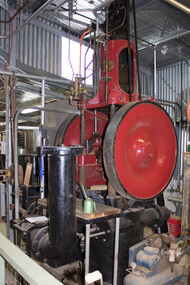 Maldon Vintage Machinery Museum Inc
Condenser Air Pump, 1913
... The operating cylinder at at top of the machine has a centrifugal governor. ...On cylinder head "63"...machinery pumps reciprocating metalwork On cylinder head "63" Vertical cylinder reciprocating condenser air pump with two 107 cm diameter flywheels (one on each end of crankshaft). ...Vertical cylinder reciprocating condenser air pump with two 107 cm diameter flywheels (one on each end of crankshaft). The operating cylinder at at top of the machine has a centrifugal governor. Access ladder to platform at front. Painted black and red. On cylinder head "63"machinery pumps reciprocating metalwork -
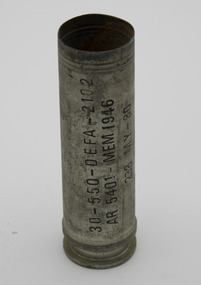 Rutherglen RSL Sub-Branch
Memorabilia - 30mm Shell Casing, c. 1946
... Silver Cylinder ...On Side of cylinder: 30-550-DEFA-2102/AR5401-MEM1946/238 MY-80...Ordanance Ammunition On Side of cylinder: 30-550-DEFA-2102/AR5401-MEM1946/238 MY-80 Silver Cylinder Memorabilia 30mm Shell Casing ...Silver Cylinder On Side of cylinder: 30-550-DEFA-2102/AR5401-MEM1946/238 MY-80ordanance, ammunition -
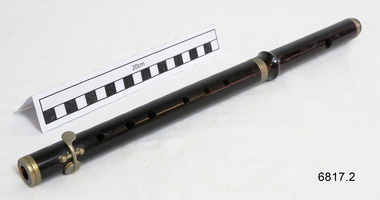 Flagstaff Hill Maritime Museum and Village
Instrument - Flute, c. 1920s
... Musical instrument, flute, Bakelite cylinder, part of the W.R. Angus Collection. ...Stamped into the cylinder "ENGLISH MAKE"....One end is open, the other is rounded, and the cylinder is decorated with three silver bands. ...This flute was purchased new by Dr. Angus and played by him over the years. It was donated to Flagstaff Hill Maritime Village by the family of Doctor William Roy Angus, Surgeon and Oculist. It is part of the “W.R. Angus Collection” that includes historical medical equipment, surgical instruments and material once belonging to Dr Edward Ryan and Dr Thomas Francis Ryan, (both of Nhill, Victoria) as well as Dr Angus’ own belongings. The Collection’s history spans the medical practices of the two Doctors Ryan, from 1885-1926 plus that of Dr Angus, up until 1969. ABOUT THE “W.R.ANGUS COLLECTION” Doctor William Roy Angus M.B., B.S., Adel., 1923, F.R.C.S. Edin.,1928 (also known as Dr Roy Angus) was born in Murrumbeena, Victoria in 1901 and lived until 1970. He qualified as a doctor in 1923 at University of Adelaide, was Resident Medical Officer at the Royal Adelaide Hospital in 1924 and for a period was house surgeon to Sir (then Mr.) Henry Simpson Newland. Dr Angus was briefly an Assistant to Dr Riddell of Kapunda, then commenced private practice at Curramulka, Yorke Peninsula, SA, where he was physician, surgeon and chemist. In 1926, he was appointed as new Medical Assistant to Dr Thomas Francis Ryan (T.F. Ryan, or Tom), in Nhill, Victoria, where his experiences included radiology and pharmacy. In 1927 he was Acting House Surgeon in Dr Tom Ryan’s absence. Dr Angus had become engaged to Gladys Forsyth and they decided he would take time to further his studies overseas in the UK in 1927. He studied at London University College Hospital and at Edinburgh Royal Infirmary and in 1928, was awarded FRCS (Fellow from the Royal College of Surgeons), Edinburgh. He worked his passage back to Australia as a Ship’s Surgeon on the on the Australian Commonwealth Line’s T.S.S. Largs Bay. Dr Angus married Gladys in 1929, in Ballarat. (They went on to have one son (Graham 1932, born in SA) and two daughters (Helen (died 12/07/1996) and Berenice (Berry), both born at Mira, Nhill ) Dr Angus was a ‘flying doctor’ for the A.I.M. (Australian Inland Ministry) Aerial Medical Service in 1928 . The organisation began in South Australia through the Presbyterian Church in that year, with its first station being in the remote town of Oodnadatta, where Dr Angus was stationed. He was locum tenens there on North-South Railway at 21 Mile Camp. He took up this ‘flying doctor’ position in response to a call from Dr John Flynn; the organisation was later known as the Flying Doctor Service, then the Royal Flying Doctor Service. A lot of his work during this time involved dental surgery also. Between 1928-1932 he was surgeon at the Curramulka Hospital, Yorke Peninsula, South Australia. In 1933 Dr Angus returned to Nhill where he’d previously worked as Medical Assistant and purchased a share of the Nelson Street practice and Mira hospital from Dr Les Middleton one of the Middleton Brothers, the current owners of what was once Dr Tom Ryan’s practice. Dr L Middleton was House Surgeon to the Nhill Hospital 1926-1933, when he resigned. [Dr Tom Ryan’s practice had originally belonged to his older brother Dr Edward Ryan, who came to Nhill in 1885. Dr Edward saw patients at his rooms, firstly in Victoria Street and in 1886 in Nelson Street, until 1901. The Nelson Street practice also had a 2 bed ward, called Mira Private Hospital ). Dr Edward Ryan was House Surgeon at the Nhill Hospital 1884-1902 . He also had occasions where he successfully performed veterinary surgery for the local farmers too. Dr Tom Ryan then purchased the practice from his brother in 1901. Both Dr Edward and Dr Tom Ryan work as surgeons included eye surgery. Dr Tom Ryan performed many of his operations in the Mira private hospital on his premises. He too was House Surgeon at the Nhill Hospital 1902-1926. Dr Tom Ryan had one of the only two pieces of radiology equipment in Victoria during his practicing years – The Royal Melbourne Hospital had the other one. Over the years Dr Tom Ryan gradually set up what was effectively a training school for country general-practitioner-surgeons. Each patient was carefully examined, including using the X-ray machine, and any surgery was discussed and planned with Dr Ryan’s assistants several days in advance. Dr Angus gained experience in using the X-ray machine there during his time as assistant to Dr Ryan. Dr Tom Ryan moved from Nhill in 1926. He became a Fellow of the Royal Australasian College of Surgeons in 1927, soon after its formation, a rare accolade for a doctor outside any of the major cities. He remained a bachelor and died suddenly on 7th Dec 1955, aged 91, at his home in Ararat. Scholarships and prizes are still awarded to medical students in the honour of Dr T.F. Ryan and his father, Dr Michael Ryan, and brother, John Patrick Ryan. ] When Dr Angus bought into the Nelson Street premises in Nhill he was also appointed as the Nhill Hospital’s Honorary House Surgeon 1933-1938. His practitioner’s plate from his Nhill surgery states “HOURS Daily, except Tuesdays, Fridays and Saturday afternoons, 9-10am, 2-4pm, 7-8pm. Sundays by appointment”. This plate is now mounted on the doorway to the Port Medical Office at Flagstaff Hill Maritime Village, Warrnambool. Dr Edward Ryan and Dr Tom Ryan had an extensive collection of historical medical equipment and materials spanning 1884-1926 and when Dr Angus took up practice in their old premises he obtained this collection, a large part of which is now on display at the Port Medical Office at Flagstaff Hill Maritime Village in Warrnambool. During his time in Nhill Dr Angus was involved in the merging of the Mira Hospital and Nhill Public Hospital into one public hospital and the property titles passed on to Nhill Hospital in 1939. In 1939 Dr Angus and his family moved to Warrnambool where he purchased “Birchwood,” the 1852 home and medical practice of Dr John Hunter Henderson, at 214 Koroit Street. (This property was sold in1965 to the State Government and is now the site of the Warrnambool Police Station. ). The Angus family was able to afford gardeners, cooks and maids; their home was a popular place for visiting dignitaries to stay whilst visiting Warrnambool. Dr Angus had his own silk worm farm at home in a Mulberry tree. His young daughter used his centrifuge for spinning the silk. Dr Angus was appointed on a part-time basis as Port Medical Officer (Health Officer) in Warrnambool and held this position until the 1940’s when the government no longer required the service of a Port Medical Officer in Warrnambool; he was thus Warrnambool’s last serving Port Medical Officer. (The duties of a Port Medical Officer were outlined by the Colonial Secretary on 21st June, 1839 under the terms of the Quarantine Act. Masters of immigrant ships arriving in port reported incidents of diseases, illness and death and the Port Medical Officer made a decision on whether the ship required Quarantine and for how long, in this way preventing contagious illness from spreading from new immigrants to the residents already in the colony.) Dr Angus was a member of the Australian Medical Association, for 35 years and surgeon at the Warrnambool Base Hospital 1939-1942, He served as a Surgeon Captain during WWII1942-45, in Ballarat, Victoria, and in Bonegilla, N.S.W., completing his service just before the end of the war due to suffering from a heart attack. During his convalescence he carved an intricate and ‘most artistic’ chess set from the material that dentures were made from. He then studied ophthalmology at the Royal Melbourne Eye and Ear Hospital and created cosmetically superior artificial eyes by pioneering using the intrascleral cartilage. Angus received accolades from the Ophthalmological Society of Australasia for this work. He returned to Warrnambool to commence practice as an ophthalmologist, pioneering in artificial eye improvements. He was Honorary Consultant Ophthalmologist to Warrnambool Base Hospital for 31 years. He made monthly visits to Portland as a visiting surgeon, to perform eye surgery. He represented the Victorian South-West subdivision of the Australian Medical Association as its secretary between 1949 and 1956 and as chairman from 1956 to 1958. In 1968 Dr Angus was elected member of Spain’s Barraquer Institute of Barcelona after his research work in Intrasclearal cartilage grafting, becoming one of the few Australian ophthalmologists to receive this honour, and in the following year presented his final paper on Living Intrasclearal Cartilage Implants at the Inaugural Meeting of the Australian College of Ophthalmologists in Melbourne In his personal life Dr Angus was a Presbyterian and treated Sunday as a Sabbath, a day of rest. He would visit 3 or 4 country patients on a Sunday, taking his children along ‘for the ride’ and to visit with him. Sunday evenings he would play the pianola and sing Scottish songs to his family. One of Dr Angus’ patients was Margaret MacKenzie, author of a book on local shipwrecks that she’d seen as an eye witness from the late 1880’s in Peterborough, Victoria. In the early 1950’s Dr Angus, painted a picture of a shipwreck for the cover jacket of Margaret’s book, Shipwrecks and More Shipwrecks. She was blind in later life and her daughter wrote the actual book for her. Dr Angus and his wife Gladys were very involved in Warrnambool’s society with a strong interest in civic affairs. Their interests included organisations such as Red Cross, Rostrum, Warrnambool and District Historical Society (founding members), Wine and Food Society, Steering Committee for Tertiary Education in Warrnambool, Local National Trust, Good Neighbour Council, Housing Commission Advisory Board, United Services Institute, Legion of Ex-Servicemen, Olympic Pool Committee, Food for Britain Organisation, Warrnambool Hospital, Anti-Cancer Council, Boys’ Club, Charitable Council, National Fitness Council and Air Raid Precautions Group. He was also a member of the Steam Preservation Society and derived much pleasure from a steam traction engine on his farm. He had an interest in people and the community He and his wife Gladys were both involved in the creation of Flagstaff Hill, including the layout of the gardens. After his death (28th March 1970) his family requested his practitioner’s plate, medical instruments and some personal belongings be displayed in the Port Medical Office surgery at Flagstaff Hill Maritime Village, and be called the “W. R. Angus Collection”. The W.R. Angus Collection is significant for still being located at the site it is connected with, Doctor Angus being the last Port Medical Officer in Warrnambool. The collection of medical instruments and other equipment is culturally significant, being an historical example of medicine from late 19th to mid-20th century. Dr Angus assisted Dr Tom Ryan, a pioneer in the use of X-rays and in ocular surgery. Musical instrument, flute, Bakelite cylinder, part of the W.R. Angus Collection. Two pieces, hole for blowing across plus six open holes and one metal covered key hole. One end is open, the other is rounded, and the cylinder is decorated with three silver bands. Stamped "ENGLISH MAKE".Stamped into the cylinder "ENGLISH MAKE".flagstaff hill, warrnambool, shipwrecked coast, flagstaff hill maritime museum, maritime museum, shipwreck coast, flagstaff hill maritime village, great ocean road, dr w r angus, dr ryan, musical instrument, flute, flute made in england, bakelite flute -
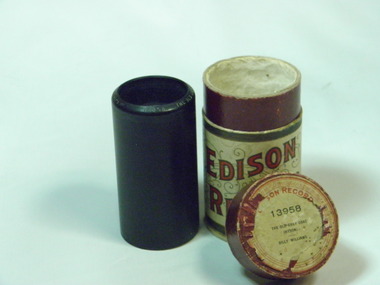 Shepparton Heritage Centre
Recording Audio, Edison Gold Moulded Record - 13958, May 1910
... cylinder...Moulded recording cylinder contained within cylindrical labed container...Box - 1398 "The Old Grey Coat (Hyson) Billy Williams" Cylinder "13958 THE OLD GREY COAT B. WILLIAMS"...These cyclinders provided entertainment opportunity for early settlers in the district. cylinder recording moulded cylinder Box - 1398 "The Old Grey Coat (Hyson) Billy Williams" Cylinder "13958 THE OLD GREY COAT B. ...Early sound recording - exported from the USAThe cylinder is significant because of it's historical place in early history of communications and entertainment. These cyclinders provided entertainment opportunity for early settlers in the district.Moulded recording cylinder contained within cylindrical labed containerBox - 1398 "The Old Grey Coat (Hyson) Billy Williams" Cylinder "13958 THE OLD GREY COAT B. WILLIAMS"cylinder, recording, moulded cylinder, -
 Bendigo Military Museum
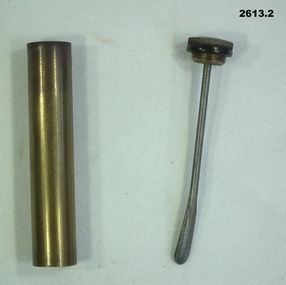
Container - CONTAINER, OIL, Possibly WW1 - WW2 and on
... Oil bottle for 303 Rifle. Brass cylinder with screw out top with oil scoop. .1) Brass cylinder for oil with black sealing washer. .2) Brass screw top with oil scoop attached....OA stamped on screw top Tick (symbol) on side of cylinder...containers - commercial metal craft- brassware military history - equipment Oil container OA stamped on screw top Tick (symbol) on side of cylinder Oil bottle for 303 Rifle. Brass cylinder with screw out top with oil scoop. .1) Brass cylinder for oil with black sealing washer. .2) Brass screw top with oil scoop attached. ...Oil bottle for 303 Rifle. Brass cylinder with screw out top with oil scoop. .1) Brass cylinder for oil with black sealing washer. .2) Brass screw top with oil scoop attached.OA stamped on screw top Tick (symbol) on side of cylindercontainers - commercial, metal craft- brassware, military history - equipment, oil container -
 Bendigo Military Museum
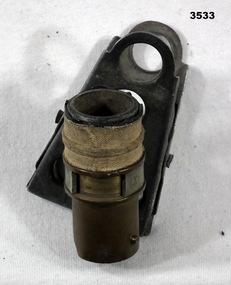
Equipment - CLIP
... Grey metal spring loaded clip with serrated jaws. A brass cylinder is attached. The object is possibly part of a gas mask....Stamped on cylinder: A M 6D.526 MKIV...A brass cylinder is attached. The object is possibly part of a gas mask. ...Item re Frederick Gardner DAVEY DFC No 410533 RAAF. Refer Reg No 3536P for his service details.Grey metal spring loaded clip with serrated jaws. A brass cylinder is attached. The object is possibly part of a gas mask.Stamped on cylinder: A M 6D.526 MKIVgas, masks, military -
 Federation University Historical Collection
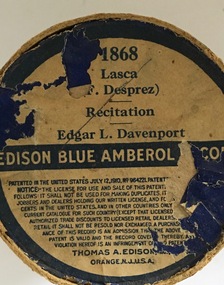
Musical Object, Edison Amberol Cylinder Records, 1900s
... Edison Amberol Cylinder Records...6 Record cylinders, each in a cardboard cylindrical case....Title stamped on the end face of cylinder. Detailed Copyright information - 1900 by the National Phonograph Co., Orange, New Jersey, U.S.A....Title stamped on the end face of cylinder. Detailed Copyright information - 1900 by the National Phonograph Co., Orange, New Jersey, U.S.A. 6 Record cylinders, each in a cardboard cylindrical case. ...Each record has a number and the title of the piece. The artists' names are also mentioned and the length of time it plays. The "record should run 160 revolutions per minute - not faster or slower". .1) Blue Amberol No. 1868 - "Lasca" - F Deprez / Edgar Davenport .2) Amberol No. 999 - "Peggy Gray" - Thurland Chatterway .3) Blue Amberol No.1819 - "Just a Wee Deoch and Doris" - Harry Lauder .4) Blue Amberol No. 12206 - "Killarney" - Violet Oppenshaw. (There is no lid for this record.) .5) Amberol No. 863 - "Winter" / "March Song" - Billy Murray and Chorus .6) Amberol No. 12347 - "By the Sea" - Stanley Kirkby 6 Record cylinders, each in a cardboard cylindrical case.Title of record with its number on the lid of the case. Title stamped on the end face of cylinder. Detailed Copyright information - 1900 by the National Phonograph Co., Orange, New Jersey, U.S.A.amberol, thomas edison, cylinder records, national phonograph company, blue amberol -
 Kiewa Valley Historical Society
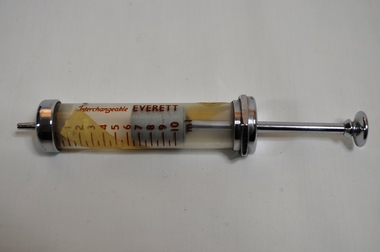
Everett Syringe
... Tape has been stuck diagonally across and around the cylinder. ...Red lines and numbers on cylinder for measurement. 'Interchangeable EVERETT'...Tape has been stuck diagonally across and around the cylinder. Everett Syringe ...This medical / hospital instrument was used in the Tawonga District General Hospital which was built in the 1950s specifically for the increase in population due to the Kiewa Hydro Scheme.Historical: Shows the development of scientific hospital equipment. Provenance: Used in the Tawonga District General Hospital which was remote and therefore required good equipment. Glass frosted white syringe with markings for measurement. Steel plunger attachments. Tape has been stuck diagonally across and around the cylinder. Red lines and numbers on cylinder for measurement. 'Interchangeable EVERETT'medical equipment. hospital equipment. tawonga. mt beauty. syringe. doctor, injection. innoculation -
 Nhill Aviation Heritage Centre
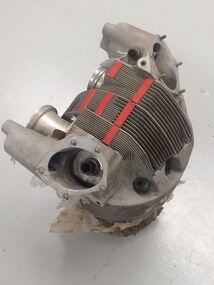
Memorabilia - Cylinder
... Cylinder ...Engine cylinder, new, fits Wright 3350 aircraft engine...Attached tag for cylinder stud. . Aerodex.Inc. Accepted or serviceable tag. ...Model 3350 Engine cylinder, new, fits Wright 3350 aircraft engine Memorabilia Cylinder ...The type was used in the ANA Convair airliner that flew into NhillEngine cylinder, new, fits Wright 3350 aircraft engineAttached tag for cylinder stud. . Aerodex.Inc. Accepted or serviceable tag. Part number 433098. Model 3350 -
 Southern Sherbrooke Historical Society Inc.
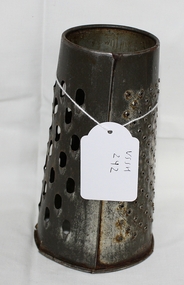
Grater, 1940's
... Metallic cylinder that is wide at the bottom and narrow at the top. ...Willow', 'registered design' and 'made in Australia' all featured on cylinder....cooking kitchen Willow', 'registered design' and 'made in Australia' all featured on cylinder. Metallic cylinder that is wide at the bottom and narrow at the top. ...Metallic cylinder that is wide at the bottom and narrow at the top. Has various sized holes cut/drilled into it to allow food to be grated. Hollow in the centre to contain grated food.Willow', 'registered design' and 'made in Australia' all featured on cylinder.cooking, kitchen -
 Numurkah & District Historical Society
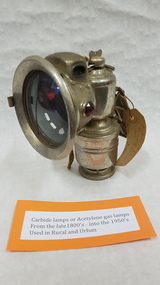
Bicycle Lamp - carbide
... Fuel is stored in a cylindrical container attached to the light's lens area. ...Panther B'Ham (on top of fuel cylinder)...Fuel is stored in a cylindrical container attached to the light's lens area. ...Chrome Bicycle lamp has round glass lens at the front with red reflectors at the side and facing the back. Mounting clips are at the back. The top has a screw lid for fuel. and a regulator. Fuel is stored in a cylindrical container attached to the light's lens area. Cracked lensPanther B'Ham (on top of fuel cylinder)bike, bicycle, lamp -
 Kiewa Valley Historical Society
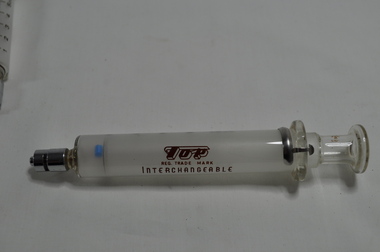
Leur Lock Syringe
... Glass plunger, hollow with wider solid top which prevents the plunger going into the hollow cylinder too far. Glass cylinders frosted....Hollow cylinder has markings for quantity of fluid (up to 10cc) On the other side "TOP / Reg. ...Glass plunger, hollow with wider solid top which prevents the plunger going into the hollow cylinder too far. Glass cylinders frosted. Leur Lock Syringe ...These medical / hospital instruments were used in the Tawonga District General Hospital which was built in the 1950s specifically for the increase in population due to the Kiewa Hydro Scheme.Historical: Shows the development of scientific hospital equipment. Provenance: Used in the Tawonga District General Hospital which was remote and therefore required good equipment.The syringe holds 10cc Used to administer liquid drugs. Glass hollow cylinder with needle end steel and with fitting to attach needle. Glass plunger, hollow with wider solid top which prevents the plunger going into the hollow cylinder too far. Glass cylinders frosted.Hollow cylinder has markings for quantity of fluid (up to 10cc) On the other side "TOP / Reg. Trade Mark / Interchangeable" The plunger has no markings.hospital equipment. medical equipment. syringe. tawonga. mt beauty. leurlock. -
The Ed Muirhead Physics Museum
Magnetic Declination Instrument, Kew Pattern
... Declination instrument consisting of metal horizontal cylinder erected on brass three legged stand. ...Engraved on cylinder: “Elliott Bros London No.71”...Engraved on cylinder: “Elliott Bros London No.71” Declination instrument consisting of metal horizontal cylinder erected on brass three legged stand. ...Declination instrument consisting of metal horizontal cylinder erected on brass three legged stand. A wooden rectangular box forms part of the instrument from which a horizontal telescope emerges (measurement of geographical meridian) and a vertical glass tube containing the suspension for the hollow magnet.Engraved on cylinder: “Elliott Bros London No.71” -
 Greensborough Historical Society
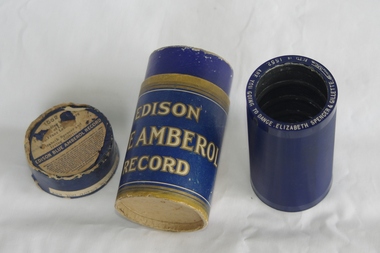
Audio - Gramophone Cylinder, Thomas A. Edison Inc, Are you going to dance, 1920s
... Musical number recorded on plastic "Edison" cylinder. 'Blue Amberol Records' was the trademark name for cylinder records manufactured by Thomas A. ...Plastic gramophone cylinder in blue and gold cardboard case...Musical number recorded on plastic "Edison" cylinder. 'Blue Amberol Records' was the trademark name for cylinder records manufactured by Thomas A. ...Musical number recorded on plastic "Edison" cylinder. 'Blue Amberol Records' was the trademark name for cylinder records manufactured by Thomas A. Edison, Inc. in the US from 1912 to 1929.Plastic gramophone cylinder in blue and gold cardboard caseElizabeth Spencer and Irving Gillette. Edison Blue Amberol Record 1552gramophone cylinder, thomas edison, blue amberol records -
 Robin Boyd Foundation
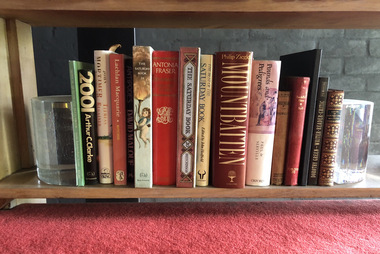
Functional object - Bookends
... He designed six cylindrical clear acrylic display cases. One of these exhibits used an anamorphic optical illusion, using compressed images which had normal proportions when viewed through a lens of the half-cylindrical display cases. ...Two half cylindrical acrylic prisms...He designed six cylindrical clear acrylic display cases. One of these exhibits used an anamorphic optical illusion, using compressed images which had normal proportions when viewed through a lens of the half-cylindrical display cases. ...Boyd designed the exhibition for the opening of the Australian Chancery in Washington DC held in June 1969. He designed six cylindrical clear acrylic display cases. One of these exhibits used an anamorphic optical illusion, using compressed images which had normal proportions when viewed through a lens of the half-cylindrical display cases. These bookends were designed as a small scale model for the Chancery exhibition. Placing the disc (item F158) underneath the adjacent two half-cylindrical bookends demonstrates how the bookends behave as a lens.Two half cylindrical acrylic prismsaustralian chancery, walsh st furnishings, robin boyd, ohm2022, ohm2022_3 -
 Puffing Billy Railway
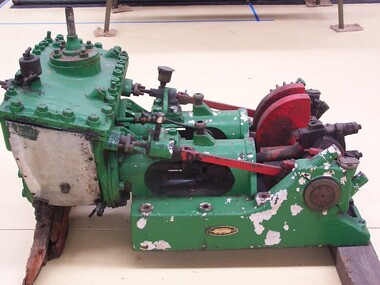
Twin Cylinder Racking Engines
... Twin Cylinder Racking Engines...Twin Cylinder Racking Engines made of metal, iron and steel...Twin Cylinder Racking Engines Historic - Industrial - Twin Cylinder Racking Engines twin cylinder racking engines puffing billy Twin Cylinder Racking Engines made of metal, iron and steel Twin Cylinder Racking Engines ...Twin Cylinder Racking EnginesHistoric - Industrial - Twin Cylinder Racking EnginesTwin Cylinder Racking Engines made of metal, iron and steeltwin cylinder racking engines, puffing billy -
Tatura Irrigation & Wartime Camps Museum
Cylinder
... Cylinder...cylinder...Cylinder contains 2 Certificates (Text in Japanese on one, English translation on the other). ...Black and grey printed snake skin on a cardboard cylinder with a lid. A piece of ribbon is attached to bottom part of cylinder...A piece of ribbon is attached to bottom part of cylinder Cylinder ...Cylinder contains 2 Certificates (Text in Japanese on one, English translation on the other). Presented to Miss Ethel May PunshonBlack and grey printed snake skin on a cardboard cylinder with a lid. A piece of ribbon is attached to bottom part of cylindercylinder, snake skin, punshon, m, hamblin w, camp 4, tatura, ww2, commerce, containers -
Glenelg Shire Council Cultural Collection
Audio - Edison Sterling Record, Thomas A. Edison (TM), The Pullman Porters on Parade, 1913
... They replaced the 4-minute black wax Amberol cylinders introduced in 1908, which had replaced the 2-minute wax cylinders that had been the standard format since the late 1880s....Edison Sterling Record. Blue Amberol cylinder record....They replaced the 4-minute black wax Amberol cylinders introduced in 1908, which had replaced the 2-minute wax cylinders that had been the standard format since the late 1880s. ...Blue Amberol Records was the trademark name for cylinder records manufactured by Thomas A. Edison, Inc. in the US from 1912 to 1929. They replaced the 4-minute black wax Amberol cylinders introduced in 1908, which had replaced the 2-minute wax cylinders that had been the standard format since the late 1880s.[citation needed] Blue Amberols can play for as long as 4 minutes and 45 seconds[citation needed] and have a surface layer of the "indestructible" plastic celluloid, which Edison tinted a trademark blue color. Edison brand phonographs designed to play Amberol cylinders were named Amberolas. Displayed at History HouseEdison Sterling Record. Blue Amberol cylinder record.Front: Thomas A Edison PAT'D. 6. 2043. The Pullman Porters on Parade. Meeker (engraved, edge)music, amberol, blue amberol, thomas a edison, edward meeker -
 Whitehorse Historical Society Inc.
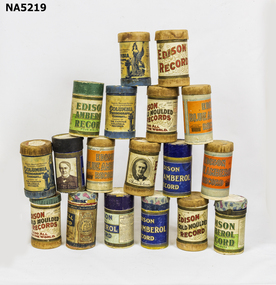
Leisure object - Phonograph Sleeves
... Cylinder used on phonograph machine to listen to music....15 - Edison sleeves } All containing phonogram cylinders 3 - Columbia sleeves }...Cylinder used on phonograph machine to listen to music. ...Cylinder used on phonograph machine to listen to music.15 - Edison sleeves } All containing phonogram cylinders 3 - Columbia sleeves }music, phonograpg, innes robert, colombia, edison
