
Showing 21 items matching "darwin wwii"
-
 Waverley RSL Sub Branch
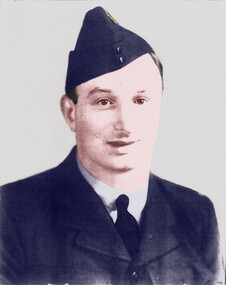
Photo Album, Charles Harold Dix 119700 RAAF Photos of the War Years
... ...darwin wwii...Photos taken by Charles Dix 119700 RAAF 2 SQN. at Darwin Adelaide River Morotai and Balikpapan during WWII and 2 photos of later date...Photo Album of mainly black and white photos from WWII Darwin Morotai Island and Balikpapan...January 1946. During WWII and served at Darwin, Adelaide River Morotai Island and made a "beach Landing" under fire at Balikpapan to set up RAAF signals station at the newly captured airstrip Vic Morgan is thought to be MORGAN, Victor Allen - (Leading Aircraftman); Service Number - 88726; File type - Casualty - Repatriation; Aircraft - Mitchell A47-37; Place - Arafura Sea; Date - 14 August 1945 charles harold dix darwin wwii adelaide river wwii frognal air base raaf balikpapan dix photos wwii darwin hospital jeep morotai island 2 squadron r.a.a.f. 2nd squadron raaf wwii Photo Album of mainly black and white photos from WWII Darwin Morotai Island and Balikpapan Charles Harold Dix 119700 RAAF Photos of the War Years Photo Album ...Photos taken by Charles Dix 119700 RAAF 2 SQN. at Darwin Adelaide River Morotai and Balikpapan during WWII and 2 photos of later dateCharles Dix 119700 RAAF 2 Sqn. was a member of RSL Waverley Sub Branch for many years. He Joined the RAAF on 8th October 1942 and was discharged from the 83rd. Operational base unit on 30th. January 1946. During WWII and served at Darwin, Adelaide River Morotai Island and made a "beach Landing" under fire at Balikpapan to set up RAAF signals station at the newly captured airstrip Vic Morgan is thought to be MORGAN, Victor Allen - (Leading Aircraftman); Service Number - 88726; File type - Casualty - Repatriation; Aircraft - Mitchell A47-37; Place - Arafura Sea; Date - 14 August 1945Photo Album of mainly black and white photos from WWII Darwin Morotai Island and Balikpapancharles harold dix, darwin wwii, adelaide river wwii, frognal air base, raaf, balikpapan, dix, photos wwii, darwin hospital, jeep, morotai island, 2 squadron r.a.a.f., 2nd squadron raaf, wwii -
 Lara RSL Sub Branch
Book, Australia in the War of 1939-1945 Tobruk and El Alamein ARMY Author Barton Maughan, First Published 1966
... wwii...palestine...lebanon...german invasion of greece and yugoslavia...bismark...malaya...pearl harbour...darwin...Australia in the War 1939 - 1945 From March 1941 - December 1942 Historical record part of a series tobruk el alamein army wwii palestine lebanon german invasion of greece and yugoslavia bismark malaya pearl harbour darwin crete churchill faddon curtin Australian War Memorial Australia in the War of 1939-1945 - Tobruk and El Alamein Maps, illustrations, photographs Australia in the War of 1939-1945 Tobruk and El Alamein ARMY Author Barton Maughan Book ...Australia in the War 1939 - 1945 From March 1941 - December 1942 Historical record part of a seriesAustralia in the War of 1939-1945 - Tobruk and El Alamein Maps, illustrations, photographsAustralian War Memorialtobruk, el alamein, army, wwii, palestine, lebanon, german invasion of greece and yugoslavia, bismark, malaya, pearl harbour, darwin, crete, churchill, faddon, curtin -
 Lara RSL Sub Branch
Book, Victory Roll - The RAAF at War, 1952
... wwii...raaf...end of conflict...test pilot...wewak...the sisters fly on...battle of borneo...the biscuit bombers...anzacs on bougainville...raaf pacific...return to timor...pacific landing...long range from darwin...In making final victory possible, we lost many comrades, to w home this book, together with those which preceded it, becomes a permanent memorial. wwii raaf end of conflict test pilot wewak the sisters fly on battle of borneo the biscuit bombers anzacs on bougainville raaf pacific return to timor pacific landing long range from darwin air victory over burma lifeline to china photo recce first over malaya jungle dawn the victory in europe story of a prison camp night flight over hamburg youth's prayer at a war memorial victory at the alps waaf's good service Message from the Chief of Air Staff.... ...The stories in 'Victory Roll' tell of some of the deeds performed in the final and victorious year of WWII. They add to a long tradition of gallant service and sacrifice and will serve as an eternal inspiration in the task of building a new world in which the spirit of the Four Freedoms must predominate. In making final victory possible, we lost many comrades, to w home this book, together with those which preceded it, becomes a permanent memorial.Green hardcover and spine with black text - 'Victory Roll The RAAF at war' on front cover and spine. The inside front and back covers have silhouette, green sepia pictures of a variety of aeroplane. Illustrations, photographs and cartoonsMessage from the Chief of Air Staff.... Air Vice Marshal, Chief of Ai Staff C.Joneswwii, raaf, end of conflict, test pilot, wewak, the sisters fly on, battle of borneo, the biscuit bombers, anzacs on bougainville, raaf pacific, return to timor, pacific landing, long range from darwin, air victory over burma, lifeline to china, photo recce, first over malaya, jungle dawn, the victory in europe, story of a prison camp, night flight over hamburg, youth's prayer at a war memorial, victory at the alps, waaf's good service -
 Lara RSL Sub Branch
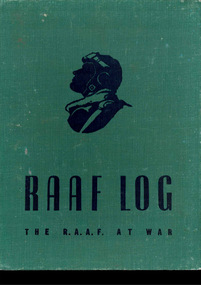
Book, RAAF Log - The RAAF at War, 1943
... Personal recounts of WWII RAAF service personnel supported by photographs, illustrations and cartoons. pacific front milne bay bismark sea battle battle for wau men of the mrs catalinas spit fires beaufighters malta hudson squadrons darwin timor moabiss japanese aircraft RAAF Log - The RAAF at War. ...Personal recounts of WWII RAAF service personnel supported by photographs, illustrations and cartoons. RAAF Log - The RAAF at War. Green hardcover with black text and silhouette of the head and shoulders profile of a pilot. The spine also has the same text. Inside front and back inside covers is an active illustration of RAAF members in various roles. Pictures, illustrations, photographs, poems, personal stories, paintings, printspacific front, milne bay, bismark sea battle, battle for wau, men of the mrs, catalinas, spit fires, beaufighters, malta, hudson squadrons, darwin, timor, moabiss, japanese aircraft -
 Bendigo Military Museum
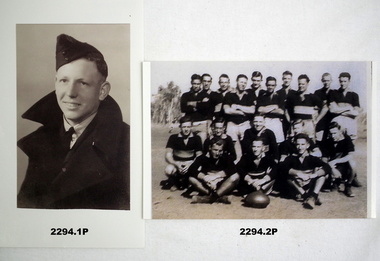
Photograph - PHOTOGRAPHS, RAAF WW2, c.WWII
... Darwin, ARTHUR J HANDO. Pop 1st one sitting on car, no hat. .5) A HANDO. .1) Portrait of WWII Airmen - copy of original. .2) Group photograph of a football team - copy of original. .3) Group sitting on truck - copy of original. .4) x 2 Trucks - copy of original. .5) Group of 3 - copy of original. ....1) Arthur John Gorsuch Hando No 116921 enlisted in the RAAF on 19.7.1942 age 18 years. At discharge on 12.4.1946 he held the rank of LAC in No 6 Transport Movement Office RAAF. .2) - .5) Photographs reflect service life in Darwin during World War II..1) Portrait of WWII Airmen - copy of original. .2) Group photograph of a football team - copy of original. .3) Group sitting on truck - copy of original. .4) x 2 Trucks - copy of original. .5) Group of 3 - copy of original..1) ARTHUR HANDO, Air Force 2nd World War. .2) A HANDO 4th from top, 5 RC Air Force footy team. .3) 2nd World War, Darwin, ARTHUR J HANDO. Pop 1st one sitting on car, no hat. .5) A HANDO.photography-photographs, military history- army - airforce, raaf -
 Bendigo Military Museum
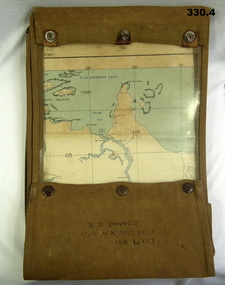
Map - MAP CASE & MAPS, Hec Robinson, C.1939-45
... WWII...World War Two...Second World War...Map Cases...Darwin...Maps WWII World War Two Second World War Map Cases Darwin Northern Territory Pine Creek Papua New Guinea Navigation Pouches zippered section marked "J. ...John James Davies No VX35280 enlisted in the 2nd AIF on 1.8.40 age 31 years. At discharge on 30.11.45 he held the rank of WO 2nd class in 2/108th Aust Light Anti Aircraft detachment..1) Map case, canvas khaki. .2) Map of Darwin, NT. Scale 4 miles to 1 inch. .3) Map, folded, New Guinea made by Hec Robinson Sydney .4) Map Pine Creek N.T.zippered section marked "J. J. Davies VX35280 108 LAD”maps, wwii, world war two, second world war, map cases, darwin, northern territory, pine creek, papua new guinea, navigation, pouches -
 Queenscliffe Maritime Museum
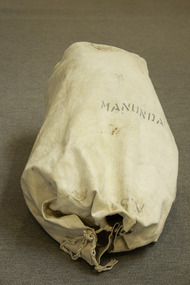
Equipment - Sea Bag [kit bag]
... Darwin harbour, a bomb hit right through the music room skylight, which exploded down on C deck tragically killing 12 and injuring 157 others. The next day she sailed for Fremantle with 266 patients. Whilst in Fremantle she was repaired and made ready for her next chapter in the war effort. This sea bag belonged to an unknown sailor who served on the hospital ship HMAS Manunda during WWII ...The TSMV Manunda was requisitioned in September 1939 and she was converted into a fulltime hospital ship. HMAS Manunda was officially commissioned on May 25 1940 after which she operated four voyages to the Middle East to bring back wounded troops to Australia. On February 19, 1942 during a Japanese bombing raid whilst the ship was at anchor in Darwin harbour, a bomb hit right through the music room skylight, which exploded down on C deck tragically killing 12 and injuring 157 others. The next day she sailed for Fremantle with 266 patients. Whilst in Fremantle she was repaired and made ready for her next chapter in the war effort.This sea bag belonged to an unknown sailor who served on the hospital ship HMAS Manunda during WWIIA sailor's canvas sea or kit bag used on the TSMN Manunda in WWIIManundatsmv manunda, hmas manunda, hospital ship, wwii, kit bag, sea bag -
 Waverley RSL Sub Branch
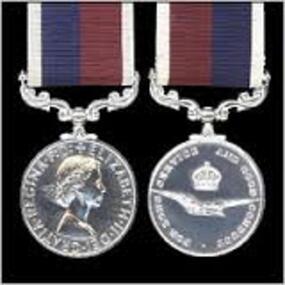
R.A.A.F. Long Service Medal
... Awarded to Alan Bowers (A236814) who was a R.A.A.F. dental mechanic who serverd during WWII including service in Darwin, and then continued in the R.A.A.F. for some years after the end of WWII The Royal Australian Air Force (and all Commonwealth Air Forces) Long Service and Good Conduct Medal: Awarded to NCOs and ORs of the RAAF (RAF, RCAF etc) for 15 years service. ...Awarded to Alan Bowers (A236814) who was a R.A.A.F. dental mechanic who serverd during WWII including service in Darwin, and then continued in the R.A.A.F. for some years after the end of WWII The Royal Australian Air Force (and all Commonwealth Air Forces) Long Service and Good Conduct Medal: Awarded to NCOs and ORs of the RAAF (RAF, RCAF etc) for 15 years service. ...Awarded to Alan Bowers (A236814) who was a R.A.A.F. dental mechanic who serverd during WWII including service in Darwin, and then continued in the R.A.A.F. for some years after the end of WWII The Royal Australian Air Force (and all Commonwealth Air Forces) Long Service and Good Conduct Medal: Awarded to NCOs and ORs of the RAAF (RAF, RCAF etc) for 15 years service. A cupro-nickel plated medal, the obverse features the sovereign's head, the reverse features the crown and eagle emblem of the RAAF (and RAF). Officers are eligible for the award provided they have served a minimum 12 years in the ranks. The riband is dark blue and maroon with white edges. This medal ceased to be awarded in Australia in 1975 when it was replaced by the National Medal (and sbsequently the DFSM and DLSM) in the Australian system of honours and awards. http://www.heritagemedals.com.au/medals-1/service-long-service/air-force-long-service-and-good-conduct-medal.html History of the RAAF Dental Branch It took six years following the formation of the RAAF in 1921 for the first Dental Clinic to be established at Point Cook, Victoria. On 10th June 1927 Flying Officer James Carl Rosenbrock commenced work as an RAAF Dental Officer for the FlyingTraining School at Point Cook. As personnel numbers were still relatively small, Rosenbrock was also responsible for the dental care of all Victorian RAAF units, which involved treating members at 1AD Laverton, as well as Air Force Headquarters at Victoria Barracks in Melbourne. As Army Dental Officers were currently caring for RAAF personnel at Richmond, NSW, the Senior Dental Officer of the 3rd Military District in Victoria (SDO 3MD) requested through the military board that a similar arrangement be established, where that the newly appointed RAAF Dentist provide part time dental services to the Army units stationed at Queenscliff. This was seen as an effective reciprocal arrangement, with both units having a Dental Officer in attendance for, in total, around 3-4 weeks a year. Rosenbrock continued to serve as the sole RAAF Dental Officer until the middle of 1933, when the Air Board asked for his service to be terminated following ‘behaviour unbecoming of a RAAF officer'. He had borrowed several sums of money, of around 40 Pounds or so, from junior ranks on base (as well as from the Regimental Sergeant Major) and had failed to pay the money back. He was replaced by a fellow Victorian, FLGOFF Norman Henry Andrews, on the 18th Sep 1933, who went on to become our first Director of Dental Services, and was instrumental in establishing the organisations and conditions of the Branch that are still present today. Through a fair amount of persistence and hard work on the part of Norman Andrews, the RAAF Dental Branch began to expand from 1937, with the introduction of 2 additional positions, at RAAF station Richmond, and at the FlyingTraining School at Point Cook. This gave the RAAF 3 uniformed Dental Officers, which was expanded to 5 in the months leading up to WW2. 4 of these Dental Officers were based in Victoria and 1 at Richmond, with the other two RAAF units being cared for by the Army (as in the case of Pearce in WA) or by civilians (as in Darwin). With the sudden increase in RAAF personnel required at the outbreak of WW2, the number of RAAF Dental Officers increased dramatically, from 5 in 1939, 28 in 1940, 64 in 1941, 147 in 1942, 193 in 1943, 219 in 1944, and peaking at 227 in 1945. RAAF Dental Officers were required to work in a variety of locations, both in and out of Australia. Between 1940 and 1942 a massive construction programme occurred, with new dental clinics being established around Australia. Priority was given to aircrew training units in order to get these personnel dentally fit for operational deployment, but Dental Officers could equally find themselves posted to recruit depots, fixed stations, medical clearance stations, mobile dental sections, and RAAF and civilian hospitals. RAAF Dental Officers were posted to the large dental centres at Ascot Vale (Vic) and Bradfield Park (NSW) when first appointed, where they received military and clinical training, before being deployed to their needed location. Mobile Dental Units When Japan entered the war in 1941, the rapid deployment of troops to northern operational areas with less than ideal dental fitness was extremely high. As a result, the RAAF deployed a range of mobile dental units, either alone or with medical sections, to support the increasing number of isolated deployed personnel within Australia and overseas. There were three types of mobile unit used: a. Mobile Dental Unit – relied on using either a semi-trailer to get around or by building a surgery directly on to the truck chassis, and installing hydraulic chairs, units, x-rays, and laboratory equipment. They were able to move around between small units, such as RAAF radar stations, where they could plug into the local power supply and work immediately. b. Transportable Dental Units – used for stops of longer duration, where field equipment was carried in panniers from one unit to another by road or rail and housed in whatever accommodation was available at the destination. They were often carried within Australia on Tiger Moths and Dakota aircraft. c. Itinerant Dental Units – in some areas, the dental equipment was installed at the RAAF unit and the Dental Officer and their staff would travel from unit to unit, using the equipment available at each location. RAAF Dental BadgeAs the war developed in Europe, it soon became obvious that the RAF Dental support was not capable of supporting the increasing numbers of RAAF aircrew that were being sent for service with the RAF, with only enough Dental Officers available to provide one to every 2000 men ( instead of the preferred 1 to 600). As a result, the RAAF provided a mobile dental unit, fitted out in a caravan and pulled by a Ford V8 Coupe, to travel around England in support of RAAF personnel at various squadrons. Some degree of tact was needed to ensure that the RAF did not take this as a comment on the treatment they were providing, but it proved successful in maintaining a satisfactory state of dental fitness in RAAF personnel, and a second mobile unit was soon dispatched. They were also set up with a laboratory on board as well as the surgery, which was a major difference between the RAF and RAAF, as the RAF did not provide dentures for their troops (the RAAF would, providing they had served for 6 years). In 1943 the RAF was no longer able to provide Dental support to Australian troops in the Middle East, which resulted in the need for a transportable dental unit to be deployed from Australia. It functioned in a similar manner to the RAF, by moving from one squadron to another. It served in the Middle East and Africa, from Cairo across North Africa, to Italy, and eventually back to England to treat returned prisoners of war. GPCAPT Norman Andrews The growth and development of the RAAF Dental Branch owes a debt to one man in particular, GPCAPT Norman Andrews. As the second RAAF Dental Officer to enlist on 18 Sep 1933, Andrews became the principal architect of the structure and organisation of the RAAF Dental Branch leading up to and during WW2. Until early 1940, the RAAF Dental Branch was administered by the Director of Medical Services (Air), which placed it under the control of the Army Medical staff. The Army would provide their Inspector of Dental Services for advice whenever needed. In April 1940, the RAAF Medical service separated from the Army, resulting in the control of the RAAF Dental Branch shifting back to the RAAF. Andrews became the first Director of Dental Services, when the position was created in 1943 as recognition of the higher profile the Dental Branch was now playing in the RAAF Medical service. Until this time, Andrews's title had been as the Dental Staff Officer to the RAAF Medical Service. Andrews was responsible for the establishment of the war-time structure of the Dental service, establishing new dental centres at all major bases, creating mobile and transportable dental units, ensuring the continual growth of the Branch, maintaining professional development of staff through the establishment of a professional journal, and by organising renowned lecturers to speak at RAAF bases. He also believed in visiting as many dental units as possible to see for himself what conditions were like and to talk first-hand to staff in remote units. His itinerary during the war years, both in and out of Australia, shows a large number of trips in a variety of modes of transport in order to reach remote areas where units were serving. He was promoted to GPCAPT in July 1944, as the numbers of Dental Officers soon peaked at 227 towards the end of the war (1 GPCAPT, 9 WGCDRs, 60 SQNLDRs, and 157 FLTLTs). After the war, with the reduction in RAAF personnel required in uniform, the Dental Branch also reduced its numbers significantly. By 1947 there were only 18 Dental Officers serving (many part-time), with 1 GPCAPT, 1 WGCDR, 10 SQNLDRs, and 6 FLTLTs, and only 13 by 1950. With the decrease in Branch personnel numbers, the ‘powers to be' saw fit to reduce the Director of Dental Service rank to WGCDR, and as a result Norman Andrews found that in order to continue serving in the RAAF he would have to wear a reduced rank. This appears to have been a contributing factor in his decision to discharge at the relatively early age of 43 and accept an administrative job as Director of the Victorian Government's School Dental Service. Norman Andrews holds the proud honour of being the founder of the RAAF Dental Branch, which during the war was instrumental in educating servicemen of the importance of dental health and maintaining the dental fitness of troops in a variety of areas. Dental Orderlies (Assistants) The dental orderly mustering was first introduced in 1937. Until that time, medical orderlies were assigned to assist the Dental officer with their duties. As early as 1931 it had been noted by both RAAF and Army Dental Officers working in Victoria and Richmond that a lot of the troubles they were having would be solved by appointing a permanent Dental Orderly. Often they would find that the medical orderly they were assigned was a different one each day, and as a result the administration and work in general was very inefficient. By 1937, with the increase in Dental Officers to 3, it was realised that a Dental Orderly mustering needed to be created. Dental Mechanics/Technicians Before WW2, dental laboratory work was provided by civilian laboratories, as most RAAF units were stationed around metropolitan areas. At this time, service personnel were still required to pay for their own dentures, unless they had served for six years or had their dentures damaged during performance of their duties. In July 1940, mainly in response to the development of more remote RAAF dental units and the increasing demand for dental prostheses, the Dental Mechanic mustering was established. Unfortunately there was a very limited pool of civilian dental mechanics to recruit from, and as a result the RAAF set up a training school at Laverton (which was later moved to Ascot Vale) in June 1941 which conducted an intensive 6 month course in Dental mechanics. Dental mechanics were quickly in demand. In all fixed and mobile dental units at least 1 Mechanic was supplied for each Dental Officer, and indeed the RAAF supplied Dental Mechanics throughout all its deployments, something the RAF were unwilling, or unable, to do. Two grades of dental mechanic existed: the Senior Mechanic (with the rank of NCO), who was competent in all phases of laboratory work; and the Junior Mechanic, who could only handle routine work and not more advanced denture work. The progression to Senior required a further trade test in techniques including setting up, clasp-forming, casting and backing teeth. During the course of the War, two special courses were held for Mechanics. The first, directed at senior mechanics so that they could instruct others, was in 1942 when Acrylic Resin was first introduced as a denture base material, as an alternative to the current option of vulcanite. Later, towards the end of the War, a ‘refresher' course was provided for those that had served for the greatest period of time in order to allow them retraining in techniques that they had not practised during their service and which were common in civilian life. This included cast base dentures, crowns and bridges, partial dentures, and retainers. Towards the end of the War, a course was held with WAAAF trainees to train them as Mechanics. However, as the War was soon to end they never had the opportunity to progress within the mustering to become Senior Mechanics. The RAAF Dental Branch has survived 75 years of turbulence, with reviews of its viability occurring regularly every few years from as early as 1937. The Branch continues to provide excellent service to the ADF community and, despite reduced manpower, will continue to play an important role in Air Force Health operations. http://www.defence.gov.au/health/about/docs/RAAFDental.pdf40cm cupro-nickel plated medal, the obverse features the sovereign's head, the reverse features the crown and eagle emblem of the RAAF (and RAF). A23814 BOWERS.A. A. F.r.a.a.f long service medal, r.a.a.f good conduct, r.a.a.f. dental service medal -
 Waverley RSL Sub Branch
Medal set Framed
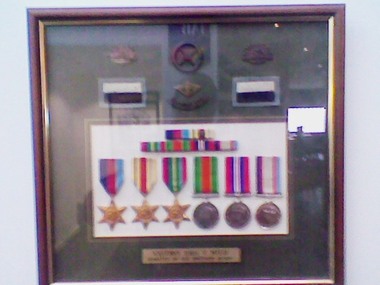
... During WWII the Batallion fought in Syria, New Guinea,Borneo and Darwin. Pte. Eric Wild D.O.B. 30/09/1909 enlisted in Windosr Vic. 27/05 1940. and served with the 16RWAR. until his discharge 27/10/1944, at which time he had been assigned to 2/2 Army Fld. ...During WWII the Batallion fought in Syria, New Guinea,Borneo and Darwin. Pte. Eric Wild D.O.B. 30/09/1909 enlisted in Windosr Vic. 27/05 1940. and served with the 16RWAR. until his discharge 27/10/1944, at which time he had been assigned to 2/2 Army Fld. ...During WWII the Batallion fought in Syria, New Guinea,Borneo and Darwin. Pte. Eric Wild D.O.B. 30/09/1909 enlisted in Windosr Vic. 27/05 1940. and served with the 16RWAR. until his discharge 27/10/1944, at which time he had been assigned to 2/2 Army Fld. Wshops. He saw service in Africa and the Pacific 16 RWAR Campaign WWII North Africa 1941, Syria, Syrian Frontier, The Litani, Sidon, Wadi Zeini, Damour, South West Pacific 1942 - 1945, Kokoda Trail, Isurava, Eora Creek, Templetons Crossing, Efogi-Menari, Ioribaiwa, Buna-Gona, Gona, Liberation of Australian New Guinea, Ramu Valley, Shaggy Ridge, Borneo, Balikpapan, WaitavoloMedal set 1939-45 star, Africa star,Pacific Star,Defence Medal,War Medal 1939-45 and Australian Service Medal 1939-45.Also patches for 16 RWAR Awarded to Wild, Eric Vincent VX 17865 2/2 Field Workshop16 rawr, wild eric vincent -
 B-24 Liberator Memorial Restoration Australia Inc
Dutch Air Force Officer's Cap, Early 1939
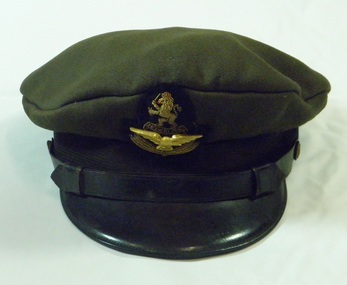
... WWII. Mr Bakker was in the Dutch Air Force and was stationed at Darwin working with the RAAF. bakker collection a23.00 Dutch Air Force Officer's Cap Dutch Air Force Officer's Cap ...Worn by Wilhelmius (Bill) Bakker during WWII.Mr Bakker was in the Dutch Air Force and was stationed at Darwin working with the RAAF. Dutch Air Force Officer's Capbakker collection, a23.00 -
 Bendigo Military Museum
Card - CORRESPONDENCE, WW2, RAAF - Australian Military Forces, WW2 1944
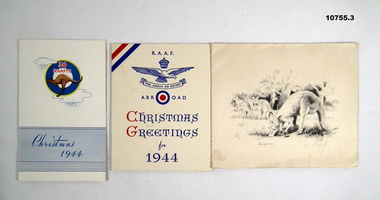
... Darwin" 2. Handwritten details - black ink pen; "To Mr & Mrs Stone/ Jack Dawson". 3. Handwritten details - black ink pen; "To Alex, Mary & Junior/ from Tom Passfield". 1. Christmas greeting card, off white cardboard, folded in half. Produced for the RAAF, WWII ....1) Believed to be “William James Baldwin Clayden” (Wife Lois) (born unknown, enlisted unknown) Records show he had military training from 1923 - 1934. On 28.8.1942 he became a Part time Chaplain 4th class then on 2.7.1943 a full time Chaplain in the RAAF. His Appointment was terminated on 8.3.1946. .2) Believed to be “John Edgar Dawson” No 128687 (born Bendigo, enlisted Melbourne) on 12.4.1943 in the RAAF age 18 years. Overseas service is logged as 18.3.1944 - 26.4.1945 in the RAAF. Discharged on 19.6.1945 with the rank of LAC in 331 Radar Station. Believed to be “Thomas Taylor Passfield” No’s V102284 & VX82407 (born Mooney Ponds, enlisted Bendigo) age 33 years in the 105 Aust Anti Tank Regt. Service is listed as CMF 21.5.1941 - 30.7.1942, AIF as 1.8.1942 - 30.10.1945. Active service listed as Darwin 12.12.1943 - 15.9.1945. Discharged on 30.10. 1945 with the rank of WO2 Refer to Cat No. 10742.15 for more details relating to this collection.1. Christmas greeting card, off white cardboard, folded in half. Produced for the RAAF, WWII. Front cover depicts a blue and yellow disc with a brown colour kangaroo in motion and red print '36/ RAAFTS'. Below blue print "Christmas 1944". Handwritten greeting on back of card. 2. Christmas Greeting Card of white cardboard, folded in half. Produced for the RAAF. Insignia and greeting in blue and red print on front. Insignia - top - RAAF, Kings Crown, flying eagle, blue, white and red roundel. Words "Christmas/ Greeting/ for/ 1944". Handwritten greeting inside card. 3. Christmas Greeting Card, of white heavy weight paper, folded into four. Produced for the Australian Military Forces (no date). Front illustration - black pen and pencil sketch of three kangaroos. Inside card are four illustrations, black pen and pencil sketches of soldiers in action positions. 1. Handwritten details - black ink pen; "To wish you all a / happy Xmas and/ Good Luck in the/ Coming Year/ from Bill & Lois/ Clayden/ 1944/ Group 934/ Darwin" 2. Handwritten details - black ink pen; "To Mr & Mrs Stone/ Jack Dawson". 3. Handwritten details - black ink pen; "To Alex, Mary & Junior/ from Tom Passfield".greeting cards, stonecollectionww1 -
 Wangaratta RSL Sub Branch
Print - Framed Print, Bombs over Darwin, 1991
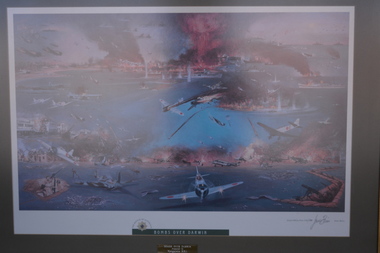
... wwii...bombing of darwin...As a result more than half of Darwin's civilian population left the area permanently, before or immediately after the attack. wwii bombing of darwin Battle of Darwin Gold metal plaque - BOMBS OVER DARWIN Presented to Wangaratta RSL Limited Edition Print 234/1800 by James Baines Timber framed containing coloured print of planes depicting the bombing of Darwin Harbour. ...On the 19 February 1942, 242 Japanese aircraft, in two separate raids, attacked the town of Darwin, ships in the harbour and the town's two airfields in an attempt to prevent the Allies from using them as bases to contest the invasion of Timor and Java during World War II. Darwin was lightly defended, relative to the size of the attack, and the Japanese inflicted heavy losses upon Allied forces at little cost to themselves. The two Japanese air raids were the first, and largest, of more than 100 air raids against Australia during 1942–43.The Bombing of Darwin, also known as the Battle of Darwin, on 19 February 1942 was the largest single attack ever mounted by a foreign power on Australia. The urban areas of Darwin also suffered damage from the raids and there were a number of civilian casualties. As a result more than half of Darwin's civilian population left the area permanently, before or immediately after the attack. Timber framed containing coloured print of planes depicting the bombing of Darwin Harbour. Gold metal plaque - BOMBS OVER DARWIN Presented to Wangaratta RSL Limited Edition Print 234/1800 by James Baineswwii, bombing of darwin, battle of darwin -
 Returned Nurses RSL Sub-branch
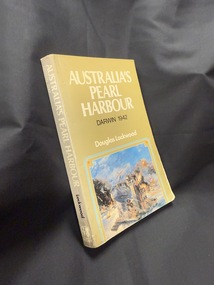
Book, Douglas Lockwood (1918-1980), Australia's Pearl Harbour : Darwin 1942, 1984
... WWII...WW2...Darwin...World War Two WWII WW2 Darwin Harbour attack Darwin Northern Territory Australia 'Includes index and Bibliography (page 213). ...'Includes index and Bibliography (page 213). Darwin. Air raids by Japan. Kaigun & Japan. Rikugun, 1942 (ANB/PRECIS SIN 0710946). Later published as: Australia under attack. Previous ed.: Adelaide : Rigby, 1972.' From TrovePaperback book with olive green cover and spine, cover also has a partial image of an artworkfiction'Includes index and Bibliography (page 213). Darwin. Air raids by Japan. Kaigun & Japan. Rikugun, 1942 (ANB/PRECIS SIN 0710946). Later published as: Australia under attack. Previous ed.: Adelaide : Rigby, 1972.' From Troveworld war two, wwii, ww2, darwin harbour attack, darwin, northern territory, australia -
 Returned Nurses RSL Sub-branch
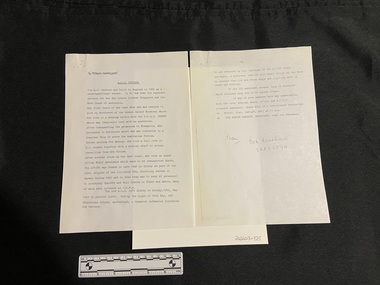
Document - Photocopy of a typed account and invitation, Bob Hershaw, AHS Centaur, 2001
... World War Two WW2 WWII War Memorials Australia AHS Centaur AHS Centaur Memorial Melbourne Shrine of Remembrance Australian hospital ship Centaur [The typed first line reading TO DARWIN DEFENDERS has been crossed out with a wavy blue ink line] Two pages of typed text. ...Brief history of the AHS Centaur hospital ship that was sunk by the Japanese in 1943 with 332 personnel aboard, of whom only 64 survived. In the final paragraph an invitation is extended for any interested members to attend a tree/plaque dedication at the Shrine Reserve on January 21st, 2001, in Melbourne.Two pages of typed text. The first page displays an underlined heading and four paragraphs. The other page has three short typed paragraphs , followed by two lines of handwriting.[The typed first line reading TO DARWIN DEFENDERS has been crossed out with a wavy blue ink line]world war two, ww2, wwii, war memorials australia, ahs centaur, ahs centaur memorial, melbourne shrine of remembrance, australian hospital ship centaur -
 Returned Nurses RSL Sub-branch
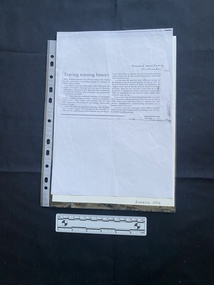
Newspaper - Photocopy of newspaper clipping, Monash University, Tracing nursing history, [1992]
... Sister Burchill started her caeer in the early 1930's, nursing in outback Australian towns such as Innaminka, served with an ambulance unit during the Spanish civil war in 1937, served in the Second World War in Egypt and Palestine and established the first full-time infant welfare clinic in Darwin since the war. WWII WW2 World War Two World War 2 Florence Florence Nightingale The paths I've trod Canada Shepparton Royal Flying DoctorService John Flynn Memorial Address Duchess of York Australian Studies Centre 'Monash university / publication / 1992' [ink, photocopied, top right of clipping] A photocopy of a small newspaper clipping consisting of a title and two columns of text Tracing nursing history Newspaper Photocopy of newspaper clipping Monash University ...Sister Elizabeth Burchill's latest book on Australian nursing is a revelation of history and anecdotes. 'Australian nurses since Nightingale:1860 -1990' traces the origins of modern nursing to the present time. Sister Burchill, who graduates next year from Monash with a masters degree, was honoured by the university in 1986 with the establishment of the Elizabeth Burchill Room in the Main library at Clayton. Sister Burchill started her caeer in the early 1930's, nursing in outback Australian towns such as Innaminka, served with an ambulance unit during the Spanish civil war in 1937, served in the Second World War in Egypt and Palestine and established the first full-time infant welfare clinic in Darwin since the war. A photocopy of a small newspaper clipping consisting of a title and two columns of text'Monash university / publication / 1992' [ink, photocopied, top right of clipping]wwii, ww2, world war two, world war 2, florence, florence nightingale, the paths i've trod, canada, shepparton, royal flying doctorservice, john flynn memorial address, duchess of york, australian studies centre -
 Returned Nurses RSL Sub-branch
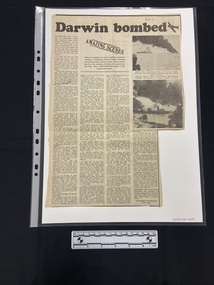
Newspaper - Newspaper clipping, Douglas Lockwood (1918-1980), Darwin bombed
... WWII...WW2...World War Two...bombing of Darwin..."Most of the...information was collected by Douglas Lockwood for his book 'Australia'a Pearl Harbour Darwin 1942' .. published 1972" - footnote in article WWII WW2 World War Two bombing of Darwin Darwin Large newspaper clipping. ...A detailed account of the bombing of Darwin in 1942. "Most of the...information was collected by Douglas Lockwood for his book 'Australia'a Pearl Harbour Darwin 1942' .. published 1972" - footnote in articleLarge newspaper clipping. Three and a half columns of text and two photographic images that are on the top right hand side.wwii, ww2, world war two, bombing of darwin, darwin -
 Returned Nurses RSL Sub-branch
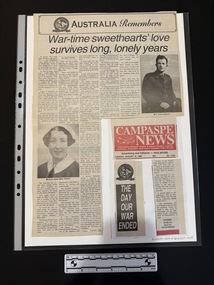
Newspaper - Newspaper clipping, [Campaspe News], War-time sweethearts' love survives long, lonely years, [c1995]
... WWII...WW2...World War Two...Prisoner of war...Mary Gibson...Gaza...Middle East...Sydney...Concorde Army Hospital...Brisbane...Hughenden...Darwin...WWII WW2 World War Two Prisoner of war Mary Gibson Gaza Middle East Sydney Concorde Army Hospital Brisbane Hughenden Darwin Atherton Tablelands Java Dutch Cycle Camp Singapore Japan Formosa Taiwan Nagasaki American Korean Manchuria Ransom Camp Govenor of Singapore Russian Manila Red Cross Vatican Nanneella A large newspaper clipping featuring a large title, five columns of text and two black and white photos. ...Mary Everard met Lance Gibson met in South Australia when Lance and a mate rang the local hospital to see if there were any off duty nurses who would go to the pictures with them. After several other outings the pair both ended up travelling on the Queen Elizabeth I to Egypt, Mary as nurse in the Australian Army Nursing Service and Lance as a lieutenant in the 2/3rd Australian Machine Gun Battalion. After spending much of the three week journey together, they continued to spend what free time they had together. When Lance found out he was to ship out to Indonesia in January 1942 the couple came to an understanding that they would marry after war. Several weeks after Lance's departure, Mary's unit returned to Australia on the Strathallen, where they nursed in hospitals in Queensland. Lance became a POW of the Japanese, one of the lucky 72 out of 257 Australians in his group to survive the war. Mary and Lance were married in November 1946 and now have three children and eight grandchildren.A large newspaper clipping featuring a large title, five columns of text and two black and white photos. One photo is of the face of a nurse in uniform, while the other photo is of a man in uniform.wwii, ww2, world war two, prisoner of war, mary gibson, gaza, middle east, sydney, concorde army hospital, brisbane, hughenden, darwin, atherton tablelands, java, dutch, cycle camp, singapore, japan, formosa, taiwan, nagasaki, american, korean, manchuria, ransom camp, govenor of singapore, russian, manila, red cross, vatican, nanneella -
 Returned Nurses RSL Sub-branch
Newspaper - Newspaper clipping, [Campaspe News], War-time sweethearts' love survives long, lonely years, [c1995]
... WWII...WW2...World War Two...Prisoner of war...Mary Gibson...Gaza...Middle East...Sydney...Concorde Army Hospital...Brisbane...Hughenden...Darwin...WWII WW2 World War Two Prisoner of war Mary Gibson Gaza Middle East Sydney Concorde Army Hospital Brisbane Hughenden Darwin Atherton Tablelands Java Dutch Cycle Camp Singapore Japan Formosa Taiwan Nagasaki American Korean Manchuria Ransom Camp Govenor of Singapore Russian Manila Red Cross Vatican Nanneella A large newspaper clipping featuring a large title, five columns of text and two black and white photos. ...Mary Everard met Lance Gibson met in South Australia when Lance and a mate rang the local hospital to see if there were any off duty nurses who would go to the pictures with them. After several other outings the pair both ended up travelling on the Queen Elizabeth I to Egypt, Mary as nurse in the Australian Army Nursing Service and Lance as a lieutenant in the 2/3rd Australian Machine Gun Battalion. After spending much of the three week journey together, they continued to spend what free time they had together. When Lance found out he was to ship out to Indonesia in January 1942 the couple came to an understanding that they would marry after war. Several weeks after Lance's departure, Mary's unit returned to Australia on the Strathallen, where they nursed in hospitals in Queensland. Lance became a POW of the Japanese, one of the lucky 72 out of 257 Australians in his group to survive the war. Mary and Lance were married in November 1946 and now have three children and eight grandchildren.A large newspaper clipping featuring a large title, five columns of text and two black and white photos. One photo is of the face of a nurse in uniform, while the other photo is of a man in uniform.wwii, ww2, world war two, prisoner of war, mary gibson, gaza, middle east, sydney, concorde army hospital, brisbane, hughenden, darwin, atherton tablelands, java, dutch, cycle camp, singapore, japan, formosa, taiwan, nagasaki, american, korean, manchuria, ransom camp, govenor of singapore, russian, manila, red cross, vatican, nanneella -
 Returned Nurses RSL Sub-branch
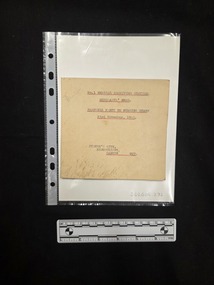
Ephemera - Menu, Unknown
... Army Nurse Clare Rothwell MacIntire WWII World War Two WW2 Royal Australian Air Force Nursing Service No.1 Medical Receiving Station Printed on front cover: 'No.1 MEDICAL RECEIVING STATION. / SEARGEANTS' MESS. / FAREWELL PARTY TO NURSING STAFF / 23rd November, 1945 / FISHER'S SITE, / NIGHTCLIFFS, / DARWIN N.T.' ...Part of a series of items related to Clare Rothwell Macintire. Clare Rothwell Macintire was born 27 July 1910 in Essendon and enlisted with the Royal Australian Airforce on 3 August 1943. Her service number was 500432. Buff coloured card menu with black typewritten text and handwritten inscriptions. The menu is folded at left and a list of menu inclusions is printed inside. Handwritten autographs are inscribed on the back. Printed on front cover: 'No.1 MEDICAL RECEIVING STATION. / SEARGEANTS' MESS. / FAREWELL PARTY TO NURSING STAFF / 23rd November, 1945 / FISHER'S SITE, / NIGHTCLIFFS, / DARWIN N.T.' Inscribed in pencil at top left corner of front cover: 'Matron' Printed on inner left side: 'army nurse, clare rothwell macintire, wwii, world war two, ww2, royal australian air force nursing service, no.1 medical receiving station -
 Returned Nurses RSL Sub-branch
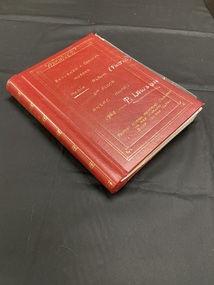
Album - Photograph and media album, Archives: Returned and Services Nurses Media Album, unknown
... . - Programs and menu's from commemorative ceremonies for Returned Nurses - memorabilia from memorial services -handwritten profiles of nurses such as Lieutenant Bertha Alma Hewson - a typed account and photocopies of photos from Sister Kathleen Teresia Keely's wedding at Moratai - Annual reports - photos of 113 AGH Sisters in Darwin Royal Australian Army Nursing Corps RAANC ceremonies Anniversaries WWII Second World War WW2 Military nursing - Australia Bertha Alma Hewson 113 Australian General Hospital Australian Army Nursing Service AANS Returned Nurses Returned Nurses Members ' "ARCHIVES" / RETURNED + SERVICES / NURSES. / MEDIA ALBUM. / 2nd FLOOR / ANZAC HOUSE / 1963 / Photos: NURSES MEMORIAL CANBERRA / 113 AGH. ...A collection of media archived by the Returned and Services Nurses relating to Australian Army nurses and nursing. The collection includes: - newspaper clippings relating to nursing, nurses and the Australian Army Nursing Service, published between 1963-1999. - Programs and menu's from commemorative ceremonies for Returned Nurses - memorabilia from memorial services -handwritten profiles of nurses such as Lieutenant Bertha Alma Hewson - a typed account and photocopies of photos from Sister Kathleen Teresia Keely's wedding at Moratai - Annual reports - photos of 113 AGH Sisters in Darwin Dark red spiral bound photograph album with gold ornate pattern down the spine. An ornate gold triple line border on the front cover with gold handwriting and additional inscriptions in silver marker. The inside pages are paper with plastic pocket inserts across three quarters of each page, the remaining quarter of each page has lined memo sections to fill in. The album contains a variety of mixed media.' "ARCHIVES" / RETURNED + SERVICES / NURSES. / MEDIA ALBUM. / 2nd FLOOR / ANZAC HOUSE / 1963 / Photos: NURSES MEMORIAL CANBERRA / 113 AGH. DARWIN / BCOF. 130 AGH. JAPAN.' [Hand written in gold ink on the front cover] 'SB / 9' [Hand written in silver ink on the spine] '(PHOTOS) / B.LAWSON' [handwritten in silver marker on the front cover]royal australian army nursing corps, raanc, ceremonies, anniversaries, wwii, second world war, ww2, military nursing - australia, bertha alma hewson, 113 australian general hospital, australian army nursing service, aans, returned nurses, returned nurses members -
 Emerald Museum & Nobelius Heritage Park
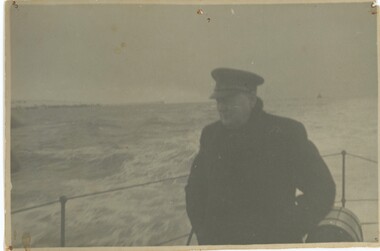
Photograph - Photograph of Winston Churchill on board S. S. Napier, c.1941
... WWII. This photo was taken by him and shows one of his journeys during his time as a navy surgeon. Dr Ian MacLeod Murphy Spud Murphy Doctor Emerald SS Napier Winston Churchill Back of photograph written: "Winston Churchill on board S.S. Napier Distroyer [sic] Darwin ...This is a copy of a photograph taken by Dr Murphy when he was a naval surgeon on board the ship S. S. "Napier" during World War II. In January 1941, Winston Churchill travelled on the Napier for transport to Scotland where Churchill was then transferring to the battleship, HMS Prince of Wales en route for an historic meeting with President Roosevelt. Dr Murphy was able to take this grainy photo of the great man on deck.Dr Murphy was Emerald's first and much-loved GP. Before he retired to Emerald he was a navy surgeon during WWII. This photo was taken by him and shows one of his journeys during his time as a navy surgeon.Black and white photograph of Winston Churchill aboard the S. S. Napier taken by Dr I S MacLeod Murphy when he was a naval surgeon aboard the same boat in WWII.Back of photograph written: "Winston Churchill on board S.S. Napier Distroyer [sic] Darwin / taken by ships doctor Ian Macleod Murphy"dr ian macleod murphy, spud murphy, doctor, emerald, ss napier, winston churchill
