
Showing 26 items matching "days e. j."
-
 Waverley RSL Sub Branch
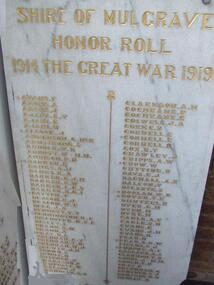
Honour Rolls, Shire of Mulgrave Honour Roll
... e. j. h....barker l. c. s....barker r. c. i....* batten t....beacon c. j....beacom w. f....begs j. a....bennett t. t....bennington k. c....bischoffer k. s. e....bizley l....brand a. m....brand a....* bray r. l....brennan e. v....brennan w. j....brewer j. h....*brown s....bridle n....butcher j....brabazon f....*campbell w....carlson j....chandler s. a....clarkson a. h....cochrane d....colwell e....*cornell c....cornell e....cornell r....cox b. t....crawley j....cripps a. w....*crow ....cutting r....days...E. J. H. ,BARKER L. C. S. ,BARKER R. C. I. , * BATTEN T. ,BEACON C. J. , BEACOM W. F. ,BEGS J. A. , BENNETT T. T. , BENNINGTON K. C. , BISCHOFFER K. S. E. ,BIZLEY L. ,BRAND A. M. , BRAND A. ,* BRAY R. L. , BRENNAN E. V. , BRENNAN W. J. , BREWER J. H. ,*BROWN S. , BRIDLE N. ,BUTCHER J. , BRABAZON F. , *CAMPBELL W. , CARLSON J. ,CHANDLER S. A. ,CLARKSON A. H. ,COCHRANE D. ,COLWELL E. ,*CORNELL C. ,CORNELL E. ,CORNELL R. ,COX B. T. ,CRAWLEY J. ,CRIPPS A. W. ,*CROW . , CUTTING R. ,DAYS...e. j. h. barker l. c. s. barker r. c. i. * batten t. beacon c. j. beacom w. f. begs j. a. bennett t. t. bennington k. c. bischoffer k. s. e. bizley l. brand a. m. brand a. * bray r. l. brennan e. v. brennan w. j. brewer j. h. *brown s. bridle n. butcher j. brabazon f. *campbell w. carlson j. chandler s. a. clarkson a. h. cochrane d. colwell e. *cornell c. cornell e. cornell r. cox b. t. crawley j. cripps a. w. *crow . cutting r. days ...Set up by The Shire of Mulgrave. Later placed in front of the old RSL building at Glen Waverley. Now part of the Waverley RSL Memorabilia collection2 Marble Slabs erected by the Shire of Mulgrave to commemorate the men of the Shire who served in "The Great War"Shire of Mulgrave Honour Roll 1914 The Great War 1918 * Died in Service Plaque 1 ADAMS F., ADAMS A. , ADAMS. J, AJANI A. W. , AJANI E. ,ADJANI M., *ALCOCK J. ,ANDERSON G. McK. , ARMSTRONG S. ,ARNOLD W. R. ,ARNOTT W. –MM ,AURISCH F. R. , * BARKER F. ,BANKS D. A. ,BARKER E. J. H. ,BARKER L. C. S. ,BARKER R. C. I. , * BATTEN T. ,BEACON C. J. , BEACOM W. F. ,BEGS J. A. , BENNETT T. T. , BENNINGTON K. C. , BISCHOFFER K. S. E. ,BIZLEY L. ,BRAND A. M. , BRAND A. ,* BRAY R. L. , BRENNAN E. V. , BRENNAN W. J. , BREWER J. H. ,*BROWN S. , BRIDLE N. ,BUTCHER J. , BRABAZON F. , *CAMPBELL W. , CARLSON J. ,CHANDLER S. A. ,CLARKSON A. H. ,COCHRANE D. ,COLWELL E. ,*CORNELL C. ,CORNELL E. ,CORNELL R. ,COX B. T. ,CRAWLEY J. ,CRIPPS A. W. ,*CROW . , CUTTING R. ,DAYS E. J. ,DAGNALLA. E. , DALCOM T. ,DECARTE S. ,*DOOLAN W. E. ,*DOVER T. E. ,DUNTZELL R. ,DYER C. H. ,DYER H. ,DYKE H. ,EARLE A. F. , EVANS E. ,EVANS J. H. , FEAR H. ,*FEAR S. R. W. ,FIELDS C. J., *FURPHY A. F. ,GASCARD A. S. , GLENNON T. R. , GOBBI J. –MM ,GOULD T. D. , GRAY R. , GREENHAM A. ,GUNTHER C. J. ,GUNTHER H. V. , HENLEY A. , Plaque 2 HARRIS A. , HENLEY C. H. , HERRIOT S. T. ,*HERRIOT W. E. , HIND S. J. , HOLFORD J. S. S. , HORE H. R. ,*HORE S. C. , *HORNER C. S. C. ,HOURIGAN E. ,HOURIGAN F. ,HUNTER N. A. ,HURST W. K. , HUSSEY W. F. , JACKSON H. ,JAMES P. M. ,JANE R. W. –DCM, JOHNSON A. J. , *KELSALL W. J. ,KITCHEN J. H. ,KNIGHTS E. D. , LAITY J. E. ,LAITY F. C. , * LAW F. ,LAW J. ,LETCHE A. J. ,LECHTE D. W. ,MAILER D. ,MARKLE V. W. ,MARTIN W. E. ,MARWICK S. J. ,MAY J. ,MOORE A. J. ,MOYLAN P. , MUIR P. F. –MM , *MUNRO A. M. , MUNRO W. , MUNYARD W. ,MURPHY J. ,MUSTARD A. D. ,McGILL T. , McKELVIE F. W. ,McNALLY A. E. ,* McPHERSON A. P. ,OWENS H. C. ,OWENS O. , PARSONS G. ,PARSONS H. W. , PETERSON G. F. ,PEGG W. ,REEVE P. ,ROBBINS E. J. ,ROBBINS R. R. ,ROOKE W. L. ,SAWYER E. H. J. , SCAMMELL A. E. ,SHEPPARD H. ,SIM W. ,SIMMONS A. W. ,SMITH H. ,*SMITH N. , SMITH R. B. ,STEELE G. ,TURBER J. J. ,WATTS W. E. , WATTS W. E. ,* WHEELWRIGHT H. M. ,* WHITE D. C. ,WHITE S. G. S. ,WHITE W. ,WILLIAMS H. ,WILLIAMS L. ,WILLIAMS L. E. ,WILSON F. W. , WILSON H. R. ,WRIGHT W. ,WESTNEY P. E. –MM DCM , honour roll, great war, adams f., adams a., adams. j, ajani a. w., ajani e., adjani m., *alcock j., anderson g. mck., armstrong s., arnold w. r., arnott w. –mm, aurisch f. r., * barker f., banks d. a., barker e. j. h., barker l. c. s., barker r. c. i., * batten t., beacon c. j., beacom w. f., begs j. a., bennett t. t., bennington k. c., bischoffer k. s. e., bizley l., brand a. m., brand a., * bray r. l., brennan e. v., brennan w. j., brewer j. h., *brown s., bridle n., butcher j., brabazon f., *campbell w., carlson j., chandler s. a., clarkson a. h., cochrane d., colwell e., *cornell c., cornell e., cornell r., cox b. t., crawley j., cripps a. w., *crow ., cutting r., days e. j., dagnalla. e., dalcom t., decarte s., *doolan w. e., *dover t. e., duntzell r., dyer c. h., dyer h., dyke h., earle a. f., evans e., evans j. h., fear h., *fear s. r. w., fields c. j., *furphy a. f., gascard a. s., glennon t. r., gobbi j. –mm, gould t. d., gray r., greenham a., gunther c. j., gunther h. v., henley a., harris a., henley c. h., herriot s. t., *herriot w. e., hind s. j., holford j. s. s., hore h. r., *hore s. c., *horner c. s. c., hourigan e., hourigan f., hunter n. a., hurst w. k., hussey w. f., jackson h., james p. m., jane r. w. –dcm, johnson a. j., *kelsall w. j., kitchen j. h., knights e. d., laity j. e., laity f. c., * law f., law j., letche a. j., lechte d. w., mailer d., markle v. w., martin w. e., marwick s. j., may j., moore a. j., moylan p., muir p. f. –mm, *munro a. m., munro w., munyard w., murphy j., mustard a. d., mcgill t., mckelvie f. w., mcnally a. e., * mcpherson a. p., owens h. c., owens o., parsons g., parsons h. w., peterson g. f., pegg w., reeve p., robbins e. j., robbins r. r., rooke w. l., sawyer e. h. j., scammell a. e., sheppard h., sim w., simmons a. w., smith h., *smith n., smith r. b., steele g., turber j. j., watts w. e., * wheelwright h. m., * white d. c., white s. g. s., white w., williams h., williams l., williams l. e., wilson f. w., wilson h. r., wright w., westney p. e. –mm dcm, mulgrave -
 Mission to Seafarers Victoria
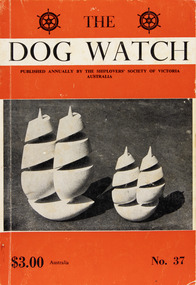
Journal (item) - Periodicals-Annual, Shiplovers' Society of Victoria, The Annual Dog Watch
... E. Bonwick 11 1980 The Goldon Jubilee Part 1 - - 16 " " Part 2 - - 18 " " Part 3 - - 19 Days in Sail - Captain W. J...E. Bonwick 11 1980 The Goldon Jubilee Part 1 - - 16 " " Part 2 - - 18 " " Part 3 - - 19 Days in Sail - Captain W. J ...This journal provides the reader with glimpses of the adventures and hardships of a seaman's life. Many of the stories are of sailing ships.Contributes to our knowledge of the importance of shipping and places on record those stories of the sea which would otherwise be lost.Contents Foreword - Senator G. S. Davidson- 5 Editorial - C. E. Bonwick 11 1980 The Goldon Jubilee Part 1 - - 16 " " Part 2 - - 18 " " Part 3 - - 19 Days in Sail - Captain W. J. Cowling - 23 "Old Man River" - I. Harris - 32 Present State and Prospects of the Port Phillip District of New South Wales - Charles Griffiths - 37 Hoboes of the Sea - Captain F. Klebingat - 42 The Stateships Story - N. S. Smith - 46 "Down at Wallaroo" - D. M. Fyfe - 54 Characters - R. N. Thiele - 58 The Lauriston from Newcastle to Tal Tal - R. W. Rudd - 64 From Information for Pylgrymes Unto the Holy Lande 1498 - - 68 s.s. "Port Campbell" First Voyage - I. L. Barton - 70 Maritime Inspection in Finland - Captain Eino Koivistoinen - 81 Wool from Genoa - J. M. MacKenzie - 86 "Polly Woodside" -- The Man Who Made it Happen - Captain G. Heyen, M.B.E. - 91 To Trinidad by "Kilmaurs" - Alexander Cameron - 102 "Oodle" - K. Bull - 109 Ship Talk - Guy H. Jennery - 110 A Glimpse of Ships and Men - W. P. Shemmeld - 113 Book Reviews - 120sailing ships, steamships, shipping, seafaring life, shiplovers' society of victoria, dog watch -
 Mission to Seafarers Victoria
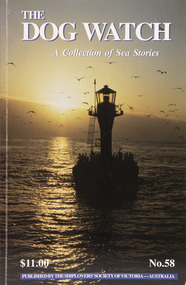
Journal (item) - Periodicals-Annual, Shiplovers' Society of Victoria, The Annual Dog Watch
... E Woodley - 96 Trouble in Paradise - Capt. R Jolly - 101 History & Heritage HMAS Castlemaine — the first 60 years - Peter J Williams - 104 The Days of ‘Whack’ and ‘Slush’ - Sir James Bissett - 108 An Unusual Lectern - George C Hogben SSV - 111 Book Reviews - - 112...E Woodley - 96 Trouble in Paradise - Capt. R Jolly - 101 History & Heritage HMAS Castlemaine — the first 60 years - Peter J Williams - 104 The Days of ‘Whack’ and ‘Slush’ - Sir James Bissett - 108 An Unusual Lectern - George C Hogben SSV - 111 Book Reviews - - 112 The Annual Dog Watch Journal Periodicals-Annual Shiplovers' Society of Victoria ...This journal provides the reader with glimpses of the adventures and hardships of a seaman's life. Many of the stories are of sailing ships.Contributes to our knowledge of the importance of shipping and places on record those stories of the sea which would otherwise be lost.Contents Editorial - Harrow Morgan - 5 Captain Angel’s Daughter - Anne Morgan - 6 Australia’s Last Lightships - Ross Meredith - 17 Duyfken Sets Sail — 394 years on - Nick Burningham - 25 Episodes in King Sound - Capt. John Abernethy - 33 Time and Tide - Lynn Sunderland - 38 Explosives in the Port of Melbourne - Cliff Gibson - 39 A Small Misunderstanding - ‘Flinders Bar’ - 51 Mr Bligh’s Bad Health - Ian Campbell - 55 Shipmates - Bernie Sprunt - 64 A Life at Sea - Capt. Ted Daubeny -65 Ketch Hands are Impervious - Noel Smith - Noel Smith - 73 The Devil’s Handwork - R N Thiele - 83 The Beginning of Herzogin Cecilie’s Last Round of Voyage — 1935 - Pamela Eriksson - 85 A Scrap of Flotsam - Esther Hardware - 93 The Waning Skills of Shipwrights - Arthur E Woodley - 96 Trouble in Paradise - Capt. R Jolly - 101 History & Heritage HMAS Castlemaine — the first 60 years - Peter J Williams - 104 The Days of ‘Whack’ and ‘Slush’ - Sir James Bissett - 108 An Unusual Lectern - George C Hogben SSV - 111 Book Reviews - - 112sailing ships, steamships, shipping, seafaring life, shiplovers' society of victoria, dog watch -
 Mission to Seafarers Victoria
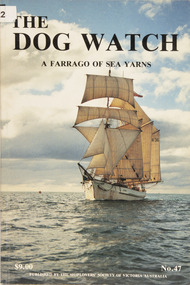
Journal (item) - Periodicals-Annual, Shiplovers' Society of Victoria, The Annual Dog Watch
... J. Jolly - 61 H.M.S. Tartar — My First Destroyer - Rear Admiral Sir Brian Murray K.C.M.G., A.O., K.ST.J. - 65 They take you out to Sea and Train you for Life - R. Johnson - 71 The Rescue of the 1902 Swedish Antarctic Expedition by A.R.A. Uraguay - - 75 The Voyage of the Jane Richardson — Part 1 - Late E. Binham - 77 The Hypnotist - Ron Wayling - 83 Museum on Course, Stemming a Slight Set; E.T.A. Delayed - - 93 Book Reviews - - 99 Paddle Wheelers Memories of a Bygone Fleet - Late H.R. Watson - 101 Murphy and the Bosun - L.P. McArthur - 105 Ten Days...J. Jolly - 61 H.M.S. Tartar — My First Destroyer - Rear Admiral Sir Brian Murray K.C.M.G., A.O., K.ST.J. - 65 They take you out to Sea and Train you for Life - R. Johnson - 71 The Rescue of the 1902 Swedish Antarctic Expedition by A.R.A. Uraguay - - 75 The Voyage of the Jane Richardson — Part 1 - Late E. Binham - 77 The Hypnotist - Ron Wayling - 83 Museum on Course, Stemming a Slight Set; E.T.A. Delayed - - 93 Book Reviews - - 99 Paddle Wheelers Memories of a Bygone Fleet - Late H.R. Watson - 101 Murphy and the Bosun - L.P. McArthur - 105 Ten Days ...This journal provides the reader with glimpses of the adventures and hardships of a seaman's life. Many of the stories are of sailing ships.Contributes to our knowledge of the importance of shipping and places on record those stories of the sea which would otherwise be lost.Contents Foreword - - 5 Editorial - - 7 Sail Training in Australia - - 9 The Original Lady Nelson, Her Story - - 13 The Marine Superintendent - R.N. Thiele - 21 Pictures - Captain W.T. Howell - 23 Memories of a Master under Sail - Late Captain William Philip - 27 Sail Training in New Zealand - - 29 Living Our Dreams - Valerie K. Watts - 31 Sketch of a Sea Voyage — New York to Melbourne 1859 - Morgan Hayden - 35 Glasgow to Melbourne in the S.V. Wacousta - Harriet Louise King - 39 The Padre - A. Roland Jones - 43 The Quirks of Fate - W.S. McCutchen - 51 A Good Day’s Sailing - W.P. Shemmeld - 55 Salvage of the Zeung San - Richard J. Jolly - 61 H.M.S. Tartar — My First Destroyer - Rear Admiral Sir Brian Murray K.C.M.G., A.O., K.ST.J. - 65 They take you out to Sea and Train you for Life - R. Johnson - 71 The Rescue of the 1902 Swedish Antarctic Expedition by A.R.A. Uraguay - - 75 The Voyage of the Jane Richardson — Part 1 - Late E. Binham - 77 The Hypnotist - Ron Wayling - 83 Museum on Course, Stemming a Slight Set; E.T.A. Delayed - - 93 Book Reviews - - 99 Paddle Wheelers Memories of a Bygone Fleet - Late H.R. Watson - 101 Murphy and the Bosun - L.P. McArthur - 105 Ten Days Before the Mast - Author Name to come - 107sailing ships, steamships, shipping, seafaring life, shiplovers' society of victoria, dog watch -
 Ringwood and District Historical Society
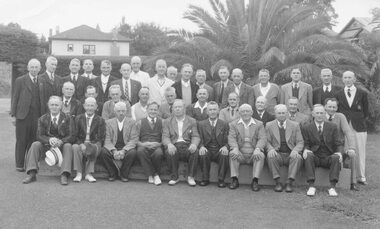
Photograph, Ringwood Bowls Club- Ringwood Council and Staff versus Ringwood Bowling Club, "Mayors Shield", 1947
... Days" with list of names. Front Row: (L to R). J. Archbold, M. Flowers, R. Anderson, A. Long (Town Clerk), J.K. McCaskill (Mayor), S. Hunt (Pres.), E...Days" with list of names. Front Row: (L to R). J. Archbold, M. Flowers, R. Anderson, A. Long (Town Clerk), J.K. McCaskill (Mayor), S. Hunt (Pres.), E ...Black and white photograph (5 copies)Typed below photograph, "Ringwood Bowling Club - 1947". On back of photograph: Newspaper cutting titled "Bowls in the Early Days" with list of names. Front Row: (L to R). J. Archbold, M. Flowers, R. Anderson, A. Long (Town Clerk), J.K. McCaskill (Mayor), S. Hunt (Pres.), E. Tann, Sec., A. Ibbotson, C. Merry (Building Inspector). 2nd Row: C. Wedge, G. Wood, G. Devenish, J. Proundley, R. Wilkins, B. Hubbard, C. Ward, H. Watson, E. Purser, J. Bray (Engineer).Back Row: T. Williams, F. Caterer, A. Burgess, R. Ramsey, T. Roberts, E. McKibbon, G. Hood, T. Hall, H. Martin, J. Smith, J. Knox, Rev. Leewin, F. Moore, - Evans: J. Grenville (Dep. Town Clerk), G. Young, E. Moran". -
 Glen Eira Historical Society
Document - Hengar, Glen Eira Road, 356, Elsternwick
... J... Rosecraddock... Beemery Park Estate... Lirrewa... Caulfield Town Hall... Langdon Family... Deanmead A... Griffith Alfred... Langdon E E... Langdon H J... Langdon Laura... Langdon Henry... Langdon Bessie... Sadler Emily Amy... Brenton V C... Herz S... Beth Riukan Girls’ College... Happy Days...Landells Rosalind Bullock Hilary Hengar Glen Eira Road Elsternwick Holloway J M Langdon Henry J Rosecraddock Beemery Park Estate Lirrewa Caulfield Town Hall Langdon Family Deanmead A Griffith Alfred Langdon E E Langdon H J Langdon Laura Langdon Henry Langdon Bessie Sadler Emily Amy Brenton V C Herz S Beth Riukan Girls’ College Happy Days Kindergarten Florence Herald Herbert Happy Days Child Minding Manners and customs Preschools Document Hengar, Glen Eira Road, 356, Elsternwick ...A copy of two page typed report by Hilary Bullock and Rosalind Landells, dated 18/01/1990, on the history of Hengar, a dower house built for the Langdon family in 1887/1888. The report includes an explanation of the term dower house, outlines the land sale history since 1851 and gives a brief history of the occupancy of Hengar from 1888 to 1989. The file also includes one page of undated, unattributed handwritten working notes.landells rosalind, bullock hilary, hengar, glen eira road, elsternwick, holloway j m, langdon henry j, rosecraddock, beemery park estate, lirrewa, caulfield town hall, langdon family, deanmead a, griffith alfred, langdon e e, langdon h j, langdon laura, langdon henry, langdon bessie, sadler emily amy, brenton v c, herz s, beth riukan girls’ college, happy days kindergarten, florence herald herbert, happy days child minding, manners and customs, preschools -
Glen Eira Historical Society
Document - Hengar, Glen Eira Road, 356, Elsternwick
... Days Kindergarten... Beemery Park... Glen Eira Road... Langdon Laura... Langdon J K... Langdon E...Hengar Happy Days Kindergarten Beemery Park Glen Eira Road Langdon Laura Langdon J K Langdon E LL Langdon Emily Amy Penleigh Sadler Emily Amy Rosecraddock Moxham Mrs Parsons Mrs Holmes Mrs Document Hengar, Glen Eira Road, 356, Elsternwick ...One page of undated, unattributed, handwritten notes giving information about the custom of building a dower house, the history of Hengar’s occupancy and brief information about some of Hengar’s residents. The document also provides a description of a photograph of Hengar and information about social customs relating to the wearing of hats.hengar, happy days kindergarten, beemery park, glen eira road, langdon laura, langdon j k, langdon e ll, langdon emily amy, penleigh, sadler emily amy, rosecraddock, moxham mrs, parsons mrs, holmes mrs -
 Warrnambool and District Historical Society Inc.
Document - Minutes Books, Woollen Mills 1909- 1923 1933-1945, C 1909 C 1933-1945
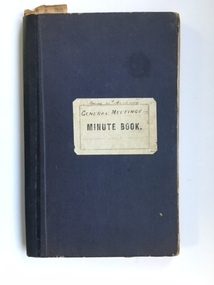
... days of 1909 and 1910 to raise the capital. Also mentioned is the support which had been given by local people of small means who were prepared to back the enterprise while those with financial means had been rather more reserved. Apart from a Mr Vidler all the initial directors were initially working in an honorary capacity. They lamented the fact that local banks held half a million pounds on fixed interest so there was no shortage of money. The first directors were appointed in March 1909 : Jas. Worland, W H Philpott, G S Mackay, E H Price, S McDonald, J...days of 1909 and 1910 to raise the capital. Also mentioned is the support which had been given by local people of small means who were prepared to back the enterprise while those with financial means had been rather more reserved. Apart from a Mr Vidler all the initial directors were initially working in an honorary capacity. They lamented the fact that local banks held half a million pounds on fixed interest so there was no shortage of money. The first directors were appointed in March 1909 : Jas. Worland, W H Philpott, G S Mackay, E H Price, S McDonald, J ...The minutes book of the Warrnambool Woollen Mill are an important record of the beginnings of one of Warrnambool's major industries for close to one hundred years. They record the struggle in the early days of 1909 and 1910 to raise the capital. Also mentioned is the support which had been given by local people of small means who were prepared to back the enterprise while those with financial means had been rather more reserved. Apart from a Mr Vidler all the initial directors were initially working in an honorary capacity. They lamented the fact that local banks held half a million pounds on fixed interest so there was no shortage of money. The first directors were appointed in March 1909 : Jas. Worland, W H Philpott, G S Mackay, E H Price, S McDonald, J C Beeching, W Rogers ,J Marfell, J Deany, Jas Duirs, Jas. Ponting, H Jessen, S Nettleton, J Blain, J Gooden, Drs. Holmes, Henderson and Powell. Mr J E Bennett was secured as first manager of the mill in 1910 Over the ten year period of this book there is much discussion on possible returns and share prices as well as decisions relating to the operation of and production from the mill. Within four years they were using more yarn than they were producing. Electricity was connected around 1914 and by 1915 shareholders were receiving eight percent return on their investment and were also contributing to the first world War effort by supplying blankets. Assets continued to accumulate and building was also continued with sandstone being quarried from the site and rain water tanks and asphalt floors installed, all contributing to savings. By 1917 The Warrnambool Woollen Mill was considered to be one of the states best investments and it continued to prosper through the years. The second minutes book likewise records similar events and circumstances for the period 1933-1945. This like wise is an interesting period, covering the period of the second World War. In 1955 the Warrnambool Woollen Mill formed a partnership with the Wangaratta Woollen Mills. Dunlop bought the mill in 1968. From that time until its closure in 2000 it had a number of different owners, the last being the Smith Family Industries. These minutes books hold an important information regarding the establishment and early operation of one of Warrnambool's major industries. The mill itself has strong connection to the Warrnambool community and many of the names mentioned as directors and shareholders have held positions within the community as businessmen and city officials. These minutes add another dimension to their contribution to Warrnambool..1Navy blue hard card cover with cloth spine. White label glued to front cover.186 pages.There are handwritten entries in black ink which are interspersed with reports from newspaper. .2 Pale grey cloth cover on early Kalamazoo filing system 612 pages of typed minutes . .1There are dates from 1910 through to 1923. Minutes have been signed by chairman of directors, M Saltau.label on front cover has blue stamp, The Warrnambool Woollen Mill Company. hand written above in black ink "opened 24th March 1909." .2 dated from May 1933 to September 1945. Signatures include M Saltau, James Disckson and Fletcher Jones.warrnambool, warrnambool woollen mill, first minutes book warrnambool woollen mill, minutes book, warrnambool woollen mill 1909, minutes book warrnambool woollen mill 1945 -
 Eltham District Historical Society Inc
Document - Newspaper article, Eltham's growth has been rapid in recent years, c.1960
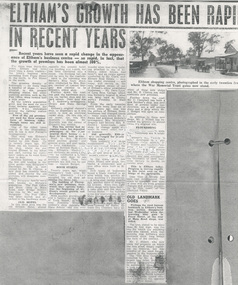
... days to completely fell and clear the tree, and, falling sections being brought down by cable tipped electricity wires on the opposite side of Pryor Street. Andrew's news agency bakery Barber shop Barber's Blue Gum store Billiard Saloon Blacksmith blue gum Burgoyne's Hardware Butcher cake shop chemist's shop Chenowyth's Foundry cobbler's shop Dave Lyon dispensary Draper shop. Mr Monteith Dudley Street E. J ...ELTHAM’S GROWTH HAS BEEN RAPID IN RECENT YEARS Unknown local paper c.1960s Recent years have seen a rapid change in the appearance of Eltham’s business centre - so rapid, in fact, that the growth of premises has been almost 300%. For more than thirty-five years Eltham had little more than a dozen traders - the town's business area spreading from Pryor Street in the north, to Pitt Street in the south. The greatest density of businesses - no more than a handful of shops - were situated in the present shopping centre but other essential services such as the Post Office, were located half a mile away. As the town's population grew and the need for more shops became apparent, the growth was centralised around the railway station and Shire hall. Few of the old premises are used for their original form of business today, though many are still in existence. One of the oldest (seen clearly in the illustration) still in use is now Ferrari's Greengrocery. This shop was Eltham's butchery in early days, conducted by Jim Ryan. Up to twenty years ago, Mr. Ryan ran his business from the shop. whilst his son toured Eltham in his horse and cart, cutting his customers' orders as he went from door to door. Another business - one of the few still trading in the same goods-was Burgoyne's Hardware. This is now owned by Mr. R. Clinton, a new shop has recently been added and shortly the old premises will disappear completely. The Burgoyne family were well known to Eltham's population. The Post Office and Store (then in Main Road, near Bridge Street) was run by Mr. and Mrs. Burgoyne. The Post Office was later moved, and attached to the hardware store. OLD HOTEL In this same area was the old Eltham Hotel, almost opposite the present hotel. The building still stands, but has been converted into a house. The hitching rail can still be seen by the roadside. Back in the township was Barber's Blue Gum store, later conducted by Mrs. Burges (mother of Garnet Burges) and claimed to be Eltham's oldest shop. Further down the road, just past the hardware store, was the barber shop and billiard saloon. Next door was E. J. Andrew's news agency, library and State Savings Bank. Eltham's original chemist's shop, or dispensary as it was called, is now an electrical repair shop. On this side of the street too, was Mrs. Monteith - Draper. Mr Monteith was the owner of Eltham' s bus service. This bus service had no regular route, but deposited passengers at the point nearest their homes - a. door to door taxi service. Next to Mrs. Monteith stood another grocery - and general store, and next again, the local blacksmith. Another of Butcher Ryan's sons was Eltham's blacksmith and obviously an enterprising man he conducted a timber business next door to his smithy's shop. These two premises are still run by one man - Garnet Burges. BOOM STARTS Twenty years ago, when Thompson's took over Eltham's pharmacy they occupied the old shop adjoining the Shire hall. The building of Thompson's new premises, from which· they operate today, was the beginning of Eltham's recent growth and development. With another grocery store and a bakery at the corner of York Street, a butcher near Franklin Street, a cobbler's shop opposite the State School (did you ever wonder what that-little building attached to one of Eltham's oldest houses had been?), and an estate agency conducted by Mr. Clark, now Eltham Real Estate - only one trader remained - and today, still carries on, the only original owner of one of Eltham's .oldest established businesses - Mr. Dave Lyon, of Lyon Bros. Garage, which was formerly located in what was later used as Chenowyth's Foundry in Main Road. From the early twenties until little more than six or seven years ago that was the picture of Eltham. Some businesses had changed hands - many years before Mr. C. Rains had acquired Andrew's news agency, Mrs. Monteith's drapery had become Mrs. R. Smith's home-made cake shop, to change again and again to many other types of business. But generally, Eltham was unchanged, for nearly thirty years. Then suddenly new shops mushroomed. The new news agency and drapery, the chemist and adjoining shops, a new butcher, a green grocer and several more. POPULATION DOUBLED In the space of a few years, fifteen new shops, two banks, a restaurant and a post office were built at Eltham. New types of businesses found a ready market in an area which was quickly almost doubling its population. A little over twelve months ago, another wave of progress hit Eltham. Since then eight more shops have been built - a cake shop and fish shop in Dalton [sic – Dudley] Street - for building areas are unprocurable in the Main Street shopping centre now – have been built by Mr. D. Kimball; a new ladies’ and children’s wear shop has been opened by Rains; Eltham Dry Cleaners have another of these new shops, and Mr. R. Clinton has built elaborate new premises. Further down the road, Mr. C. Campbell has built a new butcher's shop, and next door, at present under construction, are a self service store and a shop which Mr. J. Hodges will open on completion. In addition to these new shops, Mr. J. Millett has extended his grocery to almost twice its original size. FLOURISHING Outside the central area, other businesses are flourishing. Latimer's felt factory is being developed in a picturesque rustic setting; P. J. Timber and Trading Company have recently completed a large showroom and timber yard, and in the town itself Nicholson and Merritt are now completing the extension of their foot wear factory to double its former area. This is Eltham today. Progress is moving rapidly in this rural area on the fringe of the metropolis. Less than a decade has seen vast development. The years to complete that span of time will see even greater changes and greater prosperity in this heart: of the Diamond Valley. OLD LANDMARK GOES Perhaps the most famous landmark in Eltham's' business section disappeared last Wednesday when the towering blue gum in Pryor Street at the rear of Main Road shops was felled. The tree, stated to be more than 80 feet high, was the one for which the adjoining café was named, when that business was Eltham’s only provision store, long before the turn of the century. Mr. J. Millett, who now owns the property on which the tree stood, deeply regretted its removal, but was mindful of the need for expansion in the business area. The "Old Blue Gum" was removed by Mr. A. Wilson, expert tree feller, from Heidelberg. Its proportions might be assessed by these facts – it took a gang of experienced men two days to completely fell and clear the tree, and, falling sections being brought down by cable tipped electricity wires on the opposite side of Pryor Street.andrew's news agency, bakery, barber shop, barber's blue gum store, billiard saloon, blacksmith, blue gum, burgoyne's hardware, butcher, cake shop, chemist's shop, chenowyth's foundry, cobbler's shop, dave lyon, dispensary, draper shop. mr monteith, dudley street, e. j. andrew's news agency, electrical repair shop, eltham bus service, eltham butchery, eltham dry cleaners, eltham hotel, eltham railway station, eltham real estate, eltham shire hall, eltham shopping centre, eltham shops, eltham town centre, estate agency, expert tree feller, ferrari's greengrocery, fish shop, foot wear factory, franklin street, garnet burges, general store, grocery, heidelberg, horace clark, jim ryan, ladies’ and children’s wear shop, latimer's felt factory, library, lyon bros. garage, main road, mr. a. wilson, mr. c. campbell, mr. c. rains, mr. d. kimball, mr. j. hodges, mr. j. millett, mr. r. clinton, mrs. burges, mrs. monteith, mrs. monteith's drapery, mrs. r. smith's home-made cake shop, nicholson and merritt, p. j. timber and trading company, pitt street, post office, pryor street, self service store, shopping centre, state savings bank, taxi service, thompson's pharmacy, york street -
 Bendigo Military Museum
Postcard - POSTCARDS, PHOTOGRAPHIC WW1, 1) & .2) J E Barnes, 1) & .2) 1916; .3) c.1914-1918
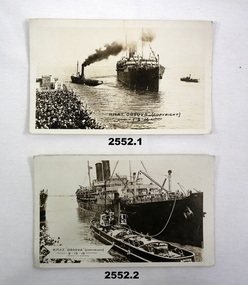
... Refer Cat No 2548.2P for his service details. .1) & .2) WILLIAM HOLMES returned to Australia on HMAT ORSOVA. .3) WILLIAM HOLMES visited Windsor Castle on 23.4.1918 2 days before rejoining his unit after being in hospital. documents - postcards photography-photographs military history - navy .3) Blue ink stamp from Windsor Castle dated 23.4.1918 Signature of "W HOLMES" in bottom RH corner, both marking on back of post card. .1) & .2) Photographs of HMAT ORSOVA taken 6.12.16. .3) Photograph in clear plastic wallet of Windsor Castle from Home Park. Postcard POSTCARDS, PHOTOGRAPHIC WW1 .1) & .2) J E ...Part of WILLIAM HOLMES Collection. Refer Cat No 2548.2P for his service details. .1) & .2) WILLIAM HOLMES returned to Australia on HMAT ORSOVA. .3) WILLIAM HOLMES visited Windsor Castle on 23.4.1918 2 days before rejoining his unit after being in hospital..1) & .2) Photographs of HMAT ORSOVA taken 6.12.16. .3) Photograph in clear plastic wallet of Windsor Castle from Home Park..3) Blue ink stamp from Windsor Castle dated 23.4.1918 Signature of "W HOLMES" in bottom RH corner, both marking on back of post card.documents - postcards, photography-photographs, military history - navy -
 Bendigo Historical Society Inc.
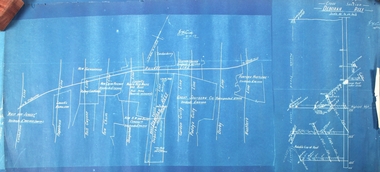
Plan - DEBORAH REEF CROSS SECTION
... E. J. Dunn, undertaking the task of making a special report on the Bendigo gold fields, and also of charting the lines of reef. He was keenly interested in mining ventures in Tasmania, and his services were in constant demand to investigate and report on shows, particularly gold and tin. In his younger days...E. J. Dunn, undertaking the task of making a special report on the Bendigo gold fields, and also of charting the lines of reef. He was keenly interested in mining ventures in Tasmania, and his services were in constant demand to investigate and report on shows, particularly gold and tin. In his younger days ...OBITUARY MR. W. H. CUNDY PROMINENT FOOTBALLER. The news of the death in a private hospital at Bendigo (VIC.) on Monday of Mr. William Henry Cundy, a geologist and mining engineer, who was regarded as one of the greatest authorities on the Bendigo gold field, was received in Launceston with deep regret. A native of Hobart, Mr. Cundy, who was 71 years of age, went to Bendigo from Tasmania in 1893 to an appointment in the Mines Department, subsequently, in association with Mr. E. J. Dunn, undertaking the task of making a special report on the Bendigo gold fields, and also of charting the lines of reef. He was keenly interested in mining ventures in Tasmania, and his services were in constant demand to investigate and report on shows, particularly gold and tin. In his younger days, at Hobart, Mr. Cundy was a champion footballer, and brought about the modification of the rules of the game in Tasmania. While in Bendigo he was captain of Sandhurst for many years, and a past-president of the Bendigo Football League. He was a widower. Mercury (Hobart, Tas.: 1860 - 1954), Friday 15 February 1935, page 6) A blueprint draftsman's drawing of a cross section of the Deborah Reef to a depth of 435 feet, scale 40 feet to an inch. There is also a map, scale 8 chains to an inch showing the Melbourne Echuca railway and reefs on both sides of Deborah reef including Carshalton, Napoleon, Nell Gwynne, New Chum, Sheepshead, Garden Gully, Paddy's Gully, Derby and names some mines and dividends, Whip and Jersey £200,000, Lansell's Napoleon, Railway Goldfields, New Chum Railway £170,000, Lansell's Red White and Blue Consolidated, Great Southern Co £160,000, Fortuna Hustlers £40,000 It is signed A H Cundy 19.12.17 Forms part of the Margaret Roberts Collection bendigo, margaret roberts, gold, map, mine, w h cundy -
 Bendigo Historical Society Inc.
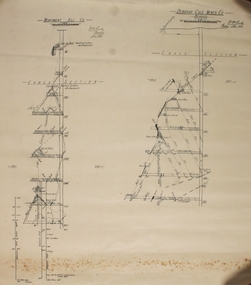
Plan - Monument Hill Co and Deborah Gold Mines Co
... E. J. Dunn, undertaking the task of making a special report on the Bendigo gold fields, and also of charting the lines of reef. He was keenly interested in mining ventures in Tasmania, and his services were in constant demand to investigate and report on shows, particularly gold and tin. In his younger days...E. J. Dunn, undertaking the task of making a special report on the Bendigo gold fields, and also of charting the lines of reef. He was keenly interested in mining ventures in Tasmania, and his services were in constant demand to investigate and report on shows, particularly gold and tin. In his younger days ...OBITUARY MR. W. H. CUNDY PROMINENT FOOTBALLER. The news of the death in a private hospital at Bendigo (VIC.) on Monday of Mr. William Henry Cundy, a geologist and mining engineer, who was regarded as one of the greatest authorities on the Bendigo gold field, was received in Launceston with deep regret. A native of Hobart, Mr. Cundy, who was 71 years of age, went to Bendigo from Tasmania in 1893 to an appointment in the Mines Department, subsequently, in association with Mr. E. J. Dunn, undertaking the task of making a special report on the Bendigo gold fields, and also of charting the lines of reef. He was keenly interested in mining ventures in Tasmania, and his services were in constant demand to investigate and report on shows, particularly gold and tin. In his younger days, at Hobart, Mr. Cundy was a champion footballer, and brought about the modification of the rules of the game in Tasmania. While in Bendigo he was captain of Sandhurst for many years, and a past-president of the Bendigo Football League. He was a widower. Mercury (Hobart, Tas.: 1860 - 1954), Friday 15 February 1935, page 6) A draftsman's drawing on off-white paper of cross sections labeled MONUMENT HILL Co and DEBORAH GOLD MINES Co BENDIGO. The Monument Hill drawing has seven cross sections down to 820 feet. The Deborah Glod Mines Co Bendigo drawing has five cross sections down to 740 feet. Both drawings are singed W H Cundy, July 1934. Forms part of the Margaret Roberts Collection bendigo, margaret roberts, gold, map, mine, w h cundy, deborah gold mines, monument hill co -
 Bendigo Historical Society Inc.
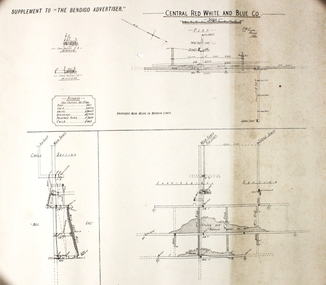
Plan - Central Red White and Blue Co
... E. J. Dunn, undertaking the task of making a special report on the Bendigo gold fields, and also of charting the lines of reef. He was keenly interested in mining ventures in Tasmania, and his services were in constant demand to investigate and report on shows, particularly gold and tin. In his younger days...E. J. Dunn, undertaking the task of making a special report on the Bendigo gold fields, and also of charting the lines of reef. He was keenly interested in mining ventures in Tasmania, and his services were in constant demand to investigate and report on shows, particularly gold and tin. In his younger days ...OBITUARY MR. W. H. CUNDY PROMINENT FOOTBALLER. The news of the death in a private hospital at Bendigo (VIC.) on Monday of Mr. William Henry Cundy, a geologist and mining engineer, who was regarded as one of the greatest authorities on the Bendigo gold field, was received in Launceston with deep regret. A native of Hobart, Mr. Cundy, who was 71 years of age, went to Bendigo from Tasmania in 1893 to an appointment in the Mines Department, subsequently, in association with Mr. E. J. Dunn, undertaking the task of making a special report on the Bendigo gold fields, and also of charting the lines of reef. He was keenly interested in mining ventures in Tasmania, and his services were in constant demand to investigate and report on shows, particularly gold and tin. In his younger days, at Hobart, Mr. Cundy was a champion footballer, and brought about the modification of the rules of the game in Tasmania. While in Bendigo he was captain of Sandhurst for many years, and a past-president of the Bendigo Football League. He was a widower. Mercury (Hobart, Tas.: 1860 - 1954), Friday 15 February 1935, page 6) The Central Red White and Blue Gold Mine was Bendigo's leading gold mine from 1910 - 1913. During the mine's operation, the main shaft was sunk 670 metres, and retrieved over 2500KG of gold. The Central Red White and Blue Gold Mine was located on the corner of Chum St and Honeysuckle St in Golden Square Three draftsman's drawing in black ink on off-white paper. Printed at the top- SUPPLEMENT TO "THE BENDIGO ADVERTISER" CENTRAL RED WHITE AND BLUE Co. Three drawings are a plan, a cross section and a longitudinal section showing the main shaft, air shaft and Eadie's shaft to a depth of 400 feet. Also, a list headed RETURNS- First crushing 9th Sept 1910, Tons 13601, Gold 22613oz, Value £90452, Dividends £67200, Reserve Fund £5600, Calls £400. Signed W. H. Cundy. Forms part of the Margaret Roberts Collection bendigo, margaret roberts, gold, map, mine, w h cundy, central red white and blue mine -
 Bendigo Historical Society Inc.
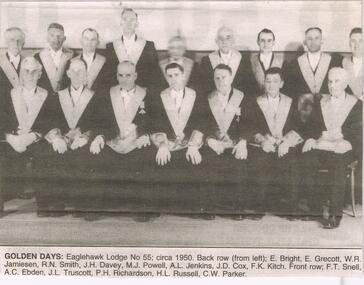
Newspaper - JENNY FOLEY COLLECTION: GOLDEN DAYS
... Golden days: Eaglehawk Lodge No. 55; circa 1950. Back row from left: E. Bright, E. Grecott, W. R. Jamiesen, R. N. Smith, J...Golden days: Eaglehawk Lodge No. 55; circa 1950. Back row from left: E. Bright, E. Grecott, W. R. Jamiesen, R. N. Smith, J ...Eaglehawk Masonic Lodge No. 55 existed as early as 1890.Bendigo Advertiser '' the way we were'' from Monday, November 25, 2002. Golden days: Eaglehawk Lodge No. 55; circa 1950. Back row from left: E. Bright, E. Grecott, W. R. Jamiesen, R. N. Smith, J. H. Davey, M. J. Powell, A. L. Jenkins, J. D. Cox, F. K. Kitch. Front row F. T. Snell, A. C. Ebden, J. L. Truscott, P. H. Richardson, H. L. Russell, C. W. Parker. The clip is in a folder.newspaper, bendigo advertiser, the way we were -
 Bendigo Historical Society Inc.
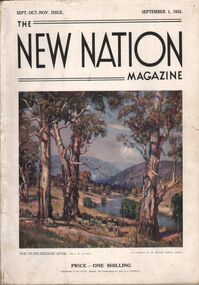
Magazine - AILEEN AND JOHN ELLISON COLLECTION: THE NEW NATION MAGAZINE
... J. L. Ranken) - The city of the longest drink (by A. C. Cummins) - The life of the cuckoo (by M. S.) - Radio - The world of music (by A. L. Kelly) - The world of women (by E. G. Manby Suttor) - Shopping from an easy chair - The Australian wool trade - Our verse farm - My wool clip (by H. W. Wright) - Windjammer days...J. L. Ranken) - The city of the longest drink (by A. C. Cummins) - The life of the cuckoo (by M. S.) - Radio - The world of music (by A. L. Kelly) - The world of women (by E. G. Manby Suttor) - Shopping from an easy chair - The Australian wool trade - Our verse farm - My wool clip (by H. W. Wright) - Windjammer days ...The New Nation Magazine Sept. Oct. Nov. Issue. September 1, 1932. On the front cover a painting "The Murrumbidgee River by J. R. Jackson. Price 1 shilling the magazine has 112 pages, the last two pages are ripped and the back cover is missing. Contents: Frontispiece "morning of the dogger bank" (by T. Benetter)- The British commonwealth of Nations - Switzerland, land of lakes and mountains (by Hilary lofting) - Highways of the Syrian desert (by Francis Birtles) - Seven ages of the Australian aboriginal - The game of the empire, the approaching cricket test matches (by M. A. Noble) - Short story, the last run (by H. H. Cardinal) - "The hidden bird" (by E. M. England) - North Australia trails ( by C. Price Conigrave) - Tales of the turf Fred Archer (by S. A. Marden) - The wide world round - Cape Horn (by J. Newman Barker) - "The home in the clearing" (by Sydney long) - Whitsunday passage (by Henry G. Lamond) - Old bridges (by J. L. Ranken) - The city of the longest drink (by A. C. Cummins) - The life of the cuckoo (by M. S.) - Radio - The world of music (by A. L. Kelly) - The world of women (by E. G. Manby Suttor) - Shopping from an easy chair - The Australian wool trade - Our verse farm - My wool clip (by H. W. Wright) - Windjammer days (by Gerald M. Moody) - Quarterly review of the stock and meat industry (by J. B. Cramsie) - New Zealand letter - At ye booksellers today - A number of things - The modern home - Portland cement - The good housewife (by E. G. Manby Suttor) - Cousin Shirley.book, magazine, the new nation -
 Bendigo Historical Society Inc.
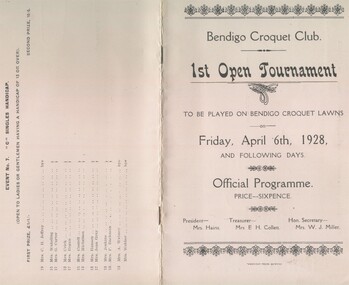
Document - TOURNAMENT BOOKLET - OFFICIAL PROGRAMME: BENDIGO CROQUET CLUB, 1928
... days'. Providing entries (names) for 7 events. President: Mrs Hains; Treasurer: Mrs. E. H. Collett; Hon. Secretary Mrs. W. J...days'. Providing entries (names) for 7 events. President: Mrs Hains; Treasurer: Mrs. E. H. Collett; Hon. Secretary Mrs. W. J ...Tournament Booklet - Official Programme: Bendigo Croquet Club's First Open Tournament, Friday April 6th, 1928 'and following days'. Providing entries (names) for 7 events. President: Mrs Hains; Treasurer: Mrs. E. H. Collett; Hon. Secretary Mrs. W. J. Miller.organization, club/society, bendigo croquet club -
 Bendigo Historical Society Inc.
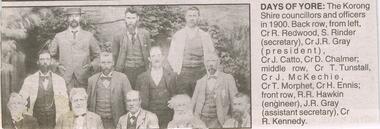
Newspaper - JENNY FOLEY COLLECTION: DAYS OF YORE
... Days of yore: the Korong Shire councillors and officers in 1900. Back row from left: Cr R. Redwood, S. Rinder (secretary), Cr J. Catto, Cr D. Chalmer. Middle row: Cr T. Tunsall, Cr J. McKechie, Cr T. Morphel, Cr E...Days of yore: the Korong Shire councillors and officers in 1900. Back row from left: Cr R. Redwood, S. Rinder (secretary), Cr J. Catto, Cr D. Chalmer. Middle row: Cr T. Tunsall, Cr J. McKechie, Cr T. Morphel, Cr E ...Bendigo Advertiser "The way we were" from Saturday, May 8, 2004. Days of yore: the Korong Shire councillors and officers in 1900. Back row from left: Cr R. Redwood, S. Rinder (secretary), Cr J. Catto, Cr D. Chalmer. Middle row: Cr T. Tunsall, Cr J. McKechie, Cr T. Morphel, Cr E. Ennis. Front row: R.R. Hawkin (engineer) J.R. Gray (assistant secretary), Cr R. Kennedy.newspaper, bendigo advertiser, the way we were -
 Sunshine and District Historical Society Incorporated
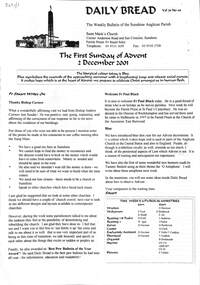
Newsletter - Saint Mark's Church Daily Bread Newsletter Collection, 2 December 2001 - 4 April 2004
... days and relaxed social events. It evokes hope which is at the heart of Advent: we prepare to celebrate Christ amongst us in human flesh.|Building Our Faith|Happenings and Events|This Week's Liturgical Ministries|(Names Listed): G. Harrison, F. Ford, D. Borthwick, K. Smith, E. Ali, O. Ford, J...days and relaxed social events. It evokes hope which is at the heart of Advent: we prepare to celebrate Christ amongst us in human flesh.|Building Our Faith|Happenings and Events|This Week's Liturgical Ministries|(Names Listed): G. Harrison, F. Ford, D. Borthwick, K. Smith, E. Ali, O. Ford, J ...Collection of papers published from 2 December 2001 to 4 April 2004 for Saint Mark's Church(Volume 28, Number 48) -|Daily Bread|The Weekly Bulletin of the Sunshine Anglican Parish|Saint Mark's Church|Corner Anderson Road and Sun Crescent, Sunshine|Parish Priest: Fr Stuart Soley|The First Sunday of Advent, 2 December 2001|The liturgical colour today is Blue. Blue symbolises the warmth of the approaching summer with it lengthening days and relaxed social events. It evokes hope which is at the heart of Advent: we prepare to celebrate Christ amongst us in human flesh.|Building Our Faith|Happenings and Events|This Week's Liturgical Ministries|(Names Listed): G. Harrison, F. Ford, D. Borthwick, K. Smith, E. Ali, O. Ford, J. Anderson, W Ager, J. Parker, D. Guymer, M. Clark, F. Noble, V. Caddick, B. Dodemaide, & P. Tisdale|(Volume 30, Number 13) -|30 March 2003, The Fourth Sunday in Lent|Nurturing Our Faith|(Names Listed): M. Park, P. Hansen, D. Scheurer, L. Wisinger, M. Clark, O. Ford, M. Packham, D. Borkut, S. Brown, T. Beckett, D. Guymer, A. Morieson, & J. Scheurer|(Volume 30, Number 15) -|Palm Sunday: The Sixth Sunday in Lent, 13th April 2003|(Names Listed): D. Guymer, R. Ellul, V. Crimi, S. Ellul, A. Noble, P. Tisdale, J. Anderson, P. Hansen, J. Parker, F. Ford, E. Guymer, J. Morieson, G. Dugdale, & F. Noble|(Volume 31, Number 13) -|The Fifth Sunday in Lent, 28 March 2004|(Names Listed): M. Park, N. Baker, F. Noble, F. Ford, G. Dugdale, P. Tisdale, J. Parker, J. Anderson, J. Eismontas, M. Sutherland, Sister Josephine, V. Crimi & B. Dodemaide|(Volume 31, Number 14) -|Palm Sunday, The Sixth Sunday in Lent, 4 April 2004|Second Sunday of Easter|(Names Listed): D. Guymer, L. Wisinger, G. Dugdale, F. Ford, F. Noble, J. Parker, O. Ford, J. Anderson, S. Ellul, E. Guymer, J. Morieson, Sister Josephine, V. Crimi, & M. Parkst. marks church, church, anderson road, sunshine, history -
Tatura Irrigation & Wartime Camps Museum
Book, Testing Milk and Its Products, 1911
... Used in early days at Tatura Butter Factory Tatura Butter Factory Milk testing "J E Lockwood 3/3/20" written on first page Brown paper covered book. ...Used in early days at Tatura Butter FactoryBrown paper covered book."J E Lockwood 3/3/20" written on first pagetatura butter factory, milk testing -
 Ballarat Tramway Museum
Administrative record - Log book, Diary, John Andrew & Co, 1957
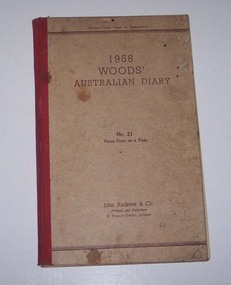
... days on a page, John Andrew and Co. red Rexene binding, card covers, sewn sections with ruled sheets providing a diary for 1958. Has "useful information" sheets at from the diary, including a ruler along the side of the sheet. Used by the SEC Ballarat track gang to record their daily work, leave, welding, track cleaning, truck driver etc Rear pages - has notes on materials used and a list of Track gang for 1958. (December Cash Account) E. A. Goldsmith W. H. Goldsmith E. J...days on a page, John Andrew and Co. red Rexene binding, card covers, sewn sections with ruled sheets providing a diary for 1958. Has "useful information" sheets at from the diary, including a ruler along the side of the sheet. Used by the SEC Ballarat track gang to record their daily work, leave, welding, track cleaning, truck driver etc Rear pages - has notes on materials used and a list of Track gang for 1958. (December Cash Account) E. A. Goldsmith W. H. Goldsmith E. J ...Yields information about the track maintenance activities of the track gang in Ballarat, the work they did, notes, names and other information.1958 Woods' Australian Diary, No. 21, 3 days on a page, John Andrew and Co. red Rexene binding, card covers, sewn sections with ruled sheets providing a diary for 1958. Has "useful information" sheets at from the diary, including a ruler along the side of the sheet. Used by the SEC Ballarat track gang to record their daily work, leave, welding, track cleaning, truck driver etc Rear pages - has notes on materials used and a list of Track gang for 1958. (December Cash Account) E. A. Goldsmith W. H. Goldsmith E. J. Davis G. McQuinn H. Hoy A. W. Cunningham N. McVitty C. Edwards E. Lakey H. Lancaster S. Chibnall H. Smith Loose contents 21/7/1958 - SEC Safety Officers Newsletter, Feb. 1958 - inside has notes and sketches where joints welded and the dates. Inside rear cover - Daily time sheet - with the addresses of the track gang on the rear. - list of materials - rails by type and sleepers on hand - Reg Item 3705 - Rules Governing Depot Employees with notes and sketches where joints welded and the dates on the rear. (Item to be stored in a separate envelope - note was folded in half and stored in the rear section)tram, trams, sec, ballarat, depot, trackwork, rails -
 Melbourne Legacy
Photograph, Foundation-Members of Intermediate Legacy Club
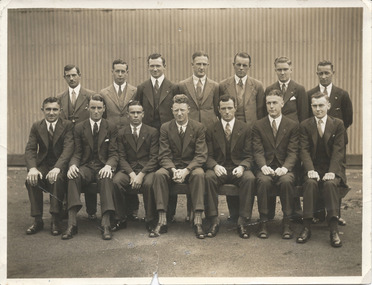
... J Lawson, R Davidson, F Holliday, A Warnecke. Front row: N Smith, R Gilbert, F Corrie, E Kennedy, J Kennedy, A Lawson, L Frazer. Absent: J MacGregor, A Davidson, F Hollingsworth, B Woods. Background: The ILC was formed in 1930 with a total membership of 16. The idea of the club sprang from those boys who had outgrown the Junior Legacy Club. In the early days...J Lawson, R Davidson, F Holliday, A Warnecke. Front row: N Smith, R Gilbert, F Corrie, E Kennedy, J Kennedy, A Lawson, L Frazer. Absent: J MacGregor, A Davidson, F Hollingsworth, B Woods. Background: The ILC was formed in 1930 with a total membership of 16. The idea of the club sprang from those boys who had outgrown the Junior Legacy Club. In the early days ...A photo of 14 the original team of men that started the I.L.C. (Intermediate Legacy Club). Norman Smith is on the left of the front row, other names were identified on another copy of the photo at 01622. Back row: R. Rummell, D Fitzgerald, T Kennedy, J Lawson, R Davidson, F Holliday, A Warnecke. Front row: N Smith, R Gilbert, F Corrie, E Kennedy, J Kennedy, A Lawson, L Frazer. Absent: J MacGregor, A Davidson, F Hollingsworth, B Woods. Background: The ILC was formed in 1930 with a total membership of 16. The idea of the club sprang from those boys who had outgrown the Junior Legacy Club. In the early days it fielded a lacrosse team and it was this that mainly held the members together. Enthusiasm wained after a few years as it lacked a solid objective. The answer came from one of its members and in 1938 they founded the Don Esses Club. This was a club for the children of incapacitated ex-servicemen which met every Thursday night at 7.30 run by the ILC members During the second world war 80% of the members of the ILC enlisted in the services. Leaving only 8 members that could not join due to ill health or reserved occupations. They continued the Don Esses and whatever aid they could to Legacy. ILC members had always helped Legacy where possible including being camp leaders or camp staff, with the annual demonstrations, and coffee stalls at the ANZAC dawn service. ILC was a service rendering organisation and was self governing. Non-sectarian and non-political, the members were ex-junior legatees over 18 years of age. After serving in World War 2 members were eligible to become members of Legacy.An early photo of junior Legatees who had formed the Intermediate Legacy Club in 1930.Black and white photo of 14 foundation members of the Intermediate Legacy Club.Handwritten on the back "Norman Smith I.L.C." in blue pen. Also "Originals of I.L.C. (Norm Smith on the left of the front row)" in pencil.ilc, junior legatee, norm smith -
 Melbourne Legacy
Photograph, Foundation-Members of Intermediate Legacy Club ILC 1930, 1930
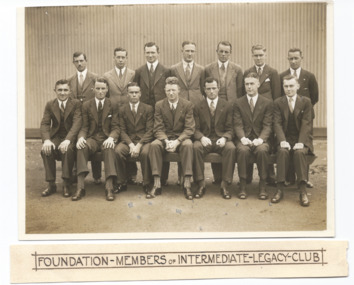
... J Lawson, R Davidson, Frank Holliday, A Warnecke. Front row: Norman Smith, Roy Gilbert, Frank Corrie, E Kennedy, Jack Kennedy, A Lawson, Len Frazer. Absent: Jimmy MacGregor, Alan Davidson, Fred Hollingsworth, Bert Woods. Background: The ILC was formed in 1929 with a total membership of 18. The idea of the club sprang from those boys who had outgrown the Junior Legacy Club. In the early days...J Lawson, R Davidson, Frank Holliday, A Warnecke. Front row: Norman Smith, Roy Gilbert, Frank Corrie, E Kennedy, Jack Kennedy, A Lawson, Len Frazer. Absent: Jimmy MacGregor, Alan Davidson, Fred Hollingsworth, Bert Woods. Background: The ILC was formed in 1929 with a total membership of 18. The idea of the club sprang from those boys who had outgrown the Junior Legacy Club. In the early days ...A photo of 14 the original team of men that started the I.L.C. (Intermediate Legacy Club). It was probably taken about 1930 just after the ILC was formed. The accompanying letter dated 30/11/1983 and note shows the photo was sent to Legacy by Harold Bokes and given to Legatee Frank Doolan of the archive committee for the archives on 7/12/1983. The note in Frank's handwriting shows he had identified all the members in the photo and that it had been taken by John Barnes. Back row: R. Rimmer, Dan Fitzgerald, Ted Kennedy, J Lawson, R Davidson, Frank Holliday, A Warnecke. Front row: Norman Smith, Roy Gilbert, Frank Corrie, E Kennedy, Jack Kennedy, A Lawson, Len Frazer. Absent: Jimmy MacGregor, Alan Davidson, Fred Hollingsworth, Bert Woods. Background: The ILC was formed in 1929 with a total membership of 18. The idea of the club sprang from those boys who had outgrown the Junior Legacy Club. In the early days it fielded a lacrosse team and it was this that mainly held the members together. Enthusiasm wained after a few years as it lacked a solid objective. The answer came from one of its members and in 1938 they founded the Don Esses Club. This was a club for the children of incapacitated ex-servicemen which met every Thursday night at 7.30 run by the ILC members. The name came from the signallers' code Disabled Servicemen's Sons. During the second world war 80% of the members of the ILC enlisted in the services. Leaving only 8 members that could not join due to ill health or reserved occupations. They continued the Don Esses and whatever aid they could to Legacy. ILC members had always helped Legacy where possible including being camp leaders or camp staff, with the annual demonstrations, and coffee stalls at the ANZAC dawn service. Post second world war some ILC members were nominated into Legacy, others drifted away in civil occupations. It was found difficult to recruit new blood into the ILC and eventually membership waned when the boys from the Don Esses clubs found other youth activities to join. The ILC ceased to meet regularly in the mid fifties. However a strong comradeship still existed between members and they would meet in one anothers homes. Members were always ready to help the senior Legacy Club in any way in their power and still helped at Christmas parties and summer camps. ILC was a service rendering organisation and was self governing. Non-sectarian and non-political, the members were ex-junior legatees over 18 years of age. After serving in World War 2 members were eligible to become members of Legacy.An early photo of junior Legatees who had formed the Intermediate Legacy Club in 1930.Black and white photo of 14 foundation members of the Intermediate Legacy Club and a paper label, plus a letter and a note with the names of the members.Handwritten label says 'Foundation-Members of Intermediate Legacy Club'. Handwritten letter is from when it was sent to Legacy by Harold Bokes and is marked 'ILC1' in red pen as part of the early archive numbering system.ilc, junior legatee -
 Melbourne Legacy
Photograph, Frank Boase, Intermediate Legacy Conference, Adelaide, Easter 1948, 1948
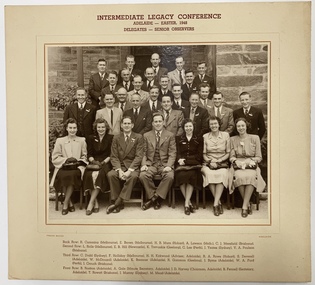
... The names include: R Cumming, E Brown, H B Murn, A Lawson, C J Merefield, L Rolls, E B Hills, K Trevaskis, C Lee, J Yeates, V A Poulson, C Dodd, F Halliday, H H Kirkwood, R A Rowe, S Deverell, W McDougall, K Bremner, R Gammon, J Byrne, W A Ford, J Couch, B Roston, A Gale, J D Harvey, B Fennell, T Rowatt, J Murray, M Mead. Background: The ILC was formed in 1929 with a total membership of 18. The idea of the club sprang from those boys who had outgrown the Junior Legacy Club. In the early days...The names include: R Cumming, E Brown, H B Murn, A Lawson, C J Merefield, L Rolls, E B Hills, K Trevaskis, C Lee, J Yeates, V A Poulson, C Dodd, F Halliday, H H Kirkwood, R A Rowe, S Deverell, W McDougall, K Bremner, R Gammon, J Byrne, W A Ford, J Couch, B Roston, A Gale, J D Harvey, B Fennell, T Rowatt, J Murray, M Mead. Background: The ILC was formed in 1929 with a total membership of 18. The idea of the club sprang from those boys who had outgrown the Junior Legacy Club. In the early days ...A photo of the delegates and senior observers of the Intermediate Legacy Club Conference held in Adelaide during Easter 1948. The attendees came from different cities, including Melbourne, Hobart, Geelong, Perth, Sydney, Newcastle, Adelaide and Brisbane. The names include: R Cumming, E Brown, H B Murn, A Lawson, C J Merefield, L Rolls, E B Hills, K Trevaskis, C Lee, J Yeates, V A Poulson, C Dodd, F Halliday, H H Kirkwood, R A Rowe, S Deverell, W McDougall, K Bremner, R Gammon, J Byrne, W A Ford, J Couch, B Roston, A Gale, J D Harvey, B Fennell, T Rowatt, J Murray, M Mead. Background: The ILC was formed in 1929 with a total membership of 18. The idea of the club sprang from those boys who had outgrown the Junior Legacy Club. In the early days it fielded a lacrosse team and it was this that mainly held the members together. Enthusiasm wained after a few years as it lacked a solid objective. The answer came from one of its members and in 1938 they founded the Don Esses Club. This was a club for the children of incapacitated ex-servicemen which met every Thursday night at 7.30 run by the ILC members. The name came from the signallers' code Disabled Servicemen's Sons. During the second world war 80% of the members of the ILC enlisted in the services. Leaving only 8 members that could not join due to ill health or reserved occupations. They continued the Don Esses and whatever aid they could to Legacy. ILC members had always helped Legacy where possible including being camp leaders or camp staff, with the annual demonstrations, and coffee stalls at the ANZAC dawn service. Post second world war some ILC members were nominated into Legacy, others drifted away in civil occupations. It was found difficult to recruit new blood into the ILC and eventually membership waned when the boys from the Don Esses clubs found other youth activities to join. The ILC ceased to meet regularly in the mid fifties. However a strong comradeship still existed between members and they would meet in one anothers homes. Members were always ready to help the senior Legacy Club in any way in their power and still helped at Christmas parties and summer camps. ILC was a service rendering organisation and was self governing. Non-sectarian and non-political, the members were ex-junior legatees over 18 years of age. After serving in World War 2 members were eligible to become members of Legacy.A record of an intermediate Legacy Conference in 1948. Junior Legatees who had achieved the age of 16 were forming intermediate clubs to further Legacy's work.Black and white photo of an ILC conference mounted on a buff colour board with brown text of the event and names of those in the photo.Back Row: R Cumming (Melbourne), E Brown (Melbourne), H B Murn (Hobart), A Lawson (Melb), C J Merefield (Brisbane). Second Row: L Rolls (Melbourne), E B Hills (Newcastle), K Trevaskis (Geelong), C Lee (Perth), J Yeates (Sydney), V A Poulson (Brisbane). Third Row: C Dodd (Sydney), F Holliday (Melbourne), H H Kirkwood (Advisor, Adelaide), R A Rowe (Hobart), S Deverell (Adelaide), W McDougall (Adelaide), K Bremner (Adelaide), R Gammon (Geelong), J Byrne (Adelaide), W A Ford (Perth), J Couch (Brisbane). Front Row: B Roston (Adelaide), A Gale (Minute Secretary, Adelaide), J D Harvey (Chariman, Adelaide), B Fennell (Secretary, Adelaide), T Rowatt (Brisbane), J Murray (Sydney), M Mead (Adelaide). Photographer 'Frank Boase '.ilc, junior legatee, conference -
 Wodonga & District Historical Society Inc
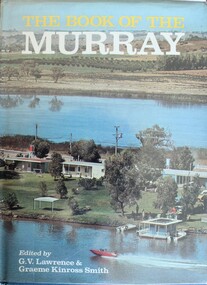
Book - The Book of the Murray, Lawrence, G. V.; and Smith, Graeme Kinross, 1975
... E. Johnson 8. The Murray River Steamers – Ian Mudie 9. Pioneer Days: A Story of Seventy Years Ago – Dorothy Roysland 10. Birdlife of the Murray Valley – John Eckert 11 .Aborigines in the Murray Valley, How We Learned the Story – H. A. Lindsay, The Aboriginal Occupation – Norman B. Tindale 12. Fish of the Murray River – John S. Lake 13. Native Plants of the Murray Valley – J ...This book contains contributions from 16 writers who have first-hand knowledge of the Murray River area. It provides a comprehensive picture of the river in all its aspects. It gives a fascinating look at one of Australia's most important geographical and historical features. Contributors and chapters in this book are: - 1. Past, Present and Future – G. V. Lawrence 2. The Structure of the Murray – Edmund D. Gill 3. Seeing the Murray – Graeme Kinross Smith 4. The Mountains at the Source – Elyne Mitchell 5. The Explorers – Leigh Betheras 6. The Irrigators – G. Arch Grosvenor 7. Murray Water Conservation – W. G. L. Harrison & K. E. Johnson 8. The Murray River Steamers – Ian Mudie 9. Pioneer Days: A Story of Seventy Years Ago – Dorothy Roysland 10. Birdlife of the Murray Valley – John Eckert 11 .Aborigines in the Murray Valley, How We Learned the Story – H. A. Lindsay, The Aboriginal Occupation – Norman B. Tindale 12. Fish of the Murray River – John S. Lake 13. Native Plants of the Murray Valley – J. H. Willis 14. Murray Wildlife – K. N. G. SimpsonThis publication has a hard cover with blue boards and a pictorial dust jacket. It consists of 264 pages.This book contains contributions from 16 writers who have first-hand knowledge of the Murray River area. It provides a comprehensive picture of the river in all its aspects. It gives a fascinating look at one of Australia's most important geographical and historical features. Contributors and chapters in this book are: - 1. Past, Present and Future – G. V. Lawrence 2. The Structure of the Murray – Edmund D. Gill 3. Seeing the Murray – Graeme Kinross Smith 4. The Mountains at the Source – Elyne Mitchell 5. The Explorers – Leigh Betheras 6. The Irrigators – G. Arch Grosvenor 7. Murray Water Conservation – W. G. L. Harrison & K. E. Johnson 8. The Murray River Steamers – Ian Mudie 9. Pioneer Days: A Story of Seventy Years Ago – Dorothy Roysland 10. Birdlife of the Murray Valley – John Eckert 11 .Aborigines in the Murray Valley, How We Learned the Story – H. A. Lindsay, The Aboriginal Occupation – Norman B. Tindale 12. Fish of the Murray River – John S. Lake 13. Native Plants of the Murray Valley – J. H. Willis 14. Murray Wildlife – K. N. G. Simpsonmurray river, australian geography, settlement on the murray river, native plants, aborigines in the murray valley, murray valley flora and fauna -
 City of Melbourne Libraries
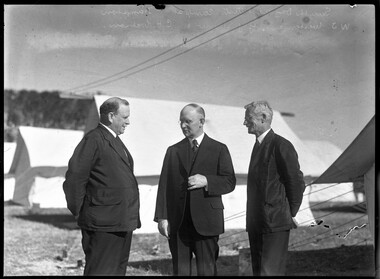
Photograph, Bull, Hugh Jones, 1897-1993, Seventh Day Adventists Camp at Hampton: W.J. Westerman, G.G. Stewart & C.H. Watson
... J. Westerman (vice-president of Australasian) and Pastor G. G. Stewart (president of Victoria), conversing with Pastor C. H. Watson (world president of the Seventh Day Adventists).- III.— Evangelist E. R. Gane and family.” SEVENTH DAY ADVENTISTS. (1933, December 28). The Age (Melbourne, Vic. : 1854 - 1954), p. 9. Retrieved August 1, 2025, from http://nla.gov.au/nla.news-article203356427 Research by project volunteer, Fiona Collyer: In December 1933, the annual Seventh Day Adventists Conference of Victoria was held, with over a 1000 participants camping for ten days at Highett Road Hampton. ...J. Westerman (vice-president of Australasian) and Pastor G. G. Stewart (president of Victoria), conversing with Pastor C. H. Watson (world president of the Seventh Day Adventists).- III.— Evangelist E. R. Gane and family.” SEVENTH DAY ADVENTISTS. (1933, December 28). The Age (Melbourne, Vic. : 1854 - 1954), p. 9. Retrieved August 1, 2025, from http://nla.gov.au/nla.news-article203356427 Research by project volunteer, Fiona Collyer: In December 1933, the annual Seventh Day Adventists Conference of Victoria was held, with over a 1000 participants camping for ten days at Highett Road Hampton. ...Photographer notations on slide: Seventh Day Adventists Camp at Hampton W.J. Westerman, G.G. Stewart & C.H. Watson Published: 28 December 1933 Published title: SEVENTH DAY ADVENTISTS. Published caption: “I. — The Annual Camp of the Seventh Day Adventists in Highett-road, Hampton, comprising more than 250 tents and accommodating over a thousand persons. II. —W. J. Westerman (vice-president of Australasian) and Pastor G. G. Stewart (president of Victoria), conversing with Pastor C. H. Watson (world president of the Seventh Day Adventists).- III.— Evangelist E. R. Gane and family.” SEVENTH DAY ADVENTISTS. (1933, December 28). The Age (Melbourne, Vic. : 1854 - 1954), p. 9. Retrieved August 1, 2025, from http://nla.gov.au/nla.news-article203356427 Research by project volunteer, Fiona Collyer: In December 1933, the annual Seventh Day Adventists Conference of Victoria was held, with over a 1000 participants camping for ten days at Highett Road Hampton. Pastor Charles H. Watson, world president of the Seventh Day Adventists, Walter J. Westerman, vice-president of Australasian and Pastor George G. Stewart, president of Victoria attended. Interestingly, The Age newspaper modified the original photo in their publication, placing the three men close to each other. Description: Three middle aged men dressed in suits converse in front of tents. In December 1933, delegates from all over Victoria and beyond travelled to Melbourne for the annual Seventh Day Adventists Conference of Victoria, held over ten days on a vacant allotment at Highett Road Hampton. A canvas town of 250 tents for over 1000 campers was created along with large marquees for lectures, devotional services and kitchens. Many daily visitors also attended the lectures and services. The principal speaker was Victorian born world president of the Seventh Day Adventists, Pastor Charles H. Watson (1877-1962), who travelled from Washington DC for the event. The Highett Street campers attended a busy schedule of bible readings, devotional services and health lectures during the ten days of the camp. Lecture subjects included- “Among the Head Hunters of the Solomon Islands”, “ Looking Through the Prophetic Telescope into 1934”, “Soul Surgery”, “Viewing the Celestial Land Through the Prophetic Telescope”and “The Four Horsemen of the Apocalypse”. The Seventh Day Adventist religion was established in the USA in 1863. One of its co-founders was American Ellen G. White whose writings are regarded as divinely inspired and are still adhered to today. Ellen preached on the “Eight Laws of Health”- Nutrition, exercise, water, sunshine, temperance, air, rest and trust in God. Adventists regard their bodies as holy temples and avoid food deemed by the Bible as unclean. They eat a mainly plant based diet with no caffeinated beverages and abstain from alcohol and tobacco. They believe in the observance of Saturday, the seventh day of the week in the Christian (Gregorian) and Hebrew calendars as the sabbath and the literal and imminent second coming of Jesus Christ. New converts are baptised by immersion in water. The Adventists opened the Warburton Sanitarium in 1910 as a health retreat, integrating their holistic health philosophy of physical, mental and spiritual well being. It was a resort in the hills “among picturesque mountain scenery…surrounded by tall forests and deep fern gullies…” where highly strung Melburians could alleviate their digestive maladies, stress and jaded nerves as “…worn down nervous systems mend quickly in this peaceful environment…invigorating air and an abundance of home-grown fruit, vegetables, fresh eggs, milk, and cream help to build healthy bodies”. The resort also offered hydrotherapy, massage and electrical treatments. An advertisement in The Argus- 1 December 1947 assured readers- “EVERYTHING SUNNY AGAIN." “That's how you'll feel when you say farewell to Warburton Sanitarium and Hospital after spending a holiday here. Victoria's Hydro is famous far and wide for wonders worked with sufferers from nervous and digestive disorders. Wholesome food, perfectly cooked; splendid air, regulated exercise, sweet natural sleep; these quickly correct faulty digestion, restore vitality, bring back that sunny optimism natural to healthy people. Massage and curative baths under medical supervision…” Later, after further building work, it became the Warburton Hospital with medical, casualty and obstetrics wards as well as offering strategies to stop smoking, lose weight and for stress management. The hospital ceased operation in 2001. Ellen G. White wrote “God sent me to Australia” and in 1891, accompanied by her son William C. White she arrived in Australia to start a Bible school, spread her health philosophy and for missionary work. At first health food products were imported from America, but it soon became apparent that due to the expense and the food becoming stale over the long journey, that local manufacturing was necessary. In 1898 William secured the services of American Adventist baker Edward C. Halsey, who had worked at Dr Kellogg’s Battle Creek (“Cereal City”), Sanitarium, Michigan, USA. They rented the St George’s bakery in Northcote, Melbourne, producing the first ready to eat breakfast cereal Granola, Caramel Cereal, and peanut butter. The fledgling company relocated to larger premises in Cooranbong, NSW soon after. The Sanitarium Health Food Company opened a factory in Warburton in 1925, manufacturing Granose Biscuits, Cerix Puffed Wheat, San-Bran, Bixies malted wheat flakes, Betta peanut butter, Marmite, “Kwic-Bru - A delicious health “coffee” made from choicest cereals and free from drugs that affect the heart and nerves” In 1928, Sanitarium bought out Grain Products Limited who were manufacturing a sweet cereal biscuit called Weet-Bix which soon became Australia’s favourite breakfast cereal. The Warburton factory closed in 1997, with manufacturing shifting interstate. Sanitarium breakfast cereal boxes offered free collectable cards inside and children could buy albums from grocers for sixpence and mount the cards. Subjects of the albums included- “Aboriginal Tribes, Legends, Customs”, “Australia- Yesterday and Today”, “Marvels of the Great Barrier Reef”, “Advance Australia- a Pageant of the Years”. In 1902 the Adventist’s opened the “Pure Food Vegetarian Cafe” in Sydney (In 1907 the name was changed to “Sanitarium Health Food Cafe”), Eating vegetarian food was definitely a curiosity. “Cristina” reviewed the cafe for The Australasian-27 October 1906. Topics For The Block. “Feeling somewhat like a criminal, and hoping to escape detection, I stealthily made my way into a vegetarian restaurant the other day... If my friends happened to catch me walking in there, I should henceforth be considered a crank, a faddist, and little short of a lunatic! Whom did I find within, seated with the air of habitués at the small tables, but heaps of my friends. They had all this while been pursuing their vegetarian way, layin' low and sayin' nuffin'. Flesh-eaters, now that the Sydney summer has set in apparently in good earnest, are beginning to wonder if the vegetarians are not wiser in their day and generation. Roast beef, hot cornea beef, ragouts, and meat curries, the very thought of them makes one feel hot. Frosted lemon pudding, stewed fruits, wheatmeal rolls, and tomatoes sound nice when you look at their names on the vegetarian menu. Such weird messes are served, square, unintelligible blocks of some brown substance, a few bites of which form a full and satisfying meal. Cold nut foods, granose, nuttose, and jam protose, bromose, with jelly and various "ose" sandwiches, impossible for the unbeliever to diagnose, are put before you. You drink malted nut broth, you eat gluten sticks, stewed beans, lentil patties, with vegetable sauce, any or all of which are distinctly nourishing and filling at the price. A mock (decidedly mock) veal cutlet or a red lentil roast is sufficient lunch, it appears, for anyone. Thus, "you obtain the best working results from your machinery with the least possible expenditure..." In December 1906 the Adventists branched out to Melbourne, opening the Sanitarium Health Food Cafe at 289 Collins Street next to the Royal Bank building. (corner Collins and Elizabeth Streets, demolished in 1939). Their motto was “Quality and Purity”. “Cynthia” of The Leader “Social Circle” column reviewed the cafe in 9 March 1907- “Hundreds of people have a feeling of positive affection for a diet that will be satisfying, appetising and nourishing, without having meat for its backbone. It will come as news that we have in Melbourne a cafe where you can really enjoy yourself without eating anything in the way of meat. Cream, custard, cheese and the like are not cold shouldered out of the menu, and the housewife in search of new dishes will find here ever so much in the way of suggestions. Nuts figure conspicuously in the menu, and lentil and walnut cutlets may be instanced among the delicacies. Beans are cooked in quite alluring fashion, while creamed parsnips are excellent. For sandwiches you could hardly desire anything more appetising than granosi biscuits, and nut cheese. The combination is suggestive of school lunches, and nut meat might well be employed as a variant. A visit to the cafe itself — it is next the Royal Bank in Collins-street — will surprise anyone used to the average vegetarian restaurant. Every thing is fresh, fragrant, and thoroughly modern… It is run, in connection with that curious people the Seventh Day Adventists.” However, “Adele” writing for the Evelyn Observer and Bourke East Record -13 December 1907 had a different experience- CITY RESTAURANTS. “There is no glamour from the outside. We enter the dining room at six and secure a seat at a small table, for this night we are going to dine on vegetables. Some people pride themselves on being vegetarians, and devote a great deal of their spare cash and energy to disseminating vegetarian principles. I shall not in a hurry forget the dinner we tried to get through at this vegetarian restaurant. There was put before us plate after plate of vegetables not soaked, but sodden with water, not an atom of flavouring or dressing; no attempt was made to give the slightest piquancy to potato, cabbage, turnip or carrot. I beg pardon, I am unjust, there were two caterpillars in the cabbage. It is astonishing how persistently ordinary cooks spoil vegetables in the process of cooking and how little they understand the value of vegetables on a menu.” From the extensive menu of 1924, you could order cream of green pea soup, followed by nut meat with Yorkshire pudding, egg timbales, stewed brown lentils, savoury rissoles with piquant sauce. Among the dessert offerings were creamed sago, steamed figs and walnut drops. Washed down with fermented wine and to finish, “Frucerea”, a coffee substitute essence made from fruit and cereal. A four course meal of soup, entree, vegetables and sweets cost 1/6 in 1924. Proving that plant-based food was not just a novelty, 67,000 meals were served at the cafe in 1918, rising to 73,000 in 1921. Later the Sanitarium Cafe moved to 293 Little Collins Street, (opposite Royal Arcade) sharing the building with The Lilliput Golf Course, a miniature golf course of 18 holes. The course was a replica of the fashionable Lido Course in France and was open daily from 10am to midnight with a green fee of one shilling. It featured goldfish, waterfalls and dance music. Lilliput boasted that they were “Melbourne’s coolest indoor course” Miniature golf (mini, minnie, midget, miget, Tom Thumb, Wee golf, putt-putt, pigmy, peewee, crazy golf, obstacle golf) swept the globe in the 1930s, starting in the USA, then Europe. The courses provided affordable recreation during uncertainty at the start of the Great Depression. The craze arrived in Sydney September 1930 with the first mini golf course opening in the basement of the State Theatre. It featured a replica Sydney Harbour Bridge and attracted over 1000 players a day at one shilling per game. The miniature golf bug hit Melbourne hard in 1930-31 with nearly 200 courses springing up in the CBD and suburbs within a few months. The first miniature golf course to open in Melbourne was on 4 October 1930 in the basement of recently built art deco style Wentworth House at 203 Collins Street, designed by architect Cedric Heise Ballantyne, (also designed Regent Theatre, Plaza Ballroom, Athenaeum Club, National Theatre, St Kilda, built in 1930, demolished in 1974 for the City Square) It was managed by J. C. Williamson who advertised for a “Girl Spruiker” who “Must be Young, Attractive Personality, and Able to Talk to the Public” to work at the course. The Age 26 September 1930 reported - “The Wentworth House management have spared no expense in preparing the links. Water hazards, sand bunkers, running streams, ancestral castles, moats and a cunning drawbridge have each been devised to test the skill of players, while the walls and ceiling have been "atmospherically" treated to convey an exterior effect”. Even Melbourne City Council jumped on the bandwagon, leasing the lower hall of Melbourne Town Hall to colourful car dealer and racehorse owner Mr A. G. Barlow for £43 per week for the “Kit Kat Tiny Golf Course”, opening on 11 December 1930. (Turf identity, Mr Alexander George Barlow, (1880-1937) who raced under the nom de course “A. G. Vauxhall”, owned filly Frances Tressady, who in 1923 won the Victoria Derby and Oaks Stakes double and came fifth in the Melbourne Cup. The “Frances Tressady Stakes” is held each March at Flemington Racecourse in honour of the horse, the last filly to win the Derby. Barlow was the proprietor of Barlow Brothers Pty Ltd car dealership at 442 Elizabeth Street, Melbourne. He played 14 games for Carlton Football Club (VFL) on the half-forward line from 1901-1903). Patrons could vie for The Herald Miniature Golf Championship Cup, a gold cup worth £7/7, in an eight week long competition. Sports newspaper The Sporting Globe also offered a Cup and prize money. Many courses offered prizes of theatre tickets, cash and cigarettes. Myer’s department store, hoping to cash in on the fad, advertised in Melbourne’s newspapers that their Sports Department could design and equip complete miniature golf courses using “Fairway” imitation turf at 4/6 a yard. Newspaper cartoonists loved to lampoon the fad. Both Percy Leason, cartoonist for society magazine Table Talk and Syd Miller of Smith’s Weekly depicted “real” golfers causing havoc on a mini golf course, showing that being a “real” golf player was no advantage to playing miniature golf. But bust often follows boom. With such rapid market saturation, expensive novel hazards, waning interest, long opening hours, often to midnight, and price cutting of game fees from one shilling to sixpence and then to threepence amongst some courses, the bubble was bound to burst. The Sporting Globe columnist J.M.Dillon on 20 May 1931 lamented- £100,000 LOST Failure of ‘Minnie’ Golf. “Miniature golf might have provided fun and jokes for thousands of people in Australia, but there were many for whom it panned out a tragedy. It is likely that the dead losses of those who attempted to make money out of the game in Australia were in the vicinity of £100,000. …For a while there was hardly a spare block of land, or a possible “site” in the shape of a hall, or a showroom, in Sydney and Melbourne, that some one was not after to set upon it a “minnie links.” Big amusement firms and private individuals anxious to make money began to run courses. Practically every individual who touched the game had his finger’s financially burnt. …From the approximately £60,000 invested in Melbourne alone, there must have been £25,000 lost. …There are now dozens of courses going to ruin, and many more that the owners would be happy to give away if the takers would remove from them obligations of leases, &c…” The lease on the “Kit Kat Tiny Golf Club” at the Melbourne Town Hall expired on 30 April 1931, with Mr Barlow losing £798 on the venture. The hazards and fittings, which cost £400 and included a large replica of the Town Hall, now worthless. Due to declining patronage, the Little Collins Street cafe closed in 1938, although the adjacent shop continued to sell Sanitarium products. In New Zealand, the first Sanitarium factory opened in Christchurch in 1900, with the company later opening factories in Palmerston North and Auckland. The Adventists opened vegetarian cafes, firstly at 37 Taranaki Street Wellington in 1906, followed by cafes in Auckland, Christchurch and Dunedin. Weet-Bix is also New Zealand’s favourite cereal- there the jingle is “Kiwi kids are Weet-Bix kids.” In 1955, the Australian Women’s Weekly ran an illustrated, full colour advertisement featuring New Zealand born Edmund Hillary (later Sir) 1919-2008, who, along with Sherpa Tenzing Norgay, was the first climber to reach the summit of Mount Everest on 29 March 1953. The Australian Women’s Weekly, 30 March, 1955- “WEET-BIX carried by Hillary on Himalayan adventure! c/- N.Z. Alpine Club Inc., Dunedin, New Zealand. The Manager, Sanitarium Health Food Company, Christchurch, N.Z. Dear Sir. …Weet-Bix was chosen at my special request as I had always felt that some easily prepared form of breakfast was essential to the primitive conditions of high camps. Weet-Bix fulfilled its task very well indeed. We usually had them with hot milk (powdered) and sugar, and even when we were unable to eat anything else, we usually managed to have a little Weet-Bix . . . I regard them as a great success and expect they will be more widely used in the Himalayas in future. Yours faithfully, (Signed) E.P. Hillary. Sanitarium Marmite - motto- “Too much spoils the flavour”- is as beloved with Kiwis as Vegemite is with Australians. In 1966, a fire gutted the Christchurch Marmite factory causing a nation wide shortage. Once the factory was rebuilt, Sanitarium relaunched the yeasty extract in reusable glass tumblers with printed designs such as yachts, New Zealand birds and vintage cars. These popular collectibles can still be found in the kitchen cupboards of many New Zealand baches (holiday homes). After the devastating 2011 earthquake in Christchurch damaged the Marmite factory causing shortages and panic buying, a “Marmageddon” was declared with jars of the “black gold” advertised online for up to NZ$800. Consumers were advised to spread their Marmite sparingly until production resumed. (The Christchurch plant reportedly produces around 640,000kg of Marmite per year). Sanitarium Health and Wellbeing Company is exempt from paying company income tax on their profits due to their ownership by a religious organisation. Although not a compulsory rule for salvation, Adventists are encouraged to pay a tithe of 10% of their income to the church to support the ministry in God’s work. Nowadays, there are over 25 million members of the Seventh Day Adventists Church in 200 countries. ITEMS OF INTEREST (1933, December 22). The Argus (Melbourne, Vic. : 1848 - 1957), p. 8. Retrieved July 21, 2025, from http://nla.gov.au/nla.news-article11723188 SEVENTH DAY ADVENTISTS. (1933, December 28). The Age (Melbourne, Vic. : 1854 - 1954), p. 9. Retrieved July 1, 2025, from http://nla.gov.au/nla.news-article203356427 EVANGELISTS' CAMP (1933, December 20). The Herald (Melbourne, Vic. : 1861 - 1954), p. 30. Retrieved July 1, 2025, from http://nla.gov.au/nla.news-article243213209 Master Butchers Have A Time Pilots FOR School Air Race Charity Golf At Riversdale (1931, May 1). The Sun News-Pictorial (Melbourne, Vic. : 1922 - 1954; 1956), p. 14-15. Retrieved September 4, 2025, from http://nla.gov.au/nla.news-article276159136 2000 ADVENTISTS UNDER CANVAS (1933, December 27). The Herald (Melbourne, Vic. : 1861 - 1954), p. 17. Retrieved July 1, 2025, from http://nla.gov.au/nla.news-article243223698 TOPICS FOR THE BLOCK. (1906, October 27). The Australasian (Melbourne, Vic. : 1864 - 1946), p. 45. Retrieved August 30, 2025, from http://nla.gov.au/nla.news-article139178204 https://en.wikipedia.org/wiki/Seventh-day_Adventist_Church https://www.sanitarium.com/au/about/sanitarium-story/profits-for- ENTERTAINMENT AT MENZIES'. (1906, December 6). Punch (Melbourne, Vic. : 1900 - 1918; 1925), p. 26. Retrieved August 3, 2025, from http://nla.gov.au/nla.news-article175380296 https://encyclopedia.adventist.org/article?id=9HN0&highlight=Conference SOCIAL CIRCLE (1907, March 9). Leader (Melbourne, Vic. : 1862 - 1918, 1935), p. 41. Retrieved August 3, 2025, from http://nla.gov.au/nla.news-article196649677 CITY RESTAURANTS. (1907, December 13). Evelyn Observer and Bourke East Record (Vic. : 1902 - 1917), p. 1 (MORNING.). Retrieved August 3, 2025, from http://nla.gov.au/nla.news-article61133109 Advertising (1924, May 6). The Sun News-Pictorial (Melbourne, Vic. : 1922 - 1954; 1956), p. 9. Retrieved August 3, 2025, from http://nla.gov.au/nla.news-article274271406 1930, December 5). The Herald (Melbourne, Vic. : 1861 - 1954), p. 14. Retrieved August 5, 2025, from http://nla.gov.au/nla.news-page26374135 Thousands Are Still Playing Miniature Golf (1931, January 2). The Herald (Melbourne, Vic. : 1861 - 1954), p. 11. Retrieved August 8, 2025, from http://nla.gov.au/nla.news-article242880087 MINIATURE GOLF. (1930, October 16). The Argus (Melbourne, Vic. : 1848 - 1957), p. 10. Retrieved August 8, 2025, from http://nla.gov.au/nla.news-article4209280 THE REAL GOLFER WHO FORGOT HIMSELF ON THE MINIATURE GOLF COURSE (1930, November 13). Table Talk (Melbourne, Vic. : 1885 - 1939), p. 13. Retrieved August 8, 2025, from http://nla.gov.au/nla.news-article146706596 Advertising (1930, December 5). The Herald (Melbourne, Vic. : 1861 - 1954), p. 14. Retrieved August 8, 2025, from http://nla.gov.au/nla.news-article242761991 Advertising (1931, January 9). The Herald (Melbourne, Vic. : 1861 - 1954), p. 12. Retrieved August 8, 2025, from http://nla.gov.au/nla.news-article242887972 1955, March 30). The Australian Women's Weekly (1933 - 1982), p. 38. Retrieved August 9, 2025, from http://nla.gov.au/nla.news-page4812489 £100,000 LOST (1931, May 20). Sporting Globe (Melbourne, Vic. : 1922 - 1954), p. 1 (Edition1). Retrieved August 14, 2025, from http://nla.gov.au/nla.news-article183023946 1930, December 5). The Herald (Melbourne, Vic. : 1861 - 1954), p. 14. Retrieved August 15, 2025, from http://nla.gov.au/nla.news-page26374135 Advertising (1931, January 23). The Herald (Melbourne, Vic. : 1861 - 1954), p. 14. Retrieved August 15, 2025, from http://nla.gov.au/nla.news-article242887795 MINIATURE GOLF. (1931, February 5). The Dandenong Journal (Vic. : 1927 - 1954), p. 6. Retrieved August 16, 2025, from http://nla.gov.au/nla.news-article201082526 Still Time To Enter Midge (1931, January 16). The Herald (Melbourne, Vic. : 1861 - 1954), p. 12. Retrieved August 16, 2025, from http://nla.gov.au/nla.news-article242888830 WIT OF THE WEEK (1930, October 23). Table Talk (Melbourne, Vic. : 1885 - 1939), p. 23. Retrieved August 29, 2025, from http://nla.gov.au/nla.news-article146455050 Advertising (1930, October 2). Table Talk (Melbourne, Vic. : 1885 - 1939), p. 16. Retrieved August 18, 2025, from http://nla.gov.au/nla.news-article146454620 MIDGET GOLF LINKS. (1930, September 26). The Age (Melbourne, Vic. : 1854 - 1954), p. 6. Retrieved August 18, 2025, from http://nla.gov.au/nla.news-article202235074 https://www.smh.com.au/national/fairfax-archive-mini-golf-20131125-2y608.html TURF NOTES (1923, November 6). The Ballarat Star (Vic. : 1865 - 1924), p. 6. Retrieved September 3, 2025, from http://nla.gov.au/nla.news-article213855201 Advertising (1930, October 4). The Herald (Melbourne, Vic. : 1861 - 1954), p. 10. Retrieved October 14, 2025, from http://nla.gov.au/nla.news-article242937272 LAUGHTER AND TEARS. (1930, November 15). Smith's Weekly (Sydney, NSW : 1919 - 1950), p. 21. Retrieved September 9, 2025, from http://nla.gov.au/nla.news-article234426874 Advertising (1947, December 1). The Argus (Melbourne, Vic. : 1848 - 1957), p. 5. Retrieved September 15, 2025, from http://nla.gov.au/nla.news-article22523355Photographer notations on slide: "Seventh Day Adventists Camp at Hampton W.J. Westerman, G.G. Stewart & C.H. Watson".religion, health food, mini golf, 1930-1939, tents, churches, camps -
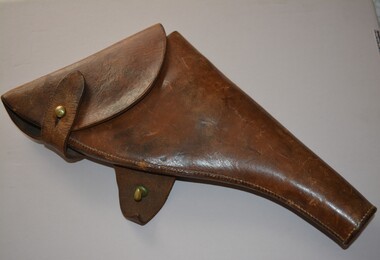 Wangaratta RSL Sub Branch
Equipment - Leather Holster, E J Pearson & Sons, 1916
... days later on 14/8/1917. Their mother died when they were aged 2 & 4, their father remarried and died a month following his sons. FORD likely purchased this holster from the stipend he received following his promotion to Lieutenant, but was not listed in his personal effects returned to his stepmother. revolver holster WW1 1916 LT J P FORD EJ J Pearson & Sons 1916 Brown leather holster with front flap secured by brass hook and rear belt loop with brass hook. Equipment Leather Holster E ...Leather holster made in 1916 and stamped LT J P FORD - On 24/8/1914 James Patrick Ford 476 MID from Sydney NSW joined the Army as a Bombardier. He was wounded at Gallipoli on 30/11/1915 and again on 7/4/1917 prior to being KIA on 3/8/1917 in Belgium where he is buried. His brother Cpl Paul Ford 7581 was KIA 12 days later on 14/8/1917. Their mother died when they were aged 2 & 4, their father remarried and died a month following his sons. FORD likely purchased this holster from the stipend he received following his promotion to Lieutenant, but was not listed in his personal effects returned to his stepmother.Brown leather holster with front flap secured by brass hook and rear belt loop with brass hook.LT J P FORD EJ J Pearson & Sons 1916revolver, holster, ww1, 1916
