
Showing 25 items matching "decorative brickwork"
-
 Glen Eira Historical Society
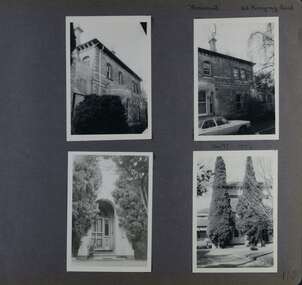
Album - Album page, Rosemont, 112 Kooyong Road, Circa 1972
... ...decorative brickwork...This significance is enhanced by the associations of the place with Godfrey Howitt and later James Grice, National Bank chairman and owner of "Stonnington" in Glenferrie Road, Malvern and Thomas King, councillor and successful negotiator for the extension of the electric tramway system to the Municipality. trevor hart caulfield john bakewell francis mcdonnell gabled slate roofs rosemont caulfield north kooyong road 1860's godfrey howitt james grice thomas king villa residence decorative brickwork curved windows bay window garden victorian style mansions polychrome bricks porches arches parapets verandahs slate roofs Handwritten: "Rosemont" 112 Kooyong Road [top right] / Neg 97 1972 / [under top right photo] / 110 [bottom right] Page 110 of photograph album with 4 photos (portraits) of varying views of Rosemont's exterior and garden. ...This photograph is part of the Caulfield Historical Album 1972. This album was created in approximately 1972 as part of a project by the Caulfield Historical Society to assist in identifying buildings worthy of preservation. The album is related to a Survey the Caulfield Historical Society developed in collaboration with the National Trust of Australia (Victoria) and Caulfield City Council to identify historic buildings within the City of Caulfield that warranted the protection of a National Trust Classification. Principal photographer thought to be Trevor Hart, member of Caulfield Historical Society. Most photographs were taken between 1966-1972 with a small number of photographs being older and from unknown sources. All photographs are black and white except where stated, with 386 photographs over 198 pages.From Victorian Heritage Database citation for Rosemont HO124 - 112 Kooyong Road Caulfield North https://vhd.heritagecouncil.vic.gov.au/places/35588 Rosemont'' is situated at no.112A Kooyong Road, Caulfield North and was built in 1869 for Godfrey Howitt, physician, president and honorary physician of the Melbourne Benevolent Society, Council member of the University of Melbourne and founding vice president of the Royal Society of Victoria. It is historically significant (Criterion A) as an early and substantial villa residence demonstrating Caulfield's early attraction as a residential retreat for Melbourne's elite. This significance is enhanced by the associations of the place with Godfrey Howitt and later James Grice, National Bank chairman and owner of "Stonnington" in Glenferrie Road, Malvern and Thomas King, councillor and successful negotiator for the extension of the electric tramway system to the Municipality.Page 110 of photograph album with 4 photos (portraits) of varying views of Rosemont's exterior and garden.Handwritten: "Rosemont" 112 Kooyong Road [top right] / Neg 97 1972 / [under top right photo] / 110 [bottom right]trevor hart, caulfield, john bakewell, francis mcdonnell, gabled slate roofs, rosemont, caulfield north, kooyong road, 1860's, godfrey howitt, james grice, thomas king, villa residence, decorative brickwork, curved windows, bay window, garden, victorian style, mansions, polychrome bricks, porches, arches, parapets, verandahs, slate roofs -
 Glen Eira Historical Society
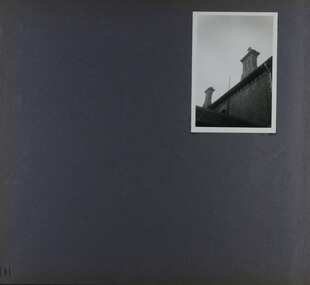
Album - Album page, Rosemont, 112 Kooyong Road, Circa 1972
... ...decorative brickwork...This significance is enhanced by the associations of the place with Godfrey Howitt and later James Grice, National Bank chairman and owner of "Stonnington" in Glenferrie Road, Malvern and Thomas King, councillor and successful negotiator for the extension of the electric tramway system to the Municipality. trevor hart caulfield john bakewell francis mcdonnell gabled slate roofs rosemont caulfield north kooyong road 1860's godfrey howitt james grice thomas king decorative brickwork bay window garden mansion chimneys victorian architectural style polychrome bricks roofs Handwritten: 111 [bottom left] Page 111 of photograph album with 1 photograph (portrait) of Rosemont's roof line. ...This photograph is part of the Caulfield Historical Album 1972. This album was created as part of a project from approximately 1966-1972 by the Caulfield Historical Society to assist in identifying buildings worthy of preservation. This album is related to a Survey the Caulfield Historical Society developed in collaboration with the National Trust of Australia Victoria and Caulfield City Council to identify historic buildings within the City of Caulfield that warranted the protection of a National Trust Classification. Photographers Jenny O’Donnell and Trevor Hart, members of Caulfield Historical Society. Some photographs are older and from unknown sources. All photographs are black and white except where stated.From Victorian Heritage Database citation for Rosemont - HO124 112 Kooyong Road Caulfield North https://vhd.heritagecouncil.vic.gov.au/places/35588 Rosemont'' is situated at no.112A Kooyong Road, Caulfield North and was built in 1869 for Godfrey Howitt, physician, president and honorary physician of the Melbourne Benevolent Society, Council member of the University of Melbourne and founding vice president of the Royal Society of Victoria. It is historically significant (Criterion A) as an early and substantial villa residence demonstrating Caulfield's early attraction as a residential retreat for Melbourne's elite. This significance is enhanced by the associations of the place with Godfrey Howitt and later James Grice, National Bank chairman and owner of "Stonnington" in Glenferrie Road, Malvern and Thomas King, councillor and successful negotiator for the extension of the electric tramway system to the Municipality.Page 111 of photograph album with 1 photograph (portrait) of Rosemont's roof line.Handwritten: 111 [bottom left]trevor hart, caulfield, john bakewell, francis mcdonnell, gabled slate roofs, rosemont, caulfield north, kooyong road, 1860's, godfrey howitt, james grice, thomas king, decorative brickwork, bay window, garden, mansion, chimneys, victorian architectural style, polychrome bricks, roofs -
 Sunbury Family History and Heritage Society Inc.
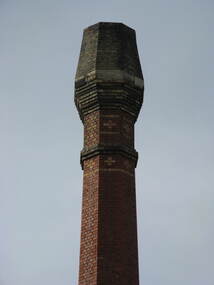
Photograph, Sarah Dunn, c2000
... A coloured photograph of the top of a tall chimney showing detail of the decorative brickwork....Chimneys Sunbury Asylum Boiler House Chimney stacks A coloured photograph of the top of a tall chimney showing detail of the decorative brickwork. Photograph Sarah Dunn ...The decorative brick work is on the chimney at the boiler house at the former Sunbury Asylum. In its day the boiler house provided heated water for both heating and general use throughout the entire complex. Since its closure, it has been an arts and cultural centre for Sunbury community.The tall chimney can be seen from many parts of the asylum grounds and reflects the craftsmanship of the men who built it.A coloured photograph of the top of a tall chimney showing detail of the decorative brickwork.chimneys, sunbury asylum, boiler house, chimney stacks -
 Glen Eira Historical Society
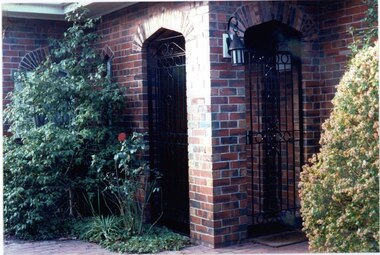
Photograph, Beauville Avenue, 17, Murrumbeena, 2001
... The porch features decorative brickwork with arched entrances, lantern light and cast iron gates. ...The porch features decorative brickwork with arched entrances, lantern light and cast iron gates. ...Originally labelled "Beauville Estate, Established 1936, Still Thriving 65 years on, 10th March 2001", the Beauville Estate Album contains colour photographs of houses in the Estate. They were taken around the time of the Beauville Estate’s 65th Heritage Celebration held on 10/03/2001 and donated to the Caulfield Historical Society shortly afterwards. Photographer unknown.City of Glen Eira’s Heritage Management Plan Vol 2 p79 (this is p84 of the pdf version) – HO12 Beauville Estate and environs, Murrumbeena: The Beauville Historic Area is important at the State level as the first large housing estate undertaken by the AV Jennings Construction Co, later Jennings Group Limited, Victoria’s largest home builder. It is important also as a very early estate development incorporating a range of features other than houses and including made roads, shops and recreation facilities. In this respect it was the forerunner of the comprehensively planned housing estate of the post war era. The estate is distinguished by its aesthetic values, as is the earlier and comparable Hillcrest Estate, which are formed by a combination of restrained diversity in house styles, with the exception of no. 30 in the emerging International style, and by a landscaped garden environment. Colour photograph of the porch of an unpainted variegated brown brick house. The porch features decorative brickwork with arched entrances, lantern light and cast iron gates. murrumbeena, houses, beauville avenue, architectural styles, 1930's, inter war style, a.v. jennings, av jennings, jennings, brick houses, beauville estate, porches, arches, sir albert victor jennings, a v jennings construction co, beauville estate heritage area, glen eira city council, architectural features, jennings group limited, land subdivision, gardens, beauville historic area, brick features, cast iron gates, cast iron lights -
 Bendigo Historical Society Inc.
Photograph - National Trust Collection: Cream brick Church - unknown location, 23/06/2025
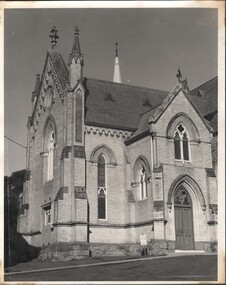
... A cream brick church with decorative brickwork, built on bluestone foundations...A cream brick church with decorative brickwork, built on bluestone foundations Photograph National Trust Collection: Cream brick Church - unknown location ...historic buildingNational Trust Collection: Church - unknown location (Bendigo region). B&W photograph shows side access/entry to the church. A cream brick church with decorative brickwork, built on bluestone foundationsbluestyone church, unknown location (bendigo region) -
 Glen Eira Historical Society
Photograph, Murrumbeena Road, 230, Murrumbeena, 2001
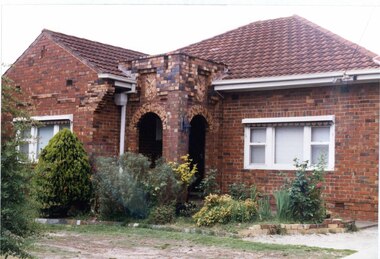
... Colour photograph of an unpainted variegated brown brick house with decorative brickwork. Other features include a square porch with 2 open arches, tiled roof, white wooden sash windows and striped awnings....The estate is distinguished by its aesthetic values, as is the earlier and comparable Hillcrest Estate, which are formed by a combination of restrained diversity in house styles, with the exception of no. 30 in the emerging International style, and by a landscaped garden environment. murrumbeena houses architectural styles 1930's inter war style a.v. jennings av jennings jennings brick houses beauville estate porches murrumbeena road sir albert victor jennings a v jennings construction co beauville estate heritage area glen eira city council architectural features jennings group limited land subdivision beauville historic area gardens brick features arches sash windows striped awnings Colour photograph of an unpainted variegated brown brick house with decorative brickwork. Other features include a square porch with 2 open arches, tiled roof, white wooden sash windows and striped awnings. ...Originally labelled "Beauville Estate, Established 1936, Still Thriving 65 years on, 10th March 2001", the Beauville Estate Album contains colour photographs of houses in the Estate. They were taken around the time of the Beauville Estate’s 65th Heritage Celebration held on 10/03/2001 and donated to the Caulfield Historical Society shortly afterwards. Photographer unknown. City of Glen Eira’s Heritage Management Plan Vol 2 p79 (this is p84 of the pdf version) – HO12 Beauville Estate and environs, Murrumbeena: The Beauville Historic Area is important at the State level as the first large housing estate undertaken by the AV Jennings Construction Co, later Jennings Group Limited, Victoria’s largest home builder. It is important also as a very early estate development incorporating a range of features other than houses and including made roads, shops and recreation facilities. In this respect it was the forerunner of the comprehensively planned housing estate of the post war era. The estate is distinguished by its aesthetic values, as is the earlier and comparable Hillcrest Estate, which are formed by a combination of restrained diversity in house styles, with the exception of no. 30 in the emerging International style, and by a landscaped garden environment. Colour photograph of an unpainted variegated brown brick house with decorative brickwork. Other features include a square porch with 2 open arches, tiled roof, white wooden sash windows and striped awnings.murrumbeena, houses, architectural styles, 1930's, inter war style, a.v. jennings, av jennings, jennings, brick houses, beauville estate, porches, murrumbeena road, sir albert victor jennings, a v jennings construction co, beauville estate heritage area, glen eira city council, architectural features, jennings group limited, land subdivision, beauville historic area, gardens, brick features, arches, sash windows, striped awnings -
 Glen Eira Historical Society
Album - Album page, Adelaide Street, Circa 1972
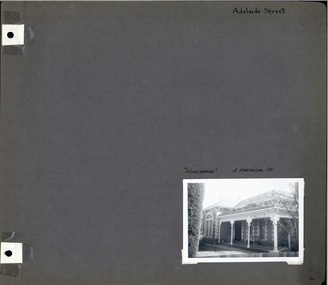
... brickwork...decorative brackets...All photographs are black and white except where stated, with 386 photographs over 198 pages. murrumbeena woodbine houses trevor hart polychrome brickwork bi-chromatic brickwork decorative brackets cast iron pillars verandah porch brick adelaide street victorian style cast iron work hand written "Adelaide Street [top right of page] / "Woodbine" 18 Woodbine St [above photograph] / 2 [bottom right] Page 2 of Photograph Album including one black and white photograph of Woodbine, 18 Adelaide Street in bottom right hand corner. ...This photograph is part of the Caulfield Historical Album 1972. This album was created in approximately 1972 as part of a project by the Caulfield Historical Society to assist in identifying buildings worthy of preservation. The album is related to a Survey the Caulfield Historical Society developed in collaboration with the National Trust of Australia (Victoria) and Caulfield City Council to identify historic buildings within the City of Caulfield that warranted the protection of a National Trust Classification. Principal photographer thought to be Trevor Hart, member of Caulfield Historical Society. Most photographs were taken between 1966-1972 with a small number of photographs being older and from unknown sources. All photographs are black and white except where stated, with 386 photographs over 198 pages. Page 2 of Photograph Album including one black and white photograph of Woodbine, 18 Adelaide Street in bottom right hand corner. hand written "Adelaide Street [top right of page] / "Woodbine" 18 Woodbine St [above photograph] / 2 [bottom right]murrumbeena, woodbine, houses, trevor hart, polychrome brickwork, bi-chromatic brickwork, decorative brackets, cast iron pillars, verandah, porch, brick, adelaide street, victorian style, cast iron work -
 Glen Eira Historical Society
Photograph, Beauville Avenue, 15, Murrumbeena, 2001
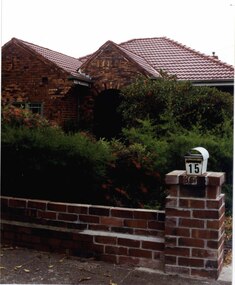
... Colour photograph of a house with decorative brickwork. Other features include a pitched roof porch with an arched entrance, tiled roof, and low unpainted brick fence in the foreground with "15" on the mailbox on top of the brick pillar beside the driveway....The estate is distinguished by its aesthetic values, as is the earlier and comparable Hillcrest Estate, which are formed by a combination of restrained diversity in house styles, with the exception of no. 30 in the emerging International style, and by a landscaped garden environment. murrumbeena houses beauville avenue architectural styles 1930's inter war style a.v. jennings av jennings jennings brick houses beauville estate porches arches sir albert victor jennings a v jennings construction co beauville estate heritage area glen eira city council architectural features jennings group limited land subdivision gardens beauville historic area brick features brick fences Colour photograph of a house with decorative brickwork. Other features include a pitched roof porch with an arched entrance, tiled roof, and low unpainted brick fence in the foreground with "15" on the mailbox on top of the brick pillar beside the driveway. ...Originally labelled "Beauville Estate, Established 1936, Still Thriving 65 years on, 10th March 2001", the Beauville Estate Album contains colour photographs of houses in the Estate. They were taken around the time of the Beauville Estate’s 65th Heritage Celebration held on 10/03/2001 and donated to the Caulfield Historical Society shortly afterwards. Photographer Bev Baxter.City of Glen Eira’s Heritage Management Plan Vol 2 p79 (this is p84 of the pdf version) – HO12 Beauville Estate and environs, Murrumbeena: The Beauville Historic Area is important at the State level as the first large housing estate undertaken by the AV Jennings Construction Co, later Jennings Group Limited, Victoria’s largest home builder. It is important also as a very early estate development incorporating a range of features other than houses and including made roads, shops and recreation facilities. In this respect it was the forerunner of the comprehensively planned housing estate of the post war era. The estate is distinguished by its aesthetic values, as is the earlier and comparable Hillcrest Estate, which are formed by a combination of restrained diversity in house styles, with the exception of no. 30 in the emerging International style, and by a landscaped garden environment. Colour photograph of a house with decorative brickwork. Other features include a pitched roof porch with an arched entrance, tiled roof, and low unpainted brick fence in the foreground with "15" on the mailbox on top of the brick pillar beside the driveway.murrumbeena, houses, beauville avenue, architectural styles, 1930's, inter war style, a.v. jennings, av jennings, jennings, brick houses, beauville estate, porches, arches, sir albert victor jennings, a v jennings construction co, beauville estate heritage area, glen eira city council, architectural features, jennings group limited, land subdivision, gardens, beauville historic area, brick features, brick fences -
 Glen Eira Historical Society
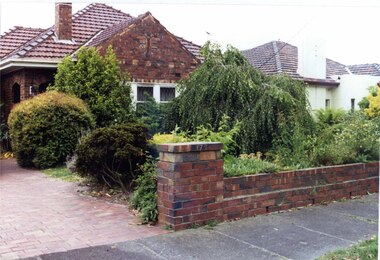
Photograph, Beauville Avenue, 17, Murrumbeena, 2001
... Colour photograph of an unpainted brown brick house with decorative brickwork. Other features include a porch with 2 arched entrances, tiled roof and low unpainted brick fence in the foreground with "17" on the brick pillar beside the driveway....The estate is distinguished by its aesthetic values, as is the earlier and comparable Hillcrest Estate, which are formed by a combination of restrained diversity in house styles, with the exception of no. 30 in the emerging International style, and by a landscaped garden environment. murrumbeena houses beauville avenue architectural styles 1930's inter war style a.v. jennings av jennings jennings brick houses beauville estate porches arches sir albert victor jennings a v jennings construction co beauville estate heritage area glen eira city council architectural features plans jennings group limited land subdivision gardens beauville historic area brick features brick fences Colour photograph of an unpainted brown brick house with decorative brickwork. Other features include a porch with 2 arched entrances, tiled roof and low unpainted brick fence in the foreground with "17" on the brick pillar beside the driveway. ...Originally labelled "Beauville Estate, Established 1936, Still Thriving 65 years on, 10th March 2001", the Beauville Estate Album contains colour photographs of houses in the Estate. They were taken around the time of the Beauville Estate’s 65th Heritage Celebration held on 10/03/2001 and donated to the Caulfield Historical Society shortly afterwards. Photographer Bev Baxter. City of Glen Eira’s Heritage Management Plan Vol 2 p79 (this is p84 of the pdf version) – HO12 Beauville Estate and environs, Murrumbeena: The Beauville Historic Area is important at the State level as the first large housing estate undertaken by the AV Jennings Construction Co, later Jennings Group Limited, Victoria’s largest home builder. It is important also as a very early estate development incorporating a range of features other than houses and including made roads, shops and recreation facilities. In this respect it was the forerunner of the comprehensively planned housing estate of the post war era. The estate is distinguished by its aesthetic values, as is the earlier and comparable Hillcrest Estate, which are formed by a combination of restrained diversity in house styles, with the exception of no. 30 in the emerging International style, and by a landscaped garden environment. Colour photograph of an unpainted brown brick house with decorative brickwork. Other features include a porch with 2 arched entrances, tiled roof and low unpainted brick fence in the foreground with "17" on the brick pillar beside the driveway.murrumbeena, houses, beauville avenue, architectural styles, 1930's, inter war style, a.v. jennings, av jennings, jennings, brick houses, beauville estate, porches, arches, sir albert victor jennings, a v jennings construction co, beauville estate heritage area, glen eira city council, architectural features, plans, jennings group limited, land subdivision, gardens, beauville historic area, brick features, brick fences -
 Lakes Entrance Historical Society
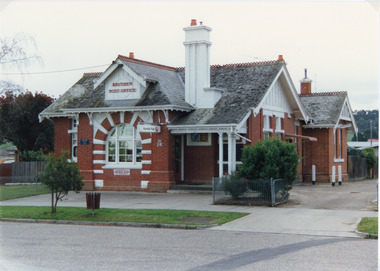
Photograph - Postal Office Bruthen, Tambo Shire, 1994 c
... Colour photograph of Post Office, shows a brick building, slate covered, gable roof, decorative brickwork around windows, tall chimneys with chimney pots, decorative tiles on roof ridges. ...Also second copy identical Buildings Postal Services Colour photograph of Post Office, shows a brick building, slate covered, gable roof, decorative brickwork around windows, tall chimneys with chimney pots, decorative tiles on roof ridges. ...Also second copy identicalColour photograph of Post Office, shows a brick building, slate covered, gable roof, decorative brickwork around windows, tall chimneys with chimney pots, decorative tiles on roof ridges. Commonwealth Savings Bank sign under window. Bruthen Victoria buildings, postal services -
 Glen Eira Historical Society
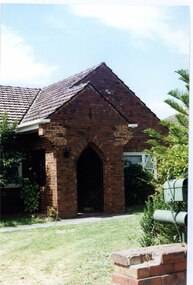
Photograph, Dalny Road, 11, Murrumbeena, 2001
... Colour photograph of an unpainted variegated brown brick house with decorative brickwork. Other features include tiled roof, enclosed porch with an arched entrance and black metal lantern, garden and a low unpainted brick fence in the foreground with a cast iron work letterbox on top....The estate is distinguished by its aesthetic values, as is the earlier and comparable Hillcrest Estate, which are formed by a combination of restrained diversity in house styles, with the exception of no. 30 in the emerging International style, and by a landscaped garden environment. murrumbeena houses architectural styles 1930's inter war style a.v. jennings av jennings jennings brick houses beauville estate dalny road porches sir albert victor jennings a v jennings construction co beauville estate heritage area glen eira city council architectural features jennings group limited land subdivision gardens beauville historic area brick features brick fences arches cast iron work letterboxes Colour photograph of an unpainted variegated brown brick house with decorative brickwork. Other features include tiled roof, enclosed porch with an arched entrance and black metal lantern, garden and a low unpainted brick fence in the foreground with a cast iron work letterbox on top. ...Originally labelled "Beauville Estate, Established 1936, Still Thriving 65 years on, 10th March 2001", the Beauville Estate Album contains colour photographs of houses in the Estate. They were taken around the time of the Beauville Estate’s 65th Heritage Celebration held on 10/03/2001 and donated to the Caulfield Historical Society shortly afterwards. Photographer unknown. City of Glen Eira’s Heritage Management Plan Vol 2 p79 (this is p84 of the pdf version) – HO12 Beauville Estate and environs, Murrumbeena: The Beauville Historic Area is important at the State level as the first large housing estate undertaken by the AV Jennings Construction Co, later Jennings Group Limited, Victoria’s largest home builder. It is important also as a very early estate development incorporating a range of features other than houses and including made roads, shops and recreation facilities. In this respect it was the forerunner of the comprehensively planned housing estate of the post war era. The estate is distinguished by its aesthetic values, as is the earlier and comparable Hillcrest Estate, which are formed by a combination of restrained diversity in house styles, with the exception of no. 30 in the emerging International style, and by a landscaped garden environment. Colour photograph of an unpainted variegated brown brick house with decorative brickwork. Other features include tiled roof, enclosed porch with an arched entrance and black metal lantern, garden and a low unpainted brick fence in the foreground with a cast iron work letterbox on top.murrumbeena, houses, architectural styles, 1930's, inter war style, a.v. jennings, av jennings, jennings, brick houses, beauville estate, dalny road, porches, sir albert victor jennings, a v jennings construction co, beauville estate heritage area, glen eira city council, architectural features, jennings group limited, land subdivision, gardens, beauville historic area, brick features, brick fences, arches, cast iron work, letterboxes -
 Glen Eira Historical Society
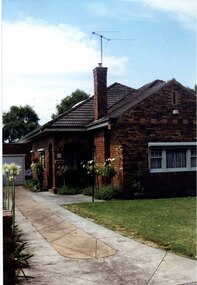
Photograph, Dalny Road, 15, Murrumbeena, 2001
... Colour photograph of an unpainted variegated brown brick house and garage with decorative brickwork. Other features include tiled roof, porch, tall feature chimney with a TV aerial attached, white-framed sash windows, awnings, white garage door and a concrete driveway....The estate is distinguished by its aesthetic values, as is the earlier and comparable Hillcrest Estate, which are formed by a combination of restrained diversity in house styles, with the exception of no. 30 in the emerging International style, and by a landscaped garden environment. murrumbeena houses architectural styles 1930's inter war style a.v. jennings av jennings jennings brick houses beauville estate dalny road sir albert victor jennings a v jennings construction co beauville estate heritage area glen eira city council architectural features jennings group limited land subdivision gardens beauville historic area brick features garages (private) porches arches chimneys sash windows drives awnings 15 Colour photograph of an unpainted variegated brown brick house and garage with decorative brickwork. Other features include tiled roof, porch, tall feature chimney with a TV aerial attached, white-framed sash windows, awnings, white garage door and a concrete driveway. ...Originally labelled "Beauville Estate, Established 1936, Still Thriving 65 years on, 10th March 2001", the Beauville Estate Album contains colour photographs of houses in the Estate. They were taken around the time of the Beauville Estate’s 65th Heritage Celebration held on 10/03/2001 and donated to the Caulfield Historical Society shortly afterwards. Photographer unknown. City of Glen Eira’s Heritage Management Plan Vol 2 p79 (this is p84 of the pdf version) – HO12 Beauville Estate and environs, Murrumbeena: The Beauville Historic Area is important at the State level as the first large housing estate undertaken by the AV Jennings Construction Co, later Jennings Group Limited, Victoria’s largest home builder. It is important also as a very early estate development incorporating a range of features other than houses and including made roads, shops and recreation facilities. In this respect it was the forerunner of the comprehensively planned housing estate of the post war era. The estate is distinguished by its aesthetic values, as is the earlier and comparable Hillcrest Estate, which are formed by a combination of restrained diversity in house styles, with the exception of no. 30 in the emerging International style, and by a landscaped garden environment. Colour photograph of an unpainted variegated brown brick house and garage with decorative brickwork. Other features include tiled roof, porch, tall feature chimney with a TV aerial attached, white-framed sash windows, awnings, white garage door and a concrete driveway.15murrumbeena, houses, architectural styles, 1930's, inter war style, a.v. jennings, av jennings, jennings, brick houses, beauville estate, dalny road, sir albert victor jennings, a v jennings construction co, beauville estate heritage area, glen eira city council, architectural features, jennings group limited, land subdivision, gardens, beauville historic area, brick features, garages (private), porches, arches, chimneys, sash windows, drives, awnings -
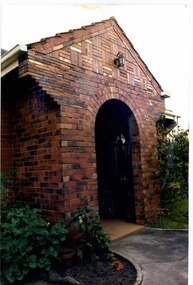 Glen Eira Historical Society
Photograph, Beauville Avenue, 33, Murrumbeena, 2001
... The enclosed porch features an arched entrance, patterned decorative brickwork and a lamp above the arch. A garden path curves out either side of the porch and its garden....The enclosed porch features an arched entrance, patterned decorative brickwork and a lamp above the arch. A garden path curves out either side of the porch and its garden. ...Originally labelled "Beauville Estate, Established 1936, Still Thriving 65 years on, 10th March 2001", the Beauville Estate Album contains colour photographs of houses in the Estate. They were taken around the time of the Beauville Estate’s 65th Heritage Celebration held on 10/03/2001 and donated to the Caulfield Historical Society shortly afterwards. Photographer unknown. City of Glen Eira’s Heritage Management Plan Vol 2 p79 (this is p84 of the pdf version) – HO12 Beauville Estate and environs, Murrumbeena: The Beauville Historic Area is important at the State level as the first large housing estate undertaken by the AV Jennings Construction Co, later Jennings Group Limited, Victoria’s largest home builder. It is important also as a very early estate development incorporating a range of features other than houses and including made roads, shops and recreation facilities. In this respect it was the forerunner of the comprehensively planned housing estate of the post war era. The estate is distinguished by its aesthetic values, as is the earlier and comparable Hillcrest Estate, which are formed by a combination of restrained diversity in house styles, with the exception of no. 30 in the emerging International style, and by a landscaped garden environment. Colour photograph of a closeup view of an unpainted variegated brown brick porch belonging to a barely visible house. The enclosed porch features an arched entrance, patterned decorative brickwork and a lamp above the arch. A garden path curves out either side of the porch and its garden.murrumbeena, houses, architectural styles, 1930's, inter war style, a.v. jennings, av jennings, jennings, brick houses, beauville estate, porches, sir albert victor jennings, a v jennings construction co, beauville estate heritage area, glen eira city council, architectural features, jennings group limited, land subdivision, gardens, beauville historic area, brick features, arches, beauville avenue -
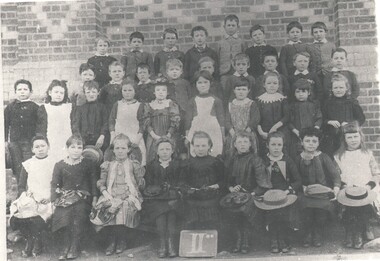 Bendigo Historical Society Inc.
Photograph - HARRY BIGGS COLLECTION: CALIFORNIA GULLY STATE SCHOOL, 1905
... There is some decorative brickwork visible in the façade. On a small blackboard in front of the children is what appears to be the Roman Numeral for 2 (II) followed by two dots. ...There is some decorative brickwork visible in the façade. On a small blackboard in front of the children is what appears to be the Roman Numeral for 2 (II) followed by two dots. ...Photograph of a large group of children posed in front of a brick building. There is some decorative brickwork visible in the façade. On a small blackboard in front of the children is what appears to be the Roman Numeral for 2 (II) followed by two dots. On the reverse is written: California Gully State School about 1905, Neg. A102'person, group, school, california gully state school -
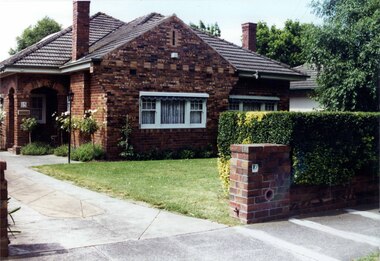 Glen Eira Historical Society
Photograph, Dalny Road, 15, Murrumbeena, 2001
... Colour photograph of an unpainted variegated brown brick house with decorative brickwork. Other features include tiled roof, double-arched porch, 2 tall feature chimneys, white-framed sash windows, awnings, a concrete driveway and a trimmed hedge with an unpainted low brown brick pillar and fence in the foreground....The estate is distinguished by its aesthetic values, as is the earlier and comparable Hillcrest Estate, which are formed by a combination of restrained diversity in house styles, with the exception of no. 30 in the emerging International style, and by a landscaped garden environment. murrumbeena houses architectural styles 1930's inter war style a.v. jennings av jennings jennings brick houses beauville estate dalny road porches sir albert victor jennings a v jennings construction co beauville estate heritage area glen eira city council architectural features jennings group limited land subdivision gardens beauville historic area brick features arches chimneys sash windows awnings brick fences hedges 15 Colour photograph of an unpainted variegated brown brick house with decorative brickwork. Other features include tiled roof, double-arched porch, 2 tall feature chimneys, white-framed sash windows, awnings, a concrete driveway and a trimmed hedge with an unpainted low brown brick pillar and fence in the foreground. ...Originally labelled "Beauville Estate, Established 1936, Still Thriving 65 years on, 10th March 2001", the Beauville Estate Album contains colour photographs of houses in the Estate. They were taken around the time of the Beauville Estate’s 65th Heritage Celebration held on 10/03/2001 and donated to the Caulfield Historical Society shortly afterwards. Photographer unknown. City of Glen Eira’s Heritage Management Plan Vol 2 p79 (this is p84 of the pdf version) – HO12 Beauville Estate and environs, Murrumbeena: The Beauville Historic Area is important at the State level as the first large housing estate undertaken by the AV Jennings Construction Co, later Jennings Group Limited, Victoria’s largest home builder. It is important also as a very early estate development incorporating a range of features other than houses and including made roads, shops and recreation facilities. In this respect it was the forerunner of the comprehensively planned housing estate of the post war era. The estate is distinguished by its aesthetic values, as is the earlier and comparable Hillcrest Estate, which are formed by a combination of restrained diversity in house styles, with the exception of no. 30 in the emerging International style, and by a landscaped garden environment. Colour photograph of an unpainted variegated brown brick house with decorative brickwork. Other features include tiled roof, double-arched porch, 2 tall feature chimneys, white-framed sash windows, awnings, a concrete driveway and a trimmed hedge with an unpainted low brown brick pillar and fence in the foreground.15murrumbeena, houses, architectural styles, 1930's, inter war style, a.v. jennings, av jennings, jennings, brick houses, beauville estate, dalny road, porches, sir albert victor jennings, a v jennings construction co, beauville estate heritage area, glen eira city council, architectural features, jennings group limited, land subdivision, gardens, beauville historic area, brick features, arches, chimneys, sash windows, awnings, brick fences, hedges -
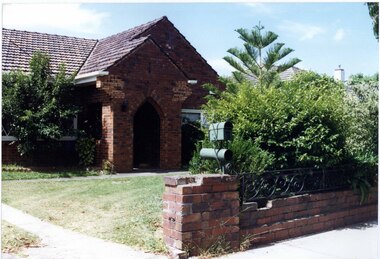 Glen Eira Historical Society
Photograph, Dalny Road, 11, Murrumbeena, 2001
... Colour photograph of an unpainted variegated brown brick house with decorative brickwork. Other features include tiled roof, enclosed porch with an arched entrance and black metal lantern and open window on the left side , garden, drive and a low slightly damaged unpainted brick fence with cast iron work railing in the foreground with a cast iron work letterbox on top....The estate is distinguished by its aesthetic values, as is the earlier and comparable Hillcrest Estate, which are formed by a combination of restrained diversity in house styles, with the exception of no. 30 in the emerging International style, and by a landscaped garden environment. murrumbeena houses architectural styles 1930's inter war style a.v. jennings av jennings jennings brick houses beauville estate dalny road porches sir albert victor jennings a v jennings construction co beauville estate heritage area glen eira city council architectural features jennings group limited land subdivision gardens beauville historic area brick features arches cast iron work letterboxes brick walls 11 Colour photograph of an unpainted variegated brown brick house with decorative brickwork. Other features include tiled roof, enclosed porch with an arched entrance and black metal lantern and open window on the left side , garden, drive and a low slightly damaged unpainted brick fence with cast iron work railing in the foreground with a cast iron work letterbox on top. ...Originally labelled "Beauville Estate, Established 1936, Still Thriving 65 years on, 10th March 2001", the Beauville Estate Album contains colour photographs of houses in the Estate. They were taken around the time of the Beauville Estate’s 65th Heritage Celebration held on 10/03/2001 and donated to the Caulfield Historical Society shortly afterwards. Photographer unknown. City of Glen Eira’s Heritage Management Plan Vol 2 p79 (this is p84 of the pdf version) – HO12 Beauville Estate and environs, Murrumbeena: The Beauville Historic Area is important at the State level as the first large housing estate undertaken by the AV Jennings Construction Co, later Jennings Group Limited, Victoria’s largest home builder. It is important also as a very early estate development incorporating a range of features other than houses and including made roads, shops and recreation facilities. In this respect it was the forerunner of the comprehensively planned housing estate of the post war era. The estate is distinguished by its aesthetic values, as is the earlier and comparable Hillcrest Estate, which are formed by a combination of restrained diversity in house styles, with the exception of no. 30 in the emerging International style, and by a landscaped garden environment. Colour photograph of an unpainted variegated brown brick house with decorative brickwork. Other features include tiled roof, enclosed porch with an arched entrance and black metal lantern and open window on the left side , garden, drive and a low slightly damaged unpainted brick fence with cast iron work railing in the foreground with a cast iron work letterbox on top.11murrumbeena, houses, architectural styles, 1930's, inter war style, a.v. jennings, av jennings, jennings, brick houses, beauville estate, dalny road, porches, sir albert victor jennings, a v jennings construction co, beauville estate heritage area, glen eira city council, architectural features, jennings group limited, land subdivision, gardens, beauville historic area, brick features, arches, cast iron work, letterboxes, brick walls -
 Bendigo Historical Society Inc.
Photograph - Bendigo Gasworks, 2014, 2018
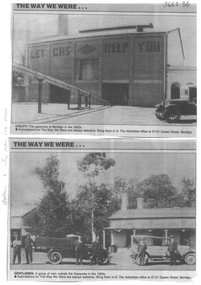
... Image of the gasworks in the 1920's, showing a large brick building with decorative brickwork insert 'Let Gas Help You'; group of men outside the gasworks in the 1920's - two cars in front of house and workers in front of a gasometer at Gasworks in the 1920's. ...Image of the gasworks in the 1920's, showing a large brick building with decorative brickwork insert 'Let Gas Help You'; group of men outside the gasworks in the 1920's - two cars in front of house and workers in front of a gasometer at Gasworks in the 1920's. ...The Bendigo Gas Works are one of around three remaining intact 19th century gas works in the world, and the only one in Australia. It is on the Victorian Heritage Register and regarded by Institution of Engineers Australia as an internationally significant example of an entire provincial gasworks The Bendigo Gasworks operated from 1860 until 1973 when natural gas was introduced and remain as they were at the time of closure; a treasure of industrial heritage frozen in time. It is an internationally significant example of an entire provincial gasworks. It has the only horizontal gas-producing retorts in Australia. Coal Gas was manufactured here from 1860 and operated continuously until the introduction of natural gas in 1973. The works were operated by the Bendigo Gas Company until purchased by the Gas and Fuel Corporation in 1958 at which time they were supplying 3,500 consumers. During the Second World War the works were expanded by the Ministry of Munitions to serve the Bendigo Ordinance Factory. The original works were constructed during 1859-1860 under the direction of engineer Alexander Kennedy Smith (1824 - 1881) and developed in a period of growth by W. A. Simco, General Manager 1922-1939. ( Engineering Heritage Australia: ttps://heritage.engineersaustralia.org.au/wiki/Place:Bendigo_Gas_Works) The site is on the Victorian Heritage Register (VHR) Number H0781 Two page photocopy, three photos of the Bendigo Gasworks, submitted to the 'Bendigo Advertiser' The Way We Were, series of images. Image of the gasworks in the 1920's, showing a large brick building with decorative brickwork insert 'Let Gas Help You'; group of men outside the gasworks in the 1920's - two cars in front of house and workers in front of a gasometer at Gasworks in the 1920's. sandhurst, bendigo, gas works, heritage listing, tourism, entertainment, science and engineering, bendigo city council, retorts, coal -
 Kew Historical Society Inc
Photograph - Reception by The Mayoress Mrs Ferguson in the Kew City Hall, 1960
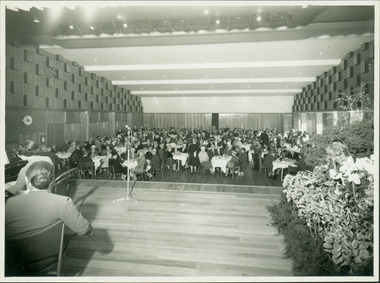
... Notable is the wooden partition which enabled the Hall to be divided into two halves, as well as the decorative brickwork. The auditorium is arranged with tables and chairs, while on the stage, a pianist is performing in a recital....Notable is the wooden partition which enabled the Hall to be divided into two halves, as well as the decorative brickwork. The auditorium is arranged with tables and chairs, while on the stage, a pianist is performing in a recital. ...The Kew City Hall, designed by the architect Harold Bartlett of Leith & Bartlett, was opened by The Premier The Hon HE Bolte on 23rd April 1960. At the time of the opening, Cr Ferguson was Mayor of Kew.Original image of the new Town Hall of Kew, providing a detailed view of its interior.Monochrome photograph of the interior of the new Kew City Hall, taken during a Reception given by the Mayoress of Kew in 1960. The orientation of the photograph is directed from the northern (main) stage to the auditorium. The picture reveals the original interior of the Hall before it was converted into a library in 1986-7. Notable is the wooden partition which enabled the Hall to be divided into two halves, as well as the decorative brickwork. The auditorium is arranged with tables and chairs, while on the stage, a pianist is performing in a recital.Cr Ferguson / Mayoress Reception / City Hall 1960kew city hall, harold bartlett, leith & bartlett, city halls -- victoria, cr hugh ferguson -
 Bendigo Historical Society Inc.
Photograph - LONG GULLY HISTORY GROUP COLLECTION: MECHANICS INSTITUTE FREE LIBRARY
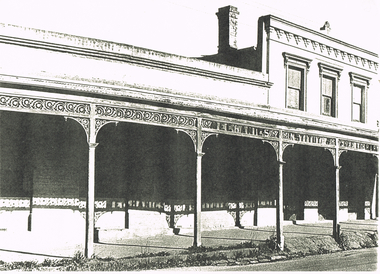
... The right hand side of the photo has two stories with decorative brickwork above the windows. To the left is single story. ...The right hand side of the photo has two stories with decorative brickwork above the windows. To the left is single story. ...Photocopy of Mechanics Institute Free Library printed on cream paper. The right hand side of the photo has two stories with decorative brickwork above the windows. To the left is single story. The veranda has ironlace at the top on one side and Mechanics Institute Free Library on the two story end. The veranda poles have have ironlace at the top corners and wooden shapes below. The wall under the veranda is very dark. Some plants are growing at the edge of the veranda.bendigo, history, long gully history group, the long gully history group - mechanics institute free library -
 Bendigo Historical Society Inc.
Photograph - T C WATTS & SON COLLECTION: 117 QUEEN STREET,BENDIGO, 1928
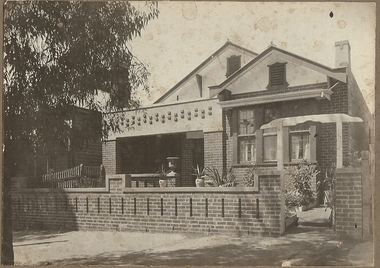
... House, brick, porch, brick fence, small pane and lead light windows. 1 chimney. Decorative brickwork on verandah lintel and on brick fence. ...House, brick, porch, brick fence, small pane and lead light windows. 1 chimney. Decorative brickwork on verandah lintel and on brick fence. ...BHS CollectionBlack and white photograph mounted on rectangular grey board. House, brick, porch, brick fence, small pane and lead light windows. 1 chimney. Decorative brickwork on verandah lintel and on brick fence. Stained glass windows. Written on back ' tapestry brick fireplace, dining room and kitchen, 117 Queen Street. Brick bungalow, built 1923, 5 rooms, vest, both 2 weatherboard sleep outs, toolshed, woodshed, workshop, garage, sewered. Through to King Street, 33'11 1/4' by 165'. Hot water service, electric copper, 22 points electricity, 8 power points, new gas , stainless ink, crockery cupboards, pedestal basin.t.c. watts & son, 117 queen street bendigo -
 Glen Eira Historical Society
Photograph, Murrumbeena Road, 229, Murrumbeena, 2001
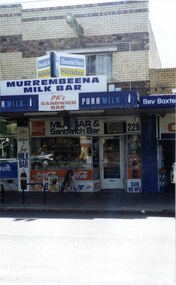
... The upper storey brick residence features a large window, a flat roof and decorative two tone banded brickwork. ...The upper storey brick residence features a large window, a flat roof and decorative two tone banded brickwork. Murrumbeena Road, 229, Murrumbeena Photograph Photograph ...Originally labelled "Beauville Estate, Established 1936, Still Thriving 65 years on, 10th March 2001", the Beauville Estate Album contains colour photographs of houses in the Estate. They were taken around the time of the Beauville Estate’s 65th Heritage Celebration held on 10/03/2001 and donated to the Caulfield Historical Society shortly afterwards. Photographer unknown. From Glen Eira’s Heritage Management Plan by Andrew Ward (1996) Vol 2 p78: In Murrumbeena Road, the shops which form part of the estate are a simple cream brick row relieved by manganese bricks in bands across the upper storeys. City of Glen Eira’s Heritage Management Plan Vol 2 p79 (this is p84 of the pdf version) – HO12 Beauville Estate and environs, Murrumbeena: The Beauville Historic Area is important at the State level as the first large housing estate undertaken by the AV Jennings Construction Co, later Jennings Group Limited, Victoria’s largest home builder. It is important also as a very early estate development incorporating a range of features other than houses and including made roads, shops and recreation facilities. In this respect it was the forerunner of the comprehensively planned housing estate of the post war era. The estate is distinguished by its aesthetic values, as is the earlier and comparable Hillcrest Estate, which are formed by a combination of restrained diversity in house styles, with the exception of no. 30 in the emerging International style, and by a landscaped garden environment. Colour photograph of a section of a double storey, unpainted brick, commercial property containing shops at ground level all with awnings over the footpath. This specific property is a milk bar on street level with plate glass windows and door, colourful advertising and "229' in the top right section of the window. Shop signage says "MURREMBEENA MILK BAR". The upper storey brick residence features a large window, a flat roof and decorative two tone banded brickwork. MURREMBEENA (sic) MILK BAR / PK's / SANDWICH / BAR / MILK BAR & Sandwich Bar / 229 / SUB NEWSmurrumbeena, architectural styles, 1930's, inter war style, a.v. jennings, av jennings, jennings, beauville estate, murrumbeena road, milk bars, commercial establishments, flats, sir albert victor jennings, a v jennings construction co, beauville estate heritage area, glen eira city council, architectural features, jennings group limited, land subdivision, beauville historic area, shops, brick features, window displays, advertising signs, murrembeena (sic) milk bar -
 Glen Eira Historical Society
Album - Album page, Glentana, Glen Huntly Road, 805, Circa 1972
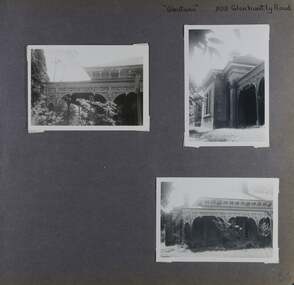
... brickwork...cast iron frieze...decorative...Melbourne Mansions database indicates that its architect may have been Charles Webb. trevor hart brick polychrome brickwork cast iron frieze decorative brackets italianate return verandah glentana glen huntly road caulfield cast iron work verandahs glenhuntly road charles webb glen tana house names Hand written: "Glentana" 805 Glenhuntly Road [top right] / 66 [bottom right] Page 66 of Photograph Album with three exterior photographs (two portrait and one landscape) of Glentana, a single storey Victorian residence, focussing on views of its verandah. ...This photograph is part of the Caulfield Historical Album 1972. This album was created in approximately 1972 as part of a project by the Caulfield Historical Society to assist in identifying buildings worthy of preservation. The album is related to a Survey the Caulfield Historical Society developed in collaboration with the National Trust of Australia (Victoria) and Caulfield City Council to identify historic buildings within the City of Caulfield that warranted the protection of a National Trust Classification. Principal photographer thought to be Trevor Hart, member of Caulfield Historical Society. Most photographs were taken between 1966-1972 with a small number of photographs being older and from unknown sources. All photographs are black and white except where stated, with 386 photographs over 198 pages. Melbourne Mansions database indicates that its architect may have been Charles Webb.Page 66 of Photograph Album with three exterior photographs (two portrait and one landscape) of Glentana, a single storey Victorian residence, focussing on views of its verandah.Hand written: "Glentana" 805 Glenhuntly Road [top right] / 66 [bottom right] trevor hart, brick, polychrome brickwork, cast iron frieze, decorative brackets, italianate, return verandah, glentana, glen huntly road, caulfield, cast iron work, verandahs, glenhuntly road, charles webb, glen tana, house names -
 Glen Eira Historical Society
Album - Album page, Balranald, Poath Road, Circa 1972
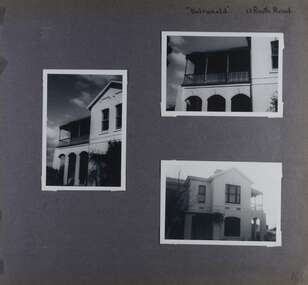
... Elements of stylistic significance include the ornamentation of the brickwork in polychrome work with tiled panels, the effect of the banding being especially striking and representative of the period. trevor hart decorative brackets chimneys verandah porch poath road arches cast iron columns return verandah croft head balranald victorian villa restoration 1880's edward tweddell murrumbeena hughesdale cast iron frieze victorian style cast iron work rendered brick house names polychrome brick poath street crofthead the croft head Handwritten: "Balranald" 13 Poath Road [top right] / 166 [bottom right] Page 166 of Photograph Album with three photographs of Balranald on Poath Road. ...This photograph is part of the Caulfield Historical Album 1972. This album was created in approximately 1972 as part of a project by the Caulfield Historical Society to assist in identifying buildings worthy of preservation. The album is related to a Survey the Caulfield Historical Society developed in collaboration with the National Trust of Australia (Victoria) and Caulfield City Council to identify historic buildings within the City of Caulfield that warranted the protection of a National Trust Classification. Principal photographer thought to be Trevor Hart, member of Caulfield Historical Society. Most photographs were taken between 1966-1972 with a small number of photographs being older and from unknown sources. All photographs are black and white except where stated, with 386 photographs over 198 pages. Originally named Crofthead or The Croft Head, later changed to Balranald according to Melbourne Mansions database.From Victorian Heritage Database citation for HO136 13 Poath Street MURRUMBEENA https://vhd.heritagecouncil.vic.gov.au/places/35389 as at 30/10/2020 "Croft Head" is situated at no. 13 Poath Road, Murrumbeena, and was built in 1887 for the accountant Edward Tweddell. It is historically and aesthetically significant. It is historically significant (Criterion A) as a substantial and now rare (Criterion B) surviving late Victorian villa residence east of Booran Road within the Municipality and demonstrating the attraction of Melbourne's rural fringe as a residential location rendered accessible by the opening of the railway between South Yarra and Oakleigh in 1879. It is aesthetically significant (Criterion E) as one of the Municipality's finest late Victorian polychrome brick villas, comparing with ''Fresch'' and ''Monkleigh'' both erected in 1899 at nos. 11 and 12 Gladstone Parade, Elsternwick respectively, ''Hartington'' (1888) at 15 Gladstone Parade and ''Hengar'' (1889) at no. 356 Glen Eira Road, Caulfield South. Elements of stylistic significance include the ornamentation of the brickwork in polychrome work with tiled panels, the effect of the banding being especially striking and representative of the period.Page 166 of Photograph Album with three photographs of Balranald on Poath Road.Handwritten: "Balranald" 13 Poath Road [top right] / 166 [bottom right]trevor hart, decorative brackets, chimneys, verandah, porch, poath road, arches, cast iron columns, return verandah, croft head, balranald, victorian villa, restoration, 1880's, edward tweddell, murrumbeena, hughesdale, cast iron frieze, victorian style, cast iron work, rendered brick, house names, polychrome brick, poath street, crofthead, the croft head -
 Glen Eira Historical Society
Photograph, Murrumbeena Road, 229A, Murrumbeena, 2001
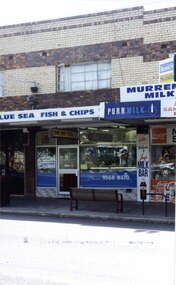
... The upper storey brick residence features a curtained window, a flat roof and decorative two tone bands of brickwork. It has a large street seat on the footpath out front....The upper storey brick residence features a curtained window, a flat roof and decorative two tone bands of brickwork. It has a large street seat on the footpath out front. ...Originally labelled "Beauville Estate, Established 1936, Still Thriving 65 years on, 10th March 2001", the Beauville Estate Album contains colour photographs of houses in the Estate. They were taken around the time of the Beauville Estate’s 65th Heritage Celebration held on 10/03/2001 and donated to the Caulfield Historical Society shortly afterwards. Photographer unknown. From Glen Eira’s Heritage Management Plan by Andrew Ward (1996) Vol 2 p78: In Murrumbeena Road, the shops which form part of the estate are a simple cream brick row relieved by manganese bricks in bands across the upper storeys.City of Glen Eira’s Heritage Management Plan Vol 2 p79 (this is p84 of the pdf version) – HO12 Beauville Estate and environs, Murrumbeena: The Beauville Historic Area is important at the State level as the first large housing estate undertaken by the AV Jennings Construction Co, later Jennings Group Limited, Victoria’s largest home builder. It is important also as a very early estate development incorporating a range of features other than houses and including made roads, shops and recreation facilities. In this respect it was the forerunner of the comprehensively planned housing estate of the post war era. The estate is distinguished by its aesthetic values, as is the earlier and comparable Hillcrest Estate, which are formed by a combination of restrained diversity in house styles, with the exception of no. 30 in the emerging International style, and by a landscaped garden environment. Colour photograph of a section of a double storey, unpainted brick, commercial property containing shops at ground level all with awnings over the footpath. This specific property is a fish and chip shop. The upper storey brick residence features a curtained window, a flat roof and decorative two tone bands of brickwork. It has a large street seat on the footpath out front.BLUE SEA FISH & CHIPS / TAKE AWAY FOODmurrumbeena, architectural styles, 1930's, inter war style, a.v. jennings, av jennings, jennings, beauville estate, murrumbeena road, milk bars, commercial establishments, flats, fish & chip shops, sir albert victor jennings, a v jennings construction co, beauville estate heritage area, glen eira city council, architectural features, jennings group limited, land subdivision, beauville historic area, brick features, restaurants -
 Wodonga & District Historical Society Inc
Photograph - Free Serbian Orthodox Church, Wodonga
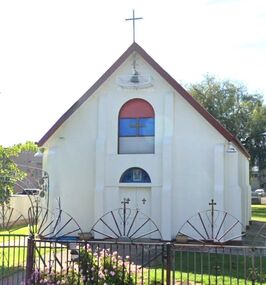
... brickwork was rendered and painted white and it was modified to include two round arched relief panels. The upper relief panel was divided into three blocks of colour - red, pale blue and grey, with a centrally located gold cross. The relief panel above the double timber front doors has a gold cross and Serbian iconography. A cross was located on the wall at the apex of the gable and a cross rising up from the gable. The original pointed gothic style windows were replaced with round arched windows. The window hardware now includes wrought iron decorative...brickwork was rendered and painted white and it was modified to include two round arched relief panels. The upper relief panel was divided into three blocks of colour - red, pale blue and grey, with a centrally located gold cross. The relief panel above the double timber front doors has a gold cross and Serbian iconography. A cross was located on the wall at the apex of the gable and a cross rising up from the gable. The original pointed gothic style windows were replaced with round arched windows. The window hardware now includes wrought iron decorative ...When the Free Serbian Church was established in Wodonga it was the only one in a country centre and the third Serbian Church established in Australia. It had a congregation of approximately 40 members. The Church was originally the first Presbyterian Church in Wodonga. It is a rectangular brick building with a red Colourbond gable roof to the nave area and a domed roof to the rear of the nave. Many features of the architecture from the original building remain. However, changes were made during the refurbishment by the Free Serbian congregation. The original façade red brickwork was rendered and painted white and it was modified to include two round arched relief panels. The upper relief panel was divided into three blocks of colour - red, pale blue and grey, with a centrally located gold cross. The relief panel above the double timber front doors has a gold cross and Serbian iconography. A cross was located on the wall at the apex of the gable and a cross rising up from the gable. The original pointed gothic style windows were replaced with round arched windows. The window hardware now includes wrought iron decorative features. A domed roofed area was constructed to the rear of the nave. The perimeter fence and gates included decorative wrought iron elements. The gates are particularly decorative with floral emblems and Serbian and English text in wrought iron. These photographs are significant because they provide evidence of the changing nature of religious worship and groups in Wodonga.A collection of black and white and coloured photographic images depicting the Free Serbian Orthodox Church, Wodonga. The Church was originally the first Presbyterian Church in Wodonga. It was extensively modified in 1961-62.free serbian orthodox church, wodonga churches, presbyterian church, religion wodonga
