
Showing 40 items matching "dennington church"
-
 Flagstaff Hill Maritime Museum and Village
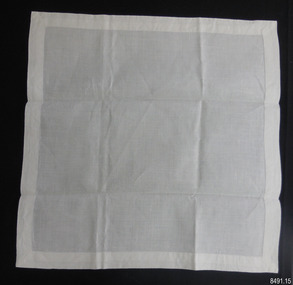
Ceremonial object - Mat, 1907 to mid 20th century
... ...dennington church...Andrews Anglican Church on the corner of the Esplanade and 14 Drummond St, Dennington, Victoria. ...Andrew's Anglican Church, Dennington, Victoria, between the years 1907 and 2003. ...Andrew's Anglican Church, Dennington, Victoria, between the years 1907 and 2003. ...This item is part of the collection of Ecclesiastical Linen once used by St. Andrews Anglican Church on the corner of the Esplanade and 14 Drummond St, Dennington, Victoria. The first Anglican service was conducted on December 22nd, 1907. The church was decommissioned in January 2003. This item is part of the Ecclesiastical Linen collection, which is significant for its examples of handworked embroidery and drawn-thread work from the early 20th century. The items are also examples of a collection used for religious services during this period. The Ecclesiastical Linen is also significant for its association with the early development of the local township of Dennington and the importance the the community of setting aside land in the 1850's for the purpose of religious worship. The Ecclesiastical Linen is also significant for its connection to St Andrews Anglican Church, Dennington. The church was funded and attended by the local community in the early 1900's and is now listed on the Victorian Heritage Database (VHD 118083) as a building of historical and social significance. Mat, part of a set of Ecclesiastical Linen once used in St. Andrew's Anglican Church, Dennington, Victoria, between the years 1907 and 2003. The hem of the fine white linen square has been hand stitched.flagstaff hill, warrnambool, maritime museum, shipwreck coast, great ocean road, st andrews anglican church dennington, dennington church, warrnambool church 1907, ecclesiastical linen, communion linen, hand worked linen, religious service, religious ceremony, ceremonial linen, needlework, fine linen, mat -
 Flagstaff Hill Maritime Museum and Village
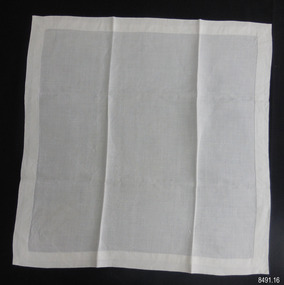
Ceremonial object - Mat, 1907 to mid 20th century
... ...dennington church...Andrews Anglican Church on the corner of the Esplanade and 14 Drummond St, Dennington, Victoria. ...Andrew's Anglican Church, Dennington, Victoria, between the years 1907 and 2003. ...Andrew's Anglican Church, Dennington, Victoria, between the years 1907 and 2003. ...This item is part of the collection of Ecclesiastical Linen once used by St. Andrews Anglican Church on the corner of the Esplanade and 14 Drummond St, Dennington, Victoria. The first Anglican service was conducted on December 22nd, 1907. The church was decommissioned in January 2003. This item is part of the Ecclesiastical Linen collection, which is significant for its examples of handworked embroidery and drawn-thread work from the early 20th century. The items are also examples of a collection used for religious services during this period. The Ecclesiastical Linen is also significant for its association with the early development of the local township of Dennington and the importance the the community of setting aside land in the 1850's for the purpose of religious worship. The Ecclesiastical Linen is also significant for its connection to St Andrews Anglican Church, Dennington. The church was funded and attended by the local community in the early 1900's and is now listed on the Victorian Heritage Database (VHD 118083) as a building of historical and social significance. Mat, part of a set of Ecclesiastical Linen once used in St. Andrew's Anglican Church, Dennington, Victoria, between the years 1907 and 2003. The hem of the fine white linen square has been hand stitched.flagstaff hill, warrnambool, maritime museum, shipwreck coast, great ocean road, st andrews anglican church dennington, dennington church, warrnambool church 1907, ecclesiastical linen, communion linen, hand worked linen, religious service, religious ceremony, ceremonial linen, needlework, fine linen, mat -
 Flagstaff Hill Maritime Museum and Village
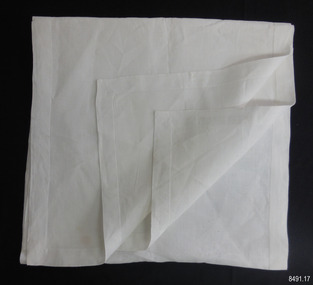
Ceremonial object - Mat, 1907 to mid 20th century
... ...dennington church...Andrews Anglican Church on the corner of the Esplanade and 14 Drummond St, Dennington, Victoria. ...Andrew's Anglican Church, Dennington, Victoria, between the years 1907 and 2003. ...Andrew's Anglican Church, Dennington, Victoria, between the years 1907 and 2003. ...The fine white linen rectangular mat was possibly used on a side table there the chalice, collection plate and other ceremonial items could be stored. This item is part of the collection of Ecclesiastical Linen once used by St. Andrews Anglican Church on the corner of the Esplanade and 14 Drummond St, Dennington, Victoria. The first Anglican service was conducted on December 22nd, 1907. The church was decommissioned in January 2003. This item is part of the Ecclesiastical Linen collection, which is significant for its examples of handworked embroidery and drawn-thread work from the early 20th century. The items are also examples of a collection used for religious services during this period. The Ecclesiastical Linen is also significant for its association with the early development of the local township of Dennington and the importance the the community of setting aside land in the 1850's for the purpose of religious worship. The Ecclesiastical Linen is also significant for its connection to St Andrews Anglican Church, Dennington. The church was funded and attended by the local community in the early 1900's and is now listed on the Victorian Heritage Database (VHD 118083) as a building of historical and social significance. Mat, part of a set of Ecclesiastical Linen once used in St. Andrew's Anglican Church, Dennington, Victoria, between the years 1907 and 2003. The hem of the fine white linen rectangle has been hand stitched.flagstaff hill, warrnambool, maritime museum, shipwreck coast, great ocean road, st andrews anglican church dennington, dennington church, warrnambool church 1907, ecclesiastical linen, communion linen, hand worked linen, religious service, religious ceremony, ceremonial linen, needlework, fine linen, mat -
 Flagstaff Hill Maritime Museum and Village
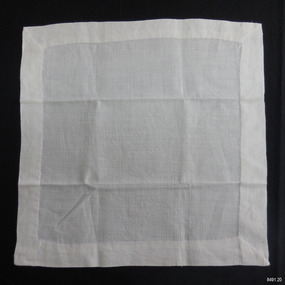
Ceremonial object - Mat, 1907 to mid 20th century
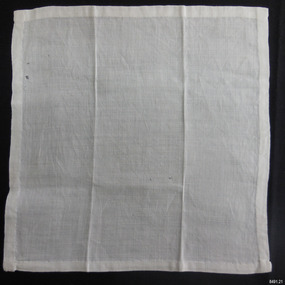
... ...dennington church...Andrews Anglican Church on the corner of the Esplanade and 14 Drummond St, Dennington, Victoria. ...Andrew's Anglican Church, Dennington, Victoria, between the years 1907 and 2003. ...Andrew's Anglican Church, Dennington, Victoria, between the years 1907 and 2003. ...The fine white linen rectangular mat was possibly used on a side table there the chalice, collection plate and other ceremonial items could be stored. This item is part of the collection of Ecclesiastical Linen once used by St. Andrews Anglican Church on the corner of the Esplanade and 14 Drummond St, Dennington, Victoria. The first Anglican service was conducted on December 22nd, 1907. The church was decommissioned in January 2003. This item is part of the Ecclesiastical Linen collection, which is significant for its examples of handworked embroidery and drawn-thread work from the early 20th century. The items are also examples of a collection used for religious services during this period. The Ecclesiastical Linen is also significant for its association with the early development of the local township of Dennington and the importance the the community of setting aside land in the 1850's for the purpose of religious worship. The Ecclesiastical Linen is also significant for its connection to St Andrews Anglican Church, Dennington. The church was funded and attended by the local community in the early 1900's and is now listed on the Victorian Heritage Database (VHD 118083) as a building of historical and social significance. Mat, part of a set of Ecclesiastical Linen once used in St. Andrew's Anglican Church, Dennington, Victoria, between the years 1907 and 2003. The hem of the fine white linen square has been hand stitched.flagstaff hill, warrnambool, maritime museum, shipwreck coast, great ocean road, st andrews anglican church dennington, dennington church, warrnambool church 1907, ecclesiastical linen, communion linen, hand worked linen, religious service, religious ceremony, ceremonial linen, needlework, fine linen, mat -
 Flagstaff Hill Maritime Museum and Village
Ceremonial object - Mat, 1907 to mid 20th century
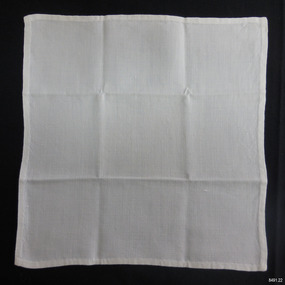
... ...dennington church...Andrews Anglican Church on the corner of the Esplanade and 14 Drummond St, Dennington, Victoria. ...Andrew's Anglican Church, Dennington, Victoria, between the years 1907 and 2003. ...Andrew's Anglican Church, Dennington, Victoria, between the years 1907 and 2003. ...The fine white linen rectangular mat was possibly used on a side table there the chalice, collection plate and other ceremonial items could be stored. This item is part of the collection of Ecclesiastical Linen once used by St. Andrews Anglican Church on the corner of the Esplanade and 14 Drummond St, Dennington, Victoria. The first Anglican service was conducted on December 22nd, 1907. The church was decommissioned in January 2003. This item is part of the Ecclesiastical Linen collection, which is significant for its examples of handworked embroidery and drawn-thread work from the early 20th century. The items are also examples of a collection used for religious services during this period. The Ecclesiastical Linen is also significant for its association with the early development of the local township of Dennington and the importance the the community of setting aside land in the 1850's for the purpose of religious worship. The Ecclesiastical Linen is also significant for its connection to St Andrews Anglican Church, Dennington. The church was funded and attended by the local community in the early 1900's and is now listed on the Victorian Heritage Database (VHD 118083) as a building of historical and social significance. Mat, part of a set of Ecclesiastical Linen once used in St. Andrew's Anglican Church, Dennington, Victoria, between the years 1907 and 2003. The hem of the fine white linen square has been hand stitched.flagstaff hill, warrnambool, maritime museum, shipwreck coast, great ocean road, st andrews anglican church dennington, dennington church, warrnambool church 1907, ecclesiastical linen, communion linen, hand worked linen, religious service, religious ceremony, ceremonial linen, needlework, fine linen, mat -
 Flagstaff Hill Maritime Museum and Village
Ceremonial object - Mat, 1907 to mid 20th century
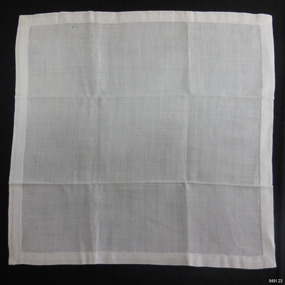
... ...dennington church...Andrews Anglican Church on the corner of the Esplanade and 14 Drummond St, Dennington, Victoria. ...Andrew's Anglican Church, Dennington, Victoria, between the years 1907 and 2003. ...Andrew's Anglican Church, Dennington, Victoria, between the years 1907 and 2003. ...The fine white linen rectangular mat was possibly used on a side table there the chalice, collection plate and other ceremonial items could be stored. This item is part of the collection of Ecclesiastical Linen once used by St. Andrews Anglican Church on the corner of the Esplanade and 14 Drummond St, Dennington, Victoria. The first Anglican service was conducted on December 22nd, 1907. The church was decommissioned in January 2003. This item is part of the Ecclesiastical Linen collection, which is significant for its examples of handworked embroidery and drawn-thread work from the early 20th century. The items are also examples of a collection used for religious services during this period. The Ecclesiastical Linen is also significant for its association with the early development of the local township of Dennington and the importance the the community of setting aside land in the 1850's for the purpose of religious worship. The Ecclesiastical Linen is also significant for its connection to St Andrews Anglican Church, Dennington. The church was funded and attended by the local community in the early 1900's and is now listed on the Victorian Heritage Database (VHD 118083) as a building of historical and social significance. Mat, part of a set of Ecclesiastical Linen once used in St. Andrew's Anglican Church, Dennington, Victoria, between the years 1907 and 2003. The hem of the fine white linen square has been hand stitched.flagstaff hill, warrnambool, maritime museum, shipwreck coast, great ocean road, st andrews anglican church dennington, dennington church, warrnambool church 1907, ecclesiastical linen, communion linen, hand worked linen, religious service, religious ceremony, ceremonial linen, needlework, fine linen, mat -
 Flagstaff Hill Maritime Museum and Village
Ceremonial object - Mat, 1907 to mid 20th century
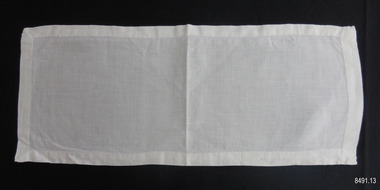
... ...dennington church...Andrews Anglican Church on the corner of the Esplanade and 14 Drummond St, Dennington, Victoria. ...Andrew's Anglican Church, Dennington, Victoria, between the years 1907 and 2003. ...Andrew's Anglican Church, Dennington, Victoria, between the years 1907 and 2003. ...The fine white linen rectangular mat was possibly used on a side table there the chalice, collection plate and other ceremonial items could be stored. This item is part of the collection of Ecclesiastical Linen once used by St. Andrews Anglican Church on the corner of the Esplanade and 14 Drummond St, Dennington, Victoria. The first Anglican service was conducted on December 22nd, 1907. The church was decommissioned in January 2003. This item is part of the Ecclesiastical Linen collection, which is significant for its examples of handworked embroidery and drawn-thread work from the early 20th century. The items are also examples of a collection used for religious services during this period. The Ecclesiastical Linen is also significant for its association with the early development of the local township of Dennington and the importance the the community of setting aside land in the 1850's for the purpose of religious worship. The Ecclesiastical Linen is also significant for its connection to St Andrews Anglican Church, Dennington. The church was funded and attended by the local community in the early 1900's and is now listed on the Victorian Heritage Database (VHD 118083) as a building of historical and social significance. Mat, part of a set of Ecclesiastical Linen once used in St. Andrew's Anglican Church, Dennington, Victoria, between the years 1907 and 2003. The hem of the fine white linen square has been hand stitched.flagstaff hill, warrnambool, maritime museum, shipwreck coast, great ocean road, st andrews anglican church dennington, dennington church, warrnambool church 1907, ecclesiastical linen, communion linen, hand worked linen, religious service, religious ceremony, ceremonial linen, needlework, fine linen, mat -
 Flagstaff Hill Maritime Museum and Village
Ceremonial object - Chalice cover, 1907 to mid 20th century
... ...dennington church...Andrews Anglican Church on the corner of the Esplanade and 14 Drummond St, Dennington, Victoria. ...Andrew's Anglican Church, Dennington, Victoria, between the years 1907 and 2003. ...Andrew's Anglican Church, Dennington, Victoria, between the years 1907 and 2003. ...This item is part of the collection of Ecclesiastical Linen once used by St. Andrews Anglican Church on the corner of the Esplanade and 14 Drummond St, Dennington, Victoria. The first Anglican service was conducted on December 22nd, 1907. The church was decommissioned in January 2003. This item is part of the Ecclesiastical Linen collection, which is significant for its examples of handworked embroidery and drawn-thread work from the early 20th century. The items are also examples of a collection used for religious services during this period. The Ecclesiastical Linen is also significant for its association with the early development of the local township of Dennington and the importance the the community of setting aside land in the 1850's for the purpose of religious worship. The Ecclesiastical Linen is also significant for its connection to St Andrews Anglican Church, Dennington. The church was funded and attended by the local community in the early 1900's and is now listed on the Victorian Heritage Database (VHD 118083) as a building of historical and social significance. Chalice cover, part of a set of Ecclesiastical Linen once used in St. Andrew's Anglican Church, Dennington, Victoria, between the years 1907 and 2003. The hem of the fine white linen rectangle has been hand stitched.flagstaff hill, warrnambool, maritime museum, shipwreck coast, great ocean road, st andrews anglican church dennington, dennington church, warrnambool church 1907, ecclesiastical linen, communion linen, hand worked linen, religious service, religious ceremony, ceremonial linen, chalice cover, needlework, fine linen -
 Flagstaff Hill Maritime Museum and Village
Ceremonial object - Chalice cover, 1907 to mid 20th century
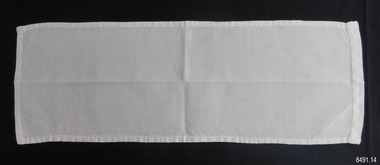
... ...dennington church...Andrews Anglican Church on the corner of the Esplanade and 14 Drummond St, Dennington, Victoria. ...Andrew's Anglican Church, Dennington, Victoria, between the years 1907 and 2003. ...Andrew's Anglican Church, Dennington, Victoria, between the years 1907 and 2003. ...This item is part of the collection of Ecclesiastical Linen once used by St. Andrews Anglican Church on the corner of the Esplanade and 14 Drummond St, Dennington, Victoria. The first Anglican service was conducted on December 22nd, 1907. The church was decommissioned in January 2003. This item is part of the Ecclesiastical Linen collection, which is significant for its examples of handworked embroidery and drawn-thread work from the early 20th century. The items are also examples of a collection used for religious services during this period. The Ecclesiastical Linen is also significant for its association with the early development of the local township of Dennington and the importance the the community of setting aside land in the 1850's for the purpose of religious worship. The Ecclesiastical Linen is also significant for its connection to St Andrews Anglican Church, Dennington. The church was funded and attended by the local community in the early 1900's and is now listed on the Victorian Heritage Database (VHD 118083) as a building of historical and social significance. Chalice cover, part of a set of Ecclesiastical Linen once used in St. Andrew's Anglican Church, Dennington, Victoria, between the years 1907 and 2003. The hem of the fine white linen rectangle has been hand stitched.flagstaff hill, warrnambool, maritime museum, shipwreck coast, great ocean road, st andrews anglican church dennington, dennington church, warrnambool church 1907, ecclesiastical linen, communion linen, hand worked linen, religious service, religious ceremony, ceremonial linen, chalice cover, needlework, fine linen -
 Flagstaff Hill Maritime Museum and Village
Ceremonial object - Priest's robe sash, Joyce Maslen, February 1982
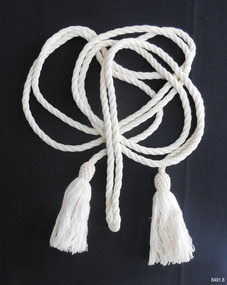
... ...dennington church...Andrews Anglican Church on the corner of the Esplanade and 14 Drummond St, Dennington, Victoria. ...Andrew's Anglican Church, Dennington, Victoria, between the years 1907 and 2003. ...Andrew's Anglican Church, Dennington, Victoria, between the years 1907 and 2003. ...This item is part of the collection of Ecclesiastical Linen once used by St. Andrews Anglican Church on the corner of the Esplanade and 14 Drummond St, Dennington, Victoria. The first Anglican service was conducted on December 22nd, 1907. The church was decommissioned in January 2003. This item is part of the Ecclesiastical Linen collection, which is significant for its examples of handworked embroidery and drawn-thread work from the early 20th century. The items are also examples of a collection used for religious services during this period. The Ecclesiastical Linen is also significant for its association with the early development of the local township of Dennington and the importance the the community of setting aside land in the 1850's for the purpose of religious worship. The Ecclesiastical Linen is also significant for its connection to St Andrews Anglican Church, Dennington. The church was funded and attended by the local community in the early 1900's and is now listed on the Victorian Heritage Database (VHD 118083) as a building of historical and social significance. Priest's robe sash or stole, part of a set of Ecclesiastical Linen once used in St. Andrew's Anglican Church, Dennington, Victoria, between the years 1907 and 2003. The soft, white cotton, twisted cord is finished at each end with a knot and tassel.flagstaff hill, warrnambool, maritime museum, shipwreck coast, great ocean road, st andrews anglican church dennington, dennington church, warrnambool church 1907, ecclesiastical linen, communion linen, hand worked linen, religious service, religious ceremony, priest's stole, priest's robe sash, sash, knotted sash, priest's vestment -
 Flagstaff Hill Maritime Museum and Village
Ceremonial object - Priest's robe sash, Joyce Maslen, February 1982
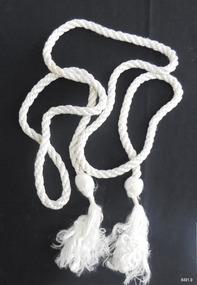
... ...dennington church...Andrews Anglican Church on the corner of the Esplanade and 14 Drummond St, Dennington, Victoria. ...Andrew's Anglican Church, Dennington, Victoria, between the years 1907 and 2003. ...Andrew's Anglican Church, Dennington, Victoria, between the years 1907 and 2003. ...This item is part of the collection of Ecclesiastical Linen once used by St. Andrews Anglican Church on the corner of the Esplanade and 14 Drummond St, Dennington, Victoria. The first Anglican service was conducted on December 22nd, 1907. The church was decommissioned in January 2003. This item is part of the Ecclesiastical Linen collection, which is significant for its examples of handworked embroidery and drawn-thread work from the early 20th century. The items are also examples of a collection used for religious services during this period. The Ecclesiastical Linen is also significant for its association with the early development of the local township of Dennington and the importance the the community of setting aside land in the 1850's for the purpose of religious worship. The Ecclesiastical Linen is also significant for its connection to St Andrews Anglican Church, Dennington. The church was funded and attended by the local community in the early 1900's and is now listed on the Victorian Heritage Database (VHD 118083) as a building of historical and social significance. Priest's robe sash or stole, part of a set of Ecclesiastical Linen once used in St. Andrew's Anglican Church, Dennington, Victoria, between the years 1907 and 2003. The soft, white silky twisted cord is finished at each end with a knot and tassel.flagstaff hill, warrnambool, maritime museum, shipwreck coast, great ocean road, st andrews anglican church dennington, dennington church, warrnambool church 1907, ecclesiastical linen, communion linen, hand worked linen, religious service, religious ceremony, priest's stole, priest's robe sash, sash, knotted sash, priest's vestment -
 Flagstaff Hill Maritime Museum and Village
Ceremonial object - Chalice cover, 1907 to mid 20th century
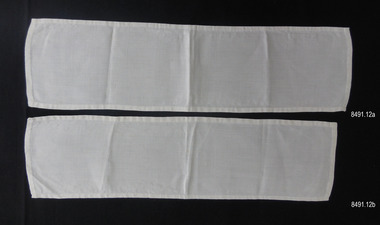
... ...dennington church...Andrews Anglican Church on the corner of the Esplanade and 14 Drummond St, Dennington, Victoria. ...Andrew's Anglican Church, Dennington, Victoria, between the years 1907 and 2003. ...Andrew's Anglican Church, Dennington, Victoria, between the years 1907 and 2003. ...This item is part of the collection of Ecclesiastical Linen once used by St. Andrews Anglican Church on the corner of the Esplanade and 14 Drummond St, Dennington, Victoria. The first Anglican service was conducted on December 22nd, 1907. The church was decommissioned in January 2003. This item is part of the Ecclesiastical Linen collection, which is significant for its examples of handworked embroidery and drawn-thread work from the early 20th century. The items are also examples of a collection used for religious services during this period. The Ecclesiastical Linen is also significant for its association with the early development of the local township of Dennington and the importance the the community of setting aside land in the 1850's for the purpose of religious worship. The Ecclesiastical Linen is also significant for its connection to St Andrews Anglican Church, Dennington. The church was funded and attended by the local community in the early 1900's and is now listed on the Victorian Heritage Database (VHD 118083) as a building of historical and social significance. Chalice cover, pair of two of similar size, part of a set of Ecclesiastical Linen once used in St. Andrew's Anglican Church, Dennington, Victoria, between the years 1907 and 2003. The hems of the rectangles of fine white linen have been hand stitched.flagstaff hill, warrnambool, maritime museum, shipwreck coast, great ocean road, st andrews anglican church dennington, dennington church, warrnambool church 1907, ecclesiastical linen, communion linen, hand worked linen, religious service, religious ceremony, ceremonial linen, chalice cover, needlework -
 Flagstaff Hill Maritime Museum and Village
Ceremonial object - Maniple, 1907 to mid 20th century
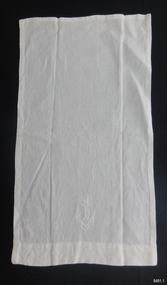
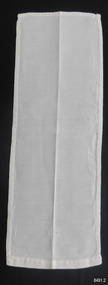
... ...dennington church...Andrews Anglican Church on the corner of the Esplanade and 14 Drummond St, Dennington, Victoria. ...Andrew's Anglican Church, Dennington, Victoria, between the years 1907 and 2003. ...Andrew's Anglican Church, Dennington, Victoria, between the years 1907 and 2003. ...This item is part of the collection of Ecclesiastical Linen once used by St. Andrews Anglican Church on the corner of the Esplanade and 14 Drummond St, Dennington, Victoria. The first Anglican service was conducted on December 22nd, 1907. The church was decommissioned in January 2003. This item is part of the Ecclesiastical Linen collection, which is significant for its examples of handworked embroidery and drawn-thread work from the early 20th century. The items are also examples of a collection used for religious services during this period. The Ecclesiastical Linen is also significant for its association with the early development of the local township of Dennington and the importance the the community of setting aside land in the 1850's for the purpose of religious worship. The Ecclesiastical Linen is also significant for its connection to St Andrews Anglican Church, Dennington. The church was funded and attended by the local community in the early 1900's and is now listed on the Victorian Heritage Database (VHD 118083) as a building of historical and social significance. Maniple, part of a set of Ecclesiastical Linen once used in St. Andrew's Anglican Church, Dennington, Victoria, between the years 1907 and 2003. Handmade Eucharist serving cloth, white fabric with white embroidery on one end, symbolising rope entwined around an anchor. flagstaff hill, warrnambool, maritime museum, shipwreck coast, great ocean road, st andrews anglican church dennington, dennington church, warrnambool church 1907, ecclesiastical linen, communion linen, maniple, eucharist, embroidered linen, hand worked linen, j.a. coe, rope and anchor emblem, religious service, religious ceremony, ceremonial linen, embroidered cloth -
 Flagstaff Hill Maritime Museum and Village
Ceremonial object - Maniple, 1907 to mid 20th century
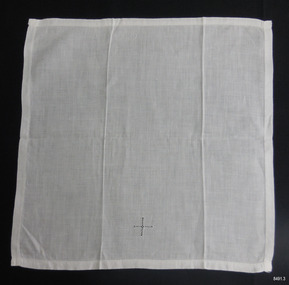
... ...dennington church...Andrews Anglican Church on the corner of the Esplanade and 14 Drummond St, Dennington, Victoria. ...Andrew's Anglican Church, Dennington, Victoria, between the years 1907 and 2003. ...Andrew's Anglican Church, Dennington, Victoria, between the years 1907 and 2003. ...This item is part of the collection of Ecclesiastical Linen once used by St. Andrews Anglican Church on the corner of the Esplanade and 14 Drummond St, Dennington, Victoria. The first Anglican service was conducted on December 22nd, 1907. The church was decommissioned in January 2003. This item is part of the Ecclesiastical Linen collection, which is significant for its examples of handworked embroidery and drawn-thread work from the early 20th century. The items are also examples of a collection used for religious services during this period. The Ecclesiastical Linen is also significant for its association with the early development of the local township of Dennington and the importance the the community of setting aside land in the 1850's for the purpose of religious worship. The Ecclesiastical Linen is also significant for its connection to St Andrews Anglican Church, Dennington. The church was funded and attended by the local community in the early 1900's and is now listed on the Victorian Heritage Database (VHD 118083) as a building of historical and social significance. Maniple, part of a set of Ecclesiastical Linen once used in St. Andrew's Anglican Church, Dennington, Victoria, between the years 1907 and 2003. Handmade Eucharist serving cloth, white fabric with white embroidery on one end, symbolising rope entwined around an anchor. Embroidered symbol [cross]flagstaff hill, warrnambool, maritime museum, shipwreck coast, great ocean road, st andrews anglican church dennington, dennington church, warrnambool church 1907, ecclesiastical linen, communion linen, maniple, eucharist, embroidered linen, hand worked linen, j.a. coe, rope and anchor emblem, religious service, religious ceremony, ceremonial linen, embroidered cloth -
 Flagstaff Hill Maritime Museum and Village
Ceremonial object - Chalice cover, 1907 to mid 20th century
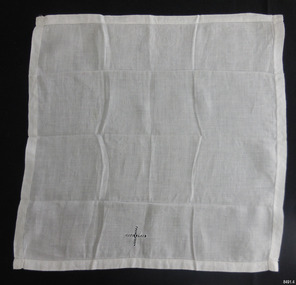
... ...dennington church...Andrews Anglican Church on the corner of the Esplanade and 14 Drummond St, Dennington, Victoria. ...Andrew's Anglican Church, Dennington, Victoria, between the years 1907 and 2003. ...Andrew's Anglican Church, Dennington, Victoria, between the years 1907 and 2003. ...This item is part of the collection of Ecclesiastical Linen once used by St. Andrews Anglican Church on the corner of the Esplanade and 14 Drummond St, Dennington, Victoria. The first Anglican service was conducted on December 22nd, 1907. The church was decommissioned in January 2003. This item is part of the Ecclesiastical Linen collection, which is significant for its examples of handworked embroidery and drawn-thread work from the early 20th century. The items are also examples of a collection used for religious services during this period. The Ecclesiastical Linen is also significant for its association with the early development of the local township of Dennington and the importance the the community of setting aside land in the 1850's for the purpose of religious worship. The Ecclesiastical Linen is also significant for its connection to St Andrews Anglican Church, Dennington. The church was funded and attended by the local community in the early 1900's and is now listed on the Victorian Heritage Database (VHD 118083) as a building of historical and social significance. Chalice cover, part of a set of Ecclesiastical Linen once used in St. Andrew's Anglican Church, Dennington, Victoria, between the years 1907 and 2003. The white fabric has been hand stitched and a drawn-thread design of a cross has been handworked into the fabric. Pulled-thread symbol [cross]flagstaff hill, warrnambool, maritime museum, shipwreck coast, great ocean road, st andrews anglican church dennington, dennington church, warrnambool church 1907, ecclesiastical linen, communion linen, hand worked linen, religious service, religious ceremony, ceremonial linen, chalice cover, drawn-thread, needlework -
 Flagstaff Hill Maritime Museum and Village
Ceremonial object - Chalice cover, 1907 to mid 20th century
... ...dennington church...Andrews Anglican Church on the corner of the Esplanade and 14 Drummond St, Dennington, Victoria. ...Andrew's Anglican Church, Dennington, Victoria, between the years 1907 and 2003. ...Andrew's Anglican Church, Dennington, Victoria, between the years 1907 and 2003. ...This item is part of the collection of Ecclesiastical Linen once used by St. Andrews Anglican Church on the corner of the Esplanade and 14 Drummond St, Dennington, Victoria. The first Anglican service was conducted on December 22nd, 1907. The church was decommissioned in January 2003. This item is part of the Ecclesiastical Linen collection, which is significant for its examples of handworked embroidery and drawn-thread work from the early 20th century. The items are also examples of a collection used for religious services during this period. The Ecclesiastical Linen is also significant for its association with the early development of the local township of Dennington and the importance the the community of setting aside land in the 1850's for the purpose of religious worship. The Ecclesiastical Linen is also significant for its connection to St Andrews Anglican Church, Dennington. The church was funded and attended by the local community in the early 1900's and is now listed on the Victorian Heritage Database (VHD 118083) as a building of historical and social significance. Chalice cover, part of a set of Ecclesiastical Linen once used in St. Andrew's Anglican Church, Dennington, Victoria, between the years 1907 and 2003. The white fabric has been hand stitched and a drawn-thread design of a cross has been handworked into the fabric. Drawn-thread symbol [cross]flagstaff hill, warrnambool, maritime museum, shipwreck coast, great ocean road, st andrews anglican church dennington, dennington church, warrnambool church 1907, ecclesiastical linen, communion linen, hand worked linen, religious service, religious ceremony, ceremonial linen, chalice cover, drawn-thread, needlework -
 Flagstaff Hill Maritime Museum and Village
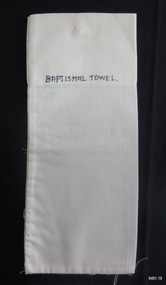
Ceremonial object - Towel cover, 1907 to mid 20th century
... ...dennington church...Andrews Anglican Church on the corner of the Esplanade and 14 Drummond St, Dennington, Victoria. ...Andrew's Anglican Church, Dennington, Victoria, between the years 1907 and 2003. ...Andrew's Anglican Church, Dennington, Victoria, between the years 1907 and 2003. ...This item is part of the collection of Ecclesiastical Linen once used by St. Andrews Anglican Church on the corner of the Esplanade and 14 Drummond St, Dennington, Victoria. The first Anglican service was conducted on December 22nd, 1907. The church was decommissioned in January 2003. This item is part of the Ecclesiastical Linen collection, which is significant for its examples of handworked embroidery and drawn-thread work from the early 20th century. The items are also examples of a collection used for religious services during this period. The Ecclesiastical Linen is also significant for its association with the early development of the local township of Dennington and the importance the the community of setting aside land in the 1850's for the purpose of religious worship. The Ecclesiastical Linen is also significant for its connection to St Andrews Anglican Church, Dennington. The church was funded and attended by the local community in the early 1900's and is now listed on the Victorian Heritage Database (VHD 118083) as a building of historical and social significance. Baptismal towel cover, part of a set of Ecclesiastical Linen once used in St. Andrew's Anglican Church, Dennington, Victoria, between the years 1907 and 2003. The white linen cover is made like a bag. it has an inscription. The bag has a press stud closure.In black pen "BAPTISMAL TOWEL"flagstaff hill, warrnambool, maritime museum, shipwreck coast, great ocean road, st andrews anglican church dennington, dennington church, warrnambool church 1907, ecclesiastical linen, communion linen, hand worked linen, religious service, religious ceremony, ceremonial linen, needlework, fine linen, towel cover, baptismal towel cover, baptism service -
 Flagstaff Hill Maritime Museum and Village
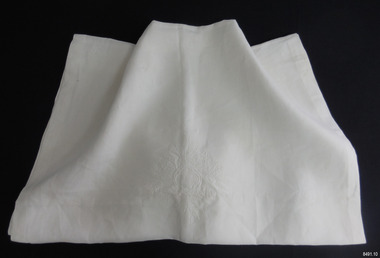
Ceremonial object - Altar cloth, 1907 to mid 20th century
... ...dennington church...Andrews Anglican Church on the corner of the Esplanade and 14 Drummond St, Dennington, Victoria. ...Andrew's Anglican Church, Dennington, Victoria, between the years 1907 and 2003. ...Andrew's Anglican Church, Dennington, Victoria, between the years 1907 and 2003. ...This item is part of the collection of Ecclesiastical Linen once used by St. Andrews Anglican Church on the corner of the Esplanade and 14 Drummond St, Dennington, Victoria. The first Anglican service was conducted on December 22nd, 1907. The church was decommissioned in January 2003. This item is part of the Ecclesiastical Linen collection, which is significant for its examples of handworked embroidery and drawn-thread work from the early 20th century. The items are also examples of a collection used for religious services during this period. The Ecclesiastical Linen is also significant for its association with the early development of the local township of Dennington and the importance the the community of setting aside land in the 1850's for the purpose of religious worship. The Ecclesiastical Linen is also significant for its connection to St Andrews Anglican Church, Dennington. The church was funded and attended by the local community in the early 1900's and is now listed on the Victorian Heritage Database (VHD 118083) as a building of historical and social significance. Altar cloth, part of a set of Ecclesiastical Linen once used in St. Andrew's Anglican Church, Dennington, Victoria, between the years 1907 and 2003. The white fabric has been hand stitched and an embroidered emblem of a wheat wreath has been handworked onto the fabric. Embroidered symbol [wheat wreath]flagstaff hill, warrnambool, maritime museum, shipwreck coast, great ocean road, st andrews anglican church dennington, dennington church, warrnambool church 1907, ecclesiastical linen, communion linen, hand worked linen, religious service, religious ceremony, ceremonial linen, needlework, altar cloth, embroidery, wheat wreath emblem -
 Flagstaff Hill Maritime Museum and Village
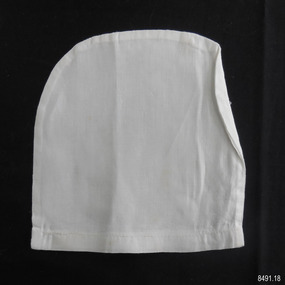
Ceremonial object - Goblet cover, 1907 to mid 20th century
... ...dennington church...Andrews Anglican Church on the corner of the Esplanade and 14 Drummond St, Dennington, Victoria. ...Andrew's Anglican Church, Dennington, Victoria, between the years 1907 and 2003. ...Andrew's Anglican Church, Dennington, Victoria, between the years 1907 and 2003. ...This item is part of the collection of Ecclesiastical Linen once used by St. Andrews Anglican Church on the corner of the Esplanade and 14 Drummond St, Dennington, Victoria. The first Anglican service was conducted on December 22nd, 1907. The church was decommissioned in January 2003. This item is part of the Ecclesiastical Linen collection, which is significant for its examples of handworked embroidery and drawn-thread work from the early 20th century. The items are also examples of a collection used for religious services during this period. The Ecclesiastical Linen is also significant for its association with the early development of the local township of Dennington and the importance the the community of setting aside land in the 1850's for the purpose of religious worship. The Ecclesiastical Linen is also significant for its connection to St Andrews Anglican Church, Dennington. The church was funded and attended by the local community in the early 1900's and is now listed on the Victorian Heritage Database (VHD 118083) as a building of historical and social significance. Goblet cover, part of a set of Ecclesiastical Linen once used in St. Andrew's Anglican Church, Dennington, Victoria, between the years 1907 and 2003. The fine white linen cover is made from two pieces of fabric and shaped like a pocket with rounded corners. it has been hand stitched.flagstaff hill, warrnambool, maritime museum, shipwreck coast, great ocean road, st andrews anglican church dennington, dennington church, warrnambool church 1907, ecclesiastical linen, communion linen, hand worked linen, religious service, religious ceremony, ceremonial linen, needlework, fine linen, goblet cover -
 Flagstaff Hill Maritime Museum and Village
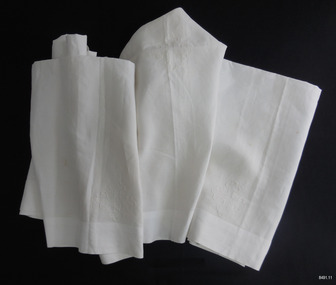
Ceremonial object - Altar Cloth, Mrs J. (Mavis) Doonan, 1950's
... ...dennington church...Andrews Anglican Church on the corner of the Esplanade and 14 Drummond St, Dennington, Victoria. ...Andrew's Anglican Church, Dennington, Victoria, between the years 1907 and 2003. ...Andrew's Anglican Church, Dennington, Victoria, between the years 1907 and 2003. ...This item is part of the collection of Ecclesiastical Linen once used by St. Andrews Anglican Church on the corner of the Esplanade and 14 Drummond St, Dennington, Victoria. The first Anglican service was conducted on December 22nd, 1907. The church was decommissioned in January 2003. This item is part of the Ecclesiastical Linen collection, which is significant for its examples of handworked embroidery and drawn-thread work from the early 20th century. The items are also examples of a collection used for religious services during this period. The Ecclesiastical Linen is also significant for its association with the early development of the local township of Dennington and the importance the the community of setting aside land in the 1850's for the purpose of religious worship. The Ecclesiastical Linen is also significant for its connection to St Andrews Anglican Church, Dennington. The church was funded and attended by the local community in the early 1900's and is now listed on the Victorian Heritage Database (VHD 118083) as a building of historical and social significance. Altar cloth, part of a set of Ecclesiastical Linen once used in St. Andrew's Anglican Church, Dennington, Victoria, between the years 1907 and 2003. The white fabric has been hand stitched and five stylised cross emblems have been embroidered onto the fabric, one the centre and the other four placed so that they are positioned on the top of the altar rather than on the draped edges.Embroidered symbols, five; [stylised cross]flagstaff hill, warrnambool, maritime museum, shipwreck coast, great ocean road, st andrews anglican church dennington, dennington church, warrnambool church 1907, ecclesiastical linen, communion linen, hand worked linen, religious service, religious ceremony, ceremonial linen, needlework, altar cloth, embroidery, wheat wreath emblem -
 Flagstaff Hill Maritime Museum and Village
Ceremonial object - Chalice cover, 1907 to mid 20th century
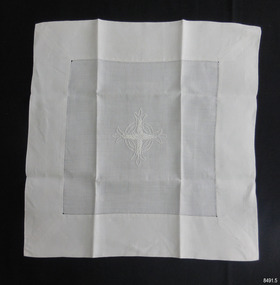
... ...dennington church...Andrews Anglican Church on the corner of the Esplanade and 14 Drummond St, Dennington, Victoria. ...Andrew's Anglican Church, Dennington, Victoria, between the years 1907 and 2003. ...Andrew's Anglican Church, Dennington, Victoria, between the years 1907 and 2003. ...This item is part of the collection of Ecclesiastical Linen once used by St. Andrews Anglican Church on the corner of the Esplanade and 14 Drummond St, Dennington, Victoria. The first Anglican service was conducted on December 22nd, 1907. The church was decommissioned in January 2003. This item is part of the Ecclesiastical Linen collection, which is significant for its examples of handworked embroidery and drawn-thread work from the early 20th century. The items are also examples of a collection used for religious services during this period. The Ecclesiastical Linen is also significant for its association with the early development of the local township of Dennington and the importance the the community of setting aside land in the 1850's for the purpose of religious worship. The Ecclesiastical Linen is also significant for its connection to St Andrews Anglican Church, Dennington. The church was funded and attended by the local community in the early 1900's and is now listed on the Victorian Heritage Database (VHD 118083) as a building of historical and social significance. Chalice cover, part of a set of Ecclesiastical Linen once used in St. Andrew's Anglican Church, Dennington, Victoria, between the years 1907 and 2003. The fine white fabric has been hand stitched with a wide hem. A hand-embroidered emblem of a Celtic Cross has been worked on the centre. The arms of the cross feature wheat ears. The three scalloped ends of each arm represent the 'Father, Son and Holy Ghost'. Embroidered symbol [Celtic Coss]flagstaff hill, warrnambool, maritime museum, shipwreck coast, great ocean road, st andrews anglican church dennington, dennington church, warrnambool church 1907, ecclesiastical linen, communion linen, hand worked linen, religious service, religious ceremony, ceremonial linen, chalice cover, needlework, embroidered, celtic cross -
 Flagstaff Hill Maritime Museum and Village
Ceremonial object - Priest's scarf, 1907 to mid 20th century
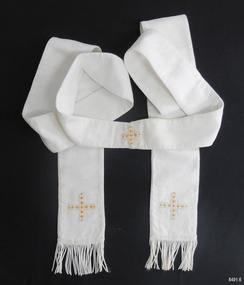
... ...dennington church...Andrews Anglican Church on the corner of the Esplanade and 14 Drummond St, Dennington, Victoria. ...Andrew's Anglican Church, Dennington, Victoria, between the years 1907 and 2003. ...Andrew's Anglican Church, Dennington, Victoria, between the years 1907 and 2003. ...This item is part of the collection of Ecclesiastical Linen once used by St. Andrews Anglican Church on the corner of the Esplanade and 14 Drummond St, Dennington, Victoria. The first Anglican service was conducted on December 22nd, 1907. The church was decommissioned in January 2003. This item is part of the Ecclesiastical Linen collection, which is significant for its examples of handworked embroidery and drawn-thread work from the early 20th century. The items are also examples of a collection used for religious services during this period. The Ecclesiastical Linen is also significant for its association with the early development of the local township of Dennington and the importance the the community of setting aside land in the 1850's for the purpose of religious worship. The Ecclesiastical Linen is also significant for its connection to St Andrews Anglican Church, Dennington. The church was funded and attended by the local community in the early 1900's and is now listed on the Victorian Heritage Database (VHD 118083) as a building of historical and social significance. Priest's scarf, also called a stole: part of a set of Ecclesiastical Linen once used in St. Andrew's Anglican Church, Dennington, Victoria, between the years 1907 and 2003. The rectangle of lined coarse white fabric is slightly flared at the ends, which are finished with a white twisted cotton fringe. Three cross symbols, one at each end and one in the centre, have been handworked in white ribbon with gold-coloured edging and gold embroidery in the form of rows of small crosse.. Three embroidered symbols [ribbon cross with gold-coloured borders and small gold coloured crosses along the arms]flagstaff hill, warrnambool, maritime museum, shipwreck coast, great ocean road, st andrews anglican church dennington, dennington church, warrnambool church 1907, ecclesiastical linen, communion linen, hand worked linen, religious service, religious ceremony, ceremonial linen, needlework, embroidered, applique, cross symbol, priest's scarf, stole, priest's stole -
 Flagstaff Hill Maritime Museum and Village
Ceremonial object - Ecclesiastical Linen set, 1907 to mid 20th century
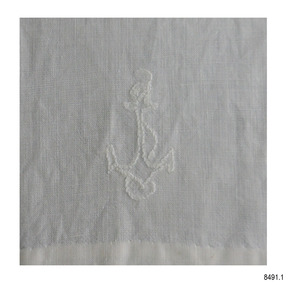
... ...dennington church... The land on which St Andrews Church was built in Dennington was surveyed in the 1840s and reserved for church purposes in 1855. ...Andrew's Anglican Church, Dennington, Victoria, between the years 1907 and 2003. ...Andrew's Anglican Church, Dennington, Victoria, between the years 1907 and 2003. ...The items in this collection of Ecclesiastical Linen were used by St. Andrews Anglican Church on the corner of the Esplanade and 14 Drummond St, Dennington, Victoria. The first Anglican service was conducted on December 22nd, 1907. The church was decommissioned in January 2003. The items donated include Maniples, Chalice Covers, a Goblet Cover, Altar Cloths, Matts, Priest's scarf, armband and sashes, and a bag that is a cover for the Baptismal Towel. HISTORY OF ST ANDREWS, DENNINGTON The land on which St Andrews Church was built in Dennington was surveyed in the 1840s and reserved for church purposes in 1855. In 1889 the Farnham Dairy factory relocated to Dennington and the town began to grow as involvement in the dairy industry increased in the area. In 1896 plans for a church hall on the reserved land were considered and on 22nd December 1907, the first Anglican Service was conducted in Dennington, with 60 people attending. In August 1909 the first building was opened with a midweek evening service conducted by the Rev. J.A. Coe. The Sunday School was opened the following year. In that same year, Nestle took over the Farnham dairy plant. On December 20th, 1914, a new church was opened in memory of Andrew Peacock, who passed away in 1912. The funds had been raised by the community and 150 attended the morning service. The building was described as a simple edifice with a plain exterior and high, wide pointed windows, and a comfortable porch entrance, all of which gave a pleasing impression of light and space. In 1935 the average attendance for morning services was just over 22 people. In 1936 extensive repairs and replacements were carried out. In 1947 the first recorded Pastoral Festival took place and in the same year, a Ladies Guild was formed. In 1954 water services were connected to the church building. Many items of furniture, furnishings and books were donated over the life of the church, including handworked linen items. Further items were added due to the work of the Ladies Guild, as well as donations in memory of church and community members.These items of Ecclesiastical Linen are significant as examples of handworked embroidery and drawn-thread work from the early 20th century. They are also examples of a collection of items used for church services during this period. The Ecclesiastical Linen is also significant for its association with the early development of the local township of Dennington and the importance of setting aside land in the 1850s for the purpose of religious worship. The Ecclesiastical Linen is also significant for its connection to St Andrews Anglican Church, Dennington. The church was funded and attended by the local community in the early 1900s and is now listed on the Victorian Heritage Database (VHD 118083) as a building of historical and social significance. Set of Ecclesiastical Linen. The items were once used in St. Andrew's Anglican Church, Dennington, Victoria, between the years 1907 and 2003. All of the handmade items are in white fabric. Some also have embroidered emblems, tassels and drawn-thread work. White embroidery thread has been used for most of the decorated items, with the following exceptions, which have been embroidered with coloured thread; the communion linen, the Priest's scarf, armband and sash, the altar cloths, mats and a cover for the baptismal towel. Two items have hand written inscriptions.(See individual objects for details)flagstaff hill, warrnambool, maritime museum, shipwreck coast, great ocean road, st andrews anglican church dennington, dennington church, warrnambool church 1907, ecclesiastical linen, linen for religious service, communion linen, priest's sash, baptismal towel, maniple, eucharist, emblem of rope and cross, embroidered religious cloths, embroidered celtic cross, drawn thread, chalice covers, handmade linen, embroidered linen, stylised cross, the english church, ladies guild dennington, nestle, farnham dairy, andrew peacock, victorian heritage register vhr 118083, hand worked linen, handworked embroidery, j.a. coe -
 Flagstaff Hill Maritime Museum and Village
Ceremonial object - Priest's armband, 1907 to mid 20th century
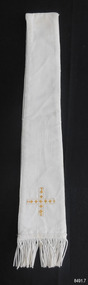
... ...dennington church...Andrews Anglican Church on the corner of the Esplanade and 14 Drummond St, Dennington, Victoria. ...Andrew's Anglican Church, Dennington, Victoria, between the years 1907 and 2003. ...Andrew's Anglican Church, Dennington, Victoria, between the years 1907 and 2003. ...This item is part of the collection of Ecclesiastical Linen once used by St. Andrews Anglican Church on the corner of the Esplanade and 14 Drummond St, Dennington, Victoria. The first Anglican service was conducted on December 22nd, 1907. The church was decommissioned in January 2003. This item is part of the Ecclesiastical Linen collection, which is significant for its examples of handworked embroidery and drawn-thread work from the early 20th century. The items are also examples of a collection used for religious services during this period. The Ecclesiastical Linen is also significant for its association with the early development of the local township of Dennington and the importance the the community of setting aside land in the 1850's for the purpose of religious worship. The Ecclesiastical Linen is also significant for its connection to St Andrews Anglican Church, Dennington. The church was funded and attended by the local community in the early 1900's and is now listed on the Victorian Heritage Database (VHD 118083) as a building of historical and social significance. Priest's armband, part of a set of Ecclesiastical Linen once used in St. Andrew's Anglican Church, Dennington, Victoria, between the years 1907 and 2003. The rectangle of lined coarse white fabric is slightly flared at the ends. The length has been folded in half, then stitched across its width about halfway along to form a loop on the folded half. One side has been finished with a white twisted cotton fringe. A cross symbol has been handworked on the end above the fringe, using white ribbon with gold-coloured edging and gold embroidery in the form of rows of small crosses. Embroidered symbol [ribbon cross with gold-coloured borders and small gold-coloured crosses along the arms]flagstaff hill, warrnambool, maritime museum, shipwreck coast, great ocean road, st andrews anglican church dennington, dennington church, warrnambool church 1907, ecclesiastical linen, communion linen, hand worked linen, religious service, religious ceremony, ceremonial linen, needlework, embroidered, applique, cross symbol, priest's armband -
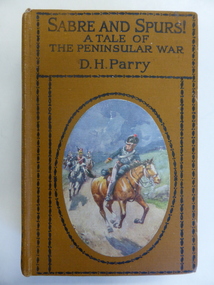 Warrnambool and District Historical Society Inc.
Book, Sabre and spurs! A tale of the Peninsular War, 1926
... Dennington Presbyterian Church...This book was given in 1928 as a prize by the Dennington Presbyterian Sabbath (Sunday) School to Clive Cust. The Dennington Presbyterian Church was originally established in Drummond Street in 1918. ...This book was given in 1928 as a prize by the Dennington Presbyterian Sabbath (Sunday) School to Clive Cust. The Dennington Presbyterian Church was originally established in Drummond Street in 1918. ...This book was given in 1928 as a prize by the Dennington Presbyterian Sabbath (Sunday) School to Clive Cust. The Dennington Presbyterian Church was originally established in Drummond Street in 1918. In 1951 it was moved to Lindsay Street and demolished in 1968. The Cust families have been prominent in Warrnambool’s history since its foundation days. Clive Cyril Cust was born in Warrnambool in 1914 to Alex and Annie Cust. This book is of minor interest as an example of the type of book given to a teenage boy as a Sunday School prize in 1928. It is also of interest because of its connection to a member of the Cust family. This is a hard cover book of 216 pages. It has a brown cover with black lettering and ornamental borders on the front cover and spine and a coloured sketch of several military men on horseback on the front cover. The same coloured sketch forms the frontispiece and there are three other black and white sketches scattered throughout the text. The inscriptions are hand-printed and hand-written in black ink. ‘Presbyterian Sabbath School Dennington, Prize Awarded to Clive Cust, January 1928, F. Jones Superintendent’. ‘Presented to Mr Clive Cust of Dennington’ dennington presbyterian church, clive cust, dennington sabbath school -
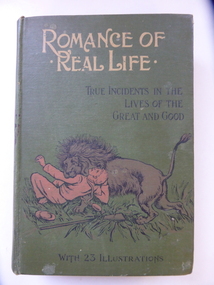 Warrnambool and District Historical Society Inc.
Book, Romance of Real Life, 1920s
... ...Dennington Presbyterian Church... This is a book given to Clive Cust in 1926 as a prize from the Dennington Presbyterian Sabbath School. The Dennington Presbyterian Church opened in Drummond Street in 1914, moved to Lindsay Street in 1951 and closed in 1968. ...Church. It is also of interest as a good example of the type of reading material favoured by young boys in the 1920s. Clive Cust Dennington ...This is a book given to Clive Cust in 1926 as a prize from the Dennington Presbyterian Sabbath School. The Dennington Presbyterian Church opened in Drummond Street in 1914, moved to Lindsay Street in 1951 and closed in 1968. A Sunday School at this church would have been operating during this time. The Cust families were pioneer settlers in the Warrnambool district. A Clive Cyril Cust was born to Alex and Annie Cust in 1914 in Warrnambool and it is presumed that he was the owner of this book. This is an interesting book as it is one of the few items we have connected to the Dennington Presbyterian Church. It is also of interest as a good example of the type of reading material favoured by young boys in the 1920s.This is a hard cover book of 196 pages. The cover is dark green with gold lettering on the front cover and on the spine and a colour sketch of a hunter and a lion on the front cover and a colour sketch of a fireman on the spine. There are several colour and black and white plates throughout the book. There are several pages at the back of the book of lists of books available from the Religious Tract Society, London. The inscription on the first page is handwritten in black ink. The cover is slightly marked and faded.‘Dennington, Presbyterian Sabbath School, Prize awarded to Clive Cust, Jan. 1926’ clive cust, dennington presbyterian church, history of warrnambool, sabbath school -
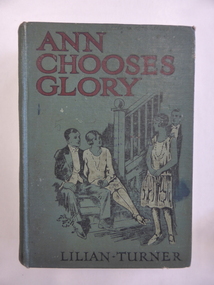 Warrnambool and District Historical Society Inc.
Book, Ann Chooses Glory, 1928
... ...dennington presbyterian church...Conn. The Dennington Presbyterian Church was originally established in Drummond Street in 1918. ...Conn. The Dennington Presbyterian Church was originally established in Drummond Street in 1918. ...This book was given in 1929 to Alma McCullagh by the Dennington Sabbath (Sunday) School with the teacher being R. Conn. The Dennington Presbyterian Church was originally established in Drummond Street in 1918. In 1951 it was moved to Lindsay Street and demolished in 1968. R. Conn may be Ruby Conn who was born in Warrnambool in 1890 to Joseph and Ann Conn. Joseph Conn was a blacksmith from Illowa in the late 19th century (today in that area we have Conn’s Corner and Conn’s Lane). The McCullagh family had a property in Yangery named Oak Grove.This book is of interest because of the 1920s connection to the Dennington Presbyterian Church, the Conn family and the McCullagh families.This is a hard cover book of 256 pages. The cover is green with red and black lettering and an image of two men and two women inside a building. The cover is torn away on the back right hand corner. There are five full page black and white illustrations scattered throughout the text. The inscriptions are handwritten in black ink. There is a stamp of a lion on the first page.‘Presbyterian Sabbath School Dennington, Prize awarded to Alma McCullagh, January 1929, R. Conn, Teacher’ ‘Alma McCullagh Dennington’ ‘Alma McCullagh’ alma mccullagh, joseph conn, illowa, history of warrnambool, dennington sabbath school, dennington presbyterian church -
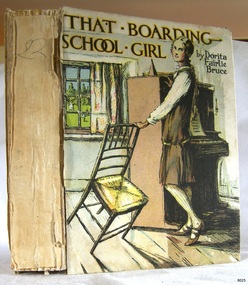 Flagstaff Hill Maritime Museum and Village
Book - Fiction, Oxford University Press, That Boarding School Girl, 1926
... ...Dennington Presbyterian Church...Flagstaff Hill Flagstaff Hill Maritime Museum and Village Warrnambool Maritime Museum Maritime Village Great Ocean Road Shipwreck Coast book Warrnambool Library Warrnambool Mechanics’ Institute Mechanics’ Institute Library Victorian Library Board Warrnambool Books and Records Warrnambool Children’s Library Warrnambool Public Library that boarding school girl Dorita Fairlie Bruce Sylvia McCullagh Sylvia Jean Veronica McCullagh Sylvia Barr James McCullagh Elizabeth Eccles McCullagh William McCullagh Margaret Jane Russell McCullagh Oak Grove Yangery Illowa Dennington Presbyterian Sabbath School Presbyterian Sunday School Dennington Presbyterian Church book award book prize book presentation F. ...Sylvia Jean Veronica McCullagh Barr (1914–1998) was a student at the Presbyterian Sabbath School in Dennington, near Warrnambool. In December 1930, she received a book as an award from F. Jones, the Sabbath School Superintendent, recognising her involvement and achievements at the school. Sylvia was the granddaughter of James McCullagh (1831–1911) and Elizabeth Eccles (1831–1909), a pioneering couple in the region. Married in 1856, James and Elizabeth settled at Oak Grove, Yangery, Illowa from 1859, where they lived until their deaths. One of James and Elizabeth’s sons, William McCullagh (1873–1940), married Margaret Jane Russell (1879–1981). William and Margaret also made their home at Oak Grove and raised eleven children there, including Sylvia.The book, “That Boarding School Girl” by Dorita Fairlie Bruce, represents an example of literature accessible to older girls during the early 20th century. It was specifically selected as an end-of-year award, recognising consistent attendance at Sabbath School. Such choices highlight the role of books in supporting the educational and moral development of young women during this period. The book is important as a connection to the early township of Dennington, a community distinguished by its established school and church. This association reflects the values the community placed on education and religious instruction. The book’s significance is further enhanced by its relationship with colonial pioneer families in Australia, particularly those from Victoria and the Warrnambool district in southwest Victoria. It is a tangible link to the history and legacy of these early settlers, who were instrumental in shaping the regional development. That Boarding School Girl Author: Dorita Fairlie Bruce Publisher: Oxford University Press Date: 1926 The front cover and the page opposite the fly page have drawn and coloured illustrations. The cloth-covered, hardcover book includes black and white illustrations and coloured illustrations on the front cover and frontispiece. The front cover illustration shows a teenage irl in a school tunic, standing beside a piano with one hand on the backrest of a tilted chair. Inscriptions are printed on the front loose endpaper and handwritten on the fly page. The book belonged to Sylvia McCullagh. It was awarded to her as a prize in 1930.Handwritten on the top of the fly page: "Sylvia McCullagh Den" [ Den - abbreviation for Dennington] " Presbyterian Sabbath School, Dennington. Prize Awarded to: Sylvia McCullagh. December 1930." "F. Jones, Superintendent"flagstaff hill, flagstaff hill maritime museum and village, warrnambool, maritime museum, maritime village, great ocean road, shipwreck coast, book, warrnambool library, warrnambool mechanics’ institute, mechanics’ institute library, victorian library board, warrnambool books and records, warrnambool children’s library, warrnambool public library, that boarding school girl, dorita fairlie bruce, sylvia mccullagh, sylvia jean veronica mccullagh, sylvia barr, james mccullagh, elizabeth eccles mccullagh, william mccullagh, margaret jane russell mccullagh, oak grove, yangery, illowa, dennington, presbyterian sabbath school, presbyterian sunday school, dennington presbyterian church, book award, book prize, book presentation, f. jones, sabbath school superintendent, 1930 -
 Flagstaff Hill Maritime Museum and Village
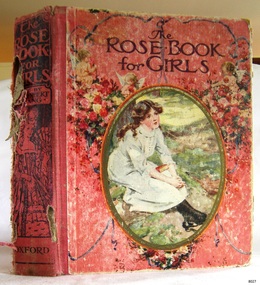
Book - Fiction, Mrs Herbert Strang, editor, The Rose Book for Girls, 1916
... ...Dennington Presbyterian Church...Flagstaff Hill Flagstaff Hill Maritime Museum and Village Warrnambool Maritime Museum Maritime Village Great Ocean Road Shipwreck Coast book The Rose Book for Girls Mrs Herbert Strang short stories Henry Frowde Hodder & Stoughton London Morrison & Gibb Ltd 1916 Alma McCullagh James McCullagh Elizabeth Eccles McCullagh ca. 1928 Dennington southwest Victoria Warrnambool district Presbyterian Sabbath School Presbyterian Sunday School Dennington Presbyterian Church book award book prize book presentation R. ...Alma McCullagh was a student at the Presbyterian Sabbath School located in Dennington, near Warrnambool. In January, around 1928, she received a book as an award from R. Conn, her Sabbath School teacher, in recognition of her involvement and achievements at the school. The exact year of this award is based on available records: in January 1928, Alma was presented with a prize by R. Conn, whereas by 1930, the role of awarding prizes had passed to F. Jones. Alma was probably the granddaughter of James McCullagh (1831–1911) and Elizabeth Eccles (1831–1909), who were pioneering settlers in the region. James and Elizabeth married in 1856 and established their home at Oak Grove, Yangery, Illowa from 1859, residing there until their deaths. One of their sons, William McCullagh (1873–1940), married Margaret Jane Russell (1879–1981). William and Margaret continued the family tradition, making their home at Oak Grove as well. They raised eleven children, with Alma likely being among the youngest of their children.The book, “The Rose Book for Girls”, edited by Mrs Herbert Strang, represents an example of literature accessible to older girls during the early 20th century. It was specifically selected as an end-of-year award, recognising consistent attendance at Sabbath School. Such choices highlight the role of books in supporting the educational and moral development of young women during this period. The book is important as a connection to the early township of Dennington, a community distinguished by its established school and church. This association reflects the values the community placed on education and religious instruction. The book’s significance is further enhanced by its relationship with colonial pioneer families in Australia, particularly those from Victoria and the Warrnambool district in southwest Victoria. It is a tangible link to the history and legacy of these early settlers, who were instrumental in shaping the regional development. In addition, the book is notable for its connection to the McCullagh family, a prominent farming family whose contributions supported the social and economic growth of the local district. This historical association enriches its value, situating the book within the broader narrative of community progress and pioneer achievement in the area, and highlighting its place within a tradition of religious life and community building.The Rose Book for Girls A collection of short stories by various authors Edited by Mrs Herbert Strang Publisher: Henry Frowde, Hodder & Stoughton, London Printer: Morrison & Gibb Ltd., Tanfield, Edinburgh, Scotland, UK Date: 1916 Hardcover book. Deep pink front and back covers, decorated with garlands of pink and white flowers, cupids and blue ribbons. The front has a cameo with a seated girl in white, with a book in her lap. Details on the spine: title, author, publisher and a sketched female in 19th-century dress holding a fan. The fly page shows details of the book and has a black and red sketch of two seated girls, one reading, the other stitching. Twenty-five books are listed on the Contents page, as well as the printer's details. Within the book are several colourful sketches. Inscriptions include the name of the book's previous owner, Alma McCullagh.Front loose-end paper: "Presbyterian Sabbath School, Dennington. Prize Awarded to: Alma McCullagh. January. (year is unreadable, circa 1928) R. Conn, Teacher"flagstaff hill, flagstaff hill maritime museum and village, warrnambool, maritime museum, maritime village, great ocean road, shipwreck coast, book, the rose book for girls, mrs herbert strang, short stories, henry frowde, hodder & stoughton, london, morrison & gibb ltd, 1916, alma mccullagh, james mccullagh, elizabeth eccles mccullagh, ca. 1928, dennington, southwest victoria, warrnambool district, presbyterian sabbath school, presbyterian sunday school, dennington presbyterian church, book award, book prize, book presentation, r. conn, sabbath school superintendent -
 Flagstaff Hill Maritime Museum and Village
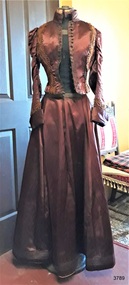
Clothing - Evening Outfit, before April 1874
... church warrnambool...reverend uriah coombs...dennington...church was usually a carriage – similar to a cab – and a pair of white ponies. They would have the reception at home, go for a drive afterwards, and at night there would be a dance. They did all the catering themselves … Eliza carried on farming in the Dennington...church was usually a carriage – similar to a cab – and a pair of white ponies. They would have the reception at home, go for a drive afterwards, and at night there would be a dance. They did all the catering themselves … Eliza carried on farming in the Dennington ...This amber satin evening outfit was worn by Mrs Isabella Mitchell (nee Russell, 1840 – 1929) at the wedding of her brother Alexander (c.1846–1938) and Eliza (nee Moore, c.1854–1939). The jacket and skirt attach at the waist by joining the metal rings around the base of the jacket, and the metal hooks on the waistband of the skirt. The outfit was donated with its own mannequin and fits it perfectly. In the colonial days, outer clothing was rarely, if ever, washed, due to the expense of fabrics and the difficulty in careful laundering. Clever methods were employed to reduce the occurrence of soiling. The mannequin included with the donation would also help keep the outfit in good shape and ensure a flattering fit. FAMILIES’ HISTORY The families connected with this wedding, where the outfit was worn, are from Warrnambool’s colonial days. Isabella and Alexander’s parents, Robert Russell and Elizabeth (nee Mitchell), were born in 1808 and married about 1830. They were from farming families in Northern Ireland, where they raised their seven children before migrating to Australia in the early colonial days, around 1857. Their graves are in the Tower Hill Cemetery. Alexander’s wife, Eliza (nee Moore, born in 1854), was also from Northern Ireland and migrated to Australia in 1858 with her parents, Thomas and Nancy Moore, in the last voyage of the sailing ship “Chance”. Isabella (Bella) talked with her granddaughter Ruby Akers about her memories of Alexander and Eliza’s wedding and other events in her life. Ruby recorded these memories in a letter. She says, “They were married in the Warrnambool Congregational Church by a pioneer minister, the Reverend Uriah Coombs. The bride wore a pale blue silk wedding gown, which she made herself. Bella was Matron of Honora, and Ian McCasker was best man. In those days, the transport to the church was usually a carriage – similar to a cab – and a pair of white ponies. They would have the reception at home, go for a drive afterwards, and at night there would be a dance. They did all the catering themselves … Eliza carried on farming in the Dennington, Yarpturk and Purnim districts until they moved to Camperdown around 1905…” Ruby’s letter later mentions “[Isabella] could recall seeing a blackfellows’ corroboree being performed near where the Dennington Bridge now stands. It was rather a terrifying experience; they seemed to be in a warlike mood, and one never knew what they would do next. One lubra came running to Granny, crying, Hide me, bad man kill me. She was bleeding from a wound in the head: probably the result of a blow from a waddy. My mother [Margaret Jane McLaughlan nee Mitchell], coming home from school in the 1800s, often met blackfellows walking ahead with spears and boomerang, the two lubras – they usually had two – following in the rear, carrying the children or any burdens they had.“ Margaret was probably in primary school at the time she saw these things. Alexander and Eliza had ten children. One of their daughters, Margaret Jane, was born in Warrnambool in 1879. She married William McCullagh, and they had eleven children. Margaret made headlines in the Warrnambool newspapers for celebrating her 100th birthday. She had lived in the district for 60 years before moving to Melbourne. Alexander passed away at the age of 92, and Eliza passed away six months later, aged 85. Their graves are in the Colac cemetery. Isabella married Ralph Mitchell, and their daughter Margaret Jane married John McLauchlan in 1891. Margaret and John’s daughter, Ruby Elizabeth Jane, married Fredrick Akers in 1938. Fredrick, born in England, was a Boer War veteran and served in the British Army. He migrated to Queensland, Australia, in 1913, and joined the Australian Army to fight in World War I. In 1935, he moved to Warrnambool, where he served in the Volunteer Defence Corps from 1938 to 1945. Both Ruby and Fredrick are buried in the Tower Hill Cemetery.The evening outfit and its accompanying mannequin serve as notable examples of female fashion from the mid to late 1900s. These items reflect the styles and trends that were prevalent during this period, offering insight into the clothing choices and cultural influences that shaped women's attire. Beyond their representation of period fashion, the outfit and mannequin are significant due to their association with colonial pioneer families from Australia, specifically Victoria and Warrnambool. These families played an important role in the development and history of the region, and the items are linked to their legacy. The evening outfit and mannequin are also notable for their connection to a wedding that united two colonial families originating from Northern Ireland. These families immigrated to Australia in the mid-1850s and became influential figures within the Warrnambool district. The wedding marked a significant event, symbolising the merging of two prominent family lineages. Furthermore, the significance of the evening outfit and mannequin extends to their connection with the colonial families’ contact with the indigenous culture of the district. These items represent a period of interaction between the native and European peoples, highlighting the cultural exchanges that occurred within the region. This lady’s evening outfit is made from amber coloured satin fabric. It comprises a short-waisted, long-sleeved jacket and a long skirt, and it has its own neck-to-floor wooden mannequin on a pedestal. The outfit was worn by Mrs Isabella Mitchell (nee Russell) as the Matron of Honour at the wedding of her brother Alexander Russell and his fiancée Eliza Moore in Warrnambool, 29th April 1874.flagstaff hill, warrnambool, shipwrecked coast, flagstaff hill maritime museum, maritime museum, shipwreck coast, flagstaff hill maritime village, great ocean road, evening outfit, wedding outfit, bridesmaid’ outfit, matron of honour outfit, clothing female, clothing late 19th century, clothing wedding late 19th century, clothing bridesmaid late 19th century, clothing antique, clothing ladies, women’s clothing, women’s fashion, alexander russell, eliza russell, eliza moore, isabella mitchell, bella mitchell, bella russell, isabella russell, ralph russell, ian mccusker, ruby akers, fredrick william akers, ruby mclauchlan, margaret jane mclaughlan nee mitchell, margaret jane mclaughlan centenarian, william mclaughlan, robert russell, elizabeth russell nee mitchell, irish immigrants, warrnambool volunteer defence corps 1938-1945, antique satin outfit, warrnambool wedding 1874, congregational church warrnambool, reverend uriah coombs, dennington farmer, yarpturk farmer, purnim district farmer, camperdown resident 1905, dennington bridge, indigenous corroboree in dennington, corroboree in warrnambool, 1880s corroboree in warrnambool, lubra and baby, indigenous corroboree in warrnambool, mccullagh family
