
Showing 10 items matching "desk lamp"
-
 Wangaratta RSL Sub Branch
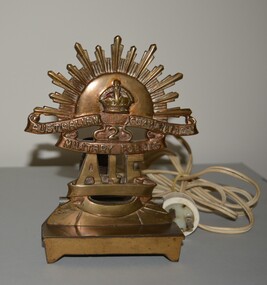
Memorabilia - Trench Art Desk Lamp, C1940
... Trench Art Desk Lamp......desk lamp...This item is a custom made brass trench art desk lamp and/or specialised post war commemorative souvenir with no known provenance....Memorabilia Trench Art Desk Lamp ...This item is a custom made brass trench art desk lamp and/or specialised post war commemorative souvenir with no known provenance.Brass Rising Sun Badge mounted on brass stand with light fitting attachment and white plastic electrical cord.Australian Commonwealth Military Forces 2 AIFtrench art, brass, desk lamp, ww2 -
 Numurkah & District Historical Society
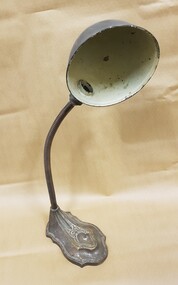
Desk lamp (electric)
... Desk lamp (electric)...light, electric, desk lamp...light, electric, desk lamp Solid metal base with decorative pattern. on-off switch is on base. ...Solid metal base with decorative pattern. on-off switch is on base. Flexible metal upright leads from the base to the light globe socket (globe missing). This is covered by a metal half-sphere hood. Lamp has no electric cord attached.light, electric, desk lamp -
 Sunshine and District Historical Society Incorporated
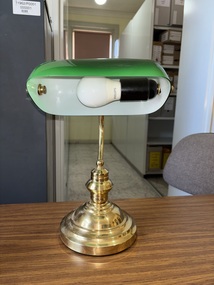
Functional object - The Advocate Office Desk Lamp - Clarence "Clarrie" Carlton
... The Advocate Office Desk Lamp - Clarence "Clarrie" Carlton...This item was used by Clarence "Clarrie" Carlton while working at his Dickson Street Printing Offices The Advocate Carlton A brass table office lamp with green visor Functional object The Advocate Office Desk Lamp - Clarence "Clarrie" Carlton ...This item was used by Clarence "Clarrie" Carlton while working at his Dickson Street Printing OfficesA brass table office lamp with green visorthe advocate, carlton -
 Robin Boyd Foundation
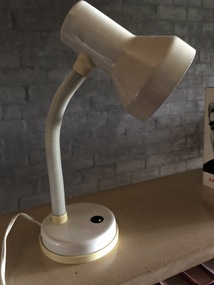
Functional object - Lamp
... This cream coloured lamp is a desk or bedside lamp with flexible stand....Walsh St furnishings robin boyd Label on the rear "Brilliant LTG (Australia) P/L This cream coloured lamp is a desk or bedside lamp with flexible stand. ...This lamp is a more recent acquisition. Brilliant Lighting started in 1990s.This cream coloured lamp is a desk or bedside lamp with flexible stand.Label on the rear "Brilliant LTG (Australia) P/Lwalsh st furnishings, robin boyd -
 Flagstaff Hill Maritime Museum and Village
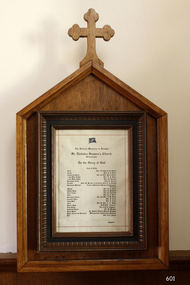
Document - Commemorative, The Victorian Missions to Seamen, St Nicholas Seamen's Church Williamstown, circa 1944
... Lamp - Miss C. Roberts Rerebos - Miss. M. Breaks, in memoriam Miss. L.A. Breaks Sanctuary Window - Victoria Missions to Seamen Lightkeepers' Auxiliary Missal - Mrs. R.J. Ewart Missal Desk...Lamp - Miss C. Roberts Rerebos - Miss. M. Breaks, in memoriam Miss. L.A. Breaks Sanctuary Window - Victoria Missions to Seamen Lightkeepers' Auxiliary Missal - Mrs. R.J. Ewart Missal Desk ...This framed document titled "The Victorian Missions to Seamen, St Nicholas Seamen's Church Williamstown" shows a list of donors of significant items to the St Nicholas Missions to Seamen's Church in Williamstown when the new building opened in 1944. The organisation ceased in 1966, and the furnishings were later donated to Flagstaff Hill Maritime Village in Warrnambool by the Missions to Seamen Victoria. The transcription of the document is as follows: The Victoria Missions to Seamen, St Nicholas Seamen's Church, Williamstown To the Glory of God List of Gifts Altar - Mrs. and Miss J.R. Schutt Cross - Mrs. R.J. Ewart Chalice and Paten - Mr. and Mrs. Percy Taylor 1 Pair Altar Lights - Mrs. R.J. Ewart 1 Pair Altar Lights - Mrs. M. Jackson Sanctuary Lamp - Miss C. Roberts Rerebos - Miss. M. Breaks, in memoriam Miss. L.A. Breaks Sanctuary Window - Victoria Missions to Seamen Lightkeepers' Auxiliary Missal - Mrs. R.J. Ewart Missal Desk - Mrs. R. Hodgkiss Altar Vases - Mrs. R. Kaybould Bible - Mrs. R.J. Ewart Sanctuary Chairs - Mr. and Mrs. F.H. Twist Credence Table - Mrs. F. Clark Altar Dish – Mrs L. Clark Font - Mr. and Mrs. C.V. Dyble Prayer Desk - H.M.H.S. "Centaur" Reed Organ - "Joy Club for Fighters" Collection Plates - Mr. D. MacKae Hymn Board - St. David's Musical Society, Brighton Pews, Carpet and Hangings - Williamstown Lightkeepers' Auxiliary Bell - Mrs. A.L. Feenes THE MISSIONS TO SEAMEN (Brief History: for more, see our Reg. No. 611, Set of Pews) The Missions to Seamen, an Anglican charity, has served seafarers of the world since 1856 in Great Britain. It symbol is a Flying Angel, inspired by a Bible verse. Today there are centr4es in over 200 ports world-wide where seamen of all backgrounds are offered a warm welcome and provided with a wide range of facilities. In Victoria the orgainsation began in Williamstown in 1857. It was as a Sailors’ Church, also known as ‘Bethel’ or the ‘Floating Church’. Its location was an old hulk floating in Hobson’s Bay, Port of Melbourne. It soon became part of the Missions to Seamen, Victoria. In the year 2000 the organisation, now named Mission to Seafarers, still operated locally in Melbourne, Portland, Geelong and Hastings. The Ladies’ Harbour Lights Guild was formed in 1906 to support the Missions to Seamen in Melbourne and other centres such as Williamstown. Two of the most significant ladies of the Guild were founder Ethel Augusta Godfrey and foundation member Alice Sibthorpe Tracy (who established a branch of the Guild in Warrnambool in 1920). The Guild continued its work until the 1960s. In 1943 a former Williamstown bank was purchased for the Missions to Seaman Club. The chapel was named St Nicholas’ Seamen’s Church and was supported by the Ladies’ Harbour Lights Guild, the Williamstown Lightkeepers’ Auxiliary and the League of Soldiers’ and Sailors’ Friends. It ceased operation in 1966. A Missions to Seamen Chapel and Recreation Room was a significant feature of ports during the late 1800s and into the 1900s. It seemed appropriate for Flagstaff Hill to include such a representation within the new Maritime Village, so the Melbourne Board of Management of Missions to Seamen Victoria gave its permission on 21st May 1979 for the entire furnishings of the Williamstown chapel to be transferred to Flagstaff Hill. The St Nicholas Seamen’s Church was officially opened on October 11, 1981 and closely resembles the Williamstown chapel. This document is significant through its association with the St Nicholas' Mission to Seamen Church in Williamstown, Melbourne, established in 1857. The document is socially significant as it connects the community of Williamstown with the St Nicholas' Missions to Seamen and represents the importance of the church to the community. The items in our collection from the Missions to Seamen in Williamstown, Victoria, have historical and social significance. They show that people of the 1800s and 1900s cared about the seafarers’ religious, moral, and social welfare, no matter what the religion, social status or nationality. It had its origins in Bristol, England when a Seamen's Mission was formed in 1837. The first Australian branch was started in 1856 by the Rev. Kerr Johnston, a Church of England clergyman, and operated from a hulk moored in Hobson's Bay; later the Mission occupied buildings in Williamstown and Port Melbourne. Document titled "The Victorian Missions to Seamen, St Nicholas Seamen's Church Williamstown". The document is a list of gifts originally given to the St Nicholas Seaman's Church in Williamstown, Victoria. The document is mounted in a decorative wooden frame with glass cover. This is one of the original items in our ‘St Nicholas Seamen's Church Williamstown Collection’.flagstaff hill, warrnambool, shipwrecked-coast, flagstaff-hill, flagstaff-hill-maritime-museum, maritime-museum, shipwreck-coast, flagstaff-hill-maritime-village, framed document, donations to st nicholas seamen's church williamstown, 139 nelson place williamstown, religion, religious service, sailors rest, bethel sailors’ church, bethel floating church, ladies harbour light guild, mission to seafarers, st nicholas seaman’s church williamstown, mission to seamen williamstown, st nicholas seamen’s church flagstaff hill, flying angel club, mrs. and miss j.r. schutt, mrs. r.j. ewart, mr. and mrs. percy taylor, mrs. m. jackson, miss c. roberts, miss. l.a. breaks, miss. m. breaks, victoria missions to seamen lightkeepers' auxiliary, mrs. r. hodgkiss, mrs. r. kaybould, mr. and mrs. f.h. twist, mrs. f. clark, mrs l. clark, mr. and mrs. c.v. dyble, h.m.h.s. "centaur", "joy club for fighters", mr. d. mackae, williamstown lightkeepers' auxiliary, mrs. a.l. feenes, st. david's musical society brighton -
 Flagstaff Hill Maritime Museum and Village
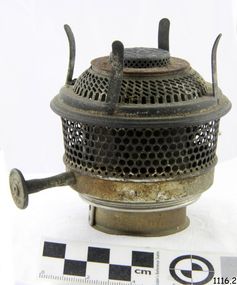
Functional object - Kerosene Lamp Burner, Bradley and Hubbard Manufacturing Company, Late 19th to early 20th century
... desk accessories and vases. Technological advances in drilling and refining crude oil in the late 1850s and early 1860s paved the way for the demise of whale oil as lamp fuel. ...desk accessories and vases. Technological advances in drilling and refining crude oil in the late 1850s and early 1860s paved the way for the demise of whale oil as lamp fuel. ...Bradley and Hubbard established their company in 1852 in Meriden, Connecticut when Nathaniel and William Bradley, Orson and Chitten Hatch, and Walter Hubbard, formed Bradley, Hatch & Company. This incarnation of the company only manufactured clocks. The Hatch brothers sold their interest in the company in 1854 and it was renamed, Bradley & Hubbard. Clocks remained the firm's primary product into the 1860s. In addition to their line of clocks, Bradley & Hubbard also produced a wide range of household items including match safes, call bells, andirons, urns, bookends, frames, desk accessories and vases. Technological advances in drilling and refining crude oil in the late 1850s and early 1860s paved the way for the demise of whale oil as lamp fuel. Soon after Colonel Edwin Drake struck oil in Titusville, Pennsylvania on August 27, 1859, Nathaniel Bradley saw an opportunity to capitalize on the future of this new fuel. Nathaniel decided to produce an extensive line of kerosene burning lamps this proved to be a wise business decision. Kerosene was soon to become a widely used, safe and relatively inexpensive lamp fuel. Between April 7, 1868, and December 23, 1913, the company was listed as the assignee for at least 89 lighting patents. Many of these patents were for lamp and chandelier designs and various improvements in lamp burners. In 1875 the company reorganized to form the Bradley and Hubbard Manufacturing Company. Walter Hubbard served as President and Nathaniel Bradley as Treasurer. The firm enjoyed rapid growth throughout the 1880s. By 1888, the company employed over one thousand workers and had showrooms in major cities including New York, Philadelphia, Boston and Chicago. One of the most prolific of the B&H products was the Rayo lamp it produced under contract for Standard Oil. In keeping with the changing times, Bradley & Hubbard produced a variety of electric lamps as well. Walter Hubbard passed away in 1911 and Nathaniel Bradley in 1915. The company continued through the 1930s and was purchased by the Charles Parker Company, also of Meriden, Connecticut, in 1940. The Parker Company was quite diversified in its product line, also producing an extensive line of lamps and high-end chandeliers. Parker operated its acquisition as the "Bradley & Hubbard Division." Parker ceased production of the Rayo lamp in the early 1950s. In 1973, the Bradley and Hubbard buildings were demolished, effectively ending that chapter in American lighting manufacture.Early innovation in kerosene lamp burner design by Bradley and Hubbard lamp manufacturers who at the turn of the 20th century were the biggest lamp producers in the world. The item is significant due to its historic connection with a major innovator of lamp design.Lamp Burner, metal container with turning screw for wick and mesh walls. Is made in 2 parts. Raised embossing on wick adjustment screw " PAT APPLIED FOR" on top of burner "B & H Patented.July.1.90.Nov.20.94"flagstaff hill, warrnambool, flagstaff-hill-maritime-museum, maritime-museum, shipwreck-coast, flagstaff-hill-maritime-village, bradley & hubbard manufacturing company, kerosene lamp burner, early lighting -
 Ballarat Clarendon College
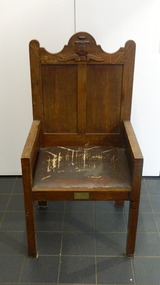
Furniture, Chair
... These included blackwood shelves, tables and chairs and a new set of Encycopedia Britannica supplied by the Parents and Friend's Association, a grooved periodical table given by Old Collegians Younger Set, a librarian's desk supplied by the E M Bell estate and more than 200 books supplied by the Old Collegians. (see 'A lamp...These included blackwood shelves, tables and chairs and a new set of Encycopedia Britannica supplied by the Parents and Friend's Association, a grooved periodical table given by Old Collegians Younger Set, a librarian's desk supplied by the E M Bell estate and more than 200 books supplied by the Old Collegians. (see 'A lamp ...This librarian's chair was given to the school by the family of Joy Chapman who had died during 1948. The chair was part of a number of furnishings supplied by donation for the new library which was opened in 1949. These included blackwood shelves, tables and chairs and a new set of Encycopedia Britannica supplied by the Parents and Friend's Association, a grooved periodical table given by Old Collegians Younger Set, a librarian's desk supplied by the E M Bell estate and more than 200 books supplied by the Old Collegians. (see 'A lamp burns brightly' p. 61). This item is a significant example of the degree to which the school relied on donations from the community to develop the school during the post-war years. Solid wood chair with high solid back and solid arm rests. Carved CPLC crest attached to neck rest. Padded seat. Bronze plaque at front of seat. Plaque: In memory of / JOY CHAPMAN / 1947 - 1948 - The Gift of Her / Father, Mother & Ruthc-p-l-c, younger-set, parents-and-friends-association, clarendon-presbyterian-ladies-college, library, joy-chapman -
 Glenelg Shire Council Cultural Collection
Photograph - Photograph - Ship Fittings, n.d
... Woodgrain panel lining; open porthole with curtains above built-in wooden bunk on left; wall-lamp above mirror and shelf, back wall; desk and drawers with wall-lamp, beneath shelf....Woodgrain panel lining; open porthole with curtains above built-in wooden bunk on left; wall-lamp above mirror and shelf, back wall; desk and drawers with wall-lamp, beneath shelf. ...Port of Portland Authority ArchivesBack: 'Engineer's cabin' - blue biroport of portland archives -
 Stanley Athenaeum & Public Room
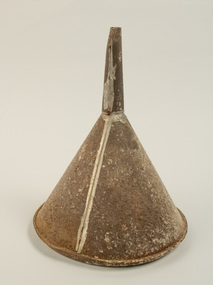
Functional object - Funnel for kerosene lights, Funnel
... desk. Possibly purchased with new kerosene lights after the 1900. fire in the roof Tin funnel joined with solder and has been repaired. Rounded edge with hollow inside. Used for filling kerosene lamps ...Tin funnel joined with solder and has been repaired. Rounded edge with hollow inside. Used for filling kerosene lamps for lighting the Athenaeum. Bottom of spout damaged and rusty.Found in Librarian's desk. Possibly purchased with new kerosene lights after the 1900. fire in the roof -
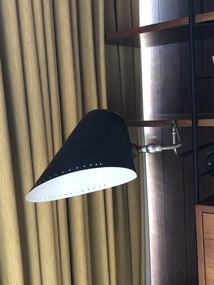 Robin Boyd Foundation
Functional object - Lamp, Don Brown from Brown Evans and Co. - BECO in Australia
... This Beco lamp is by Suzy's bookcase and desk. It was designed by Donald Brown, a pre-eminent Australian lighting designer in the '50s and '60s. ...This Beco lamp is by Suzy's bookcase and desk. It was designed by Donald Brown, a pre-eminent Australian lighting designer in the '50s and '60s. ...This Beco lamp is by Suzy's bookcase and desk. It was designed by Donald Brown, a pre-eminent Australian lighting designer in the '50s and '60s. Robin Boyd often specified BECO lighting, including elsewhere in his own home. There was a similar lamp in Penleigh's room as a bedlight near the bookcase at one time.Beco 720 wall lamp, with black shade and articulated armBrown Evans & Cowalsh st furnishings, robin boyd
