
Showing 8 items matching "divine love"
-
 Kilmore Historical Society
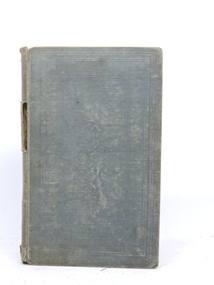
The Practice of Divine Love, 1840
... The Practice of Divine Love....The Practice of Divine Love....The Practice of Divine Love; Being an exposition upon the Church Catechism: to which are added directions for prayer....The Practice of Divine Love. The Practice of Divine Love. Thomas Ken, D.D. ...The Practice of Divine Love; Being an exposition upon the Church Catechism: to which are added directions for prayer.Green cloth-bound hardcover book, embossed decoration to front and back covers. Cover totally detached from body, tear to spine. Foxing throughout. 140 pp. Fair condition.On 2nd flyleaf, 'Mrs. Hanniford/With Walter's, Best and/Kindest Wishes/May 25, 1859'.religion, mrs. hanniford -
 Federation University Historical Collection
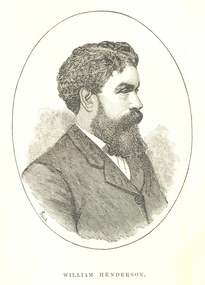
Book, William Henderson, If, and What? Lectures on Theism, 1882
... ...divine love...The Divine Infinite and the Divine Love 11. God in Christ 12 Alpha and Omega The last paragraph of the preface states: "If this little book of mine can only show that theology has nothing to fear from all the science that is going, thal all true theologeans are just as eager as their neighbours to learn all that science has to teach them, in assurance that it will only make the foundations of their faith more stable and secure in the end, then it will not have been given to the world in vain. sic prosit." ...Henderson William Henderson theism aetiology telelogu yheology conscience ontology self-limitation god as father divine infinite divine love Alexander Kelly Signed on title page "James Henderson" Brown hard covered book of 257 pages published in 1882. ...Brown hard covered book of 257 pages published in 1882. Includes a line drawing of William Henderson. If. and What? is twelve lectures on the foundations of Christian Theism. The lectures are: 1. God and World - One or Two 2. Possibility of a Scientific Theism 3. Aetiology, or origin of cause 4. Teleology, or Source of Purpose 5. Theology of the conscience, or Fountain of Morality 6. Ontology, or God as Supreme Being 7. origins of Religion 8. Self- Limitation of the Infinite 9. God as father 10. The Divine Infinite and the Divine Love 11. God in Christ 12 Alpha and Omega The last paragraph of the preface states: "If this little book of mine can only show that theology has nothing to fear from all the science that is going, thal all true theologeans are just as eager as their neighbours to learn all that science has to teach them, in assurance that it will only make the foundations of their faith more stable and secure in the end, then it will not have been given to the world in vain. sic prosit." non-fictionreligion, ballarat, rev. henderson, william henderson, theism, aetiology, telelogu, yheology, conscience, ontology, self-limitation, god as father, divine infinite, divine love, alexander kelly -
 Thompson's Foundry Band Inc. (Castlemaine)
Sheet Music, Love Divine
... Love Divine...Love Divine Sheet Music ... -
 Flagstaff Hill Maritime Museum and Village
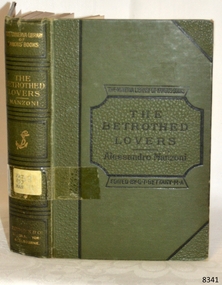
Book - A Fictional Love Story, Alessandro Manzoni, The Betrothed Lovers, 1889
... love and wish to marry. Their plans are cruelly shattered by a tyrannical local baron, Don Rodrigo, who wants Lucia for himself and forces the couple to flee. The epic narrative follows their separate, perilous journeys through a landscape torn apart by war, political corruption, famine, and a devastating outbreak of the Bubonic Plague in Milan. This work is renowned for its deep psychological realism, social critique, and profound exploration of religious faith and divine ...The subject novel is regarded as a Victorian literary artifact of a masterpiece of European literature. The Betrothed Lovers is the English translation of I Promessi Sposi (originally published in 1827), widely considered the most famous and influential Italian novel ever written. Set in northern Italy in 1628 during the oppressive era of Spanish rule, the story follows two young silk weavers, Renzo and Lucia, who are deeply in love and wish to marry. Their plans are cruelly shattered by a tyrannical local baron, Don Rodrigo, who wants Lucia for himself and forces the couple to flee. The epic narrative follows their separate, perilous journeys through a landscape torn apart by war, political corruption, famine, and a devastating outbreak of the Bubonic Plague in Milan. This work is renowned for its deep psychological realism, social critique, and profound exploration of religious faith and divine providence.The Betrothed Lovers Author: Alessandro Manzoni Publisher: Ward Lock & Co Date: 1889 Further Information: Edited by G.T.BettanyfictionThe subject novel is regarded as a Victorian literary artifact of a masterpiece of European literature. The Betrothed Lovers is the English translation of I Promessi Sposi (originally published in 1827), widely considered the most famous and influential Italian novel ever written. Set in northern Italy in 1628 during the oppressive era of Spanish rule, the story follows two young silk weavers, Renzo and Lucia, who are deeply in love and wish to marry. Their plans are cruelly shattered by a tyrannical local baron, Don Rodrigo, who wants Lucia for himself and forces the couple to flee. The epic narrative follows their separate, perilous journeys through a landscape torn apart by war, political corruption, famine, and a devastating outbreak of the Bubonic Plague in Milan. This work is renowned for its deep psychological realism, social critique, and profound exploration of religious faith and divine providence.flagstaff hill, warrnambool, shipwrecked coast, flagstaff hill maritime museum, maritime museum, shipwreck coast, flagstaff hill maritime village, great ocean road, book, pattison collection, warrnambool library, warrnambool mechanics’ institute, ralph eric pattison, corangamite regional library service, warrnambool city librarian, mechanics’ institute library, victorian library board, warrnambool books and records, warrnambool children’s library, the betrothed lovers, allessandro manzoni, g.t.bettany -
 Eltham District Historical Society Inc
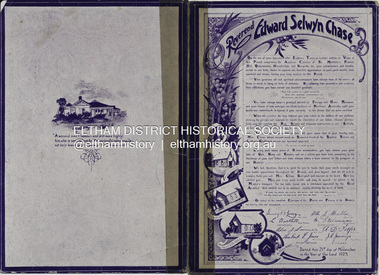
Document - Booklet, Valedictory Address to Reverend Edward Selwyn Chase, 21 Nov. 1925
... During your many years of Divine ministration you have shown your great love of God, King, and Empire, and as a citizen you have been exemplary in the discharge of your civil duties, and have always taken a keen interest in the progress of our district. ...During your many years of Divine ministration you have shown your great love of God, King, and Empire, and as a citizen you have been exemplary in the discharge of your civil duties, and have always taken a keen interest in the progress of our district. ...Rev. Edward Selwyn Chase (1864-1950), son of Canon Chase was Curate at St John's Anglican Church, Healesville 1895-1902. He then transferred to Yarraville Anglican Church 1902-1904.. In 1907 he became Vicar for the parish comprising the Anglican churches St Matthew, Panton Hill, Queenstown, Hurstbridge and Kinglake where he serrved for 18 years. This is a copy of the valedictory address given on the eve of his departure from the parish, 21 November 1925 and was signed on behalf of the parishioners by the secretaries and treasurers of each district. A copy of the address was reproduced in the Advertiser, Friday, December 4, 1925, p4 THE ADDRESS. (1925, December 4). Advertiser (Hurstbridge, Vic. : 1922 - 1939), p. 4 (AFTERNOON). Retrieved November 23, 2024, from http://nla.gov.au/nla.news-article56659141Advertiser (Hurstbridge, Vic. : 1922 - 1939), Friday 4 December 1925, page 4 ________________________________________ THE ADDRESS. The following is a copy of the address : REV. EDWARD SELWYN CHASE. On the eve of your departure after 18 years of faithful service as Vicar of this parish, comprising the Anglican churches St. Matthew, Panton Hill, Queenstown Hurstbridge, and Kinglake, we, your parishioners and friends, united in one body, desire to express our heartfelt appreciation of your good works, both spiritual and social, during your long sojourn in this parish. Your generous aid and spiritual ad-i ministration have always been at the service of those in want or lying on beds of sickness. By relieving their necessities and soothing their afflictions you have earned our heartfelt gratitude. "That best portion of a good man's life, that little, nameless unremembered act of kindness and of love." --Wordsworth. You have always taken a practical interest in foreign and home missions, and your labor of love amongst our black brethren in Northern Australia, until your health was undermined, is typical of your sincerity in things that are "more excellent." "When we consider the deep interest you have taken in the welfare bf. our children, striving by precept and example to mould the characters of our future citizens, particularly may we mention the boy scouts, and religious instruction in our schools, we feel that we are greatly indebted to you. May we also be permitted to link with your name that of your worthy wife, Mrs Chase, whose earnest work as superintendent of the Sunday school and Ladies' Guild has learned our warmest approval. "As ye sow so shall ye reap." During your many years of Divine ministration you have shown your great love of God, King, and Empire, and as a citizen you have been exemplary in the discharge of your civil duties, and have always taken a keen interest in the progress of our district. We feel, therefore, that it is good for you to. know that your work among us has found appreciation throughout the parish, and even beyond, and we all join in wishing both you and Mrs Chase God speed and success in the work God has allotted you. May you enjoy good health and long be spared to labor in the Master's vineyard, for we have found you a workman approved by the Great Architect, that needeth not to be ashamed, rightly dividing the Word of truth. "I know thy works and charity and service and faith, and thy patience and thy works, and the last be more than the first." On behalf of the combined churches of -the parish, and friends of the district, .we hereto affix our signatures. The address was signed on behalf of the parishioners by the secretaries and treasurers of each district.hurstbridge, kinglake, panton hil, queenstown, reverend edward selwyn chase, st andrews, st matthew's church -
 Warrnambool and District Historical Society Inc.
Book, Work of the English Puritan Divines - M Henry, Early 1840s
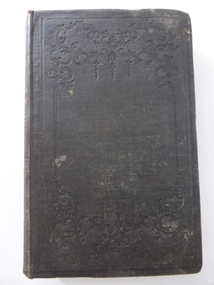
... Further research may reveal the extent of the book’s significance. e. callender warrnambool work of the English puritans divine ‘To E. Callender with kind love from C.E- (the last letter is not clear – it could be an ‘E’ or a ‘D’ or merely a decorative flourish) ‘1st January 1847’ This is hard cover book of 320 pages. ...This book was given in 1847 to E. Callender by an unknown person (‘C.E –‘). There is a reference in the Warrnambool Examiner newspaper to an Adam Callander, a Port Fairy baker whose wife Alice committed suicide in 1870 and, more importantly, a reference to a Miss Callender arriving as a ship passenger to Warrnambool in July 1854. There is a record of Eliza Callender marrying Peter McFarlane in 1858. The book may have been a New Years’ Day present or a birthday present or a presentation to someone leaving England to migrate to Australia. This book is kept because of its inscription and its early date (1847 – some months before Warrnambool was founded). Further research may reveal the extent of the book’s significance. This is hard cover book of 320 pages. The cover is dark brown with embossed scrolls on the front cover and gold lettering on the spine. The book has eight chapters, including a biography of the author, Matthew Henry, and two black and white sketches. On the first page is the stamp of the Warrnambool and District Historical Society. The inscription is handwritten in black ink. The cover is slightly stained.‘To E. Callender with kind love from C.E- (the last letter is not clear – it could be an ‘E’ or a ‘D’ or merely a decorative flourish) ‘1st January 1847’ e. callender, warrnambool, work of the english puritans divine -
 Uniting Church Archives - Synod of Victoria
BW photo, Undated
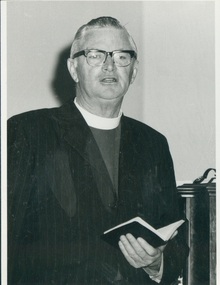
... divine guidance and purpose. The council would gladly have extended his term in office beyond three years, but at 75 years of age he knew that his health had begun to fail. When he finally relinquished his office in Nov 1978, he could look back on those three years as the crown of his ministry. It is not too much to say that his name was even more highly honoured and revered in the Trinity School of Ministry than in his own dearly loved...divine guidance and purpose. The council would gladly have extended his term in office beyond three years, but at 75 years of age he knew that his health had begun to fail. When he finally relinquished his office in Nov 1978, he could look back on those three years as the crown of his ministry. It is not too much to say that his name was even more highly honoured and revered in the Trinity School of Ministry than in his own dearly loved ...STANWAY, ALFRED (b. 9 Sept 1908; d. Melbourne, Vic, 27 June 1989). Anglican bishop, missionary. Stanway grew up in the Wimmera district of western Victoria, and left school when 14 years old. He found work in Melbourne, trained as an accountant, and at the age of 20, held a responsible position with a publishing company. This background, allied with an uncommon flair for figures and finance, was to stand him in good stead throughout his life. But he had little knowledge and no experience of the grace of God until 29 July 1928. At the Evening Service in the parish church of Fairfield on 29 July, he heard the Rev C H Nash (q.v.) preach a sermon which led to his conversion. Within two years he made up his mind to become a missionary and began night studies in order to matriculate. He entered Ridley College in March 1932 to prepare for ordination undertaking week-end duties as a catechist at Deer Park and St Albans. He joined the CMS League of Youth, became chairman, and gathered a fine band of young people many of whom were to become missionaries. He was closely involved with the Belgrave Heights Convention (then at Upwey) and established a League of Youth camp on the site. All his energies were thrown into the task of building up its members in personal holiness and vigorous evangelism. Stanway was ordained in St Paul's Cathedral, Melbourne on St Thomas Day 1934 and was placed in charge of the Old Mission Church of St James and St John, Melbourne. The duties were light enough to allow him to enrol in the Melbourne Teachers College and to complete the Diploma in Teaching. On 26 January 1937, he sailed for Africa to become a missionary in the Anglican Diocese of Mombasa, which at that time embraced the whole of Kenya. He was sent to the hot coastal town of Kaloleni as principal of a Secondary Boys School. Before he left Melbourne, he had become engaged to Marjory Harrison: she followed him to Africa and their marriage took place in Mombasa Cathedral in June 1939. He remained at Kaloleni until 1944 when he was transferred to the inland station of Maseno where all his gifts were to be deployed as rural dean of Nyanza. His oversight of some 500 village churches as well as a widespread primary school system was so efficient that in 1948 he was appointed archdeacon of Kenya with his home and office in Nairobi. As secretary of the African Church Council and of the African Education Board, he was responsible for all African work in the diocese. His contacts with government ministers and public servants were of first class significance at the time when the cry of Uhuru and the demand for independence was travelling throughout the colonial world. On 2 Feb 1951, Alfred Stanway was consecrated in Westminster Abbey as the third Anglican Bp of Central Tanganyika. This Diocese was the special sphere of the CMS Australia, and he already knew most of the missionary personnel. He brought with him the understanding and experience of one who had fully shared the lot and problems of a district missionary, but he came to the diocese at a time when it had yet to recover from its losses in personnel and finance as a result of the war. His immediate task was to provide the impetus of fresh leadership and a long-term overall policy. His aim from-the outset was to build up a strong autonomous church with its own indigenous pastorate. With the whole-hearted confidence of the home base, he was able to enlist the service of new missionaries. He saw a great increase in the number of African clergy and he encouraged village evangelists to open new fields of work. Simple structures were built as new churches at the rate of two a week, week in and week out, year by year. He worked hard to meet the need for Christian literature, bookshops, adult literacy and theological training. He opened Bible schools for village evangelists and sent suitable clergy overseas for further studies. He encouraged initiative in others, helped them to find and use their talents, and gave them his unstinted confidence and support. Fresh finance was required for new ventures. This led him to travel widely in Germany and America, where he raised large funds for these projects. Mackay House was built in Dodoma as the central administrative base for the diocese, hospitals such as those at Mvumi and Hombolo were modernised or established, schools were built and upgraded. In keeping with his vision for ultimate leadership by African personnel, he consecrated Yohana Omari in 1955 as his assistant, he was the first national to become a bp in East Africa. Bp Stanway then set on foot the long and complicated process for the division of his sprawling diocese. In 1963, the diocese of Victoria Nyanza came into being; in 1965, that of Morogoro; in 1966, that of Western Tanganyika. Yet in 1971, his own diocese of Central Tanganyika, though greatly reduced in size, had more churches and more clergy than in its undivided state in 195 l. Stanway then played a leading part in the formation of the Province of Tanzania in 1970, with an African abp as metropolitan. A year later, after 35 years in East Africa and 20 years as bishop of Central Tanganyika, he resigned. His leadership and achievements throughout those years had placed him in the front rank as a great missionary statesman. Stanway had returned to Melbourne at the time when his resignation took effect in August 1971. His early love for Ridley College reasserted itself and he went into residence as deputy principal under the Rev Dr Leon Morris. He was put in charge of chapel worship and the pastoral oversight of the students. All his gifts and experience were called into play as he sought to guide and encourage those who were on the threshold of their ministry. The whole bent of his heart was to foster the spiritual life and missionary calling of those whose hearts the Lord had touched. It was during those years that his life-long zeal for the spread of the gospel through Christian literature had its ultimate flowering. It had begun in his Nairobi days with a small church bookstall, this had developed into a major book-shop in the heart of the city. Then in Dodoma he had established the Central Tanganyika Press in order to promote the publication and distribution of Christian literature at all levels. He had marked out Kevin Engel, trained him, and launched him on the international scene. Hence it was natural that in Melbourne he and Kevin Engel should found the Australian Christian Literature Society. But his time at Ridley College was not to last. Unknown to him, the Rev J R W Stott had put his name forward as that of a person who could head a new school of theology in the United States to provide a sound training for evangelical ordinands. Such a task would have been formidable enough for a younger man who had grown up in America. How could an Australian who had spent half his life in Africa hope to succeed in a venture of that kind in America? How could one who had been a missionary, not a theologian, found a new school to train men for ordination? Nevertheless he rose to the challenge. In Sept 1975, he and Mrs Stanway left Melbourne for Sewickly, an outer suburb of Pittsburg, with the promise of three years' service. He had to start from scratch. He found a house to live in, but there was no land for the school, no funds in hand, no staff yet appointed, no students, and no buildings. His drive, his infections enthusiasm, and his flair for practical enterprise carried the day. One by one, obstacles were overcome and support grew in volume and strength. Twelve months after his arrival, in Sept 1976, the Trinity Episcopal School for Ministry was opened with three staff members, seventeen students, and the goodwill of the whole American Episcopal Church to win. During the next two years, the school took shape and was firmly established. Bp Stanway left an indelible stamp on every aspect of its life and work, its spiritual tone and ideals, its financial and administrative principles. He had inspired widespread support among evangelical episcopalians and had imparted a strong sense of divine guidance and purpose. The council would gladly have extended his term in office beyond three years, but at 75 years of age he knew that his health had begun to fail. When he finally relinquished his office in Nov 1978, he could look back on those three years as the crown of his ministry. It is not too much to say that his name was even more highly honoured and revered in the Trinity School of Ministry than in his own dearly loved Africa. His return to Melbourne led to quiet retirement at Mount Waverley where he settled down to a long battle with the ever worsening effects of Parkinson's Disease. The slow loss of physical capacity and the ultimate failure in powers of speech were a great trial, but he never complained. His faith was summed up in his brief reply when he was asked why he had not prayed for healing: 'What God allows, I accept'. That acceptance was without reserve; his testimony was never brighter. His mental powers were undiminished and his spiritual concerns were as wide as ever. He kept in touch with CMS, he went to church, he met with missionaries, he led Bible studies in his home as long as he was able. Africa was always in his heart, news from Sewickly always gave him great pleasure. He had left a mark for God on three great continents and his death left sad but thankful hearts in them all. It was the close of a life in which he had felt that he could never do enough for God who had done so much for him. One of Bp Stanway's sayings was 'when the Holy Spirit takes hold of you, anything can happen'. So it was in his case. He was very human, with his full share of human foibles and frailties. He had a great zest for life and an endless fund of stories drawn from his own experience. He was himself the subject of many stories, some true, others legendary. His vibrant personality always seemed to fill the house where he was, his presence could not be overlooked. His own home was one in which Mrs Stanway had a paramount influence. She was a trained teacher, a skilled artist, a born hostess and a first-class linguist. They had no children of their own, but were devoted Godparents and always deeply interested in the children of missionaries. Home life allowed him to relax in a serene and contented atmosphere and to exercise his gifts for friendship and hospitality. He was always on the watch for souls, a person-to-person evangelist par excellence. He was a man of faith and prayer who dared to believe in the God of the impossible. His love for Africa, his total dedication as a missionary; his gifts as a soulwinner; his genius for finance; his shrewd practical initiatives, and his statesmanlike vision were outstanding characteristics. But great or small, all his gifts were laid out in the service of the gospel, and that service marked him out as one of the most remarkable Australian missionaries of his generation. M L Loane, Men to Remember (Sydney, 1987) Rev. Alfred Stanway is standing with open book in hand, dressed in clerical garb.Bishop Alfred Stanwaybishop alfred stanway -
 The Celtic Club
Book, Harper Collins, Patrick Son of Ireland, 2003
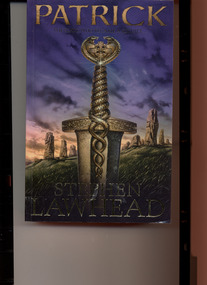
... He pursues his dream of freedom through horrific war and shattering tragedy'through great love and greater loss'from a dying, decimated Wales to the bloody battlefields of Gaul to the fading majesty of Rome. And in the twilight of a once-supreme empire, he is transformed yet again by divine hand and a passionate vision of "truth against the world," accepting the name that will one day become legend Index, notes, p.454. ...HSlave, soldier, lover, hero, saint, 'his life mirrored the cataclysmic world into which he was born. His memory will outlast the ages. Born of a noble Welsh family, he is violently torn from his home by Irish raiders at age sixteen and sold as a slave to a brutal wilderness king. Rescued by the king's druids from almost certain death, he learns the arts of healing and song, and the mystical ways of a secretive order whose teachings tantalize with hints at a deeper wisdom. Yet young Succat Morgannwg cannot rest until he sheds the strangling yoke of slavery and returns to his homeland across the sea. He pursues his dream of freedom through horrific war and shattering tragedy'through great love and greater loss'from a dying, decimated Wales to the bloody battlefields of Gaul to the fading majesty of Rome. And in the twilight of a once-supreme empire, he is transformed yet again by divine hand and a passionate vision of "truth against the world," accepting the name that will one day become legendIndex, notes, p.454.fictionHSlave, soldier, lover, hero, saint, 'his life mirrored the cataclysmic world into which he was born. His memory will outlast the ages. Born of a noble Welsh family, he is violently torn from his home by Irish raiders at age sixteen and sold as a slave to a brutal wilderness king. Rescued by the king's druids from almost certain death, he learns the arts of healing and song, and the mystical ways of a secretive order whose teachings tantalize with hints at a deeper wisdom. Yet young Succat Morgannwg cannot rest until he sheds the strangling yoke of slavery and returns to his homeland across the sea. He pursues his dream of freedom through horrific war and shattering tragedy'through great love and greater loss'from a dying, decimated Wales to the bloody battlefields of Gaul to the fading majesty of Rome. And in the twilight of a once-supreme empire, he is transformed yet again by divine hand and a passionate vision of "truth against the world," accepting the name that will one day become legendireland - historical fiction, christain saints - fiction
