
Showing 31 items matching "dorothy miles"
-
 Tatura Irrigation & Wartime Camps Museum
CD, Kaye Watson, Kaye Darveniza MP, 2008
... ...Dorothy Miles...18 photos take at the launch of book "Marched in" and 20th anniversary of the start of the war camps museum, 8 November 2008. 0722 - the cake with museum decoration 0733 - Lurline and Arthur Knee signing their book in the foyer 0751 - (front row) Mike Sondheim (President of the Dunera Assn) and his wife Senta (2nd row) Cr Andrew Crawford, Dorothy and Dr Ern Miles, Lurline and Arthur Knee and Kurt Beilharz and Isobel Marke (representing the Temple Society Camp 3 internees) (3rd row) Ron Donaldson (former President Tatura Historical Society) in wheelchair, his wife Margaret (behind his shoulder), Geoff Youlden (former Rodney Shire President) and his wife Beryl, Mrs ???? ...Mached In Kaye Watson Lurline Knee Arthur Knee Mike Sondheim Senta Sondheim Cr Andrew Crawford Dorothy Miles Dr Ern Miles Kurt Beilharz Isobel Marke Temple Society Ron Donaldson Margaret Donaldson Geoff Youlden Beryl Youlden Anne Finlay Warwick Finlay Ms Darveniza Mignon Campbell Lyn Harrison Dr Bruce Anderson Jack Pickworth Major Jim Sullivan Michael Brent Gold disc, green and back text inside a black and clear plastic case. ...18 photos take at the launch of book "Marched in" and 20th anniversary of the start of the war camps museum, 8 November 2008. 0722 - the cake with museum decoration 0733 - Lurline and Arthur Knee signing their book in the foyer 0751 - (front row) Mike Sondheim (President of the Dunera Assn) and his wife Senta (2nd row) Cr Andrew Crawford, Dorothy and Dr Ern Miles, Lurline and Arthur Knee and Kurt Beilharz and Isobel Marke (representing the Temple Society Camp 3 internees) (3rd row) Ron Donaldson (former President Tatura Historical Society) in wheelchair, his wife Margaret (behind his shoulder), Geoff Youlden (former Rodney Shire President) and his wife Beryl, Mrs ???? and behind her Anne and Warwick Finlay (President of Murchison and District Historical Society). 0754 - Mike and Senta Sondheim with same people as above 0757 - Ms Darveniza (member of Victorian Legislative Assembly) speaking into microphone; Secretary Mignon Campbell and President of Tatura and District Historical Society Lyn Harrison, at table. 0765 - Lyn Harrison presenting a Certificate of Appreciation to Dr Bruce Anderson, Rotarian, local vet and a generous benefactor to Tatura Museum. 0774 - Former Rodney Shire Councilor Andrew Crawford cutting the anniversary birthday cake with President Lyn Harrison. 0775 and 0776 - cake being cut. Black and white photographs 0776 - Mike Sondheim launches the book "Marched In" 0786b - Arthur Knee replies with a joke, enjoyed by his wife and Ms Darveniza. 0792 - Lyn Harrison and Ms Darveniza with Vice President Jack Pickworth. 0797 - Ladies as above with Major James "Jim" Sullivan. 0804 - Kurt Beilharz, representing the German Temple Society internees from Camp 3, with Lurline and Arthur Knee. 0805 - as above in full length photograph 0808 - Close up Major Sullivan with Arthur Knee. Black and white photograph. 0815 - Close up of Lurline and Arthur Knee with Mike Sondheim. Black and white photograph. 0816 - as above in colour. 0818 - Michael Brent (formerly Bernstein) Dunera Boy with Mike Sondheim. Gold disc, green and back text inside a black and clear plastic case. mached in, kaye watson, lurline knee, arthur knee, mike sondheim, senta sondheim, cr andrew crawford, dorothy miles, dr ern miles, kurt beilharz, isobel marke, temple society, ron donaldson, margaret donaldson, geoff youlden, beryl youlden, anne finlay, warwick finlay, ms darveniza, mignon campbell, lyn harrison, dr bruce anderson, jack pickworth, major jim sullivan, michael brent -
 Ringwood and District Historical Society
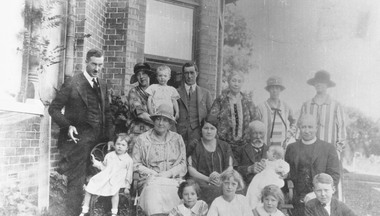
Photograph, Miles Family at 'Glamorgan', Ringwood, October 1926
... Middle L-R Barbara Miles, Mrs. Martin, Dorothy Miles, E.T. Miles & Laurie, Rev. C.J.T. ...Middle L-R Barbara Miles, Mrs. Martin, Dorothy Miles, E.T. Miles & Laurie, Rev. C.J.T. ...Black and white photograph (2 copies) Written on backing sheet below photograph: "At 'Glamorgan' October 1926. Rear L-R R.F. Miles, Winifred Miles & Jack, Keith Miles, C.E. Miles, 'Girlie' Miles and H.C. Barrett. Middle L-R Barbara Miles, Mrs. Martin, Dorothy Miles, E.T. Miles & Laurie, Rev. C.J.T. Martin. Front L-R Jean & June Miles, Margaret & Ken Barrett." -
 Ringwood and District Historical Society
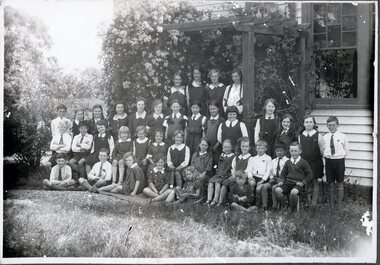
Photograph - Black and White, Winnington Grammar School, Ringwood, Class Photo, 1931 Term 3
... Cheong, Jack Miles Front Row: ? , Cliff Bielby, Joan Court, ? , Dorothy Nethercote, ?...Cheong, Jack Miles Front Row: ? , Cliff Bielby, Joan Court, ? , Dorothy Nethercote, ? ...B&W Class photo in front of Winngton Grammar School, 35 Ringwood St, Ringwood. Handwritten on reverse: 1931, term 3. Back Row: Helen Newell, Joyce Covell, June Miles, Majorie Palmer 2nd Row: Doug? Lucas, ? , Frances Gowland, ? , Leila Bielby, Margaret Barrett, Pat Court, Mary Cheong, Meriel Wilmont, Phyllis Prior, Margaret Douglas, ? , Phyllis Holder, John Covell 3rd Row: Keith Hewitt, ?Gordon?, Peter Cheong, ? , Pat Hewitt, ? , Meryl Lucas, Nancy Newell, ? , Winsome, ? , Jack Nethercote, Gordon?, Peter? Cheong, Jack Miles Front Row: ? , Cliff Bielby, Joan Court, ? , Dorothy Nethercote, ? -
Glen Eira Historical Society
Drawing - Methodist Church, 23 - 25 Bundeera Road, Caulfield South
... Miles Monday Bryant Woodford Paice Warren Evans Bert Shaw William Ronald Gvard W. H. Rev. Wells Charlotte Evans Elsie Narrawong Road. Bundeera Road Uniting Church. McRaw Dick Westaway Frank Adamson Dorothy ...Phamphlet containing photocopied and dated newspaper articles about construction of church from various newspapers in 1926 and a brief outline of how and why church was begun and of its eventual demise, 1923 - 1985. Photocpied page of Recollections of Bundeera Road Church by Charlotte Harley (b. 1890), listing the members of December, 1985. methodist church, taylor mr., latham a. t., kindergartens, methodist uniting church, wesley johns rev., corben mrs, bundeera road, eddy r., organs, collier charitable fund, south caulfield, primary schools, kooyong road, methodist church, woodford, bambra estate, mcconchie rev. r. bruce, davenport mr., davies bill, davies mrs., philp rev., shaw mesolames, morris, miles, monday, bryant, woodford, paice, warren, evans bert, shaw william ronald, gvard w. h. rev., wells charlotte, evans elsie, narrawong road., bundeera road uniting church., mcraw dick, westaway frank, adamson dorothy, harley charlotte (nee wells), harley j, hunkin ena, hunkin edward rev., lydiard ruby, lydiard dick, sharples d, sharples j, spence margaret, spence bert, summers mary, summers ron, veitch alan, westaway m, arundell joyce, campbell heather, cock marian, heywood. a, putland roy, richards d, spence philip, taylor mrs., trewin norman, newton m., uniting church archives, kilgour alex, mann gwenda, gray daniel, gray gordon, heywood a, putland roy, richards d, featenby rev., brent p. e, woodford s. g., bent mr., st. kilda circuit, bundeera road ladies gvild, sunday school, choirs, windows -
Bendigo Historical Society Inc.
Document - TOWN HALL, YMCA SYMPHONY CONCERT, 17 September, 1924
... Second Violins; Mr James Fitt, Master Tom Challen, Miss Myrtle Phillips, Miss Alma Doxford, Miss J Houston, Miss Evelyn Miles, Miss Elva Hesse, Miss Winnie Hobson, Mr Stanley Kennedy, Mr Albert Richardson, Master L Watts, Miss Lois Streader, Master L Meakin, Master R Trewarn. Violas; Mr P Coope, Mr H R Smith, Miss L Beischer, Miss Eisler Woodward. 'Cellos; Madame Dorothy...Second Violins; Mr James Fitt Master Tom Challen Miss Myrtle Phillips Miss Alma Doxford Miss J Houston Miss Evelyn Miles Miss Elva Hesse Miss Winnie Hobson Mr Stanley Kennedy Mr Albert Richardson Master L Watts Miss Lois Streader Master L Meakin Master R Trewarn. Violas; Mr P Coope Mr H R Smith Miss L Beischer Miss Eisler Woodward. 'Cellos; Madame Dorothy ...Town Hall, YMCA Symphony Concert, Orchestral Society. Frank Grose, Conductor. Sept. 17th 1924. Artists Assisting; Carmen Pascova, George A Chant, Coral Trenerry, Mabel McGauchie. Hon. Treas. G W Lansell. Pres. Barkly Hyett. Programme Les preludes, Like Death's Grim Shadow, O, Pure and Tender Star of Eve, Hejre Kati, O Mio Fernando from La Favorita, The Unfinished, L'heure de pourpore, Le the, Coecilia, Blow Blow Thou Winter Wind, Feu Folley, The Last Hour, The Night Wind, At Dawing, Oh! Didn't it rain!, from La Prophete. Orchestral Society: First Violins; Mrs Harry Hillman, Miss Winnie Pithie, Miss Agnes McNair, Mrs Stanley Gant, Miss Lucille Simpson, Miss Elsie Stemmer, Mrs E Swift, Miss L Downie. Second Violins; Mr James Fitt, Master Tom Challen, Miss Myrtle Phillips, Miss Alma Doxford, Miss J Houston, Miss Evelyn Miles, Miss Elva Hesse, Miss Winnie Hobson, Mr Stanley Kennedy, Mr Albert Richardson, Master L Watts, Miss Lois Streader, Master L Meakin, Master R Trewarn. Violas; Mr P Coope, Mr H R Smith, Miss L Beischer, Miss Eisler Woodward. 'Cellos; Madame Dorothy Duval, Miss Maisie Field, Miss Ethel Crook. Basses; Mr J H Melrose, Mr R Rule, Mr J Ditchburn. Piccolo; Mr A E Sayer. Flute; Mr A E Sayer, Mr W Davidson. Oboes; Mr A B Challen, Mr W Channel. Clarionets; Mr Bowman, Mr W McEwan. Basoons; Mr T Francis, Mr P Reed. Trumpets; Mr A H F Taylor, Mr P Smith, Mr B Bowater, Mr N Banfield. Horns; Mr A Johnson, Mr J Tredinnick. Trombones; Mr D W Collier, Mr H Botten, Mr W Jackson. Tubas; Mr E C Rasmussen, Me A Hocking. Percussion; Mr J Kinder. Tympani; Mr J McLaughlin. Organist; Mr C Cowling. Pianiste; Miss Mabel McGauchie. Am Appeal to every Music Lover on behalf of Bendigo Boys. The Orchestral Society of the Young Men's Christian Association exists for the uplift of Bendigo through the agency of music. In addition to this it dedicates the whole of its profits to the extension of Christ's work among Boys. Surely this two-fold object is sufficient to warrant a large number of subscribers, and yet we regret to say we find it increasingly difficult to finance the Society, and our Association, in one to the greatest provincial cities in Australia. We would like to think that it is only sufficient to mention this matter in order to call for an immediate demand for subscribers tickets for our Orchestral Society; in order to remove the 'Damoclesian sword' of finance which perpetually suspended above our heads, and thereby insure a continuance of our Orchestral Society, and the permanence of out Association, which is in business for the men and boys of this fair City. Subscriber's Tickets may be purchased for 1 pound, 1 shilling, which permits the bearer to book seats for each Tree Concerts. These tickets are obtainable at any period during the year. For Further information apply; Frank Grose, General Secretary. F. H. Sparkman, Printer, Arcade, Bendigo. program, music, ymca of bendigo orchestral society, town hall, ymca symphony concert, orchestral society. frank grose, conductor. sept. 17th 1924. artists assisting; carmen pascova, george a chant, coral trenerry, mabel mcgauchie. hon. treas. g w lansell. pres. barkly hyett. programme les preludes, like death's grim shadow, o, pure and tender star of eve, hejre kati, o mio fernando from la favorita, the unfinished, l'heure de pourpore, le the, coecilia, blow blow thou winter wind, feu folley, the last hour, the night wind, at dawing, oh! didn't it rain!, from la prophete. orchestral society: first violins; mrs harry hillman, miss winnie pithie, miss agnes mcnair, mrs stanley gant, miss lucille simpson, miss elsie stemmer, mrs e swift, miss l downie. second violins; mr james fitt, master tom challen, miss myrtle phillips, miss alma doxford, miss j houston, miss evelyn miles, miss elva hesse, miss winnie hobson, mr stanley kennedy, mr albert richardson, master l watts, miss lois streader, master l meakin, master r trewarn. violas; mr p coope, mr h r smith, miss l beischer, miss eisler woodward. 'cellos; madame dorothy duval, miss maisie field, miss ethel crook. basses; mr j h melrose, mr r rule, mr j ditchburn. piccolo; mr a e sayer. flute; mr a e sayer, mr w davidson. oboes; mr a b challen, mr w channel. clarionets; mr bowman, mr w mcewan. basoons; mr t francis, mr p reed. trumpets; mr a h f taylor, mr p smith, mr b bowater, mr n banfield. horns; mr a johnson, mr j tredinnick. trombones; mr d w collier, mr h botten, mr w jackson. tubas; mr e c rasmussen, me a hocking. percussion; mr j kinder. tympani; mr j mclaughlin. organist; mr c cowling. pianiste; miss mabel mcgauchie. am appeal to every music lover on behalf of bendigo boys. the orchestral society of the young men's christian association exists for the uplift of bendigo through the agency of music. in addition to this it dedicates the whole of its profits to the extension of christ's work among boys. surely this two-fold object is sufficient to warrant a large number of subscribers, and yet we regret to say we find it increasingly difficult to finance the society, and our association, in one to the greatest provincial cities in australia. frank grose, general secretary. -
 Bendigo Historical Society Inc.
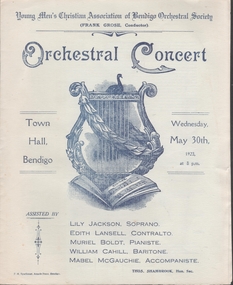
Document - TOWN HALL, YOUNG MEN'S CHRISTIAN ASSOCIATION OF BENDIGO ORCHESTRAL SOCIETY, 30th may, 1923
... J E Fitt, A Richardson, Rex Matthews, Miss Lily Campbell, Elsie Stemmer, Myrtle Phillips, Alma Doxford, Evelyn Miles, Elva Hesse, Winnie Hobson, Master T Challen, J Watts. Cellos: Madame Dorothy Duval, Miss Maisie Field, Mr. ...J E Fitt, A Richardson, Rex Matthews, Miss Lily Campbell, Elsie Stemmer, Myrtle Phillips, Alma Doxford, Evelyn Miles, Elva Hesse, Winnie Hobson, Master T Challen, J Watts. Cellos: Madame Dorothy Duval, Miss Maisie Field, Mr. ...Town Hall, Young Men's Christian Association of Bendigo Orchestral Society. Orchestral Concert, Town Hall, Bendigo. Wednesday, 30th, 1923, at 8pm. Conductor: Frank Grose. Assisted by: Lily Jackson, Soprano. Edith Lansell, Contralto. Muriel Boldt, Pianiste. William Cahill, Baritone. Mabel McGauchie, Accompaniste. Orchestral Society. Hon. Sec.: Thos. Shambrook. Pirates of Penzance: Romanza Scenza, Arabesque No. 2, Air De Ballet, Death and the Maiden, Sapphic Ode, Let me Love Thee, Russian Boatman Song. William Tell: O love from Thy Pow'r, Scherzo in Bb Minor, Abide with Me, Rock of Ages, Time was I Roved the Mountains, Eyes that used to Gaze in Mine, Invitation Vocal Valse, Coronation march. Bendigo YMCA Orchestral Society. First Violins: Miss Myrtle Knight, Agnes McNair, Olive Hannaford, Winnie Pithie, Louise Bolton, Louise Downie, Ruth Spier, Alison Smalley. Mrs. Grant, Swift. Second Violins: Mr. J E Fitt, A Richardson, Rex Matthews, Miss Lily Campbell, Elsie Stemmer, Myrtle Phillips, Alma Doxford, Evelyn Miles, Elva Hesse, Winnie Hobson, Master T Challen, J Watts. Cellos: Madame Dorothy Duval, Miss Maisie Field, Mr. E Minotti, W Ellis, G L Verey. Basses: Mr. J H Melrose, J Lavacombe, R Rule, W Jackson. Flutes: Mr. A E Sayer, R Crawford, Dilworth, Moon. Piccolo: Mr A E Sayer. Oboe: A B Challen. Clarinets: Mr. A B Challen, J Bowman, J McEwan. Horns: A Johnston, H Hilderbrande, J Tredinnick, L Rundle. , Trumpets: Mr. B Bowater, P Reed, N Banfield, A Old. Trombones: Mr. D Collier, H Bolton, W Pain. Euphonium: W Ketterer. Tubas: Mr. A Hoking, W Ketterer. Sassoon: Mr. T Francis. Timpani: Mr. J McLoughlin. Percussion: Mr. J Osborne. Organist: Mr. F C Stuart. Pianist: Miss Mabel McGauchie. Conductor: Frank Grose. President: Barkly Hyett. Treasurer: G W Lansell. Librarian: W J Wearne. Honorary Secretary: Thos. Shambrook. Three concerts per year will be given by the society. Next two concerts in August and November 1923. Subscribers Tickets are 1 pound 1 shilling. This ticket entitles holder to two booked seats for each concert. Picture of Harp with music book, laurel and bird on cover. 4 pages. F. H. Sparkman, Arcade Press, Bendigo. program, music, town hall, ymca of bendigo orchestral society. orchestral concert -
 Alfred Hospital Nurses League - Nursing History Collection
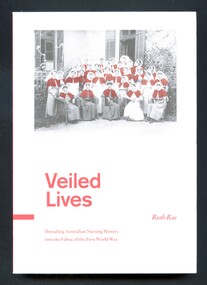
Book - Illustrated Book, Ruth Rae 1957, Veiled Lives: threading Australian nursing history into the fabric of the First World War, 2015
... At lower right of the title page is a printed blue and red donation sticker AHNL badge under whish is printed "This book was donated to AHNL Inc-Nursing Archives by" Dorothy Owens March 2020 (handwritten in black ink) Previous catalogue number is handwritten in black ink at top right of title page. illustrated book with white front and back covers and red spine. The front cover has a red, black and white photograph of a group of nurses: group portrait if the matron and nursing staff of the 1st AGH with Matron Nellie Miles-Walker (centre front). ...In this book the author considers the family and social lives, civilian nurse training, military nursing experiences and premature deaths of qualified Australian nurse who endured the horrors of the 1914-1918 War. Veiled Lives also uncovers the impact of their absence on the nurses' families, friends, colleagues, communities and their profession.illustrated book with white front and back covers and red spine. The front cover has a red, black and white photograph of a group of nurses: group portrait if the matron and nursing staff of the 1st AGH with Matron Nellie Miles-Walker (centre front). Title and author's name are printed in red below this photo. Abbreviated title and author's name printed in white on the spine. Back cover has abbreviated title printed in red and a summary of the book printed in black. non-fiction In this book the author considers the family and social lives, civilian nurse training, military nursing experiences and premature deaths of qualified Australian nurse who endured the horrors of the 1914-1918 War. Veiled Lives also uncovers the impact of their absence on the nurses' families, friends, colleagues, communities and their profession. world war 1914-1918, military nursing-australia, australia army-nurses, nurses -
Glen Eira Historical Society
Document - CAULFIELD CITIZENS ADVICE BUREAU
... Caulfield Citizen’ Advice Bureau Meetings Caulfield City Hall Annual Report Grants Edwards Mavis Hocking John Green Carol Coad Thelma Harry Carol Hession Dorothy Lambert Sam Moorrees Joyce Ravenscroft Jean Rowland Dorothy Tyrell Audrey Snowball Betty Telford Nancy Jelleff Jenny Kay Yvonne Bannister Jean Fooks John Allsop Doris Bullivant Trudy Capek Irene Carr Fred Cairncross Gwen Gorden Peg Daniels Maurice Davey Dulcie Gresham Greta Gresham John Hicks Margaret Hind Lillian Jacombs Ken Joseph Marion Kinross Jo Lukies Arthur Lukies Noela Mander Clive Miles Glad Moser Ellen Popper Irene Poynton Ray Splatt Betty Stewart May Telford Nancy Wray Shirley Watson Beth Chapman John Felder Ilse Helman Anne McCarthy Marie Richardson Elizabeth Steward Derek Williams Marcia Blacher Rosa Heyman Manfred Tanner Ted MLA Dunstan Don. ...This file contains 2 items: 1/Original copy of 17th Annual Report of city of Caulfield Citizens Advice Bureau September 1987. Report includes Agenda for the Annual General Meeting held at City Hall on Wednesday 30091987, list of office bearers, minutes of the previous AGM, election of Management Committee and presentation of Life memberships plus list of Legal Advice Service solicitors. 2/Original copy of Agenda and 25th Annual Report for Caulfield Citizens Advice Bureau Incorporated presented to the Annual General meeting on 30/08/1995 at Caulfield City Hall. Report includes financial statement F Y E 30/06/1995, details of President’s Report, minutes of previous AGM in 1994. caulfield, citizen’ advice bureau, meetings, caulfield city hall, annual report, grants, edwards mavis, hocking john, green carol, coad thelma, harry carol, hession dorothy, lambert sam, moorrees joyce, ravenscroft jean, rowland dorothy, tyrell audrey, snowball betty, telford nancy, jelleff jenny, kay yvonne, bannister jean, fooks john, allsop doris, bullivant trudy, capek irene, carr fred, cairncross gwen, gorden peg, daniels maurice, davey dulcie, gresham greta, gresham john, hicks margaret, hind lillian, jacombs ken, joseph marion, kinross jo, lukies arthur, lukies noela, mander clive, miles glad, moser ellen, popper irene, poynton ray, splatt betty, stewart may, telford nancy, wray shirley, watson beth, chapman john, felder ilse, helman anne, mccarthy marie, richardson elizabeth, steward derek, williams marcia, blacher rosa, heyman manfred, tanner ted mla, dunstan don. cr, martens veronika cr, legge mary, crossley rosemary, malvern citizens’ advice bureau, deal communication centre, child joan mp, macphee ian hon mp, shipton roger mp, mccutcheon andrew mla, campbell jack, mayor, mayoress, campbell mrs., rudzki brian cr, milne sandy, fusion, moyle gwen, westlake margaret, gild anne, herszfeld henry, lee alf, lee rae, peters leanie, pratt lillian, trumble joan, wise john, nicholls harry, grist molly, payne ruth, victorian association of citizens’ advice bureaus, emergency relief funds, community buses, sinisgalli john, aroni beni, chisholm john, erlichster george, folkers herman, jackson ross, kraus michael, lewis ray, oliver michael, romer andrew, simons adrian, smith simon, legal advice services, solicitors, budget advisory service, voluntary workers, sanders kathy, allan bill, bible richard, bilston ron, birch harry, coad laurie, durra frank, glass alf, gild ann, grew doreen, hawker harry, hollow neil, hingert lorna, jack ian, jones alf, mann gordon, mansfield joan, marks yvonne, menzies edna, ohis wil, powell dave, pate gwen, pentland dilys, simmons dianne, ward george, whitehead richard, wills anne, local government, aged people, bullen rose, culkan stephanie, dukes claire, klinger rosa, lambert douglas, sheehan jean, trodd carrie, brady vera, bristow joyce, byrne enid, cornall-reilly patience, cornall-reilly arthur, rowland alan, caulfield city council, hostels, elsternwick, caulfield festival, caulfield park, maple street, st. johns uniting church elsternwick, caulfield contract, regent community for the elderly, caulfield hospital, royal district nursing service, mence wendy, gubieski joanne, preston dennis, ross moya, hall chloe, patience geoff, o’reilly mary, wraight geoff, thompson john, britton cath, thompson laurel, ross erwin, chapman john, carnie elza, coutts fay, goodman dianne, groat shirley, mclean phyllis, may tallilah, o’neil barbara, rosauer tom, shmerling lane, wedgwood amanda, gartside sandy, bucker ille, anderson ian, bonvicin rita, bridges judy, brooks lisa, bull rita, chin simone, ethell margaret, coupe jilie, klinger rosa, hogan tamara, harcourt-king judaline, lipp jonathan, mclver ken, murphy francis, mueller britt, moray debra, pinter sarolta, mctwerrey kay, nicholas norma, rae nicolle, simmons shirley, sumner laurie, bevis phyllis, cader estelle, crerar dorothy, egan hazel, gregoric kerry, glouzman kon, johnston peter, kamer john, lalacona flora, law russ, lipovetsky sergey, moroney dawn, kieth parsonson, pierce lorna, strickland joan, hall michael, mcgregor allan, shalit barbara, symons ian, community information centre, victorian association of community information centres (vacic), st. giles presbyterian church murrumbeena, st. mary’s anglican church caulfield, st. patrick’s catholic church murrumbeena, caulfield-elsternwick ecumenical ministry network, ladies probus club of caulfield, donovan mrs., windley mrs., van der vlies mrs. p., gorden p., gorden g., city of caulfield, barrett james cr, gold nicholas cr, welsh heather cr, boyle barry, barker ann, crean simon m.h.r., oxenbould wenzel, ashton matthew, lawrence mark, holding c. m.h.r., asher l. m.l.c., brideson a. m.l.c., guest j. m.l.c., biggs e. cr, grossbard a. cr, rogers a., terry g., va.c.a.b., coburn d., rodgers j., kelly j., caulfield community care, trevorrow a., trevorrow d., gleeson j., carnegie resource centre, elsternwick library, milne d., lister i., stone marjorie, larkin mary, patience jean, volunteer aid service, monitoring and social support service, community transport service, caulfield citizen advice bureau incorporated, community organisations -
Tatura Irrigation & Wartime Camps Museum
Photograph - copy, photograph - Tatura State School Grade three 1958, Casey Street Tatura, 1958
... Miles, Steve Gilfoil, Bobby Parsons, Russell Potter. Second row: Shirley O'Sullivan, Sue Whitten, Denisee Armstrong, Jenny Hughes, Glenda Childs, Heather Caird, Joy Young, Catherine Stewart, Adrian Robbins, Barry Trevaskis. Third row : unknown, Margaret Taylor, Dorothy...Miles, Steve Gilfoil, Bobby Parsons, Russell Potter. Second row: Shirley O'Sullivan, Sue Whitten, Denisee Armstrong, Jenny Hughes, Glenda Childs, Heather Caird, Joy Young, Catherine Stewart, Adrian Robbins, Barry Trevaskis. Third row : unknown, Margaret Taylor, Dorothy ...Grade three pupils, Tatura State School No.1958 C.1958 Black & white photograph of grade three pupils at State School No 1441Tatura, C1958. Back left: Graeme Opie, Peter Longmeer, David Chivers, Geoff Taylor, Tony Telford, Trevor Miles, Steve Gilfoil, Bobby Parsons, Russell Potter. Second row: Shirley O'Sullivan, Sue Whitten, Denisee Armstrong, Jenny Hughes, Glenda Childs, Heather Caird, Joy Young, Catherine Stewart, Adrian Robbins, Barry Trevaskis. Third row : unknown, Margaret Taylor, Dorothy Sands, Thelma Matheson, Marilyn Day, Sheree Sargent, Alison Laws, Marion Langley, Robyn Dowell, Christine Moore, David McCracken. Bottom row left: George Apostle, Bruce Knee, Gary Whyte, Ronnie Connors, John Butcher, Graeme Payten, Peter Warburton, Fred Roberts. -
 El Dorado Museum Association Inc.
Photograph (item) - Digital Image
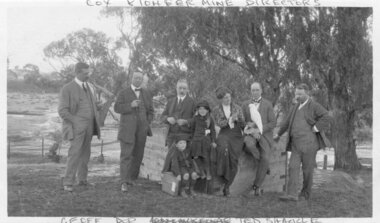
... Dorothy and Geoff. Taken at Sherwood - the mine manager's residence. (1914) Cocks Pioneer Electric Gold & Tin Mine Company was formed in 1899. The company's first power station, located at the eastern end of the valley began operating with its 340 Kilowatt steam-powered generator. By 1909, from 2,500,000 cubic yards worked, reported recovery was 17,284 ounces of gold and 224 tons of tin ore. By 1909, Cocks Pioneer’s power plant had become inadequate and uneconomical. The barge was floated downstream about a mile...Dorothy and Geoff. Taken at Sherwood - the mine manager's residence. (1914) Cocks Pioneer Electric Gold & Tin Mine Company was formed in 1899. The company's first power station, located at the eastern end of the valley began operating with its 340 Kilowatt steam-powered generator. By 1909, from 2,500,000 cubic yards worked, reported recovery was 17,284 ounces of gold and 224 tons of tin ore. By 1909, Cocks Pioneer’s power plant had become inadequate and uneconomical. The barge was floated downstream about a mile ...Image of Cocks Pioneer Gold & Tin Mines NL directors with Mrs Molly Moline and children, Dorothy and Geoff. Taken at Sherwood - the mine manager's residence. (1914) Cocks Pioneer Electric Gold & Tin Mine Company was formed in 1899. The company's first power station, located at the eastern end of the valley began operating with its 340 Kilowatt steam-powered generator. By 1909, from 2,500,000 cubic yards worked, reported recovery was 17,284 ounces of gold and 224 tons of tin ore. By 1909, Cocks Pioneer’s power plant had become inadequate and uneconomical. The barge was floated downstream about a mile, but lost time caused the operations to cease. Following testing, a new mine was established by diverting Reid's Creek at a cost of £25 000. Settling dams were built, one of which held 1,935,900 cubic feet. Sold earth banks, built against a wall of stringy bark saplings constructed and laced with vertical props, were built. In 1914, the company was reformed as Cock’s Pioneer Gold and Tin Mines NL, another power station was constructed at the western end of the township, near the junction of Clear and Reid's Creeks. From 6,800,000 cubic yards of material processed, the returns were 64,397 ounces of gold and 855 ton of tin. Cocks Pioneer mine then moved the barge downs stream and continued sluicing. In 1929 Cocks Pioneer Electric Gold and Tin Mining Company ceased operations due to a drop in values. Cock’s Pioneer Gold and Tin Mines NL carried on large-scale hydraulic sluicing operations until 1941. "COX PIONEER MINE DIRECTORS" top "GEOFF DOR (unclear) TED SHACKLE" bottom mine, gold, tin, gold mining, tin mining, cockatoos, sluicing, men, women, children, cocks pioneer, el dorado, eldorado -
Kew Historical Society Inc
Journal, Kew Historical Society, Newsletter No.115, June 2016
... Heritage Issues: Dorothy Rogers Reserve / Brad Miles p4. The Great War in Kew 1916: The conscription debate / Andrew Frost p6. ...What Price Memory? / Robert Baker p1. What’s On - June to September: Exhibitions, Monthly meetings p3. Heritage Issues: Dorothy Rogers Reserve / Brad Miles p4. The Great War in Kew 1916: The conscription debate / Andrew Frost p6. Victorian Collections [Hat collection] / Robert Baker p7. More Examples of Lost Kew: Studley Park Toll Bridge, Salvation Army Citadel, Harp of Erin Hotel, Kew Recreation Hall p9. Membership & Donations p10.Published quarterly since 1977, the newsletters of the Kew Historical Society contain significant research by members exploring relevant aspects of the Victorian and Australian Framework of Historical Themes. Frequently, articles on people, places and artefacts are the only source of information about an aspect of Kew, and Melbourne’s history. non-fiction What Price Memory? / Robert Baker p1. What’s On - June to September: Exhibitions, Monthly meetings p3. Heritage Issues: Dorothy Rogers Reserve / Brad Miles p4. The Great War in Kew 1916: The conscription debate / Andrew Frost p6. Victorian Collections [Hat collection] / Robert Baker p7. More Examples of Lost Kew: Studley Park Toll Bridge, Salvation Army Citadel, Harp of Erin Hotel, Kew Recreation Hall p9. Membership & Donations p10. -
 Melton City Libraries
Newspaper, Oral History Day, 1992
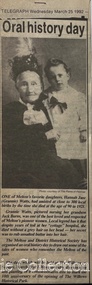
... It came down through the Toolern Vale road and cut across about a mile and a half from the cross roads at Toolern Vale from north westerly to the south east and cut through over the Keilor road. Mary: It came in across the creek at Funstons in Toolern, then through Jim Minns. Dorothy...It came down through the Toolern Vale road and cut across about a mile and a half from the cross roads at Toolern Vale from north westerly to the south east and cut through over the Keilor road. Mary: It came in across the creek at Funstons in Toolern, then through Jim Minns. Dorothy ...Mary Tolhurst M&DHS - March 29th Dunvegan Willows Park Melton 1992 Ladies Oral History Day Graham Minns President Ray Radford MC Sound recording transfer to CD 2011 by Tom Wood Edited typescript by Wendy Barrie 2013 I was born in Rockbank, and when I was five years old moved to Toolern Vale and started and finished school there. Toolern Vale only consisted of the Store, Post Office and shop, where you could buy your fodder, and pollard supplies, the Hall, the little Church and the bluestone School. The School changed shape three times from the 1800s[1869] til the time I went there. There was four generations of my family that went there and it was destroyed by fire in 1965. Marjorie nee Myers Butler. Yes, I remember along with it your lovely Ronisch piano. Mary, quite true! Marj what you say about the Ronisch piano. When I came the age to learn music my mum and dad couldn’t really afford it, but still what parents do for their children. They had Marj go along with them and pick this lovely Ronisch piano. It was known round the district. Everyone commented about the loss that lovely piano. After leaving school it was war time, 1939, then it was work, When I was 7 year old I was put out into the cow yard. In 1940 when the soldiers were going away our milk was confiscated it had to go to Bacchus Marsh. It used to go the Sunbury to be brine cooled and then go to Melbourne. Then they took it then to the Lifeguard Milk Factory at Bacchus Marsh. It had to go as condensed milk to the soldiers. This year is 50 years of the Land Army. I was an unofficial Land Army but they still kept check on me. I went onto married life and I followed the cows right through [howls of laughter] and we went on until the 1965 fire. That’s when we got out of the cows. Marjorie asks, was Granny Watts your grandmother or great grandmother? Mary: She was my great grandmother, the midwife of Melton. The 1965 fire started ¾ of a mile above our place, Frank Ryan’s sheds were burnt and his house was saved, then it wiped the School out, the Hall, the Church the Post Office and Store and little house that was Charlie Charlton’s in the early days. Mrs Wilson’s place was saved by the Fire Brigade by pulling boards off the side, and from there it went over the hill and it was stopped at the Rockbank Railway Station. If it had of got over the railway they said it would have gone into Werribee. A lot was burnt out in that strip. Mary nee Nixon Collins: 18 houses burnt that day. Audience question, did Melton get burnt that day? Ray: No. It came down through the Toolern Vale road and cut across about a mile and a half from the cross roads at Toolern Vale from north westerly to the south east and cut through over the Keilor road. Mary: It came in across the creek at Funstons in Toolern, then through Jim Minns. Dorothy was it your place then [nee Knox Beaty] to Ken Beatty’s and from there it went through to Doug McIntosh’s and to Cockbills and the wind changed and it came across to the railway line, and that is where they stopped it. [the cause of the fire was controversial, they had been burning off the night before and there was some talk of someone starting it. It was very hot and very strong wind, it was a terrible day] Ray: When the fire went through McIntosh’s they had a haystack on the north side of their house and the haystack got caught and the fire burnt a hole through the side of the house and the boys pyjamas on the bed. The house was saved. It came through like and express train roaring at you, I was at McIntosh’s when it went roaring past. You couldn’t see, dust and ash and tremendous heat. The fire started about 12 o’clock Jack [husband] said to me, fire, I said where, where? Just up the road, what have I got to do? and he went out and he had gone to the fire and left me. I tried to get the animals and I put out buckets of water, putting the buckets of water out saved my life. Chas Jones and another friend of his came in and they picked up the buckets of water, I thought I had better get out because the fire was on the haystack up the paddock and when I went to go out through the north side of the house and couldn’t get out, I’ll go through the front gate so I went around the other side of the house. I got caught there and Chassy Jones and his friend came round carrying the bucket of water and I panicked. He threw the bucket of water over me. Well that is what saved my life because I was damp, whenever we tried to leave the ball of fire came over me and over my shoulder and my hair was scorched. Chassy Jones lost his truck and Keith Watt his big truck because he had the water tank on it and they couldn’t get out of the yard. Granny Watt’s house, the first private hospital had condemned and Jack and I pulled it down and had it moved up to Toolern and had it in the yard a fortnight and it was all burnt and we didn’t get the shed we wanted. Every 13 years right up until Ash Wednesday fires, there has always been fire close at hand. The 1952 fire went down the back of the house, the 1965 fire took the house, and the house that I live in now, it is the third house that has been on that spot. When the Hunters owned it, Mrs Hunter was nearly burnt in her bed. They had a 13 roomed house. In 1924 the house burnt down, and there was another house was built there and that was the one that burnt down. Edna: So Mary built a brick veneer house. Marjorie: like the three little pigs [laughter] Collins - Mary M &DHS - March 29th 1992 Ladies oral history day at Dunvegan, Willows Park Melton. Graham Minns President Ray Radford MC Sound recording transferred to CD 2011 Edited typescript by Wendy Barrie 2013 Mary Collins nee Nixon born in Terang 1907 down in the Western District and we shifted to Melton when I was 5 and a half then I started school here in Melton, and spent all my school life at Melton State School, next to the Church of England, it’s called the Primary School now. I got my Qualifying and Merit Certificate then I left School because there wasn’t a High School. When I was 16 I got and job in the Melton Post Office and I worked there, I was the first girl in Melton to deliver the mail, and worked on the telephone and the Bank business. Mrs Ross and myself behind the counter, there were about 500 – 600 people in the Shire at that time and now when I go into the new Post Office there is 36,000 here there’s still 2 people behind the counter [laughter from the audience] and wait in a queue right out to the door. Times haven’t changed much have they! There was a manual telephone and you had to ring the handle, and there were eight subscribers when I went there and when I left there were 46 I had coaxed that number to join the telephone, even the police station didn’t have the phone on. The two Hotels and the two Chaff mills and Mr Ernie Barrie, Parkers the butcher, the Shire Office was No 8, and the Police house was next to the Courthouse on the corner. They were number 9. I can remember a lot of the numbers still. The Post Office was the Agency for the Commonwealth Bank [comment from audience member] I used to do the Bank business too, I left after four years there, mother wasn’t very well. The Inspector who used to come up to the Post Office asked me if I would take up casual Post Mistress and to go around the different districts but I refused and when Mrs Ross’s holidays were due I was the replacement. I wasn’t 21. I loved my work meeting everybody and most people had horse and jinkers and when the elderly would come in there would be Mr Tom Morrow, he only had one arm and Mrs Dunn came from Bulman’s road in their horse and jinker. They were elderly I would see them pull up out the front and quickly get their mail and run out to them because they didn’t have to get out of the jinker to tie up their horse. If someone had a baby in arms I would tear out and hold the baby while they got down. Mrs Ross was very very strict. I had to sweep the Post Office, she had a couple of mats and there would be a threepence or a sixpence under the mats show she knew whether I lifted the mat, I was whether I was honest or not. Graham: How much were your wages? I got 27/7 pence a week for a 52 hour week. I had to work every holiday except Good Friday and Christmas Day and even when it was Monday holiday I always had to go to work from 9am - !0 am, the Post Office was always open. In the winter I had to wait until twenty past six in case there were any telegrams to deliver. I delivered them on a push bike. One time Tom Barrie told me this years afterwards. I used to go home for lunch. We lived on the Keilor road and I used to ride my bike home. On the hot days the boys used to go and swim in the swimming pool down near a turn in the creek there was a hole where the boys would swim in the nude, they didn’t have any bathers and they didn’t have any watches in those days. Tom Barrie said they always used to watched for me as I was always about 3 minutes past 1, my lunch hour was from 1-2. One particular day they missed seeing me and swam on, and of course they were all late for school when they got back and were all kept in a night. I did get a fortnight holiday. I loved my work and I knew everyone in the district right from Toolern Vale to the Marsh and everybody at Melton South. Did you listen into conversations on the Switchboard? Oh no. [laughter] Melton did not have electricity then. I had to fill the lamps everyday with kerosene. The Staughton Memorial was outside the Post Office. It had four posts with the chain looped around it, and that’s where the people used to tie up their horses. Marjorie nee Myers Butler comments about sitting and swinging on the chains. Mr Fred Coburn lit the acetylene gas light in the Memorial. It was the only streetlight in Melton. There was no electricity until 1939. Ray Radford comments about another gas street light which was on the corner of Station road. [later] Mary passes around her school photos. Mary mentions the names of those who have passed away, Maisie McDonald, ,Marian Wraith, Hilda McCreey, and Valda McDonald. I have written the names on the back. Marjorie comments about Marie Jongebloed and Greta are the only two girls left out of big family of ten I think there were [hesitates] 4 or 5 girls and the rest were boys. Mary. Flora Woodley, Dorrie Flynn and Margaret McDonald are still alive. They are my age we were all born about 1907. Marjorie points out herself in a later photo [1921 and 1922 School ] Mary mentions the name Walsh and identyfies following names, the Parker boys, Ken Beaty, Malc and Linda Cameron, Maisie Mc Donald, Ted Radford, George Nixon, Norman Minns, he was later the Shire Secretary of Werribee. One of the Woodley girls. [Maisie Arthur] Marjorie: Rosie Shearwood, June Whiting Mary. Lily Mc Donald, she has passed away. Isabel Harrison nee Tinkler, she lives at Werribee, Doreen Rogers, Marjorie Walker, Jess McIntosh, Mary Gillespie. Mr Malone was the Junior teacher Mr Roe and Miss Cooke. Fred Myers, my sister [Elizabeth] and the year was 1921. Myers (Barrie) School Photo Collection. Many of the names were identified at the 1970 Centenary of Melton State School No. 430. Edna Barrie organised, compiled and typed the lists to accompany these photos for the year 1921. The 1922 photo shows the higher grades. Ladies Oral History Day event held by Melton and District Historical Society, article featured in the Telegraph local identities, local special interest groups -
 Melton City Libraries
Newspaper, 'Call for new members or society maybe be history, 2003
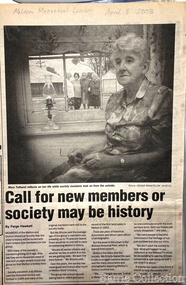
... It came down through the Toolern Vale road and cut across about a mile and a half from the cross roads at Toolern Vale from north westerly to the south east and cut through over the Keilor road. Mary: It came in across the creek at Funstons in Toolern, then through Jim Minns. Dorothy...It came down through the Toolern Vale road and cut across about a mile and a half from the cross roads at Toolern Vale from north westerly to the south east and cut through over the Keilor road. Mary: It came in across the creek at Funstons in Toolern, then through Jim Minns. Dorothy ...Mary Tolhurst M&DHS - March 29th Dunvegan Willows Park Melton 1992 Ladies Oral History Day Graham Minns President Ray Radford MC Sound recording transfer to CD 2011 by Tom Wood Edited typescript by Wendy Barrie 2013 I was born in Rockbank, and when I was five years old moved to Toolern Vale and started and finished school there. Toolern Vale only consisted of the Store, Post Office and shop, where you could buy your fodder, and pollard supplies, the Hall, the little Church and the bluestone School. The School changed shape three times from the 1800s[1869] til the time I went there. There was four generations of my family that went there and it was destroyed by fire in 1965. Marjorie nee Myers Butler. Yes, I remember along with it your lovely Ronisch piano. Mary, quite true! Marj what you say about the Ronisch piano. When I came the age to learn music my mum and dad couldn’t really afford it, but still what parents do for their children. They had Marj go along with them and pick this lovely Ronisch piano. It was known round the district. Everyone commented about the loss that lovely piano. After leaving school it was war time, 1939, then it was work, When I was 7 year old I was put out into the cow yard. In 1940 when the soldiers were going away our milk was confiscated it had to go to Bacchus Marsh. It used to go the Sunbury to be brine cooled and then go to Melbourne. Then they took it then to the Lifeguard Milk Factory at Bacchus Marsh. It had to go as condensed milk to the soldiers. This year is 50 years of the Land Army. I was an unofficial Land Army but they still kept check on me. I went onto married life and I followed the cows right through [howls of laughter] and we went on until the 1965 fire. That’s when we got out of the cows. Marjorie asks, was Granny Watts your grandmother or great grandmother? Mary: She was my great grandmother, the midwife of Melton. The 1965 fire started ¾ of a mile above our place, Frank Ryan’s sheds were burnt and his house was saved, then it wiped the School out, the Hall, the Church the Post Office and Store and little house that was Charlie Charlton’s in the early days. Mrs Wilson’s place was saved by the Fire Brigade by pulling boards off the side, and from there it went over the hill and it was stopped at the Rockbank Railway Station. If it had of got over the railway they said it would have gone into Werribee. A lot was burnt out in that strip. Mary nee Nixon Collins: 18 houses burnt that day. Audience question, did Melton get burnt that day? Ray: No. It came down through the Toolern Vale road and cut across about a mile and a half from the cross roads at Toolern Vale from north westerly to the south east and cut through over the Keilor road. Mary: It came in across the creek at Funstons in Toolern, then through Jim Minns. Dorothy was it your place then [nee Knox Beaty] to Ken Beatty’s and from there it went through to Doug McIntosh’s and to Cockbills and the wind changed and it came across to the railway line, and that is where they stopped it. [the cause of the fire was controversial, they had been burning off the night before and there was some talk of someone starting it. It was very hot and very strong wind, it was a terrible day] Ray: When the fire went through McIntosh’s they had a haystack on the north side of their house and the haystack got caught and the fire burnt a hole through the side of the house and the boys pyjamas on the bed. The house was saved. It came through like and express train roaring at you, I was at McIntosh’s when it went roaring past. You couldn’t see, dust and ash and tremendous heat. The fire started about 12 o’clock Jack [husband] said to me, fire, I said where, where? Just up the road, what have I got to do? and he went out and he had gone to the fire and left me. I tried to get the animals and I put out buckets of water, putting the buckets of water out saved my life. Chas Jones and another friend of his came in and they picked up the buckets of water, I thought I had better get out because the fire was on the haystack up the paddock and when I went to go out through the north side of the house and couldn’t get out, I’ll go through the front gate so I went around the other side of the house. I got caught there and Chassy Jones and his friend came round carrying the bucket of water and I panicked. He threw the bucket of water over me. Well that is what saved my life because I was damp, whenever we tried to leave the ball of fire came over me and over my shoulder and my hair was scorched. Chassy Jones lost his truck and Keith Watt his big truck because he had the water tank on it and they couldn’t get out of the yard. Granny Watt’s house, the first private hospital had condemned and Jack and I pulled it down and had it moved up to Toolern and had it in the yard a fortnight and it was all burnt and we didn’t get the shed we wanted. Every 13 years right up until Ash Wednesday fires, there has always been fire close at hand. The 1952 fire went down the back of the house, the 1965 fire took the house, and the house that I live in now, it is the third house that has been on that spot. When the Hunters owned it, Mrs Hunter was nearly burnt in her bed. They had a 13 roomed house. In 1924 the house burnt down, and there was another house was built there and that was the one that burnt down. Edna: So Mary built a brick veneer house. Marjorie: like the three little pigs [laughter] Mary Tolhurst member of the Melton & District Historical Society in the Melton and Moorabool Leader local identities, local special interest groups -
 Ballarat Heritage Services
Photograph - Photograph - Colour, Dorothy Wickham, Mason's Marks, Carlisle Cathedral 27 October 2016, 2016
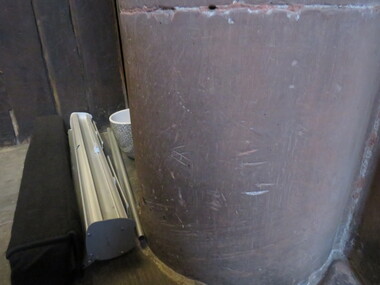
... miles south of Carlisle designed the intricate masonry. Many interesting features are recorded about Carlisle Cathedral in tourist brochures and its homepage, however they do not mention the many mason’s marks clearly visible on the stone columns inside the Cathedral. There have been hundreds of marks recorded, some being similar to those on the Yarrowee Channel in Ballarat. mason's marks carlisle, cathedral, stonemasons, mason's marks Mason's Marks, Carlisle Cathedral 27 October 2016 Photograph Photograph - Colour Dorothy Wickham ...Carlisle Cathedral The Priory near the cathedral was founded in 1122 by King Henry I. There were earlier buildings on the site. Ten years later the priory church became the Cathedral and the Kind created the diocese of Carlisle. The building is constructed of red sandstone. Celebrated architect Ivo de Raughton who lived a few miles south of Carlisle designed the intricate masonry. Many interesting features are recorded about Carlisle Cathedral in tourist brochures and its homepage, however they do not mention the many mason’s marks clearly visible on the stone columns inside the Cathedral. There have been hundreds of marks recorded, some being similar to those on the Yarrowee Channel in Ballarat. mason's marks, carlisle, cathedral, stonemasons, mason's marks -
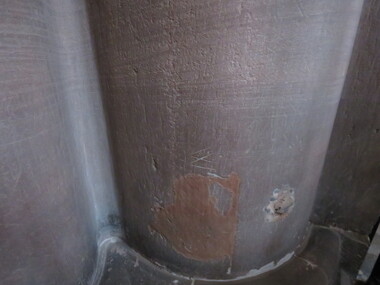 Ballarat Heritage Services
Photograph - Colour, Dorothy Wickham, Mason's Marks, Carlisle Cathedral 27 October 2016, 2016
... miles south of Carlisle designed the intricate masonry. Many interesting features are recorded about Carlisle Cathedral in tourist brochures and its homepage, however they do not mention the many mason’s marks clearly visible on the stone columns inside the Cathedral. There have been hundreds of marks recorded, some being similar to those on the Yarrowee Channel in Ballarat. carlisle, cathedral, stonemasons, mason's marks Mason's Marks, Carlisle Cathedral 27 October 2016 Photograph - Colour Dorothy Wickham ...Carlisle Cathedral The Priory near the cathedral was founded in 1122 by King Henry I. There were earlier buildings on the site. Ten years later the priory church became the Cathedral and the Kind created the diocese of Carlisle. The building is constructed of red sandstone. Celebrated architect Ivo de Raughton who lived a few miles south of Carlisle designed the intricate masonry. Many interesting features are recorded about Carlisle Cathedral in tourist brochures and its homepage, however they do not mention the many mason’s marks clearly visible on the stone columns inside the Cathedral. There have been hundreds of marks recorded, some being similar to those on the Yarrowee Channel in Ballarat. carlisle, cathedral, stonemasons, mason's marks -
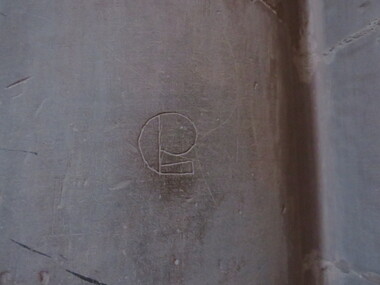 Ballarat Heritage Services
Photograph - Colour, Dorothy Wickham, Mason's Marks, Carlisle Cathedral 27 October 2016, 2016
... miles south of Carlisle designed the intricate masonry. Many interesting features are recorded about Carlisle Cathedral in tourist brochures and its homepage, however they do not mention the many mason’s marks clearly visible on the stone columns inside the Cathedral. There have been hundreds of marks recorded, some being similar to those on the Yarrowee Channel in Ballarat. carlisle, cathedral, stonemasons, mason's marks, Thomas Crump, Crump The sign of Thomas Crump, stonemason Mason's Marks, Carlisle Cathedral 27 October 2016 Photograph - Colour Dorothy Wickham ...Carlisle Cathedral The Priory near the cathedral was founded in 1122 by King Henry I. There were earlier buildings on the site. Ten years later the priory church became the Cathedral and the Kind created the diocese of Carlisle. The building is constructed of red sandstone. Celebrated architect Ivo de Raughton who lived a few miles south of Carlisle designed the intricate masonry. Many interesting features are recorded about Carlisle Cathedral in tourist brochures and its homepage, however they do not mention the many mason’s marks clearly visible on the stone columns inside the Cathedral. There have been hundreds of marks recorded, some being similar to those on the Yarrowee Channel in Ballarat. The sign of Thomas Crump, stonemason carlisle, cathedral, stonemasons, mason's marks, thomas crump, crump -
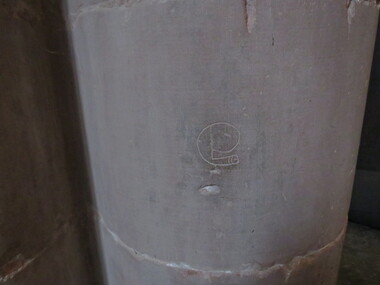 Ballarat Heritage Services
Photograph - Colour, Dorothy Wickham, Mason's Marks, Carlisle Cathedral 27 October 2016, 2016
... miles south of Carlisle designed the intricate masonry. Many interesting features are recorded about Carlisle Cathedral in tourist brochures and its homepage, however they do not mention the many mason’s marks clearly visible on the stone columns inside the Cathedral. There have been hundreds of marks recorded, some being similar to those on the Yarrowee Channel in Ballarat. carlisle, cathedral, stonemasons, mason's marks, Thomas Crump, Crump Sign of Thomas Crump, stonemason Mason's Marks, Carlisle Cathedral 27 October 2016 Photograph - Colour Dorothy Wickham ...Carlisle Cathedral The Priory near the cathedral was founded in 1122 by King Henry I. There were earlier buildings on the site. Ten years later the priory church became the Cathedral and the Kind created the diocese of Carlisle. The building is constructed of red sandstone. Celebrated architect Ivo de Raughton who lived a few miles south of Carlisle designed the intricate masonry. Many interesting features are recorded about Carlisle Cathedral in tourist brochures and its homepage, however they do not mention the many mason’s marks clearly visible on the stone columns inside the Cathedral. There have been hundreds of marks recorded, some being similar to those on the Yarrowee Channel in Ballarat. Sign of Thomas Crump, stonemason carlisle, cathedral, stonemasons, mason's marks, thomas crump, crump -
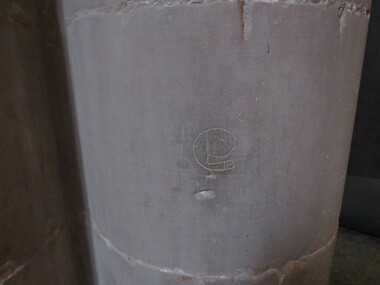 Ballarat Heritage Services
Photograph - Colour, Dorothy Wickham, Mason's Marks, Carlisle Cathedral 27 October 2016, 2016
... miles south of Carlisle designed the intricate masonry. Many interesting features are recorded about Carlisle Cathedral in tourist brochures and its homepage, however they do not mention the many mason’s marks clearly visible on the stone columns inside the Cathedral. There have been hundreds of marks recorded, some being similar to those on the Yarrowee Channel in Ballarat. carlisle, cathedral, stonemasons, mason's marks, Thomas Crump, Crump Sign of Thomas Crump, stonemason Mason's Marks, Carlisle Cathedral 27 October 2016 Photograph - Colour Dorothy Wickham ...Carlisle Cathedral The Priory near the cathedral was founded in 1122 by King Henry I. There were earlier buildings on the site. Ten years later the priory church became the Cathedral and the Kind created the diocese of Carlisle. The building is constructed of red sandstone. Celebrated architect Ivo de Raughton who lived a few miles south of Carlisle designed the intricate masonry. Many interesting features are recorded about Carlisle Cathedral in tourist brochures and its homepage, however they do not mention the many mason’s marks clearly visible on the stone columns inside the Cathedral. There have been hundreds of marks recorded, some being similar to those on the Yarrowee Channel in Ballarat. Sign of Thomas Crump, stonemason carlisle, cathedral, stonemasons, mason's marks, thomas crump, crump -
 Ballarat Heritage Services
Photograph - Colour, Dorothy Wickham, Mason's Marks, Carlisle Cathedral 27 October 2016, 2016
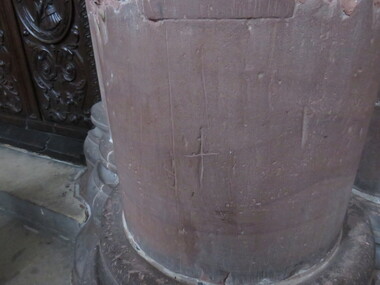
... miles south of Carlisle designed the intricate masonry. Many interesting features are recorded about Carlisle Cathedral in tourist brochures and its homepage, however they do not mention the many mason’s marks clearly visible on the stone columns inside the Cathedral. There have been hundreds of marks recorded, some being similar to those on the Yarrowee Channel in Ballarat. carlisle, cathedral, stonemasons, mason's marks Sign of the cross (plus sign) Mason's Marks, Carlisle Cathedral 27 October 2016 Photograph - Colour Dorothy Wickham ...Carlisle Cathedral The Priory near the cathedral was founded in 1122 by King Henry I. There were earlier buildings on the site. Ten years later the priory church became the Cathedral and the Kind created the diocese of Carlisle. The building is constructed of red sandstone. Celebrated architect Ivo de Raughton who lived a few miles south of Carlisle designed the intricate masonry. Many interesting features are recorded about Carlisle Cathedral in tourist brochures and its homepage, however they do not mention the many mason’s marks clearly visible on the stone columns inside the Cathedral. There have been hundreds of marks recorded, some being similar to those on the Yarrowee Channel in Ballarat. Sign of the cross (plus sign) carlisle, cathedral, stonemasons, mason's marks -
 Ballarat Heritage Services
Photograph - Colour, Dorothy Wickham, Mason's Marks, Carlisle Cathedral 27 October 2016, 2016
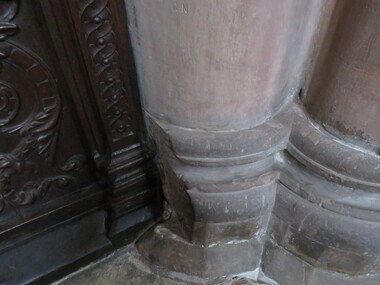
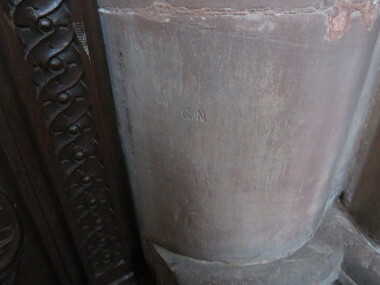
... miles south of Carlisle designed the intricate masonry. Many interesting features are recorded about Carlisle Cathedral in tourist brochures and its homepage, however they do not mention the many mason’s marks clearly visible on the stone columns inside the Cathedral. There have been hundreds of marks recorded, some being similar to those on the Yarrowee Channel in Ballarat. carlisle, cathedral, stonemasons, mason's marks G. N. Digital photograph Mason's Marks, Carlisle Cathedral 27 October 2016 Photograph - Colour Dorothy ...Carlisle Cathedral The Priory near the cathedral was founded in 1122 by King Henry I. There were earlier buildings on the site. Ten years later the priory church became the Cathedral and the Kind created the diocese of Carlisle. The building is constructed of red sandstone. Celebrated architect Ivo de Raughton who lived a few miles south of Carlisle designed the intricate masonry. Many interesting features are recorded about Carlisle Cathedral in tourist brochures and its homepage, however they do not mention the many mason’s marks clearly visible on the stone columns inside the Cathedral. There have been hundreds of marks recorded, some being similar to those on the Yarrowee Channel in Ballarat. Digital photograph G. N. carlisle, cathedral, stonemasons, mason's marks -
 Ballarat Heritage Services
Photograph - Colour, Dorothy Wickham, Mason's Marks, Carlisle Cathedral 27 October 2016, 2016
... miles south of Carlisle designed the intricate masonry. Many interesting features are recorded about Carlisle Cathedral in tourist brochures and its homepage, however they do not mention the many mason’s marks clearly visible on the stone columns inside the Cathedral. There have been hundreds of marks recorded, some being similar to those on the Yarrowee Channel in Ballarat. carlisle, cathedral, stonemasons, mason's marks G.N. Digital photograph Mason's Marks, Carlisle Cathedral 27 October 2016 Photograph - Colour Dorothy ...Carlisle Cathedral The Priory near the cathedral was founded in 1122 by King Henry I. There were earlier buildings on the site. Ten years later the priory church became the Cathedral and the Kind created the diocese of Carlisle. The building is constructed of red sandstone. Celebrated architect Ivo de Raughton who lived a few miles south of Carlisle designed the intricate masonry. Many interesting features are recorded about Carlisle Cathedral in tourist brochures and its homepage, however they do not mention the many mason’s marks clearly visible on the stone columns inside the Cathedral. There have been hundreds of marks recorded, some being similar to those on the Yarrowee Channel in Ballarat. Digital photograph G.N. carlisle, cathedral, stonemasons, mason's marks -
 Ballarat Heritage Services
Photograph - Colour, Dorothy Wickham, Mason's Marks, Carlisle Cathedral 27 October 2016, 2016
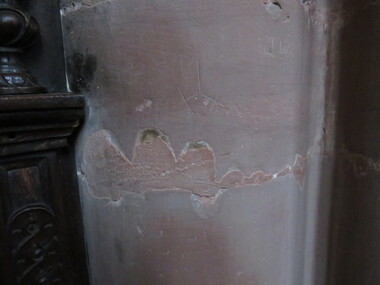
... miles south of Carlisle designed the intricate masonry. Many interesting features are recorded about Carlisle Cathedral in tourist brochures and its homepage, however they do not mention the many mason’s marks clearly visible on the stone columns inside the Cathedral. There have been hundreds of marks recorded, some being similar to those on the Yarrowee Channel in Ballarat. carlisle, cathedral, stonemasons, mason's marks Two "X" marks joined by a vertical line Digital photograph Mason's Marks, Carlisle Cathedral 27 October 2016 Photograph - Colour Dorothy Wickham ...Carlisle Cathedral The Priory near the cathedral was founded in 1122 by King Henry I. There were earlier buildings on the site. Ten years later the priory church became the Cathedral and the Kind created the diocese of Carlisle. The building is constructed of red sandstone. Celebrated architect Ivo de Raughton who lived a few miles south of Carlisle designed the intricate masonry. Many interesting features are recorded about Carlisle Cathedral in tourist brochures and its homepage, however they do not mention the many mason’s marks clearly visible on the stone columns inside the Cathedral. There have been hundreds of marks recorded, some being similar to those on the Yarrowee Channel in Ballarat. Digital photograph Two "X" marks joined by a vertical line carlisle, cathedral, stonemasons, mason's marks -
 Ballarat Heritage Services
Photograph - Colour, Dorothy Wickham, Mason's Marks, Carlisle Cathedral 27 October 2016, 2016
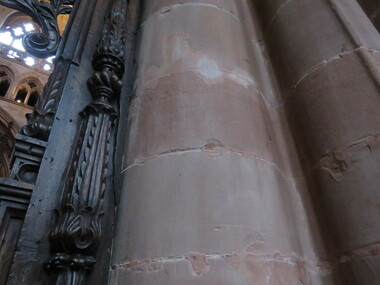
... miles south of Carlisle designed the intricate masonry. Many interesting features are recorded about Carlisle Cathedral in tourist brochures and its homepage, however they do not mention the many mason’s marks clearly visible on the stone columns inside the Cathedral. There have been hundreds of marks recorded, some being similar to those on the Yarrowee Channel in Ballarat. carlisle, cathedral, stonemasons, mason's marks Digital photograph Mason's Marks, Carlisle Cathedral 27 October 2016 Photograph - Colour Dorothy Wickham ...Carlisle Cathedral The Priory near the cathedral was founded in 1122 by King Henry I. There were earlier buildings on the site. Ten years later the priory church became the Cathedral and the Kind created the diocese of Carlisle. The building is constructed of red sandstone. Celebrated architect Ivo de Raughton who lived a few miles south of Carlisle designed the intricate masonry. Many interesting features are recorded about Carlisle Cathedral in tourist brochures and its homepage, however they do not mention the many mason’s marks clearly visible on the stone columns inside the Cathedral. There have been hundreds of marks recorded, some being similar to those on the Yarrowee Channel in Ballarat. Digital photograph carlisle, cathedral, stonemasons, mason's marks -
 Ballarat Heritage Services
Photograph - Colour, Dorothy Wickham, Mason's Marks, Carlisle Cathedral 27 October 2016, 2016
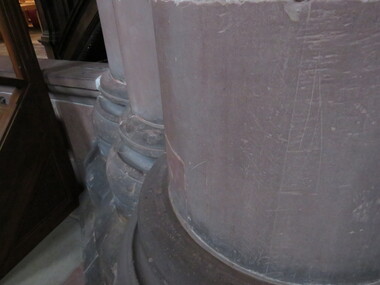
... miles south of Carlisle designed the intricate masonry. Many interesting features are recorded about Carlisle Cathedral in tourist brochures and its homepage, however they do not mention the many mason’s marks clearly visible on the stone columns inside the Cathedral. There have been hundreds of marks recorded, some being similar to those on the Yarrowee Channel in Ballarat. carlisle, cathedral, stonemasons, mason's marks digital photograph Mason's Marks, Carlisle Cathedral 27 October 2016 Photograph - Colour Dorothy Wickham ...Carlisle Cathedral The Priory near the cathedral was founded in 1122 by King Henry I. There were earlier buildings on the site. Ten years later the priory church became the Cathedral and the Kind created the diocese of Carlisle. The building is constructed of red sandstone. Celebrated architect Ivo de Raughton who lived a few miles south of Carlisle designed the intricate masonry. Many interesting features are recorded about Carlisle Cathedral in tourist brochures and its homepage, however they do not mention the many mason’s marks clearly visible on the stone columns inside the Cathedral. There have been hundreds of marks recorded, some being similar to those on the Yarrowee Channel in Ballarat. digital photograph carlisle, cathedral, stonemasons, mason's marks -
 Ballarat Heritage Services
Photograph - Colour, Dorothy Wickham, Mason's Marks, Carlisle Cathedral 27 October 2016, 2016
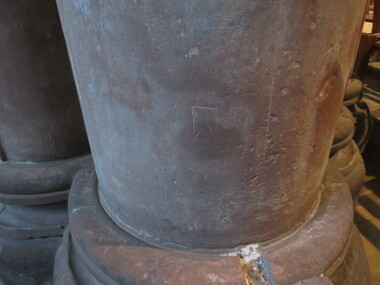
... miles south of Carlisle designed the intricate masonry. Many interesting features are recorded about Carlisle Cathedral in tourist brochures and its homepage, however they do not mention the many mason’s marks clearly visible on the stone columns inside the Cathedral. There have been hundreds of marks recorded, some being similar to those on the Yarrowee Channel in Ballarat. carlisle, cathedral, stonemasons, mason's marks A square with a shape like a "W" at the bottom Digital photograph Mason's Marks, Carlisle Cathedral 27 October 2016 Photograph - Colour Dorothy Wickham ...Carlisle Cathedral The Priory near the cathedral was founded in 1122 by King Henry I. There were earlier buildings on the site. Ten years later the priory church became the Cathedral and the Kind created the diocese of Carlisle. The building is constructed of red sandstone. Celebrated architect Ivo de Raughton who lived a few miles south of Carlisle designed the intricate masonry. Many interesting features are recorded about Carlisle Cathedral in tourist brochures and its homepage, however they do not mention the many mason’s marks clearly visible on the stone columns inside the Cathedral. There have been hundreds of marks recorded, some being similar to those on the Yarrowee Channel in Ballarat. Digital photograph A square with a shape like a "W" at the bottom carlisle, cathedral, stonemasons, mason's marks -
 Ballarat Heritage Services
Photograph - Colour, Dorothy Wickham, Mason's Marks, Carlisle Cathedral 27 October 2016, 2016
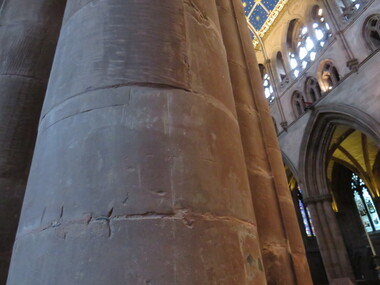
... miles south of Carlisle designed the intricate masonry. Many interesting features are recorded about Carlisle Cathedral in tourist brochures and its homepage, however they do not mention the many mason’s marks clearly visible on the stone columns inside the Cathedral. There have been hundreds of marks recorded, some being similar to those on the Yarrowee Channel in Ballarat. carlisle, cathedral, stonemasons, mason's marks Digital photograph Mason's Marks, Carlisle Cathedral 27 October 2016 Photograph - Colour Dorothy Wickham ...Carlisle Cathedral The Priory near the cathedral was founded in 1122 by King Henry I. There were earlier buildings on the site. Ten years later the priory church became the Cathedral and the Kind created the diocese of Carlisle. The building is constructed of red sandstone. Celebrated architect Ivo de Raughton who lived a few miles south of Carlisle designed the intricate masonry. Many interesting features are recorded about Carlisle Cathedral in tourist brochures and its homepage, however they do not mention the many mason’s marks clearly visible on the stone columns inside the Cathedral. There have been hundreds of marks recorded, some being similar to those on the Yarrowee Channel in Ballarat. Digital photograph carlisle, cathedral, stonemasons, mason's marks -
 Ballarat Heritage Services
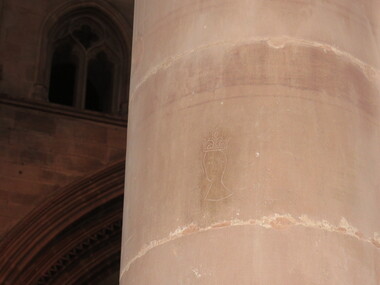
Photograph - Colour, Dorothy Wickham, Mason's Marks, Carlisle Cathedral 27 October 2016, 2016
... miles south of Carlisle designed the intricate masonry. Many interesting features are recorded about Carlisle Cathedral in tourist brochures and its homepage, however they do not mention the many mason’s marks clearly visible on the stone columns inside the Cathedral. There have been hundreds of marks recorded, some being similar to those on the Yarrowee Channel in Ballarat. carlisle, cathedral, stonemasons, mason's marks monarch's head - wearing a crown Digital photograph Mason's Marks, Carlisle Cathedral 27 October 2016 Photograph - Colour Dorothy Wickham ...Carlisle Cathedral The Priory near the cathedral was founded in 1122 by King Henry I. There were earlier buildings on the site. Ten years later the priory church became the Cathedral and the Kind created the diocese of Carlisle. The building is constructed of red sandstone. Celebrated architect Ivo de Raughton who lived a few miles south of Carlisle designed the intricate masonry. Many interesting features are recorded about Carlisle Cathedral in tourist brochures and its homepage, however they do not mention the many mason’s marks clearly visible on the stone columns inside the Cathedral. There have been hundreds of marks recorded, some being similar to those on the Yarrowee Channel in Ballarat. Digital photograph monarch's head - wearing a crown carlisle, cathedral, stonemasons, mason's marks -
Kew Historical Society Inc
Journal, Kew Historical Society, Newsletter No.137, December 2021
... Dorothy Johanna Benyei 1926-2021 / p3. Boroondara's Private Schools 1851-1951 / John Torpey p4. Alexandra Gardens: a chronological and horticultural survey / Desley Reid p6. Discoveries and Inventions [Trinity Grammar School] / Brad Miles ...Civic Ephemera / Robert Baker p1. Office Bearers / p2. History News: Acquisitions; Exhibitions; Grants & Sponsors; Tribute - Dorothy Johanna Benyei 1926-2021 / p3. Boroondara's Private Schools 1851-1951 / John Torpey p4. Alexandra Gardens: a chronological and horticultural survey / Desley Reid p6. Discoveries and Inventions [Trinity Grammar School] / Brad Miles p8. Another Alan Sumner Window [Carey Grammar] / Felicity Renowden p8. Victorian Collections / Robert Baker p8. The Sale of the Halfey Estate: Ordsall [Southesk] and Hermosa [Northesk] / David White p9. Centenary of thew Model Dairy / Robert Baker p11. Membership & Donations p12.Published quarterly since 1977, the newsletters of the Kew Historical Society contain significant research by members exploring relevant aspects of the Victorian and Australian Framework of Historical Themes. Frequently, articles on people, places and artefacts are the only source of information about an aspect of Kew, and Melbourne’s history. non-fiction Civic Ephemera / Robert Baker p1. Office Bearers / p2. History News: Acquisitions; Exhibitions; Grants & Sponsors; Tribute - Dorothy Johanna Benyei 1926-2021 / p3. Boroondara's Private Schools 1851-1951 / John Torpey p4. Alexandra Gardens: a chronological and horticultural survey / Desley Reid p6. Discoveries and Inventions [Trinity Grammar School] / Brad Miles p8. Another Alan Sumner Window [Carey Grammar] / Felicity Renowden p8. Victorian Collections / Robert Baker p8. The Sale of the Halfey Estate: Ordsall [Southesk] and Hermosa [Northesk] / David White p9. Centenary of thew Model Dairy / Robert Baker p11. Membership & Donations p12. kew historical society (vic.) -- periodicals., kew historical society (vic.) -- newsletters, kew historical society (vic.) -- journals -
 City of Melbourne Libraries
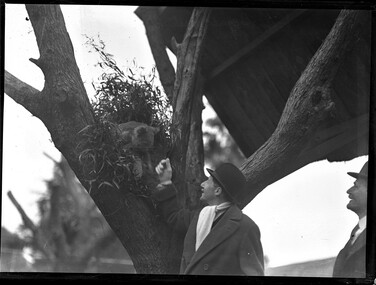
Photograph, Bull, Hugh Jones, 1897-1993, Vice-regal visit to zoo: Governor (Lord Huntingfield) and koala
... miles from one corner to another and never meet a bear. I don’t know why we were all killed. As you know, we don’t eat the farmers’ crop or ruin their orchards. All we asked for were our own gum-trees.” At the end of the book, Dorothy...miles from one corner to another and never meet a bear. I don’t know why we were all killed. As you know, we don’t eat the farmers’ crop or ruin their orchards. All we asked for were our own gum-trees.” At the end of the book, Dorothy ...Published: (1934, June 26). The Age (Melbourne, Vic. : 1854 - 1954), p. 11. Published title: VICE-ROYALTY GREETS THE KING OF THE BEASTS AT THE ZOO. Published caption: Lord Huntingfield experienced a pleasant “induction ceremony” as Patron of the Royal Zoological and Acclimatisation Society yesterday, when he made a tour of the Zoological Gardens. The picture shows the Governor, accompanied by Lady Huntingfield, inspecting the King of Beasts, who is submitting to a little playful treatment from the Director of the Gardens, Mr. Wilkie, while the Director whispers in his ear that a distinguished visitor has come to see him. (Inset), is a picture of Lord Huntingfield greeting one of the Koalas. Trove article identifier: http://nla.gov.au/nla.news-article204818472 Description: A man wearing a hat, scarf and overcoat reaches up to pat a koala in a tree watched by a man in a hat and suit. Research by project volunteer, Fiona Collyer: In 1932, the Zoo built an Australian native animal enclosure which visitors could enter and closely view koalas, wallabies, kookaburras and magpies all placed together. The branches of the trees in the enclosure were cut so that visitors could easily see and feed the koalas sitting in them. The cost to feed each koala fresh gum leaves was fifteen shillings per week. By 1924, Queensland was the last stronghold in Australia for the koala. They were functionally extinct in South Australia, only a few hundred in NSW, and an estimated population of 1000 animals remained in Victoria. There had been a six-month open season on koalas in Queensland in 1919 where over a million had been slaughtered, however with its vast, dense forests it was impossible to accurately know their numbers. Koala fur is tough, warm and waterproof and was in high demand from consumers in Canada, Britain and the US to make hats and gloves and for lining greatcoats. In 1927, with Queensland suffering a crippling drought and high unemployment, the cash-strapped McCormack Labor Government declared an “Open Season” on koalas and “opossums” for their skins, for the month of August. (Possums were often called “opossums” at this time but they are actually possums). There were widespread protests from many groups including the Nature Lovers League, Wild Life Preservation Society of Australia, Queensland Museum, C.W.A. Royal Australian Ornithologist Union, Boy Scouts, religious and women’s groups. There were letters to newspapers from ordinary people, editorials and pleas to women to refuse to wear or purchase koala fur. People questioned the masculinity of koala hunters as it was felt that no proper bushman or sportsman would kill such a defenceless creature. The Brisbane Courier newspaper led the campaign, devoting six columns a day to “Spare the Bear”. Author Vance Palmer sent an impassioned letter to the editor of the The Brisbane Courier, 19 July 1927: “Sir- It is be hoped that the disgust which all humane people have felt at the declaration of an open season for native bears in August will not be allowed to fade away until some protest... so overwhelming and effective that the question will never be raised again. For the shooting of our harmless and loveable native bear is nothing less than barbarous. His case is entirely different from that of other furred animals. No one has ever accused him of spoiling the farmers’ wheat, eating the squatters’ grass or even spreading the prickly pear. There is not a social vice that can be put down to his account. In addition, he is comparatively defenceless. He affords no sport to the gunman, and can be trusted to present a sitting target to the creature mean enough to aim at him. For this reason he has been almost blotted out already from some areas, in days when our fauna and flora were held in such little regard that the settlers’ first instinct was to shoot every strange animal and to sink his axe into every unfamiliar tree.” The Anglican Archbishop of Brisbane, Gerald Sharp, had his letter published in The Brisbane Courier on 16 July 1927: “Sir... The extermination of fauna so distinctive of our country, especially of such harmless and pretty creatures as our native bears, seems to me a shameful thing, and this is likely to mean their extermination.” But it was all to no avail. Known as “Black August”, the government was unmoved by the public’s outrage. 10,000 licences were issued to hunters and “the slaughter of the innocents” went ahead. The newspapers were full of stories of dreadful cruelty against the helpless, benign creatures by the heartless hunters who not only used guns and spotlights but wire snares and cyanide baits so that pelts wouldn’t be damaged. Infant koalas were left orphaned and unlikely to survive without their mothers. Top quality pelts were sold at an average price of 56 shillings and 9 pence per dozen, poor quality skins for as little as 2 1/2 pence each. In December 1927, the Minister for Agriculture and Stock, Mr W. Forgan Smith told the Parliament that during the August open season 597,985 koala pelts worth £139,595 had netted the state’s coffers £6000. 952,194 “opossum” pelts were sold and £9000 made for the State. The backlash that followed helped topple the Queensland Labor Government in 1929. The Wild Life Preservation Society of Australia lobbied the Prime Minister Mr Stanley Bruce to refuse to issue exportation permits for koala pelts and from 10 November 1927 the Commonwealth Government suspended the issuing of permits. In 1930, the Society made a direct appeal to USA President Herbert Hoover and he signed an order prohibiting the importation of koala and wombat fur to USA, eliminating a major market. Koala pelts were often deliberately mislabelled “wombat” to get around restrictions. The ban most likely saved the koala from probable extinction. Three years later the Australian Federal Government banned the export of koala products. This movement against koala killing was really the first conservation campaign in Australia. It raised awareness of the vulnerability of a beloved animal and eventually brought about national parks and national laws for their protection. By 1936, community opposition to possum open seasons was beginning. The koala was made a Protected Species in all states in 1937, meaning no one is allowed to harm a koala, however the laws protecting the gum trees they rely on for food and shelter are weak. The Australian Government estimates the wild koala population in Australia is between 225,000 and 500,000 in 2024. The Australian Koala Foundation estimates the national population at less than 60,000 in 2021 with a 30% decline in three years. Habitat loss from land clearing, dog attacks, road deaths, chlamydia, bushfires and drought exacerbated by climate change, continues to cause their decline. Over eight million koalas were killed for their pelts between 1888 and 1927. Any one of the annual harvests killed more koalas than are alive now. At this time, children were also being taught to appreciate Australian native animals. In 1933, “Blinky Bill: The Quaint Little Australian” book for children was published by Angus and Robertson. It was written and illustrated by New Zealand-born author Dorothy Wall and “Dedicated to my son Peter and all other Peters and Johns and Bobs and Toms and Marys and Bettys and Joans and Pats and all kind children.” The book tells the story of Blinky Bill - a mischievous, patched knickerbocker-wearing koala and his mother and father. The story has messages of conservation and instances of human unkindness and cruelty. Mr. and Mrs. Koala and young Blinky lead a mostly idyllic family life amongst a variety of other animals in the forest. However it all changes in chapter two, when Blinky Bill’s father is distressingly shot by a hunter. There is a harrowing description of Mr. Koala’s shooting and eventual death. “The Koala family lived so happily; never thinking of harm, or that anything could happen to disturb their little home, as all they asked for were plenty of fresh gum-leaves and the warm sun. They had no idea such things as guns were in the world or that a human being had a heart so cruel that he would take a pleasure in seeing a poor little body riddled with bullets hanging helplessly from the tree-top... That same being might just as well take his gun and shoot baby kookaburras, so helpless were they all and so trusting.” “Poor Mr. Koala one day was curled up asleep in his favourite corner, when the terrible thing happened. Bang! He opened his eyes in wonder. What was that? Did the limb of the tree snap where that young cub of his was skylarking? ... bang! again. This time he felt a stinging pain in his leg... Peering over the bough of the tree he saw a man on the ground with something long and black in his arms... Another bang and his ear began to hurt. Bang! again and now his little body was stinging all over. He grunted loudly and slowly climbed up the tree, calling Mrs. Koala and Blinky as he went. He managed to reach the topmost branch... Tears were pouring down his poor little face. He brushed them away with his front paws and cried just like a baby. Fortunately Mrs. Koala and Blinky Bill were hiding in the leaves quite motionless, and the shadows of the tree made them appear as part of it. The man with the gun stood and waited a long time, then walked away, whistling as he went - the only sound to be heard in the bush except the cries of the little bear far up in the tree.” Blinky and his mother quietly and fearfully wait for Mr. Koala to wake. In the morning, grunting and crying, they feel his lifeless body with their paws. Eventually Mrs. Koala realises that her husband is dead and that they need to move to a safe place. After travelling deeper into the forest, Mrs. Koala and Blinky meet koalas Mrs. Grunty and her son Snubby and she describes how she was captured as a baby by koala fur trappers to be a pet for a little girl. The trapper forgot to bring gum leaves for the koala so they try to feed her cake, milk and bananas, making her sick. The little girl’s father relays something he read in the paper: “During the year 1920 to 1921, two hundred and five thousand six hundred and seventy-nine koalas were killed and their skins sold to the fur market, under the name of wombat.” They place the koala in a box with a teddy bear for company. The baby koala’s health deteriorates and the alarmed trapper returns her to the bush. Mrs. Grunty tells Mrs. Koala that she and Blinky are the only bears that she has seen for ten years: “I remember well the little girl’s father telling her... that not so many years ago the bush was alive with us bears, from Queensland to the south of Victoria. Now, we are so rare that we have become a curiosity, something to put in zoos, for children to see; and actually in museums. I believe our grandparents sit there in glass cases, stuffed with something inside to make them appear alive, and, oh dear, glass eyes. In New South Wales, I think we could wander for miles from one corner to another and never meet a bear. I don’t know why we were all killed. As you know, we don’t eat the farmers’ crop or ruin their orchards. All we asked for were our own gum-trees.” At the end of the book, Dorothy tells her readers - “The kindest action of all would be to leave the koala baby in his own bushland, among his own playmates, with the sun, the sky, the birds, and the gum-trees, where he will grow to manhood and live for many years - happy as he should be.” In 1934, a “Wild Zoo”, the Sir Colin Mackenzie Sanctuary, opened on 32 hectares of land, formerly part of Coranderrk Aboriginal Reserve in the Yarra Valley, exclusively displaying Australian native animals, birds and reptiles. It was later renamed Healesville Sanctuary and is now managed by Melbourne Zoo and home to over 200 species of Australian native fauna. The Sanctuary is committed to rescuing, breeding, researching and raising awareness of the vulnerability of Australian animals. Andrew Arthur Wellesley Wilkie, 1853-1948, was Director of the Melbourne Zoo from 1923 to 1936 and was associated with the zoo for 70 years. He first worked as a horticultural assistant to Government botanist Baron Ferdinand von Mueller at the Botanical Gardens at the age of 13, along with his older brother David. One of Andrew’s jobs was to capture moths for the National Herbarium. In 1857, a group of prominent Melburnians assembled at St. Patrick’s Hall to form the Zoological Society of Victoria, with the aim of introducing animals and plants from overseas. It was conceived, “For the purposes of science and for that of affording the public the advantages of studying the habits of the animal creation in properly arranged zoological gardens.” The Victorian Government granted 32 acres (13 hectares) of land to the Zoological Society at the southern end of Richmond Paddock on the opposite bank to the Botanical Gardens. (This is where AAMI Stadium and Collingwood Football Club now stand.) In 1861, the Zoological Society of Victoria was renamed The Acclimatisation Society of Victoria. Unfortunately the Yarra River frontage was damp, swampy and subject to flooding, so the animals were briefly housed at the Botanical Gardens until in 1862, the City of Melbourne donated 55 acres (22 hectares) of land at Royal Park for the fledgling zoo. Baron von Mueller secured employment at Royal Park for Andrew and David and they helped to lay out the gardens, plant trees and take care of a collection of deer, pheasants, hares and partridges. Initially the zoo was used for the acclimatisation of animals recovering from the long voyage to Australia and for breeding them for sport. In 1872, the zoo bought two lions, a leopard and a cheetah that had been seized from circus showmen Keith and Phillips when they were unable to pay the bill of butcher Mr T K Bennet of Bourke Street. The first zoo director, Mr. Albert Le Souef, negotiated with captains of ships to buy animals at overseas ports they visited and soon a multitude of exotic species arrived, including a ten-year-old Indian elephant in 1878. In 1923, after being head keeper for some years, Andrew was appointed director of the zoo. By 1933, the zoo had 110 different species of animals, 200 species of birds and 72 species of reptiles under Andrew’s care. He had personally planted all but six trees and laid out the garden beds. As director he lobbied authorities for funds to build more humane enclosures for the animals. In June 1928, Table Talk magazine wrote of Andrew Wilkie: “Up at the Zoo there is a humble gentleman who is a lion among the lions, who knows the proper specific to employ when the boa constrictor has chilblains, and who is a friend and confidant of Queenie the elephant. His fount of zoological lore has never been plumbed. It is bottomless, like his good fellowship and geniality. Every day he may be seen somewhere in the grounds of that growing sanctuary for the strange and arresting fauna and creeping things of the world, and I assure you as one who is privy to his passion that that area and its inhabitants are rarely out of his thoughts.” Andrew retired from the zoo in 1936 at the age of 83 and in 1948 died at his home in Brunswick aged 94. He and his wife Josephine had six children. The Victorian Acclimatisation Society was founded in 1861 by Edward Wilson, 1813-1878, then owner and editor of The Argus newspaper. He said that Australian indigenous animals were practically useless, providing only “a little sport and an occasional meal”. The Society believed that Australia’s plants and animals were vastly inferior to those in Europe. They wanted to introduce and acclimatise to Victoria “all innoxious animals, birds, fishes, insects and vegetables, whether useful or ornamental” for sport and for the table, and to spread indigenous animals and plants from the colony around the world. Their motto was “if it lives, we want it”. The Society was primarily responsible for introducing sparrows, starlings, sambar and hog deer, ostriches, brown trout, blackberries, and carp to the Murray River. They released the European songbirds, thrush and blackbird to quell the homesickness of British settlers. The Society also sent Australian animals like platypus, echidnas, kangaroos and koalas to Europe for scientific and novelty purposes. Thomas Austin, a wealthy sheep farmer of Barwon Park, Winchelsea (property now owned by the National Trust) was a member and in 1859 he introduced hares, blackbirds, thrushes and partridges onto his property. He is probably best known for introducing 24 breeding rabbits onto his estate as game for shooting parties. Thomas quipped, “The introduction of a few rabbits could do little harm and might provide a touch of home, in addition to a spot of hunting." In 2022, genomic data confirmed that Australia’s feral rabbit population is entirely descended from these rabbits. Biological control has brought the rabbit population down from an estimated high of 10 billion rabbits in the 1920s to approximately 200 million today, inhabiting 70% of Australian landmass (5.3 million square kilometres). In 1872, the Acclimatisation Society was renamed The Zoological and Acclimatisation Society of Victoria and they focused on importing exotic animals for display purposes to the zoo. In 1937, the Royal Acclimatisation Society of Victoria was recreated as the Zoological Board of Victoria with a focus on research of native animals threatened with extinction. In an editorial for The Argus newspaper, 16 March 1856, Edward Wilson lamented: "...this country has been shamelessly stolen from the blacks. Had they been like the New Zealanders or the North American Indians, we should have bought their land, and supplied them with the means of living when we took it... In less than twenty years we have nearly swept them off the face of the earth. We have shot them down like dogs. In the guise of friendship we have issued corrosion sublimate in their damper, and consigned whole tribes to the agonies of an excruciating death. We have made them drunkards, and infected them with disease which has rotted the bones of their adults, and made such few children as are born amongst them a sorrow and a torture from the very instant of their birth. We have made them outcasts on their own land, and are rapidly consigning them to entire annihilation. There are but a few of them left, comparatively. This is what we would do for that few. We would feed and clothe every one of them.” [Note: this last sentence is italicized in the original newspaper article text]. Lord Huntingfield, (William Charles Arcedeckne Vanneck) 1883-1969, Governor of Victoria 1934-1939, was a British Conservative Party politician and the first ever Australian-born Governor of an Australian state (although he was always considered British). He was patron of the Royal Zoological and Acclimatisation Society of Victoria and was acting Governor-General for six months during the absence of Lord Gowie in 1938. Lady Huntingfield (née Margaret Eleanor Crosby) 1884-1943, his American-born wife showed great interest in social welfare and the advancement of women and children. She was president of the City Newsboys Society and Patroness of the Girls Friendly Society. In 1937, rose breeder Alister Clark named a yellow hybrid tea rose for her. In 1940, the City of Melbourne opened the Lady Huntingfield Free Kindergarten in North Melbourne, now the Lady Huntingfield Early Learning and Family Services Centre. Lady Huntingfield died in London in 1943 after her house was bombed during a German airstrike. The Lady Huntingfield Memorial Scholarship was established after the City of Melbourne raised £1000 in a public appeal conducted in her memory for students undertaking a Social Work degree at the University of Melbourne. It is awarded annually to this day. The Queen Victoria Hospital named a bed in her honour. References: VICE-ROYALTY GREETS THE KING OF BEASTS AT THE ZOO. (1934, June 26). The Age (Melbourne, Vic. : 1854 - 1954), p. 11. Retrieved August 23, 2024, from http://nla.gov.au/nla.news-article204818472 Prominent Personalities ANDREW WILKIE (1928, June 7). Table Talk (Melbourne, Vic. : 1885 - 1939), p. 15. Retrieved August 29, 2024, from http://nla.gov.au/nla.news-article146562949 'Edward Wilson (journalist)', Wikipedia, https://en.wikipedia.org/wiki/Edward_Wilson_(journalist) 'Thomas Austin (pastoralist)', Wikipedia, https://en.wikipedia.org/wiki/Thomas_Austin_(pastoralist) 'The Acclimatisation Society was driven by misguided ideals about 'fixing nature' in Australia', ABC News, https://www.abc.net.au/news/2022-11-04/acclimatisation-society-introduced-species-history-listen/101588262?utm_campaign=abc_news_web&utm_content=link&utm_medium=content_shared&utm_source=abc_news_web Blinky Bill: the quaint little Australian (eBook); by Dorothy Wall, 1933, 2023, Project Gutenberg Australia, https://gutenberg.net.au/ebooks04/0400571h.html "Black August": Queensland's Open Season on koalas in 1927 (thesis); Glenn Fowler, 1993, Australian National University, https://www.savethekoala.com/wp-content/uploads/2018/11/Black-August.pdf Unfair game: Queensland's Open Season on koalas in 1927; Jacqui Donegan, 2000, University of Queensland, https://mesto-ku.narod.ru/koalas.pdf OPEN SEASON CONDEMNED. (1927, July 19). The Brisbane Courier (Qld. : 1864 - 1933), p. 15. Retrieved September 5, 2024, from http://nla.gov.au/nla.news-article21863465 COUNTRY WOMEN'S ASSOCIATION. (1927, July 30). The Brisbane Courier (Qld. : 1864 - 1933), p. 25. Retrieved September 20, 2024, from http://nla.gov.au/nla.news-article21866965 AUSTRALIA: Barnardo's children at Melbourne Park Zoo (1929), British Pathé, YouTube, https://www.youtube.com/watch?v=_Wcrbo_cHpI 'Kodak Cinegraph Compilation No 8', ACMI Collection, https://www.youtube.com/watch?v=MCrBng5RwFI KOALA SKINS. EXPORT BAN SOUGHT. (1927, August 4). The Brisbane Courier (Qld. : 1864 - 1933), p. 10. Retrieved September 15, 2024, from http://nla.gov.au/nla.news-article21868746 THE ABORIGINES. (1856, March 16). The Argus (Melbourne, Vic. : 1848 - 1957), p. 5. Retrieved September 28, 2024, from http://nla.gov.au/nla.news-article4833244 Koala Bears (1937), British Pathé, YouTube, https://www.youtube.com/watch?v=XbqgMtyuzwE Australian Koala Bear (Earliest Archive Footage: 1929), Pond5, https://www.pond5.com/stock-footage/item/152767491-australian-koala-bear-earliest-archive-footage-1929 Photographer notations on slide: "Vice Regal visit to zoo B42". 1930-1939, zoos, governors, koalas, conservation, possums, botanic gardens -
 Sunshine and District Historical Society Incorporated
Archive - People of the Sunshine District
... Comensoli, Leslie John Connie, Sister Connor, Thomas Coulson, Ted Coxhill, Stanley "Stan" Victor Cripps Nee Wilkins, Joyce "Joy" Beaudette Crosbie, Michael "Shaun" Dang, Thuy Dawes, Ernest Deeble, Don Deveson, Donald Frederick Diele, Tom Doak, Avis Dobson Nee Gibon, Janet Lilian Drayton, Harold Dunkette, Shaikha (Life in Bahrain) Eland, Judy Ellingsen Nee Lowe, Elsie May Ellis, Lester family, Newman Family, Rimmer Fogarty, Bill Ford, Frank Ford, Olwen Gary, Don Gaylor, James "Jim" William Ginifer, Jack Godfrey, Allan Goedecke, Gwenyth Hampton, Ania Hayden, Frank Hollingsworth, Edna Hollingsworth, Herbie Hollingwood Nee Fowler, Mary & Prince Phillip Hope, Patrick Horton, Mabel Huynh, Alyssa Hyett, William Inkster Nee Wardle, Adella Katherine Ivory Nee Pengelly, Amelia Frances Ivory, Joseph "Joe" Sydney Jackson, Ina Jackson, John "Jack" Henry Horace John, Charles "Chas" Johnson, Desmond "Des" Johnston, Alexander Robert Kelly, Margaret Elizabeth Mary Kenneth, Albert King, Ernest Webster "Web" Krix, Johann "John" Adam Languiller, Telma Lassila, Lydia Ierodiaconou Lawrence, Brian Liersch, Audrey Maloney, Samuel Gifford Marion, Colleen Mason, Aunty Jean McGoldrick, Prue McGuire, Betty McIntyre, Tom McLauchlan, Peter McNeill, Dorothy Meale, David Michael, Andrew (Andy's Servo) Miles, Albert John "Jack" Mill, Cr. ...Comensoli, Leslie John Connie, Sister Connor, Thomas Coulson, Ted Coxhill, Stanley "Stan" Victor Cripps Nee Wilkins, Joyce "Joy" Beaudette Crosbie, Michael "Shaun" Dang, Thuy Dawes, Ernest Deeble, Don Deveson, Donald Frederick Diele, Tom Doak, Avis Dobson Nee Gibon, Janet Lilian Drayton, Harold Dunkette, Shaikha (Life in Bahrain) Eland, Judy Ellingsen Nee Lowe, Elsie May Ellis, Lester family, Newman Family, Rimmer Fogarty, Bill Ford, Frank Ford, Olwen Gary, Don Gaylor, James "Jim" William Ginifer, Jack Godfrey, Allan Goedecke, Gwenyth Hampton, Ania Hayden, Frank Hollingsworth, Edna Hollingsworth, Herbie Hollingwood Nee Fowler, Mary & Prince Phillip Hope, Patrick Horton, Mabel Huynh, Alyssa Hyett, William Inkster Nee Wardle, Adella Katherine Ivory Nee Pengelly, Amelia Frances Ivory, Joseph "Joe" Sydney Jackson, Ina Jackson, John "Jack" Henry Horace John, Charles "Chas" Johnson, Desmond "Des" Johnston, Alexander Robert Kelly, Margaret Elizabeth Mary Kenneth, Albert King, Ernest Webster "Web" Krix, Johann "John" Adam Languiller, Telma Lassila, Lydia Ierodiaconou Lawrence, Brian Liersch, Audrey Maloney, Samuel Gifford Marion, Colleen Mason, Aunty Jean McGoldrick, Prue McGuire, Betty McIntyre, Tom McLauchlan, Peter McNeill, Dorothy Meale, David Michael, Andrew (Andy's Servo) Miles, Albert John "Jack" Mill, Cr. ...Adamson, Dr. John Ahmadzai, Jalal Allen, George Anderson, Fred Andrewartha, Arlene Archabuz, Janina Argyle, Beth Armour Nee Ramson, Maria Elizabeth Atkinson, Harry Bajada, Melchior Bajada, Melchiorre "Mel" Baker, Ian Baker, Kevin Balacchino, Rebecca Barnett, William Corbey Basten, Al. Bayliss, Myrtle Beachley Nee Anderson, Valerie "Val" Elaine Beanland, Charles Howard Benjamin, Colin Bewsher, William "Bill" Borg, Victoria Bowery, Leigh Cameron, David Ross Campbell, Donald "Don" Murdoch Carlton, Norman "Norm" Harrison Carr, Cissie Carr, Phillip Carter, Francis "George" Chapman, Pamela Joy Chisholm, Caroline Choi, Dr. Windsor Cimera, Andjelko Cockerell, Mr. R. Comensoli, Leslie John Connie, Sister Connor, Thomas Coulson, Ted Coxhill, Stanley "Stan" Victor Cripps Nee Wilkins, Joyce "Joy" Beaudette Crosbie, Michael "Shaun" Dang, Thuy Dawes, Ernest Deeble, Don Deveson, Donald Frederick Diele, Tom Doak, Avis Dobson Nee Gibon, Janet Lilian Drayton, Harold Dunkette, Shaikha (Life in Bahrain) Eland, Judy Ellingsen Nee Lowe, Elsie May Ellis, Lester family, Newman Family, Rimmer Fogarty, Bill Ford, Frank Ford, Olwen Gary, Don Gaylor, James "Jim" William Ginifer, Jack Godfrey, Allan Goedecke, Gwenyth Hampton, Ania Hayden, Frank Hollingsworth, Edna Hollingsworth, Herbie Hollingwood Nee Fowler, Mary & Prince Phillip Hope, Patrick Horton, Mabel Huynh, Alyssa Hyett, William Inkster Nee Wardle, Adella Katherine Ivory Nee Pengelly, Amelia Frances Ivory, Joseph "Joe" Sydney Jackson, Ina Jackson, John "Jack" Henry Horace John, Charles "Chas" Johnson, Desmond "Des" Johnston, Alexander Robert Kelly, Margaret Elizabeth Mary Kenneth, Albert King, Ernest Webster "Web" Krix, Johann "John" Adam Languiller, Telma Lassila, Lydia Ierodiaconou Lawrence, Brian Liersch, Audrey Maloney, Samuel Gifford Marion, Colleen Mason, Aunty Jean McGoldrick, Prue McGuire, Betty McIntyre, Tom McLauchlan, Peter McNeill, Dorothy Meale, David Michael, Andrew (Andy's Servo) Miles, Albert John "Jack" Mill, Cr. Ian Miller, Keith Mott, Melbourne Leander Mottin, Laurence "Laurie" Mousley, Gwendoline 'gwen" Mullenger, Miss S. Myers, Mace Naismith, Neil Neyland, Grace Nguyen, Mayor James Noble, John Noble, Leslie “Les” William Noonan, Graham Miles O'Brien, Peggy O'Brien, Walter "Wally" James O'Connor, Frank Pardy, John Parry, Craig Parsons Nee Gahon, Alice Saide Parsons, Robert "Bob" Eric Pengelly Nee Goodman, Irene Keziah "Elizabeth" Pengelly, John "Johnnie" Pengelly, Lawrene "Keith" Pentreath, Mervyn Pentreath, Mervyn Podczyk, Richard Porter, Kenneth "Ken" Power, David Power, Peter Raleigh Nee Thorpe, Priscilla Raleigh, Joseph Rasic, Ranka Reid, Helen Rewell, Ivy Ribarow, Joseph "Joe" Roach, William A. Robinson, Donald "Don" George James Rockett, James Rohner Nee King, Mavis Elaine Rohner, Beryl Rohner, William “Bill” John Roxon, Nicola Schulz, Joseph Sheridan, Jack Shilson, Winfred Shimmin Nee Langden, Florence Rita Shorten, Eileen Shorten, Jack Singleton Nee Thorpe, Laura Elizabeth Spargo, Ann Spargo, Peter Spitsin, Peter Tachos, Virginia Taylor, Headlie Shipard Thomas, Doris Thomas, Herbert Arthur "Bon" Thurling, Doreen Twentyman, Leslie "Les" Tyler, Richard Uhi, Alan Ure, David "Dave" Vccellin, Dominic Wallace, Shirley Weaver, Vic Wegener, Eric Wendt, Sylvie Whiting, Else Whiting, Richard "Dick" William, Sir William Williams, Allan "Titch" Williams, Isabella Williams, Kevin Winifred, Adelaide Wlodarcyzk, Joseph Zbigniew Yannacaros, Arthur
