
Showing 61 items matching "dramatic works"
-
 Linton Mechanics Institute and Free Library Collection
Book - Dramatic works, Knowles, James Sheridan, The dramatic works of Sheridan Knowles, [n.d.] [Various editions of Knowles' collected dramatic works published from 1840s, this edition probably between 1866 & 1878.]
... Dramatic works...The dramatic works of Sheridan Knowles......Dramatic works...Decorative brown cover embosssed with black, cover title 'Sheridan Knowles Dramatic Works'. ...[Various editions of Knowles' collected dramatic works published from 1840s, this edition probably between 1866 & 1878.]...Decorative brown cover embosssed with black, cover title 'Sheridan Knowles Dramatic Works'. The dramatic works of Sheridan Knowles Book Dramatic works Knowles, James Sheridan George Routledge and Sons Bradbury, Agnew & Co. ...Volume contains sixteen plays by the Irish dramatist James Sheridan Knowles (1784-1862).457 p. (1 vol., plays divided into parts 1 & 2). Decorative brown cover embosssed with black, cover title 'Sheridan Knowles Dramatic Works'. fictionVolume contains sixteen plays by the Irish dramatist James Sheridan Knowles (1784-1862).literature, dramatic works, plays, james sheridan knowles -
Linton Mechanics Institute and Free Library Collection
Book - Plays, Shakespeare, William, Chambers's household edition of the dramatic works of William Shakespeare : vol. I, 1861
... Chambers's household edition of the dramatic works of William Shakespeare : vol. I......Dramatic works...Plays Dramatic works William Shakespeare English Literature Volume I contains memoirs of Shakespeare and four plays : The tempest, Two gentlemen of Verona, Comedy of errors and Merry wives of Windsor Small stamp affixed to top lefthand corner of inside front cover 'Philipson & Nephew educational depot Liverpool' ; cirlular stamp 'Linton Mechanics Institute' Frontispiece ill. portrait of William Shakespeare ; vi , table of contents ; p. 1-43 Memoir of Shakespeare ; p. 44-45 Dedication prefixed to the Folio Shakespeare of 1863 ; p. 45-46 Address to the reader ; The tempest p. 1-88 ; The two gentlemen of Verona p. 1-82 ; Comedy of errors p. 1-67 ; Merry wives of Windsor p. 1-98 Chambers's household edition of the dramatic works of William Shakespeare : vol. ...Volume I contains memoirs of Shakespeare and four plays : The tempest, Two gentlemen of Verona, Comedy of errors and Merry wives of WindsorFrontispiece ill. portrait of William Shakespeare ; vi , table of contents ; p. 1-43 Memoir of Shakespeare ; p. 44-45 Dedication prefixed to the Folio Shakespeare of 1863 ; p. 45-46 Address to the reader ; The tempest p. 1-88 ; The two gentlemen of Verona p. 1-82 ; Comedy of errors p. 1-67 ; Merry wives of Windsor p. 1-98fictionVolume I contains memoirs of Shakespeare and four plays : The tempest, Two gentlemen of Verona, Comedy of errors and Merry wives of Windsorplays, dramatic works, william shakespeare, english literature -
Linton Mechanics Institute and Free Library Collection
Book - Plays, Shakespeare, William, Chambers's household edition of the dramatic works of William Shakespeare : vol. II, 1861
... Chambers's household edition of the dramatic works of William Shakespeare : vol. II......Dramatic works...Plays Dramatic works English literature William Shakespeare Four plays by William Shakespeare : Much ado about nothing, As you like it, Measure for measure, Taming of the shrew Small sticker 'Philipson & Nephew educational depot Liverpool' stamp 'Linton Mechanics' Institute' Table of contents ; p. 2-90 Much ado about nothing ; p. 2-94 As you like it ; p. 2-99 Measure for measure ; p. 2-99 Taming of the shrew Chambers's household edition of the dramatic works of William Shakespeare : vol. ...Four plays by William Shakespeare : Much ado about nothing, As you like it, Measure for measure, Taming of the shrewTable of contents ; p. 2-90 Much ado about nothing ; p. 2-94 As you like it ; p. 2-99 Measure for measure ; p. 2-99 Taming of the shrewfictionFour plays by William Shakespeare : Much ado about nothing, As you like it, Measure for measure, Taming of the shrewplays, dramatic works, english literature, william shakespeare -
Phillip Island and District Historical Society Inc.
Book, SHAKESPEARE, William, dramatic works of William Shakspeare [sic] , from the text of Johnson, Stevens & Reed ; with glossarial notes, his life, etc., etc., etc., by Nicholas Rowe, Esq, 1863
... dramatic works of William Shakspeare [sic] , from the text of Johnson, Stevens & Reed ; with glossarial notes, his life, etc., etc., etc., by Nicholas Rowe, Esq....Blind stamped 'Scotch College Melbourne, Deo et literis'. dramatic works of William Shakspeare [sic] , from the text of Johnson, Stevens & Reed ; with glossarial notes, his life, etc., etc., etc., by Nicholas Rowe, Esq. ...Labelled 'Phillip Island & District Historical Society', 'Scotch College Melbourne, First Prize, Arithmetic, 5th class 1st division, awarded to John McGregor, Alexander Morrison A.M., Principal, 11th December 1866', 'Presented to the Phillip Island & District Historical Society by Mrs Sybil Justice of Ventnor, 1969' ; Inscribed '.....eter Justice with love from Jessie'. Blind stamped 'Scotch College Melbourne, Deo et literis'. -
Linton Mechanics Institute and Free Library Collection
Book - Plays, Shakespeare, William, Chambers's household edition of the dramatic works of William Shakespeare : vol. III, 1861
... Chambers's household edition of the dramatic works of William Shakespeare : vol. III...Plays English Literature William Shakespeare Includes four plays: All's well that ends well, Love's Labour's Lost, Midsummer-night's dream, Twelfth night Small sticker in left hand corner of inside front cover 'Philip, Son & Nephew stationers and booksellers Liverpool'; small circular stamp 'Linton mechanics' Institute' Contents page, p. 2-101 All's well that ends well, p. 2-100 Love's labours's lost, p. 2-86 Midsummer-night's dream, p.2-91 Twelfth night Chambers's household edition of the dramatic works of William Shakespeare : vol. III Book Plays Shakespeare, William Carruthers, R. and Chambers, W Halswelle, Keeley W. & R. ...Includes four plays: All's well that ends well, Love's Labour's Lost, Midsummer-night's dream, Twelfth nightContents page, p. 2-101 All's well that ends well, p. 2-100 Love's labours's lost, p. 2-86 Midsummer-night's dream, p.2-91 Twelfth nightfictionIncludes four plays: All's well that ends well, Love's Labour's Lost, Midsummer-night's dream, Twelfth nightplays, english literature, william shakespeare -
Linton Mechanics Institute and Free Library Collection
Book - Plays, Shakespeare, William, Chambers's household edition of the dramatic works of William Shakespeare : vol. IV, 1862
... Chambers's household edition of the dramatic works of William Shakespeare : vol. IV...Plays English literature William Shakespeare Four plays: The winter's tale, King John, King Richard II, The merchant of Venice Small sticker on left inside front cover 'Philip, Son & Nephew Booksellers and Stationers Liverpool' circular stamp "Linton Mechanics' Institute' Contents page, p. 2-112 The winter's tale, p. 2-97 King John, p. 2-99 Richard II, p. 2-97 The merchant of Venice Chambers's household edition of the dramatic works of William Shakespeare : vol. IV Book Plays Shakespeare, William Carruthers, R. and Chambers, W Halswelle, Keeley W. & R. ...Four plays: The winter's tale, King John, King Richard II, The merchant of VeniceContents page, p. 2-112 The winter's tale, p. 2-97 King John, p. 2-99 Richard II, p. 2-97 The merchant of VenicefictionFour plays: The winter's tale, King John, King Richard II, The merchant of Veniceplays, english literature, william shakespeare -
Linton Mechanics Institute and Free Library Collection
Book - Plays, Shakespeare, William, Chambers's household edition of the dramatic works of William Shakespeare : vol. X, 1863
... Chambers's household edition of the dramatic works of William Shakespeare : vol. X...Plays English Literature William Shakespeare Includes three plays : Cæsar, Antony and Cleopatra, Coriolanus Circular stamp 'Linton mechanics' Institute' Contents page, p. 1-99 Julius Cæsar, p. 1-126 Antony and Cleopatra, p. 1-127 Coriolanus Chambers's household edition of the dramatic works of William Shakespeare : vol. X Book Plays Shakespeare, William Carruthers, R. and Chambers, W Halswelle, Keeley W. & R. ...Includes three plays : Cæsar, Antony and Cleopatra, CoriolanusContents page, p. 1-99 Julius Cæsar, p. 1-126 Antony and Cleopatra, p. 1-127 CoriolanusfictionIncludes three plays : Cæsar, Antony and Cleopatra, Coriolanusplays, english literature, william shakespeare -
Linton Mechanics Institute and Free Library Collection
Book - Plays, Shakespeare, William, Chambers's household edition of the dramatic works of William Shakespeare : vol. V, 1862
... Chambers's household edition of the dramatic works of William Shakespeare : vol. V...Plays English literature William Shakespeare Four plays : King Henry IV., part I, King Henry IV., part II, King Henry V., King Henry VI., part I Small stamp on inside front cover 'Philip, Son & Nephew Booksellers and Stationers Liverpool' circular stamp "Linton Mechanics' Institute' Contents page, p. 2-106 King Henry IV part I, p. 2-110 King Henry IV part II, p. 2-107 King Henry V, p. 2-102 King Henry VI part I Chambers's household edition of the dramatic works of William Shakespeare : vol. V Book Plays Shakespeare, William Carruthers, R. and Chambers, W Halswelle, Keeley W. & R. ...Four plays : King Henry IV., part I, King Henry IV., part II, King Henry V., King Henry VI., part IContents page, p. 2-106 King Henry IV part I, p. 2-110 King Henry IV part II, p. 2-107 King Henry V, p. 2-102 King Henry VI part IfictionFour plays : King Henry IV., part I, King Henry IV., part II, King Henry V., King Henry VI., part Iplays, english literature, william shakespeare -
Linton Mechanics Institute and Free Library Collection
Book - Plays, Shakespeare, William, Chambers's household edition of the dramatic works of William Shakespeare : vol. VIII, 1863
... Chambers's household edition of the dramatic works of William Shakespeare : vol. VIII...Plays English Literature William Shakespeare Includes three plays : Cymbeline, King Lear, Troilus and Cressida Circular stamp 'Linton Mechanics' Institute' Contents page, p. 1-122 Cymbeline, p. 1-118 King Lear, p. 1-118 Troilus and Cressida Chambers's household edition of the dramatic works of William Shakespeare : vol. VIII Book Plays Shakespeare, William Carruthers, R. and Chambers, W Halswelle, Keeley W. & R. ...Includes three plays : Cymbeline, King Lear, Troilus and CressidaContents page, p. 1-122 Cymbeline, p. 1-118 King Lear, p. 1-118 Troilus and CressidafictionIncludes three plays : Cymbeline, King Lear, Troilus and Cressidaplays, english literature, william shakespeare -
Linton Mechanics Institute and Free Library Collection
Book - Novel ; Drama in verse, Disraeli, Benjamin, Ixion in heaven : [with] Count Alarcos: a tragedy, [n.d.] [First published 1834, date of this edition not known.]
... ...Dramatic works...Benjamin Disraeli Fiction English literature James Dodds Original collection Dramatic works Plays Ixion in heaven is a retelling of the ancient Greek tale of Ixion, King of Thessaly. ...Ixion in heaven is a retelling of the ancient Greek tale of Ixion, King of Thessaly. For his unconscionable behaviour Ixion is shunned by all on Earth, but Jupiter pities him and invites him to live in heaven, where he also creates chaos. The novel is a political satire in which Mount Olympus represents British society and government. It mocks the class structures and empty lives of the ruling classes. Count Alarcos is a verse drama set in medieval Spain, in which Count Alarcos murders his wife in order to survive politically.303 p. : dark green cover, title and author's name spine embossed in gold on spine. Front cover embossed in black. Text on cover: 'The Works of B. Disraeli'. Short summary of the original Greek tale of Ixion opposite first page of novel. Title page missing.fictionIxion in heaven is a retelling of the ancient Greek tale of Ixion, King of Thessaly. For his unconscionable behaviour Ixion is shunned by all on Earth, but Jupiter pities him and invites him to live in heaven, where he also creates chaos. The novel is a political satire in which Mount Olympus represents British society and government. It mocks the class structures and empty lives of the ruling classes. Count Alarcos is a verse drama set in medieval Spain, in which Count Alarcos murders his wife in order to survive politically. benjamin disraeli, fiction, english literature, james dodds, original collection, dramatic works, plays -
 Flagstaff Hill Maritime Museum and Village
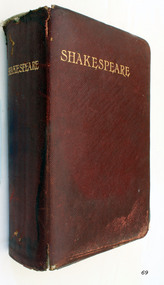
Literary work - Book, Ward. Lock & Co., Limited, The Complete Works of William Shakespeare, 1908
... However, in 1623, two fellow actors and friends of Shakespeare's, John Heminges and Henry Condell, published a more definitive text known as the First Folio, a posthumous collected edition of Shakespeare's dramatic works that included all but two of his plays. ...However, in 1623, two fellow actors and friends of Shakespeare's, John Heminges and Henry Condell, published a more definitive text known as the First Folio, a posthumous collected edition of Shakespeare's dramatic works that included all but two of his plays. ...William Shakespeare 1564 to 1616 was an English playwright, poet, and actor, widely regarded as the greatest writer in the English language and the world's greatest dramatist. He is often called England's national poet and the "Bard of Avon" . His extant works, including collaborations, consist of some 39 plays, 154 sonnets, three long narrative poems, and a few other verses, some of uncertain authorship. His plays have been translated into every major living language and are performed more often than those of any other playwright. They also continue to be studied and reinterpreted. Shakespeare was born and raised in Stratford-upon-Avon, Warwickshire. At the age of 18, he married Anne Hathaway, with whom he had three children: Susanna and twins Hamnet and Judith. Sometime between 1585 and 1592, he began a successful career in London as an actor, writer, and part-owner of a playing company called the Lord Chamberlain's Men, later known as the King's Men. At age 49 (around 1613), he appears to have retired to Stratford, where he died three years later. Shakespeare produced most of his known works between 1589 and 1613. His early plays were primarily comedies and histories and are regarded as some of the best work produced in these genres. He then wrote mainly tragedies until 1608, among them Hamlet, Romeo and Juliet, Othello, King Lear, and Macbeth, all considered to be among the finest works in the English language. In the last phase of his life, he wrote tragicomedies (also known as romances) and collaborated with other playwrights. Many of Shakespeare's plays were published in editions of varying quality and accuracy in his lifetime. However, in 1623, two fellow actors and friends of Shakespeare's, John Heminges and Henry Condell, published a more definitive text known as the First Folio, a posthumous collected edition of Shakespeare's dramatic works that included all but two of his plays. The volume was prefaced with a poem by Ben Jonson, in which Jonson presciently hailed Shakespeare in a now-famous quote as "not of an age, but for all time.A book published in 1908 of Shakespeare works and significant as yet another reinterpreted of his plays only reinforcing that he was not only of his time but as his friend once said Shakespeare's works are for all time.The cover is burgundy coloured leather with embossed lettering and the inside covers are a dark green with a light symmetrical pattern. The edges of the pages are gilt.“The Complete Works of William Shakespeare” with introduction by Barry Cornwall (Bryan Walter Procter). Published by Ward, Lock and Co. Limited, London, New York and Melbourne. The book has an introduction by Barry Cornwall (Bryan Walter Proctor).flagstaff hill, warrnambool, shipwrecked coast, flagstaff hill maritime museum, maritime museum, shipwreck coast, flagstaff hill maritime village, great ocean road, complete works of shakespeare, book, complete works of william shakespeare, barry cornwall -
 Flagstaff Hill Maritime Museum and Village
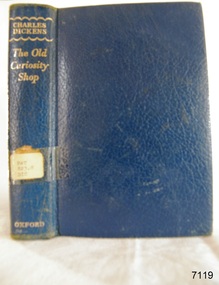
Book - A Fictional story, Charles Dickens, The Old Curiosity Shop, 1997
... works that included “A Christmas Carol” (1843), “Bleak House” (1853), “A Tale of Two Cities” (1859), and “Great Expectations” (1861). His novels themes were in blending humour, pathos, along with critiquing the era’s industrial society. Later, he edited magazines like “Household Words” and toured with dramatic...works that included “A Christmas Carol” (1843), “Bleak House” (1853), “A Tale of Two Cities” (1859), and “Great Expectations” (1861). His novels themes were in blending humour, pathos, along with critiquing the era’s industrial society. Later, he edited magazines like “Household Words” and toured with dramatic ...Charles Dickens (1812–1870) was one of the great English novelists of the Victorian era, famous for vivid characters, social criticism, and stories that were first published in serial form. He began as a journalist, rose to enormous popularity during his lifetime, and wrote major works such as Oliver Twist, David Copperfield, and Great Expectations. The Old Curiosity Shop is about Nell Trent, a young girl, and her grandfather, who live in a London curiosity shop. After her grandfather’s gambling and debts bring danger from the moneylender Daniel Quilp, they flee and travel through hardship, poverty, and misfortune, the novel is best known for its emotional portrayal of Nell. It was written and published in serial form in “Master Humphrey’s Clock” magazine from 1840 to 1841, then issued as a book in 1841. The subject book published by the Oxford University Press. The subject book in hardback edition was published on 13th November 1997 by the same publisher.The Old Curiosity Shop Author: Charles Dickens Publisher: Oxford University Press Date: 1997 Light blue leather embossed hardcover with a blue spine and lettering in gold. The spine has a Library label.fictionCharles Dickens (1812–1870) was one of the great English novelists of the Victorian era, famous for vivid characters, social criticism, and stories that were first published in serial form. He began as a journalist, rose to enormous popularity during his lifetime, and wrote major works such as Oliver Twist, David Copperfield, and Great Expectations. The Old Curiosity Shop is about Nell Trent, a young girl, and her grandfather, who live in a London curiosity shop. After her grandfather’s gambling and debts bring danger from the moneylender Daniel Quilp, they flee and travel through hardship, poverty, and misfortune, the novel is best known for its emotional portrayal of Nell. It was written and published in serial form in “Master Humphrey’s Clock” magazine from 1840 to 1841, then issued as a book in 1841. The subject book published by the Oxford University Press. The subject book in hardback edition was published on 13th November 1997 by the same publisher.book, the old curiosity shop, charles dickens, shipwrecked-coast, flagstaff-hill, flagstaff-hill-maritime-museum, warrnambool, maritime-museum, flagstaff-hill-maritime-village, pattison collection, warrnambool library, warrnambool mechanics’ institute, ralph eric pattison, corangamite regional library service, warrnambool city librarian, mechanics’ institute library, victorian library board, warrnambool books and records, warrnambool children’s library, great ocean road -
 Flagstaff Hill Maritime Museum and Village
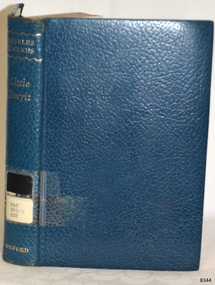
Book - A Fictional story, Chapman & Hall Ltd, Little Dorrit, 1890s
... works that included “A Christmas Carol” (1843), “Bleak House” (1853), “A Tale of Two Cities” (1859), and “Great Expectations” (1861). His novels themes were in blending humour, pathos, along with critiquing the era’s industrial society. Later, he edited magazines like “Household Words” and toured with dramatic...works that included “A Christmas Carol” (1843), “Bleak House” (1853), “A Tale of Two Cities” (1859), and “Great Expectations” (1861). His novels themes were in blending humour, pathos, along with critiquing the era’s industrial society. Later, he edited magazines like “Household Words” and toured with dramatic ...Charles Dickens (1812–1870) was one of the great English novelists of the Victorian era, famous for vivid characters, social criticism, and stories that were first published in serial form. He began as a journalist, rose to enormous popularity during his lifetime, and wrote major works such as Oliver Twist, David Copperfield, and Great Expectations. Little Dorrit is about Amy “Little” Dorrit, a gentle, selfless woman born and raised in the Marshalsea debtors’ prison where her father, William Dorrit, has been imprisoned for unpaid debts. The story follows her as she works as a seamstress outside the prison, gradually becoming entangled with Arthur Clennam, a businessman returning from abroad. Dickens interweaves a sharp critique of Victorian bureaucracy, finance, and class throughout the story. The theme centres around Amy Dorrit who lives her whole early life in Marshalsea, supporting her family with quiet dignity while her father clings to fragile genteel pretensions. Arthur Clennam, disillusioned after years in China, becomes involved with the Dorrits and uncovers a web of secrets involving his own mother, a hidden inheritance, and shady business dealings. William Dorrit suddenly inherits a fortune and is able to lift the family out of poverty and into fashion conscious society.The novel shows how money distorts their characters and relationships, while Amy remains the moral centre.Little Dorrit. Author: Charles Dickens. Publisher: Chapman & Hall Ltd, London. Date: 1890s. (See note section this document for more information on Edition). Green cloth hardcover with Authors name to front cover in gold. Spine has gold title lettering. The spine has a Library label.fictionCharles Dickens (1812–1870) was one of the great English novelists of the Victorian era, famous for vivid characters, social criticism, and stories that were first published in serial form. He began as a journalist, rose to enormous popularity during his lifetime, and wrote major works such as Oliver Twist, David Copperfield, and Great Expectations. Little Dorrit is about Amy “Little” Dorrit, a gentle, selfless woman born and raised in the Marshalsea debtors’ prison where her father, William Dorrit, has been imprisoned for unpaid debts. The story follows her as she works as a seamstress outside the prison, gradually becoming entangled with Arthur Clennam, a businessman returning from abroad. Dickens interweaves a sharp critique of Victorian bureaucracy, finance, and class throughout the story. The theme centres around Amy Dorrit who lives her whole early life in Marshalsea, supporting her family with quiet dignity while her father clings to fragile genteel pretensions. Arthur Clennam, disillusioned after years in China, becomes involved with the Dorrits and uncovers a web of secrets involving his own mother, a hidden inheritance, and shady business dealings. William Dorrit suddenly inherits a fortune and is able to lift the family out of poverty and into fashion conscious society.The novel shows how money distorts their characters and relationships, while Amy remains the moral centre. flagstaff hill, warrnambool, shipwrecked coast, flagstaff hill maritime museum, maritime museum, shipwreck coast, flagstaff hill maritime village, great ocean road, book, pattison collection, warrnambool library, warrnambool mechanics’ institute, ralph eric pattison, corangamite regional library service, warrnambool city librarian, mechanics’ institute library, victorian library board, warrnambool books and records, warrnambool children’s library, little dorrit, charles dickens -
 Flagstaff Hill Maritime Museum and Village
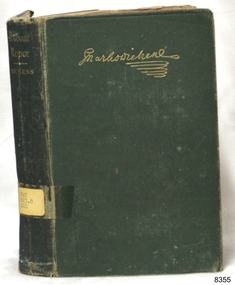
Book - A Fictional Story, Charles Dickens, Barnaby Rudge, (1871–1879)
... works that included “A Christmas Carol” (1843), “Bleak House” (1853), “A Tale of Two Cities” (1859), and “Great Expectations” (1861). His novels themes were in blending humour, pathos, along with critiquing the era’s industrial society. Later, he edited magazines like “Household Words” and toured with dramatic...works that included “A Christmas Carol” (1843), “Bleak House” (1853), “A Tale of Two Cities” (1859), and “Great Expectations” (1861). His novels themes were in blending humour, pathos, along with critiquing the era’s industrial society. Later, he edited magazines like “Household Words” and toured with dramatic ...Charles Dickens (1812–1870) was one of the great English novelists of the Victorian era, famous for vivid characters, social criticism, and stories that were first published in serial form. He began as a journalist, rose to enormous popularity during his lifetime, and wrote major works such as Oliver Twist, David Copperfield, and Great Expectations. Barnaby Rudge is a historical Dickens novel set against the Gordon Riots of 1780, mixing mystery, political unrest, family secrets, and the story of a simple minded young man, Barnaby, and his pet raven Grip. It is considered Dickens’s first historical novel and one of his less widely read works, but it remains important for its treatment of mob violence and social disorder. The novel begins with a murder mystery linked to the Haredale and Rudge families, then broadens into the chaos of the anti Catholic Gordon Riots in London. Barnaby, an innocent and impressionable character, is drawn into the riotous crowd. Other threads involve love, family conflict, imprisonment, and eventual reckoning. Dickens uses the riot setting to show how crowd panic and prejudice can spread destructively through society.Barnaby Rudge Author: Charles Dickens Publisher: Chapman & Hall Ltd Date: Household Edition (1871–1879) (See note section this document for more information on Edition). Green cloth hardcover with a black spine with authors name signed on front cover, lettering in gold. The spine has a Library label. First Published as part of the weekly Master Humphrey's Clock series (1840-1841)fictionCharles Dickens (1812–1870) was one of the great English novelists of the Victorian era, famous for vivid characters, social criticism, and stories that were first published in serial form. He began as a journalist, rose to enormous popularity during his lifetime, and wrote major works such as Oliver Twist, David Copperfield, and Great Expectations. Barnaby Rudge is a historical Dickens novel set against the Gordon Riots of 1780, mixing mystery, political unrest, family secrets, and the story of a simple minded young man, Barnaby, and his pet raven Grip. It is considered Dickens’s first historical novel and one of his less widely read works, but it remains important for its treatment of mob violence and social disorder. The novel begins with a murder mystery linked to the Haredale and Rudge families, then broadens into the chaos of the anti Catholic Gordon Riots in London. Barnaby, an innocent and impressionable character, is drawn into the riotous crowd. Other threads involve love, family conflict, imprisonment, and eventual reckoning. Dickens uses the riot setting to show how crowd panic and prejudice can spread destructively through society.flagstaff hil, warrnambool, flagstaff hill maritime museum, maritime museum, shipwreck coast, flagstaff hill maritime village, great ocean road, book, pattison collection, warrnambool library, warrnambool mechanics’ institute, ralph eric pattison, corangamite regional library service, warrnambool city librarian, mechanics’ institute library, victorian library board, warrnambool books and records, warrnambool children’s library, barnaby rudge, charles dickens -
 Flagstaff Hill Maritime Museum and Village
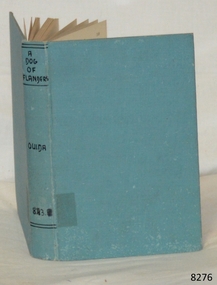
Book - A Fictional Story, Ouida (Maria Louise Ramé), A Dog of Flanders, 1873
... Known for her lush, highly descriptive prose and dramatic, emotional storytelling, she wrote over 40 novels during her career. Her works ranged from sensation novels of high society like Under Two Flags (1867) to sympathetic children's stories and animal centrist narratives. ...Known for her lush, highly descriptive prose and dramatic, emotional storytelling, she wrote over 40 novels during her career. Her works ranged from sensation novels of high society like Under Two Flags (1867) to sympathetic children's stories and animal centrist narratives. ...A Dog of Flanders (originally published in 1872) is a deeply moving, bittersweet story set in Belgium. It follows Nello, an impoverished orphan boy with a passion for art, and Patrasche a loyal, cart-pulling, abandoned, and abused draft dog whom Nello and his gentle grandfather, Jehan Daas, rescue and nurse back to health. The story focuses on the bond between Nello and Patrasche as they become inseparable, helping the aging Jehan pull a milk cart into Antwerp each day to earn a meagre living. Nello longs to become a great painter like the Baroque master Peter Paul Rubens. His only hope is to win a prestigious local drawing contest with a portrait he has laboured over. After a series of devastating setbacks his grandfather passes away, they are evicted, and Nello loses the drawing competition he and Patrasche his cart pulling dog seek shelter from a freezing Christmas Eve blizzard inside the Cathedral of Our Lady in Antwerp. There, Nello finally gazes upon Rubens’s shielded masterpieces, The Descent from the Cross and The Elevation of the Cross. The story ends sadly as, the next morning, the loyal dog and the young boy are found frozen to death, locked in a final embrace in front of the altar.Hard cover book, A Dog of Flanders Author: Ouida (Maria Louise Ramé) Publisher: George Robertson Date: 1873 Further Information: Blue cloth hardcover and spine with spine lettering in black texter. The spine has a Library label with inscription. fictionA Dog of Flanders (originally published in 1872) is a deeply moving, bittersweet story set in Belgium. It follows Nello, an impoverished orphan boy with a passion for art, and Patrasche a loyal, cart-pulling, abandoned, and abused draft dog whom Nello and his gentle grandfather, Jehan Daas, rescue and nurse back to health. The story focuses on the bond between Nello and Patrasche as they become inseparable, helping the aging Jehan pull a milk cart into Antwerp each day to earn a meagre living. Nello longs to become a great painter like the Baroque master Peter Paul Rubens. His only hope is to win a prestigious local drawing contest with a portrait he has laboured over. After a series of devastating setbacks his grandfather passes away, they are evicted, and Nello loses the drawing competition he and Patrasche his cart pulling dog seek shelter from a freezing Christmas Eve blizzard inside the Cathedral of Our Lady in Antwerp. There, Nello finally gazes upon Rubens’s shielded masterpieces, The Descent from the Cross and The Elevation of the Cross. The story ends sadly as, the next morning, the loyal dog and the young boy are found frozen to death, locked in a final embrace in front of the altar.flagstaff hill, warrnambool, shipwrecked coast, flagstaff hill maritime museum, maritime museum, shipwreck coast, flagstaff hill maritime village, great ocean road, book, pattison collection, warrnambool library, warrnambool mechanics’ institute, ralph eric pattison, corangamite regional library service, warrnambool city librarian, mechanics’ institute library, victorian library board, warrnambool books and records, warrnambool children’s library, a dog of flanders, ouida, maria louise ramé, marie louise de la ramée -
 Flagstaff Hill Maritime Museum and Village
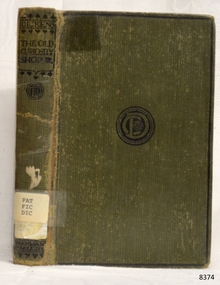
Book - A Fictional Story, Charles Dickens, The Old Curiosity Shop, (1897-1899)
... works that included “A Christmas Carol” (1843), “Bleak House” (1853), “A Tale of Two Cities” (1859), and “Great Expectations” (1861). His novels themes were in blending humour, pathos, along with critiquing the era’s industrial society. Later, he edited magazines like “Household Words” and toured with dramatic...works that included “A Christmas Carol” (1843), “Bleak House” (1853), “A Tale of Two Cities” (1859), and “Great Expectations” (1861). His novels themes were in blending humour, pathos, along with critiquing the era’s industrial society. Later, he edited magazines like “Household Words” and toured with dramatic ...Charles Dickens (1812–1870) was one of the great English novelists of the Victorian era, famous for vivid characters, social criticism, and stories that were first published in serial form. He began as a journalist, rose to enormous popularity during his lifetime, and wrote major works such as Oliver Twist, David Copperfield, and Great Expectations. The Old Curiosity Shop is about Nell Trent, a young girl, and her grandfather, who live in a London curiosity shop. After her grandfather’s gambling and debts bring danger from the moneylender Daniel Quilp, they flee and travel through hardship, poverty, and misfortune, the novel is best known for its emotional portrayal of Nell. It was written and published in serial form in “Master Humphrey’s Clock” magazine from 1840 to 1841, then issued as a book in 1841. The subject book published by the Oxford University Press. The subject book in hardback edition was published on 13th November 1997 by the same publisher.The Old Curiosity Shop Author: Charles Dickens Publisher: Chapman & Hall Ltd Date: Gadshill Edition (1897-1899)fictionCharles Dickens (1812–1870) was one of the great English novelists of the Victorian era, famous for vivid characters, social criticism, and stories that were first published in serial form. He began as a journalist, rose to enormous popularity during his lifetime, and wrote major works such as Oliver Twist, David Copperfield, and Great Expectations. The Old Curiosity Shop is about Nell Trent, a young girl, and her grandfather, who live in a London curiosity shop. After her grandfather’s gambling and debts bring danger from the moneylender Daniel Quilp, they flee and travel through hardship, poverty, and misfortune, the novel is best known for its emotional portrayal of Nell. It was written and published in serial form in “Master Humphrey’s Clock” magazine from 1840 to 1841, then issued as a book in 1841. The subject book published by the Oxford University Press. The subject book in hardback edition was published on 13th November 1997 by the same publisher.flagstaff hil, warrnambool, flagstaff hill maritime museum, maritime museum, shipwreck coast, flagstaff hill maritime village, great ocean road, book, pattison collection, warrnambool library, warrnambool mechanics’ institute, ralph eric pattison, corangamite regional library service, warrnambool city librarian, mechanics’ institute library, victorian library board, warrnambool books and records, warrnambool children’s library, the old curiosity shop, charles dickens -
 Flagstaff Hill Maritime Museum and Village
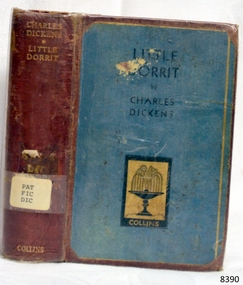
Book - A Fictional Story, Charles Dickens, Little Dorrit, 1968
... works that included “A Christmas Carol” (1843), “Bleak House” (1853), “A Tale of Two Cities” (1859), and “Great Expectations” (1861). His novels themes were in blending humour, pathos, along with critiquing the era’s industrial society. Later, he edited magazines like “Household Words” and toured with dramatic...works that included “A Christmas Carol” (1843), “Bleak House” (1853), “A Tale of Two Cities” (1859), and “Great Expectations” (1861). His novels themes were in blending humour, pathos, along with critiquing the era’s industrial society. Later, he edited magazines like “Household Words” and toured with dramatic ...Charles Dickens (1812–1870) was one of the great English novelists of the Victorian era, famous for vivid characters, social criticism, and stories that were first published in serial form. He began as a journalist, rose to enormous popularity during his lifetime, and wrote major works such as Oliver Twist, David Copperfield, and Great Expectations. Little Dorrit is about Amy “Little” Dorrit, a gentle, selfless woman born and raised in the Marshalsea debtors’ prison where her father, William Dorrit, has been imprisoned for unpaid debts. The story follows her as she works as a seamstress outside the prison, gradually becoming entangled with Arthur Clennam, a businessman returning from abroad. Dickens interweaves a sharp critique of Victorian bureaucracy, finance, and class throughout the story. The theme centres around Amy Dorrit who lives her whole early life in Marshalsea, supporting her family with quiet dignity while her father clings to fragile genteel pretensions. Arthur Clennam, disillusioned after years in China, becomes involved with the Dorrits and uncovers a web of secrets involving his own mother, a hidden inheritance, and shady business dealings. William Dorrit suddenly inherits a fortune and is able to lift the family out of poverty and into fashion conscious society.The novel shows how money distorts their characters and relationships, while Amy remains the moral centre.Little Dorrit Author: Charles Dickens Publisher: Collins Further Information: We do have 2 more copies of this same book. All have been published by different companies. ( R.N. 8159 and R.N. 8344)fictionCharles Dickens (1812–1870) was one of the great English novelists of the Victorian era, famous for vivid characters, social criticism, and stories that were first published in serial form. He began as a journalist, rose to enormous popularity during his lifetime, and wrote major works such as Oliver Twist, David Copperfield, and Great Expectations. Little Dorrit is about Amy “Little” Dorrit, a gentle, selfless woman born and raised in the Marshalsea debtors’ prison where her father, William Dorrit, has been imprisoned for unpaid debts. The story follows her as she works as a seamstress outside the prison, gradually becoming entangled with Arthur Clennam, a businessman returning from abroad. Dickens interweaves a sharp critique of Victorian bureaucracy, finance, and class throughout the story. The theme centres around Amy Dorrit who lives her whole early life in Marshalsea, supporting her family with quiet dignity while her father clings to fragile genteel pretensions. Arthur Clennam, disillusioned after years in China, becomes involved with the Dorrits and uncovers a web of secrets involving his own mother, a hidden inheritance, and shady business dealings. William Dorrit suddenly inherits a fortune and is able to lift the family out of poverty and into fashion conscious society.The novel shows how money distorts their characters and relationships, while Amy remains the moral centre. flagstaff hil, warrnambool, flagstaff hill maritime museum, maritime museum, shipwreck coast, flagstaff hill maritime village, great ocean road, book, pattison collection, warrnambool library, warrnambool mechanics’ institute, ralph eric pattison, corangamite regional library service, warrnambool city librarian, mechanics’ institute library, victorian library board, warrnambool books and records, warrnambool children’s library, little dorrit, charles dickens -
 Flagstaff Hill Maritime Museum and Village
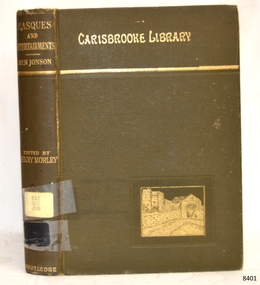
Book - Compilation of Dramatic Artistic Performances, George Routledge, Masques and Entertainments, 1890
... It contains Morley’s historical introductions and footnotes that explain the context of King Henry VIII introducing masques to England, how Queen Anne of Denmark commissioned Jonson, and how these performances set the stage for the modern opera and ballet that we enjoy today. flagstaff hil Warrnambool flagstaff hill maritime museum maritime museum shipwreck coast flagstaff hill maritime village great ocean road book pattison collection warrnambool library warrnambool mechanics’ institute ralph eric pattison corangamite regional library service warrnambool city librarian mechanics’ institute library victorian library board warrnambool books and records warrnambool children’s library Masques and Entertainments Ben Jonson Masques and Entertainments by Ben Jonson (edited by Henry Morley and published by George Routledge & Sons in 1890) is a compilation of the dramatic courtly performances written by the legendary Renaissance playwright and poet Ben Jonson. Issued as Volume IX of the popular "Carisbrooke Library" series, this specific late-Victorian edition gathered works that Jonson originally wrote in the early 17th century (between 1603 and 1630) for the courts of King James I and King Charles I. ...Masques and Entertainments by Ben Jonson (edited by Henry Morley and published by George Routledge & Sons in 1890) is a compilation of the dramatic courtly performances written by the legendary Renaissance playwright and poet Ben Jonson. Issued as Volume IX of the popular "Carisbrooke Library" series, this specific late-Victorian edition gathered works that Jonson originally wrote in the early 17th century (between 1603 and 1630) for the courts of King James I and King Charles I.Masques and Entertainments Author: Ben Jonson Publisher: George Routledge & Sons Date: 1890fictionMasques and Entertainments by Ben Jonson (edited by Henry Morley and published by George Routledge & Sons in 1890) is a compilation of the dramatic courtly performances written by the legendary Renaissance playwright and poet Ben Jonson. Issued as Volume IX of the popular "Carisbrooke Library" series, this specific late-Victorian edition gathered works that Jonson originally wrote in the early 17th century (between 1603 and 1630) for the courts of King James I and King Charles I.flagstaff hil, warrnambool, flagstaff hill maritime museum, maritime museum, shipwreck coast, flagstaff hill maritime village, great ocean road, book, pattison collection, warrnambool library, warrnambool mechanics’ institute, ralph eric pattison, corangamite regional library service, warrnambool city librarian, mechanics’ institute library, victorian library board, warrnambool books and records, warrnambool children’s library, masques and entertainments, ben jonson -
 Flagstaff Hill Maritime Museum and Village
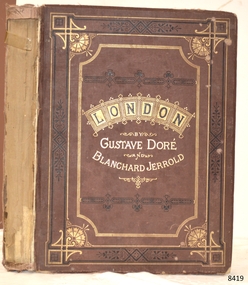
Book - Illustrated Reference Book/Social History, Louis Auguste Gustave Doré et al, London a Pilgrimage, 1872
... He specialised in creating massive, dramatic wood-engraved illustrations for the grandest epics in Western literature. His most famous works include Dante's Inferno (1861), Cervantes' Don Quixote (1863), The Holy Bible (1866), and Milton's Paradise Lost (1866). ...He specialised in creating massive, dramatic wood-engraved illustrations for the grandest epics in Western literature. His most famous works include Dante's Inferno (1861), Cervantes' Don Quixote (1863), The Holy Bible (1866), and Milton's Paradise Lost (1866). ...London A Pilgrimage (1872) is one of the most celebrated, visually striking, and socially important illustrated books of the 19th century; as such, the work is a highly desirable piece of publishing history. The book offers a comprehensive, episodic portrait of Victorian London at the height of the British Empire. The prominent French artist Gustave Doré and English journalist William Blanchard Jerrold shared a fascination with urban life, combining their talents to create one of the 19th century's greatest collaborative works. They spent days exploring the metropolis together to capture the stark dualities of the city. Rather than focusing solely on the grand landmarks of the wealthy, the book famously juxtaposes the "sunlight and shadows" of London life. When Jerrold suggested a massive, joint exploration of London in 1869, it brought together two perfect skill sets: Jerrold provided the investigative journalistic grit and intimate knowledge of London’s social strata, while Doré provided the haunting, cinematic visual poetry through his illustrations.Hard cover book, London a Pilgrimage Author: William Blanchard Jerrold Publisher: Grant & Co, 74-78 Turnmill St. London. EC. Date: 1872 Morocco Olive hardcover with a damaged spine, lettering in gold with a title in a surrounded with a decorative panel. non-fictionLondon A Pilgrimage (1872) is one of the most celebrated, visually striking, and socially important illustrated books of the 19th century; as such, the work is a highly desirable piece of publishing history. The book offers a comprehensive, episodic portrait of Victorian London at the height of the British Empire. The prominent French artist Gustave Doré and English journalist William Blanchard Jerrold shared a fascination with urban life, combining their talents to create one of the 19th century's greatest collaborative works. They spent days exploring the metropolis together to capture the stark dualities of the city. Rather than focusing solely on the grand landmarks of the wealthy, the book famously juxtaposes the "sunlight and shadows" of London life. When Jerrold suggested a massive, joint exploration of London in 1869, it brought together two perfect skill sets: Jerrold provided the investigative journalistic grit and intimate knowledge of London’s social strata, while Doré provided the haunting, cinematic visual poetry through his illustrations.flagstaff hil, warrnambool, flagstaff hill maritime museum, maritime museum, shipwreck coast, flagstaff hill maritime village, great ocean road, book, pattison collection, warrnambool library, warrnambool mechanics’ institute, ralph eric pattison, corangamite regional library service, warrnambool city librarian, mechanics’ institute library, victorian library board, warrnambool books and records, warrnambool children’s library -
 Flagstaff Hill Maritime Museum and Village
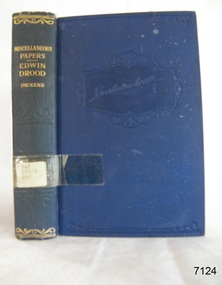
Book - Unfinished Fictional story, Charles Dickens, Miscellaneous Papers with (The Mystery of Edwin Drood), 1935
... works that included “A Christmas Carol” (1843), “Bleak House” (1853), “A Tale of Two Cities” (1859), and “Great Expectations” (1861). His novels themes were in blending humour, pathos, along with critiquing the era’s industrial society. Later, he edited magazines like “Household Words” and toured with dramatic...works that included “A Christmas Carol” (1843), “Bleak House” (1853), “A Tale of Two Cities” (1859), and “Great Expectations” (1861). His novels themes were in blending humour, pathos, along with critiquing the era’s industrial society. Later, he edited magazines like “Household Words” and toured with dramatic ...Charles Dickens (1812–1870) was one of the great English novelists of the Victorian era, famous for vivid characters, social criticism, and stories that were first published in serial form. He began as a journalist, rose to enormous popularity during his lifetime, and wrote major works such as Oliver Twist, David Copperfield, and Great Expectations. The subject novel “Miscellaneous Papers” with excerpts from “The Mystery of Edwin Drood” collects mid 19th century essays on topics like agriculture, crime, education, capital punishment, and includes tributes to figures such as W.M. Thackeray and Adelaide Anne Procter. Appended to the novel is “The Mystery of Edwin Drood,” Dickens's 1870 unfinished novel about Edwin Drood's disappearance amid opium addiction, obsession, and intrigue in Cloisterham, involving various suspects like John Jasper.Miscellaneous Papers and (The Mystery of Edwin Drood) Author: Charles Dickens Publisher: Hazell Watson and Viney Limited Date: 1935 Light blue leather embossed hardcover with a blue spine and lettering in gold. The spine has a Library label.fictionCharles Dickens (1812–1870) was one of the great English novelists of the Victorian era, famous for vivid characters, social criticism, and stories that were first published in serial form. He began as a journalist, rose to enormous popularity during his lifetime, and wrote major works such as Oliver Twist, David Copperfield, and Great Expectations. The subject novel “Miscellaneous Papers” with excerpts from “The Mystery of Edwin Drood” collects mid 19th century essays on topics like agriculture, crime, education, capital punishment, and includes tributes to figures such as W.M. Thackeray and Adelaide Anne Procter. Appended to the novel is “The Mystery of Edwin Drood,” Dickens's 1870 unfinished novel about Edwin Drood's disappearance amid opium addiction, obsession, and intrigue in Cloisterham, involving various suspects like John Jasper.book, the old curiosity shop, charles dickens, shipwrecked-coast, flagstaff-hill, flagstaff-hill-maritime-museum, warrnambool, maritime-museum, flagstaff-hill-maritime-village, pattison collection, warrnambool library, warrnambool mechanics’ institute, ralph eric pattison, corangamite regional library service, warrnambool city librarian, mechanics’ institute library, victorian library board, warrnambool books and records, warrnambool children’s library, great ocean road -
 Flagstaff Hill Maritime Museum and Village
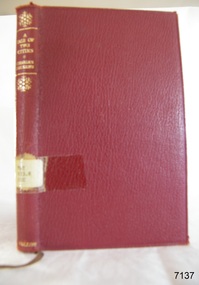
Book - A Fictional Story, Charles Dickens, A Tale of Two Cities, 1920s -1930s
... works that included “A Christmas Carol” (1843), “Bleak House” (1853), “A Tale of Two Cities” (1859), and “Great Expectations” (1861). His novels themes were in blending humour, pathos, along with critiquing the era’s industrial society. Later, he edited magazines like “Household Words” and toured with dramatic...works that included “A Christmas Carol” (1843), “Bleak House” (1853), “A Tale of Two Cities” (1859), and “Great Expectations” (1861). His novels themes were in blending humour, pathos, along with critiquing the era’s industrial society. Later, he edited magazines like “Household Words” and toured with dramatic ...Charles Dickens (1812–1870) was one of the great English novelists of the Victorian era, famous for vivid characters, social criticism, and stories that were first published in serial form. He began as a journalist, rose to enormous popularity during his lifetime, and wrote major works such as Oliver Twist, David Copperfield, and Great Expectations. A Tale of Two Cities is Charles Dickens’s sweeping historical novel set against the French Revolution, focusing on London and Paris and the collision of private lives with mass upheaval. It is especially famous for its stark contrasts between order and chaos, and for one of the most moving acts of self sacrifice in Victorian fiction. The plot centres on Dr. Manette, imprisoned for eighteen years in the Bastille, his daughter Lucie, and the English lawyer Sydney Carton, whose life becomes entangled with that of the French aristocrat Charles Darnay. Set on the eve of and during the Revolution, the novel shows how old injustices fuel mob violence and terror, culminating in Carton’s substitution of himself for at the guillotine, in a Christ‑like gesture of redemption.A Tale of Two Cities. Author: Charles Dickens. (Introduction by Sydney Dark) Publisher: Collins, (London & Glasgow) Date: Mid 20th Century. (See note section this document for more information on Edition).fictionCharles Dickens (1812–1870) was one of the great English novelists of the Victorian era, famous for vivid characters, social criticism, and stories that were first published in serial form. He began as a journalist, rose to enormous popularity during his lifetime, and wrote major works such as Oliver Twist, David Copperfield, and Great Expectations. A Tale of Two Cities is Charles Dickens’s sweeping historical novel set against the French Revolution, focusing on London and Paris and the collision of private lives with mass upheaval. It is especially famous for its stark contrasts between order and chaos, and for one of the most moving acts of self sacrifice in Victorian fiction. The plot centres on Dr. Manette, imprisoned for eighteen years in the Bastille, his daughter Lucie, and the English lawyer Sydney Carton, whose life becomes entangled with that of the French aristocrat Charles Darnay. Set on the eve of and during the Revolution, the novel shows how old injustices fuel mob violence and terror, culminating in Carton’s substitution of himself for at the guillotine, in a Christ‑like gesture of redemption.book, the old curiosity shop, charles dickens, shipwrecked-coast, flagstaff-hill, flagstaff-hill-maritime-museum, warrnambool, maritime-museum, flagstaff-hill-maritime-village, pattison collection, warrnambool library, warrnambool mechanics’ institute, ralph eric pattison, corangamite regional library service, warrnambool city librarian, mechanics’ institute library, victorian library board, warrnambool books and records, warrnambool children’s library, great ocean road -
 Flagstaff Hill Maritime Museum and Village
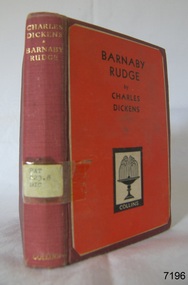
Book - A Fictional Story, Charles Dickens, Barnaby Rudge, Prior to 1911
... works that included “A Christmas Carol” (1843), “Bleak House” (1853), “A Tale of Two Cities” (1859), and “Great Expectations” (1861). His novels themes were in blending humour, pathos, along with critiquing the era’s industrial society. Later, he edited magazines like “Household Words” and toured with dramatic...works that included “A Christmas Carol” (1843), “Bleak House” (1853), “A Tale of Two Cities” (1859), and “Great Expectations” (1861). His novels themes were in blending humour, pathos, along with critiquing the era’s industrial society. Later, he edited magazines like “Household Words” and toured with dramatic ...Charles Dickens (1812–1870) was one of the great English novelists of the Victorian era, famous for vivid characters, social criticism, and stories that were first published in serial form. He began as a journalist, rose to enormous popularity during his lifetime, and wrote major works such as Oliver Twist, David Copperfield, and Great Expectations. Barnaby Rudge is a historical Dickens novel set against the Gordon Riots of 1780, mixing mystery, political unrest, family secrets, and the story of a simple minded young man, Barnaby, and his pet raven Grip. It is considered Dickens’s first historical novel and one of his less widely read works, but it remains important for its treatment of mob violence and social disorder. The novel begins with a murder mystery linked to the Haredale and Rudge families, then broadens into the chaos of the anti Catholic Gordon Riots in London. Barnaby, an innocent and impressionable character, is drawn into the riotous crowd. Other threads involve love, family conflict, imprisonment, and eventual reckoning. Dickens uses the riot setting to show how crowd panic and prejudice can spread destructively through society.Barnaby Rudge. Author: Charles Dickens. Publisher: Collins, Clear Type Press (London & Glasgow) Date: Mid 20th Century. (See note section this document for more information on Edition). Red leather hardcover with title on front on paper with a dark red spine and lettering in gold. The spine has a Library label.fictionCharles Dickens (1812–1870) was one of the great English novelists of the Victorian era, famous for vivid characters, social criticism, and stories that were first published in serial form. He began as a journalist, rose to enormous popularity during his lifetime, and wrote major works such as Oliver Twist, David Copperfield, and Great Expectations. Barnaby Rudge is a historical Dickens novel set against the Gordon Riots of 1780, mixing mystery, political unrest, family secrets, and the story of a simple minded young man, Barnaby, and his pet raven Grip. It is considered Dickens’s first historical novel and one of his less widely read works, but it remains important for its treatment of mob violence and social disorder. The novel begins with a murder mystery linked to the Haredale and Rudge families, then broadens into the chaos of the anti Catholic Gordon Riots in London. Barnaby, an innocent and impressionable character, is drawn into the riotous crowd. Other threads involve love, family conflict, imprisonment, and eventual reckoning. Dickens uses the riot setting to show how crowd panic and prejudice can spread destructively through society.book, the old curiosity shop, charles dickens, shipwrecked-coast, flagstaff-hill, flagstaff-hill-maritime-museum, warrnambool, maritime-museum, flagstaff-hill-maritime-village, pattison collection, warrnambool library, warrnambool mechanics’ institute, ralph eric pattison, corangamite regional library service, warrnambool city librarian, mechanics’ institute library, victorian library board, warrnambool books and records, warrnambool children’s library, great ocean road -
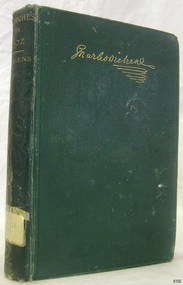 Flagstaff Hill Maritime Museum and Village
Book - A Fictional Story, Charles Dickens et al, Sketches by Boz. (Illustrative of Ever day Life and Every day People), 1892
... works that included “A Christmas Carol” (1843), “Bleak House” (1853), “A Tale of Two Cities” (1859), and “Great Expectations” (1861). His novels themes were in blending humour, pathos, along with critiquing the era’s industrial society. Later, he edited magazines like “Household Words” and toured with dramatic...works that included “A Christmas Carol” (1843), “Bleak House” (1853), “A Tale of Two Cities” (1859), and “Great Expectations” (1861). His novels themes were in blending humour, pathos, along with critiquing the era’s industrial society. Later, he edited magazines like “Household Words” and toured with dramatic ...Charles Dickens (1812–1870) was one of the great English novelists of the Victorian era, famous for vivid characters, social criticism, and stories that were first published in serial form. He began as a journalist, rose to enormous popularity during his lifetime, and wrote major works such as Oliver Twist, David Copperfield, and Great Expectations. Sketches by Boz is Charles Dickens' first published book, a collection of fifty six short sketches originally appearing in periodicals from 1833 to 1836 under his pseudonym "Boz." It captures everyday London life through vivid observations of ordinary people and scenes. The book is divided into four sections, "Our Parish," "Scenes," "Characters," and "Tales." The first three offer non narrative portraits of urban life, while "Tales" includes fictional stories. Illustrated by George Cruikshank with forty plates, it blends humor, social commentary, and realism. Published by Chapman & Hall, London, the specified full title matches the "New Edition, Complete" or first one-volume combined edition from 1839, compiling two earlier 1836 series. Earlier parts issues ran 1837-1839; Chapman & Hall took over rights in 1837. "Ltd" likely indicates a later reprint by Chapman & Hall Ltd., but core content remains unchanged.Sketches by Boz. (Illustrative of Ever day Life and Every day People) .Author: Charles Dickens. Publisher: Chapman & Hall Ltd, London. Date: 1892. (See note section this document for more information on Edition). Blue leather hardcover with title on spine in gold lettering. The spine has a Library label.fictionCharles Dickens (1812–1870) was one of the great English novelists of the Victorian era, famous for vivid characters, social criticism, and stories that were first published in serial form. He began as a journalist, rose to enormous popularity during his lifetime, and wrote major works such as Oliver Twist, David Copperfield, and Great Expectations. Sketches by Boz is Charles Dickens' first published book, a collection of fifty six short sketches originally appearing in periodicals from 1833 to 1836 under his pseudonym "Boz." It captures everyday London life through vivid observations of ordinary people and scenes. The book is divided into four sections, "Our Parish," "Scenes," "Characters," and "Tales." The first three offer non narrative portraits of urban life, while "Tales" includes fictional stories. Illustrated by George Cruikshank with forty plates, it blends humor, social commentary, and realism. Published by Chapman & Hall, London, the specified full title matches the "New Edition, Complete" or first one-volume combined edition from 1839, compiling two earlier 1836 series. Earlier parts issues ran 1837-1839; Chapman & Hall took over rights in 1837. "Ltd" likely indicates a later reprint by Chapman & Hall Ltd., but core content remains unchanged.book, the old curiosity shop, charles dickens, shipwrecked-coast, flagstaff-hill, flagstaff-hill-maritime-museum, warrnambool, maritime-museum, flagstaff-hill-maritime-village, pattison collection, warrnambool library, warrnambool mechanics’ institute, ralph eric pattison, corangamite regional library service, warrnambool city librarian, mechanics’ institute library, victorian library board, warrnambool books and records, warrnambool children’s library, great ocean road -
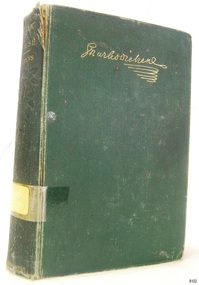 Flagstaff Hill Maritime Museum and Village
Book - A Fictional Story, Charles Dickens, Bleak House, 1873-1900
... works that included “A Christmas Carol” (1843), “Bleak House” (1853), “A Tale of Two Cities” (1859), and “Great Expectations” (1861). His novels themes were in blending humour, pathos, along with critiquing the era’s industrial society. Later, he edited magazines like “Household Words” and toured with dramatic...works that included “A Christmas Carol” (1843), “Bleak House” (1853), “A Tale of Two Cities” (1859), and “Great Expectations” (1861). His novels themes were in blending humour, pathos, along with critiquing the era’s industrial society. Later, he edited magazines like “Household Words” and toured with dramatic ...Charles Dickens (1812–1870) was one of the great English novelists of the Victorian era, famous for vivid characters, social criticism, and stories that were first published in serial form. He began as a journalist, rose to enormous popularity during his lifetime, and wrote major works such as Oliver Twist, David Copperfield, and Great Expectations. Bleak House is one of Charles Dickens’s major novels, a sprawling, multi plot story built around the endless Court of Chancery lawsuit known as “Jarndyce and Jarndyce” and its ruinous effect on several families. It is widely regarded as among his finest and most complex works, central to any serious study of his fiction.Bleak House. Author: Charles Dickens. Publisher: Chapman & Hall Ltd, London. Date: 1873-1900. (See note section this document for more information on Edition). Blue leather hardcover with title on spine in gold lettering, Charles Dickens signature on front cover written in gold lettering. The spine has a Library label.fictionCharles Dickens (1812–1870) was one of the great English novelists of the Victorian era, famous for vivid characters, social criticism, and stories that were first published in serial form. He began as a journalist, rose to enormous popularity during his lifetime, and wrote major works such as Oliver Twist, David Copperfield, and Great Expectations. Bleak House is one of Charles Dickens’s major novels, a sprawling, multi plot story built around the endless Court of Chancery lawsuit known as “Jarndyce and Jarndyce” and its ruinous effect on several families. It is widely regarded as among his finest and most complex works, central to any serious study of his fiction.book, the old curiosity shop, charles dickens, shipwrecked-coast, flagstaff-hill, flagstaff-hill-maritime-museum, warrnambool, maritime-museum, flagstaff-hill-maritime-village, pattison collection, warrnambool library, warrnambool mechanics’ institute, ralph eric pattison, corangamite regional library service, warrnambool city librarian, mechanics’ institute library, victorian library board, warrnambool books and records, warrnambool children’s library, great ocean road -
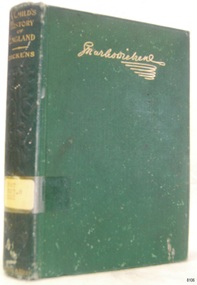 Flagstaff Hill Maritime Museum and Village
Book - A Fictional Story, Charles Dickens, A Childs History of England, 1900
... works that included “A Christmas Carol” (1843), “Bleak House” (1853), “A Tale of Two Cities” (1859), and “Great Expectations” (1861). His novels themes were in blending humour, pathos, along with critiquing the era’s industrial society. Later, he edited magazines like “Household Words” and toured with dramatic...works that included “A Christmas Carol” (1843), “Bleak House” (1853), “A Tale of Two Cities” (1859), and “Great Expectations” (1861). His novels themes were in blending humour, pathos, along with critiquing the era’s industrial society. Later, he edited magazines like “Household Words” and toured with dramatic ...Charles Dickens (1812–1870) was one of the great English novelists of the Victorian era, famous for vivid characters, social criticism, and stories that were first published in serial form. He began as a journalist, rose to enormous popularity during his lifetime, and wrote major works such as Oliver Twist, David Copperfield, and Great Expectations. “A Child’s History of England” is Dickens’s three volume, child directed history of England, originally serialised in Household Words from 1851 to 1853 and later issued in book form in 1853. It covers English history from ancient times through the fall of James II, with a brief closing summary up to Queen Victoria’s accession to the crown. Dickens wrote it as a readable, lively alternative to dry school history, aiming to interest his own children and young readers. The work is outspoken, often anti monarchical and anti aristocratic in tone, and it uses Dickens’s usual vivid style rather than detached academic prose.A Childs History of England. Author: Charles Dickens. Publisher: Chapman & Hall Ltd, London. Date: 1900. (See note section this document for more information on Edition). Green leather hardcover with title on spine in gold lettering, Charles Dickens signature on front cover written in gold lettering. The spine has a Library label and no Volume information.fictionCharles Dickens (1812–1870) was one of the great English novelists of the Victorian era, famous for vivid characters, social criticism, and stories that were first published in serial form. He began as a journalist, rose to enormous popularity during his lifetime, and wrote major works such as Oliver Twist, David Copperfield, and Great Expectations. “A Child’s History of England” is Dickens’s three volume, child directed history of England, originally serialised in Household Words from 1851 to 1853 and later issued in book form in 1853. It covers English history from ancient times through the fall of James II, with a brief closing summary up to Queen Victoria’s accession to the crown. Dickens wrote it as a readable, lively alternative to dry school history, aiming to interest his own children and young readers. The work is outspoken, often anti monarchical and anti aristocratic in tone, and it uses Dickens’s usual vivid style rather than detached academic prose.book, the old curiosity shop, charles dickens, shipwrecked-coast, flagstaff-hill, flagstaff-hill-maritime-museum, warrnambool, maritime-museum, flagstaff-hill-maritime-village, pattison collection, warrnambool library, warrnambool mechanics’ institute, ralph eric pattison, corangamite regional library service, warrnambool city librarian, mechanics’ institute library, victorian library board, warrnambool books and records, warrnambool children’s library, great ocean road -
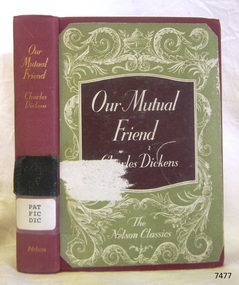 Flagstaff Hill Maritime Museum and Village
Book - A Fictional Story, Charles Dickens, Our Mutual Friend, 1900
... works that included “A Christmas Carol” (1843), “Bleak House” (1853), “A Tale of Two Cities” (1859), and “Great Expectations” (1861). His novels themes were in blending humour, pathos, along with critiquing the era’s industrial society. Later, he edited magazines like “Household Words” and toured with dramatic...works that included “A Christmas Carol” (1843), “Bleak House” (1853), “A Tale of Two Cities” (1859), and “Great Expectations” (1861). His novels themes were in blending humour, pathos, along with critiquing the era’s industrial society. Later, he edited magazines like “Household Words” and toured with dramatic ...Charles Dickens (1812–1870) was one of the great English novelists of the Victorian era, famous for vivid characters, social criticism, and stories that were first published in serial form. He began as a journalist, rose to enormous popularity during his lifetime, and wrote major works such as Oliver Twist, David Copperfield, and Great Expectations. “Our Mutual Friend” is Charles Dickens’s final completed novel, and it’s a dark social satire about money, greed, inheritance, identity, and moral redemption in Victorian London. The plot begins with an apparent drowning, a dust heap fortune, and a marriage condition in a will. It then expands into a tangled set of stories involving the river Thames, corrupt social climbers, and several characters who are tested and changed by wealth.Our Mutual Friend. Author: Charles Dickens. Publisher: Nelson & Sons, London. Date: 1900. (See note section this document for more information on Edition). Red cloth hardcover with green patterned paper stick on title to front cover. Spine has gold lettering. The spine has a Library label and no Volume information.fictionCharles Dickens (1812–1870) was one of the great English novelists of the Victorian era, famous for vivid characters, social criticism, and stories that were first published in serial form. He began as a journalist, rose to enormous popularity during his lifetime, and wrote major works such as Oliver Twist, David Copperfield, and Great Expectations. “Our Mutual Friend” is Charles Dickens’s final completed novel, and it’s a dark social satire about money, greed, inheritance, identity, and moral redemption in Victorian London. The plot begins with an apparent drowning, a dust heap fortune, and a marriage condition in a will. It then expands into a tangled set of stories involving the river Thames, corrupt social climbers, and several characters who are tested and changed by wealth.book, the old curiosity shop, charles dickens, shipwrecked-coast, flagstaff-hill, flagstaff-hill-maritime-museum, warrnambool, maritime-museum, flagstaff-hill-maritime-village, pattison collection, warrnambool library, warrnambool mechanics’ institute, ralph eric pattison, corangamite regional library service, warrnambool city librarian, mechanics’ institute library, victorian library board, warrnambool books and records, warrnambool children’s library, great ocean road -
 Flagstaff Hill Maritime Museum and Village
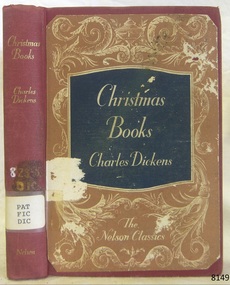
Book - A Fictional Story, Charles Dickens, Christmas Books, 1940's to 1959
... works that included “A Christmas Carol” (1843), “Bleak House” (1853), “A Tale of Two Cities” (1859), and “Great Expectations” (1861). His novels themes were in blending humour, pathos, along with critiquing the era’s industrial society. Later, he edited magazines like “Household Words” and toured with dramatic...works that included “A Christmas Carol” (1843), “Bleak House” (1853), “A Tale of Two Cities” (1859), and “Great Expectations” (1861). His novels themes were in blending humour, pathos, along with critiquing the era’s industrial society. Later, he edited magazines like “Household Words” and toured with dramatic ...Charles Dickens (1812–1870) was one of the great English novelists of the Victorian era, famous for vivid characters, social criticism, and stories that were first published in serial form. He began as a journalist, rose to enormous popularity during his lifetime, and wrote major works such as Oliver Twist, David Copperfield, and Great Expectations. This volume gathers five separate Christmas stories rather than one continuous novel. The best known of them, “A Christmas Carol”, follows Ebenezer Scrooge’s moral transformation after visits from supernatural spirits, while the others mix ghostly, sentimental, and domestic themes around Christmas, memory, family, and social feeling. Together they show Dickens using Christmas as a setting for moral instruction, sympathy for the poor, and festive storytelling. This Nelson and Sons London Christmas Books volume is a collected edition of Dickens’s five Christmas novellas, “A Christmas Carol,” “The Chimes”, “The Cricket on the Hearth”, “The Battle of Life”, and “The Haunted Man”. It is not the original 1840's publication; the Nelson publication is a later reprint in the company’s “Nelson’s Classics series, with examples catalogued from 1941 to 1959.Christmas Books. Author: Charles Dickens. Publisher: Nelson & Sons, London. Date: 1940’s-1950’s. (See note section this document for more information on Edition). Red cloth hardcover with brown patterned paper stick on title to front cover. Spine has gold lettering. The spine has a Library label and no Volume information.fictionCharles Dickens (1812–1870) was one of the great English novelists of the Victorian era, famous for vivid characters, social criticism, and stories that were first published in serial form. He began as a journalist, rose to enormous popularity during his lifetime, and wrote major works such as Oliver Twist, David Copperfield, and Great Expectations. This volume gathers five separate Christmas stories rather than one continuous novel. The best known of them, “A Christmas Carol”, follows Ebenezer Scrooge’s moral transformation after visits from supernatural spirits, while the others mix ghostly, sentimental, and domestic themes around Christmas, memory, family, and social feeling. Together they show Dickens using Christmas as a setting for moral instruction, sympathy for the poor, and festive storytelling. This Nelson and Sons London Christmas Books volume is a collected edition of Dickens’s five Christmas novellas, “A Christmas Carol,” “The Chimes”, “The Cricket on the Hearth”, “The Battle of Life”, and “The Haunted Man”. It is not the original 1840's publication; the Nelson publication is a later reprint in the company’s “Nelson’s Classics series, with examples catalogued from 1941 to 1959.book, the old curiosity shop, charles dickens, shipwrecked-coast, flagstaff-hill, flagstaff-hill-maritime-museum, warrnambool, maritime-museum, flagstaff-hill-maritime-village, pattison collection, warrnambool library, warrnambool mechanics’ institute, ralph eric pattison, corangamite regional library service, warrnambool city librarian, mechanics’ institute library, victorian library board, warrnambool books and records, warrnambool children’s library, great ocean road -
 Flagstaff Hill Maritime Museum and Village
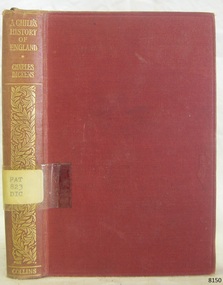
Book - A Fictional Story, Charles Dickens et al, A Childs History of England, 1910
... works that included “A Christmas Carol” (1843), “Bleak House” (1853), “A Tale of Two Cities” (1859), and “Great Expectations” (1861). His novels themes were in blending humour, pathos, along with critiquing the era’s industrial society. Later, he edited magazines like “Household Words” and toured with dramatic...works that included “A Christmas Carol” (1843), “Bleak House” (1853), “A Tale of Two Cities” (1859), and “Great Expectations” (1861). His novels themes were in blending humour, pathos, along with critiquing the era’s industrial society. Later, he edited magazines like “Household Words” and toured with dramatic ...Charles Dickens (1812–1870) was one of the great English novelists of the Victorian era, famous for vivid characters, social criticism, and stories that were first published in serial form. He began as a journalist, rose to enormous popularity during his lifetime, and wrote major works such as Oliver Twist, David Copperfield, and Great Expectations. “A Child’s History of England” is Dickens’s three volume, child directed history of England, originally serialised in Household Words from 1851 to 1853 and later issued in book form in 1853. It covers English history from ancient times through the fall of James II, with a brief closing summary up to Queen Victoria’s accession to the crown. Dickens wrote it as a readable, lively alternative to dry school history, aiming to interest his own children and young readers. The work is outspoken, often anti monarchical and anti aristocratic in tone, and it uses Dickens’s usual vivid style rather than detached academic prose.A Childs History of England. Author: Charles Dickens. Illustrator. Harry Furniss. Publisher: Collins Clear Type Press, London. Date: 1910. (See note section this document for more information on Edition). red cloth hardcover with title on spine in gold lettering and pattern. The spine has a Library label and no Volume information only title and author.fictionCharles Dickens (1812–1870) was one of the great English novelists of the Victorian era, famous for vivid characters, social criticism, and stories that were first published in serial form. He began as a journalist, rose to enormous popularity during his lifetime, and wrote major works such as Oliver Twist, David Copperfield, and Great Expectations. “A Child’s History of England” is Dickens’s three volume, child directed history of England, originally serialised in Household Words from 1851 to 1853 and later issued in book form in 1853. It covers English history from ancient times through the fall of James II, with a brief closing summary up to Queen Victoria’s accession to the crown. Dickens wrote it as a readable, lively alternative to dry school history, aiming to interest his own children and young readers. The work is outspoken, often anti monarchical and anti aristocratic in tone, and it uses Dickens’s usual vivid style rather than detached academic prose.book, the old curiosity shop, charles dickens, shipwrecked-coast, flagstaff-hill, flagstaff-hill-maritime-museum, warrnambool, maritime-museum, flagstaff-hill-maritime-village, pattison collection, warrnambool library, warrnambool mechanics’ institute, ralph eric pattison, corangamite regional library service, warrnambool city librarian, mechanics’ institute library, victorian library board, warrnambool books and records, warrnambool children’s library, great ocean road -
 Flagstaff Hill Maritime Museum and Village
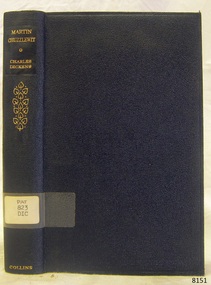
Book - A Fictional Story, Charles Dickens, Martin Chuzzlewit, 1910
... works that included “A Christmas Carol” (1843), “Bleak House” (1853), “A Tale of Two Cities” (1859), and “Great Expectations” (1861). His novels themes were in blending humour, pathos, along with critiquing the era’s industrial society. Later, he edited magazines like “Household Words” and toured with dramatic...works that included “A Christmas Carol” (1843), “Bleak House” (1853), “A Tale of Two Cities” (1859), and “Great Expectations” (1861). His novels themes were in blending humour, pathos, along with critiquing the era’s industrial society. Later, he edited magazines like “Household Words” and toured with dramatic ...Charles Dickens (1812–1870) was one of the great English novelists of the Victorian era, famous for vivid characters, social criticism, and stories that were first published in serial form. He began as a journalist, rose to enormous popularity during his lifetime, and wrote major works such as Oliver Twist, David Copperfield, and Great Expectations. “Martin Chuzzlewit” is Charles Dickens’s sixth novel serialised 1843-1844, with a novel published in 1844 by Chapman and Hall. The themes are about selfishness, hypocrisy, and moral reform, its plot follows young Martin, his proud grandfather, the hypocritical architect Pecksniff, the loyal Tom Pinch, and the good humoured Mark Tapley. There is also a criminal subplot around Jonas Chuzzlewit. The core plot in short is where Martin becomes at odds with his miserly grandfather as he works for Pecksniff, becomes friends with Tom Pinch. He travels to America, is nearly ruined by a swindle, eventually returning to England. Several villains are ultimately exposed and punished while virtuous characters are rewarded.Martin Chuzzlewit. Author: Charles Dickens. Introduction by Kenneth Hayens. Publisher: Collins, London & Glasgow. Date: 1953. (See note section this document for more information on Edition). Blue leather hardcover with title on spine in gold lettering and pattern. The spine has a Library label and no Volume information only title and author.fictionCharles Dickens (1812–1870) was one of the great English novelists of the Victorian era, famous for vivid characters, social criticism, and stories that were first published in serial form. He began as a journalist, rose to enormous popularity during his lifetime, and wrote major works such as Oliver Twist, David Copperfield, and Great Expectations. “Martin Chuzzlewit” is Charles Dickens’s sixth novel serialised 1843-1844, with a novel published in 1844 by Chapman and Hall. The themes are about selfishness, hypocrisy, and moral reform, its plot follows young Martin, his proud grandfather, the hypocritical architect Pecksniff, the loyal Tom Pinch, and the good humoured Mark Tapley. There is also a criminal subplot around Jonas Chuzzlewit. The core plot in short is where Martin becomes at odds with his miserly grandfather as he works for Pecksniff, becomes friends with Tom Pinch. He travels to America, is nearly ruined by a swindle, eventually returning to England. Several villains are ultimately exposed and punished while virtuous characters are rewarded.book, the old curiosity shop, charles dickens, shipwrecked-coast, flagstaff-hill, flagstaff-hill-maritime-museum, warrnambool, maritime-museum, flagstaff-hill-maritime-village, pattison collection, warrnambool library, warrnambool mechanics’ institute, ralph eric pattison, corangamite regional library service, warrnambool city librarian, mechanics’ institute library, victorian library board, warrnambool books and records, warrnambool children’s library, great ocean road -
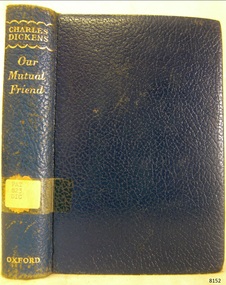 Flagstaff Hill Maritime Museum and Village
Book - A Fictional Story, Charles Dickens et al, Our Mutual Friend, 1987
... works that included “A Christmas Carol” (1843), “Bleak House” (1853), “A Tale of Two Cities” (1859), and “Great Expectations” (1861). His novels themes were in blending humour, pathos, along with critiquing the era’s industrial society. Later, he edited magazines like “Household Words” and toured with dramatic...works that included “A Christmas Carol” (1843), “Bleak House” (1853), “A Tale of Two Cities” (1859), and “Great Expectations” (1861). His novels themes were in blending humour, pathos, along with critiquing the era’s industrial society. Later, he edited magazines like “Household Words” and toured with dramatic ...Charles Dickens (1812–1870) was one of the great English novelists of the Victorian era, famous for vivid characters, social criticism, and stories that were first published in serial form. He began as a journalist, rose to enormous popularity during his lifetime, and wrote major works such as Oliver Twist, David Copperfield, and Great Expectations. “Our Mutual Friend” is Charles Dickens’s final completed novel, and it’s a dark social satire about money, greed, inheritance, identity, and moral redemption in Victorian London. The plot begins with an apparent drowning, a dust heap fortune, and a marriage condition in a will. It then expands into a tangled set of stories involving the river Thames, corrupt social climbers, and several characters who are tested and changed by wealth.Our Mutual Friend. Author: Charles Dickens. Publisher: Oxford University Press, London. Date: 1987 (See note section this document for more information on Edition). Blue leather hardcover, Spine has Author and Title in gold lettering. The spine has a Library label and no Volume information.fictionCharles Dickens (1812–1870) was one of the great English novelists of the Victorian era, famous for vivid characters, social criticism, and stories that were first published in serial form. He began as a journalist, rose to enormous popularity during his lifetime, and wrote major works such as Oliver Twist, David Copperfield, and Great Expectations. “Our Mutual Friend” is Charles Dickens’s final completed novel, and it’s a dark social satire about money, greed, inheritance, identity, and moral redemption in Victorian London. The plot begins with an apparent drowning, a dust heap fortune, and a marriage condition in a will. It then expands into a tangled set of stories involving the river Thames, corrupt social climbers, and several characters who are tested and changed by wealth.book, the old curiosity shop, charles dickens, shipwrecked-coast, flagstaff-hill, flagstaff-hill-maritime-museum, warrnambool, maritime-museum, flagstaff-hill-maritime-village, pattison collection, warrnambool library, warrnambool mechanics’ institute, ralph eric pattison, corangamite regional library service, warrnambool city librarian, mechanics’ institute library, victorian library board, warrnambool books and records, warrnambool children’s library, great ocean road
