
Showing 9 items matching "duke of richmond"
-
 Old Colonists' Association of Ballarat Inc.
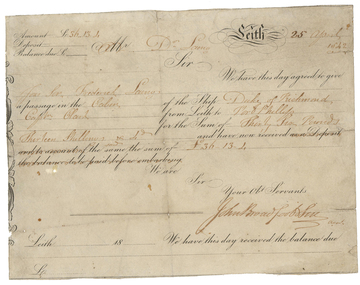
Document - Passenger Ticket, Passenger Ticket for Travel on the Duke of Richmond, 25/04/1842
... Passenger Ticket for Travel on the Duke of Richmond......duke of richmond...frederick lang duke of richmond leith port phillip passenger ticket Passenger Ticket for Travel on the Duke of Richmond Document Passenger Ticket ...frederick lang, duke of richmond, leith, port phillip, passenger ticket -
 Federation University Historical Collection
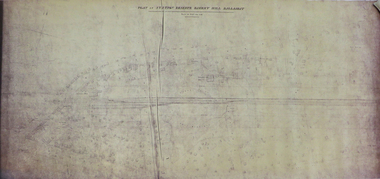
Plan, Station Reserve Bakery Hill, Ballaarat
... ...Duke of richmond hotel...Main landmarks include Duke of Richmond Hotel, Prince of Wales Hotel, Duke of York Hotel, Welcome Nugget Claim and Shaft, Imperial Hotel, Union Hotel, Kingston St, Otway St, Wellington Claim, Gravel Pits Gold Working and Robert Burns Hotel. .2) Same of above. ...Main landmarks include Duke of Richmond Hotel, Prince of Wales Hotel, Duke of York Hotel, Welcome Nugget Claim and Shaft, Imperial Hotel, Union Hotel, Kingston St, Otway St, Wellington Claim, Gravel Pits Gold Working and Robert Burns Hotel. .2) Same of above. ....1) Oversized photocopy of large plan depicting railway right of way where Mair and Humffray Streets meet. Main landmarks include Duke of Richmond Hotel, Prince of Wales Hotel, Duke of York Hotel, Welcome Nugget Claim and Shaft, Imperial Hotel, Union Hotel, Kingston St, Otway St, Wellington Claim, Gravel Pits Gold Working and Robert Burns Hotel. .2) Same of above. station reserve, bakery hill, railway, ballarat, mair street, humffray street north, duke of york hotel, duke of richmond hotel, union hotel, kingston st, otway st, wellington claim, gravel pits, gold workings, robert burns hotel -
 Warrnambool and District Historical Society Inc.
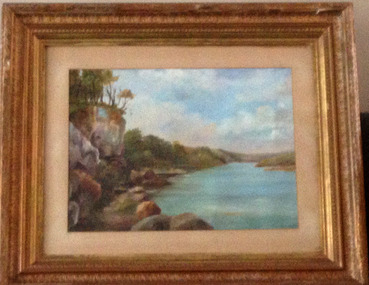
Painting, Hopkins River - Mary Norman - Clifton Banks
... Mount Cutters and Plush Workers, Studio - 27 Bridge Road, Melbourne, Factory- 45 and 47 Duke Street, Richmond, Armstrong Street, Ballarat, Pirie Street, Adelaide, Brisbane, & Freemantle W.A.'...Mount Cutters and Plush Workers, Studio - 27 Bridge Road, Melbourne, Factory- 45 and 47 Duke Street, Richmond, Armstrong Street, Ballarat, Pirie Street, Adelaide, Brisbane, & Freemantle W.A.' ...Clifton Banks is the name given to a bank on the Hopkins River Estuary, about one kilometre upstream from Proudfoots Boathouse. It is at the foot of the property, Clifton, which dates from 1850s. There are several works of art and photographs of Clifton Banks dating from the late 19th and early 20th centuries. Mary Norman (later known as Mary Norman=Bail) came to Warrnambool in 1901, residing with Canon and Mrs McGeorge. She studied art with Samuel Pearce Fuller and later taught art at Fuller's studio and at a local private school. She produced several seascapes and landscapes while she was in Warrnambool, leaving the town in 1905. She devoted the rest of her life to art as an artist and teacher. In 1922 she married Jess Bail. This art work of Clifton Banks won first prize at the 1902 Annual Ararat Art competitions. It was reported at the time that the work was not a copy but had been drawn from nature. The Warrnambool and District Historical Society has five of Mary Norman-Bail's art work.This is a most significant item as it is one of Mary Norman's art works and she was known in the early 20th century as a competent artist and a member of the Victorian Artists' Society. This art work also has historical significance as one of a number of Clifton Banks representations still surviving. Mary Norman also had an impact on the cultural life of Warrnambool during her short stay in the town. She also returned to teach in the town several times for short periods during the summer vacation times.This is a water colour mounted on art board and with a gilt framed and three outer layers of wooden gilded ornamental frames. The sides of the frames are broken in places and the guided material is somewhat discoloured. There are Les O'Callaghan handwritten notes and some typed material on the back giving information on Mary Norman and the art work. The back is sealed with pasted paper and there are both string and wire attached for hanging the pictureBack of art work: 'Diamond Bros, Photo Enlargers, Importers of Mouldings, Mounting Boards, Albums, Mirrors etc, Picture Framers. Mount Cutters and Plush Workers, Studio - 27 Bridge Road, Melbourne, Factory- 45 and 47 Duke Street, Richmond, Armstrong Street, Ballarat, Pirie Street, Adelaide, Brisbane, & Freemantle W.A.'mary norman, clifton banks, warrnambool -
 Embroiderers Guild, Victoria
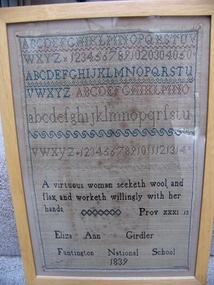
Textile - Eliza Ann Girdler. Huntington National School. 1839 Sampler, Eliza Ann Girdler, 1839
... The substantive part of the Westhampnett village school was built in 1839, paid for through the patronage of the fifth Duke of RIchmond and the Goodwood Estate. Its foundation was connected with a concern for social improvement at the time. ...The substantive part of the Westhampnett village school was built in 1839, paid for through the patronage of the fifth Duke of RIchmond and the Goodwood Estate. Its foundation was connected with a concern for social improvement at the time. ...The Old School in Funtington (near Chichester, West Sussex) operated from 1839 until it closed as a primary school in 1967. The former schoolhouse and adjoining teacher's residence have since been beautifully restored into private properties and bed and breakfast accommodations. Established in 1839, the small village school provided elementary education for local children, including surrounding hamlets like East and West Ashling. The substantive part of the Westhampnett village school was built in 1839, paid for through the patronage of the fifth Duke of RIchmond and the Goodwood Estate. Its foundation was connected with a concern for social improvement at the time. The school provided for the basic educational requirements of local working families who were mainly in the employ of the Goodwood Estate, and orphans from the nearby Westhampnett Workhouse. Beige linen with cross stitched alphabets and borders in brown, blue and black. A virtuous woman seeketh wool, and flax, and worketh willingly with her hands. Prov XXX1 13. Eliza Ann Girdler. Huntington National School. 1839embroidery, sampler, cross stitch, early 19th century, england -
 Flagstaff Hill Maritime Museum and Village
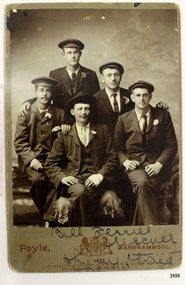
Postcard - People, Bill Ferrier - rescuer, 11th November, 1905
... DUKE OF CORNWALL & YORK. / HIS EXCELLENCY LORD BRAS_ EY, R.O.B.” Handwritten on the front of the card is “Bill Ferrier / rescuer / Oh my hero _ _ _ “ Handwritten on the back of the card is a message. “La Bella” Wrecked off W.Bool Breakwater Nov. 1906 (_ _ _ _ show night) Payne Noake Rosenholme Robertson and Capt Mylius (saved) (moonlight bright) Watson (_ _ _ _ boy) Richwoud [possibly Richmond] drowned” and signed “Desdewoua [possibly Desdemona] Slogos”...DUKE OF CORNWALL & YORK. / HIS EXCELLENCY LORD BRAS_ EY, R.O.B.” Handwritten on the front of the card is “Bill Ferrier / rescuer / Oh my hero _ _ _ “ Handwritten on the back of the card is a message. “La Bella” Wrecked off W.Bool Breakwater Nov. 1906 (_ _ _ _ show night) Payne Noake Rosenholme Robertson and Capt Mylius (saved) (moonlight bright) Watson (_ _ _ _ boy) Richwoud [possibly Richmond] drowned” and signed “Desdewoua [possibly Desdemona] Slogos” Sepia photograph of William (Bill) Ferrier (seated in the middle), heroic rescuer of two crew members of the La Bella, wrecked at Warrnambool. ...The postcard shows a photograph of William Ferrier, the 25-year-old Warrnambool fisherman from South Warrnambool whose rescue of two sailors from the wrecked La Bella made him an overnight National hero, quoted as “one of the most heroic rescues in Victoria’s shipwreck history”. The La Bella was wrecked on 10th November 1905 and the photograph was taken on the next day. In the photograph, William Ferrier is seated in the centre, with four of the five survivors beside him: (from left to right) Leonard Robertson, R. Payne, Oscar Rosenholme and Jack Noake. The photograph was taken by Foyle Photography Studio in Warrnambool, originally owned by James Charles Foyle. He previously had a photographic studio in Melbourne 1882 1887, then opened “Foyle’s Photo Card Studios” in Liebig St, Warrnambool. James Foyle died on 13th July 1905 and his son and daughter, Charles and Lilian Foyle continued on with the business until 1945. This photograph was most likely taken by either Charles or Lilian Foyle. The story of William Ferrier’s brave act follows on below … The ship from which the sailors were rescued was the three-masted, iron and steel barquentine the La Bella, built in Norway in 1893. She was one of two iron and steel ships by Johan Smith, the company was one of the leading shipping families in Tvedestrand, Norway. She was significant to Norwegian shipping, being one of only 27 iron and steel ships ever built in Norway. She was registered in New Zealand and engaged from 1902 in inter-colonial trading of timber in the Pacific, between New Zealand and Australia and was often in Port Phillip Bay, Victoria. On 5th October 1905, the twelve-year-old La Bella left Lyttleton, New Zealand carrying a cargo of timber bound for Warrnambool, Australia. She was manned by a crew of twelve: the Master, (Captain Mylius, previously 1st Mate of La Bella, appointed Captain to La Bella on 6th February 1903) 2 Mates, Cook, six able seamen, one ordinary seaman and a boy. Bad weather en route caused her to shelter at Burnie on Tasmania's North West coast. On November 10th, the 37th day of her journey, La Bella approached Warrnambool. Captain Mylius steered her towards Lady Bay Channel in heavy south-west seas and evening mist. He ordered the helmsman to steer for the light. As the ship came round, a tremendous sea struck her on the port quarter, causing her to breach broadside in a northwesterly direction into breakers. The helm was brought round twice more, but each time heavy seas broke over her, the third time throwing the La Bella on to a submerged reef in Lady Bay now known as La Bella Reef (about 100 yards from the Warrnambool breakwater). The sea was so rough that it even wrenched a one-and-a-half ton anchor from its fastenings and into the sea. As Captain Mylius headed to the steel wheelhouse, intending to send up a rocket flare, a huge sea slammed the steel door into him (resulting in massive bruising front and back) Despite his injuries he still managed to set off a blue light, which he held up in his hands. La Bella’s lifeboats were filled with seawater and broke up on their chocks. The blue light was the first indication to people on the shore that there was a ship in distress. The Harbour Master, Captain Roe (who lived in the Harbour Master’s House opposite Flagstaff Hill), organised a group of volunteers to crew the lifeboat because the trained crew was unavailable; the crewmen were working on a steamer in Port Fairy at the time. He then poured oil onto the water to try and smooth the sea. At around 11 pm three of the crew took shelter in the steel forecastle but the sea crashed into it and broke it up. While the rest of the crew and onlookers watched helplessly in the moonlight the bodies were washed away into the sea, never to be seen again. Some of the crew lashed themselves to the weather rail to keep from being washed away. Watson, the ordinary seaman, became tangled in the rigging lines and was too weak to move, so the 2nd Mate, Robertson, put a line onto him so that he wouldn’t wash off. Around 11 pm three of the crew were unconscious from exhaustion. The situation on La Bella was becoming dangerous. The 2nd Mate moved to the ‘house’ and soon afterwards the ship slipped in the heavy sea. The lashings of the 1st Mate and the ‘boy’ Denham had kept them safe until about 2 am when they were washed overboard; no one was able to help. One by one, the exhausted crew were being washed overboard, too weak to hold on any longer. During the night the La Bella had broken into two and the deckhouse ran out towards the sea. Two more men drowned when trying to reach the lifeboat. By sunrise, the only survivors of the twelve were the Master, 2nd Mate and three seamen. Early in the morning, Captain Roe used the rocket apparatus on shore to try and shoot a line to the ship for a safer rescue but each attempt fell short of the target. Several attempts were made by the lifeboat to rescue the stricken sailors, but the rough conditions made this difficult for the boat to get close enough to the ship and the lifeboat had to return to shore. During a final attempt to reach the ship Captain Mylius ordered his men to jump into the sea. Leonard Robertson, 2nd mate, jumped and swam towards the lifeboat, taking hold of the boat hook offered to him. Oscar Rosenholme managed to reach the boat floating on a piece of timber from the ship’s load and a third survivor, Noake, also made the boat. Along with the lifeboat rescue crew, 25-year-old William Ferrier rowed his small dingy through the heavy seas and managed to rescue the Captain, whom he landed on the breakwater. Ferrier then returned to the ship to attempt a final rescue, losing his oars and rowlocks into the high sea. Using just a spare paddle he skulled towards the La Bella, reaching her stern in time to cut loose the lone surviving sailor, Payne, from the lashing that held him to the ship; the terrified sailor dropped from the ship and into the dingy. Shortly after the last man was rescued, the La Bella was lifted by a huge wave and crashed back down on the reef; she broke up and sank. The ordeal had lasted ten hours. The survivors were taken to the nearby Bay View Hotel and gratefully received warm food and clothing, medical attention and a place to sleep. In the following days, an unidentified body of a young person had washed ashore; it was either Watson or Denham. The body was buried in the Warrnambool cemetery with an appropriate gravestone and inscription. William Ferrier became a national hero as news of the daring rescue spread. In recognition of his bravery in the two daring rescues, he was awarded the Silver Medal for Bravery by the Royal Humane Society and was honoured in the letter from the Prime Minister and the Parliament of the Commonwealth, telegrams and a cheque for £20 from the Governor-General, over £150 subscribed by the public, including Warrnambool and district and readers of The Argus, and a gold medal from the Glenelg Dinghy Club of South Australia. Ferrier’s rescue efforts are one of the most heroic in Victoria’s shipwreck history. (William Ferrier’s son, Frank, received a similar award almost fifty years later when he helped rescue four members of the crew on the yacht Merlan after it ran on to a reef near the Point Lonsdale Lighthouse. ) The wreck of La Bella now lies on her port side in 13 metres of sheltered water inside the reef she struck. The bow section is relatively intact and part of the stern has drifted north-easterly towards the mouth of the Hopkins River. The reef the La Bella struck now bears its name. Those five rescued from the La Bella were Captain George Mylius, Leonard Robertson (2nd Mate, 21 years old), R. Payne, Oscar Rosenholme and Jack Noake. Those seven who lost their lives were Mr Coulson (1st mate), Charles Jackman (cook) Gustave Johnson, Pierre Johann and Robert Gent (all able seamen), Harry Watson (ordinary seaman) and Jack Denham (ship’s boy), Captain Mylius was found guilty of careless navigation; he had sailed into the bay without the services of a pilot. His Master Certificate was suspended for twelve months. Later he was also charged with manslaughter of one of the crew who had died when the La Bella was wrecked but found not guilty. The event’s adverse publicity and damage to his career took a toll on his health and he died of a heart attack six months after the wreck; he was only thirty-seven. His body was buried in the Melbourne General Cemetery. The La Bella was “the best documented of all sailing ships owned in New Zealand”. Her record books, ship logs, correspondence and supporting papers are still available. At the time of the tragedy, she was owned by Messers David C.Turnbull and Co. of Timaru, New Zealand timber merchants and shipping agents, who had purchased her on 13th December 1901. A detailed account of the last journey of La Bella can be read in “Leonard Robertson, the Whangaroa & La Bella” written by Jack Churchouse, published in 1982 by Millwood Press Ltd, Wellington, NZ. As well as this postcard, Flagstaff Hill’s La Bella Collection includes a photograph of the wrecked La Bella, a brass rail holder and the letter from the Prime Minister and other Members of Parliament that was sent to William Ferrier to commend him for his bravery. Some 15 – 17 ships are believed to have sunk in Lady Bay, but only two have been discovered on the seafloor; the “La Bella” and the “Edinburgh Castle”. Both wrecks are popular diving sites and are preserved as significant historical marine and marine archaeological sites. This postcard is part of the La Bella Collection and is significant at both a local and state level. Its connection to the La Bella shipwreck and the rescue of five survivors highlights the dangers of Victoria’s Shipwreck Coast. The photograph of William Ferrier and four of the five survivors demonstrates the bravery of ordinary Australians who risked their lives to save victims of shipwrecks along the coast. The postcard is significant to the history of Warrnambool as it portrays William Ferrier, a local fisherman whose descendants continue to live in the area. It highlights the way of life of people who lived in coastal towns in 19th century Victoria and the effects of shipwrecks upon them. The postcard connects to the congratulatory letter which was sent to William Ferrier by the Prime Minister and Government of Australia and demonstrates the importance they attached to his efforts for Victoria and to Australia. The postcard is also an example of the photography of Foyle Photographers who were in the town of Warrnambool from the late 1800’s. Charles and Lillian Foyle took over the business when their father James died in 1905. Lillian Foyle is significant as the first woman photographer in Warrnambool. It is not known whether Charles of Lillian took this photograph. This postcard is significant because of its association with the sailing ship “La Bella”. The “La Bella” is of local and state and national significance. It is one of the only two shipwrecks discovered in Lady Bay, Warrnambool, out of the 15-17 shipwrecks in the bay. Sepia photograph of William (Bill) Ferrier (seated in the middle), heroic rescuer of two crew members of the La Bella, wrecked at Warrnambool. The photograph is a postcard and shows five men dressed formally in suits and hats. Printed below the photograph are the name and place of the photographer, a royal crest and the details of two patrons of the photographer. Also below the photograph are some handwritten words in black pen. On the back of the postcard is a handwritten message in the same writing as the front.Printed on the front of the card is “Foyle, WARRNAMBOOL” “PATRONS: / HIS ROYAL HIGHNESS THE DUKE OF CORNWALL & YORK. / HIS EXCELLENCY LORD BRAS_ EY, R.O.B.” Handwritten on the front of the card is “Bill Ferrier / rescuer / Oh my hero _ _ _ “ Handwritten on the back of the card is a message. “La Bella” Wrecked off W.Bool Breakwater Nov. 1906 (_ _ _ _ show night) Payne Noake Rosenholme Robertson and Capt Mylius (saved) (moonlight bright) Watson (_ _ _ _ boy) Richwoud [possibly Richmond] drowned” and signed “Desdewoua [possibly Desdemona] Slogos”la bella, foyle, william ferrier, bill ferrier, lady bay, 1905, 10th november 1905, 11th november 1905, parliament of the commonwealth, royal humane society medal, flagstaff hill, warrnambool, shipwrecked coast, flagstaff hill maritime museum, maritime museum, shipwreck coast, flagstaff hill maritime village -
 St Vincent's Hospital Melbourne Archives
Album - Images of the Royal Visit in 1927 and of St Vincent's Hospital Melbourne, the laying of the foundation stone, new wing, 1928
... Duke and Duchess of York in 1927. A loose newspaper clipping contained in the album titled "Fitzroy's Welcome" provides information on the royal visit which extended into Fitzroy, Collingwood and Richmond. ...Duke and Duchess of York in 1927. A loose newspaper clipping contained in the album titled "Fitzroy's Welcome" provides information on the royal visit which extended into Fitzroy, Collingwood and Richmond. ...Images in the album are related to the laying of the foundation stone of St Vincent's new wing in 1928 as well as the royal visit of the Duke and Duchess of York in 1927. A loose newspaper clipping contained in the album titled "Fitzroy's Welcome" provides information on the royal visit which extended into Fitzroy, Collingwood and Richmond. A minute photo on page 18 of the album shows an image of the royal yacht. Album contents and descriptions written: Page 1, Mother Mary Aikenhead foundress of the Sisters of Charity. Page 2, Mother Mary Berchmans foundress of St Vincent's. Page 3, The Papal Legate Cardinal Cerretti XX1X eucharistic congress laying of the foundation stone SVHM1928. Page 4, His Grace the Archbishop of Melbourne the most Rev Daniel Mannix 1928. Page 5, The stand from which the cardinal addressed the meeting. Page 6, En route to "Stand" SVH. Page 7, The stone ready to be blessed. Page 8, The Cardinal going to bless the stone. Page 9, The blessing of the stone. Page 10, Listening to the Cardinal. Page 11, The mallet and the trowel used. Page 12, The stone is well and truly laid, Page 13, Via the enclosure. Page 14, St V's nurses. Page 15, The Subway. Page 16, En route to Reception Hall. Page 17, The Reception Hall. Page 18, The Stage Garlands, CLC students entertained. Page 19, Royal visit His RH the Duke of York. Page 20, The Duchess of York. Page 21, The living check. Page 22, The guard of honour SVH nurses. Page 23, Fire station en fete opposite SVH. Page 24, Victoria Parade for a Royal Visit.Each page has script style black ink descriptions of the photograph.archbishop daniel mannix, mother mary berchmans daly, cardinal bonaventura cerretti, duke of york, duchess of york, mother mary aikenhead, st vincent's hospital melbourne, nurses, victoria parade, eastern hill fire station., tunnels, brenan hall -
 Sunshine and District Historical Society Incorporated
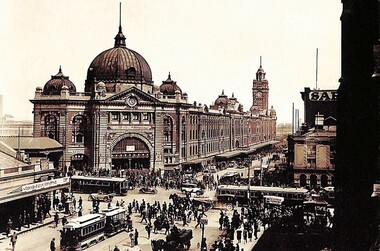
Memorabilia - Melbourne Public Transport Post Cards
... 596-1- Flinders Street Station dominates as new electric trams run in Swanston Street while cable cars continue the Flinders Street to Richmond service 596-2- W class tram 451 decorated and illuminated for the 1927 visit of the Duke and Duchess of York 596-3- The Spirt of Progress introduced in 1937 paces a Tiger Moth on the Albury line 596-4- New double decker buses introduced to replace cable trams in 1940 are pictures at North Fitzroy Depot 596-5- VR The Spirit out of Albury 1947...Transport 596-1- Flinders Street Station dominates as new electric trams run in Swanston Street while cable cars continue the Flinders Street to Richmond service 596-2- W class tram 451 decorated and illuminated for the 1927 visit of the Duke and Duchess of York 596-3- The Spirt of Progress introduced in 1937 paces a Tiger Moth on the Albury line 596-4- New double decker buses introduced to replace cable trams in 1940 are pictures at North Fitzroy Depot 596-5- VR The Spirit out of Albury 1947 Melbourne Public Transport Post Cards Memorabilia Melbourne Public Transport Post Cards ...596-1- Flinders Street Station dominates as new electric trams run in Swanston Street while cable cars continue the Flinders Street to Richmond service 596-2- W class tram 451 decorated and illuminated for the 1927 visit of the Duke and Duchess of York 596-3- The Spirt of Progress introduced in 1937 paces a Tiger Moth on the Albury line 596-4- New double decker buses introduced to replace cable trams in 1940 are pictures at North Fitzroy Depot 596-5- VR The Spirit out of Albury 1947transport -
 Ballarat Heritage Services
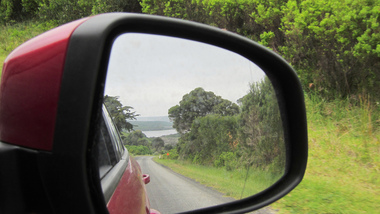
Photograph - Digital photograph, Lisa Gervasoni, Cape Bridgewater, Victoria, c2015
... Both Cape Bridgewater and Bridgewater Bay were named after the Duke of Bridgewater (1756-1829), by Lieutenant James Grant sailing on the Lady Nelson on 4 December 1800. Cape Bridgewater includes the Discovery Bay Coastal Park and the Mount Richmond National Park within its boundaries, a protected areas ...Both Cape Bridgewater and Bridgewater Bay were named after the Duke of Bridgewater (1756-1829), by Lieutenant James Grant sailing on the Lady Nelson on 4 December 1800. Cape Bridgewater includes the Discovery Bay Coastal Park and the Mount Richmond National Park within its boundaries, a protected areas cape bridgewater geology ocean coastal landscape seascape birds waves Colour photograph of Cape Bridgewater taken in the side mirror of a car. ...Cape Bridgewaters is located on the western shore of Bridgewater Bay about 21 kilometres south-west of Portland and about 383 kilometres west of Melbourne, Victoria. The area was settled in the 1860s by the Henty family who had settled nearby Portland, and a post office opened in 1863 (closed 1968) though it was known as Bridgewater Lower for some years. Both Cape Bridgewater and Bridgewater Bay were named after the Duke of Bridgewater (1756-1829), by Lieutenant James Grant sailing on the Lady Nelson on 4 December 1800. Cape Bridgewater includes the Discovery Bay Coastal Park and the Mount Richmond National Park within its boundaries, a protected areas Colour photograph of Cape Bridgewater taken in the side mirror of a car.cape bridgewater, geology, ocean, coastal, landscape, seascape, birds, waves -
 City of Melbourne Libraries
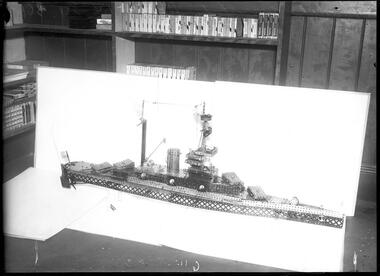
Photograph, Bull, Hugh Jones, 1897-1993, Window display: model warship YiPi
... Duke’s Centenary visit to Melbourne. However, they did lead us to The Age archivist Michelle Stillman, who held the key to unlock the photographer’s identity. Louise McKenzie. Photographer notations on slide: "Model warship YiPi 14-12-34 B61" Published: 14 September 1934 The Age p15 Published title: MECCANO CRUISER Published caption: Barry Sandford (17) of Richmond, recently completed this splendid Meccano model of a modern cruiser. ...Duke’s Centenary visit to Melbourne. However, they did lead us to The Age archivist Michelle Stillman, who held the key to unlock the photographer’s identity. Louise McKenzie. Photographer notations on slide: "Model warship YiPi 14-12-34 B61" Published: 14 September 1934 The Age p15 Published title: MECCANO CRUISER Published caption: Barry Sandford (17) of Richmond, recently completed this splendid Meccano model of a modern cruiser. ...Teenager’s Meccano model in The Age window Whilst Barry’s model is interesting, and he himself is more than interesting – renowned for his lifelong harmonica playing, vaudeville and stand-up comedy as “Mr Versatility” – it is the location of the photo which intrigued us. Was this the photographer’s office, and would it give us a clue to his identity? We thought he might be “Mr Duke” as some boxes of Kodak slides were so named! But we later deduced they were most likely related to the Duke’s Centenary visit to Melbourne. However, they did lead us to The Age archivist Michelle Stillman, who held the key to unlock the photographer’s identity. Louise McKenzie. Photographer notations on slide: "Model warship YiPi 14-12-34 B61" Published: 14 September 1934 The Age p15 Published title: MECCANO CRUISER Published caption: Barry Sandford (17) of Richmond, recently completed this splendid Meccano model of a modern cruiser. It is fitted with four swivelling turret guns, six quick-firers, searchlight, movable anchor rudder and propeller. This model is on view in "The Age" office window, Collins-street. Trove article identifier: http://nla.gov.au/nla.news-article205072014 Description: Meccano model of cruiser. Wood panelled office walls and boxes of glass slides can be seen in the background. Research by project volunteer, Louise McKenzie: The second slide we scanned, this photo of Barry Sandford’s Meccano model of a cruiser was of particular interest because it appeared to have been taken in the photographer's studio/office. For the bulk of our project, the identity of the photographer was not known, and we delighted in imagining who they were, whether they were amateur or professional, and what else might be stored in those neatly labelled boxes in the background. But the photo had its own story regardless. A photo of Barry Sandford’s meccano model appeared in the Melbourne AGE on Friday 14 December 1934; it was probably the same photo as the one in our collection – now cropped to remove the background office environment. This background shows shelves of Kodak Panochromatic, and archived boxes labelled “DUKE” with various references: D1 – D23, and one labelled ‘DUKE Not Used’. On a shelf there is a stack of wooden glass plate holders. It wasn't until early 2023 that the photographer's identity was revealed with the help of archivist/librarian at The Age, Michelle Stillman. As for young Barry – what a talent! Meccano was hugely popular at this time. The Melbourne Meccano Club met on a Tuesday at the YMCA building. On 18 August 1933 The Age reported that at their upcoming meeting the model builders “will gain an insight into the oil industry from a lecturer and moving pictures supplied by the Vacuum Oil Co.” Models reflected an interest in rapid technological developments of the time, and also key activities. On 2 November 1934 The Age showed Barry with a model of Sir Charles Kingsford Smith’s Lockheed Altair, “Lady Southern Cross”, which Kingsford Smith purchased with the intent to compete in the MacRobertson Air Race as part of the Melbourne Centenary celebrations. He did not participate, but in late 1935 he and co-pilot John Thompson “Tommy” Pethybridge flew Lady Southern Cross from India to Singapore in an attempt to break the England-Australia speed record. Sadly, on the night of 8 November, they disappeared over the Andaman Sea and were never found. The Harmonica Riff Raff blog provides an amazing and comprehensive commentary on Barry Sandford's life. He is described as a Richmond boy of many talents – model making, archery, comedy, kite making, magic and juggling, as well as a harmonica virtuoso. He was particularly renowned for his harmonica playing and the creation of a two-foot long harmonica, and a tiny, hands-free organ which he played fully enclosed in his mouth. He promoted himself as Mr. Versatility and often featured in Melbourne news articles in the 1930s and 1940s. He remained very active in the entertainment business throughout his life, including as a member of the Four Octaves harmonica group, on the Tivoli circuit, and in vaudeville and stand up comedy. He successfully made the move from stage and radio into television. He died in 1992, still saluted by his peers as the gentleman, Mr Versatility. References: MECCANO CRUISER. (1934, December 14). The Age (Melbourne, Vic. : 1854 - 1954), p. 3. Retrieved January 22, 2024, from http://nla.gov.au/nla.news-article205072014 MIMIC MECCANO WARFARE. (1933, July 21). The Age (Melbourne, Vic. : 1854 - 1954), p. 2 (This Supplement is Published Every Friday). Retrieved September 19, 2023, from http://nla.gov.au/nla.news-article204368610 MELBOURNE MECCANO CLUB. (1933, August 18). The Age (Melbourne, Vic. : 1854 - 1954), p. 1 (This Supplement is Published Every Friday). Retrieved September 19, 2023, from http://nla.gov.au/nla.news-article204367564 MECCANO MODEL OF LADY SOUTHERN CROSS. (1934, November 2). The Age (Melbourne, Vic. : 1854 - 1954), p. 3. Retrieved September 19, 2023, from http://nla.gov.au/nla.news-article205083196 Charles Kingsford Smith, Wikipedia, https://en.wikipedia.org/wiki/Charles_Kingsford_Smith 'Mr. Versatility', Harmonica Riff Raff, https://harmonicariffraff.blog/2022/09/05/mr-versatility/ Photographer notations on slide: "Model warship YiPi 14-12-34 B61".ships, models, the age, harmonicas, meccano
