
Showing 19 items matching "dunolly hospital"
-
 Tarnagulla History Archive
News clipping: Tarnagulla Progress Association Ball for Dunolly Hospital, Tarnagulla Progress Association Ball for Dunolly Hospital, 1956
... News clipping: Tarnagulla Progress Association Ball for Dunolly Hospital...Tarnagulla Progress Association Ball for Dunolly Hospital...A page from The Weekly Times newspaper, of Sept 19, 1956 with article titled 'Tarnagulla Progress Association Ball for Dunolly Hospital'. Includes an image of Tarnagulla & district residents Mrs Pateman and Mrs Dyer. ...Tarnagulla Progress Association Ball for Dunolly Hospital News clipping: Tarnagulla Progress Association Ball for Dunolly Hospital Stokes & Son ...David Gordon Collection. A page from The Weekly Times newspaper, of Sept 19, 1956 with article titled 'Tarnagulla Progress Association Ball for Dunolly Hospital'. Includes an image of Tarnagulla & district residents Mrs Pateman and Mrs Dyer. fundraising -
Tarnagulla History Archive
Unpublished manuscript: Dunolly District Hospital 1859-2002, Dunolly District Hospital 1859-2002, 2002
... Unpublished manuscript: Dunolly District Hospital 1859-2002...Dunolly District Hospital 1859-2002...dunolly hospital...An unpublished research manuscript with title 'Dunolly District Hospital 1859-2002' by Donald Clark. ...Donald Clark Collection. dunolly hospital An unpublished research manuscript with title 'Dunolly District Hospital 1859-2002' by Donald Clark. ...Donald Clark Collection. An unpublished research manuscript with title 'Dunolly District Hospital 1859-2002' by Donald Clark. Plastic spiral bound.dunolly hospital -
Tarnagulla History Archive
News clipping: Tarnagulla Ball for Dunolly Hospital, Tarnagulla Ball for Dunolly Hospital, September 16, 1964
... News clipping: Tarnagulla Ball for Dunolly Hospital...Tarnagulla Ball for Dunolly Hospital...Portion of a page from The Weekly Times newspaper, of Sept 16, 1964 with article titled 'Tarnagulla Ball for Dunolly Hospital'. Images of Tarnagulla & district residents including Mr & Mrs James, Mr & Mrs Hurford, Alex Freckleton and Robert Ousley (both of the Tarnagulla Hall Committee), John Shay, and others. ...Tarnagulla Ball for Dunolly Hospital News clipping: Tarnagulla Ball for Dunolly Hospital ...Don Clark Collection Portion of a page from The Weekly Times newspaper, of Sept 16, 1964 with article titled 'Tarnagulla Ball for Dunolly Hospital'. Images of Tarnagulla & district residents including Mr & Mrs James, Mr & Mrs Hurford, Alex Freckleton and Robert Ousley (both of the Tarnagulla Hall Committee), John Shay, and others. tarnagulla, dunolly, murphys creek, maldon, people, hospital, fundraisers, hall, public hall, hall committee -
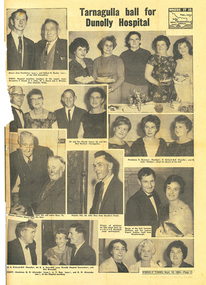 Tarnagulla History Archive
News clipping: Tarnagulla Ball for Dunolly Hospital, Tarnagulla Ball for Dunolly Hospital, September 16, 1964
... News clipping: Tarnagulla Ball for Dunolly Hospital...Tarnagulla Ball for Dunolly Hospital...A page from The Weekly Times newspaper, of Sept 16, 1964 with article titled 'Tarnagulla Ball for Dunolly Hospital'. Images of Tarnagulla & district residents including Henry and Arthur Dyer, Mr & Mrs James, Mr & Mrs Hurford, Alex Freckleton and Robert Ousley (both of the Tarnagulla Hall Committee), John Shay, and others. ...Tarnagulla Ball for Dunolly Hospital News clipping: Tarnagulla Ball for Dunolly Hospital ...Murray Comrie Collection. A page from The Weekly Times newspaper, of Sept 16, 1964 with article titled 'Tarnagulla Ball for Dunolly Hospital'. Images of Tarnagulla & district residents including Henry and Arthur Dyer, Mr & Mrs James, Mr & Mrs Hurford, Alex Freckleton and Robert Ousley (both of the Tarnagulla Hall Committee), John Shay, and others. tarnagulla, dunolly, murphys creek, maldon, people, hospital, fundraisers, hall, public hall, hall committee -
 Tarnagulla History Archive
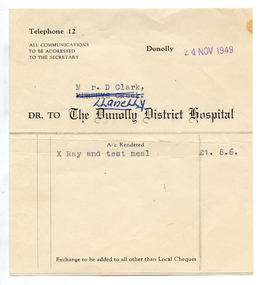
Receipt: Dunolly Hospital, 1949
... Receipt: Dunolly Hospital...A paper receipt for a payment to Dunolly District Hospital....A paper receipt for a payment to Dunolly District Hospital. Receipt: Dunolly Hospital ...Donald Clark Collection. A paper receipt for a payment to Dunolly District Hospital. -
 Tarnagulla History Archive
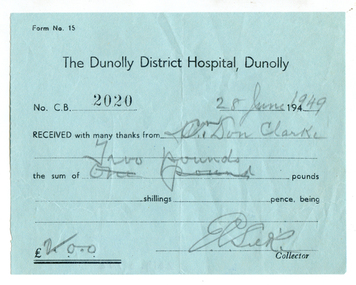
Receipt: Dunolly Hospital, 1949
... Receipt: Dunolly Hospital...A paper receipt for a payment to Dunolly District Hospital....A paper receipt for a payment to Dunolly District Hospital. Receipt: Dunolly Hospital ...Donald Clark Collection. A paper receipt for a payment to Dunolly District Hospital. -
 Tarnagulla History Archive
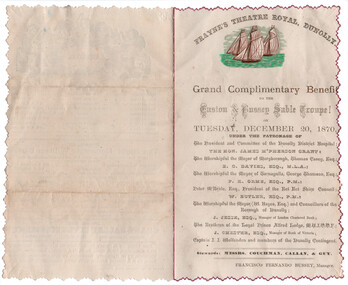
Programme for Grand Concert in aid of Dunolly Hospital, 1870
... Programme for Grand Concert in aid of Dunolly Hospital, 1870...Programme for Grand Concert in aid of Dunolly Hospital, 1870 ... -
 Tarnagulla History Archive
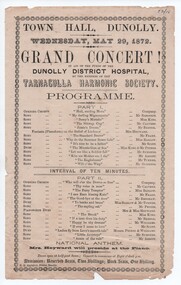
Programme for Dunolly Hospital Concert by Tarnagulla Harmonic Society, 1872
... Programme for Dunolly Hospital Concert by Tarnagulla Harmonic Society, 1872....Programme for Dunolly Hospital Concert by Tarnagulla Harmonic Society, 1872. ... -
 Tarnagulla History Archive
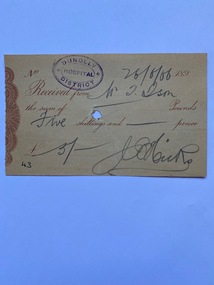
Receipt for Donation to the Dunolly Hospital from T. Ison, 1906
... Receipt for Donation to the Dunolly Hospital from T. Ison, 1906...Receipt for Donation to the Dunolly Hospital from T. Ison, 1906 ... -
Tarnagulla History Archive
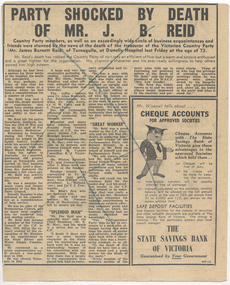
News clipping: Party Shocked By Death Of Mr J.B. Reid, Party Shocked By Death Of Mr J.B. Reid, June 13th, 1957
... Was member and President of Shire of Bet Bet and on Dunolly Hospital Committee for many years. He later entered state politics and was Treasurer of the Victorian Country Party. ...Was member and President of Shire of Bet Bet and on Dunolly Hospital Committee for many years. He later entered state politics and was Treasurer of the Victorian Country Party. ...J.B. Reid was born in Scotland and ran a general store in Tarnagulla for some time until it burned down in the early 1950s. Was member and President of Shire of Bet Bet and on Dunolly Hospital Committee for many years. He later entered state politics and was Treasurer of the Victorian Country Party. Don Clark Collection A 2-page excerpt from The Countryman newspaper, of June 13th, 1957 collected for the article titled 'Party Shocked By Death Of Mr J.B. Reid'. Mentions Allan Brownbill, Jas. Fotheringham, Jas. Allan, Dr. John Lewis and Donald Clark. tarnagulla, people, j.b. reid, politics, governance, stores, deaths, obituaries, funerals -
 Tarnagulla History Archive
Newspaper clipping: 'Party Shocked By Death Of Mr J.B. Reid - Party Shocked By Death Of Mr J.B. Reid', June 13th, 1957
... Was member and President of Shire of Bet Bet and on Dunolly Hospital Committee for many years. He later entered state politics and was Treasurer of the Victorian Country Party. ...Was member and President of Shire of Bet Bet and on Dunolly Hospital Committee for many years. He later entered state politics and was Treasurer of the Victorian Country Party. ...J.B. Reid was born in Scotland and ran a general store in Tarnagulla for some time until it burned down in the early 1950s. Was member and President of Shire of Bet Bet and on Dunolly Hospital Committee for many years. He later entered state politics and was Treasurer of the Victorian Country Party. Donald Clark Collection.A newspaper clipping from The Countryman newspaper, of June 13th, 1957, article titled 'Party Shocked By Death Of Mr J.B. Reid'. Mentions Allan Brownbill, Jas. Fotheringham, Jas. Allan, Dr. John Lewis and Donald Clark. tarnagulla, people, j.b. reid, politics, governance, stores, deaths, obituaries, funerals -
 Greensborough Historical Society
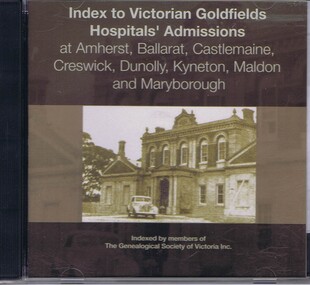
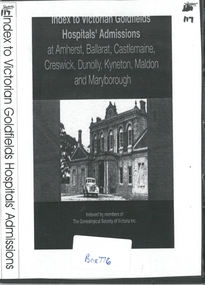
Administrative record - Compact disc, Index to Victorian Goldfields Hospitals Admissions
... Index to Victorian Goldfields Hospitals' Admissions at Amherst, Ballarat, Castlemain, Creswick, Dunolly, Kyneton, Maldon and Maryborough...Index to Victorian Goldfields Hospitals' Admissions at Amherst, Ballarat, Castlemain, Creswick, Dunolly, Kyneton, Maldon and Maryborough victorian goldfields victorian goldfield hospitals registers of births deaths marriages Contents listed on CD 1 compact disc in plastic case Index to Victorian Goldfields Hospitals Admissions Administrative record Compact disc ...Index to Victorian Goldfields Hospitals' Admissions at Amherst, Ballarat, Castlemain, Creswick, Dunolly, Kyneton, Maldon and Maryborough1 compact disc in plastic caseContents listed on CDvictorian goldfields, victorian goldfield hospitals, registers of births deaths marriages -
 Bendigo Historical Society Inc.
Archive - INDEX TO VICTORIAN GOLDFIELDS - HOSPITALS' ADMISSIONS
... Index to Victorian Goldfields Hospitals' Admissions at Amherst, Ballarat, Castlemaine, Creswick, Dunolly, Kyneton, Maldon,and Maryborough. by the Genealogical Society of Victoria inc....Index to Victorian Goldfields Hospitals' Admissions at Amherst, Ballarat, Castlemaine, Creswick, Dunolly, Kyneton, Maldon,and Maryborough. by the Genealogical Society of Victoria inc. ...DVD. Index to Victorian Goldfields Hospitals' Admissions at Amherst, Ballarat, Castlemaine, Creswick, Dunolly, Kyneton, Maldon,and Maryborough. by the Genealogical Society of Victoria inc.victorian goldfields, hospital's admission -
Bendigo Historical Society Inc.
Document - Notes of public talk given to Bendigo Historical Society by Jenny Trewartha on 7th March, 2025 relating to NDSN, 7th March, 2025
... This was the basis of the establishment of the Northern District School of Nursing which oversaw nurse training in hospitals across the northwest of Victoria, including Bendigo, Castlemaine, Kyneton, Maryborough, Mildura, Ouyen, St Arnaud, Swan Hill, Dunolly, Inglewood and Echuca. ...This was the basis of the establishment of the Northern District School of Nursing which oversaw nurse training in hospitals across the northwest of Victoria, including Bendigo, Castlemaine, Kyneton, Maryborough, Mildura, Ouyen, St Arnaud, Swan Hill, Dunolly, Inglewood and Echuca. ...Speech given by Jenny Trewartha to the Bendigo Historical Society on 7th March, 2025 at the la Trobe Art Institute, View Street, Bendigo. Jenny was a graduate of the NDSN at the end of 1972. The Northern District School of Nursing opened at Bendigo in 1950 and was the only regional independent School of Nursing of its kind in the southern hemisphere. There was a huge need for trained nurses in hospitals across the region as the nursing numbers were dwindling. Post World War II was a critical period with soldiers returning with wounds and conditions not seen before and needing special treatment. Medicine and medical treatments were entering a new age, and this new age needed nurses with new skills. There was a need to improve the status and prospects for nurses. Improved working and living conditions were needed; adequate remuneration and a career path to attract a better class of trainees, and a uniform training by means of a circular or block system. This was the basis of the establishment of the Northern District School of Nursing which oversaw nurse training in hospitals across the northwest of Victoria, including Bendigo, Castlemaine, Kyneton, Maryborough, Mildura, Ouyen, St Arnaud, Swan Hill, Dunolly, Inglewood and Echuca. The Northern District School of Nursing opened in 1950 and closed its doors in 1989 having overseen the training of more than 3000 nurses who are now scattered across Australia and the world.Ten pages of typed notes pertaining to training as a nurse at the Northern District School of Nursing from 1950 to 1989, and the Northern District School of Nursing Graduates Association. Document discusses different aspects of life as a trainee nurse - including financial, social and where students came from.northern district school of nursing, nursing, student -
Bendigo Historical Society Inc.
Document - BROADCASTING STATION 3CV, MARYBOROUGH, 2 March, 1956
... Coverage included Bendigo, Ballarat, Daylesford, Castlemaine and Maryborough. 3CV plays active part in assisting charities and hospitals at Maryborough, Daylesford, Maldon and Dunolly. Active Women's Radio Club with branches in country centres adds strength to station's charitable efforts. ...Coverage Bendigo Ballarat Daylesford Castlemaine Maryborough. assisting charities and hospitals Maldon and Dunolly. Women's Radio Club Opening 3CV's new premises Australian Commercial Broadcasting stations. ...Broadcasting Station 3CV, Maryborough. A souvenir of the opening of the New Studios and Offices of Central Victoria Broadcasters Pty Ltd. March 2nd, 1956. Established 1956, offices in Burke Street, opening coincides with the stations 21st birthday, March 2 for the former celebration, October 26 for the latter. Coverage included Bendigo, Ballarat, Daylesford, Castlemaine and Maryborough. 3CV plays active part in assisting charities and hospitals at Maryborough, Daylesford, Maldon and Dunolly. Active Women's Radio Club with branches in country centres adds strength to station's charitable efforts. Opening 3CV's new premises will widen the scope of the station's charitable efforts, and stronger link with Australian Commercial Broadcasting stations. Writer Harold V Nunn writes history of district of Mayborough. Manager Ken J Parker, Central Victoria Broadcasters Pty. Ltd. The Souvenir brochure also covers topics such as: deep lead mining. WWI. Houses being pulled down. New settlements of Mildura. Secondary Industries. Bowenvale, Alma, Majorca, Craigie, Amherst, Adelaide Lead, Havelock, Bet Bet, Bently. Primary production and a railway staff of approximately 150. Maryborough a little town without a future. Coal fields at Wonthaggi. 1917 a public meeting was convened in an effort to stem the tide of adversity. Mayor George Frost, M.L.A., decision to form a Progress Association, a policy of secondary industry was decided upon and committees were appointed, James L Drew much credit is due. Maryborough's move for rejuvenation was revolutionary, because apart from Ballarat, Bendigo and Geelong, it was regarded as so much presumption that industry could be expected to function with success in a country town. Governments were unsympathetic. Maryborough & district people showed determination to succeed and their faith in their town. Employment and economic security provided by the industries outweighed the debt. Maryborough's general position is that it is no longer dependent upon one particular phase of activity. The first of the industries to be formed in 1918 was the Butter Factory. The nearer dairy companies did not take kindly to the prospect of another opposition company taking supplies from their districts, and in the first few years of establishment completion made the going hard for the management. But adopting a conservative policy and placing all profits to reserve I the first six years of operation headway was gradually made. Thus it was a red letter day for the company in 1925 when the first dividend of 5 percent was paid.1955 dividend of 10 per cent. Operating it's own trucks the dairy serviced local dairymen up to 40 miles. Maryborough Knitting mills est. 1923, having transferred from Clunes. Out bid Ballarat and Bendigo to the industry. The mill has what is probably the largest circular underwear plant in the Commonwealth, which is conservatively valued at 198,913 pounds. It produces between four and five million garments each year, worth over one million pounds. The company has established subsidiary mills at Dunolly, Talbot and Avoca. The company also assisted in the establishment of the Interknit Hosiery Co. Ltd., Clunes. The Maryborough Flour Mills is the second oldest of Mayborough's industries. It was built by Mr Cadwallader over 70 years ago. It was later sold to Mr. A Land and then to Jas. Minifie & Co. It had a somewhat 'in-and -out' existence until purchased in 1923 by Messrs. Willersdorf and Forbes, of Eddington. In 1939 the firm began to build silos for the storage of bulk wheat and the present storage capacity is 100,000 bushels. 1944 power was changed from steam to electricity. The mill has an out put of 20 sacks an hour. 1938 a chaff mill was built, and now is regarded as one of the best in Victoria. Its output in one year of approximately 6,800 tons is a State record for a single cutter. During this 30 year period Patience and Nicholson Limited has grown with Maryborough and is now one of the major key industries of Australia. The P&N brand covers precision tools - taps, dies and twist drills - indispensable to the country's economy, and quality is acknowledged equally by an air craft factory in Canada, a dockyard in Thailand, a railway workshop in New Zealand, no less than by our own Australian industries. Maryborough can be proud of the part played by P&N in war when, geared to the needs of the times, it poured countless millions of tools into defence factories and to the armed forces of the Allies, and now in peace when it is providing, hydro-electric undertakings and the manufacture of cars and tractors. From 1858, W Phelan & Sons Pty Ltd has made phenomenal and spectacular growth, becoming incorporated as a private company in 1929. It is without doubt the greatest private development in the history of Maryborough. 1940 joinery manufacture was commenced. The company entered the Ready Built Housing field in `950 - and in 1951 established a factory at Cairns, Northern Queensland to overcome the manufacturing difficulties being experienced due to the shortage of plywood in Victoria. Present activities include: Ready Built Housing Factory, on-site building, a modern joinery, timber yard, drying kilns, etc., and plumbing & electrical & engineering services, a door and panel factory at Cairns, retail hardware store, Melbourne Sales Depot. Hedges & Bell Pty Ltd were est 1945, with a staff of 40 employees are the largest printing firm outside the metropolitan area. The branch of Premier Wireworks is a contribution made by the decentralisation policy of the State.event, official, celebration, broadcasting station 3cv, maryborough. a souvenir of the opening of the new studios and offices of central victoria broadcasters pty ltd. march 2nd, 1956. established 1956, offices in burke street, 21st birthday. coverage bendigo, ballarat, daylesford, castlemaine maryborough. assisting charities and hospitals maldon and dunolly. women's radio club opening 3cv's new premises australian commercial broadcasting stations. writer harold v nunn writes history of district of mayborough. manager ken j parker, central victoria broadcasters pty. ltd. souvenir brochure: deep lead mining. wwi. houses pulled down. new settlements. primary production railway staff. coal fields wonthaggi. 1917 a public meeting was convened in an effort to stem the tide of adversity. mayor george frost, m.l.a., form a progress association, policy of secondary industry, james l drew rejuvenation was revolutionary, employment and economic security. the first of the industries to be formed in 1918 was the butter factory. thus it was a red letter day for the company in 1925 when the first dividend of 5 percent was paid.1955 dividend of 10 per cent. operating it's own trucks serviced local dairymen. maryborough knitting mills est. 1923 largest circular underwear plant in the commonwealth. established subsidiary mills at dunolly, talbot, avoca. interknit hosiery co. ltd., clunes. the maryborough flour mills it was built by mr cadwallader. mr. a land jas. minifie & co. messrs. willersdorf and forbes, build silos for wheat storage capacity is 100, 000 bushels. 1944 power was changed from steam to electricity. 20 sacks an hour. 1938 a chaff mill was built, best in victoria. patience and nicholson limited the p&n precision tools - taps, dies and twist drills. war, geared to the needs of the times, countless millions of tools into defence factories the armed forces of the allies, hydro-electric undertakings and the manufacture of cars and tractors. from 1858, w phelan & sons pty ltd, incorporated 1929. 1940 joinery manufacture. ready built housing field in 1950 - 1951 established a factory at cairns, northern queensland to overcome the manufacturing difficulties being experienced due to the shortage of plywood in victoria. present activities: ready built housing factory, on-site building, a modern joinery, timber yard, drying kilns, etc., and plumbing & electrical & engineering services, a door and panel factory at cairns, retail hardware store, melbourne sales depot. hedges & bell pty ltd were est. 1945, with a staff of 40 employees are the largest printing firm outside the metropolitan area. the branch of premier wireworks is a contribution made by the decentralisation policy of the state. -
 Ballarat Heritage Services
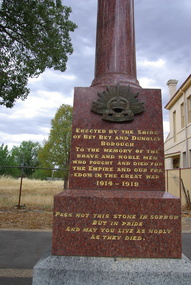
Photograph - War Memorial, Lisa Gervasoni, Dunolly War Memorial, 2025, 1921
... Dunolly. He was not well a little while ago, having to go into a hospital, but is all right again and is back with me. ...Dunolly. He was not well a little while ago, having to go into a hospital, but is all right again and is back with me. ...The Dunolly World War One Memorial Pillar, located in front of the Town Hall on Broadway Street, and was unveiled on November 18th 1921. The pillar is topped by an urn and rests on a square concrete plinth, which lists the names ninety-four locals who died serving during the First World War. On Friday afternoon the Premier, accompanied by Messrs. Pennington and Groves, M's.L.A., visited Dunolly, and unveiled a soldiers' memorial — a polished granite column on a square base, erected by the residents at a cost of £300. It bears the names of 94 district soldiers who were killed in action. The Premier, who is a native of Dunolly, referred to his early associations with the town and district. Speaking of the valiant service rendered by the Australian soldiers in the great war, he paid a tribute to those who enlisted from the country districts. He was not one of those who would withhold national memorials to the fallen because provision had not been made for all who had returned. It was right and proper to have these memorials as silent reminders of the great sacrifice made by the many as a lasting tribute to their memory. Messrs. Groves and Pennington and local clergymen also spoke. The school children sang O God, Our Help in Ages Past, and a bugler sounded the Last Post after the unveiling. The shire president entertained the visitors and committee at dinner. The Age (Melbourne), 19 November 1921. Colour photograph of the Dunolly War Memorial. Front Inscription "Erected by the Shire of Bet Bet and Dunolly Borough To the memory of the brave and noble men who fought and died for the Empire and our freedom in the Great War 1914 - 1918. Pass not this stone in sorrow but in pride, and may you live as nobly as they died." "Private L. Polinelli has written several letters to his mother at Dunolly, dated from from Tel el Kebir from January 13th till the 22nd. He had written every day or two, and this example, is a very fine one. He explains why there was an interval some weeks during which he sent no letters. This was just before the evacuation of Gallipoli, and no-one was permitted to send letters at such a critical time, as there were fears that carefully arranged plans might leak out in some way. Gallipoli had been evacuated on the 19th December, which happened to be Private Polinelli's 24th birthday, and he has cause, he says, to remember that birthday particularly, when this important movement, in which he participated, was so success-fully carried out. He was in the best of health. They had been on Lemnos Island for two weeks after leaving Galilipoli, and while there they got billeted and numerous gifts from Australia, which gave great delight. He (Private Polinelli) had got a big mail - 35 letters and a number of parcels. Both Norman Watson and himself were feeling well, although they had a pretty rough time at the front, but they were feeling better every day. Further letters speak of the arrival in Egypt and the Australian being encamped at Tel el Kebir, 40 miles from Cairo. He states that W. Lyndon had returned from England and was with them. He (W. Lyndon) looks splendid and had had a splendid time in England and Scotland. He saw Jack Lewis in England, and thinks he was to return to Australia. Reference is made to the Rev. Father Goidanich who was with their brigade, and who had been wounded at the front, but was all right again. Father Goidanich is well-known in this district. The letters were written in good spirits and many references were made to friends in Dunolly and district. A friend in Dunolly has received a letter from Private L. Polinelli, which is dated February 3rd, and written 'from the Arabian Desert.' This covers a vast extent of country, so that there is no use in speculating as to the locality, and portions of the letter which possibly would have given some indication have bean 'censored.' Private Polinelli wrote that Norman Watson and Himself were in the best of health and have stook the life well. They are right out of civilisation at time of writing. He referred to their Dtsojourns at Lemoos Island, where Christmas was spent, and where the billies and puddings assisted much in their enjoyment. But they were glad to leave Lemnos Island. After being in camp at Tel el E-bir for two weeks they were sent to where they were at the time of writing, all being in good xxxx and the open country suiting them well. He speaks with admiration of the desert work done by the camels so very largely used. The censoring was very strict so that he could not give much news. After alluding to the return to splendid health of W. Lyndon from England, he says he saw a lot of others from round Dunolly on returning to Egypt, including Tom Fishlock, R. Johnson, and J. Taylor, and some others from Betley, and all looked well. He had also seen Erie Williamson a few times, and he looked splendid. He concludes with remembrances to friends, and from himself and Norman Watson to the Loyal Prince Alfred Lodge." (Dunolly and Betbetshire Express and County of Gladstone Advertiser, Tue 14 Mar 1916) "SOLDIER'S LETTERS PRIVATE L. POLINELLI A friend in Dunolly has received another interesting letter from Private L Polinelli, son of Mrs J Davis, South Dunolly. It is from "Somewhere in France," and is dated July 23rd. He remarks with regret that a good deal of the soldiers' mail from Australia went down in the Arabia, and then goes on to say:- "Norman is back here with us again now and looking well. He had a splendid time over in England after he was able to get out of bed. It was two years on the 18th of this month (January) since Norman and I enlisted, and we celebrated the occasion by having a bit of an evening out. I am very pleased that he is back; we spend most of our time together. We are at present out of the line having a spell in a village, so we are not having a bad time just now but we will soon be going into the trenches again. I met Wally Bell a few days ago; they were going into the line to relieve our brigade. We did not have time to have a long talk. He looks rather thin, but he was always that way. He is feeling well, and wishes to be remembered to his friends in Dunolly. I also met C. Game the same day; he looked well but, as he was also going into the line, we could not have much of a talk J. Hughes and C. Atherton are also over here now; I often see them. W. Lyndon and T. Miles are well ; I was speaking to them yesterday. We are having very bad weather over here now ; it is either raining or snowing every day. The snow was about a fool deep a few days ago. When the rain comes after it, it makes things muddy, The mud is very bad over here; it takes us all our time to struggle through it in places. We will all be very glad when the winter is over. I was over in England on furlough last month, and had a splendid time. The people over there do all they can to give us a good time. I had several invitations to visit different people, and those that we did visit gave us a splendid time. At the place where I was staying they always had a guide waiting of a morning to show us any place of interest that we wanted to see. There was also always a supply of free tickets to the different theatres if we wanted them ; so you see that they go to some expense to give ns a good time. When they know yon are from France you are sure of a hearty welcome. was up in Scotland, and spent five days in Edinburgh. It is a very pretty place, especially when it is seen from Edinburgh Castle, which is on a high bill overlooking the place. We veil through the Castle; also Holyrood Palace. There are a lot of interesting things to be seen in the two places connected with the history of Scotland. It was snowing very heavily while v« were in Scotland, and we bad some fine snowballing with the Scotch people. I greatly enjoyed the trip to Scotland. It would take a very long time to see all round London. I saw a lot of the old historical places there, which were very interesting. The fogs are very bad in London. I had an experience of a London fog one day; it was the heaviest they experienced for a number of years. We could only see a few yards ahead of us. Nearly everyone carried torches; it looked very funny. . . . There are nearly always as many women drinking in the bars as men; it struck me as being very strange, a bit different to what we are used to in Australia, a trip through some parts of London is a real eye-opener to us. It is interesting to watch the traffic in some of the business parts of London it moves along in one big mass. It is a wonder that a lot more accidents do not happen. I saw Australia House, where the High Commissioner has his office, in the Strand. It is not yet finished. It looks a very fine place, and when completed will be 'some' place. Both Norman and I are well, and send remembrances to friends." (Since this letter was written we have had the sad news of the death from wounds of Privates Atherton and Hughes, and that Sergeant Miles and Corporal Norman Watson have been wounded.) (Dunolly and Betbetshire Express and County of Gladstone Advertiser , Friday 13 April 1917, page 2) "Private L Polinelli, from some of whose previous letters we have published interesting extracts, has written to a friend in Dunolly, the letter being from France, and dated April 28th. Private Polinelli says among other things, "I am pleased to say that, Norman (Watson), Les (Anderson) and myself are in the best of health. We now have been in France some time. It is a terrible place for rain ; It has been raining all the time we have been here. It has also been very cold, snowing at times, but it is starting to "fine up" now, and the last few days have been splendid. I hope it keeps like that for a while, as it makes things very miserable in the trenches when it is so wet. We get a few days spell out of the trenches every now and again; so things are not as bad here as they were at Gallipoli. It is not so lively here so far as it was over there either. I am sorry to say that Jack Sanderson, who had been Will Lyndon's mate since they joined the forces, got killed during a bombardment last night. He was terribly knocked about with a shell. I saw W. Lyndon to-day and he was telling me all about it. He seemed terribly cut up over it, and so am I, as I was with Jack a lot over at Gallipoli after Will got sent away sick. He was always bright and cheerful, always had a smile up whenever I met him. I feel very sad about it. We will do all we can to make the Germans pay for it. You will most likely know him, as be used to live in Dunolly before going to Bendigo. Will Lyndon had a narrow escape also, as he was not very far from where the shell burst. He escaped with a bit of a shock, otherwise he is in the best of health. We have a good time among the French people when we are out of the trenches. They do all they can to make us feel at home. I am getting quite expert at speaking French. They smile at us a treat trying to speak French, but we generally make ourselves understood and have a good time among them. It is very rarely we see a young Frenchman, they being all away fighting. The women do all the work on the farms themselves, and deserve every credit for it. . . . I was sorry to hear about the death of Nurse M'Mahon; she was a grand old nurse. I heard that her daughter Nelly was nurse in a hospital on Lemnos Island, and when we were there I went to two of the hospitals to try to see her, but she did not happen to be at either, and I had no time to visit any of the others, so I did not see her. I was also sorry to hear about Mrs Rokahr, as she has left so many little ones behind. (Reference is made to other happenings in Dunolly.) So far I am pleased to say Norman and I have had the luck not to have had a day's illness; I think we are very fortunate, as such a lot get sent to the hospital ill. We are also lucky to have escaped the bullets and shells so far. I hope that luck sticks to us. I am sorry that, owing to the censorship, I cannot give you any interesting news of our trip over to France and the places we have seen. I will have to keep that till I get back to Dunolly again. . . . I have just heard that the battalion that Teddy Game is in has arrived, so I am going to look him up first chance I get." (The letter concludes with remembrances to members of the Lodge and other friends.) (Dunolly and Betbetshire Express and County of Gladstone Advertiser, Tuesday 13 June 1916, page 3) "PRIVATE L POLINELLI Another very interesting letter has been received by a friend in Dunolly from Private L. Polinelli, from France dated May 4th, 1916- Private Polinelli says-" I was glad that you got the letter I wrote from the Arabian Desert. The Censor must have crossed a good deal of it out. They seem to cross out a lot more than is really necessary. We left out there all of a sudden, and in a very short while found ourselves over here. It does not take them very long to make a move. I was saying in the last letter that I was going to try and find " Teddy " Game. I met him a few days ago and had a good yarn with him; he looks real well. I also met S. Prew, and "Ted" Smyth and his son Ernie. They all looked splendid, and are in the same battalion. "Ted" Smyth sticks to it well, and looks better than he ever looked. They will be under fire for the first time in a few days. S. Prew was hit in the landing at Gallipoli, but be is quite well now. W. Smythe, who is in our brigade is well ; I see him very often. " Les " Peart is not with us now; he has joined a Pioneer battalion, and I have not seen him since he joined it. I gave all the Dunolly boys your best wishes and they all wish to be remembered to you— also the same remembrance from Dave Millar, who used to play football for Dunolly from Moliagul. He is in our battalion, having come over with reinforcements. I see him every day and he wished to be remembered to you. A brother of Mr A. J. Williamson, manager of the Bank of Victoria, Dunolly, is also in this battalion. He is a great friend of mine ; we often have a talk about Dunolly. He was not well a little while ago, having to go into a hospital, but is all right again and is back with me. Eric Williamson, son of Mr A. J. Williamson is over here ; Norman (Watson) saw him a few days ago and said he looked well. Norman has been a corporal for some time. I was also offered stripes lately, but preferred to remain a private. There is a lot of worry and running about when you are an N.C.O., so I think I will remain as I am. ... So football is about done this season. I don't think they should cut it right out. I suppose some of them have to stay at home, so they ought to have some amusement. I would very much like to have a game, but I think I would just about forget how to play now. It is very amusing for us to read some of the soldiers letters in the Australian papers. . . l told you in the last letter about xxx young "Jack "Sanderson ; I was terribly sorry about him." Private Polinelli mentions in a letter to his sister in Dunolly that he happened to be beach at Gallipoli where the late Lord Kitchener was xxxxx addressed the' soldiers and' xxxxxx to them the message from the King. Private Polinelli states that he was very proud to have been one of those addressed by the great man. He and Norman Watson have never been a day out of the lines since arriving first in Egypt. It is intended to grant special leave to all those who have been kept so close to their posts xxx three months, and they are looking forward to this relaxation with keen anticipation, hoping to visit England and Scotland. (Dunolly and Betbetshire Express and County of Gladstone Advertiser, Tue 27 Jun 1916) "SOLDIER'S LETTERS. CORPORAL L. POLINELLI. Two letters have been received by Mrs J. Davis, South Dunolly, from her son, Corporal L. Polinelli, both written subsequent to the time when he was wounded, as reported when word was received at the time. Corporal Polinelli writes from No. 12 General Hospital, Rouen, France, and his first letter is dated 7th May. He stated that he was in hospital, he having been wounded in the arm and shoulder on 3rd May. He continued— " It is not a bad wound, and will not take long to heal up, as it is a clean wound. I was very lucky to get out of the fight alive, as I was buried by a shell explosion about an hour before I was wounded. It was very rough, and the noise of all the shells was terrible. Four men were killed by the same shell that wounded me, so I was fortunate. I am feeling a bit " shook up," and my head is aching from the concussion of the shells, but after a few days' spell in bed here I will be feeling just the thing again. So you need not worry about me ; a week or two will see me quite right again. We are having very nice warm weather just now-pleasant change after all the bad weather we have had." The second letter is dated May 12, Corporal Polinelli saying— "I am getting along splendidly ; the wound is healing up fast, so it will not be very long before I am quite right. The doc-tor, the other day said it would be better not to take the piece of shell out of my shoulder yet, and that it would not interfere with me in any way ; so perhaps l will always carry it about with me. He feared lest taking it out at that time would interfere with an artery. Rouen, where the hospital is, is a very pretty city. They give us leave to visit all the places when we are well enough. It is a nice spell here, away from the firing line. We have nothing to trouble us at all, so I will soon be just the thing again. When I got buried by a shell it shook me up a good deal. I felt it far more than the wound I got after; but it has not done me any harm, as I feel hardly any effects now. My good luck sticks to me in getting out of it so lightly. I hope you are not worrying at all about me, as I am all right. We are having beautiful weather over here— sunny days just like the Australian spring. . . . The sisters in the hospital are very nice, and treat us well. They have a lot of work to do, as a good few men have been wounded lately. I would have liked to have been sent over to England, but they are not sending many over there now. They treat as many as they can in France on account of attacks on hospital ships. I would have been able to have a good time with Norman (Watson) had l got over. He was just about all right when I heard from him last." Corporal Polinelli sends kind remembrances to friends." (Dunolly and Betbetshire Express and County of Gladstone Advertiser, Friday 6 July 1917, page 2) "SOLDIERS' LETTERS. CORPORAL L. POLINELLI. The following letter, dated from London on December 27; has been received by a friend in Dunolly from Corporal L. Polinelli (son of Mrs J. Davis, South Donolly), who, at the time of writing, after long and hard service at the front, was on furlough in England. After an introduction he says:— I am having a very good time. I went over to Ireland for five days, spending the most of the time in Dublin. I like the place very much. War appearances are not so conspicuous in Ireland as in England. The hotels are open all day, and a good meal can be obtained anywhere, which is more than can be got in England. The war seems to be making things very bad in England. It is very hard to get a good meal in London ; everything is so restricted. The only way to get a good meal is to go into two places. The people have to line up outside the shops for hours to get sugar, tea, and butter, and then they sometimes fail to get any. So many of our boats getting sunk is the cause of it. If things continue to go on in this way I am afraid that there is a very hard time in store for the people in England. Several people that I have spoken to say that they are just beginning to feel the pinch now. I was in London while an air raid was on a few days ago; it caused a lot of excitement among the people. Ten were killed and 70 wounded in the raid. I was about half a mile from where the bombs fell, so I was pretty right. I thought I had left the war behind in France, but it seems to be on over here at times also. I spent Christmas day with a family at Grantham, a town between London and Newcastle; they were very nice people. I had a very enjoyable time with them. I went to a dance in the evening and enjoyed it very much. It was a bit strange for a start, as it is the first dance I have been to since Norman and I had the send off at Dunolly in January, 1915. They do the dances a bit different over here to what they are done in Australia, and that made it worse still. I went through Guinness's Brewery while I was in Dublin. It is a wonderful place, and covers 55 acres of ground. I got a great surprise when I was starting on my leave in France. We were taken to the station we had to start from in a motor lorry, and who should the driver of the lorry be but Syd. Richards (son of Mr W. Richards, South Dunolly), who used to work at the Post Office in Dunolly. I rode on the front with him, so we had a good yarn. I did not know that be had joined, so was surprised to see him. He has grown a lot since I saw him last, and is looking well. Norman and Bill Lyndon were both well when I left France. We had been having a good spell near Messines, in Flanders, but they will be in the trenches by now. We have been round about Ypres for this last four months, and had some pretty rough times there. dunolly, dunolly war memorial, l. polinelli, bet bet, world war one, world war two, j. deledio, b. battilana, c. fitzgerald, f.s. kendall, j.h. hogan, p. zampatti, louisa davis, louisa gervasoni, bill lyndon, norman lyndon, sydney lindsay -
 Northern District School of Nursing. Managed by Bendigo Historical Society Inc.
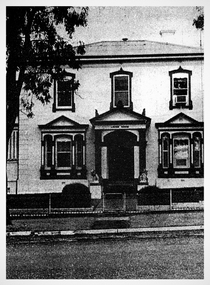
Newspaper - Northern District School of Nursing Graduates Association - Article "They will nurse fond memories of their school", Tues July 18 1989
... Initially, NDSN collaborated with hospitals in Castlemaine, Kyneton, Bendigo, Mildura, Swan Hill, Echuca, St. Arnaud, Dunolly, and Ouyen. ...Initially, NDSN collaborated with hospitals in Castlemaine, Kyneton, Bendigo, Mildura, Swan Hill, Echuca, St. Arnaud, Dunolly, and Ouyen. ...The Northern District School of Nursing in Victoria, Australia Graduates Association: The closure of the Northern District School of Nursing (NDSN) in Bendigo:Closure and TransitionNDSN, Australia's first independent nursing school, has closed after nearly 40 years of training nurses in central and northern Victoria. School 108 was the last after almost 40 years of nurse training. All general nurse training in the region will now be conducted in colleges instead of at NDSN. The school began in 1950 at Lister House, a historic mansion in Bendigo. It was certified as a training school for registered nurses in 1951, working with several regional hospitals. Initially, NDSN collaborated with hospitals in Castlemaine, Kyneton, Bendigo, Mildura, Swan Hill, Echuca, St. Arnaud, Dunolly, and Ouyen. Over time, some hospital affiliations changed, with trainees from smaller hospitals gaining clinical experience at larger base hospitals in Bendigo and Mildura. All students attended Lister House for study blocks during their three-year training. The school was known for its highly trained and experienced tutors.Staff numbers dwindled as the school closed, with tutors moving to other jobs, hospitals, or early retirement.The last tutor to leave was Mary Ryan, who had been at Lister House for over 10 years. The school, once lively, is now described as silent and empty, likened to a 'morgue.'Former students and staff find the emptiness unsettling, highlighting the emotional impact of the closure. Despite the sadness, staff members emphasize the school's positive environment and achievements. The assistant dean notes high retention and pass rates, indicating strong academic performance. Over the years, significant renovations were made, including the construction of a new hall.Staff express pride in these improvements and the school's development. The School of Nursing in Bendigo has a rich history, remembered fondly by many Victorians who trained there.Staff, such as Mary, found it rewarding when former students returned to share their career progress and experiences. Anecdotes include students reaching out for support, such as requesting references to secure jobs while traveling. Graduation balls ('grad balls') were a significant tradition, known for their fun, themed events and memorable costumes. Themes ranged from 'Your fantasy' to 'Wear something you've never dared to wear before.'The final grad ball for School 108 is scheduled with the theme 'The wake,' marking the end of an era. The NDSN building currently stands empty, with its future undecided.A feasibility study is underway to consider repurposing the building, possibly for a government department such as the Health Department.Other groups have shown interest, but the final decision will be made by the Health Minister, Caroline Hogg.Northern District School of Nursing Graduates Association - Article "They will nurse fond memories of their school" from the Midland Express Tues 18 July 1988 by Linda Harrow Page 14 This item contains the following document: 3792.9a From the article black and white photo of Lister House 3792.9b Part of the Article "They will nurse fond memories of their school" from the Midland Express 3792.9c From the article black and white photo of the first group of general nurses ever to be trained at the Northern District School of Nursing 3792.9d Part of the Article "They will nurse fond memories of their school" from the Midland Express 3792.9e Part of the Article "They will nurse fond memories of their school" from the Midland Expressnurse training, lister house, history, mary ryan -
 Northern District School of Nursing. Managed by Bendigo Historical Society Inc.
Document - First intake of nurses to get into NDSN 1950
... Bendigo was chosen as a central location involving the cooperation of several hospitals Bendigo, Mildura & Swan Hill Base hospitals plus smaller hospitals in Echuca, Castlemaine, Dunolly St. Arnoaud, Ouyen & Kyneton. ...Bendigo was chosen as a central location involving the cooperation of several hospitals Bendigo, Mildura & Swan Hill Base hospitals plus smaller hospitals in Echuca, Castlemaine, Dunolly St. Arnoaud, Ouyen & Kyneton. ...The Northern District School of Nursing opened in 1950 in to address the issues around nurse recruitment, training and education that had previously been hospital based. The residential school was to provide theoretical and in-house education and practical training over three years. The students would also receive practical hands-on training in the wards of associated hospitals. The Northern District School of Nursing operated from Lister House, Rowan Street, Bendigo. It was the first independent school of nursing in Victoria and continued until it closed in 1989. The book "The First of its Kind" was published in 2015. Printed in Bendigo by "Bendigo Modern Press". One typed page on memories of the start-up of NDSN at Lister House First intake of nurses to get into NDSN 1950 starting at Lister House. To commence a standardised nurse's training. Bendigo was chosen as a central location involving the cooperation of several hospitals Bendigo, Mildura & Swan Hill Base hospitals plus smaller hospitals in Echuca, Castlemaine, Dunolly St. Arnoaud, Ouyen & Kyneton. Single typed page of memories on yellow paper covers the start-up of the school and the training for the nurses.all documents were regarding the compilation of the ndsnga inc. book "the first of its kind" -
 Returned Nurses RSL Sub-branch
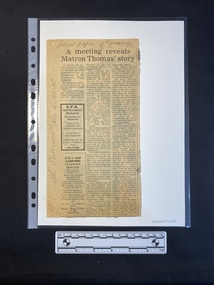
Newspaper - Newspaper clipping, A meeting reveals Matron Thomas' story, [1980]
... hospital. Melbourne WWII Middle East Don Dobson Len Wilkinson Mrs Wilkinson Dunolly Australian Imperial Forces AIF Tobruk Gaza Ridge Al Kantara Jerusalem 2nd 4th Australian General Hospital Al Matheson 'local paper. 4th June/80' [graphite, along top] Al Matheson was the doctor.' ...Mementos of the Hamilton Base Hospital's former Matron of have been presented after a series of coincidences. While Mrs Nell Dobson (neeBryant)was travelling through Hamilton, she was invited to attend the nurses graduation ceremony at the hospital, where the Dux of the nurses course received the Gwlady Thomas Prize. Nell first met Matron Thomas in 1934 and again in 1941 when Matron Thomas joined her at the 1st Australian General Hospital at Gaza. Nell kept a diary, describing life as an army nurse, including August 31 when Matron Thomas and Sister McPhail were injured and subsequently died on September 1. Nell continued her diary throughout her war service, including the happier times and many moving moments. Nell later returned to Hamilton to present photo copies of her diary and other momentos of her days serving with Gwladys Thomas to the hospital. A newspaper clipping of a story consisting of three columns of text beneath the title.'local paper. 4th June/80' [graphite, along top] Al Matheson was the doctor.' [graphite, down left hand side]melbourne, wwii, middle east, don dobson, len wilkinson, mrs wilkinson, dunolly, australian imperial forces, aif, tobruk, gaza ridge, al kantara, jerusalem, 2nd 4th australian general hospital, al matheson
