
Showing 31 items matching "e ii r"
-
 Greensborough Historical Society
Photograph - Framed image, 1954 E II R tapestry print, 1954
... 1954 E II R tapestry print...Print of 1954 EIIR tapestry in frame in celebration of Queen Elizabeth II coronation queen elizabeth II coronation royal family tapestry Coloured print of tapestry with black frame 1954 E II R tapestry print Photograph Framed image ...Print of 1954 EIIR tapestry in frame in celebration of Queen Elizabeth II coronationColoured print of tapestry with black frame queen elizabeth ii, coronation, royal family, tapestry -
 Tatura Irrigation & Wartime Camps Museum
Commemorative Medal, 1952-53
... Silver medal attached to ribbon (red, white & blue), depicting Queen's head on one side, and crown and E II R on reverse. A clasp on the ribbon. All enclosed in a felt and satin lined navy box....Queen Elizabeth II crowned 2 June 1953 E II R...Downer of Rodney Shire. queen's coronation royal family queen's coronation 1953 local dignitaries civic memento royal souvenirs Queen Elizabeth II crowned 2 June 1953 E II R Silver medal attached to ribbon (red, white & blue), depicting Queen's head on one side, and crown and E II R on reverse. ...Medals produced to be given to dignitaries on the occasion of Queen Elizabeth II's coronation. This one given to Cr. J.E. Downer of Rodney Shire.Silver medal attached to ribbon (red, white & blue), depicting Queen's head on one side, and crown and E II R on reverse. A clasp on the ribbon. All enclosed in a felt and satin lined navy box.Queen Elizabeth II crowned 2 June 1953 E II Rqueen's coronation, royal family, queen's coronation 1953, local dignitaries, civic, memento, royal, souvenirs -
 Kew Historical Society Inc
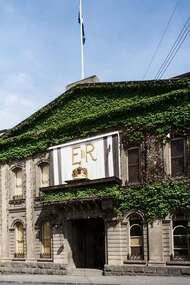
Photograph - Former Kew Town Hall, Walpole Street, Kew, decorated for Royal Visit of Queen Elizabeth II, 1954
... ...E II R...Large white banner over entrance with gold “E II R”, gold crown below, black board below with gold “LONG MAY SHE REIGN”. ...Large white banner over entrance with gold “E II R”, gold crown below, black board below with gold “LONG MAY SHE REIGN”. ...Former Kew Town Hall, Walpole Street, Kew, between High Street and Malmsbury Street, west side, where Woolworth’s supermarket now stands. Neo-classical facade added to former Athenaeum building in 1880s. Town Hall, with Council Chamber, municipal offices and adjacent Library, remained in Walpole Street until civic offices moved to new Civic Centre, Cotham Road and Charles Street, in 1972. Building sold to Woolworth’s and demolished 1972, replaced by Safeway supermarket. Decorated for Royal Visit of Queen Elizabeth II and Duke of Edinburgh, Melbourne, February-March 1954, on her Coronation Tour — first reigning monarch to visit Australia. Summer foliage and light suggest Royal Visit rather than Coronation, 2 June 1953. Colourised photograph, two-storey Italianate rendered-brick facade, covered in ivy over pediment and right side. Central entrance, arched windows with blinds, stone base. Large white banner over entrance with gold “E II R”, gold crown below, black board below with gold “LONG MAY SHE REIGN”. Small red, white and blue bunting across facade. Tall white flagpole with Australian flag at top.former kew town hall, walpole street, royal visit 1954, queen elizabeth ii, e ii r -
 Mont De Lancey
Decorative object - Glass, 1953
... It has printed on it the royal coat of arms held by a lion and a unicorn along with the date of the Coronation. June 2 1953. E II R is painted in yellow at the top....At the top of the glass is a yellow, white, black and red crown. E II R is printed underneath it, with a lion and a unicorn holding the royal crest. ...It has printed on it the royal coat of arms held by a lion and a unicorn along with the date of the Coronation. June 2 1953. E II R is painted in yellow at the top. Decorative object Glass ...A clear drinking glass commemorating the coronation of Queen Elizabeth II. Displaying a crown, coat of arms held by a lion and a unicorn and the date of the coronation. 2nd June 1953.A clear drinking glass with a gold rim commemorating the coronation of Queen Elizabeth II. It has printed on it the royal coat of arms held by a lion and a unicorn along with the date of the Coronation. June 2 1953. E II R is painted in yellow at the top.At the top of the glass is a yellow, white, black and red crown. E II R is printed underneath it, with a lion and a unicorn holding the royal crest. At the bottom is a red and yellow medieval banner with the inscription Coronation of Queen Elizabeth II June 2nd 1953in white script.drinking glasses, glasses, coronation glass, commemmorative objects, commemmorative glassware -
Glenelg Shire Council Cultural Collection
Medal - Medal, Royal Visit of Queen Elizabeth II, c. 1954
... Obverse: bust of Elizabeth II and Duke of Edinburgh Reverse: E II R Royal Visit/ 1954/ Victoria...The Royal party visited all the capital cities apart from Darwin, and over 70 country towns. medal Queen Elizabeth II 1954 royal visit Victoria numismatics celebrations schools Obverse: bust of Elizabeth II and Duke of Edinburgh Reverse: E II R Royal Visit/ 1954/ Victoria Bronze medal, hanging from a rectangular bar. ...Commemorative medal commissioned by the Victorian state government as a souvenir of the Royal Visit by Queen Elizabeth II and the Duke of Edinburgh to Victoria in 1954. The medal was presented to all Victorian school children. It was struck by Stokes & Sons of Melbourne. The Queen and Prince Philip visited Victoria from 24 February to 9 March 1954. The first reigning monarch to tour Australia, she arrived in Sydney on 3 February 1954 and departed the country from Fremantle on 1 April 1954. The Royal party visited all the capital cities apart from Darwin, and over 70 country towns.Bronze medal, hanging from a rectangular bar. The obverse of the medal features profile portraits of the Queen and Prince Philip. Presented to children of Victoria on Royal Visit, 1954Obverse: bust of Elizabeth II and Duke of Edinburgh Reverse: E II R Royal Visit/ 1954/ Victoriamedal, queen elizabeth ii, 1954, royal visit, victoria, numismatics, celebrations, schools -
 Whitehorse Historical Society Inc.
Medal - Commemorative medal, 1954
... On the face - Queen Elizabeth ii & Duke of Edinburgh. On the rear - E II R, Royal Visit 1954 Victoria...These medals were given to all school children to commemorate the royal visit of 1954 civic mementoes royal souvenirs On the face - Queen Elizabeth ii & Duke of Edinburgh. On the rear - E II R, Royal Visit 1954 Victoria Small medal with Queen Elizabeth and Prince Phillip's head in profile on the face and commemorative words on the rear Medal Commemorative medal ...These medals were given to all school children to commemorate the royal visit of 1954Small medal with Queen Elizabeth and Prince Phillip's head in profile on the face and commemorative words on the rearOn the face - Queen Elizabeth ii & Duke of Edinburgh. On the rear - E II R, Royal Visit 1954 Victoriacivic mementoes, royal souvenirs -
 Musculoskeletal Health Australia (now held by the Glen Eira Historical Society)
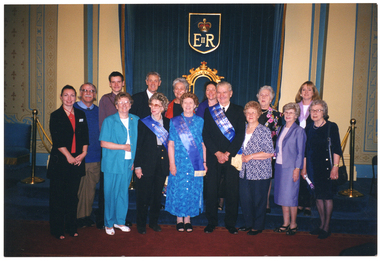
Photograph - Group photo, 08/03/2002
... In the background, there is a blue velvet curtain upon which hangs a plaque depicting a crown and the text "E II R"....In the background, there is a blue velvet curtain upon which hangs a plaque depicting a crown and the text "E II R". Photograph Group photo ...On the 8th of March 2002, fifteen Arthritis Victoria volunteers, staff, and special guests attended Seniors Week at Government House. In this photo, a group of AV members and their families pose for a photo in front of the State Chair in the State Ballroom at Government House. A cropped version of the photo appears on page 3 of the Vol 15 Issue 02, Winter 2002 edition of the Arthritis Foundation of Victoria's quarterly magazine, Update. It is captioned: "Seniors Week at Government House Back L to R: Robert Munro, Michael Macdonald, Ed Courtenay, Sonja Krawatt, Rose Ahrens, Maisie Scott, Fiona Bainbridge Front L to R: Jacqueline De Roach, Ann Houben, Barbara Hope, Pat Courtenay, Des Custerson, Rae Johnson, Doreen McConnell, Sal Prain".Colour photo of a large group of people posing for a photo in front of a blue velvet dais with a blue and gold throne. In the background, there is a blue velvet curtain upon which hangs a plaque depicting a crown and the text "E II R".[Handwritten in black ink, in the top right corner] 3 [circled] [On a yellow sticky note, handwritten in black ink] SENIORS WEEK 2002 at Government House BACK L-R: Robert Munro, Michael MacDonald, Ed Courtenay, Sonja Krawalt, Rose Ahrens, Maisie Scott, Fiona Bainbridge FRONT L-R: Jacqueline De Roach, Ann Houben, Barbara Hope, Pat Courtenay, Des Custerson, Rae Johnson, Doreen McConnell, Sal Prain [On a MOVE-branded sticky note, handwritten in black ink] UPDATE WINTER 2002 page 3arthritis victoria, av, seniors week, government house victoria, state chair, state ballroom, robert munro, michael macdonald, ed courtenay, sonja krawatt, rose ahrens, maisie scott, fiona bainbridge, jacqueline de roach, ann houben, barbara hope, pat courtenay, des custerson, rae johnson, doreen mcconnell, sal prain, update, 2002 -
 Dandenong/Cranbourne RSL Sub Branch
Plaque - RA Engineers plaque
... 2 red cockerals above insignia crown with laurel leaves encircling E ii R. inscribed Royal Australian Engineers. 21 Const Sqd....2 red cockerals above insignia crown with laurel leaves encircling E ii R. inscribed Royal Australian Engineers. 21 Const Sqd. ...Wooden plaque with metal emblem.2 red cockerals above insignia crown with laurel leaves encircling E ii R. inscribed Royal Australian Engineers. 21 Const Sqd. -
 Bendigo Historical Society Inc.
Memorabilia - Coronation Mug
... Dieu - Et - Mon -Droit in garland along bottom. On Back E II R with Crown in Centre- The Coronation of Queen Elizabeth II - June 2nd 1953. ...Dieu - Et - Mon -Droit in garland along bottom. On Back E II R with Crown in Centre- The Coronation of Queen Elizabeth II - June 2nd 1953. ...Honi soit qui mal y pense is a maxim in the Anglo-Norman language, a dialect of Old Norman French spoken by the medieval ruling class in England, meaning "shamed be whoever thinks ill of it", usually translated as "shame on anyone who thinks evil of it". Wikipedia. Dieu et mon droit, which means 'God and my right', is the motto of the monarch of the United Kingdom. It appears on a scroll beneath the shield of the version of the coat of arms of the United Kingdom. WikipediaCoffee Mug with portrait of Queen Elizabeth II in center framed in blue with Honi- Soit- Qui -Mal -Y -Pense in border and crown on top. Thistle, clover and red flower either side. Dieu - Et - Mon -Droit in garland along bottom. On Back E II R with Crown in Centre- The Coronation of Queen Elizabeth II - June 2nd 1953. Gold gilding on rim of mug Empire England 1 53 coronation queen elizabeth ii, june 2nd 1953, queen elizabeth ii -
 Melbourne Royal
Badge, The Royal Agricultural Society of Victoria, 1953
... The background is textured, and on top of that is a crown design with red colouring on the 'cushioning' and "E[II]R"....The background is textured, and on top of that is a crown design with red colouring on the 'cushioning' and "E[II]R". Badge The Royal Agricultural Society of Victoria K.G. ...In the 1953, the Show held a special Coronation Show in honour of the coronation of Queen Elizabeth II.A badge consisting of a badge attached to a pin, and an oval shape hanging from the bar. The base of the badge is gold with inserted colour in the obverse. The bar is rectangular with concave sides and red infill around text ("STEWARD"). The oval has a dark blue outline with gold text and a belt-design similar to the RASV Speed the Plough Logo. Inside the outline is mostly gold. The background is textured, and on top of that is a crown design with red colouring on the 'cushioning' and "E[II]R".[obverse bar] STEWARD [obverse oval] ROYAL MELBOURNE 1953 CORONATION SHOW / ER II [reverse oval] K.G. LUKE / MELB /1953 melbourne royal show, melbourne royal show, royal melbourne coronation show, queen elizabeth ii, badge, steward, officials, uniform -
Glenelg Shire Council Cultural Collection
Medal - Medal - Royal Visit 1954, Stokes & Sons, Melbourne (Mint), 1954
... The medal is attached by a metal loop to a bar with pin for wearing, PRESENTED TO THE / CHILDREN BY THE / GOVERNMENT OF VICTORIA The back of the medal has, below a crown, E II R / ROYAL VISIT / 1954 / VICTORIA The back of the bar contains the mint name in small letters, STOKES MELB....The medal is attached by a metal loop to a bar with pin for wearing, PRESENTED TO THE / CHILDREN BY THE / GOVERNMENT OF VICTORIA The back of the medal has, below a crown, E II R / ROYAL VISIT / 1954 / VICTORIA The back of the bar contains the mint name in small letters, STOKES MELB. ...This medal was issued to schools in Victoria to commemorate the visit of Queen Elizabeth II and Prince Phillip to Australia. They arrived in Sydney on 3february 1954 and left from Freemantle on 1 April 1954.Significant to the history of the state of VictoriaMedal has conjoined busts, Queen crowned, Duke head bare, facing right; around, QUEEN ELIZABETH II DUKE OF EDINBURGH; below in tiny letters the mint name, STOKES MELB. The medal is attached by a metal loop to a bar with pin for wearing, PRESENTED TO THE / CHILDREN BY THE / GOVERNMENT OF VICTORIA The back of the medal has, below a crown, E II R / ROYAL VISIT / 1954 / VICTORIA The back of the bar contains the mint name in small letters, STOKES MELB.Front: Inverse - Bar - presented to the children by the Government of Victoria. Medallion - Queen Elizabeth II Duke of Edinburgh (round edge) Back: Obverse - Bar Stokes Melbourne Medallion - Crown EIIR Royal Visit 1954 Australiaroyal visit, queen elizabeth ii, prince phillip, victoria, medal numismatics, schools -
 Eltham District Historical Society Inc
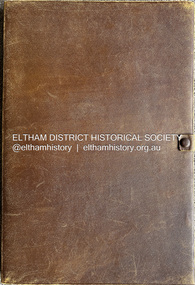
Document - Folio, Stanley Simpson Addison 14 Oct. 1880 – 1 Jan. 1972, 1880-1972
... Addison in recognition of faithful service rendered to the Australian Red Cross during the World War of 1939-1945 • Coronation Medal: E II R, Buckingham Palace, By Command of HER MAJESTY THE QUEEN the accompanying Medal is forwarded to Councillor Stanley Simpson Addison to be worn in commemoration of Her Majesty’s Coronation, 2nd June, 1953 [Medal not included] • Birth Certificate, Stanly Simpson Addison, 14 October 1880, Willunga, South Australia • Marriage Certificate; Stanley Simpson Addison and Minnie Vera Elizabeth Staley, Parish of Christ Church, Brondesbury, Middlesex, England, 8 January 1917 • Copy of Eulogy given by Sir John Nimmo at Stanley Addison’s funeral service, January 1972 (see 04605-2-3) ...Addison in recognition of faithful service rendered to the Australian Red Cross during the World War of 1939-1945 • Coronation Medal: E II R, Buckingham Palace, By Command of HER MAJESTY THE QUEEN the accompanying Medal is forwarded to Councillor Stanley Simpson Addison to be worn in commemoration of Her Majesty’s Coronation, 2nd June, 1953 [Medal not included] • Birth Certificate, Stanly Simpson Addison, 14 October 1880, Willunga, South Australia • Marriage Certificate; Stanley Simpson Addison and Minnie Vera Elizabeth Staley, Parish of Christ Church, Brondesbury, Middlesex, England, 8 January 1917 • Copy of Eulogy given by Sir John Nimmo at Stanley Addison’s funeral service, January 1972 (see 04605-2-3) Stanley Simpson Addison Leather Folio 47 x 33 2 cm containing various paper documents Stanley Simpson Addison 14 Oct. 1880 – 1 Jan. 1972 Document Folio ...Contents: • Compulsory Certificate, Education Department, South Australia, Stanley Simpson Addison of Aldinga School, Reg. No. 149, 11 October 1893 • Composition Book, Stanley Simpson Addison, 1894 • Stanley Simpson Addison admitted to the Degree of Bachelor of Science in The University of Adelaide, 16 December 1908 • Appointment of Mr Stanley Simpson Addison as Sub Lieutenant in the Royal Navy Volunteer Reserve, 16 March 1918 • Presented by the Joint Committee of the British Red Cross and the Order of St John of Jerusalem in England to Mr Stanley S. Addison in recognition of valuable services rendered during the War, 1914 - 1919 • George the Fifth; Grant of the dignity of a Member of the Civil Division of the Order of the British Empire to Stanley Addison, Esq., 15 October 1920 • Appointment of Stanley Simpson Addison as one of His Majesty’s Justices of the Peace, Crown Law Offices, Melbourne, 9 April 1923 • Credential issued to Mr. Stanley S. Addison MBE, BSc, JP upon proceeding on a visit to Europe, Premiers Office, Melbourne, 8 January 1929 • Stanley Simpson Addison, Matriculation Certificate, University of Melbourne, 3 October 1934 • Stanley Simpson Addison admitted to the Degree of Bachelor of Arts in the University of Melbourne, 4 April 1936 • Appointment by the Solicitor-General of S.S. Addison as a Commissioner for Declarations under the Statutory Declarations Act 1911-1922, Canberra 14 November 1940 • Australian Red Cross Society Certificate of Service awarded to Mr Stanley S. Addison in recognition of faithful service rendered to the Australian Red Cross during the World War of 1939-1945 • Coronation Medal: E II R, Buckingham Palace, By Command of HER MAJESTY THE QUEEN the accompanying Medal is forwarded to Councillor Stanley Simpson Addison to be worn in commemoration of Her Majesty’s Coronation, 2nd June, 1953 [Medal not included] • Birth Certificate, Stanly Simpson Addison, 14 October 1880, Willunga, South Australia • Marriage Certificate; Stanley Simpson Addison and Minnie Vera Elizabeth Staley, Parish of Christ Church, Brondesbury, Middlesex, England, 8 January 1917 • Copy of Eulogy given by Sir John Nimmo at Stanley Addison’s funeral service, January 1972 (see 04605-2-3) stanley simpson addison -
 Federation University Historical Collection
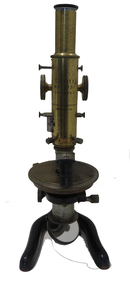
Instrument - Scientific Instrument, Boxed Petrographic Microscope, c1912
... R & J BECK. LTD, Objective H. Crouch. London Boxed optical microscope - Petrographic type. It has a rigid (upright) frame and twin objective lens turret and a black enameled frame with brass-finish components. Stored in blonde finished wooden box. Manufacturers certificate inside box door dated "1. ii. 1912" Three other objectives in metal cases Boxed Petrographic Microscope Instrument Scientific Instrument E ...Used by Ballarat School of Mines Geology Department. Probably a second generation purchase by SMB Geology department. Earlier references to "Petrological microscope", SMB Calendar for 1908-9, p 35Boxed optical microscope - Petrographic type. It has a rigid (upright) frame and twin objective lens turret and a black enameled frame with brass-finish components. Stored in blonde finished wooden box. Manufacturers certificate inside box door dated "1. ii. 1912" Three other objectives in metal casesEye piece - "Reichert Wien" Microscope - E.Leitz Wetzlar No140283 Made for Kilpatrick & Co Melbourne Objective x 2 R & J BECK. LTD, Objective H. Crouch. London ballarat school of mines, geology, petrography, microscope, leitz, scientific instruments, brass, lens, r & j beck, reichert -
 Ballarat Clarendon College
Photograph album, 1918
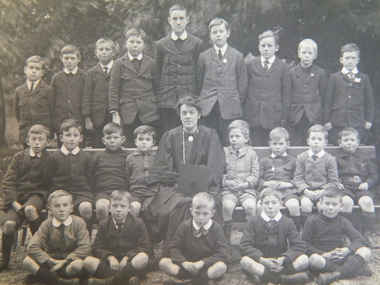
... Junior school Forms I, II, III: Top row: T Dowling, Whitfield, W Paterson, R Paterson, R Morris, B Pain, W Coyle, R Thomas, Campbell; Middle row: Creer, pringle, Greenfield, K Baird, Mrs Gilbert, R Thomas, G Jeffrey, G Shaw, E Morton; Front row: H Strong, C Morton, R Carthew, R Pearce, A Greenfield; Middle School Forms IV, VB: Top row: Leslie, Michael, M Gunn, H Jones, W Hicks, L McLennan, K Bradby, Forster, K Joy, C C McMillan; 2nd row from top: Mr Deans, R Paterson, A Carthew, A Mckenzie, N Shaw, G Ross, H Lester, Leishman, Tanner, G E Clark, W Revelman, Mr Morton; Thurd row from top: A Levy, McLeod, J O'Grady, E Davies, W Walker, J Smith, N Boustead, E Abraham, Alkemade, Ronaldson, Crawford, McDougall, Hill; Front row: Klug, J Tonner, H Deeble, Soloman, Beacham, J Bradby, A Coldham, G Clarke, L Murphy, A King. ...Junior school Forms I, II, III: Top row: T Dowling, Whitfield, W Paterson, R Paterson, R Morris, B Pain, W Coyle, R Thomas, Campbell; Middle row: Creer, pringle, Greenfield, K Baird, Mrs Gilbert, R Thomas, G Jeffrey, G Shaw, E Morton; Front row: H Strong, C Morton, R Carthew, R Pearce, A Greenfield; Middle School Forms IV, VB: Top row: Leslie, Michael, M Gunn, H Jones, W Hicks, L McLennan, K Bradby, Forster, K Joy, C C McMillan; 2nd row from top: Mr Deans, R Paterson, A Carthew, A Mckenzie, N Shaw, G Ross, H Lester, Leishman, Tanner, G E Clark, W Revelman, Mr Morton; Thurd row from top: A Levy, McLeod, J O'Grady, E Davies, W Walker, J Smith, N Boustead, E Abraham, Alkemade, Ronaldson, Crawford, McDougall, Hill; Front row: Klug, J Tonner, H Deeble, Soloman, Beacham, J Bradby, A Coldham, G Clarke, L Murphy, A King. ...Significant pictorial record of College life at the end of the WW1. Property appearance, uniform/clothing details, furnishings, and named photographs of students. Junior school Forms I, II, III: Top row: T Dowling, Whitfield, W Paterson, R Paterson, R Morris, B Pain, W Coyle, R Thomas, Campbell; Middle row: Creer, pringle, Greenfield, K Baird, Mrs Gilbert, R Thomas, G Jeffrey, G Shaw, E Morton; Front row: H Strong, C Morton, R Carthew, R Pearce, A Greenfield; Middle School Forms IV, VB: Top row: Leslie, Michael, M Gunn, H Jones, W Hicks, L McLennan, K Bradby, Forster, K Joy, C C McMillan; 2nd row from top: Mr Deans, R Paterson, A Carthew, A Mckenzie, N Shaw, G Ross, H Lester, Leishman, Tanner, G E Clark, W Revelman, Mr Morton; Thurd row from top: A Levy, McLeod, J O'Grady, E Davies, W Walker, J Smith, N Boustead, E Abraham, Alkemade, Ronaldson, Crawford, McDougall, Hill; Front row: Klug, J Tonner, H Deeble, Soloman, Beacham, J Bradby, A Coldham, G Clarke, L Murphy, A King. Senior school Forms VIA, VIB & VA Top row: E Pearce, W Williams, A Ramage, D Langsford A Clarke, J Mitchell. Middle row: R Langsford, A Rogers, G Lester, V Cooper, A Thiessen, R Shannon, G Swan, D Robinson, J Coltman, R Jack; Front row: B Jones, L Shannon, R Morrow, Mr A S M Polson BA, R Steveson, R Sloan, M Morris. Social significanceLoose-leaf photograph album featuring photographs of Ballarat College property and classes taken 4th July 1918. Light card cover. 8 inidividual sheets of paper. Front cover: BALLARAT COLLEGE / PHOTOGRAPHS 4th July 1918 C A Ramage / DIFFERENT VIEWS 7 GROUPS / Taken 1918ballarat-college, 1918, uniform, c-a-ramage, boatshed, college-oval, assembly-hall, honour-boards, chemistry-laboratory, a-s-m-polson, mr-deans, mr-morton, miss-gilbert, junior-school, middle-school, senior-school -
 Flagstaff Hill Maritime Museum and Village
Rangefinder, E R Watts & Sons, 1930-1945
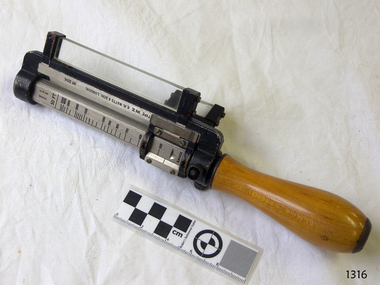
... inscribed "Rangefinder Cotton Type Mk II" Calibrated scale up to 5000 yds (50 ft), 5000 yds (35 ft), 4000 yds (25 ft) made by E. R...In 1946 Watts acquired 78% of Adam Hilger and the microscope maker James Swift and Son Who were Manufacturers of Theodolites, Levels, Alidades, Meteorological Instruments, Variometers, and many other types of scientific instruments Then in 1948 the company amalgamated with Adam Hilger as Hilger and Watts which was then incorporated as a public company. flagstaff hill warrnambool shipwrecked coast flagstaff hill maritime museum maritime museum shipwreck coast flagstaff hill maritime village great ocean road rangefinder cotton type E R Watts & Sons Naval range finder Marine Equipment inscribed "Rangefinder Cotton Type Mk II" Calibrated scale up to 5000 yds (50 ft), 5000 yds (35 ft), 4000 yds (25 ft) made by E. ...E. R. Watts and Son, makers of theodolites and other surveying instruments, of 123 Camberwell Road, London. The company was established in 1856 by Edwin Watts at twenty-three he had saved £100 from his earnings to start the business with his staff consisting of one boy and later Alexander Clarkson as an apprentice with the workshop a small room over a Bemondsey stable. Watts' first order was from Negretti and Zambra for a mining dial Alexander Clarkson In the early days the firm worked mainly on marine compasses. Edwin Watts would go down to the Docks to adjust the compasses once they had been installed on the ships. In May 1873 the business moved to larger premises a house with a garden. The workshop was also the home of Mr and Mrs Watts and their five sons and three daughters. By now there were fifteen to twenty men employed by the firm. The company were commissioned to supply the Theodolites and Levels for the construction to the Canadian Pacific Railway in 1881. Towards the end of the century, the firm began to make heliographs continuing to produce them for the government until just before the Second World War when by agreement assigned their manufacture to another firm. 1904 The first dividing engine was completed by George William Watts. It was so remarkable an instrument at the time and for years afterwards, In 1907 Arthur Ames went to Canada and started an organisation in Winnipeg in 1909 this became a separate company called E. R. Watts and Son Ltd. of Ottawa. This firm developed considerably and was eventually with the co-operation of three other instrument companies (Cambridge Instrument Co, Ross, and Negretti and Zambra), were reconstituted as ”Instruments Ltd” of Ottawa and Toronto. During the next ten years, the firm expanded greatly to include glass grinding, leather work, dividing and engraving, testing, adjusting and packing. This expansion was continued during the First World War when workshops were completed and the machinery installed and running within eleven weeks from the start of construction. During the war, a Sergeant Coles, among the rats, lice and mud of the trenches, fitted various bits of scrap into his cocoa tin and made the first Flash Spotter for plotting the positions of enemy guns. Coles was rushed home to the firm's factory where he and George William Watts designed a spotter not made out of a cocoa tin and as a result, the Watts Vertical Force Variometer was developed during WWI. Other Watts instruments made in the First World War included the Light Mountain Theodolites which were taken on Mt Everest expeditions. In 1919 ER Watts and Sons was incorporated as a limited company and in 1939 G. A. Whipple joined the Board of Directors. Shortly afterwards, Frank Charles Watts died having been Chairman of the firm for over 37 years and seen it through the First World War with all its expansions and difficulties. He was succeeded by his brother George William Watts with the vacant post of Managing Director being filled by G. A. Whipple. During the Second World War, the company expanded further and the number of employees rose to well over 1,300. In 1946 Watts acquired 78% of Adam Hilger and the microscope maker James Swift and Son Who were Manufacturers of Theodolites, Levels, Alidades, Meteorological Instruments, Variometers, and many other types of scientific instruments Then in 1948 the company amalgamated with Adam Hilger as Hilger and Watts which was then incorporated as a public company.Naval Rangefinder with a vertical wooden handle, and an arrangement of optical lenses. Three reversible brass inserts calibrated on both sides in yards, correspond to various base heights, (20 and 25 feet, 30 and 35 feet and 40 and 50 feet). They are fitted along the axis of the instrument. When the scale for the appropriate base height is selected and inserted, the carriage can be slid for coincidence and the distance read at the index mark on the sliding carriage.inscribed "Rangefinder Cotton Type Mk II" Calibrated scale up to 5000 yds (50 ft), 5000 yds (35 ft), 4000 yds (25 ft) made by E. R. Watts & Son.flagstaff hill, warrnambool, shipwrecked coast, flagstaff hill maritime museum, maritime museum, shipwreck coast, flagstaff hill maritime village, great ocean road, rangefinder, cotton type, e r watts & sons, naval range finder, marine equipment -
 Bendigo Military Museum
Flag - FLAG, TRANSPORT CORP, post WW2
... On blue circle in centre of Gold "E = R" star emblem in centre with crown on top. "PAR ONERI" underneath on grey. "Royal Australian Transport Corps - reign of Elizabeth II" Motto: "Par Oneri"...E = R" star emblem in centre with crown on top. "PAR ONERI" underneath on grey. "Royal Australian Transport Corps - reign of Elizabeth II" Motto: "Par Oneri" Cloth flag made up of horizontal stripes of navy / white / red. ...Cloth flag made up of horizontal stripes of navy / white / red. Navy ground with central star, laurel wreath. White hanging cord attached to one edge with metal attachment hooks top & bottom. On blue circle in centre of Gold "E = R" star emblem in centre with crown on top. "PAR ONERI" underneath on grey. "Royal Australian Transport Corps - reign of Elizabeth II" Motto: "Par Oneri"flags - military, transport -
 Port Melbourne Historical & Preservation Society
Decorative object - WWII Honour Roll, Rose and Crown Hotel, Port Melbourne, ACMF Port Melbourne Roll of Honour, 1940s
... II...E RUSSELL...T JACOBS...F BRILL...R...Societies Clubs Unions and other Organisations Memorials War - World War II E RUSSELL T JACOBS F BRILL R THOMPSON D FISHER L THOMPSON T McKENZIE A SMITH C KERR F GILL A NUGENT F HART L DOBSON W DAVIS O V WARD A LEVIER W LEVIER D FERGUSON B FERGUSON H DUGGAN W SMITH E MILLER J HALL F BUSHELL S PAYNE G HALL J MELIA F F CUNNINGHAM A G W BEAUMONT D McKENZIE B COPELAND D J McAULEY J DUNN J J SULLIVAN R BLACKER L R McLEAVY F DOWLING Business and Traders - Hotels Australian Commonwealth Military Forces - Port Melbourne Roll of Honour - Lest we forget - plus list of names, with those killed marked with an asterix Large wooden decorative World War II honour roll (military) from Rose & Crown Hotel ACMF Port Melbourne Roll of Honour Decorative object WWII Honour Roll, Rose and Crown Hotel, Port Melbourne ...Hung in the public bar of the Rose and Crown Hotel in Bay Street soon after the 2nd World War until major renovations were carried out in aprrox 1986/7. It was then returned or donated to the Port Melbourne Sub-Branch of the RSL, but due to diminishing membership they soon donated it to the PMCC for safe keeping or display. It was kept in storage by the Council until 1994, when it was donated to PMH&PS by Council, just prior to its dissolution.Large wooden decorative World War II honour roll (military) from Rose & Crown HotelAustralian Commonwealth Military Forces - Port Melbourne Roll of Honour - Lest we forget - plus list of names, with those killed marked with an asterixsocieties clubs unions and other organisations, memorials, war - world war ii, e russell, t jacobs, f brill, r thompson, d fisher, l thompson, t mckenzie, a smith, c kerr, f gill, a nugent, f hart, l dobson, w davis, o v ward, a levier, w levier, d ferguson, b ferguson, h duggan, w smith, e miller, j hall, f bushell, s payne, g hall, j melia, f f cunningham, a g w beaumont, d mckenzie, b copeland, d j mcauley, j dunn, j j sullivan, r blacker, l r mcleavy, f dowling, business and traders - hotels -
 Bendigo Historical Society Inc.
Document - ROYAL PRINCESS THEATRE COLLECTION: AUSTRALIA DAY 1915 PROGRAMME, 30 July 1915
... E O'Keefe. Concert Caprice... Mr T P Bockelmann. Open Thy Blue Eyes... 'Till the Boys Come Home... Miss Clara Colgan. The Boys of Dardanelles... Mr F Monaghan. Accompanist-Mr Stan Elliot. Part II. Pictures will be shown by the Princess Theatre Management. Special Music by the Orchestra (Conductor Mr Upton). Piano kindly lent by Sutton's PTY LTD. Furnishings by Mr R...E O'Keefe. Concert Caprice, Mr T P Bockelmann. Open Thy Blue Eyes, 'Till the Boys Come Home, Miss Clara Colgan. The Boys of Dardanelles, Mr F Monaghan. Accompanist-Mr Stan Elliot. Part II. Pictures will be shown by the Princess Theatre Management. Special Music by the Orchestra (Conductor Mr Upton). Piano kindly lent by Sutton's PTY LTD. Furnishings by Mr R...E O'Keefe. Concert Caprice Mr T P Bockelmann. Open Thy Blue Eyes 'Till the Boys Come Home Miss Clara Colgan. The Boys of Dardanelles Mr F Monaghan. Accompanist-Mr Stan Elliot. Part II. Pictures will be shown by the Princess Theatre Management. Special Music by the Orchestra (Conductor Mr Upton). Piano kindly lent by Sutton's PTY LTD. Furnishings by Mr R ...Princess Theatre, Australia Day, Friday, July 30th, 1915. Programme - Part 1. 'Comrades in Arms', Combined Masonic Choir. Land of hope and Glory, Miss E Linane. The Watch on the Rhine, Mr J F Warren. The Sea is England's Glory, Miss A Macoboy. The Yankee Colonel, Mr J K Wlker. There's a Land, Miss Pauline Bindley. The Ballad of Splendid Silence, Miss E O'Keefe. Concert Caprice, Mr T P Bockelmann. Open Thy Blue Eyes, 'Till the Boys Come Home, Miss Clara Colgan. The Boys of Dardanelles, Mr F Monaghan. Accompanist-Mr Stan Elliot. Part II. Pictures will be shown by the Princess Theatre Management. Special Music by the Orchestra (Conductor Mr Upton). Piano kindly lent by Sutton's PTY LTD. Furnishings by Mr R O Henderson. The Committee wish to express their thanks to the Employees of of Messrs. Bolton Bros. for Printing these Programs, and to Messrs. Bolton Bros. for supplying the Paper.Bolton Brosprogram, music, princess theatre, princess theatre, australia day, july 30th, 1915. programme - part 1. 'comrades in arms', combined masonic choir. land of hope and glory, miss e linane. the watch on the rhine, mr j f warren. the sea is england's glory, miss a macoboy. the yankee colonel, mr j k wlker. there's a land, miss pauline bindley. the ballad of splendid silence, miss e o'keefe. concert caprice, mr t p bockelmann. open thy blue eyes, 'till the boys come home, miss clara colgan. the boys of dardanelles, mr f monaghan. accompanist-mr stan elliot. part ii. pictures will be shown by the princess theatre management. special music by the orchestra (conductor mr upton). piano kindly lent by sutton's pty ltd. furnishings by mr r o henderson. the committee wish to express their thanks to the employees of of messrs. bolton bros. for printing and paper -
Moorabbin Air Museum
Document - Wamira NIA E-1 Drawings and documents
... NIA E-1 Wamira File ref A2/50 RAAF BPTA Phase II wind tunnel tests, dynamic spin model tests may/June 1984 AR-002-924 aerodynamics technical memorandum 343 AR-002-948 structures note 486 AR-002973 structures note 490 ARL/SM 353 structures and materials report 353 ARL/SM 324 structures and materials note 324 AR-003-933 Aerodynamics Technical Memorandum 357 Part 3 AR-002-982 Structures note 491 AR-003-018 Aerodynamics technical memorandum 362 AR-003-993 structures technical memorandum 399 AR-002-987 structures technical memorandum 366 AR-004-003 structures technical memorandum 357 Part 4 R-002-983 structures technical memorandum 357 GAF Standard practices and operating procedures manual Vol 1 and 2 AK-033-D Structural design criteria ...NIA E-1 Wamira File ref A2/50 RAAF BPTA Phase II wind tunnel tests, dynamic spin model tests may/June 1984 AR-002-924 aerodynamics technical memorandum 343 AR-002-948 structures note 486 AR-002973 structures note 490 ARL/SM 353 structures and materials report 353 ARL/SM 324 structures and materials note 324 AR-003-933 Aerodynamics Technical Memorandum 357 Part 3 AR-002-982 Structures note 491 AR-003-018 Aerodynamics technical memorandum 362 AR-003-993 structures technical memorandum 399 AR-002-987 structures technical memorandum 366 AR-004-003 structures technical memorandum 357 Part 4 R-002-983 structures technical memorandum 357 GAF Standard practices and operating procedures manual Vol 1 and 2 AK-033-D Structural design criteria Document Wamira NIA E-1 Drawings and documents ... -
 National Wool Museum
Letter
... Letter from C E Woolcock of G H Michell & Sons Limited dated 18th June 1942, to W R Lang. Describes experiments on "neutralising" wool during wool processing. Wool - research Wool Processing World War II ...Letter from C E Woolcock of G H Michell & Sons Limited dated 18th June 1942, to W R Lang. Describes experiments on "neutralising" wool during wool processing.wool - research wool processing world war ii wool - testing, g h michell & sons limited gordon institute of technology, lang, dr w. roy, wool - research, wool processing, world war ii, wool - testing -
 National Wool Museum
Letter
... Letter from E H B Lefroy to W R Lang c1942, discussing the wool industry Wool - research Wool - testing Sheep breeding - history Peppin-Merino sheep World War II Gordon Institute of Technology Lang Dr W. ...Letter from E H B Lefroy to W R Lang c1942, discussing the wool industrywool - research wool - testing sheep breeding - history peppin-merino sheep world war ii, gordon institute of technology, lang, dr w. roy lefroy, mr a l b, cranmore park, western australia, wool - research, wool - testing, sheep breeding - history, peppin-merino sheep, world war ii -
 National Wool Museum
Letter
... Letter from E H B Lefroy to W R Lang 16th November 1941, discussing wool characteristics and research. Wool - research Wool - testing Sheep breeding - history Peppin-Merino sheep World War II Gordon Institute of Technology Lang Dr W. ...Letter from E H B Lefroy to W R Lang 16th November 1941, discussing wool characteristics and research.wool - research wool - testing sheep breeding - history peppin-merino sheep world war ii, gordon institute of technology, lang, dr w. roy lefroy, mr e. h.b., cranmore park, western australia, wool - research, wool - testing, sheep breeding - history, peppin-merino sheep, world war ii -
 National Wool Museum
Letter
... II...Gordon Institute of Technology...Lang...Dr W. Roy Lefroy...Mr E. H.B. Kelley...Mr R...Letter from E H B Lefroy to W R Lang 1st December 1941, discussing wool samples for testing. Wool - research Wool - testing Sheep breeding - history Peppin-Merino sheep World War II Gordon Institute of Technology Lang Dr W. ...Letter from E H B Lefroy to W R Lang 1st December 1941, discussing wool samples for testing.wool - research wool - testing sheep breeding - history peppin-merino sheep world war ii, gordon institute of technology, lang, dr w. roy lefroy, mr e. h.b. kelley, mr r. b., cranmore park, western australia, wool - research, wool - testing, sheep breeding - history, peppin-merino sheep, world war ii -
 National Wool Museum
Letter
... Letter, on "The Pastoral Review" letterhead, 7th April, 1943, from E Hearse, to W R Lang regarding publication of an article. Wool - research Wool - testing World War II Gordon Institute of Technology Pastoral Review Pty Ltd Lang Dr W. ...Letter, on "The Pastoral Review" letterhead, 7th April, 1943, from E Hearse, to W R Lang regarding publication of an article.wool - research wool - testing world war ii, gordon institute of technology pastoral review pty ltd, lang, dr w. roy, wool - research, wool - testing, world war ii -
 Uniting Church Archives - Synod of Victoria
Photograph, The Right Reverend RE Davies Bishop of Tasmania, 1977
... II service as a chaplain with Toc H and the Royal Australian Air Force he became Warden of St John’s College Brisbane. After this he was Archdeacon of Canberra, then Wagga Wagga. He became an assistant bishop of Newcastle and Warden of St John’s Theological College, Morpeth in 1960 and three years later the Tasmanian diocesan bishop. davies, r. e., bishop "The Right Reverend RE Davies Bishop of Tasmania" B&W head and shoulders studio photograph of Right Reverend Robert Edward Davies, Bishop of Tasmania. ...Robert Edward Davies CBE (30 July 1913 – 17 May 2002) was the Anglican Bishop of Tasmania from 1963 to 1981. Educated at Queensland University, he was ordained in 1937 and began his career as an assistant priest at Christ Church Cathedral, Newcastle, NSW. After World War II service as a chaplain with Toc H and the Royal Australian Air Force he became Warden of St John’s College Brisbane. After this he was Archdeacon of Canberra, then Wagga Wagga. He became an assistant bishop of Newcastle and Warden of St John’s Theological College, Morpeth in 1960 and three years later the Tasmanian diocesan bishop. B&W head and shoulders studio photograph of Right Reverend Robert Edward Davies, Bishop of Tasmania."The Right Reverend RE Davies Bishop of Tasmania"davies, r. e., bishop -
 Tatura Irrigation & Wartime Camps Museum
Photograph, World War 2 Tatura Intake
... tatura ranson e hogan m dowell b locals world war ii World War 2 Tatura Intake, 194?. Front row L-R: Ernie Ranson, Maurie Hogan, Bert Dowell. ...World War 2 Tatura Intake, 194?. Front row L-R: Ernie Ranson, Maurie Hogan, Bert Dowell.tatura, ranson e, hogan m, dowell b, locals, world war ii -
 City of Melbourne Libraries
Photograph, Bull, Hugh Jones, 1897-1993, Seventh Day Adventists Camp at Hampton: W.J. Westerman, G.G. Stewart & C.H. Watson
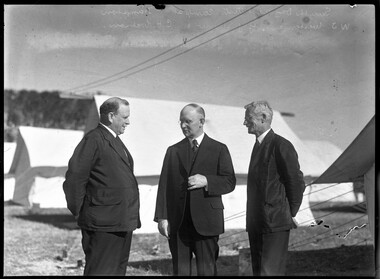
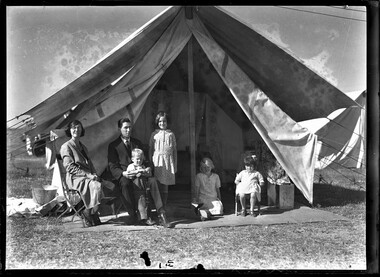
... II. —W. J. Westerman (vice-president of Australasian) and Pastor G. G. Stewart (president of Victoria), conversing with Pastor C. H. Watson (world president of the Seventh Day Adventists).- III.— Evangelist E. R...II. —W. J. Westerman (vice-president of Australasian) and Pastor G. G. Stewart (president of Victoria), conversing with Pastor C. H. Watson (world president of the Seventh Day Adventists).- III.— Evangelist E. R ...Photographer notations on slide: Seventh Day Adventists Camp at Hampton W.J. Westerman, G.G. Stewart & C.H. Watson Published: 28 December 1933 Published title: SEVENTH DAY ADVENTISTS. Published caption: “I. — The Annual Camp of the Seventh Day Adventists in Highett-road, Hampton, comprising more than 250 tents and accommodating over a thousand persons. II. —W. J. Westerman (vice-president of Australasian) and Pastor G. G. Stewart (president of Victoria), conversing with Pastor C. H. Watson (world president of the Seventh Day Adventists).- III.— Evangelist E. R. Gane and family.” SEVENTH DAY ADVENTISTS. (1933, December 28). The Age (Melbourne, Vic. : 1854 - 1954), p. 9. Retrieved August 1, 2025, from http://nla.gov.au/nla.news-article203356427 Research by project volunteer, Fiona Collyer: In December 1933, the annual Seventh Day Adventists Conference of Victoria was held, with over a 1000 participants camping for ten days at Highett Road Hampton. Pastor Charles H. Watson, world president of the Seventh Day Adventists, Walter J. Westerman, vice-president of Australasian and Pastor George G. Stewart, president of Victoria attended. Interestingly, The Age newspaper modified the original photo in their publication, placing the three men close to each other. Description: Three middle aged men dressed in suits converse in front of tents. In December 1933, delegates from all over Victoria and beyond travelled to Melbourne for the annual Seventh Day Adventists Conference of Victoria, held over ten days on a vacant allotment at Highett Road Hampton. A canvas town of 250 tents for over 1000 campers was created along with large marquees for lectures, devotional services and kitchens. Many daily visitors also attended the lectures and services. The principal speaker was Victorian born world president of the Seventh Day Adventists, Pastor Charles H. Watson (1877-1962), who travelled from Washington DC for the event. The Highett Street campers attended a busy schedule of bible readings, devotional services and health lectures during the ten days of the camp. Lecture subjects included- “Among the Head Hunters of the Solomon Islands”, “ Looking Through the Prophetic Telescope into 1934”, “Soul Surgery”, “Viewing the Celestial Land Through the Prophetic Telescope”and “The Four Horsemen of the Apocalypse”. The Seventh Day Adventist religion was established in the USA in 1863. One of its co-founders was American Ellen G. White whose writings are regarded as divinely inspired and are still adhered to today. Ellen preached on the “Eight Laws of Health”- Nutrition, exercise, water, sunshine, temperance, air, rest and trust in God. Adventists regard their bodies as holy temples and avoid food deemed by the Bible as unclean. They eat a mainly plant based diet with no caffeinated beverages and abstain from alcohol and tobacco. They believe in the observance of Saturday, the seventh day of the week in the Christian (Gregorian) and Hebrew calendars as the sabbath and the literal and imminent second coming of Jesus Christ. New converts are baptised by immersion in water. The Adventists opened the Warburton Sanitarium in 1910 as a health retreat, integrating their holistic health philosophy of physical, mental and spiritual well being. It was a resort in the hills “among picturesque mountain scenery…surrounded by tall forests and deep fern gullies…” where highly strung Melburians could alleviate their digestive maladies, stress and jaded nerves as “…worn down nervous systems mend quickly in this peaceful environment…invigorating air and an abundance of home-grown fruit, vegetables, fresh eggs, milk, and cream help to build healthy bodies”. The resort also offered hydrotherapy, massage and electrical treatments. An advertisement in The Argus- 1 December 1947 assured readers- “EVERYTHING SUNNY AGAIN." “That's how you'll feel when you say farewell to Warburton Sanitarium and Hospital after spending a holiday here. Victoria's Hydro is famous far and wide for wonders worked with sufferers from nervous and digestive disorders. Wholesome food, perfectly cooked; splendid air, regulated exercise, sweet natural sleep; these quickly correct faulty digestion, restore vitality, bring back that sunny optimism natural to healthy people. Massage and curative baths under medical supervision…” Later, after further building work, it became the Warburton Hospital with medical, casualty and obstetrics wards as well as offering strategies to stop smoking, lose weight and for stress management. The hospital ceased operation in 2001. Ellen G. White wrote “God sent me to Australia” and in 1891, accompanied by her son William C. White she arrived in Australia to start a Bible school, spread her health philosophy and for missionary work. At first health food products were imported from America, but it soon became apparent that due to the expense and the food becoming stale over the long journey, that local manufacturing was necessary. In 1898 William secured the services of American Adventist baker Edward C. Halsey, who had worked at Dr Kellogg’s Battle Creek (“Cereal City”), Sanitarium, Michigan, USA. They rented the St George’s bakery in Northcote, Melbourne, producing the first ready to eat breakfast cereal Granola, Caramel Cereal, and peanut butter. The fledgling company relocated to larger premises in Cooranbong, NSW soon after. The Sanitarium Health Food Company opened a factory in Warburton in 1925, manufacturing Granose Biscuits, Cerix Puffed Wheat, San-Bran, Bixies malted wheat flakes, Betta peanut butter, Marmite, “Kwic-Bru - A delicious health “coffee” made from choicest cereals and free from drugs that affect the heart and nerves” In 1928, Sanitarium bought out Grain Products Limited who were manufacturing a sweet cereal biscuit called Weet-Bix which soon became Australia’s favourite breakfast cereal. The Warburton factory closed in 1997, with manufacturing shifting interstate. Sanitarium breakfast cereal boxes offered free collectable cards inside and children could buy albums from grocers for sixpence and mount the cards. Subjects of the albums included- “Aboriginal Tribes, Legends, Customs”, “Australia- Yesterday and Today”, “Marvels of the Great Barrier Reef”, “Advance Australia- a Pageant of the Years”. In 1902 the Adventist’s opened the “Pure Food Vegetarian Cafe” in Sydney (In 1907 the name was changed to “Sanitarium Health Food Cafe”), Eating vegetarian food was definitely a curiosity. “Cristina” reviewed the cafe for The Australasian-27 October 1906. Topics For The Block. “Feeling somewhat like a criminal, and hoping to escape detection, I stealthily made my way into a vegetarian restaurant the other day... If my friends happened to catch me walking in there, I should henceforth be considered a crank, a faddist, and little short of a lunatic! Whom did I find within, seated with the air of habitués at the small tables, but heaps of my friends. They had all this while been pursuing their vegetarian way, layin' low and sayin' nuffin'. Flesh-eaters, now that the Sydney summer has set in apparently in good earnest, are beginning to wonder if the vegetarians are not wiser in their day and generation. Roast beef, hot cornea beef, ragouts, and meat curries, the very thought of them makes one feel hot. Frosted lemon pudding, stewed fruits, wheatmeal rolls, and tomatoes sound nice when you look at their names on the vegetarian menu. Such weird messes are served, square, unintelligible blocks of some brown substance, a few bites of which form a full and satisfying meal. Cold nut foods, granose, nuttose, and jam protose, bromose, with jelly and various "ose" sandwiches, impossible for the unbeliever to diagnose, are put before you. You drink malted nut broth, you eat gluten sticks, stewed beans, lentil patties, with vegetable sauce, any or all of which are distinctly nourishing and filling at the price. A mock (decidedly mock) veal cutlet or a red lentil roast is sufficient lunch, it appears, for anyone. Thus, "you obtain the best working results from your machinery with the least possible expenditure..." In December 1906 the Adventists branched out to Melbourne, opening the Sanitarium Health Food Cafe at 289 Collins Street next to the Royal Bank building. (corner Collins and Elizabeth Streets, demolished in 1939). Their motto was “Quality and Purity”. “Cynthia” of The Leader “Social Circle” column reviewed the cafe in 9 March 1907- “Hundreds of people have a feeling of positive affection for a diet that will be satisfying, appetising and nourishing, without having meat for its backbone. It will come as news that we have in Melbourne a cafe where you can really enjoy yourself without eating anything in the way of meat. Cream, custard, cheese and the like are not cold shouldered out of the menu, and the housewife in search of new dishes will find here ever so much in the way of suggestions. Nuts figure conspicuously in the menu, and lentil and walnut cutlets may be instanced among the delicacies. Beans are cooked in quite alluring fashion, while creamed parsnips are excellent. For sandwiches you could hardly desire anything more appetising than granosi biscuits, and nut cheese. The combination is suggestive of school lunches, and nut meat might well be employed as a variant. A visit to the cafe itself — it is next the Royal Bank in Collins-street — will surprise anyone used to the average vegetarian restaurant. Every thing is fresh, fragrant, and thoroughly modern… It is run, in connection with that curious people the Seventh Day Adventists.” However, “Adele” writing for the Evelyn Observer and Bourke East Record -13 December 1907 had a different experience- CITY RESTAURANTS. “There is no glamour from the outside. We enter the dining room at six and secure a seat at a small table, for this night we are going to dine on vegetables. Some people pride themselves on being vegetarians, and devote a great deal of their spare cash and energy to disseminating vegetarian principles. I shall not in a hurry forget the dinner we tried to get through at this vegetarian restaurant. There was put before us plate after plate of vegetables not soaked, but sodden with water, not an atom of flavouring or dressing; no attempt was made to give the slightest piquancy to potato, cabbage, turnip or carrot. I beg pardon, I am unjust, there were two caterpillars in the cabbage. It is astonishing how persistently ordinary cooks spoil vegetables in the process of cooking and how little they understand the value of vegetables on a menu.” From the extensive menu of 1924, you could order cream of green pea soup, followed by nut meat with Yorkshire pudding, egg timbales, stewed brown lentils, savoury rissoles with piquant sauce. Among the dessert offerings were creamed sago, steamed figs and walnut drops. Washed down with fermented wine and to finish, “Frucerea”, a coffee substitute essence made from fruit and cereal. A four course meal of soup, entree, vegetables and sweets cost 1/6 in 1924. Proving that plant-based food was not just a novelty, 67,000 meals were served at the cafe in 1918, rising to 73,000 in 1921. Later the Sanitarium Cafe moved to 293 Little Collins Street, (opposite Royal Arcade) sharing the building with The Lilliput Golf Course, a miniature golf course of 18 holes. The course was a replica of the fashionable Lido Course in France and was open daily from 10am to midnight with a green fee of one shilling. It featured goldfish, waterfalls and dance music. Lilliput boasted that they were “Melbourne’s coolest indoor course” Miniature golf (mini, minnie, midget, miget, Tom Thumb, Wee golf, putt-putt, pigmy, peewee, crazy golf, obstacle golf) swept the globe in the 1930s, starting in the USA, then Europe. The courses provided affordable recreation during uncertainty at the start of the Great Depression. The craze arrived in Sydney September 1930 with the first mini golf course opening in the basement of the State Theatre. It featured a replica Sydney Harbour Bridge and attracted over 1000 players a day at one shilling per game. The miniature golf bug hit Melbourne hard in 1930-31 with nearly 200 courses springing up in the CBD and suburbs within a few months. The first miniature golf course to open in Melbourne was on 4 October 1930 in the basement of recently built art deco style Wentworth House at 203 Collins Street, designed by architect Cedric Heise Ballantyne, (also designed Regent Theatre, Plaza Ballroom, Athenaeum Club, National Theatre, St Kilda, built in 1930, demolished in 1974 for the City Square) It was managed by J. C. Williamson who advertised for a “Girl Spruiker” who “Must be Young, Attractive Personality, and Able to Talk to the Public” to work at the course. The Age 26 September 1930 reported - “The Wentworth House management have spared no expense in preparing the links. Water hazards, sand bunkers, running streams, ancestral castles, moats and a cunning drawbridge have each been devised to test the skill of players, while the walls and ceiling have been "atmospherically" treated to convey an exterior effect”. Even Melbourne City Council jumped on the bandwagon, leasing the lower hall of Melbourne Town Hall to colourful car dealer and racehorse owner Mr A. G. Barlow for £43 per week for the “Kit Kat Tiny Golf Course”, opening on 11 December 1930. (Turf identity, Mr Alexander George Barlow, (1880-1937) who raced under the nom de course “A. G. Vauxhall”, owned filly Frances Tressady, who in 1923 won the Victoria Derby and Oaks Stakes double and came fifth in the Melbourne Cup. The “Frances Tressady Stakes” is held each March at Flemington Racecourse in honour of the horse, the last filly to win the Derby. Barlow was the proprietor of Barlow Brothers Pty Ltd car dealership at 442 Elizabeth Street, Melbourne. He played 14 games for Carlton Football Club (VFL) on the half-forward line from 1901-1903). Patrons could vie for The Herald Miniature Golf Championship Cup, a gold cup worth £7/7, in an eight week long competition. Sports newspaper The Sporting Globe also offered a Cup and prize money. Many courses offered prizes of theatre tickets, cash and cigarettes. Myer’s department store, hoping to cash in on the fad, advertised in Melbourne’s newspapers that their Sports Department could design and equip complete miniature golf courses using “Fairway” imitation turf at 4/6 a yard. Newspaper cartoonists loved to lampoon the fad. Both Percy Leason, cartoonist for society magazine Table Talk and Syd Miller of Smith’s Weekly depicted “real” golfers causing havoc on a mini golf course, showing that being a “real” golf player was no advantage to playing miniature golf. But bust often follows boom. With such rapid market saturation, expensive novel hazards, waning interest, long opening hours, often to midnight, and price cutting of game fees from one shilling to sixpence and then to threepence amongst some courses, the bubble was bound to burst. The Sporting Globe columnist J.M.Dillon on 20 May 1931 lamented- £100,000 LOST Failure of ‘Minnie’ Golf. “Miniature golf might have provided fun and jokes for thousands of people in Australia, but there were many for whom it panned out a tragedy. It is likely that the dead losses of those who attempted to make money out of the game in Australia were in the vicinity of £100,000. …For a while there was hardly a spare block of land, or a possible “site” in the shape of a hall, or a showroom, in Sydney and Melbourne, that some one was not after to set upon it a “minnie links.” Big amusement firms and private individuals anxious to make money began to run courses. Practically every individual who touched the game had his finger’s financially burnt. …From the approximately £60,000 invested in Melbourne alone, there must have been £25,000 lost. …There are now dozens of courses going to ruin, and many more that the owners would be happy to give away if the takers would remove from them obligations of leases, &c…” The lease on the “Kit Kat Tiny Golf Club” at the Melbourne Town Hall expired on 30 April 1931, with Mr Barlow losing £798 on the venture. The hazards and fittings, which cost £400 and included a large replica of the Town Hall, now worthless. Due to declining patronage, the Little Collins Street cafe closed in 1938, although the adjacent shop continued to sell Sanitarium products. In New Zealand, the first Sanitarium factory opened in Christchurch in 1900, with the company later opening factories in Palmerston North and Auckland. The Adventists opened vegetarian cafes, firstly at 37 Taranaki Street Wellington in 1906, followed by cafes in Auckland, Christchurch and Dunedin. Weet-Bix is also New Zealand’s favourite cereal- there the jingle is “Kiwi kids are Weet-Bix kids.” In 1955, the Australian Women’s Weekly ran an illustrated, full colour advertisement featuring New Zealand born Edmund Hillary (later Sir) 1919-2008, who, along with Sherpa Tenzing Norgay, was the first climber to reach the summit of Mount Everest on 29 March 1953. The Australian Women’s Weekly, 30 March, 1955- “WEET-BIX carried by Hillary on Himalayan adventure! c/- N.Z. Alpine Club Inc., Dunedin, New Zealand. The Manager, Sanitarium Health Food Company, Christchurch, N.Z. Dear Sir. …Weet-Bix was chosen at my special request as I had always felt that some easily prepared form of breakfast was essential to the primitive conditions of high camps. Weet-Bix fulfilled its task very well indeed. We usually had them with hot milk (powdered) and sugar, and even when we were unable to eat anything else, we usually managed to have a little Weet-Bix . . . I regard them as a great success and expect they will be more widely used in the Himalayas in future. Yours faithfully, (Signed) E.P. Hillary. Sanitarium Marmite - motto- “Too much spoils the flavour”- is as beloved with Kiwis as Vegemite is with Australians. In 1966, a fire gutted the Christchurch Marmite factory causing a nation wide shortage. Once the factory was rebuilt, Sanitarium relaunched the yeasty extract in reusable glass tumblers with printed designs such as yachts, New Zealand birds and vintage cars. These popular collectibles can still be found in the kitchen cupboards of many New Zealand baches (holiday homes). After the devastating 2011 earthquake in Christchurch damaged the Marmite factory causing shortages and panic buying, a “Marmageddon” was declared with jars of the “black gold” advertised online for up to NZ$800. Consumers were advised to spread their Marmite sparingly until production resumed. (The Christchurch plant reportedly produces around 640,000kg of Marmite per year). Sanitarium Health and Wellbeing Company is exempt from paying company income tax on their profits due to their ownership by a religious organisation. Although not a compulsory rule for salvation, Adventists are encouraged to pay a tithe of 10% of their income to the church to support the ministry in God’s work. Nowadays, there are over 25 million members of the Seventh Day Adventists Church in 200 countries. ITEMS OF INTEREST (1933, December 22). The Argus (Melbourne, Vic. : 1848 - 1957), p. 8. Retrieved July 21, 2025, from http://nla.gov.au/nla.news-article11723188 SEVENTH DAY ADVENTISTS. (1933, December 28). The Age (Melbourne, Vic. : 1854 - 1954), p. 9. Retrieved July 1, 2025, from http://nla.gov.au/nla.news-article203356427 EVANGELISTS' CAMP (1933, December 20). The Herald (Melbourne, Vic. : 1861 - 1954), p. 30. Retrieved July 1, 2025, from http://nla.gov.au/nla.news-article243213209 Master Butchers Have A Time Pilots FOR School Air Race Charity Golf At Riversdale (1931, May 1). The Sun News-Pictorial (Melbourne, Vic. : 1922 - 1954; 1956), p. 14-15. Retrieved September 4, 2025, from http://nla.gov.au/nla.news-article276159136 2000 ADVENTISTS UNDER CANVAS (1933, December 27). The Herald (Melbourne, Vic. : 1861 - 1954), p. 17. Retrieved July 1, 2025, from http://nla.gov.au/nla.news-article243223698 TOPICS FOR THE BLOCK. (1906, October 27). The Australasian (Melbourne, Vic. : 1864 - 1946), p. 45. Retrieved August 30, 2025, from http://nla.gov.au/nla.news-article139178204 https://en.wikipedia.org/wiki/Seventh-day_Adventist_Church https://www.sanitarium.com/au/about/sanitarium-story/profits-for- ENTERTAINMENT AT MENZIES'. (1906, December 6). Punch (Melbourne, Vic. : 1900 - 1918; 1925), p. 26. Retrieved August 3, 2025, from http://nla.gov.au/nla.news-article175380296 https://encyclopedia.adventist.org/article?id=9HN0&highlight=Conference SOCIAL CIRCLE (1907, March 9). Leader (Melbourne, Vic. : 1862 - 1918, 1935), p. 41. Retrieved August 3, 2025, from http://nla.gov.au/nla.news-article196649677 CITY RESTAURANTS. (1907, December 13). Evelyn Observer and Bourke East Record (Vic. : 1902 - 1917), p. 1 (MORNING.). Retrieved August 3, 2025, from http://nla.gov.au/nla.news-article61133109 Advertising (1924, May 6). The Sun News-Pictorial (Melbourne, Vic. : 1922 - 1954; 1956), p. 9. Retrieved August 3, 2025, from http://nla.gov.au/nla.news-article274271406 1930, December 5). The Herald (Melbourne, Vic. : 1861 - 1954), p. 14. Retrieved August 5, 2025, from http://nla.gov.au/nla.news-page26374135 Thousands Are Still Playing Miniature Golf (1931, January 2). The Herald (Melbourne, Vic. : 1861 - 1954), p. 11. Retrieved August 8, 2025, from http://nla.gov.au/nla.news-article242880087 MINIATURE GOLF. (1930, October 16). The Argus (Melbourne, Vic. : 1848 - 1957), p. 10. Retrieved August 8, 2025, from http://nla.gov.au/nla.news-article4209280 THE REAL GOLFER WHO FORGOT HIMSELF ON THE MINIATURE GOLF COURSE (1930, November 13). Table Talk (Melbourne, Vic. : 1885 - 1939), p. 13. Retrieved August 8, 2025, from http://nla.gov.au/nla.news-article146706596 Advertising (1930, December 5). The Herald (Melbourne, Vic. : 1861 - 1954), p. 14. Retrieved August 8, 2025, from http://nla.gov.au/nla.news-article242761991 Advertising (1931, January 9). The Herald (Melbourne, Vic. : 1861 - 1954), p. 12. Retrieved August 8, 2025, from http://nla.gov.au/nla.news-article242887972 1955, March 30). The Australian Women's Weekly (1933 - 1982), p. 38. Retrieved August 9, 2025, from http://nla.gov.au/nla.news-page4812489 £100,000 LOST (1931, May 20). Sporting Globe (Melbourne, Vic. : 1922 - 1954), p. 1 (Edition1). Retrieved August 14, 2025, from http://nla.gov.au/nla.news-article183023946 1930, December 5). The Herald (Melbourne, Vic. : 1861 - 1954), p. 14. Retrieved August 15, 2025, from http://nla.gov.au/nla.news-page26374135 Advertising (1931, January 23). The Herald (Melbourne, Vic. : 1861 - 1954), p. 14. Retrieved August 15, 2025, from http://nla.gov.au/nla.news-article242887795 MINIATURE GOLF. (1931, February 5). The Dandenong Journal (Vic. : 1927 - 1954), p. 6. Retrieved August 16, 2025, from http://nla.gov.au/nla.news-article201082526 Still Time To Enter Midge (1931, January 16). The Herald (Melbourne, Vic. : 1861 - 1954), p. 12. Retrieved August 16, 2025, from http://nla.gov.au/nla.news-article242888830 WIT OF THE WEEK (1930, October 23). Table Talk (Melbourne, Vic. : 1885 - 1939), p. 23. Retrieved August 29, 2025, from http://nla.gov.au/nla.news-article146455050 Advertising (1930, October 2). Table Talk (Melbourne, Vic. : 1885 - 1939), p. 16. Retrieved August 18, 2025, from http://nla.gov.au/nla.news-article146454620 MIDGET GOLF LINKS. (1930, September 26). The Age (Melbourne, Vic. : 1854 - 1954), p. 6. Retrieved August 18, 2025, from http://nla.gov.au/nla.news-article202235074 https://www.smh.com.au/national/fairfax-archive-mini-golf-20131125-2y608.html TURF NOTES (1923, November 6). The Ballarat Star (Vic. : 1865 - 1924), p. 6. Retrieved September 3, 2025, from http://nla.gov.au/nla.news-article213855201 Advertising (1930, October 4). The Herald (Melbourne, Vic. : 1861 - 1954), p. 10. Retrieved October 14, 2025, from http://nla.gov.au/nla.news-article242937272 LAUGHTER AND TEARS. (1930, November 15). Smith's Weekly (Sydney, NSW : 1919 - 1950), p. 21. Retrieved September 9, 2025, from http://nla.gov.au/nla.news-article234426874 Advertising (1947, December 1). The Argus (Melbourne, Vic. : 1848 - 1957), p. 5. Retrieved September 15, 2025, from http://nla.gov.au/nla.news-article22523355Photographer notations on slide: "Seventh Day Adventists Camp at Hampton W.J. Westerman, G.G. Stewart & C.H. Watson".religion, health food, mini golf, 1930-1939, tents, churches, camps -
 City of Melbourne Libraries
Photograph, Bull, Hugh Jones, 1897-1993, Seventh Day Adventists Camp at Hampton: E. Gane + family
... E Gane + family Published: 28 December 1933 Published title: SEVENTH DAY ADVENTISTS. Published caption: “I. — The Annual Camp of the Seventh Day Adventists in Highett-road, Hampton, comprising more than 250 tents and accommodating over a thousand persons. II. —W. J. Westerman (vice-president of Australasian) and Pastor G. G. Stewart (president of Victoria), conversing with Pastor C. H. Watson (world president of the Seventh Day Adventists).- III.— Evangelist E. R...E Gane + family Published: 28 December 1933 Published title: SEVENTH DAY ADVENTISTS. Published caption: “I. — The Annual Camp of the Seventh Day Adventists in Highett-road, Hampton, comprising more than 250 tents and accommodating over a thousand persons. II. —W. J. Westerman (vice-president of Australasian) and Pastor G. G. Stewart (president of Victoria), conversing with Pastor C. H. Watson (world president of the Seventh Day Adventists).- III.— Evangelist E. R ...Photographer notations on slide: Seventh Day Adventists Camp. E Gane + family Published: 28 December 1933 Published title: SEVENTH DAY ADVENTISTS. Published caption: “I. — The Annual Camp of the Seventh Day Adventists in Highett-road, Hampton, comprising more than 250 tents and accommodating over a thousand persons. II. —W. J. Westerman (vice-president of Australasian) and Pastor G. G. Stewart (president of Victoria), conversing with Pastor C. H. Watson (world president of the Seventh Day Adventists).- III.— Evangelist E. R. Gane and family.” SEVENTH DAY ADVENTISTS. (1933, December 28). The Age (Melbourne, Vic. : 1854 - 1954), p. 9. Retrieved August 1, 2025, from http://nla.gov.au/nla.news-article203356427 Research by project volunteer, Fiona Collyer: In December 1933, evangelist Mr E.R. Gane and his family gather outside their tent during the ten day Seventh Day Adventist Conference held in Highett Road, Hampton. Description: A woman, man and four small children sit and stand in front of a tent. One child plays with a toy train. In December 1933, delegates from all over Victoria and beyond travelled to Melbourne for the annual Seventh Day Adventists Conference of Victoria, held over ten days on a vacant allotment at Highett Road Hampton. A canvas town of 250 tents for over 1000 campers was created along with large marquees for lectures, devotional services and kitchens. Many daily visitors also attended the lectures and services. The principal speaker was Victorian born world president of the Seventh Day Adventists, Pastor Charles H. Watson (1877-1962), who travelled from Washington DC for the event. The Highett Street campers attended a busy schedule of bible readings, devotional services and health lectures during the ten days of the camp. Lecture subjects included- “Among the Head Hunters of the Solomon Islands”, “ Looking Through the Prophetic Telescope into 1934”, “Soul Surgery”, “Viewing the Celestial Land Through the Prophetic Telescope”and “The Four Horsemen of the Apocalypse”. The Seventh Day Adventist religion was established in the USA in 1863. One of its co-founders was American Ellen G. White whose writings are regarded as divinely inspired and are still adhered to today. Ellen preached on the “Eight Laws of Health”- Nutrition, exercise, water, sunshine, temperance, air, rest and trust in God. Adventists regard their bodies as holy temples and avoid food deemed by the Bible as unclean. They eat a mainly plant based diet with no caffeinated beverages and abstain from alcohol and tobacco. They believe in the observance of Saturday, the seventh day of the week in the Christian (Gregorian) and Hebrew calendars as the sabbath and the literal and imminent second coming of Jesus Christ. New converts are baptised by immersion in water. The Adventists opened the Warburton Sanitarium in 1910 as a health retreat, integrating their holistic health philosophy of physical, mental and spiritual well being. It was a resort in the hills “among picturesque mountain scenery…surrounded by tall forests and deep fern gullies…” where highly strung Melburians could alleviate their digestive maladies, stress and jaded nerves as “…worn down nervous systems mend quickly in this peaceful environment…invigorating air and an abundance of home-grown fruit, vegetables, fresh eggs, milk, and cream help to build healthy bodies”. The resort also offered hydrotherapy, massage and electrical treatments. An advertisement in The Argus- 1 December 1947 assured readers- “EVERYTHING SUNNY AGAIN." “That's how you'll feel when you say farewell to Warburton Sanitarium and Hospital after spending a holiday here. Victoria's Hydro is famous far and wide for wonders worked with sufferers from nervous and digestive disorders. Wholesome food, perfectly cooked; splendid air, regulated exercise, sweet natural sleep; these quickly correct faulty digestion, restore vitality, bring back that sunny optimism natural to healthy people. Massage and curative baths under medical supervision…” Later, after further building work, it became the Warburton Hospital with medical, casualty and obstetrics wards as well as offering strategies to stop smoking, lose weight and for stress management. The hospital ceased operation in 2001. Ellen G. White wrote “God sent me to Australia” and in 1891, accompanied by her son William C. White she arrived in Australia to start a Bible school, spread her health philosophy and for missionary work. At first health food products were imported from America, but it soon became apparent that due to the expense and the food becoming stale over the long journey, that local manufacturing was necessary. In 1898 William secured the services of American Adventist baker Edward C. Halsey, who had worked at Dr Kellogg’s Battle Creek (“Cereal City”), Sanitarium, Michigan, USA. They rented the St George’s bakery in Northcote, Melbourne, producing the first ready to eat breakfast cereal Granola, Caramel Cereal, and peanut butter. The fledgling company relocated to larger premises in Cooranbong, NSW soon after. The Sanitarium Health Food Company opened a factory in Warburton in 1925, manufacturing Granose Biscuits, Cerix Puffed Wheat, San-Bran, Bixies malted wheat flakes, Betta peanut butter, Marmite, “Kwic-Bru - A delicious health “coffee” made from choicest cereals and free from drugs that affect the heart and nerves” In 1928, Sanitarium bought out Grain Products Limited who were manufacturing a sweet cereal biscuit called Weet-Bix which soon became Australia’s favourite breakfast cereal. The Warburton factory closed in 1997, with manufacturing shifting interstate. Sanitarium breakfast cereal boxes offered free collectable cards inside and children could buy albums from grocers for sixpence and mount the cards. Subjects of the albums included- “Aboriginal Tribes, Legends, Customs”, “Australia- Yesterday and Today”, “Marvels of the Great Barrier Reef”, “Advance Australia- a Pageant of the Years”. In 1902 the Adventist’s opened the “Pure Food Vegetarian Cafe” in Sydney (In 1907 the name was changed to “Sanitarium Health Food Cafe”), Eating vegetarian food was definitely a curiosity. “Cristina” reviewed the cafe for The Australasian-27 October 1906. Topics For The Block. “Feeling somewhat like a criminal, and hoping to escape detection, I stealthily made my way into a vegetarian restaurant the other day... If my friends happened to catch me walking in there, I should henceforth be considered a crank, a faddist, and little short of a lunatic! Whom did I find within, seated with the air of habitués at the small tables, but heaps of my friends. They had all this while been pursuing their vegetarian way, layin' low and sayin' nuffin'. Flesh-eaters, now that the Sydney summer has set in apparently in good earnest, are beginning to wonder if the vegetarians are not wiser in their day and generation. Roast beef, hot cornea beef, ragouts, and meat curries, the very thought of them makes one feel hot. Frosted lemon pudding, stewed fruits, wheatmeal rolls, and tomatoes sound nice when you look at their names on the vegetarian menu. Such weird messes are served, square, unintelligible blocks of some brown substance, a few bites of which form a full and satisfying meal. Cold nut foods, granose, nuttose, and jam protose, bromose, with jelly and various "ose" sandwiches, impossible for the unbeliever to diagnose, are put before you. You drink malted nut broth, you eat gluten sticks, stewed beans, lentil patties, with vegetable sauce, any or all of which are distinctly nourishing and filling at the price. A mock (decidedly mock) veal cutlet or a red lentil roast is sufficient lunch, it appears, for anyone. Thus, "you obtain the best working results from your machinery with the least possible expenditure..." In December 1906 the Adventists branched out to Melbourne, opening the Sanitarium Health Food Cafe at 289 Collins Street next to the Royal Bank building. (corner Collins and Elizabeth Streets, demolished in 1939). Their motto was “Quality and Purity”. “Cynthia” of The Leader “Social Circle” column reviewed the cafe in 9 March 1907- “Hundreds of people have a feeling of positive affection for a diet that will be satisfying, appetising and nourishing, without having meat for its backbone. It will come as news that we have in Melbourne a cafe where you can really enjoy yourself without eating anything in the way of meat. Cream, custard, cheese and the like are not cold shouldered out of the menu, and the housewife in search of new dishes will find here ever so much in the way of suggestions. Nuts figure conspicuously in the menu, and lentil and walnut cutlets may be instanced among the delicacies. Beans are cooked in quite alluring fashion, while creamed parsnips are excellent. For sandwiches you could hardly desire anything more appetising than granosi biscuits, and nut cheese. The combination is suggestive of school lunches, and nut meat might well be employed as a variant. A visit to the cafe itself — it is next the Royal Bank in Collins-street — will surprise anyone used to the average vegetarian restaurant. Every thing is fresh, fragrant, and thoroughly modern… It is run, in connection with that curious people the Seventh Day Adventists.” However, “Adele” writing for the Evelyn Observer and Bourke East Record -13 December 1907 had a different experience- CITY RESTAURANTS. “There is no glamour from the outside. We enter the dining room at six and secure a seat at a small table, for this night we are going to dine on vegetables. Some people pride themselves on being vegetarians, and devote a great deal of their spare cash and energy to disseminating vegetarian principles. I shall not in a hurry forget the dinner we tried to get through at this vegetarian restaurant. There was put before us plate after plate of vegetables not soaked, but sodden with water, not an atom of flavouring or dressing; no attempt was made to give the slightest piquancy to potato, cabbage, turnip or carrot. I beg pardon, I am unjust, there were two caterpillars in the cabbage. It is astonishing how persistently ordinary cooks spoil vegetables in the process of cooking and how little they understand the value of vegetables on a menu.” From the extensive menu of 1924, you could order cream of green pea soup, followed by nut meat with Yorkshire pudding, egg timbales, stewed brown lentils, savoury rissoles with piquant sauce. Among the dessert offerings were creamed sago, steamed figs and walnut drops. Washed down with fermented wine and to finish, “Frucerea”, a coffee substitute essence made from fruit and cereal. A four course meal of soup, entree, vegetables and sweets cost 1/6 in 1924. Proving that plant-based food was not just a novelty, 67,000 meals were served at the cafe in 1918, rising to 73,000 in 1921. Later the Sanitarium Cafe moved to 293 Little Collins Street, (opposite Royal Arcade) sharing the building with The Lilliput Golf Course, a miniature golf course of 18 holes. The course was a replica of the fashionable Lido Course in France and was open daily from 10am to midnight with a green fee of one shilling. It featured goldfish, waterfalls and dance music. Lilliput boasted that they were “Melbourne’s coolest indoor course” Miniature golf (mini, minnie, midget, miget, Tom Thumb, Wee golf, putt-putt, pigmy, peewee, crazy golf, obstacle golf) swept the globe in the 1930s, starting in the USA, then Europe. The courses provided affordable recreation during uncertainty at the start of the Great Depression. The craze arrived in Sydney September 1930 with the first mini golf course opening in the basement of the State Theatre. It featured a replica Sydney Harbour Bridge and attracted over 1000 players a day at one shilling per game. The miniature golf bug hit Melbourne hard in 1930-31 with nearly 200 courses springing up in the CBD and suburbs within a few months. The first miniature golf course to open in Melbourne was on 4 October 1930 in the basement of recently built art deco style Wentworth House at 203 Collins Street, designed by architect Cedric Heise Ballantyne, (also designed Regent Theatre, Plaza Ballroom, Athenaeum Club, National Theatre, St Kilda, built in 1930, demolished in 1974 for the City Square) It was managed by J. C. Williamson who advertised for a “Girl Spruiker” who “Must be Young, Attractive Personality, and Able to Talk to the Public” to work at the course. The Age 26 September 1930 reported - “The Wentworth House management have spared no expense in preparing the links. Water hazards, sand bunkers, running streams, ancestral castles, moats and a cunning drawbridge have each been devised to test the skill of players, while the walls and ceiling have been "atmospherically" treated to convey an exterior effect”. Even Melbourne City Council jumped on the bandwagon, leasing the lower hall of Melbourne Town Hall to colourful car dealer and racehorse owner Mr A. G. Barlow for £43 per week for the “Kit Kat Tiny Golf Course”, opening on 11 December 1930. (Turf identity, Mr Alexander George Barlow, (1880-1937) who raced under the nom de course “A. G. Vauxhall”, owned filly Frances Tressady, who in 1923 won the Victoria Derby and Oaks Stakes double and came fifth in the Melbourne Cup. The “Frances Tressady Stakes” is held each March at Flemington Racecourse in honour of the horse, the last filly to win the Derby. Barlow was the proprietor of Barlow Brothers Pty Ltd car dealership at 442 Elizabeth Street, Melbourne. He played 14 games for Carlton Football Club (VFL) on the half-forward line from 1901-1903). Patrons could vie for The Herald Miniature Golf Championship Cup, a gold cup worth £7/7, in an eight week long competition. Sports newspaper The Sporting Globe also offered a Cup and prize money. Many courses offered prizes of theatre tickets, cash and cigarettes. Myer’s department store, hoping to cash in on the fad, advertised in Melbourne’s newspapers that their Sports Department could design and equip complete miniature golf courses using “Fairway” imitation turf at 4/6 a yard. Newspaper cartoonists loved to lampoon the fad. Both Percy Leason, cartoonist for society magazine Table Talk and Syd Miller of Smith’s Weekly depicted “real” golfers causing havoc on a mini golf course, showing that being a “real” golf player was no advantage to playing miniature golf. But bust often follows boom. With such rapid market saturation, expensive novel hazards, waning interest, long opening hours, often to midnight, and price cutting of game fees from one shilling to sixpence and then to threepence amongst some courses, the bubble was bound to burst. The Sporting Globe columnist J.M.Dillon on 20 May 1931 lamented- £100,000 LOST Failure of ‘Minnie’ Golf. “Miniature golf might have provided fun and jokes for thousands of people in Australia, but there were many for whom it panned out a tragedy. It is likely that the dead losses of those who attempted to make money out of the game in Australia were in the vicinity of £100,000. …For a while there was hardly a spare block of land, or a possible “site” in the shape of a hall, or a showroom, in Sydney and Melbourne, that some one was not after to set upon it a “minnie links.” Big amusement firms and private individuals anxious to make money began to run courses. Practically every individual who touched the game had his finger’s financially burnt. …From the approximately £60,000 invested in Melbourne alone, there must have been £25,000 lost. …There are now dozens of courses going to ruin, and many more that the owners would be happy to give away if the takers would remove from them obligations of leases, &c…” The lease on the “Kit Kat Tiny Golf Club” at the Melbourne Town Hall expired on 30 April 1931, with Mr Barlow losing £798 on the venture. The hazards and fittings, which cost £400 and included a large replica of the Town Hall, now worthless. Due to declining patronage, the Little Collins Street cafe closed in 1938, although the adjacent shop continued to sell Sanitarium products. In New Zealand, the first Sanitarium factory opened in Christchurch in 1900, with the company later opening factories in Palmerston North and Auckland. The Adventists opened vegetarian cafes, firstly at 37 Taranaki Street Wellington in 1906, followed by cafes in Auckland, Christchurch and Dunedin. Weet-Bix is also New Zealand’s favourite cereal- there the jingle is “Kiwi kids are Weet-Bix kids.” In 1955, the Australian Women’s Weekly ran an illustrated, full colour advertisement featuring New Zealand born Edmund Hillary (later Sir) 1919-2008, who, along with Sherpa Tenzing Norgay, was the first climber to reach the summit of Mount Everest on 29 March 1953. The Australian Women’s Weekly, 30 March, 1955- “WEET-BIX carried by Hillary on Himalayan adventure! c/- N.Z. Alpine Club Inc., Dunedin, New Zealand. The Manager, Sanitarium Health Food Company, Christchurch, N.Z. Dear Sir. …Weet-Bix was chosen at my special request as I had always felt that some easily prepared form of breakfast was essential to the primitive conditions of high camps. Weet-Bix fulfilled its task very well indeed. We usually had them with hot milk (powdered) and sugar, and even when we were unable to eat anything else, we usually managed to have a little Weet-Bix . . . I regard them as a great success and expect they will be more widely used in the Himalayas in future. Yours faithfully, (Signed) E.P. Hillary. Sanitarium Marmite - motto- “Too much spoils the flavour”- is as beloved with Kiwis as Vegemite is with Australians. In 1966, a fire gutted the Christchurch Marmite factory causing a nation wide shortage. Once the factory was rebuilt, Sanitarium relaunched the yeasty extract in reusable glass tumblers with printed designs such as yachts, New Zealand birds and vintage cars. These popular collectibles can still be found in the kitchen cupboards of many New Zealand baches (holiday homes). After the devastating 2011 earthquake in Christchurch damaged the Marmite factory causing shortages and panic buying, a “Marmageddon” was declared with jars of the “black gold” advertised online for up to NZ$800. Consumers were advised to spread their Marmite sparingly until production resumed. (The Christchurch plant reportedly produces around 640,000kg of Marmite per year). Sanitarium Health and Wellbeing Company is exempt from paying company income tax on their profits due to their ownership by a religious organisation. Although not a compulsory rule for salvation, Adventists are encouraged to pay a tithe of 10% of their income to the church to support the ministry in God’s work. Nowadays, there are over 25 million members of the Seventh Day Adventists Church in 200 countries. ITEMS OF INTEREST (1933, December 22). The Argus (Melbourne, Vic. : 1848 - 1957), p. 8. Retrieved July 21, 2025, from http://nla.gov.au/nla.news-article11723188 SEVENTH DAY ADVENTISTS. (1933, December 28). The Age (Melbourne, Vic. : 1854 - 1954), p. 9. Retrieved July 1, 2025, from http://nla.gov.au/nla.news-article203356427 EVANGELISTS' CAMP (1933, December 20). The Herald (Melbourne, Vic. : 1861 - 1954), p. 30. Retrieved July 1, 2025, from http://nla.gov.au/nla.news-article243213209 Master Butchers Have A Time Pilots FOR School Air Race Charity Golf At Riversdale (1931, May 1). The Sun News-Pictorial (Melbourne, Vic. : 1922 - 1954; 1956), p. 14-15. Retrieved September 4, 2025, from http://nla.gov.au/nla.news-article276159136 2000 ADVENTISTS UNDER CANVAS (1933, December 27). The Herald (Melbourne, Vic. : 1861 - 1954), p. 17. Retrieved July 1, 2025, from http://nla.gov.au/nla.news-article243223698 TOPICS FOR THE BLOCK. (1906, October 27). The Australasian (Melbourne, Vic. : 1864 - 1946), p. 45. Retrieved August 30, 2025, from http://nla.gov.au/nla.news-article139178204 https://en.wikipedia.org/wiki/Seventh-day_Adventist_Church https://www.sanitarium.com/au/about/sanitarium-story/profits-for- ENTERTAINMENT AT MENZIES'. (1906, December 6). Punch (Melbourne, Vic. : 1900 - 1918; 1925), p. 26. Retrieved August 3, 2025, from http://nla.gov.au/nla.news-article175380296 https://encyclopedia.adventist.org/article?id=9HN0&highlight=Conference SOCIAL CIRCLE (1907, March 9). Leader (Melbourne, Vic. : 1862 - 1918, 1935), p. 41. Retrieved August 3, 2025, from http://nla.gov.au/nla.news-article196649677 CITY RESTAURANTS. (1907, December 13). Evelyn Observer and Bourke East Record (Vic. : 1902 - 1917), p. 1 (MORNING.). Retrieved August 3, 2025, from http://nla.gov.au/nla.news-article61133109 Advertising (1924, May 6). The Sun News-Pictorial (Melbourne, Vic. : 1922 - 1954; 1956), p. 9. Retrieved August 3, 2025, from http://nla.gov.au/nla.news-article274271406 1930, December 5). The Herald (Melbourne, Vic. : 1861 - 1954), p. 14. Retrieved August 5, 2025, from http://nla.gov.au/nla.news-page26374135 Thousands Are Still Playing Miniature Golf (1931, January 2). The Herald (Melbourne, Vic. : 1861 - 1954), p. 11. Retrieved August 8, 2025, from http://nla.gov.au/nla.news-article242880087 MINIATURE GOLF. (1930, October 16). The Argus (Melbourne, Vic. : 1848 - 1957), p. 10. Retrieved August 8, 2025, from http://nla.gov.au/nla.news-article4209280 THE REAL GOLFER WHO FORGOT HIMSELF ON THE MINIATURE GOLF COURSE (1930, November 13). Table Talk (Melbourne, Vic. : 1885 - 1939), p. 13. Retrieved August 8, 2025, from http://nla.gov.au/nla.news-article146706596 Advertising (1930, December 5). The Herald (Melbourne, Vic. : 1861 - 1954), p. 14. Retrieved August 8, 2025, from http://nla.gov.au/nla.news-article242761991 Advertising (1931, January 9). The Herald (Melbourne, Vic. : 1861 - 1954), p. 12. Retrieved August 8, 2025, from http://nla.gov.au/nla.news-article242887972 1955, March 30). The Australian Women's Weekly (1933 - 1982), p. 38. Retrieved August 9, 2025, from http://nla.gov.au/nla.news-page4812489 £100,000 LOST (1931, May 20). Sporting Globe (Melbourne, Vic. : 1922 - 1954), p. 1 (Edition1). Retrieved August 14, 2025, from http://nla.gov.au/nla.news-article183023946 1930, December 5). The Herald (Melbourne, Vic. : 1861 - 1954), p. 14. Retrieved August 15, 2025, from http://nla.gov.au/nla.news-page26374135 Advertising (1931, January 23). The Herald (Melbourne, Vic. : 1861 - 1954), p. 14. Retrieved August 15, 2025, from http://nla.gov.au/nla.news-article242887795 MINIATURE GOLF. (1931, February 5). The Dandenong Journal (Vic. : 1927 - 1954), p. 6. Retrieved August 16, 2025, from http://nla.gov.au/nla.news-article201082526 Still Time To Enter Midge (1931, January 16). The Herald (Melbourne, Vic. : 1861 - 1954), p. 12. Retrieved August 16, 2025, from http://nla.gov.au/nla.news-article242888830 WIT OF THE WEEK (1930, October 23). Table Talk (Melbourne, Vic. : 1885 - 1939), p. 23. Retrieved August 29, 2025, from http://nla.gov.au/nla.news-article146455050 Advertising (1930, October 2). Table Talk (Melbourne, Vic. : 1885 - 1939), p. 16. Retrieved August 18, 2025, from http://nla.gov.au/nla.news-article146454620 MIDGET GOLF LINKS. (1930, September 26). The Age (Melbourne, Vic. : 1854 - 1954), p. 6. Retrieved August 18, 2025, from http://nla.gov.au/nla.news-article202235074 https://www.smh.com.au/national/fairfax-archive-mini-golf-20131125-2y608.html TURF NOTES (1923, November 6). The Ballarat Star (Vic. : 1865 - 1924), p. 6. Retrieved September 3, 2025, from http://nla.gov.au/nla.news-article213855201 Advertising (1930, October 4). The Herald (Melbourne, Vic. : 1861 - 1954), p. 10. Retrieved October 14, 2025, from http://nla.gov.au/nla.news-article242937272 LAUGHTER AND TEARS. (1930, November 15). Smith's Weekly (Sydney, NSW : 1919 - 1950), p. 21. Retrieved September 9, 2025, from http://nla.gov.au/nla.news-article234426874 Advertising (1947, December 1). The Argus (Melbourne, Vic. : 1848 - 1957), p. 5. Retrieved September 15, 2025, from http://nla.gov.au/nla.news-article22523355Photographer notations on slide: "Seventh Day Adventists Camp. E Gane + family".religion, health food, mini golf, 1930-1939, tents, churches, camps -
 Geoffrey Kaye Museum of Anaesthetic History
Functional object - Marrow spoon
... sterling silver marrow spoon utensils kitchen utensils cutlery dining utensils spoon George II Inscription stamped into base of spoon. "T / R / E". A sterling silver George II marrow spoon. ...A sterling silver George II marrow spoon. Two thirds of the top end of the narrow stem have a trough carved out, and there is no decoration other than the hallmarks stamped into the reverse of the base of the stem.Inscription stamped into base of spoon. "T / R / E".sterling silver, marrow spoon, utensils, kitchen utensils, cutlery, dining utensils, spoon, george ii -
 Geoffrey Kaye Museum of Anaesthetic History
Functional object - Punch ladle
... "P / R / E". A sterling silver and wood George II punch ladle. Two thirds of the handle is made of simple turned dark wood with a bulbous top. ...A sterling silver and wood George II punch ladle. Two thirds of the handle is made of simple turned dark wood with a bulbous top. The rest of the handle is made of sterling silver attached to the small, spouted spoon.Letters stamped into spoon head. "P / R / E".serving utensils, utensils, sterling silver, punch spoon
