
Showing 50 items matching "e latter"
-
 Emerald Museum & Nobelius Heritage Park
Functional object - School slate, 1930s
... ...E Latter...Used in junior grades until the late 1930s Emerald Victoria Australia education school history school children E Latter Framed piece of slate with slate pencil on string Functional object School slate ...Used in junior grades until the late 1930sFramed piece of slate with slate pencil on stringemerald, victoria, australia, education, school history, school children, e latter -
 Tarnagulla History Archive
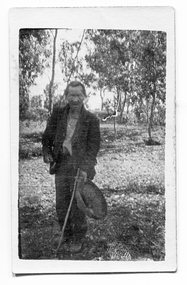
Photograph: Jimmie, a Chinese resident of Tarnagulla, c. 1930s
... Handwritten on reverse 'Jimmie (Chinaman)' and 'E. Whimpey'. The latter probably indicates the person who took the photo and/or who gave it to Murray Comrie....This photograph is an original print. tarnagulla people chinese Handwritten on reverse 'Jimmie (Chinaman)' and 'E. Whimpey'. The latter probably indicates the person who took the photo and/or who gave it to Murray Comrie. ...Murray Comrie Collection. This photograph is an original print.A very small sepia photograph of a Chinese man. Handwritten caption on reverse identifies subject as 'Jimmie' Handwritten on reverse 'Jimmie (Chinaman)' and 'E. Whimpey'. The latter probably indicates the person who took the photo and/or who gave it to Murray Comrie.tarnagulla, people, chinese -
 Flagstaff Hill Maritime Museum and Village
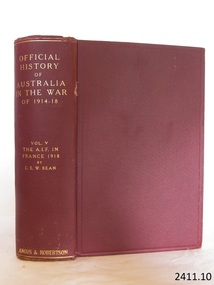
Book, Official History of Australia in the War 1914-1918 Vol 5-3
... latter part of the nineteenth century and the early twentieth century. The collection of books is a rare example of an early lending library and its significance is enhanced by the survival of an original collection of many volumes. The Warrnambool Mechanics' Institute’s publication collection is of both local and state significance. shipwrecked-coast flagstaff-hill warrnambool flagstaff-hill-maritime-museum maritime-museum shipwreck-coast flagstaff-hill-maritime-village shipwrecked-artefact book warrnambool library warrnambool mechanics’ institute warrnambool city librarian mechanics’ institute library victorian library board warrnambool books and records warrnambool children’s library great ocean road c e w bean official history of australia in the war of 1914-18 vol 5 official history of australia in the war of 1914-18 Official History of Australia in the War of 1914-18 Vol 5-3 Author: C E W Bean Publisher: Angus & Robertson Date: 1937 Official History of Australia in the War 1914-1918 Vol 5-3 Book ...This item is from the ‘Pattison Collection’, a collection of books and records that was originally owned by the Warrnambool Mechanics’ Institute, which was founded in Warrnambool in 1853. By 1886 the Warrnambool Mechanics’ Institute (WMI) had grown to have a Library, Museum and Fine Arts Gallery, with a collection of “… choice productions of art and valuable specimens in almost every branch and many wonderful national curiosities are now to be seen there, including historic relics of the town and district.” It later included a School of Design. Although it was very well patronised, the lack of financial support led the WMI in 1911 to ask the City Council to take it over. In 1935 Ralph Pattison was appointed as City Librarian to establish and organise the Warrnambool Library as it was then called. When the WMI building was pulled down in 1963 a new civic building was erected on the site and the new Warrnambool Library, on behalf of the City Council, took over all the holdings of the WMI. At this time some of the items were separated and identified as the ‘Pattison Collection’, named after Ralph Pattison. Eventually, the components of the WMI were distributed from the Warrnambool Library to various places, including the Art Gallery, Historical Society and Flagstaff Hill. Later some were even distributed to other regional branches of Corangamite Regional Library and passed to and fro. It is difficult now to trace just where all of the items have ended up. The books at Flagstaff Hill Maritime Village generally display stamps and markings from Pattison as well as a variety of other institutions including the Mechanics’ Institute itself. RALPH ERIC PATTISON Ralph Eric Pattison was born in Rockhampton, Queensland, in 1891. He married Maude Swan from Warrnambool in 1920 and they set up home in Warrnambool. In 1935 Pattison accepted a position as City Librarian for the Warrnambool City Council. His huge challenge was to make a functional library within two rooms of the Mechanics’ Institute. He tirelessly cleaned, cleared and sorted a disarrayed collection of old books, jars of preserved specimens and other items reserved for exhibition in the city’s museum. He developed and updated the library with a wide variety of books for all tastes, including reference books for students; a difficult task to fulfil during the years following the Depression. He converted all of the lower areas of the building into a library, reference room and reading room for members and the public. The books were sorted and stored using a cataloguing and card index system that he had developed himself. He also prepared the upper floor of the building and established the Art Gallery and later the Museum, a place to exhibit the many old relics that had been stored for years for this purpose. One of the treasures he found was a beautiful ancient clock, which he repaired, restored and enjoyed using in his office during the years of his service there. Ralph Pattison was described as “a meticulous gentleman whose punctuality, floorless courtesy and distinctive neat dress were hallmarks of his character, and ‘his’ clock controlled his daily routine and his opening and closing of the library’s large heavy doors to the minute.” Pattison took leave from 1942 to 1945 to serve in the Royal Australian Navy, Volunteer Reserve as Lieutenant. A few years later he converted one of the Museum’s rooms into a Children’s Library, stocking it with suitable books for the younger generation. This was an instant success. In the 1950’s he had the honour of being appointed to the Victorian Library Board and received more inspiration from the monthly conferences in Melbourne. He was sadly retired in 1959 after over 23 years of service, due to the fact that he had gone over the working age of council officers. However, he continued to take a very keen interest in the continual development of the Library until his death in 1969. The Pattison Collection, along with other items at Flagstaff Hill Maritime Village, was originally part of the Warrnambool Mechanics' Institute’s collection. The Warrnambool Mechanics’ Institute Collection is primarily significant in its totality, rather than for the individual objects it contains. Its contents are highly representative of the development of Mechanics' Institute libraries across Australia, particularly Victoria. A diversity of publications and themes has been amassed, and these provide clues to our understanding of the nature of and changes in the reading habits of Victorians from the 1850s to the middle of the 20th century. The collection also highlights the Warrnambool community’s commitment to the Mechanics’ Institute, reading, literacy and learning in the regions, and proves that access to knowledge was not impeded by distance. These items help to provide a more complete picture of our community’s ideals and aspirations. The Warrnambool Mechanics Institute book collection has historical and social significance for its strong association with the Mechanics Institute movement and the important role it played in the intellectual, cultural and social development of people throughout the latter part of the nineteenth century and the early twentieth century. The collection of books is a rare example of an early lending library and its significance is enhanced by the survival of an original collection of many volumes. The Warrnambool Mechanics' Institute’s publication collection is of both local and state significance. Official History of Australia in the War of 1914-18 Vol 5-3 Author: C E W Bean Publisher: Angus & Robertson Date: 1937shipwrecked-coast, flagstaff-hill, warrnambool, flagstaff-hill-maritime-museum, maritime-museum, shipwreck-coast, flagstaff-hill-maritime-village, shipwrecked-artefact, book, warrnambool library, warrnambool mechanics’ institute, warrnambool city librarian, mechanics’ institute library, victorian library board, warrnambool books and records, warrnambool children’s library, great ocean road, c e w bean, official history of australia in the war of 1914-18 vol 5, official history of australia in the war of 1914-18 -
 Federation University Historical Collection
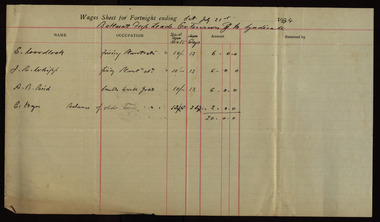
Document, Ballarat School of Mines Wages Sheet, 1934, 1934
... He spent much of his latter years at Mt Mercer mine sites. wages e. woodlock j.r. whipp c. hayes ballarat deep leads extension j m syndicate richard squire a b reid wages sheet mining ballarat school of mines Hand written entries on wages sheets, one on Sat 21st July 1934 and one on Sat 14th April 1934 Two pages of Wages Sheets listing names, occupations and amount paid in 1934 Ballarat School of Mines Wages Sheet, 1934 Document Document ...Richard Squire was noted personality in the Ballarat region as a miner. He was interested in a number of mines, including the famous Madame Berry Lead. He was born in Richmond, and finished his education at the Ballarat School of Mines. He became manager of his first mine at the age of 23 years at Ararat Grand Junction. Later he spent two years mining in Malaya. On his return he became interested in mines at Allendale. In 1905 Richard Squire was manager of the West Berry Consols at Allendale, and developed an improved system of mine ventilation. He was successful in combating and remedying the gas and ventilation troubles of the Deep Mines of Creswick and Allendale Districts. He spent much of his latter years at Mt Mercer mine sites.Two pages of Wages Sheets listing names, occupations and amount paid in 1934Hand written entries on wages sheets, one on Sat 21st July 1934 and one on Sat 14th April 1934wages, e. woodlock, j.r. whipp, c. hayes, ballarat deep leads extension j m syndicate, richard squire, a b reid, wages sheet, mining, ballarat school of mines -
Federation University Historical Collection
Book - Book - Ledger, Ballarat School of Mines Council Minute Book,1883-1888, 1883-1888
... e. figgis...thomas mann...frederick martell...j.m. bickett...james oddie...alfred mica smith...ferdinand krause...nicholls...e.j. rosemblum...w.r. bechervaise...barbara ramsay...lizzie clarke...mary burrows...matilda latter...ballarat school of mines ballarat school of mines council ballarat school of mines council minutes theo williams samual e. figgis thomas mann frederick martell j.m. bickett james oddie alfred mica smith ferdinand krause nicholls e.j. rosemblum w.r. bechervaise barbara ramsay lizzie clarke mary burrows matilda latter fiddian w.h. nicholls henry r. caselli e. rosenblum thornton williams john b. irwin joan rosenblum gredrick given william mcdougall alexamder reid william legg tennis c.h. ellis h. bradbury i.j. jones j. lonie agar wynne fanny trebilcock wmily h. walker james lonie william davies edwin blomeley charles walker charles nicholls william manners john scott george cairns alfred kerr h.w. bull astronomy g. wilkins electricity frederick gray e.h. coltman maggie gilchrist w. sharwood e.j. rosenblum surveying a.f. laplau r. ghee a. bragazzi oscar skoglund mine manager r.f. taplin j.w. sutherland william cotter w.j.gronow e. wilfred robinson adelaide jubilee exhibition mechanical photography lectureship photography university of Melbourne john warrington rogers william john clarke rivett henry blandalfred Lynberg hugh reid resignation mary ann cameron Mary jane guthrie maude louisa millett harry Mortimer Martell r.j. vale mining laboratory Hardcovered book, quarter leather bound containing handwritten minutes of the Ballarat School of Mines Council. 27 July 1887 - proposal for lectureship in Mechanical Photography Ballarat School of Mines Council Minute Book,1883-1888 Book Book - Ledger ...Hardcovered book, quarter leather bound containing handwritten minutes of the Ballarat School of Mines Council. 27 July 1887 - proposal for lectureship in Mechanical Photographyballarat school of mines, ballarat school of mines council, ballarat school of mines council minutes, theo williams, samual e. figgis, thomas mann, frederick martell, j.m. bickett, james oddie, alfred mica smith, ferdinand krause, nicholls, e.j. rosemblum, w.r. bechervaise, barbara ramsay, lizzie clarke, mary burrows, matilda latter, fiddian, w.h. nicholls, henry r. caselli, e. rosenblum, thornton, williams, john b. irwin, joan rosenblum, gredrick given, william mcdougall, alexamder reid, william legg, tennis, c.h. ellis, h. bradbury, i.j. jones, j. lonie, agar wynne, fanny trebilcock, wmily h. walker, james lonie, william davies, edwin blomeley, charles walker, charles nicholls, william manners, john scott, george cairns, alfred kerr, h.w. bull, astronomy, g. wilkins, electricity, frederick gray, e.h. coltman, maggie gilchrist, w. sharwood, e.j. rosenblum, surveying, a.f. laplau, r. ghee, a. bragazzi, oscar skoglund, mine manager, r.f. taplin, j.w. sutherland, william cotter, w.j.gronow, e. wilfred robinson, adelaide jubilee exhibition, mechanical photography lectureship, photography, university of melbourne, john warrington rogers, william john clarke, rivett henry blandalfred lynberg, hugh reid resignation, mary ann cameron, mary jane guthrie, maude louisa millett, harry mortimer martell, r.j. vale, mining laboratory -
Federation University Historical Collection
Magazine - Booklet, Ballarat School of Mines Students' Magazine, 1955, 1955
... e. waller...r. carlson...k. johnston...l. willis...s. mcgregor...a. clark...i. boyd...norma davies...i. kinnane...p. agrums...r. latter...The activities of the Air Cadets, Girls' House Notes, Junior Technical School, Ballarat North Junior Technical School - Headmaster's Page, Ballarat North Junior Technical - School Members' of Staff - Students' ballarat school of mines magazine glen baxendale john skuja graham willey stan kisler r. w. richards janet steele john collier jim murray eillen grundell john clelland bill maxwell ron furlong judy johnson russ whitcher anita young jimmy durant alf hannah gordon thurling r. dunlop j. wolfe i. schunke d. schmidt j. murray b. tozer r. furlong b. singleton n. richards f. andrewartha j. barnes p. collier a. orgill w. maxwell n. brogden b. bellingham b. gallagher g. rasdell j. williams j. clelland n. spears t. prior b. matthews b. dixon j. barker g. ditchfield a. clarke t. seabrook w. saggers b. mclennan n. beanland p. nally i. fraser j. gowan g. hewitt s. nandhabiwat p. quinlan g. crawford jim mcneil bill saggers frank andrewartha john barnes peter ditchfield richard dunlop alan orgill pat quinlan david schmidt terry seabrook russell whitcher john williams barrie r. smith saml. l. clemens beth byrne beverley briggs john procter studios "buck" rodger jack aitkin diana mainwaring bob jones brian blenkiron geoff o'brian peter nunn douglas poole denis bryans brian duthie g. bromley b. thompson graham paddle j. spencer j. leckie w. widdop m. eggleton m. marshall c. veal m. judd r. day b. conry h. smith a. minotti e. kinnane r. white j. mchenry m. o'brien w. edmends n. slocum a. bethune g. mckenzie l. jones g. weightman r. whitcher r. janson k. delaland g. blomley l. leckie l. matthews r. widgery g. gilmer t. lugg l. tuddenham g. wright j. hamilton b. parker d. wakeling r. cutter g. cheeseman b. patterson n. hocking g. pett b. stevens j. mckenzie l. dean w, tresize m. lesins marcia ellsworth betty gist b. o'connell j. mortimer janice rowe k. mcbeath b. augustine c. ludbrook v. gill b. squire m. walsh j. pollock i. sproule j. cromb r. duncan g. sawyer g. walker n. porter e. waller r. carlson k. johnston l. willis s. mcgregor a. clark i. boyd norma davies i. kinnane p. agrums r. latter r. harwood d. sarah d. mclennan n. delosa g. stevens j. furlong g. hocking j. davenport v. scott d. pollock laraine edwards helen smith janet mchenry merle gillingham j. hunt j. strange e. r. willingham r. handmer j. rash a. f. hetherington d. dow w. etty a. haywood j. vincent p. athanitis l. kinnane d. hughes l. fox j. caldwell r. champneys d. ridgway j. van berkel m. ritchie m. bolster j. hankin n. pike j. bennett g. tonkin n. davies h. wunhym b. hay j. carroll r. gilchrist glenys spielvogel b. strange g. lee h. a. smith w. leishman j. flynn a. wright g. henderson j. vagg k. howell g. collinson s. stepnell j. clarke r. brown g. spiers k. jenkins l. deppler b. silvey n. bromley j. sarah g. hinks g. dunstone b. mciver r. hepburn b. gavin b. clack k. fisher l. mcdonald r. mckenzie p. hall b. harrison d. vincent b. lugg j. allen w. sawall a. brumby j. richards e. jamieson m. litchfield g. munning g. martin n. nugent t. fletcher j. mcnicol d. mackay kevin rogers g. turnbull b. gamble g. russell i. watkins a. brogan r. chibnall j. gullock r. kinnersley g. brown w. parkinson r. priddle r. burge b. reid l. reed g. nicholls w. wilkins b. pittard w. ellis d. hodgers j. witherden b. antonio n. malthouse g. keddie c. harris n. currie j. mcadam b. flynn j. whelan b. tait w. troughton n. bedggood i. franklin n. yean j. caroll r. elshaug r. whitten f. loader g. pike n. dell William Saggers Front inside cover has signatures. ...School Council, Members of Staff, Editorial, Principal's Page, Prominent Personalities, Tales from Malaya, Literary Society, Boys' Sport, Football, Baseball, Cricket, Tennis, Swimming, Athletics, Amateur Cycling, The Dear Departing, Magazine Committee, Accident!, The Apprentices, Bee-Keeping, Roll Call, Junior School, Ballarat Junior Technical School Members of Staff, House Notes, A.T.C. The activities of the Air Cadets, Girls' House Notes, Junior Technical School, Ballarat North Junior Technical School - Headmaster's Page, Ballarat North Junior Technical - School Members' of Staff - Students' Gray soft covered magazine with red and blue titlesFront inside cover has signatures.ballarat school of mines, magazine, glen baxendale, john skuja, graham willey, stan kisler, r. w. richards, janet steele, john collier, jim murray, eillen grundell, john clelland, bill maxwell, ron furlong, judy johnson, russ whitcher, anita young, jimmy durant, alf hannah, gordon thurling, r. dunlop, j. wolfe, i. schunke, d. schmidt, j. murray, b. tozer, r. furlong, b. singleton, n. richards, f. andrewartha, j. barnes, p. collier, a. orgill, w. maxwell, n. brogden, b. bellingham, b. gallagher, g. rasdell, j. williams, j. clelland, n. spears, t. prior, b. matthews, b. dixon, j. barker, g. ditchfield, a. clarke, t. seabrook, w. saggers, b. mclennan, n. beanland, p. nally, i. fraser, j. gowan, g. hewitt, s. nandhabiwat, p. quinlan, g. crawford, jim mcneil, bill saggers, frank andrewartha, john barnes, peter ditchfield, richard dunlop, alan orgill, pat quinlan, david schmidt, terry seabrook, russell whitcher, john williams, barrie r. smith, saml. l. clemens, beth byrne, beverley briggs, john procter studios, "buck" rodger, jack aitkin, diana mainwaring, bob jones, brian blenkiron, geoff o'brian, peter nunn, douglas poole, denis bryans, brian duthie, g. bromley, b. thompson, graham paddle, j. spencer, j. leckie, w. widdop, m. eggleton, m. marshall, c. veal, m. judd, r. day, b. conry, h. smith, a. minotti, e. kinnane, r. white, j. mchenry, m. o'brien, w. edmends, n. slocum, a. bethune, g. mckenzie, l. jones, g. weightman, r. whitcher, r. janson, k. delaland, g. blomley, l. leckie, l. matthews, r. widgery, g. gilmer, t. lugg, l. tuddenham, g. wright, j. hamilton, b. parker, d. wakeling, r. cutter, g. cheeseman, b. patterson, n. hocking, g. pett, b. stevens, j. mckenzie, l. dean, w, tresize, m. lesins, marcia ellsworth, betty gist, b. o'connell, j. mortimer, janice rowe, k. mcbeath, b. augustine, c. ludbrook, v. gill, b. squire, m. walsh, j. pollock, i. sproule, j. cromb, r. duncan, g. sawyer, g. walker, n. porter, e. waller, r. carlson, k. johnston, l. willis, s. mcgregor, a. clark, i. boyd, norma davies, i. kinnane, p. agrums, r. latter, r. harwood, d. sarah, d. mclennan, n. delosa, g. stevens, j. furlong, g. hocking, j. davenport, v. scott, d. pollock, laraine edwards, helen smith, janet mchenry, merle gillingham, j. hunt, j. strange, e. r. willingham, r. handmer, j. rash, a. f. hetherington, d. dow, w. etty, a. haywood, j. vincent, p. athanitis, l. kinnane, d. hughes, l. fox, j. caldwell, r. champneys, d. ridgway, j. van berkel, m. ritchie, m. bolster, j. hankin, n. pike, j. bennett, g. tonkin, n. davies, h. wunhym, b. hay, j. carroll, r. gilchrist, glenys spielvogel, b. strange, g. lee, h. a. smith, w. leishman, j. flynn, a. wright, g. henderson, j. vagg, k. howell, g. collinson, s. stepnell, j. clarke, r. brown, g. spiers, k. jenkins, l. deppler, b. silvey, n. bromley, j. sarah, g. hinks, g. dunstone, b. mciver, r. hepburn, b. gavin, b. clack, k. fisher, l. mcdonald, r. mckenzie, p. hall, b. harrison, d. vincent, b. lugg, j. allen, w. sawall, a. brumby, j. richards, e. jamieson, m. litchfield, g. munning, g. martin, n. nugent, t. fletcher, j. mcnicol, d. mackay, kevin rogers, g. turnbull, b. gamble, g. russell, i. watkins, a. brogan, r. chibnall, j. gullock, r. kinnersley, g. brown, w. parkinson, r. priddle, r. burge, b. reid, l. reed, g. nicholls, w. wilkins, b. pittard, w. ellis, d. hodgers, j. witherden, b. antonio, n. malthouse, g. keddie, c. harris, n. currie, j. mcadam, b. flynn, j. whelan, b. tait, w. troughton, n. bedggood, i. franklin, n. yean, j. caroll, r. elshaug, r. whitten, f. loader, g. pike, n. dell, william saggers -
 Flagstaff Hill Maritime Museum and Village
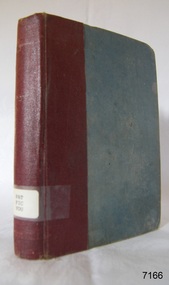
Book, Yonder
... latter part of the nineteenth century and the early twentieth century. The collection of books is a rare example of an early lending library and its significance is enhanced by the survival of an original collection of many volumes. The Warrnambool Mechanics' Institute’s publication collection is of both local and state significance. yonder e ...Pattison Collection This item is from the ‘Pattison Collection’, a collection of books and records that was originally owned by the Warrnambool Mechanics’ Institute, which was founded in Warrnambool in 1853. By 1886 the Warrnambool Mechanics’ Institute (WMI) had grown to have a Library, Museum and Fine Arts Gallery, with a collection of “… choice productions of art, and valuable specimens in almost every branch and many wonderful national curiosities are now to be seen there, including historic relics of the town and district.” It later included a School of Design. Although it was very well patronised, the lack of financial support led the WMI in 1911 to ask the City Council to take it over. In 1935 Ralph Pattison was appointed as City Librarian to establish and organise the Warrnambool Library as it was then called. When the WMI building was pulled down in 1963 a new civic building was erected on the site and the new Warrnambool Library, on behalf of the City Council, took over all the holdings of the WMI. At this time some of the items were separated and identified as the ‘Pattison Collection’, named after Ralph Pattison. Eventually the components of the WMI were distributed from the Warrnambool Library to various places, including the Art Gallery, Historical Society and Flagstaff Hill. Later some were even distributed to other regional branches of Corangamite Regional Library and passed to and fro. It is difficult now to trace just where all of the items have ended up. The books at Flagstaff Hill Maritime Village generally display stamps and markings from Pattison as well as a variety of other institutions including the Mechanics’ Institute itself. RALPH ERIC PATTISON Ralph Eric Pattison was born in Rockhampton, Queensland, in 1891. He married Maude Swan from Warrnambool in 1920 and they set up home in Warrnambool. In 1935 Pattison accepted a position as City Librarian for the Warrnambool City Council. His huge challenge was to make a functional library within two rooms of the Mechanics’ Institute. He tirelessly cleaned, cleared and sorted a disarrayed collection of old books, jars of preserved specimens and other items reserved for exhibition in the city’s museum. He developed and updated the library with a wide variety of books for all tastes, including reference books for students; a difficult task to fulfil during the years following the Depression. He converted all of the lower area of the building into a library, reference room and reading room for members and the public. The books were sorted and stored using a cataloguing and card index system that he had developed himself. He also prepared the upper floor of the building and established the Art Gallery and later the Museum, a place to exhibit the many old relics that had been stored for years for this purpose. One of the treasures he found was a beautiful ancient clock, which he repaired, restored and enjoyed using in his office during the years of his service there. Ralph Pattison was described as “a meticulous gentleman whose punctuality, floorless courtesy and distinctive neat dress were hallmarks of his character, and ‘his’ clock controlled his daily routine, and his opening and closing of the library’s large heavy doors to the minute.” Pattison took leave during 1942 to 1942 to serve in the Royal Australian Navy, Volunteer Reserve as Lieutenant. A few years later he converted one of the Museum’s rooms into a Children’s Library, stocking it with suitable books for the younger generation. This was an instant success. In the 1950’s he had the honour of being appointed to the Victorian Library Board and received more inspiration from the monthly conferences in Melbourne. He was sadly retired in 1959 after over 23 years of service, due to the fact that he had gone over the working age of council officers. However he continued to take a very keen interest in the continual development of the Library until his death in 1969. The Pattison Collection, along with other items at Flagstaff Hill Maritime Village, was originally part of the Warrnambool Mechanics' Institute’s collection. The Warrnambool Mechanics’ Institute Collection is primarily significant in its totality, rather than for the individual objects it contains. Its contents are highly representative of the development of Mechanics' Institute libraries across Australia, particularly Victoria. A diversity of publications and themes has been amassed, and these provide clues to our understanding of the nature of and changes in the reading habits of Victorians from the 1850s to the middle of the 20th century. The collection also highlights the Warrnambool community’s commitment to the Mechanics’ Institute, reading, literacy and learning in the regions, and proves that access to knowledge was not impeded by distance. These items help to provide a more complete picture of our community’s ideals and aspirations. The Warrnambool Mechanics Institute book collection has historical and social significance for its strong association with the Mechanics Institute movement and the important role it played in the intellectual, cultural and social development of people throughout the latter part of the nineteenth century and the early twentieth century. The collection of books is a rare example of an early lending library and its significance is enhanced by the survival of an original collection of many volumes. The Warrnambool Mechanics' Institute’s publication collection is of both local and state significance. Yonder Author: E H Young Publisher: Jonathan Cape Date: 1931 Label on spine with typed text PAT FIC YOU Pastedown front endpaper has a sticker from Warrnambool Mechanics Institute and Free Library covered by a sticker from Corangamite Regional Library Service Front loose endpaper has a stamp from Corangamite Regional Library Serviceyonder, e h young, shipwrecked-coast, flagstaff-hill, flagstaff-hill-maritime-museum, warrnambool, maritime-museum, shipwreck-coast, flagstaff-hill-maritime-village, shipwrecked-artefact, book, pattison collection, warrnambool library, warrnambool mechanics’ institute, ralph eric pattison, corangamite regional library service, warrnambool city librarian, mechanics’ institute library, victorian library board, warrnambool books and records, warrnambool children’s library -
 Flagstaff Hill Maritime Museum and Village
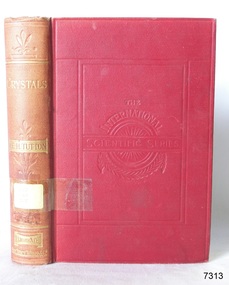
Book, The International Scientific Series Vol 98
... latter part of the nineteenth century and the early twentieth century. The collection of books is a rare example of an early lending library and its significance is enhanced by the survival of an original collection of many volumes. The Warrnambool Mechanics' Institute’s publication collection is of both local and state significance. Warrnambool Shipwrecked-coast Flagstaff-Hill Flagstaff-Hill-Maritime-Museum Maritime-Museum Shipwreck-coast Flagstaff-Hill-Maritime-Village Shipwrecked-artefact Book Pattison Collection Warrnambool Library Warrnambool Mechanics’ Institute Ralph Eric Pattison Warrnambool City Librarian Mechanics’ Institute Library Victorian Library Board Warrnambool books and records A E H Tutton The International Scientific Series Vol 98 Label on spine with typed text PAT 548 TUT Inside front cover has a sticker that reads Corangamite Regional Library Service The International Scientific Series Vol 98 Crystals Author: A E H Tutton Publisher: Keegan Paul Trench Trubner & Co Date: 1911 The International Scientific Series Vol 98 Book ...This item is from the ‘Pattison Collection’, a collection of books and records that was originally owned by the Warrnambool Mechanics’ Institute, which was founded in Warrnambool in 1853. By 1886 the Warrnambool Mechanics’ Institute (WMI) had grown to have a Library, Museum and Fine Arts Gallery, with a collection of “… choice productions of art, and valuable specimens in almost every branch and many wonderful national curiosities are now to be seen there, including historic relics of the town and district.” It later included a School of Design. Although it was very well patronised, the lack of financial support led the WMI in 1911 to ask the City Council to take it over. In 1935 Ralph Pattison was appointed as City Librarian to establish and organise the Warrnambool Library as it was then called. When the WMI building was pulled down in 1963 a new civic building was erected on the site and the new Warrnambool Library, on behalf of the City Council, took over all the holdings of the WMI. At this time some of the items were separated and identified as the ‘Pattison Collection’, named after Ralph Pattison. Eventually the components of the WMI were distributed from the Warrnambool Library to various places, including the Art Gallery, Historical Society and Flagstaff Hill. Later some were even distributed to other regional branches of Corangamite Regional Library and passed to and fro. It is difficult now to trace just where all of the items have ended up. The books at Flagstaff Hill Maritime Village generally display stamps and markings from Pattison as well as a variety of other institutions including the Mechanics’ Institute itself. RALPH ERIC PATTISON Ralph Eric Pattison was born in Rockhampton, Queensland, in 1891. He married Maude Swan from Warrnambool in 1920 and they set up home in Warrnambool. In 1935 Pattison accepted a position as City Librarian for the Warrnambool City Council. His huge challenge was to make a functional library within two rooms of the Mechanics’ Institute. He tirelessly cleaned, cleared and sorted a disarrayed collection of old books, jars of preserved specimens and other items reserved for exhibition in the city’s museum. He developed and updated the library with a wide variety of books for all tastes, including reference books for students; a difficult task to fulfil during the years following the Depression. He converted all of the lower area of the building into a library, reference room and reading room for members and the public. The books were sorted and stored using a cataloguing and card index system that he had developed himself. He also prepared the upper floor of the building and established the Art Gallery and later the Museum, a place to exhibit the many old relics that had been stored for years for this purpose. One of the treasures he found was a beautiful ancient clock, which he repaired, restored and enjoyed using in his office during the years of his service there. Ralph Pattison was described as “a meticulous gentleman whose punctuality, floorless courtesy and distinctive neat dress were hallmarks of his character, and ‘his’ clock controlled his daily routine, and his opening and closing of the library’s large heavy doors to the minute.” Pattison took leave during 1942 to 1942 to serve in the Royal Australian Navy, Volunteer Reserve as Lieutenant. A few years later he converted one of the Museum’s rooms into a Children’s Library, stocking it with suitable books for the younger generation. This was an instant success. In the 1950’s he had the honour of being appointed to the Victorian Library Board and received more inspiration from the monthly conferences in Melbourne. He was sadly retired in 1959 after over 23 years of service, due to the fact that he had gone over the working age of council officers. However he continued to take a very keen interest in the continual development of the Library until his death in 1969. The Pattison Collection, along with other items at Flagstaff Hill Maritime Village, was originally part of the Warrnambool Mechanics' Institute’s collection. The Warrnambool Mechanics’ Institute Collection is primarily significant in its totality, rather than for the individual objects it contains. Its contents are highly representative of the development of Mechanics' Institute libraries across Australia, particularly Victoria. A diversity of publications and themes has been amassed, and these provide clues to our understanding of the nature of and changes in the reading habits of Victorians from the 1850s to the middle of the 20th century. The collection also highlights the Warrnambool community’s commitment to the Mechanics’ Institute, reading, literacy and learning in the regions, and proves that access to knowledge was not impeded by distance. These items help to provide a more complete picture of our community’s ideals and aspirations. The Warrnambool Mechanics Institute book collection has historical and social significance for its strong association with the Mechanics Institute movement and the important role it played in the intellectual, cultural and social development of people throughout the latter part of the nineteenth century and the early twentieth century. The collection of books is a rare example of an early lending library and its significance is enhanced by the survival of an original collection of many volumes. The Warrnambool Mechanics' Institute’s publication collection is of both local and state significance. The International Scientific Series Vol 98 Crystals Author: A E H Tutton Publisher: Keegan Paul Trench Trubner & Co Date: 1911 Label on spine with typed text PAT 548 TUT Inside front cover has a sticker that reads Corangamite Regional Library Service warrnambool, shipwrecked-coast, flagstaff-hill, flagstaff-hill-maritime-museum, maritime-museum, shipwreck-coast, flagstaff-hill-maritime-village, shipwrecked-artefact, book, pattison collection, warrnambool library, warrnambool mechanics’ institute, ralph eric pattison, warrnambool city librarian, mechanics’ institute library, victorian library board, warrnambool books and records, a e h tutton, the international scientific series vol 98 -
 Flagstaff Hill Maritime Museum and Village
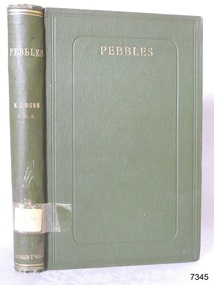
Book, Pebbles
... latter part of the nineteenth century and the early twentieth century. The collection of books is a rare example of an early lending library and its significance is enhanced by the survival of an original collection of many volumes. The Warrnambool Mechanics' Institute’s publication collection is of both local and state significance. Shipwrecked-coast Flagstaff-Hill Warrnambool Flagstaff-Hill-Maritime-Museum Maritime-Museum Shipwreck-coast Flagstaff-Hill-Maritime-Village Shipwrecked-artefact Book Warrnambool Library Warrnambool Mechanics’ Institute Warrnambool City Librarian Mechanics’ Institute Library Victorian Library Board Warrnambool books and records Warrnambool Children’s Library Great Ocean Road e j dunn Pebbles Label on spine with typed text RA 552 DUN Pastedown front endpaper has sticker from Warrnambool Mechanics Institute and Free Library Pebbles Author: E J Dunn Publisher: George Robertson Date: 1911 Pebbles Book ...This item is from the ‘Pattison Collection’, a collection of books and records that was originally owned by the Warrnambool Mechanics’ Institute, which was founded in Warrnambool in 1853. By 1886 the Warrnambool Mechanics’ Institute (WMI) had grown to have a Library, Museum and Fine Arts Gallery, with a collection of “… choice productions of art, and valuable specimens in almost every branch and many wonderful national curiosities are now to be seen there, including historic relics of the town and district.” It later included a School of Design. Although it was very well patronised, the lack of financial support led the WMI in 1911 to ask the City Council to take it over. In 1935 Ralph Pattison was appointed as City Librarian to establish and organise the Warrnambool Library as it was then called. When the WMI building was pulled down in 1963 a new civic building was erected on the site and the new Warrnambool Library, on behalf of the City Council, took over all the holdings of the WMI. At this time some of the items were separated and identified as the ‘Pattison Collection’, named after Ralph Pattison. Eventually the components of the WMI were distributed from the Warrnambool Library to various places, including the Art Gallery, Historical Society and Flagstaff Hill. Later some were even distributed to other regional branches of Corangamite Regional Library and passed to and fro. It is difficult now to trace just where all of the items have ended up. The books at Flagstaff Hill Maritime Village generally display stamps and markings from Pattison as well as a variety of other institutions including the Mechanics’ Institute itself. RALPH ERIC PATTISON Ralph Eric Pattison was born in Rockhampton, Queensland, in 1891. He married Maude Swan from Warrnambool in 1920 and they set up home in Warrnambool. In 1935 Pattison accepted a position as City Librarian for the Warrnambool City Council. His huge challenge was to make a functional library within two rooms of the Mechanics’ Institute. He tirelessly cleaned, cleared and sorted a disarrayed collection of old books, jars of preserved specimens and other items reserved for exhibition in the city’s museum. He developed and updated the library with a wide variety of books for all tastes, including reference books for students; a difficult task to fulfil during the years following the Depression. He converted all of the lower area of the building into a library, reference room and reading room for members and the public. The books were sorted and stored using a cataloguing and card index system that he had developed himself. He also prepared the upper floor of the building and established the Art Gallery and later the Museum, a place to exhibit the many old relics that had been stored for years for this purpose. One of the treasures he found was a beautiful ancient clock, which he repaired, restored and enjoyed using in his office during the years of his service there. Ralph Pattison was described as “a meticulous gentleman whose punctuality, floorless courtesy and distinctive neat dress were hallmarks of his character, and ‘his’ clock controlled his daily routine, and his opening and closing of the library’s large heavy doors to the minute.” Pattison took leave during 1942 to 1945 to serve in the Royal Australian Navy, Volunteer Reserve as Lieutenant. A few years later he converted one of the Museum’s rooms into a Children’s Library, stocking it with suitable books for the younger generation. This was an instant success. In the 1950’s he had the honour of being appointed to the Victorian Library Board and received more inspiration from the monthly conferences in Melbourne. He was sadly retired in 1959 after over 23 years of service, due to the fact that he had gone over the working age of council officers. However he continued to take a very keen interest in the continual development of the Library until his death in 1969. The Pattison Collection, along with other items at Flagstaff Hill Maritime Village, was originally part of the Warrnambool Mechanics' Institute’s collection. The Warrnambool Mechanics’ Institute Collection is primarily significant in its totality, rather than for the individual objects it contains. Its contents are highly representative of the development of Mechanics' Institute libraries across Australia, particularly Victoria. A diversity of publications and themes has been amassed, and these provide clues to our understanding of the nature of and changes in the reading habits of Victorians from the 1850s to the middle of the 20th century. The collection also highlights the Warrnambool community’s commitment to the Mechanics’ Institute, reading, literacy and learning in the regions, and proves that access to knowledge was not impeded by distance. These items help to provide a more complete picture of our community’s ideals and aspirations. The Warrnambool Mechanics Institute book collection has historical and social significance for its strong association with the Mechanics Institute movement and the important role it played in the intellectual, cultural and social development of people throughout the latter part of the nineteenth century and the early twentieth century. The collection of books is a rare example of an early lending library and its significance is enhanced by the survival of an original collection of many volumes. The Warrnambool Mechanics' Institute’s publication collection is of both local and state significance. Pebbles Author: E J Dunn Publisher: George Robertson Date: 1911 Label on spine with typed text RA 552 DUN Pastedown front endpaper has sticker from Warrnambool Mechanics Institute and Free Library shipwrecked-coast, flagstaff-hill, warrnambool, flagstaff-hill-maritime-museum, maritime-museum, shipwreck-coast, flagstaff-hill-maritime-village, shipwrecked-artefact, book, warrnambool library, warrnambool mechanics’ institute, warrnambool city librarian, mechanics’ institute library, victorian library board, warrnambool books and records, warrnambool children’s library, great ocean road, e j dunn, pebbles -
 Orbost & District Historical Society
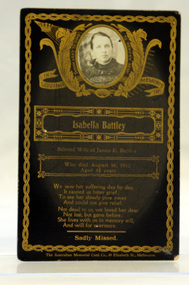
memorial card, 1912
... latter 19th and early 20th centuries and the style did not change (and many of the styles are still in effect today). Many of the card companies, in this case ‘The Memorial Card Co.,’ located at 143 King St, Sydney, published standardised plates which had areas for customisation. The card has the area for name, photograph, date of death and age. Poetry was often standardised, but could be requested at the behest of the person who commissioned the card Isabella Battley (nee Goad) was born in 1867, in Smythesdale, Victoria, Australia. She was married to James E...latter 19th and early 20th centuries and the style did not change (and many of the styles are still in effect today). Many of the card companies, in this case ‘The Memorial Card Co.,’ located at 143 King St, Sydney, published standardised plates which had areas for customisation. The card has the area for name, photograph, date of death and age. Poetry was often standardised, but could be requested at the behest of the person who commissioned the card Isabella Battley (nee Goad) was born in 1867, in Smythesdale, Victoria, Australia. She was married to James E ...This memorial card follows a style that was commonly used in the 1890s. The size of the card make it useful for presentation and handing out. There was a remarkably large production of memorial and funeral cards in Australia during the latter 19th and early 20th centuries and the style did not change (and many of the styles are still in effect today). Many of the card companies, in this case ‘The Memorial Card Co.,’ located at 143 King St, Sydney, published standardised plates which had areas for customisation. The card has the area for name, photograph, date of death and age. Poetry was often standardised, but could be requested at the behest of the person who commissioned the card Isabella Battley (nee Goad) was born in 1867, in Smythesdale, Victoria, Australia. She was married to James E. Battley when she died aged 45. James E. Battley was a director of the butter Factory in Orbost in 1915. Their son Ernest Albert Battley enlisted in the AIF from Orbost in 1916. His father is listed as Next of Kin and his mother as deceased. James was remarried to Eda May Battley (born Sargent) in 1914. He passed away in 1925, at age 57 Memorial cards are often treasured for a long time, and often become part of family history. The Battley family was an earlyn Orbost family.A black memorial card printed in memory of Isabella Battley. It has gold printed writing, a gold etched border and wreath. There is a photo of Isabella Battley and a memorial poem.memorial battley mourning -
 Warrnambool and District Historical Society Inc.
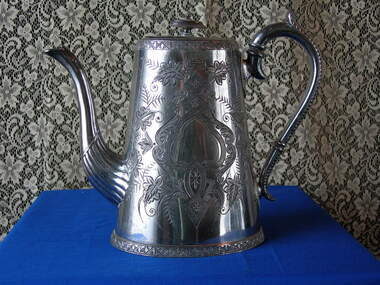
Tea Set, Tea and Coffee Set, 1898
... latter at one time had a drapery business in Liebig Street. Horace Lawson was the Town Clerk of Warrnambool from 1893 to 1918. He was a keen cyclist and a member of the Warrnambool Volunteer Artillery Corps. In 1918 Lawson was appointed the Secretary of the Municipal Association of Victoria, a Melbourne appointment. This set is of considerable interest as it was presented to Horace Lawson, notable in Warrnambool’s history as a long-serving and successful Town Clerk. horace lawson history of warrnambool silver tea set ‘W. Mammatt & Sons Sheffield’ ‘Presented to H. E ...This set was given by the Warrnambool City Council Councillors to Horace Lawson on the occasion of his marriage in 1898. Horace Edward Lawson was the son of Susan and Thomas Lawson. The latter at one time had a drapery business in Liebig Street. Horace Lawson was the Town Clerk of Warrnambool from 1893 to 1918. He was a keen cyclist and a member of the Warrnambool Volunteer Artillery Corps. In 1918 Lawson was appointed the Secretary of the Municipal Association of Victoria, a Melbourne appointment. This set is of considerable interest as it was presented to Horace Lawson, notable in Warrnambool’s history as a long-serving and successful Town Clerk. This silver-plated tea and coffee set has four items – coffee pot, tea pot, sugar basin and milk jug. All have the same etched decorative patterns on the sides and the lids and all have handles attached with a nut and a bolt. The tea pot and the coffee pot have the maker’s marks on the bases and there is an inscription on the side of the sugar basin. The lids of the coffee pot, tea pot and milk jug are hinged. ‘W. Mammatt & Sons Sheffield’ ‘Presented to H. E. Lawson Esq. Town Clerk by the Mayor & Councillors of Warrnambool on the Occasion of his Marriage Sept. 1898’horace lawson, history of warrnambool, silver tea set -
 Eltham District Historical Society Inc
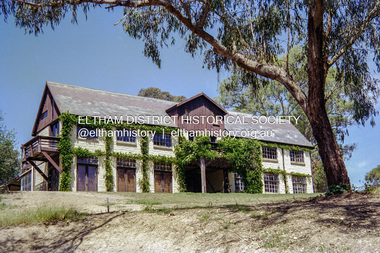
Negative - Photograph, "The Barn", built by Jelbart, c.1945, 93 Arthur Street, Eltham, 1998c
... latter parts of the 20th century (Criteria D & A). The garden and the gate posts - The garden is historically significant because it is a remainder of a large holding of 200 acres associated with the house (Criterion A).The gate posts are historically and aesthetically significant because they were taken from a 19th-century Toorak mansion and because their removal and re-use illustrates the practice of recycling material from demolished buildings that was one of the characteristic features of 'Eltham-style' architecture (Criteria A, D & E)....latter parts of the 20th century (Criteria D & A). The garden and the gate posts - The garden is historically significant because it is a remainder of a large holding of 200 acres associated with the house (Criterion A).The gate posts are historically and aesthetically significant because they were taken from a 19th-century Toorak mansion and because their removal and re-use illustrates the practice of recycling material from demolished buildings that was one of the characteristic features of 'Eltham-style' architecture (Criteria A, D & E). arthur street eltham jelbart barn Kinloch Kodak Gold 100-5 Roll of 35mm colour negative film, 8 strips and associated 10 x 15 cm colour print "The Barn", built by Jelbart, c.1945, 93 Arthur Street, Eltham Negative Photograph ...Statement of Significance Last updated on - January 5, 2010 REVISED STATEMENT OF SIGNIFICANCE, CONTEXT, 2010 What is significant? The c1950s Jelbart residence and the c1945 barn, the garden and the gate posts and the surrounding site to the extent of the title boundaries. How is it significant? The Jelbart house and barn are historically and architecturally significant to the Shire of Nillumbik. The garden and the gate posts are historically and aesthetically significant to the Shire of Nillumbik. Why is it significant? The Jelbart house and barn are historically significant because they are unusually large and because together they comprise one of the oldest groups of substantial mud brick buildings erected during the 20th century in the Shire of Eltham and foreshadow the large mud brick residences of the 1960s and 1970s for which the area is well known (Criteria A & B). The buildings are architecturally significant because their construction (using timber post framing and mud brick walling) is a characteristic feature of what became known as the 'Eltham style'- which was prevalent in the area during the mid and latter parts of the 20th century (Criteria D & A). The garden and the gate posts - The garden is historically significant because it is a remainder of a large holding of 200 acres associated with the house (Criterion A).The gate posts are historically and aesthetically significant because they were taken from a 19th-century Toorak mansion and because their removal and re-use illustrates the practice of recycling material from demolished buildings that was one of the characteristic features of 'Eltham-style' architecture (Criteria A, D & E).Roll of 35mm colour negative film, 8 strips and associated 10 x 15 cm colour printKodak Gold 100-5arthur street, eltham, jelbart barn, kinloch -
Bendigo Historical Society Inc.
Document - Amy Huxtable - Report from the Interim Memorial Committee on a fitting recognition, and a further report on a subsequent public meeting called by the Mayor of Bendigo, 31 Mar 1980
... In 1953, Miss Huxtable was appointed temporarily to succeed Miss E B Millane as social editress of the Bendigo Advertiser, during the latter's absence abroad. ...In 1953, Miss Huxtable was appointed temporarily to succeed Miss E B Millane as social editress of the Bendigo Advertiser, during the latter's absence abroad. ...Amy Huxtable was born at Cheltenham in 1918, to Robert Henry Huxtable and Violet a Dagg. Her father was an installer for an oil company and travelled the State. taking his family with him. She completed her education at the Bendigo High School and later attended the Bendigo Business College, becoming an expert shorthand writer. Her first position was as a copy writer with Radio 3BO, in the mid 1930s. She worked with an advertising agency in Melbourne and then with the Age,newspaper. In 1953, Miss Huxtable was appointed temporarily to succeed Miss E B Millane as social editress of the Bendigo Advertiser, during the latter's absence abroad. In 1956, Amy travelled abroad and on her return in 1957 was appointed permanently as Women's editor, a position she held for twenty-three ears. During her early years with The Advertiser she wrote under the name Toora, but in later years her own name became widely known. Miss Huxtable was well known both in her professional capacity and through a interest and involvement in community activites. She was life governor of the Bendigo Hospital, the Bendigo Home for the Aged, and Mirridong Home for the Blind, she was a member of Soroptimist International and the Business and Professional Women's Club. Amy was also a tireless worker for the spastic society and a strong supporter of the YWCA. When Amy Huxtable died at Mt AJvernia Hospital on 16 January 1980 Mayor Campbell ordered the city flag to be flown at half-mast. "Lowering the flag is the least we can do for such a lady" Cr Campbell said. Douglas Lockwood, editor of the Bendigo Advertiser said, "She was a devot d colleague who gave her craft and her newspaper the kind of service which identified a rare and generous spirit." She was a true professional who decided to make Bendigo her home. More than 300 people packed St Paul's Church for her funeral ervice the bell tolled as the casket was carried from the church. At a ceremony in the Conservatory Gardens on No ember 22 1981 The Amy Huxtable Memorial Committee presented to the City of Bendigo, a garden seat in memory of the late Miss Huxtable. This Bendigo manufactured seat was a fitting tribute to one ofBendigo's most loved and esteemed citizens. All Miss Huxtable's Advertiser articles were microfilmed and presented to the Library by the above committee. Amy Huxtable - Report from the Interim Memorial Committee Public Meeting on a fitting recognition; and a further report on a subsequent public meeting called by the Mayor of Bendigo This is an eight page pdf document. The report contains: * The purpose of the meetings * Suggested ideas for recognition * The final suggestions * Details of those who attend the public meeting history, amy huxtable, bendigo, amy huxtable memorial committee -
Bendigo Historical Society Inc.
Document - Apologies and other correspondence for the public meeting called by the Mayor of Bendigo on a fitting recognition for the life of Amy Huxtable, 1980
... In 1953, Miss Huxtable was appointed temporarily to succeed Miss E B Millane as social editress of the Bendigo Advertiser, during the latter's absence abroad. ...In 1953, Miss Huxtable was appointed temporarily to succeed Miss E B Millane as social editress of the Bendigo Advertiser, during the latter's absence abroad. ...Amy Huxtable was born at Cheltenham in 1918, to Robert Henry Huxtable and Violet a Dagg. Her father was an installer for an oil company and travelled the State. taking his family with him. She completed her education at the Bendigo High School and later attended the Bendigo Business College, becoming an expert shorthand writer. Her first position was as a copy writer with Radio 3BO, in the mid 1930s. She worked with an advertising agency in Melbourne and then with the Age,newspaper. In 1953, Miss Huxtable was appointed temporarily to succeed Miss E B Millane as social editress of the Bendigo Advertiser, during the latter's absence abroad. In 1956, Amy travelled abroad and on her return in 1957 was appointed permanently as Women's editor, a position she held for twenty-three ears. During her early years with The Advertiser she wrote under the name Toora, but in later years her own name became widely known. Miss Huxtable was well known both in her professional capacity and through a interest and involvement in community activites. She was life governor of the Bendigo Hospital, the Bendigo Home for the Aged, and Mirridong Home for the Blind, she was a member of Soroptimist International and the Business and Professional Women's Club. Amy was also a tireless worker for the spastic society and a strong supporter of the YWCA. When Amy Huxtable died at Mt AJvernia Hospital on 16 January 1980 Mayor Campbell ordered the city flag to be flown at half-mast. "Lowering the flag is the least we can do for such a lady" Cr Campbell said. Douglas Lockwood, editor of the Bendigo Advertiser said, "She was a devot d colleague who gave her craft and her newspaper the kind of service which identified a rare and generous spirit." She was a true professional who decided to make Bendigo her home. More than 300 people packed St Paul's Church for her funeral ervice the bell tolled as the casket was carried from the church. At a ceremony in the Conservatory Gardens on No ember 22 1981 The Amy Huxtable Memorial Committee presented to the City of Bendigo, a garden seat in memory of the late Miss Huxtable. This Bendigo manufactured seat was a fitting tribute to one ofBendigo's most loved and esteemed citizens. All Miss Huxtable's Advertiser articles were microfilmed and presented to the Library by the above committee. Apologies and other correspondence for the public meeting called by the Mayor of Bendigo on a fitting recognition for the life of Amy Huxtable. There are eight pages of documents: * Apologies from Grace A. Craig and husband representing the Bendigo Business and Professional Women's Club, * Bendigo Trust letter correcting who represented them at the meeting from Mrs Myra Potter, Executive Officer, * Report from the first and second meetings of the Amy Huxtable Memorial Interim Committee, * Apology from Norma Young for the next committee meeting suggesting an appeal be launched if funds are not found for the memorial, * City of Bendigo Parks and Gardens letter 29 May 1980 giving permission for a memorial seat to be erected, * Interim committee report Thursday 5th June 1980, * July 1980 letter of thanks to the Mayor Cr R.L. Campbell from the Bendigo Advertiser Editor Douglas Lockwood, * Advertising brochure for a Cast Iron Lacework seat, * Report of the Memorial Committee heldon 24th July 1980 at the Bendigo Advertiser offices. * Letter from Miss Norma Young - a suggested seat design * July 1980 letter apology to the Mayor Cr R.L. Campbell from the Bendigo Advertiser Editor Douglas Lockwood, history, amy huxtable, bendigo, amy huxtable memorial committee -
Bendigo Historical Society Inc.
Document - Invitations to the Amy Huxtable Memorial Lunches and History Awards, 1994-1997
... In 1953, Miss Huxtable was appointed temporarily to succeed Miss E B Millane as social editress of the Bendigo Advertiser, during the latter's absence abroad. ...In 1953, Miss Huxtable was appointed temporarily to succeed Miss E B Millane as social editress of the Bendigo Advertiser, during the latter's absence abroad. ...Amy Huxtable was born at Cheltenham in 1918, to Robert Henry Huxtable and Violet a Dagg. Her father was an installer for an oil company and travelled the State. taking his family with him. She completed her education at the Bendigo High School and later attended the Bendigo Business College, becoming an expert shorthand writer. Her first position was as a copy writer with Radio 3BO, in the mid 1930s. She worked with an advertising agency in Melbourne and then with the Age,newspaper. In 1953, Miss Huxtable was appointed temporarily to succeed Miss E B Millane as social editress of the Bendigo Advertiser, during the latter's absence abroad. In 1956, Amy travelled abroad and on her return in 1957 was appointed permanently as Women's editor, a position she held for twenty-three ears. During her early years with The Advertiser she wrote under the name Toora, but in later years her own name became widely known. Miss Huxtable was well known both in her professional capacity and through a interest and involvement in community activites. She was life governor of the Bendigo Hospital, the Bendigo Home for the Aged, and Mirridong Home for the Blind, she was a member of Soroptimist International and the Business and Professional Women's Club. Amy was also a tireless worker for the spastic society and a strong supporter of the YWCA. When Amy Huxtable died at Mt AJvernia Hospital on 16 January 1980 Mayor Campbell ordered the city flag to be flown at half-mast. "Lowering the flag is the least we can do for such a lady" Cr Campbell said. Douglas Lockwood, editor of the Bendigo Advertiser said, "She was a devot d colleague who gave her craft and her newspaper the kind of service which identified a rare and generous spirit." She was a true professional who decided to make Bendigo her home. More than 300 people packed St Paul's Church for her funeral ervice the bell tolled as the casket was carried from the church. At a ceremony in the Conservatory Gardens on No ember 22 1981 The Amy Huxtable Memorial Committee presented to the City of Bendigo, a garden seat in memory of the late Miss Huxtable. This Bendigo manufactured seat was a fitting tribute to one ofBendigo's most loved and esteemed citizens. All Miss Huxtable's Advertiser articles were microfilmed and presented to the Library by the above committee. Invitations to the Amy Huxtable Memorial Lunches and presentation of the Memorial History Awards - three invitations from the Bendigo Historical Society to attend the luncheons at Dudley House, 60 View Street Bendigo.history, amy huxtable, bendigo, amy huxtable memorial history awards -
Bendigo Historical Society Inc.
Document - Amy Huxtable Memorial History Prize Winners, 1992-93
... In 1953, Miss Huxtable was appointed temporarily to succeed Miss E B Millane as social editress of the Bendigo Advertiser, during the latter's absence abroad. ...In 1953, Miss Huxtable was appointed temporarily to succeed Miss E B Millane as social editress of the Bendigo Advertiser, during the latter's absence abroad. ...Amy Huxtable was born at Cheltenham in 1918, to Robert Henry Huxtable and Violet a Dagg. Her father was an installer for an oil company and travelled the State. taking his family with him. She completed her education at the Bendigo High School and later attended the Bendigo Business College, becoming an expert shorthand writer. Her first position was as a copy writer with Radio 3BO, in the mid 1930s. She worked with an advertising agency in Melbourne and then with the Age,newspaper. In 1953, Miss Huxtable was appointed temporarily to succeed Miss E B Millane as social editress of the Bendigo Advertiser, during the latter's absence abroad. In 1956, Amy travelled abroad and on her return in 1957 was appointed permanently as Women's editor, a position she held for twenty-three ears. During her early years with The Advertiser she wrote under the name Toora, but in later years her own name became widely known. Miss Huxtable was well known both in her professional capacity and through a interest and involvement in community activites. She was life governor of the Bendigo Hospital, the Bendigo Home for the Aged, and Mirridong Home for the Blind, she was a member of Soroptimist International and the Business and Professional Women's Club. Amy was also a tireless worker for the spastic society and a strong supporter of the YWCA. When Amy Huxtable died at Mt AJvernia Hospital on 16 January 1980 Mayor Campbell ordered the city flag to be flown at half-mast. "Lowering the flag is the least we can do for such a lady" Cr Campbell said. Douglas Lockwood, editor of the Bendigo Advertiser said, "She was a devot d colleague who gave her craft and her newspaper the kind of service which identified a rare and generous spirit." She was a true professional who decided to make Bendigo her home. More than 300 people packed St Paul's Church for her funeral ervice the bell tolled as the casket was carried from the church. At a ceremony in the Conservatory Gardens on No ember 22 1981 The Amy Huxtable Memorial Committee presented to the City of Bendigo, a garden seat in memory of the late Miss Huxtable. This Bendigo manufactured seat was a fitting tribute to one ofBendigo's most loved and esteemed citizens. All Miss Huxtable's Advertiser articles were microfilmed and presented to the Library by the above committee. Amy Huxtable Memorial History Prize Winners for 1992 as announced in 1993 by the Bendigo Historical Society, Dudley House, View Street, Bendigo. * First Prize - Michael Jaeger. Paper: A reconstruction of the landscape of a portion of the Parish of Runnymede, Northern Plains, Victoria. * Highly Commended - Mrs Jeanette Margison. Paper: A review of pre-federation and post federation education, and the transitional changes that took place.history, amy huxtable, bendigo, amy huxtable memorial history awards -
Bendigo Historical Society Inc.
Document - Amy Huxtable Memorial History Prize Winner as awarded by the Latrobe University Bendigo Campus, 1999
... In 1953, Miss Huxtable was appointed temporarily to succeed Miss E B Millane as social editress of the Bendigo Advertiser, during the latter's absence abroad. ...In 1953, Miss Huxtable was appointed temporarily to succeed Miss E B Millane as social editress of the Bendigo Advertiser, during the latter's absence abroad. ...Amy Huxtable was born at Cheltenham in 1918, to Robert Henry Huxtable and Violet a Dagg. Her father was an installer for an oil company and travelled the State. taking his family with him. She completed her education at the Bendigo High School and later attended the Bendigo Business College, becoming an expert shorthand writer. Her first position was as a copy writer with Radio 3BO, in the mid 1930s. She worked with an advertising agency in Melbourne and then with the Age,newspaper. In 1953, Miss Huxtable was appointed temporarily to succeed Miss E B Millane as social editress of the Bendigo Advertiser, during the latter's absence abroad. In 1956, Amy travelled abroad and on her return in 1957 was appointed permanently as Women's editor, a position she held for twenty-three ears. During her early years with The Advertiser she wrote under the name Toora, but in later years her own name became widely known. Miss Huxtable was well known both in her professional capacity and through a interest and involvement in community activites. She was life governor of the Bendigo Hospital, the Bendigo Home for the Aged, and Mirridong Home for the Blind, she was a member of Soroptimist International and the Business and Professional Women's Club. Amy was also a tireless worker for the spastic society and a strong supporter of the YWCA. When Amy Huxtable died at Mt AJvernia Hospital on 16 January 1980 Mayor Campbell ordered the city flag to be flown at half-mast. "Lowering the flag is the least we can do for such a lady" Cr Campbell said. Douglas Lockwood, editor of the Bendigo Advertiser said, "She was a devot d colleague who gave her craft and her newspaper the kind of service which identified a rare and generous spirit." She was a true professional who decided to make Bendigo her home. More than 300 people packed St Paul's Church for her funeral ervice the bell tolled as the casket was carried from the church. At a ceremony in the Conservatory Gardens on No ember 22 1981 The Amy Huxtable Memorial Committee presented to the City of Bendigo, a garden seat in memory of the late Miss Huxtable. This Bendigo manufactured seat was a fitting tribute to one ofBendigo's most loved and esteemed citizens. All Miss Huxtable's Advertiser articles were microfilmed and presented to the Library by the above committee. Amy Huxtable Memorial History Prize Winner as awarded by the Latrobe University Bendigo Campus, thank you letter from the Bendigo Historical Society to the University and also an enclosed letter to Ms Maree Edwards, the winner of the prize.history, amy huxtable, bendigo, amy huxtable memorial history awards -
 Bendigo Historical Society Inc.
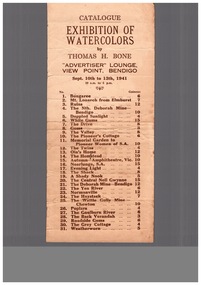
Document - Catalogue for an Exhibition of Watercolors by Thomas H. Bone, 1941
... In 1953, Miss Huxtable was appointed temporarily to succeed Miss E B Millane as social editress of the Bendigo Advertiser, during the latter's absence abroad. ...In 1953, Miss Huxtable was appointed temporarily to succeed Miss E B Millane as social editress of the Bendigo Advertiser, during the latter's absence abroad. ...Amy Huxtable was born at Cheltenham in 1918, to Robert Henry Huxtable and Violet a Dagg. Her father was an installer for an oil company and travelled the State. taking his family with him. She completed her education at the Bendigo High School and later attended the Bendigo Business College, becoming an expert shorthand writer. Her first position was as a copy writer with Radio 3BO, in the mid 1930s. She worked with an advertising agency in Melbourne and then with the Age,newspaper. In 1953, Miss Huxtable was appointed temporarily to succeed Miss E B Millane as social editress of the Bendigo Advertiser, during the latter's absence abroad. In 1956, Amy travelled abroad and on her return in 1957 was appointed permanently as Women's editor, a position she held for twenty-three ears. During her early years with The Advertiser she wrote under the name Toora, but in later years her own name became widely known. Miss Huxtable was well known both in her professional capacity and through a interest and involvement in community activites. She was life governor of the Bendigo Hospital, the Bendigo Home for the Aged, and Mirridong Home for the Blind, she was a member of Soroptimist International and the Business and Professional Women's Club. Amy was also a tireless worker for the spastic society and a strong supporter of the YWCA. When Amy Huxtable died at Mt AJvernia Hospital on 16 January 1980 Mayor Campbell ordered the city flag to be flown at half-mast. "Lowering the flag is the least we can do for such a lady" Cr Campbell said. Douglas Lockwood, editor of the Bendigo Advertiser said, "She was a devot d colleague who gave her craft and her newspaper the kind of service which identified a rare and generous spirit." She was a true professional who decided to make Bendigo her home. More than 300 people packed St Paul's Church for her funeral ervice the bell tolled as the casket was carried from the church. At a ceremony in the Conservatory Gardens on No ember 22 1981 The Amy Huxtable Memorial Committee presented to the City of Bendigo, a garden seat in memory of the late Miss Huxtable. This Bendigo manufactured seat was a fitting tribute to one ofBendigo's most loved and esteemed citizens. All Miss Huxtable's Advertiser articles were microfilmed and presented to the Library by the above committee. Catalogue for an Exhibition of Watercolors by Thomas H. Bone. Held in the Advertiser Lounge, View point, Bendigo Sept 10th to the 13th, 10am to 5pm. A list of 31 watercolours.history, amy huxtable, bendigo, watercolour exhibition bendigo -
 Bendigo Historical Society Inc.
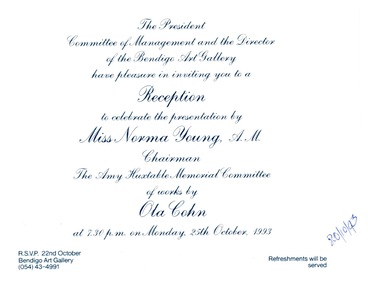
Document - Invitation to a Presentation of Works by Ola Cohn from the Bendigo Art Gallery on behalf of the Amy Huxtable Memorial Committee, 25 Oct 1993
... In 1953, Miss Huxtable was appointed temporarily to succeed Miss E B Millane as social editress of the Bendigo Advertiser, during the latter's absence abroad. ...In 1953, Miss Huxtable was appointed temporarily to succeed Miss E B Millane as social editress of the Bendigo Advertiser, during the latter's absence abroad. ...Amy Huxtable was born at Cheltenham in 1918, to Robert Henry Huxtable and Violet a Dagg. Her father was an installer for an oil company and travelled the State. taking his family with him. She completed her education at the Bendigo High School and later attended the Bendigo Business College, becoming an expert shorthand writer. Her first position was as a copy writer with Radio 3BO, in the mid 1930s. She worked with an advertising agency in Melbourne and then with the Age,newspaper. In 1953, Miss Huxtable was appointed temporarily to succeed Miss E B Millane as social editress of the Bendigo Advertiser, during the latter's absence abroad. In 1956, Amy travelled abroad and on her return in 1957 was appointed permanently as Women's editor, a position she held for twenty-three ears. During her early years with The Advertiser she wrote under the name Toora, but in later years her own name became widely known. Miss Huxtable was well known both in her professional capacity and through a interest and involvement in community activites. She was life governor of the Bendigo Hospital, the Bendigo Home for the Aged, and Mirridong Home for the Blind, she was a member of Soroptimist International and the Business and Professional Women's Club. Amy was also a tireless worker for the spastic society and a strong supporter of the YWCA. When Amy Huxtable died at Mt AJvernia Hospital on 16 January 1980 Mayor Campbell ordered the city flag to be flown at half-mast. "Lowering the flag is the least we can do for such a lady" Cr Campbell said. Douglas Lockwood, editor of the Bendigo Advertiser said, "She was a devot d colleague who gave her craft and her newspaper the kind of service which identified a rare and generous spirit." She was a true professional who decided to make Bendigo her home. More than 300 people packed St Paul's Church for her funeral ervice the bell tolled as the casket was carried from the church. At a ceremony in the Conservatory Gardens on No ember 22 1981 The Amy Huxtable Memorial Committee presented to the City of Bendigo, a garden seat in memory of the late Miss Huxtable. This Bendigo manufactured seat was a fitting tribute to one ofBendigo's most loved and esteemed citizens. All Miss Huxtable's Advertiser articles were microfilmed and presented to the Library by the above committee. Invitation to a Presentation of Works by Ola Cohn from the President, Committee of Management and the Director of the Bendigo Art Gallery and the Amy Huxtable Memorial Committee. Two copies of a printed formal invitation to a reception to celebrate the presentation by Miss Norma Young A.M., Chairman of the Committee at 7.30 pm at the Bendigo Art Gallery.history, amy huxtable, bendigo, ola cohn, norma young bendigo, bendigo art gallery -
 Bendigo Historical Society Inc.
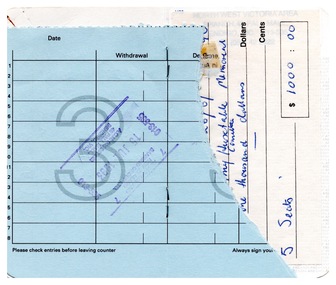
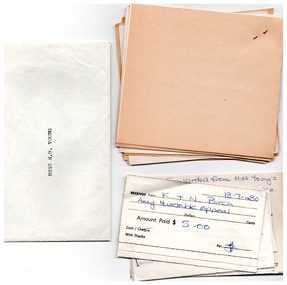
Document - Amy Huxtable Memorial Committee Receipts, 1980 to 1983
... In 1953, Miss Huxtable was appointed temporarily to succeed Miss E B Millane as social editress of the Bendigo Advertiser, during the latter's absence abroad. ...In 1953, Miss Huxtable was appointed temporarily to succeed Miss E B Millane as social editress of the Bendigo Advertiser, during the latter's absence abroad. ...Amy Huxtable was born at Cheltenham in 1918, to Robert Henry Huxtable and Violet a Dagg. Her father was an installer for an oil company and travelled the State. taking his family with him. She completed her education at the Bendigo High School and later attended the Bendigo Business College, becoming an expert shorthand writer. Her first position was as a copy writer with Radio 3BO, in the mid 1930s. She worked with an advertising agency in Melbourne and then with the Age,newspaper. In 1953, Miss Huxtable was appointed temporarily to succeed Miss E B Millane as social editress of the Bendigo Advertiser, during the latter's absence abroad. In 1956, Amy travelled abroad and on her return in 1957 was appointed permanently as Women's editor, a position she held for twenty-three ears. During her early years with The Advertiser she wrote under the name Toora, but in later years her own name became widely known. Miss Huxtable was well known both in her professional capacity and through a interest and involvement in community activites. She was life governor of the Bendigo Hospital, the Bendigo Home for the Aged, and Mirridong Home for the Blind, she was a member of Soroptimist International and the Business and Professional Women's Club. Amy was also a tireless worker for the spastic society and a strong supporter of the YWCA. When Amy Huxtable died at Mt AJvernia Hospital on 16 January 1980 Mayor Campbell ordered the city flag to be flown at half-mast. "Lowering the flag is the least we can do for such a lady" Cr Campbell said. Douglas Lockwood, editor of the Bendigo Advertiser said, "She was a devot d colleague who gave her craft and her newspaper the kind of service which identified a rare and generous spirit." She was a true professional who decided to make Bendigo her home. More than 300 people packed St Paul's Church for her funeral ervice the bell tolled as the casket was carried from the church. At a ceremony in the Conservatory Gardens on No ember 22 1981 The Amy Huxtable Memorial Committee presented to the City of Bendigo, a garden seat in memory of the late Miss Huxtable. This Bendigo manufactured seat was a fitting tribute to one ofBendigo's most loved and esteemed citizens. All Miss Huxtable's Advertiser articles were microfilmed and presented to the Library by the above committee. Amy Huxtable Memorial Committee Receipts for 1980 to 1983. ANZ passbook included and breakdown of the costs and donations for the Amy Huxtable memorial seat which is opposite the former Bendigo Advertiser office in Pall Mall, Bendigo.history, amy huxtable, bendigo, amy huxtable memorial committee -
 Bendigo Historical Society Inc.
Document - Amy Huxtable Memorial Committee Receipts, 1980
... In 1953, Miss Huxtable was appointed temporarily to succeed Miss E B Millane as social editress of the Bendigo Advertiser, during the latter's absence abroad. ...In 1953, Miss Huxtable was appointed temporarily to succeed Miss E B Millane as social editress of the Bendigo Advertiser, during the latter's absence abroad. ...Amy Huxtable was born at Cheltenham in 1918, to Robert Henry Huxtable and Violet a Dagg. Her father was an installer for an oil company and travelled the State. taking his family with him. She completed her education at the Bendigo High School and later attended the Bendigo Business College, becoming an expert shorthand writer. Her first position was as a copy writer with Radio 3BO, in the mid 1930s. She worked with an advertising agency in Melbourne and then with the Age,newspaper. In 1953, Miss Huxtable was appointed temporarily to succeed Miss E B Millane as social editress of the Bendigo Advertiser, during the latter's absence abroad. In 1956, Amy travelled abroad and on her return in 1957 was appointed permanently as Women's editor, a position she held for twenty-three ears. During her early years with The Advertiser she wrote under the name Toora, but in later years her own name became widely known. Miss Huxtable was well known both in her professional capacity and through a interest and involvement in community activites. She was life governor of the Bendigo Hospital, the Bendigo Home for the Aged, and Mirridong Home for the Blind, she was a member of Soroptimist International and the Business and Professional Women's Club. Amy was also a tireless worker for the spastic society and a strong supporter of the YWCA. When Amy Huxtable died at Mt AJvernia Hospital on 16 January 1980 Mayor Campbell ordered the city flag to be flown at half-mast. "Lowering the flag is the least we can do for such a lady" Cr Campbell said. Douglas Lockwood, editor of the Bendigo Advertiser said, "She was a devot d colleague who gave her craft and her newspaper the kind of service which identified a rare and generous spirit." She was a true professional who decided to make Bendigo her home. More than 300 people packed St Paul's Church for her funeral ervice the bell tolled as the casket was carried from the church. At a ceremony in the Conservatory Gardens on No ember 22 1981 The Amy Huxtable Memorial Committee presented to the City of Bendigo, a garden seat in memory of the late Miss Huxtable. This Bendigo manufactured seat was a fitting tribute to one ofBendigo's most loved and esteemed citizens. All Miss Huxtable's Advertiser articles were microfilmed and presented to the Library by the above committee. Amy Huxtable Memorial Committee Receipts for 1980. Envelope included and breakdown of the costs and donations for the Amy Huxtable memorial seat which is opposite the former Bendigo Advertiser office in Pall Mall, Bendigo.history, amy huxtable, bendigo, amy huxtable memorial committee -
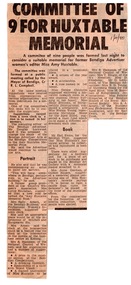 Bendigo Historical Society Inc.
Article - Amy Huxtable Memorial Committee - Newspaper Articles, 1980-81
... In 1953, Miss Huxtable was appointed temporarily to succeed Miss E B Millane as social editress of the Bendigo Advertiser, during the latter's absence abroad. ...In 1953, Miss Huxtable was appointed temporarily to succeed Miss E B Millane as social editress of the Bendigo Advertiser, during the latter's absence abroad. ...Amy Huxtable was born at Cheltenham in 1918, to Robert Henry Huxtable and Violet A Dagg. Her father was an installer for an oil company and travelled the State. taking his family with him. She completed her education at the Bendigo High School and later attended the Bendigo Business College, becoming an expert shorthand writer. Her first position was as a copy writer with Radio 3BO, in the mid 1930s. She worked with an advertising agency in Melbourne and then with the Age,newspaper. In 1953, Miss Huxtable was appointed temporarily to succeed Miss E B Millane as social editress of the Bendigo Advertiser, during the latter's absence abroad. In 1956, Amy travelled abroad and on her return in 1957 was appointed permanently as Women's editor, a position she held for twenty-three ears. During her early years with The Advertiser she wrote under the name Toora, but in later years her own name became widely known. Miss Huxtable was well known both in her professional capacity and through a interest and involvement in community activites. She was life governor of the Bendigo Hospital, the Bendigo Home for the Aged, and Mirridong Home for the Blind, she was a member of Soroptimist International and the Business and Professional Women's Club. Amy was also a tireless worker for the spastic society and a strong supporter of the YWCA. When Amy Huxtable died at Mt AJvernia Hospital on 16 January 1980 Mayor Campbell ordered the city flag to be flown at half-mast. "Lowering the flag is the least we can do for such a lady" Cr Campbell said. Douglas Lockwood, editor of the Bendigo Advertiser said, "She was a devot d colleague who gave her craft and her newspaper the kind of service which identified a rare and generous spirit." She was a true professional who decided to make Bendigo her home. More than 300 people packed St Paul's Church for her funeral ervice the bell tolled as the casket was carried from the church. At a ceremony in the Conservatory Gardens on No ember 22 1981 The Amy Huxtable Memorial Committee presented to the City of Bendigo, a garden seat in memory of the late Miss Huxtable. This Bendigo manufactured seat was a fitting tribute to one ofBendigo's most loved and esteemed citizens. All Miss Huxtable's Advertiser articles were microfilmed and presented to the Library by the above committee. Amy Huxtable Memorial Seat - Bendigo Conservatory Gardens. Four Newspaper articles from the Bendigo Advertiser: 2808.7a Article entitled " Committee of 9 for Huxtable Memorial 1/4/1980". Describes how the Mayor of Bendigo called for a committee to consider a suitable memorial to Amy, the former Bendigo Advertiser women's editor. Also mentions a portrait to be painted and hung in a prominent location, perhaps the Advertiser Office. There were a number of other suggestions to honour her including a book to be produced containg Miss Huxtable's numerous history articles. 2808.7b A public notice 21/11/1981 from Miss N Young, President, Amy Huxtable Memorial Committee, inviting people to the presentation of the Amy Huxtable Memorial Seat to the City of Bendigo at the Conservatory Gardens on Sunday Nov 22 1981 2808.7c Article contains a photo of the seat being installed by the Superintendant of Bendigo Parks and Gardens Andrew Taylor, and the deisgner, President of the Memorial Committee Bill Delecca. It acknowledges the seat was bought by the Committee and the Business and Professional Women's Club. 2808.7d Article advising that the Bendigo City Council had granted approval for the seat.history, amy huxtable, bendigo, amy huxtable memorial committee, bendigo professional women's club, bendigo conservatory gardens -
Bendigo Historical Society Inc.
Document - Amy Huxtable Memorial Committee - Letters to the State Library Victoria and the City of Bendigo, 1984
... In 1953, Miss Huxtable was appointed temporarily to succeed Miss E B Millane as social editress of the Bendigo Advertiser, during the latter's absence abroad. ...In 1953, Miss Huxtable was appointed temporarily to succeed Miss E B Millane as social editress of the Bendigo Advertiser, during the latter's absence abroad. ...Amy Huxtable was born at Cheltenham in 1918, to Robert Henry Huxtable and Violet A Dagg. Her father was an installer for an oil company and travelled the State. taking his family with him. She completed her education at the Bendigo High School and later attended the Bendigo Business College, becoming an expert shorthand writer. Her first position was as a copy writer with Radio 3BO, in the mid 1930s. She worked with an advertising agency in Melbourne and then with the Age,newspaper. In 1953, Miss Huxtable was appointed temporarily to succeed Miss E B Millane as social editress of the Bendigo Advertiser, during the latter's absence abroad. In 1956, Amy travelled abroad and on her return in 1957 was appointed permanently as Women's editor, a position she held for twenty-three ears. During her early years with The Advertiser she wrote under the name Toora, but in later years her own name became widely known. Miss Huxtable was well known both in her professional capacity and through a interest and involvement in community activites. She was life governor of the Bendigo Hospital, the Bendigo Home for the Aged, and Mirridong Home for the Blind, she was a member of Soroptimist International and the Business and Professional Women's Club. Amy was also a tireless worker for the spastic society and a strong supporter of the YWCA. When Amy Huxtable died at Mt AJvernia Hospital on 16 January 1980 Mayor Campbell ordered the city flag to be flown at half-mast. "Lowering the flag is the least we can do for such a lady" Cr Campbell said. Douglas Lockwood, editor of the Bendigo Advertiser said, "She was a devot d colleague who gave her craft and her newspaper the kind of service which identified a rare and generous spirit." She was a true professional who decided to make Bendigo her home. More than 300 people packed St Paul's Church for her funeral ervice the bell tolled as the casket was carried from the church. At a ceremony in the Conservatory Gardens on November 22 1981 The Amy Huxtable Memorial Committee presented to the City of Bendigo, a garden seat in memory of the late Miss Huxtable. This Bendigo manufactured seat was a fitting tribute to one ofBendigo's most loved and esteemed citizens. All Miss Huxtable's Advertiser articles were microfilmed and presented to the Library by the above committee. Amy Huxtable Memorial Committee - Ten pages of correspondence - Letters to the State Library Victoria and the City of Bendigo, along with invitations to attend the opening of the new City of Bendigo Library. * Letter to the Chief Librarian Latrobe St Library, Melbourne 16/8/1984 advising of thanks for the microfilms of historical articles by the late Miss Amy Huxtable, now complete. * Letter to the Executive Officer City of Bendigo 16/8/1984 advising that the committee would like to present the microfilm's to the new city library about to be opened. * Letter from the Town Clerk and Chief Executive Officer 7/9/1984 advising that the Council had resolved to accept the microfilm's at the opening. * Letter from the Town Clerk and Chief Executive Officer 1/10/1984 advising hat provision would be made at the opening of the library for the presentation of the microfilms. * Letter from the Town Clerk and Chief Executive Officer 1/10/1984 contains an invitation to Miss Norma Young and Guest to attend the opening. * Letter from the Committee to the council 8/10/84 advising the Miss Yound and her gues Mrs V. Cattanach accept the invitation. * Letter from the Town Clerk and Chief Executive Officer 8/10/1984 advising the time of the presentation. * Letter from Norma Young to her committee 8/10/84 advising of presentation. * Notice 30/10/84 from the committee advising that a microfilm of over 350 of Amy's historical articles from the Bendigo Advertiser will be presented to the Library on 3/11/1984. * Library opening programme 2/11/84 history, amy huxtable, bendigo, amy huxtable memorial committee, amy huxtable microfilms, amy huxtable historical articles -
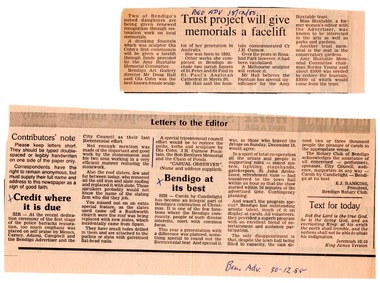 Bendigo Historical Society Inc.
Document - Amy Huxtable Memorial Committee - Newspaper Articles and letters to the Bendigo Art Gallery, 1985 - 1988
... In 1953, Miss Huxtable was appointed temporarily to succeed Miss E B Millane as social editress of the Bendigo Advertiser, during the latter's absence abroad. ...In 1953, Miss Huxtable was appointed temporarily to succeed Miss E B Millane as social editress of the Bendigo Advertiser, during the latter's absence abroad. ...Amy Huxtable was born at Cheltenham in 1918, to Robert Henry Huxtable and Violet A Dagg. Her father was an installer for an oil company and travelled the State. taking his family with him. She completed her education at the Bendigo High School and later attended the Bendigo Business College, becoming an expert shorthand writer. Her first position was as a copy writer with Radio 3BO, in the mid 1930s. She worked with an advertising agency in Melbourne and then with the Age,newspaper. In 1953, Miss Huxtable was appointed temporarily to succeed Miss E B Millane as social editress of the Bendigo Advertiser, during the latter's absence abroad. In 1956, Amy travelled abroad and on her return in 1957 was appointed permanently as Women's editor, a position she held for twenty-three ears. During her early years with The Advertiser she wrote under the name Toora, but in later years her own name became widely known. Miss Huxtable was well known both in her professional capacity and through a interest and involvement in community activites. She was life governor of the Bendigo Hospital, the Bendigo Home for the Aged, and Mirridong Home for the Blind, she was a member of Soroptimist International and the Business and Professional Women's Club. Amy was also a tireless worker for the spastic society and a strong supporter of the YWCA. When Amy Huxtable died at Mt AJvernia Hospital on 16 January 1980 Mayor Campbell ordered the city flag to be flown at half-mast. "Lowering the flag is the least we can do for such a lady" Cr Campbell said. Douglas Lockwood, editor of the Bendigo Advertiser said, "She was a devot d colleague who gave her craft and her newspaper the kind of service which identified a rare and generous spirit." She was a true professional who decided to make Bendigo her home. More than 300 people packed St Paul's Church for her funeral ervice the bell tolled as the casket was carried from the church. At a ceremony in the Conservatory Gardens on No ember 22 1981 The Amy Huxtable Memorial Committee presented to the City of Bendigo, a garden seat in memory of the late Miss Huxtable. This Bendigo manufactured seat was a fitting tribute to one ofBendigo's most loved and esteemed citizens. All Miss Huxtable's Advertiser articles were microfilmed and presented to the Library by the above committee. Amy Huxtable Memorial Committee - Newspaper Articles and letters to the Bendigo Art Gallery 2808.9a First Article: Bendigo Advertiser article 18/12/1985 on "two of Bendigo's noted daughters , Ola Cohn and Amy Huxtable" Describes the restoration of the Ola Cohn drinking fountain in Rosalind Park, and the installation of the Amy Huxtable Memorial Seat in the Conservatory Gardens. Second Article: Bendigo Advertiser Letters to the Editor Column 30/12/1988 paragraph entitled "Credit where it is due: "A special tricentennial council effort would be to restore the paths, kerbs and sculpture by Ola Cohn, J H Curnow Fountain, the Bob Brothers Memorial and the Chain of Ponds" (Rosalind Park) 2808.9b Seven Pages of letters: 1. To Mrs Thelma Dingle from Doug Hall, Bendigo Art Gallery Director 30/1/1986 regards the Amy Huxtable committee funding the restoration of the Ola Cohn Fountain by sculptor Mr Marc Clark. 2. From the Amy Huxtable Committee 24/3/1986 back to the Art Gallery explaining that the committee leftover funds be given to the art Gallery to go towards the restoration of the Oal Cohn Fountain. 3. From the Art Gallery to Miss N D young, Amy Huxtable Committee 3/4/1986 thanking the committee for the funds. 4. From the committee to the Mayor and Councillors, Bendigo City, 4/2/1987 asking for an update on the project. 5. Copy of above letter. 6. From the City of Bendigo to the Committee 17/2/1987, advising of progress on the restoration of the fountain. 7. From Norma Young to the Bendigo Advertiser Letters to the Editor, advising of progress on the Ola Cohn Sculpture and the J H Curnow Fountain restoration. history, amy huxtable, bendigo, amy huxtable memorial committee, bendigo conservatory gardens, ola cohn, j h curnow fountain -
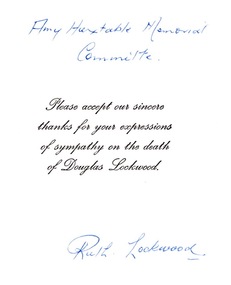 Bendigo Historical Society Inc.
Document - Amy Huxtable Memorial Committee - Reports from Meeting, 1981
... In 1953, Miss Huxtable was appointed temporarily to succeed Miss E B Millane as social editress of the Bendigo Advertiser, during the latter's absence abroad. ...In 1953, Miss Huxtable was appointed temporarily to succeed Miss E B Millane as social editress of the Bendigo Advertiser, during the latter's absence abroad. ...Amy Huxtable was born at Cheltenham in 1918, to Robert Henry Huxtable and Violet A Dagg. Her father was an installer for an oil company and travelled the State. taking his family with him. She completed her education at the Bendigo High School and later attended the Bendigo Business College, becoming an expert shorthand writer. Her first position was as a copy writer with Radio 3BO, in the mid 1930s. She worked with an advertising agency in Melbourne and then with the Age,newspaper. In 1953, Miss Huxtable was appointed temporarily to succeed Miss E B Millane as social editress of the Bendigo Advertiser, during the latter's absence abroad. In 1956, Amy travelled abroad and on her return in 1957 was appointed permanently as Women's editor, a position she held for twenty-three ears. During her early years with The Advertiser she wrote under the name Toora, but in later years her own name became widely known. Miss Huxtable was well known both in her professional capacity and through a interest and involvement in community activites. She was life governor of the Bendigo Hospital, the Bendigo Home for the Aged, and Mirridong Home for the Blind, she was a member of Soroptimist International and the Business and Professional Women's Club. Amy was also a tireless worker for the spastic society and a strong supporter of the YWCA. When Amy Huxtable died at Mt AJvernia Hospital on 16 January 1980 Mayor Campbell ordered the city flag to be flown at half-mast. "Lowering the flag is the least we can do for such a lady" Cr Campbell said. Douglas Lockwood, editor of the Bendigo Advertiser said, "She was a devot d colleague who gave her craft and her newspaper the kind of service which identified a rare and generous spirit." She was a true professional who decided to make Bendigo her home. More than 300 people packed St Paul's Church for her funeral ervice the bell tolled as the casket was carried from the church. At a ceremony in the Conservatory Gardens on No ember 22 1981 The Amy Huxtable Memorial Committee presented to the City of Bendigo, a garden seat in memory of the late Miss Huxtable. This Bendigo manufactured seat was a fitting tribute to one ofBendigo's most loved and esteemed citizens. All Miss Huxtable's Advertiser articles were microfilmed and presented to the Library by the above committee. Amy Huxtable Memorial Committee - Reports from Meeting - five pages of report and letters. 2808.10a Bereavement Card - thanks from Ruth Lockwood to the committee on the death of her husband Douglas Lockwood, Chairman of the committee. 2808.10b Rear of above card. 2808.10c * Report of the Amy Huxtable Memorial Committee 29/1/1981 held at the office of Miss N. Young * Letter to Andrew Taylor, Superintendent Bendigo City Parks and Gardens, 4/3/1981, in regards to the memorial seat in the Conservatory Gardens. * Reply to above letter from the acting Superintendent Rod Sweetnam, 6/3/1981. * Further letter to Andrew Taylor advising that the seat construction is underway, 13/4/1981 2808.10d * Updated committee signature form to the ANZ Bank, 5/5/1981 history, amy huxtable, bendigo, amy huxtable memorial committee, bendigo conservatory gardens, douglas lockwood -
Bendigo Historical Society Inc.
Document - Amy Huxtable Memorial Committee - Correspondence, 1981-90
... In 1953, Miss Huxtable was appointed temporarily to succeed Miss E B Millane as social editress of the Bendigo Advertiser, during the latter's absence abroad. ...In 1953, Miss Huxtable was appointed temporarily to succeed Miss E B Millane as social editress of the Bendigo Advertiser, during the latter's absence abroad. ...Amy Huxtable was born at Cheltenham in 1918, to Robert Henry Huxtable and Violet A Dagg. Her father was an installer for an oil company and travelled the State. taking his family with him. She completed her education at the Bendigo High School and later attended the Bendigo Business College, becoming an expert shorthand writer. Her first position was as a copy writer with Radio 3BO, in the mid 1930s. She worked with an advertising agency in Melbourne and then with the Age,newspaper. In 1953, Miss Huxtable was appointed temporarily to succeed Miss E B Millane as social editress of the Bendigo Advertiser, during the latter's absence abroad. In 1956, Amy travelled abroad and on her return in 1957 was appointed permanently as Women's editor, a position she held for twenty-three ears. During her early years with The Advertiser she wrote under the name Toora, but in later years her own name became widely known. Miss Huxtable was well known both in her professional capacity and through a interest and involvement in community activites. She was life governor of the Bendigo Hospital, the Bendigo Home for the Aged, and Mirridong Home for the Blind, she was a member of Soroptimist International and the Business and Professional Women's Club. Amy was also a tireless worker for the spastic society and a strong supporter of the YWCA. When Amy Huxtable died at Mt AJvernia Hospital on 16 January 1980 Mayor Campbell ordered the city flag to be flown at half-mast. "Lowering the flag is the least we can do for such a lady" Cr Campbell said. Douglas Lockwood, editor of the Bendigo Advertiser said, "She was a devot d colleague who gave her craft and her newspaper the kind of service which identified a rare and generous spirit." She was a true professional who decided to make Bendigo her home. More than 300 people packed St Paul's Church for her funeral ervice the bell tolled as the casket was carried from the church. At a ceremony in the Conservatory Gardens on No ember 22 1981 The Amy Huxtable Memorial Committee presented to the City of Bendigo, a garden seat in memory of the late Miss Huxtable. This Bendigo manufactured seat was a fitting tribute to one ofBendigo's most loved and esteemed citizens. All Miss Huxtable's Advertiser articles were microfilmed and presented to the Library by the above committee. Amy Huxtable Memorial Committee - Correspondence - 18 Pages Page 1 Letter to Andrew Taylor, Superintendent, Bendigo City Parks and Gardens 2/6/1981 re siting of the Memorial Seat. Page 2 Reply to the above letter 2/7/1981 Page 3-4 Letter to the Council suggesting the seat be placed in the Conservatory gardens 7/7/1981 Page 5 Letter from the committee to Denis O'Hoy thanking them for supplying clay and plaster for the prep work 7/7/1981 Page 6 Letter from Andrew Taylor, Bendigo City Council 22/7/1981 advising the committee that the council has approved two seats and a vandal proof sign be placed up against the Conservatory facing the Bendigo Advertiser offices. Page 7 Letter 14/8/1981 from the committee to the council re the plaque design Page 8 To the Bendigo council 8/9/1981 suggesting a date and time for the handover of the seat. Page 9 From the council 12/10/1981 thankyou letter from the Mayor agreeing to the time of the memorial seat handover. Page 10 Letter back to the Mayor on 10/7/1981 from the committee with a suggested program for the afternoon. Page 11-13 Letter from the committee to BCV TV Channel 8 10/11/1981, asking them to advertise the event on their community noticeboard, the wording enclosed; and also an article for the news. Page 14-15 The wording on the plaque Page 16 Letter to the Bendigo Council 16/8/1984 asking for some repairs to be done to the seat due to weathering. Page 16 Letter back from the council 23/8/1984 advising the committee that it is on the list of maintenance for later in the year. Page 17 Letter from the Bendigo Regional Arts Centre to the committee 28/6/1990 adising receipt of $1000 for seats ion the re-vamperd Capital Theatre; seat inscription to be "Donated by:- Amy Huxtable Memorial Committee In Memory of :- Amy Huxtablehistory, amy huxtable, bendigo, amy huxtable memorial committee, bendigo conservatory gardens, capital theatre, bendigo regional arts centre -
Bendigo Historical Society Inc.
Document - Amy Huxtable Memorial Committee - Correspondence, 1991-1993
... In 1953, Miss Huxtable was appointed temporarily to succeed Miss E B Millane as social editress of the Bendigo Advertiser, during the latter's absence abroad. ...In 1953, Miss Huxtable was appointed temporarily to succeed Miss E B Millane as social editress of the Bendigo Advertiser, during the latter's absence abroad. ...Amy Huxtable was born at Cheltenham in 1918, to Robert Henry Huxtable and Violet A Dagg. Her father was an installer for an oil company and travelled the State. taking his family with him. She completed her education at the Bendigo High School and later attended the Bendigo Business College, becoming an expert shorthand writer. Her first position was as a copy writer with Radio 3BO, in the mid 1930s. She worked with an advertising agency in Melbourne and then with the Age,newspaper. In 1953, Miss Huxtable was appointed temporarily to succeed Miss E B Millane as social editress of the Bendigo Advertiser, during the latter's absence abroad. In 1956, Amy travelled abroad and on her return in 1957 was appointed permanently as Women's editor, a position she held for twenty-three ears. During her early years with The Advertiser she wrote under the name Toora, but in later years her own name became widely known. Miss Huxtable was well known both in her professional capacity and through a interest and involvement in community activites. She was life governor of the Bendigo Hospital, the Bendigo Home for the Aged, and Mirridong Home for the Blind, she was a member of Soroptimist International and the Business and Professional Women's Club. Amy was also a tireless worker for the spastic society and a strong supporter of the YWCA. When Amy Huxtable died at Mt AJvernia Hospital on 16 January 1980 Mayor Campbell ordered the city flag to be flown at half-mast. "Lowering the flag is the least we can do for such a lady" Cr Campbell said. Douglas Lockwood, editor of the Bendigo Advertiser said, "She was a devot d colleague who gave her craft and her newspaper the kind of service which identified a rare and generous spirit." She was a true professional who decided to make Bendigo her home. More than 300 people packed St Paul's Church for her funeral ervice the bell tolled as the casket was carried from the church. At a ceremony in the Conservatory Gardens on No ember 22 1981 The Amy Huxtable Memorial Committee presented to the City of Bendigo, a garden seat in memory of the late Miss Huxtable. This Bendigo manufactured seat was a fitting tribute to one ofBendigo's most loved and esteemed citizens. All Miss Huxtable's Advertiser articles were microfilmed and presented to the Library by the above committee. Amy Huxtable Memorial Committee - Correspondence - 10 Pages Page 1 Letter to Mr David Thomas, Director, Bendigo Art Gallery 5/7/1991 asking for information on the repair of the Ola Cohn on the Curnow Fountain in Rosalind Park, and offering money left over before the Amy Huxtable Committe is wound up. Page 2 Another Letter to Mr David Thomas, Bendigo Art Gallery 5/7/1992 - expressing a desire to finalise a possible donation of remaining committee funds Page 3 Letter to the committeee from the Bendigo Art Gallery, 9/7/1991, advising process on Ola Cohn's Curnow Fountain. Page 4 Letter to the Art Gallery 22/1/1993, expressing a desire to place a memorial artwork in the Art Gallery using the leftover funds. Page 5 Letter from the art gallery to the committee 27/1/1993 expressing delight that an artwork honouring Amy Huxtable will be presented to them. Page 6 Receipt to the committee for $4457.29 from the art gallery 21/7/1993 - donation for the Ola Cohn Acquisitions. Page 7-8 Letter to the committee from the art gallery 20/7/1993, thankyou for the aquisition of three works by Ola Cohn in memory of Amy Huxtable. The works are: Behold the Man, Woman with Two Children and Women with Owl (Bookends). Page 9 Bendigo Art Gallery signage on the "Amy Huxtable Memorial Fund Ola Cohn (1892-1964) works: Master Pigeon,1923, Behold the Man, c.1940 Women and two children, c.1940 Women with Owl, c.1933history, amy huxtable, bendigo, amy huxtable memorial committee, bendigo art gallery ola cohn works -
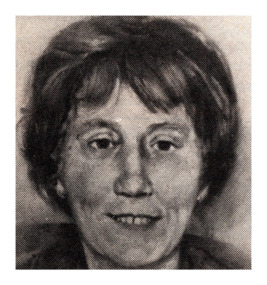 Bendigo Historical Society Inc.
Document - Amy Huxtable Memorial Committee - Correspondence and Newspaper Vale Article, 1993
... In 1953, Miss Huxtable was appointed temporarily to succeed Miss E B Millane as social editress of the Bendigo Advertiser, during the latter's absence abroad. ...In 1953, Miss Huxtable was appointed temporarily to succeed Miss E B Millane as social editress of the Bendigo Advertiser, during the latter's absence abroad. ...Amy Huxtable was born at Cheltenham in 1918, to Robert Henry Huxtable and Violet A Dagg. Her father was an installer for an oil company and travelled the State. taking his family with him. She completed her education at the Bendigo High School and later attended the Bendigo Business College, becoming an expert shorthand writer. Her first position was as a copy writer with Radio 3BO, in the mid 1930s. She worked with an advertising agency in Melbourne and then with the Age,newspaper. In 1953, Miss Huxtable was appointed temporarily to succeed Miss E B Millane as social editress of the Bendigo Advertiser, during the latter's absence abroad. In 1956, Amy travelled abroad and on her return in 1957 was appointed permanently as Women's editor, a position she held for twenty-three ears. During her early years with The Advertiser she wrote under the name Toora, but in later years her own name became widely known. Miss Huxtable was well known both in her professional capacity and through a interest and involvement in community activites. She was life governor of the Bendigo Hospital, the Bendigo Home for the Aged, and Mirridong Home for the Blind, she was a member of Soroptimist International and the Business and Professional Women's Club. Amy was also a tireless worker for the spastic society and a strong supporter of the YWCA. When Amy Huxtable died at Mt AJvernia Hospital on 16 January 1980 Mayor Campbell ordered the city flag to be flown at half-mast. "Lowering the flag is the least we can do for such a lady" Cr Campbell said. Douglas Lockwood, editor of the Bendigo Advertiser said, "She was a devot d colleague who gave her craft and her newspaper the kind of service which identified a rare and generous spirit." She was a true professional who decided to make Bendigo her home. More than 300 people packed St Paul's Church for her funeral ervice the bell tolled as the casket was carried from the church. At a ceremony in the Conservatory Gardens on No ember 22 1981 The Amy Huxtable Memorial Committee presented to the City of Bendigo, a garden seat in memory of the late Miss Huxtable. This Bendigo manufactured seat was a fitting tribute to one ofBendigo's most loved and esteemed citizens. All Miss Huxtable's Advertiser articles were microfilmed and presented to the Library by the above committee. Amy Huxtable Memorial Committee - Correspondence and Newspaper Vale Article Bendigo Advertiser Article 23/10/1993 entitled: "Vale Amy: a rare individual" 2808.13e Photo of Amy from the article 2808.13a, 2808.13b, 2808.13c: The Article describe her life and contributions to Bendigo. 2808.13d - 12 pages of Correspondence and committee records. Page 1 Letter from the the committee to the art gallery 14/9/1993 re event happening (Presentation of the Ola Cohn works as funded by excess money before the committee "winds up" the letter encloses a list of whom the committee consider should be invited to the event). Page 2 List of people as above with adresses Page 3 Invitation to the above event from the art gallery 7/9/1993 Page 4 From the art gallery 29/9/1993 enclosing some factual notes on Amy Huxtable to be confirmed and added to by the committee if need be. Page 5 From the art gallery 20/10/1993 to the committee, a copy of an article written for the Bendigo Advertiser - for comments. Page 6 From the art gallery 29/1/1993 - thanking the Chairperson of the committee Miss Norma Young for her speech at the reception for the Amy Huxtable Memorial - Ola Cohn Works. Page 7 From Norma Young back to the art gallery 3/11/1993, thank you for the combined work of the gallery and the memorial committee Page 8 Another thank you letter to the art gallery committee of management 3/11/1993. Page 9 -12 Speech as given by Norma Young, chairperson of the committee to the reception at the art gallery.history, amy huxtable, bendigo, amy huxtable memorial committee, bendigo art gallery ola cohn works -
Bendigo Historical Society Inc.
Document - Amy Huxtable Memorial Committee - Historical Articles on Microfilm, 1983
... In 1953, Miss Huxtable was appointed temporarily to succeed Miss E B Millane as social editress of the Bendigo Advertiser, during the latter's absence abroad. ...In 1953, Miss Huxtable was appointed temporarily to succeed Miss E B Millane as social editress of the Bendigo Advertiser, during the latter's absence abroad. ...Amy Huxtable was born at Cheltenham in 1918, to Robert Henry Huxtable and Violet A Dagg. Her father was an installer for an oil company and travelled the State. taking his family with him. She completed her education at the Bendigo High School and later attended the Bendigo Business College, becoming an expert shorthand writer. Her first position was as a copy writer with Radio 3BO, in the mid 1930s. She worked with an advertising agency in Melbourne and then with the Age,newspaper. In 1953, Miss Huxtable was appointed temporarily to succeed Miss E B Millane as social editress of the Bendigo Advertiser, during the latter's absence abroad. In 1956, Amy travelled abroad and on her return in 1957 was appointed permanently as Women's editor, a position she held for twenty-three ears. During her early years with The Advertiser she wrote under the name Toora, but in later years her own name became widely known. Miss Huxtable was well known both in her professional capacity and through a interest and involvement in community activites. She was life governor of the Bendigo Hospital, the Bendigo Home for the Aged, and Mirridong Home for the Blind, she was a member of Soroptimist International and the Business and Professional Women's Club. Amy was also a tireless worker for the spastic society and a strong supporter of the YWCA. When Amy Huxtable died at Mt AJvernia Hospital on 16 January 1980 Mayor Campbell ordered the city flag to be flown at half-mast. "Lowering the flag is the least we can do for such a lady" Cr Campbell said. Douglas Lockwood, editor of the Bendigo Advertiser said, "She was a devot d colleague who gave her craft and her newspaper the kind of service which identified a rare and generous spirit." She was a true professional who decided to make Bendigo her home. More than 300 people packed St Paul's Church for her funeral ervice the bell tolled as the casket was carried from the church. At a ceremony in the Conservatory Gardens on No ember 22 1981 The Amy Huxtable Memorial Committee presented to the City of Bendigo, a garden seat in memory of the late Miss Huxtable. This Bendigo manufactured seat was a fitting tribute to one ofBendigo's most loved and esteemed citizens. All Miss Huxtable's Advertiser articles were microfilmed and presented to the Library by the above committee. Amy Huxtable Memorial Committee - Historical Articles on Microfilm, 10 pages of correspondence Page 1 Letter from Rephotographic Services (Aust.) Pty. Ltd., 26/4/1983 quote for 600 pages. Page 2 Letter from the committee regards the quote that it is acceptable 4/5/1983 Page 3 Letter to the Bendigo Regional Library asking them to assist with the purchase above 13/5/1983 Page 4 From the Bendigo Library to the State Library 16/5/1983 asking them for use of their Bendigo Advertiser Records for micro-filming by Reprographic Services Page 5 Letter to the Bendigo Library 27/5/1983 enclosing a list of articles written by the late Miss Huxtable, and seeking an account from them. Page 6 Letter from the Library 10/6/1983 to the committee with copies of letters to the State Library. Page 7 - 10 Copies of letters sent to the State Library and Rephotographic Services and their reply.history, amy huxtable, bendigo, amy huxtable memorial committee, rephotographic service (aust.), bendigo regional library -
Bendigo Historical Society Inc.
Document - Amy Huxtable Memorial Committee - Talk by David Thomas, Director of the Bendigo Art Gallery, c1990s
... In 1953, Miss Huxtable was appointed temporarily to succeed Miss E B Millane as social editress of the Bendigo Advertiser, during the latter's absence abroad. ...In 1953, Miss Huxtable was appointed temporarily to succeed Miss E B Millane as social editress of the Bendigo Advertiser, during the latter's absence abroad. ...Amy Huxtable was born at Cheltenham in 1918, to Robert Henry Huxtable and Violet A Dagg. Her father was an installer for an oil company and travelled the State. taking his family with him. She completed her education at the Bendigo High School and later attended the Bendigo Business College, becoming an expert shorthand writer. Her first position was as a copy writer with Radio 3BO, in the mid 1930s. She worked with an advertising agency in Melbourne and then with the Age,newspaper. In 1953, Miss Huxtable was appointed temporarily to succeed Miss E B Millane as social editress of the Bendigo Advertiser, during the latter's absence abroad. In 1956, Amy travelled abroad and on her return in 1957 was appointed permanently as Women's editor, a position she held for twenty-three ears. During her early years with The Advertiser she wrote under the name Toora, but in later years her own name became widely known. Miss Huxtable was well known both in her professional capacity and through a interest and involvement in community activites. She was life governor of the Bendigo Hospital, the Bendigo Home for the Aged, and Mirridong Home for the Blind, she was a member of Soroptimist International and the Business and Professional Women's Club. Amy was also a tireless worker for the spastic society and a strong supporter of the YWCA. When Amy Huxtable died at Mt AJvernia Hospital on 16 January 1980 Mayor Campbell ordered the city flag to be flown at half-mast. "Lowering the flag is the least we can do for such a lady" Cr Campbell said. Douglas Lockwood, editor of the Bendigo Advertiser said, "She was a devot d colleague who gave her craft and her newspaper the kind of service which identified a rare and generous spirit." She was a true professional who decided to make Bendigo her home. More than 300 people packed St Paul's Church for her funeral ervice the bell tolled as the casket was carried from the church. At a ceremony in the Conservatory Gardens on No ember 22 1981 The Amy Huxtable Memorial Committee presented to the City of Bendigo, a garden seat in memory of the late Miss Huxtable. This Bendigo manufactured seat was a fitting tribute to one ofBendigo's most loved and esteemed citizens. All Miss Huxtable's Advertiser articles were microfilmed and presented to the Library by the above committee. Amy Huxtable Memorial Committee -Talk by David Thomas, Director of the Bendigo Art Gallery made 13 years after her death, 10 pages, entitled "One in a Million". The talk summarises Amy's life and involvement in the Bendigo community. history, amy huxtable, bendigo, amy huxtable memorial committee, bendigo art gallery
