
Showing 3 items matching "eastern australia. social life"
-
 Koorie Heritage Trust
Book, Baxter, Annie (1816-1905), Memories of Tasmania and of the Macleay River and New England districts of New South Wales and of Port Fairy in the western district of Port Phillip, 1834-1848, 1980
... Eastern Australia. Social life...Eastern Australia. Social life 1834-1848. Personal observations. | Australia -- Social life and customs. | Australia -- History -- 1788-1900. | Macleay River Region (N.S.W.) -- History. ...They are the reminiscences of an English army officer's daughter who also was the wife of another such officer, and who by a chance of army life had become an antipodite. They cover the years between 1834, ... and 1848, ... They relate almost entirely to Australia, for she spent thirteen of those years either in Tasmania or in the Macleay River district of New South Wales or at Port Fairy in the Port Phillip district ...'`xii, 88 p. ; appendix; 33 cm. They are the reminiscences of an English army officer's daughter who also was the wife of another such officer, and who by a chance of army life had become an antipodite. They cover the years between 1834, ... and 1848, ... They relate almost entirely to Australia, for she spent thirteen of those years either in Tasmania or in the Macleay River district of New South Wales or at Port Fairy in the Port Phillip district ...' eastern australia. social life, 1834-1848. personal observations. | australia -- social life and customs. | australia -- history -- 1788-1900. | macleay river region (n.s.w.) -- history. -
 Wodonga & District Historical Society Inc
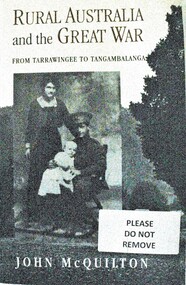
Book - Rural Australia and the Great War - From Tarrawingee to Tangambalanga, John McQuilton, 2001
... Eastern Victoria. World War 1 Rural Conditions Australia 1914 World War 1 Social Conditions Australia Tangambalanga World War 1 This publication covers common issues of life in Australia during World War 1, such as recruitment, fundraising, conscription, homecomings and the construction of memorials. ...This publication covers common issues of life in Australia during World War 1, such as recruitment, fundraising, conscription, homecomings and the construction of memorials. However it is unique in that these aspects of war are examined through a focus on rural communities in North Eastern Victoria. The first chapter describes the region and its towns at the outbreak of war, then discusses the fracturing impact of war on different groups within these communities. It paints an interesting social history at a critical time in Australia's development. John Quilton is a native of North Eastern Victoria, having been born in Yackandandah and educated in Tangambalanga and Wodonga. He was a senior member of the Bicentennial History Project at the University of New South Wales, and head of the History and Politics Program at the University of Wollongong.This book consists of 275 pages including photos and a map, as well as an extensive bibliography. The cover depicts a soldier and his family and a country town streetscape on the back. This publication covers common issues of life in Australia during World War 1, such as recruitment, fundraising, conscription, homecomings and the construction of memorials. However it is unique in that these aspects of war are examined through a focus on rural communities in North Eastern Victoria. The first chapter describes the region and its towns at the outbreak of war, then discusses the fracturing impact of war on different groups within these communities. It paints an interesting social history at a critical time in Australia's development. John Quilton is a native of North Eastern Victoria, having been born in Yackandandah and educated in Tangambalanga and Wodonga. He was a senior member of the Bicentennial History Project at the University of New South Wales, and head of the History and Politics Program at the University of Wollongong. world war 1, rural conditions australia 1914, world war 1 social conditions australia, tangambalanga world war 1 -
 Sunshine and District Historical Society Incorporated
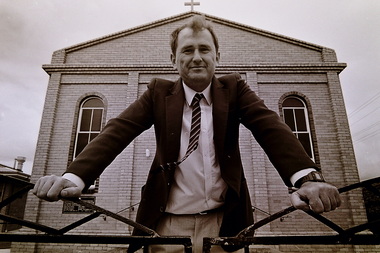
Photograph - Ardeer Ukrainian Catholic Church 2 Holmes Street Ardeer 1989 Photographs (Advocate 858), C. McGee, 15th March 1989
... life in Melbourne’s West. It offered a stable community anchor during decades of migration, providing pastoral care, social support, and a sense of belonging for families adapting to life in Australia. The church contributed to the multicultural fabric of Ardeer and Sunshine, reflecting broader patterns of Eastern ...These photographs, taken by The Advocate in 1989, feature Phillip Nelson standing outside the Ardeer Ukrainian Catholic Church, 2 Holmes Street, Ardeer. The Ardeer Ukrainian Catholic Church is significant for its role in supporting Ukrainian cultural continuity and spiritual life in Melbourne’s West. It offered a stable community anchor during decades of migration, providing pastoral care, social support, and a sense of belonging for families adapting to life in Australia. The church contributed to the multicultural fabric of Ardeer and Sunshine, reflecting broader patterns of Eastern European settlement in the region. Its presence highlights the importance of faith‑based institutions in maintaining heritage, language, and intergenerational cultural transmission among migrant communities. 7481.01 - Ardeer Ukrainian Catholic Church 2 Holmes Street Ardeer 1989 Photographs (Advocate 858).JPG Phillip Nelson 7481.02 - Ardeer Ukrainian Catholic Church 2 Holmes Street Ardeer 1989 Photographs (Advocate 858).JPG Phillip Nelson ardeer ukrainian catholic church, holmes street, ardeer
