
Showing 30 items matching "eastern theatre"
-
 4th/19th Prince of Wales's Light Horse Regiment Unit History Room
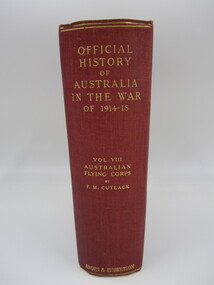
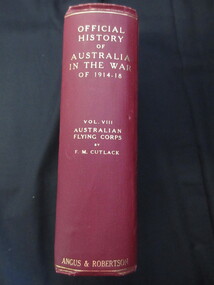
Book, Official History of Australia in the War of 1914-18 Vol VIII Australian Flying Corps, 1935
... ...Eastern Theatre...The Australian Flying Corps in the Western and Eastern Theatres of War 1914-1918...The Australian Flying Corps Western Theatre Eastern Theatre Book The Australian Flying Corps in the Western and Eastern Theatres of War 1914-1918 Hard covered book of 490 pages Official History of Australia in the War of 1914-18 Vol VIII Australian Flying Corps Book Book ...Hard covered book of 490 pagesThe Australian Flying Corps in the Western and Eastern Theatres of War 1914-1918the australian flying corps, western theatre, eastern theatre, book -
 Canterbury History Group
Photograph - Shops on the eastern side of Theatre Place, Jan Pigot, 27/03/1993 12:00:00 AM
... Shops on the eastern side of Theatre Place...Coloured photograph of shops on the eastern side of Theatre Place...Canterbury Maling Road Shops Theatre Place Coloured photograph of shops on the eastern side of Theatre Place Photograph Shops on the eastern side of Theatre Place Jan Pigot ...Coloured photograph of shops on the eastern side of Theatre Placecanterbury, maling road, shops, theatre place -
Canterbury History Group
Photograph - Shops on the eastern side of Theatre Place, Jan Pigot, 27/03/1993 12:00:00 AM
... Shops on the eastern side of Theatre Place...Coloured photograph of the shops on the eastern side of Theatre Place...Canterbury Maling Road Shops Theatre Place Coloured photograph of the shops on the eastern side of Theatre Place Photograph Shops on the eastern side of Theatre Place Jan Pigot ...Coloured photograph of the shops on the eastern side of Theatre Placecanterbury, maling road, shops, theatre place -
Canterbury History Group
Photograph - Shops on the eastern side of Theatre Place, Jan Pigot, 27/03/1993 12:00:00 AM
... Shops on the eastern side of Theatre Place...Coloured photograph of the shops on the eastern side of Theatre Place...Canterbury Maling Road Shops Theatre Place Coloured photograph of the shops on the eastern side of Theatre Place Photograph Shops on the eastern side of Theatre Place Jan Pigot ...Coloured photograph of the shops on the eastern side of Theatre Placecanterbury, maling road, shops, theatre place -
Canterbury History Group
Photograph - Shops on the eastern side of Theatre Place, Jan Pigot, 27/03/1993 12:00:00 AM
... Shops on the eastern side of Theatre Place...Coloured photograph of the shops on the eastern side of Theatre Place...Canterbury Maling Road Shops Theatre Place Coloured photograph of the shops on the eastern side of Theatre Place Photograph Shops on the eastern side of Theatre Place Jan Pigot ...Coloured photograph of the shops on the eastern side of Theatre Placecanterbury, maling road, shops, theatre place -
Canterbury History Group
Photograph - Streetscape of the shops on the eastern side of Theatre Place, Jan Pigot, 27/03/1993 12:00:00 AM
... Streetscape of the shops on the eastern side of Theatre Place...Coloured photograph of the streetscape of the shops on the eastern side of Theatre Place...Canterbury Maling Road Shops Theatre Place Coloured photograph of the streetscape of the shops on the eastern side of Theatre Place Photograph Streetscape of the shops on the eastern side of Theatre Place Jan Pigot ...Coloured photograph of the streetscape of the shops on the eastern side of Theatre Placecanterbury, maling road, shops, theatre place -
Whitehorse Historical Society Inc.
Programme - Ephemera, Theatre and concert programs, 1967 - 1986
... ...Eastern Theatre Group...Drama Nunawading Arts Council The Avenue Uniting Church Blackburn Bellburn Singers Maroondah Singers Acacia Singers Nova Theatre Box Hill City Repertory Eastern Theatre Group Mitcham Repertory Group Blackburn Players Selection of programs dating from 1967 to 1986, musical concerts and plays by groups from Blackburn, Nunawading, Box Hill and Mitcham. ...Selection of programs dating from 1967 to 1986, musical concerts and plays by groups from Blackburn, Nunawading, Box Hill and Mitcham. Includes list of Mitcham Repertory Group's plays from 1953 - 1985.drama, nunawading arts council, the avenue uniting church, blackburn, bellburn singers, maroondah singers, acacia singers, nova theatre, box hill city repertory, eastern theatre group, mitcham repertory group, blackburn players -
 Flagstaff Hill Maritime Museum and Village
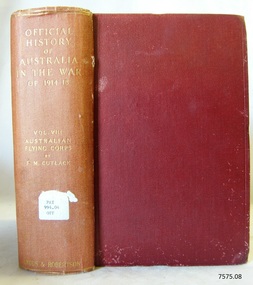
Book, Official History of Australia In The War of 1914-18 Vol 8
... The Australian Flying Corps in the Western and Eastern Theatres of War 1914-1918 Author: F M Cutlack Publisher: Angus & Robertson Date: 1938 ...The Australian Flying Corps in the Western and Eastern Theatres of War 1914-1918 Author: F M Cutlack Publisher: Angus & Robertson Date: 1938 Official History of Australia In The War of 1914-18 Vol 8. ...This item is from the ‘Pattison Collection’, a collection of books and records that was originally owned by the Warrnambool Mechanics’ Institute, which was founded in Warrnambool in 1853. By 1886 the Warrnambool Mechanics’ Institute (WMI) had grown to have a Library, Museum and Fine Arts Gallery, with a collection of “… choice productions of art, and valuable specimens in almost every branch and many wonderful national curiosities are now to be seen there, including historic relics of the town and district.” It later included a School of Design. Although it was very well patronised, the lack of financial support led the WMI in 1911 to ask the City Council to take it over. In 1935 Ralph Pattison was appointed as City Librarian to establish and organise the Warrnambool Library as it was then called. When the WMI building was pulled down in 1963 a new civic building was erected on the site and the new Warrnambool Library, on behalf of the City Council, took over all the holdings of the WMI. At this time some of the items were separated and identified as the ‘Pattison Collection’, named after Ralph Pattison. Eventually the components of the WMI were distributed from the Warrnambool Library to various places, including the Art Gallery, Historical Society and Flagstaff Hill. Later some were even distributed to other regional branches of Corangamite Regional Library and passed to and fro. It is difficult now to trace just where all of the items have ended up. The books at Flagstaff Hill Maritime Village generally display stamps and markings from Pattison as well as a variety of other institutions including the Mechanics’ Institute itself. RALPH ERIC PATTISON Ralph Eric Pattison was born in Rockhampton, Queensland, in 1891. He married Maude Swan from Warrnambool in 1920 and they set up home in Warrnambool. In 1935 Pattison accepted a position as City Librarian for the Warrnambool City Council. His huge challenge was to make a functional library within two rooms of the Mechanics’ Institute. He tirelessly cleaned, cleared and sorted a disarrayed collection of old books, jars of preserved specimens and other items reserved for exhibition in the city’s museum. He developed and updated the library with a wide variety of books for all tastes, including reference books for students; a difficult task to fulfil during the years following the Depression. He converted all of the lower area of the building into a library, reference room and reading room for members and the public. The books were sorted and stored using a cataloguing and card index system that he had developed himself. He also prepared the upper floor of the building and established the Art Gallery and later the Museum, a place to exhibit the many old relics that had been stored for years for this purpose. One of the treasures he found was a beautiful ancient clock, which he repaired, restored and enjoyed using in his office during the years of his service there. Ralph Pattison was described as “a meticulous gentleman whose punctuality, floorless courtesy and distinctive neat dress were hallmarks of his character, and ‘his’ clock controlled his daily routine, and his opening and closing of the library’s large heavy doors to the minute.” Pattison took leave during 1942 to 1942 to serve in the Royal Australian Navy, Volunteer Reserve as Lieutenant. A few years later he converted one of the Museum’s rooms into a Children’s Library, stocking it with suitable books for the younger generation. This was an instant success. In the 1950’s he had the honour of being appointed to the Victorian Library Board and received more inspiration from the monthly conferences in Melbourne. He was sadly retired in 1959 after over 23 years of service, due to the fact that he had gone over the working age of council officers. However he continued to take a very keen interest in the continual development of the Library until his death in 1969. WARRNAMBOOL PUBLIC LIBRARY The Warrnambool Mechanics’ Institute (WMI) was formed by a voluntary community group in 1863, within six years of Warrnambool’s beginnings, and its Reading Room opened in 1854. The WMI operated until 1963, at which time it was one of the oldest Mechanics’ Institutes in Victoria. Mechanics’ Institutes offered important services to the public including libraries, reading rooms and places to display and store collections of all sorts such as curiosities and local historical relics. In 1886 a Museum and Fine Arts Gallery were added to the WMI and by the beginning of the 20th century there was also a billiards room and a School of Art. By this time all Mechanics’ Institutes in country Victoria had museums attached. Over the years the Warrnambool Mechanics’ Institute Library was also known as the Warrnambool Public Library the Warrnambool Library and the Free Library. Early funding from the government was for the “Free Library”. The inscription in a book “Science of Man” was for the “Warrnambool Public Library”, donated by Joseph Archibald in 1899. Another inscription in the book “Catalogue of Plants Under Cultivation in the Melbourne Botanic Gardens 1 & 2, 1883” was presented to the “Warrnambool Library” and signed by the author W.R. Guilfoyle. In 1903 the Warrnambool Public Library decided to add a Juvenile Department to library and stock it with hundreds of books suitable for youth. In 1905 the Public Library committee decided to update the collection of books and added 100 new novels plus arrangements for the latest novels to be included as soon as they were available in Victoria. In July 1911 the Warrnambool Council took over the management of the Public Library, Art Gallery, Museum and Mechanics’ Institute and planned to double the size of the then-current building. In 1953, when Mr. R. Pattison was Public Librarian, the Warrnambool Public Library’s senior section 10,000 of the 13,000 books were fiction. The children’s section offered an additional 3,400 books. The library had the equivalent of one book per head of population and served around 33 percent of the reading population. The collection of books was made up of around 60 percent reference and 40 percent fiction. The library was lending 400 books per day. In 1963 the Warrnambool City Council allocated the site of the Mechanics’ Institute building, which included the Public Library, Museum and Art Gallery, for the new Municipal Offices and the Collections were dispersed until 1971. The Warrnambool Library took over the Mechanics’ Institute Library’s holdings on behalf of the Warrnambool City Council. Since the closure of the Warrnambool Mechanics’ Institute the exact location and composition of the original WMI books and items has become unclear. Other materials have been added to the collection, including items from Terang MI, Warrnambool Court House and Customs House. Many of the books have been identified as the Pattison Collection, named after the Librarian who catalogued and numbered the books during his time as Warrnambool Public Librarian in the time before the Mechanics’ Institute closed. It seems that when Warrnambool became part of the Corangamite Regional Library some of the books and materials went to its head office in Colac and then back to Warrnambool where they were stored at the Art Gallery for quite some time. Some then went to the Warrnambool Historical Society, some stayed at the Art Gallery and some were moved to Flagstaff Hill Maritime Village. The various stamps and labels on the books held at Flagstaff Hill show the variety of the collection’s distribution and origin. The books in the collection at Flagstaff Hill Maritime Village date from the 1850’s to the late 1950’s and include rare and valuable volumes. Many of the books are part of the “Pattison Collection” after the Warrnambool’s Public Librarian, Mr. R. Pattison The Pattison Collection, along with other items at Flagstaff Hill Maritime Village, was originally part of the Warrnambool Mechanics' Institute’s collection. The Warrnambool Mechanics’ Institute Collection is primarily significant in its totality, rather than for the individual objects it contains. Its contents are highly representative of the development of Mechanics' Institute libraries across Australia, particularly Victoria. A diversity of publications and themes has been amassed, and these provide clues to our understanding of the nature of and changes in the reading habits of Victorians from the 1850s to the middle of the 20th century. The collection also highlights the Warrnambool community’s commitment to the Mechanics’ Institute, reading, literacy and learning in the regions, and proves that access to knowledge was not impeded by distance. These items help to provide a more complete picture of our community’s ideals and aspirations. The Warrnambool Mechanics Institute book collection has historical and social significance for its strong association with the Mechanics Institute movement and the important role it played in the intellectual, cultural and social development of people throughout the latter part of the nineteenth century and the early twentieth century. The collection of books is a rare example of an early lending library and its significance is enhanced by the survival of an original collection of many volumes. The Warrnambool Mechanics' Institute’s publication collection is of both local and state significance. The Warrnambool Mechanics' Institute Collection is primarily significant in its totality, rather than for the individual objects it contains. Its contents are highly representative of the development of Mechanics' Institute libraries across Australia, particularly Victoria. A diversity of publications and themes has been amassed, and these provide clues to our understanding of the nature of and changes in the reading habits of Victorians from the 1850s to the middle of the 20th century. The collection also highlights the Warrnambool community’s commitment to the Mechanics’ Institute, and to reading, literacy and learning in the regions, and proves that access to knowledge was not impeded by distance. These items help to provide a more complete picture of our community’s ideals and aspirations. As with many Mechanics' Institutes in Australia, the one which operated in Warrnambool was established and overseen for many years by key individuals associated with the development of the city itself. The WMI publication collection is historically significant because of its association with local people, places and the key historical themes in the development of Warrnambool of rural development, industry, farming, education, and community. The collection documents and illustrates the changing interests, focus and tastes of Victorians, especially those in regional cities. Generally the individual items in the collection are not particularly rare, as examples of all probably exist in other public collections in Victoria. It is primarily because there are so very few surviving Mechanics' Institute collections in Victoria, which lends this overall collection its significance. Many items in the WMI Collection have the potential to support further research, both as individual objects and through the collection in its entirety. This material is significant for its ability to assist in the interpretation of the history of the area and adds to the general understanding of the development of the township. Many components of the WMI publication collection complement and reinforce the Flagstaff Hill Maritime Museum Collection, the Warrnambool Art Gallery Collection, and that in the Warrnambool Historical Society, and also contribute to a clearer understanding of the original Warrnambool Mechanics' Institute collections. This will greatly enhance the appreciation of the few surviving Mechanics' Institute collections across Victoria, and also in New South Wales. The similarities and differences between the small number of collections that have survived can provide further insights into how the people of Victoria in general, and Warrnambool in particular, constructed a civic culture of adult learning to foster an informed citizenry. The Warrnambool Mechanics' Institute publication collection is of both local and state significance. (This Statement of Significance is quoted from the Significance Assessment : Warrnambool Mechanics’ Institute Book Collection at Flagstaff Hill Maritime Museum, February 2009, by Annette Welkamp, Cultural Connections, for Delise Oldfied, FHMV) References Juvenile Department in Warrnambool Public Library In August 1903 The Age newspaper reported in its Warrnambool news section that “With the object of discouraging boys from reading literature of the “penny dreadful” class, the committee of the local public library has decided to open a juvenile department and to stock it with hundreds of suitable books attractive to the youthful mind.” 100 new novels added to Warrnambool Public Library Shelves In November 1905 The Argue newspaper’s Warrnambool news section announced “The committee of the Public Library is bringing the collection of books more up to date. It has recently added 100 new novels to the shelves, and arrangements have been made for a supply of the latest novels immediately they arrive in the state.” Warrnambool Town Council takes over Mechanics’ Institute, Art Gallery, Public Library, Museum – and will double the building’s size In 1912 The Age reported in its Warrnambool news section “Considerable improvements are being effected by the town council in the most picturesque part of Liebig Street. Between the fire brigade station and the mechanics’ institute and art gallery a vacant block of land is being transformed a garden for carpet bedding and flowering plants. The council, which recently took over the control of the art gallery, public library, museum and mechanics’ institute, is doubling the size of the substantial stone building containing these institutions. The new building will contain a supper room for use in conjunction with functions in the town hall, adjoining, and a new reading room.” Mr Pattison, Public Librarian, says Library has a book per head of population In 1953 The Age reported an interview with the Public Librarian, Mr. R. Pattison, who said “Warrnambool has an insatiable thirst for reading. And its reading recipe contains a strong dash of fiction – 73 percent of it. Fiction makes up 10,000 of the 13,000 books in the senior section of the public library. That works out at a book per head of population. Warrnambool today is really book minded. This city has an almost insatiable thirst for knowledge as well as fiction. We’re lending 400 books a day. We supply 33 percent of the reading population of Warrnambool.” The reporter goes on to say “Warrnambool Public Library also has an ultra-modern children’s section of 3,400 books, open to every boy and girl attending school in Warrnambool. Mr Pattison hopes to show travel-talk films and install a radiogram in the children’s section “later on”. But it won’t disturb adult reading next door because the junior section is sound proof. “ Mechanics’ Institutes and Museums Mechanics’ Institutes were important sites for collecting in country Victoria … Warrnambool … all had museums attached to Mechanics’ Institutes before the end of the twentieth century” Warrnambool Mechanics’ Institute Ms Tierney said FHMV holds the collection of the Warrnambool Mechanics’ Institute in three different locations on its site. “The Mechanics’ Institute opened in 1871, was demolished in the 1960s and was one of the oldest in Victoria. “FHMV intends to create a new storage area and bring the collection together in one place which will greatly facilitate access and research. “The collection consists of books and archives dating from the 1850s to 1959s. “Some of the books are rare and valuable but it is unclear as to their relevance to the history of Warrnambool or Victoria,” Ms Tierney said. Warrnambool TAFE History South West TAFE has a long and proud history of providing technical and specialist education, with links back to the formation of the Mechanic’s Institute in 1853. Warrnambool Art Gallery’s History The Warrnambool Art Gallery began in 1886 when retired police officer Joseph Archibald opened its doors in a building behind the mechanics institute in Liebig Street. The Gallery began with an eclectic mix of artworks and museum curios. Before long Archibald mobilised public support and paid for a new gallery annex. Loans and grants allowed the Gallery collection to grow with significant early acquisitions by French, German, and Belgian artists, which were less expensive than British works. Despite its enthusiastic start the economic downturn of the 1890s brought the Collection to a halt. In 1910 the Council took control of the Mechanics Institute and ran the Gallery there until 1963 when the building was allocated for municipal offices. The Collection was dispersed on loan to galleries in Shepparton and Hamilton and not reunited until 1971. In 1986 the Gallery’s Centenary year, a permanent home was built next to the ‘Civic Green’ and named in memory of one its champions Sir Fletcher Jones O.B.E. 2016 Warrnibald Entries Joseph Archibald established the Warrnambool Museum and Art Gallery in 1886 while his son Jules Francois Archibald founded the Archibald Prize through his bequest of 1919. His aim was to foster portraiture, as well as support artists, and perpetuate the memory of great Australians. Official History of Australia In The War of 1914-18 Vol 8. The Australian Flying Corps in the Western and Eastern Theatres of War 1914-1918 Author: F M Cutlack Publisher: Angus & Robertson Date: 1938 Label on spine cover with typed text PATT 994.04 OFF Front pastedown endpaper has sticker from Warrnambool Public Library Front loose endpaper has a sticker from Corangamite Regional Library Service warrnambool, shipwrecked-coast, flagstaff-hill, flagstaff-hill-maritime-museum, maritime-museum, shipwreck-coast, flagstaff-hill-maritime-village, shipwrecked-artefact, book, warrnambool mechanics’ institute, pattison collection, warrnambool library, ralph eric pattison, warrnambool city librarian, mechanics’ institute library, victorian library board, warrnambool books and records, warrnambool children’s library, official history of australia in the war of 1914-18 vol 8., official history of australia in the war of 1914-18, the australian flying corps in the western and eastern theatres of war 1914-1918, the australian flying corps, f m cutlack -
 Flagstaff Hill Maritime Museum and Village
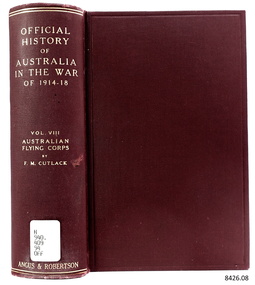
Book, Official History of Australia in the War of 1914-1918 Vol 8
... Cutlack Publisher: Angus & Robertson Ltd Date: 1942 Further Information: The Australian Flying Corps in the Western and Eastern Theatres of the War 1914 - 1918...Cutlack Publisher: Angus & Robertson Ltd Date: 1942 Further Information: The Australian Flying Corps in the Western and Eastern Theatres of the War 1914 - 1918 Official History of Australia in the War of 1914-1918 Vol 8 Book ...This book was part of a large group of books referred to as the Pattison Collection, which belonged to the Warrnambool Public Library, part of the Warrnambool Mechanics’ Institute. About RALPH ERIC PATTISON and the ‘PATTISON COLLECTION’ The ‘Pattison Collection’ is a collection of books and records that was originally owned by the Warrnambool Mechanics’ Institute, founded in Warrnambool in 1853. By 1886 the Warrnambool Mechanics’ Institute (WMI) had grown to have a Library, Museum and Fine Arts Gallery, with a collection of “… choice productions of art and valuable specimens in almost every branch and many wonderful national curiosities, are now to be seen there, including historic relics of the town and district.” It later included a School of Design. Although it was very well patronised, the WMI was led to ask the City Council to take it over in 1911 due to a lack of financial support. In 1935 Ralph Pattison was appointed as City Librarian to establish and organise the Warrnambool Public Library as it was then called. Ralph Eric Pattison was born in Rockhampton, Queensland, in 1891. He married Maude Swan from Warrnambool in 1920 and they set up a home in Warrnambool. In 1935 when Pattison accepted the position as City Librarian for the Warrnambool City Council his huge challenge was to make a functional library within two rooms of the Mechanics’ Institute. He tirelessly cleaned, cleared and sorted a disarrayed collection of old books, jars of preserved specimens and other items reserved for exhibition in the city’s museum. He developed and updated the library with a wide variety of books for all tastes, including reference books for students; a difficult task to fulfil during the years following the Depression. He converted all of the lower areas of the building into a library, reference room and reading room for members and the public. The books were sorted and stored using a cataloguing and card index system that he had developed himself. He also prepared the upper floor of the building and established the Art Gallery and later the Museum, a place to exhibit the many old relics that had been stored for years for this purpose. One of the treasures he found was a beautiful ancient clock, which he repaired, restored and enjoyed using in his office during the years of his service there. Ralph Pattison was described as “a meticulous gentleman whose punctuality, floorless courtesy and distinctive neat dress were hallmarks of his character, and ‘his’ clock controlled his daily routine and his opening and closing of the library’s large heavy doors to the minute.” Pattison took leave from 1942 to 1945 to serve in the Royal Australian Navy, Volunteer Reserve as Lieutenant. A few years later he converted one of the Museum’s rooms into a Children’s Library, stocking it with suitable books for the younger generation. This was an instant success. In the 1950’s he had the honour of being appointed to the Victorian Library Board and received more inspiration from the monthly conferences in Melbourne. He was sadly retired in 1959 after over 23 years of service, due to the fact that he had gone over the working age of council officers. However, he continued to take a very keen interest in the continual development of the Library until his death in 1969. THE NEW WARRNAMBOOL LIBRARY When the WMI building was pulled down in 1963 a new civic building was erected on the site and the new Warrnambool Library, on behalf of the City Council, took over all the holdings of the WMI. At this time some of the items were separated and identified as the ‘Pattison Collection’, named after Pattison. Eventually, the components of the WMI were distributed from the Warrnambool Library to various places, including the Art Gallery, Historical Society and Flagstaff Hill. Later some were even distributed to other regional branches of Corangamite Regional Library and passed to and fro. It is difficult now to trace just where all of the items have ended up. The books at Flagstaff Hill Maritime Village generally display stamps and markings from Pattison as well as a variety of other institutions including the Mechanics’ Institute itself. The Pattison Collection, along with other items at Flagstaff Hill Maritime Village, was originally part of the Warrnambool Mechanics' Institute’s collection. The Warrnambool Mechanics’ Institute Collection is primarily significant in its totality, rather than for the individual objects it contains. Its contents are highly representative of the development of Mechanics' Institute libraries across Australia, particularly Victoria. A diversity of publications and themes has been amassed, and these provide clues to our understanding of the nature of and changes in the reading habits of Victorians from the 1850s to the middle of the 20th century. The collection also highlights the Warrnambool community’s commitment to the Mechanics’ Institute, reading, literacy and learning in the regions, and proves that access to knowledge was not impeded by distance. These items help to provide a more complete picture of our community’s ideals and aspirations. The Warrnambool Mechanics Institute book collection has historical and social significance for its strong association with the Mechanics Institute movement and the important role it played in the intellectual, cultural and social development of people throughout the latter part of the nineteenth century and the early twentieth century. The collection of books is a rare example of an early lending library and its significance is enhanced by the survival of an original collection of many volumes. The Warrnambool Mechanics' Institute’s publication collection is of both local and state significance. Official History of Australia in the War of 1914-1918 Vol 8 Author: F. M. Cutlack Publisher: Angus & Robertson Ltd Date: 1942 Further Information: The Australian Flying Corps in the Western and Eastern Theatres of the War 1914 - 1918The label on the spine cover with typed text H 940.40994 OFF Paste down front end paper has a sticker from Corangamite Regional Library Service.flagstaff hil, warrnambool, flagstaff hill maritime museum, maritime museum, shipwreck coast, flagstaff hill maritime village, great ocean road, book, pattison collection, warrnambool library, warrnambool mechanics’ institute, ralph eric pattison, corangamite regional library service, warrnambool city librarian, mechanics’ institute library, victorian library board, warrnambool books and records, warrnambool children’s library, official history of australia in the war of 1914-1918 vol 8, f. m. cutlack -
 Kew Historical Society Inc
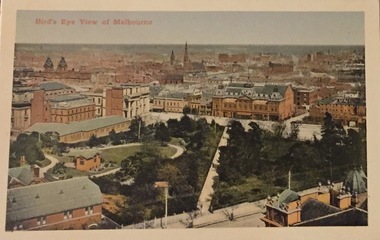
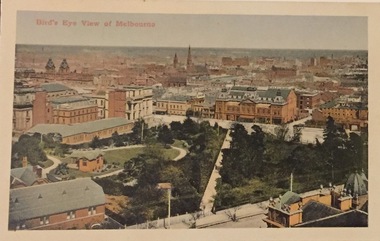
Postcard, Bird's Eye View of Melbourne, c.1911
... ...princess theatre, eastern hill - melbourne...Those postcards which are early views of Melbourne must have been produced commercially for some decades from the early part of the 20th century. postcards george and edith weir princess theatre, eastern hill - melbourne weir collection "Bird's Eye View of Melbourne" Bird's eye view of Melbourne looking across a park to the Princess Theatre. ...Collection of thirty-nine postcards donated by Jillian Rigby which had been owned by her grandparents, George and Edith Weir, who from c.1917 lived at 84 Princess Street, Kew. The mostly 'mint' postcards were purchased in Victoria and while travelling overseas. The sole dated postcard is dated from 1929. The postcards are numbered sequentially from 2017.0058.01-39. The remainder of the collection donated by Jill Rigby which was once owned by the Weirs of Broken Hill and Kew consist of costumes, costume accessories, photographs, and documents.The postcards in the Weir collection, especially those purchased on a trip or trips to the mother country, i.e. United Kingdom, represent a representative sample of sites that were considered significant to those Australians undertaking a reverse grand tour by member of the erstwhile colonies. Those postcards which are early views of Melbourne must have been produced commercially for some decades from the early part of the 20th century.Bird's eye view of Melbourne looking across a park to the Princess Theatre. Coloured postcard. Weir collection."Bird's Eye View of Melbourne"postcards, george and edith weir, princess theatre, eastern hill - melbourne, weir collection -
 Kew Historical Society Inc
Postcard, Bird's Eye View of Melbourne, c.1911
... ...princess theatre, eastern hill - melbourne...Those postcards which are early views of Melbourne must have been produced commercially for some decades from the early part of the 20th century. postcards george and edith weir princess theatre, eastern hill - melbourne weir collection "Bird's Eye View of Melbourne" Bird's eye view of Melbourne looking across a park to the Princess Theatre. ...Collection of thirty-nine postcards donated by Jillian Rigby which had been owned by her grandparents, George and Edith Weir, who from c.1917 lived at 84 Princess Street, Kew. The mostly 'mint' postcards were purchased in Victoria and while travelling overseas. The sole dated postcard is dated from 1929. The postcards are numbered sequentially from 2017.0058.01-39. The remainder of the collection donated by Jill Rigby which was once owned by the Weirs of Broken Hill and Kew consist of costumes, costume accessories, photographs, and documents.The postcards in the Weir collection, especially those purchased on a trip or trips to the mother country, i.e. United Kingdom, represent a representative sample of sites that were considered significant to those Australians undertaking a reverse grand tour by member of the erstwhile colonies. Those postcards which are early views of Melbourne must have been produced commercially for some decades from the early part of the 20th century.Bird's eye view of Melbourne looking across a park to the Princess Theatre. Coloured postcard. Weir collection."Bird's Eye View of Melbourne"postcards, george and edith weir, princess theatre, eastern hill - melbourne, weir collection -
Canterbury History Group
Photograph - View of the eastern corner shop No. 8 of Theatre Place, Jan Pigot, 27/03/1993 12:00:00 AM
... View of the eastern corner shop No. 8 of Theatre Place...Coloured photograph of the door of the shop at the eastern corner of Theatre Place called Home Sweet Home...Canterbury Maling Road Shops Theatre Place Coloured photograph of the door of the shop at the eastern corner of Theatre Place called Home Sweet Home Photograph View of the eastern corner shop No. 8 of Theatre Place Jan Pigot ...Coloured photograph of the door of the shop at the eastern corner of Theatre Place called Home Sweet Homecanterbury, maling road, shops, theatre place -
 Bendigo Military Museum
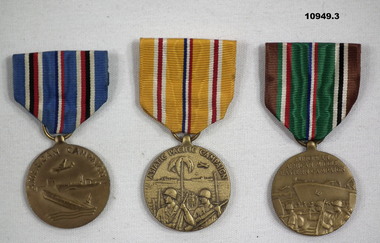
Award - MEDALS, U.S., WW2, Unknown
... European - African Medal - Awarded for qualifying service with the European, African & Middle Eastern Theatres of WW2....European - African Medal - Awarded for qualifying service with the European, African & Middle Eastern Theatres of WW2. Ron Mills Collection Medals US No name inscriptions. ...1. American Campaign Medal - For service in Active duty in the WW2 American Theatre of Operations up to 2 Mar 1946, including 1 year service in Continental USA. 2. Pacific Campaign Medal - For service in Asiatic - Pacific area during WW2. 3. European - African Medal - Awarded for qualifying service with the European, African & Middle Eastern Theatres of WW2.Three medals with ribbons - unmounted. 1. American Campaign Medal. 2. Pacific Campaign Medal. 3. European - African - Middle Easter Campaign Medal.No name inscriptions.ron mills collection, medals, us -
Surrey Hills Historical Society Collection
Work on paper - Vertical file, State Savings Bank of Victoria & Commonwealth Bank of Australia - Surrey Hills branches
... ‘On the site of Surrey Theatre’, Eastern Times Gazette, 21.9.1966 (2 copies), (1 page). 8. ...‘On the site of Surrey Theatre’, Eastern Times Gazette, 21.9.1966 (2 copies), (1 page). 8. ...A vertical file with the following items: 1. Bank opened in 1916, Box Hill Reporter, 21.9.1966 (3 copies), (3 pages). 2. ‘Going going gone!’, SHNN No. 4 June/July 1983 (1 page). 3. ‘Bank closures anger traders’, Anthony Dowsley, (unknown newspaper and date), (1 page). 4. ‘Commonwealth bank closes – shame, shame, shame!’ SHNN 108 Oct./Nov. 2000 (1 page). 5. ‘Which bank?- State to Commonwealth to Community!’ SHNN No. 117 April/May 2002 (1 page). 6. ’50 years in Surrey Hills’, Box Hill Reporter, 21.9.1966 (1 page). 7. ‘On the site of Surrey Theatre’, Eastern Times Gazette, 21.9.1966 (2 copies), (1 page). 8. Information on State Bank of Victoria (date and source unknown), (1 page). 9. ‘For Bank’s jubilee’, undated newspaper cutting (1 page). 10. List of first 20 depositors of Surrey Hills branch (1 page). 11. Sample withdrawal form used in 1980s (1 page) 12. Sample CBA deposit & withdrawals forms used from 1990s to present day (2 pages). 13. Sample State Bank Victoria Term deposit maturity advice 1991 (1 page). 14. 2 sample State Bank Victoria deposit books and coin bag from 1990s (3 items). 15. ‘Commonwealth Bank Closes – shame, shame, shame!’, SHNN, No. 108, October/November, 2000 (1 page). 16. ‘A good news bank story!’ SHNN No. 116, February/March, 2002 (1 page). 17. ‘Which Bank ? – State to Commonwealth to Community!’ SHNN No. 117, April/May, 2002 (1 page). 18. ‘Community Bank share offer opens’, SHHN No. 118, June/July 2002 (1 page). 19. ‘Community Bank opening soon!’, SHNN No. 120, October/November, 2002 (1 page). 20. ‘The Bank is back in town!’, SHNN No. 123, April/May, 2003 (1 page). state savings bank of victoria, commonwealth bank of australia, banks -
 Federation University Historical Collection
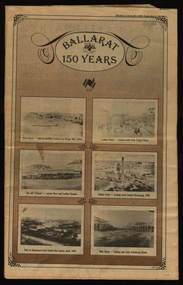
Newspaper, Ballarat 150 Years: Supplement to the Ballarat Courier, 1988, 17/03/1988
... Articles include: 1838-the pastoral period begins; First White Settlers arrive (Anderson, Winter, Yuille, Kirkland, Learmonth); Learmonths - Pioneer Settlers; The Rush to Ballarat; Last of the Aborigines; Eureka Affair Gains New Importance; Mining-After the rush; SMB - First Technical School; Clubs Play their Part; Ballarat Yuilles had Wealthy Ancestors; Town, Country Share a Close Relationship; Many Sides to Metals Industry; True Victorian City; Five Severe Recessions; Financiers to the Fore; Ready for War; City Rich in Sport Facilities; Visitors to most exciting place; No Place for a Nervous Lady; Theatres Provide Welcome Diversion for Mines; Might Achievers Among famous Citizens; Life Seemed Different After the War; Ballarat School of Mines Eastern Station Hotel; Memorial (Her Majesty's) Last of Many Theatres; Art Gallery at its Best; Pilgrimage to Yuille Cairn at Sebastopol Images include: Jelbart tractor; Sunshine Harvester; Bailey's Mansion; Pennyweight Hotel; Bridge Mall; Blue Riband Mine, Black Hill, Burrumbeet Shooting party; A wendouree rowing club; Motor Cycle Racing; Women bowlers, Queen Elizabeth; Gong Gong Methodist Church; Arbour day at Waterloo Farm, Smythes Rd; Gold panners (1890s); Ballarat Cricket Team (1902); William Peart; D'Angri's store; Sturt St Advertisements include: Rehfisch and Co.; UFS Dispensaries; Deutscher Mower Sales and Service; Haymes Paint; Cincotta's; Abraham's Sportscene; McK's; McKay Macleod; St John of God Hospital; Benjamins Real Estate; Ballarat Water Board; Cornell's Pharmacy; Laminex Industries; Coltman Mitre 10; Lal Lal Iron Mine; Heinz Bros; Crockers; Frank ford travel; S.J. ...Articles include: 1838-the pastoral period begins; First White Settlers arrive (Anderson, Winter, Yuille, Kirkland, Learmonth); Learmonths - Pioneer Settlers; The Rush to Ballarat; Last of the Aborigines; Eureka Affair Gains New Importance; Mining-After the rush; SMB - First Technical School; Clubs Play their Part; Ballarat Yuilles had Wealthy Ancestors; Town, Country Share a Close Relationship; Many Sides to Metals Industry; True Victorian City; Five Severe Recessions; Financiers to the Fore; Ready for War; City Rich in Sport Facilities; Visitors to most exciting place; No Place for a Nervous Lady; Theatres Provide Welcome Diversion for Mines; Might Achievers Among famous Citizens; Life Seemed Different After the War; Ballarat School of Mines Eastern Station Hotel; Memorial (Her Majesty's) Last of Many Theatres; Art Gallery at its Best; Pilgrimage to Yuille Cairn at Sebastopol Images include: Jelbart tractor; Sunshine Harvester; Bailey's Mansion; Pennyweight Hotel; Bridge Mall; Blue Riband Mine, Black Hill, Burrumbeet Shooting party; A wendouree rowing club; Motor Cycle Racing; Women bowlers, Queen Elizabeth; Gong Gong Methodist Church; Arbour day at Waterloo Farm, Smythes Rd; Gold panners (1890s); Ballarat Cricket Team (1902); William Peart; D'Angri's store; Sturt St Advertisements include: Rehfisch and Co.; UFS Dispensaries; Deutscher Mower Sales and Service; Haymes Paint; Cincotta's; Abraham's Sportscene; McK's; McKay Macleod; St John of God Hospital; Benjamins Real Estate; Ballarat Water Board; Cornell's Pharmacy; Laminex Industries; Coltman Mitre 10; Lal Lal Iron Mine; Heinz Bros; Crockers; Frank ford travel; S.J. ...A supplement to celebrate 150 since the establishment of the Port Phillip Colony (Victoria).40 page newspaper published to celebrate the Sesquicentenary of Ballarat. Articles include: 1838-the pastoral period begins; First White Settlers arrive (Anderson, Winter, Yuille, Kirkland, Learmonth); Learmonths - Pioneer Settlers; The Rush to Ballarat; Last of the Aborigines; Eureka Affair Gains New Importance; Mining-After the rush; SMB - First Technical School; Clubs Play their Part; Ballarat Yuilles had Wealthy Ancestors; Town, Country Share a Close Relationship; Many Sides to Metals Industry; True Victorian City; Five Severe Recessions; Financiers to the Fore; Ready for War; City Rich in Sport Facilities; Visitors to most exciting place; No Place for a Nervous Lady; Theatres Provide Welcome Diversion for Mines; Might Achievers Among famous Citizens; Life Seemed Different After the War; Ballarat School of Mines Eastern Station Hotel; Memorial (Her Majesty's) Last of Many Theatres; Art Gallery at its Best; Pilgrimage to Yuille Cairn at Sebastopol Images include: Jelbart tractor; Sunshine Harvester; Bailey's Mansion; Pennyweight Hotel; Bridge Mall; Blue Riband Mine, Black Hill, Burrumbeet Shooting party; A wendouree rowing club; Motor Cycle Racing; Women bowlers, Queen Elizabeth; Gong Gong Methodist Church; Arbour day at Waterloo Farm, Smythes Rd; Gold panners (1890s); Ballarat Cricket Team (1902); William Peart; D'Angri's store; Sturt St Advertisements include: Rehfisch and Co.; UFS Dispensaries; Deutscher Mower Sales and Service; Haymes Paint; Cincotta's; Abraham's Sportscene; McK's; McKay Macleod; St John of God Hospital; Benjamins Real Estate; Ballarat Water Board; Cornell's Pharmacy; Laminex Industries; Coltman Mitre 10; Lal Lal Iron Mine; Heinz Bros; Crockers; Frank ford travel; S.J. Weir; Ludbrook Plumbing Service; Mars; Robert Sim Building Supplies, Frank Day; Sectrol Systems; Thornton Richardsballarat, anniversary, sydney abraham, cincotta, eureka, ballarat school of mines, mining, ballarat club, lal lal iron mine, ballarat rangers, victorian rifles, 3rd battalion victorian rifles, ballarat militia, white flat, celia scott, adelphi theatre, victoria theatre, montezuma theatre, charlie napier, juliamatthews, royal theatre, dick richards, henry sutton, eleanor lucus, martin hosking, newington estate, saleyards, g. gay & co, ballarat books, old benev' alleviated distress on goldfields -
 Flagstaff Hill Maritime Museum and Village
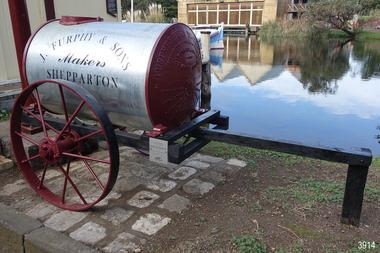
Vehicle - Furphy Water Cart, J. Furphy & Sons, c. 1942
... theatres of war in Europe and the Middle East, to supply the AIF troops with fresh water. Warrnambool flagstaff hill maritime museum water cart Furphy cart Furphy tank Furphy Farm water cart Furphy John Furphy John Furphy & Sons Furphy Foundry Kyneton Shepparton Mobile water tank Jinker Hutchinson & Walker Blacksmith Farm equipment Implement maker Tool maker Horse drawn Stork and baby Good better best Barrel Tank first world war wwI Eastern Front Gallipoli j furphy & sons Hub perimeter, embossed “J. ...This horse-drawn, two-wheeled cart with a tank, is known as a Furphy Farm Water Cart that was made in Shepparton, northern Victoria, c. 1942. John Furphy (1842-1920) was born in Moonee Ponds, in 1842 to Irish immigrant parents and subsequently raised in the Yarra Valley before the family moved to Kyneton in central Victoria, where he completed an apprenticeship with the firm Hutcheson and Walker. Murphy began operations of his own at a site on Piper Street in Kyneton in 1864. He relocated for a business opportunity and founded the first blacksmiths and wheelwrights shop in the newly surveyed town of Shepparton in 1873. Furphy invented many farming tools and machines including a patented grain-stripper, and won awards at the 1888-89 Melbourne International Exhibition. His most famous invention is the Furphy Farm Water Cart, designed in the 1880s, at a time when water for most households and farms was carted on wagons in wooden barrels. The Furphy’s water cart is a single item that combines a water metal tank and a cart. The design of the cart was simple yet effective, and became popular very quickly and established itself as a vital piece of farming equipment. The water cart has had a number of words cast into its ends over many years. References to the foundry’s location in Shepparton, as well as advertising of other products also manufactured by J. Furphy & Sons were present on the ends. However, the most significant set of words to feature on the tank, was a poem encouraging continual improvement: ‘Good Better Best, Never Let it Rest, Until your Good is Better, And your Better Best’. During The Great War (1914-1918), the water cart was used by the Australian militarily at a large AIF (Australian Imperial Force) camp in Broadmeadows (Melbourne) where thousands of men were camped for months, before being transported aboard. Furphy Water Carts provided water to the troops, and were usually placed near the camp latrines, which was one of the few places the troops could share gossip and tall tales away from the prying eyes and ears of their officers. The water cart drivers were also notorious sources of information, despite most of their news being hearsay, or totally unreliable. By the time the men of the AIF were in engaged in combat on the Gallipoli Peninsula and the Western Front, the carts used for water supply had no markings and became simply referred to as Furphys. This owed as much to the coining of the term ‘Furphy’, Australian slang for suspect information or rumour. After a number of decades as principally a soldier’s word, 'Furphy' entered the broader Australian vernacular and was used mainly by the political class until recently when the term was taken up by a Australian brewer as a beer brand. This Furphy Water Cart was purchased by Friends of Flagstaff Hill in 2014. The support of local individuals, organisations and businesses enabled its restoration and later its installation alongside the existing late-19th century water pipe stand and 1940s hand pump The Furphy Farm Water Cart is of historical significance as it represents a famous Australian time-saving and energy-saving invention of the 1880s, replacing the labour intensive activity of collecting and dispensing water from barrels and casks on the back of carts. The water cart’s connection with manufacturing companies J. Furphy & Sons and Furphy Foundry are significant for being early Australian businesses that are still in operation today. Furphy carts are of military significance for the role they played during The Great War (1914-1918) in Australian army camps, and theatres of war in Europe and the Middle East, to supply the AIF troops with fresh water. A wooden framed, two-wheeled, horse-drawn cart, fitted with a horizontally mounted, cylindrical metal tank. The tank is made of rolled, sheet steel with a riveted seam, and cast iron ends with cast iron ends. The spoked metal wheels have fitted flat iron tyres and metal hubs. A metal pipe is joined to the outlet. The tank is silver coloured, the ends, wheels and trims are crimson, and the script lettering on tank sides is black. There are inscriptions on the tank, ends, and hubs. The water tank was made in 1942 in Shepparton, Australia, by J. Furphy & Sons and has a capacity of 180 gallons (848 litres). Hub perimeter, embossed “J. FURPHY & SONS” “KEEP THE / BOLTS TIGHT” Hub centre embossed [indecipherable] Tank, each side, painted “J. FURPHY & SONS / Makers / SHEPPARTON” Tank ends, embossed – “FURPHY’S FARM WATER CART” “BORN ABOUT 1880 – STILL ‘GOING STRONG’ 1942” “j. FURPHY & SONS / MAKERS / SHEPPARTON - VIC “ “S - - - - - L MANUFACTURERS” [SPECIAL] “SPIKE ROLLERS” “SINGLE TREES” “PLOUGH WHEELS” “IRON CASTINGS” “LAND GRADERS” “STEEL DELVERS” “CAST IRON PIG” “CHAIN YOKES” “GOOD – BETTER – BEST / NEVER LET IT REST / TILL YOUR GOOD IS BETTER / AND YOUR BETTER – BEST” Image [Stork carrying a baby] above shorthand, transcribed "Produce and populate or perish" Image [Furphy Pig Feeder] beside ‘Cast Iron Pig’ Shorthand, transcribed “"Water is the gift of God but beer and whiskey are concoctions of the Devil, come and have a drink of water"warrnambool, flagstaff hill maritime museum, water cart, furphy cart, furphy tank, furphy farm water cart, furphy, john furphy, john furphy & sons, furphy foundry, kyneton, shepparton, mobile water tank, jinker, hutchinson & walker, blacksmith, farm equipment, implement maker, tool maker, horse drawn, stork and baby, good, better, best, barrel, tank, first world war, wwi, eastern front, gallipoli, j furphy & sons -
 The Beechworth Burke Museum
Photograph, c1885
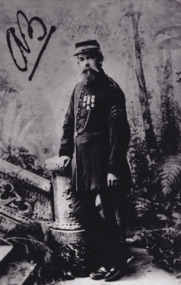
... Theatre in Chiltern in 1866. In 1869 he moved to Melbourne for a few years in which time he built the Eastern Arcade in Bourke Street. ...Theatre in Chiltern in 1866. In 1869 he moved to Melbourne for a few years in which time he built the Eastern Arcade in Bourke Street. ...This carte de visite was taken of Hiram Crawford in fire brigade uniform taken by Stewart & CO., Melbourne. Hiram Crawford was Captain of the Beechworth Volunteer Fire Brigade for twenty-five years. Hiram arrived in Australia at the age of 21 in August 1853. He mined for short time at Back Creek Bendigo, then went to the Ovens where he sought gold in Spring Creek, Buckland and 3 Mile. After moving to Albury for 18 months he married Anna, moved to Woolshed and was there for two years mining gold. After discovering his fortune he formed Crawford and Co. Coaching Lines in Beechworth in late 1856. It was this company which became the longest surviving coaching business in the State of Victoria. Hiram and Anna had two daughters. Anna died in March 1862 and in May Hiram left from Melbourne to return to the United States on a visit. Hiram married Martha Foster during this visit and returned to Australia in March 1863. With his coach line established, and leaving it under management, he moved around the north east of Victoria establishing and building shops and the Star Hotel and Theatre in Chiltern in 1866. In 1869 he moved to Melbourne for a few years in which time he built the Eastern Arcade in Bourke Street. In 1876 the family returned to Beechworth for a few years eventually moving to Everton where Hiram grew hops, tobacco, fruit trees and established the largest lemon orchard at that time in Australia. Hiram spent a considerable amount of his time helping to develop the North East of the State not only in his private endeavours but as a public figure. Among his many achievements a few are listed - Councillor, Mayor of Chiltern and Beechworth, President of the Shire on two occasions, Director of many mining companies, Inaugural Chairman and Director of the Beechworth Gas Company roles he held for over 20 years, Foundation member of Beechworth Pottery, Committee member of the Beechworth Hospital, Captain/Superintendent of the Vol. Fire Brigade for over 20 years, Foundation, Life member of and on the State Fire Brigade Board for many years, President of the North Eastern Railway League in Chiltern On a personal level Hiram was involved in lodges including St. Johns #14, Beechworth. and had several grazing properties in the Ovens area. He had the Forest Park Hotel at Carboor, the Creamery at Carboor, and grazing land on which the Milawa Creamery was built during his ownership. He was a committee member for 3 committees duirng the 1888 International Exhibition in Melbourne. Hiram had many voyages around the world studying irrigation, hop growing, tobacco growing and drying. During his retirement in Melbourne Hiram purchased many properties in the Elsternwick area and acted as an Estate Agent. After the death of his second wife Martha, Hiram married for the third time in 1912 to Sophia Maude Heatley. Crawford and Co continued until 1921. [Taken from HighCountryHeritage.com.au]Black and white reproduction of a studio portrait of Hiram Crawford in fire brigade uniform, printed on gloss photographic paper and bordered with a white frame.Badge on uniform sleeve reads: CAPTAIN / BVFB Obverse: AB/ Stewart & CO./ Melbourne Reverse: Hiram Collection/ BMM2435burke museum, emergency services, beechworth, carte de visite, black and white, fire brigade, hiram crawford, stewart & co., melbourne. -
 Eltham District Historical Society Inc
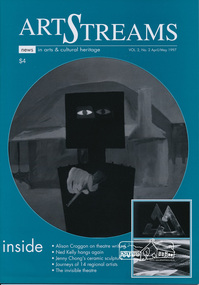
Journal, Peter Doughtery, ArtStreams: News in arts and cultural heritage; Vol. 2, No. 2, Apr-May 1997, 1997
... Eastern Metropolitan Opera...Justin McMahon...Albert Tucker...Archimede Fusillo...Slickers...Whilefood delights...Eltham School of Ballet...Eltham Little Theatre...." - Eltham District Historical Society Newsletter No. 161, March 2005 art streams food for all seasons Sidney Nolan Ned Kelly at Glenrowan Jenny Chong Manningham Artspace Alison Croggan Steve Vai Daniel Chable Recherche Speciality Picture Framing Harriet Dance Eva Gaitatzis Manningham Artspace Rick Amor Jenny Chong Geoffrey Gordon Dance Ernest Fries Isabel Davies lindsay edward Kazuko Eguichi Deborah Halperin Inge King Grahame King Kevin Lincoln David Moore akira takizawa tony trembath Carolyn Pickett Melbourne Writers' Theartre Faces Coffee House Eastern Metropolitan Opera Justin McMahon Albert Tucker Archimede Fusillo Slickers Whilefood delights Eltham School of Ballet Eltham Little Theatre Peter Chapple Alan Marshall Short Story Award Janet Drake Jon Weaving Barry Dickens do lunch at the library licensed cafe Ken Strong Wingrove Cottage Community Clinic helen o'grady children's drama academy Eltham High School Symphonic Band James Morrison Eltham Wiregrass Gallery & Cafe Colour front and back cover with feature articles and literary pieces with photographs and advertisements printed in black and white. 36 pages, 30 cm. ...Vol. 2, No. 2, Apr-May 1997 CONTENTS DRAWING ON NATURE Jenny Chong discusses the long transition from pottery to sculpture 3 THE WRITER IN THE THEATRE Alison Croggon talks about the pains and joys of writing for the theatre 6 A MUSICIAN'S MUSICIAN Daniel Chable on Steve Vai 9 JOURNEYS OF THE MIND The pathway of 14 regional artists 10 THE INVISIBLE THEATRE The contribution of the Melbourne writers' theatre 13 PHOTOGRAPHY Justin McMahon's camera turns the night sky into 'light paintings' 16 NOLAN AT MUSEUM OF MODERN ART Why the Ned Kelly series is the exhibition we had to have 18 THE VOICE IN BETWEEN Short story by Archimede Fusillo 21 THEATRE AND CD REVIEW A play that puts an Aboriginal and Torres Strait Islander point of view 26 THEATRE AND CD REVIEW 27 ALAN MARSHALL AWARDS 28 SOUL OF SOCIETY Ken Strong tackles some questions of creativity 30 "Peter Dougherty has been involved in the local art scene for many years. As publisher and editor of the arts magazine Artstreams, his comments on the various branches of the arts are widely respected. His "The Arts" column in the Diamond Valley Leader presents a brief summary for a much wider cross section of the local community. Peter also operates his own gallery and the Artstreams Cafe at the St Andrews market. Peter has a wealth of knowledge about present day and historical aspects of local art and artists." - Eltham District Historical Society Newsletter No. 161, March 2005Colour front and back cover with feature articles and literary pieces with photographs and advertisements printed in black and white. 36 pages, 30 cm. Vol. 1, no. 1 (Nov. 1996) - Vol. 10, no. 5 (summer ed. 2005/06) art streams, food for all seasons, sidney nolan, ned kelly at glenrowan, jenny chong, manningham artspace, alison croggan, steve vai, daniel chable, recherche speciality picture framing, harriet dance, eva gaitatzis, manningham artspace, rick amor, jenny chong, geoffrey gordon dance, ernest fries, isabel davies, lindsay edward, kazuko eguichi, deborah halperin, inge king, grahame king, kevin lincoln, david moore, akira takizawa, tony trembath, carolyn pickett, melbourne writers' theartre, faces coffee house, eastern metropolitan opera, justin mcmahon, albert tucker, archimede fusillo, slickers, whilefood delights, eltham school of ballet, eltham little theatre, peter chapple, alan marshall short story award, janet drake, jon weaving, barry dickens, do lunch at the library licensed cafe, ken strong, wingrove cottage community clinic, helen o'grady children's drama academy, eltham high school symphonic band, james morrison, eltham wiregrass gallery & cafe -
 Eltham District Historical Society Inc
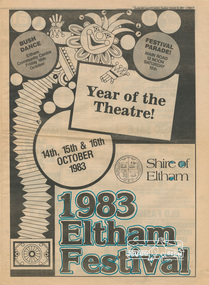
Program, Shire of Eltham 1983 Eltham Festival: Year of the Theatre!, 14th, 15th & 16th October 1983; Insert, Diamond Valley News, 11 October 1983, pp35-46, 1983
... Horsley, David Baker, David Sadedin, Dawn Mack, Diamond Valley Big Band, Diamond Valley Drapes, Diamond Valley Dutch Social Club, Diamond Valley Society, Dr Peter Reichenbach, Dr Rob Moffitt, Eastern District Bottle Company, Eccacentre, Eltham Central Cellars, Eltham Community Centre, Eltham Concert Band, Eltham Festival, Eltham High School, Eltham Jazz festival, Eltham Little Theatre, Eltham Living and Learning Centre, Eltham Newsagency & Toyworld, Eltham Orchestra, Eltham Pharmacy, Eltham Phoenix Club, Eltham Shire Council, Eltham Sports & Tennis, Eltham Wiregrass Gallery, Eltham Yamaha, Five and a Zack, Franciscus Henri, Frank Gow, Gavin Gray, George Barker, Graham Coyle, Graham Taylor, Greensborogh Hire service, I Can Jump Puddles (film), Ian Orr, Ian Walkear, International Communications Year, Janice Dadd, Jerry Clements, John Adams, John Higgins, John Murray, Kenton Shoes Eltham, Kings, Lazy Ade Monsbourgh, Leisure Footwear Pty Ltd, Lower Plenty Sports Centre, Mal Harrop, Matcham Skipper, Maurie Dann, Michael Poore, Montsalvat, MontsalvatValma Brundell, Myra Skipper, Panton Hill Hotel, Pats, Penna Guardian Chemist, Pine Canection, Purdy's Furniture, Ralph's Eltham Meat Supply, Ranger, Roller City, Ron Blyth, Ron Mack, Rotary Club of Eltham, Second Life decor Pty Ltd, Shire of Eltham Historical Society, Shire President, Skippers Marine Greensborough, Society for Growing Australian Plants, Squeaker's Mate (film), Storyville Allstars, Strings 'n Things, Style Interiors, T.J.'...Horsley, David Baker, David Sadedin, Dawn Mack, Diamond Valley Big Band, Diamond Valley Drapes, Diamond Valley Dutch Social Club, Diamond Valley Society, Dr Peter Reichenbach, Dr Rob Moffitt, Eastern District Bottle Company, Eccacentre, Eltham Central Cellars, Eltham Community Centre, Eltham Concert Band, Eltham Festival, Eltham High School, Eltham Jazz festival, Eltham Little Theatre, Eltham Living and Learning Centre, Eltham Newsagency & Toyworld, Eltham Orchestra, Eltham Pharmacy, Eltham Phoenix Club, Eltham Shire Council, Eltham Sports & Tennis, Eltham Wiregrass Gallery, Eltham Yamaha, Five and a Zack, Franciscus Henri, Frank Gow, Gavin Gray, George Barker, Graham Coyle, Graham Taylor, Greensborogh Hire service, I Can Jump Puddles (film), Ian Orr, Ian Walkear, International Communications Year, Janice Dadd, Jerry Clements, John Adams, John Higgins, John Murray, Kenton Shoes Eltham, Kings, Lazy Ade Monsbourgh, Leisure Footwear Pty Ltd, Lower Plenty Sports Centre, Mal Harrop, Matcham Skipper, Maurie Dann, Michael Poore, Montsalvat, MontsalvatValma Brundell, Myra Skipper, Panton Hill Hotel, Pats, Penna Guardian Chemist, Pine Canection, Purdy's Furniture, Ralph's Eltham Meat Supply, Ranger, Roller City, Ron Blyth, Ron Mack, Rotary Club of Eltham, Second Life decor Pty Ltd, Shire of Eltham Historical Society, Shire President, Skippers Marine Greensborough, Society for Growing Australian Plants, Squeaker's Mate (film), Storyville Allstars, Strings 'n Things, Style Interiors, T.J.' ...Events and information concerning the 1983 Eltham Festival including advertisements On page 37 the article "Force behind the revival" is about how Alistair Knox was the instigator of the revival of the Eltham Festival in 1975 and discusses the history of four earlier festivals held in the early 1960s. Advertisers and people noted include: AAAA Display Signs, Alan Leake, Alan Marshall, Alistair Knox, Allan Leake, Ansell and Muir, Australian Film, Barry Maddock, Beverley Sheehan, Bimbi World, Brian Jeeves, Brian Wright, Briar Hill Glass centre, Briar Hill Swimming Pools Pty Ltd, Briar Hill Timber, Bryan Payne, Bush band, Cal Martin, Central Park, Country Art Store, Cr. Horsley, David Baker, David Sadedin, Dawn Mack, Diamond Valley Big Band, Diamond Valley Drapes, Diamond Valley Dutch Social Club, Diamond Valley Society, Dr Peter Reichenbach, Dr Rob Moffitt, Eastern District Bottle Company, Eccacentre, Eltham Central Cellars, Eltham Community Centre, Eltham Concert Band, Eltham Festival, Eltham High School, Eltham Jazz festival, Eltham Little Theatre, Eltham Living and Learning Centre, Eltham Newsagency & Toyworld, Eltham Orchestra, Eltham Pharmacy, Eltham Phoenix Club, Eltham Shire Council, Eltham Sports & Tennis, Eltham Wiregrass Gallery, Eltham Yamaha, Five and a Zack, Franciscus Henri, Frank Gow, Gavin Gray, George Barker, Graham Coyle, Graham Taylor, Greensborogh Hire service, I Can Jump Puddles (film), Ian Orr, Ian Walkear, International Communications Year, Janice Dadd, Jerry Clements, John Adams, John Higgins, John Murray, Kenton Shoes Eltham, Kings, Lazy Ade Monsbourgh, Leisure Footwear Pty Ltd, Lower Plenty Sports Centre, Mal Harrop, Matcham Skipper, Maurie Dann, Michael Poore, Montsalvat, MontsalvatValma Brundell, Myra Skipper, Panton Hill Hotel, Pats, Penna Guardian Chemist, Pine Canection, Purdy's Furniture, Ralph's Eltham Meat Supply, Ranger, Roller City, Ron Blyth, Ron Mack, Rotary Club of Eltham, Second Life decor Pty Ltd, Shire of Eltham Historical Society, Shire President, Skippers Marine Greensborough, Society for Growing Australian Plants, Squeaker's Mate (film), Storyville Allstars, Strings 'n Things, Style Interiors, T.J.'s Hair & Beauty Centre, The Eltham Chicken Shop, The Printing Works, The Prize (film), Thompson's Pharmacy, tim burstall, Todaro Coiffure, Tony Figgins, Tony Floyd, Travel Affair, Two Roads Boutique, Valley Door Centre, Warrandyte Hire, Warren Fordham, Wonderland Plant Nursery, Woolworths ArcadeNewsprint - 12 page newspaper insert1983, eltham festival, alistair knox -
 Monbulk RSL Sub Branch
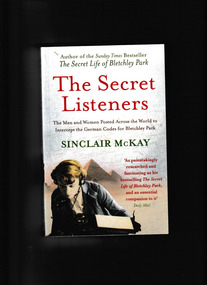
Book, Aurum Press Ltd, The secret listeners : The men and women posted across the world to intercept the secret german codes for Bletchley Park, 2012
... World War 1939-1945 - Great Britain - Intelligence World war 1939-1945 - Cryptography Before Bletchley Park could break the German war machine's code, its daily military communications had to be monitored and recorded by 'the Listening Service', the wartime department whose bases moved with every theatre of war (Cairo, Malta, Gibraltar, Iraq, Cyprus) as well as having listening stations along the eastern coast of Britain to intercept radio traffic in the European theatre. ...Before Bletchley Park could break the German war machine's code, its daily military communications had to be monitored and recorded by 'the Listening Service', the wartime department whose bases moved with every theatre of war (Cairo, Malta, Gibraltar, Iraq, Cyprus) as well as having listening stations along the eastern coast of Britain to intercept radio traffic in the European theatre. This is the story of the - usually very young - men and women sent out to farflung outposts to listen in for Bletchley Park, an oral history of exotic locations and ordinary lives turned upside down by a sudden remote posting - the heady nightlife in Cairo, filing cabinets full of snakes in North Africa, and flights out to Delhi by luxurious flying boat.Index, ill, map, p.354.non-fictionBefore Bletchley Park could break the German war machine's code, its daily military communications had to be monitored and recorded by 'the Listening Service', the wartime department whose bases moved with every theatre of war (Cairo, Malta, Gibraltar, Iraq, Cyprus) as well as having listening stations along the eastern coast of Britain to intercept radio traffic in the European theatre. This is the story of the - usually very young - men and women sent out to farflung outposts to listen in for Bletchley Park, an oral history of exotic locations and ordinary lives turned upside down by a sudden remote posting - the heady nightlife in Cairo, filing cabinets full of snakes in North Africa, and flights out to Delhi by luxurious flying boat.world war 1939-1945 - great britain - intelligence, world war 1939-1945 - cryptography -
 Bendigo Historical Society Inc.
Ephemera - Leighton Collection: Theatrical Scrapbook
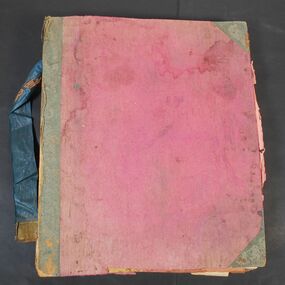
... Eastern states of Australia where he performed with his wife Tracy Hamilton. However all was not as it seemed. In 1903 he was arrested in Perth after suspicions were raised when he purchased expensive jewellery and clothes for his wife. Subsequently six thousand pounds in banknotes was found under his bed. Another fellow from his theatre...Eastern states of Australia where he performed with his wife Tracy Hamilton. However all was not as it seemed. In 1903 he was arrested in Perth after suspicions were raised when he purchased expensive jewellery and clothes for his wife. Subsequently six thousand pounds in banknotes was found under his bed. Another fellow from his theatre ...Herbert A Leighton was an actor and Elocution teacher, known widely in the Eastern states of Australia where he performed with his wife Tracy Hamilton. However all was not as it seemed. In 1903 he was arrested in Perth after suspicions were raised when he purchased expensive jewellery and clothes for his wife. Subsequently six thousand pounds in banknotes was found under his bed. Another fellow from his theatre group was also arrested and charged with bank robbery. Leighton was charged with receiving money knowing it was stolen. Investigations by the Perth police showed that Leighton was really Norman Campbell who had been born in Gippsland. He had worked as a clerk in the Victorian Savings Bank in Melbourne and then in the same role in the Sydney Savings Bank. During this time he had amassed large sums of money by forgery, a crime he spent seven years in prison for. He then emerged as the newly minted H. A. Leighton, actor and elocution teacher in Bendigo. .Large format scrapbook collated by D H Leighton. Contains photographs, flyers, programs, invitations, newspaper clippings, posters, promotional photos of performers between 1901 and 1936. The material includes items from theatrical performances and programs from Bendigo and other cities. Includes information about Amy Castles and other Bendigo performers including Alex J Hamilton. Includes information about a large number of performers who visited Bendigo. Many of the items overlap others. The scrapbook has a heavy pink cover with green tape binding on the spine and the corners with brown paper pages. Paper items have been glued onto the pages. leighton, hamilton, amy castles, theatres, performers, music -
 Bendigo Historical Society Inc.
Ephemera - Leighton Collection: Theatrical Scrapbook
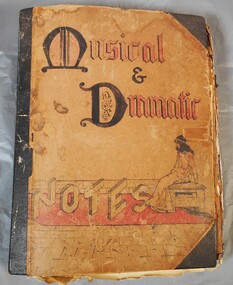
... Eastern states of Australia where he performed with his wife Tracy Hamilton. However all was not as it seemed. In 1903 he was arrested in Perth after suspicions were raised when he purchased expensive jewellery and clothes for his wife. Subsequently six thousand pounds in banknotes was found under his bed. Another fellow from his theatre...Eastern states of Australia where he performed with his wife Tracy Hamilton. However all was not as it seemed. In 1903 he was arrested in Perth after suspicions were raised when he purchased expensive jewellery and clothes for his wife. Subsequently six thousand pounds in banknotes was found under his bed. Another fellow from his theatre ...Herbert A Leighton was an actor and Elocution teacher, known widely in the Eastern states of Australia where he performed with his wife Tracy Hamilton. However all was not as it seemed. In 1903 he was arrested in Perth after suspicions were raised when he purchased expensive jewellery and clothes for his wife. Subsequently six thousand pounds in banknotes was found under his bed. Another fellow from his theatre group was also arrested and charged with bank robbery. Leighton was charged with receiving money knowing it was stolen. Investigations by the Perth police showed that Leighton was really Norman Campbell who had been born in Gippsland. He had worked as a clerk in the Victorian Savings Bank in Melbourne and then in the same role in the Sydney Savings Bank. During this time he had amassed large sums of money by forgery, a crime he spent seven years in prison for. He then emerged as the newly minted H. A. Leighton, actor and elocution teacher in Bendigo.Large format scrapbook collated by H.A. Leighton. Contains photographs, flyers, ribbons, banners, programs, invitations, newspaper clippings, posters, promotional photos of performers between 1901 and 1904. The material includes items from theatrical performances and programs from Bendigo and other cities. Includes information about Bendigo performers including Alex J Hamilton. Includes information about performers who visited Bendigo. Many of the items overlap others. The scrapbook has a heavy brown cover with black tape binding on the spine and the corners with brown paper pages. Written on the front cover Musical & Dramatic Notes in red and black ink plus a drawing of a woman in a long dress seated on a bench. Paper items have been glued onto the pages with several loose items. Leighton CollectionH A Leighton. Fecit. 24.11.00. Bendigo. Written inside the front cover on a drawing of an artist's palette above a picture of Alex Hamilton.leighton, hamilton, amy castles, theatres, performers, music -
 Bendigo Historical Society Inc.
Ephemera - Leighton Collection: Theatrical Scrapbook
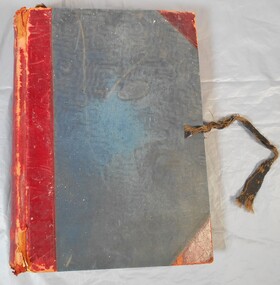
... eastern states of Australia where he performed with his wife Tracy Hamilton. But all was not as it seemed. In 1903 he was arrested in Perth after suspicions were raised when he bought expensive clothing and jewellery for his wife. Subsequently six thousand pounds in banknotes was found under his bed. Another fellow from his theatre...eastern states of Australia where he performed with his wife Tracy Hamilton. But all was not as it seemed. In 1903 he was arrested in Perth after suspicions were raised when he bought expensive clothing and jewellery for his wife. Subsequently six thousand pounds in banknotes was found under his bed. Another fellow from his theatre ...Herbert Allan Leighton was an actor and elocution teacher known widely in the eastern states of Australia where he performed with his wife Tracy Hamilton. But all was not as it seemed. In 1903 he was arrested in Perth after suspicions were raised when he bought expensive clothing and jewellery for his wife. Subsequently six thousand pounds in banknotes was found under his bed. Another fellow from his theatre group was also arrested and charged with Bank robbery. Leighton was charged with receiving money that he knew to be stolen. Investigations by Perth police showed that Leighton was really, Victorian born, Norman Campbell. He had worked as a clerk for Victorian Savings Bank in Melbourne and then in the same role at Sydney Savings Bank in NSW. During this time he had amassed large sums of money by forgery and embezzlement, a crime that he spent 7 years in prison for. He then emerged as the newly minted H. A. Leighton actor and elocution teacher in Bendigo.Large format scrapbook collated by H.A. Leighton. Contains photographs, flyers, programs, newspaper clippings, posters, promotional photos of performers between 1905 and 1909 The material includes items from theatrical performances. The scrapbook has a heavy blue cover with maroon tape binding on the spine and the corners with thick newsprint paper pages. Paper items have been glued onto the pages with several loose items. Mostly unnamed pictures from magazines. Includes a loose certificate as pictured. Includes two pages from a ledger connected with Prescott Jewellers Bendigo. theatres, performers, music -
 Bendigo Historical Society Inc.
Ephemera - Leighton Collection: Theatrical Scrapbook
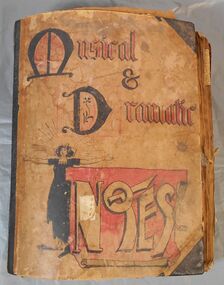
... eastern states of Australia where he perforomed with his wife, Tracy Hamilton. However all was not as it seemed. In 1903 he was arrested in Perth after suspicions were raised when he purchased expensive clothes and jewellery for his wife. Subsequently, six thousand pounds in banknotes was found under his bed. Another fellow from his theatre...eastern states of Australia where he perforomed with his wife, Tracy Hamilton. However all was not as it seemed. In 1903 he was arrested in Perth after suspicions were raised when he purchased expensive clothes and jewellery for his wife. Subsequently, six thousand pounds in banknotes was found under his bed. Another fellow from his theatre ...Herbert A. Leighton was an actor and elocution teacher known widely in the eastern states of Australia where he perforomed with his wife, Tracy Hamilton. However all was not as it seemed. In 1903 he was arrested in Perth after suspicions were raised when he purchased expensive clothes and jewellery for his wife. Subsequently, six thousand pounds in banknotes was found under his bed. Another fellow from his theatre group was also arrested and charged with bank robbery. Leighton was charged with receiving money knowing it was stolen. Investigations by the Perth police showed that Leighton was really Norman Campbell, born in Gippsland. He had worked as a bank clerk in the Victorian Savings Bank in Melbourne and in the same role at the Sydney Savings bank in NSW. During this time he amassed large sums of money by forgery, a crime he spent 7 years in prison for. He then emerged as the newly minted H. A. Leighton, actor and elocution teacher in Bendigo.Large format scrapbook collated by H.A. Leighton. Contains photographs, flyers, ribbons, banners, programs, invitations, newspaper clippings, posters, promotional photos of performers between 1901 and 1904. The material includes items from theatrical performances and programs from Bendigo and other cities. Includes information about Bendigo performers including Alex J Hamilton. Includes information about performers who visited Bendigo. Many of the items overlap others. The scrapbook has a heavy brown cover with black tape binding on the spine and the corners with brown paper pages. Written on the front cover Musical & Dramatic Notes in red and black ink plus a drawing of a standing woman in a long black dress with arms outstretched. Paper items have been glued onto the pages with several loose items. H A L. Fecit. In One Day. 29.11.00. Bendigo. Written inside the front cover on a drawing of an artist's palette.leighton, theatres, performers, music -
 Stawell Historical Society Inc
Photograph, Winston Lodge 1950 and 1952
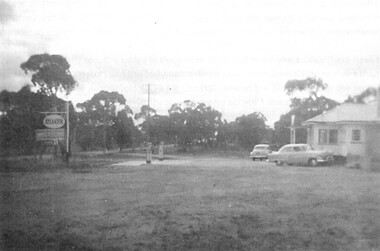
... theatre goers. It was reported in the Stawell Times and Pleasant Creek Chronicle on Saturday March 5th 1960 that a sign had been erected at Winston Lodge to mark the opening of Stawell’s first Motel. Some small Motel units had been constructed on the Eastern...theatre goers. It was reported in the Stawell Times and Pleasant Creek Chronicle on Saturday March 5th 1960 that a sign had been erected at Winston Lodge to mark the opening of Stawell’s first Motel. Some small Motel units had been constructed on the Eastern ...For around the last 70 years, a familiar sight on the Western Highway at Stawell West has been the Roadhouse/Service Station known as ‘Winston Lodge.’ The building was constructed on Crown Land over the years 1950-1952 by local builders, Mr. Bobby Briggs and Mr. Clem Faulkner for Mrs. Winifred Jenkins. Briggs and Faulkner also handled the construction of the new E.S. and A. Bank building in Main Street. Mrs. Jenkins realised that a stopover was needed in Stawell for both truckies and travellers alike. The family believe that the daughter of Mrs. Jenkins, Lyla drew up the plans for Winston Lodge in an exercise book and the construction was erected from these primitive sketches. Winston Lodge finally opened for business on Saturday March 1st 1952 after many delays due to building material shortages and was an immediate success with local farmers and interstate truckies. The conditions were basic, but the food was excellent in the style of the period – soups, roast dinners and hot apple pies with fresh cream from a dairy on Halls Gap Road. All the cooking was done on a wood fired double oven stove with water pipes running through the firebox to provide the hot water for the Lodge. The name Winston Lodge is quite a story. The family of Mrs. Jenkins believe that a financial backer of the construction was a family by the name of Johnston. So, a combination of WINifred and JohnSTON became Winston Lodge. It was not named after the English Prime Minister of the day Sir Winston Churchill but maybe Winifred Jenkins was a supporter of the PM. Winifred eventually sold the Lodge in December 1957 and in the years since there have been many owners/proprietors and the building has been saved from demolition on more than one occasion. One of the proprietors was a Mr Len Hall, who at the time, was also the proprietor of the Café at the Stawell Drive- In Theatre where he served T-Bone steaks, hamburgers, hot dogs and fish & chips to the theatre goers. It was reported in the Stawell Times and Pleasant Creek Chronicle on Saturday March 5th 1960 that a sign had been erected at Winston Lodge to mark the opening of Stawell’s first Motel. Some small Motel units had been constructed on the Eastern side of Winston Lodge to cater for the travelling public and also for the truckies who had stopped for a meal and a comfortable bed. Even though the name ‘Winston Lodge’ disappeared from the front of the building in 2020 when renovations took place, it will always be referred to locally as ‘Winston Lodge.’ Two Black and White Photographs One building Lodge. One with Atlantic Petrol Pumps Outside. -
Canterbury History Group
Photograph - Eastern view of shops in Theatre Place, Jan Pigot, 27/03/1993 12:00:00 AM
... Eastern view of shops in Theatre Place...Coloured photograph of the eastern view of shops in Theatre Place, Canterbury...Canterbury Maling Road Shops Theatre Place Coloured photograph of the eastern view of shops in Theatre Place, Canterbury Photograph Eastern view of shops in Theatre Place Jan Pigot ...Coloured photograph of the eastern view of shops in Theatre Place, Canterburycanterbury, maling road, shops, theatre place -
 Lilydale RSL Sub Branch
Book, F.M.Cutlack, Official History of Australia in the War/ The AFC in the Western and Eastern theatres of War 1914-1918, 1942
... Book Official History of Australia in the War/ The AFC in the Western and Eastern theatres of War 1914-1918 Book Book F.M.Cutlack Angus and Robertson. ...Book -
Whitehorse Historical Society Inc.
Document - Documents, Group reports, 2000
... Theatre...Box Hill Art Group...Blackburn High School. Friends of Music...Choral Institute Melbourne...CHIME Choir...Eastern...Nunawading Arts Council Grant Max Nunawading Art and Craft Market Australian Childrens Choir Babirra Music Theatre Box Hill Art Group Blackburn High School. Friends of Music Choral Institute Melbourne CHIME Choir Eastern Victorian Highland Dancing Association Maroondah Symphony Orchestra Mitcham Arts Association Maroondah Singers Mullauna Secondary College Music Department Mitcham Repertory Group Nunawading and District Historical Society Nova Theatre U3A Nunawading Vermont Horticultural Society and Garden Club Utassy Parents Association Vermont Secondary College. ...Annual reports presented to the Nunawading Arts Council Annual meeting by affiliated bodies. Includes an obituary for Ossie Maxwell Max Grant, theatre director who lived in Mitcham from the early 1950s until his death 22 Sept 2000.nunawading arts council, grant, max, nunawading art and craft market, australian childrens choir, babirra music theatre, box hill art group, blackburn high school. friends of music, choral institute melbourne, chime choir, eastern victorian highland dancing association, maroondah symphony orchestra, mitcham arts association, maroondah singers, mullauna secondary college music department, mitcham repertory group, nunawading and district historical society, nova theatre, u3a nunawading, vermont horticultural society and garden club, utassy parents association, vermont secondary college. music support group, whitehorse film society -
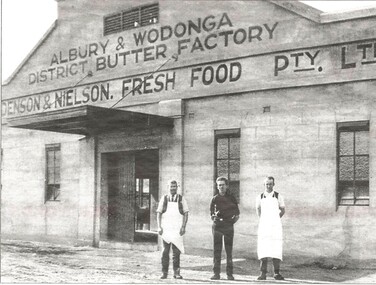 Wodonga & District Historical Society Inc
Photograph - Albury & Wodonga District Butter Factory
... Eastern Dairy Co-operative in 1962. It became a retail milk depot also involved in ice-making and cold storage. In 1985, Goulburn Murray bought the complex and as the site was surplus to requirements, it was sold to Wodonga Council. The buildings were adapted for other uses. The Butter Factory was modified and extended and for some time was occupied by the Albury- Wodonga Visitor Centre. The Creator's Gallery was established in the engine room, and the loading area and ice-making works were extended and modified for use as the HotHouse Theatre...Eastern Dairy Co-operative in 1962. It became a retail milk depot also involved in ice-making and cold storage. In 1985, Goulburn Murray bought the complex and as the site was surplus to requirements, it was sold to Wodonga Council. The buildings were adapted for other uses. The Butter Factory was modified and extended and for some time was occupied by the Albury- Wodonga Visitor Centre. The Creator's Gallery was established in the engine room, and the loading area and ice-making works were extended and modified for use as the HotHouse Theatre ...Holdenson and Nielson Fresh Food Pty Ltd was founded in 1903 by Poul Jorgenson Holdenson and Andrew Nielson, after acquiring the Fresh Food and Storage Co, which had plants throughout Australia, including Albury. The plant was moved to Wodonga that year. Cream was collected from all areas of North East Victoria and the Riverina, with contractors carting it to the railway stations for rail travel to Wodonga. The Butter Factory was built on the Lincoln Causeway in 1926, and the Cheese Factory in 1942 as a wartime emergency project. At the same time, a pasteurising plant was installed in the complex, and so whole milk was collected from dairy farmers, rather than just cream. The company was bought out by the North Eastern Dairy Co-operative in 1962. It became a retail milk depot also involved in ice-making and cold storage. In 1985, Goulburn Murray bought the complex and as the site was surplus to requirements, it was sold to Wodonga Council. The buildings were adapted for other uses. The Butter Factory was modified and extended and for some time was occupied by the Albury- Wodonga Visitor Centre. The Creator's Gallery was established in the engine room, and the loading area and ice-making works were extended and modified for use as the HotHouse Theatre. The Cheese Factory was adapted for use as a theatre and jazz venue, and housed the HotHouse office. The various outbuildings, such as garages and storage areas, were adapted for use as shops and craft outlets.This collection is significant because it documents an important industry in Wodonga.A collection of images and advertisements promoting Holdenson and Nielsen of Wodongaholdenson & nielson, wodonga dairies, victorian dairy industry -
Lakes Entrance Historical Society
Photograph - Broomes Maranui , Police Station Esplanade Lakes Entrance Victoria c1938
... Black and white photograph of a postcard showing Broome's Maranui Guesthouse with Police Station on the western side and the picture theatre on the eastern side....In foreground is the stone wall along the lake, concrete path and picnic table beside the Esplanade, Lakes Entrance Victoria. c1938 Accommodation Transport Black and white photograph of a postcard showing Broome's Maranui Guesthouse with Police Station on the western side and the picture theatre on the eastern side. Photograph Broomes Maranui , Police Station Esplanade Lakes Entrance Victoria c1938 ...In foreground is the stone wall along the lake, concrete path and picnic table beside the Esplanade, Lakes Entrance Victoria. c1938 Black and white photograph of a postcard showing Broome's Maranui Guesthouse with Police Station on the western side and the picture theatre on the eastern side.accommodation, transport
