
Showing 5 items matching "echuca town hall"
-
 Port of Echuca
A rectangular coloured photograph, 1979
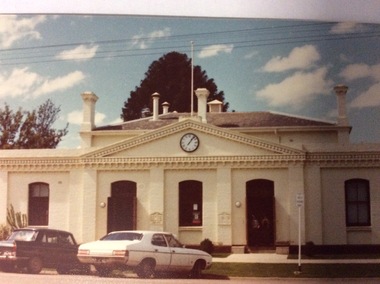
... echuca town hall...Town Hall building built in High Street in the 1890's. It was designed by renowned Bendigo Architect W.C .Vahland. This picture was taken in 1979 when the Echuca Library was housed there. ...A coloured photograph, in postcard size, of the original Town Hall building of Echuca, taken in 1979, when the building was being used as the Echuca Library....This building has also been used as the High School, while the Echuca High School was being built in the 1920's it was also used as a Kindergarten and the town Library operated there from 1965 to 2012 when the new Library was built. The Shire of Campaspe Information Technology Department has been housed there from 2012 up to the Present. echuca town hall echuca library vahland, w.c A coloured photograph, in postcard size, of the original Town Hall building of Echuca, taken in 1979, when the building was being used as the Echuca Library. ...This is a picture of the original Town Hall building built in High Street in the 1890's. It was designed by renowned Bendigo Architect W.C .Vahland. This picture was taken in 1979 when the Echuca Library was housed there. The Echuca Library operated out of this building from 1965 up to 2013 when the new library was built. In this photograph there are two people standing in the doorway and two cars parked in the street.This photograph is significant because it shows the first Town Hall building built in High Street in the late 1890's. The building was designed by W.C Vahland and was also used as the Law Courts before the Law Court building was built in Law Court Place. This building has also been used as the High School, while the Echuca High School was being built in the 1920's it was also used as a Kindergarten and the town Library operated there from 1965 to 2012 when the new Library was built. The Shire of Campaspe Information Technology Department has been housed there from 2012 up to the Present.A coloured photograph, in postcard size, of the original Town Hall building of Echuca, taken in 1979, when the building was being used as the Echuca Library.echuca town hall, echuca library, vahland, w.c -
 Bendigo Historical Society Inc.
Photograph - Assorted Photographs Sand Storm Bendigo
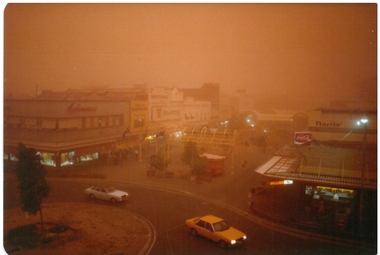
... Town Hall; 3. Hargreaves Mall Ashman's Corner from parking garage; 4. Hargreaves Mall; 5. Scene in Echuca St; 6. ...Town Hall; 3. Hargreaves Mall Ashman's Corner from parking garage; 4. Hargreaves Mall; 5. Scene in Echuca St; 6. ...Six photographs of Dust Storm in Bendigo 3.15pm February 8, 1983, 1. Hargreaves Mall; 2. Bendigo Town Hall; 3. Hargreaves Mall Ashman's Corner from parking garage; 4. Hargreaves Mall; 5. Scene in Echuca St; 6. Williamson St to Rosalind Park.On reverse. Dust Storm in Bendigo 3.15pm Feb 8, 1982, Edith Lunn's photos given to Caroldust storm 1983, the mall, storms -
 Bendigo Historical Society Inc.
Document - William Charles Vahland, 2014, 2018
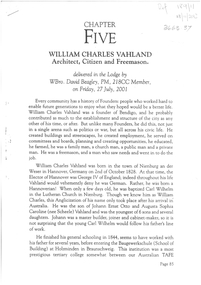
... Vahland and his firm designed and directed the building of many of Bendigo′s finest buildings, including the Town Hall, the Shamrock Hotel, the Bendigo Hospital, the Bendigo Benevolent Asylum, the School of Mines, the Mechanics Institute, the Princess Theatre, the Bendigo Masonic Temple, the Cascades in Rosalind Park, the Alexandra Fountain, the Sandhurst Club, the Commercial, National and Colonial Banks, the grandstand at Canterbury Park, Eaglehawk, as well as churches, commercial buildings, and private homes. The firm also opened an office in Echuca...Vahland and his firm designed and directed the building of many of Bendigo′s finest buildings, including the Town Hall, the Shamrock Hotel, the Bendigo Hospital, the Bendigo Benevolent Asylum, the School of Mines, the Mechanics Institute, the Princess Theatre, the Bendigo Masonic Temple, the Cascades in Rosalind Park, the Alexandra Fountain, the Sandhurst Club, the Commercial, National and Colonial Banks, the grandstand at Canterbury Park, Eaglehawk, as well as churches, commercial buildings, and private homes. The firm also opened an office in Echuca ...William Charles Vahland (born Carl Wilhelm Vahland; 2 October 1828 – 21 July 1915) was a German born and trained Australian architect who, after migrating to Bendigo in 1854 and becoming an Australian citizen on 20 July 1857, became known as the "premier architect of the Victorian goldfields". Vahland designed over 200 buildings in North Central Victoria, including many of Bendigo's largest public and private buildings. By encouraging other European artisans and artists to emigrate to Bendigo, Vahland's aim was to realise a vision of the city as the "Vienna of the South". Vahland and his firm designed and directed the building of many of Bendigo′s finest buildings, including the Town Hall, the Shamrock Hotel, the Bendigo Hospital, the Bendigo Benevolent Asylum, the School of Mines, the Mechanics Institute, the Princess Theatre, the Bendigo Masonic Temple, the Cascades in Rosalind Park, the Alexandra Fountain, the Sandhurst Club, the Commercial, National and Colonial Banks, the grandstand at Canterbury Park, Eaglehawk, as well as churches, commercial buildings, and private homes. The firm also opened an office in Echuca, and erected buildings in Hay, Deniliquin, Lorne, Lancefield, Rochester, Rushworth, Swan Hill, Yarrawonga and Benalla.. Fifteen page copy of paper on William Charles Vahland delivered in the Lodge by WBro David Beagley, on Friday 27th July 2001. Letter attached to the paper, addressed to Trevor Parsons, Secretary, Bendigo Historical Society, from Peter E. Hamilton, stating that the paper on Vahland 'was produced in the "Lodge of Research 2001'.sandhurst, bendigo, william charles vahland -
 Bendigo Historical Society Inc.
Plan - Fortuna Article - Plans of the Villa, July 3rd 1871
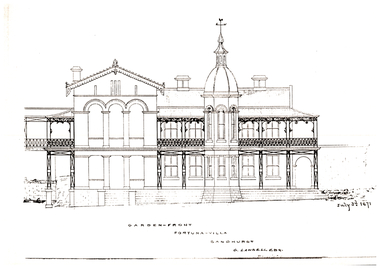
... He Designed many of Bendigo’s most prominent buildings, including the Town Hall, Shamrock Hotel, Bendigo Hospital, Benevolent Asylum, School of Mines, Mechanics Institute, Princess Theatre, Masonic Temple, Alexandra Fountain, and several banks and churches. His firm also worked in other Victorian towns and opened an office in Echuca...He Designed many of Bendigo’s most prominent buildings, including the Town Hall, Shamrock Hotel, Bendigo Hospital, Benevolent Asylum, School of Mines, Mechanics Institute, Princess Theatre, Masonic Temple, Alexandra Fountain, and several banks and churches. His firm also worked in other Victorian towns and opened an office in Echuca ...Architect of Fortuna Villa Carl William Vahland was born in 1828 in Nienburg an der Weser, Germany. He trained at the prestigious Polytechnic Baugewerkschule in Holzminden, excelling in building and architecture. Emigrated to Melbourne in 1854, motivated by political unrest in Germany and the lure of the goldfields. Quickly he moved to Bendigo, joining other German migrants who contributed significantly to the region. Early Initially worked as a carpenter, then established himself as an architect in Bendigo by 1856. He Formed partnerships with other German architects, notably Robert Getzschmann and later his son Henry.Major. He Designed many of Bendigo’s most prominent buildings, including the Town Hall, Shamrock Hotel, Bendigo Hospital, Benevolent Asylum, School of Mines, Mechanics Institute, Princess Theatre, Masonic Temple, Alexandra Fountain, and several banks and churches. His firm also worked in other Victorian towns and opened an office in Echuca. Favored French Renaissance and Hellenistic Greek styles, influenced by German architectural trends. He Married Jane Barrow in 1859; they had ten children, though three died young. Became a naturalized Australian and anglicized his name to William Vahland. He Owned and developed the Charterhouse estate and vineyard at Runnymede, exporting award-winning wine to Europe. Justice of the Peace for over 40 years, city councillor, and mayor of Bendigo. Held leadership roles in the fire brigade, German Association, Bendigo Mutual Permanent Land and Building Society, and other local organizations. Active Freemason and published a book on freemasonry in Bendigo. Retired in 1900, briefly returned to the firm after his son’s death, and finally retired in 1912. Died in 1915 at age 87; his funeral was attended by many prominent citizens, and flags were flown at half-mast in his honor. William Vahland’s legacy is seen in Bendigo’s architectural heritage and his broad contributions to the city’s civic, cultural, and economic life.Fortuna Article - Plans of the Villa 1871 This item contains the following documents: 11217.81a Plan Garden Front for G. Lansell Esq. - 1 A4 Sheet 11217.81b Plan Facade 2 - 1 A4 Sheet 11217.81c Plan Facade 6 - 1 A4 Sheet 11217.81d Plan Garden Elevation and plan of Ground Floor and Second Floor with Section on line xx - 1 A4 Sheet 11217.81e Plan Basement and ground floor- 1 A4 Sheet 11217.81f Plan Basement and ground floor - 1 A3 Sheet - stamped with William C Vahland Architect Sandhurstnon-fictionbendigo, fortuna, george lansell, william vahland -
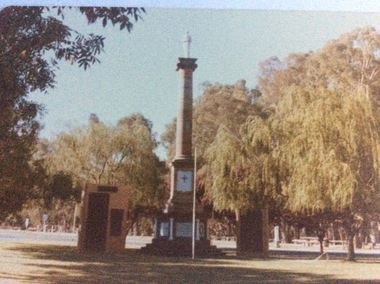 Port of Echuca
Colour photograph, 1979
... This monument was originally situated on the median strip in High Street, outside the original Town Hall building, which subsequently became the town's Library, and is now the Shire Offices I.T Department. The memorial was moved some time in the 1960's to it's present site, which is now immediately surrounded by the Shire of Campaspe Echuca Library which was built in the early 2000's . ...This monument was originally situated on the median strip in High Street, outside the original Town Hall building, which subsequently became the town's Library, and is now the Shire Offices I.T Department. The memorial was moved some time in the 1960's to it's present site, which is now immediately surrounded by the Shire of Campaspe Echuca Library which was built in the early 2000's . ...This monument was originally situated on the median strip in High Street, outside the original Town Hall building, which subsequently became the town's Library, and is now the Shire Offices I.T Department. The memorial was moved some time in the 1960's to it's present site, which is now immediately surrounded by the Shire of Campaspe Echuca Library which was built in the early 2000's . The memorial now also mentions other wars of the 20th Century.The memorial now represents all people from the surrounding districts who have been lost to all Wars. The memorial is the focus of the Anzac Day ceremonies. In this photograph of 1979, both World War 1 & World War 2 would have been mentioned on the plaques.A coloured photograph of the World War 1 memorial in Echuca. The monument consists of a column with a statue of a soldier on the top. There are two plaque walls on both sides. There is a flag pole at centre front. . The monument is situated at the northern end of Hare Street, near the intersection with Radcliffe St, and just east of the Shire of Campaspe offices.Printed on the back are the words, "This paper manufactured by Kodak.world war 1., soldiers, civic centre, war memorial, world war 2
