
Showing 6 items matching "edward ginger"
-
 Nillumbik Shire Council
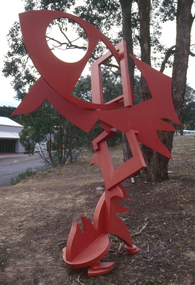
Public Art: Edward GINGER (b.1951 Kegalle, Sri Lanka - arrived 1975 Aus), Edward Ginger, The Breeze, Location: Main Road, Research - opposite Eltham Little Theatre, 1990
... Public Art: Edward GINGER (b.1951 Kegalle, Sri Lanka - arrived 1975 Aus)...Edward Ginger...The Breeze, Location: Main Road, Research - opposite Eltham Little Theatre Public Art: Edward GINGER (b.1951 Kegalle, Sri Lanka - arrived 1975 Aus) Edward Ginger ...The first sculpture awarded the Shire of Eltham 'Art in Public Places' Award/Commission. The Judges were Inge King, Jenny Zimmer and Daryl Jackson. The work deals with the juxtaposition of suburban and rural surroundings. This scupture is a typical example of the artist's oevre of the period. This sculptre is site specific and refers to the nature of the environment. The colour - bushfire red / sienna - alludes to the history of fire in the urban/rural fringe and the title, as well as the sculpture's shapes, forms and material refer to the natural and local elements. Judges report noted: "The most vital and expressive work for the site...with a great sense of dynamic movement and vibrant colour. Its' abstract forms will enliven the surroundings and the urban and natural environment. This work is the most appropriate for the site and expressive of the dynamics of an evolving community in which artistic discourse and debate has always thrived." The work has acquired the status of a major landmark from the National Trust. The Breeze is an abstract work made out of welded steel and painted in enamel in bush fire red / sienna. It comprises a series of flat, cut-out shapes, interlocking at different angles, giving the impression of being hinged together rather than fixed. The work references nature and the built environment. Its geometric shapes suggest man-made structures within industry and suburban life, while rural areas can be identified by the organic flame-like shapes fanned by the wind. The circular cut-out in the eye mimics the sun, symbolising the intense heat of the Australian climate, while the colour red alludes to the history of bushfire within the urban and rural fringe. N/Apublic art, ginger, red, sienna, elements, steel, abstract, breeze, fire, sculpture -
 Eltham District Historical Society Inc
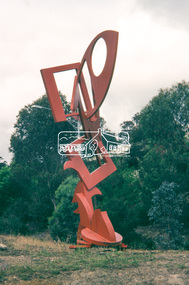
Slide - Photograph, The Breeze (1990), Edward Ginger, Main Road Research, c.1993
... The Breeze (1990), Edward Ginger, Main Road Research...Edward Ginger...Eltham District Historical Society Inc 728 Main Rd Eltham melbourne Edward Ginger Public Art Research (Vic.) Sculptures The Breeze (1990) 35mm colour positive transparency Mount - Black and White The Breeze (1990), Edward Ginger, Main Road Research Slide Photograph ...35mm colour positive transparency Mount - Black and Whiteedward ginger, public art, research (vic.), sculptures, the breeze (1990) -
 Eltham District Historical Society Inc
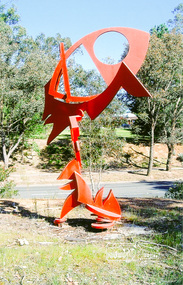
Photograph, The Breeze (1990), Edward Ginger, Main Road Research
... The Breeze (1990), Edward Ginger, Main Road Research ......edward ginger...Eltham District Historical Society Inc 728 Main Rd Eltham melbourne art edward ginger research (vic.) sculptures the breeze (1990) Colour photograph The Breeze (1990), Edward Ginger, Main Road Research Photograph ...Colour photographart, edward ginger, research (vic.), sculptures, the breeze (1990) -
 Eltham District Historical Society Inc
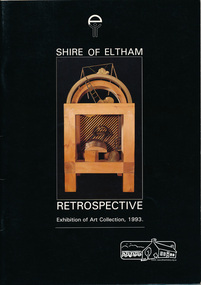
Book, Shire of Eltham Retrospective exhibition of art collection, 1993, 1993
... There is the work which shows the love of Eltham and the environment, and work which deals with much broader concerns" Artists include: Helen Aitken-Kuhnen, David Armfield, Brian Armstrong, Alan Baker, Yvonne Ball, Piers Bateman, Julie Begg, Judith Ben-Meir, Yvonne Birch, The Bodford Collection, Janet Boddy, Deidre Boeyen, Ian Bow, David Benchley, Don Brown, Gilbert Buchanan, Paul Cavell, Patty Chandler, Rosalie Cogan, Scott Joseph Cowcher, Augustine Dall'Ava, Greg Daly, Simon Dattner, Peter Day, Domenico de Clario, Robert Delves, Joh Ebeli, Mark Edgoose, Graham Fransella, Ernest Fries, Edward Ginger, Peter Glass, Drew Gregory, Alison Hann, Tony Harkin, Wendy Henderson, Stephen Hughes, Lindsay Imbandarinja, John Irving, Hilary Jackman, Jill Kahans, William Kelly, Margot Knox, Margot Kroyer-Pederson, Anne Kueffer, Bruno Leti, Kevin Lincoln, Paul Margocsy, Alan Martin, Barry Mills, Simon Barley, Jenni Mitchell, David Moore, Barbara Munro, Ewald Namatjira, Norma Neil, Mark Page, Herman Pekel, Shane Pickett, Anthony Pryor, Clifton Pugh, Lynn Quintal, Giuseppe Raneri, Ken Robb, John Serle, Marjorie Shattock, Leslie Sinclair, Matcham Skipper, Myra Skipper, Sonia Skipper, Harris Smith, Eric Stephenson, Adriane Strampp, Marian Sussex, Tony Trembath, George Turcu, John Wakefield, Peter Wallace, Ray Walsh, Michael Wilson, Walter Withers, Vic Wood, Doug Wright, Romana Favier Zorzut, Renier Zusters....There is the work which shows the love of Eltham and the environment, and work which deals with much broader concerns" Artists include: Helen Aitken-Kuhnen, David Armfield, Brian Armstrong, Alan Baker, Yvonne Ball, Piers Bateman, Julie Begg, Judith Ben-Meir, Yvonne Birch, The Bodford Collection, Janet Boddy, Deidre Boeyen, Ian Bow, David Benchley, Don Brown, Gilbert Buchanan, Paul Cavell, Patty Chandler, Rosalie Cogan, Scott Joseph Cowcher, Augustine Dall'Ava, Greg Daly, Simon Dattner, Peter Day, Domenico de Clario, Robert Delves, Joh Ebeli, Mark Edgoose, Graham Fransella, Ernest Fries, Edward Ginger, Peter Glass, Drew Gregory, Alison Hann, Tony Harkin, Wendy Henderson, Stephen Hughes, Lindsay Imbandarinja, John Irving, Hilary Jackman, Jill Kahans, William Kelly, Margot Knox, Margot Kroyer-Pederson, Anne Kueffer, Bruno Leti, Kevin Lincoln, Paul Margocsy, Alan Martin, Barry Mills, Simon Barley, Jenni Mitchell, David Moore, Barbara Munro, Ewald Namatjira, Norma Neil, Mark Page, Herman Pekel, Shane Pickett, Anthony Pryor, Clifton Pugh, Lynn Quintal, Giuseppe Raneri, Ken Robb, John Serle, Marjorie Shattock, Leslie Sinclair, Matcham Skipper, Myra Skipper, Sonia Skipper, Harris Smith, Eric Stephenson, Adriane Strampp, Marian Sussex, Tony Trembath, George Turcu, John Wakefield, Peter Wallace, Ray Walsh, Michael Wilson, Walter Withers, Vic Wood, Doug Wright, Romana Favier Zorzut, Renier Zusters. shire of eltham art collection Softcover . ...Contents: List of illustrations, From the Shire President, Historical background, current perspective and catalogue of art collection. This includes over 100 items. Book produced to accompany exhibition held at the Eltham Community and Reception Centre, Main Road Eltham June 26 - July 4 1993. "This exhibition celebrates two aspects of the art collection of the Shire of Eltham. There is the work which shows the love of Eltham and the environment, and work which deals with much broader concerns" Artists include: Helen Aitken-Kuhnen, David Armfield, Brian Armstrong, Alan Baker, Yvonne Ball, Piers Bateman, Julie Begg, Judith Ben-Meir, Yvonne Birch, The Bodford Collection, Janet Boddy, Deidre Boeyen, Ian Bow, David Benchley, Don Brown, Gilbert Buchanan, Paul Cavell, Patty Chandler, Rosalie Cogan, Scott Joseph Cowcher, Augustine Dall'Ava, Greg Daly, Simon Dattner, Peter Day, Domenico de Clario, Robert Delves, Joh Ebeli, Mark Edgoose, Graham Fransella, Ernest Fries, Edward Ginger, Peter Glass, Drew Gregory, Alison Hann, Tony Harkin, Wendy Henderson, Stephen Hughes, Lindsay Imbandarinja, John Irving, Hilary Jackman, Jill Kahans, William Kelly, Margot Knox, Margot Kroyer-Pederson, Anne Kueffer, Bruno Leti, Kevin Lincoln, Paul Margocsy, Alan Martin, Barry Mills, Simon Barley, Jenni Mitchell, David Moore, Barbara Munro, Ewald Namatjira, Norma Neil, Mark Page, Herman Pekel, Shane Pickett, Anthony Pryor, Clifton Pugh, Lynn Quintal, Giuseppe Raneri, Ken Robb, John Serle, Marjorie Shattock, Leslie Sinclair, Matcham Skipper, Myra Skipper, Sonia Skipper, Harris Smith, Eric Stephenson, Adriane Strampp, Marian Sussex, Tony Trembath, George Turcu, John Wakefield, Peter Wallace, Ray Walsh, Michael Wilson, Walter Withers, Vic Wood, Doug Wright, Romana Favier Zorzut, Renier Zusters.Softcover . Includes separate sheet of paper printed on both sides: "catalogue supplement" and "errata"shire of eltham art collection -
 Flagstaff Hill Maritime Museum and Village
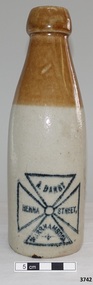
Bottle, circa 1899
... ginger beer. Darby’s also made cider, lime juice, raspberry vinegar and other specialties. There was a branch of Darby’s cordial factory in Shepparton Victoria. The building has the year 1910 on it and is now the council office. The bottle’s manufacturer, Bendigo Pottery, was established in the 1858 during the gold rush era. The bottle is part of the “W.R. Angus Collection” that includes historical medical equipment, surgical instruments and material once belonging to Dr Edward...ginger beer. Darby’s also made cider, lime juice, raspberry vinegar and other specialties. There was a branch of Darby’s cordial factory in Shepparton Victoria. The building has the year 1910 on it and is now the council office. The bottle’s manufacturer, Bendigo Pottery, was established in the 1858 during the gold rush era. The bottle is part of the “W.R. Angus Collection” that includes historical medical equipment, surgical instruments and material once belonging to Dr Edward ...This clay soft drink bottle was made by Bendigo Pottery circa 1899. It was badged for and sold by A. [Alfred] Darby of Henna Street Warrnambool, (between Raglan Pde and Lava St). The internal screw thread in the neck of this bottle allows for an applied ‘blob’ top stopper to be added. The company A. Darby bottled soda water, cordial, lemonade, ginger ale and ginger beer. Darby’s also made cider, lime juice, raspberry vinegar and other specialties. There was a branch of Darby’s cordial factory in Shepparton Victoria. The building has the year 1910 on it and is now the council office. The bottle’s manufacturer, Bendigo Pottery, was established in the 1858 during the gold rush era. The bottle is part of the “W.R. Angus Collection” that includes historical medical equipment, surgical instruments and material once belonging to Dr Edward Ryan and Dr Thomas Francis Ryan, (both of Nhill, Victoria) as well as Dr Angus’ own belongings. The Collection’s history spans the medical practices of the two Doctors Ryan, from 1885-1926 plus that of Dr Angus, up until 1969. ABOUT THE “W.R.ANGUS COLLECTION” Doctor William Roy Angus M.B., B.S., Adel., 1923, F.R.C.S. Edin.,1928 (also known as Dr Roy Angus) was born in Murrumbeena, Victoria in 1901 and lived until 1970. He qualified as a doctor in 1923 at University of Adelaide, was Resident Medical Officer at the Royal Adelaide Hospital in 1924 and for a period was house surgeon to Sir (then Mr.) Henry Simpson Newland. Dr Angus was briefly an Assistant to Dr Riddell of Kapunda, then commenced private practice at Curramulka, Yorke Peninsula, SA, where he was physician, surgeon and chemist. In 1926, he was appointed as new Medical Assistant to Dr Thomas Francis Ryan (T.F. Ryan, or Tom), in Nhill, Victoria, where his experiences included radiology and pharmacy. In 1927 he was Acting House Surgeon in Dr Tom Ryan’s absence. Dr Angus had become engaged to Gladys Forsyth and they decided he further his studies overseas in the UK in 1927. He studied at London University College Hospital and at Edinburgh Royal Infirmary and in 1928, was awarded FRCS (Fellow from the Royal College of Surgeons), Edinburgh. He worked his passage back to Australia as a Ship’s Surgeon on the on the Australian Commonwealth Line’s T.S.S. Largs Bay. Dr Angus married Gladys in 1929, in Ballarat. (They went on to have one son (Graham 1932, born in SA) and two daughters (Helen (died 12/07/1996) and Berenice (Berry), both born at Mira, Nhill According to Berry, her mother Gladys made a lot of their clothes. She was very talented and did some lovely embroidery including lingerie for her trousseau and beautifully handmade baby clothes. Dr Angus was a ‘flying doctor’ for the A.I.M. (Australian Inland Ministry) Aerial Medical Service in 1928. Its first station was in the remote town of Oodnadatta, where Dr Angus was stationed. He was locum tenens there on North-South Railway at 21 Mile Camp. He took up this ‘flying doctor’ position in response to a call from Dr John Flynn; the organisation was later known as the Flying Doctor Service, then the Royal Flying Doctor Service. A lot of his work during this time involved dental surgery also. Between 1928-1932 he was surgeon at the Curramulka Hospital, Yorke Peninsula, South Australia. In 1933 Dr Angus returned to Nhill and purchased a share of the Nelson Street practice and Mira hospital (a 2 bed ward at the Nelson Street Practice) from Dr Les Middleton one of the Middleton Brothers, the current owners of what previously once Dr Tom Ryan’s practice. Dr Tom and his brother had worked as surgeons included eye surgery. Dr Tom Ryan performed many of his operations in the Mira private hospital on his premises. He had been House Surgeon at the Nhill Hospital 1902-1926. Dr Tom Ryan had one of the only two pieces of radiology equipment in Victoria during his practicing years – The Royal Melbourne Hospital had the other one. Over the years Dr Tom Ryan had gradually set up what was effectively a training school for country general-practitioner-surgeons. Each patient was carefully examined, including using the X-ray machine, and any surgery was discussed and planned with Dr Ryan’s assistants several days in advance. Dr Angus gained experience in using the X-ray machine there during his time as assistant to Dr Ryan. When Dr Angus bought into the Nelson Street premises in Nhill he was also appointed as the Nhill Hospital’s Honorary House Surgeon 1933-1938. His practitioner’s plate from his Nhill surgery is now mounted on the doorway to the Port Medical Office at Flagstaff Hill Maritime Village, Warrnambool. When Dr Angus took up practice in the Dr Edward and Dr Tom Ryan’s old premises he obtained their extensive collection of historical medical equipment and materials spanning 1884-1926. A large part of this collection is now on display at the Port Medical Office at Flagstaff Hill Maritime Village in Warrnambool. In 1939 Dr Angus and his family moved to Warrnambool where he purchased “Birchwood,” the 1852 home and medical practice of Dr John Hunter Henderson, at 214 Koroit Street. (This property was sold in1965 to the State Government and is now the site of the Warrnambool Police Station and an ALDI sore is on the land that was once their tennis court). The Angus family was able to afford gardeners, cooks and maids; their home was a popular place for visiting dignitaries to stay whilst visiting Warrnambool. Dr Angus had his own silk worm farm at home in a Mulberry tree. His young daughter used his centrifuge for spinning the silk. Dr Angus was appointed on a part-time basis as Port Medical Officer (Health Officer) in Warrnambool and held this position until the 1940’s when the government no longer required the service of a Port Medical Officer in Warrnambool; he was thus Warrnambool’s last serving Port Medical Officer. (Masters of immigrant ships arriving in port reported incidents of diseases, illness and death and the Port Medical Officer made a decision on whether the ship required Quarantine and for how long, in this way preventing contagious illness from spreading from new immigrants to the residents already in the colony.) Dr Angus was a member of the Australian Medical Association, for 35 years and surgeon at the Warrnambool Base Hospital 1939-1942, He served with the Australian Department of Defence as a Surgeon Captain during WWII 1942-45, in Ballarat, Victoria, and in Bonegilla, N.S.W., completing his service just before the end of the war due to suffering from a heart attack. During his convalescence he carved an intricate and ‘most artistic’ chess set from the material that dentures were made from. He then studied ophthalmology at the Royal Melbourne Eye and Ear Hospital and created cosmetically superior artificial eyes by pioneering using the intrascleral cartilage. Angus received accolades from the Ophthalmological Society of Australasia for this work. He returned to Warrnambool to commence practice as an ophthalmologist, pioneering in artificial eye improvements. He was Honorary Consultant Ophthalmologist to Warrnambool Base Hospital for 31 years. He made monthly visits to Portland as a visiting surgeon, to perform eye surgery. He represented the Victorian South-West subdivision of the Australian Medical Association as its secretary between 1949 and 1956 and as chairman from 1956 to 1958. In 1968 Dr Angus was elected member of Spain’s Barraquer Institute of Barcelona after his research work in Intrasclearal cartilage grafting, becoming one of the few Australian ophthalmologists to receive this honour, and in the following year presented his final paper on Living Intrasclearal Cartilage Implants at the Inaugural Meeting of the Australian College of Ophthalmologists in Melbourne In his personal life Dr Angus was a Presbyterian and treated Sunday as a Sabbath, a day of rest. He would visit 3 or 4 country patients on a Sunday, taking his children along ‘for the ride’ and to visit with him. Sunday evenings he would play the pianola and sing Scottish songs to his family. One of Dr Angus’ patients was Margaret MacKenzie, author of a book on local shipwrecks that she’d seen as an eye witness from the late 1880’s in Peterborough, Victoria. In the early 1950’s Dr Angus, painted a picture of a shipwreck for the cover jacket of Margaret’s book, Shipwrecks and More Shipwrecks. She was blind in later life and her daughter wrote the actual book for her. Dr Angus and his wife Gladys were very involved in Warrnambool’s society with a strong interest in civic affairs. He had an interest in people and the community. They were both involved in the creation of Flagstaff Hill, including the layout of the gardens. After his death (28th March 1970) his family requested his practitioner’s plate, medical instruments and some personal belongings be displayed in the Port Medical Office surgery at Flagstaff Hill Maritime Village, and be called the “W. R. Angus Collection”. This glazed clay bottle represents early Warrnambool industry. It is also a good example of soft drink containers used in the late 19th and early 20th century and of Australian made products. Bendigo Pottery is Australia’s oldest working pottery. The kilns at Bendigo Pottery are now on the Victorian Heritage Register. The W.R. Angus Collection is significant for still being located at the site it is connected with, Doctor Angus being the last Port Medical Officer in Warrnambool. The collection of medical instruments and other equipment is culturally significant, being an historical example of medicine, administration, household equipment and clothing from late 19th to mid-20th century. Dr Angus assisted Dr Tom Ryan, a pioneer in the use of X-rays and in ocular surgery. Earthenware soft drink bottle, part of the W.R. Angus Collection. Glazed clay, 'champ' shape, two-toned colour; caramel from mouth to shoulder, beige on lower section. Inside of neck has an internal thread that could have been sealed with an applied internal ‘blob’ top stopper. Black stamped Maltese cross design emblem on front with each quarter containing text, black oval stamp on back with maker’s details. Bottle was made by Bendigo Pottery of Victoria circa 1899 and sold by A Darby of Henna Street Warrnambool.Maltese cross design, each quarter has text "A. DARBY", "HENNA", 'STREET,", WARRNAMBOOL" Oval stamp” - - - - - -RE BENDIGO POTTERY [EPSO] M - - - - - O” flagstaff hill, warrnambool, shipwrecked coast, flagstaff hill maritime museum, maritime museum, shipwreck coast, flagstaff hill maritime village, great ocean road, dr w r angus, dr ryan, nhill base hospital, mira hospital, flying doctor, department of defence australia, australian army, army uniform, bottle, earthernware soft drink bottle, earthernware bottle, a. darby, henna street warrnambool, soft drink industry warrnambool, bendigo pottery, 1899 soft drink bottle, champ shape soft drink bottle, ginger beer bottle, cordial bottle, blob top, blob stopper, internal stopper -
 Flagstaff Hill Maritime Museum and Village
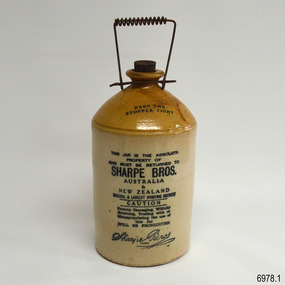
Container - Stoneware Demijohn, Bendigo Pottery , 1904-1930s
... ginger beer made in the Brisbane factory. The company was taken over in 1962 by Tarax Drinks Holdings Ltd, which was in turn taken over by Cadbury Schweppes in 1972. W.R. Angus Collection- The W R Angus Collection spans from 1885 to the mid-1900s and includes historical medical and surgical equipment and instruments from the doctors Edward and Thomas Ryan of Nhill, Victoria. ...ginger beer made in the Brisbane factory. The company was taken over in 1962 by Tarax Drinks Holdings Ltd, which was in turn taken over by Cadbury Schweppes in 1972. W.R. Angus Collection- The W R Angus Collection spans from 1885 to the mid-1900s and includes historical medical and surgical equipment and instruments from the doctors Edward and Thomas Ryan of Nhill, Victoria. ...This Sharpe Bros. one gallon stoneware Demijohn is in excellent condition and includes its original stopper. It was made between 1904 and 1930, the date from the patent of the handle until the time that the factory no long produced returnable items. The bottle was once part of Dr W.R. Angus' household and is part of the W.R. Angus Collection and could have been purchased from Warrnambool's Sharpe Bros. factory. SHARPE BROS. 1903-1972- The first Sharpe Bros. cordial factory was opened in Dunedin, New Zealand, in 1903 by English prohibition brothers John and Percy Sharpe. Sharpe Bros. made ‘health’ beverages that were non-alcoholic drinks such as ginger beer, ginger ale, lime juice, soda and cordials. The containers of these drinks were not sold with the drinks but were marked as returnable items, to be cleaned and re-used, until this practice ceased in the 1930s. Sharpe Bros. made a niche in the soft drink market by delivering drinks by horse and cart to its customers’ homes. John Sharpe patented the unique wire spiral handle in 1904. By 1905 the New Zealand company also had factories in Australia. By 1910 the company had over 20 factories including Wanganui, New Zealand; Adelaide, Albury, Ballarat, Bathurst, Forbes, Geelong, Goulburn, Lithgow, Melbourne, Newcastle, Orange, Sydney, Tamworth, Warrnambool and Wollongong. The Warrnambool factory was established in 1919 and existed until 1951. The company won awards at Australian exhibitions for its carbonated drinks, including First Prize for its ginger beer made in the Brisbane factory. The company was taken over in 1962 by Tarax Drinks Holdings Ltd, which was in turn taken over by Cadbury Schweppes in 1972. W.R. Angus Collection- The W R Angus Collection spans from 1885 to the mid-1900s and includes historical medical and surgical equipment and instruments from the doctors Edward and Thomas Ryan of Nhill, Victoria. Dr Angus married Gladys in 1927 at Ballarat, the nearest big city to Nhill where he began as a Medical Assistant. He was also Acting House surgeon at the Nhill hospital where their two daughters were born. He and his family moved to Warrnambool in 1939, where Dr Angus operated his own medical practice. He later added the part-time Port Medical Officer responsibility and was the last person appointed to that position. Dr Angus and his wife were very involved in the local community, including the early planning stages of the new Flagstaff Hill, where they contributed to the layout of the gardens. Dr Angus passed away in March 1970.This stoneware Demijohn is connected to the history of Warrnambool, as it was owned by the daughter of Dr W. R. Angus and his wife Gladys. It is part of the W.R. Angus Collection, which is notable for still being located at the site connected to Doctor Angus, Warrnambool’s last Port Medical Officer. It is also connected through its manufacturer Sharpe Bros. which had a branch in Warrnambool from 1919 to 1951, overlapping the time when the Angus family resided there from 1939 to the 1970s. The bottle is also significant as an example of the early-20th-century beverages found in local households and could have been purchased from the local Sharpe Bros. factory.This stoneware Demijohn is glazed, with a brown neck with internal thread and shoulders and a cylindrical cream base. The one gallon bottle has a flat, black stopper with a cork stem and a rubber, threaded tip. The ‘U’ shaped wire carry handle has a spiral of wire around the handpiece. An overhanging lip is on top of the bottle’s short neck above its rounded shoulder. The clay has been joined at the base of the neck, shoulder and body. The underneath is unglazed. The brown glazing on the shoulder has a run mark. Inscriptions are on the stopper and bottle. This container is part of the W.R. Angus Collection.Stamped in black on the shoulder: “KEEP THE / STOPPER TIGHT” Stamped in black on the body: “THIS JAR IS THE ABSOLUTE PROPERTY OF AND MUST BE RETURNED TO SHARPE BROS. AUSTRALIA / & NEW ZEALAND. ORIGINAL & LARGEST HYGIENIC BREWERY. CAUTION Persons Damaging, Willfully Retaining, Trading with or Misappropriating the Use of this Jar WILL BE PROSECUTED “ Stamped in script writing: “Sharpe Bros. TRADE - - - ED “ Embossed on the stopper: “AUSTRALIA AND NEW ZEALAND, SHARPE BROS.”flagstaff hill, warrnambool, maritime village, maritime museum, shipwreck coast, great ocean road, dr w r angus, dr roy angus, dr ryan, sharpe bros., bendigo pottery, bottle, stoneware bottle, demihohn, one gallone bottle, soft drink, non-alcoholic drink, drink container, jar, jug, warrnambool soft drink, hygienic brewery, cordial factory, new zealand, australia, john sharpe, percy sharpe, non-alcoholic, spiral wire handle, ginger beer, w.r. angus collection, demijohn
