
Showing 17 items matching "egypt - description"
-
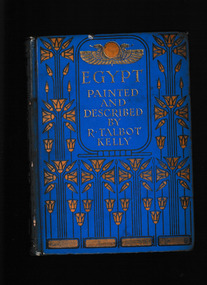 Mrs Aeneas Gunn Memorial Library
Book, Adam and Charles Black, Egypt, 1903
... Egypt - Description...Egypt - Description Egypt - Travel A travellers guide to Egypt Index, ill, p,246. ...A travellers guide to EgyptIndex, ill, p,246.non-fictionA travellers guide to Egyptegypt - description, egypt - travel -
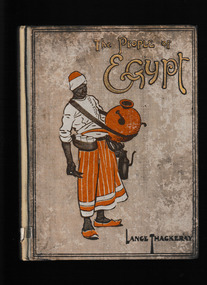 Mrs Aeneas Gunn Memorial Library
Book, Adam and Charles Black, The people of Egypt, 1910
... Egypt - Description...Egypt - Description Egypt - Pictorial representation A photographic essay of egypt Ill, p.10. ...A photographic essay of egyptIll, p.10.non-fictionA photographic essay of egyptegypt - description, egypt - pictorial representation -
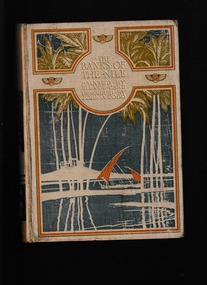 Mrs Aeneas Gunn Memorial Library
Book, Adam & Charles Black, The banks of the Nile, 1913
... Egypt - Description...Egypt - Description Egypt - Travel A travellers guide to Egypt Index, ill, maps, p.282. ...A travellers guide to EgyptIndex, ill, maps, p.282.non-fictionA travellers guide to Egyptegypt - description, egypt - travel -
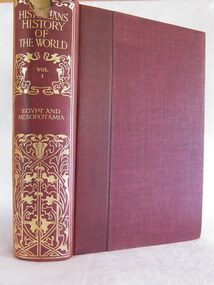 Flagstaff Hill Maritime Museum and Village
Book - Reference Book/History, Henry Smith Williams, The Historians History of the World Vol 01 set 1 - Edited by Henry Smith Williams L.L.D. Published by “The Times” 1908, 1908
... Egypt. This section covers the Nile Valley from its legendary beginnings through the various dynasties. The Old, Middle, and New Kingdoms with detailed accounts of the pyramid builders, the Hyksos invasion, and the imperial heights of Rameses. Culture and Religion feature In keeping with the series' "anthropological" style, it features excerpts from early Egyptology with writers like Gaston Maspero and Adolf Erman. Manners and Customs are covered along with extensive descriptions...Egypt. This section covers the Nile Valley from its legendary beginnings through the various dynasties. The Old, Middle, and New Kingdoms with detailed accounts of the pyramid builders, the Hyksos invasion, and the imperial heights of Rameses. Culture and Religion feature In keeping with the series' "anthropological" style, it features excerpts from early Egyptology with writers like Gaston Maspero and Adolf Erman. Manners and Customs are covered along with extensive descriptions ...The 1908 edition of The Historians' History of the World is a monumental work of Edwardian scholarship, representing a specific era of "universal history" where the goal was to synthesise all human knowledge into a single narrative. Volume 1 is titled "Egypt and Mesopotamia," it is divided into two distinct parts Part I concentrates on ancient Egypt, covering the Nile Valley from its legendary beginnings through the various dynasties.Book is part of a 25 volume set with red cloth bindings and gold filigree design to rib.non-fictionThe 1908 edition of The Historians' History of the World is a monumental work of Edwardian scholarship, representing a specific era of "universal history" where the goal was to synthesise all human knowledge into a single narrative. Volume 1 is titled "Egypt and Mesopotamia," it is divided into two distinct parts Part I concentrates on ancient Egypt, covering the Nile Valley from its legendary beginnings through the various dynasties. flagstaff hill, warrnambool, shipwrecked-coast, flagstaff-hill, flagstaff-hill-maritime-museum, maritime-museum, shipwreck-coast, flagstaff-hill-maritime-village, book, the historians history of the world vol 1 set 1 -
 Lara RSL Sub Branch
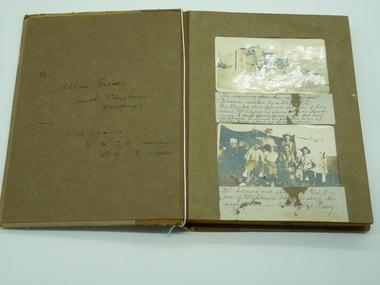
Photograph Album, To Allan Groves, 1917
... Egypt The Rafa Raid Prisoners of war, Beni Selah women waiting for water. Women making bricks, 53rd Casualty Clearing Station destroyed by a bomb, Royal Scots Fusilier Pipe Band after church parade, The Sultan Hasser Mosque Cardboard Album Khaki coloured 8 leaves with photos and written descriptions To Allan Groves Photograph Album ...Cardboard Album Khaki coloured 8 leaves with photos and written descriptionsFront sleeve To Allan Groves With Christmas greetings from Will Adams YMCA Secretary with A.L.H. Brigade There are explanations under each couple of photos too much to write in this space. In general the photos are of Will Adams experience in Egypt The Rafa Raid Prisoners of war, Beni Selah women waiting for water. Women making bricks, 53rd Casualty Clearing Station destroyed by a bomb, Royal Scots Fusilier Pipe Band after church parade, The Sultan Hasser Mosque photograph, album, egyp, ww1, allan groves, will adams, rafa raid, 53rd casualty clearing station -
 Lara RSL Sub Branch
Photo Album
... Matthews Lara, Views sent from Egypt and the Dardanelles with photos of Sgt W.Matthews B Company, 8th Battalion A.E.F. photo by W.H.Watts and second photo Bugler Haggar, A.E.F. taken by N.O.W. Inside back cover 6 photos with no descriptions...Matthews Lara, Views sent from Egypt and the Dardanelles with photos of Sgt W.Matthews B Company, 8th Battalion A.E.F. photo by W.H.Watts and second photo Bugler Haggar, A.E.F. taken by N.O.W. Inside back cover 6 photos with no descriptions ...Post Card Album that used to be filled with photos from Egypt and Dardanelles by W. Matthews. Photos in separate collection held at Lara RSL. Postcards and photos compiled by W.Matthews while serving in WW1.Photo album of postcards and photos from WW1 taken and purchased in Egypt and Dardanelles by W.Matthews from LaraPhoto Album in book form coloured grey/greenFront page has roses and vine written Post Card Album. Inside front page is written W. Matthews Lara, Views sent from Egypt and the Dardanelles with photos of Sgt W.Matthews B Company, 8th Battalion A.E.F. photo by W.H.Watts and second photo Bugler Haggar, A.E.F. taken by N.O.W. Inside back cover 6 photos with no descriptions. bugler haggar, ww1, world war 1, world war one, w. matthews, sergeant w. matthews, b company 8th battalion, aef, a.e.f., australian army, army, w.h.watts, n.o.w., dardanelles, egypt, lara rsl, lara rsl sub branch -
 Flagstaff Hill Maritime Museum and Village
Equipment - Surgical silks and sutures, Teleflex (manufacturers of Deknatel), Early 1900s
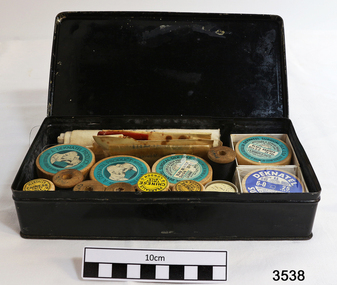
... [citation needed] The earliest reports of surgical suture date to 3000 BC in ancient Egypt, and the oldest known suture is in a mummy from 1100 BC. A detailed description of a wound suture and the suture materials used in it is by the Indian sage and physician Sushruta, written in 500 BC. ...[citation needed] The earliest reports of surgical suture date to 3000 BC in ancient Egypt, and the oldest known suture is in a mummy from 1100 BC. A detailed description of a wound suture and the suture materials used in it is by the Indian sage and physician Sushruta, written in 500 BC. ...Through many millennia, various suture materials were used or proposed. Needles were made of bone or metals such as silver, copper, and aluminium bronze wire. Sutures were made of plant materials (flax, hemp and cotton) or animal material (hair, tendons, arteries, muscle strips and nerves, silk, and catgut).[citation needed] The earliest reports of surgical suture date to 3000 BC in ancient Egypt, and the oldest known suture is in a mummy from 1100 BC. A detailed description of a wound suture and the suture materials used in it is by the Indian sage and physician Sushruta, written in 500 BC. The Greek father of medicine, Hippocrates, described suture techniques, as did the later Roman Aulus Cornelius Celsus. The 2nd-century Roman physician Galen described sutures made of surgical gut or catgut. In the 10th century, the catgut suture along with the surgery needle were used in operations by Abulcasis. The gut suture was similar to that of strings for violins, guitars, and tennis racquets and it involved harvesting sheep or cow intestines. Catgut sometimes led to infection due to a lack of disinfection and sterilization of the material. Joseph Lister endorsed the routine sterilization of all suture threads. He first attempted sterilization with the 1860s "carbolic catgut," and chromic catgut followed two decades later. Sterile catgut was finally achieved in 1906 with iodine treatment. The next great leap came in the twentieth century. The chemical industry drove production of the first synthetic thread in the early 1930s, which exploded into production of numerous absorbable and non-absorbable synthetics. The first synthetic absorbable was based on polyvinyl alcohol in 1931. Polyesters were developed in the 1950s, and later the process of radiation sterilization was established for catgut and polyester. Polyglycolic acid was discovered in the 1960s and implemented in the 1970s. Today, most sutures are made of synthetic polymer fibers. Silk and, rarely, gut sutures are the only materials still in use from ancient times. In fact, gut sutures have been banned in Europe and Japan owing to concerns regarding bovine spongiform encephalopathy. Silk suture is still used today, mainly to secure surgical drains. https://en.wikipedia.org/wiki/Surgical_suture#:~:text=Sutures%20were%20made%20of%20plant,a%20mummy%20from%201100%20BC. This tin contains a variety of surgical threads and accessories that were used by Dr W.R.Angus. It was donated to Flagstaff Hill Maritime Village by the family of Doctor William Roy Angus, Surgeon and Oculist. It is part of the “W.R. Angus Collection” that includes historical medical equipment, surgical instruments and material once belonging to Dr Edward Ryan and Dr Thomas Francis Ryan, (both of Nhill, Victoria) as well as Dr Angus’ own belongings. The Collection’s history spans the medical practices of the two Doctors Ryan, from 1885-1926 plus that of Dr Angus, up until 1969. ABOUT THE “W.R.ANGUS COLLECTION” Doctor William Roy Angus M.B., B.S., Adel., 1923, F.R.C.S. Edin.,1928 (also known as Dr Roy Angus) was born in Murrumbeena, Victoria in 1901 and lived until 1970. He qualified as a doctor in 1923 at University of Adelaide, was Resident Medical Officer at the Royal Adelaide Hospital in 1924 and for a period was house surgeon to Sir (then Mr.) Henry Simpson Newland. Dr Angus was briefly an Assistant to Dr Riddell of Kapunda, then commenced private practice at Curramulka, Yorke Peninsula, SA, where he was physician, surgeon and chemist. In 1926, he was appointed as new Medical Assistant to Dr Thomas Francis Ryan (T.F. Ryan, or Tom), in Nhill, Victoria, where his experiences included radiology and pharmacy. In 1927 he was Acting House Surgeon in Dr Tom Ryan’s absence. Dr Angus had become engaged to Gladys Forsyth and they decided he would take time to further his studies overseas in the UK in 1927. He studied at London University College Hospital and at Edinburgh Royal Infirmary and in 1928, was awarded FRCS (Fellow from the Royal College of Surgeons), Edinburgh. He worked his passage back to Australia as a Ship’s Surgeon on the on the Australian Commonwealth Line’s SS Largs Bay. Dr Angus married Gladys in 1929, in Ballarat. (They went on to have one son (Graham 1932, born in SA) and two daughters (Helen (died 12/07/1996) and Berenice (Berry), both born at Mira, Nhill ) Dr Angus was a ‘flying doctor’ for the A.I.M. (Australian Inland Ministry) Aerial Medical Service in 1928 . The organisation began in South Australia through the Presbyterian Church in that year, with its first station being in the remote town of Oodnadatta, where Dr Angus was stationed. He was locum tenens there on North-South Railway at 21 Mile Camp. He took up this ‘flying doctor’ position in response to a call from Dr John Flynn; the organisation was later known as the Flying Doctor Service, then the Royal Flying Doctor Service. A lot of his work during this time involved dental surgery also. Between 1928-1932 he was surgeon at the Curramulka Hospital, Yorke Peninsula, South Australia. In 1933 Dr Angus returned to Nhill where he’d previously worked as Medical Assistant and purchased a share of the Nelson Street practice and Mira hospital from Dr Les Middleton one of the Middleton Brothers, the current owners of what was once Dr Tom Ryan’s practice. Dr L Middleton was House Surgeon to the Nhill Hospital 1926-1933, when he resigned. [Dr Tom Ryan’s practice had originally belonged to his older brother Dr Edward Ryan, who came to Nhill in 1885. Dr Edward saw patients at his rooms, firstly in Victoria Street and in 1886 in Nelson Street, until 1901. The Nelson Street practice also had a 2 bed ward, called Mira Private Hospital ). Dr Edward Ryan was House Surgeon at the Nhill Hospital 1884-1902 . He also had occasions where he successfully performed veterinary surgery for the local farmers too. Dr Tom Ryan then purchased the practice from his brother in 1901. Both Dr Edward and Dr Tom Ryan work as surgeons included eye surgery. Dr Tom Ryan performed many of his operations in the Mira private hospital on his premises. He too was House Surgeon at the Nhill Hospital 1902-1926. Dr Tom Ryan had one of the only two pieces of radiology equipment in Victoria during his practicing years – The Royal Melbourne Hospital had the other one. Over the years Dr Tom Ryan gradually set up what was effectively a training school for country general-practitioner-surgeons. Each patient was carefully examined, including using the X-ray machine, and any surgery was discussed and planned with Dr Ryan’s assistants several days in advance. Dr Angus gained experience in using the X-ray machine there during his time as assistant to Dr Ryan. Dr Tom Ryan moved from Nhill in 1926. He became a Fellow of the Royal Australasian College of Surgeons in 1927, soon after its formation, a rare accolade for a doctor outside any of the major cities. He remained a bachelor and died suddenly on 7th Dec 1955, aged 91, at his home in Ararat. Scholarships and prizes are still awarded to medical students in the honour of Dr T.F. Ryan and his father, Dr Michael Ryan, and brother, John Patrick Ryan. ] When Dr Angus bought into the Nelson Street premises in Nhill he was also appointed as the Nhill Hospital’s Honorary House Surgeon 1933-1938. His practitioner’s plate from his Nhill surgery states “HOURS Daily, except Tuesdays, Fridays and Saturday afternoons, 9-10am, 2-4pm, 7-8pm. Sundays by appointment”. This plate is now mounted on the doorway to the Port Medical Office at Flagstaff Hill Maritime Village, Warrnambool. Dr Edward Ryan and Dr Tom Ryan had an extensive collection of historical medical equipment and materials spanning 1884-1926 and when Dr Angus took up practice in their old premises he obtained this collection, a large part of which is now on display at the Port Medical Office at Flagstaff Hill Maritime Village in Warrnambool. During his time in Nhill Dr Angus was involved in the merging of the Mira Hospital and Nhill Public Hospital into one public hospital and the property titles passed on to Nhill Hospital in 1939. In 1939 Dr Angus and his family moved to Warrnambool where he purchased “Birchwood,” the 1852 home and medical practice of Dr John Hunter Henderson, at 214 Koroit Street. (This property was sold in1965 to the State Government and is now the site of the Warrnambool Police Station. ). The Angus family was able to afford gardeners, cooks and maids; their home was a popular place for visiting dignitaries to stay whilst visiting Warrnambool. Dr Angus had his own silk worm farm at home in a Mulberry tree. His young daughter used his centrifuge for spinning the silk. Dr Angus was appointed on a part-time basis as Port Medical Officer (Health Officer) in Warrnambool and held this position until the 1940’s when the government no longer required the service of a Port Medical Officer in Warrnambool; he was thus Warrnambool’s last serving Port Medical Officer. (The duties of a Port Medical Officer were outlined by the Colonial Secretary on 21st June, 1839 under the terms of the Quarantine Act. Masters of immigrant ships arriving in port reported incidents of diseases, illness and death and the Port Medical Officer made a decision on whether the ship required Quarantine and for how long, in this way preventing contagious illness from spreading from new immigrants to the residents already in the colony.) Dr Angus was a member of the Australian Medical Association, for 35 years and surgeon at the Warrnambool Base Hospital 1939-1942, He served as a Surgeon Captain during WWII1942-45, in Ballarat, Victoria, and in Bonegilla, N.S.W., completing his service just before the end of the war due to suffering from a heart attack. During his convalescence he carved an intricate and ‘most artistic’ chess set from the material that dentures were made from. He then studied ophthalmology at the Royal Melbourne Eye and Ear Hospital and created cosmetically superior artificial eyes by pioneering using the intrascleral cartilage. Angus received accolades from the Ophthalmological Society of Australasia for this work. He returned to Warrnambool to commence practice as an ophthalmologist, pioneering in artificial eye improvements. He was Honorary Consultant Ophthalmologist to Warrnambool Base Hospital for 31 years. He made monthly visits to Portland as a visiting surgeon, to perform eye surgery. He represented the Victorian South-West subdivision of the Australian Medical Association as its secretary between 1949 and 1956 and as chairman from 1956 to 1958. In 1968 Dr Angus was elected member of Spain’s Barraquer Institute of Barcelona after his research work in Intrasclearal cartilage grafting, becoming one of the few Australian ophthalmologists to receive this honour, and in the following year presented his final paper on Living Intrasclearal Cartilage Implants at the Inaugural Meeting of the Australian College of Ophthalmologists in Melbourne In his personal life Dr Angus was a Presbyterian and treated Sunday as a Sabbath, a day of rest. He would visit 3 or 4 country patients on a Sunday, taking his children along ‘for the ride’ and to visit with him. Sunday evenings he would play the pianola and sing Scottish songs to his family. One of Dr Angus’ patients was Margaret MacKenzie, author of a book on local shipwrecks that she’d seen as an eye witness from the late 1880’s in Peterborough, Victoria. In the early 1950’s Dr Angus, painted a picture of a shipwreck for the cover jacket of Margaret’s book, Shipwrecks and More Shipwrecks. She was blind in later life and her daughter wrote the actual book for her. Dr Angus and his wife Gladys were very involved in Warrnambool’s society with a strong interest in civic affairs. Their interests included organisations such as Red Cross, Rostrum, Warrnambool and District Historical Society (founding members), Wine and Food Society, Steering Committee for Tertiary Education in Warrnambool, Local National Trust, Good Neighbour Council, Housing Commission Advisory Board, United Services Institute, Legion of Ex-Servicemen, Olympic Pool Committee, Food for Britain Organisation, Warrnambool Hospital, Anti-Cancer Council, Boys’ Club, Charitable Council, National Fitness Council and Air Raid Precautions Group. He was also a member of the Steam Preservation Society and derived much pleasure from a steam traction engine on his farm. He had an interest in people and the community He and his wife Gladys were both involved in the creation of Flagstaff Hill, including the layout of the gardens. After his death (28th March 1970) his family requested his practitioner’s plate, medical instruments and some personal belongings be displayed in the Port Medical Office surgery at Flagstaff Hill Maritime Village, and be called the “W. R. Angus Collection”. The repair of open wounds is essential to prevent infection and death. The W.R. Angus Collection is significant for still being located at the site it is connected with, Doctor Angus being the last Port Medical Officer in Warrnambool. The collection of medical instruments and other equipment is culturally significant, being an historical example of medicine from late 19th to mid-20th century. Dr Angus assisted Dr Tom Ryan, a pioneer in the use of X-rays and in ocular surgery. Black tin with hinged lid, containing reels and packets of surgical silk, gut and metal suture threads, scalpel blades, chamois and metal blade holder with tensioned chamois piece across top. (W.R. Angus Collection)‘MEDRAFIL, Dr MULLER- MEERNACH, Nr O, MADE IN GERMANY.’ printed on one of the paper bags in the box containing a suture bobbin. 'PEARSALL'S LONDON' printed on some bobbins. 'J A DEKNATEL & SON INC, QUEENS VILLAGE, LONG ISLAND NEW YORK' printed on others.flagstaff hill, warrnambool, shipwrecked-coast, flagstaff-hill, flagstaff-hill-maritime-museum, maritime-museum, shipwreck-coast, flagstaff-hill-maritime-village, surgical silks and sutures, dr w r angus, medical equipment, surgical instrument, dr ryan, ophthalmology, s.s. largs bay, warrnambool base hospital, nhill base hospital, flying doctor, medical history, medical treatment, mira hospital, medical education, sutures, surgical silk -
 Bendigo Military Museum
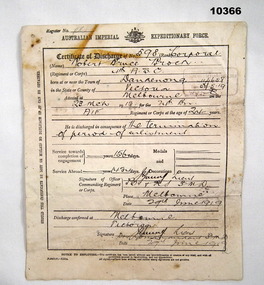
Administrative record - CERTIFICATE OF DISCHARGE, WW1, A.I.F Printing section, 23 May 1919
... Egypt and served in Gallipoli and France. Discharged 29/6/19 with the rank of Corporal. Part of the collection of William (Bill) Thomason. Refer Cat 4136P. Collection of William (Bill) Thomason Robert Bruce Brock Certificate of Discharge. WW1 Stamp dated "24/5/19". Cream coloured card and one side has details and description ...Pertains to the service of "Robert Bruce Brock" No. 598. Enlisted 23 Mar 1915 in C.Coy, 24th Battn, age 25. Embarking 10th May 1915 to Egypt and served in Gallipoli and France. Discharged 29/6/19 with the rank of Corporal. Part of the collection of William (Bill) Thomason. Refer Cat 4136P.Cream coloured card and one side has details and description of the person discharged. Other side has his name, Rank, Unit and Home Address. Also reason for discharge and it is signed off by the Commanding Officer of his unit. It also has where the discharge took place.Stamp dated "24/5/19".collection of william (bill) thomason, robert bruce brock, certificate of discharge., ww1 -
 Bendigo Military Museum
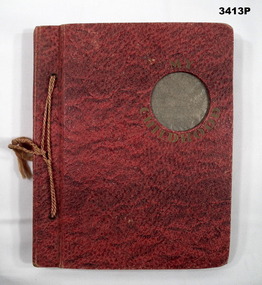
Album - ALBUM, PHOTOGRAPH, C.WWII
... Photo description is written in white adjacent to photos. Photo subjects of native people from Egypt, Africa, Thailand, Palestine, Syria & Jerusalem, Tobruk, Gaza & Jerusalem war cemeteries....Photo description is written in white adjacent to photos. Photo subjects of native people from Egypt, Africa, Thailand, Palestine, Syria & Jerusalem, Tobruk, Gaza & Jerusalem war cemeteries. ...Hard red cover, embossed lumpy surface & string binder. The upper right corner has a 60 mm dia hole. Embossed around this hole are the words My Childhood. The internal pages are black cardboard. Fixed to these are 4 black & white photos per page. Photo description is written in white adjacent to photos. Photo subjects of native people from Egypt, Africa, Thailand, Palestine, Syria & Jerusalem, Tobruk, Gaza & Jerusalem war cemeteries.Front cover printed: “My Childhood”album, photographs, native -
 Bendigo Military Museum
Postcard - POSTCARDS WW1, c.1914
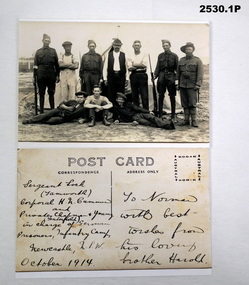
... .1) Photo of 4 armed Australian Soldiers with 6 civilians, verso postcard has hand written description. .2) Generic postcard from Egypt to a brother, verso letter from Harold to Norman. .3) Photo of 2 WWI German Servicemen with no headgear, verso addressed to a German lady - see Inscriptions & Markings. ...Absender Hugu Muxfeldt No 252 15 Prisoner of War Coy France C/o GPO London England .1) Photo of 4 armed Australian Soldiers with 6 civilians, verso postcard has hand written description. .2) Generic postcard from Egypt to a brother, verso letter from Harold to Norman. .3) Photo of 2 WWI German Servicemen with no headgear, verso addressed to a German lady - see Inscriptions & Markings. ....1) H.N.Cummin. Harold Nesbit Cummin had prior Military service (unclear) to joining the AIF. No 1239 he enlisted on 17.8.1915 in the 6th reinforcements to the 11th Light Horse Regt age 20 years. Embark for Egypt 27.10.1915, hospital 3.1.1916 with Bronvhitis, rejoin unit 15.1.1916, over some 7 months from 4.4.1916 he transfers 4 times until 2.11.1916 and listed as 4th Australian Camel Regt, by 16.2.1917 he is classed as being with 11th Coy 3rd Anzac Batt 1st Camel Brigade, WIA 1.12.1917 GSW’s, DOW’s at 2nd L.H.Brigade Field Ambulance 1.12.1917 in Jaffa. Refer 2535P re his brother Alexander Norman. The photo obviously refers to his previous service as the photo is dated “Oct 1914”. The Germans are possibly people interned after outbreak of the war. .1) Photo of 4 armed Australian Soldiers with 6 civilians, verso postcard has hand written description. .2) Generic postcard from Egypt to a brother, verso letter from Harold to Norman. .3) Photo of 2 WWI German Servicemen with no headgear, verso addressed to a German lady - see Inscriptions & Markings. .1) SGT LOCK (Tamworth), CPL H N CUMMIN & PTES CHAPMAN & YOUNG (Tenterfield) in charge of German prisoners, Infantry Camp, Newcastle, NSW, October 1914. Address: To Norman with best wishes from his loving brother Harold. .2) Dated 5.10.1917 Dear Norman, .... 17 lines .... Your loving brother Harold. .3) To Frau A Muxfeldt Niendorf (Kr Tinneberg) Gaustedterueg No 19, Gesebrieben d 18 Juli 1918. Absender Hugu Muxfeldt No 252 15 Prisoner of War Coy France C/o GPO London Englandpostcards, photographs, 38th -
4th/19th Prince of Wales's Light Horse Regiment Unit History Room
Medal, Khedive of Egypt's Sudan Medal 1896-1908
... Khedive's Sudan Medal 1896 -1908 Instituted 12th February 1897 on the approval Abbas Hilmi Pasha, Khedive of Egypt, this medal was initially to commemorate the reconquest of the Dongola province, with the clasps Firket and Hafir included in the original army order (No. 43). Later army orders extended it to cover battles and actions up to 1908 which were commemorated with a further 13 clasps. Medal Khedive Sudan Khedive's Sudan Medal 1896 -1908 Description ...Khedive's Sudan Medal 1896 -1908 Instituted 12th February 1897 on the approval Abbas Hilmi Pasha, Khedive of Egypt, this medal was initially to commemorate the reconquest of the Dongola province, with the clasps Firket and Hafir included in the original army order (No. 43). Later army orders extended it to cover battles and actions up to 1908 which were commemorated with a further 13 clasps. Khedive's Sudan Medal 1896 -1908 Description: Produced in silver and bronze 39mm diameter. Obverse; the Arabic inscription "Abbas Hilmi the Second" and the year "1314" (Anno Hegirae) Reverse; A tablet inscribed in Arabic "The Reconquest of the Sudan 1314" supporting a trophy of arms. Over this is a centrally positioned oval shield decorated with stars and crescents - in the background is a display of lances and flags. Clasps; Bilingual English/Arabic, 15 issued - see table below. The first six actions commemorated with a clasp (highlighted in yellow) were also covered by the Queen's Sudan Medal. Ribbon: Yellow with a wide central blue stripe - symbolic of the desert and the Nile. Naming: Generally issued unnamed, but found named unofficially in a number of styles, although patterns of conformity emerge due to the practice of naming at the unit/regimental level.medal, khedive, sudan -
4th/19th Prince of Wales's Light Horse Regiment Unit History Room
Medal, Khedive of Egypt's Sudan Medal 1896-1908
... Khedive's Sudan Medal 1896 -1908 Instituted 12th February 1897 on the approval Abbas Hilmi Pasha, Khedive of Egypt, this medal was initially to commemorate the reconquest of the Dongola province, with the clasps Firket and Hafir included in the original army order (No. 43). Later army orders extended it to cover battles and actions up to 1908 which were commemorated with a further 13 clasps. Medal Khedive Sudan Khedive's Sudan Medal 1896 -1908 Description ...Khedive's Sudan Medal 1896 -1908 Instituted 12th February 1897 on the approval Abbas Hilmi Pasha, Khedive of Egypt, this medal was initially to commemorate the reconquest of the Dongola province, with the clasps Firket and Hafir included in the original army order (No. 43). Later army orders extended it to cover battles and actions up to 1908 which were commemorated with a further 13 clasps. Khedive's Sudan Medal 1896 -1908 Description: Produced in silver and bronze 39mm diameter. Obverse; the Arabic inscription "Abbas Hilmi the Second" and the year "1314" (Anno Hegirae) Reverse; A tablet inscribed in Arabic "The Reconquest of the Sudan 1314" supporting a trophy of arms. Over this is a centrally positioned oval shield decorated with stars and crescents - in the background is a display of lances and flags. Clasps; Bilingual English/Arabic, 15 issued - see table below. The first six actions commemorated with a clasp (highlighted in yellow) were also covered by the Queen's Sudan Medal. Ribbon: Yellow with a wide central blue stripe - symbolic of the desert and the Nile. Naming: Generally issued unnamed, but found named unofficially in a number of styles, although patterns of conformity emerge due to the practice of naming at the unit/regimental level.medal khedive sudan -
 Ringwood RSL Sub-Branch
Album - Photo Album ww2 middle East, Capt. A. Greig, C. WW1
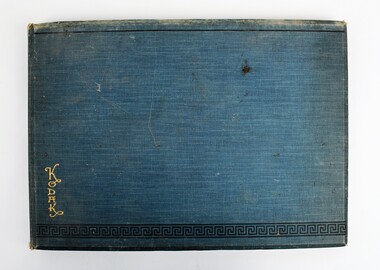
... Each photo has handwritten description on bottom of pocket. Photos depict Mena Camp, Egypt.1914 /1915, warships in Mudrus harbour, hospital ship and photos of soldiers with local people. ...Each photo has handwritten description on bottom of pocket. Photos depict Mena Camp, Egypt.1914 /1915, warships in Mudrus harbour, hospital ship and photos of soldiers with local people. ...Captures a soldeirs experiences in Egypt including rare photos of the everyday life and experiences of a soldier.Possibly a rare collection of a WW1 soldiers experiences captured in photographsBound album with cardboard front and back covered in aqua fabric. Greek scroll decoration on bottom, KODAK gold lettering, frontleft. 11 pages plus one cut in half. Each pages contain four photo pockets with black and white photos. Each photo has handwritten description on bottom of pocket. Photos depict Mena Camp, Egypt.1914 /1915, warships in Mudrus harbour, hospital ship and photos of soldiers with local people. Photos missing.Each photo inscribed below image with information about location. Top Right inside cover Donated by R.F. Ormaton, Box Hill. Photos belong to Capt. A. Greig Dec. 1988. Also written top left ‘J. Crowley / 105 Ocean Street/ Rosebud/ (059) 861246world war 1, ww1 -
 Ringwood RSL Sub-Branch
Photograph - Photos, Middle East WW2
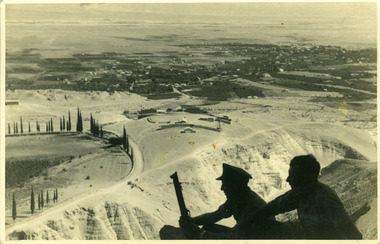
... Soldiers experiences in Egypt. world war 1 (Example of type of description inscribed on back of photographs. 00143.1 ‘Again showing Jericho from very top of mountain with self holding rifle and officer of party. ...Soldiers experiences in Egypt.Sixteen black and white photographs with handwritten notes on back. Photos depict a soldier visiting Luxor, Karnak, Thebes, Giza and Palestine. (Example of type of description inscribed on back of photographs. 00143.1 ‘Again showing Jericho from very top of mountain with self holding rifle and officer of party. Oct 1941.’world war 1 -
 8th/13th Victorian Mounted Rifles Regimental Collection
Photograph
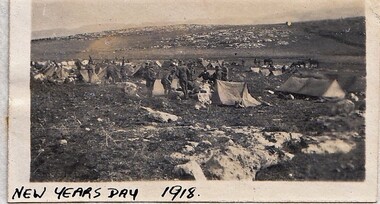
... Various descriptions writte3n across bottom of some photographs. Collection of small black and white photographs of 8th Light Horse Regiment AIF in Egypt and Palestine 1916 - 1918.Photographer unknown. ...Comparatively rare collection of amateur photos of Light Horse Regiment on operations.Collection of small black and white photographs of 8th Light Horse Regiment AIF in Egypt and Palestine 1916 - 1918.Photographer unknown.Various descriptions writte3n across bottom of some photographs. -
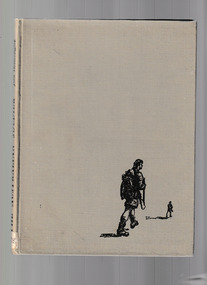 Mrs Aeneas Gunn Memorial Library
Book, F H Johnston, The Australian soldier : a portrait, 1943
... Soldiers - Australia - Pictorial works World War 1939-1945 - Campaigns - North Africa A description of the Australian soldier fighting in Greece, Syria and Egypt during the Second World War Ill, p.102. ...A description of the Australian soldier fighting in Greece, Syria and Egypt during the Second World WarIll, p.102.non-fictionA description of the Australian soldier fighting in Greece, Syria and Egypt during the Second World War soldiers - australia - pictorial works, world war 1939-1945 - campaigns - north africa -
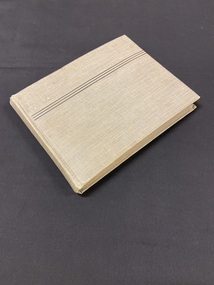 Returned Nurses RSL Sub-branch
Album - Photograph album, Dorothy P. White, 1917
... Hotel / Alexandria / Egypt 14.11.17' [Handwritten in black ink on the inside cover] [Many of the photographs have handwritten descriptions beneath them in black ink]...Hotel / Alexandria / Egypt 14.11.17' [Handwritten in black ink on the inside cover] [Many of the photographs have handwritten descriptions beneath them in black ink] Grey cloth photo album with three black lines running horizontally across the front cover an inch and a half from the top. ...Photo album belonging to Dorothy P. White (Australian Army Nursing Service) in 1917 containing black and white photos from the First World War. Photographs include the Units 15, 17 and 19th British General Hospitals. The first pages show photographs of officers, soldiers and nurses en route from Australia aboard The Wiltshire, (including Sister Patton). The next section depicts local sights, places of interest, daily life and people in Alexandria, as well as the 15th and 19th British General Hospitals. The single 5x7 photograph was taken in Paris on the 3rd of August, 1919. It shows a large group of 54 military staff posing on the steps of a grand and ornate building.Grey cloth photo album with three black lines running horizontally across the front cover an inch and a half from the top. Each page in the album contains four photographs set in black border cutouts. There is one loose 5x7 photograph.'Dorothy P White / [?] Hotel / Alexandria / Egypt 14.11.17' [Handwritten in black ink on the inside cover] [Many of the photographs have handwritten descriptions beneath them in black ink]world war 1914-1918, ww1, wwi, alexandria, australian army nursing service, aans, australian imperial force, aif, dorothy white, british general hospitals, paris, ismalia, cairo
