
Showing 29 items matching "emerald police"
-
 Emerald Museum & Nobelius Heritage Park
Photograph - Emerald Police, circa 1970's
... Emerald Police...emerald...police...Photocopy of photograph depicting local Emerald policemen and police car....Photograph Emerald Police ...Photocopy of photograph depicting local Emerald policemen and police car.Colin Munzel, Laurie Grundy, David Moyle, Keith Inchley, David Moyle Collection – ex Emerald policeman, per Kevin Teasdaleemerald, police, car, david moyle collection -
Emerald Museum & Nobelius Heritage Park
Photograph - Emerald Police
... Emerald Police...emerald...police...Photocopy of photograph depicting local Emerald policemen and police car....Photograph Emerald Police ...Photocopy of photograph depicting local Emerald policemen and police car.David Moyle Collection – ex Emerald policeman, per Kevin Teasdaleemerald, police, car, david moyle collection -
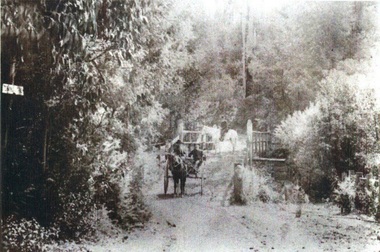 Emerald Museum & Nobelius Heritage Park
Photograph, Emerald Police - Constable Fleming
... Emerald Police - Constable Fleming...emerald police...No. 5974 served with the Emerald Police from 08/11/1915 - 06/09/1934 as 1st. ...No. 5974 served with the Emerald Police from 08/11/1915 - 06/09/1934 as 1st. ...FLEMING, Lawrence Joseph, (b.1876 - d. 1967) Police Reg. No. 5974 served with the Emerald Police from 08/11/1915 - 06/09/1934 as 1st. Constable. Lawrence Joseph Fleming was a veteran of the Boer War. He came to Emerald after his discharge from the Australian Army. He joined the police force, travelling on horseback to cover an area from Gembrook, Cockatoo and Emerald, through to Monbulk and Belgrave. His house which also served as the police station still exists in Kilvington Drive, Emerald. The back yard contained a lock-up for prisoners. He served as a policeman in Emerald for 19 years. When he retired, around 1928 - 30, Constable Fleming bought the Collis farm in Pinnocks Road, which at the time extended right down to Telopea Road. He died in Ferntree Gully hospital at the age of 91 years on the 12 June 1967. (as researched by C. Britton)A rare photograph of 1st Constable Lawrence Joseph Fleming - Emerald PoliceCopy of photograph depicting Constable Fleming on horseback MonbulkOn back, handwritten: 'Constable Flemming at Bayne's bridge Monbulk (please note incorrect spelling of Fleming. emerald police, lawrence joseph fleming -
Emerald Museum & Nobelius Heritage Park
Functional object - Key, 1900s
... ...emerald police...Donor informed that the key was a standard key which would have also been able to be used on the lock-up for the Emerald Police Station. (This lock-up out-building still exists in the back yard of present-day Fernlea Opportunity Shop.) key police station belgrave emerald police No discernible inscriptions Original key from Belgrave Police Station used for their 'lock-up', which was where alleged criminals were detained. ...Alleged criminals needed to be detained at local police stations because transport to a central remand institution would be not always available in horse and buggy days. Donor informed that the key was a standard key which would have also been able to be used on the lock-up for the Emerald Police Station. (This lock-up out-building still exists in the back yard of present-day Fernlea Opportunity Shop.)Original key from Belgrave Police Station used for their 'lock-up', which was where alleged criminals were detained. The key has been welded in a forge by a blacksmith. Donated by a retired police officer.No discernible inscriptionskey, police station, belgrave, emerald police -
Emerald Museum & Nobelius Heritage Park
Uniform - Police helmet with band
... Emerald... Victoria... Australia...police...Unknown Emerald Victoria Australia police Mountcastle Pty Ltd., Southj Brisbane Police helmet with band Uniform Police helmet with band ...UnknownPolice helmet with bandMountcastle Pty Ltd., Southj Brisbaneemerald, victoria, australia, police -
Emerald Museum & Nobelius Heritage Park
Uniform - Police helmet
... Emerald... Victoria... Australia...police...Unknown Emerald Victoria Australia police Mountcastle Pty Ltd., Southj Brisbane Police helmet Uniform Police helmet ...UnknownPolice helmetMountcastle Pty Ltd., Southj Brisbaneemerald, victoria, australia, police -
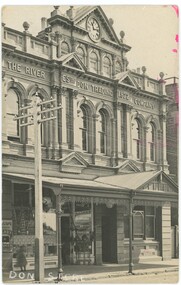 Emerald Museum & Nobelius Heritage Park
Postcard - Postcard of Don Trading Company, Devonport
... Police...Emerald...These and other postcards and photos came from the estate of David Moyle (1938-2015) who was a police officer in Emerald during late 1960s-early 1970s, and subsequently at Belgrave in the early 1980s. ...This postcard is significant because it was part of a collection belonging to a community member who had a close association with a local historical society. David Moyle Police Emerald Belgrave Maggie Johnston Rees Don Trading Company Devonport Marshalls Studios Printed on bottom L: 'DON STORE' Embossed on bottom R: 'A MARSHALLS / STUDIOS DEVONPORT' Don Trading Company Building - building has three stories topped with a large clock. ...This postcard may have belonged to the donor's paternal grandmother, Maggie Johnston Rees (1867-1964) as there is another postcard in the collection recounting a trip in Tasmania where the writer is 'M. J. Rees'. This postcard is probably post-1926 when the company had completed a renovation of their Devonport building (which included 'a large, illuminated clock'. These and other postcards and photos came from the estate of David Moyle (1938-2015) who was a police officer in Emerald during late 1960s-early 1970s, and subsequently at Belgrave in the early 1980s. David Moyle was closely associated with the now defunct Sherbrooke Historical Association.This postcard is significant because it was part of a collection belonging to a community member who had a close association with a local historical society.Don Trading Company Building - building has three stories topped with a large clock.Printed on bottom L: 'DON STORE' Embossed on bottom R: 'A MARSHALLS / STUDIOS DEVONPORT'david moyle, police, emerald, belgrave, maggie johnston rees, don trading company, devonport, marshalls studios -
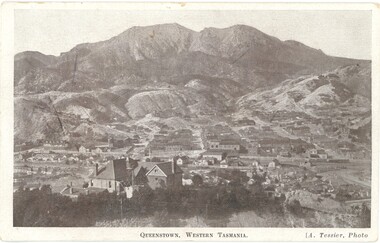 Emerald Museum & Nobelius Heritage Park
Postcard - Postcard of Queenstown, Tasmania, A. Tessier
... Police...Emerald...These and other postcards and photos came from the estate of David Moyle (1938-2015) who was a police officer in Emerald during late 1960s-early 1970s, and subsequently at Belgrave in the early 1980s. ...This postcard is significant because it was part of a collection belonging to a community member who had a close association with a local historical society. David Moyle Police Emerald Belgrave Maggie Johnston Rees Queenstown Tasmania A. ...This postcard may have belonged to the donor's paternal grandmother, Maggie Johnston Rees (1867-1964) as the writer is 'M. J. Rees'. Maggie married in 1935, so this postcard dates before that time possibly c1920s. These and other postcards and photos came from the estate of David Moyle (1938-2015) who was a police officer in Emerald during late 1960s-early 1970s, and subsequently at Belgrave in the early 1980s. David Moyle was closely associated with the now defunct Sherbrooke Historical Association.This postcard is significant because it was part of a collection belonging to a community member who had a close association with a local historical society.Tourist postcard with panoramic view of Queenstown and Mt Owen, Tasmania c1920s.Printed on bottom of front: 'QUEENSTOWN, WESTERN TASMANI. A. Tessier, Photo' Printed on back of postcard at the top: 'MOUNT LYELL TOURIST ASSOCIATION / POST CARD / QUEENSTOWN, WESTERN TASMANIA / Queenstown has a population of about 4000, the householders being mainly / employees of the Mount Lyell Smelting Works and Mines. Mount Owen in the background is 3800 feet high.' Handwritten message on back: 'Launceston / Tas. Jan 27th / My dear Uncle / I came / over here on Xmas Day & am / returning on Tuesday, so / have had 5 weeks here / We landed at Burnie / then went all round / the W. coast to Queenstown / & Gormanston. / Then I stayed / at Devonport for / 12 days & have had a / glorious time / & I will write & / tell you about it / when I return. / We have had beautiful / weather too. / Much love / from / M. J. Rees'david moyle, police, emerald, belgrave, maggie johnston rees, queenstown, tasmania, a. tessier, mount lyell -
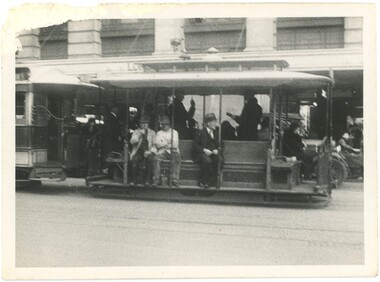 Emerald Museum & Nobelius Heritage Park
Photograph - Photograph of a Melbourne tramcar
... Police...Emerald...This and other postcards and photos came from the estate of David Moyle (1938-2015) who was a police officer in Emerald during late 1960s-early 1970s, and subsequently at Belgrave in the early 1980s. ...This postcard is significant because of its evocation of the early history of Melbourne's much-loved trams. it is also part of a collection belonging to a community member who had a close association with a local historical society. David Moyle Police Emerald Belgrave tramcar Melbourne 1920s Photographic print of a Melbourne tramcar circa 1920s Photograph Photograph of a Melbourne tramcar ...Cable trams consisted of a grip car (or dummy) which towed a trailer saloon car. Melbourne's network of cable tramways developed from the 1880s and became one of the largest in the world at that time. Electrification of the line occurred between 1925 and 1937. This and other postcards and photos came from the estate of David Moyle (1938-2015) who was a police officer in Emerald during late 1960s-early 1970s, and subsequently at Belgrave in the early 1980s. David Moyle was closely associated with the now defunct Sherbrooke Historical Association.This postcard is significant because of its evocation of the early history of Melbourne's much-loved trams. it is also part of a collection belonging to a community member who had a close association with a local historical society.Photographic print of a Melbourne tramcar circa 1920sdavid moyle, police, emerald, belgrave, tramcar, melbourne, 1920s -
 Emerald Museum & Nobelius Heritage Park
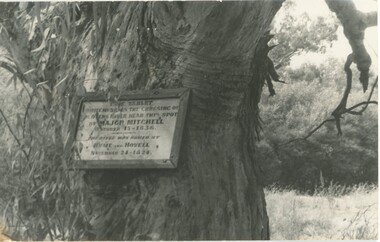
Photograph - Photograph of plaque commemorating Major Mitchell
... Police...Emerald...This photograph and other postcards and photographs came from the estate of David Moyle (1938-2015) who was a police officer in Emerald during late 1960s-early 1970s, and subsequently at Belgrave in the early 1980s. ...Also, this photograph is part of a collection belonging to a community member who had a close association with a local historical society. David Moyle Police Emerald Belgrave Major Mitchell Hume and Hovell Ovens River plaque Photograph of plaque on tree commemorating Major Mitchell's crossing of the Ovens River (1836) in the footsteps of Hume and Hovell (1824). ...This plaque was unveiled on 23 April 1915 to commemorate early colonial explorers, Major Mitchell and before him, Hume and Hovell. These explorers crossed the Ovens River in 1824 and 1836. The plaque has now been replaced by a tablet. This photograph and other postcards and photographs came from the estate of David Moyle (1938-2015) who was a police officer in Emerald during late 1960s-early 1970s, and subsequently at Belgrave in the early 1980s. David Moyle was closely associated with the now defunct Sherbrooke Historical Association. This photograph is significant because it recalls the early history of Victorian colonial exploration and settlement and is emblematic of the importance placed by the local community on Major Mitchell's and Hume and Hovell's explorations. Also, this photograph is part of a collection belonging to a community member who had a close association with a local historical society.Photograph of plaque on tree commemorating Major Mitchell's crossing of the Ovens River (1836) in the footsteps of Hume and Hovell (1824). david moyle, police, emerald, belgrave, major mitchell, hume and hovell, ovens river, plaque -
 Emerald Museum & Nobelius Heritage Park
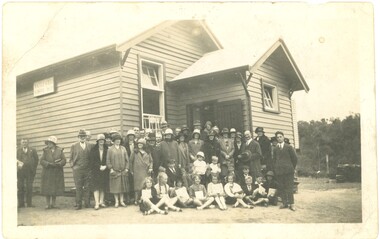
Photograph - Photograph of people at an event at Macclesfield State School
... Police...Emerald...This and other photographs and postcards came from the estate of David Moyle (1938-2015) who was a police officer in Emerald during late 1960s-early 1970s, and subsequently at Belgrave in the early 1980s. ...This postcard is significant because of it adds to the history of state schools in the local area. it is also part of a collection belonging to a community member who had a close association with a local historical society. David Moyle Police Emerald Belgrave Macclesfield State School 1920s Photographic print of a group of adults and children outside the Macclesfield State School c1920s Photograph Photograph of people at an event at Macclesfield State School ...The Macclesfield State School opened in 1904. This is a photograph is of a group event at the school c1920s. This and other photographs and postcards came from the estate of David Moyle (1938-2015) who was a police officer in Emerald during late 1960s-early 1970s, and subsequently at Belgrave in the early 1980s. David Moyle was closely associated with the now defunct Sherbrooke Historical Association.This postcard is significant because of it adds to the history of state schools in the local area. it is also part of a collection belonging to a community member who had a close association with a local historical society.Photographic print of a group of adults and children outside the Macclesfield State School c1920sdavid moyle, police, emerald, belgrave, macclesfield state school, 1920s -
 Emerald Museum & Nobelius Heritage Park
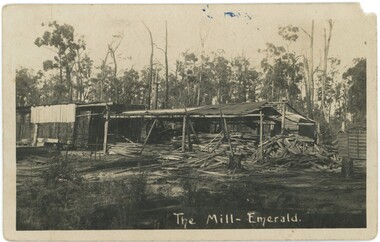
Postcard - Postcard of an old sawmill at Emerald
... Police...Emerald...The writer 'Emmy' is probably the daughter of James and Emerald (Watson) Legg who were married in Gembrook in 1885, as Emmy references the names of Legg siblings. This and other photographs and postcards came from the estate of David Moyle (1938-2015) who was a police officer in Emerald during late 1960s-early 1970s, and subsequently at Belgrave in the early 1980s. ...There is a separate photo of Emmy's father, James Legg, in the collection. David Moyle Police Emerald Belgrave timber mill On front: 'The Mill - Emerald' On back printed: 'POST CARD / Correspondence Address On back handwritten: 'Jim, Maudie, and Emerald / Wishing you all a Bright / and Happy New Year with / best love from your loving / Sister Emmie' Postcard of a timber mill at Emerald early 20th century. ...Timber was the most important early industry in the Dandenongs, including at Emerald. It provided timber for infrastructure as well as for fuel for the rapidly growing city. Some mills were quite small as this one appears to be. The writer 'Emmy' is probably the daughter of James and Emerald (Watson) Legg who were married in Gembrook in 1885, as Emmy references the names of Legg siblings. This and other photographs and postcards came from the estate of David Moyle (1938-2015) who was a police officer in Emerald during late 1960s-early 1970s, and subsequently at Belgrave in the early 1980s. David Moyle was closely associated with the now defunct Sherbrooke Historical Association.This postcard is significant because of it is a reminder of the importance of the timber industry during early colonial settlement in the Dandenongs and because it references a local family. it is also part of a collection belonging to a community member who had a close association with a local historical society. There is a separate photo of Emmy's father, James Legg, in the collection.Postcard of a timber mill at Emerald early 20th century.On front: 'The Mill - Emerald' On back printed: 'POST CARD / Correspondence Address On back handwritten: 'Jim, Maudie, and Emerald / Wishing you all a Bright / and Happy New Year with / best love from your loving / Sister Emmie'david moyle, police, emerald, belgrave, timber mill -
 Emerald Museum & Nobelius Heritage Park
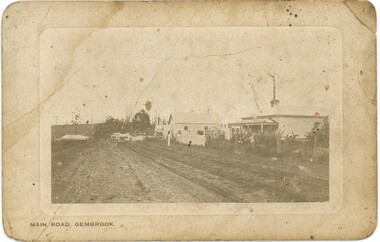
Postcard - Postcard of 'Main Road - Gembrook'
... Police...Emerald...This and other postcards and photos came from the estate of David Moyle (1938-2015) who was a police officer in Emerald during late 1960s-early 1970s, and subsequently at Belgrave in the early 1980s. ...This postcard is significant because of its evocation of Gembrook's early timber industry. it is also part of a collection belonging to a community member who had a close association with a local historical society. David Moyle Police Emerald Belgrave timber mills Gembrook Brooks 1900s On front at bottom, printed: 'MAIN ROAD - GEMBROOK' On back printed at the top: 'POST CARD' Underneath that is printed: 'SPACE FOR CORRESPONDENCE' and 'SPACE FOR ADDRESS' On back is handwritten message: 'J Brooks / 16 notts Sawmills / well fixed / Gembrook' Sepia postcard with rounded corners featuring photograph of unmade Main Road in Gembrook. ...Many sawmills operated in Gembrook in the forest to the east from early colonial settlement days. The opening of the narrow-gauge train line in 1900 assisted the expansion of this industry. This postcard is circa 1900s. This and other postcards and photos came from the estate of David Moyle (1938-2015) who was a police officer in Emerald during late 1960s-early 1970s, and subsequently at Belgrave in the early 1980s. David Moyle was closely associated with the now defunct Sherbrooke Historical Association.This postcard is significant because of its evocation of Gembrook's early timber industry. it is also part of a collection belonging to a community member who had a close association with a local historical society.Sepia postcard with rounded corners featuring photograph of unmade Main Road in Gembrook. The Ranges Hotel which opened in 1902 is just visible on the left. The view is towards the west.On front at bottom, printed: 'MAIN ROAD - GEMBROOK' On back printed at the top: 'POST CARD' Underneath that is printed: 'SPACE FOR CORRESPONDENCE' and 'SPACE FOR ADDRESS' On back is handwritten message: 'J Brooks / 16 notts Sawmills / well fixed / Gembrook'david moyle, police, emerald, belgrave, timber mills, gembrook, brooks, 1900s -
 Emerald Museum & Nobelius Heritage Park
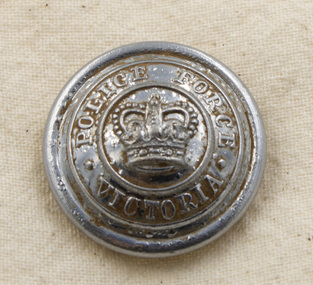
Accessory - Victoria Police Button, c. 1950s
... Emerald...20th Century...1950s...Police...This button was found adjacent to the old lock-up in the backyard of present-day Fernlea Op-Shop, formerly the site of the Emerald Police Station. It was made by button manufacturer K. ...This button was found adjacent to the old lock-up in the backyard of present-day Fernlea Op-Shop, formerly the site of the Emerald Police Station. It was made by button manufacturer K. ...This button was found adjacent to the old lock-up in the backyard of present-day Fernlea Op-Shop, formerly the site of the Emerald Police Station. It was made by button manufacturer K. G. Luke, who was one of Australia's largest manufacturers of silverware, including buttons. This button was likely made sometime in between the death of King George VI in February 1952 and the changing of the company's name in May 1953, due to the presence of the Queen's crown on the front and the manufacturing details on the back.This button is significant as it demonstrates the presence of the Victorian Police Force in Emerald in the mid-20th CenturyA circular silver metal plated button with a raised Queen's crown in the centre. On the back there are four holes for sewing into.Front: 'POLICE FORCE / VICTORIA' Back: 'K. G. LUKE PTY LTD / MELB'emerald, 20th century, 1950s, police -
 Emerald Museum & Nobelius Heritage Park
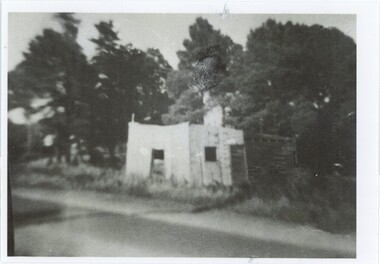
Photograph - Oat and Grain Store, 1961
... The oat and grain store was positioned opposite Emerald's original police station at 15 Kilvington Drive, on what is now the railway property near Puffing Billy Playground. ...The oat and grain store was positioned opposite Emerald's original police station at 15 Kilvington Drive, on what is now the railway property near Puffing Billy Playground. ...The oat and grain store was positioned opposite Emerald's original police station at 15 Kilvington Drive, on what is now the railway property near Puffing Billy Playground. The grain store was first built in the 1920s, used by Clyde Stapleton in the 1940s, and demolished not long after this photograph was taken in 1961.Oat and grain stores were important to horse-based transportation, the agriculture industry, and food supply until the mid-20th century.The main item is the black and white photograph, with a printed annotation pasted to the reverse; there is also a larger sepia copy. Both depict a stone or painted brick building by the side of the road, with a wooden annexe at the rear. There is no door on the building, which stands beside a road. In the background are several trees. The reverse of the sepia version has Kodak logos and handwritten pen annotations; the black and white copy has, besides the printed annotations, a handwritten title and accession number.Black & White, Reverse: "165 Oat & grain Store / P00529 / 165 Oat and grain store, built in the 1920s opposite the police / station (site of [crossed out: present playground] [handwritten: railway property]): [crossed out: Clive] [handwritten: Clyde] Stapleton used to come / from the city to shoe horses here in the 1940s/ The phootgraph was / taken in 1961 before the store was demolished. / [crossed out, handwritten: Legges used it as a store]" Sepia, Reverse: "Gary Steven's gave me this photo. 1961. / Original Oat & Grain Store / Clive Stapleton shod horses here / when he came up from Town. / Opposite Police Station (where the playground is)"agriculture, transport, 1960s, stapleton family -
 Port Melbourne Historical & Preservation Society
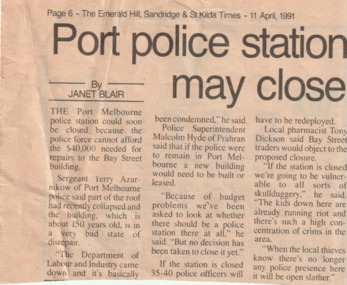
Newspaper - Port Police Station may close, Emerald Hill & Sandridge Times, 11 April 1991
... Newspaper Port Police Station may close Emerald Hill & Sandridge Times ...Due to repair costs of $40,00 for the Port Melbourne Police Station in Bay Street was slated for closure in 1991. Part of the roof of the century old building had collapsed and the building was in a bad state of repair. Local pharmacist, Tony DICKSON, objected to the closure becaus eof the high concentration of criminals in the area. A small newspaper cutting regarding the possible closure of the Port Melbourne Police Station.victoria police, port melbourne police station, tony dickson -
 Narre Warren and District Family History Group
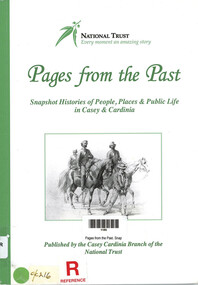
Book, National Trust of Australia (Victoria). Casey-Cardinia Branch, Pages from the Past. Snapshot Histories of People, Places & Public Life in Casey & Cardinia, 2011
... Contents include: Richard Gavin Gardiner Casey [Edrington]; The Police Paddocks and the Native Police Corps; The changing face of Berwick township; Coaches, tolls and local councils; Berwick Mechanics Institute and Free Library; Berwick Primary School [No. 40] and Berwick Grammar School; A century of quarrying in Berwick; The German settlement of Harkaway; Emerald’s first State School No. 2110 (1879-1909); The railway to Gippsland; Early sawmilling in West Gippsland; Tooradin and the coastal villages; Some notable early residents and their homes; The draining of the Koo-Wee-Rup swamp; Guest houses at Upper Beaconsfield; Ada Armytage of Holm Park; The soldiers of early Berwick; Memorials, commemorations and avenues of honour; Bush nursing hospitals; The Melbourne Hunt Club [The "Kennels" at Cranbourne]; Growing up in Berwick in the 1930s & 1940s; Growing up in Beaconsfield in the 1930s and 1940s; Casey Airfield; The history of Maryknoll [Catholic farming community]; The filming of “On the beach”; Memories of Ash Wednesday; Maps of the Casey-Cardinia area. ...Contents include: Richard Gavin Gardiner Casey [Edrington]; The Police Paddocks and the Native Police Corps; The changing face of Berwick township; Coaches, tolls and local councils; Berwick Mechanics Institute and Free Library; Berwick Primary School [No. 40] and Berwick Grammar School; A century of quarrying in Berwick; The German settlement of Harkaway; Emerald’s first State School No. 2110 (1879-1909); The railway to Gippsland; Early sawmilling in West Gippsland; Tooradin and the coastal villages; Some notable early residents and their homes; The draining of the Koo-Wee-Rup swamp; Guest houses at Upper Beaconsfield; Ada Armytage of Holm Park; The soldiers of early Berwick; Memorials, commemorations and avenues of honour; Bush nursing hospitals; The Melbourne Hunt Club [The "Kennels" at Cranbourne]; Growing up in Berwick in the 1930s & 1940s; Growing up in Beaconsfield in the 1930s and 1940s; Casey Airfield; The history of Maryknoll [Catholic farming community]; The filming of “On the beach”; Memories of Ash Wednesday; Maps of the Casey-Cardinia area. Notable people : William Lyall and "Harewood'; William Clarke and "Springfield'; Sydney Webb and "Holly Green"; Carl Axel Nobelius; Edwin Flack and "Burnbank"; Carlo Catani;. Includes illustrations, portraits, photographs, maps and bibliography.106 p. : ill., portraits, map, bib., pbk ; 30 cmnon-fictionContents include: Richard Gavin Gardiner Casey [Edrington]; The Police Paddocks and the Native Police Corps; The changing face of Berwick township; Coaches, tolls and local councils; Berwick Mechanics Institute and Free Library; Berwick Primary School [No. 40] and Berwick Grammar School; A century of quarrying in Berwick; The German settlement of Harkaway; Emerald’s first State School No. 2110 (1879-1909); The railway to Gippsland; Early sawmilling in West Gippsland; Tooradin and the coastal villages; Some notable early residents and their homes; The draining of the Koo-Wee-Rup swamp; Guest houses at Upper Beaconsfield; Ada Armytage of Holm Park; The soldiers of early Berwick; Memorials, commemorations and avenues of honour; Bush nursing hospitals; The Melbourne Hunt Club [The "Kennels" at Cranbourne]; Growing up in Berwick in the 1930s & 1940s; Growing up in Beaconsfield in the 1930s and 1940s; Casey Airfield; The history of Maryknoll [Catholic farming community]; The filming of “On the beach”; Memories of Ash Wednesday; Maps of the Casey-Cardinia area. Notable people : William Lyall and "Harewood'; William Clarke and "Springfield'; Sydney Webb and "Holly Green"; Carl Axel Nobelius; Edwin Flack and "Burnbank"; Carlo Catani;. Includes illustrations, portraits, photographs, maps and bibliography. city of casey, cardinia shire (vic.) -
 Narre Warren and District Family History Group
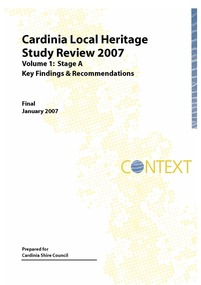
Book, Context Pty Ltd, Cardinia Local Heritage Study Review 2007 Stage A. Vol 1 : Key Findings And Recommendations Vol 2 : Heritage Place And Precinct Citations, 2007
... Emerald)...Cascades Guest house...Orchard Packing Shed (Garfield North)...Wattle Bank (Gembrook)...Coffee Palace (Gembrook)...Tehennepe (Iona)...Koo Wee Rup Public Hall...Dustings Garage (Koo Wee Rup)...Wattle Theatre (Koo Wee Rup)...Koo Wee Rup Police...Cardinia Shire (Vic.) heritage studies Kenilworth Coach House (Beaconsfield) Wood Street Residential Precinct (Beaconsfield) George Street Residential Precinct (Bunyip) Bunyip Post Office Railway Hotel (Bunyip) Cora Lynn Catholic Parish School Glen-Keith Farm Complex (Dalmore) Emerald Lake Park Emerald Railway Station Emerald Country Club Cambden Woolybutt Ros (Emerald) Oak Lee (Emerald) Sycamore Lodge (Emerald) Cascades Guest house Orchard Packing Shed (Garfield North) Wattle Bank (Gembrook) Coffee Palace (Gembrook) Tehennepe (Iona) Koo Wee Rup Public Hall Dustings Garage (Koo Wee Rup) Wattle Theatre (Koo Wee Rup) Koo Wee Rup Police Lockup Royal Hotel (Koo Wee Rup) Lang Lang Cemetery Misson's Butchers Shop & Residence (Lang Lang) ANZ Bank (Lang Lang) Maryknoll Residential & Civic Precinct Maryknoll Lawn Cemetery Mount Burnett Guesthouse Oakway (Nar Nar Goon) Nar Nar Goon Growers & Packers Shed Jesmond Dene (Officer South) Kings Picture Theatre (Pakenham) Pakenham Post Office I.Y.U. ...The overall objective of the Study was the identification, assessment and documentation of places of post-contact cultural significance for the Cardinia Shire.non-fictionThe overall objective of the Study was the identification, assessment and documentation of places of post-contact cultural significance for the Cardinia Shire.cardinia shire (vic.), heritage studies, kenilworth coach house (beaconsfield), wood street residential precinct (beaconsfield), george street residential precinct (bunyip), bunyip post office, railway hotel (bunyip), cora lynn catholic parish school, glen-keith farm complex (dalmore), emerald lake park, emerald railway station, emerald country club, cambden woolybutt ros (emerald), oak lee (emerald), sycamore lodge (emerald), cascades guest house, orchard packing shed (garfield north), wattle bank (gembrook), coffee palace (gembrook), tehennepe (iona), koo wee rup public hall, dustings garage (koo wee rup), wattle theatre (koo wee rup), koo wee rup police lockup, royal hotel (koo wee rup), lang lang cemetery, misson's butchers shop & residence (lang lang), anz bank (lang lang), maryknoll residential & civic precinct, maryknoll lawn cemetery, mount burnett guesthouse, oakway (nar nar goon), nar nar goon growers & packers shed, jesmond dene (officer south), kings picture theatre (pakenham), pakenham post office, i.y.u. pre-emptive right homestead site (pakenham), valley view orchards manager's house (pakenham upper), ruthdale reserve trees, rutter farm trees (tooradin), eve's house (tynong north), kia ora (upper beaconsfield), the steyne (upper beaconsfield), beaconsfield upper milk bar, staverton garden (upper beaconsfield), great southern railway -
 Southern Sherbrooke Historical Society Inc.
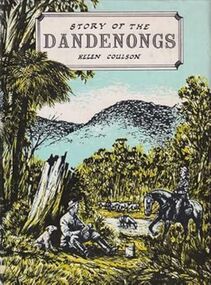
Document - Coulson Papers
... Vol 1 Belgrave more general education arts press fires health sanitary services nurses & doctors water supply flora & fauna electricity sport transport railways Vol 2 Council general development roads land early settlement & history yearly, varied topics land sales … village settlements state forests, national parks police paddocks MPs Vol 3 Emerald riding Sassafras district Ferntree Gully Vol 4 (large notebook) Municipal summaries Vol 5 (large notebook) All (?) ...Vol 1 Belgrave more general education arts press fires health sanitary services nurses & doctors water supply flora & fauna electricity sport transport railways Vol 2 Council general development roads land early settlement & history yearly, varied topics land sales … village settlements state forests, national parks police paddocks MPs Vol 3 Emerald riding Sassafras district Ferntree Gully Vol 4 (large notebook) Municipal summaries Vol 5 (large notebook) All (?) ...The Coulson Papers comprise a partial archive of working papers, letters, etc. created by historian Helen Coulson in the preparation of her 1959 book, Story Of The Dandenongs, commissioned by Ferntree Gully Shire Council. The archive contains 11 volumes/books/folders, several of which contained loose sheets of paper placed between pages. The following list is a rough index to the material in the archive. Vol 1 Belgrave more general education arts press fires health sanitary services nurses & doctors water supply flora & fauna electricity sport transport railways Vol 2 Council general development roads land early settlement & history yearly, varied topics land sales … village settlements state forests, national parks police paddocks MPs Vol 3 Emerald riding Sassafras district Ferntree Gully Vol 4 (large notebook) Municipal summaries Vol 5 (large notebook) All (?) suburbs Vol 6 does it exist? Vol 7 (small notebook) rough notes of i/views with Preston, Hermon, etc. Vol 8 (manila folder) correspondence, etc. Vol 9 (manila folder) correspondence, etc. Vol 10 (manila folder) correspondence, clippings, etc. Vol 11 (manila folder) Land settlement 'papers out of township book' -
 Emerald Museum & Nobelius Heritage Park
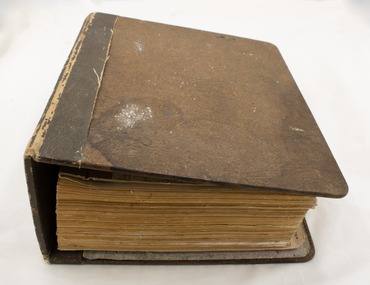
Manual - Police Manual, F. D. Atkinson, Government Printer, Victoria Police Manual, Circa 1957
... Fernlea was on the site of the original Emerald Police Station, so this police manual was acquired as a relevant tie to that history. ...This copy of the 1957 Police Manual was purchased from collectibles shop in Olinda by a previous manager of the Fernlea Shop of Opportunities. Fernlea was on the site of the original Emerald Police Station, so this police manual was acquired as a relevant tie to that history. It was in turn donated to the Emerald and District Museum when the Fernlea Shop of Opportunities closed in 2025. The manual was designed as a binder such that new pages could be added if regulations were updated or amended after publication - for example, one page was inserted with greater detail on radioactive materials. The book has five sections, labelled with tabs protruding from the fore-edge: 'Regulations', 'Determinations', 'Standing Orders', 'Index', and 'List of Amendments'. The index is a short section near the end using a different paper to the rest of the book, and the List of Amendments is an unmarked table, intended to catalogue amendments to the manual. The Regulations and Determinations sections are both sizeable, containing a significant number of various guidelines, but by far the largest section is 'Standing Orders'.This police manual is bound as a binder, connecting upwards of 420 pages with metal rods inserted through the loose-leaf paper to form the spine. The outer hardcover, enclosing the book, its inner covers, and the metal binder mechanism, is brown board with leatherette spine binding. The inner cover is card with a blue and yellow pattern decorating it; the inside of the outer cover also has a decorative pattern, in pink, blue, and white, which is peeling slightly on the front cover.non-fictionThis copy of the 1957 Police Manual was purchased from collectibles shop in Olinda by a previous manager of the Fernlea Shop of Opportunities. Fernlea was on the site of the original Emerald Police Station, so this police manual was acquired as a relevant tie to that history. It was in turn donated to the Emerald and District Museum when the Fernlea Shop of Opportunities closed in 2025. The manual was designed as a binder such that new pages could be added if regulations were updated or amended after publication - for example, one page was inserted with greater detail on radioactive materials. The book has five sections, labelled with tabs protruding from the fore-edge: 'Regulations', 'Determinations', 'Standing Orders', 'Index', and 'List of Amendments'. The index is a short section near the end using a different paper to the rest of the book, and the List of Amendments is an unmarked table, intended to catalogue amendments to the manual. The Regulations and Determinations sections are both sizeable, containing a significant number of various guidelines, but by far the largest section is 'Standing Orders'.1950s, policing -
Emerald Museum & Nobelius Heritage Park
Document - Report, Alsop, Mary, 1968
... Emerald... Victoria... Australia...banks...crime...police...Emerald Victoria Australia banks crime police Mary Alsop E.S.&A. ...An eyewitness account of a bank robbery which occurred in Emerald on 3 January 1968. Author is Mary Alsop.The Emerald Bank Robbery - 2p. typescript.emerald, victoria, australia, banks, crime, police, mary alsop, e.s.&a. bank -
 Emerald Museum & Nobelius Heritage Park
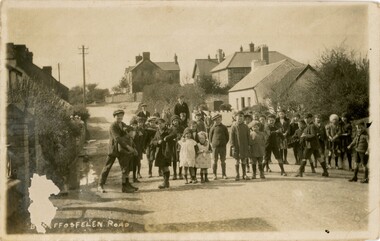
Postcard - Postcard of Welsh village
... Police...Evan Rees...Wales...Emerald...These and other postcards and photos came from the estate of David Moyle (1938-2015) who was a police officer in Emerald during late 1960s-early 1970s, and subsequently at Belgrave in the early 1980s. ...These and other postcards and photos came from the estate of David Moyle (1938-2015) who was a police officer in Emerald during late 1960s-early 1970s, and subsequently at Belgrave in the early 1980s. ...The donor's maternal great-grandfather, Evan Rees, was born in Llangendeirne, Wales in 1862 and emigrated to Australia in 1887. This postcard appears to be circa 1900s from the clothes worn by the children. The donor believes this postcard belonged to her father's mother, Maggie Johnston Rees (1867-1964). These and other postcards and photos came from the estate of David Moyle (1938-2015) who was a police officer in Emerald during late 1960s-early 1970s, and subsequently at Belgrave in the early 1980s. David Moyle was closely associated with the now defunct Sherbrooke Historical Association.This postcard is significant because it was part of a collection belonging to a community member who had a close association with a local historical society.A group of children standing for a photographer in a street in a village. The children's dress suggests they are not well-off and that the period in c1900s.Printed on bottom of postcard (partly obscured): 'B...S...FFOSFELEN ROAD'david moyle, police, evan rees, wales, emerald, belgrave -
 Emerald Museum & Nobelius Heritage Park
Photograph - Photograph of James Legg, San Francisco Instantaneous Photographic Company
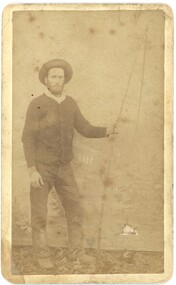
... Police...San Francisco Instantaneous Photographic Company...Gembrook...James Legg...Emerald...Emerald Watson at Gembrook in 1885. The couple had at least 10 children. The San Francisco Instantaneous Photographic Company developed a new technique after 1870 which required exposures for only a fraction of a second. The Company would travel to advertised locations where they would take portrait photographs. This photograph is circa late nineteenth century. This and other postcards and photographs came from the estate of David Moyle (1938-2015) who was a police...Emerald Watson at Gembrook in 1885. The couple had at least 10 children. The San Francisco Instantaneous Photographic Company developed a new technique after 1870 which required exposures for only a fraction of a second. The Company would travel to advertised locations where they would take portrait photographs. This photograph is circa late nineteenth century. This and other postcards and photographs came from the estate of David Moyle (1938-2015) who was a police ...James Legg married Emerald Watson at Gembrook in 1885. The couple had at least 10 children. The San Francisco Instantaneous Photographic Company developed a new technique after 1870 which required exposures for only a fraction of a second. The Company would travel to advertised locations where they would take portrait photographs. This photograph is circa late nineteenth century. This and other postcards and photographs came from the estate of David Moyle (1938-2015) who was a police officer in Emerald during late 1960s-early 1970s, and subsequently at Belgrave in the early 1980s. David Moyle was closely associated with the now defunct Sherbrooke Historical Association.This postcard is significant because of its representation of a well-known local man and its evocation of a style of portraiture. It is also part of a collection belonging to a community member who had a close association with a local historical society.A style of photographic portraiture which became popular in Melbourne in the late 19th century, and which could be shared amongst family and friends. This one is sepia colored with rounded corners. The subject, James Legg, appears to be deliberately dressed as a working man and he is holding a long stick or tool and standing on leaves. Some background details are too faded to be able to be discerned accurately.On back printed: 'SAN FRANCISCO / INSTANTANEOUS / PHOTOGRAPHIC COMPANY' On back on the L side handwritten: 'Mr J Legg / alias / Ned Kelly' On back underneath the company information, handwritten: ' Pakenham / J. Legg'david moyle, police, san francisco instantaneous photographic company, gembrook, james legg, emerald -
Emerald Museum & Nobelius Heritage Park
Photograph - Kilvington Drive, 2010
... Emerald's history in the mid-20th century. This photograph was taken by Kevin as a record of the changes in the Kilvington Drive streetscape. Kevin Teasdale 2010 police ...The Teasdale family were shop proprietors in the 1940s and 1950s in Emerald. Kevin Teasdale has written extensively about Emerald in that period. His writings are stored with photographs in his family folder in Filing Cabinet 6C. They are a valuable addition to understanding Emerald's history in the mid-20th century. This photograph was taken by Kevin as a record of the changes in the Kilvington Drive streetscape.Black and white rectangular photograph printed on matte photographic paper. Photograph of Kilvington Drive (April 2010) before the block of shops adjoining the old police residence (currently an opportunity shop) was built.Written on back of photograph in biro presumably by Bill Teasdale: 'Taken in April, 2010. This photo shows the Kilvington Dve streetscape before the block of shops adjoining the police residence were built.'kevin teasdale, 2010, police residence, kilvington drive -
Emerald Museum & Nobelius Heritage Park
Photograph - Beaconsfield Road streetscape, c1948, 1948
... On back of photo written in biro (presumably by Kevin Teasdale): 'Emerald Streetscape looking along Beaconsfield Road (now Kilvington Drive) towards Belgrave-Gembrook Road, from in front of the Police Residence c1948. ...Kevin Teasdale 1940s Kilvington Drive shops On back of photo written in biro (presumably by Kevin Teasdale): 'Emerald Streetscape looking along Beaconsfield Road (now Kilvington Drive) towards Belgrave-Gembrook Road, from in front of the Police Residence c1948. ...The Teasdale family were shop proprietors in the 1940s in Emerald. Kevin Teasdale has written extensively about Emerald in that period. His writings are contained with photographs in his family folder in Filing Cabinet 6C.Black and white rectangular photograph printed on matte photographic paper. Photograph of three children standing on Beaconsfield Road (present-day Kilvington Drive). The view looks toward Belgrave-Gembrook Road . Local shops (the Teasdale boot shop and fruit shop, Hogan's Coffee Palace and Legge's store are just visible. The three children are presumably Kevin and his younger siblings.On back of photo written in biro (presumably by Kevin Teasdale): 'Emerald Streetscape looking along Beaconsfield Road (now Kilvington Drive) towards Belgrave-Gembrook Road, from in front of the Police Residence c1948. On the left side, Edward Teasdale's bootshop, Hogan's Coffee Palace & my parents' fruit shop are visible. On the right side, Legges' "The Big Store" is visible.'kevin teasdale, 1940s, kilvington drive, shops -
 Emerald Museum & Nobelius Heritage Park
Photograph - Constable Fleming's House, 1927
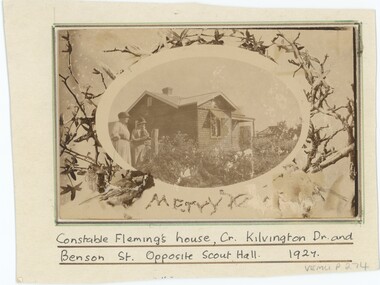
... Emerald Scout Hall and at the corner with Benson Street. Constable Lawrence Joseph Fleming (1876-1967), the house's occupant, worked in the district for 19 years from November 1915 until his retirement in June 1934. He was a respected local figure, with tributes given by other local figures when he retired. While this house is discussed as belonging to Constable Fleming, Fleming himself lived in the old police...Emerald Scout Hall and at the corner with Benson Street. Constable Lawrence Joseph Fleming (1876-1967), the house's occupant, worked in the district for 19 years from November 1915 until his retirement in June 1934. He was a respected local figure, with tributes given by other local figures when he retired. While this house is discussed as belonging to Constable Fleming, Fleming himself lived in the old police ...This photograph was taken at what is now 14 Kilvington Drive, across the road from Emerald Scout Hall and at the corner with Benson Street. Constable Lawrence Joseph Fleming (1876-1967), the house's occupant, worked in the district for 19 years from November 1915 until his retirement in June 1934. He was a respected local figure, with tributes given by other local figures when he retired. While this house is discussed as belonging to Constable Fleming, Fleming himself lived in the old police station further up Kilvington Drive. This house was occupied separately by his wife Jessie Fleming for many years, and she may be one of the women in the photographz. According to Graeme Legge, Constable Fleming's distinctive white horse inspired the name for Whitehorse Road; this story is apocryphal, as Whitehorse Road is generally agreed to have been named for the White Horse Hotel, which was named for the horse of a Captain Elgar local to the Box Hill area.Constable Fleming was a significant and respected figure in the Emerald community for many years; this home was not his main residence, but was an important part of his family's life.This item is a sepia photograph mounted on card. Beneath the photograph, a caption is handwritten on the card in black pen; an accession number is written on the obverse and reverse in pencil. The photograph is positioned in an oval frame surrounded by branches, leaves, and birds; below the photograph a message is written in branches, though the second word is obstructed. In the photograph is a wooden weatherboard house with an angled roof and shaded window; further back appears to be an uncompleted frame of a house. Two women are standing next to a fence.The foreground filled with plants.Caption: "Constable Fleming's house, Cr. Kilvington Dr. and / Benson St. Opposite Scout Hall. 1927" In Photograph: "Merry [illegible]"polce, emerald, 1920s -
Emerald Museum & Nobelius Heritage Park
Map - Local map, Regional Publicity Service, Today's Map of the Dandenong Ranges, Districts & Environs with complete Alphabetical Streets, Index and Locations of schools, churches, public buildings, hospitals, child welfare centres, police stations, post offices and public telephone boxes, 1957
... Emerald Victoria Australia maps Dandenong Ranges Victoria Australia Advertising dandenong ranges Regional Publicity Service Blue advertising booklet containing an open-up map of Dandenong RangesPaper Today's Map of the Dandenong Ranges, Districts & Environs with complete Alphabetical Streets, Index and Locations of schools, churches, public buildings, hospitals, child welfare centres, police stations, post offices and public telephone boxes Map Local map Regional Publicity Service ...Map kept for the advertisements within which are relevant to Emerald.Blue advertising booklet containing an open-up map of Dandenong RangesPaperemerald, victoria, australia, maps, dandenong ranges, victoria, australia, advertising, dandenong ranges, regional publicity service -
Emerald Museum & Nobelius Heritage Park
Document - Article and Documents re proposed redevelopment, 2003-2006
... Subsequently a new Emerald Police Station was built on the site. These documents give an insight into how development in Emerald was envisioned by this group of residents at that time. 386 Main Street Emerald Shire of Cardinia Victoria Australia community campaign 2006-2007 Emerald Victoria Australia Letters, Articles and Documents relating to proposed re-development of 386 Main Road Emerald 2006-2007. ...A planning application for a 4-storey commercial and medical complex in the Main Street was opposed by a group of residents. They lodged an objection to VCAT which was ultimately successful. Subsequently a new Emerald Police Station was built on the site. These documents give an insight into how development in Emerald was envisioned by this group of residents at that time.Letters, Articles and Documents relating to proposed re-development of 386 Main Road Emerald 2006-2007. Collated by Dot Griffin.386 main street emerald, shire of cardinia victoria australia, community campaign, 2006-2007, emerald, victoria, australia -
Emerald Museum & Nobelius Heritage Park
Booklet - Fire Safety Information Booklet, Emerald Rural Fire Brigade, unknown
... Emerald Telephone Exchange was still in use. Advertisements contain useful historical information with names and phone numbers of various businesses in the town. The card is a list of phone numbers to ring in case of fire, with names and addresses of members of the brigade, local doctor (I. S. Murphy) and police...Emerald Telephone Exchange was still in use. Advertisements contain useful historical information with names and phone numbers of various businesses in the town. The card is a list of phone numbers to ring in case of fire, with names and addresses of members of the brigade, local doctor (I. S. Murphy) and police ...Booklet compiled by the Emerald Rural Fire Brigade 'in the interests of public safety' detailing fire prevention measures for domestic properties. Date unkown but would have been before construction of Cardinia Dam in the early 1970s and when Emerald Telephone Exchange was still in use. Advertisements contain useful historical information with names and phone numbers of various businesses in the town. The card is a list of phone numbers to ring in case of fire, with names and addresses of members of the brigade, local doctor (I. S. Murphy) and police.12 page typewritten and roneod booklet with centre staple, pink cover with illustration; includes diagrams and advertisements -white card printed in red with list of phone numbers - some damage to edges of paper; some rusting from stapleemerald, victoria, australia, fire prevention, firefighters, businesses, emerald rural fire brigade, lockyer's, emerald, nobelius & co., webber's self service, elto service station, emerald electrics, peter searle, emerald motors, h.a. sherriff, bill stephens, emerald co-operative society
