
Showing 13 items matching "end time teachings"
-
 Unions Ballarat
Better than Nostradamus, or, The secretive world takeover, Smith, Barry R, 1996
... ...end time teachings...I have continued to `teach', but utilise the subject of `end times' — taken from the scriptures in relation to current affairs and events — as an effective tool in presenting the gospel." End time teachings. btlc ballarat trades hall ballarat trades and labour council end time teachings christ christian current affairs end times gospel Paper; book. ...The text below is a quotation from "Barry Smith put under fire by Phillip Powell" an interview at the Christian Witness Ministries website http://www.christian-witness.org/archives/cetf2000/bsmith.html "Some people have suggested that I am referring to myself as being a `better prophet than Nostradamus' when in fact I am saying the Word of God alone is always accurate… "I personally do not see myself as an evangelist. Relatively few people turn to Christ as a result of my lectures. I was a school teacher prior to my `preaching work'. I have continued to `teach', but utilise the subject of `end times' — taken from the scriptures in relation to current affairs and events — as an effective tool in presenting the gospel." End time teachings.Paper; book. btlc, ballarat trades hall, ballarat trades and labour council, end time teachings, christ, christian, current affairs, end times, gospel -
Federation University Historical Collection
Programme, Programme for the Official Opening of the Mt Helen Campus, 10/1970
... During 1965 the State Government created the Victoria Institute of Colleges - a non-teaching body empowered to award degrees and directed towards the task of co-ordinating and developing tertiary education in Victorian in institutions other than universities. the tertiary division of the School became affiliated with the V.I.C. at the end of that same year. Subsequently the Council of the School decided that, whilst retaining for the whole establishment the time...During 1965 the State Government created the Victoria Institute of Colleges - a non-teaching body empowered to award degrees and directed towards the task of co-ordinating and developing tertiary education in Victorian in institutions other than universities. the tertiary division of the School became affiliated with the V.I.C. at the end of that same year. Subsequently the Council of the School decided that, whilst retaining for the whole establishment the time ...The first building at the Mt Helen Campus was opened in October 1970. Students first starting using the campus in the same year. The programme includes the following historical information: "On 26th October, 1870, Sir Redmond Barry officially opened the first venture into formal technical education in Australia - the Ballarat School of Mines. Over the preceding year a small group of Ballarat citizens interested in mining had conceived and brought into being the idea of creating such a school. They leased a derelict Court House next to the Ballarat Gaol in Lydiard St., at a nominal rental for15 years, and started classes with 4 students and an honorary lecturer. The School developed its courses beyond the initially intended range of studies related to mining, increased in enrolments, took over neighbouring properties and buildings and developed three levels of education - tertiary, trade and secondary. From the latter part of the 19th Century, even though remaining under the control of its own autonomous Council, it developed close links with the State Education Department. From the earliest times the School achieved widespread recognition and a particularly high reputation, and its graduates spread across Australia and the world. For several years it was affiliated with Melbourne University. In the last decade its scope has been further broadened by the introduction of new tertiary courses. During 1965 the State Government created the Victoria Institute of Colleges - a non-teaching body empowered to award degrees and directed towards the task of co-ordinating and developing tertiary education in Victorian in institutions other than universities. the tertiary division of the School became affiliated with the V.I.C. at the end of that same year. Subsequently the Council of the School decided that, whilst retaining for the whole establishment the time honoured title - The School of Mines and Industries, Ballarat - it should more distinctly sub-title the three divisions. the tertiary division then became known as the Ballarat Institute of Advanced Education. On receipt of substantial Commonwealth-State Grants, made to it as a college of advanced education, the Council was enabled at the start of 1967, to purchase for the Institute the 20 acre campus at Mt Helen. A master plan has been produced to develop this beautiful and spacious site as a tertiary institution enrolling, in due course, some 3000 full time students. the first sod was turned, to initiate this development, by the then Governor General of Australia, The Right Honourable Lord Casey, on 19th October, 1967. The first building group, now completed and occupied, has involved an expenditure approaching $1,000,000. It contains the departments of Mechanical, Civil and Mining Engineering, Metallurgy and Geology. it also contains the Computer Centre, a temporary Library and temporary student amenities. Over the next two years a further four buildings, costing about $2,500,000, will be erected, and a further major portion of the Institute will move to Mt Helen. these buildings, in addition to one for direct teaching work, will include a Library, a Union and the first stage of a Hall of Residence."White, folded, paper programme printed on the occasion of the official opening of the Ballarat Institute of Advanced Education (BIAE) Mount Helen Campus on the occasion of the centenary of the Ballarat School of Minesuniversity of ballarat, ballarat school of mines, biae, mount helen, mt helen campus, mb john, jack barker, e.j. barker, rolly parfenovics, parfenovics, nigel bown, campus. victorian institute of colleges, m.b. john -
 Orbost & District Historical Society
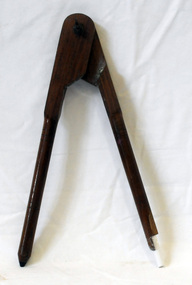
chalkboard ccompass, 1960's
... teaching at St Joseph's Catholic School ,in Orbost. These blackboard accessories were common in the classroom in a time before whiteboards became the norm. This item is an example of an item commonly used in schools before the 21st century. education chalkboard compass St-Joseph's-Orbost Noreen Cuthbertson Two wooden pieces which are joined by a wingnut so that it can be opened or closed and held in position. It functions as a chalkboard compass and was used by schoolteachers. One end ...This compass as used by Noreen Cuthbertson when she was teaching at St Joseph's Catholic School ,in Orbost. These blackboard accessories were common in the classroom in a time before whiteboards became the norm.This item is an example of an item commonly used in schools before the 21st century.Two wooden pieces which are joined by a wingnut so that it can be opened or closed and held in position. It functions as a chalkboard compass and was used by schoolteachers. One end holds a piece of chalk. The other has a black pointed tip to mark the centre of the circle to be drawn.Noreen Cuthbertsoneducation chalkboard compass st-joseph's-orbost -
 Bendigo Historical Society Inc.
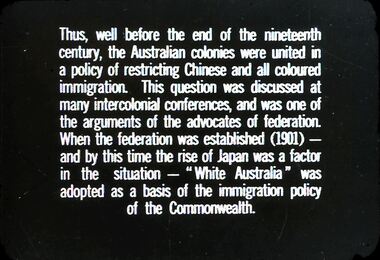
Slide - DIGGERS & MINING: CHINESE ON THE GOLD FIELDS, c1800s
... end of the nineteenth century, the Australian colonies were united in a policy of restricting Chinese and all coloured immigration. This question was discussed at many intercolonial conferences, and was one of the arguments of the advocates of Federation. When the federation was established (1901) - and by this time the rise of Japan was a factor in the situation - ''White Australia'' was adopted as a basis of the immigration policy of the Commonwealth. Markings: 1. Used as a teaching...end of the nineteenth century, the Australian colonies were united in a policy of restricting Chinese and all coloured immigration. This question was discussed at many intercolonial conferences, and was one of the arguments of the advocates of Federation. When the federation was established (1901) - and by this time the rise of Japan was a factor in the situation - ''White Australia'' was adopted as a basis of the immigration policy of the Commonwealth. Markings: 1. Used as a teaching ...Diggers & Mining. The Chinese on the Gold Fields. Slide reads: Thus, well before the end of the nineteenth century, the Australian colonies were united in a policy of restricting Chinese and all coloured immigration. This question was discussed at many intercolonial conferences, and was one of the arguments of the advocates of Federation. When the federation was established (1901) - and by this time the rise of Japan was a factor in the situation - ''White Australia'' was adopted as a basis of the immigration policy of the Commonwealth. Markings: 1. Used as a teaching aid.hanimounteducation, tertiary, goldfields -
![Front cover of Alfred Hospital Ward Register, [ca.1969]](/media/collectors/50187a8f023fd7201471f198/items/6a30d4b4a14ad37447ea8f77/item-media/6a3b4301735a01b325fa8089/item-fit-380x285.jpg?cb=6) Alfred Hospital Nurses League - Nursing History Collection
Alfred Hospital Nurses League - Nursing History CollectionBook - Ward Register, C & S, Alfred Hospital Ward Register, 1969
... Before electronic medical records, the nurse admitting a patient to a ward, was required to fill in this register with patient details, including basic observations Insight into nursing practice before the time of electronic medical records nursing Alfred Hospital Medical Records previous catalogue number handwritten [black ink] on cloth and a small white sticker at top right of front cover. On front end page at top right 'YEARS C 1970 - 1988 / TEACHING ...Before electronic medical records, the nurse admitting a patient to a ward, was required to fill in this register with patient details, including basic observationsInsight into nursing practice before the time of electronic medical recordsGreen cloth bound hardback book, with red tape to spine.T'WARD REGISTER' embossed inn gilit in centre of front cover. Pages have black print with red lines definining 22 columns across two pages. Each column has a heading relating to patient admission. 'ALFRED HOSPITAL WARD REGISTER' printed at top.previous catalogue number handwritten [black ink] on cloth and a small white sticker at top right of front cover. On front end page at top right 'YEARS C 1970 - 1988 / TEACHING AID/SCHOOL of NURSING' [pencil] Fictitious entries have been made on 40 pages nursing, alfred hospital, medical records -
 Narre Warren and District Family History Group
Book, Narre Warren & District Family History Group Inc, Casey Cardinia Collection - Berwick Information File - Volume 1, 2021
... That’s an Awful Lot of Beef - Peter & Chris Wenn 20 Feb 1991 A Brief History of the Show - Berwick Show 25 Feb 1993 Berwick’s Annual Show is Victoria’s Oldest UNKNOWN Berwick Post Office - illustration UNKNOWN Enthusiastic Op Shop Ladies Sold George’s Clothes 12 Jan 2000 Reserve Honors First Settler - Terence O’Connor 17 Sep 2008 From the Past - Berwick Post Office 21 Jul 2004 Simon “a Berwick Icon” - Barry Simon 20 Jul 2004 Mallaby Mourned - George Mallaby 7 Aug 2000 Olympic Torch Relay - pamphlet 22 Jul 2004 Television Favourite Farewelled - George Mallaby UNKNOWN Church Devotee Leaves Powerful Legacy - Olive Ada Meyer 28 Nov 2007 Booked in for Life - Carol Goddard 19 Dec 2007 From the Past - Berwick CFA 22 Oct 2008 Avenue of Heroes Gets a Facelift - Beaconsfield Avenue of Honour 13 Feb 2008 Wilson Park a Berwick Treasure 2 Apr 2008 Time to Restore Our Avenues of Honour 2 Apr 2008 Diggers Finally Able to March with their Medals 5 Sep 2007 Berwick Man Logs 50 Years as Mason - Bruce Luxford 14 Jan 2009 Veteran Volunteer is up for Award - Bert Ainge 25 Feb 2009 A Gem of a Team - Jim & Kay Drysdale 14 Nov 2007 History of Military Action 17 Jan 2007 Club Provides a Legacy for the Ages - Berwick Rotary 18 June 2008 Casey’s “Oldest Resident” Loves a Cup of Tea - Ella Stevens 20 Jun 2006 Council Plans Casey Tribute - Lord & Lady Casey 8 Jul 1993 The Birth of Local Government in 1862 21 Jan 2004 RSL President Hangs up his Slouch Hat - Brain Hetherton 25 Apr 2012 Anzac Spirit Award UNKNOWN Significant Stage in Village Development 23 Mar 2011 Dog’s Crash Course in Values - Doug Nicholls 7 Jan 2004 New Park Reflects the Pioneer Spirit - Pioneer Park 7 Jan 2004 Casey Chief Acquires a Good Reputation - Mike Tyler 7 Jan 2004 Facility is a Tribute to People - Pioneer Park UNKNOWN Former Township Comes of Age - Berwick 31 Mar 2004 Berwick Loses Champion - Ellis Loveridge 30 Jan 2008 Pioneer Honoured - Bruce Greenland 25 Feb 2009 Good Grounds for 90 Years - Cyril Molyneux 3 Dec 2007 Casey Mourns Stella Couple - Murray & Nancy Guille 8 Nov 2004 Tribute to a Local Tennis Ace - Abel Kay 20 Apr 2004 Preserving History 13 Feb 2008 After 40 Years, Les is Still Cutting it Fine - Les Jones 19 Oct 2011 Berwick Library’s Darling - Pam Darling 6 Apr 2011 Sign of the Times - Bank Plaque UNKNOWN Berwick Celebrates Twenty Years - photographic display UNKNOWN Homestead - Cheese Factory - illustration 28 Jan 1993 Time to Reflect - George Pritchard Wilson 14 Apr 2003 A Time to Remember - Horry Heathcote 3 Mar 2003 School is Out for Plans to Buy Site - Berwick Primary School 6 Mar 2003 Barometer Keeps Climbing - Berwick Primary School 23 Jun 2004 Courage to a Tee - Annabel Ford UNKNOWN Old Church of Christ - illustration UNKNOWN Severance Sees Two Municipalities Formed - Berwick/Pakenham 15 Sep 2004 Unit Celebrates 90 Years of History - Red Cross 30 Jan 2008 Life and Times of Akoonah Park 12 May 2010 Teaching with a Twist - John Twist 26 Apr 1969 Lord Casey - the end of an era 30 Aug 1968 78 and He’ll Never Quit - Lord Casey 8 Oct 2003 District Loses a Real Star - Esther Johnson 23 Feb 2005 Tireless Community Worker - Helen Hudson 24 Feb 2005 Helen a Loss to the Community - Helen Hudson Mar 2005 Nursing a Special Affection - RDNS 1 Mar 2005 Nurses Mark 120 Years - RDNS 14 Sep 2005 Old Courthouse Sold 23 Mar 2005 Plaque Recognises the Work of Doctor - Dr Noel Stephenson 30 Nov 2005 Mr Doveton Tells All - Syd Pargeter 28 Nov 2005 Birth of a City - Syd Pargeter 1 Oct 1992 From Cheese to Art to Preserve Our Heritage 15 Feb 2001 Cheese Factory Records Long History UNKNOWN Berwick Old Cheese Factory - pamphlet 4 Jun 2008 Between a Rock and a Hard Place - Wilson Botanic Park...That’s an Awful Lot of Beef - Peter & Chris Wenn 20 Feb 1991 A Brief History of the Show - Berwick Show 25 Feb 1993 Berwick’s Annual Show is Victoria’s Oldest UNKNOWN Berwick Post Office - illustration UNKNOWN Enthusiastic Op Shop Ladies Sold George’s Clothes 12 Jan 2000 Reserve Honors First Settler - Terence O’Connor 17 Sep 2008 From the Past - Berwick Post Office 21 Jul 2004 Simon “a Berwick Icon” - Barry Simon 20 Jul 2004 Mallaby Mourned - George Mallaby 7 Aug 2000 Olympic Torch Relay - pamphlet 22 Jul 2004 Television Favourite Farewelled - George Mallaby UNKNOWN Church Devotee Leaves Powerful Legacy - Olive Ada Meyer 28 Nov 2007 Booked in for Life - Carol Goddard 19 Dec 2007 From the Past - Berwick CFA 22 Oct 2008 Avenue of Heroes Gets a Facelift - Beaconsfield Avenue of Honour 13 Feb 2008 Wilson Park a Berwick Treasure 2 Apr 2008 Time to Restore Our Avenues of Honour 2 Apr 2008 Diggers Finally Able to March with their Medals 5 Sep 2007 Berwick Man Logs 50 Years as Mason - Bruce Luxford 14 Jan 2009 Veteran Volunteer is up for Award - Bert Ainge 25 Feb 2009 A Gem of a Team - Jim & Kay Drysdale 14 Nov 2007 History of Military Action 17 Jan 2007 Club Provides a Legacy for the Ages - Berwick Rotary 18 June 2008 Casey’s “Oldest Resident” Loves a Cup of Tea - Ella Stevens 20 Jun 2006 Council Plans Casey Tribute - Lord & Lady Casey 8 Jul 1993 The Birth of Local Government in 1862 21 Jan 2004 RSL President Hangs up his Slouch Hat - Brain Hetherton 25 Apr 2012 Anzac Spirit Award UNKNOWN Significant Stage in Village Development 23 Mar 2011 Dog’s Crash Course in Values - Doug Nicholls 7 Jan 2004 New Park Reflects the Pioneer Spirit - Pioneer Park 7 Jan 2004 Casey Chief Acquires a Good Reputation - Mike Tyler 7 Jan 2004 Facility is a Tribute to People - Pioneer Park UNKNOWN Former Township Comes of Age - Berwick 31 Mar 2004 Berwick Loses Champion - Ellis Loveridge 30 Jan 2008 Pioneer Honoured - Bruce Greenland 25 Feb 2009 Good Grounds for 90 Years - Cyril Molyneux 3 Dec 2007 Casey Mourns Stella Couple - Murray & Nancy Guille 8 Nov 2004 Tribute to a Local Tennis Ace - Abel Kay 20 Apr 2004 Preserving History 13 Feb 2008 After 40 Years, Les is Still Cutting it Fine - Les Jones 19 Oct 2011 Berwick Library’s Darling - Pam Darling 6 Apr 2011 Sign of the Times - Bank Plaque UNKNOWN Berwick Celebrates Twenty Years - photographic display UNKNOWN Homestead - Cheese Factory - illustration 28 Jan 1993 Time to Reflect - George Pritchard Wilson 14 Apr 2003 A Time to Remember - Horry Heathcote 3 Mar 2003 School is Out for Plans to Buy Site - Berwick Primary School 6 Mar 2003 Barometer Keeps Climbing - Berwick Primary School 23 Jun 2004 Courage to a Tee - Annabel Ford UNKNOWN Old Church of Christ - illustration UNKNOWN Severance Sees Two Municipalities Formed - Berwick/Pakenham 15 Sep 2004 Unit Celebrates 90 Years of History - Red Cross 30 Jan 2008 Life and Times of Akoonah Park 12 May 2010 Teaching with a Twist - John Twist 26 Apr 1969 Lord Casey - the end of an era 30 Aug 1968 78 and He’ll Never Quit - Lord Casey 8 Oct 2003 District Loses a Real Star - Esther Johnson 23 Feb 2005 Tireless Community Worker - Helen Hudson 24 Feb 2005 Helen a Loss to the Community - Helen Hudson Mar 2005 Nursing a Special Affection - RDNS 1 Mar 2005 Nurses Mark 120 Years - RDNS 14 Sep 2005 Old Courthouse Sold 23 Mar 2005 Plaque Recognises the Work of Doctor - Dr Noel Stephenson 30 Nov 2005 Mr Doveton Tells All - Syd Pargeter 28 Nov 2005 Birth of a City - Syd Pargeter 1 Oct 1992 From Cheese to Art to Preserve Our Heritage 15 Feb 2001 Cheese Factory Records Long History UNKNOWN Berwick Old Cheese Factory - pamphlet 4 Jun 2008 Between a Rock and a Hard Place - Wilson Botanic Park Casey Cardinia Collection - Berwick Information File - Volume 1 Book Narre Warren & District Family History Group Inc. ...Folder containing a table of contents and various newspaper clippings and other information pertaining to the Berwick area Volume 1. The date the articles were published, and title of articles are listed below. 12 Aug 1992 Beaumont Farm - one of Berwick’s oldest 23 Dec 1992 Berwick’s First Post Master’s Pay was 20 Pound Per Annum 26 May 2004 Roger’s Life was Full of Adventure - Roger Mason 4 Feb 2004 The Bush Man of Berwick - Marcell Fakhry 2 Feb 2005 Ern Bowls for Berwick - Ern Green 10 Nov 2004 Doctor “A Tireless Local Campaigner” - Dr Noel Stephenson 14 May 2008 RSL Paves the Way for memorial Changes 15 Sep 2004 Unit Celebrates 90 Years of History - Red Cross 8 Sep 2004 Red Cross Celebrates 90 Years 4 Aug 2004 Milestone Call from Red Cross 6 Dec 2007 Stalwart Killed in Crash - Murray Guille 13 Dec 2006 Clock Builds Head of Steam - Berwick Steam Clock 5 Aug 1998 Watchdogs of our Heritage - National Trust 6 Sep 2006 Madge’s Magic Number - Madge Dunn 101 18 Apr 2007 A Page of Berwick History - Mechanics Institute 7 Dec 2006 First Wedding in Pioneers Park 7 Dec 2006 Sale of “Kinross” 24 Jun 1993 Fond Recollections of Berwick Grammar School 8 Nov 2006 Historic Property to Join Parkland - Grasmere 20 Feb 1999 In Days of Gold - Edwin Flack 25 Jul 2012 Golden Oldie’s Legend Status - Bob Lay 20 Apr 2004 Prestige Award for Site Saviour - Old Berwick Primary School 20 Apr 2004 Saving School Site for Enterprising Resident - Bill Hudsaon 28 Jun 2000 Edwin Flack: a name on everyone’s lips 24 Mar 1998 Set For Year Ahead - Edwin Flack statue UNKNOWN Games Hero Honored - Edwin Flack 3 Nov 1998 Torch to Light Up Berwick - Olympic torch 3 Nov 1998 “Lion of Athens” Steals the Show - Edwin Flack 3 Nov 1998 Gold Rower’s Precious Metal - Michael Aikman 21 Mar 1991 Whatever Happened to the Evans Sisters? 18 Feb 2002 Darwin is Still Unforgettable - Bombing of Darwin 30 Jul 1992 Governor -General tells of exciting plans for Wilson Botanic Park 17 Nov 1998 Lizzie’s Headstone Now in Safe Hands - Lizzie McMullen 20 Oct 2010 Baby Makes Five Generations - Luke Sheean UNKNOWN Mary’s Memorial Garden - Mary Loveridge 31 jan 2001 Mod Cons Shelved at Library - Berwick Mechanics Library 10 Sep 1992 They Read for a Penny at the Berwick Library 14 Feb 2005 Generations of Generosity Pay Off - Berwick Bowling Club 30 Nov 2000 Homestead Celebrates - Edrington Park 20 Jan 2005 Rotary Gives Cemetery a Facelift - Berwick Cemetery 14 Feb 2005 Club Bowled Over by Anniversary Event - Bowling Club 23 Nov 2000 Library Ahead of the Pack 15 Jan 2001 Memorials Documented 7 Jun 2000 Grave Fears Gone - Berwick Cemetery 11 Feb 1993 Dr Percy Langmore a Dedicated Medico to the People 4 Feb 1993 Dr Langmore Used All Modes of Transport to Service Berwick 23 Dec 2003 Cheers All Round for a Special Gift - Old Berwick Primary School 29 Jul 1993 Was Inglis Road the Best Site? 20 Aug 1992 Hovell was our First Explorer 23 Sep 2003 People Power Wins - Old Berwick Primary School UNKNOWN New Building for Berwick Bush Nursing Hospital UNKNOWN Berwick Hospital Two Days After War Declared 7 Jul 1998 A Time Warp in our City - Berwick Library 4 Feb 1953 An Etching Holiday 2 Dec 2002 Literally, She’s a Late Bloomer - Joy Adams 23 Feb 2005 Cricket’s Other Don Offers High Interest - Don Moyes 5 Nov 2003 He Died At Peace - George Wilson 15 Dec 2003 Berwick’s Shelf Life - Berwick Library 29 Oct 1992 They Had a Mighty Good Time on the Gippsland Line 20 May 1993 Almost 150 Years Since the Wilson Family Came to Berwick 30 Jul 1992 Berwick was Once a Quarry Town 27 Sep 1993 The Way We Were UNKNOWN Wilson Botanic Park - pamphlet 11 Nov 2003 Trust’s Honourable Plea - avenue of Honours 15 Jul 2004 “Lions of Athens” Remembered in Print - Edwin Flack Jun 1992 Farm to Quarry to Park - Wilson Botanic Park 5 Sep 2001 Holy Cow! That’s an Awful Lot of Beef - Peter & Chris Wenn 20 Feb 1991 A Brief History of the Show - Berwick Show 25 Feb 1993 Berwick’s Annual Show is Victoria’s Oldest UNKNOWN Berwick Post Office - illustration UNKNOWN Enthusiastic Op Shop Ladies Sold George’s Clothes 12 Jan 2000 Reserve Honors First Settler - Terence O’Connor 17 Sep 2008 From the Past - Berwick Post Office 21 Jul 2004 Simon “a Berwick Icon” - Barry Simon 20 Jul 2004 Mallaby Mourned - George Mallaby 7 Aug 2000 Olympic Torch Relay - pamphlet 22 Jul 2004 Television Favourite Farewelled - George Mallaby UNKNOWN Church Devotee Leaves Powerful Legacy - Olive Ada Meyer 28 Nov 2007 Booked in for Life - Carol Goddard 19 Dec 2007 From the Past - Berwick CFA 22 Oct 2008 Avenue of Heroes Gets a Facelift - Beaconsfield Avenue of Honour 13 Feb 2008 Wilson Park a Berwick Treasure 2 Apr 2008 Time to Restore Our Avenues of Honour 2 Apr 2008 Diggers Finally Able to March with their Medals 5 Sep 2007 Berwick Man Logs 50 Years as Mason - Bruce Luxford 14 Jan 2009 Veteran Volunteer is up for Award - Bert Ainge 25 Feb 2009 A Gem of a Team - Jim & Kay Drysdale 14 Nov 2007 History of Military Action 17 Jan 2007 Club Provides a Legacy for the Ages - Berwick Rotary 18 June 2008 Casey’s “Oldest Resident” Loves a Cup of Tea - Ella Stevens 20 Jun 2006 Council Plans Casey Tribute - Lord & Lady Casey 8 Jul 1993 The Birth of Local Government in 1862 21 Jan 2004 RSL President Hangs up his Slouch Hat - Brain Hetherton 25 Apr 2012 Anzac Spirit Award UNKNOWN Significant Stage in Village Development 23 Mar 2011 Dog’s Crash Course in Values - Doug Nicholls 7 Jan 2004 New Park Reflects the Pioneer Spirit - Pioneer Park 7 Jan 2004 Casey Chief Acquires a Good Reputation - Mike Tyler 7 Jan 2004 Facility is a Tribute to People - Pioneer Park UNKNOWN Former Township Comes of Age - Berwick 31 Mar 2004 Berwick Loses Champion - Ellis Loveridge 30 Jan 2008 Pioneer Honoured - Bruce Greenland 25 Feb 2009 Good Grounds for 90 Years - Cyril Molyneux 3 Dec 2007 Casey Mourns Stella Couple - Murray & Nancy Guille 8 Nov 2004 Tribute to a Local Tennis Ace - Abel Kay 20 Apr 2004 Preserving History 13 Feb 2008 After 40 Years, Les is Still Cutting it Fine - Les Jones 19 Oct 2011 Berwick Library’s Darling - Pam Darling 6 Apr 2011 Sign of the Times - Bank Plaque UNKNOWN Berwick Celebrates Twenty Years - photographic display UNKNOWN Homestead - Cheese Factory - illustration 28 Jan 1993 Time to Reflect - George Pritchard Wilson 14 Apr 2003 A Time to Remember - Horry Heathcote 3 Mar 2003 School is Out for Plans to Buy Site - Berwick Primary School 6 Mar 2003 Barometer Keeps Climbing - Berwick Primary School 23 Jun 2004 Courage to a Tee - Annabel Ford UNKNOWN Old Church of Christ - illustration UNKNOWN Severance Sees Two Municipalities Formed - Berwick/Pakenham 15 Sep 2004 Unit Celebrates 90 Years of History - Red Cross 30 Jan 2008 Life and Times of Akoonah Park 12 May 2010 Teaching with a Twist - John Twist 26 Apr 1969 Lord Casey - the end of an era 30 Aug 1968 78 and He’ll Never Quit - Lord Casey 8 Oct 2003 District Loses a Real Star - Esther Johnson 23 Feb 2005 Tireless Community Worker - Helen Hudson 24 Feb 2005 Helen a Loss to the Community - Helen Hudson Mar 2005 Nursing a Special Affection - RDNS 1 Mar 2005 Nurses Mark 120 Years - RDNS 14 Sep 2005 Old Courthouse Sold 23 Mar 2005 Plaque Recognises the Work of Doctor - Dr Noel Stephenson 30 Nov 2005 Mr Doveton Tells All - Syd Pargeter 28 Nov 2005 Birth of a City - Syd Pargeter 1 Oct 1992 From Cheese to Art to Preserve Our Heritage 15 Feb 2001 Cheese Factory Records Long History UNKNOWN Berwick Old Cheese Factory - pamphlet 4 Jun 2008 Between a Rock and a Hard Place - Wilson Botanic Parknon-fictionberwick (vic.) -
 Alfred Hospital Nurses League - Nursing History Collection
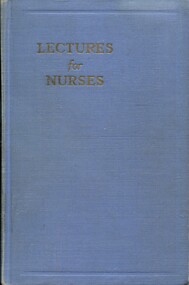
Book - text book, G. N. Burbridge 1904-2000, Lectures for Nurses, 1954 (first published 1935)
... time of first publication (1935) the author wasTutor Sister to the Preliminary Training School of the Alfred Hospital. Jean Headberry had also been a Tutor Aister at the Alfred Hospital of significance to the AHNL, as many Alfred nurses would have used these notes, and gives insight into nursing practice 1930's to 1950's Nursing Nursing-Education Gwen Burbridge nursing study and teaching A collection of lectures primarily for use in the Preliminary Training School, and the first year of nursing training Previous catalogue number written inside front cover. On front end ...A collection of lectures primarily for use in the Preliminary Training School, and the first year of nursing trainingBook bound in blue cloth. Title stamped in gilt on front cover and spine. Author's and publisher's names stamped in black on spine. Front and back covers have an embossed border. non-fictionA collection of lectures primarily for use in the Preliminary Training School, and the first year of nursing trainingnursing, nursing-education, gwen burbridge, nursing study and teaching -
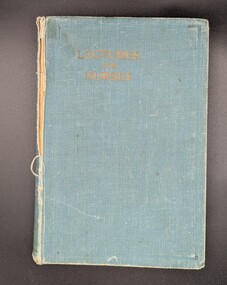 Alfred Hospital Nurses League - Nursing History Collection
Book - text book, G. N. Burbridge 1904-2000, Lectures for Nurses, 1944 (first published 1935)
... At the time of first publication (1935) the author was Sister Tutor to the Preliminary Training School of the Alfred Hospital. of significance to the AHNL, as many Alfred nurses would have used these notes, and gives insight into nursing practice 1930's to 1950's Nursing Nursing-Education nursing study and teaching A collection of lectures primarily for use in the Preliminary Training School, and the first year of nursing training. The donor has also included a list of her ward placements during her training Previous catalogue number and ' Mary McLachlan' hand- written at top right of front-end ...A collection of lectures primarily for use in the Preliminary Training School, and the first year of nursing training. The donor has also included a list of her ward placements during her trainingBook bound in faded blue cloth. Title stamped in gilt on front cover and spine. Author's and publisher's names stamped in gilt on spine. Front and back covers have an embossed border. non-fictionA collection of lectures primarily for use in the Preliminary Training School, and the first year of nursing training. The donor has also included a list of her ward placements during her trainingnursing, nursing-education, nursing study and teaching -
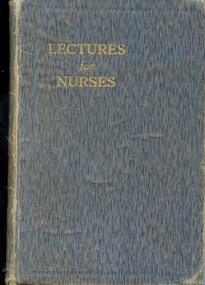 Alfred Hospital Nurses League - Nursing History Collection
Book - text book, G. N. Burbridge 1904-2000, Lectures for Nurses, 1935
... At the time of first publication (1935) the author was Sister Tutor to the Preliminary Training School of the Alfred Hospital of significance to the AHNL, as many Alfred nurses would have used these notes, and gives insight into nursing practice 1930's to 1950's Nursing Nursing-education nursing study and teaching Alfred Hospital A collection of lectures primarily for use in the Preliminary Training School, and the first year of nursing training. Previous catalogue numbertop right of front-end ...A collection of lectures primarily for use in the Preliminary Training School, and the first year of nursing training.Book bound in blue-white patterned cloth. Title stamped in gilt on front cover and spine. Author's and publisher's names stamped in gilt on spine. Front and back covers have an embossed border. non-fictionA collection of lectures primarily for use in the Preliminary Training School, and the first year of nursing training. nursing, nursing-education, nursing study and teaching, alfred hospital -
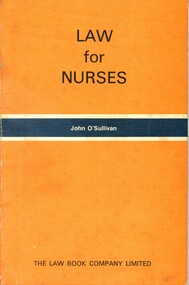 Alfred Hospital Nurses League - Nursing History Collection
Book - Textbook, John O'Sullivan 1927, Law for nurses, 1976
... First texbook on this subject that applied specifically to Australian law Insight into how laws and legislation applies to nurses Australia Law for nurses medical law and legislation - Australia Nursing -law and legislation-Australia Legislation-nursing-Australia Nursing-study and teaching An overview of Australian medical laws and legislation specifically for the nursing profession, applicable at the time of publication (1976) Previous catalogue number [black ink] inside front cover at top left, 'E. N. McNeilage' [black ink] handwritten below this. At the base of the front end ...An overview of Australian medical laws and legislation specifically for the nursing profession, applicable at the time of publication (1976)Book with orange cover with black band edged in white in centre. On front cover the title [black print] is above this band, author [white print] on band, publisher [black print] at base.Similar details on spinenon-fictionAn overview of Australian medical laws and legislation specifically for the nursing profession, applicable at the time of publication (1976)australia law for nurses, medical law and legislation - australia, nursing -law and legislation-australia, legislation-nursing-australia, nursing-study and teaching -
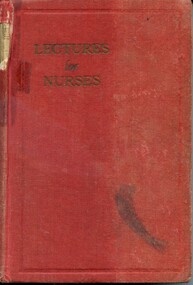 Alfred Hospital Nurses League - Nursing History Collection
Book - text book, G. N. Burbridge 1904-2000, Lectures for Nurses, 1941
... At the time of first publication (1935) the author wasTutor Sister to the Preliminary Training School of the Alfred Hospital. of significance to the AHNL, as many Alfred nurses would have used these notes, and gives insight into nursing practice in the 1940's Nursing Nursing-Education Gwen Burbridge nursing - study and teaching A collection of lectures primarily for use in the Preliminary Training School, and the first year of nursing training Black ink stain on front cover. 'M. T, Dickinson' hadwritten [black ink] on front end ...A collection of lectures primarily for use in the Preliminary Training School, and the first year of nursing trainingBook bound in red cloth. Title stamped in gilt on front cover. Author's and publisher's names stamped in black on spine. Front and back covers have an embossed border. Section of spine binding missing near top. non-fictionA collection of lectures primarily for use in the Preliminary Training School, and the first year of nursing trainingnursing, nursing-education, gwen burbridge, nursing - study and teaching -
 Broadmeadows Historical Society & Museum
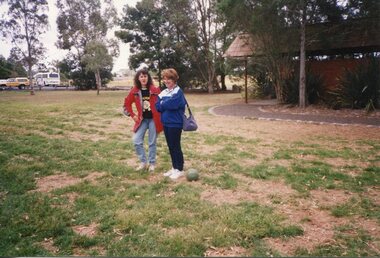
Photograph, Two Adults in the Park, 1990
... teaching staff, posing together in a cheerful outdoor setting, reflecting the school’s tradition of fostering community spirit and celebrating the end of the school year with informal gatherings. This photograph, taken during Jacana Primary School’s 1990 Christmas picnic—likely held at Greenvale Reservoir, a popular recreational site in Melbourne’s northern suburbs—captures a casual portrait of two adults, presumed to be members of the teaching staff, enjoying the festive outdoor gathering. The image offers a glimpse into the school’s social and professional culture at the time ...This photograph, taken during Jacana Primary School’s 1990 Christmas picnic—believed to have been held at Greenvale Reservoir, a well-loved recreational spot in Melbourne’s northern suburbs—captures a relaxed and festive moment. It features two adults, likely members of the teaching staff, posing together in a cheerful outdoor setting, reflecting the school’s tradition of fostering community spirit and celebrating the end of the school year with informal gatherings.This photograph, taken during Jacana Primary School’s 1990 Christmas picnic—likely held at Greenvale Reservoir, a popular recreational site in Melbourne’s northern suburbs—captures a casual portrait of two adults, presumed to be members of the teaching staff, enjoying the festive outdoor gathering. The image offers a glimpse into the school’s social and professional culture at the time, highlighting the informal, community-oriented atmosphere that characterised end-of-year celebrations. Established in 1959, Jacana Primary School was a cornerstone of the local community until its closure in the early 2000s, known for its emphasis on both academic achievement and social cohesion. Events like the annual Christmas picnic played a key role in strengthening relationships among students, staff, and families, fostering a sense of belonging and shared celebration. The presence of staff members in this relaxed setting underscores their role not only as educators but also as active participants in the school’s broader community life. Their engagement in such events reflects the school’s commitment to nurturing strong, supportive connections between teachers and students, reinforcing the values of inclusivity and community spirit.Colour Photograph on glossy paper in landscape formatPH18289 (crossed out) PH-4209 (crossed out) PH-4868/this paper/manufactured/by Kodakjacana primary school, christmas party, 1990, jacana -
 Melton City Libraries
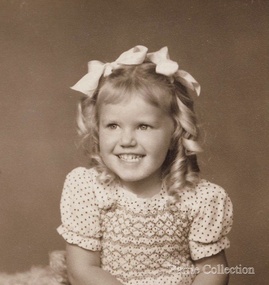
Photograph, Wendy Barrie, Unknown
... After teaching for two years at Warracknabeal High School I was fortunate enough the gain a transfer to Sunshine West High School, returning to live at home in Melton and travelling by car to work with a fellow colleague, Jock Smith who lived at Station road Melton. I completed bond obligation and resigned at the end of the year. The employment regulations at that time...After teaching for two years at Warracknabeal High School I was fortunate enough the gain a transfer to Sunshine West High School, returning to live at home in Melton and travelling by car to work with a fellow colleague, Jock Smith who lived at Station road Melton. I completed bond obligation and resigned at the end of the year. The employment regulations at that time ...Eldest daughter of Edna and Bon Barrie, born on 03 November 1943 in Melbourne, Victoria, Memoirs of Wendy Barrie, recalling the early formative years of life in Melton: In 1949 I started school at Melton State School no 430 and was driven the 2½ miles to there by my parents at first. Later we walked home in the afternoons or were picked up by car as we made our way home along the Western Highway. In 1956 I went to Bacchus Marsh High School. There were 4 students in grade 6 and 3 of us went to the High School. The students from Melton, Melton South and Toolern Vale State Schools went by bus to Bacchus Marsh High School as far a fifth form. My parents drove me to the pick up point and during the five years of travel to High School. The bus travelled via Toolern Vale and later went through Exford and through Parwan. On the return journey in the afternoon the bus went in the reverse direction. The bridge at Exford was an old narrow wooden one, and the students had to get off the bus and walk across, with the driver crossing in the empty bus for safety reasons. There was a travelling allowance paid to parents and it was estimated from the distance the crow flies, a straight line. We lived a Ferris Lane, just where the Harness Racing entrance is now situated about 2 ½ miles by road to school too close to qualify for the subsidy. While at State School Melton we would walk home in a group with the Nixon and Gillespie children, along the main road over the bridge near the Shire Offices and down a hill. I was being dinked on Joyce Gillespie’s bike while holding onto the seat, toppled off the bike striking my chin and teeth on the bitumen and cracking my jaw. I was about 9 years old and stayed a couple of days in the Quamby Hospital in Bacchus Marsh, it seemed like and eternity at the time and quite traumatic being separated from my family. I can remember contemplating how I could get out of the window and run away but realised it was too far to walk home. Often we would cut across the Common on our way home from school picking up stray golf balls and collecting them from the creek when it dried out. We were warned about not accepting lifts from strangers passing along the Melbourne/ Ballarat Road. The only danger we faced was being swooped by the magpies particularly on the open ground on the Common. We were also fairly cautious when the Gypsies camped on the Common in the area just about opposite the small reservoir. “Mum” grandma Myers loved to have us call in on our way home, and usually would cut a slice of Jongebloed’s bread and spread it with home made butter. Sometimes we waited there until we were collected by car, usually driven by our mother. Margaret Nixon and Joyce Gillespie were a few grades ahead of me and Barbara Nixon was born just two months earlier than me. Our mothers were great friends for over 6o years, born in the same month three years apart. They lived within a few days of the same age as each other at the time their deaths. Dad and George Nixon attended Melton school at the same time. Sarah nee Hornbuckle Nixon and my grandfather Frederick Myers Snr were at school together at the same in the 1880s. The Nixon family lived in Keilor Road just past the Toolern Creek near the turnoff. Tom and Ann Collins lived on the southern side of the Western highway and Keilor road intersection. Jim and Ruby Gillespie’s house was further long Keilor road on the right. They backed onto the Myers who lived on the north side of Western Highway east of Myers Gully (Ryans Creek). The Bridge over the Toolern Creek as very narrow and as truck traffic increased there were accidents. One truck took out the side railing and plunged upside down into the bank and into the shallow water. Another fatal accident happened between a car and a truck right in front of the Myers house. Grandfather Fred had been a bike rider all his life, as far as the Riverina in his younger years, wryly made the comment about the drivers the speeding along the Ballarat Road were setting out to kill themselves. The road was busy particularly after the Races at Ballarat when the crowds were hurrying home to Melbourne. Train travel had changed very little from the time my mothers generation to mine. The timetable meant the usual rush to Melton South by bike in her case and if she was running late the train pulled up on the crossing. I was driven to the Station from home past Keith and Mary Gillespie’s house near the Ferris Road rail crossing to Bridge road to Melton South for the 7.32 train. While attending Sunshine High School in 1961 I would meet up with three other students, two of whom I knew from Bacchus Marsh High School days. We usually got into the same compartment on the train, it was a typical country train with a corridor along the side and compartments with a door, roof racks and sometimes heated metal containers for the feet in the winter. Some of the trains came through from Horsham and Ballarat, and the Overland from Adelaide passed through in the evening, we could hear it in the distance from the Ferris Lane home. The carriages had 1st and economy class compartments showing photographs of county scenes and holiday destinations. The engine was the large A class diesel. They are still running to Bacchus Marsh 50 years later, due to the need for the greatly increased number of commuters travelling to work in the city. Sometimes the carriages were pull by a Steam engine, these were a problem in the summer time because the sparks caused fires along the train lines and then quickly spread into the dry grass, crops and stubble. The Motor Train left Spencer Street at 4.23 pm and was the best train for me to catch. Ferris Road was a designated stop and train pulled up on the road crossing. It had steps at the door and rungs to hold while alighting to the ground. The ballast along the tracks was rough and uneven and awkward to land on. The train was painted blue and yellow with the letters VR pained on the front. This saved may parents the afternoon trip to collect me from the Station. On the walk home on the gravel road I would pass Uncle Tom and Aunty May’s house before reaching home. Melva Gillespie was studying at Sunshine Technical School and we sometimes both got off the train at the same time. On other occasions the Motor Train was replaced with a diesel engine with carriages, it was also required to stop and the driver had to be notified in advance. This meant getting into the guards van a Rockbank. It was more difficult alighting from the carriage as the gap was greater and more precarious to swing out and land on the ground. A few times in my last year of study at Melbourne Teachers College in Grattan Street Carlton. I managed to catch the 2.30 pm train to Serviceton, it was express to Melton and was very quick trip. The last train, was the 5.25 pm diesel to Ballarat and I usually caught this train to Melton South Station. On one occasion after being held up on the tram in Bourke street I had to make a mad dash to the platform chasing the train as it was just moving off and yelling to the guard, fortunately I was noticed and the train ground to halt. I scrambled into the end door and took most of the journey home to recover. After the last year at High School I continued to travel on the train, 2 years to Prahran Technical School changing at North Melbourne. There were a lot school children travelling to private schools and some at the primary level and mainly from Bacchus Marsh. Rockbank children also travelled by train from the beginning of their high school years, quite a few went to Sunshine High School. During my third year of teacher training I travelled to Flinders Street to RMIT for ceramics classes and Grattan St Teachers College located in the grounds of Melbourne University. There were many teachers being trained at the Secondary Teachers College due to the baby bulge creating a great shortage of teachers. Sunshine High School was very well represented amongst the different courses in Primary, Secondary and Art and Crafts. I attended Melbourne University lectures, studying a Fine Art subject. Bernard Smith was the most notable of the lecturers. he replaced Professor Joseph Bourke who had taken leave for the years. In 1962 he published the art book “Australian Painting”. The secondary art and craft student teachers from the College were in the majority, taking this subject and were well regarded due to their practical art and craft methods and their teaching round experience. In December 1964 I graduated as a Trained Secondary Teacher – Art and Crafts. The graduating ceremony was held at Wilson Hall. I received my appointment to work at Maryborough High School. Uncle Max and Aunty Rosemary Myers arranged my accommodation. Uncle Max was a teacher at the Maryborough Technical School fat the time. The appointment was suddenly changed when just before the school year was about to start when I received notification that I was now required to move to Warracknabeal High School. I was subject to a bond for the three years of training and three years of teaching and was under an obligation to comply with the directive of the Education Department. My father stood as guarantor when I was accepted as student at the Melbourne Teachers’ College, thus enabling me to receive my teacher training, and a 5 pounds a week allowance for expenses. After teaching for two years at Warracknabeal High School I was fortunate enough the gain a transfer to Sunshine West High School, returning to live at home in Melton and travelling by car to work with a fellow colleague, Jock Smith who lived at Station road Melton. I completed bond obligation and resigned at the end of the year. The employment regulations at that time did not allow the option of leave of absence for, indefinite overseas travel. I returned to Australia in October 1969. Visiting Arthur Hart the Principal of Sunshine High School he arranged with the Education Department for my re-employment at Sunshine High School until the end of the year. In 1970 I was transferred, and returned to Sunshine West High School where I worked for the next three years. In January 1968 I sailed on the “Oriana” to South Hampton with two teaching friends from Warracknabeal High School on a travelling and working holiday. Doreen Kiely, a former Bacchus Marsh High student and fellow train traveller from Bacchus Marsh, was already working in London, had arranged our accommodation at the London Travellers Club Hotel, Braham Gardens, Earls Court SW5. We based our stay at this address in London and travelled around Scotland, Ireland and England. In the summer we took a four month trip around the Continent and the Mediterranean. I registered with The Royal Borough Of Kingston Upon Thames as a Supply teacher, and worked at Chessington School form autumn to spring the following year and living with Mrs Rose Gillies at Kinross Avenue, Worcester Park, Surrey. In the spring of 1969 visiting Norway, Sweden and Finland joining an organised camping group to the Artic Circle, entered Russia at Leningrad (St Petersburg) Moscow, Minsk, to Poland and Czechoslovakia. In August returning to Worcester Park for the flight to Montreal to stay with cousin Lynette and husband Jurgen. A side trip was taken to Toronto, Niagara Falls and New York. The flight home from Montreal to Melbourne took 52 hours. A ½ day break in Vancouver before boarding the Qantas boeing 707 via San Francisco, Honolulu, Fiji, Sydney to Melbourne. Around the world in 21 months. Photographs of Wendy local identities
