
Showing 12 items matching "ending machine"
-
 Flagstaff Hill Maritime Museum and Village
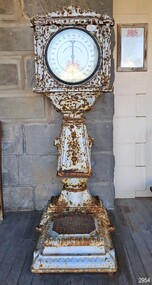
Instrument - Scale, Weighing Machine, G. Salter & Co, 1884-1909
... ...ending machine...British Royal Coat of Arms Royal Letters Patent Letters Patent health ending machine coin-operated machine Percival Everett Weighing Machine Co. ...This ornate, Victorian-era automatic weighing machine was made in England around 1884-1909, by George Salter and Co. of West Bromwich, UK, makers of scales since 1760. It is protected by Queen Victoria’s Royal Letters Patent, signed in 1900. The scale stood outside the Warrnambool Post Office in Timor Street from around 1909 to 1966, as shown on postcards and photographs held at the State Library of Victoria. The scale is identified by the Serial Number '665', and was installed by the distributors, the Australasian Automatic Weighing Machine Co. Ltd.. The scale’s weight measurements were in Imperial stones and pounds up to 20 stone (127 kg). The scale’s face included charts of average weights, for men, women, boys and girls, by various heights, in feet and inches. The coin slot and its face were converted to metric measurements by the Eastern Scale Company Pty. Ltd; that firm was registered on October 2, 1974. The Australasian Automatic Weighing Machine Co. Ltd was a large supplier of weighing scales in Australia and held the Royal Letters patent for their machines, distributing them in prominent locations. In 1902, the firm was listed under the Import Entries Passed at His Majesty’s Customs, importing into Sydney, NSW, eight cases of scales. In 1911, the company asked permission from the Port Pirie Corporation to install a machine in Alexander Street. In 1913, the company applied to the City of Sydney to install machines around the city, including at the tram depot. One application mentions “… three machines in three places for three pounds per year”. In 1923, the firm tendered for the right to place Automatic Weighing Machines on railway and tram premises throughout New South Wales, subsequently for five-year terms, in return for a fixed payment per machine and a portion of the revenue to the NSW Government. In 1928, the Sydney Harbour Trust gave the firm the right to place the weighing machines on various ferry jetties. The firm was still operating in 1941, advertising for two boys aged 14-16 for the workshop and messages, at the Rialto building, 497 Collins St., Melbourne. On December 21, 1946, the Commonwealth government invited offers to tender for the right to place automatic weighing machines on postal premises throughout the six states; the successful company then made arrangements with the federal Postmaster General's Department to place machines outside post offices across the country. A few years later, on September 11, 1950, the firm's Adelaide branch ceased trading. From 11th July 1950, the Australian and Eastern Engineering Company Pty. Ltd took over at the same premises, at 179 Pirie Street, Adelaide. The Perth branch ceased business in WA on July 6th, 1950. Percival Everitt invented and patented the automatic, coin-operated personal scale design. Everitt was a Norfolk-born engineer and regarded as the father of the coin-operated industry. As a young man in 1877, he invented a hay and corn pitcher, a turnip thinner in 1878 and an Automatic Travelling Anchor in 1880. But his fame came in 1883 with the first postcard-vending machine, over a hundred of which he distributed around London. In 1884, he patented one of his many inventions, the coin-operated scales for use in public places; for many people, it was their first exposure to coin-operated machines. His success prompted the formation of the Weighing Machine Company in 1885. Further inventions followed: a blow tester in 1887, the machine for testing a person's grip in 1888, and in 1889, the dispensing machine for hiring out opera glasses, and a device for shutting down the coin entry slot if the machine was empty. In 1890, he invented a fortune-telling machine. Everitt sadly did not make his fortune; he died suddenly in February 1893, in his late forties, with £71 to his name. George Salter & Co., West Bromwich, England, produced automatic weighing scale machines from Everitt’s patented design, and advertised them as suitable for hotels, pleasure gardens, theatres, exhibition halls, clubs, baths and places of public resort. The company was established in 1760 by brothers Richard and William Salter, and manufactured springs and pocket steelyards (spring balances). After several generations, the company was taken over in 1855 by a nephew, George, and renamed George Salter & Co. In 1884, Salter registered the trademark of a Staffordshire knot pierced by an arrow. The company's expanded range of products included the first coin-operated public weighing machines in the 1880s and, in 1895, the first English-made typewriter. In 1915, Salter became a limited company, Geo. Salter & Co. Ltd. When the last George Salter died in 1917, the company passed into the hands of other relatives, but continued to grow before being bought out by Staveley Industries in 1973. Despite several subsequent mergers, the Salter name continues to be seen on household products such as digital scales. This patented, coin-operated weight machine is significant for its association with Percival Everitt, the inventor of the world’s first slot machine, with the renowned maker of scales, G. Salter & Co., which began operating in 1760, and also with the Australasian Automatic Weighing Scale Co., which imported and widely distributed the scales throughout Australia from the early-to-mid 20th century. It is a rare example of an early vending machine used in public places from the late 19th through to the mid-20th century. These machines were the early step in the evolution of coin-in-the-slot machines, which are still used today. The scales give a glimpse into our history; they became quickly popular with the public, which, until then, had little access to weight scales apart from those at medical services. They also provided inexpensive entertainment for families, especially while waiting for trains or visiting the post office. The machines were also attractive and lucrative to the distributors; once installed, they required very little maintenance, and their low cost to customers kept the money coming in. This automatic weighing machine is also significant for its decades of service to the local and regional community of Warrnambool, for personal and commercial purposes. A public coin-operated weighing scale, also called a penny scale. It is a large, silver-painted cast metal stand with a square top on a pedestal that flares outwards to join a rectangular platform base with posts on the side and corners that may have had fitted wheels. The round, white face on top has red and black measurements and inscriptions. A slim indicator with a point at one end and an arc at the other is attached to the face’s centre. The coin slot is above the face, on the left, and the scale’s identification number is engraved on an oval plate on the right. Moulded motifs decorate the pedestal’s front and are repeated on its sides; they depict a tall, narrow urn with a bowl on top and fancy scrolls on either side. There is a decorative panel across the front top of the stand. The top of the pedestal has a small keyhole. The size of the coin slot fitted a penny coin, and the weight measurements on the face were in Imperial stones and pounds. Quite some time after 1966, when Australia introduced new decimal weights, measurements and currency, the scale was updated; the coin slot size was changed, and a new face with metric measurements was installed. The scale now accepts a $1 coin (one dollar) and the scale measures weight in kilograms and grams, from 0 to 125 kg.. The rear of the scale has a small, rectangular metal plate with printed text. The scale was made by G Salter & Co. of West Bromwich, UK, distributed by the Australasian Automatic Weighing Platform Co., and updated to metric measurements by Eastern Scale Co. Pty Ltd. It was previously installed at the Warrnambool Post Office. Engraved on an oval plate on the right: "665" Top centre of the face, in red: "$1 coin" Top of face: "EASTERN SCALE CO. PTY LTD" Base of face, in red: "[Royal Coat of Arms of Britain]" with words, below in red: "BY ROYAL LETTERS PATENT" Around the face, in black: "[numbers 0 to 125, in increments 5, and makes between the numbers for each 500g]" "kg" Below the face, moulded letters within a shield: "AUSTRALASIAN AUTOMATIC WEIGHING MACHINES CO. LTD." At the back of the weighing platform: "G SALTER & CO. / WEST BROMWICH", remnants of logo “[Staffordshire knot pierced by an arrow]” Plate on rear: THIS SCALE REMAINS THE PROPERTY OF EASTERN SCALE CO. PTY. LTD., 8 GEORGE COURT, GREENSBOROUGH, VIC, 3088. PHONE (03 ) _ 34 _ _ 33” (434 9333 ?_flagstaff hill, warrnambool, maritime village, maritime museum, flagstaff hill maritime museum and village, shipwreck coast, great ocean road, scale, weighing scale, salter, australasian, 1 dollar, $1 coin, 1p, 1 penny coin, penny scale, coin in slot scale, eastern scale co. pty. ltd., british royal coat of arms, royal letters patent, letters patent, health, ending machine, coin-operated machine, percival everett, weighing machine co., george salter & co., g salter & co, west bromwich, vending machine, weights & balances, measurements, slot machine, coin operated machine, penny-in-the-slot, coin fed, coin op scale, weights & measures, australasian automatic weighing machine co. ltd., warrnambool post office, machine 665, no. 665, blalnce technology, scales and weights, weights and measures, penny weight scales, vintage, weighing machine, coin in the slot, coin operated, public scale, public weighing machine, penny-weighing machines, penny weighing machines, penny scales, coin operated weighing machine, scale weighing machine -
 Flagstaff Hill Maritime Museum and Village
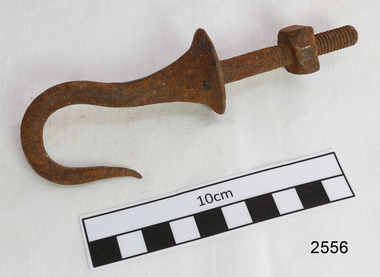
Equipment - Hook
... Hook from a rope-making machine, with nut and bolt ending...This hook is part of a rope machine. flagstaff hill warrnambool shipwrecked-coast flagstaff-hill flagstaff-hill-maritime-museum maritime-museum shipwreck-coast flagstaff-hill-maritime-village hook rope machine ropework rope-making machine Hook from a rope-making machine, with nut and bolt ending Equipment Hook ...This hook is part of a rope machine.Hook from a rope-making machine, with nut and bolt endingflagstaff hill, warrnambool, shipwrecked-coast, flagstaff-hill, flagstaff-hill-maritime-museum, maritime-museum, shipwreck-coast, flagstaff-hill-maritime-village, hook, rope machine, ropework, rope-making machine -
 Kiewa Valley Historical Society
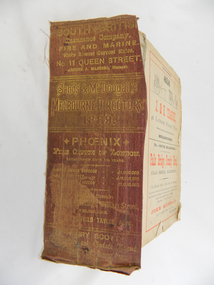
Book - Reference Melbourne Directory, Melbourne and Suburban Directory for 1889, Circa 1889
... Manfield Taylor, Agent" and at the bottom section" Henry Scott Auctioneer and Estate Agent 49 Bridport St., Albert Park" stamped on the bottom side across the page endings "The Wonderful Wertheim Sewing Machines Swanston Street opposite Town Hall", stamped on the top side across the page endings " The Sweet Hapsburg Pianos & Organs Swanston Street Opposite Town Hall"...Manfield Taylor, Agent" and at the bottom section" Henry Scott Auctioneer and Estate Agent 49 Bridport St., Albert Park" stamped on the bottom side across the page endings "The Wonderful Wertheim Sewing Machines Swanston Street opposite Town Hall", stamped on the top side across the page endings " The Sweet Hapsburg Pianos & Organs Swanston Street Opposite Town Hall" This directory has no front or back cover and is held together by its cloth spine. ...This Directory of 1889 covers the location of Melbourne based trade and professional offices by street and in Alphabetical order. It covers all of Melbourne and its suburbs. It also covers government and official, ecclesiastic, legal, municipal and miscellaneous information. The directory details a cross section of a developing city with a splattering of advertisements opening up an in depth look of all aspects of living in the late 1800s. It is interesting to see that all the advertisements do not have any telecommunication numbers listed (personal shoppers or mail orders only). This was a period of high moral standing within the community and hotels advertised rooms " suites of rooms for families and single rooms for Ladies and Gentlemen" also "electric bells throughout the house. Telephone, night porter and hot and cold baths."This directory would be used by the majority of families and businesses working and living within the Kiewa Valley and the surrounding area. Melbourne was the only place where every aspect of living requirement was catered for. Although the delivery of services and goods were not at a high rate, certain items or transactions would require a visit to "the big smoke". Business information are listed both by suburb and alphabetically. There is also a section for British and Foreign Trade. This directory covered nearly everything to do with commerce, an example pay days for principle firms. Greater evolution of trade locations started to balloon out after the mid 1950's. Increased populations and greater levels of communication and safe fast transport facilities permitted greater devolution of commercial enterprises into rural communities, such as the Kiewa Valley.This directory has no front or back cover and is held together by its cloth spine. It contains over 1300 pages, however there may be some pages missing front and back of the directory which would have contained advertisements of some unknown shops. All the sides of this directory (except the spine) have advertisements and content information stamped on. The spine cover has been placed in the directory until further conservation work is carried out. It has gold coloured printing and in the central section, a gold coloured background with the words "Sands & McDougall's Melbourne Directory 1889." The spine has three adverts on the spine.On the spine in gold colour "South * British insurance Company Fire and Marine. Risks Lowest Current Rates No. 11 Queen Street, Arthur J Masters, Manager" and half way down " *Phoenix* Fire Office of London established over 100 years Annual Income exceeds (pound sign) 1,000,000" underneath "Losses Paid Over (pound sign) 16,000,000" underneath "Reserve Fund Exceeds (pound sign) 1,000,000" underneath "9 Market Buildings William Street, Melbourne " underneath " R. Manfield Taylor, Agent" and at the bottom section" Henry Scott Auctioneer and Estate Agent 49 Bridport St., Albert Park" stamped on the bottom side across the page endings "The Wonderful Wertheim Sewing Machines Swanston Street opposite Town Hall", stamped on the top side across the page endings " The Sweet Hapsburg Pianos & Organs Swanston Street Opposite Town Hall"state government listings, names and location of early melbourne population business names, 1889 members of the victorian executive council -
 Geoffrey Kaye Museum of Anaesthetic History
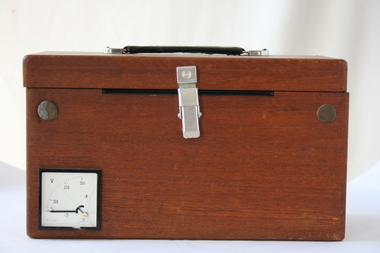
Equipment - Electroconvulsive therapy machine
... ending in plugs for holding in hands. Sections cannot be separated out, they form one unit. Equipment Electroconvulsive therapy machine ...In 1940 doctors started experimenting with curare for use with electric shock therapy. Electric shock therapy regularly caused broken bones, including vertebrae, and all sorts of dislocations. The intensity of convulsions was high and couldn’t be controlled. During the 19th Century curare was unsuccessfully used to treat rabies, tetanus and epilepsy. By 1935, Harold King had isolated tubocurarine, curare’s active ingredient. In 1942, Harold Griffith successfully used standardised curare (Intocostrin) with cyclopropane. Within five years synthesised muscle relaxants were available. Intocostrin, combined with an anaesthetic agent, was a break-through for this treatment.Solid wooden box with three separate sections inside box. First section contains electrical lead for attaching unit to mains power. Second section contains ECT unit and controls. Third sections contains electrical lead ending in plugs for holding in hands. Sections cannot be separated out, they form one unit.Etched on to the face of the internal unit: PROPERTY OF / THE ROYAL WOMEN'S HOSPITAL Label tape affixed to top of the lid: E.C.T. UNIT OP. THEATRES R.W.H.anaesthesia, muscle relaxants, electroconvulsive shock therapy, women -
 Sunshine and District Historical Society Incorporated
Administrative record - City of Sunshine - Commissioner Mr Alexander Alex George Gillon Collection 1976 - 1982 - Notice of ordinary meeting of the council of the City of Sunshine to be held on 24th August 1977, City of Sunshine, 17th August 1977
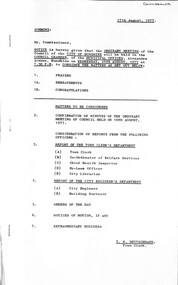
... Notice of Ordinary Meeting of the Council of the City of Sunshine to be held on 24th August 1977 Report of the Town Clerk's Department Report of the Town Clerk Superannuation Municipal Officer's Association Central Methodist Mission Home for the Frail / Aged Lease of land Darnley Street Land Adjacent to More Park in Ballarat Road Deer Park Hall Committee of Management Sunshine Swimming and Life Saving Club Infant Welfare Centres Pavilion Albion Tennis Club Tennis Courts Sunshine North Tennis Club Hulett Street Private Street Scheme Use of Council Land Survey Committee of Officers Land Transfer 43 Furlong Road Limits of Overdrafts Proposed Purchase of New Sunshine Tip Site Supplementary Valuations Report of the Co-Ordinator Welfare Services Committee of Management 43 Furlong Road Child Care Centre Emergency Accommodation Midway Hostel Report of the Chief Health Inspector Weights & Measures Report for the Two Months Ending 31st July 1977 Report of the Inspector Weights & Measures Sanitary Contract Licences Discharge to Council Controlled Drains Fees for Analyses Health Act 1958 Amusement Machines in Shops in Close Proximity to Schools Report of the City Librarian Library Statistics Seminar At Monash University The Economic Approach To Public Library Development Report of the City Engineer Land Use Permit Quinn Estate for the Purpose of Erecting Detached Houses Council Policy Land Use Permit Industrial Estate Lots 32 to 36 Fourth Avenue Land Use Permit Application Storing of Motor Vehicles Lot 18 Green Street for Nick's Boby Works Pty Ltd at Judge Street Enforcement of Melbourne Metropolitan Planning Scheme Use of Lot 271 Beela Court as a Transport Depot Land Use Permit Application Sale and Distribution of Floor Coverings, Builders Hardware, Electrical Domestic Appliances and Furniture Land Bounded by Halstead Street and Ashley Street Land Use Permit Application Milk Bar Addition to Existing House 53 King Edward Avenue Land Use Permit Application Advertising Hoarding Lot 26 & 27 Anderson Road Land Use Permit Sunshine Golf Club Pavilion Ralph Street Land Use Permit Application Detached House Lot 121 Lewin Street Land Use Permit Application Advertising Hoarding Lot 1 Ballarat Road South West Corner Summerhill Road Land Use Permit Application Access to Main Road for Lot 15 Geelong Road Land Use Permit Application Four Floodlights 186 - 190 Mitchell Street North East Corner Ashley Street Land Use Permit Application Storage and Wrecking of Old Cars for Scrap and Sale Lots 14. 15 & 16 Bunnett Street Land Use Permit Application Service Premises and Caretaker's Dwelling 461 Ballarat Road Land Use Permit Application 3 Display Homes Aycliffe Drive and Land Use Permit Application Car Parking to Serve Display Home Centre North East Corner Aycliffe Drive and Reston Court Deer Park Land Use Permit Application Italo - Australian Social Club (Italo - Australian Co-Operative Social Club Ltd) Place of Assembly Furlong Road Land Use Permit Application Reprocessing of Scrap Metals Lot 3 Geelong Road Land Use Permit Application Extension to Existing Work Shop For Mentally Retarded Children Day Training Centre Council Reserve Bounded by Churchill Avenue, Darnley Street & Ravenhall Street Land Use Permit Application Service Premises Addition to Existing Bakery 119 McIntyre Road Land Use Permit Application Home Occupation 43 Bloomfield Avenue Plan of Subdivision Stage 3 Furlong Road Estate Strata Subdivision 437 Ballarat Road Westerngate Estate Stage 2 Plan of Subdivision Neale Road and Station Road Plan of Consolidation Rothray Avenues and Arvona Avenue Width of Robinsons Road Westerngate Robinsons Road Parking Area Tallintyre road Housing Commission of Victoria Contract Supply & Maintenance of Vehicles Concrete Reinstatements Quotations Garfield Street Scheme Construction Proposed Traffic Signals Main Road West, Main Road East, St. ...Albans Maribyrnong River Mitchell Street Hampton Avenue Moria Street Wright Street Thyra Street Percy Street Ensign Street Delacey Street Northumberland Road Sunshine Library McCracken Street The Hub Sun Crescent Hampshire Road Brooklyn Pre-School Centr Cypress Avenue Ainsworth Reserve Vernon Street Sunshine Indoor Swimming Pool Hall Street Notice of Ordinary Meeting of the Council of the City of Sunshine to be held on 24th August 1977 Report of the Town Clerk's Department Report of the Town Clerk Superannuation Municipal Officer's Association Central Methodist Mission Home for the Frail / Aged Lease of land Darnley Street Land Adjacent to More Park in Ballarat Road Deer Park Hall Committee of Management Sunshine Swimming and Life Saving Club Infant Welfare Centres Pavilion Albion Tennis Club Tennis Courts Sunshine North Tennis Club Hulett Street Private Street Scheme Use of Council Land Survey Committee of Officers Land Transfer 43 Furlong Road Limits of Overdrafts Proposed Purchase of New Sunshine Tip Site Supplementary Valuations Report of the Co-Ordinator Welfare Services Committee of Management 43 Furlong Road Child Care Centre Emergency Accommodation Midway Hostel Report of the Chief Health Inspector Weights & Measures Report for the Two Months Ending 31st July 1977 Report of the Inspector Weights & Measures Sanitary Contract Licences Discharge to Council Controlled Drains Fees for Analyses Health Act 1958 Amusement Machines in Shops in Close Proximity to Schools Report of the City Librarian Library Statistics Seminar At Monash University The Economic Approach To Public Library Development Report of the City Engineer Land Use Permit Quinn Estate for the Purpose of Erecting Detached Houses Council Policy Land Use Permit Industrial Estate Lots 32 to 36 Fourth Avenue Land Use Permit Application Storing of Motor Vehicles Lot 18 Green Street for Nick's Boby Works Pty Ltd at Judge Street Enforcement of Melbourne Metropolitan Planning Scheme Use of Lot 271 Beela Court as a Transport Depot Land Use Permit Application Sale and Distribution of Floor Coverings, Builders Hardware, Electrical Domestic Appliances and Furniture Land Bounded by Halstead Street and Ashley Street Land Use Permit Application Milk Bar Addition to Existing House 53 King Edward Avenue Land Use Permit Application Advertising Hoarding Lot 26 & 27 Anderson Road Land Use Permit Sunshine Golf Club Pavilion Ralph Street Land Use Permit Application Detached House Lot 121 Lewin Street Land Use Permit Application Advertising Hoarding Lot 1 Ballarat Road South West Corner Summerhill Road Land Use Permit Application Access to Main Road for Lot 15 Geelong Road Land Use Permit Application Four Floodlights 186 - 190 Mitchell Street North East Corner Ashley Street Land Use Permit Application Storage and Wrecking of Old Cars for Scrap and Sale Lots 14. 15 & 16 Bunnett Street Land Use Permit Application Service Premises and Caretaker's Dwelling 461 Ballarat Road Land Use Permit Application 3 Display Homes Aycliffe Drive and Land Use Permit Application Car Parking to Serve Display Home Centre North East Corner Aycliffe Drive and Reston Court Deer Park Land Use Permit Application Italo - Australian Social Club (Italo - Australian Co-Operative Social Club Ltd) Place of Assembly Furlong Road Land Use Permit Application Reprocessing of Scrap Metals Lot 3 Geelong Road Land Use Permit Application Extension to Existing Work Shop For Mentally Retarded Children Day Training Centre Council Reserve Bounded by Churchill Avenue, Darnley Street & Ravenhall Street Land Use Permit Application Service Premises Addition to Existing Bakery 119 McIntyre Road Land Use Permit Application Home Occupation 43 Bloomfield Avenue Plan of Subdivision Stage 3 Furlong Road Estate Strata Subdivision 437 Ballarat Road Westerngate Estate Stage 2 Plan of Subdivision Neale Road and Station Road Plan of Consolidation Rothray Avenues and Arvona Avenue Width of Robinsons Road Westerngate Robinsons Road Parking Area Tallintyre road Housing Commission of Victoria Contract Supply & Maintenance of Vehicles Concrete Reinstatements Quotations Garfield Street Scheme Construction Proposed Traffic Signals Main Road West, Main Road East, St. ...Notice of Ordinary Meeting of the Council of the City of Sunshine to be held on 24th August 1977 Report of the Town Clerk's Department Report of the Town Clerk Superannuation Municipal Officer's Association Central Methodist Mission Home for the Frail / Aged Lease of land Darnley Street Land Adjacent to More Park in Ballarat Road Deer Park Hall Committee of Management Sunshine Swimming and Life Saving Club Infant Welfare Centres Pavilion Albion Tennis Club Tennis Courts Sunshine North Tennis Club Hulett Street Private Street Scheme Use of Council Land Survey Committee of Officers Land Transfer 43 Furlong Road Limits of Overdrafts Proposed Purchase of New Sunshine Tip Site Supplementary Valuations Report of the Co-Ordinator Welfare Services Committee of Management 43 Furlong Road Child Care Centre Emergency Accommodation Midway Hostel Report of the Chief Health Inspector Weights & Measures Report for the Two Months Ending 31st July 1977 Report of the Inspector Weights & Measures Sanitary Contract Licences Discharge to Council Controlled Drains Fees for Analyses Health Act 1958 Amusement Machines in Shops in Close Proximity to Schools Report of the City Librarian Library Statistics Seminar At Monash University The Economic Approach To Public Library Development Report of the City Engineer Land Use Permit Quinn Estate for the Purpose of Erecting Detached Houses Council Policy Land Use Permit Industrial Estate Lots 32 to 36 Fourth Avenue Land Use Permit Application Storing of Motor Vehicles Lot 18 Green Street for Nick's Boby Works Pty Ltd at Judge Street Enforcement of Melbourne Metropolitan Planning Scheme Use of Lot 271 Beela Court as a Transport Depot Land Use Permit Application Sale and Distribution of Floor Coverings, Builders Hardware, Electrical Domestic Appliances and Furniture Land Bounded by Halstead Street and Ashley Street Land Use Permit Application Milk Bar Addition to Existing House 53 King Edward Avenue Land Use Permit Application Advertising Hoarding Lot 26 & 27 Anderson Road Land Use Permit Sunshine Golf Club Pavilion Ralph Street Land Use Permit Application Detached House Lot 121 Lewin Street Land Use Permit Application Advertising Hoarding Lot 1 Ballarat Road South West Corner Summerhill Road Land Use Permit Application Access to Main Road for Lot 15 Geelong Road Land Use Permit Application Four Floodlights 186 - 190 Mitchell Street North East Corner Ashley Street Land Use Permit Application Storage and Wrecking of Old Cars for Scrap and Sale Lots 14. 15 & 16 Bunnett Street Land Use Permit Application Service Premises and Caretaker's Dwelling 461 Ballarat Road Land Use Permit Application 3 Display Homes Aycliffe Drive and Land Use Permit Application Car Parking to Serve Display Home Centre North East Corner Aycliffe Drive and Reston Court Deer Park Land Use Permit Application Italo - Australian Social Club (Italo - Australian Co-Operative Social Club Ltd) Place of Assembly Furlong Road Land Use Permit Application Reprocessing of Scrap Metals Lot 3 Geelong Road Land Use Permit Application Extension to Existing Work Shop For Mentally Retarded Children Day Training Centre Council Reserve Bounded by Churchill Avenue, Darnley Street & Ravenhall Street Land Use Permit Application Service Premises Addition to Existing Bakery 119 McIntyre Road Land Use Permit Application Home Occupation 43 Bloomfield Avenue Plan of Subdivision Stage 3 Furlong Road Estate Strata Subdivision 437 Ballarat Road Westerngate Estate Stage 2 Plan of Subdivision Neale Road and Station Road Plan of Consolidation Rothray Avenues and Arvona Avenue Width of Robinsons Road Westerngate Robinsons Road Parking Area Tallintyre road Housing Commission of Victoria Contract Supply & Maintenance of Vehicles Concrete Reinstatements Quotations Garfield Street Scheme Construction Proposed Traffic Signals Main Road West, Main Road East, St. Albans Road & East Esplanade Speed Reduction Sign Western Highway Deer Park Tender for Surplus Equipment Maribyrnong River Speed Limit M.M.B.W. Easement Drainage Lot 4 Mitchell Street Maidstone Certificate of Completion Hampton Avenue Group Private Street Scheme Proposed Open Space Land in Moria Street, Wright Street & Thyra Street Sunshine Bus Shelter Subsidy from Transport Funds of the Transport Regulation Board Report of the Building Surveyor Building & Development Approval Committee Report Extension of Permit 10 Percy Street St. Albans Extension of House 4 Ensign Street Maribyrnong Undersize Allotment Lot 2 Delacey Street Maidstone Location of Open Garage 81 Northumberland Road Sunshine North Renovation Central Library McCracken Street Alterations The Hub W.C. block Hampshire Road Brooklyn Pre-School Centre Child Care Centre / Pavilion Ainsworth Reserve Sunshine Indoor Swimming Pool Orders of the Day Westerngate Estate Robinsons Road Fencing 83 Hall Street Sunshine West city of sunshine, alexander "alex" george gillon, central methodist mission, darnley street, braybrook, more park, ardeer, deer park hall committee of management, albion tennis club, sunshine north tennis club, esmond street, station road, deer park, sunshine swimming and life saving club, furlong road, sunshine tip, furlong road child care centre, midway hostel, williamson road, maribyrnong, fourth avenue, sunshine, green street, judge street, beela court, sunshine west, halstead street, ashley street, maidstone, king edward avenue, albion, sunshine golf club, ralph street, lewin street, summerhill road, geelong road, brooklyn, bunnett street, sunshine north, ballarat road, aycliffe drive, reston court, italo - australian social club, italo - australian co-operative social club ltd, churchill avenue, ravenhall street, mcintyre road, bloomfield avenue, neale road, rothray avenue, arvona avenue, robinsons road, garfield street, st. albans, maribyrnong river, mitchell street, hampton avenue, moria street, wright street, thyra street, percy street, ensign street, delacey street, northumberland road, sunshine library, mccracken street, the hub, sun crescent, hampshire road, brooklyn pre-school centr, cypress avenue, ainsworth reserve, vernon street, sunshine indoor swimming pool, hall street -
 Sunshine and District Historical Society Incorporated
Administrative record - City of Sunshine - Commissioner Mr Alexander Alex George Gillon Collection 1976 - 1982 - Minutes of the ordinary meeting of council held on 24th August 1977, City of Sunshine, 24th August 1977
... Minutes of the Ordinary Meeting of Council held on 24th August 1977 Report of the Town Clerk's Department Report of the Town Clerk Superannuation Municipal Officer's Association Central Methodist Mission Home for the Frail / Aged Lease of land Darnley Street Land Adjacent to More Park in Ballarat Road Deer Park Hall Committee of Management Sunshine Swimming and Life Saving Club Infant Welfare Centres Pavilion Albion Tennis Club Tennis Courts Sunshine North Tennis Club Hulett Street Private Street Scheme Use of Council Land Survey Committee of Officers Land Transfer 43 Furlong Road Limits of Overdrafts Proposed Purchase of New Sunshine Tip Site Supplementary Valuations Report of the Co-Ordinator Welfare Services Committee of Management 43 Furlong Road Child Care Centre Emergency Accommodation Midway Hostel Report of the Chief Health Inspector Weights & Measures Report for the Two Months Ending 31st July 1977 Report of the Inspector Weights & Measures Sanitary Contract Licences Discharge to Council Controlled Drains Fees for Analyses Health Act 1958 Amusement Machines in Shops in Close Proximity to Schools Report of the City Librarian Library Statistics Seminar At Monash University The Economic Approach To Public Library Development Report of the City Engineer Land Use Permit Quinn Estate for the Purpose of Erecting Detached Houses Council Policy Land Use Permit Industrial Estate Lots 32 to 36 Fourth Avenue Land Use Permit Application Storing of Motor Vehicles Lot 18 Green Street for Nick's Boby Works Pty Ltd at Judge Street Enforcement of Melbourne Metropolitan Planning Scheme Use of Lot 271 Beela Court as a Transport Depot Land Use Permit Application Sale and Distribution of Floor Coverings, Builders Hardware, Electrical Domestic Appliances and Furniture Land Bounded by Halstead Street and Ashley Street Land Use Permit Application Milk Bar Addition to Existing House 53 King Edward Avenue Land Use Permit Application Advertising Hoarding Lot 26 & 27 Anderson Road Land Use Permit Sunshine Golf Club Pavilion Ralph Street Land Use Permit Application Detached House Lot 121 Lewin Street Land Use Permit Application Advertising Hoarding Lot 1 Ballarat Road South West Corner Summerhill Road Land Use Permit Application Access to Main Road for Lot 15 Geelong Road Land Use Permit Application Four Floodlights 186 - 190 Mitchell Street North East Corner Ashley Street Land Use Permit Application Storage and Wrecking of Old Cars for Scrap and Sale Lots 14. 15 & 16 Bunnett Street Land Use Permit Application Service Premises and Caretaker's Dwelling 461 Ballarat Road Land Use Permit Application 3 Display Homes Aycliffe Drive and Land Use Permit Application Car Parking to Serve Display Home Centre North East Corner Aycliffe Drive and Reston Court Deer Park Land Use Permit Application Italo - Australian Social Club (Italo - Australian Co-Operative Social Club Ltd) Place of Assembly Furlong Road Land Use Permit Application Reprocessing of Scrap Metals Lot 3 Geelong Road Land Use Permit Application Extension to Existing Work Shop For Mentally Retarded Children Day Training Centre Council Reserve Bounded by Churchill Avenue, Darnley Street & Ravenhall Street Land Use Permit Application Service Premises Addition to Existing Bakery 119 McIntyre Road Land Use Permit Application Home Occupation 43 Bloomfield Avenue Plan of Subdivision Stage 3 Furlong Road Estate Strata Subdivision 437 Ballarat Road Westerngate Estate Stage 2 Plan of Subdivision Neale Road and Station Road Plan of Consolidation Rothray Avenues and Arvona Avenue Width of Robinsons Road Westerngate Robinsons Road Parking Area Tallintyre road Housing Commission of Victoria Contract Supply & Maintenance of Vehicles Concrete Reinstatements Quotations Garfield Street Scheme Construction Proposed Traffic Signals Main Road West, Main Road East, St. ...Albans Road East Esplanade Western Highway Hampton Avenue Moria Street Wright Street Thyra Street Percy Street Ensign Street Delacey Street Northumberland Road Sunshine Library McCracken Street The Hub Sun Crescent Hampshire Road Brooklyn Pre-School Centre Cypress Avenue Ainsworth Reserve Vernon Street Hall Street Minutes of the Ordinary Meeting of Council held on 24th August 1977 Report of the Town Clerk's Department Report of the Town Clerk Superannuation Municipal Officer's Association Central Methodist Mission Home for the Frail / Aged Lease of land Darnley Street Land Adjacent to More Park in Ballarat Road Deer Park Hall Committee of Management Sunshine Swimming and Life Saving Club Infant Welfare Centres Pavilion Albion Tennis Club Tennis Courts Sunshine North Tennis Club Hulett Street Private Street Scheme Use of Council Land Survey Committee of Officers Land Transfer 43 Furlong Road Limits of Overdrafts Proposed Purchase of New Sunshine Tip Site Supplementary Valuations Report of the Co-Ordinator Welfare Services Committee of Management 43 Furlong Road Child Care Centre Emergency Accommodation Midway Hostel Report of the Chief Health Inspector Weights & Measures Report for the Two Months Ending 31st July 1977 Report of the Inspector Weights & Measures Sanitary Contract Licences Discharge to Council Controlled Drains Fees for Analyses Health Act 1958 Amusement Machines in Shops in Close Proximity to Schools Report of the City Librarian Library Statistics Seminar At Monash University The Economic Approach To Public Library Development Report of the City Engineer Land Use Permit Quinn Estate for the Purpose of Erecting Detached Houses Council Policy Land Use Permit Industrial Estate Lots 32 to 36 Fourth Avenue Land Use Permit Application Storing of Motor Vehicles Lot 18 Green Street for Nick's Boby Works Pty Ltd at Judge Street Enforcement of Melbourne Metropolitan Planning Scheme Use of Lot 271 Beela Court as a Transport Depot Land Use Permit Application Sale and Distribution of Floor Coverings, Builders Hardware, Electrical Domestic Appliances and Furniture Land Bounded by Halstead Street and Ashley Street Land Use Permit Application Milk Bar Addition to Existing House 53 King Edward Avenue Land Use Permit Application Advertising Hoarding Lot 26 & 27 Anderson Road Land Use Permit Sunshine Golf Club Pavilion Ralph Street Land Use Permit Application Detached House Lot 121 Lewin Street Land Use Permit Application Advertising Hoarding Lot 1 Ballarat Road South West Corner Summerhill Road Land Use Permit Application Access to Main Road for Lot 15 Geelong Road Land Use Permit Application Four Floodlights 186 - 190 Mitchell Street North East Corner Ashley Street Land Use Permit Application Storage and Wrecking of Old Cars for Scrap and Sale Lots 14. 15 & 16 Bunnett Street Land Use Permit Application Service Premises and Caretaker's Dwelling 461 Ballarat Road Land Use Permit Application 3 Display Homes Aycliffe Drive and Land Use Permit Application Car Parking to Serve Display Home Centre North East Corner Aycliffe Drive and Reston Court Deer Park Land Use Permit Application Italo - Australian Social Club (Italo - Australian Co-Operative Social Club Ltd) Place of Assembly Furlong Road Land Use Permit Application Reprocessing of Scrap Metals Lot 3 Geelong Road Land Use Permit Application Extension to Existing Work Shop For Mentally Retarded Children Day Training Centre Council Reserve Bounded by Churchill Avenue, Darnley Street & Ravenhall Street Land Use Permit Application Service Premises Addition to Existing Bakery 119 McIntyre Road Land Use Permit Application Home Occupation 43 Bloomfield Avenue Plan of Subdivision Stage 3 Furlong Road Estate Strata Subdivision 437 Ballarat Road Westerngate Estate Stage 2 Plan of Subdivision Neale Road and Station Road Plan of Consolidation Rothray Avenues and Arvona Avenue Width of Robinsons Road Westerngate Robinsons Road Parking Area Tallintyre road Housing Commission of Victoria Contract Supply & Maintenance of Vehicles Concrete Reinstatements Quotations Garfield Street Scheme Construction Proposed Traffic Signals Main Road West, Main Road East, St. ...Minutes of the Ordinary Meeting of Council held on 24th August 1977 Report of the Town Clerk's Department Report of the Town Clerk Superannuation Municipal Officer's Association Central Methodist Mission Home for the Frail / Aged Lease of land Darnley Street Land Adjacent to More Park in Ballarat Road Deer Park Hall Committee of Management Sunshine Swimming and Life Saving Club Infant Welfare Centres Pavilion Albion Tennis Club Tennis Courts Sunshine North Tennis Club Hulett Street Private Street Scheme Use of Council Land Survey Committee of Officers Land Transfer 43 Furlong Road Limits of Overdrafts Proposed Purchase of New Sunshine Tip Site Supplementary Valuations Report of the Co-Ordinator Welfare Services Committee of Management 43 Furlong Road Child Care Centre Emergency Accommodation Midway Hostel Report of the Chief Health Inspector Weights & Measures Report for the Two Months Ending 31st July 1977 Report of the Inspector Weights & Measures Sanitary Contract Licences Discharge to Council Controlled Drains Fees for Analyses Health Act 1958 Amusement Machines in Shops in Close Proximity to Schools Report of the City Librarian Library Statistics Seminar At Monash University The Economic Approach To Public Library Development Report of the City Engineer Land Use Permit Quinn Estate for the Purpose of Erecting Detached Houses Council Policy Land Use Permit Industrial Estate Lots 32 to 36 Fourth Avenue Land Use Permit Application Storing of Motor Vehicles Lot 18 Green Street for Nick's Boby Works Pty Ltd at Judge Street Enforcement of Melbourne Metropolitan Planning Scheme Use of Lot 271 Beela Court as a Transport Depot Land Use Permit Application Sale and Distribution of Floor Coverings, Builders Hardware, Electrical Domestic Appliances and Furniture Land Bounded by Halstead Street and Ashley Street Land Use Permit Application Milk Bar Addition to Existing House 53 King Edward Avenue Land Use Permit Application Advertising Hoarding Lot 26 & 27 Anderson Road Land Use Permit Sunshine Golf Club Pavilion Ralph Street Land Use Permit Application Detached House Lot 121 Lewin Street Land Use Permit Application Advertising Hoarding Lot 1 Ballarat Road South West Corner Summerhill Road Land Use Permit Application Access to Main Road for Lot 15 Geelong Road Land Use Permit Application Four Floodlights 186 - 190 Mitchell Street North East Corner Ashley Street Land Use Permit Application Storage and Wrecking of Old Cars for Scrap and Sale Lots 14. 15 & 16 Bunnett Street Land Use Permit Application Service Premises and Caretaker's Dwelling 461 Ballarat Road Land Use Permit Application 3 Display Homes Aycliffe Drive and Land Use Permit Application Car Parking to Serve Display Home Centre North East Corner Aycliffe Drive and Reston Court Deer Park Land Use Permit Application Italo - Australian Social Club (Italo - Australian Co-Operative Social Club Ltd) Place of Assembly Furlong Road Land Use Permit Application Reprocessing of Scrap Metals Lot 3 Geelong Road Land Use Permit Application Extension to Existing Work Shop For Mentally Retarded Children Day Training Centre Council Reserve Bounded by Churchill Avenue, Darnley Street & Ravenhall Street Land Use Permit Application Service Premises Addition to Existing Bakery 119 McIntyre Road Land Use Permit Application Home Occupation 43 Bloomfield Avenue Plan of Subdivision Stage 3 Furlong Road Estate Strata Subdivision 437 Ballarat Road Westerngate Estate Stage 2 Plan of Subdivision Neale Road and Station Road Plan of Consolidation Rothray Avenues and Arvona Avenue Width of Robinsons Road Westerngate Robinsons Road Parking Area Tallintyre road Housing Commission of Victoria Contract Supply & Maintenance of Vehicles Concrete Reinstatements Quotations Garfield Street Scheme Construction Proposed Traffic Signals Main Road West, Main Road East, St. Albans Road & East Esplanade Speed Reduction Sign Western Highway Deer Park Tender for Surplus Equipment Maribyrnong River Speed Limit M.M.B.W. Easement Drainage Lot 4 Mitchell Street Maidstone Certificate of Completion Hampton Avenue Group Private Street Scheme Proposed Open Space Land in Moria Street, Wright Street & Thyra Street Sunshine Bus Shelter Subsidy from Transport Funds of the Transport Regulation Board Report of the Building Surveyor Building & Development Approval Committee Report Extension of Permit 10 Percy Street St. Albans Extension of House 4 Ensign Street Maribyrnong Undersize Allotment Lot 2 Delacey Street Maidstone Location of Open Garage 81 Northumberland Road Sunshine North Renovation Central Library McCracken Street Alterations The Hub W.C. block Hampshire Road Brooklyn Pre-School Centre Child Care Centre / Pavilion Ainsworth Reserve Sunshine Indoor Swimming Pool Orders of the Day Westerngate Estate Robinsons Road Fencing 83 Hall Street Sunshine West city of sunshine, alexander "alex" george gillon, central methodist mission, darnley street, braybrook, more park, ardeer, deer park hall committee of management, albion tennis club, sunshine north tennis club, hulett street, albion, sunshine swimming and life saving club, furlong road, st. albans, sunshine north, sunshine tip, furlong road child care centre, midway hostel, williamson road, maribyrnong, fourth avenue, green street, judge street, halstead street, ashley street, maidstone, king edward avenue, anderson road, sunshine golf club, ralph street, sunshine west, lewin street, deer park, ballarat road, summerhill road, geelong road, brooklyn, mitchell street, bunnett street, aycliffe drive, reston court, italo - australian social club, italo - australian co-operative social club ltd, churchill avenue, ravenhall street, bloomfield avenue, neale road, station road, rothray avenues, arvona avenue, robinsons road, main road west, main road east, st. albans road, east esplanade, western highway, hampton avenue, moria street, wright street, thyra street, percy street, ensign street, delacey street, northumberland road, sunshine library, mccracken street, the hub, sun crescent, hampshire road, brooklyn pre-school centre, cypress avenue, ainsworth reserve, vernon street, hall street -
 Moorabbin Air Museum
Machine - DAP (Bristol) Beaufighter Mark 21 A8-328 (Marked As "A8-39"), 1945
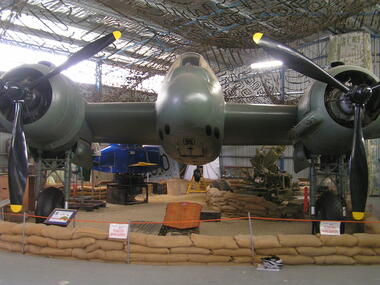
... ending the Blitz. British-built general purp. Level of Importance: National Beaufighter DAP (Bristol) Beaufighter Mark 21 A8-328 (Marked As "A8-39") Machine DAP (Bristol) Beaufighter Mark 21 A8-328 (Marked As "A8-39") ...Historical Details: DAP Beaufighter A8-328 was delivered from DAP to the RAAF at Laverton 1AD on 9 September 1945, and consequently did not see any wartime service. Placed into storage at Tocumwal it returned to Laverton 1AD in 1953 for overhaul and preparation as a Target. Description: The Bristol Beaufighter was designed and built in England as a long range fighter but initially saw service as a night fighter. Carrying the newly invented airborne interception radar, it played a major role in ending the Blitz. British-built general purp. Level of Importance: Nationalbeaufighter -
 Vision Australia
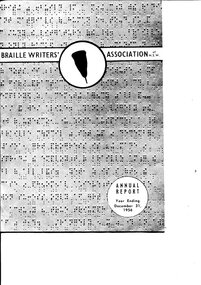
Administrative record - Text, Braille Writers Association of New South Wales: annual report year ending December 31, 1954, 1955
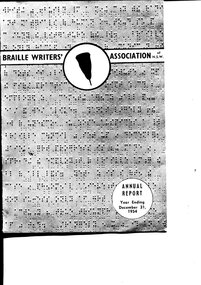
... Annual report outlining the achievements of the Braille Writers Association of N.S.W. including a special foreword by Patron A V Maxwell, the retirement of Roy Kippax as President and election of Gwen Ringland as President, the presentation of certificates of recently qualified members, transcription of public exams, the growing popularity of Stainsby machines and the difficulties in finding someone who will service them when they require fixing, with no Australian based agents they are required to be sent overseas and an appeal was made to Qantas Empire Airways asking for reduced air freight could be applied - this was not possible due to international regulations but made a donation to cover the freight cost of 1 machine, the list of authors of contributed articles to 'Boomerang' magazine, Eisteddfod Braille reading contests, Paramatta gaol transcribers and book binders and a list of books transcribed by transcriber and number of volumes. Braille Writers Association of New South Wales Annual Report Roy Kippax Gwen Ringland Qantas Empire Airways Braille equipment Parramatta Gaol 1 printed volume with photographs Braille Writers Association of New South Wales: annual report year ending December 31, 1954 Administrative record Text ...Annual report outlining the achievements of the Braille Writers Association of N.S.W. including a special foreword by Patron A V Maxwell, the retirement of Roy Kippax as President and election of Gwen Ringland as President, the presentation of certificates of recently qualified members, transcription of public exams, the growing popularity of Stainsby machines and the difficulties in finding someone who will service them when they require fixing, with no Australian based agents they are required to be sent overseas and an appeal was made to Qantas Empire Airways asking for reduced air freight could be applied - this was not possible due to international regulations but made a donation to cover the freight cost of 1 machine, the list of authors of contributed articles to 'Boomerang' magazine, Eisteddfod Braille reading contests, Paramatta gaol transcribers and book binders and a list of books transcribed by transcriber and number of volumes.1 printed volume with photographsbraille writers association of new south wales, annual report, roy kippax, gwen ringland, qantas empire airways, braille equipment, parramatta gaol -
 Vision Australia
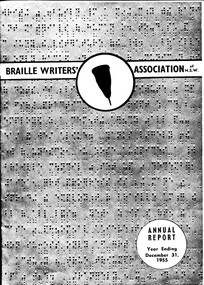
Administrative record - Text, Braille Writers Association of New South Wales: annual report year ending December 31, 1955, 1955
... Annual report outlining the achievements of the Braille Writers Association of N.S.W. including the presentation of certificates of recently qualified members, transcription of public exams, acquisition of 2 Stainsby machines, list of authors of contributed articles to 'Boomerang' magazine, Eisteddfod Braille reading contests, production of a programme for ABC Youth Concerts, Paramatta gaol transcribers and book binders, and a list of books transcribed by transcriber and number of volumes. Braille Writers Association of New South Wales Parramatta Gaol Annual Report 1 printed volume with photographs Braille Writers Association of New South Wales: annual report year ending ...Annual report outlining the achievements of the Braille Writers Association of N.S.W. including the presentation of certificates of recently qualified members, transcription of public exams, acquisition of 2 Stainsby machines, list of authors of contributed articles to 'Boomerang' magazine, Eisteddfod Braille reading contests, production of a programme for ABC Youth Concerts, Paramatta gaol transcribers and book binders, and a list of books transcribed by transcriber and number of volumes.1 printed volume with photographsbraille writers association of new south wales, parramatta gaol, annual report -
 Vision Australia
Administrative record - Text, Braille Writers Association of New South Wales: annual report year ending December 31, 1956, 1956
... machines, list of authors of contributed articles to 'Boomerang' magazine, Eisteddfod Braille reading contests, production of a program for ABC Youth Concerts, Paramatta gaol transcribers and book binders, the passing of Miss L.M. Harris and Mrs G.G. Blake, short profile of Mrs E. Vance and a list of books transcribed by transcriber and number of volumes. Braille Writers Association of New South Wales Helen Keller Eva Cooper Parramatta Gaol L M Harris G G Black E Vance Annual Report Braille equipment 1 printed volume with photographs Braille Writers Association of New South Wales: annual report year ending ...Annual report outlining the achievements of the Braille Writers Association of N.S.W. including a special foreword by Helen Keller, the presentation of certificates of recently qualified members, transcription of public exams, acquisition of 6 Stainsby machines, list of authors of contributed articles to 'Boomerang' magazine, Eisteddfod Braille reading contests, production of a program for ABC Youth Concerts, Paramatta gaol transcribers and book binders, the passing of Miss L.M. Harris and Mrs G.G. Blake, short profile of Mrs E. Vance and a list of books transcribed by transcriber and number of volumes.1 printed volume with photographsbraille writers association of new south wales, helen keller, eva cooper, parramatta gaol, l m harris, g g black, e vance, annual report, braille equipment -
 Sunshine and District Historical Society Incorporated
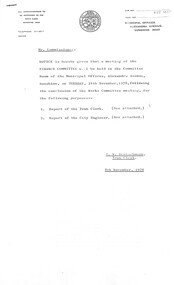
Administrative record - City of Sunshine - Commissioner Mr Alexander Alex George Gillon Collection 1976 - 1982 - Notice of finance meeting of the council 14th November 1978, City of Sunshine, 8th November 1978
... Notice of Finance Meeting of the Council 14th November 1978 Report of the Town Clerk Proposed Hostel for the Fail Aged 319 - 321 Geelong Road Kingsville Request for Financial Assistance Tenders for Vending Machines Sunshine Swimming Pool The Hub Statement of Receipts and Payment of the Period Ended 23rd October 1978 The Municipal Sunshine Tip Statement of Receipts and Payment of the Period Ended 23rd October 1978 City of Sunshine General Account City of Sunshine Financial Reports for the Period Ended 23rd October 1978 Report of the City Engineer Soil Sterilizer Nursery Replacement of Sweeper No 123 Bon Thomas Reserve Pre-School Centre Outfall Stormwater Drain & Water Main Neale Road Construction (North Carriageway) Application to Country Road Board for Funds for the Year Ending 30th June 1980...City of Sunshine Alexander "Alex" George Gillon Sunshine Swimming Pool Kennedy Street Sunshine The Hub Sun Crescent Sunshine Tip Bon Thomas Reserve Pre-School Centre Bon Thomas Reserve Quinn Street Neale Road Deer Park Notice of Finance Meeting of the Council 14th November 1978 Report of the Town Clerk Proposed Hostel for the Fail Aged 319 - 321 Geelong Road Kingsville Request for Financial Assistance Tenders for Vending Machines Sunshine Swimming Pool The Hub Statement of Receipts and Payment of the Period Ended 23rd October 1978 The Municipal Sunshine Tip Statement of Receipts and Payment of the Period Ended 23rd October 1978 City of Sunshine General Account City of Sunshine Financial Reports for the Period Ended 23rd October 1978 Report of the City Engineer Soil Sterilizer Nursery Replacement of Sweeper No 123 Bon Thomas Reserve Pre-School Centre Outfall Stormwater Drain & Water Main Neale Road Construction (North Carriageway) Application to Country Road Board for Funds for the Year Ending 30th June 1980 Foolscap sized document. ...Notice of Finance Meeting of the Council 14th November 1978 Report of the Town Clerk Proposed Hostel for the Fail Aged 319 - 321 Geelong Road Kingsville Request for Financial Assistance Tenders for Vending Machines Sunshine Swimming Pool The Hub Statement of Receipts and Payment of the Period Ended 23rd October 1978 The Municipal Sunshine Tip Statement of Receipts and Payment of the Period Ended 23rd October 1978 City of Sunshine General Account City of Sunshine Financial Reports for the Period Ended 23rd October 1978 Report of the City Engineer Soil Sterilizer Nursery Replacement of Sweeper No 123 Bon Thomas Reserve Pre-School Centre Outfall Stormwater Drain & Water Main Neale Road Construction (North Carriageway) Application to Country Road Board for Funds for the Year Ending 30th June 1980 city of sunshine, alexander "alex" george gillon, sunshine swimming pool, kennedy street, sunshine, the hub, sun crescent, sunshine tip, bon thomas reserve pre-school centre, bon thomas reserve, quinn street, neale road, deer park -
 Sunshine and District Historical Society Incorporated
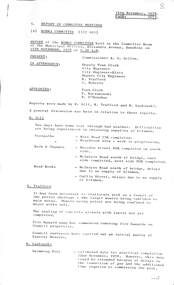
Administrative record - City of Sunshine - Commissioner Mr Alexander Alex George Gillon Collection 1976 - 1982 - Report of committee meetings 14th November 1978, City of Sunshine, 14th November 1978
... Report of Committee Meetings 14th November 1978 Works Committee Two Days Have Been Lost Due To Bad Weather West Road Footpath 75% Completed Braybrook Area Footpath Work is Progressing Macedon Street Kerb & Channell 80% Completed McIntyre Road South of Bridge Kerb & Channell 80% Completed McIntyre Road South of Bridge Road Works Delayed Due to No Supply of Bitumen Cullin Street Road Works Delayed Due to No Supply of Bitumen Petrol Storage for Mowers Is Causing Issues The Sealing of Concrete Wickets with Laycol not yet completed Fire Hazard Gangs have commenced removing fire hazards Council Surveyors have carried out initial survey of Castley Reserve Swimming Pool completion date 22nd November 1978 but still could be delayed due to connection of gas and commissioning time Bon Thomas Reserve and Diamond Avenue Reserve progress is slow due to vandalism and supply of rubber gaskets Orama Street Pre-School and Child Care Centre concrete slab has been poured Highpoint West site works begin this week Toilets on Reserves nearing completion with the exception of Selwyn Park Steps are being taken to minimise the fuel storage during the current T.W.U. stoppage Report of the Finance Committee Report of the Town Clerk Proposed Hostel for Failed Aged Request for Financial Assistance Tenders for Vending Machines Sunshine Swimming Pool Overpayment of Gratuities Report of the City Engineer Soil Sterilizer Nursery Replacement of Sweeper No 123 Bon Thomas Resereve Pre-School Centre Neale Road Construction (North Carriageway) Application to Country Roads Board for Funds for the Year Ending 30th June 1980 ...City of Sunshine Alexander "Alex" George Gillon West Road Maribyrnong Macedon Street Maidstone McIntyre Road Sunshine North Cullin Street Castley Reserve Simmie Street Sunshine West Bon Thomas Reserve Quinn Street Diamond Avenue Reserve Daimond Avenue Albanvale Orama Street Pre-School and Child Care Centre Orama Street Deer Park Highpoint West Rosamond Road Selwyn Park Selwyn Street Albion Sunshine Swimming Pool Kennedy Street Bon Thomas Resereve Pre-School Centre Neale Road Report of Committee Meetings 14th November 1978 Works Committee Two Days Have Been Lost Due To Bad Weather West Road Footpath 75% Completed Braybrook Area Footpath Work is Progressing Macedon Street Kerb & Channell 80% Completed McIntyre Road South of Bridge Kerb & Channell 80% Completed McIntyre Road South of Bridge Road Works Delayed Due to No Supply of Bitumen Cullin Street Road Works Delayed Due to No Supply of Bitumen Petrol Storage for Mowers Is Causing Issues The Sealing of Concrete Wickets with Laycol not yet completed Fire Hazard Gangs have commenced removing fire hazards Council Surveyors have carried out initial survey of Castley Reserve Swimming Pool completion date 22nd November 1978 but still could be delayed due to connection of gas and commissioning time Bon Thomas Reserve and Diamond Avenue Reserve progress is slow due to vandalism and supply of rubber gaskets Orama Street Pre-School and Child Care Centre concrete slab has been poured Highpoint West site works begin this week Toilets on Reserves nearing completion with the exception of Selwyn Park Steps are being taken to minimise the fuel storage during the current T.W.U. stoppage Report of the Finance Committee Report of the Town Clerk Proposed Hostel for Failed Aged Request for Financial Assistance Tenders for Vending Machines Sunshine Swimming Pool Overpayment of Gratuities Report of the City Engineer Soil Sterilizer Nursery Replacement of Sweeper No 123 Bon Thomas Resereve Pre-School Centre Neale Road Construction (North Carriageway) Application to Country Roads Board for Funds for the Year Ending 30th June 1980 Foolscap sized document. ...Report of Committee Meetings 14th November 1978 Works Committee Two Days Have Been Lost Due To Bad Weather West Road Footpath 75% Completed Braybrook Area Footpath Work is Progressing Macedon Street Kerb & Channell 80% Completed McIntyre Road South of Bridge Kerb & Channell 80% Completed McIntyre Road South of Bridge Road Works Delayed Due to No Supply of Bitumen Cullin Street Road Works Delayed Due to No Supply of Bitumen Petrol Storage for Mowers Is Causing Issues The Sealing of Concrete Wickets with Laycol not yet completed Fire Hazard Gangs have commenced removing fire hazards Council Surveyors have carried out initial survey of Castley Reserve Swimming Pool completion date 22nd November 1978 but still could be delayed due to connection of gas and commissioning time Bon Thomas Reserve and Diamond Avenue Reserve progress is slow due to vandalism and supply of rubber gaskets Orama Street Pre-School and Child Care Centre concrete slab has been poured Highpoint West site works begin this week Toilets on Reserves nearing completion with the exception of Selwyn Park Steps are being taken to minimise the fuel storage during the current T.W.U. stoppage Report of the Finance Committee Report of the Town Clerk Proposed Hostel for Failed Aged Request for Financial Assistance Tenders for Vending Machines Sunshine Swimming Pool Overpayment of Gratuities Report of the City Engineer Soil Sterilizer Nursery Replacement of Sweeper No 123 Bon Thomas Resereve Pre-School Centre Neale Road Construction (North Carriageway) Application to Country Roads Board for Funds for the Year Ending 30th June 1980 city of sunshine, alexander "alex" george gillon, west road, maribyrnong, macedon street, maidstone, mcintyre road, sunshine north, cullin street, castley reserve, simmie street, sunshine west, bon thomas reserve, quinn street, diamond avenue reserve, daimond avenue, albanvale, orama street pre-school and child care centre, orama street, deer park, highpoint west, rosamond road, selwyn park, selwyn street, albion, sunshine swimming pool, kennedy street, bon thomas resereve pre-school centre, neale road
