
Showing 18 items matching "engine failure "
-
 Moorabbin Air Museum
Document (Item) - Specialist Report 1-95 Examination Of A Lycoming ALF502-R5 Engine Failure From A BAe 146-200 Aircraft ,VH-JJW
... Specialist Report 1-95 Examination Of A Lycoming ALF502-R5 Engine Failure From A BAe 146-200 Aircraft ,VH-JJW....Specialist Report 1-95 Examination Of A Lycoming ALF502-R5 Engine Failure From A BAe 146-200 Aircraft ,VH-JJW....Document Specialist Report 1-95 Examination Of A Lycoming ALF502-R5 Engine Failure From A BAe 146-200 Aircraft ,VH-JJW. ...Conducted by Bernard Hole Manager Materials Evaluation Facility -
Moorabbin Air Museum
Manual - Ansett Boeing 767 operating manuals, Boeing 767 Operating Manual Chapter 3 Non-Normal Procedures February 1986
... Engine failure & fires...Ansett Boeing 767 operating manuals Engine failure & fires Air conditioning/pressurisation & pneumatics APU & engines Autoflight Communications Flight instruments & navigation Cargo fire Evacuation Bomb threats & unlawful seizure Forced landings & ditching Fuel Ice & rain Warning systems Abnormal flight patterns & maneuvers Overview of procedures for dealing with abnormal situations, circa 1986 Spiral bound book form manual Boeing 767 Operating Manual Chapter 3 Non-Normal Procedures February 1986 Manual Ansett Boeing 767 operating manuals ...Overview of procedures for dealing with abnormal situations, circa 1986Spiral bound book form manualnon-fictionOverview of procedures for dealing with abnormal situations, circa 1986engine failure & fires, air conditioning/pressurisation & pneumatics, apu & engines, autoflight, communications, flight instruments & navigation, cargo fire, evacuation, bomb threats & unlawful seizure, forced landings & ditching, fuel, ice & rain, warning systems, abnormal flight patterns & maneuvers -
Moorabbin Air Museum
Manual - Boeing 767 operating manuals, Boeing 767 Operating Manual Volume 1 Chapter 3 Non-Normal Procedures December 1993
... Engine failure & fires...Boeing 767 operating manuals Engine failure & fires Air conditioning/pressurisation & pneumatics APU & engines Autoflight Communications Flight instruments & navigation Bomb threats & unlawful seizure Forced landings & ditching Electrical Ice & rain protection Abnormal flight patterns & maneuvers Overview of procedures for coping with abnormal situations , circa 1993 Spiral bound book type manual Boeing 767 Operating Manual Volume 1 Chapter 3 Non-Normal Procedures December 1993 Manual Boeing 767 operating manuals ...Overview of procedures for coping with abnormal situations , circa 1993Spiral bound book type manualnon-fictionOverview of procedures for coping with abnormal situations , circa 1993engine failure & fires, air conditioning/pressurisation & pneumatics, apu & engines, autoflight, communications, flight instruments & navigation, bomb threats & unlawful seizure, forced landings & ditching, electrical, ice & rain protection, abnormal flight patterns & maneuvers -
Moorabbin Air Museum
Manual - Ansett Boeing 727 operating manuals, Boeing 727 Operating Manual Section 4 Emergency & Abnormal Procedures April 1988
... Engine failure & fires...Ansett Boeing 727 operations manual Engine failure & fires Fuel Electrical Hydraulics Flight controls Landing Gear Pneumatics Air conditioning & pressurization Fuselage fires Cockpit window failure Door lights Abnormal or forced landings Passenger evacuation Ditching Emergency descent & landing Emergency equipment Overview of emergency & abnormal flight procedures in Boeing 727, circa 1988 Spiral bound book type manual Boeing 727 Operating Manual Section 4 Emergency & Abnormal Procedures April 1988 Manual Ansett Boeing 727 operating manuals ...Overview of emergency & abnormal flight procedures in Boeing 727, circa 1988Spiral bound book type manual non-fictionOverview of emergency & abnormal flight procedures in Boeing 727, circa 1988engine failure & fires, fuel, electrical, hydraulics, flight controls, landing gear, pneumatics, air conditioning & pressurization, fuselage fires, cockpit window failure, door lights, abnormal or forced landings, passenger evacuation, ditching, emergency descent & landing, emergency equipment -
 Lara RSL Sub Branch
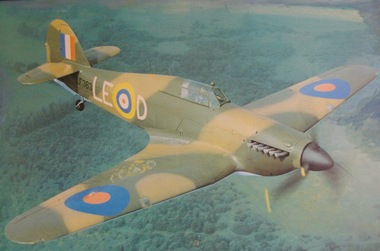
Picture Print, Hurricane, Unknown
... Whilst flying to Jersey in September 1991, LF363 suffered engine problems and had to be diverted to RAF Wittering but on the final approach the aircraft suffered complete engine failure and had to make an emergency landing. ...Whilst flying to Jersey in September 1991, LF363 suffered engine problems and had to be diverted to RAF Wittering but on the final approach the aircraft suffered complete engine failure and had to make an emergency landing. ...The Hawker Hurricane is a British single-seat fighter aircraft of the 1930s–40s that was designed and predominantly built by Hawker Aircraft Ltd. for service with the Royal Air Force (RAF). It was overshadowed in the public consciousness by the Supermarine Spitfire's role during Battle of Britain in 1940, but the Hurricane actually inflicted 60 percent of the losses sustained by the Luftwaffe in the engagement, and it went on to fight in all the major theatres of the Second World War. Url Hurricane.html. The Hawker Hurricane Mk.IIc - LF363, first flew on the 1st January 1944 and is believed to be the last Hurricane to enter service in the RAF. It was in service with 63 squadron and 26 squadron. After hostilities, LF363 was spared the scrap yard and used on various station flights and also appeared in films 'Angels one five', 'Reach for the Sky' and 'The Battle of Britain'. Whilst flying to Jersey in September 1991, LF363 suffered engine problems and had to be diverted to RAF Wittering but on the final approach the aircraft suffered complete engine failure and had to make an emergency landing. The pilot was saved with relative minor injuries (a broken ankle and minor burns) but the aircraft suffered severe damage. Historic Flying Limited completely rebuilt LF363 and by 1998 it was flying again as part of the B.B.M.F. LF363 currently wears the colour scheme of a Mk.I Hurricane of 17 squadron, P3878 'YB-W' which was flown by Flying Office Harold Bird-Wilson at Debden and Tangmere. Harold 'Birdy' Bird-Wilson had previously been badly burned in a pre-war flying accident. Upon his recovery he joined 17 squadron and fought through the 'Battle of France' and the 'Battle of Britain' achieving 6 confirmed kills. On 24th September 1940, 'Birdy' was shot down by Adolf Galland, his 40th 'kill', and had to bale out. 'Birdy' survived the war and when he retired from the RAF he had reached the rank of Vice Marshall and had been awarded the CBE, DSO, DFC & Bar and the AFC & Bar. British single-seat fighter aircraft manufactured by Hawker Aircraft, Ltd., in the 1930s and ’40s. The Hurricane was numerically the most important British fighter during the critical early stages of World War II, sharing victory laurels with the Supermarine Spitfire in the Battle of Britain (1940–41) and the defense of Malta (1941–42). Hurricanes served in all theatres of war where British forces were engaged. https://www.britannica.com/technology/Hurricane-airplane Framed coloured picture print on plastic sheetOn the aircraft are the markings LF 363 -
 Flagstaff Hill Maritime Museum and Village
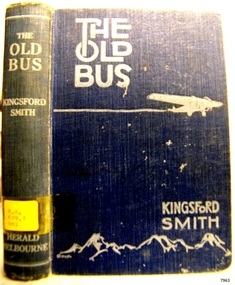
Book, The Old Bus
... They returned to Australia to make an attempt at the trans-Tasman flight but their attempt failed due to engine failure; they managed to get back to Sydney safely, minus most of their cargo. ...They returned to Australia to make an attempt at the trans-Tasman flight but their attempt failed due to engine failure; they managed to get back to Sydney safely, minus most of their cargo. ...Sir Charles Edward Kingsford Smith is a famous Australian, well known in civil aviation history for his courageous endeavours in flight. He broken many flight records for long distance and time travelled and he was also a war hero in World War 1. He has been referred to as being “known to millions of Australians as “Smithy” … he was one of Australia’s true twentieth-century legends”. In honour of his place amongst the world’s famous pioneers his image is featured on Australia’s $20 note, Sydney airport is named after him, there is a memorial to Kingsford Smith, Taylor and Ulm at the Anderson Park, also in Sydney and his plane “Southern Cross” is on view at Brisbane Airport. Kingsford Smith wrote ‘The Old Bus’ (1932) and he and Ulm were co-authors of ‘Story of 'Southern Cross' Trans-Pacific Flight’ (1928). His also wrote a book about his own life ‘My Flying Life’ which was published after his death in 1937. and the story of his life was filmed in Australia in 1946. A BRIEF HISTORY OF SIR CHARLES EDWARD KINGSFORD SMITH (1897 – 1935) … Kingsford Smith was born 9th February 1897 in Brisbane, Queensland, Australia. His parents were William Charles Smith and Catherine Mary, nee Kingsford. His mother’s maiden name of “Kingsford” was added to the family name when they spent time in Canada from around 1903 to 1907, after which they returned to Sydney, Australia. In 1915 Kingsford Smith enlisted in Australian Imperial Force. He served in 4th Signal Troop, 2nd Division Signal Company at Gallipoli Peninsular as a ‘sapper’ or combat engineer and later in Egypt and in France as a dispatch rider. In 1916 Kingsford Smith was transferred to the Australian Flying Corps as a sergeant. He was discharged after training in England and commissioned as a second lieutenant in the Royal Flying Corps. He was appointed fling officer and soon joined the 23rd Squadron in France. He brought down four machines in his first month there and also did invaluable work attacking enemy targets. He was wounded and shot down and later awarded the Military Cross ‘for conspicuous gallantry and devotion to duty’. He was promoted to lieutenant in 1918 and served as a Flying Instructor with the R.F.C. Kingsford Smith was not allowed to participate in the 1919 England to Australia air race because of assumed lack of navigational experience. He and his pilot friend Cyril Maddocks formed a business and flew joy-flights in both England and America. In America he did some stunt flying with a Flying Circus. Kingsford Smith returned to Australia in 1921 and found employment as a pilot. He soon realised the value of air transport in such a vast country. He formed a partnership with pilot Keith Anderson in 1924 and they purchased two Bristol Tourer biplanes. Their business broadened to include Charles Ulm and became the Interstate Flying services in Sydney. Together they performed important ‘demonstration’ flights including a flight around Australia in 10 days and 5 hours using very limited navigational equipment. Kingsford Smith immediately started to search for support to do a trans-Pacific flight. This support came from the New South Wales government, Sidney Myer and G. Allan Hancock, an American oil magnate. On 31st May 1928 Kingsford Smith, Charles Ulm and two American crewmen, Harry Lyan and Jim Warner, took off from Oakland, California and flew to Brisbane via Hawaii and Suva. This historic flight took 83 hours and 38 minutes. Their Fokker plane had three engines and was named the “Southern Cross”. This amazing achievement resulted in huge financial subscriptions. Kingsford Smith was awarded the Air Force Cross and appointed as honorary squadron leader, Royal Australian Air Force. Kingsford Smith flew his Southern Cross plane from Point Cook in Victoria to Perth nonstop. Then in September – October 1928, with Charles Ulm and an Australian crew, he piloted the Southern Cross from Sidney to Christchurch New Zealand. This flight showed that was possible for regular passenger and mail services across the Tasman Sea. Kingsford Smith flew his plane to England to an order for four aircraft, planning to use them for an inter-capital air service in Australia. Sadly on 1st April 1929 he was forced to land, having lost radio contact with the ground and having run into bad weather over north – west Australia. Keith Anderson and Robert Hitchcock both perished before the search party reached them. Once official enquiries were completed the flight to England continued in June and was completed in record time of 12 days and 18 hours. In January 1930 Kingsford Smith piloted the “Southern Cloud”, one of the new Avro Ten planes, on the first flight of his airline, the Australian National Airways, from Sydney to Melbourne. The “Southern Cross” was overhauled in Holland by the Fokker Aircraft Co. and in June 1930 Kingsford Smith achieved an east-west crossing of the Atlantic from Ireland to Newfoundland in 31.5 hours. Kingsford Smith returned to England and took delivery of an Avro Avian biplane that he named the “Southern Cross Junior” and flew solo from England to Darwin, Australia. This record breaking flight took less than 10 days. He beat four other planes that had left England before him and he was 5.5 days faster than Hinkler. Sadly Kingsford Smith’s “Southern Cloud” was lost during a flight from Sydney to Melbourne in 1931 with no surviving crew or passengers; in 1958 the wreckage was discovered in the Snowy Mountains. Later that year Kingsford Smith flew his “Southern Cloud” from Australia to Timor, collecting mail from a damaged Imperial Airways plane in Timor. Other flights followed. Kingsford Smith was knighted in 1932 for his services in Aviation. He returned to selling joy flights then established the Kingsford Smith Air Service, a flying training school in Sydney. In 1933 Kingsford Smith flew the amazing record flight in “Miss Southern Cross” – a Percival Gull - from London to Wyndham in Western Australia in just over ten days. The Australian Commonwealth then gave Kingsford Smith a large grant and he was also appointed as aviation consultant to Vacuum Oil Co. Another flying record was made when Kingsford Smith and Sir P.G. Taylor flow “Lady Southern Cross” from Brisbane to San Francisco in order to sell her there; the west-east-trans-Pacific flight made aviation history. They returned to Australia to make an attempt at the trans-Tasman flight but their attempt failed due to engine failure; they managed to get back to Sydney safely, minus most of their cargo. Kingsford Smith had his unsold “Lady Southern Cross” shipped back to England, from where he and J. T. Pethybridge in the “Lady Southern Cross” attempted another record breaking flight from England The Old Bus Author: Charles Kingsford Smith Publisher: Distibuted by Herald Feature Service Date; 1932Label on spine cover with typed text RA 629.1309 KIN flagstaff hill, warrnambool, shipwrecked coast, flagstaff hill maritime museum, maritime museum, shipwreck coast, flagstaff hill maritime village, great ocean road, the old bus, charles kingsford smith -
 City of Moorabbin Historical Society (Operating the Box Cottage Museum)
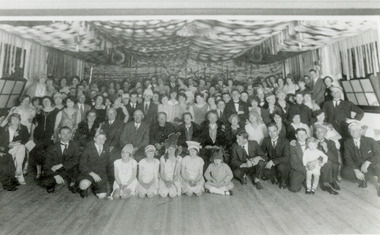
Photograph , Black & White Opening McKinnon Progress Hall c 1925, c1925
... failure to secure the Hoyts picture theatre c 1925. Hoyts instead built the theatre in Centre Rd Bentleigh and this took a lot of trade away from the shops in McKinnon Rd. McKinnon was settled by market gardeners and after the train line arrived more houses and shops were built so that the small community developed through the 20thC mckinnon progress league, mckinnon railway station, ormond state school, hoyts picture theatres, centre road bentleigh, wyles jim, mckinnon hotel, gardeners arms hotel, bent james, smith j l; smith , chaff cutter, horse drawn carts, toll gates brighton, motor cars 1900, steam engines, early settlers, bentleigh, mckinnon, parish of moorabbin, city of moorabbin, county of bourke, moorabbin roads board, shire of moorabbin, henry dendy's special survey 1841, were j.b.; bent thomas, o'shannassy john, king richard, charman stephen, highett william, ormond francis, maynard dennis, market gardeners, vineyards, orchards Black & White photograph showing the crowd of local residents celebrating the opening of the McKinnon Progress hall c1925 Photograph , Black & White Opening McKinnon Progress Hall c 1925 ...McKinnon was a small community in East Brighton settled mainly by market gardeners but it had a State School, Churches, a hotel opened by Thomas Bent's father, Post Office and some shops. After WW1 land close to the railway line began to be sold and new homes and various shops were built. A Progress League was well supported and new hall built. McKinnon Rd Shopping precinct did not prosper as expected and some attribute this to the failure to secure the Hoyts picture theatre c 1925. Hoyts instead built the theatre in Centre Rd Bentleigh and this took a lot of trade away from the shops in McKinnon Rd.McKinnon was settled by market gardeners and after the train line arrived more houses and shops were built so that the small community developed through the 20thCBlack & White photograph showing the crowd of local residents celebrating the opening of the McKinnon Progress hall c1925mckinnon progress league, mckinnon railway station, ormond state school, hoyts picture theatres, centre road bentleigh, wyles jim, mckinnon hotel, gardeners arms hotel, bent james, smith j l; smith , chaff cutter, horse drawn carts, toll gates brighton, motor cars 1900, steam engines, early settlers, bentleigh, mckinnon, parish of moorabbin, city of moorabbin, county of bourke, moorabbin roads board, shire of moorabbin, henry dendy's special survey 1841, were j.b.; bent thomas, o'shannassy john, king richard, charman stephen, highett william, ormond francis, maynard dennis, market gardeners, vineyards, orchards -
The Ed Muirhead Physics Museum
Gas-powered engine
... Gas-powered engine used to drive Grayson’s original ruling engine (Cat. no. 35) Because of frequent failures of the electric power supply, Grayson preferred to use a hot-air engine, driven by a gas flame, to turn the engine so that, once a ruling had commenced, it would continue uninterrupted until the end....Gas-powered engine used to drive Grayson’s original ruling engine (Cat. no. 35) Because of frequent failures of the electric power supply, Grayson preferred to use a hot-air engine, driven by a gas flame, to turn the engine so that, once a ruling had commenced, it would continue uninterrupted until the end. ...Gas-powered engine used to drive Grayson’s original ruling engine (Cat. no. 35) Because of frequent failures of the electric power supply, Grayson preferred to use a hot-air engine, driven by a gas flame, to turn the engine so that, once a ruling had commenced, it would continue uninterrupted until the end. -
Moorabbin Air Museum
Manual (Item) - CAC Engine Bearings and Engine Failures, Engine Bearings. Engine Failures
... Commonwealth Aircraft Corporation Engine Bearings. Engine Failures Manual CAC Engine Bearings and Engine Failures ...Commonwealth Aircraft Corporation -
Moorabbin Air Museum
Document (item) - Atar 09C modifications failure compressor blade turbine reports from engine team in france, CAC E55 file 36 Atar engine
... Atar 09C modifications failure compressor blade turbine reports from engine team in france...CAC E55 file 36 Atar engine Document Atar 09C modifications failure compressor blade turbine reports from engine team in france ... -
Moorabbin Air Museum
Document (item) - CAC Collection - Technical Information ATAR 08 - ATAR 09 B-C Turbojet Engines
... Occurrence Of Probable Failures On Fuel Control System Components Fitted To Engines...Occurrence Of Probable Failures On Fuel Control System Components Fitted To Engines CAC Collection - Technical Information ATAR 08 - ATAR 09 B-C Turbojet Engines Document CAC Collection - Technical Information ATAR 08 - ATAR 09 B-C Turbojet Engines ...Occurrence Of Probable Failures On Fuel Control System Components Fitted To Engines -
Moorabbin Air Museum
Document (item) - CAC Collection - Technical Information - ATAR 09 C Engines
... Study Of Failures In Operation During Utilisation CAC Collection - Technical Information - ATAR 09 C Engines Document CAC Collection - Technical Information - ATAR 09 C Engines ...Study Of Failures In Operation During Utilisation -
Moorabbin Air Museum
Document - CAC Commonwealth Aircraft Corporation, Avon Engine Faults and Failures
... Avon Engine Faults and Failures Document CAC Commonwealth Aircraft Corporation ... -
Moorabbin Air Museum
Document (item) - CAC Commonwealth Aircraft Corporation and Nene Engines, Interim Report - Nene Centre Bearing Failures
... Commonwealth Aircraft Corporation Interim Report - Nene Centre Bearing Failures Document CAC Commonwealth Aircraft Corporation and Nene Engines ...Commonwealth Aircraft Corporation -
 Puffing Billy Railway
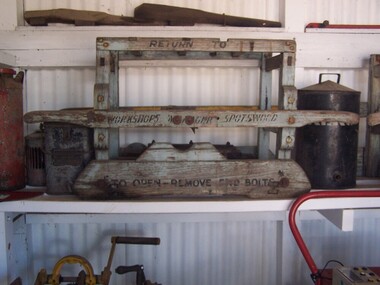
NKS Trolly Motor Transporting Box
... Engines were often changed over due to mechanical failure or being required for a service. ...Engines were often changed over due to mechanical failure or being required for a service. ...NKS Trolley Motor Transporting Box A wooden box used for transporting the engines of the Gangers trolleys between the line in use and the Workshops at Spotswood. Engines were often changed over due to mechanical failure or being required for a service. Rather than send the complete trolley in for work, the engine was removed and transported. These boxes may have arrived at a location with an engine in it, to replace the one returning to the Workshops, cutting down the time that the trolley may have been out of use. Historic - Victorian Railways - Permanent Way and Works - track equipment - NKS Trolly Motor Transporting BoxNKS Trolly Motor Transporting Box - two boxes made of timber with wrought iron fittings puffing billy, nks trolley motor transporting box, trolly, trolley -
Moorabbin Air Museum
Book - Gas turbine engines, Gas Turbines for Aircraft
... Gas turbine engines History & development Aircraft gas turbine types Turbojets Turboprops Fuels Combustion Lubrication Failures Maintenance Materials Technical history of the gas turbine engine for aircraft, circa 1958 Gas Turbines for Aircraft Book Gas turbine engines ...Technical history of the gas turbine engine for aircraft, circa 1958non-fictionTechnical history of the gas turbine engine for aircraft, circa 1958history & development, aircraft gas turbine types, turbojets, turboprops, fuels, combustion, lubrication, failures, maintenance, materials -
 Sunbury Family History and Heritage Society Inc.
Photograph, Railway smash, 1919
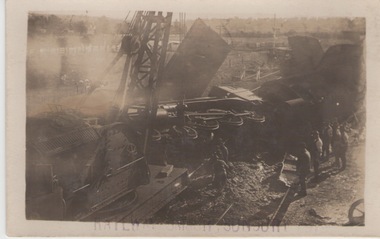
... failure along the tracks, which in turn caused a collision between two trains travelling in the op[posite direction along the same tracks. This one of a number of train fatalities that have occurred on the Sunbury - Bendigo line. railways Train smashes Sunbury A non-digital black and white photograph with a white border in post card format of a steam train and its carriages on its side. Workmen are working to prepare the engine ...The rail crash featured in the image occurred at Sunbury station in January 1919 as was the result of signal failure along the tracks, which in turn caused a collision between two trains travelling in the op[posite direction along the same tracks.This one of a number of train fatalities that have occurred on the Sunbury - Bendigo line.A non-digital black and white photograph with a white border in post card format of a steam train and its carriages on its side. Workmen are working to prepare the engine to be lifted back onto the tracks.railways, train smashes, sunbury -
 Melbourne Tram Museum
Photograph - Cable tram towed by lorry - set of 2, c1920
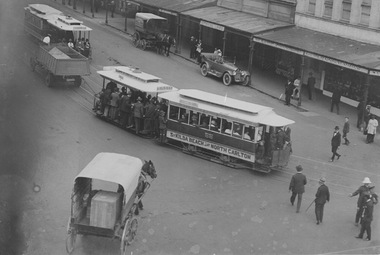
... The complicated path of this auxiliary cable, its secondary power source and the lack of constant monitoring by engine house staff led to many failures. In later years when these occurred, tramway lorries used for dropping sand were frequently redirected to tow trams up the Lonsdale Street hill to pick up the main cable in Russell Street. ...The complicated path of this auxiliary cable, its secondary power source and the lack of constant monitoring by engine house staff led to many failures. In later years when these occurred, tramway lorries used for dropping sand were frequently redirected to tow trams up the Lonsdale Street hill to pick up the main cable in Russell Street. ...Photograph shows a heavily loaded North Carlton-bound cable tram turning from Swanston Street into Lonsdale Street towed by a lorry. It passes a traffic policeman, pedestrians, motor and horse drawn vehicles. Another cable tram descends the hill without the aid of the cable, as was standard operating practice. This section of cable tram track in Lonsdale Street was the scene of numerous cable malfunctions. Its design required the use of a short length of auxiliary (assistance) cable to power trams from Swanston Street up the Lonsdale Street hill to Russell Street, where they picked up the main Lygon Street/Johnston Street cable. The auxiliary cable was not powered directly by an engine house but by referred power from a sheave at the end of the main cable. The complicated path of this auxiliary cable, its secondary power source and the lack of constant monitoring by engine house staff led to many failures. In later years when these occurred, tramway lorries used for dropping sand were frequently redirected to tow trams up the Lonsdale Street hill to pick up the main cable in Russell Street. This problem disappeared when cable trams were removed from Swanston Street at the end of 1925. The Johnston Street cable was then extended along Lonsdale Street from Russell Street to Elizabeth Street, and the auxiliary cable retired. The second photo shows tram number 218 being towed as well.Yields information about problems encountered by cable tramsBlack and white photograph with no note on rear. north carlton, swanston street, lonsdale street, lorry, auxiliary (assistance) cable, russell street, main cable, engine house, referred power, dropping sand, johnston street, lygon street, constant monitoring, elizabeth street
