
Showing 92 items matching "environmental conservation"
-
 Surrey Hills Historical Society Collection
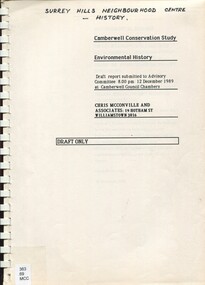
Report, Camberwell conservation study: environmental history 1989 : Draft only, 10/12/1989
... Camberwell conservation study: environmental history 1989 : Draft only...Full title on cover: Camberwell Conservation Study: environmental history. Draft report submitted to Advisory Committee, 12 December 1989 at Camberwell Council Chambers An environmental history draft report prepared for City of Camberwell as part of the City of Camberwell Conservation Study. ...An environmental history draft report prepared for City of Camberwell as part of the City of Camberwell Conservation Study. ...Camberwell conservation study: environmental history 1989 : Draft only Report Chris McConville and Associates Chris Mc Conville Lesley Alves Anita Brady Sheryl Yelland ...Full title on cover: Camberwell Conservation Study: environmental history. Draft report submitted to Advisory Committee, 12 December 1989 at Camberwell Council Chambers An environmental history draft report prepared for City of Camberwell as part of the City of Camberwell Conservation Study. Presented in 2 volumes. Charts the development of the suburb of Camberwell. Beginning late 1880s.An environmental history draft report prepared for City of Camberwell as part of the City of Camberwell Conservation Study. Presented in 2 volumes. Charts the development of the suburb of Camberwell. Beginning late 1880s.camberwell, land places and structures, buildings - conservation and restoration, buildings, structures and establishments, social history, public housing, camberwell estate, st john's wood (wanganella) -
 Canterbury History Group
Book, Chris McConville and Associates, Camberwell Conservation Study: Environmental History. Volume 1 and Volume 2, 12 December 1989
... Camberwell Conservation Study: Environmental History. Volume 1 and Volume 2...Vol. 1: Spiral bound; 136 pages; includes B&w sketches, maps and photocopies of photos Vol. 2: Spiral bound; includes bibliography (9 pages) Camberwell Conservation Study: Environmental History. Volume 1 and Volume 2 Book Chris McConville and Associates ...Draft report prepared for the City of Camberwell and submitted to the Advisory Committee on 12 December 1989. Vol 2 includes list of significant people, schools, churches and public buildings2 vols. Vol. 1: Spiral bound; 136 pages; includes B&w sketches, maps and photocopies of photos Vol. 2: Spiral bound; includes bibliography (9 pages)non-fictionDraft report prepared for the City of Camberwell and submitted to the Advisory Committee on 12 December 1989. Vol 2 includes list of significant people, schools, churches and public buildings monomeath avenue, victoria avenue, logan street, duncan & weller, canterbury, canterbury road, canterbury gardens, canterbury concert committee, fountains, rotundas, logans paddock, keats street, golding family, mellor> l a, chaucer crescent, city of camberwell -
Save the Dandenongs League Inc.
Archive (item), Save the Dandenongs League Incorporated, Ministry for Conservation Victoria - Environmental Studies Program - Sites of Botanical Significance in the Upper Yarra Region - 21 July, 1979
... Ministry for Conservation Victoria - Environmental Studies Program - Sites of Botanical Significance in the Upper Yarra Region - 21 July, 1979...Ministry for Conservation Victoria - Environmental Studies Program - Sites of Botanical Significance in the Upper Yarra Region - 21 July, 1979 Archive Save the Dandenongs League Incorporated ... -
 Conservation Volunteers
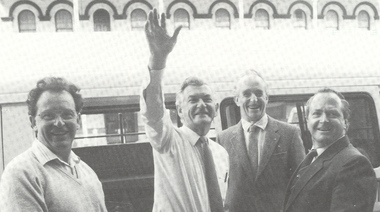
Photograph: Prime Minister Bob Hawke visits Ballarat and meets President of ATCV John Mewton and CEO Tim Cox
... ...Environmental Conservation...CVA Conservation Volunteers Conservation Volunteers Australia Conservation Volunteers New Zealand Colin Jackson Better Earth Environmental Conservation Volunteers Volunteering Corporate volunteering Education – Environmental Carbon footprint Climate change Ballarat Safety Training Partnerships Victoria Vic NSW Queensland ACT Australian Capital Territory NT Northern Territory Western Australia WA South Australia SA Tasmania New Zealand Californi1a Conservation Corps ATCV Bob Hawke Prime Minister John Mewton Tim Cox Black and white photograph Photograph: Prime Minister Bob Hawke visits Ballarat and meets President of ATCV John Mewton and CEO Tim Cox Photograph: Prime Minister Bob Hawke visits Ballarat and meets President of ATCV John Mewton and CEO Tim Cox ...Prime Minister Bob HawkeAlthough determinedly apolitical ATCV/CVA has maintained good relations with all sides of politics.Black and white photographcva, conservation volunteers, conservation volunteers australia, conservation volunteers new zealand, colin jackson, better earth, environmental conservation, volunteers, volunteering, corporate volunteering, education – environmental, carbon footprint, climate change, ballarat, safety, training, partnerships, victoria, vic, nsw, queensland, act, australian capital territory, nt, northern territory, western australia, wa, south australia, sa, tasmania, new zealand, californi1a conservation corps, atcv, bob hawke, prime minister, john mewton, tim cox -
 Conservation Volunteers
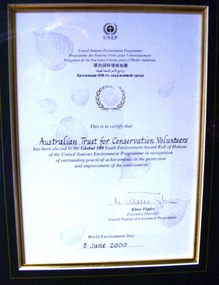
Award: Honour Roll, United Nations Environment Program (UNEP) - 1 June 2000 - The UNEP announced that the Australian Trust of Conservation Volunteers of Australia (ATCV), has been elected to the prestigious ranks of its Global 500 Roll of Honour for outstanding contributions to the protection of the environment, Award:United Nations Environment Program (UNEP) - 1 June 2000 - UNEP announced today that the ATCV has been elected to the prestigious ranks of its Global 500 Roll of Honour for outstanding contributions to the protection of the environment
... ...Environmental Conservation...conservation projects in urban, regional and remote areas of Australia each year. Activities range from bush regeneration, tree planting, seed collection, endangered species protection, weed control, flora and fauna surveys, walking trail construction, fencing, environmental monitoring and the protection of world heritage areas. ... Volunteers Conservation Volunteers Australia Conservation Volunteers New Zealand Colin Jackson Better Earth Environmental Conservation Volunteers Volunteering Corporate volunteering Education – Environmental Carbon footprint Climate change Ballarat Safety Training Partnerships Victoria Vic NSW Queensland ACT Australian Capital Territory NT Northern Territory Western Australia WA South Australia SA Tasmania New Zealand California Conservation Corps ATCV UNEP UNEP Honour Roll United Nations Environment Program Certificate Award:United Nations Environment Program (UNEP) - 1 June 2000 - UNEP announced today that the ATCV has been elected to the prestigious ranks of its Global 500 Roll of Honour for outstanding contributions to the protection of the environment. ...THE AUSTRALIAN TRUST OF CONSERVATION VOLUNTEERS, ONE OF 14 INDIVIDUALS AND ORGANIZATIONS, TO RECEIVE UNITED NATIONS ENVIRONMENT AWARD NAIROBI, 1 June 2000 - The United Nations Environment Programme (UNEP) announced today that the Australian Trust of Conservation Volunteers of Australia (ATCV), has been elected to the prestigious ranks of its Global 500 Roll of Honour for outstanding contributions to the protection of the environment. ATCV is one of 14 individuals and organizations to receive this honour in 2000. Founded in 1982, ATCV is a national, not-for-profit community organization, whose mission is to attract and manage a force of volunteers in practical conservation projects for the betterment of the Australian environment. ATCV completes more than 4000 week-long conservation projects in urban, regional and remote areas of Australia each year. Activities range from bush regeneration, tree planting, seed collection, endangered species protection, weed control, flora and fauna surveys, walking trail construction, fencing, environmental monitoring and the protection of world heritage areas. ATCV community participation has resulted in more than 1.8 million trees being planted in 1999, and in more than 7.3 million trees planted over the past 10 years. Community involvement totalled 200,000 project days in 1999 and more than 700,000 days since 1989. To encourage the involvement of young people, ATCV developed and manages the federal government-funded programme Green Corps. Green Corps is a six-month traineeship for 17 to 20 year-olds, which incorporates conservation projects and accredited training. Since 1997, more than 4,000 trainees have completed the Green Corps programme. ATCV is a founding member of the International Conservation Alliance, which brings together organizations working in conservation volunteering, and is a member of the World Conservation Union (IUCN). " The award will be presented in Adelaide, Australia, at the World Environment Day ceremonies on 4 June 2000. World Environment Day, which is celebrated in some 120 countries around the world on 5 June, was established by the United Nations General Assembly in 1972 to focus global attention and action on environmental issues. Some 701 individuals and organizations, in both the adult and youth categories, have been honoured since UNEP launched the Global 500 award in 1987. Among prominent past winners are: French Marine explorer Jacques Cousteau; Sir David Attenborough, producer of environmental television programmes; Gro Harlem Brundtland, former Prime Minister of Norway; Anil Aggarwal, the prominent environmentalist from India; Ken Saro-Wiwa, the environmental and human rights activist from Nigeria who was executed for leading the resistance of the Ogoni People against the pollution of their Delta homeland; the World Wide Fund for Nature (WWF), Jimmy Carter, former President of the United States; Jane Goodall of the United Kingdom whose research on wild chimpanzees and olive baboons provided insight into the lives of non-human primates; and the late Chico Mendes, the Brazilian rubber tapper who was murdered during his fight to save the Amazon forest. To forge global links and to implement ideas, which can contribute to a more sustainable future, a network of all Global 500 laureates has been formed. Information about this unique network can be obtained at http://www.global500.org. The winners of UNEP's Global 500 Roll of Honour are members of a broad and growing environmental movement that is flourishing around the world. They have taken the path that most of us hesitate to take for want of time or caring," says UNEP's Executive Director, Klaus Toepfer. "In honouring the Global 500 laureates, UNEP hopes that others will be inspired by their extraordinary deeds."Certificatecva, conservation volunteers, conservation volunteers australia, conservation volunteers new zealand, colin jackson, better earth, environmental conservation, volunteers, volunteering, corporate volunteering, education – environmental, carbon footprint, climate change, ballarat, safety, training, partnerships, victoria, vic, nsw, queensland, act, australian capital territory, nt, northern territory, western australia, wa, south australia, sa, tasmania, new zealand, california conservation corps, atcv, unep, unep honour roll, united nations environment program -
 City of Stonnington
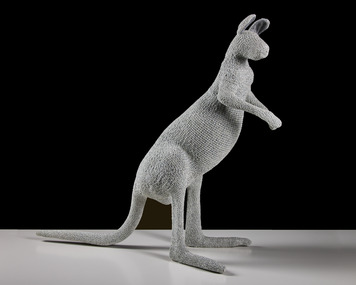
Louise Weaver, Grey Forester, 2005
... ...Environmental Conservation...Stonnington contemporary art collection Sculpture Kangaroo Textiles Environmental Conservation Louise Weaver Hand crochet wool and silver thread snugly encase a life-sized foam taxidermist’s cast of the Grey Forester kangaroo. ...Usually visible at dawn or dusk, this kangaroo has prospered through the clearing of forests for farming. It is well camouflaged by its pale grey coat, merging seamlessly into the landscape only visible when it moves. Louise Weaver’s crocheting new layers and covers for living things and objects acts as much as an act of protection and preservation for this indigenous species, as it alludes to the essential and fleeting quality of the artist’s subject. Her working method, on the other hand, is obstinately slowed down with hours of hand-crafted work going into each unique piece.Hand crochet wool and silver thread snugly encase a life-sized foam taxidermist’s cast of the Grey Forester kangaroo. stonnington contemporary art collection, sculpture, kangaroo, textiles, environmental conservation, louise weaver -
Federation University Historical Collection
Document, Federation University Faculty of Science and Technology Key Capabilities, 2017, 2017
... environmental waste...biodiversity conservation...Nine brochures. .1) Archaeology and Heritage .2) Advanced Industrial Analytics (AIA LAboratory) .3) Carbon Technology Research Centre (CTRC) .4) Water Systems .5) Disturbance Ecology .6) Weed Science .7) Sustainable Approches to Environmental Waster .8) Biodiversity Conservation .9) Restoration Ecology...archeaology heritage industrial analytics carbon technology water systems disturbance ecology weed science environmental waste biodiversity conservation resoration ecology faculty of science and technology Nine brochures. .1) Archaeology and Heritage .2) Advanced Industrial Analytics (AIA LAboratory) .3) Carbon Technology Research Centre (CTRC) .4) Water Systems .5) Disturbance Ecology .6) Weed Science .7) Sustainable Approches to Environmental Waster .8) Biodiversity Conservation .9) Restoration Ecology Federation University Faculty of Science and Technology Key Capabilities, 2017 Document ...Nine brochures. .1) Archaeology and Heritage .2) Advanced Industrial Analytics (AIA LAboratory) .3) Carbon Technology Research Centre (CTRC) .4) Water Systems .5) Disturbance Ecology .6) Weed Science .7) Sustainable Approches to Environmental Waster .8) Biodiversity Conservation .9) Restoration Ecologyarcheaology, heritage, industrial analytics, carbon technology, water systems, disturbance ecology, weed science, environmental waste, biodiversity conservation, resoration ecology, faculty of science and technology -
 Bacchus Marsh & District Historical Society
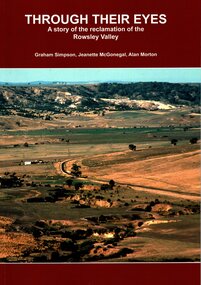
Book, Through Their Eyes : A Story of the Reclamation of the Rowsley Valley
... Rowsley Valley Victoria Environmental History...Conservation...Environmental Restoration Projects Rowsley Valley Victoria Environmental History Conservation of Natural Resources Aboriginal Australians Bacchus Marsh Region History Wadawurrung People History This book contains a collection of articles written by landholders, local residents and members of corporate and volunteer organisations describing their roles in the restoration of Rowsley Valley. ...This book contains a collection of articles written by landholders, local residents and members of corporate and volunteer organisations describing their roles in the restoration of Rowsley Valley. The historical scope of this book encompasses the geological and environmental history of the area prior to human habitation, occupation by the Wadawurrung people prior to European colonisation, and the colonial and post colonial eras. This introductory contextual background is complemented by the rest of the book which describes the various aspects of the environmental restoration of the Rowsley Valley from the latter part of the 20th century continuing to the present day.Printed foolscap size book. Softcover. 112 pages. Colour and black and white photos. Maps, figures, tables. Index. Publication details. Graham Simpson (Publisher, Bacchus Marsh, Victoria, 2021. Lead authors Graham Simpson, Jeanette McGonegal and Alan Morton.This book contains a collection of articles written by landholders, local residents and members of corporate and volunteer organisations describing their roles in the restoration of Rowsley Valley. The historical scope of this book encompasses the geological and environmental history of the area prior to human habitation, occupation by the Wadawurrung people prior to European colonisation, and the colonial and post colonial eras. This introductory contextual background is complemented by the rest of the book which describes the various aspects of the environmental restoration of the Rowsley Valley from the latter part of the 20th century continuing to the present day.environmental restoration projects, rowsley valley victoria environmental history, conservation of natural resources, aboriginal australians bacchus marsh region history, wadawurrung people history -
 Eltham District Historical Society Inc
Book, Richard E. G. Brown, Diamond Valley Conservation Strategy, 1995
... conservation...environmental policy...Shire of Diamond Valley conservation environmental policy strategy The Diamond Valley Conservation Strategy, compiled by Rik Brown, Conservation Officer, Banyule City Council will be used by Nillumbik and Banyule councils when developing conservation policies. ...The Diamond Valley Conservation Strategy, compiled by Rik Brown, Conservation Officer, Banyule City Council will be used by Nillumbik and Banyule councils when developing conservation policies. The strategy was developed by the former Shire of Diamond Valley and documents environment and heritage values and possible threats to those values of the former Shire and policy aims and objectives. The Shire of Diamond Valley (1964-1994) was abolished in May 1994. Areas merged with the newly created Shire of Nillumbik, City of Banyule and City of Whittlesea.non-fictionThe Diamond Valley Conservation Strategy, compiled by Rik Brown, Conservation Officer, Banyule City Council will be used by Nillumbik and Banyule councils when developing conservation policies. The strategy was developed by the former Shire of Diamond Valley and documents environment and heritage values and possible threats to those values of the former Shire and policy aims and objectives. The Shire of Diamond Valley (1964-1994) was abolished in May 1994. Areas merged with the newly created Shire of Nillumbik, City of Banyule and City of Whittlesea.shire of diamond valley, conservation, environmental policy, strategy -
 Eltham District Historical Society Inc
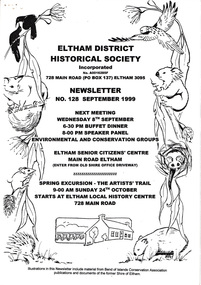
Newsletter, Newsletter, No. 128 September 1999
... Contents: • Next meeting, Speaker Panel; Environmental and Conservation Groups • September Meeting • Spring Excursion – The Artists’ Trail • Acquisitions • President’s Notes • Nillumbik Planning Scheme – Heritage Planning Controls • Geoffrey Loftus-Hills • Other News Items ...Contents: • Next meeting, Speaker Panel; Environmental and Conservation Groups • September Meeting • Spring Excursion – The Artists’ Trail • Acquisitions • President’s Notes • Nillumbik Planning Scheme – Heritage Planning Controls • Geoffrey Loftus-Hills • Other News Items The Shire of Eltham Historical Society was formed in October 1967. ...Contents: • Next meeting, Speaker Panel; Environmental and Conservation Groups • September Meeting • Spring Excursion – The Artists’ Trail • Acquisitions • President’s Notes • Nillumbik Planning Scheme – Heritage Planning Controls • Geoffrey Loftus-Hills • Other News Items The Shire of Eltham Historical Society was formed in October 1967. The first newsletter of the Society was issued May 1978 and has been published continuously ever since on a bi-monthly basis. With the cessation of the Shire of Eltham in late 1994, the Society's name was revised to Eltham District Historical Society and this name first appeared with issue No. 103, July 1995. The collection of the Society's newsletters provides a valuable resource on the history of the Society's activities, office bearers and committee members, guest speakers and subjects of historical interest pertinent to the former Shire of Eltham and the Eltham District.A4 photocopied newsletter distributed to membersnewsletter, eltham district historical society, shire of eltham historical society -
 Emerald Museum & Nobelius Heritage Park
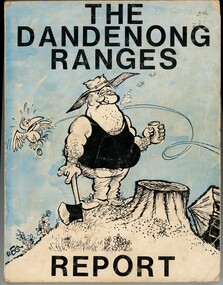
Book - Environmental book, Penelope Goldin & Christopher R. Loorham, The Dandenong Ranges Report, 1974
... This book was published in 1974 at a time when concern about conservation and environmental issues were starting to be voiced especially in the Dandenong Ranges....This book was published in 1974 at a time when concern about conservation and environmental issues were starting to be voiced especially in the Dandenong Ranges. ...A study of the Dandenong Ranges environment to provide factual information for the use of conservation groups and governments in advocacy and planning for the protection of the natural resources of the area. John Bush (noted inside front cover as L.J. Bush) bought this book in 1974 at around the time he and his wife bought a property in Emerald. Entries circled in Appendix 1 indicated indigenous plants that he planned to plant in their garden. John referenced this book when he was completing a thesis as part of a Masters Degree in Environmental Science.non-fictionA study of the Dandenong Ranges environment to provide factual information for the use of conservation groups and governments in advocacy and planning for the protection of the natural resources of the area. John Bush (noted inside front cover as L.J. Bush) bought this book in 1974 at around the time he and his wife bought a property in Emerald. Entries circled in Appendix 1 indicated indigenous plants that he planned to plant in their garden. John referenced this book when he was completing a thesis as part of a Masters Degree in Environmental Science.dandenong ranges, environment, conservation -
 Eltham District Historical Society Inc
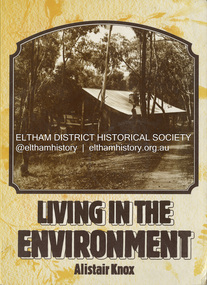
Book, Alistair Knox 1912-1986, Living in the environment / Alistair Knox, 1985
... ISBN 0909325642 Summary Development of the Australian environmental building, using conservation principles including mud brick, timber and iron buildings, by Alistair Knox. ...ISBN 0909325642 Summary Development of the Australian environmental building, using conservation principles including mud brick, timber and iron buildings, by Alistair Knox. ...Published Leura, NSW : Second Back Row Press, 1985 150 p. : ill., plan. ix, 150 pages : illustrations ; 24 cm. First published: Canterbury, Vic. : Mullaya Publications, 1975. ISBN 0909325642 Summary Development of the Australian environmental building, using conservation principles including mud brick, timber and iron buildings, by Alistair Knox. Contents: The idea The first building The conflict The earth building movement Murphys Creek Homestead Post-war architecture and natural building Pseudo affluence Crises and correctives Landscape and landscape building Country houses The Australian identity Timber buildings'Corrugated iron Alternative lifestyle Fathers and sons Postscript Appendices: Planning for mud brick Soil types for mud brick Includes photographsPaperback; 150 p. : ill., plan. ix, 150 pages : illustrations ; 24 cm.houses, buildings, mudbrick, mud brick construction, alistair knox -
 Eltham District Historical Society Inc
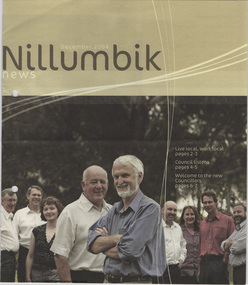
Journal - Newsletter, Nillumbik Shire Council, Nillumbik News, December 2004
... Environment and Sustainability: Programs encourage residents to protect local waterways, conserve native vegetation, and control invasive weeds, Environmental initiatives involve Landcare groups, wildlife monitoring, and sustainability education, Residents are encouraged to participate in community environmental projects and conservation activities. Community Services and Programs: Promotion of community services, volunteer programs, and educational opportunities through local centres. ...Environment and Sustainability: Programs encourage residents to protect local waterways, conserve native vegetation, and control invasive weeds, Environmental initiatives involve Landcare groups, wildlife monitoring, and sustainability education, Residents are encouraged to participate in community environmental projects and conservation activities. Community Services and Programs: Promotion of community services, volunteer programs, and educational opportunities through local centres. ...The newsletter reports on local council initiatives, community programs, environmental activities, and cultural events taking place across Nillumbik Shire in late 2004. It emphasizes community participation, environmental sustainability, infrastructure improvements, and local cultural life. Key Points Council Projects and Infrastructure: Updates on road maintenance, capital works, and improvements to local facilities across the shire, Continued development of community infrastructure such as recreational facilities, parks, and public spaces, Council planning initiatives aimed at supporting sustainable growth and maintaining rural character. Environment and Sustainability: Programs encourage residents to protect local waterways, conserve native vegetation, and control invasive weeds, Environmental initiatives involve Landcare groups, wildlife monitoring, and sustainability education, Residents are encouraged to participate in community environmental projects and conservation activities. Community Services and Programs: Promotion of community services, volunteer programs, and educational opportunities through local centres. Support for families, seniors, and young people through recreational and learning programs. Community engagement remains a priority for council planning and activities. Arts, Culture and Events: The newsletter highlights local arts initiatives, exhibitions, festivals, and performances. Programs support local artists and cultural organisations, reinforcing the area’s reputation as an artistic community. Tourism and Local Economy: Promotion of local tourism, wineries, markets, and cultural attractions in the region. Efforts to strengthen the local economy and regional identity through tourism and community events. Also includes interviews with Councillors, 2004 Nillumbik Sports Awards and calandar of events. council newsletters, nillumbik news, nillumbik shire council, warwick leeson, peter yates, bo bendtsen, helen coleman, bill penrose, greg johnson, howard bulmer, bronnie hattam, michael young, living & learning nillumbik, sally hansen, julie french, julie graham, steven wells, robert hayley, greg champion, ev hales, marjorie lapworth, jan kelly, robina summers, janet mason, karen coulton, elizabeth gardner, matthew dean, madison caulfield, nicole pless, mathew munro, sten nigol, christopher armet, rachel khaw, melinda bpuer, david parsons, anton woods, erin lorenzini, zoe carr, troy sandley, marrissa filipou, ben cukier, nillumbik reconciliation group, montsalvat, eltham craft & produce market, eltham festival, nillumbik artists open studios, hurstbridge high school, family services, kangaroo ground preschool, alan marshall short story award, tom dell'anno, gayle knight -
 Bendigo Historical Society Inc.
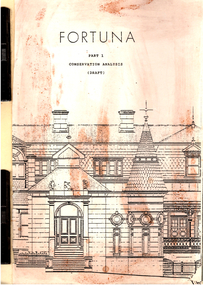
Administrative record - Ex-Fortuna Survey Association Collection: Department of Administrative Services Construction Report: Parts 1 and 2 Conservation Analysis (Drafts), Dec 1987 - Jan 1988
... Fortuna is recognized for its historical, architectural, and environmental value, with conservation efforts focused on the estate as it existed around 1907 under the Lansells' ownership. ...Fortuna is recognized for its historical, architectural, and environmental value, with conservation efforts focused on the estate as it existed around 1907 under the Lansells' ownership. ...This plan was commissioned by the Department of Administrative Services to outline the heritage qualities of Fortuna and provide guidelines for its future conservation. The property was owned by the Commonwealth of Australia, managed by the Department of Defence, and occupied by the Army Survey Corps. The study primarily addresses key structures on the site, including the former house, laundry, quartz mill, coach house, stables, swimming bath, summerhouse, fountain, and arbor. Fortuna is listed on the Register of the National Estate, classified by the National Trust of Australia (Victoria), and designated as a significant building in the City of Bendigo Planning Scheme. The site was originally part of the Ravenswood or Mount Alexander squatting run, licensed in 1840. Gold was discovered in the area in 1851, leading to the establishment of government camps and the development of Bendigo as a major gold mining center. The Victoria reef, located near the site, was one of the principal gold-bearing reefs in Bendigo, with mining activity beginning in the mid-1850s. The evolution of mining technology and the formation of mining companies played a significant role in the area's development. Fortuna is recognized for its historical, architectural, and environmental value, with conservation efforts focused on the estate as it existed around 1907 under the Lansells' ownership. Key structures to be conserved include the main house, shadehouse, stables, coach house, swimming bath, battery, retort room, Pompeii fountain, summerhouse, arbour, garage, laundry, and tunnel The plan includes detailed documentation of the site's existing structures, site plans, building plans, elevations, and features. Early photographs, drawings, and chronological development plans are used to support the analysis. The document assesses the historical, architectural, and environmental significance of the site.It provides a statement of cultural significance and recommendations for conservation priorities. This plan serves as a foundational document for understanding Fortuna's heritage value and guiding its preservation.Fortuna Villa Department of Administrative Services Construction Report: Part 1 Conservation Analysis (Draft) Dec 1987 by consultants John and Thurley O'Connor Pty Ltd, Architects, 10 Sefton Place, Camberwell, Vic, 3124 This Document Contains the following Items: PART 1 11231.2a This conservation management plan provides a comprehensive analysis of the Fortuna site in Bendigo, focusing on its historical, architectural, and cultural significance. The first have pages are copied here. 11231.2b Front Cover It appears that this is a black and white copy of an original coloured copy. The Document consists of approximately 200 pages typed with historical notes, photographs (Black and White), sketches (of various items including furniture and fittings; plans, and copies of legal documents. It is stapled together with a rear manila cover; and further held with metal holders. There is no binder. PART 2 11231.2c Front Cover 11231.2d This document outlines the management and conservation plan for the Fortuna Bendigo estate, focusing on heritage preservation, user requirements, and development guidelines. The first five pages are copied here. It appears that this is a black and white copy of an original coloured copy. The Document consists of approximately 90 pages typed with historical notes, mostle plans of the rooms and outbuidings. It is stapled together with a rear manila cover; and further held with metal holders. There is no binder. bendigo, fortuna villa, history, army survey regiment -
Surrey Hills Historical Society Collection
Work on paper - Vertical File, Heritage Overlay 3
... Camberwell Conservation Study Environmental History draft report – volume 1...Camberwell Conservation Study Environmental History draft report – volume 1. (2 pages) 6. ...Heritage Overlays 3 1. Map of Precinct 40, Union and Canterbury Roads, Surrey Hills Shopping Centre. City of Camberwell Urban Conservation Study, 1986 & 1991 (8 pages single sided) 2. Urban Planning Special Committee, Monday, 18 October 2010. UPC2 Proposed inclusion of 629 Canterbury Road, Surrey Hills in the schedule to the Heritage Overlay Attachments. (9 pages single sided). 3. Surrey Hills and Canterbury Hill Estate Heritage Study Workshop Notes – 24 March 2011. (4 pages double sided). Includes letter to from Boroondara City Council re: Surrey Hills and Canterbury Hill Estate Heritage Study – Workshop Notes, dated 28 March 2011 and A3 colour aerial map. 4. Mont Albert Residential Precinct, Mont Albert, HO. 102. Alterations and Additions to Dwellings in the Mont Albert Residential Precinct. Whitehorse City Council. (17 pages single sided) 5. Camberwell Conservation Study Environmental History draft report – volume 1. (2 pages) 6. Camberwell Conservation Study 1991 Volume 1 extract Recommendation Summary (22 pages single sided) 7. “Heritage protection ‘cost owner $460k’”, The Age newspaper article, by Tom Cowie, dated 21.8.2024 8. “Heritage public nomination plan slammed”, The Age newspaper article by Tom Cowie, dated 7.8.2024 heritage overlay, precinct 40, urban planning special committee, surrey hills and canterbury hill estate heritage study, camberwell conservation study 1991 -
Ringwood Secondary College
The 1999 RACV Energy Breakthrough Hybrid Powered Vehicles - section 2, 1999
... Trophy awarded to RSC as runner-up in the 1999 RACV Energy Breakthrough Hybrid Powered vehicle - section 2 competition Recognition of RSC continued involvement in environmental sustainable power generation and automotive engineering trophy vehicle engineering racv conservation hybrid energy automotive The 1999 RACV Energy Breakthrough Hybrid Powered vehicles - Section 2 Runner-up Small wooden trophy with engraved metal plaque - light oak colour, freestanding The 1999 RACV Energy Breakthrough Hybrid Powered Vehicles - section 2 ...Trophy awarded to RSC as runner-up in the 1999 RACV Energy Breakthrough Hybrid Powered vehicle - section 2 competitionRecognition of RSC continued involvement in environmental sustainable power generation and automotive engineeringSmall wooden trophy with engraved metal plaque - light oak colour, freestandingThe 1999 RACV Energy Breakthrough Hybrid Powered vehicles - Section 2 Runner-uptrophy, vehicle, engineering, racv, conservation, hybrid, energy, automotive -
 Federation University Historical Collection
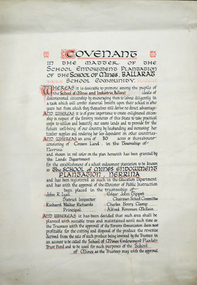
Certificate, Ballarat School of Mines Endowment Plantation, Nerrina Covenant, c1958, c1958
... environmental science are developed. Many school plantations have been planted to radiata pine, and revenue from the sale of produce used to provide amenities required by the schools. In some cases, however, these plantations have not been very successful in providing revenue, as the sites are unsuitable for economic growth or the plantations are too small or the location too far from processing centres to allow economic harvesting. In some instances, radiata pine plantations have failed due to poor management. In 1982 the Land Conservation...environmental science are developed. Many school plantations have been planted to radiata pine, and revenue from the sale of produce used to provide amenities required by the schools. In some cases, however, these plantations have not been very successful in providing revenue, as the sites are unsuitable for economic growth or the plantations are too small or the location too far from processing centres to allow economic harvesting. In some instances, radiata pine plantations have failed due to poor management. In 1982 the Land Conservation ...Throughout the Nerrina district numerous areas of public land were set aside as school endowment plantations as part of various schools’ educational resources. The plantations were initially established to instil through community involvement a love of forests and an appreciation of their value, and in fact many of them are well suited for regular use as a teaching resource of this nature. It was expected that this use will increase as courses embracing various aspects of environmental science are developed. Many school plantations have been planted to radiata pine, and revenue from the sale of produce used to provide amenities required by the schools. In some cases, however, these plantations have not been very successful in providing revenue, as the sites are unsuitable for economic growth or the plantations are too small or the location too far from processing centres to allow economic harvesting. In some instances, radiata pine plantations have failed due to poor management. In 1982 the Land Conservation Council believed that all the existing plantations should be assessed in order to establish their value as a teaching resource. Those not needed or that are unsuitable for teaching purposes for some reason, such as their location, should be terminated. Those planted to radiata pine that have limited value as a teaching resource although satisfactory for wood production may continue to be used for such production, but should be reviewed when the pines are harvested. (http://www.veac.vic.gov.au/reports/354-Ballarat-Study-Area.pdf, acccessed 30/03/2017) The School Endowment Plantation Scheme was established in 1922 as a joint venture between the Education Department and the FCV. It was administered by the Education Department with technical supervision by the Commission. While some plantations were established on private land donated or leased for the purpose, most were established on Crown Lands or Reserved Forest made available, without cost, by the State. (https://www.victoriasforestryheritage.org.au/community/schools.html, accessed 26 September 2020)Covenant in the matter of the School Endowment Plantation of the School of Mines Ballarat School Community.nerrina pine plantation, ballarat school of mines endowment plantation, nerrina, pine plantation, nerrina, john r. lyall, richard w. richards, dick richards, edgar j. tippett, charles h. clamp, alfred k. mcbain, endowment plantation -
 Federation University Historical Collection
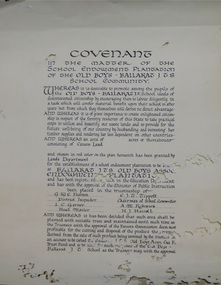
Certificate, Ballarat Junior Technical School Old Boys Association Endowment Plantation, c1928, c1928
... environmental science are developed. Many school plantations have been planted to radiata pine, and revenue from the sale of produce used to provide amenities required by the schools. In some cases, however, these plantations have not been very successful in providing revenue, as the sites are unsuitable for economic growth or the plantations are too small or the location too far from processing centres to allow economic harvesting. In some instances, radiata pine plantations have failed due to poor management. In 1982 the Land Conservation...environmental science are developed. Many school plantations have been planted to radiata pine, and revenue from the sale of produce used to provide amenities required by the schools. In some cases, however, these plantations have not been very successful in providing revenue, as the sites are unsuitable for economic growth or the plantations are too small or the location too far from processing centres to allow economic harvesting. In some instances, radiata pine plantations have failed due to poor management. In 1982 the Land Conservation ...The School Endowment Plantation Scheme was established in 1922 as a joint venture between the Education Department and the FCV. It was administered by the Education Department with technical supervision by the Commission. While some plantations were established on private land donated or leased for the purpose, most were established on Crown Lands or Reserved Forest made available, without cost, by the State. (https://www.victoriasforestryheritage.org.au/community/schools.html, accessed 26 September 2020) Throughout the Nerrina district numerous areas of public land were set aside as school endowment plantations as part of various schools’ educational resources. The plantations were initially established to instil through community involvement a love of forests and an appreciation of their value, and in fact many of them are well suited for regular use as a teaching resource of this nature. It was expected that this use will increase as courses embracing various aspects of environmental science are developed. Many school plantations have been planted to radiata pine, and revenue from the sale of produce used to provide amenities required by the schools. In some cases, however, these plantations have not been very successful in providing revenue, as the sites are unsuitable for economic growth or the plantations are too small or the location too far from processing centres to allow economic harvesting. In some instances, radiata pine plantations have failed due to poor management. In 1982 the Land Conservation Council believed that all the existing plantations should be assessed in order to establish their value as a teaching resource. Those not needed or that are unsuitable for teaching purposes for some reason, such as their location, should be terminated. Those planted to radiata pine that have limited value as a teaching resource although satisfactory for wood production may continue to be used for such production, but should be reviewed when the pines are harvested. (http://www.veac.vic.gov.au/reports/354-Ballarat-Study-Area.pdf, acccessed 30/03/2017)Covenant in the matter of the School Endowment Plantation of the Ballarat Junior Technical School Old Boys Association Endowment Plantation.pine plantation, alfred k. mcbain, g.w.e. pearson, i.c. garner, a.m. robinson, h.j. hassell, ballarat junior technical school old boys association endowment plantation, ballarat junior technical school, alumni -
 Federation University Historical Collection
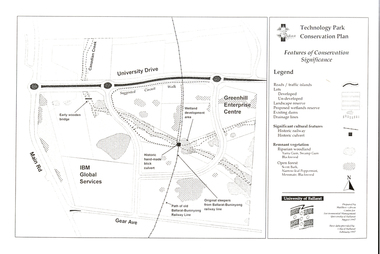
Document - Plan, Mathew Gibson, Centre for Environmental Management, Ballarat Technology Park Conservation Plan, 1997, 1997
... Ballarat Technology Park Conservation Plan, 1997 Document Plan Mathew Gibson, Centre for Environmental Management ...The Ballarat Technology Park is on the Mount Helen Campus.A4 photocopy of a plan of the Ballarat Technology Park showing features of conservation significance. The plan includes the Canadian Creek, an historic hand-made brick culvert, Canadian Wetland Development, early wooden bridge, old path of the Ballarat-Buninyong Railway line, Greenhill Enterprise Centre and IBM Global Services.ballarat technology park, greenhill enterprise centre, ibm global enterprises, ballarat-buninyong railway line, canadian wetlands, brick railway culvert, canadian creek, riparian woodland, yarra gum, swamp gum, blackwood, remnant vegetation, scent bark, narrow-leaf peppermint, messmate, centre for environmental management, mount helen campus -
 Federation University Historical Collection
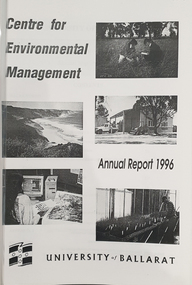
Booklet, University of Ballarat Centre for Environmental Management, 1996
... environmental management...martin westbrooke...richard mcewan...mal weston...john miller...nanya...telegraph station, cape otway...cape otway lighthouse station...cape otway telegraph station...field resaerch stations...s. hadden...peter dahlhaus...r.j. macewan...pat prevett...native vegetation assessment...fauna management...pest plants and animal research...soil and water assessment...conservation...The University will be working with the lessees to develop the historic Telegraph Station as a dual purpose facility for interpretation and research." university of ballarat centre for environmental management martin westbrooke richard mcewan mal weston john miller nanya telegraph station, cape otway cape otway lighthouse station cape otway telegraph station field resaerch stations s. hadden peter dahlhaus r.j. macewan pat prevett native vegetation assessment fauna management pest plants and animal research soil and water assessment conservation reserve management paul ryan richard macewan Black and white cover with clear plastic sheet. ...The Centre for Environmental Management as established in July 1995 as a strategic development initiative to consolidate the University's position as a centre for industry linked environmenttal teaching, resarech and consultancy. Page 19 "SPECIAL INITIATIVES Establishment of field Research Stations Two areas of concentration of research effort for the Centre are the Otways in the south western Victoria and the Scotia Country in the rangelands of NSW. In both these areas it is essential that ther be a secure accomodation abase for research students. In the former case there is a need for a sheltered base to enable year round field work in cold wet conditions and in the latter a base with a reliable water supply and the facilities to allow field work in very hot dry conditions which prevail from much of the year. It has been an ibjective of the Centre to establish field stations at these two sites and considerable progress has been made through the year. (i) Nanya Field Station in the Scotial Country Through the generosity of the owner, Mr Rob Taylor, an unused homestead on Nanya Station was made available to the Centre. Largely through voluntary labour during research field trips during the year this previously derelict homestead has been restored to functionality and now has facilities for up to 20 research workers with a reliable water supply, cooking, washing, and refrigeration facilities. (ii) Cape Otway Resaerch Centre Negotiations have continued through the year with the potential lessees of the Cape Otway Lighthouse Precinct with the support of the Vice Chancellor and other potential user groups within the University these have reached a successful outcome. The University will be working with the lessees to develop the historic Telegraph Station as a dual purpose facility for interpretation and research." Black and white cover with clear plastic sheet. university of ballarat, centre for environmental management, martin westbrooke, richard mcewan, mal weston, john miller, nanya, telegraph station, cape otway, cape otway lighthouse station, cape otway telegraph station, field resaerch stations, s. hadden, peter dahlhaus, r.j. macewan, pat prevett, native vegetation assessment, fauna management, pest plants and animal research, soil and water assessment, conservation reserve management, paul ryan, richard macewan -
 Federation University Historical Collection
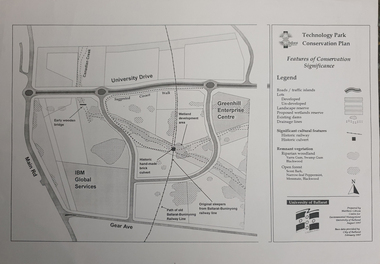
Map, Matthew Cibson, University of Ballarat Centre for Environmental Management, Ballarat Technology Park Conservation Plan, 1997, 02/1997
... Ballarat Technology Park Conservation Plan, 1997 Map Matthew Cibson, University of Ballarat Centre for Environmental Management ...The Ballarat Technology Park is on the Federation University Mount Helen CampusMap showing the Ballarat Technlogy Camp, Greenhill Enterprise Centre, Canadian Wetlands. hand-made brick culvert sleepers, Ballarat-Buninyong Railway Line, IBM Global Services, early wooden bridge, Canadian Creek, Gear Avenue. ballarat technology park, canadian wetlands, greenhill enterprise centre, brick cultert, railway, ballarat-buninyong railway -
Phillip Island and District Historical Society Inc.
Book, GRAYDEN, Christine, island worth conserving : a history of the Phillip Island Conservation Society 1968-2008, 2008
... Conservation Society...history...environmentalists...victoria...phillip island...societies...environmental...Phillip Island Conservation Society history environmentalists victoria phillip island societies environmental protection Signed by the author. island worth conserving : a history of the Phillip Island Conservation Society 1968-2008 Book GRAYDEN, Christine Phillip Island Conservation Society ...Signed by the author.phillip island conservation society, history, environmentalists, victoria, phillip island, societies, environmental protection -
Phillip Island and District Historical Society Inc.
Book, Ministry for Conservation (Victoria), Westernportrait : an explanation of the Westernport Bay environmental study, 1975
... conservation natural resources victoria western port region reports surveys Stamped 'Phillip Island & District Historical Society'. Westernportrait : an explanation of the Westernport Bay environmental study Book Ministry for Conservation (Victoria) Ministry for Conservation ...Stamped 'Phillip Island & District Historical Society'.conservation, natural resources, victoria, western port region, reports, surveys -
 The Beechworth Burke Museum
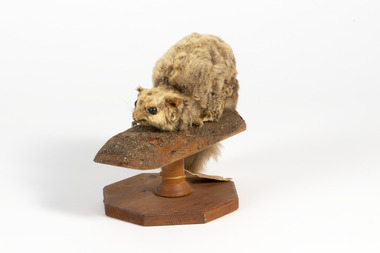
Animal specimen - Krefft's glider, Trustees of the Australian Museum, 1860-1880
... They demonstrate a capacity to hold evidence of how Australia's fauna history existed in the past and are potentially important for future environmental, climate and conservation research. taxidermy mount taxidermy flying fox fruit bat burke museum australian museum skin reynell eveleigh johns natural history animal Krefft's glider Glider Arboreal On wooden mount: BMM5895 / Small sized glider with a pointed head, curved body, bushy tail, and curved claws perched on a wooden mount. ...Krefft's glider (Petaurus notatus) is a small, nocturnal, arboreal marsupial known for its ability to glide. It is native to much of eastern mainland Australia and has also been introduced to Tasmania. The classification of Petaurus populations from New Guinea and Indonesia, previously assigned to P. breviceps, remains under review. The American Society of Mammalogists tentatively includes these populations within P. notatus, though they may represent a complex of distinct species. Notably, most captive gliders referred to as "sugar gliders" in the United States are believed to originate from West Papua, suggesting they may actually be Krefft's gliders, though this classification is still under study. This specimen is part of a collection of almost 200 animal specimens that were originally acquired as skins from various institutions across Australia, including the Australian Museum and the National Museum of Victoria, as well as individuals such amateur anthropologist Reynell Eveleigh Johns between 1860-1880. These skins were then mounted by members of the Burke Museum Committee and put-on display in the formal space of the Museum’s original exhibition hall where they continue to be on display. This display of taxidermy mounts initially served to instruct visitors to the Burke Museum of the natural world around them, today it serves as an insight into the collecting habits of the 19th century. The specimen is part of a significant and rare taxidermy mount collection in the Burke Museum. This collection is scientifically and culturally important for reminding us of how science continues to shape our understanding of the modern world. They demonstrate a capacity to hold evidence of how Australia's fauna history existed in the past and are potentially important for future environmental, climate and conservation research.Small sized glider with a pointed head, curved body, bushy tail, and curved claws perched on a wooden mount. The pelage is thick, long and silky in pale caramel and tan shades. The head is small with two pointed ears, two glass eyes, and about five teeth.On wooden mount: BMM5895 /taxidermy mount, taxidermy, flying fox, fruit bat, burke museum, australian museum, skin, reynell eveleigh johns, natural history, animal, krefft's glider, glider, arboreal -
 Eltham District Historical Society Inc
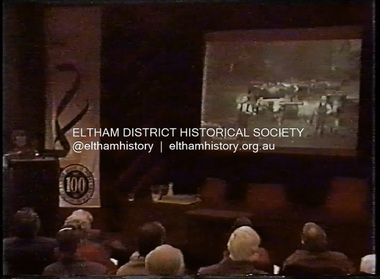
Film - Video (DVD), Melbourne and Metropolitan Board of Works, Yarra River Conference Proceedings; a Board of Works centenary event, 13-16 April 1991
... Tape 2 ( 1 1/2 hours) 1892-1934: People Begin to See Beauty and Romance to the River Henley-on-Yarra; realignment of the Yarra; MMBW is responsible for a sewerage system; new docks to cope with increased overseas trade; development of recreational parks; new reservoirs; timber production and timber tramways; bushfire; flood of 1934. 1935-1970: The River is Neglected Still, Except When it Proves Useful Bushfirs of 1939; the end of many sawmills; birth of tourism; increased interest in conservation and preservation of land for open space; further augmentation of water supply system; birth of containerisation changes the port; environmental concerns gain momentum. ...Tape 2 ( 1 1/2 hours) 1892-1934: People Begin to See Beauty and Romance to the River Henley-on-Yarra; realignment of the Yarra; MMBW is responsible for a sewerage system; new docks to cope with increased overseas trade; development of recreational parks; new reservoirs; timber production and timber tramways; bushfire; flood of 1934. 1935-1970: The River is Neglected Still, Except When it Proves Useful Bushfirs of 1939; the end of many sawmills; birth of tourism; increased interest in conservation and preservation of land for open space; further augmentation of water supply system; birth of containerisation changes the port; environmental concerns gain momentum. ...Yarra River Conference History Segment [Noted on VHS tape jackets "Due to unavoidable circumstances, the quality of these tapes in some setions is less than desired."] The Yarra River Conference, organised by the Board of Works as part of the Centenary Celebrations, was held in the Board's Head Office Theatrette from 13-16 April, 1991. A segment of the Conference focussed on the role that the Yarra River has played in relation to the historical development of Melbourne. Conceived and presented by a group of prominent historians as a chronological 'trip down the river in time', and profusely illustrated with slides, this segment traced the various impacts that urban and rural growth, development of marine commerce, recreational uses, and environmental problems have had on the Yarra during a century and a half of European occupation. As no formal written paper of this combined presentation is available, these two video-tapes provide a record for anyone who has an interest in tis fascinating aspect of the Yarra's history. The speakers who combined to present this segment are identified on the cover of Tape 2. Tape 1 (2 hours) 1838-1863 Deputy ?? to Utility Early navigators of the Yarra River; developing the port of Melbourne; the gold rush and its effect on the new colony; punts and bridges; water supply; pollution of the Yarra; the discovery of gold and early settlement of the Yarra valley; floods of 1839 and 1863. 1863-1891 Formation of the Harbour Trust; Coode Canal; pollution of the Yarra by industry; aborigines, gold miners, timber getters in the Upper Yarra areas; bridges; the flood of 1891. Tape 2 ( 1 1/2 hours) 1892-1934: People Begin to See Beauty and Romance to the River Henley-on-Yarra; realignment of the Yarra; MMBW is responsible for a sewerage system; new docks to cope with increased overseas trade; development of recreational parks; new reservoirs; timber production and timber tramways; bushfire; flood of 1934. 1935-1970: The River is Neglected Still, Except When it Proves Useful Bushfirs of 1939; the end of many sawmills; birth of tourism; increased interest in conservation and preservation of land for open space; further augmentation of water supply system; birth of containerisation changes the port; environmental concerns gain momentum. Speakers Dr Tony Dingle *, Department of Economic History, Monash University Dr Carolyn Rasmussen *, History Consultant Prof. Graeme Davison, History Department, Monash University Mr. Tom Griffiths, Lecturer in Public History, Monash Uiversity Mr. Patrick Miller, History Consultant Mr. Colin Jones, Author and Historian * Co-authors of the Board's history, 'Vital Connections'.video recording, yarra river, conference proceedings -
 Eltham District Historical Society Inc
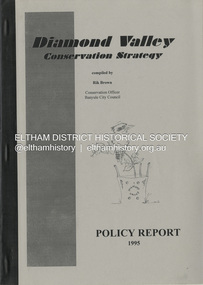
Book, Richard E. G. Brown, Diamond Valley Conservation Strategy: Policy Report, 1995
... environmental policy environmental policy environmental protection Shire of Diamond Valley The Diamond Valley Conservation Strategy will be used by Nillumbik and Banyule councils when developing conservation policies. ...The Diamond Valley Conservation Strategy will be used by Nillumbik and Banyule councils when developing conservation policies. The strategy was developed by the former Shire of Diamond Valley and documents environment and heritage values and possible threats to those values of the former Shire and policy aims and objectives. This report documents flora and fauna conservation, heritage conservation, landscape conservation, sustainable land use, conservation of resources, waster management and community education and involvement. The Shire of Diamond Valley (1964-1994) was abolished in May 1994. Areas merged with the newly created Shire of Nillumbik, City of Banyule and City of Whittlesea.27 p.non-fictionThe Diamond Valley Conservation Strategy will be used by Nillumbik and Banyule councils when developing conservation policies. The strategy was developed by the former Shire of Diamond Valley and documents environment and heritage values and possible threats to those values of the former Shire and policy aims and objectives. This report documents flora and fauna conservation, heritage conservation, landscape conservation, sustainable land use, conservation of resources, waster management and community education and involvement. The Shire of Diamond Valley (1964-1994) was abolished in May 1994. Areas merged with the newly created Shire of Nillumbik, City of Banyule and City of Whittlesea.environmental policy, environmental protection, shire of diamond valley -
 Eltham District Historical Society Inc
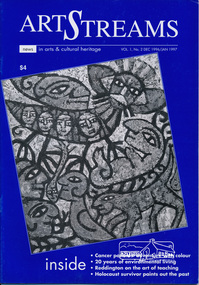
Journal, Peter Doughtery, ArtStreams: News in arts and cultural heritage; Vol. 1, No. 2, Dec 1996/Jan 1997, 1996
... Vol. 1, No. 2 Dec 1996/Jan 1997 CONTENTS ADVENTURE WITH COLOUR Teenage cancer patients challenge their illness with art 3 CD REVIEWS New music by local musicians 5 LIVE AND LET LIVE 20 years of environmental living 6 AUSTRALIA REVISITED Artist Charles Reddington ponders live 30 years on 8 POETRY REVIEW Anne Delaney looks at new work by Jennifer Harrison and Jordie Albiston 11 PHOTOGRAPHY Katherine Jones aims at hard edges 16 IMAGES FROM A DARK PAST Holocaust survivor paints out a traumatic part of his life 18 MORALITY OF JUSTICE The Truth Game - a play by Ray Mooney 21 ART FROM THE HEART An exhibition that crosses boundaries 22 SHORT STORY New story from an emerging writer 25 ART IN THE CEMETERY Darebin launches a new project to decorate its new mausoleum 28 LISTINGS Artists, performers and galleries 29 KEYWORDS 895 Main Road, 1994 Moet et Chandon Fellowship, Adventure with Colour, Alan Bonney, Alan Constable, Alun Leach-Jones, Amada Laming, Anne Connor & Associates, Anne Delaney, Anthony Day, Art Streams Magazine, Artist-in-residence, Arts by the Waters, Arts project Australia, Auschwitz, Banyule Jazz Festival, Barbara Veheary, Bend of Islands Conservation Association (BICA), Bend of Islands Estate, Bend of Islands, Bill Downing, Bulleen Art & Garden Centre, Bulleen Nursery, Caffe Poco, Carlton Courthouse Theatre, Catani Boulevard, Catherine Oxley Reserve, Charles Reddington, Charlie Dowley, Cheryl Daye, Chris McAuliffe, Clifton Pugh, Colin Lanceley, Cornelia Selover, Creativitie et Handicap Mental (CREAHM), Cynthia Hardman, Cyril Tawney, Damian Eyre, Daniel Lillford, Danuta Michalska, Darebin Arts and Entertainment Centre, Darebin City Council, Department of Fine Arts, Donald Campbell, Dora Zable, Dorothy Berry, dunmoochin, E.H. Cameron, Edward (Ned) Haughton, Edward Car, Elizabeth Vercoe, Eltham High School, Eltham Living and Learning Centre, Environmental...Vol. 1, No. 2 Dec 1996/Jan 1997 CONTENTS ADVENTURE WITH COLOUR Teenage cancer patients challenge their illness with art 3 CD REVIEWS New music by local musicians 5 LIVE AND LET LIVE 20 years of environmental living 6 AUSTRALIA REVISITED Artist Charles Reddington ponders live 30 years on 8 POETRY REVIEW Anne Delaney looks at new work by Jennifer Harrison and Jordie Albiston 11 PHOTOGRAPHY Katherine Jones aims at hard edges 16 IMAGES FROM A DARK PAST Holocaust survivor paints out a traumatic part of his life 18 MORALITY OF JUSTICE The Truth Game - a play by Ray Mooney 21 ART FROM THE HEART An exhibition that crosses boundaries 22 SHORT STORY New story from an emerging writer 25 ART IN THE CEMETERY Darebin launches a new project to decorate its new mausoleum 28 LISTINGS Artists, performers and galleries 29 KEYWORDS 895 Main Road, 1994 Moet et Chandon Fellowship, Adventure with Colour, Alan Bonney, Alan Constable, Alun Leach-Jones, Amada Laming, Anne Connor & Associates, Anne Delaney, Anthony Day, Art Streams Magazine, Artist-in-residence, Arts by the Waters, Arts project Australia, Auschwitz, Banyule Jazz Festival, Barbara Veheary, Bend of Islands Conservation Association (BICA), Bend of Islands Estate, Bend of Islands, Bill Downing, Bulleen Art & Garden Centre, Bulleen Nursery, Caffe Poco, Carlton Courthouse Theatre, Catani Boulevard, Catherine Oxley Reserve, Charles Reddington, Charlie Dowley, Cheryl Daye, Chris McAuliffe, Clifton Pugh, Colin Lanceley, Cornelia Selover, Creativitie et Handicap Mental (CREAHM), Cynthia Hardman, Cyril Tawney, Damian Eyre, Daniel Lillford, Danuta Michalska, Darebin Arts and Entertainment Centre, Darebin City Council, Department of Fine Arts, Donald Campbell, Dora Zable, Dorothy Berry, dunmoochin, E.H. Cameron, Edward (Ned) Haughton, Edward Car, Elizabeth Vercoe, Eltham High School, Eltham Living and Learning Centre, Environmental ...Vol. 1, No. 2 Dec 1996/Jan 1997 CONTENTS ADVENTURE WITH COLOUR Teenage cancer patients challenge their illness with art 3 CD REVIEWS New music by local musicians 5 LIVE AND LET LIVE 20 years of environmental living 6 AUSTRALIA REVISITED Artist Charles Reddington ponders live 30 years on 8 POETRY REVIEW Anne Delaney looks at new work by Jennifer Harrison and Jordie Albiston 11 PHOTOGRAPHY Katherine Jones aims at hard edges 16 IMAGES FROM A DARK PAST Holocaust survivor paints out a traumatic part of his life 18 MORALITY OF JUSTICE The Truth Game - a play by Ray Mooney 21 ART FROM THE HEART An exhibition that crosses boundaries 22 SHORT STORY New story from an emerging writer 25 ART IN THE CEMETERY Darebin launches a new project to decorate its new mausoleum 28 LISTINGS Artists, performers and galleries 29 KEYWORDS 895 Main Road, 1994 Moet et Chandon Fellowship, Adventure with Colour, Alan Bonney, Alan Constable, Alun Leach-Jones, Amada Laming, Anne Connor & Associates, Anne Delaney, Anthony Day, Art Streams Magazine, Artist-in-residence, Arts by the Waters, Arts project Australia, Auschwitz, Banyule Jazz Festival, Barbara Veheary, Bend of Islands Conservation Association (BICA), Bend of Islands Estate, Bend of Islands, Bill Downing, Bulleen Art & Garden Centre, Bulleen Nursery, Caffe Poco, Carlton Courthouse Theatre, Catani Boulevard, Catherine Oxley Reserve, Charles Reddington, Charlie Dowley, Cheryl Daye, Chris McAuliffe, Clifton Pugh, Colin Lanceley, Cornelia Selover, Creativitie et Handicap Mental (CREAHM), Cynthia Hardman, Cyril Tawney, Damian Eyre, Daniel Lillford, Danuta Michalska, Darebin Arts and Entertainment Centre, Darebin City Council, Department of Fine Arts, Donald Campbell, Dora Zable, Dorothy Berry, dunmoochin, E.H. Cameron, Edward (Ned) Haughton, Edward Car, Elizabeth Vercoe, Eltham High School, Eltham Living and Learning Centre, Environmental Living Zone (ELZ), Eric Bogle, Eucalypso, Felix Tuszynski, Food For All Seasons, Frank Hodgkinson, Fulli Andrinopoulos, Gallery of Georges of Collins Street, Gallery of Slavic Art, Glen Agnes Bend of Islands Estate, Glen Agnes Estate, Gongflers drive, Greg O'Leary, Harold (Jimmy) Fuller, Helen O'Grady Children's Drama Academy, Henley Road, Ian Doolan Hamilton, Ian Gawler, Inside Out/Outside In, Ironbark Road, Janice McBride, Jennifer Harrison, Jennifer McGregor, Jessie Agnes Haughton, Jimmy Pike, Joan Blakey, John Mackay Northe, John Rasmussen, Jordie Albiston, Julian Martin, Kangaroo Ground, Katherine Jones, Kelvin Heffernan, Kew Coattage, Kitty Ginter, Lavita Mossop, Les darcy, Les Gyori, Life with Jane, Lorraine Larter, Luc Boulange, Luciana Giardina, Manningham Artspace, Manningham City Council, Mariann Moxon, Mark Capozzi, Mark Chapman, Mark Wilkinson, Maxine Ryder, Melbourne Police Pipe Band, Mick Woiwod, Mike O'Rourke, Monica Burns, Montsalvat, Myra Hilgendorf, Nancye Ball, Page family, Pam Crohan, Pam Dougherty, Poetry, Preston Public Cemetery, Ray Mooney, Richard Haese, Robert Hughes, Robyn Kirkpatrick, Roger Lemke, Ron Hanson, Sandra Harvey, Shire of Eltham Office site, Shire of Healesville, Shire of Nillumbik, Shire Offices, Sounds by the Waters, Stelio Costa, Steven Tynan, Steven Worrell, Stewart Whiffin, Sue Howard, Sue Whiffin, Sugarloaf Reservoir, Sydney Ball, The Art of Australia, The Mews, The Truth Game, Tom Fantl, Tony Inglese, Tuszynski Survey Exhibition, University of Melbourne, Valerio Ciccone, victorian artists supplies, Watson Creek Bridge, Watsons Creek, Wayne Marnell, Woody Guthrie, Yarra Brae Dam, Yarra River"Peter Dougherty has been involved in the local art scene for many years. As publisher and editor of the arts magazine Artstreams, his comments on the various branches of the arts are widely respected. His "The Arts" column in the Diamond Valley Leader presents a brief summary for a much wider cross section of the local community. Peter also operates his own gallery and the Artstreams Cafe at the St Andrews market. Peter has a wealth of knowledge about present day and historical aspects of local art and artists." - Eltham District Historical Society Newsletter No. 161, March 2005Colour front and back cover with feature articles and literary pieces with photographs and advertisements printed in black and white. 36 pages, 30 cm. Vol. 1, no. 1 (Nov. 1996) - Vol. 10, no. 5 (summer ed. 2005/06) art streams, feliz tuszynski, elizabeth vercoe, eucalypso, bend of islands, charles reddington, jennifer harrison, jordie albiston, katherine jones, anne bonney, mick woiwood, anne connor, anne delaney, ray mooney, pam dougherty, arts project australia, lavita mossop, preston public cemetery, helen o'grady children's drama academy, bulleen nursery -
 Eltham District Historical Society Inc
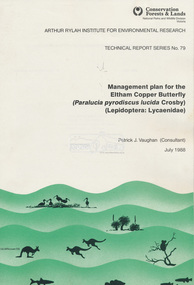
Book, Pat Vaughan, Management plan for the Eltham Copper Butterfly (Paralucia pyrodiscus lucida Crosby), (Lepidoptera: Lycasenidae); Arthur Rylah Institute for Environmental Researcg, Technical Report Series No. 79, July 1988
... Soft cover bound A4, 54 pages Management plan for the Eltham Copper Butterfly (Paralucia pyrodiscus lucida Crosby), (Lepidoptera: Lycasenidae); Arthur Rylah Institute for Environmental Researcg, Technical Report Series No. 79 Book Book Pat Vaughan Conservation Forests & Lands, National Parks and Wildlife Division, Victoria ... -
 Eltham District Historical Society Inc
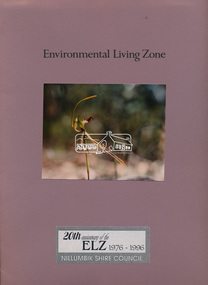
Document - Folder, Nillumbik Shire Council, Environmental Living Zone, 20th anniversary of the ELZ 1976-1996, 1996
... Round the Bend Conservation Cooperative Ltd information pamphlet and information on the Environmental Living Zone of the Bend of Islands...Round the Bend Conservation Cooperative Ltd information pamphlet and information on the Environmental Living Zone of the Bend of Islands Contains 7 A4 pages (some double side) and 8 page A5 pamphlet Environmental Living Zone, 20th anniversary of the ELZ 1976-1996 Document Folder Nillumbik Shire Council ...Round the Bend Conservation Cooperative Ltd information pamphlet and information on the Environmental Living Zone of the Bend of Islands -
 Eltham District Historical Society Inc
Document, Carlotta Kellaway, Shire of Eltham Heritage Study 1992 Volume 2 (draft): Background History - Themes identified by this study, Bibliography (pages 201-289), 1992
... Shire of Eltham Heritage Study 1992 prepared by David Bick and Carlotta Kellaway; Garden Evaluation by John Patrick and Planting Evaluation by Ken Wallace Volume One: Recommendations, Conservation Areas, Identified Places Volume Two: Environmental History and Bibliography Volume Three: Culturally Significant Themes and the Evaluations of the Individually Identified Places that Illustrate the Themes...Shire of Eltham Heritage Study 1992 prepared by David Bick and Carlotta Kellaway; Garden Evaluation by John Patrick and Planting Evaluation by Ken Wallace Volume One: Recommendations, Conservation Areas, Identified Places Volume Two: Environmental History and Bibliography Volume Three: Culturally Significant Themes and the Evaluations of the Individually Identified Places that Illustrate the Themes Provides the foundation for future planning assessments in the Shire of Eltham. ...Shire of Eltham Heritage Study 1992 prepared by David Bick and Carlotta Kellaway; Garden Evaluation by John Patrick and Planting Evaluation by Ken Wallace Volume One: Recommendations, Conservation Areas, Identified Places Volume Two: Environmental History and Bibliography Volume Three: Culturally Significant Themes and the Evaluations of the Individually Identified Places that Illustrate the ThemesProvides the foundation for future planning assessments in the Shire of Eltham.90 A4 pages (double sided), contyained in black PVC 2-ring binder.background history, carlotta kellaway, conservation areas, culturally significant themes, david bick, garden evaluation, heritage study, identified places, john patrick, ken wallace, planting evaluation, recommendations, shire of eltham heritage study
